DESIGN CIRCULAR 2020 CIRCULAR FASHION SYSTEM COMMITMENT - Eco TLC
←
→
Page content transcription
If your browser does not render page correctly, please read the page content below
CIRCULAR
DESIGN
TOOLBOX
 2 0 2 0 C I R C U L A R FA S H I O N
 SYS T E M CO M M I T M E N T

IMPRINT
Publisher: Global Fashion Agenda
Photos: AlgiKnit, Copenhagen Fashion Week, Design for Longevity/ECAP, G-Star Raw, Houdini, Proef

2018 Copyright © Global Fashion Agenda

ACKNOWLEDGEMENTS
The authors would like to thank all the companies and organisations that donated their time and expertise, including AlgiKnit, Design for Longevity/ECAP, Fashion
Positive, Filippa K, G-Star Raw, Houdini, Nudie Jeans, Proef and Puma.

ABOUT GLOBAL FASHION AGENDA
Global Fashion Agenda is a leadership forum on sustainability in fashion. Anchored around the world’s leading business event on sustainability in fashion, Copenha-
gen Fashion Summit, Global Fashion Agenda advances a year-round mission to mobilise the global fashion system to change the way we produce, market and con-
sume fashion, for a world beyond next season. A non-profit initiative, Global Fashion Agenda collaborates with a group of Strategic Partners, including Kering, H&M,
Target, BESTSELLER, Li & Fung and Sustainable Apparel Coalition on setting a common agenda for focused industry efforts on sustainability in fashion.

For further information please visit:
globalfashionagenda.com

For questions please contact:
commitment@globalfashionagenda.com

TABLE OF CONTENTS
   INTRODUCTION                                            P. 1

   GETTING INFORMED                                        P. 3
       - The role of design in a circular fashion system
       - Understanding circular design

   STRATEGY                                                P. 6
       -   Working with circular design
       -   Circular design approaches
       -   Internal involvement
       -   Managing costs and logistics
       -   Setting targets

   IMPLEMENTATION                                          P. 12
       - Sourcing circular materials
       - Tools for implementing circular design
       - Designing for continuous loops

   COMMUNICATION                                           P. 16
       - Marketing circular products

   EVALUATION                                              P. 17
       - Evaluating circular products and processes

   THE ROAD AHEAD                                          P. 18
       - Steps towards circular design

   ADDITIONAL RESOURCES                                    P. 19

   REFERENCES                                              P. 20
INTRODUCTION      GETTING INFORMED                      STRATEGY                       IMPLEMENTATION                      COMMUNICATION                      EVALUATION                   THE ROAD AHEAD           ADDITIONAL RESOURCES

               INTRODUCTION

               WHAT IS A CIRCULAR FASHION SYSTEM                                                                      UNITING STAKEHOLDERS FROM THE ENTIRE FASHION
                                                                                                                      INDUSTRY
               Today’s linear “take, make, dispose” economic model is reaching its limits, and natural
               resources are becoming increasingly scarce, threatening the growth of the fashion industry.            At Copenhagen Fashion Summit 2017, Global Fashion Agenda called on fashion
                                                                                                                      brands and retailers to sign a commitment to accelerate the transition to a circular
               A circular system restores and regenerates materials, in addition to providing opportunities           fashion system. As of June 2018, 94 companies and corporations had signed the
               to reduce environmental pressures and ease demand on natural resources while securing                  2020 Circular Fashion System Commitment (henceforth 2020 Commitment), rep-
               future supply and capturing the value of a product to the greatest extent possible.                    resenting 12,5% of the global fashion market. The 2020 Commitment contains four
                                                                                                                      action points for the signatories’ targets:
               The public is becoming increasingly aware of the environmental impacts of the fashion
               industry. Consumers expect the industry to address issues related to production, such as               Action   point   1: Implementing design strategies for cyclability
               extensive water usage, toxic chemicals and garments accumulating in landfills. Implementing            Action   point   2: Increasing the volume of used garments and footwear collected
               circularity offers an opportunity to evaluate and improve current business models as much              Action   point   3: Increasing the volume of used garments and footwear resold
               as it provides a unique opportunity to create a close relationship with consumers.                     Action   point   4: Increasing the share of garments and footwear made from recycled
                                                                                                                                           post-consumer textile fibres
               An essential part of creating a circular fashion system is to set up collection systems, inte-
               grate circular design and consider how to manage end-of-use of garments. This can happen               In the first year of the 2020 Commitment, Global Fashion Agenda focused on
               through practices that extend usage, for example resale, or through recycling worn-out                 industry-wide collaboration and knowledge sharing as the pillars of future progress.
               garments and incorporating recycled post-consumer fibres into the production of new                    As a result, four toolboxes have been developed based on each action point.
               garments.
                                                                                                                      The aim of the toolboxes is to provide key insights, lessons learned and best practices
                                                                                                                      from brands, organisations, companies and researchers to encourage and activate fash-
                                                                                                                      ion brands to close the loop. The focus is on finding ways to loop products back into the
                                                                                                                      fashion system by redefining the life cycle of garments. The toolboxes point out external
               “It is essential that we take action on circularity today, even                                        resources and guides that can provide additional insights and useful tips. The toolboxes
               though we don’t yet have all the solutions for creating a circular                                     represent a starting point for fashion brands and retailers looking to explore circularity
               fashion system. It’s only through testing and trying that we will                                      within their company, while informing and inspiring key departments within the company
                                                                                                                      – from management and design to marketing. Moreover, they can also serve as a source
               find them.”                                                                                            of further inspiration for those already taking action.

                                                                                               - MORTEN LEHMANN       The four toolboxes are aligned with the action points in the 2020 Commitment.
                                                                Chief sustainability officer, Global Fashion Agenda   Although they are presented separately, they are meant to be used continuously and
                                                                                                                      simultaneously as all aspects of a circular strategy go hand in hand, just as aligning col-
                                                                                                                      lection, design and the management of end of use is important.

                                                                                                                                                                                                                                       1
INTRODUCTION   GETTING INFORMED   STRATEGY               IMPLEMENTATION             COMMUNICATION                  EVALUATION   THE ROAD AHEAD   ADDITIONAL RESOURCES

                                                   CIRCULAR DESIGN
                                                       TOOLBOX
                                             This toolbox is designed to support fashion brands and retailers
                                             who would like to explore circular design within their company.
                                              It highlights the role design plays in creating a circular fashion
                                               system and is aimed to redefine the life cycle of garments by
                                                  looping them continuously back into the fashion system.
INTRODUCTION      GETTING INFORMED                       STRATEGY                  IMPLEMENTATION                 COMMUNICATION                   EVALUATION                   THE ROAD AHEAD          ADDITIONAL RESOURCES

               GETTING INFORMED

               THE ROLE OF DESIGN IN A CIRCULAR FASHION SYSTEM
               Circular design is an inevitable step in creating a circular fashion system that prolongs the lifetime of products through reutilisation and the recycling of worn out textiles. Using
               various approaches, circular design offers opportunities for better utilisation of resources and materials, enabling companies to rethink products, processes and business models.

               KEY LEARNINGS                     CIRCULAR ECONOMY SYSTEM DIAGRAM                                           BUSINESS MODELS
                 •   In a completely
                                                 A popular understanding of circular economy is that the system con-       Within circular economy, the traditional linear production model is
                      circular system, waste
                      is obsolete because        tains a technosphere and a biosphere, with accompanying technical         challenged, and new business models are appearing that focus to
                      products and materials     and biological cycles, through which products and materials can loop      a higher degree on service system thinking. This means that rental
                      are looped indefinitely
                      in technical cycles or     back. The Ellen MacArthur Foundation’s Circular Economy System            replaces ownership and offering services replaces selling products. An
                      biological cycles          Diagram is a useful framework for circular design and is described on     established business model does not change overnight, but circular
                                                 their website.                                                            business models can serve as inspiration to support your new circular
                 •    ircular design requires
                     C
                     rethinking the way                                                                                    design practices.
                     products are created
                     and produced, but also
                     rethinking the system       SYSTEM THINKING
                     they are part of                                                                                      SUSTAINABLE AND CIRCULAR DESIGN
                                                 Circular design requires rethinking the way products are produced,
                 •    ircular design is an
                     C
                     opportunity to diversify    but also the system that they are a part of. The interdependency          The purpose of sustainable design is to minimise the negative envi-
                     from the traditional lin-   between products and systems represents a challenge for circular          ronmental and social impacts of a product throughout its value chain.
                     ear production model
                                                 design. For example, designing for recyclability is currently difficult   Circular design focuses on prolonging the life of a product, and looping
                                                 because a system has not yet been developed to recycle products           materials back into the fashion system. Although the approaches differ,
                                                 on a commercial scale. On the other hand, there is a need to create       sustainable design principles should still be applied in circular design.
                                                 industry-wide demand for recycled fibres to get relevant stakeholders
                                                 involved in creating the system. As a result, it might be necessary to
                                                                                                                           “A circular economy is one that is restorative and
                                                 determine what is currently possible or to consider what types of sys-
                                                 tem changes are required to accomplish your circular design ideas.        regenerative by design.”
                                                                                                                                                                      - ELLEN MACARTHUR FOUNDATION

                                                                                                                                                                                                                          3
INTRODUCTION      GETTING INFORMED                        STRATEGY                        IMPLEMENTATION                COMMUNICATION                    EVALUATION                   THE ROAD AHEAD            ADDITIONAL RESOURCES

               GETTING INFORMED

               UNDERSTANDING CIRCULAR DESIGN
               Designers play a vital role in determining the cyclability of a product. If circularity is not integrated into the early stages of the design process, it is difficult for garments
               to be circulated back into the system. That’s why it’s time to empower designers and product developers to create products using materials and techniques that facilitate
               circularity.

               KEY LEARNINGS                      CIRCULAR DESIGN USING VARIOUS APPROACHES                                        CHOICE OF MATERIALS
                 •    ircular design covers
                     C                            Circular design can take many forms, depending on the purpose of the            The choice of materials significantly influences the environmental impact
                     the durability, longevity,
                     reparability, disassem-      product. When designing for longevity, durability and reparability, the         of your products.1 Choosing materials is also an essential part of creating
                     bly and recyclability of     aim is to extend the use phase of a garment by one or more owners.              circular products. Monofibres, for instance simplify the recycling process,
                     a product
                                                  When designing for circularity, disassembly, recyclability or biodegrada-       while wool has high durability. Use the Smart Material Choices work-
                 •    he aim of circular
                     T                            bility, the aim is to ensure that products and materials are looped back        sheet to learn more.
                     design is to prolong the     into the system and used in a regenerative process.
                     life cycle of a product
                     and to loop existing
                     materials continuously        DESIGN FOR WASTE        DESIGN FOR LONGEVITY         DESIGN FOR CIRCULARITY    DESIGN PRACTICES THAT
                     back into the fashion
                     system                                                                                                        CHALLENGE CIRCULARITY
                                                                                      DESIGN
                                                        DESIGN
                                                                                                                                   oth large and small fashion companies have gained an awareness of
                                                                                                                                  B
                                                                         PRODUCTION
                                                                                                                    DESIGN        circular design, but current design practices continue to challenge the
                                                                                          CONSUMPTION
                                                                                                        REUSE
                                                                                                                                  creation of a circular fashion system in various ways:
                                                      PRODUCTION
                                                                           REPAIR
                                                                                                                     PRODUCTION
                                                                                          CONSUMPTION
                                                                                                                                      •    Designs that are not made to be repaired
                                                                                                        REPAIR
                                                                         REMANUFACTURING
                                                                                                                   CONSUMPTION
                                                      CONSUMPTION
                                                                                          CONSUMPTION
                                                                                                                                      •     ourcing fabrics that are not fit for circularity or fabrics with
                                                                                                                                           S
                                                                                                                                           mixed fibres that are not recyclable

                                                                                                                                      •    Designs that are difficult to disassemble and recycle
                                                  CONSIDER THE INTENDED USE
                                                                                                                                      •    Lack of traceability of materials
                                                  The design approach for a product will depend on its specific function.
                                                  A product’s intended use should guide its longevity and circularity. Prod-
                                                  ucts designed for longevity require, for example, taking the durability of
                                                  the material chosen into consideration. Whereas biodegradability might
                                                  be prioritised for garments that are intended to have a short lifespan.

                                                                                                                                                                                                                                  4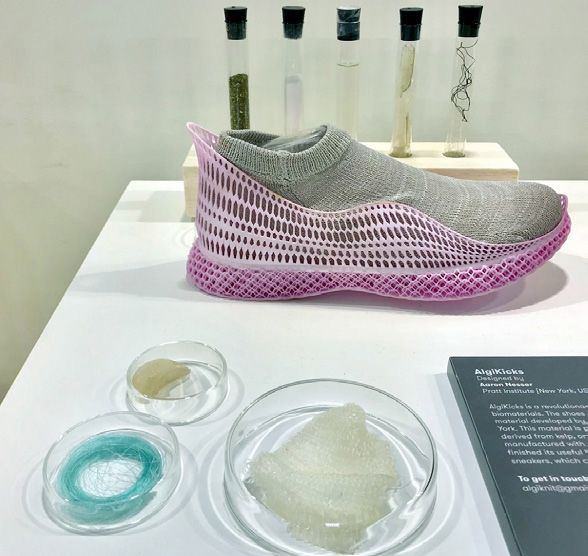
INTRODUCTION    GETTING INFORMED                            STRATEGY                       IMPLEMENTATION                 COMMUNICATION                           EVALUATION   THE ROAD AHEAD   ADDITIONAL RESOURCES

               INSPIRATIONAL CASES

               LEARNING FROM OTHERS IN THE INDUSTRY
                BIODEGRADABLE YARN MADE OUT                                                                              THE NEED TO TREAD LIGHTLY
                OF KELP
                                                                                                                          Proef designs LOPER shoes, which can be
                                                                                                                          disassembled to facilitate the reuse phase.
                 AlgiKnit creates clothing made out of kelp
                                                                                                                          The shoes are made without glue and use
                 that is combined with other renewable
                                                                                                                          only three different types of materials. Read
                 biopolymers. In addition to being biodegrad-
                                                                                                                          more.
                 able, the resulting yarn possesses many ben-
                 eficial properties, such as strength, resilience
                 and elasticity. Read more.

                SPORTSWEAR THAT MAKES                                                                                    C2C GOLD-LEVEL CERTIFIED DENIM
                YOUR GARDEN GROW
                                                                                                                          Denim brand G-Star Raw developed the
                                                                                                                          first ever Cradle to Cradle (C2C) Gold-level
                 Swedish sportswear brand Houdini
                                                                                                                          certified denim. The capsule collection show-
                 creates garments that are actually
                 compostable and can be used to                                                                           cased a series of naturally dyed jeans with
                 fertilise the earth for the growth of                                                                    the dye deriving from plant waste.
                 new vegetation. Read more.                                                                               Read more.

                SUBSCRIBE TO INSPIRING RESOURCES: DESIGN FOR LONGEVITY PLATFORM

                 The Design for Longevity platform, available free of charge to users, is part of a project funded by
                 EU Life and brought to you by Global Fashion Agenda, with support from C&A Foundation. By high-
                 lighting the most relevant inspiration, knowledge and tools, the platform provides designers with a
                 catalogue of ideas to help you reach your full potential to ensure a future-proof business and design
                 process. It seeks to break down the complex issues of design for longevity and circular strategies
                 into palatable, bite-size pieces. For more information visit designforlongevity.com.

                                                                                                                                                                                                                   5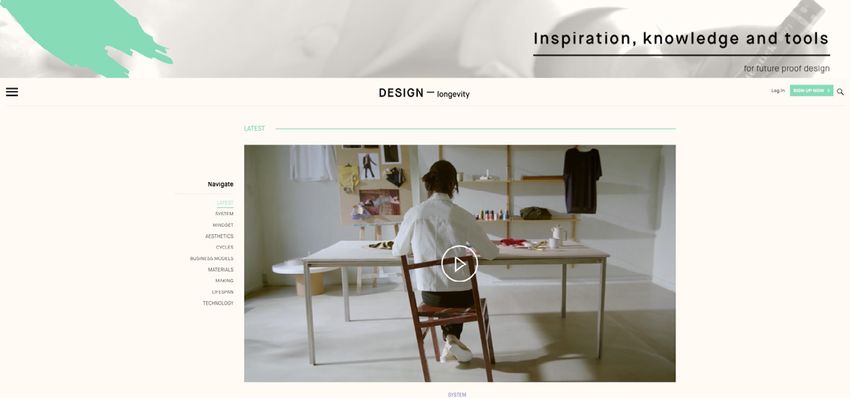
INTRODUCTION         GETTING INFORMED                    STRATEGY                   IMPLEMENTATION                 COMMUNICATION                   EVALUATION                        THE ROAD AHEAD              ADDITIONAL RESOURCES

               STRATEGY

               WORKING WITH CIRCULAR DESIGN
               Circular design is still a rather new concept within the wider fashion industry and will require new skills, tools and forms of collaboration to become an integral part of your
               company and the broader industry.

               KEY LEARNINGS                     ALIGNING CIRCULAR DESIGN WITH YOUR
                                                 COMPANY AND PRODUCT TYPES
                 •      here is a need to
                       T
                       increase and share
                       knowledge about cir-      Circular design encompasses various approaches, which is why it should
                       cular design practices    be adapted in a way that makes sense to you in terms of brand identity
                       amongst designers
                                                 and products offered.
                 •      ircular design is an
                       C
                       essential component
                       of a long-term circular
                       business strategy         GETTING STARTED

                                                 Several companies, such as Houdini, EILEEN FISHER Inc. and Proef, have
                                                 already embraced circular design, yet many companies are just getting
                                                 started. Questions to explore before getting started:

                                                     •    How can we rethink the life cycle of our products?
                                                     •    How can we prolong the lives of our garments?
                                                     •    How can we make our designs easier to repair and recycle?
                                                     •    How can we design for a closed loop?
                                                     •    How can we engage our customers?
                                                     •    How can circular design fit into our company’s business
                                                           strategy?

                                                 Once you have compiled a variety of circular design ideas, identify what   THE CEO AGENDA’S RECOMMENDATIONS FOR A CLOSED-
                                                 approach is most suitable for your company. Questions to explore:          LOOP FASHION SYSTEM
                                                                                                                              The CEO Agenda encourages fashion industry leaders to train their design and
                                                     •    What resources does the approach require?                           product development teams to create products that are made for durability,
                                                     •    What technology does the design require?                            disassembly and recycling, and to increase the share of recycled fibres in their
                                                                                                                              products. Retailers should also increase the collection of used garments.
                                                     •    What knowledge do you need?
                                                     •    How long will it take to put the changes into place?
	              Frontrunners should collaborate with their peers, industry organisations and
                                                                                                                              governments to develop better systems for the widespread collection of used
                                                     •    What are the associated costs?

                                                                                                                              garments, and invest in the development of innovative technologies that will
                                                     •    What external resources do you need?                                allow them to turn textile waste into high quality fibres.

                                                                                                                                                                                                                                   6
INTRODUCTION      GETTING INFORMED                      STRATEGY                       IMPLEMENTATION                        COMMUNICATION                        EVALUATION                         THE ROAD AHEAD                ADDITIONAL RESOURCES

               STRATEGY

               CIRCULAR DESIGN APPROACHES
               The numerous different and overlapping approaches to circular design can be combined. How you choose to work with circular design should be reflected in the broader
               context of your company, such as your production, business model, brand identity and vision. Selecting the most suitable method will depend on the type of product. For
               example, repairability can be a priority for jeans, while recycling or biodegradability might be more appropriate for socks.

               FACTORS INFLUENCING YOUR APPROACH                                                                      “Nudie Jeans did not start with the idea of designing for repa-
               TO CIRCULAR DESIGN                                                                                     rability, but it became a natural step to introduce our free repair
                   •     Brand identity                                                                               service. Denim is also a rewarding fabric to work with when it
                                                                                                                      comes to repairs as it is fairly easy to learn the repair skills, and
                   •     Product type, e.g. quality or materials used most
                                                                                                                      visible repairs are a beautiful detail instead of a flaw.”
                   •     Existing design practices
                                                                                                                                                                                                          - ELIINA BRINKBERG
                                                                                                                                                                                            Environmental manager, Nudie Jeans
                   •     Resources within your design team and the capabilities of internal departments

                   •     Involvement in other circular practices, such garment collection or recycling

               FIVE APPROACHES TO CIRCULAR DESIGN

                                                                   DESIGN FOR LONGEVITY                                                                    DESIGN FOR CIRCULARITY
                       APPROACH
                                                DESIGN FOR DURABILITY             DESIGN FOR REPAIRABILITY             DESIGN FOR DISASSEMBLY            DESIGN FOR FIBRE RECYCLING            DESIGN FOR BIODEGRADABILITY

                                             Involves extending the life of a   Entails considering which ele-       Requires components that can        Involves taking current material      Means that products only include
                                             product by prolonging its usage.   ments will most likely need to be    be easily separated, making it      streams into account. Can be          materials that decompose natu-
                                             In other words, durability of a    repaired or changed. These are       easier for a product to be reused   complex and requires that all         rally and that can be returned to
                                             product is measured by how long    usually buttons, holes or linings.   or recycled, prolonging the life    product materials, including          nature through biological cycles
                       DESCRIPTION
                                             the product provides a useful      Make sure that you consider          of its materials                    chemicals, are carefully con-         after use
                                             and meaningful service to the      repair kits or services when                                             sidered
                                             consumer                           designing for reparability

                                             · Have high quality products       · Have high quality products         ·	Have a few simple products       · Design in mono-material             ·	Offer products that are not
                                                                                                                        with only a few components                                                suitable for second-use, such
                                             · Offer timeless styles            ·	Have a few simple products                                            · Mainly have denim products             as underwear
                                                                                   with only a few components        ·	Aim to reuse parts of previous
                    SUITABLE IF YOU          ·	Design products with high                                               products in new products         ·	Have products of varying           ·	Focus on reducing waste accu-
                                                brand value                                                                                                 quality                               mulation
                                                                                                                     ·	Have a garment collection
                                                                                                                        scheme                           · Have a garment collection

                        EXAMPLE              Tom Cridland                       Nudie Jeans                          Proef                               HNST                                  Houdini

                                                                                                                                                                                                                                                      7
INTRODUCTION GETTING INFORMED STRATEGY IMPLEMENTATION COMMUNICATION EVALUATION THE ROAD AHEAD ADDITIONAL RESOURCES
STRATEGY
INTERNAL INVOLVEMENT
For circular design strategies to be successful, strong communication channels between relevant departments is essential. It is important to empower and inspire the teams
as well as to increase knowledge sharing across internal departments. Externally, establishing a close relationship with suppliers is of high relevance. It can be challenging
for them to meet sustainability and circularity requirements if they do not possess the necessary knowledge.
INVOLVING INTERNAL DEPARTMENTS GETTING TOP MANAGEMENT ON BOARD
Consider involving the following departments: To demonstrate why design for circularity is important for top management, show-
case its strategic importance by highlighting that:
Design and product development to develop circular products using two key players
• Circular design is a great starting point to commit to circular economy
Marketing and communication to communicate professionally and adequately about
new products • Circular design is one way to reduce dependency on scarce resource3
Retail to create extra value around a product during sales • ecisions in the design phase can determine a product’s environmental and
D
social performance4
CSR and sustainability to determine the social and environmental impacts of new
materials or design practices • Investing in circular design can open up new business opportunities and
add strategic brand value
Sourcing to ensure that you can obtain the necessary materials for your designs
Finance to determine the financial viability of new materials or design initiatives “You need a clear vision and direction to know what to focus
on and to make sure the company knows where to go. Since
the start we have decided not to have a separate sustainability
CASE STUDY — ASOS department, but instead make sure sustainability is integrated as
ASOS, a signatory of the 2020 Commitment, is determined to enhance sustainability and circu-
larity in its design practices. To do so, it has partnered up with the London College of Fashion
a part of everyone’s work and processes. By doing so sustaina-
to pilot a training programme on circular fashion that covers the latest techniques and best
practices in the field. As part of launching the pilot, 15 members of the ASOS design team will
bility becomes a natural part of the core business and decisions.”
participate in the programme. The resulting learnings from the pilot will be used to refine the
programme for the rest of the design team.2 - ELIN LARSSON
Sustainability director, Filippa K
8INTRODUCTION GETTING INFORMED STRATEGY IMPLEMENTATION COMMUNICATION EVALUATION THE ROAD AHEAD ADDITIONAL RESOURCES
STRATEGY
MANAGING COSTS AND LOGISTICS
When implementing circular design, it is important to consider the related costs and logistics associated with setting up a circular design initiative, especially in terms of
training your design and production team.
COSTS RELATED TO CIRCULAR DESIGN LOGISTICS
Changing your design practices involves costs related to trainings, research, develop- Logistics are mainly related to new purchasing decisions regarding materials. If you
ment and sourcing new materials, which is why initial investments for implementing are establishing a new relationship with a supplier, the sourcing logistics must be
circular design are vital. taken into consideration.
If you are designing for repair services, it is important to think through the surround-
CIRCULAR TRAINING ing logistics, which are influenced by whether you choose to repair in-house or to
hire an external partner.
The first step in implementing circular design in your production is to train designers, for
example through workshops, by establishing partnerships, hiring external experts or by If you are designing for disassembly, examine how products find their way back in
visiting others who work with circular design, all of which may entail extra costs. the material stream for each part of the product.
If you are designing for recyclability think about how the materials will flow back into
RESEARCH AND DEVELOPMENT your own forward value chain, or a how a third party will handle these products.
Because circular design is a new concept, you will need to explore what suits your If you are designing for biodegradability, take into consideration what opportunities are
company and your products best. Invest in research and development or follow the available for customers to be responsible for this aspect and what that involves logisti-
latest advancements to keep track of new technologies and materials. cally. Many customers are unable to compost products at home, which is why designing
for biodegradability only has value if products are returned to the right place.
SUPPLY OF NEW MATERIALS
Depending on which approach you take to design for circularity, you might need
to source new materials that are either more durable, recyclable or biodegradable.
These sourcing practices might entail higher costs than your current purchasing of
materials. When you have a clear overview of extra costs, consider how much of the
additional costs should be reflected in the price of the product.
9INTRODUCTION GETTING INFORMED STRATEGY IMPLEMENTATION COMMUNICATION EVALUATION THE ROAD AHEAD ADDITIONAL RESOURCES
STRATEGY
SETTING TARGETS
Circular design targets are an important aspect of signalling your new initiatives to internal and external stakeholders. Targets will also improve the credibility of the initia-
tives, making it easier to report on progress.
TARGET SETTING CIRCULAR DESIGN TARGETS FOR 2020 COMMITMENT
Early-stage targets should focus on activities that lay the foundations for future As part of the 2020 Commitment, the circular design targets set mainly focus on training in circu-
lar design and integrating circularity into design briefs.
engagement, such as developing design strategies or training staff in circular design
thinking. This is an important part of integrating circularity into an overall business TRAINING IN CIRCULAR DESIGN
strategy. Most importantly, targets should provide clarity and direction, and be meas-
urable. GAP Inc. will train its cross-functional product teams on circular design techniques and best
practices by 2020
Targets can focus on tangible objectives: NIKE will work to implement sustainability training, including circular design, for all product
creation roles in footwear and apparel
• Setting up a circular design brief INTEGRATING CIRCULARITY IN DESIGN BRIEFS
• Creating a preferred materials list Ganni has committed to include circular design principles in all of its product briefs by 2020
HUGO BOSS will apply circular design principles in all of its design briefs, starting with the spring/
• Implementing care instructions for customers summer 2020 collection
• Number of employees trained in circular design principles
• ercentage of garments being designed for durability, reparability,
P
disassembly, recyclability and biodegradability
“Our experiences have shown that circular design targets need
to be realistic, based on the technological capabilities of our
• Decrease in usage of, for example chemicals, coatings and glues industry and relevant to the consumer. Our biodegradable shoes,
For more assistance with setting targets, watch Global Fashion Agenda’s “Setting for example, did not sell well because consumers were sceptical
Targets” webinar. Examples of targets for circular design can also be viewed on about the benefit of a biodegradable shoe.”
Global Fashion Agenda’s website. - STEFAN SEIDEL
Head of corporate sustainability, Puma
10INTRODUCTION GETTING INFORMED STRATEGY IMPLEMENTATION COMMUNICATION EVALUATION THE ROAD AHEAD ADDITIONAL RESOURCES
“The scope of design must change. We can’t continue
creating garments that simply look and feel good, we need to create
smart solutions fit for a new fashion system, where resources can be
utilised over and over again. This means that our roles as designers
will shift hugely, which requires new skills and learning. If we rec-
ognise this and support new mindsets and design practices, we can
truly take the lead in a systematic change for the fashion industry.”
- TOBIAS HARBOE
Project manager for Design for Longevity, Global Fashion AgendaINTRODUCTION GETTING INFORMED STRATEGY IMPLEMENTATION COMMUNICATION EVALUATION THE ROAD AHEAD ADDITIONAL RESOURCES
IMPLEMENTATION
SOURCING CIRCULAR MATERIALS
The choice of materials is often driven by the look, feel and price, but when it comes to circular design, durability, reparability, disassembly, recyclability and biodegradabil-
ity should also be key considerations, depending on the chosen approach. Finding suitable tools and resources to help you identify the right materials for the intended use
is essential.
KEY LEARNINGS SUSTAINABLE AND CIRCULAR MATERIALS DEVELOP A LIST OF PREFERRED MATERIALS
• hoose materials care-
C Circular materials can continuously be looped back into the fashion It can be a good idea to develop a list of materials that best suits your
fully, select what is fit
for purpose system. These materials may not necessarily be classified as sustaina- products and that aligns with your overall circularity strategy. This
ble, but their fibre composition and construction make them durable will give the design and product development teams a clear guide for
• evelop a list of
D
preferred materials
or recyclable. Materials that are traditionally classified as sustainable material choices. Setting up or getting access to a fabric library can
that aligns with your may not be circular, however. For instance, certain fabrics made from help clarify the social and environmental impacts of each material.5
strategy and brand mixed fibres cannot be recycled with current technology.
• se material assess-
U
ment tools to guide When sourcing materials, consider: COLLABORATE WITH SUPPLIERS
your sourcing decisions
• epending on the cir-
D • here you can tap into waste streams (e.g. products you
W Tell your fabric suppliers specifically what you are looking for and
cular design approach have taken back) work together to find fabrics and technological solutions that enable
you choose, consider
the different aspects cyclability of your products.6
of a product’s life cycle • Durable fibres
and the corresponding
fibre for optimal design
circularity • Biodegradable fibres
• Recyclable fibres
• imiting the amount of finishes and coatings to ease
L
cyclability
• voiding hazardous chemicals and dyes to allow safe looping
A
of materials
• he impact of the material throughout its entire life cycle,
T
including any negative externalities that might outweigh
certain circular features (e.g. microfibres)
12INTRODUCTION GETTING INFORMED STRATEGY IMPLEMENTATION COMMUNICATION EVALUATION THE ROAD AHEAD ADDITIONAL RESOURCES
IMPLEMENTATION
TOOLS FOR IMPLEMENTING CIRCULAR DESIGN
ASSESSMENT TOOL: HIGG INDEX CRADLE TO CRADLE: FASHION POSITIVE MATERIALS
The Higg Index is the global apparel, footwear and home textile industry standard for The Fashion Positive Materials Collection is a portfolio of key Cradle to Cradle Certi-
measuring and improving the sustainability performance of a product or company. fiedTM building block materials that has the potential to increase the positive impact
It comprises several easy-to-access online tools designed for members from every of garments. The materials are certified for material health, reutilisation, renewa-
segment of the industry. ble energy, water stewardship and social fairness, creating a collection of urgently
needed ‘positive’ materials to design with from the beginning and at scale.
The Higg Material Sustainability Index is a cradle-to-gate material impact assess-
ment tool used to identify and compare materials and processes with highest/lowest Fashion Positive works to verify circular fashion materials according to the Cradle to
impact. Another useful tool is the Higg Index Design & Development Module, which Cradle Standard and to provide industry access to these materials. Read more.
can be used to score apparel and footwear products early in the design process.
Read more.
13INTRODUCTION GETTING INFORMED STRATEGY IMPLEMENTATION COMMUNICATION EVALUATION THE ROAD AHEAD ADDITIONAL RESOURCES
IMPLEMENTATION
DESIGNING FOR CONTINUOUS LOOPS
The implementation of a circular design process will vary depending on the design approach chosen, such as designing for durability and recyclability. Regardless of the
design approach, however, it is important to consider the products’ whole lifecycle, including its post-consumer life, to uncover how designing for closed loops can be
achieved.
KEY LEARNINGS DESIGN FOR LONGEVITY Design for reparability
Product repair is an important part of a circular strategy as it extends
• ibre composition has a
F Designing for longevity intends to prolong the active lifetime of gar- a product’s life.8 Even products designed for durability will likely
significant impact on a
product’s longevity and ments. The aim is creating products that are durable, comfortable and require repairing at some point, and envisioning how they can be
cyclability possess a timeless design.7 Use the following guidelines to help design repaired early in the design phase can ease the process, prolonging
• Identify all components
for longevity: the life of a product without compromising on look or style.
included in the product,
and determine how Design for durability Identify key repair features
they loop back into the
system Designing for durability is key in extending the use phase of garments. Identifying key features early in the design phase that are often
Quality and durability are often used interchangeably, but the purpose affected by normal wear and tear and will likely need repair, allows
• learly label products
C
and include instruc-
is to ensure the longevity of the product. When designing for durabil- you to improve the repair process by building reparability into those
tions for how products ity consider: features. If you already have a garment collection scheme, take note of
should be handled by the most common defects on the returned garments and then avoid
the end of use
• The quality of fabrics in terms of strength, abrasion resist- those in the design process.
ance and shape resilience
Facilitate the repair process
• Quality of trims and linings Ease of disassembly is a key factor in determining reparability. Extend-
ing the life of a product can be as simple as removing and replacing
• he finishing and product surface in terms of odour, tears
T a damaged or broken zipper. Pure Waste designs feature zippers that
and stains can easily be removed, for example.9
• Product features that are easily affected by wear and tear Consider the aesthetics
Consider how design elements, fabrics, linings and finishing can be
• hemicals used and their impact on fabrics; work closely
C repaired without compromising the aesthetics of a product.
with manufacturers and suppliers to select dyes that best
meet a product’s performance requirements Provide guidance
Be sure to guide consumers using clear information or intuitive
• Correct and precise care instructions processes, as many customers lack the knowledge and skills to repair
products. The fewer steps the better.
• he emotional durability of the product; Styles that are
T
timeless, multifunctional or that can be upgraded prolong
the longevity of the garment
14INTRODUCTION GETTING INFORMED STRATEGY IMPLEMENTATION COMMUNICATION EVALUATION THE ROAD AHEAD ADDITIONAL RESOURCES
DESIGNING FOR CIRCULARITY
Design for disassembly
Instead of letting products end in landfills, designing for circularity explores oppor- When designing for disassembly, think about how a product can be taken apart with-
tunities to create continuous value at a product’s end of use. Designing for circularity out damaging the materials. To employ an intuitive disassembly process, minimise
requires careful consideration of which components are included and how they can the number of components, as well the need for fastenings and accessories. Also,
be looped back into the system at the end of use. Textile recycling is a field still under avoid glues and surface treatments when possible, for example, to make components
development, setting limitations on design practices. Some guidelines, however, are easy to detach and separate.
already available:
Design for fibre recycling
Reverse your thinking Because today’s technology for fibre recycling is still limited, the choices made at the
Start by reversing your thinking and consider how a product can be reused after its product development stage have a huge impact on the recyclability of fibres. Sepa-
end use. When identifying each component of a product, take into account how each rating mixed fibres is currently a challenge, which is why companies such as Elsk and
one can be reused or recycled. Houdini avoid mixing materials and opt for the use of monofibre fabrics. Especially
linings and threads can be a challenge. To address this issue Filippa K has started
Include information using TENCEL® threads in some garments to make recycling easier.
One recycling issue is the lack of transparency in terms of materials used. To increase
the recyclability of clothing it is important to create more transparency on material Design for biodegradability
components and composition, especially to speed up the sorting process. New tech- Another approach is to make garments, accessories, or parts of them biodegradable
nologies are emerging on the market, such as radio-frequency identification tags and and thus recyclable. Preventing non-biodegradable fibres, dyes and finishes from
2D barcodes, making it easier to identify a product’s fibres, dyes and style, allowing entering the ecosystem reduces the risk of harming the environment. For example,
for better recycling at the product’s end of life.10 C&A was the first global retailer to launch Gold Level Cradle to Cradle CertifiedTM
t-shirts. They are designed with materials that are biological nutrients, which means
Understand current recycling practices they are made to be reused and recycled into new products or to be safely com-
To enhance the likelihood of garments being recycled, designers can follow current posted.11
technological developments and design in a way that eases the process and acceler-
ates a circular fashion system.
15INTRODUCTION GETTING INFORMED STRATEGY IMPLEMENTATION COMMUNICATION EVALUATION THE ROAD AHEAD ADDITIONAL RESOURCES
COMMUNICATION
MARKETING CIRCULAR PRODUCTS
The move from a linear to a circular fashion model also requires a shift in consumer behaviour. That’s why informing and inspiring them to play an active role is crucial. If
they are not properly informed, the probability of looping a product back into the system declines greatly.
KEY LEARNINGS CUSTOMER ENGAGEMENT PRODUCT LABELLING
• onsumers must be
C Create an authentic narrative Providing detailed labelling on a product is key to ensuring its
clearly informed about
the positive impact of An authentic narrative around your circular design is important to cyclability. Labels encourage durability by providing instructions on
circular design and how engage customers and increase loyalty. Information sharing is an how to wash, dry and repair to minimise damage. Furthermore, clear
to take care of their
garments
important tool to inspire and motivate your customers. instructions that remain visible on a label until a garment’s end of use
help ensure recyclability.
• Transparency is Nudging circular behaviour
essential to selling an
authentic story While consumers increasingly demand greater transparency, they
are also overwhelmed with choices and information at every point of
• arketing can be used
M
to inform and engage
purchase. Consequently, brands have to make the right choice easy
your customers in your and rewarding, for example, by using in-store displays, guides, videos
design practices or added services on- and offline. Providing information on how and
where a product was made, along with tools and tips on how to care,
repair and recycle, is a decisive factor in making this happen. If con-
sumers are not properly informed, the probability of looping a product
back into the system declines greatly.
Let customers share their stories
Use the central role of customers in the circular fashion system by
letting customers be a part of the story and make them feel more
empowered by their purchasing decisions. Patagonia, for example, has
a blog that allows customers to share stories on how their garments
have been used and even passed on through the generations. This is a
great way for them to share how your and their efforts prolong the life
of a product.
16INTRODUCTION GETTING INFORMED STRATEGY IMPLEMENTATION COMMUNICATION EVALUATION THE ROAD AHEAD ADDITIONAL RESOURCES
EVALUATION
EVALUATING CIRCULAR PRODUCTS AND PROCESSES
Once the product has been launched it is important to take a step back and assess the circular design process. Evaluation is key to seeing how you can improve a product’s
cyclability, as well as make the process easier next time.
KEY LEARNINGS REVISIT YOUR TARGETS PROCESS FEEDBACK
• valuating your circular
E Revisiting your original targets to see if you achieved what you set To improve the product development process, it is important to
design practices should
be done continu- out to do is the very first step in the evaluation. Next to tracking your get feedback from your internal teams and other key stakeholders
ously by testing your progress and possible bottlenecks, reporting your achievements is one involved across the value chain. Evaluate whether you had the nec-
products
essential way to keep internal and external stakeholders informed and essary resources, skills and tools, and whether you engaged relevant
• ake sure that your
M to be transparent in your sustainability practise. Sustainability reports stakeholders. Should your internal infrastructure change at all to ease
evaluation process from other fashion brands and organisations are a great source of the process? Did you have to make too many compromises on the
provides information
on how to improve inspiration for reporting on your progress. product’s aesthetics or profit margins?
products and processes
within the specific
approach you have
chosen MAKE YOUR TARGETS TANGIBLE CUSTOMER FEEDBACK
• Internal and external
feedback is a key Even though evaluating your circular design targets might initially Investing time and money to understand how a product has been
source of continuous raise measurability issues, there are multiple ways to approach the received by customers is a valuable tool for evaluating its performance
learning and improve-
ments
task. Begin the process by looking at concrete numbers: and identifying improvement levers. It can also provide insight into
possible flaws that impact the longevity of the product.
• How many employees were trained on circularity?
• ow much of your collection is being designed for circular-
H
“When developing completely new ideas and
ity? Which approach was the most or least successful? changes, it is difficult to know how it will work in
reality. How will customers perceive it? How well
• ow much was invested in new technologies and what is the
H
outcome? will it integrate with the rest of the business? Logisti-
cal challenges we did not foresee etc. Allow yourself
• How high are your savings on the use of chemicals?
to learn as you go along and make adjustments along
the way or remove it if not successful.’’
- ELIN LARSSON
Sustainability director, Filippa K
17INTRODUCTION GETTING INFORMED STRATEGY IMPLEMENTATION COMMUNICATION EVALUATION THE ROAD AHEAD ADDITIONAL RESOURCES
THE ROAD AHEAD
STEPS TOWARDS CIRCULAR DESIGN
This toolbox demonstrates how design is a key aspect of a circular fashion system. It also showcases the opportunity design represents for you, as a fashion brand, to take
an active role in transitioning the industry to a circular fashion system.
INCREASE COMMUNICATION AND COLLABORATION USE TECHNOLOGY TO TRACK MATERIALS
Developing and using technology to tag and track the materials and components of
Collaboration within companies and the fashion industry is essential to create a garments is necessary to ease the sorting and recycling of textiles. Information about
circular flow of materials and knowledge. New systems and partnerships need to be how a product has been designed and how it can be recycled needs to become read-
developed internally and externally for products to be part of a circular system. To ily available to consumers and recyclers, as well as to design teams. This approach
enable a circular fashion system, collaboration with multiple stakeholders, including will improve the chances of a product becoming a source of recycled materials at the
organisations, companies, manufacturers, suppliers, academia and policy enactors is end of use.12
vital.
EDUCATE TEAMS TO THINK CIRCULARLY
“Circular systems for fashion are impossible to create and imple-
Educating design, product development and sourcing teams to think circularly is
essential to close the loop. There is a need to share knowledge, best practices, les- ment alone. Collaborating with each other is vital, as is develop-
sons learned, inspiring cases and tools with each other to support this transition. ing and trusting aligned leadership on multiple fronts. Working
together in this way, we save effort, time and resources. We can
DEVELOP SYSTEMS do more, faster, when we work together.”
Circular design strategies need to be supported by the development of systems for
collecting textiles so that the garments can be reused and recycled and not end up in - ANNIE GULLINGSRUD
mixed waste streams, where their circular design elements are lost. Director, Textile & Apparel Sector, Fashion Positive
18INTRODUCTION GETTING INFORMED STRATEGY IMPLEMENTATION COMMUNICATION EVALUATION THE ROAD AHEAD ADDITIONAL RESOURCES
ADDITIONAL RESOURCES
CIRCULAR DESIGN GUIDE
The Circular Design Guide, developed by the Ellen MacArthur Foundation in collaboration with IDEO, provides helpful worksheets in the transitioning towards a circular econ-
omy. It contains an expansive collection of tools and methods to help you understand, define, make and release circular innovations.
DESIGN FOR LONGEVITY
The Design for Longevity platform, available free of charge for users, is part of a project funded by EU Life and brought to you by Global Fashion Agenda, with support from
C&A Foundation. By highlighting the most relevant inspiration, knowledge and tools, the platform provides designers with a catalogue of ideas about the design process. It
seeks to break down the complex issues of design for longevity and circular strategies into palatable, bite-size pieces.
FASHION POSITIVE
Fashion Positive has a library containing all its Cradle to Cradle CertifiedTM materials in one place, making it easier for designers to navigate what fibres to use. Furthermore, Fashion
Positive collects tools and resources that give you greater insight into fashion in the circular economy, as well as how to make tangible progress toward certified materials.
MISTRA FUTURE FASHION
Mistra Future Fashion is a cross-disciplinary research programme that aims to deliver insights and solutions to be used by the fashion industry and other stakeholders to sig-
nificantly improve environmental performance and strengthen global competitiveness. A variety of publications are publicly available on the Mistra Future Fashion website.
SUSTAINABLE APPAREL COALITION
The Sustainable Apparel Coalition developed the Higg Index, a self-assessment tool that helps brands of all sizes in assessing their sustainability activities to provide a holistic
overview of their sustainability performance. To measure, track and report changes, the Higg Index is an efficient tool to identify areas where sustainability can be improved.
Of particular relevance is the Higg Design & Development Module, or DDM, which helps score apparel and footwear products early in the design process.
WRAP
WRAP Sustainable Clothing Guide, a practical guide developed by WRAP, is useful for understanding how to enhance the durability and quality of garments. It puts forward
simple steps, best practices and cases on how to design, produce and sell sustainable clothing that lasts longer and can easily be repaired and reused.
19INTRODUCTION GETTING INFORMED STRATEGY IMPLEMENTATION COMMUNICATION EVALUATION THE ROAD AHEAD ADDITIONAL RESOURCES
REFERENCES
1. Global Fashion Agenda & Boston Consulting Group (2018). Pulse of the 7. Design for Longevity (n.d.). Why Longevity?. [pdf]. Available at: https://
Fashion Industry. [pdf] Available at: http://www.globalfashionagenda.com/ designforlongevity.com/articles/why-longevity [Accessed 22 June 2018].
download/3700/ [Accessed 22 June 2018].
8. WRAP (2017). Sustainable clothing. [pdf] Available at: http://www.wrap.org.
2. Dove, S. (2018). ASOS partners with Centre for Sustainable Fashion on uk/sites/files/wrap/Sustainable%20Clothing%20Guide%202017.pdf
circular design. [online] Available at: https://www.ecotextile. [Accessed 22 June 2018].
com/2018062923578/fashion-retail-news/asos-partners-with-cen-
tre-for-sustainable-fashion-on-circular-design.html [Accessed 26 July 2018]. 9. Nordic Council of Ministers (2017). Stimulating textile-to-textile recycling.
[pdf] Available at: https://norden.diva-portal.org/smash/get/diva2:1161916/
3. Ellen MacArthur Foundation (2017). A new textiles economy: Redesigning FULLTEXT01.pdf [Accessed 22 June 2018].
fashion’s future. [pdf] Available at: https://www.ellenmacarthurfoundation.
org/assets/downloads/publications/A-New-Textiles-Economy_Full-Report. 10. WRAP (2014). Technologies for sorting end of life textiles. [pdf] Available
pdf [Accessed 22 June 2018]. at: http://www.wrap.org.uk/sites/files/wrap/priv_download/MPD007-
014%20Final_End%20of%20life%20sorting%20technologies.pdf [Accessed
4. Global Fashion Agenda & Boston Consulting Group (2018). Pulse of the 22 June 2018].
Fashion Industry. [pdf] Available at: http://www.globalfashionagenda.com/
download/3700/ [Accessed 22 June 2018]. 11. Design for Longevity (n.d.) A milestone for cradle to cradle fashion. [online]
Available at: https://designforlongevity.com/
5. Design for Longevity (n.d.). Make fibre choices simpler. [online] Available at: articles/a-milestone-for-cradle-to-cradle-fashion [Accessed 22 June 2018].
https://designforlongevity.com/slides/make-fibre-choices-simpler-1
[Accessed 22 June 2018]. 12. Ellen MacArthur Foundation (2017). A new textiles economy: Redesigning
fashion’s future. [pdf] Available at: https://www.ellenmacarthurfoundation.
6. Nordic Council of Ministers (2017). Stimulating textile-to-textile recycling. org/assets/downloads/publications/A-New-Textiles-Economy_Full-Report.
[pdf] Available at: https://norden.diva-portal.org/smash/get/diva2:1161916/ pdf [Accessed 22 June 2018].
FULLTEXT01.pdf [Accessed 22 June 2018].
20You can also read


