Designing Framework for Real Time Twitter Data Analytics using Apache Flume and Pig
←
→
Page content transcription
If your browser does not render page correctly, please read the page content below
International Journal of Recent Technology and Engineering (IJRTE)
ISSN: 2277-3878, Volume-8, Issue-6, March 2020
Designing Framework for Real Time Twitter
Data Analytics using Apache Flume and Pig
Ashlesha S. Nagdive, Rajkishor Tugnayat
Abstract: In the world of technology, people prefer social media to II. PROCEDURE RELATED WORK
express themselves. Record says Twitter has more than 321
million active users with 100 million users posting approximately This Design framework is gathering of data, filter data, and
340 million tweets a day. Twitter is the largest source of breaking analyzes streaming data which throws light on the trends
news on social issues specially election-related where people can based on time and condition. Framework comprises in three
express their views also suggest their opinion. Twitter is steps; unstructured data ingestion or insertion, data streaming
generating unlimited unstructured text data. Hadoop is one of the
finest tools accessible for analyzing twitter data because it
process, and data visualization for further analysis and
supports processing of distributed big data, streaming data, time prediction. Ingestion of data is achieved by Kafka, a popular
stamped data, text data etc. Whereas Apache Flume is used to and powerful message broker system designed to import
extract real time twitter data into HDFS. This study attempts to tweets, distribute it based on Topics and to make it available
establish an analytical framework to derive and interpret over consumers nodes for transformation by analytical
structured as well as unstructured Twitter data. The proposed
tools[3]. Apache Spark provides a direct contact to the users
framework comprises of real time twitter data insertion, its
processing, and data visualization utilizing Apache Flume and and analyzes data through Spark Streaming.
pig. In this project we fetch positive and negative tweets on Sentiment analysis of twitter data from the citizens of the
election data from twitter and analyzing the party status and the country can provide valuable insight during election
probability to win the election. campaigns[1]. Such campaign through social media, even
makes the party aware of the next step to be done in elections
Keywords : unstructured twitter data, HDFS, Apache flume,
Pig, Textblob, Dash. and can focus on necessary action taken for betterment of
society.
I. INTRODUCTION Social media data that accumulates a huge volume of data
every second require a proper framework that processes data
In the modern world, information is readily available as and when it arrives [3]. Identifying and Processing posts on
through internet and social media has become an social sites like twitter may prove quite useful for drawing
indispensable part of people’s life. It isn’t only interactive inferences and predicting specific activities that are about to
platform for creating, distributing and sharing wide range of happen in the world in near future [4].
information. It is effective platform for marketing by various By employing real-time data analytics significant events
organizations to reach their target audience. With the including emergencies, can be detected. Architecture was
evolution of big data, social media marketing business has developed for analyzing social media text by considering
scaled new heights. It is estimated that by 2020 the volume of specific predefined keywords and other important related
data will exceed 40 trillion gigabytes. With access to such aspects of huge dataset from tweets. These keywords are
humongous amounts of data, marketers are able to employ it predefined as positive, negative as well as neutral text words
to get actionable insights for designing efficient marketing related to particular politician. People generally tweets their
strategies. All the updates, photos and videos posted by users sentiment based on current scenario in political issues and
provide information about their demographics, likes, dislikes, problems faced by people which may be positive, negative or
comments etc. Businesses are, managing and analyzing this neutral. These keywords then helps in generating and
prediction the result before elections.
information to get a competitive edge. Real-time data analysis
requires data ingestion and processing the stream of data prior
to Storage of data. Certain applications of the real-time data
analytics includes web services, weather forecasting, medical
health care, banking sector, retail industry, multimedia, cyber
security, and social media. This paper represents designing of
framework for analyzing twitter data for prediction of election
results based on tweets of people.
Revised Manuscript Received on March 28, 2020.
* Correspondence Author
Ashlesha S. Nagdive*, Assistant Professor Information Technology,
G. H. Raisoni College of Engineering, Nagpur, India.
Email: ashlesha.nagdive@gmail.com
Dr. Rajkishor Tugnayat, Principal, Shri Shankarprasad Agnihotri
College of Engineering, Wardha, India.
Email: tugnayatrm@rediffmail.com
Published By:
Retrieval Number: F7726038620/2020©BEIESP Blue Eyes Intelligence Engineering
DOI: 10.35940/ijrte.F7726.038620 4474 & Sciences Publication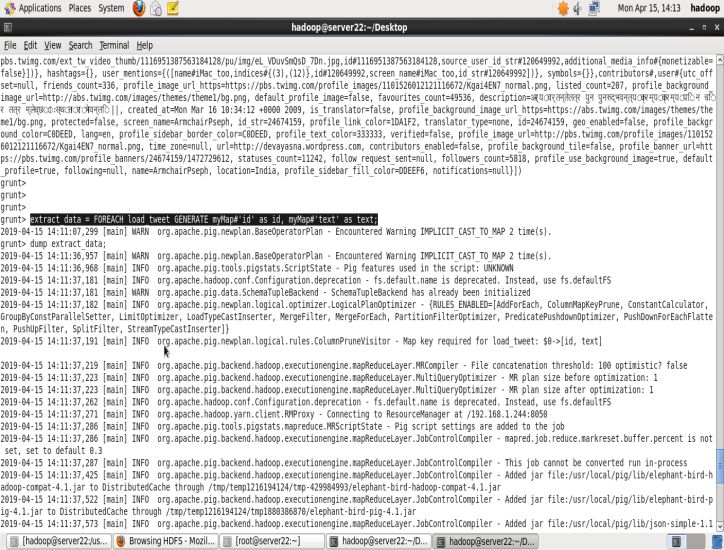
Designing Framework For Real Time Twitter Data Analytics using Apache Flume And Pig

                        III. METHODOLOGY                            C. Pig
                                                                      Pig is used as an ETL tool for Hadoop. It makes Hadoop
                                                                    more approachable and usable. It opens an interactive and
    Twitter Data                     Real Time Twitter Data         script based execution environment called Pig Latin, which
                                                                    loads and processes input data using a series of operations and
                                                                    transforms to produce the desired output. MapReduce model
                                     Extract Data from              is not always convenient and efficient When there is large
    Apache Flume                     twitter server using           amount of data which need to processed using Hadoop, it
                                     Twitter API                    involves more overhead and complex. A solution to the
                                                                    problem is Pig, extension of Hadoop.

    HDFS                             For Data Storage               D. Textblob
                                                                       TextBlob is a library in python providing the functionality
                                                                    to preprocess text data. Pattern analyzer and Naïve Bayes
                                                                    analyzer are two sentiment implementation analysis. It return
    Pig                                                             the result as a named tuple form as Sentiment(classification,
                                     Loading data in Pig for
                                     ETL                            p_pos, p_neg).When data is fetched and gathered from
                                                                    twitter, the sentiment property returns a named tuple of the
                                                                    form Sentiment(polarity, subjectivity). The polarity score is a
    Textblob                         For Sentiment Analysis         float within the range [-1.0, 1.0]. The subjectivity is a float
                                                                    within the range [0.0, 1.0] with 0.0 being interpreted as very
                                                                    objective and 1.0 being specific i.e subjective[6].
                                                                    E. Visualization Through Dash
    Dash                             For Visualization                 Data presented in the form of graphics can be analyzed
                                                                    better than data presented in words. Dash is a Python
                                                                    Framework designed for visualization. Data visualizations
               Fig.1 Block Diagram of Design Framework              convert large and complex data into graphical format so that
                                                                    patterns, trends and correlations can be visualized.
 Methodology for design framework to identify behavioral            Exploratory Data Analysis or EDA is a major part of data
 patterns through the concept of sentiment analysis of text data    visualization.
 of twitter is depicted in fig.1.Following are various phases
 and tools through which datavisualization
                                    has to get processed for
                                                                                        IV. IMPLEMENTATION
 analytics.
 A. Apache Flume                                                    A. Twitter Data Set
    Apache Fume is a data ingestion tool that allows collection        Sentiment analysis is defined as the process of mining
 or gathering data, aggregation and transportation of extensive     various data sources for opinions or views using text analysis.
 text data or logs from diversified sources to a centralized data   Politicians use sentiment analysis to gain an understanding of
 store i.e HDFS. Apache Flume has proved to be an extremely         peoples outlook towards them and their policies. Twitter, a
 reliable, distributed, and configurable tool. It is particularly   popular social media websites, provides a set of APIs that
 created to transcribe streaming data from various web servers      allows us to fetch and manipulate tweets. In this process, we
 to HDFS.                                                           are given a key and a secret token that the application uses for
                                                                    authentication. Once the application is authenticated, Twitter
 B. Hadoop Distributed File System (HDFS)                           APIs is been used to fetch tweets. One can fetch data from a
   Apache Flume gathers and stores the data in one of the two       Twitter feeds either by use of R language or by using Jaql, as
 centralized stores HBase or HDFS. The rate of incoming data        Jaql is designed to handle JSON data and the default data
 exceeds, the rate at which data can be written to the              format for tweets. It is flexible and easy to use Jaql.
 destination, Flume serves as a regulator between data
 producers and the centralized stores maintaining a constant
 flow of data between them[5]. Flume provides the feature of
 circumstantial routing. Flume consists of channel-based
 transactions. It ensures reliable message delivery.

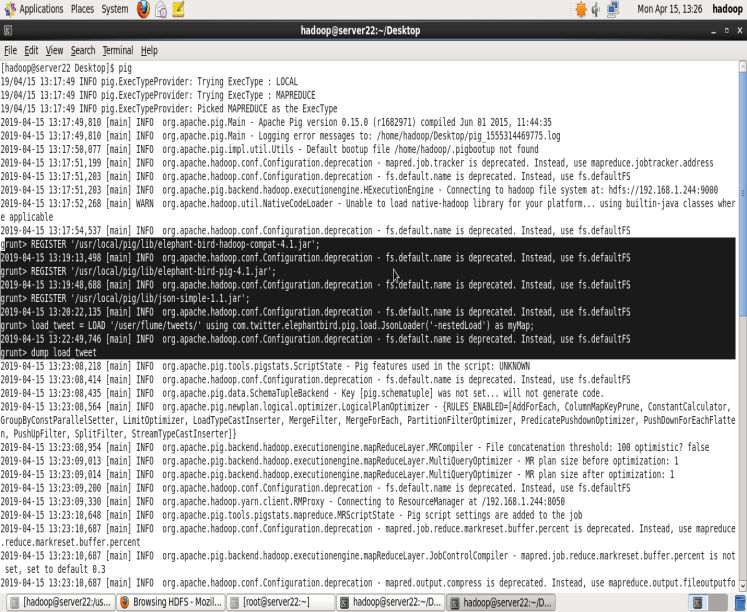
                                                                          Fig 3. Tweets on Modi

                   Fig 2. Architecture of Apache Flume

                                                                          Published By:
Retrieval Number: F7726038620/2020©BEIESP
                                                                          Blue Eyes Intelligence Engineering
DOI: 10.35940/ijrte.F7726.038620                                4475      & Sciences Publication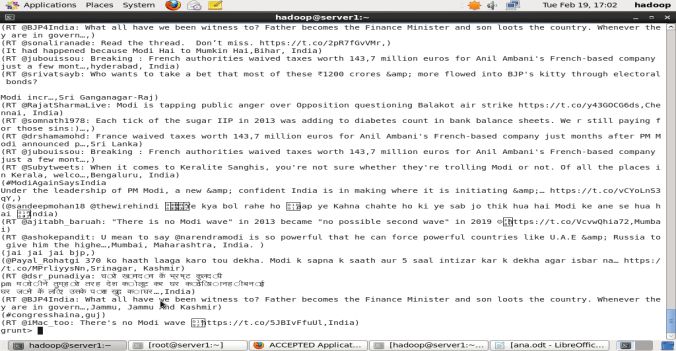
International Journal of Recent Technology and Engineering (IJRTE)
                                                                       ISSN: 2277-3878, Volume-8, Issue-6, March 2020

                                                                                      Fig 6. Extracting Twitter Data
                                                                   The above code will give specific Id and text data of user
                                                                   which makes it structured and also make it easy for analysis.
                Fig.4. Real Time Twitter Dataset
                                                                                              V. RESULT

                                                                                         Fig.7.Program in Python
           Fig.5. Processing Unstructured Twitter Data

B. Process of ETL
ETL implifies Extract, Transform, Load, three database
functions, combined into one tool to move the data from one
database to the other.

Extract process reads the data from the dataset. In this stage,
the data is gathered, often from various types of data sources.

Transform it is the process of converting the extracted data
into a format compatible with another database.
Transformation occurs by combining the existing data with
other data, following rules or lookup tables.

Load is defined as the process of writing the data into the
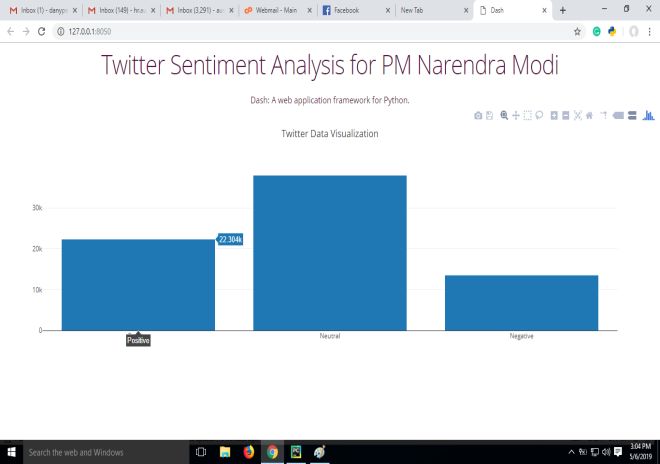
target database.                                                                Fig.8. Predictive Analysis of Twitter Data

                                                                          Published By:
Retrieval Number: F7726038620/2020©BEIESP                                 Blue Eyes Intelligence Engineering
DOI: 10.35940/ijrte.F7726.038620                               4476       & Sciences Publication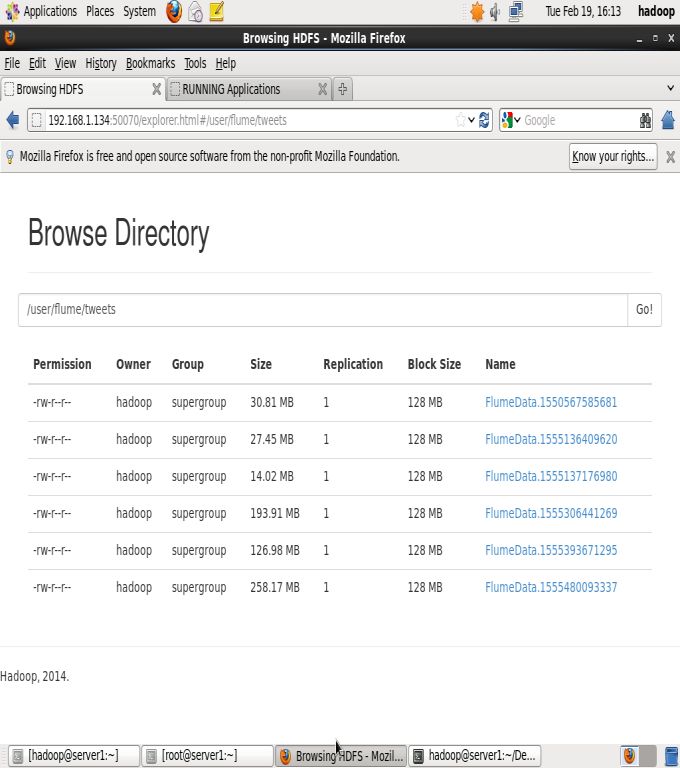
Designing Framework For Real Time Twitter Data Analytics using Apache Flume And Pig

   Predictive analytics is not just about using technological                department at G.H Raisoni College of Engineering, Nagpur since 2010.
                                                                             Member of IEEE and published various papers in International Journal and
 advances to win the electoral battles. But, about focusing
                                                                             conferences. Area of interest is Big Data & Hadoop, Data Analytics, data
 political efforts to plan and build their strategies based on real          visualization.
 public sentiments. Politicians can now really be part of
 people's everyday lives. Fig8. Represents prediction of twitter
 data before elections 2019, analyzing maximum neutral                                              Dr. Rajkishore M. Tugnayat, Principal of Shri
                                                                                                Shankarprasad Agnihotri College of Engineering
 tweets about respected Prime Minister Mr. Narendra Modi.                                       Wardha. He has completed his PhD from Nagpur
                                                                                                university. He has more than 20 years of teaching
                                                                                               experience and Research Experience. He is a member of
                          VI. CONCLUSION                                     IEEE .He has publications in various International Conferences and
                                                                             International Journals. Subject of Expertise is Software Engineering, Big
    This research case study focuses on the significance of                  Data, Computer Networks and Image Processing.
 design framework for real-time data analytics using social
 media data.Sentiment analysis is helpful as it provides access
 to the wider public opinion on a particular topic/situation. In
 this paper we have analyze public opinion about elections
 2019 and analyze opinion about “Modi” through twitter data.
 People all over world have expressed their views on election
 2019 especially about political leaders and their work towards
 society. Thus prediction can be analyzed through positive ,
 negative and neutral tweets.With Predictive Analytics, even
 small campaigns are now able to target the voters they need,
 talk about the issues voters care about, through their views on
 social media like twitter.

 REFERENCES
 1.  Babak Yadranjiaghdam, Seyedfaraz Yasrobi, Nasseh Tabriz,
     “Developing a Real-timeData Analytics Framework For Twitter
     Streaming Data,” 2017 IEEE 6th International Congress on Big Data,
     978-1-5386-1996-4/17
 2. N. Mohamed, J. Al-jaroodi, Real-Time Big Data Analytics:
     Applications and Challenges. International Conference on High
     Performance Computing & Simulation (HPCS), 2014
 3. S. Cha and M. Wachowicz. Developing a real-time data analytics
     framework using Hadoop. 2015 IEEE International Congress on Big
     Data, pages 657–660, June 2015
 4. B. Yadranjiaghdam, N. Pool, N. Tabrizi, “A Survey on Real-time Big
     Data Analytics: Applications and Tools,” in progress of International
     Conference on Computational Science and Computational
     Intelligence, 2016.
 5. A. Bifet, “Mining Big Data in real time,” Informatica, 37(1), 2013,
     Pages 15 -20.
 6. D. T. Nguyen and J. E. Jung. Real-time event detection for online
     behavioral analysis of big social data. Future Generation Computer
     Systems, 2016.
 7. J. Zaldumbide, R. O. Sinnott, “Identification and Validation of
     RealTime Health Events through Social Media,” 2015 IEEE
     International Conference on Data Science and Data Intensive Systems,
     Pages 9 – 16, doi 10.1109/DSDIS.2015.27
 8. V. Ta, C. Liu, G.W. Nkabinde, “Big Data Stream Computing in
     Healthcare Real-Time Analytics”, 2016, IEEE International
     Conference on Cloud Computing and Big Data Analysis, Pages: 37 42,
     doi: 10.1109/ICCCBDA.2016.7529531
 9. M. Wachowicz, M.D. Artega, S. Cha, and Y. Bourgeois, “Developing a
     streaming data processing workflow for querying space–time activities
     from geotagged tweets” Computers, Environment and Urban Systems
     Journal. 2015.
 10. M. Wachowicz, M.D. Artega, S. Cha, and Y. Bourgeois, “Developing a
     streaming data processing workflow for querying space–time activities
     from geotagged tweets” Computers, Environment and Urban Systems
     Journal. 2015

                       AUTHORS PROFILE

                 Ashlesha S. Nagdive, PhD research scholar has
                 completed Bachelors of Engineering in Information
                 Technology in 2008 from Amravati university and
                 Masters of Engineering in Embedded Systems &
                 Computing from G.H. Raisoni College of Engineering,
                 Nagpur, in 2011.Currently Pursuing PhD from Amravati
   Author-1Also working as Assistant Professor in Information Technology
 university.
     Photo

                                                                                    Published By:
Retrieval Number: F7726038620/2020©BEIESP
                                                                                    Blue Eyes Intelligence Engineering
DOI: 10.35940/ijrte.F7726.038620                                         4477       & Sciences Publication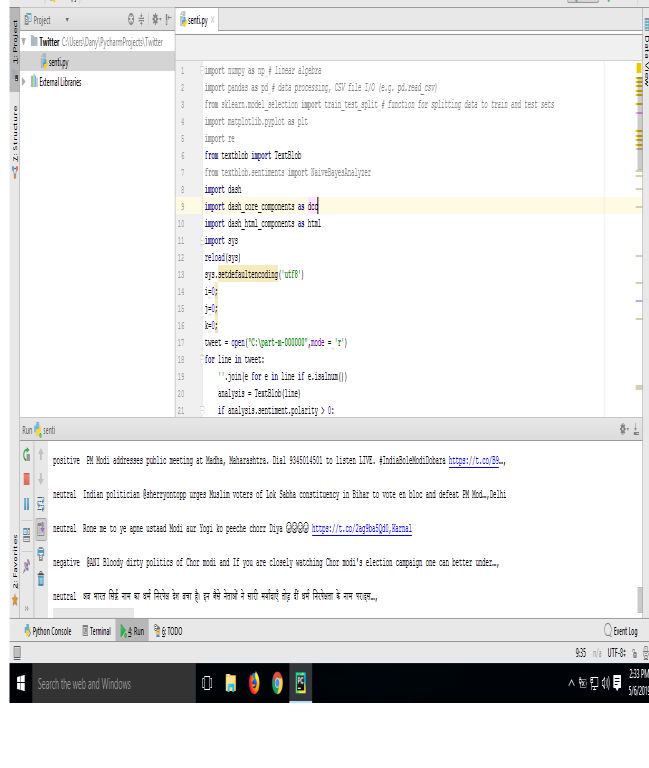

You can also read


