Determination of the energy content in hot water storage tanks
←
→
Page content transcription
If your browser does not render page correctly, please read the page content below
Determination of the energy content in
hot water storage tanks
Algorithms for estimating quantities that are not directly measurable

                                                               the complexity of the task only very few sensors
 1 Project goal                                                are normally installed in a building that are capa-
In order to provide the desired room climate,                  ble to monitor the underlying room climate and
heating, ventilation and air conditioning systems              the heating system. This means that only a limited
are widely used in apartments and buildings. As a              view of the current status of the heating system is
consequence today a large part of the total ener-              available based on the possible sensor data.
gy consumption of buildings is directly attribu-
table to room heating and hot water systems. In                From a data processing point of view, the grea-
order to reduce the overall energy consumption,                test challenge is that the heat exchangers of the
such systems should be designed and operated                   solar collector and the burner feed an unknown
in such a manner that energy consumption is as                 amount of energy into the system. In addition, re-
low as possible without impairing the comfort of               sidents produce events like hot water extraction
the residents.                                                 which creates additional challenges to the system.
                                                               Finally cooling down of the building reduce the
Developing heating systems that use an intelligent             energy content. In addition, the temperature is
control strategy and thereby reduce overall ener-              only monitored by a few sensors, which are loca-
gy consumption is today quite difficult for several            ted on the heat exchanger of the solar collector
reasons. One reason for this is that, compared to              and in the middle and top of the water tank.
                                                                                           Knowtion UG
                                                                                           Experts in sensor fusion and
                                                                                           automatic data analysis

                                                                                           An der RaumFabrik 33c
                                                                                           D-76227 Karlsruhe, Germany

                                                                                           Tel.: +49 721 486 995-10
                                  © Copyright Knowtion UG (haftungsbeschränkt) 2011-2020   www.knowtion.de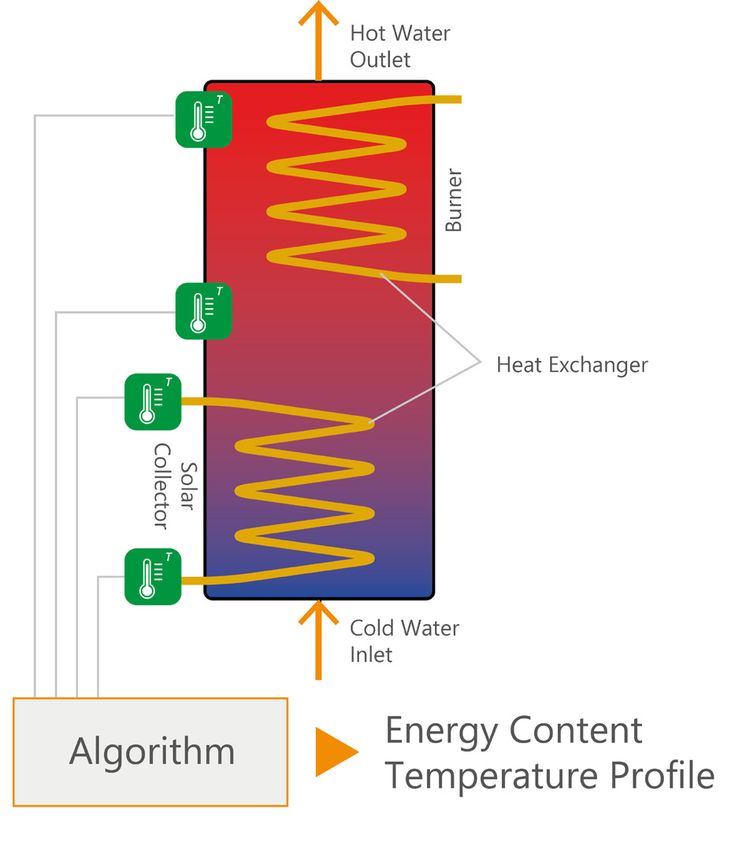
The aim of this project was to develop different                              inflows and outflows of water (mass transport).
algorithms for the state detection, the estimation                      •     Estimation of the temperature profile in the
of the energy content and the temperature profi-                              hot water tank for each measurement.
le in hot water storage tanks. The main objective                       •     Compensation of measurement disturbances.
was to estimate the energy content based on the                         •     Realization of the algorithm development in a
few sensor data and to control the hot water sto-                             rapid prototyping language like Python.
rage tank in such a manner that the overall ener-                       •     Implementation of final qualified and product
gy consumption can be reduced as well as that                                 ready software development in C on embed-
peak loads can be minimized. This makes it pos-                               ded microcontrollers and integration into the
sible to provide the end customer with additional                             customer‘s target system.
functions for needs-based hot water preparation.                        •     The algorithm and software development
                                                                              took place in very close coordination with the
                                                                              customer.

                                                                        Estimation of quantities that cannot be measured directly. Based
                                                                        on temperature sensors that are attached to a few places on the
Hot water tank diagram. An intelligent algorithm integrated in a        hot water tank, quantities that cannot be measured directly can be
control system permanently calculates the energy content and the        estimated using intelligent algorithms. Examples: (a) temperature
temperature profile of a hot water storage tank based on tempe-         profile and energy content in the storage tank, (b) status of the hot
rature sensors.                                                         water storage tank, (c) energy flow from the solar collector, (d) hot
                                                                        water taps by users and (e) anomaly detection.

    2 Development approach                                                   3 Result and benefit
•   Selection of a model-based approach to take                          •    Thanks to its good configurability, the develo-
    the physical conditions into account.                                     ped software product has been expanded to
•   Modeling of the heat propagation over time                                include several product families and integra-
    and place in combination with the energy                                  ted very well into the product range.
    inflows and outflows, as well as the heat ex-                        •    The procedure developed by Knowtion only
    changers (heat transport) including also the                              requires approx. 5 kByte of memory.

                                                                                                            Knowtion UG
                                                                                                            Experts in sensor fusion and
                                                                                                            automatic data analysis

                                                                                                            An der RaumFabrik 33c
                                                                                                            D-76227 Karlsruhe, Germany

                                                                                                            Tel.: +49 721 486 995-10
                                           © Copyright Knowtion UG (haftungsbeschränkt) 2011-2020           www.knowtion.de
•   The end user receives further information ob-
    tained from the temperature measurements,
    such as a detailed temperature profile, energy
    levels, energy balances and the time and vo-
    lume of hot water taps.
•   The realized solution will enable the consump-
    tion of fossil fuels to be reduced in the future
    and to achive in combination with the use of
    solar energy an optimized energy utilization.

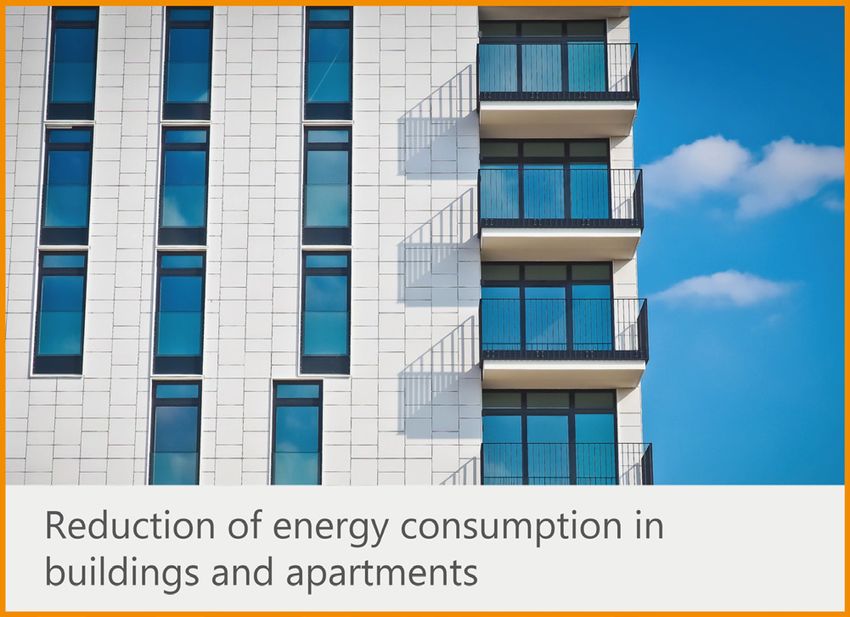
Reduction of energy consumption. The algorithm enables new
functionalities that provide the end customer with needs-based
hot water preparation. This helps to reduce energy consumption
in buildings and apartments.

                                                                                                   Knowtion UG
                                                                                                   Experts in sensor fusion and
                                                                                                   automatic data analysis

                                                                                                   An der RaumFabrik 33c
                                                                                                   D-76227 Karlsruhe, Germany

                                                                                                   Tel.: +49 721 486 995-10
                                          © Copyright Knowtion UG (haftungsbeschränkt) 2011-2020   www.knowtion.de
You can also read


