Diverticulitis in the Urgent Care Setting
←
→
Page content transcription
If your browser does not render page correctly, please read the page content below
Clinical
Diverticulitis in the
Urgent Care Setting
Urgent message: Abdominal pain due to acute diverticulitis is com-
monly seen in the urgent care setting. This is a clinical update on the
management and treatment of acute diverticulitis.
JILIAN NICHOLAS, DO, and CHRISTOPHER TANGEN, DO

Introduction
  bdominal pain commonly presents in the ambulatory

A setting, in anywhere from 1.5% to 8% of patients.1,2
  With diverticulitis being a common diagnosis in the
presence of abdominal pain, the clinical challenge in an
urgent care setting is determining uncomplicated from
complicated diverticulitis.

Diverticulosis
French pathologist Jean Cruveilhier described diverticu-
losis in 1849 as “bands of longitudinal muscle fibers in
the sigmoid, a series of small, dark, pear-shaped tumors,
which are formed by hernia of the mucous membrane
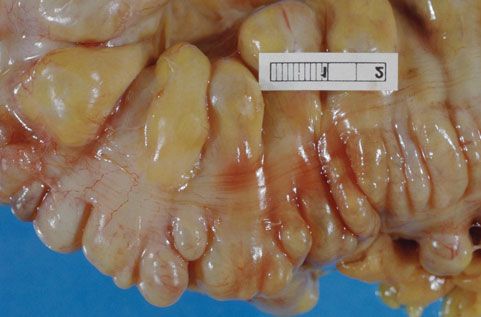
through the gaps in the muscle coat.” Diverticula are

                                                                                                                                                             ©iStockPhoto.com
described as outpouchings of mucosa and submucosa
through the muscular layer of the colon (Figure 1) that
arise in anatomic weaknesses within the bowel wall, such
as areas where blood vessels penetrate into the wall.3
   In the Western world, the prevalence of diverticulosis                              Diverticulitis
is thought to be approximately 30% to 40% of the pop-                                  Up to a quarter of patients with diverticulosis develop
ulation,4 although that is likely an underestimate, because                            diverticulitis.4 The term diverticulitis means that a diver-
most patients have asymptomatic disease.3 During                                       ticulum has become inflamed and infected, resulting in
colonoscopy, diverticulosis is the most commonly noted                                 microperforation. The most common presenting symp-
finding, seen in approximately 42.8% of all colonoscopies                              toms of acute diverticulitis include abdominal pain and
and up to 74.1% in patients older than 80 years.3                                      fever.5 Hospitalizations for diverticulitis represent 150,000
                                                                                       admissions and 24,000 elective surgical procedures per
                                                                                       year in the United States. Multiple microbes, including
Jilian Nicholas, DO, is a traditional rotating intern with a surgical focus
at UH Regional Hospitals in Richmond Heights, Ohio. Christopher
                                                                                       both anaerobic and facultative bacteria, commonly con-
Tangen, DO, is a specialist in sports medicine as well as Program Director             tribute to the infectious etiology in diverticulitis. The
of the Traditional Rotating Internship at UH Regional Hospitals.                       most commonly suspected organisms are Bacteroides,

8   JUCM T h e J o u r n a l o f U r g e n t C a r e M e d i c i n e | M a y 2 0 1 6                                                w w w. j u c m . c o m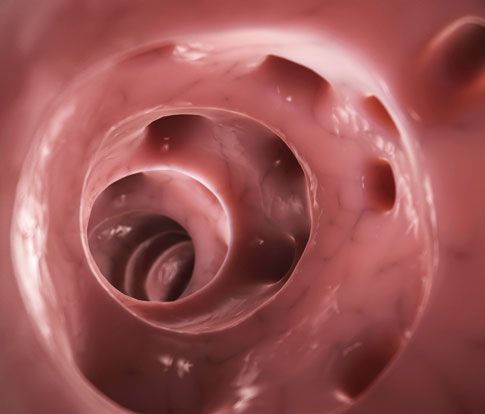
DIVERTICULITIS IN THE URGENT CARE SETTING

 Figure 1. Diverticula in the large bowel.                                              tually perforation with inflammation to surrounding
                                                                                        structures. Recently, however, researchers have postu-
                                                                                        lated that a change in the microbiota causes an alter-
                                                                                        ation in immunity of the mucosa and results in chronic
                                                                                        inflammation. Local infections caused by microperfo-
                                                                                        ration that result in formation of a small abscess can
                                                                                        often be contained. However, with larger abscesses sec-
                                                                                        ondary to macroperforation, more serious complications
                                                                                        can ensue, including peritonitis, fistula formation, and
                                                                                        systemic symptoms.4

                                                                                        History of Present Illness
                                                                                        When you suspect that a patient has diverticular disease,
                                                                                        it is important to ask about the following:
 (Image available from: https://commons.wikimedia.org/wiki/File:Diverticula,_              ! Dietary habits
 sigmoid_colon.jpg.)
                                                                                           ! Systemic symptoms
                                                                                           ! Significant comorbid conditions
 Figure 2. Computed tomography image of                                                    ! Immunocompromise
 diverticulitis with fistula formation.                                                    ! Localization of pain, and any radiation
                                                                                           ! Previous colonoscopy

                                                                                        Physical Examination
                                                                                        Common presenting symptoms of diverticulitis include
                                                                                        the following7:
                                                                                          ! Abdominal pain in the left lower quadrant, which is
                                                                                             present in 93% to 100% of patients with the disease
                                                                                          ! Fever, present in 57% to 100%
                                                                                          ! Leukocytosis, present in 69% to 83%

                                                                                          These are additional signs to look for during
                                                                                        examination4:
                                                                                          ! Guarding
                                                                                          ! Rebound tenderness in the left lower quadrant
                                                                                          ! Tenderness in the suprapubic area
                                                                                          ! Hypoactive versus normal bowel sounds
                                                                                          ! Palpable abdominal mass
                                                                                          ! Fecaluria or pneumaturia, with fistula formation
                                                                                            from the colon to the bladder
 (Image courtesy of Corey T. Jensen, MD.)                                                 ! Feces or flatus through the vagina, with fistula
                                                                                            formation from the colon to the vagina
Peptostreptococcus, Enterobacteriaceae, viridans streptococci,
and enterococci.4 Diverticulitis is categorized as uncom-                                 The differential diagnosis for diverticulitis includes
plicated or complicated according to whether there is an                                the following:
abscess or fistula, obstruction, or free perforation.6                                    ! Irritable bowel syndrome
                                                                                          ! Inflammatory bowel disease
Pathogenesis of Diverticulitis                                                            ! Carcinoma of the colon
Until recently, the pathogenesis of diverticulitis was                                    ! Endometriosis
thought to be obstruction of the neck of the outpouch-                                    ! Ischemic colitis
ing diverticulum with a fecalith, which subsequently                                      ! Infections
causes overgrowth of bacteria, inflammation, and even-                                    ! Lactose intolerance

10   JUCM T h e J o u r n a l o f U r g e n t C a r e M e d i c i n e | M a y 2 0 1 6                                             w w w. j u c m . c o m
DIVERTICULITIS IN THE URGENT CARE SETTING
“Until recently, the pathogenesis of Table 1. Computed Tomography Findings in
diverticulitis was thought to be obstruction Diverticulitis
of the neck of the outpouching diverticulum Findings in the Abdomen or Pelvis
Percent in
Diverticulitis
with a fecalith. . . . However, researchers
Pericolic fat stranding 98
have postulated that a change in the
Diverticula 84
microbiota causes an alteration in
Bowel wall thickening 70
immunity of the mucosa and results
Phlegmon or abscess formation 35
in chronic inflammation."
Data from Sifri CD, Madoff LC. Diverticulitis and typhlitis. In: Bennett JE, Dolin R,
Blaser MR, eds. Mandell, Douglas, and Bennett’s Principles and Practice of Infectious
Diseases. 8th edition. Philadelphia, PA: Saunders; 2015:986–989.
Making the Diagnosis
The diagnosis of diverticulitis is commonly made after
clinical evaluation of presenting symptoms. Surpris- Table 2. Red Flags in Diverticulitis
ingly, approximately half of the patients in whom the • Systemic symptoms, signs of sepsis
diagnosis of diverticulitis is made solely by clinical pre- • Diffuse peritonitis
sentation do not actually have the disease and are later • Immunocompromise
found to have different diseases.4 Imaging studies aid • Significant comorbidities
in the diagnosis of diverticulitis and help categorize • Fistula: >5 cm or distant abscess
severity of disease. The American College of Radiology
Data from Sifri CD, Madoff LC. Diverticulitis and typhlitis. In: Bennett JE, Dolin R,
suggests computed tomography (CT) as the initial diag- Blaser MR, eds. Mandell, Douglas, and Bennett’s Principles and Practice of Infectious
nostic imaging modality (Figure 2) for patients present- Diseases. 8th edition. Philadelphia, PA: Saunders; 2015:986–989.
ing with left lower quadrant or right lower quadrant
abdominal pain.1 Both CT and ultrasound are used to Table 3. Patients Who Require Inpatient Treatment
evaluate diverticulitis, but CT is preferred, especially
• Those unable to tolerate oral hydration
because it has been shown to be highly sensitive (97%)
• Those who require narcotic analgesia
and highly specific (100%)4 (Table 1). However, ultra-
• Those whose condition does not improve despite
sound can rival the accuracy of CT when used by expe-
outpatient management
rienced operators. Conventional radiology has poor
• Those with complicated diverticulitis
diagnostic value and is not recommended for evaluating
potential causes of abdominal pain.2 Data from Sifri CD, Madoff LC. Diverticulitis and typhlitis. In: Bennett JE, Dolin R,
Blaser MR, eds. Mandell, Douglas, and Bennett’s Principles and Practice of Infectious
Diseases. 8th edition. Philadelphia, PA: Saunders; 2015:986–989.
Treatment
Outpatient Therapy Versus Inpatient Therapy ulitis is currently being challenged. Theories about causes
Outpatient treatment is recommended in the initial of diverticulitis now focus on inflammation rather than
treatment for uncomplicated diverticulitis. It is also jus- infection, bringing into question the benefit of antibiotic
tifiable for diverticulitis with a peridiverticular abscess of use. Recently, two randomized controlled trials and twoDIVERTICULITIS IN THE URGENT CARE SETTING
Table 4. Outpatient Antibiotic Regimens (7–10 Days) “If patients are prescribed antibiotics in
• Ciprofloxacin, 500 mg orally twice a day, and
an urgent care center, they should see
metronidazole, 500 mg orally three times a day their primary-care physician within
• Amoxicillin-clavulanate, 875/125 mg orally twice a day 3 to 5 days. If their condition does not
• Cephalexin, 500 mg orally twice a day, and metronidazole, improve . . . , they should follow up with
500 mg orally three times a day
• Trimethoprim-sulfamethoxazole orally four times a day, their primary-care physician sooner or
and metronidazole, 500 mg orally three times a day return to the urgent care center.”
• Clindamycin, 450 mg orally four times a day
the decision to use surgery on a case-by-case basis. It is
Data from Stocchi L. Diverticulitis. In: McNally PR, ed. GI/Liver Secrets Plus. 5th ed. important to weigh the risks and benefits of surgery and
Philadelphia, PA: Elsevier; 2015:358–364.
to keep in mind the possible complications, such as
infections, anastomotic leak, and cardiovascular or
of acute uncomplicated diverticulitis without the use of thrombotic events.8 Up to 10% of patients who undergo
antibiotics has not been investigated.6 resection have complications.6
Patients with complicated diverticulitis should still These are important factors to consider when refer-
receive antibiotics and inpatient treatment (Table 4). ring a patient with diverticulitis to a gastroenterologist:
Such patients include those who are immunosuppressed, ! The timing and completeness of prior colonoscopy
are pregnant, have signs of systemic inflammatory ! Comorbidities
response syndrome or sepsis, or have significant comor- ! Persistent symptoms of abdominal pain or diarrhea
bid disease. ! Patient preference
Recommended Follow-Up These are important factors to consider when refer-
Most patients with acute uncomplicated diverticulitis ring a patient for surgery:
can follow up with their primary-care physician for ! A history of two or more episodes of diverticulitis
monitoring of symptom resolution. If patients are pre- (the current standard of care)
scribed antibiotics in an urgent care center, they should ! A lack of improvement with conservative
see their primary-care physician within 3 to 5 days. If treatment
their condition does not improve with conservative ! Generalized peritonitis or severe systemic
treatment or if symptoms worsen, they should follow symptoms
up with their primary-care physician sooner or return ! The presence of immunocompromise
to the urgent care center. ! Uncontrolled bleeding (without spontaneous
In addition, if there is concern about a possible cessation after administration of 4–5 U of
underlying neoplasm not identified on CT images, a packed red blood cells)
colonoscopy can be helpful in ruling out neoplasms.
These patients should be referred to a gastroenter- Prevention of Recurrent Acute Episodes
ologist for colonoscopy. According to the AGA, a Nuts and Seeds
colonoscopy is recommended after an acute episode It has long been thought that intake of nuts and seeds
has resolved, to exclude underlying colorectal neo- provokes acute attacks of diverticulitis, but this is now
plasms. Colonoscopies are usually scheduled 6 to 8 being questioned. In 2008, approximately 47,000 U.S.
weeks after an acute event, although optimal timing men with diverticulosis were enrolled in an observational
has not been established.6 study that followed the subjects for 20 years. The study
Some patients may need consultation with a general reported no increased risk of diverticulosis or complica-
surgeon for treatment of diverticulitis. The current stan- tions in men who ingested nuts, popcorn, and seeds. Sur-
dard of care recommends offering elective surgical resec- prisingly, men who consumed either nuts or popcorn
tion to patients with more than two episodes of multiple times a week had a decreased risk for complica-
diverticulitis. In the past, surgical management was con- tions.9 Outside of that large observational study, data
sidered a reasonable treatment option. However, recent regarding consumption of these items are scarce. There-
study findings have challenged this belief. The American fore, the AGA advises that it is not necessary for patients
Society of Colon and Rectal Surgeons suggest making with diverticulitis to avoid nuts and popcorn.6
w w w. j u c m . c o m JUCM T h e J o u r n a l o f U r g e n t C a r e M e d i c i n e | M a y 2 0 1 6 13DIVERTICULITIS IN THE URGENT CARE SETTING
Mesalamine “It has long been thought that intake ventative for recurrence. An
The AGA also addresses the use
of mesalamine in the preven-
of nuts and seeds provokes acute attacks observational imately 47,000 men showed a
study of approx-
tion of recurrence. Multiple of diverticulitis, but this is now being decreased risk of recurrence in
randomized controlled trials questioned. . . . Outside of [one] large those with vigorous activity
have been conducted with the observational study, data . . . are scarce. levels.6
primary end point being Therefore, the AGA advises that it is
patients free of diverticulitis not necessary for patients with Nonsteroidal Anti-inflammatory
recurrence.6 Even though
study results were conflicting,
diverticulitis to avoid nuts and popcorn.” Drugs The AGA suggests avoiding use
the majority of the studies did not find that mesalamine of nonsteroidal anti-inflammatory drugs (NSAIDs) in
worked superiorly to placebo for preventing recurrence.10 patients with previous episodes of diverticulitis. This evi-
The AGA currently suggests not using mesalamine for dence is extrapolated from observational studies that
prevention of recurrence.6 showed an increased risk of occurrence. However, even
though aspirin is an NSAID, the AGA recommends against
Rifampin advising patients to avoid its use, because the added ben-
Rifampin is not currently recommended for recurrence efit of aspirin use is greater than the risk of a diverticular
prevention. Multiple studies showed a decrease in recur- episode.6
rence but did not show statistical significance, and thus
more research is needed.6 Conclusion
Diverticulitis is a common cause of abdominal pain that
Probiotics presents in urgent care facilities. Much of the current
Probiotics are not recommended by the AGA at this treatment of diverticulitis is in flux, being under study,
time. Small studies with probiotics did show a reduction and thus AGA guidelines are conditional and based on
in recurrence, but it was not statistically significant. current low-quality evidence. Additional research is nec-
Owing to changing theories regarding the etiology of essary to provide evidence for the practices we follow.
diverticulitis and the role that the individual micro- The current recommendation is to treat acute uncom-
biome plays, further studies are needed to clarify the plicated diverticulitis in an outpatient setting. Patients
potential of probiotics.6 with complicated diverticulitis, including those with
significant comorbidities, immunosuppression, or peri-
High-Fiber Diet toneal signs, and those with evidence of fistula, abscess,
It has long been implied that a high-fiber diet will pre- or perforation, should be transferred to a hospital for
vent diverticulosis and episodes of diverticulitis, and treatment. ■
therefore physicians commonly recommend such a
References
diet.10 Researchers who conducted an observational 1. Cartwright S, Knudson M. Diagnostic imaging of acute abdominal pain in adults. Am
study of patients without known diverticular disease Fam Physician. 2015;91:452–459.
2. Brown H, Kelso L. Abdominal pain: an approach to a challenging diagnosis. AACN Adv
who had experienced their first episode of diverticulitis Crit Care. 2014;25:266–278.
concluded that a high-fiber diet reduced the risk of 3. Bhuket TP, Stollman NH. Ileus and pseudo-obstruction. In: Feldman M, Friedman LS.
Sleisenger and Fordtran’s Gastrointestinal and Liver Disease. 10th edition. Philadelphia, PA:
reccurrence. The AGA also references one small study Elsevier; 2016:2123–2138.
that showed reductions in complications and surgery in 4. Sifri CD, Madoff LC. Diverticulitis and typhlitis. In: Bennett JE, Dolin R, Blaser MR, eds.
Mandell, Douglas, and Bennett’s Principles and Practice of Infectious Diseases. 8th edition.
patients with a high-fiber diet. Although the data are Philadelphia, PA: Saunders; 2015:986–989.
insubstantial for proving high fiber intake to be benefi- 5. Stocchi L. Diverticulitis. In McNally PR, ed. GI/Liver Secrets Plus. 5th ed. Philadelphia,
PA: Elsevier; 2015;358–364.
cial, the AGA does not believe that fiber intake poses any 6. Stollman N, Smalley W, Hirano I; AGA Institute Clinical Guidelines Committee. American
risks, and it therefore suggests fiber intake for patients Gastroenterological Association Institute Guideline on the Management of Acute Diver-
ticulitis. Gastroenterology. 2015;149:1944–1949.
with a history of diverticular disease. It is important to 7. Ferri FF. Diverticular disease (diverticulosis, diverticulitis). In: Ferri’s Clinical Advisor 2016.
discuss the adverse effects of increased fiber intake, such Philadelphia, PA: Saunders; 2016:434.
8. Piper MS, Saini SD. Diverticular diseases: a modern renaissance? Clin Gastroenterol
as abdominal bloating, with patients.6 Hepatol. 2015;14:104–106.
9. Strate LL, Liu YL, Syngal S, et al. Nut, corn, and popcorn consumption and the incidence
of diverticular disease. JAMA. 2008;300:907–914.
Physical Activity 10. Tursi A, Danese S. Preventing diverticulitis recurrence by selecting the right therapy
Vigorous activity should be considered as a possible pre- for a complex disease. Gastroenterology. 2014;147:733–736.
14 JUCM T h e J o u r n a l o f U r g e n t C a r e M e d i c i n e | M a y 2 0 1 6 w w w. j u c m . c o mYou can also read


