Effects of Self-focused Augmented Reality on Health Perceptions During the COVID-19 Pandemic: A Web-Based Between-Subject Experiment
←
→
Page content transcription
If your browser does not render page correctly, please read the page content below
JOURNAL OF MEDICAL INTERNET RESEARCH                                                                                                       Seals et al

     Original Paper

     Effects of Self-focused Augmented Reality on Health Perceptions
     During the COVID-19 Pandemic: A Web-Based Between-Subject
     Experiment

     Ayanna Seals1, MSc; Monsurat Olaosebikan2, MSc; Jennifer Otiono3, BA; Orit Shaer3, PhD; Oded Nov4, PhD
     1
      New York University, Brooklyn, NY, United States
     2
      Tufts University, Medford, MA, United States
     3
      Wellesley College, Wellesley, MA, United States
     4
      Department of Technology Management and Innovation, Tandon School of Engineering, New York University, Brooklyn, NY, United States

     Corresponding Author:
     Ayanna Seals, MSc
     New York University
     5 Metrotech Center, 4th Fl
     Brooklyn, NY, 11201
     United States
     Phone: 1 646 997 3760
     Email: ayannaseals@nyu.edu

     Abstract
     Background: Self-focused augmented reality (AR) technologies are growing in popularity and present an opportunity to address
     health communication and behavior change challenges.
     Objective: We aimed to examine the impact of self-focused AR and vicarious reinforcement on psychological predictors of
     behavior change during the COVID-19 pandemic. In addition, our study included measures of fear and message minimization to
     assess potential adverse reactions to the design interventions.
     Methods: A between-subjects web-based experiment was conducted to compare the health perceptions of participants in
     self-focused AR and vicarious reinforcement design conditions to those in a control condition. Participants were randomly assigned
     to the control group or to an intervention condition (ie, self-focused AR, reinforcement, self-focus AR × reinforcement, and
     avatar).
     Results: A total of 335 participants were included in the analysis. We found that participants who experienced self-focused AR
     and vicarious reinforcement scored higher in perceived threat severity (P=.03) and susceptibility (P=.01) when compared to the
     control. A significant indirect effect of self-focused AR and vicarious reinforcement on intention was found with perceived threat
     severity as a mediator (b=.06, 95% CI 0.02-0.12, SE .02). Self-focused AR and vicarious reinforcement did not result in higher
     levels of fear (P=.32) or message minimization (P=.42) when compared to the control.
     Conclusions: Augmenting one’s reflection with vicarious reinforcement may be an effective strategy for health communication
     designers. While our study’s results did not show adverse effects in regard to fear and message minimization, utilization of
     self-focused AR as a health communication strategy should be done with care due to the possible adverse effects of heightened
     levels of fear.

     (J Med Internet Res 2021;23(6):e26963) doi: 10.2196/26963

     KEYWORDS
     COVID-19; health behavior; augmented reality; self-focused attention; vicarious reinforcement; human-computer interactions;
     hand hygiene; perception

     https://www.jmir.org/2021/6/e26963                                                               J Med Internet Res 2021 | vol. 23 | iss. 6 | e26963 | p. 1
                                                                                                                    (page number not for citation purposes)
XSL• FO
RenderX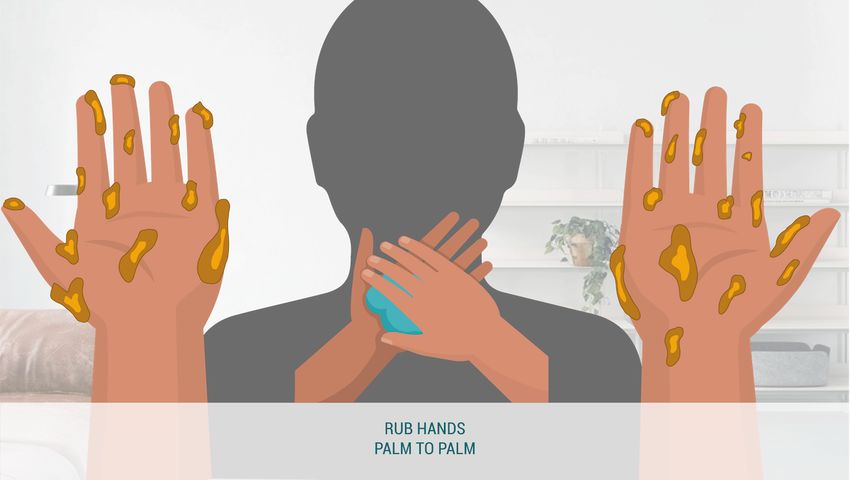
JOURNAL OF MEDICAL INTERNET RESEARCH                                                                                                      Seals et al

                                                                            Research prototypes have explored self-focus [11] and
     Introduction                                                           self-focused AR [5,12-14] technologies for health behavior
     Overview                                                               change. However, few have investigated how the design of
                                                                            interventions that aim to increase self-focused attention might
     With self-focused augmented reality (AR) usage increasing in           impact health perceptions and emotions. Similarly, prior studies
     recent years [1], the utilization of this technology has a potential   did not consider the potential of combining self-focused AR
     in addressing health communication and behavior interventions          with vicarious reinforcement, that is, reinforcement from
     challenges. Whereas AR technology layers digital content onto          observing others’ behavior and the results of those actions. This
     the real world [2], self-focused AR visually augments the self,        paper draws upon insights from objective self-awareness theory
     layering digital content onto the self. One technology enabling        [2] and social cognitive theory [15] to inform hypotheses about
     self-focused AR is video filters, which superimpose                    the relationships between predictors of health behavior change
     computer-generated content onto a user using their web or              and self-focused AR.
     smartphone camera (eg, Snapchat Lenses [3] and AR effects
     on Instagram [4]). For example, Snapchat’s Time Machine AR             We present findings from an online experiment on the impact
     lens morphs a user’s reflection to display what the user might         of combining self-focused AR with vicarious reinforcement,
     look like at different ages. Smart mirrors, another self-focused       visualizing the cause and effect of risk-mitigating behavior
     AR technology, combine digital screens (eg, an LCD                     layered onto one’s reflection. Our study took place during the
     [liquid-crystal display] monitor) with semitransparent glass. A        COVID-19 pandemic, focusing on hand hygiene behavior as
     smart mirror looks and functions similarly to a traditional mirror     an effective measure against pathogen transmission [16,17].
     but with digital content displayed in the foreground [5].              We discuss the implications of the results in light of the public
     Real-world applications of smart mirrors are on display in             health emergency, addressing the following research question:
     vehicles [6], dressing rooms [7], and home gyms [8]. For               how does reinforcement in self-focused AR impact health
     example, the MIRROR home gym [8] displays fitness instruction          perceptions during a pandemic?
     layered on top of the user’s reflection. Both AR video filters         Background
     and smart mirrors provide new opportunities for displaying
     health behavior communication to the public.                           Various health behavior change models [18,19] highlight the
                                                                            roles of predictors of intentions such as risk perceptions
     In response to the recent increase in self-focused AR usage            (perceived threat severity and threat susceptibility) and outcome
     [1,6-8], we investigated the potential impact of self-focused AR       expectancy. Drawing on objective self-awareness theory and
     within the health domain. For behavior change researchers, the         social cognitive theory, we postulated that health behavior
     effect of layering health threats along with mitigative behaviors      change–themed self-focused AR could impact these predictors
     and their results on top of a user may be of particular interest.      of intention.
     For example, would using AR to layer a set of very healthy
     teeth due to good oral hygiene on dental patients impact their         Research suggests that self-focused attention can result in action
     behavior? Could using AR in rearview mirrors to overlay                consistency with behavioral standards [9]. Objective
     scratches and bruises on top of drivers and riders encourage           self-awareness theory posits that self-focused attention will
     seat belt usage? We now have self-focused AR technologies in           result in negative affect through the increased awareness of
     the hands of millions, presenting the opportunity to visually          contradicting beliefs about one’s self or discrepancies between
     show individuals the impact of their decisions before they make        belief and behavior [10]. If negative affect is experienced, and
     them.                                                                  one does not avoid the self-focused attention, they will attempt
                                                                            to reduce the discrepancy to reduce the negative affect, such as
     Research in psychology suggests that heightening self-focused          by changing their behavior. To further illustrate this, recall the
     attention (manipulated by using a mirror or video camera) has          individual from the example earlier who values their health and
     implications for perception, affective experiences (emotions,          believes that exercise is vital for their health but does not
     feelings, and moods), and behavior [9]. Objective self-awareness       exercise. According to objective self-awareness theory, an
     occurs when an individual places attention on themself, viewing        increase in self-focused attention would result in an attempt to
     themself as a social object. Objective self-awareness theory [10]      reduce the discrepancy, which may result in exercise behavior.
     posits that self-focused attention heightens the awareness of the      We propose that when increasing self-focused attention in the
     gap between one’s perceived “real self” and “ideal self,”              context of a health threat, especially during a pandemic, that
     resulting in negative affect. For example, if one desires good         the negative affect experienced will include fear and will
     health and believes that exercise is vital to maintain one’s health    increase to levels higher than if self-focused attention was not
     and yet does not exercise, heightening objective self-awareness        activated.
     will likely result in negative emotions. The increased negative
     affect resulting from the awareness of discrepancies leads to          Research suggests that fear may play a large role in health
     either (1) the avoidance of self-focused attention and the             behavior, especially during public health emergencies such as
     discrepancy or (2) actions to reduce the discrepancy [10]. This        the current pandemic. Harper et al [20] found COVID-19 fear
     theory suggests that self-focused AR might impact behavior.            scores to be a positive predictor of behavior change. Fear may
     We investigated which perceptions could be involved when               also impact behavior as it relates to risk perception. Risk
     individuals experience self-focused AR within a health context.        perception, an individual’s perceived susceptibility to or severity
                                                                            of a threat, is included in many health behavior change theories
                                                                            [21]. Li [22] found perceived threat (measured by averaging
     https://www.jmir.org/2021/6/e26963                                                              J Med Internet Res 2021 | vol. 23 | iss. 6 | e26963 | p. 2
                                                                                                                   (page number not for citation purposes)
XSL• FO
RenderX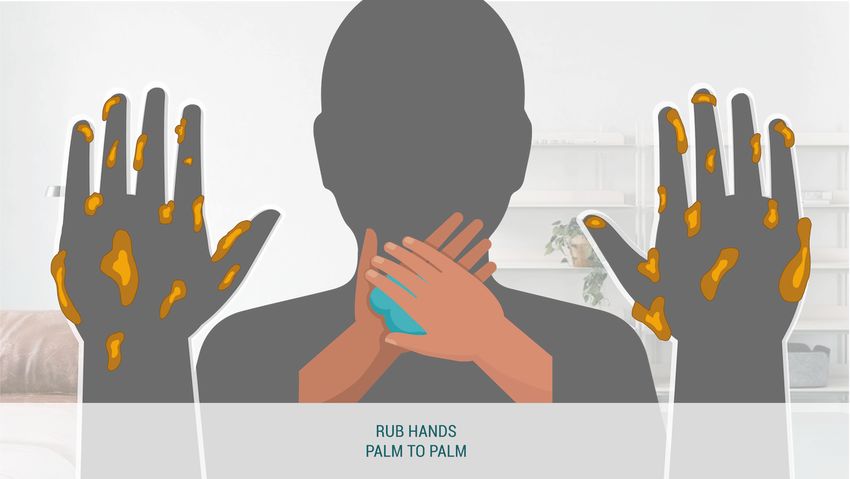
JOURNAL OF MEDICAL INTERNET RESEARCH                                                                                                      Seals et al

     threat susceptibility and severity) to be a positive predictor of      behavior than those who saw aggressive behavior that was
     fear. Affective factors are believed to play a role in the formation   punished. Bandura’s [15] social cognitive theory details how
     of risk perception [23]. While risk perceptions can increase fear,     behaviors can be formed by observing a model engage in a
     fear has also been found to induce higher risk perceptions [24].       behavior. Bandura suggests that due to limited contact with
     Self-focused AR content layering onto the body increases the           physical and social environments, people rely largely on
     sense of spatial presence (ie, the object “being there”),              vicarious experiences to form their idea of reality. In our study,
     potentially heightening fear if the object is threatening. Due to      vicarious reinforcement consists of visual representations of
     the combination of self-focus and spatial presence, we suggest         pathogens (ie, germs), which are made visible on avatar hands.
     that health threat–related self-focused AR may impact levels of        As a hand hygiene animation plays, covering all the steps of
     fear, perceived threat severity, and perceived threat                  proper handwashing, these pathogens disappear from the
     susceptibility.                                                        avatar’s hands. We predicted that this experience would heighten
                                                                            one’s perception of outcome expectancy. Given that health
     It is important to consider the potential negative impact of
                                                                            behavior models, such as The Health Action Process Approach
     heightening fear and risk perceptions. While Harper et al [20]
                                                                            [18] attribute outcome expectancies to the formation of intention,
     found increased fear to be associated with higher behavioral
                                                                            we found this valuable to investigate in our study. We proposed
     adherence, they also found fear to be correlated with decreased
                                                                            that the vicarious experience described above would directly
     physical and environmental quality of life and warned about
                                                                            affect outcome expectancy.
     mental health implications. Fear can also have an adverse effect
     on behavior. The Extended Parallel Process Model (EPPM)                Related Work
     [25] outlines the importance of a balance of fear and efficacy         While studies combining self-focused attention and vicarious
     for health communication campaigns to be effective. While fear         reinforcement have yet to see much direct utilization in
     can be a motivator for behavior, where the fear/efficacy balance       human-computer interaction research, a few studies on health
     is disrupted, individuals may use cognitive defense mechanisms         smart mirrors [5,12,13], self-representation [28], and spatial
     instead of behavior as a means of fear control. In this case, not      presence [14] suggest an impact of self-focused attention on
     only would the behavior change method be ineffective, but it           perceptions and behavior.
     could result in the adverse effect of prompting the development
     of these defense mechanisms. Based on the EPPM, Li [22] tested         While applications of smart mirrors for health care are limited,
     a model for protective behaviors during a public health                exploratory research prototypes have shown their potential to
     emergency with a study during the Ebola outbreak of 2014.              detect emotional states, monitor physiological parameters, and
     Fear controls measured included negative reactance to messages,        encourage behavior change. The Wize Mirror [12] encouraged
     message minimizing, and defensive avoidance. Li [22] found             users to improve their lifestyle to mitigate cardiometabolic risk
     perceived threat to have a significant effect on fear and fear         assessed by tracking physical face signs )eg, skin color,
     controls but did not find self-efficacy to be a successful             subcutaneous fat, facial expressions). Medical Mirror [5] utilized
     moderator of that relationship. This suggests that although fear       computer vision and advanced signal processing within a smart
     may be an effective strategy to encourage health behavior              mirror design to encourage people to keep track of their vital
     adherence, certain levels of fear may lead individuals to              signs regularly. Fit Mirror [13] increased user’s motivation,
     minimize health behavior messaging to control their fear instead       happiness, and fitness for the day by integrating exercising and
     of engaging in behavior change. We take these findings and the         challenging others into their morning routine. Although the rise
     EPPM into consideration, as our study directly layers a health         of smart mirrors has resulted in studies exploring the use of
     threat onto participants, which could result in excessive levels       these devices in health care, there is a lack of research
     of fear triggering adverse fear control mechanisms. We expected        investigating how self-focus specifically plays a role in
     self-focused AR, in the form of AR video filters, to heighten          influencing health behavior change. The studies mentioned
     both fear and fear control mechanisms when displaying a health         above lack a control condition in which all design features are
     threat.                                                                present except the mirror to study the direct impact of seeing
                                                                            one’s self-reflection.
     Our study investigated the impact of vicarious reinforcement
     outcome expectancy when combined with self-focused AR.                 A recent study by Jung et al [14] used a projector and a mirror
     Research suggests that outcome expectancy mediates the impact          to show participants their bodies with x-ray visualization of
     of self-focused attention on behavior. For someone who has             smoking lungs. A separate condition displayed the same content
     been made aware of a discrepancy between “actual state” and            but on a mannequin. Both conditions were compared to a
     “desired state,” if they don’t believe a suggested behavior            control, which displayed the information on a screen in 2D. The
     change will result in the “desire state,” they are more likely to      researchers found that spatial augmented reality increases spatial
     change the “desired state” [9]. When the “desired state” is health     presence, the perceptual illusion that the real world and the
     related, this can have adverse implications. Outcome expectancy        mediated world are “equally present.” In addition, they found
     can be impacted by experiencing vicarious reinforcement.               that higher levels of spatial presence were associated with a
     Vicarious reinforcement occurs when a reinforcing effect for           negative emotional change toward cigarettes and cigarette
     an individual takes place by observing others’ behavior and the        cessation campaign engagement intention. These findings
     results of their actions [26]. Bandura et al [27] found that           support the idea that displaying the consequences of health
     children who were exposed to media displaying aggressive               behaviors on top of the user’s own body can impact behavior
     behavior that was rewarded showed more imitative aggressive            change constructs regarding emotions and intention. Our study

     https://www.jmir.org/2021/6/e26963                                                              J Med Internet Res 2021 | vol. 23 | iss. 6 | e26963 | p. 3
                                                                                                                   (page number not for citation purposes)
XSL• FO
RenderX
JOURNAL OF MEDICAL INTERNET RESEARCH                                                                                                            Seals et al

     aimed to contribute to this line of research by exploring                  expected that the display of health threats on an avatar
     additional behavior change constructs.                                     representation of the self in an AR environment will impact
                                                                                levels of threat severity, susceptibility, fear, and message
     One notable finding from Jung et al [14] was that the mannequin
                                                                                minimization.
     condition also resulted in higher levels of spatial presence.
     However, an analysis comparing emotions and intentions                     Our study expands on existing research by investigating how
     reported for those in the mannequin condition compared to the              health behavior self-focused AR may impact specific predictors
     control was not reported. Gaining a better understanding of how            of behavioral intentions and what negative implications may
     objects that can serve as external self-representations, such as           exist in regard to fear control responses.
     avatars and mannequins, could help develop more feasible
     design interventions when mapping AR elements directly on
                                                                                This Study
     the body would be complex.                                                 In our research, we examined the impact of self-focused AR
                                                                                and vicarious reinforcement on perception and emotion as it
     Yee and Bailenson [28] found that self-representations can help            relates to hand washing health beliefs and behavioral intentions.
     form our behaviors, even when this representation is digital,              Below, we present our hypotheses:
     such as in the case of avatars. Yee and Bailenson [28] call this
     the Proteus effect and provided support from two experiments.                   H1: The combination of self-focused AR and vicarious
     In study one, participants were provided with an avatar that was                reinforcement will result in higher levels of perceived
     previously rated as high, medium, or low on an attractiveness                   positive outcome expectancy, perceived threat severity
     scale. They were asked to interact with another character (in a                 and susceptibility, fear, and message minimization
     virtual reality environment) after looking at themselves in a                   when compared to a control.
     mirror. Those in the high attractiveness condition disclosed                    H2: Using avatar representations in self-focused AR
     more information and moved closer to the other character. The                   with vicarious reinforcement will result in higher
     second experiment, testing avatar height in an ultimatum game,                  levels of threat severity, susceptibility, fear, and
     found that those in the tall condition were more likely to offer                message minimization compared to a control.
     an unfair split. Those in the short condition were more likely
     to accept an unfair split. These findings suggest that                     Methods
     augmentations to self-representation, as an avatar, may impact
     one’s behavior. Fox and Bailenson [29] studied whether                     To study the effects of self-focused AR on behavioral intention
     vicarious reinforcement with a user’s avatar had an effect on              and perception, we conducted an online experiment. Participants
     physical exercise. Seeing one’s avatar benefit from exercise               interacted (Figure 1) with a web application (Figure 2) that
     behavior and experience consequences from not engaging in                  displayed health information regarding the coronavirus and a
     the behavior encouraged the observer to engage in the behavior.            hand hygiene animation (Figure 3). Five conditions differed in
     These results suggest that vicarious reinforcement using avatars           their inclusion of self-focused attention and vicarious
     may be effective. Based on the studies mentioned above, we                 reinforcement.

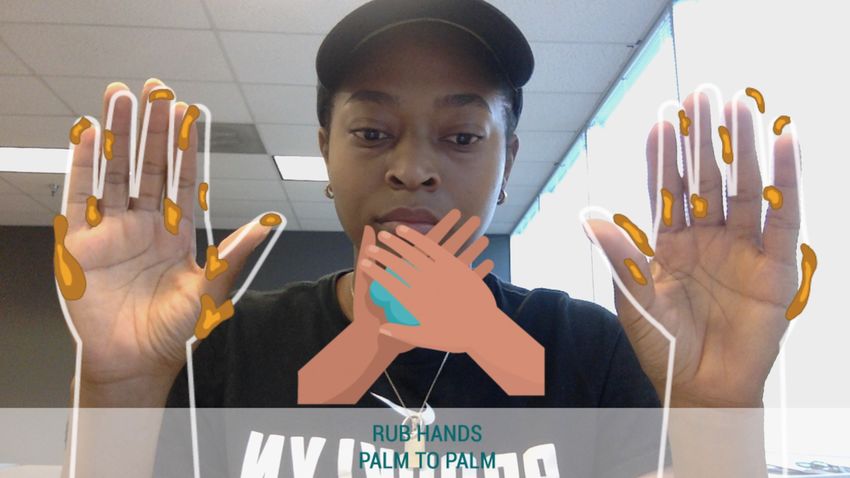
     Figure 1. A participant in one of the self-focused augmented reality design groups viewing a reflection of themselves using a video feed from their
     camera.

     https://www.jmir.org/2021/6/e26963                                                                    J Med Internet Res 2021 | vol. 23 | iss. 6 | e26963 | p. 4
                                                                                                                         (page number not for citation purposes)
XSL• FO
RenderX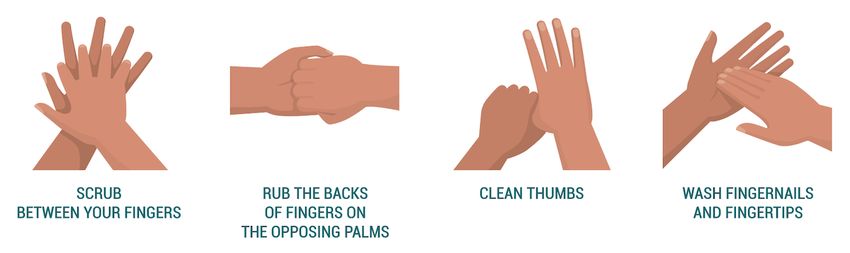
JOURNAL OF MEDICAL INTERNET RESEARCH                                                                                                       Seals et al

     Figure 2. A screenshot from the web application.

     Figure 3. An example of the progression of vectors used in the handwashing animation.

                                                                              and Prevention (CDC) [17] and the World Health Organization
     Experimental Conditions                                                  (WHO) [30]. This information was followed by a hand hygiene
     We conducted a between-subjects experiment where users                   animation, the display of which differed based on the
     interacted with a web application and then responded to an               participant’s assigned condition.
     online questionnaire. The study followed a posttest-only control
     group design to avoid a testing threat to internal validity. The         Control Condition: No Self-focused AR or Vicarious
     design of the web application differed depending on the                  Reinforcement
     intervention condition each participant was randomly allocated           In the control condition (Figure 4), we displayed an animation
     to. All five conditions displayed the same information about             of a 12-step handwashing technique following standards outlined
     COVID-19, including how it is spread and preventative                    by the WHO [30], accompanied by captions to describe each
     measures as described by the US Centers for Disease Control              movement (“Rub hands palm to palm”).

     https://www.jmir.org/2021/6/e26963                                                               J Med Internet Res 2021 | vol. 23 | iss. 6 | e26963 | p. 5
                                                                                                                    (page number not for citation purposes)
XSL• FO
RenderX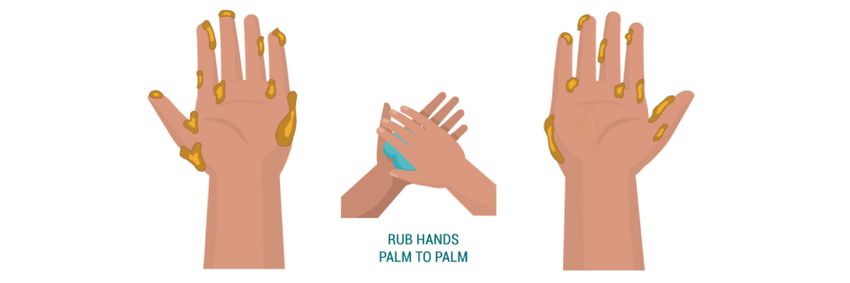
JOURNAL OF MEDICAL INTERNET RESEARCH                                                                                              Seals et al

     Figure 4. Control condition.

                                                                      progressed. These animations were synced so that the
     Reinforcement                                                    appropriate areas of the hands displayed were affected based
     In the reinforcement condition (Figure 5), the handwashing       on the specific stage of the handwashing animation a viewer
     animation described in the control condition was accompanied     was watching. For example, the thumb cleaning animation
     by an additional animation showing germs disappearing from       segment was paired with germs disappearing from the thumbs.
     a pair of illustrated hands as the handwashing animation
     Figure 5. Reinforcement condition.

                                                                      stimulus for self-focused attention. The handwashing animation
     Self-focused AR                                                  was layered on top of the viewer’s reflection. This reflection
     The self-focus condition (Figure 6) utilized the participant’s   was shown in real time and was created using the participant’s
     web camera to display their self-reflection, serving as the      web camera.
     Figure 6. Self-focused augmented reality condition.

     https://www.jmir.org/2021/6/e26963                                                      J Med Internet Res 2021 | vol. 23 | iss. 6 | e26963 | p. 6
                                                                                                           (page number not for citation purposes)
XSL• FO
RenderX
JOURNAL OF MEDICAL INTERNET RESEARCH                                                                                                    Seals et al

     Self-focus AR × Reinforcement                                        at the beginning of the animation directed participants on where
     The self-focus AR × reinforcement condition (Figure 7)               to place their hands. The handwashing animation was displayed
     visualized germs directly on the participant’s hands. Instructions   in between their hands. As the animation progresses, the user
                                                                          saw the germs disappear from the reflection of their own hands.
     Figure 7. Self-focus augmented reality × reinforcement condition.

                                                                          hands layered on top of the user’s reflection. These are referred
     Avatar                                                               to as avatar hands, as they are meant to represent the user’s
     In the avatar condition (Figure 8), participants viewed an           hands. The perspective displayed was that which is seen if the
     animation showing germs disappearing from a pair of illustrated      individual were to hold up their hands and look at them.
     Figure 8. Avatar condition.

     https://www.jmir.org/2021/6/e26963                                                            J Med Internet Res 2021 | vol. 23 | iss. 6 | e26963 | p. 7
                                                                                                                 (page number not for citation purposes)
XSL• FO
RenderX
JOURNAL OF MEDICAL INTERNET RESEARCH                                                                                                   Seals et al

     Participants                                                        interventions were delivered correctly using the camera,
     Participants were recruited via Prolific (a crowdsourcing           participants in these conditions were informed, prior to the
     platform [31]) and were compensated $2.50 for their time.           study, that screenshots would be collected randomly throughout
     Participation was limited to those residing in the United States,   the animation. The screenshots were reviewed to ensure that
     who spoke fluent English, and were ≥18 years of age. Pilot          participant’s reflections were displayed to them and that those
     testing revealed technical challenges that could interfere with     in the self-focus AR × reinforcement condition had their hands
     the study, mainly involving web camera use verification. To         within the view as instructed. Only those who followed the
     address this, prior to being recruited for the study, Prolific      instructions, verified by screenshots, were included in the final
     members were invited to a prescreener that verified (1) their       data set.
     access to an acceptable browser for the study (Safari, Chrome,      Variables and Measures
     and Firefox) and (2) that camera permissions worked with their
                                                                         We collected measures of self-reported health beliefs, behavioral
     technical setup. Prolific IDs for those who passed the screener
                                                                         intention, and self-reported perceptions of COVID-19 (Table
     were collected, and access to the main study was restricted to
                                                                         1), along with demographic data. These measures were adapted
     those IDs.
                                                                         from Schwarzer [18] and Li [22]. Items in this study were all
     Procedure                                                           measured on a 7-point Likert-type scale ranging from 1 (strongly
     The experiment took place between August 6-21, 2020. In all         disagree) to 7 (strongly agree).
     five conditions, after receiving consent, we described the          Although adapted from previous research, cross loading was a
     experiment as a study on health information presentation and        concern due to the rewording of items and the difference in
     provided instructions to review the information given carefully.    factors present compared to the adapted questionnaires. For
     In the three self-focused-AR–based conditions, we displayed         example, we added items to measure opinions about perceived
     information on how to set up the web camera for the study.          threat severity and susceptibility of family and friends. To
     All conditions provided information about COVID-19. Details         examine the validity and reliability of our measures, we
     focused on how the virus is spread and preventative measures        conducted exploratory and confirmatory factor analysis using
     as described by the CDC [17]. Participants next viewed an           a split-sample approach, with one half to develop a model and
     animation detailing the steps of proper hand hygiene as             the other half to validate. Factors loaded as expected
     described by the WHO [30]. This was followed by a                   (Multimedia Appendix 1).
     questionnaire to collect demographic information and measure        Data on demographics and the COVID-19 risk of a severe illness
     health knowledge and perception, which concluded the study.         of loved ones were collected. Participants were asked to report
     The questionnaire included questions to check whether the           their age, gender, and the state in which they currently reside.
     participant is paying attention. Three multiple-choice questions    In addition, they were asked to report if they have a family
     asked the user about the information displayed in the study (eg,    member or friend who is at high risk of severe illness if they
     What is a recommended preventative measure to reduce the            are infected with COVID-19. It was noted that one is considered
     spread of the coronavirus?). To validate that self-focused AR       high risk if they are ≥65 years and/or have underlying medical
                                                                         conditions.

     https://www.jmir.org/2021/6/e26963                                                           J Med Internet Res 2021 | vol. 23 | iss. 6 | e26963 | p. 8
                                                                                                                (page number not for citation purposes)
XSL• FO
RenderX
JOURNAL OF MEDICAL INTERNET RESEARCH                                                                                                                    Seals et al

     Table 1. Questionnaire items.
      Variable and          Questionnaire item
      code
      Intention
           inte             I intend to wash my hands, as instructed in this study, on a regular basis.
      Perceived outcome expectancy
           expe1            I believe proper handwashing, as instructed in this study, will help make me less likely to get the coronavirus disease (COVID-
                            19).
           expe2            I believe proper handwashing, as instructed in this study, will help reduce the spread of the coronavirus disease (COVID-19).
      Fear
           fear1            The emotion that I am feeling about the coronavirus (COVID-19) pandemic is: …Frightened
           fear2            …Scared
           fear3            …Anxious
      Message minimization
           reac1            To what extent do you feel that preventative measures messaging, in your state, regarding the coronavirus disease (COVID-19)
                            is: …Manipulative
           reac2            …Misleading
           reac3            …Distorted
      Perceived threat-severity
           seve1            I believe that the coronavirus disease (COVID-19) is a serious threat to my personal health.
           seve2            I believe that the coronavirus disease (COVID-19) is a serious threat to my family members (immediate or extended).
           seve3            I believe that the coronavirus disease (COVID-19) is a serious threat to my friends.
           seve4            I believe that the coronavirus disease (COVID-19) is a serious threat to the general public.
      Perceived threat-susceptibility
           susc1            I am at risk of catching the coronavirus disease (COVID-19).
           susc2            My family (immediate or extended) members are at risk of catching the coronavirus disease (COVID-19).
           susc3            My friends are at risk of catching the coronavirus disease (COVID-19).

                                                                                     software (IBM Corp) [36] was resourced, in which the
     Statistical Analysis                                                            PROCESS macro [32] was implemented to test mediation.
     Analysis of our data using histograms and the Shapiro-Wilk
     test showed that the data were not normally distributed.                        Results
     Shapiro-Wilk P values ranged from 6.35e-08 (efficacy) to
     1.927e-25 (intention). Therefore, hypothesis testing was                        Overview
     conducted using the nonparametric Wilcoxon-Mann-Whitney                         A total of 502 individuals participated in the study. Of this, 335
     test, comparing perceived threat severity, susceptibility, outcome              participants met the attention and screenshot verification checks
     expectancy, fear, and message minimization scores between                       (see Procedure section) and were included in the analysis. Of
     intervention conditions. If condition pairs had the same                        the 335 participants, 77 were randomly assigned to the control
     distribution shape, medians were compared. If the shapes were                   condition, 61 to the self-focused AR condition, 70 to the
     different, the mean ranks were compared. Additionally,                          reinforcement condition, 63 to the self-focus AR × reinforcement
     mediation models for dependent variables and design conditions                  condition, and 64 to the avatar condition.
     with significant findings were tested. A bootstrapping method
     using PROCESS macro models 4 and 6 [32], 5000 bootstrap                         Although our study focused on predictors of behavioral
     samples, and percentile bootstrap CIs were used. Significance                   intentions, we began with results pertaining to intention (Figure
     was established at P
JOURNAL OF MEDICAL INTERNET RESEARCH Seals et al
Figure 9. Responses for behavioral intention. Responses are strongly skewed toward higher levels of agreement for all conditions, indicating a ceiling
effect. AR: augmented reality.
(P=.23) (Figure 10). However, perceived threat severity and
Effects of Self-focused AR With Vicarious susceptibility had significant findings.
Reinforcement in Regards to Perceived Fear, Threat
Severity, Threat Susceptibility, Outcome Expectancy, For perceived threat severity, median scores for the self-focus
and Message Minimization (Hypothesis 1) AR × reinforcement and control groups were 6.25 and 6.00,
respectively (Figure 11); the two groups’ distributions differed
Hypothesis 1 proposed that a combination of vicarious significantly (Mann-Whitney U=1983, P=.03). Regarding
reinforcement and self-focused AR would result in higher levels perceived threat susceptibility, median scores for the self-focus
of fear, perceived threat severity, susceptibility, outcome AR × reinforcement and control groups were 6.00 and 5.33
expectancy, and message minimization compared to the control (Figure 12); the two groups’ distributions differed significantly
group. Compared with participants in the control (P=.43), (Mann-Whitney U=1897.0, P=.01). Our results partially
message minimization scores of those in the self-focus AR × supported H1 regarding perceived threat severity and
reinforcement condition were not significantly different. This susceptibility; however, we did not find support for outcome
was also the case for outcome expectancy (P=.41) and fear expectancy, fear, and message minimization.
Figure 10. Responses for outcome expectancy. Responses are strongly skewed toward higher levels of agreement for all conditions, indicating a ceiling
effect. AR: augmented reality.
Figure 11. Significantly higher levels of perceived threat severity among participants in the self-focus augmented reality (AR) × reinforcement condition
compared to the control condition. No significant differences were found between the control group and the other conditions.
Figure 12. Significantly higher levels of perceived threat susceptibility among participants in the self-focus augmented reality (AR) × reinforcement
condition compared to the control condition. No significant differences were found between the control group and the other conditions.
Additional analysis revealed that the use of self-focused AR not have a significant difference in medians for outcome
and vicarious reinforcement individually did not impact expectancy (P=.48), threat severity (P=.39), susceptibility
measured predictors of intention, except for in the case of fear. (P=.40), fear (P=.10), and message minimization (P=.47).
When compared with participants in the control condition, those Conversely, when compared to the control, those in the
in the reinforcement condition (without self-focused AR) did self-focused AR condition (without vicarious reinforcement)
https://www.jmir.org/2021/6/e26963 J Med Internet Res 2021 | vol. 23 | iss. 6 | e26963 | p. 10
(page number not for citation purposes)
XSL• FO
RenderXJOURNAL OF MEDICAL INTERNET RESEARCH Seals et al
did not have a significant difference in medians for outcome Although fear was not significantly different from the control,
expectancy (P=.26), threat severity (P=.21), susceptibility we investigated whether fear or message minimization impacted
(P=.45), and message minimization (P=.39). Median scores for intentions for those in the self-focus AR × reinforcement
the self-focused AR and control groups were 5.0 and 5.3 condition. First, a mediation model was used to test whether
(U=1950.5, P=.04). self-focus AR × reinforcement affects perceived fear through
perceived threat susceptibility and perceived threat severity
A mediation model was used to test whether self-focus AR ×
(Figure 14). A significant indirect effect of self-focus AR ×
reinforcement affects behavioral intention through perceived
reinforcement on fear was found with perceived threat severity
threat susceptibility and perceived threat severity (Figure 13).
as the only mediator (b=.16, 95% CI 0.05-0.29, SE 0.06) and
We found a significant indirect effect of self-focus AR ×
with perceived threat susceptibility as the only mediator (b=.13,
reinforcement on intention with perceived threat severity as the
95% CI 0.04-0.22, SE 0.05). In addition, a significant indirect
only mediator (b=.06, 95% CI 0.02-0.12, SE 0.02), but not with
effect of self-focus AR × reinforcement on fear was found when
perceived threat susceptibility as the only mediator. In addition,
both perceived threat susceptibility and threat severity were
a significant indirect effect of self-focus AR × reinforcement
included as serial mediators (b=.15, 95% CI 0.05-0.28, SE 0.06).
on intention was found when both perceived threat susceptibility
and threat severity were included as serial mediators (b=.06, Next, a mediation model was used to test whether the self-focus
95% CI 0.02-0.12, SE 0.03). These results indicate that although AR × reinforcement condition affects behavioral intention
the self-focus AR × reinforcement condition does not directly through fear. A significant indirect effect of the self-focus AR
affect intention in this study, its effect on threat susceptibility × reinforcement condition on intention was found with fear as
and threat severity results in an indirect effect on intention. A the mediator (b=.07, 95% CI 0.01-0.16, SE 0.04). An additional
separate mediation model was used to investigate whether model tested whether the self-focus AR × reinforcement
self-focus AR × reinforcement affects perceived threat severity condition affects message minimization through fear, threat
through perceived threat susceptibility. A significant indirect severity, or threat severity. A significant negative indirect effect
effect of self-focus AR × reinforcement on perceived threat of the self-focus AR × reinforcement condition on message
severity through perceived threat susceptibility was found minimization was found with severity as the mediator (b=–.07,
(b=.26, 95% CI 0.08-0.45, SE 0.09). 95% CI –0.16 to –0.008, SE 0.04. A negative serial mediation
effect with susceptibility and severity was also found (b=–.07,
95% CI –0.16 to –0.008, SE 0.04).
Figure 13. The self-focus augmented reality (AR) × reinforcement, susceptibility, severity, and intention mediation model. The self-focus AR ×
reinforcement condition resulted in an indirect effect on intention through threat susceptibility and threat severity. This condition also had an indirect
effect on perceived threat severity through perceived threat susceptibility.
Figure 14. The self-focus augmented reality (AR) × reinforcement, susceptibility, severity, and fear mediation model. The self-focus AR × reinforcement
condition resulted in an indirect effect on fear through threat susceptibility and threat severity.
minimization when compared to a control. Compared to the
Effects of Using an Avatar on Outcome Expectancy, control, those in the avatar condition did not have significantly
Fear, Threat Severity, Threat Susceptibility, and different levels of outcome expectancy (P=.42), severity (P=.49),
Message Minimization (Hypothesis 2) susceptibility (P=.15), fear (P=.23), or message minimization
Hypothesis 2 proposed that combining vicarious reinforcement (P=.17).
and self-focused AR while using an avatar would result in higher
User Feedback
levels of positive outcome expectancies, fear, perceived threat
severity, perceived threat susceptibility, and message At the end of the questionnaire, we asked participants to enter
optional free-form text about the study. Themes among the
https://www.jmir.org/2021/6/e26963 J Med Internet Res 2021 | vol. 23 | iss. 6 | e26963 | p. 11
(page number not for citation purposes)
XSL• FO
RenderXJOURNAL OF MEDICAL INTERNET RESEARCH Seals et al
responses included impact on knowledge, risk perception Behavior Intention and Outcome Expectancy
formation, and challenges with the self-focus AR × Our results did not show any direct effects on behavioral
reinforcement condition. Several participants in the intention (Figure 9). Given the severity of COVID-19, we
reinforcement condition provided generalized statements that expected these findings to result from a ceiling effect, as similar
the study was educational and helpful. The following comments studies on behavior messaging strategies have found during
from the self-focused AR group provided more details. COVID-19 [37,38]. A surprising finding was the lack of impact
I thought the handwashing animation together with of the design interventions on outcome expectancy; however,
the illustration of where dirt is cleaned from the hands this also appears to result from a ceiling effect (Figure 10),
was very informative. [P1] possibly resulting from the surge of news messaging surrounding
Some participants learned a new technique or strategy: hand hygiene’s role in mitigating risk during COVID-19. News
segments showed the impact of hand hygiene using blacklights
I learned some new handwashing techniques! [39] to simulate how hand washing reduces viruses’ presence,
(Particularly, locking your hands together by curling which may have helped combat any disbelief. Due to the ceiling
your fingers into each other to get the backs of the effect, our findings require replication studies post–COVID-19
fingers). [P2] or studies that include intention and outcome expectancy
I hadn’t thought about separately lathering and measures less susceptible to the ceiling effect to investigate the
washing my thumbs. [P3] impact of self-focused AR and vicarious reinforcement.
Comments on personal concerns about risk indicate that future Perceived Threat Severity, Threat Susceptibility, Fear,
work measuring these variables may consider the time spent and Intention
around others vs alone and personal risk:
Our findings also revealed interesting relationships between the
I answered questions knowing that my husband’s and self-focus AR × reinforcement condition, perceived threat
my job allow us to work from home, which decreases severity, threat susceptibility, fear, and intention. Mediation
our risk significantly, and that most of my family lives models showed the self-focus AR × reinforcement condition to
in a rural area, also less susceptible to infection. [P4] positively affect intention and fear through increased perceived
I know that I take it way more seriously due to the threat susceptibility and threat severity. We found self-focus
cancer treatment drug I take than most of my friends AR × reinforcement to increase perceived threat severity through
and peers because if I get it, I am not strong enough increased perceived susceptibility. Lastly, we found self-focus
to fight it off. I think that factors in way more than AR × reinforcement to indirectly affect intention with fear as
friends and family risk, at least for me personally. the mediator. These results suggest that design strategies that
[P5] layer a health threat directly on an individual’s reflection may
increase one’s perceived threat susceptibility, threat, severity,
Lastly, a few participants in the self-focus AR × reinforcement
fear, and indirectly behavioral intention. While such strategies
group expressed confusion about the design. P7, for example,
might help meet behavior change design objectives, it is
expressed difficulty in positioning themselves on the screen.
essential to note the potential consequences of designs that
It was an interesting survey, but the instruction given increase fear, especially in the context of a public health
for the hand part was kind of hard to complete emergency.
because the outline of the hands and the picture did
Based on the EPPM, Li [22] tested a model for protective
not match. However, I tried my best to make it work.
behaviors during a public health emergency with a study during
[P7]
the Ebola outbreak of 2014. The study found perceived threat
Found the movements in the video hard to follow to have a significant effect on fear and fear controls. Our study
along with, but I tried my best! [P8] partially supports these findings, indicating an impact of threat
The handwashing directions confused me. At first, I severity on fear but not a significant positive effect of fear on
didn’t understand that I wasn’t supposed to mimic message minimization (a fear control mechanism). The
the exact instructions. [P9] danger/fear control responses and the impact of self-focused
The responses of P8 and P9 suggest that participants may have AR likely varies for each health behavior context, as levels of
practiced along with the video animation. Practicing was not a fear will be different for each health threat. While our study did
requirement of participation but appeared to be a trend among not show adverse effects, researchers and designers should still
those in this condition. use caution if utilizing similar design techniques to effect
behavior change. More research is needed on the adverse effects
Discussion of fear concerning triggering fear control mechanisms through
design interventions. In addition, increased fear could have
This study explored the impact of self-focus and vicarious mental health implications. Harper et al [20] found fear of
reinforcement design interventions on psychological predictors COVID-19 to be a positive predictor of behavior change and
of behavior change during the COVID-19 pandemic. Our results fear to be correlated with decreased physical and environmental
showed that combining self-focused AR with vicarious quality of life. Given our findings, designers must investigate
reinforcement increases perceived threat severity and threat the extent to which a design strategy that involves self-focused
susceptibility and could potentially impact behavioral intentions. AR with a health threat increases fear.
https://www.jmir.org/2021/6/e26963 J Med Internet Res 2021 | vol. 23 | iss. 6 | e26963 | p. 12
(page number not for citation purposes)
XSL• FO
RenderXJOURNAL OF MEDICAL INTERNET RESEARCH Seals et al
Independent Use of Self-focused Attention and According to user feedback, future work should also consider
Vicarious Reinforcement accounting for time spent around others vs alone and personal
health when measuring perceived threat severity. Responses
Self-focused AR and vicarious reinforcement embedded as
also indicate that when measuring perceptions about new
features independently (versus combined) did not show a
messaging, participants should be instructed to respond based
significant result on any of the tested predictors of behavior
on their preferred news source to limit confusion related to the
change except fear. We provide a few possible explanations for
different opinions they hold for individual new sources.
these results. First, regarding mirror self-focus, threat severity,
and susceptibility, there may have been too large of a time gap Two comments from the user feedback indicated that
between when participants reviewed the health information participants might have been actually practicing handwashing
provided and when they looked at their self-reflection. In the movements while viewing the animation. During the screenshot
conditions combining the features, there was content on the verification process, it was noted whether a participant was
screen, reminding participants of the threat at hand. Future work observed practicing along with the handwashing video.
may account for this difference by providing text-based Practicing was not a requirement of participation and was not
information over one’s reflection. Second, regarding vicarious mentioned in any instructions provided to them. A total of 32
reinforcement and outcome expectancy, Figure 10 indicates the out of 63 participants were observed practicing along with the
presence of a ceiling effect. This study may need to be replicated video in the self-focus AR × reinforcement condition. The
for a different health threat or mitigating behavior that wouldn’t self-focused AR and avatar conditions had 7 and 6 individuals
have as many positive, strong outcome expectancy beliefs. observed practicing, respectively. These results cannot be used
to make any claims due to the study’s technical setup. Those in
Limitations and Future Work
the self-focus AR × reinforcement group were instructed to
It is important to note that this research took place during a have their hands in view of the camera. Those in other
long-term global public health emergency with restrictions on conditions may have practiced off-camera. However, as
lifestyles that can take a while to get adjusted to. Health practicing may affect behavior, this is another potential area for
perceptions related to current circumstances are subject to future research.
change throughout the lifecycle of a pandemic. Our findings
warrant replication studies that consider changes in severity, Conclusion
government mandates, social perceptions, and the availability As self-focused AR technologies grow in popularity, it is
and range of tools for risk mitigation (vaccines/medication, important to understand how such experiences could impact
personal protective equipment, etc). perceptions, emotions, and behavioral intentions. Previous
research [5,12-14,28] has explored self-focused AR to varying
The data used in this study are self-reported and susceptible to
degrees revealing a potential impact on health behavior. Our
response biases, specifically social desirability bias. Due to the
study expands upon this work by combining self-focused AR
severity of the pandemic, government mandates, news coverage,
and vicarious reinforcement. Doing so helped to reveal insights
and social discussions may have increased the pressure to
about the impact of each feature on perceptions and emotions
respond in ways that align with social norms. Future work
as they relate to behavior change.
should aim to use methods to decrease the impact of this
limitation. We found that displaying germs disappearing directly from the
user’s self-reflection during a handwashing animation will result
It is important to note that focusing on individual constructs
in higher scores for perceived threat severity and susceptibility
may create an ineffective design system if the construct only
when compared to the control or conditions that implemented
works in combination with other constructs [40]. This should
self-reflection and a display of germs disappearing separately.
be taken into consideration as self-focused AR is explored in
Increased perceived severity and susceptibility were found to
the future, possibly adding measures for other behavior change
increase behavioral intention. These findings indicate that
constructs such as normative beliefs and social facilitation.
combining self-focused AR with vicarious reinforcement may
While our study indicates that combining self-focused AR with be an effective strategy for health communication designers.
vicarious reinforcement may affect health behavior change by However, we also voice concern about the possible adverse
influencing threat severity and susceptibility, we lack a effects of heightening levels of fear as a design strategy. While
data-driven explanation of why. Future work may benefit from our study did not show concerning results, prior research
the inclusion of quantitative measures for self-focused attention indicates that heightening fear as a health communication
to compare with severity and susceptibility scores. strategy can lead to defensive reactions (versus changing
behavior) [22,25] and can lower quality of life [20]. We
Future work may lend itself to developing experimental methods
recommend that this be taken into consideration by designers
to explore the extent to which self-monitoring, reflective
whenever augmenting self-focused attention with a health threat,
thinking, self-evaluation, and emotion management naturally
especially during a public health emergency, as fear may already
occur (or do not occur) when using self-focused AR. Conducting
be at concerningly high levels. Future research should further
these experiments will provide deeper insights into how
investigate the role of fear, perceived threat severity, and threat
self-focused AR impacts the psychological mechanism related
susceptibility when using self-focused AR in health contexts
to behavior change and possibly inspire experiments on how
and design strategies for maintaining the well-being of the user
the combination of self-focused attention and other design
while inspiring behavior change.
features could enhance this effect.
https://www.jmir.org/2021/6/e26963 J Med Internet Res 2021 | vol. 23 | iss. 6 | e26963 | p. 13
(page number not for citation purposes)
XSL• FO
RenderXJOURNAL OF MEDICAL INTERNET RESEARCH Seals et al
Acknowledgments
We thank our Wellesley College HCI Lab colleagues, family, and friends for participating in the pilot testing for the study. We
thank Angela Qian and Karl Ivan M San Luis for their feedback on the study, as well as Shaun Digan for proofreading. This
material is based on work supported by the National Science Foundation (1814628). Any opinions, findings, and conclusions or
recommendations expressed in this paper are those of the authors and do not necessarily reflect those of the National Science
Foundation.
Conflicts of Interest
None declared.
Multimedia Appendix 1
Factor loadings.
[DOCX File , 16 KB-Multimedia Appendix 1]
References
1. Number of mobile augmented reality (AR) active users worldwide from 2019 to 2024 (in billions). Statista. 2021 Feb 23.
URL: https://www-statista-com.proxy.library.nyu.edu/statistics/1098630/global-mobile-augmented-reality-ar-users/ [accessed
2021-03-27]
2. Billinghurst M, Clark A, Lee G. A Survey of Augmented Reality. Maryland, USA: Now Foundations and Trends; 2015.
3. Snapchat Lens Studio. Snapchat. 2020. URL: https://lensstudio.snapchat.com [accessed 2021-04-30]
4. About Instagram. Instagram. 2020. URL: https://about.instagram.com/about-us [accessed 2021-04-30]
5. Poh M, McDuff D, Picard R. A medical mirror for non-contact health monitoring. In: ACM SIGGRAPH 2011 Emerging
Technologies. New York, NY: Association for Computing Machinery; 2011 Presented at: SIGGRAPH '11: Special Interest
Group on Computer Graphics and Interactive Techniques Conference; August; Vancouver, BC. [doi:
10.1145/2048259.2048261]
6. Nissan USA. 2014 Apr 15. URL: https://www.nissanusa.com/experience-nissan/news-and-events/smart-rearview-mirror.
html [accessed 2020-12-30]
7. memomi. URL: https://memorymirror.com/ [accessed 2020-12-30]
8. Mirror. URL: https://www.mirror.co/ [accessed 2020-12-30]
9. Duval TS, Silvia PJ, Lalwani N. Self-Awareness & Causal Attribution: A Dual Systems Theory. New York, NY: Springer
Science & Business Media; 2012.
10. Wicklund R. Objective self-awareness. In: Berkowitz L, editor. Advances in Experimental Social Psychology. Volume 8.
New York, NY: Academic Press; 1975:233-275.
11. Flemings M, Kazmi S, Pak R, Shaer O. Crimson Wave: Shedding Light on Menstrual Health. New York, NY: Association
for Computing Machinery; 2018 Presented at: TEI '18: Twelfth International Conference on Tangible, Embedded, and
Embodied Interaction; March; Stockholm, Sweden p. 343-348. [doi: 10.1145/3173225.3173292]
12. Colantonio S, Coppini G, Germanese D, Giorgi D, Magrini M, Marraccini P, et al. A smart mirror to promote a healthy
lifestyle. Biosystems Engineering 2015 Oct;138:33-43. [doi: 10.1016/j.biosystemseng.2015.06.008]
13. Besserer D, Bäurle J, Nikic A, Honold F, Schüssel F, Weber M. Fitmirror: a smart mirror for positive affect in everyday
user morning routines. In: Proceedings of the Workshop on Multimodal Analyses Enabling Artificial Agents in
Human-Machine Interaction. New York, NY: Association for Computing Machinery; 2016 Presented at: ICMI '16:
International Conference on Multimodal Interaction; November; Tokyo, Japan p. 48-55. [doi: 10.1145/3011263.3011265]
14. Jung S, Lee J, Biocca F, Kim JW. Augmented Reality in the Health Domain: Projecting Spatial Augmented Reality
Visualizations on a Perceiver's Body for Health Communication Effects. Cyberpsychol Behav Soc Netw 2019
Mar;22(2):142-150. [doi: 10.1089/cyber.2018.0028] [Medline: 30668138]
15. Bandura A. Social Cognitive Theory of Mass Communication. Media Psychology 2001 Aug;3(3):265-299. [doi:
10.1207/s1532785xmep0303_03]
16. Aiello AE, Coulborn RM, Perez V, Larson EL. Effect of Hand Hygiene on Infectious Disease Risk in the Community
Setting: A Meta-Analysis. Am J Public Health 2008 Aug;98(8):1372-1381. [doi: 10.2105/ajph.2007.124610]
17. Your Health: If You Are Sick or Caring for Someone. Centers for Disease Control and Prevention. 2020 Feb 11. URL:
https://www.cdc.gov/coronavirus/2019-ncov/if-you-are-sick/index.html [accessed 2020-02-01]
18. Schwarzer R. Modeling Health Behavior Change: How to Predict and Modify the Adoption and Maintenance of Health
Behaviors. Applied Psychology 2008 Jan;57(1):1-29. [doi: 10.1111/j.1464-0597.2007.00325.x]
19. Ajzen I. Perceived behavioral control, self-efficacy, locus of control, and the theory of planned behavior 1. J Appl Soc
Psychol 2002;32(4):665-683. [doi: 10.1111/j.1559-1816.2002.tb00236.x]
https://www.jmir.org/2021/6/e26963 J Med Internet Res 2021 | vol. 23 | iss. 6 | e26963 | p. 14
(page number not for citation purposes)
XSL• FO
RenderXYou can also read


