Engagement document: How we work together at a more local level in our Integrated Care System (May 2021) A.
←
→
Page content transcription
If your browser does not render page correctly, please read the page content below

Engagement document: How we work together at a more local
level in our Integrated Care System (May 2021)

A. Introduction
1. Over the past few years health and care services have worked together with increasing
   collaboration in Norfolk and Waveney, as they have done across the country. As
   Integrated Care Systems have developed, it has been clear that much of the work to
   join-up delivery and planning of care can’t happen at Norfolk and Waveney level, and
   needs to take place more locally. This is because it requires more local and detailed
   knowledge about our different communities, as well as strong relationships between
   those providing care on the ground, including both statutory and non-statutory
   organisations.

2. COVID-19 has underlined the case for collaboration and integration, and accelerated
   some aspects of integration. Much of this innovation has been led at a more local level
   than system or Norfolk and Waveney level.

3. The Government’s recent white paper, ‘Integration and Innovation: working together to
   improve health and social care for all’ (February 2021), recognises the importance of
   working effectively at a local level and supports the principle of subsidiarity. We
   anticipate that legislation will follow the white paper that will make Integrated Care
   Systems statutory bodies, replacing CCGs, coming into operation in April 2022.

4. The purpose of this engagement exercise is to gather the views of stakeholders about
   how we work together at a more local level in our Integrated Care System, particularly
   the geographic areas or footprints in which we will work together to integrate services,
   make best use of our combined resources and narrow inequalities.

5. We’re holding this engagement exercise now because we know that people from
   across the system have differing views on what we should do and how we should work
   in future. This is a complex decision, with no clear ‘right answer’ and therefore it is
   important that all partners have an equal and fair opportunity to contribute and have
   their say on what we should do. This exercise will therefore build on what people have
   previously said and help us to come to a conclusion about how we will work together.

6. It should be noted that a separate review of the boundaries of Integrated Care Systems
   (ICS) is currently taking place. We expect this review to conclude in the summer too,
   enabling us to make an informed decision about our local arrangements. Our
   engagement exercise considers options for if we continue with our existing boundaries
   of Norfolk and Waveney, as well as options for if ICS boundaries are aligned to upper
   tier local authority boundaries.

B. The importance of working together locally

7. There has recently been a significant amount of discussion and thought about place-
   based working. The King’s Fund has explored the potential role and contribution of
   place-based working in their new publication ‘Developing place-based partnerships’
   (April 2021).

    Defining ‘place’
    In their report, The King’s Fund use the term ‘place’ to refer to the geographical
    level below an ICS at which most of the work to join up budgets, planning and
    service delivery for routine health and care services (particularly community-based
    services) will happen.
    They go on to say that the factors that determine the size and boundaries of a
    place will vary. They note that where unitary authorities exist, those boundaries
    are generally being used to define the place footprint. The King’s Fund also point
    out that, where there are two-tier local authorities, it is more complex to define the
    right scale and boundaries for place. In some such cases, place footprints have
    been established around clusters of district councils, the area served by a hospital
    or established groupings that are already being used for joint working across the
    NHS and local government.

8. The King’s Fund conclude the rationale for collaborating over these smaller
   geographies is two-fold. This aligns well with our local experience to date.

9. First, collaboration at this level creates opportunities to bring together budgets,
   planning and service delivery for non-specialist health and care services (particularly
   community-based services) to deliver better co-ordinated and personalised care, avoid
   duplication and improve the efficiency of services. Bringing together budgets and
   services in this way is also intended to support a wider shift towards prevention,
   population health and tackling inequalities as it is at this local level where the many
   organisations responsible for shaping the determinants of health – whether NHS, local
   authority, voluntary, community and social enterprise sector (VCSE) organisations or
   others – can come together to understand and respond to local needs.

10. Several studies have attempted to estimate the impact of the broader determinants of
    health. The results of all the studies have a common theme: the majority of what
    shapes our health has little to do with health and care services.

11. The King’s Fund and the Local Government Association both use the following
    diagrams to show the wider determinants of health and their estimated impact.
The wider determinants of health

Source: Dahlgren, G. and Whitehead, M. (1993) Tackling inequalities in health: what can
we learn from what has been tried?
The estimated impact of the wider determinants of health

Sources: McGinnis, J.M., Williams-Russo, P. and Knickman, J.R. (2002) The case for more
active policy attention to health promotion. Health Affairs 21 (2) pp.78-93.
Canadian Institute of Advanced Research, Health Canada, Population and Public Health
Branch. AB/NWT 2002, quoted in Kuznetsova, D. (2012) Healthy places: Councils leading
on public health. London: New Local Government Network.
Bunker, J.P., Frazier, H.S. and Mosteller, F. (1995) The role of medical care in determining
health: Creating an inventory of benefits. In, Society and Health ed Amick III et al. New
York: Oxford University Press. Pp 305-341.
12. The second part of the rationale for working together at this level is the opportunity
    to build a different relationship with communities themselves, framed around local
    people being active partners in creating healthier places and communities. The report
    argues this shift needs to be a fundamental part of place-based working if it is to deliver
the improvements in population health and reductions in health inequalities that
   partnerships seek to achieve.

13. The King’s Fund has also identified the following key functions of place-based
    partnerships:

Source: The King’s Fund, ‘Developing place-based partnerships’ (April 2021).

C. How we currently work together in Norfolk and Waveney:
   neighbourhood, place and system working
14. Locally, in line with the rest of England, there are three broad levels at which
    partnership working currently takes place in our Integrated Care System –
    neighbourhood, place and system: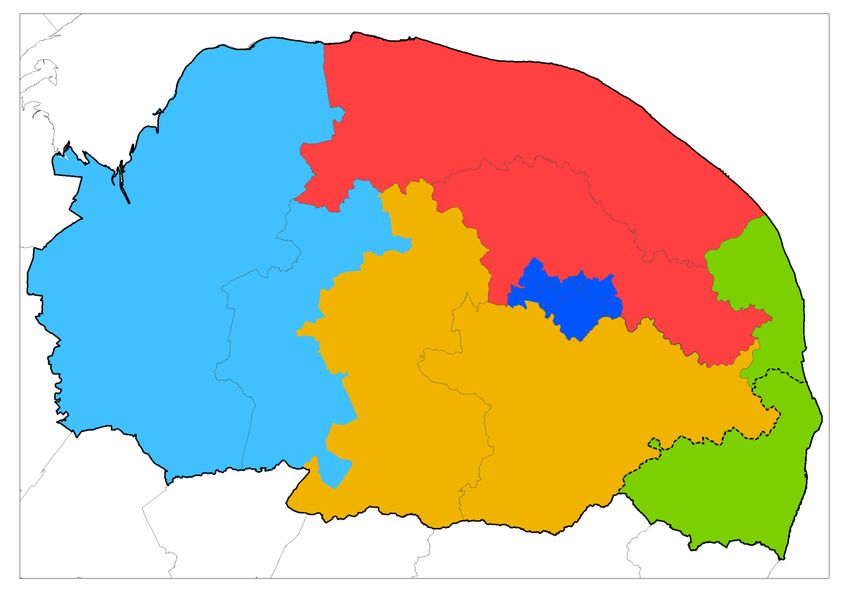
Level               Features

    Neighbourhood:      •   Defined by GP practices and their registered lists
    our 17 Primary      •   Strengthen primary care
    Care Networks       •   Promote prevention and self-care
                        •   Be responsive to the characteristics and needs of their
                            local populations, e.g. addressing the needs of a more
                            deprived population than the rest of the footprint
                        •   Care for their populations through multidisciplinary
                            community teams, including the VCSE sector

    Place: our five     •   Integrate primary care, acute care, community/mental
    areas based on          health and social care services together, as well as the
    the boundaries          VCSE sector
    of the five         •   Greater district council involvement at this level,
    former CCGs             particularly housing, leisure and community
                            developments
                        •   Potential for provider-led partnerships
    System: Norfolk     •   System strategy and planning for the future
    and Waveney         •   Develop accountability arrangements across the system,
                            including the VCSE assembly.
                        •   Set and implement strategic change and transformation
                            at scale (e.g. workforce planning, digital, information
                            governance)
                        •   Manage performance and finances

15. This map shows our 17 primary care networks, five ‘places’ and our system: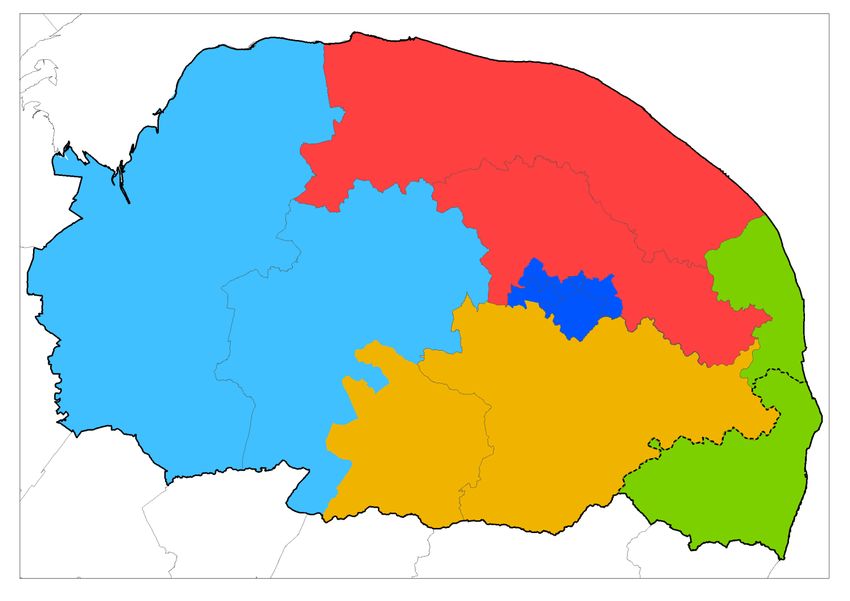
16. This map shows the alignment between our PCNs (shown in different colours) and the
    district council areas (whose boundaries are shown by a thicker black line):

17. It is important to emphasise that the three elements of our existing ICS are not a
    hierarchy. We are building our ICS on the principles of distributed leadership -
    leadership at every level - and that of subsidiarity. The experience of working together
    during the COVID-19 pandemic has been very helpful in this respect; people have
    worked together in teams to do their best for individuals, families and communities,
    regardless of which organisation each individual works for. That spirit of team working
    and common purpose is what we seek to embrace as an ICS.

18. We have learnt a great deal about place working through the existing locality
    structures, which are increasingly bringing partners together to agree joint priorities,
    establish share work programmes and pool resources.

19. We have learnt that working together as equal partners at a very local level enables us
    to come up with innovative solutions to shared challenges – for example, identifying
    people or families in our communities who are particularly vulnerable, and finding new
    ways of meeting their needs. We have learnt that together we are able to share data
    and insights to build up an in-depth understanding of our local communities. We have
    learnt that we can successfully mobilise the local community, build community
    resilience and make best use of local assets. And we have learnt the importance of
    developing and investing in strong local relationships and forging a shared vision and
    sense of purpose.

D. Changing context: the development of Integrated Care Systems and
   the Government’s white paper
20. The recent NHS England and Improvement publication ‘Integrating Care’ and the
    subsequent white paper set out a clear course for the future structure of the NHS. One
    of the core aims both documents set out is to promote integration both within the NHS
    and between local partners, particularly with local government. The white paper
    proposes establishing Integrated Care Systems (ICS) as statutory bodies to integrate
    the delivery of local health and care services, coming into operation in April 2022. It
    also envisages ICSs taking on both the functions currently held by CCGs and some of
    those held by NHS England and Improvement.

21. One notable feature of both the NHS publication and the white paper is the
    considerable emphasis put on the importance of local partnership working below the
    system-wide level. The NHS paper includes a commitment to a “principle of
    subsidiarity” and envisages considerable delegation in the reformed system. The white
    paper refers to the “primacy of place” and sets an expectation that ICSs will work to
    “support places…to integrate services and improve outcomes”.

22. The reforms build on the NHS’s Long Term Plan proposals and a bill will be laid in
    Parliament when parliamentary time allows to carry the proposals into law. Subject to
    parliamentary business, the intention is that the legislative proposals for health and
    care reform outlined in the paper will begin to be implemented in 2022.

E. Work done to date
23. To collectively develop our thinking, we established a cross-system Steering Group in
    the autumn of 2020 to guide our work on place; this brings together PCNs, district and
    county councils, health and care service providers and the CCG.

24. The Steering Group has considered the likely key priorities and functions at place level,
    the potential ‘footprints’ for place level working and how accountability between the
    statutory ICS and place might operate, including how relevant decisions and budgets
    might be delegated to place level by a statutory ICS.

25. Interviews have also been conducted with a wide range of local partners to help inform
    our thinking. This engagement exercise builds on what people told us during those
    interviews, during discussions at partnership forums and the work of the Steering
    Group.

26. The Steering Group has drafted the following broad principles to guide the
    development of our approach to place-based working:
   •   Subsidiarity – we need to take decisions as close to communities as possible,
       where this will have the greatest impact
   •   Vertical and horizontal accountability – our arrangements needs to encompass
       both the relationship between the different levels of our ICS, as well as the
       relationship and commitments partners make to one another
   •   Flexibility – our arrangements needs to be adaptable, so that it can be tailored to
       meet local circumstances and take account of different stages of development
   •   Clarity – accountability for decisions and budgets must be clear
•   Future proofed – our arrangements needs to be adaptable, so that they can be
       developed over time (for example if we want to delegate more or different decisions
       and/or funding in future)
   •   Inclusive – our arrangements should promote and enable participation of all
       relevant system partners

F. A potential three-tier model

27. Through our discussions so far, a potential three-tier model has begun to develop that
    seeks to accommodate the twin demands of ensuring real connectivity locally
    (especially with PCNs, district councils and the VCSE sector) and the local
    leadership/infrastructure that may be required if there is in future to be significant
    delegation of tasks, functions and funding.

28. We think that neighbourhoods, which will bring together at a very local level district
    councils, PCNs and local statutory and non-statutory partners, will have a pivotal role in
    integrating services in response to local need. They will also agree and pursue key
    shared objectives, such as the prevention of ill health, narrowing inequalities and
    economic development. Neighbourhoods are characterised by being highly connected,
    with partners having shared intelligence about the needs and preferences of local
    communities.

29. Place-level structures may need to cover a wider geography. As such, they have a key
    role in supporting the development of neighbourhoods, and in taking the lead on issues
    that affect wider populations. We see the relationship between the ICS and place
    forming the primary focus of a formal accountability agreement, setting out place
    objectives and specifying which decisions or budgets are delegated (within agreed
    parameters).

30. As a result, it may be that our place arrangements will need to be underpinned by more
    formal partnership and accountability arrangements than at neighbourhood level.

G. Functions and tasks
31. Building on what we’ve learnt from our existing local partnership arrangements, we
    have begun to develop views on key functions and tasks that could happen at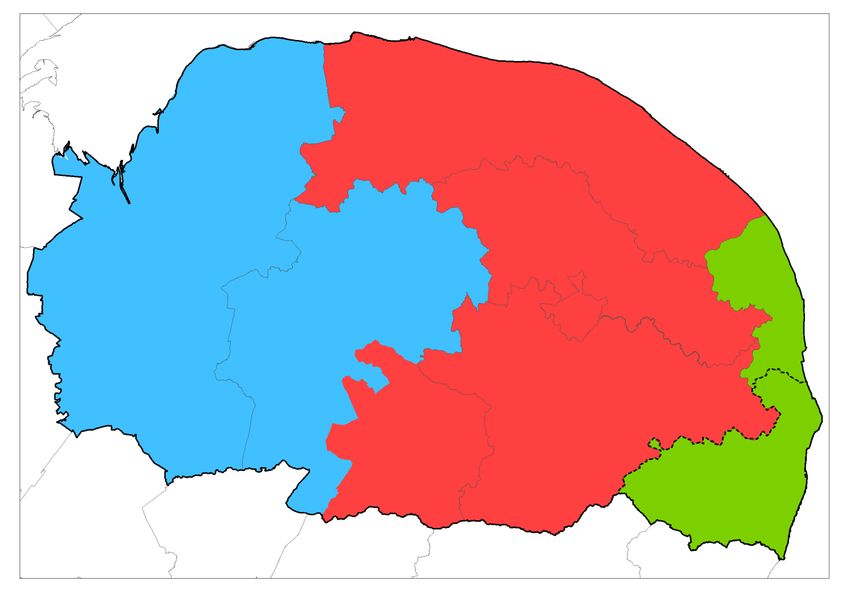
neighbourhood, place and system levels. Identifying these functions is key, as they
   should be the principal driver in determining the ‘best fit’ local footprints – form following
   function.

32. In considering functions and tasks, however, it is important to recognise two issues.
    Firstly, the size of places and neighbourhoods will affect which functions each is best
    placed to deliver. And, secondly, there will never be – and should not be – a firm or
    neat delineation between the ‘levels’: there will be some functions where all parts of the
    system (neighbourhood, place and system) have a role to play as part of a common
    objective or programme (for example public health interventions and narrowing
    inequalities).

33. Broadly speaking we might expect that at system level we would set our overall
    strategies and identify best practice or a range of interventions to solve the challenges
    we face, which would then be implemented at place or neighbourhood level depending
    on the particular issue and tailored to our different communities.

34. For example, we might develop a system level prevention strategy that sets out what
    we want to achieve and some of the best practice interventions we could make. Some
    interventions would be delivered at system level, while others would be implemented at
    place or neighbourhood depending on the needs of each community.

35. It would not be sensible or desirable though to limit those working more locally to just
    implementing strategies and plans agreed at system level. We don’t want to waste time
    or duplicate effort with colleagues from different parts of the system independently
    trying to identify the best way to solve a particular issue, but neither would we want to
    stifle innovation or disempower frontline staff.

36. There will need to be a two-way flow and interaction between those working at system
    level and those working more locally to enable us to achieve the best outcomes for the
    local people, to tackle inequalities, to limit unwarranted variation in care, to make good
    use of our resources and to empower staff to be creative in how they care for and
    support people.

Neighbourhood level
37. Key functions and tasks at neighbourhood level could include:
   •   In-depth understanding of local communities – by sharing data about and
       insights into local needs, preferences and assets.
   •   Joining up and coordinating local services around people’s needs – health,
       care and wider public services, including housing, primary and social care,
       community and mental health services, and the voluntary, community and social
       enterprise sector. This would include regular multi-disciplinary team (MDT)
       meetings held to discuss the care needs and plans of specific individuals as part of
       the operational integration of teams.
   •   Inequalities – development of targeted programmes locally tailored to meet the
       needs of priority groups.
   •   Prevention and self-care – design and implementation of key programmes such
       as social prescribing, promotion of healthy lifestyles, and primary prevention, for
example as with the COVID-19 vaccination programme, which has seen PCNs,
       volunteers, local authorities and others working together.
   •   Community engagement – mobilising the local community and building community
       resilience.
   •   Supporting wider health, social and economic development – by aligning plans.

Place level
38. Key functions and tasks at place level could include:
   •   Supporting the development of neighbourhoods – including access to capacity
       and skills.
   •   Accountability for delegated NHS and social care functions and resources –
       for identified ICS functions that are better delivered at sub-ICS level but still at
       scale.
   •   Implementing system-wide strategies that are better delivered at sub-ICS level
       but still at scale, for example our approach to discharge from hospital.
   •   Strategic planning – for example shaping major developments such as capital
       investment or infrastructure programmes.
   •   Integration of key services – joining-up the local response to health and care
       needs in the community.
   •   Forming a ‘bridge’ between neighbourhoods and the ICS – helping to inform the
       development of ICS strategy, frameworks and resource allocation.
   •   With neighbourhoods, supporting wider health, social and economic
       development – by aligning plans and as major local employers (anchor
       institutions).

System level
39. Key functions and tasks at system level could include:
   •   Strategic planning – including agreeing the priorities and plans to deliver the ICS
       contribution to health and wellbeing strategies, as well as to deliver the national
       NHS England ‘must do’s’.
   •   Build a shared understanding of overall population needs and inequalities
       and agree population health management priorities for Norfolk and Waveney.
   •   Lead the development of a shared culture, behaviours and values across the
       ICS, based on team-working, mutual respect, diversity and inclusion.
   •   Ensure/enable system transformation across sectors (mental/physical health;
       NHS/social care; primary/community/acute).
   •   Ensure the public, patients and service users are effectively engaged at all
       levels of our ICS.
• Ensure there are effective partnerships with the VCSE sector at all levels in
our ICS through our VCSE Assembly.
• Support the development of our neighbourhood and place level arrangements
– including access to capacity and skills.
• Agree and deliver the ICS financial strategy – including increased budget pooling
and co-commissioning; agree capital and estates strategy for system.
• Agree and secure delivery of system workforce and digital strategies.
• Provide assurance for the system to NHS regulators on NHS finance and
performance, and to the health and wellbeing boards on the ICS contribution to
health and wellbeing strategies.
H. Geographic footprints
Factors we need to take into account
40. We have developed a list of factors to help us determine the ‘best fit’ geographic areas
or ‘footprints’ for us to work at ‘place’ and ‘neighbourhood’ levels. When you are
assessing the options we’ve developed below for different ‘footprints’ we could use to
organise ourselves, please consider these factors and how well each option takes
account of the different factors.
41. The factors we have developed to take into account are to:
• ensure that the footprints support the delivery of the partnership’s priorities
• ensure that our ‘places’ will be able to manage delegated decision-making and
funding
• ensure there is real local connectivity, including with the voluntary, community and
social enterprise sector
• ensure our arrangements will support the integration of services, joining-up of
people’s care and pooling of budgets and resources
• build on existing relationships and local knowledge
• consider how meaningful the areas are to local people
• take account of the alignment with local authority boundaries
• take account of the alignment with our PCNs
• take account of existing patient flows
Options for our place level
42. Based on the work we have completed so far, we have developed six options for
different geographic footprints that we could use to organise ourselves.
43. When developing these options, we identified two ways in which we could configure
our places – either by grouping PCNs together or by grouping district councils together.For the purpose of illustration, the options presented tend to use groupings of PCNs
and overall they provide a high degree of alignment with district council boundaries.
Appendix C shows which PCNs would be located in each place for each option. We
would welcome your thoughts on the most appropriate way to configure our places.
44. The six options we have developed are:
Option one: Two places covering the East and West of our ICS
45. In this option we would have two places covering the East and the West of our ICS,
dividing our geographic area approximately in half. The boundary of each place would
be determined by grouping PCNs together. The PCNs would be grouped in order to
closely align with the district council boundaries. This table shows the population for
each place, using the practice lists of the PCNs:
Place Population with Population without
Waveney Waveney
East place 721,504 588,888
West place 352,402 352,402
Option two: Three places based on Functional Economic Areas
46. In this option we would have three places based on Functional Economic Areas
(FEAs), which are broadly speaking the areas in which people live, work and access
services. FEAs are areas that share a number of similar economic factors with
boundaries that ideally reflect the drivers of the local economy.47. The boundary of each place would be determined by grouping PCNs together. The
PCNs would be grouped in order to closely align with the FEAs (and by extension the
boundaries of the district councils, as when grouped together the boundaries of the
district councils broadly match each FEA). This table shows the population for each
place, using the practice lists of the PCNs:
Place Population with Population without
Waveney Waveney
East place 241,574 108,958
Central place 562,791 562,791
West place 269,541 269,541
Option three: Three places aligned to the catchment areas of the three acute
hospitals
48. In this option we would have three places made-up of the PCNs that are aligned to our
three acute hospitals, as shown on the map below. This table shows the population for
each place, using the practice lists of the PCNs:
Place Population with Population without
Waveney Waveney
East place 241,574 108,958
Central place 653,233 653,233
West place 179,099 179,099Option four: Five places based on the current health localities
49. In this option we would have five places based on the current health localities / former
five CCG areas, as shown on the map below. This table shows the population for each
place, using the practice lists of the PCNs:
Place Population with Population without
Waveney Waveney
North Norfolk 176,627 176,627
Norwich 239,182 239,182
South Norfolk 237,424 237,424
West Norfolk 179,099 179,099
Great Yarmouth and Waveney 241,574 108,958Option five: Five places based on the provision of community services
50. In this option we would have five places based on the way community services,
including community health, social care and district councils, are operationally
organised and delivered. The boundary of each place would be determined by
grouping PCNs together to match how these services work. This table shows the
population for each place, using the practice lists of the PCNs:
Place Population with Population without
Waveney Waveney
North Norfolk 176,627 176,627
Norwich 239,182 239,182
South Norfolk 146,982 146,982
West Norfolk 269,541 269,541
Great Yarmouth and Waveney 241,574 108,958Option six: Seven or eight places based on the district council boundaries
51. In this option we would have places based on the district council boundaries. This table
shows the population for each place, using the mid-2019 population estimates for each
district council:
Place District council area
population
North Norfolk 104,837
Broadland 130,783
Norwich 140,573
South Norfolk 140,880
Breckland 139,968
King’s Lynn and West Norfolk 151,383
Great Yarmouth 99,336
East Suffolk (N.B. not just Waveney) 249,46152. We also considered whether Norfolk and Waveney, or just Norfolk could be our ‘place’
level. In other parts of the country place level is at upper tier local authority level.
However, we have discounted this on the basis that for us it would mean our system
and place levels would have the same boundaries. We would of course revisit this
though if it was agreed that the boundary of our ICS would cover more than one county
council area, for example if our ICS boundary was Norfolk and Suffolk.
Neighbourhood working
53. While there are some advantages to having place arrangements that cover quite large
populations (for example in options one to five above), a potential downside is that they
are not truly connected to local communities, which we know is a vital feature of
effective local working.
54. One way of mitigating this risk is to ensure that, if we have large ‘places’, we also
establish strong neighbourhood arrangements at a much more local level. These
neighbourhoods could be built around existing district councils (are even areas within
them) and primary care networks, as well as local health and care providers and the
voluntary sector. Although this configuration could be flexible, it would be important to
ensure that neighbourhoods were clearly connected to – and represented at – place
level.Our questions
55. There are three main areas that we would like your views on:
• Building on what we’ve learnt from our existing local partnership arrangements, we
have developed some suggested key functions and tasks that could happen at
‘place’ and ‘neighbourhood’ levels (as described in section G). What do you think of
these?
• We have developed a list of factors to take into account and to help us determine
the ‘best fit’ geographic areas or ‘footprints’ for us to work at ‘place’ and
‘neighbourhood’ levels (as set out in section H). Do these feel like the right factors
to take into account? Are there any missing? Which is the most important to you?
• We have developed six options for different geographic footprints that we could use
to organise ourselves (as set out in section H). What do you think would be the
advantages and disadvantages of each option for how the system plans and
delivers people’s care? Do you have an alternative suggestion?
I. How to respond
56. We will be attending meetings of key groups and forums to discuss this piece of work,
and will take notes at these meetings and include them in our analysis. We expect that
organisations and individuals will want to submit their views in writing though and this
can be done by:
• Completing our online survey: www.smartsurvey.co.uk/s/Working-at-a-local-level-in-
our-ICS/
• Emailing us at: nwccg.communications@nhs.net.
57. Please can you make it clear in your response whether you are responding on behalf of
an organisation or group (and if so which one), or if you are responding as an
individual.
58. The deadline for responses is 13 June 2021.
J. Next steps – proposed decision making
59. The outcome of the engagement exercise will be taken to the Place Steering Group for
further discussion. It is anticipated that the Place Steering Group will then make a
recommendation as to an appropriate Place footprint. This recommendation will then
be put to the interim ICS Partnership Board in August 2021 for discussion and ideally
agreement.
60. It may be that some other boards, groups or people will also need to make decisions as
well following the engagement exercise. This will depend on a number of factors,
including:
• The outcomes of our engagement exercise
• The nature of the decisions to be made and who has the legal power to make them• The contents of the expected health and care bill or any associated guidance, and
the implications this may have on our understanding and planning for how
Integrated Care Systems are constructed and will operate
• The decision made by the Secretary of State for Health and Social Care regarding
the boundaries of Integrated Care Systems in England.
K. Questions
61. If you have any questions about this engagement exercise, please email
anneborrows@nhs.net.Appendix A: Summary of ‘Integrating care: Next steps to building strong
and effective integrated care systems across England’
In November 2020, NHS England and Improvement (NHSE/I) invited views on
strengthened proposals to put ICSs on a statutory footing. Nationally, thousands of
responses were received, which included every part of the health and care system as well
as the public. The responses are summarised in ‘Integrating care: Next steps to building
strong and effective integrated care systems across England’.
The responses to the November 2020 paper have directly informed NHSE/Is
recommendations to Government and Parliament, which are detailed in this paper:
'Legislating for Integrated Care Systems: five recommendations to Government and
Parliament'. The paper sets the five recommendations NHSE/I are making, alongside
principles to guide how the Government progresses this work, these are:
1. The Government should set out at the earliest opportunity how it intends to
progress the NHS’s own proposals for legislative change
2. ICSs should be put on a clear statutory footing, but with minimum national
legislative provision and prescription, and maximum local operational flexibility.
Legislation should not dictate place based arrangements
3. ICSs should be underpinned by an NHS ICS statutory body and a wider statutory
health and care partnership. Explicit provision should also be made for
requirements about transparency
4. There should be maximum local flexibility as to how an ICS health and care
partnership is constituted, for example using existing arrangements such as existing
ICS partnership boards or health and wellbeing boards where these work well
5. Provisions should enable the transfer of primary medical, dental, ophthalmology and
pharmaceutical services by NHS England to the NHS ICS body. Provision should
also enable the transfer or delegation by NHS England of appropriate specialised
and public health services we currently commission. And at the same time, NHS
England should also retain the ability to specify national standards or requirements
for NHS ICSs in relation to any of these existing direct commissioning functions.
Appendix B: Summary of ‘Working together to improve health and
social care for all’
Based on NHSE/I’s legislative proposals, the Department of Health and Social Care has
set out new proposals to streamline and update the legal framework for health and care in
its white paper: ‘Integration and Innovation: working together to improve health and social
care for all’.
Key elements of the paper include:
Working together to integrate care
• ICS’s are to be established on a statutory setting throughout the country. They will
be accountable for the health outcomes of their population.
• There will be both an ICS NHS Board AND a Health and Care Partnership making
up each ICS.• Health and Wellbeing boards will stay in place with the same function as now.
• A duty to collaborate will be created to promote collaboration across the healthcare,
public health and social care system. The duty will apply to NHS organisations (both
ICSs and providers) and local authorities.
ICS NHS Bodies
• Responsible for Strategic Planning, takes on all responsibilities of CCG and some
of those of NHS E/I.
• The ICS NHS board will, as a minimum, include a chair, the chief executive and
representatives from NHS trusts, general practice and local authorities, with others
determined locally.
• The ICS NHS body will be responsible for developing a plan to meet the health
needs of the population within their defined geography; developing a capital plan for
the NHS providers within their health geography; and securing the provision of
health services to meet the needs of the system population.
• There will be a new duty to compel providers to have regard to the system financial
objectives.
ICS Health and Care Partnerships
• Only specified that an ICS should set up a health and care partnership. The details
regarding their functions and membership are to be left to the discretion of the local
area.
• Responsible for developing a plan that addresses the wider health, public health
and social care needs of the system.
• HCP Board will include NHS, Local authority and other partners for example
perhaps VCSE, care providers.
• Further guidance to support the establishment of these partnerships will be
developed with NHSE/I and the Local Government Association.
Delegations
• ICSs will be left with responsibility to make arrangements as to what is devolved to
place level.
• Joint committees between ICS and providers will now be permitted. However what
can be delegated will be prescribed.• Providers will also be able to form joint committees.
Further collaboration
• Legislation will be changed to remove the barriers to collaboration between CCGs
and NHSEI, across CCGs, and between CCGs and local authorities (LA) to enable
alignment of decisions and pooling of budgets.
• This will mean that we can now “double delegate,” allow groups of ICS’s to jointly
commission and create pooled funds across all functions not just commissioning
functions.
Appendix C: The PCNs that would be located in each of our options for
place level
Section H sets-out six options for different geographic footprints that we could use to
organise ourselves. The following tables show which PCNs would be located in each place
for each option.
Please note that if the boundary of our ICS becomes Norfolk, rather than Norfolk and
Waveney, it would mean that South Waveney and Lowestoft PCNs would no longer be part
of our system.
Option one: Two places covering the East and West of our ICS
Place PCNs
East place South Waveney, Lowestoft, Gorleston, Great
Yarmouth & Northern Villages, NN3, NN4, East
Norwich, West Norwich, North Norwich, Central
Neighbourhood, Ketts Oak, SNhIP PCNs
West place NN1, NN2, Breckland, Mid Norfolk, Coastal, Fens &
Brecks, King’s Lynn, Swaffham & Downham PCNs
Option two: Three places based on Functional Economic Areas
Place PCNs
East place South Waveney, Lowestoft, Gorleston, Great
Yarmouth & Northern Villages PCNs
Central place NN1, NN2, NN3, NN4, East Norwich, West Norwich,
North Norwich, Central Neighbourhood, Ketts Oak,
SNhIP PCNs
West place Breckland, Mid Norfolk, Coastal, Fens & Brecks,
King’s Lynn, Swaffham & Downham PCNs
Option three: Three places aligned to the three acute hospitals
Place PCNs
East place Great Yarmouth & Waveney Locality (South Waveney,
Lowestoft, Gorleston and Great Yarmouth & Northern
Villages PCNs) around the JPUH
Central place North Norfolk, Norwich and South Norfolk Localities
(NN1, NN2, NN3, NN4, East Norwich, West Norwich,
North Norwich, Central Neighbourhood, Ketts Oak,SNhIP, Breckland and Mid-Norfolk PCNs) around the
NNUH
West place West Norfolk Locality (Coastal, Fens & Brecks, King’s
Lynn and Swaffham & Downham PCNs) around the
QEH
Option four: Five places based on the current health localities
Place PCNs
North Norfolk NN1, NN2, NN3 and NN4 PCNs
Norwich East Norwich, West Norwich, North Norwich and
Central Neighbourhood PCNs
South Norfolk Ketts Oak, SNhIP, Breckland and Mid Norfolk PCNs
West Norfolk Coastal, Fens & Brecks, King’s Lynn and Swaffham
& Downham PCNs
Great Yarmouth and Waveney South Waveney, Lowestoft, Gorleston and Great
Yarmouth & Northern Villages PCNs
Option five: Five places based on provision of community services
Place PCNs
North Norfolk NN1, NN2, NN3 and NN4 PCNs
Norwich East Norwich, West Norwich, North Norwich and
Central Neighbourhood PCNs
South Norfolk Ketts Oak, SNhIP PCNs
West Norfolk Breckland, Mid Norfolk, Coastal, Fens & Brecks,
King’s Lynn and Swaffham & Downham PCNs
Great Yarmouth and Waveney South Waveney, Lowestoft, Gorleston and Great
Yarmouth & Northern Villages PCNs
Option six: Seven or eight places based on the district council boundaries
Primary Care Primary care District
Acute trust catchment
Network (PCN) locality council
Great Yarmouth James Paget University
South Waveney East Suffolk
& Waveney Hospital
Great Yarmouth James Paget University
Lowestoft East Suffolk
& Waveney Hospital
Great Yarmouth James Paget University Great
Gorleston
& Waveney Hospital Yarmouth
Great Yarmouth & Great Yarmouth James Paget University Great
Northern Villages & Waveney Hospital Yarmouth
Norfolk & Norwich University
North Norfolk 1 North Norfolk Hospital/ Queen Elizabeth North Norfolk
HospitalNorfolk & Norwich University
North Norfolk 2 North Norfolk North Norfolk
Hospital
Norfolk & Norwich University Broadland/
North Norfolk 3 North Norfolk
Hospital North Norfolk
Norfolk & Norwich University
North Norfolk/
North Norfolk 4 North Norfolk Hospital/ James Paget
Broadland
University Hospital
Broadland/
East Norwich Norfolk & Norwich University
Norwich Norwich City
Neighbourhood Hospital
Council
Broadland/
West Norwich Norfolk & Norwich University Norwich City
Norwich
Neighbourhood Hospital Council/ South
Norfolk
Norwich North Norfolk & Norwich University Norwich City
Norwich
Neighbourhood Hospital Council
Central Norfolk & Norwich University Norwich City
Norwich
Neighbourhood Hospital Council
Norfolk & Norwich University
Breckland South Norfolk Breckland
Hospital
Norfolk & Norwich University Breckland/
Ketts Oak South Norfolk
Hospital South Norfolk
Norfolk & Norwich University
Mid Norfolk South Norfolk Breckland
Hospital
Norfolk & Norwich University
SNhIP South Norfolk South Norfolk
Hospital
King's Lynn &
Coastal West Norfolk Queen Elizabeth Hospital
West Norfolk
King's Lynn &
Fens & Brecks West Norfolk Queen Elizabeth Hospital
West Norfolk
King's Lynn &
King's Lynn West Norfolk Queen Elizabeth Hospital
West Norfolk
King's Lynn &
Swaffham &
West Norfolk Queen Elizabeth Hospital West Norfolk/
Downham
BrecklandYou can also read


