ENGINEERING2021 - FORMER STUDENT FEATURE pg. 9
←
→
Page content transcription
If your browser does not render page correctly, please read the page content below
Department of
Biomedical Engineering

FORMER
STUDENT
FEATURE
pg. 9

SENIOR
INNOVATION
pg. 14

BIOMEDICAL

ENGINEERING              2021
pg. 14                                                          pg. 9

                                                 pg. 21                             pg. 26

                                            Table of Contents
                                            4    Letter from the department head              16   Faculty & staff awards

                                            5    Facts and figures                            17   Faculty professional society fellows

                                            6    Student scholarship & award winners          18   Student innovation through I-Corps

                                            8    Research: COVID-19 detection                 20 Student celebrates collaborative research

                                            9    Lessons learned from former student          21   Research: OvCa-Chip

                                            10   Summer Enrichment Experience                 22   Staff Spotlight: Eileen Hoy

                                            11   Research: $5M cancer grant                   23   Outstanding Alumni: Cindy Haven

                                            12   Student embraces research, academia          24   New biomedical design studio

                                            13   Research: Regenerative medicine in the gut   26   Research: Late-stage cancer care

                                            14   Senior design project highlights             27   Dr. Kathy Banks named university president
Cover: This anatomical-sized ear is an
example of how regenerative medicine
research in the department is engineering
functional human tissue that will drive
biomedical innovations, enabling
better understanding of diseases, drug
discovery and therapeutics.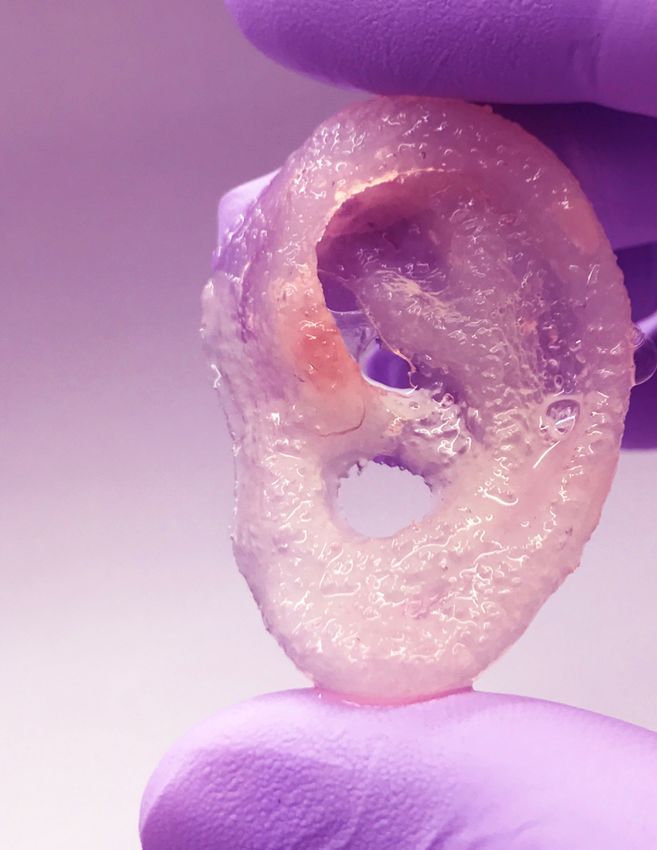
BY THE NUMBERS
                                    Letter from the
                                    Department Head

                                                                                                                                                  RESEARCH
                                                                                                                                                                                       $11.2 MILLION
    Greetings from Aggieland! I hope this finds each of you and you loved ones well. It has been
    enlightening to prepare this annual update for the Department of Biomedical Engineering at Texas A&M
    University, as it has reinforced the fundamental commitment that our faculty, students and staff hav
    to making an impact. Therefore, it is extremely rewarding to highlight exciting research developments,                                         FUNDING                                                   (FY 2020 TOTAL)
    celebrate the achievements of our faculty and students, and underscore the impact of their innovative

                                                                                                                                          65                                             38
    and translational efforts

    As we move into the future, we will maintain a technical emphasis on our four primary research areas of                                                patents                                  disclosures file
                                                                                                                                                           Numbers from 2015-20                     Numbers from 2015-20
    imaging technologies, medical devices, regenerative medicine, and sensing and monitoring systems. Our
    faculty is increasing connectivity to the Engineering Medicine program and the Center for Remote Health
    Technologies and Systems. This includes adding complementary expertise in application areas of great
    importance throughout the world: chronic diseases (cardiovascular disease, cancer, diabetes), trauma care
    and pediatric devices. These efforts are already strongly supported with federally funded research centers         ENROLLMENT                                        (FALL 2020)    FACULTY
    and continue to grow with new major projects, many detailed in this report. These programs support

                                                                                                                                                                                         25                            2 Lecturers
                                                                                                                            496                             159
    translational efforts to quickly move design concepts developed in our labs out into practice. It is a thrill to                                                                          Tenure Track
    work with faculty and students so committed to solving real-world problems.

    Students are benefiting from the transformation of coursework to leverage new technology, upgraded
                                                                                                                            Undergraduates                       Graduates
                                                                                                                                                                                          5   Professors
                                                                                                                                                                                              of Practice              20 Affiliated
                                                                                                                                                                                                                             Faculty

                                                                                                                                                                                          1
    facilities and additional resources for hands-on learning. Changes are capitalizing on the unique                                                                                         Professor of
    backgrounds of faculty with extensive industry experience as well as integrating cutting-edge research into                                                                               Instruction
    new elective courses. As a result, our graduates are being trained to become impact-minded leaders who
    will design engineering solutions to clinical problems and understand all aspects of the process necessary
    to turn those into approved products. It is through this comprehensive training that we produce strong
    biomedical engineers prepared to have a lasting influence
                                                                                                                       DEGREES AWARDED                                                         DIVERSITY
    We are proud of the significant increases in research expenditures, publications, faculty awards,
                                                                                                                       (FALL 2019-SUMMER 2020)                                                 UNDERGRADUATE
    scholarships, fellowships and research space that all signal excellent forward progress. These achievements

                                                                                                                                   28                                                          45% Female
    are enabling further growth in people and programs that will provide even greater opportunities for impact.
    Please visit our website or come visit us in person to see firsthand how our plans are coming together to                                            M.S./M.Eng.
    make a difference in the world
                                                                                                                                                                                               28% Minority
                                                                                                                                   16                    Ph.D.
                                                                                                                                                                                               GRADUATE

                                                                                                                                                                                               40%
                                                                                                                                  149
                                                                                                                                                                                                                 Female
                                                                                                                                                         B.S.

    Michael J. McShane, Ph.D.                                                                                                                                                                  13%               Minority

    Department Head and Professor
    James J. Cain Professor II

4                                                                                                                      engineering.tamu.edu/biomedical                                                                                 5
Student Scholarship & Award Winners Departmental Scholarships
Artifink Capstone Team Jesse Fine Navaneeth K. R. Pandian Our students and faculty benefit greatly through program enhancements and scholarships that our former
Second place overall, 2020 Engineering Student Initiative Award, Department Distinguished Graduate Student students and friends make possible. We greatly appreciate your support.
Design Showcase, Texas A&M: Sarah of Biomedical Engineering Award, Association of Former Students
Jones, Hunter Lyon, Brandon Worth, Kendall Gibson Kassidy Porche
Gilberto Flores Reyes and Sarah Swift Linda & Joe Fowler ’68 Endowed Bill Blackwood Scholarship, Marina and Don Canal ’85 Dr. William Hyman Scholarship Fund
Alcon Capstone Team Scholarship, Department of Biomedical College of Engineering Scholarship* This scholarship was created in honor of Dr. William
Second place in the Department Engineering Daniel Prasca-Chamorro Hyman. It supports students who have industry
This scholarship was established by Marina and
of Biomedical Engineering, 2021 Graduate Research Fellowships internship/co-op experience.
Morrow Foundation Engineer Don Canal. It funds students who are both Texas
Engineering Design Showcase, Texas Program fellow, National Science
Scholarship, College of Engineering residents and military veterans.
A&M: Emily Rayer, Beril Ulugun, Audrey
Sanskruthi Guduri
Foundation Wanda and Jack E. McMahan ’43
Amanda Rakoski
Sheppard, J. Jesus Rodriguez Cruz,
Biomedical Engineering Havelka Peter Chaplinsky Scholarship
Annette Alanis and Esteban Ramirez Graduate Research Fellowships
Biocoupler Capstone Team
Award & Scholarship, Department of
Program fellow, National Science Memorial Scholarship This fund was established to honor the memory of
Biomedical Engineering
Third place overall, first place in the
Michael Guillen
Foundation This scholarship was established to honor the Jack and Wanda McMahan. It provides funding to
Department of Biomedical Engineering,
Ayse Yalcinkaya ’02 Memorial
Alexandra Ramos memory of Peter Chaplinsky. It provides funding to members of the Corps of Cadets.
2021 Engineering Design Showcase, Biomedical Engineering Havelka the top biomedical engineering junior.
Scholarship, Department of Biomedical
Texas A&M: Rupal Gupta, Raaghav
Engineering
Award & Scholarship, Department Roger J. McNichols ’98
Bageshwar, Kamran Darvesh,
Wahibah Hannan
of Biomedical Engineering Linda & Joe Fowler ’68 Memorial Scholarship
Alexander Bogdan and Ariel Alanis Flores
Roger J. McNichols ’98 Memorial Class of ’80 E. King Gill Selfless Service Endowed Scholarship This fund honors the memory of former student
Sara Abasi Scholarship, Department of Biomedical Award, Texas A&M LAUNCH program
Distinguished Dissertation Award, This scholarship was established by Linda and Joe Roger McNichols. It funds students with interest in
Engineering Ruby Ross
Texas A&M Fowler. This needs-based fund supports students entrepreneurship experience, translational work or
BrieAnn Harris Wanda and Jack E. McMahan ’43
Isabelle Agurcia who are U.S. citizens and participate in leadership/ taking additional classes to expand education.
Delano Women in Engineering Scholarship, Department of
Buck Weirus Spirit Award, Texas A&M extracurriculars.
Shreedevi Arun Kumar
Scholarship, College of Engineering Biomedical Engineering
Ayse Yalcinkaya ’02
Christopher Hung Amelia Soltes
Third place, Raymond’s Idea Challenge,
Linda & Joe Fowler ’68 Endowed Wanda and Jack E. McMahan ’43 Biomedical Engineering Havelka Memorial Scholarship
Texas A&M
Scholarship, Department of Biomedical Scholarship, Department of Award & Scholarship^ This fund honors the memory of former student
U.S. Senator Phil Gramm Doctoral Engineering Biomedical Engineering Ayse Yalcinkaya. It provides funding to junior female
This scholarship was formed by Jim ’86 and Jacque
Fellowship, Texas A&M Sarah Jones Hunter Syas students actively engaged in the Society of Women
Havelka ’87. It is awarded to the top senior in
Marco Bueso-Renteria Graduate Research Fellowships Program Freshman Dean’s Excellence Award,
Engineers with a 3.0 GPA or higher.
biomedical engineering.
Roger J. McNichols ’98 Memorial fellow, National Science Foundation Texas A&M
Scholarship, Department of Biomedical Anna Kersey Daaniya Syeda * Future Scholarships
Engineering Second place, 3-Minute Thesis Dr. William Hyman Scholarship Fund, ^ Non-endowed
Ana Chang-Gonzalez Competition, Texas A&M Department of Biomedical Engineering
Diversity Award, The Protein Society Xiao Ling Thomas Tigner
Lydia Colvin
Equity, Diversity, and Inclusion Activity
Dr. William Hyman Scholarship Fund,
Department of Biomedical Engineering
Graduate Research Fellowships
Program fellow, National Science 2021 Annual Research
Grant, SPIE
Isabella Couture
Brandon Look Fong
Roger J. McNichols ’98 Memorial
Foundation
Lauren Yamthe Symposium Winners
Ayse Yalcinkaya ’02 Memorial Scholarship, Department of Biomedical Linda & Joe Fowler ’68 Endowed
Scholarship, Department of Biomedical Engineering Scholarship, Department of
On behalf of the Department of Biomedical Engineering at Texas A&M University (BME@TAMU), the
Engineering Hamza Masood Biomedical Engineering Biomedical Engineering Graduate Student Association is pleased to announce this year's research
Claudia Daboin Linda & Joe Fowler ’68 Endowed symposium winners:
Morrow Foundation Engineer
Ayse Yalcinkaya ’02 Memorial Scholarship, Department of Biomedical
Scholarship, College of 1st Place Podium Presenter – Michaela Pfau 3rd Place Rapid-Fire Presenter – Annie
Scholarship, Department of Biomedical Engineering
Engineering
2nd Place Podium Presenter – Samuel Briggs Hedman & Jace Willis (Tie)
Engineering Sakina Mohammed Mota Lois Wampler
Kaivalya Deo Diversity Service Student Award,
Graduate Research Fellowships 3rd Place Podium Presenter – Amirali Selahi & Best First Year Graduate Presenter – Laura
Third place, Raymond’s Idea Challenge, Accountability, Climate
Program fellow, National Science Ping Dong (Tie) Rivera Tarazona
Texas A&M and Equity, Texas A&M
Foundation
1st Place Rapid-Fire Presenter – Cyril Soliman Best Undergraduate Presenter – Rithika
Heather Farris HEEP Graduate Fellowship, Hagler
Peter Chaplinsky Memorial
Adavikolanu
Institute for Advanced Study 2nd Place Rapid-Fire Presenter – Thomas
Scholarship, Department of
Tigner
Biomedical Engineering
6 engineering.tamu.edu/biomedical 7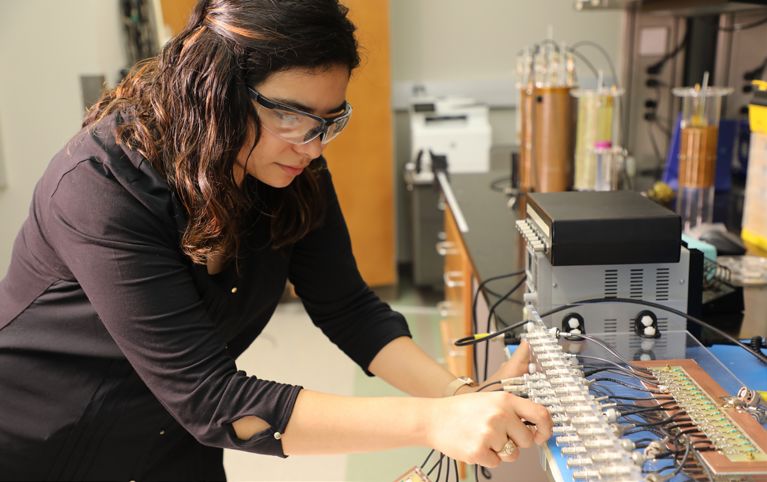
Career Reflections,
                                                                                                                       Lessons Learned
                                                                                                                       Scott Salys ’96, is the divisional vice president of      At this point, Salys knew he wanted to expand his
                                                                                                                       Heart Failure operations at Abbott, a medical device      experience outside of R&D and have a broader
                                                                                                                       company. Heart Failure operations is a franchise          overall business understanding, so he transferred
                                                                                                                       within Abbott’s medical device segment focused on         within the company to St. Jude’s Neuromodulation
                                                                                                                       implantable and nonimplantable heart pumps as well        Division where he rotated through several vice
                                                                                                                       as heart failure monitoring systems. Salys has more       president roles.
                                                                                                                       than 20 years of industry experience and has expertise    “Let them know what your interests are, and then
                                                                                                                       in research and development (R&D), operations, supply     see if there is a business need that matches up with
                                                                                                                       chain, program management, process development,           your aspirations or where you want to go,” Salys
                                                                                                                       marketing and customer engagement.                        said. “Some of it’s random timing and what the
                                                                                                                       However, that was not the original plan.                  business needs at a given point in time. Your skill
                                                                                                                       In high school, Salys was set to pursue geophysics,       sets need to match the company needs.”
                                                                                                                       although he wasn’t set in which direction his career      Throughout his career, Salys said he has faced
                                                                                                                       would go. However, in his senior year of high school,     many challenges but was successful through

    Tian shifts biosensor research to
                                                                                                                       he was hospitalized on and off for about a ear.           persistence and staying focused on adding value.
                                                                                                                       “During that time, I was doing my own research            “There were challenging times that I was working

    focus on COVID-19 detection                                                                                        online, trying to understand my illness and the
                                                                                                                       physiology,” Salys said. “It was during this time I
                                                                                                                                                                                 18-hour days, working on weekends. But at the end,
                                                                                                                                                                                 when it’s all successful, it develops you and you feel
                                                                                                                       started to learn how the body works.”                     good about it. It’s rewarding at the end of it all. The
    Dr. Limei Tian and her team are developing a novel way to                                                          “The human body is the most amazing machine               challenging times are the most rewarding in my
    diagnose COVID-19 through a mask using adapted biosensor                                                           and system you can work on,” he said. “That’s             experience,” Salys said.
    research designed for other disease diagnoses.                                                                     how I got into this field and I’m glad I did. It’s been   Salys also encouraged students to explore many
                                                                                                                       tremendously rewarding.”                                  different career path options when they graduate,
    When the COVID-19 pandemic began to inundate            exhales, their breath can be captured. The sensor          One major accomplishment toward his career path           saying there are many entry points for engineers,
    the United States in early 2020, many researchers       then can be easily removed and placed in a hand-           was a co-op he did with a pacemaker company               including areas such as R&D, operations, regulatory
    looked at how they could adapt their current work       held reader for analysis.                                  out of Houston. In addition to firmly establishing        and field roles with direct
    to help fight the pandemic. Dr. Limei Tian, assistant   “In addition to COVID-19, the platform technology          his passion for R&D, he said it was instrumental in       physician interaction.
    professor in the Department of Biomedical               being developed in our lab can be readily adapted          providing career options upon graduation. Having a        “You’re not going to be
    Engineering at Texas A&M University, and her team       for rapidly detecting and monitoring other                 resume with directly relevant work experience and         able to mastermind your
    are developing a novel way to diagnose COVID-19         infectious respiratory diseases,” Tian said.               tangible R&D achievements caught the interest of          career trajectory. Some of
    through a mask.                                                                                                    recruiting companies and provided topics to discuss       it just happens, so I never
                                                            The team is in the sensor development process.
    “We are developing a reliable, noninvasive, point-of-   Tian said one challenge has been improving                 in interviews.                                            tried to over plan it,” Salys
    care biosensor that can directly capture and detect     the sensitivity of the biosensors to capture low           After graduation, Salys went to work in                   said. “As you go through
    SARS-CoV-2 for rapid detection and surveillance of      concentration of biomarkers in the breath.                 R&D at Cyberonics, a company focused on                   your career, you should
    COVID-19,” Tian said.                                                                                              neuromodulation for the treatment of epilepsy.            have a general trajectory
                                                            Tian was recently recognized for her work in                                                                         in mind and take on
    One of Tian’s research focuses is in organic and        biosensors by receiving the Trailblazer R21 Award          Three years later, he was approached with the
    inorganic hybrid materials for physical, chemical                                                                  opportunity to move to California and join a larger       opportunities that lead in
                                                            from the National Institute of Biomedical Imaging                                                                    that direction.”
    and biological sensors and multifunctional surfaces     and Bioengineering, part of the National Institutes        company, St. Jude Medical, that focused on cardiac
    and interfaces. As opportunities to research ways       of Health. The award is an opportunity for new             rhythm management and the design of pacemakers
    to detect and fight COVID-19 started, Tian began        and early-stage investigators to pursue research           and defibrillators
    to adapt biosensors designed for other disease          programs that integrate engineering and the physical       While there, he made his way through different
    diagnoses to instead detect COVID-19.                   sciences with the life and behavioral sciences.            R&D positions, starting as an individual contributor
    Tian said the goal is to develop a biosensor patch                                                                 in leads development to expanding his role to
    that can be placed into a mask/scarf. As a person                                                                  managing increasingly larger organizations.

8                                                                                                                  engineering.tamu.edu/biomedical                                                                                         9
Researcher Receives
                                                                                                                                              $5M Cancer Grant
                                                                                                                   Dr. Tanmay Lele, Unocal Professor in the                   abnormalities are ubiquitous and occur in all kinds
                                                                                                                   department, received a multi-million dollar grant          of cancers — breast, prostate and lung cancers.”
                                                                                                                   to support groundbreaking cancer research.                 Pathologists study biopsies and note abnormalities
                                                                                                                   Lele received a $5 million Recruitment of                  in the shape of the cell and its nucleus to grade
                                                                                                                   Established Investigators grant from the                   the severity of cancer. To research the cause of
                                                                                                                   Cancer Prevention and Research Institute of                abnormal cancer nuclear structures, Lele and his
                                                                                                                   Texas (CPRIT) to further knowledge about cancer            team are working to computerize the analysis of
                                                                                                                   and how it progresses.                                     nuclear shapes.
                                                                                                                   Lele’s research focuses on mechanobiology — the            Lele’s research aims to help the medical community
                                                                                                                   mechanical aspects of biology — where he works             develop new knowledge of human cancers and

     Summer enrichment experiences                                                                                 to understand how cells sense external mechanical
                                                                                                                   forces as well as how they generate mechanical
                                                                                                                                                                              how they progress to better diagnose and manage
                                                                                                                                                                              cancers. Understanding the mechanisms behind the

     give students face time with industry                                                                         forces, and how these mechanical forces impact
                                                                                                                   cell function.
                                                                                                                                                                              abnormalities can help develop therapies to better
                                                                                                                                                                              treat cancers by targeting the nucleus.
                                                                                                                   In cancer, both cellular mechanical forces                 “Like any other basic field, we are trying to make
                                                                                                                   and the mechanical properties of resisting                 discoveries with the hope that they will have long-
     The Summer Enrichment Experience (SEE), hosted          The SEE program lined up with a College of            cellular structures go awry. This in turn causes           term impacts on human health,” Lele said.
     annually by the department, celebrated its sixth        Engineering initiative called ENGRx, which requires   abnormalities in cell structure. A particularly striking   Lele has two laboratories, one in College Station
     anniversary in 2021.                                    all students to have external experiences such as     feature of cancer cells is the highly irregular and/or     and one in the Texas A&M Health Science Center’s
                                                             research, leadership or industry experience.          distended shape of the nucleus.                            Institute of Biosciences and Technology in Houston.
     The SEE program launched in 2015 as a way to
     provide students additional opportunities for           When it first started, opportunities focused on       “The nuclei in normal tissue have smooth surfaces,         The cancer grant from CPRIT is a collaborative
     interactions with industry to assist with career        contacts in the Houston and College Station areas.    but over time the surfaces of cancer nuclei become         effort with Dr. Michael Mancini and Dr. Fabio Stossi
     exploration and networking. Jacqueline Havelka          However, that soon expanded throughout Texas          irregular in shape,” Lele said. “Now, why? Nobody          from the Baylor College of Medicine. Lele said he is
     ’87, a member of the Biomedical Engineering             in person and the entire nation virtually. Some       really knows. We’re still at the tip of the iceberg        looking forward to collaborating with researchers in
     Advisory Board, started the program. Maria              examples of partnering companies include Quest        at trying to figure this problem out. But nuclear          both College Station and Houston.
     Lyons, program manager for corporate relations          Medical, Abbott, the Mann Eye Institute, NASA,                                                                                         Lele received his doctoral
     and former student outreach in the department,          Medtronic, BD and Cook Medical.                                                                                                        degree in chemical
     manages the program.                                    In-person opportunities prior to the pandemic                                                                                          engineering from Purdue
     “It has been very rewarding to see hundreds of          included industry and hospital tours, physician                                                                                        University. Before coming to
     students participate over these last years,” Havelka    shadowing and networking opportunities. The                                                                                            Texas A&M, he served as the
     said. “I hope that we have provided some sparks         transition online allowed the series to expand to                                                                                      Charles A. Stokes Professor of
     of interest to help them pursue a particular career     include panel presentations from former students,                                                                                      Chemical Engineering at the
     path. All it takes is a spark to get that fire going!   information sessions focused on career paths                                                                                           University of Florida. At Texas
                                                             at medical device companies, virtual product                                                                                           A&M, in addition to being in
     The undergraduate population in biomedical
                                                             demonstrations and more.                                                                                                               biomedical engineering, he is
     engineering nearly doubled in size between 2014 and
                                                                                                                                                                                                    a joint faculty member in the
     2020. As a result, the program saw changes as well.     “Companies, their employees and our former
                                                                                                                                                                                                    Artie McFerrin Department of
     “The program has grown tremendously from the            students have all been extremely gracious in
                                                                                                                                                                                                    Chemical Engineering.
     student perspective. In its first year, approximately   sharing their time and expertise with our current
     20 students participated,” Lyons said. “Our             students,” Lyons said. “Summer 2021 will utilize
     fully virtual series in 2020 resulted in 94 active      a hybrid model incorporating both in-person and
     participants, 25 of which received credit for the       virtual experiences.”
     ENGRx curriculum requirement.”

10
FROM RESEARCH
     TO ACADEMIA
     Del Bosque embraces teaching opportunity
     Romina Del Bosque initially pursued biomedical        Del Bosque defended her dissertation in late
     engineering as an undergraduate student because       2019, started teaching in January 2020 and
     it combined medicine and engineering. At the time,    graduated from Texas A&M in May. She is
     she planned to pursue a medical degree but found      now on the academic professional track at
     she liked the problem-solving aspects of biomedical   Vanderbilt University. Along with teaching
     engineering more.                                     two courses a semester, she has two service
     That interest continued on to her doctoral            components: developing a mentorship program
     program. There, she continued her research in         for underrepresented minorities within the
     radiofrequency coil design for magnetic resonance     department and designing a program that helps

                                                                                                                               GUT RESEARCH INNOVATIONS
     imaging and spectroscopy in Dr. Mary McDougall’s      students get internships.
     lab. Financial support came from two Texas A&M        While in Bryan-College Station, Del Bosque was a
     University fellowships — the Louis Stokes Alliance    member of the Texas A&M System Research Model
     for Minority Participation and the Graduate           (TxARM), part of The Texas A&M University System                                              could help veterans through regenerative medicine
     Diversity Fellowship.                                 Texas Alliance for Graduate Education and the
     “Throughout both undergrad and graduate school,       Professoriate. This alliance was created to advance         Gulf War Illness (GWI) is a multi-symptom illness that      One challenge her overall research faces is
     I had phenomenal professors and mentors,” Del         knowledge about models to improve pathways                  impacts an estimated 25% to 35% of veterans of the          sourcing cell material from the patient to form the
     Bosque said. “The combination of that support         to the professoriate and success of historically            Gulf War. Since the war, functional gastrointestinal        engineered portion. Many of the issues she’s trying
     and my interest in mentoring and teaching             underrepresented minority graduate students,                disorders related to GWI have gone largely                  to address impact only parts of the gut.
     undergraduate researchers in my lab is what led       postdoctoral fellows and faculty in specific science,       unexplained and there are no clear therapies that           “For a regenerative medicine approach to work, you
     me to pursue a career in academia.”                   technology, engineering and math disciplines.               directly address gastrointestinal dysfunction in GWI.       have to show that other portions of the gut are still
                                                           Del Bosque said TxARM provided a community with             Dr. Shreya Raghavan, assistant professor, and her lab       functioning normally,” Raghavan said. “That’s our
                                                           a common goal — to pursue a career in academia.             aim to develop new ways to research GWI occurrence          first challenge — to show that engineered pieces
                                                           “These professional development activities are              and treatment options using bioengineering.                 from the uninvolved gut still function physiologically
                                                           extremely helpful when transitioning from doctoral          “We believe that by investigating the pathobiology of       as expected and sourcing enough amounts of
                                                           student to junior faculty,” she said.                       GWI-related gastrointestinal dysfunction, we will be        autologous tissue to create this solution.”

                                                           One of her main professional and personal                   able to therapeutically target it and improve the quality   Raghavan said personal connections have also led
                                                           mentors in graduate school was her advisor. One             of life of aging Gulf War veterans,” Raghavan said.         to her interest in studying the gut, including family
                                                           piece of advice that Del Bosque has carried with            Her lab works on engineering tissue                         members afflicted with chronic gut disorder
                                                           her is to not doubt herself.                                microenvironments for both intestinal inflammation          “Even outside of GWI, this work has implications in
                                                           “As a first-generation college student, I often             research and cancer. By isolating all the individual        other inflammatory disorders of the gut like Crohn’s
                                                           doubted myself and my abilities,” she said. “I plan         cellular components and reengineering them in               and colitis, even cancer initiation,” Raghavan said.
                                                           to mentor undergraduate students, especially                controlled ratios, the lab is able to better understand     “These sorts of personalized medicine approaches
                                                           those who are in similar situations I was in, to            the different variables that cause the biological           are currently not very popular in the gut realm. It
                                                           help them understand that they do belong within             problems. These bioengineered constructs, if made           will be exciting to generate bioengineered guts. To
                                                           the department and that hard work can help                  from patient-derived cells, can then be used for            ask so many different questions like, ‘Why are some
                                                           them accomplish anything they set their mind to             personalized, patient-specific treatments                   patients susceptible to colorectal cancer? Or why do
                                                           regardless of their ‘starting point.’”                      “The readouts from bioengineered guts/intestines            some individuals with inflammatory bowel disorders
                                                                                                                       are phenomenally similar to comparable tissues from         have disruptions in gut motility, and how can we
                                                                                                                       rodents, rabbits and even humans,” Raghavan said.           treat them?’”
                                                                                                                       “Our previous work has shown that by creating these
                                                                                                                       gut structures, we’re able to compare physiological
                                                                                                                       function and show remarkable equivalency.”

12                                                                                                                 engineering.tamu.edu/biomedical                                                                                          13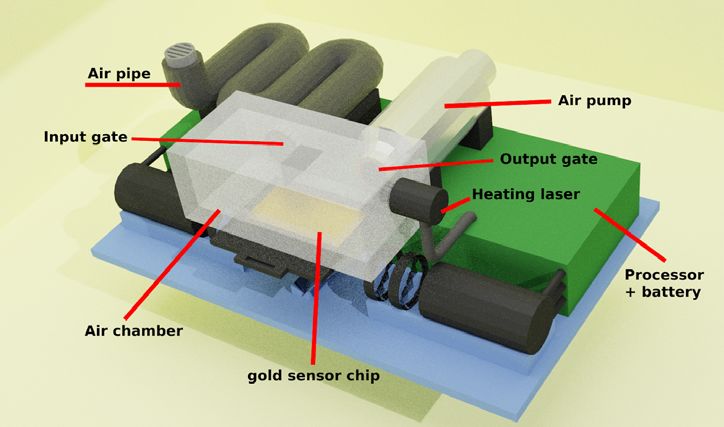
Taking steps to improve
CAPSTONE
youth foot and ankle orthotics
Design Projects
One senior design team developed an orthotic to help
children move easier. Working with Texas Children’s
Hospital, the team designed an orthotic device to help
children with foot-ankle malalignments. Current orthotics are
either generalized pieces designed for adults or customized
The senior design experience is an extremely important part of the biomedical engineering curriculum at devices that take lots of time and money to make. The team
Texas A&M University. The department’s undergraduate students work with sponsors as part of a project developed a plan and prototype that landed at the perfect
aimed at designing and fabricating a medical device or system. The projects, which can result in new intersection of timely and customizable. Another aspect of
designs, improvements to existing designs or new process designs, are sponsored by clients such as medical their project is a business plan that explains costs, associated
device companies and clinicians. risks and anticipated profit margins
These are just a few examples of projects our students have recently participated in. Please note that all “Our sponsor is very ambitious. I think that pushes us and
photos were taken before COVID-19 restrictions were in place. challenges us more and gives us that drive to be successful,”
Emily Burrows said. “They’ve been helpful and clear on what
they want.”
Students offer pediatric Students develop device
surgeons a helping hand to support infant kidneys
When babies are born with cardiovascular issues
In a surgery suite, it’s all hands on deck to give the patient
that require surgery, their other systems, especially
the best care possible. However, using an endoscope, a
the kidneys, need support. Babies in the neonatal
tube with a light and camera attached to it, can sometimes
intensive care unit receive this support through
take away some of that mobility. This capstone team of five
peritoneal dialysis, which helps soak up and remove
developed a holder that can keep the endoscope absolutely
waste. This process is currently done by hand. One
still during surgery for a pediatric ear, nose and throat
team worked with Texas Children’s Hospital to develop
surgeon with Texas Children’s Hospital.
an automated system to save time and labor and
“This project is on the smaller scale since we are just allow the nurses to act as a second pair of eyes.
catering to our surgeon, but the bigger impact of this is it’s
“This is the first class where we have full discretion
going to cut down on procedures and it’s going to allow him
over everything,” Ashwin Mukund said. “A lot of classes
to work on more patients at the end of the day and help
have guidelines and, ‘OK, if this goes wrong, you can
those kids that need it,” Camille Felgenhauer said. “It’s those
go to a teacher,’ but this class it’s really all on us.”
small details that make the bigger picture worth it.”
Team designs phone app for Capstone team works
low-contrast visual acuity tests to help the littlest ears
Technology is always evolving, including using telehealth This capstone team worked with two sponsors from
to reach patients who cannot easily travel to a physical Texas Children’s Hospital to find new and adaptable
clinic or hospital. One capstone design team of four solutions to infant ear deformations — where all
developed a new phone app to test low-contrast visual the material is there, just not in the right place. The
acuity. Working with The University of Texas Southwestern students worked to solve a real-world problem in
Medical Center, this app could help clinicians diagnose an effective way. The team developed a 3D print
neurological conditions, including multiple sclerosis, personalized treatment plan to create alternative
without the patient traveling to the clinic. devices to the generic products on the market, which
aren’t exactly fit for infants
“Our application is sort of a first test to see how your vision
is doing, and see if that’s manifesting as a symptom of a “This is the application of our education, and seeing
larger issue,” Matthew Armstrong said. “Our assignment is it and being successful with it helps me know that in
to design something that can be deployed remotely.” the future, wherever, whatever I do with my life, I will
be able to achieve something like this because I’ve
already seen results,” Meagan Makarczyk said.
Faculty Professional
     Faculty & Staff Awards                                                                                                                                                             Society Fellows
     IMPEDE® Embolization Plug Team                          Roozbeh Jafari                                                 Gerard Coté, Regents Professor                              Mike McShane, Professor
        R&D 100 Award, R&D World Magazine                       Dean of Engineering Excellence Award, Texas A&M                 American Institute for Medical and                         American Institute for Medical and
        2020 Excellence in Technology Transfer Award,           – Professor Level                                               Biological Engineering                                     Biological Engineering
        Federal Laboratory Consortium for                       Research Impact Award, Texas A&M Engineering                    Biomedical Engineering Society                          Roderic Pettigrew, Professor
        Technology Transfer                                     Experiment Station                                              Institute of Electrical and Electronics Engineers          American Academy of Arts and Sciences
     Isaac Adjei                                                Senior Member, National Academy of Inventors                    International Society for Optics and Photonics (SPIE)      American College of Cardiology
        “1,000 Inspiring Black Scientists” Distinction,      Tanmay Lele                                                    Melissa Grunlan, Professor                                     American Heart Association
        Cell Press                                              Recruitment of Established Investigator’s Award,                American Institute for Medical and Biological              American Institute for Medical and
     Daniel Alge                                                Cancer Prevention and Research Institute of Texas               Engineering                                                Biological Engineering
        Dean of Engineering Excellence Award, Texas A&M         Unocal Professorship, College of Engineering                    American Chemical Society                                  International Society of Magnetic
        – Assistant Professor Level                          Charles Patrick                                                                                                               Resonance in Medicine
                                                                                                                            Balakrishna Haridas, Professor of Practice
     Saurabh Biswas                                             Commitment to Students Award for Faculty, Texas                                                                            National Academy of Engineering
                                                                                                                                American Institute for Medical and
        Senior Member, National Academy of Inventors            A&M chapter of the Biomedical Engineering Society               Biological Engineering                                     National Academy of Medicine

     Gerard Coté                                             Charles Peak                                                   Roozbeh Jafari, Professor                                   Vladislav Yakovlev, Professor

        Walston Chubb Award for Innovation, Sigma Xi            Presidential Transformative Teaching Grant                      American Institute for Medical and                         American Institute for Medical and
                                                                                                                                Biological Engineering                                     Biological Engineering
        Distinguished Achievement Award for Graduate         Roderic I. Pettigrew
        Mentoring, Association of Former Students                                                                                                                                          American Physical Society
                                                                Fellow, American Academy of Arts and Sciences               Duncan Maitland, Professor
                                                                                                                                                                                           International Society for Optics and Photonics (SPIE)
     Akhilesh Gaharwar                                       Shreya Raghavan                                                    American Institute for Medical and
                                                                                                                                Biological Engineering                                     The Optical Society of America
        Dean of Engineering Excellence Award, Texas A&M         ADVANCE Fellowship, National Center for Faculty
        – Associate Professor Level                             Diversity and Development                                       National Academy of Inventors
        Outstanding Contributions, College of Engineering                                                                   Kristen Maitland, Associate Professor
                                                             Limei Tian
     Melissa Grunlan                                            Trailblazer Award, National Institutes of Health                American Institute for Medical and
        Chancellor’s Enhancing Development and                                                                                  Biological Engineering
        Generating Excellence in Scholarship Fellow,         Alexandra Walsh                                                    International Society for Optics and Photonics (SPIE)
        The Texas A&M University System                         Finalist, Early Career Professor Award,
                                                                Agilent Technologies
     Eileen Hoy
                                                                Young Investigator Research Program Grant,
        Commitment to Students Award for Staff, Texas           Air Force Office of Scientific Research
        A&M chapter of the Biomedical Engineering Society
                                                                Fellows for the Advancing BioImaging
        President’s Award for Academic Advising, Texas A&M      Initiative, Scialog
     Abhishek Jain                                           Vladislav Yakovlev
        CAREER Award, National Science Foundation               Harold E. Edgerton Award in High-Speed Optics,
        Dean of Engineering Excellence Award, Texas A&M         International Society for Optics and Photonics (SPIE)
        – Assistant Professor Level                             Faculty Fellow, Texas A&M Engineering
                                                                Experiment Station

16                                                                                                                      engineering.tamu.edu/biomedical                                                                                            17
Mobile sol ution for
ELDERLY CARE
Even before the coronavirus pandemic hit, finding elderly care was becoming
more difficult in the United States. Trying to find the right facility whi
balancing budget, health concerns and time were challenges that COVID-19
compounded. However, an interdisciplinary team of student researchers
from Texas A&M University are working toward a mobile solution.
“Dealing with the mental trauma of watching a loved one’s memories
and mental faculties deteriorate is difficult enough,” said team membe
T.J. Falohun, biomedical engineering doctoral student. “Individuals in this
position should not have to struggle to find the information that they need
to make the best decision on finding care for their loved one.
With their application, Olera, the team aims to provide a resource
for children or spouses of elderly individuals in need of professional
care and connects them to local care options. While the name Olera
doesn’t stand for anything, Falohun said it evokes a feeling of balance,
lightness and tranquility that represents the vision of their venture.
The internal workings of the
biosensor designed by the “This not only lowers the stress involved with finding care, but it
Aerosol Pathogen Sensor team. drastically reduces the time that this process would otherwise
Rapid COVID-19 Detection
take,” said member Carter Radocha, computer engineering junior.
“Upon logging in, users will have the ability to filter local facilities by
price, location and offered medical services, information that would
otherwise be time consuming to obtain.”
One challenge of the COVID-19 pandemic has been As fellows in the I-Corps program, the team
The team, which also includes business administration graduate
monitoring cases in places with high amounts of conducted 35 industry interviews and 400
student Logan DuBose, biomedical engineering senior Jesse Phipps
foot traffic. A team of students from the departmen consumer interviews to gauge reaction, interest
and biomedical engineering graduate student Chidinma Nzedibe,
worked on a biosensor that could quickly diagnose and feedback on their proposed biosensor. The
began through participation in Sling Health, a student organization
cases and help prevent the spread of coronavirus. team said they received lots of positive feedback,
where teams tackle unmet clinical needs in interdisciplinary teams.
The Aerosol Pathogen Sensor team was selected for especially since their device is noninvasive, more
The members wanted to address Alzheimer’s and dementia.
the 2020 National Science Foundation’s I-Corps Site accurate and reusable.
Team members participated in the National Science Foundation’s
Program at Texas A&M to gain resources and assistance “It was extremely useful for us because it gave us
I-Corps Site Fellows Program at Texas A&M in 2020, where they
with moving their design past the concept phase. that entrepreneurship mindset and the business
interviewed 40 people familiar with the process of searching for
Their biosensor is designed to detect airborne side versus just strictly engineering,” said junior
elderly care. This helped them learn about one of the greatest
pathogenic particles relating to COVID-19 to help Haley Clark.
challenges they would have to address — a lack of knowledge on what
diagnose a case within 20 minutes. This device is Junior Hannah Chamberlain said her biggest to do when a loved one needs to be moved to a long-term care facility.
focused on use in hospitals, private practices and takeaway from the I-Corps program was the
Moving forward, the team plans to launch a limited beta
retirement homes. entrepreneurial skills she gained.
test to test and refine the product. They also are focusing on
The team first came together to participate in “(The program) really teaches you how to gauge entrepreneurial efforts.
the Aggies Against COVID challenge in April 2020. needs from an industry and then create your device There is a demand for elderly “Less than a year ago, Olera was nothing but an idea,” Falohun said.
They also participated in the “Tracking COVID-19” based off those needs,” Chamberlain said care in the United States, but “Currently, we have a hardworking team of eight students, a prototype
challenge from the New York Academy of Science, “The applications for it truly are pretty numerous there is not an easy resource and several early adopters who are eager for our product launch.
where they competed in a global challenge assisting once we get it going,” said junior Zach Mendoza. available to find the right facility By keeping the needs of our users first, we believe we can overcome
in the tracking of COVID-19. There, they placed in “What we’re working on can be applied across all while balancing budget, health any obstacles that may arise and create a digital platform that will
the top 10 teams worldwide out of about 100 teams infectious diseases. Of course, that’s very broad and concerns and time. The Olera app, revolutionize elderly and dementia care.”
that competed. far in the future, but the fact that we’ve gotten this designed by students at Texas A&M
“There’s a lot of people suffering from the COVID far and been this successful gives me a lot of hope.” University, aims to change that.
crisis, a lot of people dying, and I wanted to help
however I could,” said junior Ryan Bean.
engineering.tamu.edu/biomedical 19OvCa-Chip
Fighting Ovarian Cancer
Recent discoveries made by researchers at Texas cells can be co-
A&M University could change the way ovarian cancer cultured along
is understood and treated. with their blood
Dr. Abhishek Jain, assistant professor in the vessels, and
Department of Biomedical Engineering, collaborated then they can
INSPIRED BY interact with blood cells. Once we learn about these
COLLABORATIVE
with researchers from the Departments of
Gynecologic Oncology and Cancer Biology at interactions, we can then move forward to look into
MD Anderson Cancer Center to gain a better how drugs will impact these kinds of interactions.”
understanding of the interaction among ovarian Viewing the interaction between tumors and blood
RESEARCH
cancer tumors, blood vessels and platelets. They vessels on the OvCa-Chip led the researchers to an
found that tumors break the blood vessel barriers so extraordinary result — the tumor cells systematically
that they can communicate with the blood cells, such broke down the endothelial cells, which are the
as platelets. When these tumors come into contact barrier that lines the interior surface of blood vessels
with platelets, they can then metastasize, or begin to and prevents exterior interaction with blood cells.
spread to other sites in the body. Once this barrier was gone, blood cells and platelets
Michael Frassica chose to pursue his doctoral the department and across the entire university,” Currently, researchers understand that platelets are entered the tumor microenvironment and could be
degree in biomedical engineering at Texas A&M Frassica said. “The department provides a lot of one of the initiators of ovarian cancer metastasis but did recruited for metastasis.
University. He said he was drawn to the research collaborative opportunities between labs and not know what led to the introduction of the platelets Harnessing this knowledge could change how
area because he’s interested in the crossover of research, and also through coursework and to the tumor cells. Instead of struggling to view this clinicians approach ovarian cancer treatment, Jain
medicine with chemistry and biology. seminars. The department really tries to get you relationship in animal models, Jain’s team brought a said, suggesting that anti-vascular drugs could be
“I wanted to find a way to utilize those fields to solv and faculty together as much as possible to foster new solution to the table: organ-on-a-chip research. considered along with anticancer treatments. A
macro-level problems in the field of medicine,” that collaboration.” benefit of the organ-on-a-chip is that it can also tes
Organs-on-a-chip are microfluidic medical devices th
Frassica said. As an out-of-state student, Frassica said he was size of a USB drive. The team designed the OvCa-Chip these novel drug treatments and drug combinations.
His research focuses on treating osteochondral pleasantly surprised at how smoothly the transition to give researchers an easier window to view the “You have to understand that these are chips that are
defects, such as loss of tissue in the knee, with to Texas A&M went. biological processes between tumors and platelets. living. They contain living cells. The advantage is that
templated hydrogel scaffolds to aid in regeneration “Texas A&M itself is built to take in anybody from In an interview with the International Society on these are all actually human samples,” Jain stated in
anywhere. It’s home in and of itself. The transition is Thrombosis and Hemostasis, Jain explained that “it the interview. “So what we think the future for this
“We aim to provide an off-the-shelf synthetic
a lot easier than I think anybody could ever imagine basically is a microenvironment where ovarian tumor technology is, is perhaps we can advance it in the
device that can repair damaged osteochondral
it would be,” Frassica said. direction of personalized medicine.”
tissue without the limitations of current surgical
approaches,” Frassica said. “In doing so, we can stop One of his biggest takeaways was to stress the
these defects from progressing to osteoarthritis importance of time management — most graduate
and eventual total knee students run their own schedules — and his advice
replacement.” is for students to come in ready to accomplish a
Frassica said since he diversity of tasks.
started school at Texas “Be prepared to solve a wide variety of problems
A&M, he gained more across several different topics and fields. If you’r
skills in time management, excited about doing something like that, then it’s
communication and definitely the right place,” Frassica said
collaboration. Frassica graduated with his Ph.D. and is now employed
“I’ve enjoyed the access to as a senior clinical research scientist at Abbott.
equipment, facilities and
high-level personnel in
20STAFF SPOTLIGHT
HOY BRINGS LOVE FOR TEACHING TO OUTSTANDING ALUMNI
ACADEMIC ADVISING POSITION
Eileen Hoy, undergraduate academic advisor, loves helping students navigate the
Cindy Haven ’79
Haven, now retired, spent the majority of her career leading innovative, biologically
many resources biomedical engineering and Texas A&M University have to offer. based programs at NASA, including the Human Research Facility.
The Department of Biomedical Engineering at Texas “I do believe in what the department is doing, and
Eileen Hoy began her pursuit of helping students “Anything I do, big or small, has an effect on the A&M University presented its 2020 Outstanding that they’re doing some amazing things,” Haven
while working toward her master’s degree in the student,” Hoy said. “I make every effort to make Alumni Award to Cindy Haven ’79, who spent most said. “I’ve seen some of the amazing students
early ’80s when she decided to earn a certification to certain that what I do makes that effect a positive of her career launching — literally — innovative, already come past here, and it makes me feel like
teach high school. one. I do make mistakes, but I try my best to make biologically based programs at NASA. things are in good hands.”
“While teaching, I spent a lot of time working with them right. Being selected for these awards is “Cindy always took that one more chance to make Over the years, Haven has also mentored students
and talking to students individually on topics other awesome, but I don’t do what I do for any award. I an impact at NASA, and now we’re thrilled to and provided advice.
than science and their coursework. We discussed do it for the students.” recognize her many accomplishments here today,” “I want to help students with the challenges of
personal issues, decisions they were making about said Dr. Mike McShane, department head. getting into the business, understanding what I call
coursework, going to college, working after high After graduating from Texas A&M with her lessons learned, what went wrong, what went right,”
school, what careers they wanted,” Hoy said. bachelor’s degree in bioengineering, Haven took Haven said.
Hoy and her family moved to the Bryan/College a job at NASA, where she worked for 31 years. “A lifetime of learning is something that’s very
Station area in 1994. After serving in various She started in the life sciences project division in important,” Haven said. “I’ve tried to make sure that
roles, she started working for the Department 1988 and was involved in various roles in Spacelab I didn’t stagnate. Make sure you get smarter, change
of Biochemistry and Biophysics at Texas A&M missions dedicated to life sciences research. your mind along the way, but never, never stop
University as the stockroom manager. After a couple “I did continue to use my biomedical engineering learning, and share with other people what you know.”
of years, the department’s advisor position opened education and relationships,” Haven said. “I wasn’t The department’s Outstanding Alumni Award is
up. Hoy applied and was hired, and she continued to one of those people who got a degree and changed given annually to former biomedical engineering
grow her love of working with students and helping fields. It served me well my entire career. students who shoot for the stars. The award is
them navigate new knowledge.
Haven was a key member of the initial team that laid based on peer nomination.
“There is so much, especially at the university the groundwork for the biomedical and biological
level, that can remain uncovered unless they really research on the International Space Station (ISS), an
research or have someone help them find thos effort known today as the Human Research Facility
hidden opportunities that can make a real differenc (HRF). In 2001, Haven served as HRF increment lead
in a student’s career path/life,” Hoy said. “I love seeing to watch the launch and installation of the first rack
the changes they make and the process of maturing of payload equipment that started human research
as they progress through the years to graduation.” aboard the station, an effort that continues today
Hoy joined the Department of Biomedical She also managed the ISS Medical Project, worked
Engineering as an undergraduate academic advisor with the Human Research Program’s International
in December 2018. She said she likes that the Science Office to establish processes, ris
department has a family feel despite being part of a management and data sharing principles across
large university. all ISS international partners, and helped NASA
Hoy’s exceptional academic advising has been transition to the Exploration phase.
recognized many times. She was a recipient of the Throughout her career, Haven made sure to
2020 President’s Award for Academic Advising and maintain connections to the department and Texas
the 2019 Commitment to Students Award from the A&M. She connected with fellow graduates, used
student chapter of the Biomedical Engineering Society. social networking to stay in touch and attended
events in the College Station and Houston areas.
She gives financially and plans to leave a living
legacy in the department.
22 engineering.tamu.edu/biomedical 23Birthing Medical Innovation
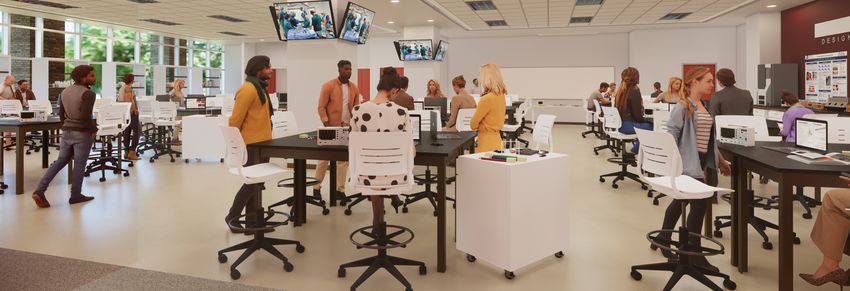
Students in Texas A&M University’s Department models and virtual reality tools, as well as Designing Health Innovation start with a deep dive into the many career paths
of Biomedical Engineering are learning to create electronics and chemical and biological test available, followed by training in Solidworks.
The department is always looking for improvements
innovative solutions for some of the most pressing equipment. The space will also include During the course of their last two semesters,
while maintaining quality and currency to prepare
medical issues facing individuals around the specialized hand tools, 3D printers, laser undergraduates work with sponsors on a project
students for entering the biomedical field.
globe. They also are working with companies and machining tools and other prototyping equipment. aimed at designing and fabricating a medical device
“Preparing students to succeed in this rapidly
clinicians nationwide to address these needs. Critical infrastructure such as large-screen or system. This expanded curriculum ultimately
changing industry, which now includes things like
Ideally, these students would have access to a televisions, HD cameras and high-fidelity audi prepares students for a realistic industry experience.
artificial intelligence and robotics, is a major priority
collaborative space that offers access to medical for effective communication will further allo
of ours,” said Dr. Mike McShane ’94, biomedical
specific models, tools and supplies as well a students to virtually meet with clients, researchers
engineering department head and holder of the
audiovisual capabilities to communicate with and medical professionals. This expanded curriculum, detailed below, ultimately
James J. Cain Professorship II.
remote partners anywhere in the world — from Students will also have access to the Fischer prepares students for a realistic industry experience.
the operating room to the African desert. Based on internal observations and feedback from
Engineering Design Center, a makerspace that Year One: General engineering students study
external stakeholders — including an advisory
A space tailored to the specific needs for teachin serves all engineering students but doesn’t offe diseases as well as types of devices used for
board comprising representatives from the medical
biomedical engineering has been created thanks to specific biomedical engineering equipment. “We’r treatment, such as pacemakers.
device industry, clinicians and academic leaders
recent room renovations. Now, the department’s not looking to recreate what the college already
— the department launched a revised curriculum Year Two: After joining biomedical engineering,
leaders are working with the Texas A&M has,” Machek said. “We’re looking to add resources
with significant enhancements to the design students learn about federal agencies, risk
Foundation to identify funding to outfit a state and capabilities that don’t exist and also have a
experience. While design work has been part of the management and disease control. Teams begin
of-the-art Biomedical Engineering Design Studio. ‘home base’ where these students can coalesce
department’s curriculum in some way since 1972, creating small-scale design projects.
“We need to create a space where our students to work on their projects or work in teams when
there is now an expanded focus on medical device
can immerse themselves in the design process classes aren’t meeting.” Year Three: Students explore the demographic
design innovation starting in sophomore courses
and have tools and equipment that are not readily Once outfitted, the BME Design Studio will mor and ethnographic needs for design solutions, the
that culminates in a senior year capstone project.
available other places on campus,” said Professor adequately support students’ progress as they development of design proposals and the patent
of Practice James Machek. In 2013 the department was the first in the college landscape.
go through the design course sequence and help
to implement a vertical integrated curriculum,
The BME Design Studio, located in the them create innovative prototypes for project Year Four: Students develop a prototype based on
where design content was taught during each year
Emerging Technologies Building, will foster an sponsors. For more information on the senior the needs of industry and clinician sponsors such as
of the biomedical engineering degree rather than
entrepreneurial mindset based on teamwork and capstone experience and project examples, visit Texas Children’s Hospital, Becton Dickinson, Abbott
just the senior year. The curriculum was further
design. Students will have access to a variety of tx.ag/bmencapstone. and many others.
revised in 2019 to impact student knowledge base
specific medical resources such as anatomica
concerning industry preparedness. Students now
24 engineering.tamu.edu/biomedical 25You can also read


