Botswana International University of Science and Technology - Undergraduate Prospectus 2017/18
←
→
Page content transcription
If your browser does not render page correctly, please read the page content below
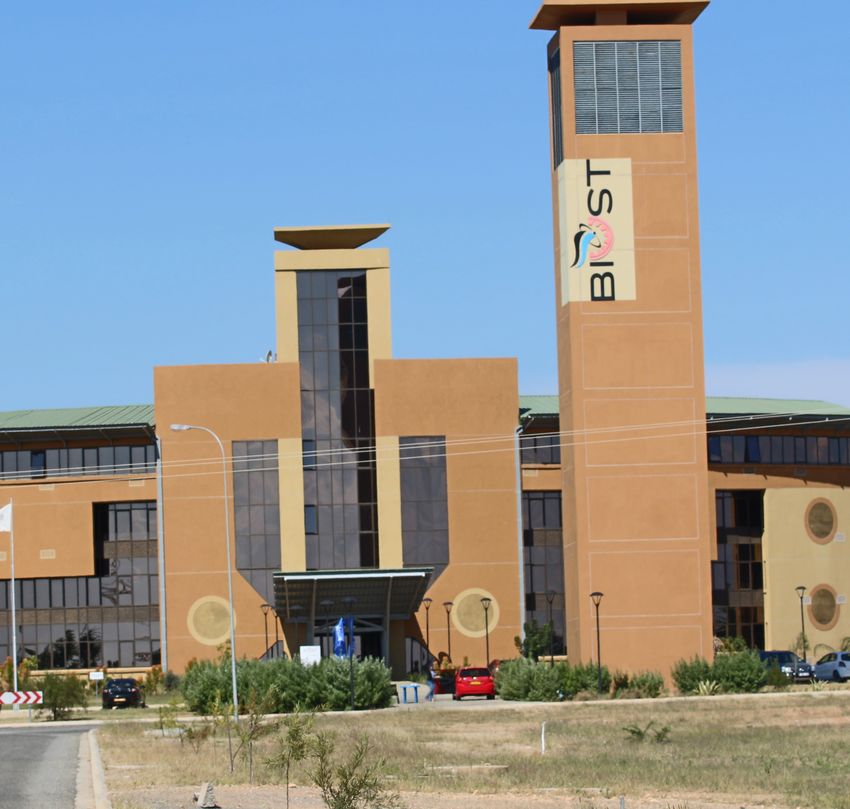
Driving Change

2017/18

               find us on
LOCATE BIUST    ACKNOWLEDGEMENTS

                The Admissions and Enrollment office,
                 Faculty representatives and BIUST
                              students.

                       Designer: Oabona Mpudi

                     Directorate of Registry Services
                       Admissions and Enrollment
                              Private Bag 16
                            Palapye, Botswana
                         Plot 10071, Boseja Ward
                            Palapye, Botswana
                 T (+267) 4900117, 4931480, 4931481
                             F (+267) 4900102
                         admissions@biust.ac.bw
                             www.biust.ac.bw

                                 Disclaimer
                 Whilst every attempt is made to ensure
                   that information in this prospectus
                    is accurate and up-to-date, some
                information is subject to change without
                 prior noltice. The University will not be
                held liable for information that is subject
                to change and reserves the right to alter
               the content of the prospectus at any time.

                               @biustbw          BIUST
VISION
To be a premier research based University of Science, Engineering

and Technology, internationally recognised for the quality and

excellence of its teaching and learning, research and innovation,

and engagement.

MISSION
To produce world class research and innovation in Science,

Engineering and Technology, contributing to industry growth, and

the development and advancement of a dIversified knowledge

based economy.

To produce tomorrow’s leaders in industry and society through the

provision of relevant, innovative, and quality research-intensive

education of international standard.

To promote community, national, regional and international

development through the transfer of the University’s

knowledge and the provision of its skills and expertise.

CORE VALUES
Equality and Diversity; Sincerity & Trust; Innovation; High

Performance and Quality; and Quest for knowledge and

Understanding

STRATEGIC THEMES
Academic Quality and Student Reputation; Reseach and

Innovation Excellence; Engagement for Development; and High

perfomance driven by cutting- edge institutional capabilities
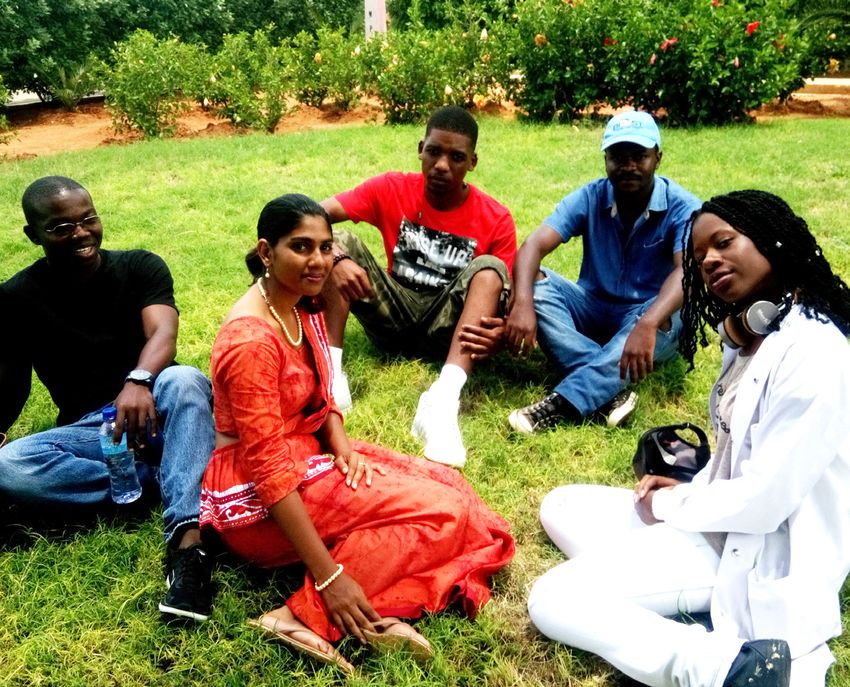
TABLE OF CONTENTS

Vice Chancellor’s Message		 1
Why BIUST?			2                                       FACULTY OF SCIENCES				25
How to apply			             3                        Introduction					26
Fee Structure			5                                    Meet the Dean					27
International Students		    6                        Biology and Biotechnology				28
Campus Life			8                                      Computer Science and Software Engineering		 29
Sports and Recreation		     9                        Earth and Environmental Sciences			         30
Clubs and Societies		       10                       Environmental Sciences				31
Counselling Services		      11                       Forensic Sciences					32
University Library			12                              Geology						33
                                                     Information Systems and Data Management		   34
                                                     Physics and Astronomy				35
FACULTY OF ENGINEERING AND TECHNOLOGY             13 Pure and Applied Chemistry 			              36
Introduction					14		                                Pure and Applied Mathematics 			            37
Meet the Dean					15                                 Statistics 					38
Chemical ,Materials and Metallurgical Engineering 16
Civil and Environmental Engineering		             17
Computer and Telecommunications Engineering       18
Electrical and Electronics Engineering		          19
Geological Engineering				20
Industrial and Manufacturing Engineering		        21
Mechanical and Energy Engineering			              22
Mechatronics and Industrial Instrumentation		     23
Mining Engineering				24
VICE CHANCELLOR’S MESSAGE

My dear prospective students,

It is with great pleasure and excitement that I welcome you as a student to
the Botswana International University of Science and Technology (BIUST).
At BIUST we understand and acknowledge that as our student, you are the essence
and reason of our existence. We can never be BIUST without you being our student.

BIUST is a unique dream and aspiration of our nation. We are the only University in
Botswana with a specific mandate to be a specialized University to offer only Science,
Engineering and Technology academic programmes, to offer teaching and learning that
emphasizes problem-solving, industry linkages, community engagement, collaborative
partnerships and employment-ready graduates who also have entrepreneurship training. It is
clear therefore that our vision at BIUST is forward looking and distinctively ambitions, while
our mission is expansive. I welcome you with open arms to this aspiring great University of high
performance, relevance and excellence.

Our teaching and learning at BIUST is not just confined to the single-minded pursuit of academic
excellence. It is far more than that-for we offer an inspiring, culturally diverse environment of
sports, entertainment, social activities and fun-filled experience. As our student, you have a right to
fully participate in extra-curricular activities of your choice, confident that BIUST will provide both an
enabling environment and a safe and secure platform to realize that right.

I would like to conclude this welcome message by pledging to you my full support and commitment to
making your studies and stay with the entire BIUST community a fulfilling, wondrous and accomplished
one.

Yours Sincerely,

_______________________
Prof. Otlogetswe Totolo, PhD, FBAS
Vice Chancellor

                                                                     1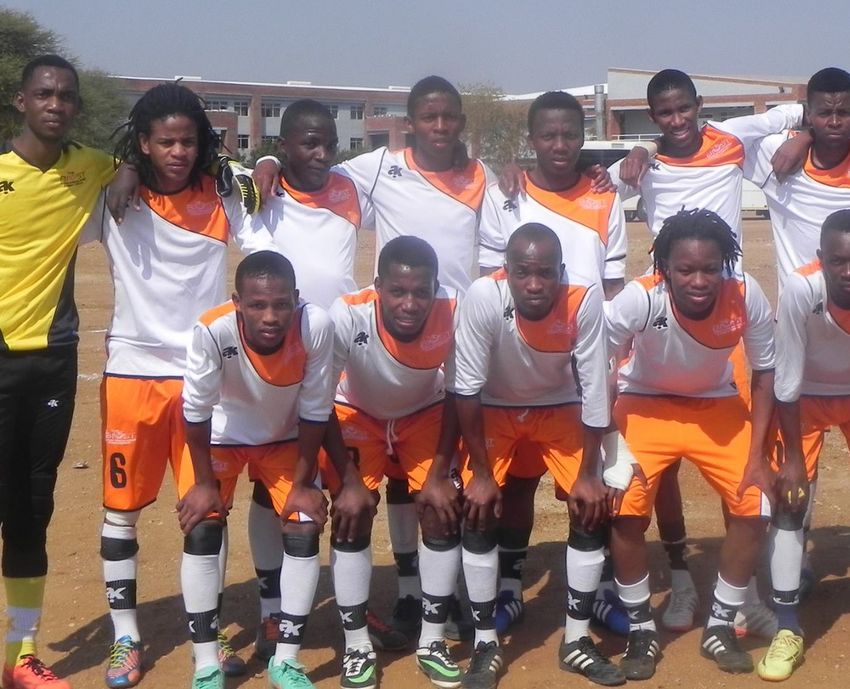
WHY BIUST?
                                                            BIUST prides itself as the first specialized tertiary
                                                   institution in the country. It is the first research intensive
                                                University in Botswana with a focus on Engineering, Science
                                                 and Technology. Furthermore the University also focuses on
                                       industry linkages as a critical factor in achieving its mandate. BIUST
                                  is therefore working with industries to establish Industry Advisory Boards
                                     which will assist in aligning, among other things, the curriculum to the
                                                                                   skills needs of the economy.

                             In this way BIUST will be able to meet its objective of producing employment
                     ready graduates not only for the local market, but for the global market as well. The
                     University’s approach to teaching and learning is problem-based which is intended to
                              enhance the learner’s understanding as well as provide practical experience.

                                                                                 VISITING BIUST
                BIUST has opened its doors to all those who wants to learn more about the University. Prior
                    booking with the Enrolment and Admissions office is essential. Prospective students are
              welcome to come and appreciate the state of the art facilities and get a taste of student life
          at the University. The University offers themed open days which are held throughout the year to
            allow groups of school going learners to come explore and appreciate the University’s academy
             programmes, learning and research facilities. Open days are tailored for students eager to get
          information about BIUST and what different Faculties at the University have to offer. The events
      further gives secondary school learners the chance to pose questions to the academic staff, student
      ambassadors as well as a chance to explore many career opportunities BIUST academic programmes
                                                                                              have to offer.

        Open days also features a wide range of activities which include, interactions with the University’s
       recruitment and admissions team, interactive displays and experiments by academic departments’,
   workshops and laboratories, guided tour of student facilities by fellow students of the University which
  includes campus facilities such as the gym, sports fields, student village and the cafeteria. Guided tours
                                                                            usually last for 30 to 60 minutes.
   Prospective students are advised not to miss this because it helps them make informed decisions about
  their study choices. Visitors may access the campus by means of public transport from the main Palapye
bus rank or private transport. Active secondary school learners can contact their Guidance and Counseling
                                           teachers to facilitate their school participation in the Open Day.

                             2
HOW TO APPLY

Explore the BIUST website (www.biust.ac.bw) to learn more about BIUST
programmes and how to apply. If you are eligible to apply, please visit
the university in Palapye to collect the application form. You can also send a
request for application form and the prospectus through email at admissions@
biust.ac.bw, download the applicatiobn form from the website or you can contact
Admissions staff at (+267) 4900117 for any assistance with the admission process.

ENTRY REQUIREMENTS

The University considers and assesses every application on its own merits, taking into
account the relevance of qualifications and experience each student has. For students with
a Botswana General Certificate of Secondary Education (BGCSE) or equivalent, the following
minimum requirements will apply for undergraduate degree programmes:

• A credit in at least six subjects in BGCSE or equivalent. These subjects must include a minimum
of Pass (D) in English and at least a Credit (C) in Mathematics plus two science subjects.

• BGCSE holders or equivalent should possess a minimum of 20 points from any of Mathematics, and
Physics and/or Chemistry and/or Biology or Science double award.

• A minimum combined points score for admission from the six subjects (including Mathematics, English,
two science subjects or Science Double Award, must be above 38 points based on the points scores in the
following table:

Grade Points		                A*,A      B         C         D          E
		                            8         7         6         5          4

Points for Science Double Award are doubled E.g. Grade BB= 14 Points
• Students with other qualifications (i.e. non-BGCSE and its equivalents) including international students,
will be considered on their own merits and equivalency to BGCSE.

                                                                    3
Direct Entry into Second Year

                                                               • The University will consider A-level
                                                                 holders and those who have already
                                                          completed year one (1) BSc General at any
                                                    recognised University for direct entry into second
                                                                                                  year.

                                         • Furthermore, applicants in possession of year one (1) BSc
                                        General or equivalent, are required to have attained at least
                                           40 BGCSE points or equivalent and must have obtained an
                                        average of at least 65% without resits or retakes in their BSc
                                                                                           transcript.

                                 • A-level holders are required to possess, in addition to the general
                                 minimum entry requirements, 2 A-level grades with a C or better in
                                                Maths, and in one of Physics or Chemistry or Biology.

                            • Diploma holders will also be considered on the relevance of their prior
                                              programmes of study to their programmes of interest

          The University reserves the right to ask prospective students to sit a pre-admission exam if
required. Please note that these are the only minimum entry requirements, and certain programmes
  may have additional entry requirements. Information on additional requirements is available from
                                                                                 the Admissions Office.

                                           Undergraduate Programme-Specific Entry Requirements

Faculty                    Entry Requirements                 Additional Requirements
Engineering &              Minimum Entry                      Physics or Science Double Award
Technology                 Requirements
Sciences                   Minimum Entry                      Chemistry/ Biology/
                           Requirements                       Physics or Science Double Award

                       4
Fee Structure                                                                                                                        FEE STRUCTURE
                                         Application fees

Application fee for UG– citizens/SADC            P200

Application fee for UG – non-residents           P400

Late application fee for UG– citizens/SADC       P350 (Up to 14 days after close of applications)

Late application fee for UG– non-residents       P900 (Up to 14 days after close of applications)

                                                                                                    Tuition fees
Undergraduate citizens/SADC per Academic Year                            P1250 x 40 credits                   One Credit Fees (Max of 15 per semester (UG)             P3 000 (Non degree)
                                                                         = P50 000
                                                                                                              Industrial attachment fees                               P2 500 For Equipment
                                                                                                                                                                       boots, helmets, etc)
Undergraduate non-SADC residents                                         P60 000

                                                                                                              Supplementary exam fees                                  P250
Masters Sciences & Engineering – citizens/SADC                           P25 000

                                                                                                              Life and disability Insurance fees                       P200
Masters Sciences & Engineering – non-residents                           P40 000

                                                                                                              Remarking Fees (Per course)                              P300
PhD Sciences & Engineering – citizens/SADC                               P18 000
                                                                                                              Protective clothing fees
PhD Sciences & Engineering – non-residents                               P20 000
                                                                                                              i. College of Engineering & Technology                   P5 500
Field work fees/day/student                                              P1 000
                                                                                                              ii. College of Sciences                                  P2 500

Project fees (incl. typing of dissertation)                              P9 000 (final yearof the
                                                                                                              Transcripts sent to 3rd parties
                                                                         programmes)
                                                                                                              i. Within Botswana                                       P100
                                                                                                              iii. Elsewhere                                           P200

                                          Housing                                                                                                      Other Fees
Postgraduate – two semesters                                             P10 500                              Student life fee                                         P150

Postgraduate – Calendar year                                             P20 500                              Late registration fee – per day (up to 14 days)          P150/day

Undergraduate - two semesters                                            P5 500                               Transcript fee                                           P60

Undergraduate – during holidays per night                                P150                                 ID Card replacement fee
                                                                                                              i. first time                                            P70
Non student during holidays per night                                    P250                                 ii. Second time                                          P140

                                                                                                              For Books and equipment send an enquiry to

                                                                                                              admissions@biust.ac.bw

                                                                                                              Laundry                                                  P600

                                                                                                              Meals                                                    P3 900

                                                                                                    5
INTERNATIONAL STUDENTS

                                                                                        Applying to BIUST

                            BIUST is an exciting place to study at and live in. As a home to international
                      students from more than fifteen countries, you will find it hospitable and friendly.
                  Applying to study at BIUST has been simplified for international students. Prospective
                  International students may download application forms from the website, request for
                 them through admissions@biust.ac.bw or through mail at Enrolment and Admissions,
                  Botswana International University of Science and Technology, Private Bag 16, Palapye,
                                                                                                Botswana.

                                                                    Applicants must submit the following:
                                                                            1. Completed application form
                                                                                  2. Application fee receipt
                            3. A certified copy of your senior secondary school certificate or equivalent,
                                             accompanied (if not in English) by a certified official English
                                                 4. Certified copy of a valid Passport and Birth Certificate
                          5.Certified copies of additional official documents (e.g. post-secondary school
 certificate,transcript, professional registration certificates, certifying letters from examining bodies,
                                                          proof of change of name,etc)where appropriate.
           Complete application forms and supporting documents can either be scanned and emailed to
                                          admissions@biust.ac.bw or submitted through the mail below:

                                                                    Enrolment and Admissions Office
                                         Botswana International University of Science and Technology
                                                                                       Private Bag 16
                                                                                   Palapye, Botswana

BIUST, as an International University is committed to ensuring that international students feel welcome
        and home away from home. The office of Student Affairs dedicates its time in making sure that
      upon arrival of international students that they are assisted in all aspects of their study including
     accommodation, immigration matters and banking necessities. There is a separate orientation for
                           international students where they are acclimatized to the new environment.

                          6
VISA AND STUDY PERMITS
REQUIREMENTS
Once you have been accepted to study at the Botswana International
University of Science and Technology, you need to have the following to
apply for a study permit with the Botswana immigration office:
1. Certified copy of valid passport (valid for at least the period of the
programme offered)
2. Certified copy of Birth certificate or Identity card
3. Complete Immigration application form
4. Proof of payment (deposit receipt for tuition fees)
5. Study permit fee of P1500.00 and P500.00 VISA fee for non SADC residents
6. Proof of sufficient financial means to cover tuition fees, subsistence and incidental costs
(in the form of a bursary, or bank statement or and support letter)
7. Medical report (forms are available at Immigration offices).
8. Admission Letter, stating the duration of the programme offered
9. Four (4) passport size photos (background should be white)
ARRIVAL INFORMATION
Upon your arrival in Botswana, you must be in possession of your valid passport and admission letter
and other relevant supporting documents which might be requested by the immigration officials at
the border. Shuttle services and taxis are available at the Sir Seretse Khama International Airport to
transport passengers to the Gaborone bus rank where they can board a bus to Palapye.
From Palapye bus rank one can take a taxi to BIUST campus.
7CAMPUS LIFE
Life at our University is not just about lectures and study. There is
so much more to being a student at BIUST. Students will find the sports,
societies and social life vital and exciting ingredients of their wider University
experience.
The University offers student accommodation on campus. All students interested
in staying on campus can make their applications via our online accommodation
application services as soon as they accept offers at BIUST. Feel free to contact the
Campus Housing for further assistance and information. There are other amenities for a
vibrant life on campus such as catering services, indoor, outdoor sporting facilities and free
access to WiFi.
NEW STUDENT ORIENTATION
Orientation takes place in the week before lectures commence and is a special week for new
students to get acquainted with the University, the staff, facilities and life at BIUST in general.
Orientation activities include:
• Meeting classmates and getting settled into University life
• Collecting student identity cards, Academic registration, collecting
welcome packs, study guides, text books, class lists etc.
• Introductions to the student services, meeting the support staff at BIUST and
getting to know what they offer.
• Attending the Vice Chancellors’ welcome ceremony to officially mark the start
of a BIUST student experience and the pathway to a great career.
8SPORTS AND RECREATION
BIUST SPORTS
BIUST has a vibrant sporting atmosphere and is looking forward to build
this into a great culture of participation. BIUST Sport and Recreation
provides students with an opportunity to take part in sport and recreational
activities at national and international levels.
BIUST Sport provides students with an opportunity to gain a practical experience
whilst participating with their peers and also to make them have a meaningful life on
campus. Students are able to develop and build lifelong friendships as a result of their
participation as well as gaining invaluable health benefits of exercise in the process. Our
students are at the peak of their performance levels hence the need to carefully assist
them in achieving their sporting goals. The performances of our students in competitions
promote the great name of BIUST and are consistent with our mission and vision.
BIUST Sport offers a wide range of sporting codes and activities that students can choose from.
These guarantee that students will find activities of their choice while studying here. They
include the following:
•Athletics, Badminton, Basketball, Bridge, Chess, Karate, Netball, Table Tennis,
Lawn Tennis, Rugby, Soccer ,Softbal, Volleyball
Facilities
BIUST has a variety of sports and recreational facilities that can be used by both students and staff. All
BIUST Sport Clubs can use the facilities free of charge.
BIUST Gym
The Sports and Recreation Unit also operates a gym to enhance the healthy living amongst the university
community. The gym offers a variety of fitness programs to cater for different interest groups.
BIUST GYM Business Hours:
Monday -Thursday 06:30-20:30
Friday 06:30-18:30
Saturday 07:30-15:00
Sunday 07:30-12:30
9CLUBS AND SOCIETIES
Students clubs and societies are a great way to explore interests or
develop new ones. New students will find that membership and involvement
in student societies is an extremely enjoyable part of University life.
Involvement in clubs and Societies enables students to explore their passions and
realize their potentials in other spheres of life. Students will be able to take part in
the following clubs and societies
• BIUST Christian Fellowship
• BIUST Botswana Student Network
• BIUST Choir Club
• BIUST Debate Society
• BIUST Engineering Students Association
• BIUST Invitation Club(Performing Arts, and many more
HEALTH AND WELFARE SERVICES
Student health is of paramount importance in the University and the following services are available
to ensure that students are provided with a conducive learning environment.
HEALTH SERVICES
BIUST clinic is available to offer services that are youth friendly, affordable and accessible to all
students.The services are student oriented with a comprehensive continuous care for acute and chronic
health problems, as well as a wide range of health promotion and disease prevention services that are
appropriate to the gender, age, race, and ethnicity of the clients being served. Services include:
Clinical Consultation and treatment
Sexual Reproductive Health (Ante-Natal Care,Post Natal Care&Family Planning)
Emergency Response Services
Health Promotional Activities
HIV Testing, Counselling and Support
Emergency Contacts:(+267) 73154388/9
10COUNSELLING SERVICES
All BIUST students are entitled to a counselling session whenever they are
undergoing certain difficulties that requires intervention by an expert in the
field. The following services are available within this unit:
• Personal /Individual Counselling
• Group Counselling
• Referrals when needed
Contact Information: Ms Nametsegang Ntibinyane
Tel: (+267) 4931689
Email:ntibinyanen@biust.ac.bw
HEALTH AND WELLNESS OFFICE
The office supports students with the development of life long health behaviours.It coordinates
the provision of health education to students. The services within this unit include
• Sexual Health Education
• Alcohol, drugs and substance use
• Rape, sexual assault and violence prevention
STUDENTS WITH DISABILITIES AND LEARNING DIFFICULTIES
BIUST is fully committed to ensuring that learning opportunities are available to everyone. Students
living with a disability wishing to apply to BIUST are advised to declare and contact the Admissions Office.
This will allow the University to conduct a needs assessment program.
11UNIVERSITY LIBRARY
On behalf of the library staff, we welcome you to the BIUST Library. As
a key academic partner and catalyst for learning, research and knowledge
creation, the University Library has a collection of over 5, 000 books consisting
of carefully selected essential print and reference books required for each
programme of study at BIUST.
Along with the print books is a growing list of online resources ensuring that our
students’ have access to the most important resources in their chosen fields of study. The
library subscribes to major online science, engineering and technology databases. These
currently include Access Science, Access Engineering, Science Direct, Springer Journals,
GeoRef, Applied Science & Technology Index, Academic Search Premier, IEEE Xplore, Scopus,
Web of Science.
The Library also has access to open online resources namely; BioOne, JSTOR, SABINET Journals,
Journal of Engineering, African Journal Online, Cambridge ebooks, Springer Open Books and
Journals etc.The BIUST Library has an awesome group of experienced professional Librarians and
support staff who are available to assist you with connecting with the learning resources you need.
We invite you to browse through our resources, chat with our librarians on line to get help for your
assignments and research or give us ideas about what other resources or services we should add to what
is currently available. Our staff will also help you with arranging loans of these materials.
We also invite you to the Library for your group work in our discussion rooms , for the quiet study areas
and for training in the use of discovery tools and our resources.
The BIUST Library can be contacted by telephone on number (+267) 4900117, by email at: library@biust.
ac.bw or through Facebook at facebook.com/biustlibrary. You may also twit us on twitter.com/biustlibrary.
We are open throughout the academic year. Come and take full advantage of the facilities, resources and
services for your education and research.
12Faculty
of Engineering
and Technology
13Introduction
Engineering deals with design, development, implementation, operation
and maintenance of industrial/production systems. The Faculty of
Engineering offers undergraduate and postgraduate teaching and research
facilities to train aspiring students to become professionals in their respective
fields.
The vision of the Faculty is to be a leading provider of Engineering and Technology
education using innovative approaches to enhance lifelong career opportunities in the
following fields:
• Chemical, Materials and Metallurgical Engineering
• Civil and Environmental Engineering
• Computer and Telecommunications Engineering
• Electrical and Electronics Engineering
• Geological Engineering
• Industrial and Manufacturing Engineering
• Mechanical and Energy Engineering
• Mechatronics and Industrial Instrumentation
• Mining Engineering
This is emphasised by our mission to provide globally competitive and high quality education based
on a theoretical, experiential, student centered teaching and learning. There are also opportunities
for participation in research, industrial internships, and interdisciplinary studies so as to produce
employment-ready graduates.
All our programmes are designed to fulfill ECSA (Engineering Council of South Africa) accreditation
requirements
14Acting Dean
Professor Raymond S. Suglo
Professor Raymond S. Suglo is a holder of PhD and MSc degrees
in Mining Engineering (University of Alberta, Edmonton, Canada), a
Postgraduate Diploma and Bachelor of Science (Honours) degrees in Mining
Engineering (Kwame Nkrumah University of Science and Technology, Kumasi,
Ghana).
He has over 33 years of professional experience in teaching, research and
underground mining operations. He is currently a Professor and Acting Dean of the
Faculty of Engineering and Technology (CET) at the Botswana International University
of Science and Technology (BIUST), Palapye, Botswana. He was the Head of Mining and
Geological Engineering Department from April 2014 to September 2016.
Before joining BIUST, he worked for 24 years at the University of Mines and Technology, (UMaT),
Tarkwa, Ghana. He rose through the ranks from an Assistant Lecturer (May 1989 – April 1995) to a
Lecturer (May 1995 – September 1999), Senior Lecturer (October 1999 - September 2006) and then
to Associate Professor from October 1, 2006 to September 30, 2013.
He also worked as a Production Engineer at Tarkwa Goldfields Limited, Tarkwa, Ghana, from March
1983 to April 1989. His research areas are Mine Ventilation and Safety Engineering, Simulation of
Mining Systems, Surface and Underground Mine Planning and Design, Mining Laws and Environmental
Management issues. From August 2006 to July 2008, he was the Head of the Mining Engineering
Department, UMaT, Tarkwa.
He became the Dean of Postgraduate Studies from August 2008 to July 2012 and from August 2012 to July
2013, he was again the Head of the Mining Engineering Department, UMaT, Tarkwa. He has to his credit
61 publications (29 refereed journal publications & 32 conference publications). He is a Member of the
American Institute of Mining, Metallurgical and Petroleum Engineers, Inc. (SME), the Canadian Institute of
Mining, Metallurgy and Petroleum (CIM) and Ghana Institution of Engineers (GhIE).
15Chemical, Materials and
Metallurgical Engineering
Award: BEng
Duration: 5 years
Introduction
Chemical engineers are principally involved in the production of a wide range of
chemicals such as soaps, dyes, polyethylene, detergents, fertilizers, cement, bricks
etc., foodstuffs such as cooking oil, margarine, beverages and pharmaceuticals as well
as petroleum products, but they are also involved in production of potable water, pulp and
paper, cars, steel, mineral resources processing, production of energy, textiles, beverages,
waste processing and minimization, river, water, soil and air pollution and treatment. Chemical
engineers design processes, build and manage chemical operations and ensure efficiency of
production by intelligent control and optimization of physical, thermal and chemical parameters.
Materials engineers are essentially involved in the design and selection of materials based on the
physical and mechanical properties desired for engineering application. Appropriate materials are
required for specific conditions. Engineering materials broadly include, metals, polymers, ceramics,
including mixtures such as metallic alloys and composites. Metallurgical engineers specialise primarily
in metals and their alloys. The spectrum of metallurgical engineering stretches from minerals
processing, metal extraction and refining through to alloying and forming into shapes for use.
Why is this Course for me?
Humankind has revolved around the discovery, development and application of materials. Advances in
telecommunication, aerospace, space exploration, bio-medical and other hi-tech disciplines have been
possible because of engineers have availed suitable materials with specific properties for use.
What Will I Study?
Students will study varying courses that develop skills and competencies in extraction and processing of
chemical, minerals and metals to produce materials that shape the technology-driven world. In the course
of study students will take modules such as Chemical and Metallurgical Engineering Thermodynamics,
Chemical Reaction Engineering, Green Energy Engineering, Process Control and Instrumentation, Chemical
and Metallurgical Engineering Design, Extractive Metallurgy, Heat and mass transfer, Mechanical Metallurgy,
Polymer and composite technologies
Career and postgraduate opportunities
Career opportunities for chemical, materials and metallurgical engineers are found in chemical and
materials processing plants, minerals, metal production and metal forming industries. Further career
opportunities are found in food and beverage industries, biotechnology, production of bio-medical
materials, manufacture of polymeric materials, ceramics and composites. Careers can be diversified
to other associated functions such as energy utilisation, environmental protection, health and safety,
disposal of hazardous waste, process control and quality management.
16Civil and Environmental
Engineering
Award: BEng
Duration: 5 years
Introduction
The Department of Civil and Environmental Engineering offers Bachelor of Engineering
Degree in Civil and Environmental Engineering. This is a five year degree programme
providing students with detailed courses in structures, construction materials, geotechnics,
water, environmental engineering and transportation. The structure of the programme is
such that the first two years is common to all engineering students. In year five, students
pursue more specific courses on this field.The department is committed to produce high quality
engineers for the civil and environmental engineering industry through excellent education,
research and partnership with the industry. It is still a new department and has therefore not yet
been accredited. However, the curriculum was developed with the view to seeking accreditation
with the Engineering Council of South Africa.
Why is this Course for Me?
Civil engineering is arguably the oldest engineering discipline and continues to provide the largest
employment world-wide due to the high demand of the much-needed construction industry. Civil
engineers literally build nations through construction and maintenance of large and most essential
infrastructures such as roads, bridges, railway lines, buildings, dams, water and waste water treatment
and supply systems.
What Will I Study?
Primary disciplines in civil engineering are structures, construction materials, geotechnics, transport,
water and environmental engineering. This programme will give you the theory and practical part of these
disciplines that are well backed by the basic fundamentals of science and engineering such mathematics,
chemistry, physics and mechanics of materials. You will also be provided with soft skills that allow you to
perform in the industry such as professional ethics, construction management and entrepreneurship skills.
Career and Graduate Study Opportunities
There is no fixed or standard career path for a Civil Engineer. In Botswana you can join the vast construction
industry, consulting industry, Government Departments, parastatals and the mining industry. You can also
opt to further pursue your learning by joining the postgraduate programme at BIUST which will give you
the opportunity to enter the academic world and open your career path even wider. The Department of
Civil and Environmental Engineering offers MSc and PhD degrees in all fields within the department such
as water, environmental engineering, structures, materials, transportation and geotechnics. The post
graduate programme seeks to conduct intense research that is based on the fundamentals of civil and
environmental engineering to address national problems and to provide high level human resource for the
industry.
17Computer and Telecommunications
Engineering
Award: BEng
Duration: 5 years
Introduction
The driving force in our contemporary society is the engineer’s ingenuity. There
are only a few aspects of modern society that are not affected by computers
and telecommunications. Computer Engineering has ushered in a lot of modern
conveniences from microwave ovens, mobile phones, high and ultra-definition televisions,
entertainment and automated systems, wireless high speed internet technologies that
are controlled by computer systems. Communicating information over short and long
distances over wired and wireless networks, and the security of such data, networks,
power lines and electrical distribution is central to engineers who specialise in Computer and
Telecommunications Engineering.
Why is this Course for Me?
As the world moves further into knowledge economy, the demand for high level qualifications
has increased exponentially. The computer and telecommunications revolution has particularly
impacted economic growth in Africa and the world over. In order for Botswana, and the other
developing countries to compete with developed countries, computer and telecommunications
engineering offer catalytic properties to speed up the process. The course will equip students with the
concepts, theories and principles underlying the science and mathematics of electrical, computer and
telecommunications engineering for a broad range of modern technologies.
What Will I Study?
Computer and Telecommunications Engineering have the first two years common with other Engineering
disciplines. Students will learn the tools such as computer languages and software, computer systems
and architectures, networking and security, wired and wireless and mobile communication systems and
networks, convergence and broadband technologies.
The Modules You Will Study Include;
Automation and Control systems, Computer Networks and Security, Digital Communications
Digital Signal Processing, Engineering Mathematics, Fundamentals of Communication Theory,
Microprocessors and Microcontrollers, Mobile and Satellite networks & Infrastructure, Transmission and
Switching Engineering
Career and Graduate Opportunities
Whether one aspires to be an entrepreneur, an engineer, a social scientist, an economist or a banker,
then Computer and Telecommunications Engineering will equip you with the necessary and crucial skills.
There has never been a greater need for Computer and Telecommunications Engineers in high demand
and well-paying industries. Engineers can work in research and development (R&D) centres, creating
the products of tomorrow to help make modern life convenient. Some of the potential careers include
consumer and professional electronics, robotics, defence, broadcasting and telecommunications and
the information technology sectors.
18Electrical and Electronics
Engineering
Award: BEng
Duration: 5 years
Introduction
This is a 5 year programme which is concerned with the study and application of
electricity, electronics, and electromagnetism. During the first year, the students are
introduced to mathematics, physics, writing skills, and computing. In the subsequent
years, the students learn basic electrical and electronic concepts. Towards the end of
the programme, fine points of various areas of Electrical and Electronics Engineering are
investigated. This programme deals with power generation and distribution on a large-scale. It
is a discipline that uses scientific knowledge of the behaviour and effects of electrons to create
components, devices, systems or equipment that use electricity as part of their source of power.
Why is this Course for Me?
Electrical and Electronics Engineering offers solutions to some of the most critical problems facing the
world today such as energy shortages and control, environmental impact, constant need for information
security and informatics.
What Will I Study?
You will study varying levels of courses in Mathematics, Energy Systems, Embedded Systems, Power Systems,
Sustainable Energy, Computer Programming, Digital Design and Signals and Electromechanical Systems with
increasing complexity as you advance in the programme.
The Modules You Will Study Include:
Analogue and Digital Electronics, Automation and Robotics, Electric Power Systems, Electric Machines and
Control, Electrical Circuits & Devices, Electromagnetics, Electromechanical Energy Conversion, Micro-
Controllers & Embedded Systems, Micro-electronic systems, Sound state electronics
Career and Graduate Study Opportunities
The Electrical and Electronics programme grooms students to have the flexibility to be whatever they choose
to be in later life. Electrical and Electronics Engineers are involved in a wide variety of technology ranging
from huge global positioning systems which can pinpoint the location of a moving vehicle to gigantic electrical
power generators. These Engineers are responsible for designing, developing, testing as well supervising the
production of electrical and electronic equipment and machinery. Broadcast and telecommunication systems,
electric motors, controls of machinery, lights and wiring in building complexes, vehicles, aircrafts, radar and
navigation systems, power generation, control and transmission devices which are used by electric utilities
are all examples of equipment built by these engineers.
19Geological Engineering
Award: BEng
Duration: 5 years
Introduction
Geological Engineering is the practical application of principles, concepts and
techniques of the earth sciences to provide sustainable engineering solutions to human
needs. Geological Engineers help find the best ways to use earth’s resources to solve
technological problems in an environmentally sustainable manner. They deal with mineral
resource exploitation and management, environmental and geotechnical design involving
rock, soil and water interaction, and the non-destructive or geophysical investigation of the
subsurface environment for engineering purposes.
Why is this Course for Me?
Geological Engineering is a field oriented practical discipline. It will expose students to methods
and techniques to protect the earth while still exploiting it through careful industrial practices.
This is of vital importance given the extensive mining activities and construction works in Botswana,
the surrounding region and globally.
What Will I Study?
You will study fundamentals of Geological Sciences and Engineering. The programme emphasizes the
integration of Geosciences and Engineering with applications in areas such as construction, foundation
design, site selection, resource production, geo-hazard assessment and mitigation, waste disposal and
restoration of pollution sites.
The modules you will study include:
Applied Hydrogeology, Foundation Engineering, Engineering Geology, Geotechnical Engineering,
Geographic Information Systems, Exploration geology, Mineralogy & Petrology
Career and Graduate Study Opportunities
You can look forward to a secure and well-paid career in a wide variety of organisations including mining,
exploration and construction companies, consulting firms, government agencies, research laboratories
and environmental resources agencies. The programme also prepares you for eligibility to study for
postgraduate degrees in Geological Engineering or related fields.
20Industrial and
Manufacturing Engineering
Award: BEng
Duration: 5 years
Introduction
It is concerned with the development, improvement, implementation and
evaluation of integrated systems of people, money, knowledge, information,
equipment, energy and materials. It uses mathematical, physical and social sciences
together with the principles and methods of engineering design to specify, predict,
and evaluate the results to be obtained from such systems or processes. Its underlying
concepts overlap considerably with certain business oriented disciplines such as operations
management, but the engineering side tends to emphasize extensive mathematical
proficiency and usage of quantitative methods.
Why is this Course for Me?
Industrial and Manufacturing Engineering combines fields of Mathematics, Computing, Engineering
and Social Sciences. The programme seeks to provide a broad skills and knowledge set necessary to
provide practical solutions to industrial and technological problems across manufacturing, defence,
logistics and services industries.
What will I study?
You will study courses in statistics, operations research, human factors and ergonomics, production
planning, manufacturing, engineering economics, quality control and simulation. The skills set you
will acquire will enhance the use of mathematical models and methods to identify and come up
with solutions for a range of technical and scientific problems across a range of industries including
manufacturing.
The Modules You Will Study Include:
Automation, Control Engineering, Engineering mechanics, Engineering management, Material science
Manufacturing Processes, Production Methods and Planning, Work study and Ergonomics, Design for
Manufacturing, Reliability and Maintenance Engineering.
Career and Graduate Study Opportunities
An Industrial Manufacturing Engineer can expect to get a job in all types of industries. They can join
private companies, private consultancy firms, manufacturing industries, automobile, aeronautics,
fabrication, designing, government organisations and research institutions etc. They can also work as
Production and Operations Engineers, Quality Assurance and Control Engineers, Supply Chain Engineers,
Purchase Engineers, Technical Sales Managers, Production and Industrial Engineers. They can also pursue
higher Degrees in the discipline.
21Mechanical and Energy
Engineering
Award: BEng
Duration: 5 years
Introduction
This programme is designed to prepare mechanical and energy graduates for needs of
modern society in the disciplines. Engineers are central to providing sustainable, smart
solutions to complex national and industrial challenges. They are involved in the delivery
of new forms of power generation and production of machines and systems for automotive,
energy, heating and cooling systems. Students will be equipped with fundamental theoretical
principles and skills to design, maintain and deliver complex engineering solutions including
power plants, heating, ventilation and air conditioning (HVAC), heat exchangers, fluid
machineries, conventional energy plants using coal, oil and gas and renewable energy plants such
as biomass, biodiesel, solar and wind energy systems.
Why is this Course for Me?
It is an opportunity to study a multidisciplinary programme that addresses today’s rapidly growing
needs for sustainable energy generation, production of innovative devices and new forms of materials
for manufacturing, automobiles and building services. It also prepares graduates for a stimulating
career in reliability and maintenance engineering.
What will I Study?
You will study implementation of creative solutions to problems in energy provision, new materials like
composites, manufacturing, maintenance, energy management, power distribution and conservation.
The Modules you Will Study Include;
Applied Thermodynamics, Electrical Energy Systems, Heat Transfer, Building Services Control Engineering,
Materials EngineeringMaintenance Engineering, Design and Manufacturing systems Fluid Mechanics,
Dynamics of Machines and Mechanisms Mechanics Strength of MaterialsRenewable Energy, Energy
Management and Conservation
Career and Graduate Study Opportunities
The Programme prepares students to specialise and find careers in areas such as in power plants,
maintenance of heavy duty equipment (e.g. in the mines, chemical, cement, pharmaceutical, food
& allied industries), automotive industries, energy management and conservation, transportation,
advanced materials design, alternative energy, oil and gas manufacturing, project management,
consultancy, academia, public service, and logistics and operations.
22Mechatronics and Industrial
Instrumentation
Award: BEng
Duration: 5 years
Introduction
The increasing demand of current and future technologies requires that modern
engineers possess multidisciplinary skills in order to meet the evolving needs of industry.
With this requirement, engineers are expected to design and develop machinery with
computer and electrical controls from automobiles, aircraft, power generation systems,
mining and manufacturing to health and safety systems. The programme is designed to produce
engineers knowledgeable about and competent to employ new and emerging technologies that
are crucial to maintaining modern society’s competitive industries.
Why is this Course for Me?
Many industries rely heavily on the use of systems and equipment that are powered by mechanical
principles, electronics, computers and control systems. Increasingly engineers are required to design
and develop machinery with computer, mechanical and electronic controls. These technical skills are
fundamental in industries and production systems.
What will I Study?
Mechatronics and Industrial Instrumentation is a multidisciplinary field combining mechanical, electronics,
instrumentation, software and control engineering. It will equip the student with a range of skills required
to design and maintain innovative solutions to automated modern industrial systems.
The Modules You Will Study Include;
Control Engineering, Dynamics of Machines and Mechanisms, Data Acquisitions and Networks Sensors and
Actuators, Electronics, Machine Learning, Industrial Automation and Control Modelling and Simulation,
Measurement and Instrumentation, Robotics and Intelligent Systems
Materials and Manufacturing Engineering, Software Engineering
Career and Graduate Study Opportunities
The graduate of this programme can follow a wide range of career pathways in industries such as oil and
gas, manufacturing, heavy plant, mining, chemical and allied industries. They can function as Automation
Engineers, Data Logging Engineers, Maintenance Engineers, Control Systems Engineers, Instrumentation
Engineers, Manufacturing Engineers, Process Plant Engineers and Maintenance Engineers.
23Mining Engineering
Award: BEng
Duration: 5 years
Introduction
Adequate supply of mineral products at acceptable prices is indispensable
to modern industrialization. Mining Engineering involves the practice, theory,
science, technology and application of extracting and processing of mineral resources
economically and in a sustainable manner. It also includes processing of minerals for
value addition purposes.
Why is this Course for Me?
The course is designed to produce high quality mining engineers who are capable of applying
engineering and technology to plan, design, operate and manage mining and mineral projects
anywhere in the world in an environmental friendly manner. Graduates are trained to carry out
professional duties using their knowledge of sound engineering and environmental technology,
innovative and entrepreneurial skills to maximise returns on investment.
What Will I Study?
Mining Engineering is an interdisciplinary field that includes elements of mining, geological, civil,
mechanical, materials and mineral engineering. Students will learn how to carry out mining efficiently
and safely while ensuring sustainability and minimal environmental impact.
The Modules you will study include:
Surface and Underground Mining Methods
Explosives & Rock Fragmentation
Soil & Rock Mechanics
Mine Health & Safety
Materials Handling
Mine Planning and Design (Surface & Underground Mines)
Mine Ventilation
Career and Graduate Study Opportunities
You can look forward to a secure and well-paid career in a dynamic and challenging industry in mining and
exploration regions around the world, academia and the investment banks. The programme also prepares
you to be able to undertake postgraduate studies and research.
24Faculty
of Sciences
25Introduction
The Faculty of Sciences offer courses in Geological Sciences,
Environmental Sciences, Mathematical and Statistical Sciences, Physics and
Astronomy, Chemical and Forensic Sciences, Biological and Biotechnological
Science, Computer and Information Technology programmes. All the Bachelors
degree programmes in these important fields of study emphasise applications to
the real world and links with industry, commerce. Research and Entrepreneurial
skills training will form part of the curriculum of all the programmes and thus promote
the employability of our graduates. Innovative curricula encourage students to deepen
their knowledge and develop disciplinary and employability skills.
The Faculty also has courses for students which can be taken in addition to their main
programme of study. These courses provide a very important opportunity to debate and discuss
important issues which allow science to be put in the essential contexts of the economy and
society in which it plays an important role in the future of sustainable development of our nation.
Original research is the prime objective of the Faculty and a number of Research Centres are being
developed. Our research will support cutting-edge teaching and provide all undergraduate students
with the opportunity to participate in relevant and interesting applied research projects.The Faculty
is housed in new purpose- designed buildings with well-equipped teaching and research laboratories
and facilities.
26Acting Dean
Professor Edward Lungu
Professor Edward Lungu graduated from the University of Zambia with
a BSc (1975) degree and did his graduate studies leading to MSc (1978)
and PhD (1981) from University of Bristol, United Kingdom. He worked for
several years in the Department of Mathematics, University of Botswana, in
various positions and also as Head of the Department. He served the Department
of Mathematics, University of Botswana for 29 years in various positions and
as a Full Professor for many years. He is currently a full Professor, Department
of Mathematics and Statistics, Botswana International University of Science and
Technology, Palapye, Botswana.
Professor Edward Lungu has supervised many MSc and PhD students and is currently very
active in research supervision. His contributions are numerous and several International
organisations have recognized his outstanding work: He is a recipient of several international/
National awards listed below:
1.In 2007, he was honoured by the Southern Africa Mathematical Sciences Association for
tremendous achievements in training most mathematical modellers in Southern Africa.
2.In 2011, Professor Lungu was awarded The ICIAM Su Buchin Prize. He was the second Applied
Mathematician to receive this Prize in recognition of his outstanding applications of mathematics
that have had an economic and cultural impact in developing countries, and also for his fundamental
contribution to the development of teaching, research, and organisational structures for applied
mathematics in southern Africa. Professor Lungu has focused his mathematical modelling efforts on
three fields, each of central importance to problems of Africa: hydrology; ecology; and epidemiology.
3.In 2012, the University of Botswana awarded Professor Edward Lungu two prizes namely, the
International Champion award for his research in HIV/AIDS modelling and the International Champion
award for his teaching of HIV/AIDS.
4.In 2016, Professor Edward Lungu became the first African to be awarded the Philip Grffth Award for
his work in Biomathematics. The Award was given by the Advanced Study Institute, Princeton University,
USA. In 2013, Professor Edward Lungu secured funding amounting to US$400,000 for five years from the
Simmons Foundation (USA) to run postgraduate studies in Sub-Sahara Africa for postgraduate teaching and
research. This program is currently hosted by BIUST. The program initially enrolled 9 PhD students and
22 MSc students. The PhD students were based at the University of Botswana (3 students), University of
Namibia (1 student), University of Kwazulu Natal (1 student), University of Addis Ababa (2 students), and
BIUST (2 PhD students). This program has been renewed for five years from 2018 to 2023.
27Biology and Biotechnology
Award: BSc
Duration: 4 years
Introduction
The Biology and Biotechnology cover a wide array of specialist subjects all related to
the study of life and technological applications that uses biological systems. The core
strands of Biology include the fundamental understanding of organism’s (e.g. animals,
plants and microbes) cellular structure and function, physiology, ecology and evolution.
Biotechnology aims to exploit the biological processes in organisms with main emphasis on
modern genetic manipulations for applications in medicine, agriculture and the environment.
Why is this Course for Me?
Advances in technology means new opportunities in the field of Biology and Biotechnology.
Graduates will be equipped with knowledge and strong set of practical skills required for tackling
many of the challenges the world is facing today in health, agriculture and food industry. Specific
examples include; developing new medicines; ensuring the safety of our food; environment and
wildlife conservation, improving agricultural production, parasites, pests and disease control.
What Will I Study?
The degree programme is designed around Biotechnology building on fundamental courses in Biology
such Botany, Zoology, Cell and developmental Biology; Molecular Biology; Biochemistry, Genetics
and Microbiology etc. The degree will allow some specialization and introduce modern applications
of biological systems such as: genomics and bioinformatics, tissue engineering, stem cell biology,
recombinant DNA technology and insect biotechnology;
The Modules You Will Study Include:
Biochemistry, Biotechnology, Cell & Development Biology, Entomology, Genetics Genomics &
Bioinformatics, Microbiology, Molecular Biology, Recombinant DNA technology, Tissue Engineering
Career and Graduate Study Opportunities
Biology and Biotechnology offers a wide range of career opportunities in government, private and
parastatals. Careers options may be in the food, medical, pharmaceutical, biotechnological, health,
nature conservation, environmental, agricultural, forensics, regulatory units, education or manufacturing
spheres and research. For those interested in a research can enrol and obtain a Masters or Doctoral
Degree in Biology and Biotechnology and expand their employment opportunities.
28Computer Science and
Software Engineering
Award: BSc
Duration: 4 Years
Introduction
Computer Science and Software Engineering is the study of computational systems
involving designing, building, evaluating performance of computer hardware and software.
It also involves thinking both in abstract and concrete terms. The necessities of the
programme include designing and analysing relevant algorithms and/or application software.
The programme also has strong connections to other science and engineering disciplines.
Why Is This Programme for Me?
Choose a computer science degree, and you will be at the forefront of the next greatest
technological innovations. Its manifestations indirectly affect areas such as medicine, business, law,
physical and life sciences. The computation power of computers has been increasing exponentially
over the years thereby allowing us to address problems that seemed intractable only a few years
ago. Therefore, the relevance of computer science is ever increasing in our lives. Computer Science
equips the graduate with knowledge of the following areas where they can specialize: Applied
Mathematics, Digital Image/ Sound, Artificial Intelligence, Microprogramming, Bioinformatics, Networks
and Administration, Cryptography, Ontology, Robotics and Drones Protocol Development, Simulation and
Modelling, Parallel Programming and High Performance Computing, and Mobile Development.
The Modules You Will Study Include
Foundations of Computation, Procedural and Object-Oriented Programming Software Engineering,
Databases, Operating Systems, Computer Architecture Data Communications and Networks, Human
Computer Interaction, Professional Issues and Ethics, Major Project.
Career and Graduates Studies Opportunities
Our graduates’ knowledge and skills represent principles which will outlast today’s technology. Career
opportunities exist in a range of technology industries and visually every industry that relies on
technology to develop products or provide technological services. Popular computer science careers
include: Software Engineers, Programmers, System Administrators, Network Engineers and many more.
The CS graduates can also continue at the PG level, as the department has MSc and PhD programmes in
Computer Science.
29You can also read


