Environmental Services Cleaning Guidebook - Minnesota Hospital ...
←
→
Page content transcription
If your browser does not render page correctly, please read the page content below
Environmental
       Services Cleaning
          Guidebook

Adapted from Allina Hospitals and Clinics Environmental Services Cleaning Guidebook by the Minnesota Hospital Association
(MHA), Minnesota Department of Health (MDH) and Stratis Health, with representatives from: CentraCare Health – Melrose,
    Grand Itasca Clinic and Hospital, Minnesota Valley Health Center, Park Nicollet Methodist Hospital, United Hospital,
       University of Minnesota Medical Center, and Windom Area Hospital, as a part of the “Controlling CDI” project.

                                                           1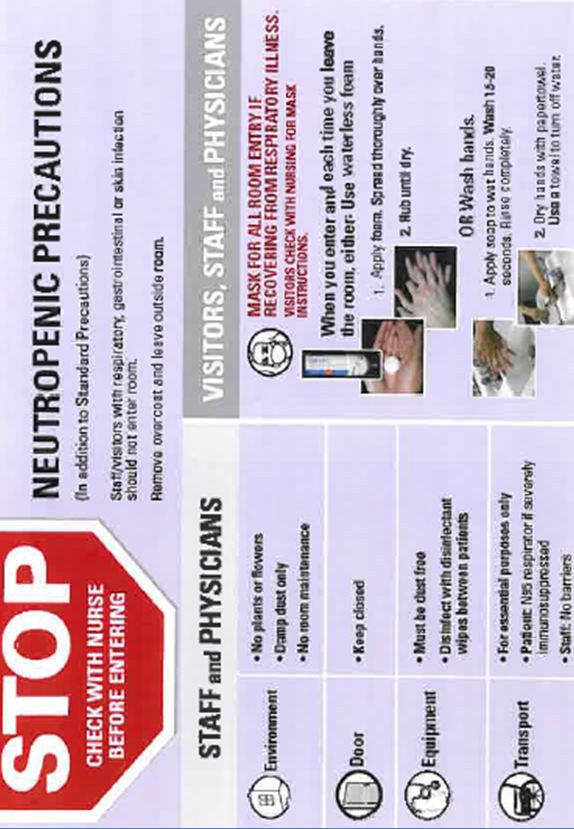
2
Introduction
Clostridium difficile infection (CDI) is becoming more prevalent as a health care-associated infection, causing
diarrhea that can lead to colitis, colon perforation, sepsis, and, according to the Centers for Disease Control
and Prevention (CDC), is fatal in approximately 14,000 Americans annually. CDC guidelines have been in place
nationally for at least five years, targeting antimicrobial stewardship, early identification and treatment, and the
prevention of health care facility transmission.

A recent study by Sitzlar, et al. (2013) suggested that effective cleaning coupled with staff supervision is a powerful
method in decreasing the potential for CDI transmission in hospitals. The Minnesota Hospital Association (MHA),
in conjunction with Stratis Health and the Minnesota Department of Health (MDH), has been working with seven
Minnesota hospitals: CentraCare Health – Melrose, Grand Itasca Clinic and Hospital, Minnesota Valley Health
Center, Park Nicollet Methodist Hospital, United Hospital - a part of Allina Health, University of Minnesota Medical
Center, and Windom Area Hospital, to adapt the Allina Health System environmental cleaning training and
supervision model for statewide dissemination.

The accompanying environmental services cleaning guidebook and training presentation apply to general
infection and control principles, with CDI specific recommendations included, such as bleach or other sporicidal
disinfectants. Additional resources provided by our partner hospitals are included in the package and are intended
to serve as examples of best practices that hospitals can adopt if found helpful.

                                                           3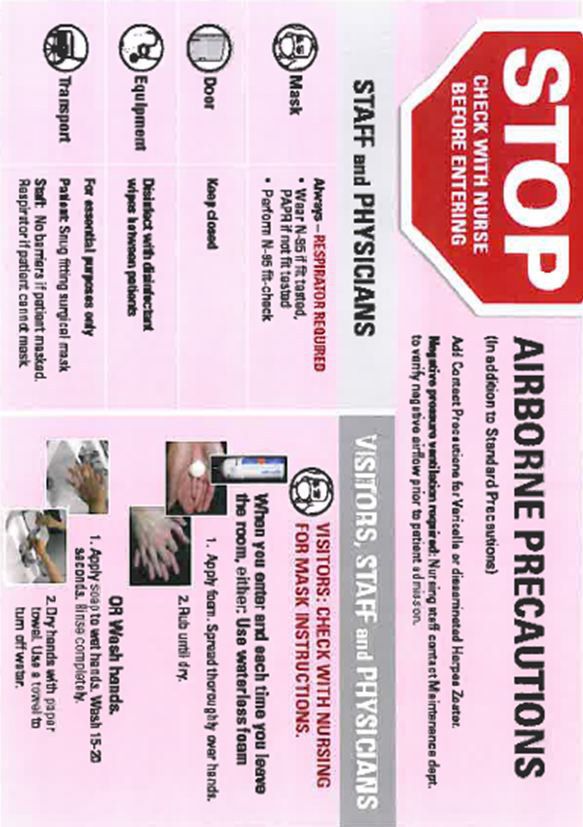
Table of contents
I)   Basic cleaning concepts......................................... 1               9) AIDET®................................................................. 28
                                                                                         Basic AIDET® concept........................................... 28
2) High touch areas.................................................... 3                Core customer service values............................... 29
   High touch area definition....................................... 3                   Examples.............................................................. 29
   Patient room........................................................... 3             Additional notes.................................................... 29
   Patient Restroom.................................................... 4
                                                                                      10) EVS equipment..................................................... 30
3) Room zone............................................................. 5               Cleaning chemicals.............................................. 30
   Hot zone................................................................. 5            Cart equipment..................................................... 30
   Room cleaning path................................................ 6                   Cart supplies......................................................... 30
                                                                                          Documentation..................................................... 30
4) Room cleaning short forms..................................... 7
   Occupied room cleaning short form........................ 7                        11) Quality control guidelines...................................... 31
     Terminal room cleaning short form.......................... 8                         UV testing............................................................. 31
                                                                                           Direct observation................................................. 31
5) Room cleaning detailed forms.............................. 10                           Quality standards.................................................. 31
   Detailed occupied room cleaning form.................. 10
   Detailed terminal room cleaning form................... 12                         12) Training requirements........................................... 31
                                                                                          Initial assessments of competency....................... 31
6) Isolation cleaning procedures............................... 15                        Yearly training and recertification ......................... 31
   Airborne precautions ........................................... 15                    Retraining............................................................. 31
   Contact precautions ............................................. 15
   Droplet precautions ............................................. 15               Attachments................................................................ 32
   Enteric precautions............................................... 16                  Donning PPE guide.............................................. 32
   Strict contact precautions..................................... 16                     Doffing PPE guide................................................ 33
   Neutropenic precautions....................................... 16                      High touch surface card ....................................... 34
                                                                                          High touch surface monitoring tool....................... 35
7) Equipment specific cleaning instructions.............. 17                              Airborne precaution sign ...................................... 36
                                                                                          Contact precaution sign........................................ 37
8) Personal protective equipment (PPE) .................. 26                              Droplet precaution sign......................................... 38
   Protection............................................................. 26             Enteric precaution sign......................................... 39
   Gloves.................................................................. 26            Strict contact precaution sign ............................... 40
   Isolation gown....................................................... 26               Neutropenic precautions sign
   Mask..................................................................... 26               (protective isolation)........................................ 41
   N95 respirator....................................................... 27
   PAPR.................................................................... 27

                                                                                                          AIDET® is a registered trademark of Studer Group

                                                                                  4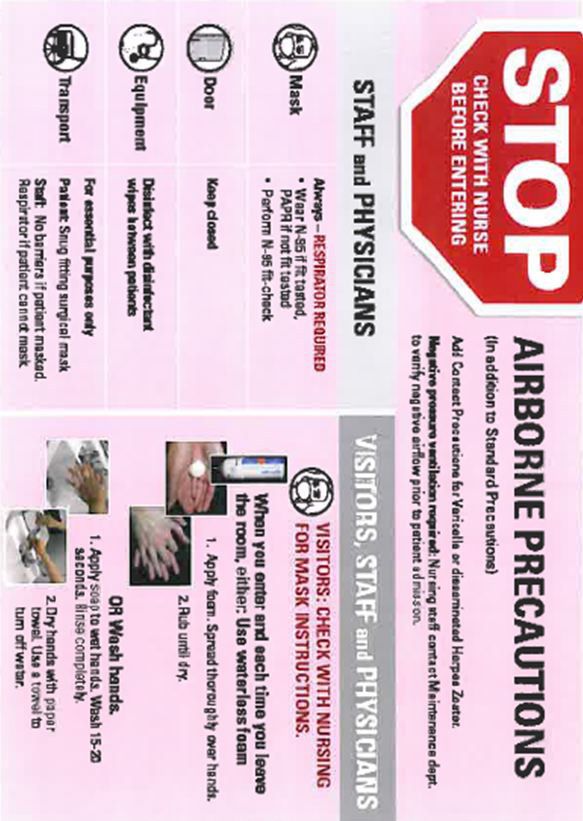
1) Basic cleaning concepts
General sanitizing
To make a surface or area clean by removing dirt, germs or unwanted substances.

Bathrooms/restrooms
Restroom cleaning includes the cleaning of toilets, fixtures and commodes. Bathrooms should be cleaned last,
after completing the room. Shower walls should be thoroughly scrubbed at least weekly. Shower curtains should be
changed at least yearly and as required.

Cleaning
The physical removal of dust, soil, blood and body fluids. Cleaning physically removes germs. It is accomplished
with water, detergents and mechanical action. The key to cleaning is the use of friction to remove germs and debris.

Contamination
The presence of germs on hands or on a surface such as clothes, gowns, gloves, bedding, toys, surgical
instruments, patient care equipment, dressings or other inanimate objects.

Cross-contamination
Cross-contamination is the transfer of harmful germs from one person, object or place to another.

Disinfectant
A product that is used on surfaces or medical equipment/devices which results in disinfection of the equipment/
device. Some products combine a cleaner with a disinfectant.

Disinfection
The killing of germs. Surfaces and equipment must be cleaned first before applying disinfectant in order to kill
germs.

Dry mopping
The process of removing dirt and debris from floors using only mop head without water or detergent.

High dusting
High dusting includes all horizontal surfaces and fixtures above shoulder height, including vents. Ideally, the
patient/resident should be out of the room during high dusting to reduce the risk of inhaling dust particles.

                                                          1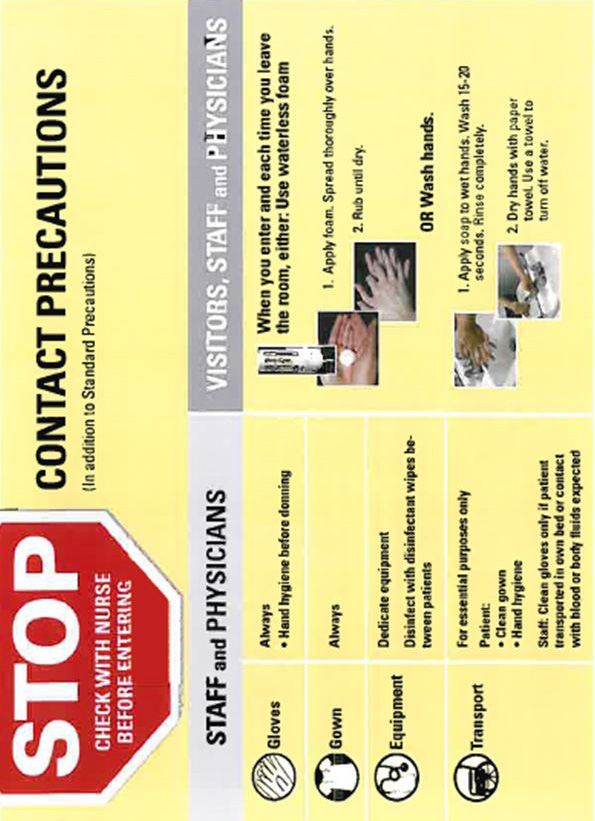
Hospital clean
Hospital clean is a measure of cleanliness routinely maintained in care areas of the health care setting. Cleaning
practices are periodically monitored and audited with feedback and education.
Floors and baseboards are free of stains, visible dust, spills and streaks.
Walls, ceilings and doors are free of visible dust, gross soil, streaks, spider webs and handprints.
All horizontal surfaces are free of visible dust or streaks (includes furniture, window ledges, overhead lights,
phones, picture frames, carpets, etc.)
Bathroom fixtures including toilets, sinks, tubs and showers are free of streaks, soil, stains and soap scum.
Mirrors and windows are free of dust and streaks.
Dispensers are free of dust, soiling and residue and replaced/replenished when empty.
Appliances are free of dust, soiling and stains.
Waste is disposed of appropriately.
Items that are broken, torn, cracked or malfunctioning are replaced.
High touch surfaces in client/patient/resident care areas are cleaned and disinfected with a hospital-grade
disinfectant.
Non-critical medical equipment is cleaned and disinfected between clients/patients/residents.
Isolation precautions
Infection control interventions used to reduce the risk of transmission of germs to patients and hospital staff.
Includes: contact, enteric, droplet, airborne, strict contact.
Terminal cleaning
The thorough cleaning of a patient room following discharge in order to remove germs that might be transferred to
the next patient in the room.
Wet mopping
Final floor cleaning step using water and detergent or disinfectant.
Working from clean areas to dirty areas:
Fill plastic basin with cleaning solution.
Place microfiber pad(s) to soak in basin.
Take a clean pad from the basin and attach to mop head using Velcro strips.
Remove pad when soiled and set aside for laundering.
Send soiled microfiber pads for laundering at the end of the day.
For Isolation precaution rooms:
Take a clean pad from the basin and attach to mop head using Velcro strips.
Take a clean microfiber pad from the cart and place in bucket containing disinfectant.
Ensure that pad becomes saturated with disinfectant. Wring excess liquid from the pad before attaching to
mop.
Mop as usual working from clean areas to dirty areas.
2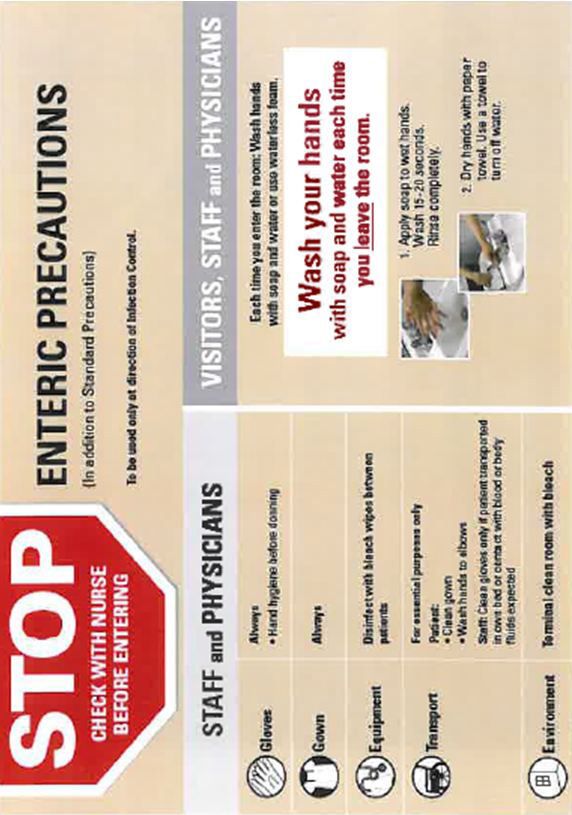
2) High touch areas
High touch areas
High touch surfaces are those that have frequent contact with hands. High touch surfaces in care areas require
more frequent cleaning and disinfection than minimal contact surfaces. Cleaning and disinfection is usually done at
least daily and more frequently if the risk of environmental contamination is higher (e.g., intensive care units).

Patient room high touch areas

         Bed hand rails                               Nurse call box
                                                                                                  Telephone

                                               Bedside table                                 Patient chair
       Telephone

 Room door handles -                Light switches             Computer keyboards               In-room sinks
 interior and exterior
                                                         3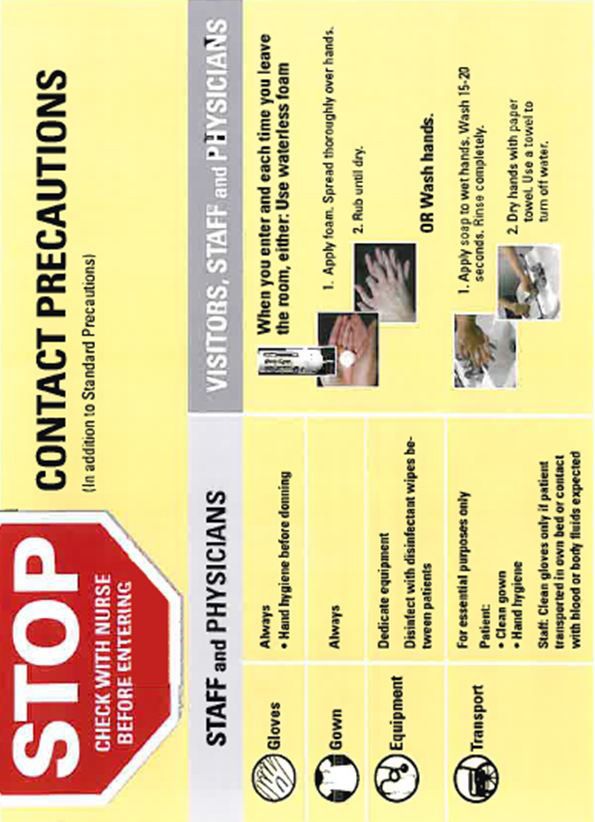
Patient restroom high touch areas

      Toilet seat                                    Toilet handle rails
                             Toilet handle

     Bathroom sink
                             Restroom light switch     Restroom door handle
                                                       - interior and exterior

                                  4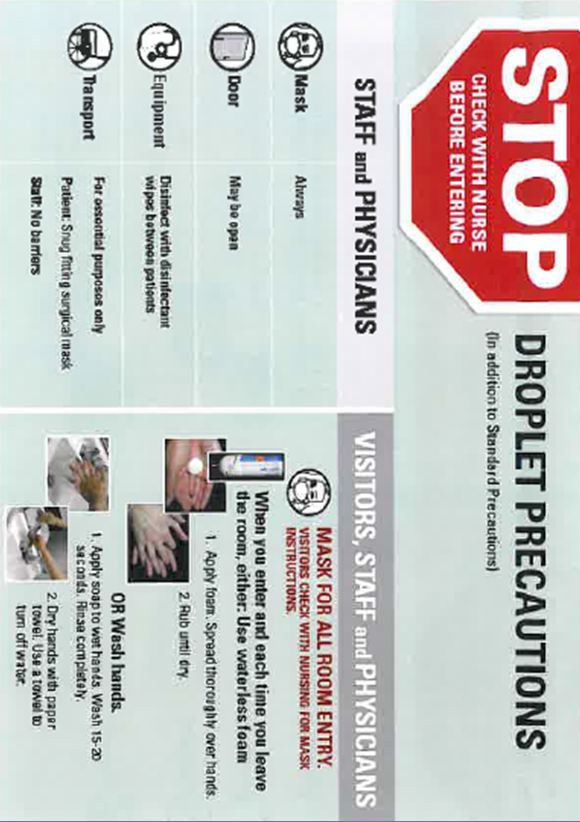
3) Room zoning
Hotzone

The equipment and areas closest to the patient are the most contaminated and considered the “hot zone.” As you
move further from the patient, surfaces are less contaminated. Starting with the bed will allow adequate contact
time with the disinfectant. Once the hot zone has been cleaned and disinfected, take a fresh cleaning rag and
work clockwise from cleaner to dirtier (green to yellow ring on the diagram).

                                                       5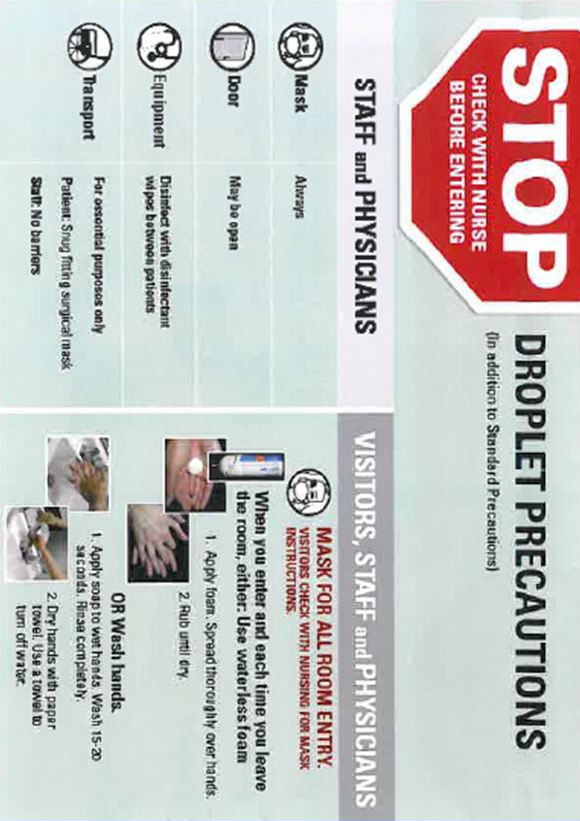
Room cleaning path example

                               A consistent room cleaning path must be established.

1. Disinfect bed using a minimum of one BLUE rag.
2. Starting back at the door use a fresh BLUE rag, begin disinfecting the rest of patient room following a clockwise
   path. Change rags as needed to assure proper saturation and avoid cross contamination (approximately 3-4
   rags).
3. Using 2-3 bathroom rags disinfect the restroom and always finish with the toilet.

Note: Each hospital is to set standards regarding cloth colors, product selection and number of cloths used per room.

                                                          6
4) Room cleaning
Occupied room cleaning
Note: Each hospital is to set standards regarding cloth colors, product selection and number of cloths used per room.
Before occupied room cleaning:
• Check for isolation status DO NOT WEAR DIRTY GLOVES OUTSIDE OF THE
• Always perform hand hygiene ROOM
• Don appropriate PPE If you have to leave the room after you have started
• AIDET® a room clean, remove your gloves and perform hand
• Check Sharps container. Change if necessary. hygiene. Put a new pair of gloves on to resume
• Empty the trash container. Handle plastic bags from cleaning.
top.
PATIENT ROOM: Clean and disinfect using PATIENT RESTROOM: Clean and disinfect using
disinfectant and BLUE cleaning rags. disinfectant and GREEN cleaning rags.
Change rag as needed to ensure saturation Change rag as needed to ensure saturation
NO DOUBLE DIPPING NO DOUBLE DIPPING
PATIENT ROOM: • Light switches – high touch area
• Raise and wipe down arm rails – high touch area • Door handles, knobs – high touch area
• Wipe foot of bed • Hand rails – high touch area
• If the call box or phone is on the bed wipe down at • Sink and sink counter – high touch area
this time
CHANGE RAG AND START WITH A FRESH ONE • Clean soap and paper towel dispensers
AFTER CLEANING THE BED
Move from door and sanitize all equipment • Wipe shower or tub
(Restroom to be done last)
Ledges (below shoulder height) • Spot walls
• Door handles, knobs – high touch area CHANGE RAG AND START WITH A FRESH ONE
BEFORE CLEANING TOILET
• Light switches- high touch area • Toilet paper dispenser
• Call box – high touch area • Toilet flusher – high touch area
• Telephone – high touch area • Toilet seat – high touch area
• Window sills and ledges • Under the bowl
• Computer keyboard – high touch area • Toilet rim
• Soiled linen hamper lid • Clean inside of bowl with disinfectant cleaner and
toilet brush
• In-room patient sink and faucet – high touch area • Clean commode frame and seat cover LAST
• In-room soap dispenser and paper towel dispenser BEFORE LEAVING THE ROOM:
• Biohazard can • Remove gloves and perform hand hygiene
• Dry erase marker • Restock supplies
• Over bed table – high touch area • Place wet floor sign in doorway
• Patient chairs – high touch area • Mop floor – never shake mop
• Bedside tables – high touch area • AIDET®
• All other easily accessible wall mounted equipment • Perform hand hygiene
AIDET® is a registered trademark of Studer Group
7Terminal room cleaning
Note: Each hospital is to set standards regarding cloth colors, product selection and number of cloths used per room.
Before terminal room cleaning:
• Change room status to “in progress”
• Always perform hand hygiene
• Don appropriate PPE
• Remove all soiled linen
• Wipe down equipment with disinfectant and then remove from room
• Remove linen from bed and place into linen hamper
• Remove any patient equipment from room per hospital procedure, place IV poles with bags on them by door
and notify nursing staff
• Remove oxygen tubing and make sure oxygen is off
• Check room for previous patient belongings – take any items to the nursing station
• Check Sharps container. Change if necessary.
• Empty the trash container. Handle plastic bags from the top.
• Discard open facial tissue boxes and used toilet paper rolls.
• Perform high dusting with an extending lambs wool duster all areas above shoulder height – see guidebook.
DO NOT WEAR DIRTY GLOVES OUTSIDE OF THE ROOM
If you have to leave the room after you have started a room clean, remove your gloves and perform hand
hygiene. Put a new pair of gloves on to resume cleaning.
PATIENT ROOM: Clean and disinfect using PATIENT RESTROOM: Clean and disinfect using
disinfectant and BLUE cleaning rags. disinfectant and GREEN cleaning rags.
Change rag as needed to ensure saturation Change rag as needed to ensure saturation
NO DOUBLE DIPPING NO DOUBLE DIPPING
PATIENT BED: • Light switches – high touch area
• Raise foot and head of bed before starting • Door handles, knobs – high touch area
• Hand rails – high touch area • Hand rails – high touch area
• Mattress – Top and bottom • Sink and sink counter – high touch area
• Pillows - place cleaned pillow back on mattress • Clean soap and paper towel dispensers
CHANGE RAG AND START WITH A FRESH ONE • Wipe shower or tub
AFTER CLEANING THE BED
Move from door and sanitize all equipment • Spot walls
(Restroom to be done last) CHANGE RAG AND START WITH A FRESH ONE
BEFORE CLEANING TOILET
• Ledges (below shoulder height) • Toilet paper dispenser
• Door, door handles, knobs – high touch area • Toilet flusher – high touch area
• Light switches- High Touch area • Toilet seat – high touch area
• Call box – High Touch area • Under the bowl
• Telephone – High touch area • Toilet rim
• Pt. storage cabinets & drawers – hosp. info book • Clean inside of bowl with disinfectant cleaner and
toilet brush
• Window sills and ledges • Clean commode frame and seat cover LAST
8• Computer keyboard – high touch area
• Soiled linen hamper lid
• In-room patient sink and faucet – high touch area BEFORE LEAVING THE ROOM:
• In-room soap dispenser and paper towel dispenser • Remove gloves and perform hand hygiene
• Biohazard can • Restock supplies
• Dry erase marker • Make up bed – will depend on location
• Over bed table – high touch area • Place wet floor sign in doorway
• Patient chairs – high touch area • Final check for room cleanliness
• Bedside tables – high touch area • Final maintenance check – lights and repairs
• Thermostat – check with maintenance for • Mop floor – never shake mop
temperature • Change room status to “ready” using BedTracker or
• Glove boxes Navicare
• All other easily accessible wall mounted equipment • Remove wet floor sign – after floor has dried
• Spot clean walls • Perform hand hygiene
• Inspect privacy curtains for stains or damage -
order change out if soiled
95) Cleaning detail forms
Detailed occupied room cleaning form
Note: Each hospital is to set standards regarding cloth colors, product selection and number of cloths used per room.
• Clean and disinfect the patient room using disinfectant cleaner and blue cleaning rags. Change rag as needed
to ensure saturation.
• Never shake mops.
• No double dipping of cloths.
• Do not wear dirty gloves outside of the room. If you have to leave the room after you have started a room clean,
remove your gloves and perform hand hygiene. Put a new pair of gloves on to resume cleaning.
• Before entering room:
Check for isolation status
Perform hand hygiene
Don appropriate PPE
AIDET®
Place wet floor sign in front of door
Check Sharps container. Change if necessary.
Empty and clean the trash container. Handle plastic bags from the top.
• Clean the patient bed.
Raise and wipe down arm rails – high touch area
Wipe foot of bed.
If the call box or phone is on the bed wipe these down at this time.
Discard your rag and proceed with a clean one after cleaning the bed.
• Move clockwise from the door and sanitize all equipment skipping the restroom
Ledges (below shoulder height)
Door handles, knobs – high touch area
Light switches – high touch area
Call box – high touch area
Telephone – high touch area
Window sills and ledges
Computer keyboard – high touch area
Soiled linen hamper lid
In-room patient sink and faucet
In-room soap dispenser and paper rag dispenser
Biohazard can
Dry erase marker
Overbed table – high touch area
Patient chairs – high touch area
Bedside tables – high touch area
All other easily accessible wall mounted equipment
If in patient room, clean commode frame and seat cover last.
AIDET® is a registered trademark of Studer Group
10• Clean and disinfect the patient restroom using disinfectant cleaner and green cleaning rags. Change rags as
needed to ensure saturation.
• Clean Patient rest room in the following order:
Clean mirror with glass cleaner and wipe dry with a paper towel.
Light switches – high touch area
Door handles, knobs – high touch area
Hand rails – high touch area
Sink and sink counter – high touch area
Clean soap and paper towel dispensers
Wipe shower or tub
Spot walls
Clean commode frame and seat cover
• Change rag before cleaning toilet!
Toilet paper dispenser
Toilet flusher – high touch area
Toilet seat – high touch area
Under the bowl
Toilet rim
Clean inside of bowl with disinfectant cleaner and toilet brush
Remove gloves and perform hand hygiene
Restock supplies
Mop floor
AIDET®
Perform hand hygiene
Remove wet floor sign after floor has dried
AIDET® is a registered trademark of Studer Group
11Detailed terminal room cleaning form
Note: Each hospital is to set standards regarding cloth colors, product selection and number of cloths used per room
• Place wet floor sign in front of door.
• Change room status to “in-progress”
• Perform hand hygiene (use either the quick care foam or soap and water) and put on gloves for all contact with
soiled items.
• Do not wear dirty gloves outside of the room. If you have to leave the room after you have started a room clean,
remove your gloves and perform hand hygiene. Put a new pair of gloves on to resume cleaning.
Remove all soiled linen and equipment from room. Remove linen from bed one piece at a time and place into
linen hamper.
Remove any patient equipment from the room per hospital procedure. Place IV poles with bags on them by the
door and notify nursing. Remove oxygen tubing and make sure oxygen is off.
Check room for previous patient belongings (bathroom, room and bathroom cabinets) - take any items to the
nursing station.
Check Sharps container. Change if sharps are at fill line.
Empty trash container. Handle plastic bags from the top. Discard open facial tissue boxes and used toilet paper
rolls used for commodes in patient room.
• Perform high dusting with an extending lambs wool duster all areas above shoulder height. This includes but is
not limited to the following items:
Television (cabinet, screen and wires)
Clock
Drape rod
Blinds
Cubical curtain tracks
Vents
Area where ceiling meets the wall.
Ledges
Lights (patient room and bathroom)
Sprinkler heads
Clean patient bed
• Clean and disinfect the patient bed using disinfectant cleaner and blue cleaning rags. Change rags as needed
to ensure saturation. Raise foot and head of bed before starting.
Hand rails – high touch area
Mattress – top and bottom
Pillows – place cleaned pillow back on mattress
Foot and headboard
Exposed frame, springs or bed panels
Base and wheels
Discard your rag and proceed with a clean one after cleaning the bed.
• Move clockwise from the door and sanitize all equipment skipping the restroom.
Ledges (below should height)
12 Door handles, knobs – high touch area
Door
Light switches – high touch area
Nurse call box – high touch area
DVD remote (if present)
Telephone – high touch area
Patient storage cabinets and drawers
Window sills and ledges
Computer keyboard – high touch area
Blood pressure cuff
Hospital information book
Soiled linen hamper
In room patient sink and faucet – high touch area
In room soap dispenser and paper towel dispenser
Biohazard can
Dry erase marker
Step stool
Refrigerator (if present)
Overbed (tray) table – high touch area
Bedside tables – high touch area
Patient chairs – high touch area
Thermostat - set at 69 degrees after cleaning
Glove boxes
All other wall mounted equipment
If in patient room clean commode including bucket last.
Spot clean walls
Inspect privacy curtains for stains or damage. Order change out on privacy curtains if soiled.
• Clean and disinfect the patient restroom using disinfectant cleaner and green cleaning rags. Change rags as
needed to ensure saturation. Clean patient restroom in the following order:
Clean mirror with glass cleaner and wipe dry with a paper towel.
Light switches – high touch area
Door handles, knobs – inside and outside – high touch area
Hand rails – high touch area
Sink and sink counter – high touch area
Wipe out all cabinets and shelves
Wipe towel rack.
Emergency pull cord
Clean soap and paper towel dispensers
Wipe shower or tub
Wipe down vinyl curtain
Check curtain for mold growth and change as needed
Spot clean walls
Clean commode including bucket
Toilet paper dispenser
Unroll toilet paper several times and discard
13• Change rag before cleaning toilet!
Toilet flusher – high touch area
Toilet seat – high touch area
Under the bowl
Toilet rim
Clean inside of bowl with disinfectant cleaner and toilet brush
Remove gloves and perform hand hygiene
Restock supplies. Do not overstock rooms.
Make up bed. Bed makeup will depend on location.
Do a final check for room cleanliness
• Do a final maintenance check:
Check all lights to ensure they are working
Check for repairs that may be needed notify your supervisor and the nursing station
Wet mop the floor
Change room status to “ready”
Remove wet floor sign when floor is dry.
146) Isolation cleaning procedures
Isolation signage may differ by hospital
Airborne precautions
Diseases when PPE occupied PPE unoccupied Cleaning
used: procedure:
TB 1. N95/PAPR for 1. N95/PAPR for Check with nursing
measles room entry. room entry before room entry.
chickenpox 2. Add isolation within 1 hour Wait 1 hr after
gown and of discharge. discharge to enter
gloves for 2. Add isolation room without N95/
contact gown and PAPR. Routine
precautions gloves for cleaning. Neutral
contact detergent or water
precautions (as directed by
supervisor)
Check with nursing before entering airborne precaution room. For chickenpox or shingles, do not enter room if
you have not had chickenpox or the chickenpox vaccine.
Contact precautions
Diseases when PPE occupied PPE unoccupied Cleaning
used: procedure:
Resistant 1. Gloves 1. Gloves Nursing to disinfect
organisms (MRSA, 2. Isolation gown 2. Isolation gown and remove
VRE), bedbugs, equipment from
lice, scabies, RSV, patient room prior
impetigo to cleaning. Follow
routine cleaning.
Quat detergent for
floor cleaning.
Droplet precautions
Diseases when PPE occupied PPE unoccupied Cleaning
used: procedure:
influenza Surgical mask for No mask required Routine cleaning,
pertussis room entry for room entry floor cleaning:
mumps neutral detergent
Respiratory or water (as
illnesses in young directed by
children supervisor)
15Enteric precautions
Diseases when PPE occupied PPE unoccupied Cleaning
used: procedure:
C. difficile 1. Gloves 1. Gloves Nursing to
infections, 2. Isolation gown 2. Isolation gown disinfect and
Norovirus remove equipment
from patient room
prior to cleaning.
Bleach cleaning.
Discard toilet bowl
brush after use.
Quat detergent for
floor cleaning.
Strict contact precautions
Diseases when PPE occupied PPE unoccupied Cleaning
used: procedure:
MDRO – GNB 1. Gloves 1. Gloves Routine cleaning
(antibiotic resistant 2. Isolation gown 2. Isolation gown Quat detergent for
gram negative 3. Strict 3. Strict floor cleaning
bacilli) compliance compliance
with Hand with Hand
Hygiene Hygiene
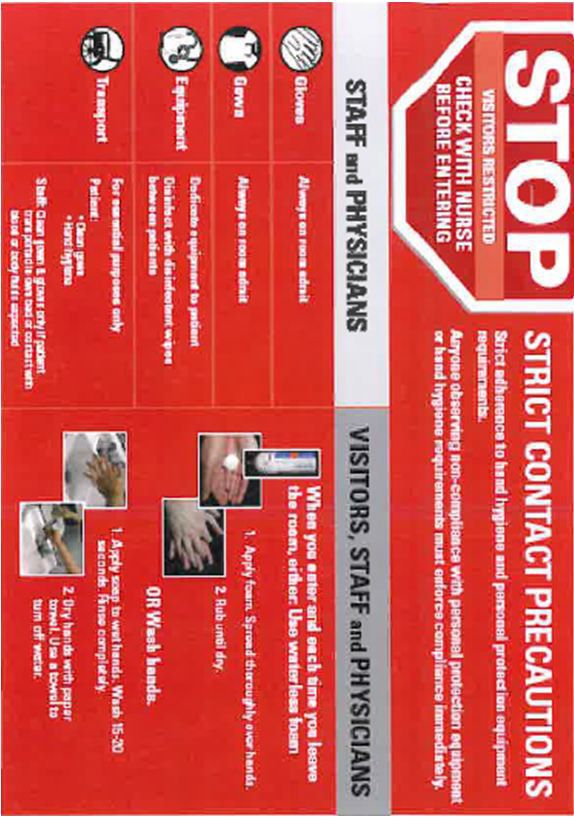
Neutropenic Precautions (Protective Isolation)
Diseases when PPE occupied PPE unoccupied Cleaning
used: procedure:
Used for patients Wear surgical None needed Clean when the
who are at high mask on room patient is out of
risk for hospital- entry if YOU the room when
acquired infections have symptoms possible. Damp
of respiratory clean all horizontal
infection. surfaces. No dry
dusting or dry
mopping.
167) Equipment specific cleaning instructions
When wiping down surfaces, use disinfectant and appropriate colored microfiber cloth unless specified differently in
the instructions below.
Note: Electrical equipment should be cleaned per manufacturer’s instructions.
Bed – empty
Raise bed to highest level.
Raise the head and foot of the mattress.
Wipe down mattress- top, sides and bottom
Wipe down any pillows.
Raise and wipe all handrails
Wipe down foot and headboard. Remove footboard if applicable.
Wipe exposed bed frame, springs or bed panels.
Wipe the base and wheels of the bed.
Lower head and foot of mattress to horizontal.
Beside wall fixtures
Wipe all fixtures near head of the bed.
Be careful not to set off code blue alarm.
Bedside table
Wipe down top and sides of the table.
Open and wipe inside of drawers.
17Blood pressure cuffs – standard
Wipe off cuff, cord and ball
Wipe off BP meter
Place cuff in BP basket
Blood pressure cuffs – reusable or disposable
Remove cuff
Wipe off BP meter
Place deposable cuff in trash
Place reusable cuff in collection bin in soiled utility room
Ceiling lift
Dust tracks & body of lift
Wipe hanger
Wipe control pendant
Make sure base is back to charging station
18Cardiac monitor
Wipe all surfaces
Wipe each cord separately, wrap and hang up
Clean leads using bleach wipes and toothbrush.
Closet
Wipe the closet handle and surrounding area
Open door and wipe all flat surfaces in closet
Computer
Wipe off keyboard cover and mouse
If no keyboard cover, wipe keyboard using super sanicloth wiper.
Wipe off computer case and cords.
Dust monitor. If needed, use damp (water) paper towel to remove
spots.
Wipe all support arms for computer.
Commode
Wipe off arms and legs.
Wipe off back and seat cover.
Wipe seat top and bottom
Wipe inside and outside of the bucket.
19Door handles
Wipe the door handle and surrounding area
Make sure to wipe inside and outside door handles in the patient
room and rest room.
IV pole
Wipe off keyboard cover and mouse
If no keyboard cover, wipe keyboard using super sanicloth wiper.
Wipe off computer case and cords.
Dust monitor. If needed, use damp (water) paper towel to remove
spots.
Wipe all support arms for computer.
Linen hamper
Wipe down frame and cover (if present)
Allow to air dry before replacing bag.
Mirrors
Clean mirrors with glass cleaner and paper towels.
20Nurse call box
Wipe the entire handheld device making sure to get in crevices.
Wipe the cord from device to wall.
Place next to patient to ensure they can reach for use if needed.
Over bed table
Wipe surface and any shelves
Open and wipe all panels and compartments
Clean mirror if present
Wipe leg and bas
Paper towel dispensers
Wipe entire enclosure
Open and restock if needed
Do not use soiled gloves when handling clean supplies
Patient care board
Wipe board with glass cleaner
Wipe decals carefully avoiding edges. Wiping along edges of
decals may cause the edges to curl.
Disinfect any markers in room.
21Patient chair
Wipe the entire surface of the chair
Including arm, seat, back rest, and back.
Patient phone
Wipe entire device
Wipe cord to wall
Patient recliner
Open/recline chair up to its fullest
Extend trays if present
Wipe all surfaces including seat, arms, backrest, sides and footrest
Wipe in all grooves/hinged areas.
Privacy curtain
Inspect privacy curtain for stains and replace per policy.
22Shower
Starting at the top, wipe down all surfaces.
Wipe down all shower fixtures (handrails, shower head, shelving)
Wipe door or curtain
Wipe floor
Ensure flexible hose is left hanging down.
Shower chair
Wipe base and back of chair
Wipe underside of seat
Wipe chair legs
Shower curtain
1. Wipe down vinyl curtains
2. Inspect curtain for mold growth and change if needed
Sinks
Use cream cleaner in bowl to remove buildup
Wipe counter, bowl and faucet
Wipe under counter ledge
Wipe any exposed plumbing.
Wipe underside of sink if no counter
Change towel if it becomes saturated with water when cleaning a
sink with an automatic faucet.
23Soap dispensers
Wipe entire enclosure
Wipe wall underneath dispenser to remove buildup.
Open enclosure and change soap if needed.
Toilet
Always use a fresh towel when cleaning a toilet.
Wipe toilet paper dispenser.
Wipe flusher.
Wipe toilet seat.
Wipe under bowl.
Wipe toilet rim.
Clean the inside of the bowl using disinfectant cleaner and a toilet
brush
Trash cans
Wipe outside of container
Wipe inside of container
Wipe wall behind container
Replace bag - do not leave extra bags in bottom of container.
Tub
Wipe walls and fixtures.
Wipe ledge and tub walls.
Wipe outside tub walls.
24TV
Dust screen. Do not use harsh chemicals on flat screen TV
If screen is spotted clean with glass cleaner
Wipe arm brackets.
Wipe DVD player/cords/brackets/shelving if present.
Windows
Clean windows with glass cleaner and paper towels
Wipe ledges
Spot clean/high dust blinds/shades as needed.
High dusting
Using a feather duster wipe the following areas in a room:
Television (cabinet, screen and wires)
Clock
Drape rods
Blinds
Cubical curtain tracks
Vents
Areas where ceiling meets the wall
Ledges
Lights (patient room and bathroom)
258) Personal protective equipment (PPE)
Note: equipment appearance may differ by hospital
Eye protection
Facility approved goggles or other eye protection should be worn when
there is a risk of chemical splash to the eyes (e.g. mixing cleaner) or
risk of patient blood or body fluid splash exposure.
Gloves
Gloves are worn when there is a risk of contact with infectious
materials. Always perform hand hygiene before putting on and after
taking off gloves. Wear gloves when cleaning patient rooms as outlined
in cleaning procedures.
Isolation gown
Isolation gowns are worn to protect clothing from potentially infectious
material when patients are in contact or enteric precautions. Put on
gown and gloves before entering contact or enteric precaution room.
Mask
Masks are worn to protect staff from infections spread by droplets
in the air (e.g. influenza). Wear a mask when droplet precaution sign is
posted, mask must be on before entering patient room.
26PAPR – Powered Air Purifying Respirator
PAPR machines are worn by staff that cannot wear N95 respirators and
are used for patients on airborne precautions. You must have received
training on how to use the PAPR, if you have not received training
and have not been fit tested to an N95 respirator you should not clean
airborne precaution patient rooms.
N95 Respirator
Respirators should be worn when entering the room of a patient in
airborne precautions. You must have gone through training and fit
testing before using N95 respirators, if you have not been fit tested you
should not clean airborne precaution patient rooms.
279) AIDET ®
Basic AIDET concept ®
A Acknowledge
Acknowledge the patient by announcing yourself and knocking on the door.
Always ask for permission to enter the patient’s room.
I Introduction
Introduce yourself with your name, department, and ask this is an ok time to clean for the patient.
D Duration
Let the patient know how long the cleaning process will take.
E Explanation
Explain to the patient what you will be doing in the room.
Make sure to ask the patient if everything in the room is working correctly.
Make sure to let supervisor know if something isn’t working correctly so a work order can be completed.
T Thank you
Remind the patient about the wet floors after mopping.
Make sure to ask if there is anything else you can do for the patient.
Thank the patient before you leave the room.
Core customer service values
• Eye contactListen
• Interact
• Courtesy and respect
• Positive body language
• Smile
• Eager to help
• Compassion and empathy
AIDET® is a registered trademark of Studer Group
28Specific examples of how to use AIDET ®
1. Patient does not want the room cleaned now
Acknowledge: Housekeeping, may I enter your room?
Introduction: My name is Nick from Housekeeping and I am here to clean your room. Is this a good time for you?
(patient responds no)
Ok, no problem. I will come back in a while to clean your room. Have a nice day.
2. Cleaning in patient’s personal space – bed, bedrails, etc.
Acknowledge: Housekeeping, may I enter your room?
Introduction: My name is Nick from Housekeeping and I am here to clean you room. Is this a good time for you?
Duration: It will take me between 10-15 minutes to complete.
Explanation: In order to meet your needs I am going to be cleaning your bed rails in order to disinfect this area
to ensure your safety.
Additional notes
1. Responding to patient requests for items
When a patient asks for an item please meet their need.
If you cannot, please let the patient know you will get their nurse.
2. Responding to patient requests for specific cleanliness needs
Please address any requests for cleaning a patient may have while in room.
AIDET® is a registered trademark of Studer Group
2910) EVS equipment
Note: EVS equipment may differ by hospital. It is important, however, to standardize cart contents.
Cleaning chemicals
• Disinfectant
• Neutral floor cleaner
• Heavy cleaner
• Cream cleanser
• Bathroom cleaner
• Glass cleaner
• Clorox bleach wipes
Cart equipment
• Disinfectant bucket
• Wet mop bucket
• Wet mop handle
• Dust mop handle
• Counter brush
• Dust pan
• High duster
• Putty knife
• Door stop
• Toilet brush & holder
• Safety goggles
Cart supplies
• Dust mops
• Micro fiber
• Wet mops
• Blue cleaning rags
• Green cleaning rags
• Paper towels
• Trash and biobags
Documentation
• Occupied room cleaning guide
• Terminal room cleaning guide
• High touch surface card
3011) Quality control guidelines
UV gel testing
1. Each employee will have a minimum of one room checked annually.
2. If success rate on high touch surfaces is not met, retraining/retesting will occur.
3. There is a process in place to validate room cleaning compliance.
4. UV testing is completed following a standard procedure.
Direct observations
1. Each employee will be observed cleaning a discharge and daily clean yearly.
Quality standards
1. Quality control documentation is standard across the system/hospital.
2. Copies of all QA forms are included in the appendix.
12) ES training and certification
New employee initial assessments of competency/certification
1. Attend classroom training (including practicum session with observation daily and terminal room cleaning)
2. Pass written test
3. Pass two UV gel assessments and/or ATP monitoring of terminal cleaning with minimum success on high touch
surfaces within four weeks of classroom training
4. Pass two daily clean observation conducted by site manager or designee within four weeks of classroom
training.
Yearly training and recertification
1. Employees will receive annual training that will include review of basic cleaning concepts and ongoing issues
identified through observational and UV gel and/or ATP audits of practice.
2. Successful attendance at training session and written exam is required for recertification.
Retraining
1. Employees who fail audits of practice will receive retraining.
2. Continued failure to meet requirements will lead to corrective action.
31ATTACHMENT A: Donning PPE
Gown
• Fully cover torso from neck to knees, arms to
end of wrist, and wraparound the back
• Fasten in back at neck and waist
Mask or respirator
• Secure ties or elastic band at middle of head and neck
• Fit flexible band to nose bridge
• Fit snug to face and below chin
• Fit-check respirator
Goggles/face shield
• Put on face and adjust to fit
Gloves
• Use non-sterile for isolation
• Select according to hand size
• Extend to cover wrist of isolation gown
Safe work practices
• Keep hands away from face
• Work from clean to dirty
• Limit surfaces touched
• Change when torn or heavily contaminate
• Perform hand hygiene
32ATTACHMENT B: Removing PPE
Remove PPE at doorway before leaving patient room or in anteroom.
Gloves
• Outside of gloves are contaminated!
• Grasp outside of glove with opposite gloved hand;
peel off
• Hold removed glove in gloved hand
• Slide fingers of ungloved hand under remaining glove
at wrist
Goggles/face shield
• Outside of goggles or face shield are contaminated!
• To remove, handle by “clean” head band or ear pieces
• Place in designated receptacle for reprocessing or in
waste container
Gown
• Gown front and sleeves are contaminated!
• Unfasten neck, then waist ties
• Remove gown using a peeling motion; pull gown from
each shoulder toward the same hand
• Gown will turn inside out. hold removed gown away
from body roll into a bundle and discard into waste or
linen receptacle
Mask or respirator
• Front of mask/respirator is contaminated - DO NOT
TOUCH!
• Grasp ONLY bottom then top ties/elastics and remove
• Discard in waste container
Hand hygiene
• Perform hand hygiene immediately after removing
all PPE!
33ATTACHMENT C: High touch surface card
High touch surface card
Patient room Patient restroom
Bed handrails Toilet seat
Nurse call light/box Toilet flush handle
Overbed tray table Toilet handrails/grab bars
Telephone Faucet handle (s)
Light switch Door handles (both to pass)
34ATTACHMENT D: High touch surface card
High touch surface monitoring tool
Date: _________ Room#: _________ Employee#: _________ Unit: ________ _ Auditor Initials: _________
Patient Room Pass Fail Patient Restroom Pass Fail
Bed Handrails Toilet seat
Nurse call light/box Toilet flush handle
Toilet handrails/
Overbed tray table
grab bar
Telephone Faucet handle(s)
Light Switch Door handles (both)
Total Score: __________ Pass/Fail
35ATTACHMENT E: Airborne precaution sign
36ATTACHMENT F: Contact precaution sign
37ATTACHMENT G: Droplet precaution sign
38ATTACHMENT H: Enteric precaution sign
39ATTACHMENT I: Strict contact precaution sign
40ATTACHMENT J: Neutropenic precaution sign
(protective isolation)
41You can also read


