Environmental solutions - Transdev
←
→
Page content transcription
If your browser does not render page correctly, please read the page content below
PORTFOLIO OF EXPERTISE

Environmental solutions
Connecting
new lines,
together.
Drawing from our long experience as a multimodal operator, we look forward to assisting you with the
construction and optimization of your mobility systems and services.

Our ambition is to develop with you, in a genuine spirit of partnership, customized, safe, effective and
responsible transit solutions that are adapted to your needs and constraints and closely in tune with
customer expectations.

The mobility of the future will be personalized, autonomous, connected and electric. This is our firm belief.
Innovation is at the heart of our approach, in order to constantly improve the performance of public
transportation services and make the promise of “new mobilities” a reality, for everyone.

As well as uncompromising safety, which is our credo, our overriding concern is the satisfaction of our
customers and the quality of their experience. Every team member in the group engages on a daily basis to
meet these challenges and implement solutions both for today and for the future.

Thierry Mallet
Chief Executive Officer
Public transit, playing a key role in
climate change and energy mix
A Twofold challenge; global and local
Climate change and its impact on air quality represent a major threat to the environment and public health. During
the Paris COP21 in December 2015, nearly 200 countries signed a universal agreement to cut Greenhouse gases (GHG)
and avoid the most dangerous effects of climate change. They committed themselves to keep the average global
temperature rise below 2°C, which means a 70% GHG emissions reduction between 2010 and 2050*.
In this climate-resilient global context, the International Association of Public Transport (UITP) supports climate
change actions through its Declaration on Climate Leadership that demonstrates the sector support to double the
market share of public transit by 2025.
Locally, transit authorities have defined their own objectives; the Netherlands are engaged in a concerted process
of transition towards zero emission by 2025. In France the Energy Transition Law demands a 50% reduction of GHG
emissions by 2050. In the USA, California is seen as a pioneer in the combat against climate change and it aims to
reduce energy consumption in the state by 50% by 2030.
© Transition Network

Public TransiT – a key lever                                       energy mix and directly contribute to the reduction of local
                                                                   air and noise pollutants.
The environmental impact of a modal shift is significant.
Greenhouse gas emissions and energy consumption of a               A wide range of solutions to
single trip can be divided by twenty if it is made using public
transit rather than a private car.                                 answer local needs
The main mission of public transit is therefore to tackle the      The energy transition is a key aspect of Transdev’s service
environmental threats by being efficient. Efficient in the ser-    offer to local governments and Public Transit Authorities.
vice provided (reliability, quality, safety) and in minimizing     Transdev offers various ecofriendly options. Among them:
the costs to be a real alternative to the private car. Efficient   alternative fuels, renewal of heat engines, hybrid and fully
in the way services link up with car usage. The aim is not to      electric vehicles.
reject car usage but limit it to “win over ” new customers         Since the implementation of the first electric minibuses in city
and convince them to change their mode of transportation.          centers (La Rochelle and Rotterdam), Transdev has expanded
Public transit providers must help develop the future modes        its electromobility fleet with self-service car sharing, hybrid
of sustainable transportation so increased passenger flows         taxi fleet and standard capacity electric buses.
can be absorbed and accommodated, and at the same time             With 56% of the global fleet considered to be low emission
guaranteeing seamless transit. If we consider that 30% of the      and capitalization of initiatives through its Electric Bus
world’s of GHG emissions are linked to the transportation          Living Lab, Transdev is now recognized for its experience
sector, we must also shoulder the responsibility of improving      and expertise in the range of potential solutions, their costs
the ecological impact of our operations by proposing a new         and their impacts on environment and operations.

* Intergovernmental Panel on Climate Change (IPCC)
Good
                                                          WINNING THE SUSTAINABLE
                                                          MOBILITY BATTLE
                                                          Reducing the local carbon footprint

   reasons                                                Faced with the ever-present challenges of
                                                          intermodality and optimized management of
                                                          transit systems, Transdev also devotes its expertise
                                                          to increasing ridership, through real-time
                                                          information, mobile apps, service quality, efficient

to choose
                                                          systems and “soft” modes, all designed to convince
                                                          as many people as possible to choose mass transit.

                                                          With a 30% increase since 2000, Nantes has
                                                          the second highest ridership rate in France: 195
                                                          journeys per inhabitant per year; In Dublin, Ireland,

Transdev
                                                          ridership increased by 55% between 2005 and
                                                          2016. At the same time, Transdev Dublin has been
                                                          awarded multiple times for its involvement in
                                                          environmental matters.

ROBUST PROCESSES AND                                      Consulting and
GLOBAL CERTIFICATIONS                                     experimentation
Putting the environment at the heart of                   Paving the way to the best energy mix
our management systems
                                                          To ensure a successful transition toward renewable
                                                          energies, we rely on a solid base of know-how,
One of the major keystones of our environmental           enhanced by experiments. The Electric Bus Living
approach is assuring quality management in our            Lab is a transportation and research community
operations. 75 locations worldwide including the          that analyzes and capitalizes on the various electric
Transdev Group headquarters are ISO 9001 certified,       mobility trials led by Transdev worldwide. It is a tool to
which demonstrates our capacity to meet customer          advise transit agencies on their best choice in terms
needs through continuous improvements.                    of environmental performance, safety, operations and
Transdev shows its commitment to environmental            economic impact. In Nantes, France, after a three year
protection by certifying its networks with ISO 14001.     study, Semitan and Transdev decided to transform
For example, in South Korea, Ireland, Portugal, France,   the Busway into an e-Busway by the end of 2019. In
Spain and all operations in Sweden, 14001 compliance      northern Sweden, Transdev is testing special batteries
has enabled us to be at the forefront of COP 21           adapted to extreme temperatures.
priorities.                                               Transdev Netherlands together with the partner TNO,
                                                          independent Dutch research institute, developed an
                                                          electromobility toolbox, a data modeling system to
                                                          assist local authorities in the switch to electromobility.
A COMMITTED PLAYER                                       OPTIMIZED AND TAILORED
Specific answers to local needs                          SERVICE
                                                         Efficient operations and maintenance
Transdev is involved in different initiatives to
improve local quality of life. In Dublin, Ireland,
LUAS cut electricity consumption by 15% and water        Thanks to the on-board tools developed by
consumption by 41% between 2010 and 2016.                Transdev, 5,000 of our vehicles and vessels have
In La Rochelle, France, Transdev’s subsidiary Proxiway   accurate real-time data so that bus drivers can adapt
is working in partnership with the French Energy         their driving and consume less fuel. The result is a 5
Agency ADEME on a logistics platform, reducing the       to 6% drop in pollutant emissions. Transdev has also
negative impact of goods deliveries. Since 2006, it      developed and implemented sustainable driving
has saved nearly 90 tons of CO2 and 35,000 liters of     techniques that are followed up by driver training
fuel per year.                                           courses every 5 years. In Sweden, the Blue Flow
To encourage the best initiatives from start-ups to      system on the vessels at Styrsöbolaget has already
improve mountain air quality, Transdev launched in       enabled to reduce their fuel consumption by 25%
2016 the Mountain & Mobility call for projects (MO2)     within Göteborg harbor between 2000 to 2016.
in the Mont Blanc area.

MANAGEMENT OF ENERGY                                     ABOVE AND BEYOND THE
CONSUMPTION                                              STANDARDS
Adapted and sustainable performance                      Transparency and commitment

Transdev has expertise in designing optimized            In line with Caisse des Dépôts, our majority
transit systems tailored to mobility flows and local     shareholder’s strong environmental ambition,
environmental challenges. It develops the right          Transdev abides by the strictest standards of
and sustainable level of service offer, through          environmental transparency and governance.
tiered transit networks and integrated alternative       In 2003, Transdev was an early signatory of the
solutions. For example, Link in Tampa, USA, a first      Global Compact, a United Nations initiative aiming
mile/last mile solution, and Fleet me, a unique          to encourage businesses all over the world to
ridesharing service in Auxerre, France.                  adopt and promote 10 principles relating to Human
Transdev has also strong knowledge and experience        Rights, international work standards, environmental
in fleet management and preventive maintenance,          protection and the fight against corruption. In 2015
providing local authorities with support and             Transdev reached the Global Compact Advanced
solutions adapted to their specifications.               level, which is the highest recognition.
                                                         Since 2004, Transdev has been an active participant
                                                         of the UITP Sustainable Development Charter
                                                         emphasizing our contribution to sustainable
                                                         mobility.
The Electric Bus Living Lab
          Transdev has created the Electric Bus Living Lab to advise and support local authorities in their fleet transition initiatives
          toward zero emission solutions. It intends to support Transdev projects alongside those being made by local authorities
          to develop greener transportation.
          The Living Lab gathers public transit authorities, networks and experts, government agencies and research centers. They
          openly and transparently share their experiences of operating various 100% electric vehicle technologies. The aim is to help
          transit authorities make the best choices for their local context by being completely aware of the impact of investment and
          operational costs, as well as the environmental, customer service, operational performance and safety aspects.

          An open, international and                                                   bus system in Umeå, Sweden. The political agenda was
                                                                                       also shared as the State Secretary of the Ministry of
          collaborative community                                                      Infrastructure and the Environment of the Netherlands
          Several months prior to the negotiations of the COP21                        delivered the vision of the country and elected officials and
          Climate Agreement, the Living Lab was created in Nice,                       representatives from public authorities in France expressed
          France, the site for the WATT trials (Wireless Alternative                   their commitment toward energy transition.

          Parameters of the eBus Living Lab

Start:your zero emission ambition                       Bus type and features               Timetable                              Environmental factors
                                                        • electric/fuel cell/etc.           • number of bus stops                  • climate
                                                        • type of battery                   • driving speed                        • season
                                                        • power                             • distances

          Last stop:the zero emission    Financial      Need for drivers                    Charging strategy                      Infrastructure
          strategy and transition plan   consequences   • required number of drivers        • charging time                        • necessary charging facilities
          for your concession                             per timetable                     • method of charging                   • capacity of electricity grid

          Trolley Technology) an electric bus project using opportunity                A toolbox to identify the most
          charging. This first meeting attracted participants from
          countries where Transdev operates and runs electromobility
                                                                                       adapted electric solution
          trials and experimentations to discuss their national                        Using an initiative introduced by the Transdev Group, our
          commitments and share a global vision.                                       teams in the Netherlands developed a dynamic toolbox in
                                                                                       partnership with TNO, the independent Dutch research in-
          The 2016 edition of the Living lab in Eindhoven,
                                                                                       stitute. This toolbox is designed to help local authorities and
          Netherlands, showed a significant increase in the number
                                                                                       operator wanting to identify the electric solution that best
          of electromobility initiatives reflecting local authorities’
                                                                                       suits their specific needs.
          growing political will and interest in clean solutions. The
          90 participants, including speakers from five countries                      Five parameters are taken into account: 1. Vehicle character-
          explored a plethora of topics while visiting the site of what                istics, 2. Operational impacts, 3. External factors, 4. Charging
          has since become the location of the largest electric bus                    infrastructure, 5. Financial elements.
          fleet in Europe operated by Transdev. Topics of discussion                   This holistic and inclusive approach to electromobility struc-
          included electrification studies for the Nantes Bus Rapid                    tured by this comprehensive eBus Toolbox puts Transdev at
          Transit (BRT) network, and the rapid charging electric                       the very forefront of the energy mix transition.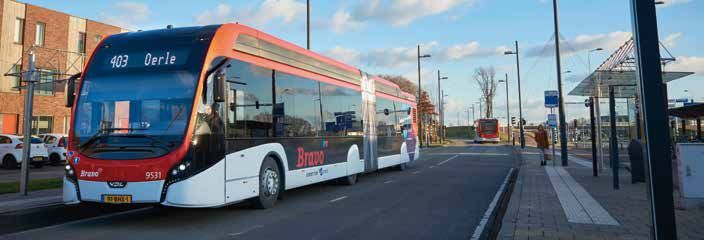
Our ambition: To be the trusted partner of our clients and customers by pioneering in mobility.
www.transdev.com
Group Client Department
                          GB 05/2017 – Photos : Photothèque Transdev - Rik v/d Wildenberg – Création :   – Réalisation : AS Multimedia
Amsterdam Region – THE NETHERLANDS
                                                                                        Amstelland-Meerlanden contract:
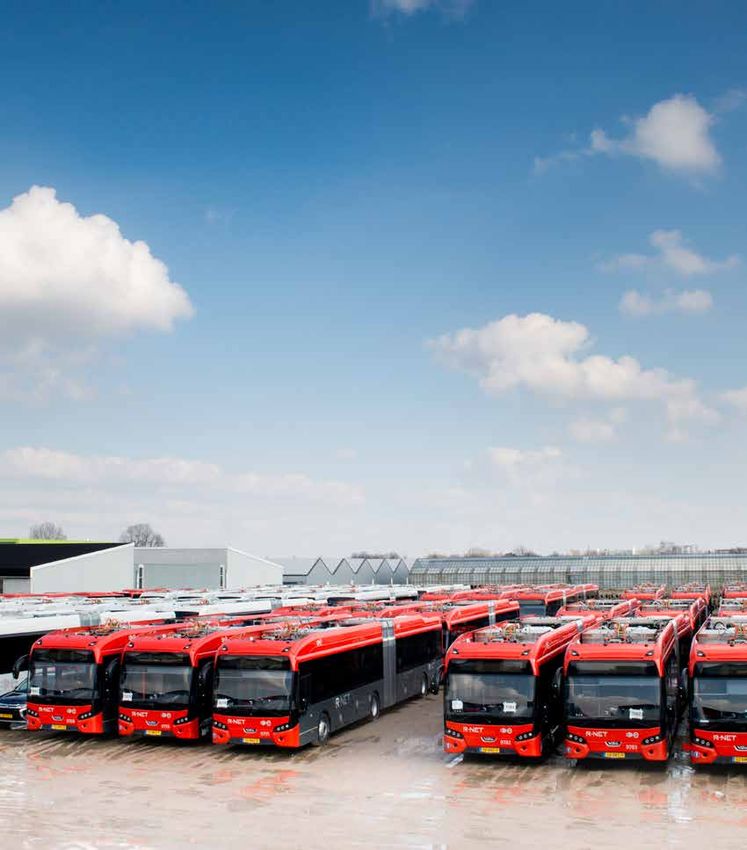
                                                                                      Europe’s largest fleet of electric buses

                                                                                                                            Amsterdam Region

Contract facts            Context                                                      Objectives
TRANSIT AUTHORITY
Vervoerregio              The Netherlands has made a concerted commitment              Transdev-Connexxion won the contract to operate
Amsterdam                 to achieving zero-emission transportation by 2025.           transportation services in the Amstelland-Meerlanden
                          As part of that initiative, the country unveiled its         region based on a three-pronged strategy:
PARTNER                   Green Deal energy policy in 2013, pledging support
Schiphol Airport                                                                       > Improve transportation services in a region where the
                          for innovative projects that protect the environment         already-dense population (over 1.3 M people) is set to
OPERATOR                  and boost the national economy. In this context,             grow 22% by 2040
Connexxion, Transdev      the Amstelland-Meerlanden region has, as of 2016,
Netherlands’ subsidiary                                                                > Provide a high-quality service for residents and
                          issued an RFP requiring the chosen partner to operate
                                                                                       visitors
CONTRACT START            a zero-emission fleet. This is one of the biggest
2016                      contracts in the Netherlands (worth an estimated             > Establish, as soon as 2021, a 90% electric bus fleet
                          €1.9 billion over 15 years), in a region that sits at the    and help Schiphol Airport meet its target of becoming
                          heart of the Dutch economy, with a bus fleet serving         climate-neutral.
Key figures               Schiphol Airport and the surrounding area.
Amstelland-
Meerlanden Region
300 km2
1.3 M inhabitants
                          Transdev’s answer
SYSTEM
                          A 24/7 service, 365 days a year                              An inventive recharging system for
R-Net serves              At the same time as the conversion to electric               uninterrupted service
communities in            vehicles, there was an overhaul of the transportation        A 24/7 service means that buses need to be on the
the Amstelland-           system. R-Net and SchipholNet provide a round-               road as much as possible. Transdev’s solution allows
Meerlanden area;          the-clock service. R-Net serves the communities of           them to top up in under 30 minutes at the terminal,
SchipholNet provides      Aalsmeer, Amstelveen, Haarlemmermeer, Ouder-                 with a complete charge done overnight (4-5 hours)
an airport-specific       Amstel and Uithoorn, providing several connections           at the depot. The buses will carry a 170 kWh battery
service.
                          to Amsterdam, Haarlem and Ronde Venen.                       providing a range of around 72 km between charges.
DISTANCE TRAVELED         SchipholNet is dedicated to airport services with            The pantograph charging system optimizes the space
Around 30 million km      more frequent shuttles.
a year
                                                                                       available inside vehicles and at depots while reducing
                          The solution uses spacious 18m articulated buses to          overall weight.
VEHICLES                  increase rider capacity.                                     The 500 drivers joined a zero-emission (ZE) training
259 including 100
electric buses in 2018
                                                                                       course that included a session on safe battery charging.
                          A zero-emission transportation system
313 including 266
electric buses in 2021    Since March 2018, Transdev has been operating 100
                          electric buses in the area around Schiphol Airport.
STAFF                     The fleet will be expanded over the next few years and
800 employees
                          will comprise around 90% electric buses by 2021.
                          Other initiatives introduced to promote sustainability
                          include fitting depots with solar panels and using
                          electric vehicles for on-demand services.
                          The electricity used to power buses comes exclusively
                          from renewable sources, mainly wind turbines.

                                                    Results
                                                    > 24/7 service, 365 days a year
                                                    > AML has Europe’s largest electric bus fleet, with 100 vehicles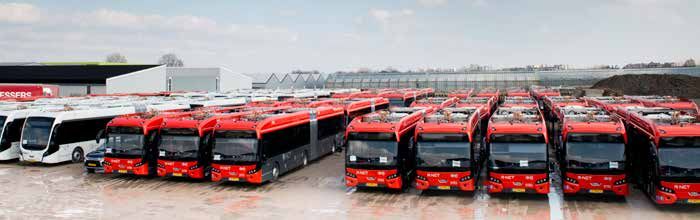
Eindhoven – THE NETHERLANDS
                                                                                                                     BRAVO(1) – A tailor made concession
                                                                                                                            serving zero-emission goals
© Rob Fritsen

                                                                                                                                                                      Eindhoven

                CONTRACT
                INFORMATION
                                             Context                                                                                        Objectives
                TRANSIT AUTHORITY            The Netherlands are engaged in a concerted process of transition                               > Develop a solid partnership
                Province of                  towards zero emission including the aim of rolling out fully electric fleets                   with the Province of North
                North-Brabant                by 2025. This aim is driven by the Government’s Green Deal partnership                         Brabant to shape the
                                             agreement designed to facilitate the emergence of innovative projects                          concession with ambitious goals
                CONCESSION                   to protect the environment and support the Dutch economy. The                                  in the areas of sustainability,
                COMPANY
                Southeast Brabant Bus
                                             State is working with public and private stakeholders (local authorities,                      innovation and mobility.
                Concession                   companies, research institutes…) to remove the barriers hindering                              > Reach zero-emission transport
                                             energy-saving projects. The Netherlands’ ambition is to become “an                             by 2025.
                OPERATOR                     international leader in smart and sustainable transportation(2)”.
                Hermes, a Transdev                                                                                                          > Strictly adapt the supply to the
                                             North Brabant wanted to apply this challenge in their Province and
                Netherlands subsidiary                                                                                                      demand.
                                             launched a call for tenders that requested high sustainable standards.
                CONTRACT START
                December 2016
                END OF CONTRACT              Transdev’s answer
                2025 or 2027                 Toward a fully electrical fleet                                         High frequency buses
                                             Transdev fully advocates innovations and zero                           Buses in Eindhoven and surroundings drive
                KEY FIGURES                  emission and has therefore invested millions of euros                   continuously, allowing a sort of tramway system,
                750,000 inhabitants          to make this concession succeed. With the set goals,                    both in transport opportunities as in appearance.
                                             this concession is one of the most progressive in the                   This model is called Evolance, related to Volans – the
                SYSTEM                       Netherlands and Europe.                                                 network of buses in the Province of North-Brabant.
                72 routes
                (7 of which are operated     Transdev bought 43 electric articulated buses in 2016.                  The 18 meter Evolance electrical buses have a high
                by electrical buses)         These articulated buses, similar in design to those                     frequent ‘show up and go’ time table system between
                1,528 stops                  used on BRT networks, provide Wi-Fi and contactless                     important destinations in Eindhoven, such as the
                                             card top up systems. The return on investment                           Airport and the High Tech campus.
                RIDERSHIP
                19.1 million trips in 2016   has been calculated taking into account the lower
                                             fuel cost and a strategy to increase route ridership.                   Valuable partnerships
                DISTANCE TRAVELLED           This rollout is closely monitored by TNO, Transdev                      To reach the described goals, the partnerships with
                15.3 million km in 2016      Netherland’s research partner, which will incorporate
                (including 3 million by
                                                                                                                     Brabant companies and universities, are crucial.
                                             the findings into the Transdev toolbox model. All                       During the years to come Transdev will develop
                electrical buses)
                                             the observations made from operating this fleet will                    with them, the most sustainable public transport
                VEHICLES                     encourage the Living Lab’s progress.                                    in the Netherlands. Partnerships have been
                218 buses of which                                                                                   established with amongst others VDL, Technical
                43 electrical buses
                                             Standard capacity buses will then be added in two
                                             additional phases to take the feet’s total to 203                       University Eindhoven, Fontys and Eindhoven
                STAFF                        buses by 2024. This offers Hermes the possibility to                    Airport.
                500 employees                investigate and test, together with local partners and
                                             bus manufacturer VDL, which zero emission buses
                                             are technically, functionally and economical the best
                                             possible option.

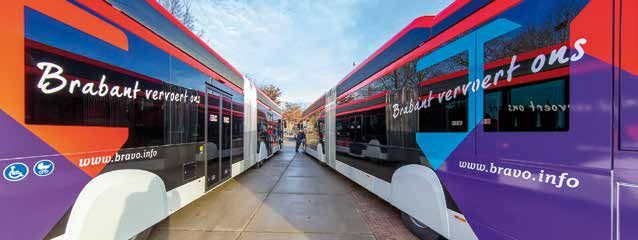
                                             (1) BRAVO stands for ‘Brabant Vervoert Ons’ meaning “Brabant transports us” and also “Brabant exalts us”
                                             (2) Sharon Dijksma, State Secretary of the Ministry of Infrastructure and Environment, May 2016, Electric Bus Living Lab, Eindhoven

                                                                           RESULTS
                                                                           > BRAVO is a pioneer in zero-emission bus fleets in Europe.
Île-de-France – FRANCE
Transdev
For eco-friendly, efficient mobility
Ile-de-France
CONTRACT
INFORMATION
Context Objectives
TRANSIT AUTHORITY Given its economic weight, the greater Paris area > Provide better transit coverage and connections to
Île-de-France Mobilités, (the Île-de-France region) is of strategic importance. large secondary hubs to balance out the inequality
Greater Paris Region The world’s top tourist destination, Paris and its in transit services available in the central business
metropolitan area are economically dynamic and districts and the suburban and peri-urban areas.
OPERATOR contain major research and academic clusters.
Transdev IdF > Make transit services more attractive and efficient.
Among all challenges, at the top of the list are
> Increase transportation capacity to relieve both
CONTRACTS housing and transportation. In this context, Île-de-
80 different contracts traffic congestion and overcrowded buses.
France Mobilités mission is to modernize and extend
operated on behalf of existing systems while improving passenger comfort. > Improve connections to the airports in the area.
Île-de-France Mobilités
35% of suburban peri-
urban bus/coach routes
Transdev’s answer
KEY FIGURES Transdev supports Île-de-France Mobilités policy Opening the first fully electric bus line in the
of bus services development in suburban and peri- region
SYSTEM urban areas in the greater Paris region:
11.7 million inhabitants Since December 2015, Transdev has been testing an
in 1,280 municipalities, > By providing its expertise in terms of identification electric bus on the R’Bus network between Argenteuil
including the city of of mobility flows and market analysis. and Sartrouville rail stations in the Paris region. Its
Paris > By counseling local governments on network batteries have sufficient range (250 km) to provide
NETWORK design issues in order to encompass all mobility daily service without the need for recharging. In
Fixed routes needs. addition to the electric mini-buses already operated
Express services by Transdev in Île-de-France (Rambouillet and
On-demand services Express Lines: improving mobility in Île-de- Coulommiers), the aim is to propose a fully electric
France route to the Île-de-France Mobilités transit authority
RIDERSHIP
185 million by the end of 2018.
As one of the major transit operators in the greater
passengers/year Paris region, Transdev manages most of the Customer feedback about this test vehicle has been
Regional Express Lines in close partnership with very encouraging. Key points highlighted are the fact
VEHICLES
2,700 buses and Île-de-France Mobilités. that is quiet, modern and comfortable. This feedback
Support Vehicles supports the case for the expansion of zero emission
The Express Lines are operated according to the fleets in dense urban areas.
highest standards in the industry: high quality of
service, real-time passenger information, on-board Special training modules are being delivered for
entertainment and high-profile interior design of drivers in the areas of operations, safety and charging.
vehicles are some of the distinctive attributes of The maintenance teams have undergone specific
these lines. electrical trainings and the depot will be equipped
with a smart charging system calibrated to meet the
operation needs, preparing the future expansion of
our electrical fleet in the network.
RESULTS
> Successful launch of the first fully electric line in the Paris Region to be operated
with standard vehicles.Barcelona – SPAIN
TRAM – A demanding environmental management
for a more sustainable transit system
Barcelona
CONTRACT
INFORMATION
Context Objectives
TRANSIT AUTHORITY In 2002, the city of Barcelona developed its Agenda > Help Barcelona achieve its target to reduce
Autoritat del Transport 21, intended to change behaviors and involve greenhouse gas emissions by 1% per year, by
Metropolità de citizens in favor of sustainable development. proposing a clean and efficient transit system.
Barcelona (ATM) In support of this, TRAM, which operates the two > Optimize the operational energy consumption of
sections of the light rail system Trambaix and the light rail system and its environmental benefits.
CONCESSION
COMPANY
Trambesos, designed its Energy Efficiency Plan for
Tramvia Metropolità SA the 2013-2015 period.
OPERATORS
Transdev (66%),
Moventis (34%)
Transdev’s answer
CONTRACT (Public- Certification means of action integrated with its new Energy
Private Partnership) Efficiency Plan.
> TRAM has a comprehensive quality system,
Operation and including ISO 9001, EN 13816 and OHSAS 18001 > Different actions have been carried out such as:
maintenance of two
light rail lines, certifications. • Installation of a control station to measure and
Trambaix and > In 2006, the system obtained and has since manage energy consumption on four light rail
Trambesos maintained ISO 14001 certification for its vehicles (two on the Trambesos line and two on
CONTRACT START environmental management system, after the Trambaix line);
2000 working closely with maintenance teams and • Launch of a new eco-driving system;
subcontractors.
CONTRACT DURATION • Optimization of the light rail vehicle air
28 years > Internally, this certification is accompanied with
conditioning system;
daily and monthly reports which now integrate
the most demanding environmental procedures • Fitting of an LED lighting system at stations;
KEY FIGURES and managerial standards. • Installation of an intelligent lighting system in
SYSTEM the light rail depots.
6 light rail lines Internal audit and resource management > A new Energy Efficiency Plan for the period
30 km of light rail
56 stations > Transdev has conducted a complete internal 2017-2020 is being established in order to improve
environmental audit through which it was able energy consumption and CO2 emissions, as well as
RIDERSHIP to identify points for improvement and determine actions to lower water consumption.
26.8 million trips in 2016
DISTANCE TRAVELLED
2.59 million km in 2014
VEHICLES
41 light rail vehicles
STAFF
209 employees
RESULTS
> The implementation of the actions in the Energy Efficiency Plan 2013-2015 have
resulted in a 4.5% energy consumption reduction to 628,000 kWh/year, as well as
a reduction of CO2 emissions to 168 tons/year which is well under the target of 213
tons.
> The light rail fleet uses a water recovery and recycling system during maintenance,
representing a saving of 70% of water consumption for each vehicle cleaned.Ouest Étang de Berre – France
Autocars ALIZÉS – Environmental progress and biodiversity,
the cornerstones of a committed strategy
étang
de berre
CONTRACT
INFORMATION
Context Objectives
TRANSIT AUTHORITY Ouest Étang de Berre is a rural farming region made > As an operator, to limit the energy footprint
Aix Marseille Provence up of areas of outstanding biodiversity (protected of our activities and reduce greenhouse gas
Métropole areas of environmental value, protected wetlands, emissions.
natural habitat). It is also heavily impacted by > Devise and implement an innovative approach
OPERATOR industrial, port and logistics activities, sources of high
Co-contractors in favor of biodiversity.
Autocars Alizés and
levels of road and marine traffic.
Transdev Istres,
subsidiaries of Transdev
END OF CONTRACT
Transdev’s answer
2019 Our enhanced CSR ambition • in terms of resources (monthly monitoring of
MANAGED ACTIVITIES water and electricity consumption).
The CSR policy established by the Autocars Alizés
Fixed routes (buses,
system hinges on 4 key objectives, as a “responsible” > Transdev signed the Objective CO2 Charter
coaches), school of the French Road Transportation Operators,
transportation, company:
focusing on the following themes:
transportation on > playing a part in local life,
demand. • management (optimization of energy, water
> managing our environmental footprint, and paper resources in the company),
> promoting social dialogue and inclusion throughout • drivers (raising awareness of effective use of
KEY FIGURES
our employees’ professional life, air conditioning and heating in vehicles),
104,000 inhabitants > listening and responding to our stakeholders’
served • fuel (monitoring of consumption per
(Ulysse system: expectations. type of vehicle and associated preventive
177,000) As part of the local community, Transdev actively maintenance actions),
SYSTEM participates in the yearly «Clean Istres» initiative, • vehicles (motor oil analysis on all new
13 fixed routes where all environmental stakeholders get together vehicles).
1 downtown minibus on a massive cleaning event, followed by a festival
2 summer lines focusing on environmental issues.
Supporting protection of biodiversity
5 TOD sectors In partnership with CDC Biodiversité, a
44 school routes Environmental performance specialized subsidiary of Caisse des Dépôts
RIDERSHIP > Implementation of an action plan: Group, Autocars Alizés has developed a project
2 million trips in 2016 involving the environmental restoration of an
• in depots (reduction of lighting of installations and abandoned road to a green pathway. The project
STAFF offices, installation of low voltage bulbs),
164 employees has received a favorable opinion from local civil
(including 112 drivers) • with staff (challenge for sustainable development servants, and is currently being presented to
week, selective recycling), local authorities.
RESULTS
> 9% reduction in electricity consumption in depots.
> 2% reduction in the operation’s overall water consumption.
> Creation of a “paperless” best-practice policy.
> Renewal of triple AFNOR certification in 2017.Dublin – Ireland
LUAS – An activist and committed system
Dublin
Contract
information
Context Objectives
Transit Authority In the 2016 strategy “Transport Strategy for the Greater > Reduce carbon emissions associated with LUAS
Transport Infrastructure Dublin Area” published by the National Transport energy usage by 2% across Service Delivery
Ireland Authority it was stated that “The strategy must promote (Operations and Maintenance).
Operators [...] transport options which provide for unit reductions > Achieve and maintain ISO 14001 status.
Transdev in carbon emissions and [...] reduce car use”. In 2016 TII > Achieve and maintain the ‘Business Working
Dublin Light Rail Limited drafted the “Dublin Light Rail Sustainability Plan 2016- Responsibly Mark’, Ireland’s only certification for
2020” to guide the implementation of sustainability responsible and sustainable business practices.
Contract Start initiatives to assist in reducing the environmental
2014 (held since 2004) > Educate commuters and the wider population
impact of the LUAS operation with regards to energy
Contract Duration of Dublin on the environmental benefits of public
consumption, resource usage and waste reduction.
5 years transportation.
Key Figures Transdev’s answer
1.2 million people served Sustainability evidence of its organized and systematic approach to
Transdev developed the Eco-Calculator online tool reducing its environmental footprint.
System
2 lines to allow passengers to measure their CO2 emission > Transdev publish an annual Corporate Social
37 km of track savings for each personalized trip. The calculator uses Responsibility report. That report includes an
54 stops travel indicators to calculate global network efficiency environmental performance update and is sent to all
6 Park & Rides compared to individual car use on the same route. stakeholders. It can also be found on the Transdev
Ridership (approx.) Transdev has developed an energy and resource Ireland website.
34 million passengers/year management program that provides in-depth
93,000 trips/day Awards related to Environment
visibility of the following:
Transdev Dublin has been awarded multiple times for
Vehicles > Water consumption (depots, offices and tram wash);
66 vehicles its involvement toward environmental matters:
> Electricity consumption (trams, stops, park and
• 2016 Logistics and Transport Awards - Green Mover
Staff rides, depots and offices);
Award
320 staff (190 drivers) > Gas consumption (depots and offices);
• 2016 REPAK Ireland PAKMAN Awards - Green
> Waste generation (depots, offices, stops and trams). Transport of the Year Award
This allows for more precise targeting of energy and • 2015: Green Transport Award
resource saving initiatives and campaigns. • 2013: finalist in the Sustainable Energy Awards in the
Investing in Environmental Research Research Category
Transdev Dublin and RPA co-funded a research project • 2012: finalist in the Sustainable Energy Awards for
of the Dublin Institute of Technology, entitled ‘An Energy Efficiency and Energy Awareness
investigation into options for reducing energy in the • Since 2012, Transdev has been awarded the
operational phase of a light rail system’. The collaboration ‘Business Working Responsibly Mark’, indicating
between the public sector, the private sector and excellent business practice across workplace,
education was a very innovative aspect of this initiative. marketplace, environment, community and
management and communication
Certified network • 2011: finalist in the Green awards category “Green
> Since 2004, and most recently recertified in April Travel Initiatives” and highly commended in the
2017, Transdev has been awarded and maintained the 2011 Light Rail Awards, category “Environmental
ISO 14001 certificate for environmental management, Initiative of the Year”
Results
> In 2016, Transdev Ireland signed the Business in the Community Ireland COP21
Commitment & Call for Action making commitments to further reduce grenhouse
gas emissions.
> Water consumption -41% since 2010.
> Recycling Rate 25% versus 8% in 2010.
> Electricity consumption (kWh/passenger) -15% versus 2010.
> 5 times less CO2 than a private vehicle on the same route.
> +55% ridership increase between 2005-2016.La Rochelle – FRANCE
Yelomobile – Fully electric vehicles
for a new era of clean transportation
La Rochelle
CONTRACT
INFORMATION
Context Objectives
TRANSIT AUTHORITY A forward-looking and enterprising city, La Rochelle > Achieve objectives of an ambitious Transportation
Communauté has always encouraged new solutions for green Strategy by reducing car traffic in the city center
d’Agglomération de mobility and proposed innovative alternatives. Self- by 10% and transportation-related greenhouse gas
La Rochelle service bike sharing was introduced in 1976, followed emissions by 20% by 2020.
OPERATOR by the “journée sans voiture” (car-free day), in 1997, > Propose a whole array of electromobility services for
Proxiway, a Transdev the solar-electric sea bus in 1998 and electric car- goods and passengers which are fully integrated into
subsidiary sharing in 1999. More recently, La Rochelle has signed the public transit system.
CONTRACT START up to major European programs, such as Thermie
> Remain a pioneer in experimentation with advanced
2006 and FP7, confirming its position as a showcase of
clean transit systems.
CONTRACT DURATION sustainable mobility in Europe.
12 years
ACTIVITIES MANAGED
Electric car-sharing Transdev’s answer
Urban Dispatch Center
Electric P+R shuttle Yélomobile – Shared electric vehicle Elcidis – Goods keep our cities alive
Experimentation with Proxiway, Transdev’s subsidiary in charge of the The ELCIDIS logistics platform set up under the
electric cyber-mobility development and sustainability of the car-sharing European Thermie program is intended to reduce
system, is supporting the local transit authority with the negative external costs of the delivery of goods
KEY FIGURES its wide-ranging expertise: in a dense urban environment. Proxiway assists:
80,000 inhabitants > Advising on the renewal of the vehicle fleet: > The fleet optimization, through the use of smaller
car manufacturer tenders compatibility analysis with capacity vehicles that are more environment
Yelomobile
existing system, qualitative user tests; friendly;
Implemented: 1999
13 stations > Developing intermodality with the Yélo public transit > In limiting and improving flow of car traffic in
28 Citroën CZéro system: a single card to travel on the whole transit the city center, thus improving the punctuality of
18,756 trips system and hire a vehicle; deliveries.
168,114 km > Updating the information system managing the
P+R SHUTTLE whole customer experience: information
New electric mobility offers
Implemented: 2003 (availability of fleet), season tickets, tracking of usage > Using electric cars, Yélo by Night assures the
One 47-seat full-electric continuity of public transit services on Thursdays,
Oréos 4X
(kilometers, time spent on board, etc.) and billing;
Fridays and Saturdays from 9pm to 6am the next
Frequency: ~ 10 min > Promotional fares for business and tourist customers.
day. It also operates the night before holidays.
ELCIDIS P+R electric shuttle – The relaxing way to get > Since September 2016, Transdev operates ferry
Implemented: 2001 services in the bay area. Equipped with latest
2 Citroën, 1 Modec, 1 Gruau into the city
technology, ferrys are electric and solar powered
12,920 deliveries Responsible for the operation of an electric shuttle
(1,300 tons) in 2016 through installed capacity generating panels.
between a Park & Ride site on the outskirts and the
Yélo by night: city center, Proxiway helps to:
2,424 trips > Maintain continuity of service by optimizing the
4,427 passengers charging of vehicles;
> Ensure an intermodal service for the Jean Moulin
Park & Ride (single ticket).
RésultatS
> Yélomobile: 708 tons of CO2 avoided, 231,200 liters of fuel saved (2014).
> Elcidis: 46,668 liters of fuel saved, 159 tons of CO2 avoided.
> P+R shuttle: 671,734 quiet emission-free kilometers.
> Transition of ferry operations in 2016 carried out with success.Nantes – FRANCE
SEMITAN – An energy and ecological transition
flagship, driven by constant innovation
Nantes
Barcelone
CONTRACT
INFORMATION
Context Objectives
TRANSIT AUTHORITY Since 1979, the Nantes urban area has distinguished > Develop innovative and effective technical and
Nantes Métropole itself for its ground-breaking approach and strong commercial solutions to optimize modal shift.
OPERATOR
commitment to clean public transit (reintroduction of > Guarantee efficient maintenance to ensure return
SEMITAN (14.99% light rail, massive use of NGV – Natural Gas Vehicles – on investments.
Transdev) hybrid buses).
> Ensure transit solutions that have a positive
CONTRACT (SEM)
SEMITAN (Société d’Économie Mixte) works alongside impact on climate change and energy mix by a
Operation and the city in implementing its transit improvement CO2 emissions reduction plan, the development of
maintenance of transit projects and solutions with the least environmental electric buses and the introduction of hydrogen
system (light rail, Busway, impact possible. buses.
BRT, bus), Customer
Relations, Sales and
Marketing, delegated
project management Transdev’s answer
mandates To encourage modal shift, a transit system of The signing of the charter illustrates SEMITAN’s
CONTRACT START excellence commitment to reduce greenhouse gas
1979 emissions and is based on a three-year action
> Since 2006, Nantes Métropole and SEMITAN have planning focusing on vehicles, energy use,
been diversifying the service offering and boosting human aspects and organization.
KEY FIGURES the performance and therefore the appeal of the
24 towns served urban area transit systems: Innovations and pilots
600,000 inhabitants • Implementation of Busway (one of the first French
524 km2 > SEMITAN has been operating hybrid buses since
BRT) in 2006, 2013 (6 in 2015) and is preparing for the imminent
SYSTEM • Then 7 additional Chronobus lines between 2012 introduction of electric BRT services.
3 light rail routes over 43 km and 2013
6 km of Busway > SEMITAN and Mission Hydrogène are
77 km of Chronobus • With a frequency of 3 minutes for the Busway, coordinating a project for the development
97 light rail/Busway 5 minutes for Chronobus of hydrogen power in mass transit, via the
stations > In terms of light rail, SEMITAN offers a high level of development and implementation in 2015 of a
2,400 stops performance (94% on-time performance, commercial river shuttle pilot (NAVHYBUS) powered by a
speed of 20km/hr, frequency of 82 vehicles per peak hydrogen fuel cell.
RIDERSHIP
133,5 Million passengers/ hour at the crossover of the 3 lines in the city center).
year in 2016
Environmental commitments
DISTANCE TRAVELLED
28 million km/year > In 2015, SEMITAN is the first big urban transit
system in France to sign the “Objectif CO2”
VEHICLES charter with the government (DREAL; the
91 light rail units
380 buses, 90% NGV Department of Regional Environment, Planning
& Housing, and ADEME, the Environment and
STAFF Energy Management Agency).
(bus & tramway)
1,800 employees,
of which 1,200 drivers
RESULTS
> A system showcasing French public transit know-how (multimodality, ridership,
quality of service).
> 195 journeys per inhabitant, per year, 2nd highest rate in France.
>A n exemplary transit system that is at the forefront of climate change and energy
mix with already a very limited use of diesel which currently only accounts for a
few % of the bus fleet.New Orleans, LA – United States
Committed to the environment
and local communities
New Orleans
Contract
information
Context Objectives
Transit Authority After Katrina hit New Orleans in 2005, the city implemented a holistic > Developing an efficient and attractive
New Orleans Regional strategy for a sustainable recovery of New Orleans, the GreeNOLA system with ambitious ridership
Transit Authority plan. This comprehensive approach aims to reconstruct in a better objectives and a greener fleet
Operator and more sustainable way. > Strong Environmental Management
Transdev As the partner for the New Orleans RTA, within the Public Private Systems
Contract start
Operating Partnership, Transdev is committed to delivering safe, > Usage of sustainable systems and
First Delegated innovative and environmentally-friendly solutions. We strive processes dedicated to consumption
Management contract to create strong social and environmental partnerships in the monitoring and reduction
in the USA communities we serve.
Signed in 2009
Key Figures Transdev’s answer
378,000 inhabitants Greening fleet and infrastructure An Environmental Management System
served > To implement a genuine environmental
194 km²
> In order to reduce the footprint of our fleet, we
have: management system, the following legal, regulatory
SYSTEM and procedural developments have been undertaken:
• particle traps installed on emissions systems for
5 streetcar lines • An environmental filing system;
34 bus routes
the entire revenue fleet (part of storm-related fleet
replacement); • Legal and regulatory systems and required training;
RIDERSHIP • Nitrogen tire-fill program installed for use in all • RTA-specific Environmental Management System
18.7 million passenger
trips/year vehicles; (EMS) & Compliance manual;
• An onboard engine operation / driver interface • An inventory of Standard Operating Procedures
VEHICLES system (ANGO): 4 test vehicles; developed for individual RTA shops.
138 buses
66 streetcars > As for infrastructure, we make efforts in the
Eco-driving: accidents and CO2 emissions
60 paratransit vehicles following fields:
10 minibuses
reductions
• Conversion from naphtha to aqueous-based
STAFF washing solvent; > Transdev now uses the SmartDrive system, which
726 Employees in total, includes instant driver feedback, event recording
• Implementation of recycling program at NORTA
including 375 bus and and tracking, idle thresholds, and a driver training
facilities;
streetcar operators. program individually tailored based on data generated
• Motion-sensor light switches installed in the offices from the system.
at Canal Street;
This program, initially designed to decrease accidents,
• Campaign launched to substitute T-12 bulbs / also allows fuel savings.
ballast with T-8 bulbs / ballast during routine lamp
> We have started a formal eco-driving program that
replacement.
allows drivers to gain points for various prizes for
improving their fuel efficiency while on the road.
Results
> Ridership on the RTA (all modes) has grown an astounding 62% since 2009, greatly
surpassing the population growth of 13% in New Orleans.Rouen – FRANCE
TCAR – An environmental game-changer
with energy expertise
Rouen
CONTRACT
INFORMATION
Context Objectives
TRANSIT AUTHORITY To combat climate change more effectively, Métropole > Make the transit system more effective and
Métropole Rouen Rouen Normandie (MRN) intends to put mass transit at attractive to increase ridership of all inhabitants of
Normandie the heart of its “Agenda 21”. the metropolitan area.
OPERATOR As MRN’s partner, TCAR is supporting the local > Implement new sustainable fuel solutions for the
Transports en commun government in its ambitious “green energy mix” project bus fleet.
de l’Agglomération and its objectives to reduce transportation-related > Provide measuring tools to steer environmental
de Rouen (TCAR), pollution emissions and develop sustainable eco- performance.
Transdev subsidiary mobility.
END OF CONTRACT
2025
ACTIVITIES MANAGED Transdev’s answer
Light rail, bus, school Development and reorganization of the system Environment-friendly vehicles to make Rouen
transportation,
transportation on > Transdev is assisting local decision-makers in
a green city
demand for persons restructuring the system, in order to reduce > Rouen’s light rail units are fitted with regenerative
with reduced mobility polluting emissions and better serve passengers. braking systems.
By reorganizing services, Transdev was able to optimize > Transdev is working in partnership with Rouen on a
KEY FIGURES the kilometers offered while better meeting passenger greener landscape program, to improve quality of life:
needs. • more attractive transit services,
415,000 inhabitants
In September 2014, 5 FAST lines were implemented, • pedestrian spaces,
SYSTEM enhancing the level of service offered. • better accessibility,
2 light rail routes > Transdev plays an important role during big events like • development of 15,000m2 of landscaped green spaces
with 1 joint section
23 fixed bus routes
the Armada, promoting green travel by guaranteeing on the light rail route.
3 BRT routes better accessibility of mass transit and deploying
5 FAST routes incentive-based policies, resulting in a 155% increase in
33 school routes ridership during the event.
1 Noctambus route
Expertise in alternative fuels
RIDERSHIP
51.5 million passengers > Transdev assisted and advised MRN in an extensive
in 2016 evaluation of alternative fuel solutions, with the aim to
reduce greenhouse gas emissions, procurement and
STAFF
1,174 employees, servicing costs. 70% of the fleet now runs on biodiesel.
of which 723 drivers Electric buses experimentations are also conducted in
the network since 2016.
RESULTS
> Development of an optically guided high frequency transit system which cuts net
annual CO2 emissions by 2,550 tons, on three BRT routes.
> 15% cut in CO2 emissions and a 30% reduction in fuel consumption.
> A light rail ride in Rouen emits 21.5 times less CO2 than the same ride in a private
vehicle.
> 80% of the electricity generated when braking is recovered and injected back into
the system.GREEN DEPOTS
REFERENCE
COUNTRIES
Challenge
United States Transdev does not generally own the infrastructure it uses. It operates its transit services from a variety of
> L eesburg Bus Depot, different buildings and depots, some old, some new, some in the city center and others in industrial areas, with
Loudoun County some services or routes in environmentally sensitive areas. Whatever the local situation, Transdev is committed
> L extran Bus Depot, to programs aimed at proposing the most efficient state-of-the-art infrastructure, building innovative new
Lexington, Kentucky depots or guaranteeing the most sustainable management possible of inherited depots.
France
> R omainvilliers Bus Transdev’s “green depots”
Workshop & Offices,
Ile de France region Transdev has developed a strong expertise in building, operating and maintaining Green Depots along with
> B regaillon Depot, suppliers, financial partners and Public Transit Authorities. Our High Environmental Quality depots are easily
Toulon recognizable through one or more of the following criteria: low-energy buildings, water recycling systems, solar
panels, green walls, waste recycling processes and introduction of sustainable and eco-friendly materials.
Green depots are also recognizable by their results: depending on the project, energy gains can be of 25% to
60% in comparison to standard depots, and water consumption reduced by 1/4 to 1/3.
Depots at the forefront of environmental standards
In France, the Romainvilliers workshop/office in Île-de-France, designed by Transdev, is the first building
of this type to receive French HQE certification, so the 2,700 m2 building meets the energy performance
requirements of low energy buildings. It saves on clean water use and is built of environment-friendly materials
(ecoconstruction), while at the same time being a pleasant living environment.
In Loudoun County, USA, Transdev manages the Leesburg Depot. With a total surface area of 8,528 m², the depot
is in the process to obtain a Silver LEED certification, a green building certification program by the U.S. Green
Building Council that recognizes best-in-class building strategies and practices. The Leesburg site uses heat
pumps and geothermal wells as well as solar heating for water.
Buildings producing their own energy and managing their consumption
In Toulon, France, the “new generation” Bregaillon depot includes air and energy management functions
controlling consumption and producing clean electricity (solar panels). In addition, the building was also
designed to ensure more sustainable management of water: recovery of roof water and water from washing
buses…
PERFORMANCE
> Buildings meet low energy building standards, compliant with Factor 4 of the French
Climate Plan.
> Annual saving of 9.7 tons of CO2 in Toulon.
>W ater recovery: equivalent to annual consumption of 67 to 130 people in
Romainvilliers.ECO-DRIVING
ASSISTANCE SYSTEMS
Deployment Challenge
23 transit systems
equipped worldwide Fossil fuels account for a significant majority of the energy used by land-based mass transit. To do their part in the
fight against climate change, public transit operators must respond to the challenge of limiting and minimizing
Using 15 different
brands of eco-driving the impact of such fuels by reducing their consumption. This can be done in several ways, particularly through
technologies the involvement of all team members in a policy of sustainable development and eco-driving efforts; applying the
principles of responsible, green-driving over the long-term. In addition, eco-driving is also part of a wider effort
Over 5,000 vehicles to lower accidents and maintenance costs. On this topic, Transdev is able to contribute global, multi-system and
(both rail and road) multimodal experience and offers transit authorities the solutions most adapted to their local context.
fitted with eco-driving
assistance systems
4,500 road vehicles Transdev’s eco-driving assistance systems
fitted with safe driving
assistance system (USA) To validate the best systems and create a breadth of experience on a global scale, Transdev has tested more than
fifteen tools, within its operations worldwide for the three key modes of travel: road, rail and sea.
These systems are intended to provide direct assistance to drivers by displaying real-time performance information on
the control panel then by printing periodical monitoring records to allow a subsequent analysis of driving behaviors.
At the same time, specific training modules have been developed by the Group and are dispensed to drivers by local
training services.
The key advantages:
> Contributes to manage energy consumption;
> Raises employee awareness of safety incidents and accident rates;
> Helps reduce maintenance costs;
> Enhances the customer experience.
Agile monitoring systems
> In Netherlands, Connexxion installed the device Sycada in 2013. The objective of the program is, by influencing
the driver, to provide a comfortable journey, save fuel and thus protect the environment. In 2016, this device
was installed on 1,500 vehicles and the drivers have saved a total of 4.7 million liters of fuel which is 25% of total
savings. In addition, it has resulted in decreased vehicle damage and improved on-time performance.
> In France, Transdev has deployed the eco-driving assistance system ACTIA since 2015. The driving information
and the GPS location are collected in real-time. This system transforms this raw data into client comfort and
consumption scores with an individulized compensation system. ACTIA is entirely deployed in the Transport
Rapides Automobiles network (220 vehicles) and has allowed a fuel reduction since 2015.
> In Sweden, Transdev installed the Blue Flow system on its ferries in 2010 to help captains optimize their energy
consumption. The information can also be analyzed ashore, afterwards and during the run. In 2016, this system
was installed on 13 ferries and allowed the saving of 20 to 25% fuel consumption.
> In response to the Swedish success with Blue Flow, Australia decided in 2016 to equip its vessels with the system in
Brisbane and Sydney. Assisted by the Swedish colleagues the system is showing promising results and will be part of
a concerted effort during 2017 to improve fuel consumption, safety performance, and customer satisfaction.
Driving assistance training programs and incentives to encourage better performance
The deployment of such systems always go along with driver training. Drivers are further involved in the process
through incentive systems rewarding the best performance, while guaranteeing the confidentiality of individual
performance (Connexxion group).
PERFORMANCE INDICATORS
>R eduction in fuel consumption: 9.3% in the Connexxion operations in the Netherlands
in 2016, and 20-25% in Sweden over the past 7 years. Blazefield, UK reported fuel
savings of €190,000.
>T ransdev North America has been able to reduce high risk behavior events by 55%
since the inception of the SMART Drive program.
>R eduction of maintenance costs.
> I mprovement of passenger comfort.“FULLY-ELECTRIC”
VEHICLES
FULLY-Electric
Vehicle
Challenge
Deployment Given the challenges of climate change and the share of land-based transportation in global greenhouse emissions
7 countries (over 15%), transit operators must take their responsibility in the aim for sustainable mobility. The use of electric
27 locations vehicles appears to be an increasingly credible solution to the use of fossil fuels, especially for urban mass transit
Charging/battery where matters of vehicle autonomy and speed are less of an issue than for intercity or long-distance services.
technologies: Transdev is at the very forefront of the development of different “fully electric” solutions. By so doing going
>O vernight charging beyond conventional and hybrid vehicles, and offering its clients the benefits of the widest possible array of
>W AVE Inductive charging experiences.
>C onductive Opportunity
>H
charging
ydrogen fuel cells
Transdev’s “fully-electric” vehicles
In order to validate the best systems and offer a diversified range of experiences, Transdev is piloting three fully
electric mobility solutions in pre-operations and actual operational mode.
City center micro-shuttles
The shuttle solution has been thoroughly tried and tested, the technical performances being ideally suited
to operating conditions. Transdev is currently the leading operator in France of this type of vehicle with over
40 micro, mini and midi buses, i.e. 42% of the French fleet.
Pros: all the advantages of electric solutions (silence, flexibility, no gas emissions…), especially small highly
accessible vehicles which are perfectly suited for urban environments.
Cons: costs still 40 to 50% higher than diesel drives. The capacity and range limits are not a drawback given their
use in short urban circuits.
Autonomous battery buses
The fully electric bus solution is quickly developing as issues of battery weight and capacity are being successfully
addressed.
Under the Finnish national program “EVE” (Electric Vehicle) 2011-2015, Transdev Finland tested T.ebus, fully-
electric urban buses in commercial operation conditions and a challenging climatic environment (-25° and snow
to +30°), on some routes in Espoo, in the greater Helsinki area.
In 2016 Transdev purchased 43 electric articulated buses to be implemented in the Bravo network in North
Brabant, Netherlands. Standard capacity buses will be added in two additional phases reaching the goal of a fully
electric fleet by 2025.
Opportunity charging buses with fast charge en route
This third solution is perfectly suited to the constraints of an urban environment which allows permanent
“refueling” all along the routes and throughout the day.
In November 2014, Transdev participated in a pilot (the first in France) of the first fast charge electric bus at Nice
Côte d’Azur airport. The WATT solution did not require any dedicated infrastructure other than the “posts” that
both store and transfer the energy. Placed next to the bus stop or integrated into them, they were supplied by
the low voltage electricity system which charges the super-capacitors they are fitted with.
In October 2017, Transdev will have 13 conductive opportunity charged standard buses in operation out of the
Arcadia facility in the eastern part of Los Angeles, USA. In Umeå, northern Sweden, the city’s nine rapid charging
electric buses are particularly suited to the extreme temperatures in this part of the country. With 33 electric
buses in 2019, more than half of Umeå’s fleet will be electric.
Pros: high capacity range with a relatively simple infrastructure: not all the stops have to be fitted with a charging post.
PERFORMANCE INDICATORS
>R eduction of greenhouse gas emissions and air pollution.
>R eduction of noise and vibration of heat engines.
> I mprovement of driver and passenger comfort.
>O perating performance now very similar to diesel solutions.You can also read


