EP Prof Alex Coles - University of Huddersfield Research ...
←
→
Page content transcription
If your browser does not render page correctly, please read the page content below
EP
Prof Alex Coles
EP Prof Alex Coles
Project
    Description
                  The book EP Vol. 2 Design Fiction is the second in a
                  critically underpinned three-book series of publications
                  that fluidly move between art, design and architecture.
                  The series creates a discursive platform between
                  popular magazines (‘single play’) and academic journals
                  (‘long play’) by introducing the notion of the ‘extended
                  play’ into publishing with thematically edited pocket
                  books as median. Professor Alex Coles was the sole
                  editor of EP Vol. 2 Design Fiction with sole responsibility
                  for selecting the submissions for inclusion and for the
                  underpinning process of investigation.

                  Key Outcomes:
                  EP Vol. 2 Design Fiction (Coles ed.)

                  Project Duration:
                  EP Vol. 2, 2016

                  Funder:
                  EP Vol. 2 £10k Creative Industries Fund, Rotterdam.

                  Research Partners, consultants, collaborators:
                  EP Vol. 2 Jan Van Eyck Academy, Maastricht.

2                                                                  3
Research Aims
& Objectives
          Research Aims:
          Through a series of books to:

          •   Create a transdisciplinary publication series.

          •   Develop a unique form of editing that balances text and image.

          Research Objectives:
          •   To identify key moments where art, design and architecture
              trigger a previously overlooked creative dialogue.

          •   To collaborate on the art directing of the series with an
              innovative graphic design team.

     4                                                                         5
Research
Context
Leading publications in the arts tend to focus exclusively on a
particular discipline: Afterall - art; The Grey Room – architecture;
Icon - design. With the EP edited-book series, the intention was
to change that by working across all three disciplines. In this
sense EP is the latest part of Coles’ ongoing research into the
relationships between creative disciplines which began in 2005
with a focus on the interdisciplinary dialogue between art and
design (explored in the books ‘DesignArt’, Tate Publishing, 2005,
and ‘Design and Art’, MIT Press, 2007) and in 2012 developed
into an analysis of the transdisciplinary dialogue between art,
design and architecture with the book ‘The Transdisciplinary
Studio’ (Sternberg Press, 2012). The research process of ‘The
Transdisciplinary Studio’ was characterised by dialogue with
creative practitioners by conducting embedded research,
which led to the finding that transdisciplinary approaches are
only possible through close collaboration. From this came EP,
underpinned by a number of further articles and papers on the
significance of the transdisciplinary as a method for engaging
the disciplines of art, design and architecture simultaneously.
After the first EP volume on the activities of the early Italian
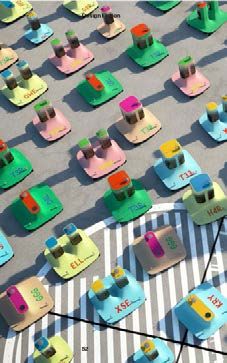
avant-garde, the second volume in the series EP Vol. 2 Design
Fiction identifies the current fascination with fiction across art,
design, and architecture. Practitioners and theorists explore
this strategy by pushing the debate into both speculative and
real-fictitious terrains. Newly commissioned interviews, artist
projects, and essays shed light on topics such as parafiction
and algorithmic ambiguity. Included in the volume is one of the
final interviews to be published with novelist and semiotician
Umberto Eco; a conversation with Bruce Sterling, in which the
science-fiction author responds to designers who reference his
writings; and design theorist Vilém Flusser’s 1966 essay ‘On
Fiction,’ in its first English translation. The full contents list of
EP Vol. 2 Design Fiction appears on page 5 of this document.
The third book in the series EP. Vol 3 Post Craft co-edited by
Alex Coles and Catharine Rossi will be published by Sternberg
Press in 2021.
6 7Research Methods
& Process
To offer a new approach to publishing and a platform for creative
practices that fall between traditional understandings of art, design
and architecture, each volume of EP identifies a key moment or
thematic in which there is a creative dialogue between the three
disciplines. By placing both leading and emerging practitioners,
curators, and theorists from across art, design and architecture
alongside each other, EP brings diverse agents within the creative
economy into contact for the first time.
In order to achieve its aims, the editorial process begins with
identifying a suitable partner. For EP Vol. 2 Design Fiction this was
the Jan Van Eyck Academy, Maastricht. To arrive at the volume’s
theme of design fiction, first a non-public seminar was held with
researchers and staff from the Jan Van Eyck Academy. Once key
individuals within the cohort had been identified, two public seminars
followed that further developed the theme. A joint successful £10k
funding bid to the Creative Industries Fund (Netherlands) was
made with the Jan Van Eyck Academy to support the travel costs
associated with both our ongoing editorial meetings and then
the commissioning of each chapter. At this point, EP’s editorial
advisory board – including the designers Konstantin Grcic, the artist
Ryan Gander and the academic and critic Rick Poynor - provided
feedback on the editorial framework. The commissioned chapters
were then laid out with EP’s Amsterdam based graphic design team,
Experimental Jet Set.
8 9Research Outcomes Conclusion
& Dissemination
Editor of book, EP Vol. 2 Design Fiction, Sternberg Press, 2016 By providing a robust challenge to existing limitations that
(https://www.sternberg-press.com/product/ep-vol-2-design-fiction/) maintained strict disciplinary boundaries, and a fertile space for new
collaborations, the EP book series including EP Vol. 2 Design Fiction
Co-author of book chapter, ‘Here I Am – Not a Fiction: Interview led to influential Berlin-based publisher Sternberg Press extending
with Umberto Eco’. their scope to embrace design, embedding this within their editorial
(https://www.sternberg-press.com/product/ep-vol-2-design-fiction/) policy considerably from 2014 onwards. Over 10,000 copies of the first
two books in the EP series have been sold across Europe, the Americas
Keynote conference paper, ‘Transdisciplinary Platforms and the and Asia by Sternberg Press’ distributor MIT Press.
Styling of Knowledge’, University of the Arts, London, 2018
(https://teachingexchange.arts.ac.uk/latc/2018/keynotes/coles/) Reviews of each volume of EP have further spotlighted its aims. The
series has been reviewed by the world-leading New York Times design
Keynote conference paper, ‘Post-Craft’, at ‘Design and Crafts critic Alice Rawsthorn, the Times Literary Supplement, The Journal of
in Dialogue’, Belgrade, Serbia, October 2018 Design History and the Designabilities blog. In Anja Neidhardt’s review
(https://www.europanostra.org/events/international-conference- of EP Vol. 2 Design Fiction for Designabilities she writes, “It becomes
design-crafts-in-dialogue/) clear that design fiction is a wide field and that there is still a lot to
discuss. But this publication certainly offers a profound research
Seminar leader, EP, Jan Van Eyck Academy, Maatricht, Netherlands, and broad basis to open up a diverse discourse” (2017).
May 21, 2013 (https://www.janvaneyck.nl/nieuws/alex-coles-ep/)
Conference co-organiser and chair, ‘Post-Craft’, ICA, London,
May 6, 2015 (https://archive.ica.art/whats-on/post-craft-towards-
new-economies-making)
Public debate speaker with Lucas Maasen, Design Academy
Eindhoven, October 28, 2016 (https://www.designacademy.nl/news/
articletype/articleview/articleid/2567/alex-coles-on-why-editorial-
design)
Public seminar, ‘Styling Knowledge’, Design Academy Eindhoven,
February 22, 2017 (https://www.designacademy.nl/news/articletype/
articleview/articleid/2621/styling-knowledge)
Co-organiser and speaker at colloquium ‘Design Fiction:
The Linguistic Turn’, April 26, 2017, Vilem Flusser Archive,
Berlin University of the Arts (https://www.facebook.com/
events/_vilém_flusser_archive/design-fiction-the-linguistic-
turn/227538004380336/)
10 11References
Review of EP Vol. 2 Design Fiction in the ‘Designabilities’ blog by
Anja Neidhardt, June, 2017
(https://designabilities.wordpress.com/2017/06/04/design-fiction-
ep-vol-2-bookreview/)
12Output Type: Edited book
You can also read


