Erasmus+ in Morocco*
 Numbers, colors and
      stories
←
→
Page content transcription
If your browser does not render page correctly, please read the page content below
Erasmus+ in Morocco*
Numbers, colors and
stories
CONTENTS

 3     INDEX                     21   TESTIMONIALS
                                        How Erasmus+ is changing
                                        lives and opening minds in
 4     FORWARD                          Morocco?
                                        #MyErasmuStory

 5     NEO MOROCCO
                                 23   ERASMUS+ IN MOROCCO
         Who are we?
                                      GRAPHS, NUMBERS AND
         Our mission
                                      COLORS
         Activities
                                 24     UM5 Erasmus+ Factsheet
 6     ERASMUS+                  26     UCA Erasmus+ Factsheet
                                 28     UH2 Erasmus+ Factsheet
         Key actions Programs    30     USMBA Erasmus+ Factsheet
         Morocco in Erasmus+     32     UM1 Erasmus+ Factsheet
                                 34     UCD Erasmus+ Factsheet
                                 36     UAE Erasmus+ Factsheet
 9    INTERNATIONAL CREDIT       38     UIZ Erasmus+ Factsheet
      MOBILITY                   40     UIT Erasmus+ Factsheet
         Overview                42     UMI Erasmus+ Factsheet
         Incoming and outgoing   44     UH1 Erasmus+ Factsheet
                                 46     USMS Erasmus+ Factsheet
                                 48     IAV -H2 Erasmus+ Factsheet
 13    CAPACITY BUILDING OF      50     Some useful links
       HIGHER EDUCATION
       PROJECTS

 17    ERASMUS MUNDUS JOINT
       MASTER DEGREE

 17    JEAN MONNET ACTIVITIES

 19    IMPACT OF ERASMUS+ IN
       MOROCCO
INDEX

 ACP        Africa-Carribean-Pacific
 BMP        Bachelor - Master - Phd

 CBHE       Capacity of Higher Education

 EMJMD      Erasmus Mundus Joint Mater Degree

 ESC       European Solidarity Corps

 EVE       Erasmus+ Virtual Exchange

 HEI       Higher Education Institution

 HERE      Higher Education Reform Experts

 HES       Higher Education System

  JP       Joint Project

 NGO      Non-Governmental Organization

 SP       Structural Project

 UM5    University of Mohammed 5th - Rabat

 UCA     University of Caddi Ayyad - Marrakech

 UH2    University Hassan 2nd - Casa / Mohammedia

USMBA     University Sidi Mohammed Ben Abdellah - Fes
 UM1     University Mohammed 1st- Oujda

 UCD     University Chouaib Doukkali- El Jadida
 UAE    University Abdelmalek Essaadi- Tetouan

 UIZ    University Ibn Zohr - Agadir

 UIT    University Ibn Toufail- Kenitral

 UMI    University Moulay Ismail - Meknes

 UH1    University Hassan 1st - Settat
USMS University Sultan Moulay Slimane

IAV - H2 Institut Agronomic and Veterinary - Hassan 2nd

                                            3
Forward                                    However, beyond numbers, graphic representations
                                                     and colors, Erasmus+ is mostly life stories. Women
                                                     and men from both shores who are working to
The EU program for education, training, youth and    ensure the effective deployment of the program in
sport Erasmus+ will soon blow its 7th candle in      the field, lives that are changing, wishes that are
Morocco. The time is in the assessment and           coming true, personalities that are forged and
appreciation of its impact.The program has enable a ambitions that are confirmed.
mobility to 3960 Moroccan and European students
to and from Morocco/ Europe. Other than that, more Erasmus+ are meetings, friendships, glasses of tea
than 2,000 mobilities are being planned for the year and sweet and savory dishes, serious discussions
ahead. Mobility in Europe has improved the           on science and pedagogy but also exchanges
student's employability through the development of around art, culture and music.
language, intercultural skills and professional
learning. Besides the fact that the program              Erasmus+ is Omar who thanks to the mobility was
promotes open-mindedness to seize opportunities,         able to get the scholarship of excellence Erasmus
it has fostered educational and cooperative links        Mundus.
between the European and Moroccan higher
education systems through capacity building              Or, Wassima, which through mobility as part of a
projects. These projects has focused on a range of       capacity building project, that her university was a
themes and priorities favoring internationalization,     partner, was able to find partial funding for her Phd
curriculum development, support in the reform of          thesis. Manal, this engineer who today is spoiled
the education system including the establishment of      for choice between two options to continue a Phd
credit systems, good governance and quality              thesis between Morocco and Spain...
assurance.
                                                         ...Moving forward
Inclusive education has a special consideration
through several projects, such as the establishment      The 2020 call is the last in the 2014-2020 seven-
of centers with equipment for students with special      year budget. The achievements and expertise
needs. Finally, the visibility of the institutions and   developed under the Erasmus+ program (and
their diplomas has been improved, opening up new         before thanks to Tempus), should be used to
opportunities for their students                         consolidate Morocco's place in this program. Better
                                                         organization and visibility of the participation of
Through the Erasmus Mundus Scholarships, the             Moroccan Higher Insititutions are likely to promote
program has changed the life trajectory of 47            Moroccan participation in the program.
Moroccan.                                                    Erasmus+ is indeed a story to be
                                                             continued...
The program also set up a "real" through a
multicultural environment bridge thanks to the
"virtual" exchanges on the Erasmus+ Virtual
Exchange platform. Sharing and training are
facilitated to abolish the borders between European,
Moroccan youths as well as the rest of the world.

                                                                     Dr.Latifa Daadaoui - National
                                                                     Coordinator of NEO Morocco
                                                         4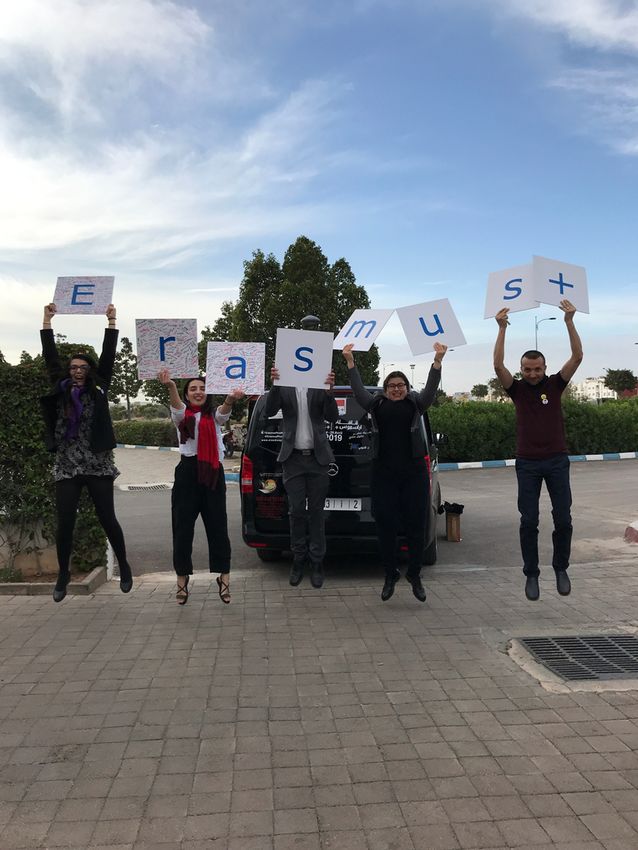
NEO MOROCCO
                                        Erasmus+ National Offices (NEO) assist the EU Commission, Education,
                                        Audiovisual and Culture Executive Agency (EACEA) and the local
                                        authorities in implementing the Erasmus + program. The NEOs act as a
                                        focal point for their stakeholders associated with the Erasmus + program
                                        in the field of higher education. They help to raise the awareness,
                                        visibility, relevance, effectiveness and impact of the international
                                        dimension of Erasmus+.

                                        The NEO mission is structured around several axes:
                                          Information and awareness-raising of students, professor-researchers and staff of higher education
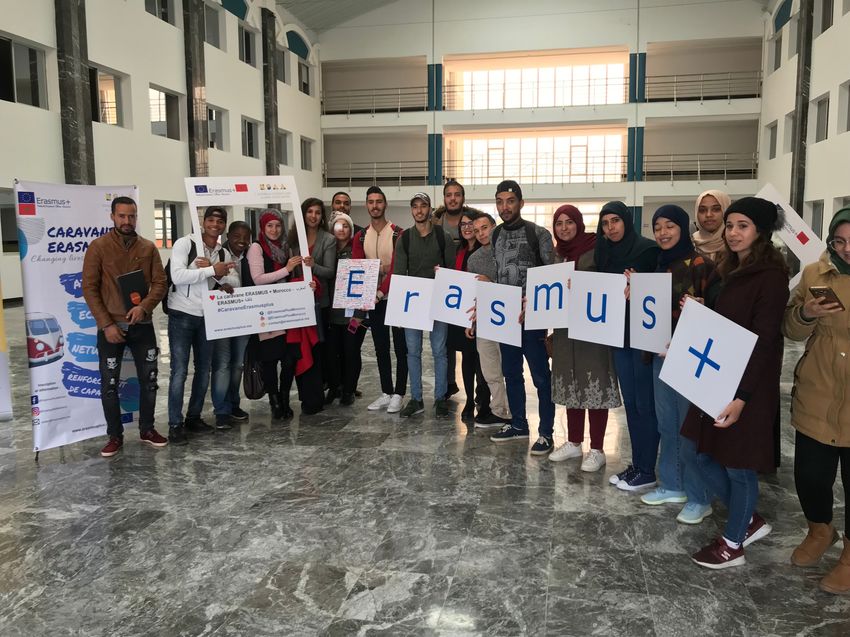
                                          institutions (HEIs) on Erasmus + programs and the identification of academic skills. In this regard, Th NEO
                                          has organized the very first Erasmus+ Caravan and info sessions which impacted more than 3000 students
                                          and 500 academic staff In collaboration with ESAA and ESN in which the NEO has criss-crossed more than
                                          3000 KM, the Caravan was the first of its kind organized by a NEO. On the other hand, the NEO has
                                          organized the 1st national working group gathering public universities to discuss their further implication in
                                          Erasmus+
                                          Support for project development, and for project idea holders as well as helping with partner research.
More information : www.erasmusplus.ma

                                          organization of training for the academic and administrative staff of HEIs.
                                          Management of the activities of the Higher Education Reform Experts (HEREs)
                                          Coordination between the Ministry of Higher Education and Scientific Research, and the EU in Morocco for
                                          an effective deployment of the program in Morocco
                                          Increase the visibility of Moroccan HEIs
                                          Strengthen links between the Erasmus+ alumni community in Morocco and around the world

                                                                                                5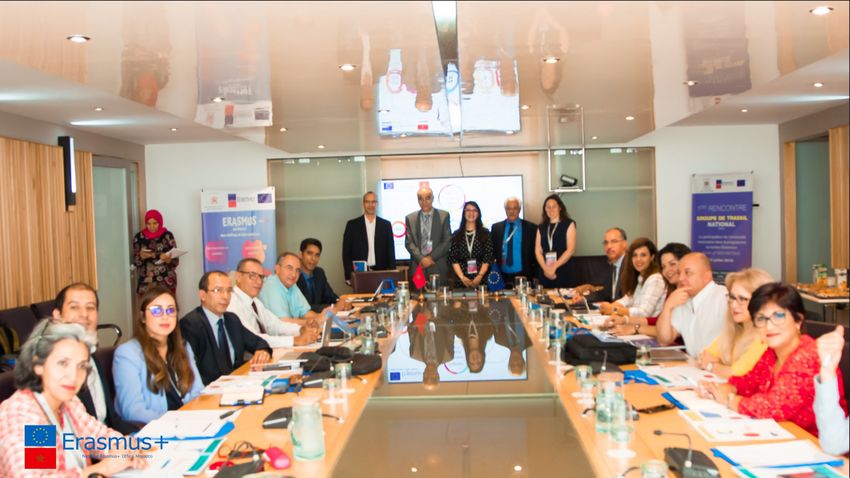
ERASMUS+

Since 2015, the Erasmus + program is
the European program for education       internationalisation process
and training for all and throughout
life. Result of 25 years of experience   Furthermore, the CBHE projects aim to
of programs European institutions in     encourage cooperation between the EU
the fields of education, training and    and partner countries and to help
youth, the program Erasmus +             countries partners eligible to meet the
integrates all previous European         challenges of managing and governing
programs, including Tempus and           their HEIs. This implies improving the
Erasmus Mundus programs.                 quality of higher education, develop
In Morocco, the program supports         new innovative education programs,
the following actions:                   modernize the HES through reform
                                         policies, as well as fostering co-
  Key Action 1: Mobility of              operation between different regions of
  Individuals                            the world through joint initiatives.
This action provides mobility grants     In this regard, two types of CBHE
between the program countries and        projects exist:
partner countries, Actions supported
under this key action are expected to        1. Joint projects: aiming to enable
provide positive and lasting                  organizations to improve the
repercussions for their participants,         programs, governance and
to the organizations the institutions         consolidate relationships between
concerned as well as the political            different HESs.
systems in which these activities take   2. Structural projects: aiming to
place.                                        promote the HES reform, to
Key Action 1 in Morocco, supports             modernize policies, governance, and
two particular types of activities :          strengthening relations between HES
                                              and the economic, social and
1. international Credit Mobility (ICM)        environment sphere.
2. Erasmus Mundus Joint Master
  Degree (EMJMD)                         The CBHE projects can be:
                                             1. National projects: involving
  Key Action 2 :Capacity Building of          institutions from only one eligible
  Higher Education (CBHE)                     partner country.
                                         2. Multi-country projects covering at
The CBHE projects supporting                  least two countries within the same
cooperation with Parter countries in          region.
the field of Higher Education.           3. multi-regional projects covering
The CBHE projects aim to support              several regions and at least one
organisations/institutions and                country of each concerned region
systems in their modernisation and       .

                                         6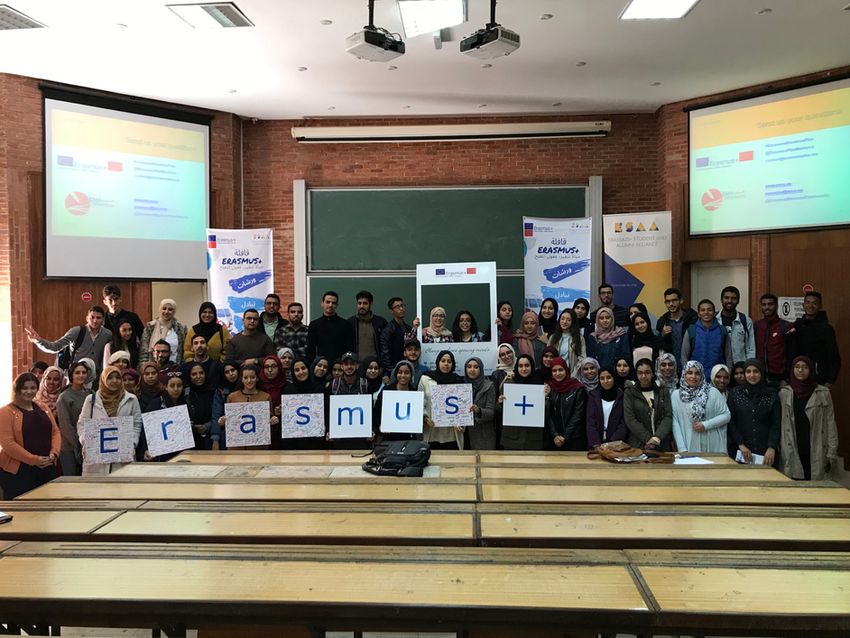
Erasmus+ Virtual Exchange Program                                     The discipline also covers the role of the
                                                                                    EU in the era of globalization and the
           Erasmus+ Virtual Exchange is part of                                     promoting active European citizenship
           the Erasmus+ programme, providing an                                     and dialogue between citizens and
           accessible, ground-breaking way for young                                cultures:
           people to engage in intercultural learning.
           Working with Youth Organisations and                                      1. .Teaching and Research: Modules,
           Universities, the programme is open to any                                  Chairs and Jean Monnet Centers of
           young person aged 18-30 residing in Europe                                  Excellence
           and the Southern Mediterranean.Through a                                  2. Support to NGOs: Support Jean Monnet
           range of activities:                                                        associations.
            1. Moderate dialogue online (for all young                               3. Political debate with the academic
              people).                                                                 world: Jean Monnet networks and
            2. - Training in the development of virtual                                projects
              exchange projects (for teachers and                                   Activities consist mainly of courses,
              facilitators-educational).                                            research, conferences, networking and
            3. - advocacy training (for all young                                   publications in the field of European
              people).                                                              Studies.
            4. - open online interactive course (for all)
           Erasmus+ Virtual Exchange aims to expand                                    Intra-Africa*
           the reach and scope of the Erasmus+
           programme through Virtual Exchanges,                                     The Intra-Africa Academic Mobility
           which are technology-enabled people-to-                                  Scheme supports higher education
           people dialogues sustained over a period of                              cooperation between countries in Africa.
           time.                                                                    The scheme aims to promote sustainable
                                                                                    development and ultimately contribute to
              Jean Monnet                                                           poverty reduction by increasing the
                                                                                    availability of trained and qualified high-
           The purpose of Jean Monnet's activities is                               level professional manpower in Africa.
           to promote excellence in teaching and
           European studies at the global level. These                              The Intra-Africa Academic Mobility
           activities are aimed to promote dialogue                                 Scheme aims to:
           between academia and policy makers, in                                    1. Contribute to the improvement of the
           the aim, in particular, of strengthening the                                quality of higher education through the
           governance of the policies of the European                                  promotion of internationalisation and
           Union.                                                                      harmonisation of programmes and
           European studies include the study of                                       curricula within participating
           Europe as a whole, putting particularly the                                 institutions
           emphasis on the process of European                                       2. Enable students, academics and staff to
           integration at both the domestic and                                        benefit linguistically, culturally and
           externally.                                                                 professionally from the experience
                                                                                       gained in the context of mobility to
                                                                                       another African country.

*: Please note that Intra-Africa is not an Erasmus+ program. However, it is a mobility program that is financially (co) supported by
the European Union

                                                                         7
Financial support is given to
institutional partnerships
African higher education for the
organization and implementation of      And Morocco in Erasmus +?
the mobility of students and staff on   Morocco is an important partner of this
the continent. Projects last for a      dynamic and intends to develop this
maximum of 60 months.                   presence:
                                            1st at the level of Africa.
This program provides financial             2 nd in the southern Mediterranean
assistance through partnerships with        region.
HEI in Africa, for the organization         8th at the world level.
and implementation of the mobility of
students and staff throughout the
African continent. It allows students   In what follows, we will be able to see
(Master and PhD level) and staff        the contours of this participation in
members academic staff (teachers        figures and in colors
and administrative staff) to perform
study, research, teaching and
training missions to another African
country through a scholarship.

The program is open to a limited
number of thematic areas, according
to each call for proposal's priority.
Projects are allowed to focus on one
or several of the eligible thematic
areas. In both the 2016 and 2017
selections, 14 Projects have been
selected for a total budget of 20
million euros.

                                        8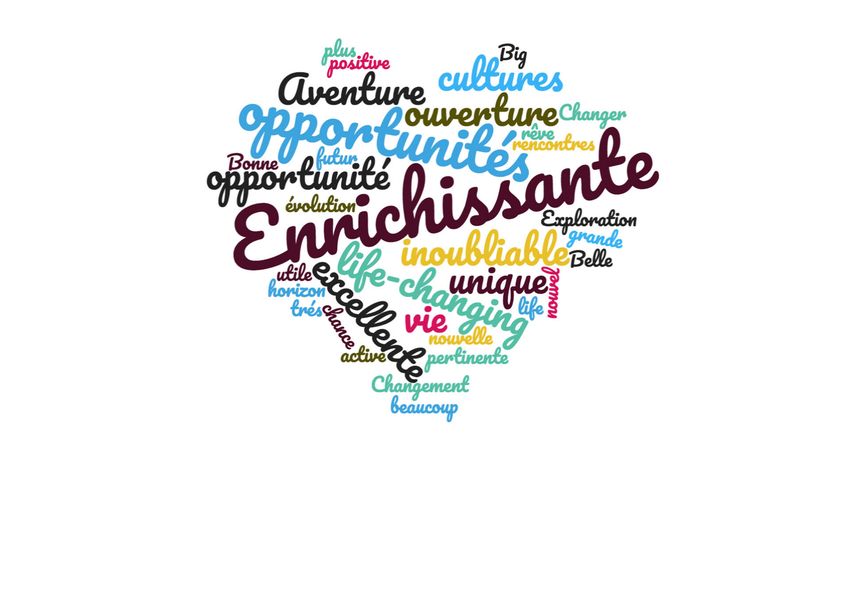
ICM
Morocco is the 1st partner of the ICM program in Africa, the 2nd in the Southern Mediterranean
region and the 8th in the world, out of a total of 135 partner countries from the five continents.
The mobility exchanges concern 47 HEI and Moroccan universities. 71% of mobilities are made by
Moroccan public universities. ICM are carried out with 190 European institutions in 33 EU
countries. Spain, France, Poland and Italy are Morocco's leading partners in the program. No ICM
mobility program to date with 1 country: Norway.

Although ICM mobility is well established in Moroccan universities, the number of mobilities
granted to Morocco was stagnating overall, with an average annual increase of 8%. However, it is
clear that in 2019 the mobiliity's evolution is about 25% this mainly is due to an extra funding.
Outgoing mobility remains stagnant and has lack of diversity in most universities. Nowdays, the
number of ICM mobilities represents 1/4 of the total number of mobilities for some universities.

On the other hand, incoming mobilities to Morocco are increasing by 100% in 2019 compared to
2015. Incoming mobilities represent 39% of the total number of mobilities under the 2019 call,
whereas they have represented only 24% in 2015. It should also be noted that there is more
mobility targeting staff from 2016. Incoming mobility, and despite their increase driven by the
increase in Staff mobilities are to be developed, especially in public universities. Institutions
receiving European students mainly remain private institutions and institutions created under
the Public - Private Partnership.

The ICM program has led to the establishment of Masters in double degree as well as co-supervised
Phd thesis. However, there are some difficulties in recognizing ECTS credits. Also, the
implementation of the mobilities raises several questions, especially when we compare the number
of mobilities granted of 5538 and the implemented mobilities at that date is 3960 totaling the
trifling of 19 692 072,85 euros.

In what is coming next, you will be able to see the mobllities, the field, the sending and receiving
in details in the fact sheets.

                                               9
International Credit Mobility (ICM)
OVERALL MOBILITY* (TO & FROM EUROPE)
MOBILITY
TOP 10 EU COUNTRIES
EVOLUTION**
+60% (2015-2019) Spain
2 000 France
Poland
+24% (2018-2019)
Italy
1 500 OVERALL MOBILITIES Portugal
Romania
Germany
Femme
1 000 46.9%
Homme
Belgium
53.1%
OVERALL STAFF MOBILITIES Turkey
Czech Republic
0 250 500 750
500
OVERALL LEARNER MOBILITIES
GENDER MOBILITY
0
TOP MOROCCAN HEIS IN
2015 2016 2017 2018 2019 MOBILITY
750
Mathematics
Agriculture & vet PPP univ
2.2% 8.7%
4.7% Engineering
Private HE
18.7%
Language acquisition 9.2%
7.8% 500
TOP SPECIALITIES EPNRU
10.3%
Biochemistry
7.8%
Public Univ.
250 71.9%
Social sciences
16.9%
Physics
9.7%
0
Earth sciences
A
EA SU
A
5M U
P6
2H
IA
1H
ZI
TI
IM -or
D
R
de AI
2H
PT
PM
9.8% Computer use
IU
CU
BM
BU
U
U
U
U
U uE
H
M
M
U
U
U
U
V
E
10.8%
Business and administration
U
9.8%
7 500 000
Bachelor
5 000 000
G R A N T M O B I L I T Y25 Master
E V O L U T I O N I N € 20 MOBILITY EVOLUTION
15
2 500 000 RATE
10 Phd
5
0 500 1 000 1 500
0
2016 2017 2018 2019
0
2015 2016 2017 2018 2019
LEVEL OF STUDY
+3960 +2031 33 EU
COUNTRIES 1929
Student mobility
Total mobility INVOLVED Staff mobility
1151 2809 * approved and accomplished, 2015-2018 51% 49%
** Planned mobilities 2015-2019
Incoming Outgoing Teaching staff Training staff
mobility mobility 10 mobility mobilityInternational Credit Mobility (ICM)
OUTGOING MOBILITY
(FROM MOROCCO TO EUROPE)
TOP EU RECEIVING
UNIVERSITIES
ECOLE NATIONALE SUPERIEURE D'ARTS ET METIERS POLITECHNIKA LUBELSKA
5.6% 18.7%
ECOLE CENTRALE DE NANTES
5.7%
UNIVERSITA DEGLI STUDI DI MESSINA
5.9%
UAE
10.4%
MIDDLE EAST TECHNICAL UNIVERSITY
6%
UNIVERSIDADE DO PORTO
7.2% UNIVERSIDAD DE CADIZ
10%
INSTITUT POLYTECHNIQUE DE GRENOBLE
7.9% UNIVERSITA DEGLI STUDI DI TORINO
8.8%
Mathematics
Agriculture & vet 2.2%
500
4.9% Engineering
18.5%
Language
7.7% 400
Biochemistry 300
7.7%
200
Social sciences
Physics 17.6%
9.5% 100
0
Earth sciences
A
EA SU
A
5M
2H
IM
TI U
P6
1H SS
R E
PT -O
IA
ZI
D
II
D
9.7%
IU
CU
BM
BU
E
Computer use
N
U
U
U
U AH
U
H
M
U
U
M
U
A
10.7%
Business and administration
R
U
9.7%
E
VA
U
I
TOP OUTGOING FIELD OF
TOP SENDING MOROCCAN HEIS
STUDY
1 250
1 000 OVERALL OUTGOING MOBILITY
Bachelor
OUTGOING LEARNER MOBILITIES
750
Master
Phd 500
0 250 500 750 1 000
OUTGOING STAFF MOBILITIES
250
OUTGOING LEVEL OF STUDY
0
2015 2016 2017 2018 2019
OUTGOING EVOLUTION
MOBILITY*
11 * Planned mobilities 2015-2018International Credit
Mobility (ICM)
INCOMING MOBILITY
(FROM EUROPE TO MOROCCO)
TOP EU SENDING
UNIVERSITIES
UNIWERSYTET MIKOLAJA KOPERNIKA W TORUNIU
UNIVERSITATEA BABES BOLYAI
Islamic University of Applied Sciences Rotterdam
UNIVERSIDADE DE LISBOA
UNIVERSIDAD DE GRANADA
UNIWERSYTET JAGIELLONSKI
UNIVERSITATEA ALEXANDRU IOAN CUZA DIN IASI
UNIVERSIDAD AUTONOMA DE MADRID
UNIVERSIDADE DO PORTO
UNIVERSITAT POLITECNICA DE CATALUNYA
0 10 20 30 40
Agriculture & vet 200
3.3% Business and administration
6.4%
Computer use
5.1% 150
Earth sciences
Social sciences
40.1%
9% 100
50
Engineering
6.9%
0
Humanities (except languages)
A
IA U
P6
ZI SU E U
A -O
D
EA
1H
D I
TP iuo VA
1M
2H
TI
5M
en SS
II
CU
BM R
BU
E
N
U
U
U
U
N ara I
iy AH
M
U
7.5%
U
U
M
U
A
U
uQ
Language
lA
Physics
U
8.2% Medicine 9.7%
3.7% TOP RECEIVING MOROCCAN
TOP INCOMING FIELD OF STUDY HEIS
750
Phd
17.1%
OVERALL INCOMING MOBILITY
INCOMING LEARNER MOBILITIES
500
Bachelor
42%
INCOMING STAFF MOBILITIES
250
0
2015 2016 2017 2018
Master
40.9%
Incoming level of study Incoming mobility evolution*
12 * Planned mobilities 2015-2018CBHE
Morocco is highly involved in CBHE projects, building on the success of previous programs
(Tempus in particular). Nevertheless, Morocco's participation in CBHE has decreased. Today,
Morocco is the 2nd partner on CBHE projects in the south Mediterranean region with 37 projects
covering a wide range of themes. In particular, many projects have led to the development of
curricula, educational innovations and the development of structures in universities.
33 Moroccan HEIs are involved in 37 (CBHE) projects with 11 non-academic partners. The
participation of this second category is to be promoted given the scope and focus of the CBHE
projects. The CBHE projects are divided into 12 structural and 25 joint projects. More national
projects are to be developed so to accompany the national priorities. These projects have enabled
the exchange of expertise between 33 Moroccan institutions and 142 institutions in 23 European
countries, 85 institutions in 8 countries in the southern Mediterranean region (Tunisia, Algeria,
Egypt, Lebanon, Jordan, Libya, Syria, Palestine), 10 institutions from 4 countries in sub-Saharan
Africa (Senegal, Côte d'Ivoire, Burkina-Faso, Democratic Republic of Congo).
Several areas were worked on:
- Modernization of policies, governance and functioning of HEIs
- Enhance the quality of HE and the internationalization of HEIs
- Inclusive education
- Development and diversification of curricula in line with the national stragy programs
(Renewable energy, Plan Maroc vert, National charter of Environment...)
- Strengthening relations between the HEIs and the broader economic and social environment.
More details about the scope, the CBHE evolution, countries involved... in the next pages
13Capacity Building of Higher
Education(CBHE)*
*2015-2019
TYPE OF CBHE PROJECT
CBHE-SP
32.4% CBHE EVOLUTION
15
CBHE-JP
67.6%
15
10
REGIONAL PROJECTS
NATIONAL PROJECTS
10
5
5
0
2015 2016 2017 2018 2019
0
2015 2016 2017 2018 2019
Curriculum development
Modernisation of policies,
governance and management
Strengthening of relations of higher education systems
between higher education
systems and the wider
economic and social
environment
37 237 33 27
Regional
10
National
International
Projets CBHE Higher education project project
institution
12 involved institution involved
25
Structural 13 23
Joint project
project
10 85 142 21 12 Partner Program
From south- From EU Academic non
From ACP
countries countries
region Mediterranean academic
region 14Capacity Building for
Higher Education(CBHE)
France
Spain
Italy
Morocco "37 Projects" Tunisia
The top partner countries are: Algeria
France with 26 projects, Belgium
Spain: 25 Portugal
Italy: 19 Jordan
South Mediterranean : Greece
Tunisia: 19 Sweden
Algeria: 13
Egypt
ACP:
United Kingdom
Senegal: 2
West Balkans: Lebanon
Ukraine: 1 Poland
Romania
Cyprus
Germany
Senegal
Austria
Bulgaria
Slovenia Burkina Faso
Jordan
2.7% Lituhania
2.7%
2.7% Congo (Democratic Republic Of)
Number of project by country
Greece Cote D'Ivoire
2.7% Estonia
United Kingdom Spain Hungary
5.4% 27% Libya
Lithuania
Norway
Morocco
Palestine
8.1%
Slovakia
Morocco is an Slovenia
8 EU Countries Syria
applicant
are applicant Ukraine
country for 3 Croatia
Belgium
10.8%
projects CBHE Netherland
0 10 20 30
UMI, UH1, UH2
France
Italy 24.3%
13.5%
Countries involved in CBHE projects
as applicants
15Capacity Building for
Higher Education(CBHE)
20
Top 18 Moroccan HEIs involved in CBHE projects
(3 HEIs are applicants: UMI, UH1, UH2)
15
10
5
0
5
E
A
A
1
2
S
I
IZ
P
D
is
F
I
T
H
EM
E
M
A
M
H
H
EM
A
A
SM
M
A
C
B
C
IT
ol
U
U
U
U
U
B
U
U
U
U
SM
U
U
H
ES
ap
A
U
U
R
di
U
un
IM
EN
M
Open education
Lifelong learning 2.7%
2.7%
Diversification
2.7% Entrepreneurship, employability and innovation
27%
Inclusion
5.4%
Quality in HE
8.1%
CBHE themes
Governance, management & internationalisation
10.8%
E-learning & technology in learning
24.3%
Environment, Renewable energy & EE
10.8%
Top international partner
institutions
MINISTRY OF HIGHER EDUCATION AND SCIENTIFIC RESEARCH, Tunisia
UNIVERSIDAD DE VIGO, Spain 11.9%
6.8%
AGENCE UNIVERSITAIRE DE LA FRANCOPHONIE,Belguim
UNIMED - UNIONE DELLE UNIVERSITA DEL MEDITERRANEO, Italy
6.8%
11.9%
UNIVERSITY OF MONASTIR, Tunisia
8.5%
UNIVERSITY OF SOUSSE, Tunisia
11.9%
UNIVERSITE DE TUNIS EL MANAR, Tunisia
8.5%
KUNGLIGA TEKNISKA HOEGSKOLAN, Sweden SFAX UNIVERSITY, Tunisia
8.5% 10.2%
16EMJMD
Since 2015, 47 Moroccan students have been selected in Erasmus Mundus Joint Masters Degree
(EMJMD) for the Excellence Scholarship and 12 Moroccan institutions are partners in European
Masters EMJMD consortia.
The evolution, origin of intakes students as well as the fields are to be found in the next page.
JEAN MONNET
Moroccan participation in this action is still weak. Although projects have been submitted by
Moroccan institutions, only 5 projects have been selected and funded. Two projects concern the
"Jean Monnet (JM) modules" , two are concerning "JM Network" and on " JM project".
For more details, see below
17Erasmus Mundus Joint
Master Degree (EMJMD)
2014-2019 15
15
10
10
Origin institutions of intake
students
5
5
0
0
A
5
- R UA
U AT
A
I
Ti 2
de NA iya
IA du S
IN II
IN P
IS IS P
-R E
IS t,
C
E
I
as on
F
M
2014 2015 2016 2017 2018 2019
M
H
a
E
SA
SA
IC CA
A
C
B
A
n
EN
U
ab
i
Ib U
B
Tr - F
U
U
hd E m
U
SM
sa
M
ct
A
n
a
H
A
Evolution of Scholarships awarded
V
EN
E
PG
C
(Moroccan Students)
Fa
oi
6
R
e
ur
rie
pé
Su
ENAM Meknes
e
IAV-H2
ol
7.1%
Ec
UMP 14.3%
7.1%
4
UH2
7.1%
UCA
14.3%
2 UIR
7.1%
HEIs involvment's evolution in EMJMD as
associate partners UM5 UMI
7.1% 7.1%
0
2015 2016 2017 2018 2019 UIT ENSMR
7.1% 7.1%
ESAV ENFI
7.1% 7.1%
Ingénierie et science
HEIs involvment as associate
territoire, patrimoine partners in EMJMD
agriculture, Forestrie et agro-ressources
Hydrology, sciences maritimes et water mgt
mediterrean studies
Journalisme, communication, Média et film
Philosophie
Migration
TOP EMJMD FIELD OF
Medical studies and sciences
Culture
STUDY
Archéologie et anthropologie
Psychologie
Economics
linguistics
philosophie
Urban studies
gender studies
architecture
0 5 10 15
47 18
Origin institutions
12
Scholarship of intake students
awarded HEIs involved as associated
(Students) 18 in 13 mastersIMPACT OF ERASMUS+
IN MOROCCO
We have seen in the foregoing the positive and very encouraging record of Moroccan participation in the
Erasmus + program.
Figures and graphic representations reassure us but what about the impact of Erasmus+ program over Morocco?
What are the effects of project activities and mobility on individuals, institutions, the system and to a large
extent society? This impact is born short and endures in the long term, it is quantitative but also qualitative.
The question of impact is at the heart of the plan from its beginning to the design phase, the actors and partners
are led to think about it, evaluate it, follow it and capitalize on it.
In order to tame this impact, we have collected data from the monitoring reports carried out by the office, web
sites, we conducted interviews with beneficiaries, initiate surveys with of our entire Erasmus + alumni database.
The impact on individuals:
Students, professors and administrators could enjoy short stays in Europe, participate in projects capacity
building and benefit from the results and outputs of these projects and some statistics based on a survey in
which our office has conducted to Mobility Alumni, out of 200 participants are confirming our statement.
On students
The program has allowed them to improve their individual skills and open their minds.
Professional learning: through the acquisition of knowledge, linguistic skills, know-how-do and professional
skills (technical). 90% are feeling that they are a global citizen and 91.5% have developed a public speaking skill
Learning abilities and employability. 45% of Alumni with professional status (80 Alumni) has found a job in less
than 3 months. Also, 93.5% think that the mobility has added a value in their resume.
Also, it needs to be highlighted that the students are also benefiting from mobilities under CBHE projects
On teachers and staff
Improved linguistic competence, in this point, the result of the survey showed that 72.5% are using more than
two languages in their daily activity.
Opening on other teaching experiences, exchange, comparison and benchmark.
International Networking, 88% has developed new partnerships trough the Erasmus+ mobility program
Pedagogical competence: the reinforcement of competences, professionalization. The acquisition of
new skills including the technical realization of MOOCs, training in new methods educational (e-learning, online
courses on moodle platform, ...) , 89% have acquired new techniques regarding their field of study.
The impact on institutions:
The Erasmus + program has made it possible, thanks to projects and mobility:
Improved HEIs governance
International visibility of institutions, degrees and local expertise.
Training of academic and administrative staff and setting up a network of experts.
Modernization, improvement of infrastructure, equipment, establishment of centers, offices, e-learning
platforms...
Diversification and / or renewal of training: creation of masters with new teaching methods.
Establishment and operationalization of the quality assurance in HEI and realization of several institutional
self-evaluation exercises
19The impact on higher education system:
The system has been impacted through structural projects (30 out of 144 projects) which accompanied the priorities
defined by the Ministry.
The Erasmus+ program has had effects through:
Educational capacity building and diversity of service offered and type of training
Improved governance and university management
support in the BMP (LMD) reform and the implementation of the credit system.
improvement of teaching methods and introduction of digital pedagogy and introduction of teaching hybrids.
the generalization of entrepreneurship learning like the establishment of student-entrepreneur status.
the improvement of the quality of education, especially the implementation of quality assurance and the
creation of the National Agency for Evaluation and Quality (ANEAQ).
the internationalization of the system with greater openness to Europe and the world and a strengthened
cooperation. Int his regard, each call we have new countries (Poland, Slovenia,...) and more Anglophone countries.
support for inclusive education
The impact on society:
Society as a whole is concerned with the deployment of the Erasmus + program in Morocco, the effect are:
Inclusion of people with special needs
Broadening the culture of entrepreneurship in Moroccan society and strengthening the
entrepreneurial spirit.
The abolition of stereotypes
The rapprochement between Moroccan culture and European cultures, especially countries outside
classical countries: (indicator: the evolution of the number of partnerships and mobilities with
Eastern Europe, for example).
Awareness and dissemination to a wide public via seminars, conferences, workshops... and on varity of topics :
Environment, energy efficiency, gender approach....
Indeed the Erasmus+ has positively impacted Morocco in so many levels, and it is not just numbers, colors and
graphs, it is also lives!
In the next section, you will see how Erasmus+ has shaped and created stories.
20TESTIMONIALS
1 word about your
Erasmus+
Experience ?
Result of survey conducted by
the office for the Erasmus+
Alumni , October 2019
EVE
"...I learned a lot about the program: an open and safe space in which I
learned to express myself freely ... I strongly recommend you to participate.
The program focuses on the development of personal skills. I will not
hesitate to share my learning with my friends, my teachers and the
organizations I work with. "
Nacer - EVE Alumni
ICM
My Erasmus exchange at University Rotterdam in the Netherlands was one of a
kind! It allowed me to access libraries and knowledge spaces, professors and
academics in my Sociology. I also pushed myself beyond my comfort zone, and
took classes in subject areas I wasn't familiar with, like Network governance! I had
the chance to experience a different educational system while having enough time
to dive deeper into doing qualitative research for my thesis focused on Dutch-
Moroccans. The Erasmus grant made of my hopes a concrete reality! ... Upon
graduating this June from the African Leadership University in Mauritius, I
Amina - ICM Alumni
received the award for the best dissertation in Social Sciences! The Erasmus
experience was a truly memorable one, and helped me grow beyond what I would
have imagined!"
EMJMD
" The impact of the scholarship has been a positive experience positive, because
such opportunities enable one to gain a new experience, know a new country with its
culture and differences as long as the common things it has with one's country.To
me... With Erasmus+, I had the chance to study in several countries (Italy and
France), learn different pedagogical program and teaching system...That opportunity
was an experience that made a new strong and independent woman of me.Thanks a
million for giving me such opportunity." Hicham- EMJM Alumni
ESC
"The experience of European Solidarity Corps (ESC) was a wonderful
adventure that has added to my personality a sense of initiative of courage,
of independence and which has taught me to be responsible for my acts
and future without appealing to my family... with the ESC, I was able to see
Fatima Ezzahra - ESC the place of Europe, Strasbourg and get the sens of culture"
Alumni
21TESTIMONIALS
What is your wish Result of survey conducted in
October 2019 elucidating the
for Erasmus+? wishes of the academic and
adminsitrative staff
CBHE
" Through Erasmus+, we have created a master under PROEMED project,
on environmental protection and energy efficiency in building ... this project
has enable us as well to get equipment which will allow students to better
understand the field of study in practical way... with this project we have
participated in international competition in which we have won the 1st prize
qnd this wasmainly thanks to the students efforts.
Prof. Abdelkader - UCA
More information about the projects, please visit : www.erasmusplus.ma
CBHE
" My participation was under the project Scolamar, funded by
Erasmus+. Thanks to the project we have benefited from field trips,
workshops in many fields, conferences... For me the Scolamar project was
beneficial in my personal and professional level, as thanks to this project I
Amina - Student at UAE have received a financial support for my thesis which I will be doing it
between Morocco and Spain"
CBHE
" As an international relations officer, I worked on the setting up and implementation of a
number of Erasmus + projects, and I had the chance to join several networks of European
universities...Participating in the Erasmus + program makes it possible to "live" Europe in a
concrete and personal way.
All these mobilities abroad have marked our students, our administrative and academic
staff. It is an experience of life, education and learning that has marked them for life"
Prof. Karima - UIT
In the next section, Appendix, we will see in details how each of the Moroccan HEIs are positioned
regarding the Erasmus+ program through fact sheets and some useful links
Please note that we only considered the accomplished mobilities from 2015-2018 in the mobility
part in the next fact sheets.
22+800
7434 awarded
Mobility's
mobilities
agreements
37 CBHE Erasmus+ in 47 EMJMD
Projects Morocco* Scholarship
5 Jean Monnet 1010 intra-Africa
Project mobilities
*: 2015-2019
* 2015-2018
www.erasmusplus.ma
23Mohammed 5th University
ERASMUS+ FACTSHEET
OVERALL MOBILITIES
(TO/FROM EUROPE)
Language
11.4%
Business & admin
3.3% Portugal
4.9%
Staff training Staff training
Finland
13.5%
6.6%
30.5%
Phd
Germany
28.5%
11.1%
Male
Bachelor
Engineering France
52.5
42.6% % 14.6%
16.9% 10 EU 283 overall
countries mobilities Fem
ale
47.5
%
Spain
34.8%
Master
43.4%
Social sciences Earth Science
17.2% 20.8%
Medecine
OUTGOING MOBILITY TO
Mathematics 4.9% EUROPE
5.4%
250 mobilities
15
Business and administration Computer use
Bachelor
6.9% 27%
15.5%
10
Biochemistry
8.3%
With 10
EU countries
Master
53.2%
5
Phd
31.4%
Social Science
11.8%
0
Engineering
21.6% Italy Spain France Germany Portugal
Physics
14.2%
INCOMING MOBILITY
physics & chemestry
FROM EUROPE
25
6.8%
ICTs
6.8%
20
33 mobilities
Master
engeineering 15.6%
6.8%
Phd
15
With 3
EU countries
34.4%
Bachelor 10
21.9%
5
Staff training
28.1% 0
Social science
79.7% 24 Spain France Germany Italy FinlandMohammed 5th University
Number of CBHE Number of CBHE Joint Number of CBHE
project involved in as Project Structural Project
ERASM U S + involved
F A C T Sin:H E E T
partner: involved in:
18 8 10
CBHE EVOLUTION CBHE THEMES
6
6
4
4
2
2
0
g
ng
EE
n
E
n
in
tio
io
H
ni
rn
us
&
in
va
ar
a
gy
cl
y
no
le
le
lit
In
er
in
g
in
ua
0
en
n
gy
d
lo
Q
an
le
fe
2015 2016 2017 2018
lo
ab
Li
no
ty
ew
ili
ch
ab
en
te
oy
R
&
t,
pl
g
en
n
m
ni
nm
,e
ar
ip
iro
le
sh
E-
v
ur
En
ne
re
ep
tr
En
Number of Erasmus Mundus
Intra-Africa Project
Jean Monnet project: Joint Master Degree Project
involved in:
involved in:
3
1 2
25Cadi Ayyad University
ERASMUS+ FACTSHEET
OVERALL MOBILITIES
(TO/FROM EUROPE)
Language
9.4%
Sweden
3.9% Staff
Staff training
Business and administration 25.7% Phd
19.7%
9.9% 22.8%
Poland
Spain 30.1%
25%
Female
43.9%
20 EU 526 overall
Engineering
11.7% countries mobilities Bachelor
Male 18.1%
56.1%
Romania
Portugal
20.7% Master
20.3%
39.4%
Social sciences
23.4%
Earth Science
19.8%
OUTGOING MOBILITY TO
Language
8.4% EUROPE
415 mobilities
60
Social sciences
Business and administration 25%
11.9%
Staff training
11.6%
With 20
EU countries
40
Bachelor
13.7%
Master
47%
Engineering
13.1% 20
Phd
27.7% Earth Science
21.2% 0
Poland Italy Spain Germany Romania
Staff
20.3%
INCOMING MOBILITY
FROM EUROPE
Engineering 50
6.7%
111 mobilities
Language
40
13.5% Phd
11.7%
With 7
EU countries
30
Staff training
37.8%
Master
Staff
22.5% 47.2%
20
Earth Science
14.6%
10
Bachelor
27.9%
26
0
Poland Portugal Romania Spain Sweden
Social sciencesMohammed 5th University
Number of CBHE Number of CBHE Joint Number of CBHE
project involved in as Project Structural Project
ERASM U S + involved
F A C T Sin:H E E T
partner: involved in:
16 12 4
CBHE EVOLUTION CBHE THEMES
4
5
3
4
3 2
2
1
1
0
ng
ng
EE
n
E
n
n
n
s
io
io
io
tio
H
ce
ni
lo
at
at
us
&
in
va
ur
ar
fe
lis
c
gy
cl
y
du
so
no
Li
le
lit
na
In
er
re
in
e
in
ua
0
io
en
n
gy
d
an
Q
at
pe
an
le
rn
2015 2016 2017 2018 2019
lo
um
O
ab
no
te
ty
H
ew
in
ili
ch
nd
ab
t&
en
te
ta
oy
R
en
&
en
t,
pl
g
em
en
n
em
em
ni
ag
nm
ag
ar
i,
an
sh
iro
le
an
m
E-
ur
v
M
En
e,
ne
nc
re
na
ep
er
tr
ov
En
G
Number of Erasmus Mundus Intra-Africa Project
Joint Master Degree Project involved in:
involved in:
2 1
27Hassan 2 University
ERASMUS+ FACTSHEET
OVERALL MOBILITIES
(TO/FROM EUROPE)
Language
8.5%
Biochemistry
7.3% Finland
Staff training
5.4%
Phd
31.7% 21.6%
Romania Staff training
Germany 28.4%
20.3% 28.9%
Male
Physics 51.5
%
15.2% 13 EU 202 overall
countries mobilities
Fem
ale
48.5
Master %
France 22.1%
21.6%
Spain
24.3%
Bachelor
27.5%
Earth science
Social science
17.1%
20.1%
Biochemistry OUTGOING MOBILITY TO
9.4%
EUROPE
Staff training
50
166 mobilities
Staff training
27.6%
With 13 EU
40
Physics
18.1%
Phd
29.5%
25.3%
countries
30
20
Bachelor
10
19.3%
Master
25.9%
Earth science Social science 0
22% 22.8%
ce
ia
n
ly
lic
nd
ai
an
Ita
an
ub
la
Sp
om
Po
Fr
ep
R
R
INCOMING MOBILITY
ch
ze
Physics
FROM EUROPE
C
6.1% 30
Social science
12.1% Phd
13 mobilities
5.6%
Master
8.3%
20
With 3
Staff training
47.2%
EU countries
10
Language Staff training
15.2% 51.5%
Bachelor
38.9%
0
Romania Poland Spain United Kingdom
Business & adm
15.2% 28Mohammed 5th University
Number of CBHE Number of CBHE Joint Number of CBHE
project involved in as Structural Project
E R A S Project
M U S +involved
F A C Tin:
SHEET
partner: involved in:
7 2 5
CBHE EVOLUTION CBHE THEMES
4
3
3
2
2
1
1
0 ng
E
ng
n
tio
H
ni
ni
in
va
ar
ar
y
no
le
le
0
lit
ng
in
in
ua
2015 2016 2017 2019
gy
d
lo
Q
an
fe
lo
Li
no
ty
ili
ch
ab
te
oy
&
pl
ng
em
ni
ar
,
ip
le
sh
E-
ur
ne
re
ep
tr
En
Number of Erasmus Mundus Number of CBHE projects
Jean Monnet project: Joint Master Degree Project involved in as an
involved in: Applicant
1
1 1
29Sidi Mohammed Ben Abdellah
University
ERASMUS+ FACTSHEET
OVERALL MOBILITIES
(TO/FROM EUROPE)
Physics
8.7%
Biochemistry Social science
Turkey
10.6% 11.6% 28.1%
Staff training
Romania 23%
28.2% Phd
Germany
11.6% Male 32%
52.2
%
Earth science 18 EU 322 overall
12.2% countries mobilities Fem
France ale
13.8% 47.8
%
Spain Bachelor
17.7% 25.5%
Portugal
Master
17.1% 19.6%
Language
14.1% Staff training
26.2%
Biochemistry
OUTGOING MOBILITY TO
12.8% EUROPE 60
254 mobilities
Social science
Staff training 28.7% With 17 EU
21.7%
Earth science
countries
Phd 40
14.9% 36.2%
20
Bachelor
22.8%
Language Master
17% 19.3% 0
Staff training Romania Spain Portugal France Germany Turkey
26.6%
INCOMING MOBILITY
FROM EUROPE
Biochemestry 30
7.4%
Language
9.3%
Phd 68mobilities
16.2% 20
Staff training
Social science
With 7
27.9%
37%
Management & adm
11.1% EU countries
10
Master
20.6%
0
Bachelor
Romania Spain Portugal Turkey Netherlands
35.3%
Staff training 30
35.2%Mohammed 5th University
Number of CBHE Number of CBHE Joint Number of CBHE
project involved in as Structural Project
E R A S Project
M U S +involved
F A C Tin:
SHEET
partner: involved in:
10 5 5
CBHE EVOLUTION CBHE THEMES
4
4
3
3
2
2
1
1
0
s
E
ng
ng
n
n
ie
io
tio
H
ni
ni
ud
at
in
va
ar
ar
is
st
y
no
le
le
al
0
lit
er
on
ng
in
in
ua
d
2015 2016 2017 2018
i
gy
en
d
lo
Q
at
an
fe
rn
lo
G
Li
no
te
ty
in
ili
ch
ab
&
te
nt
oy
&
e
pl
ng
em
em
ni
g
ar
a
i,
an
sh
le
m
E-
ur
e,
ne
nc
re
na
ep
er
tr
ov
En
G
Number of Erasmus Mundus
Joint Master Degree Project
involved in:
1
31Mohammed 1st University
ERASMUS+ FACTSHEET
OVERALL MOBILITIES
(TO/FROM EUROPE)
Physics
7.7%
Female
Portugal 25.5%
6%
France
Earth sciences 8%
15.4%
Ireland Staff training
Staff
10% Spain 38.2%
40% 40.4%
Phd
6 EU 45.5% 55 overall
countries mobilities
Belgium
16%
Bachelor
3.6%
Engineering Master
Croatia
25% 12.7%
20% Male
74.5%
Social science
11.5%
Physics
OUTGOING MOBILITY TO
8% EUROPE
50 mobilities
20
With 6
Earth sciences
Staff 15 EU countries
16%
Staff training 38%
38%
Phd
46%
10
5
Bachelor
2%
Master
14%
0
Engineering
26% Spain Croatia Belgium Ireland France
Social science
10%
INCOMING MOBILITY
FROM EUROPE
5
Medicine
20%
5 mobilities
4
Staff training
40%
Phd Staff Training 3
40% 40%
2
Computer use With 1
20% EU countries
1
Bachelor
20%
0
Spain
Social sciences
20% 32Mohammed 5th University
Number of CBHE Number of CBHE Joint Number of CBHE
project involved in as Project Structural Project
ERASM U S + involved
F A C T Sin:H E E T
partner: involved in:
3 1 2
CBHE EVOLUTION CBHE THEMES
2
1
1,5
0,75
1
0,5
0,5
0,25
0
g
n
in
tio
rn
va
a
no
le
in
in
0
gy
d
an
2015 2016 2017 2018
lo
no
ty
ili
ch
ab
te
oy
&
pl
g
n
m
ni
,e
ar
ip
le
sh
E-
ur
ne
re
ep
tr
En
Number of Erasmus Mundus Intra-Africa Project
Joint Master Degree Project involved in:
involved in:
1 1
33Chouaib Doukkali University
ERASMUS+ FACTSHEET
OVERALL MOBILITIES
(TO/FROM EUROPE)
Physics
8.2%
Earth sciences
Slovenia
10.9% 10.8%
Staff training
21.6%
France Spain Staff Phd
10.8% 32.4% 28.4%
40%
10 EU Male
56.7 74 overall Fem
Engineering countries % ale
mobilities 43.3
15.5% %
Bachelor
Poland
21.6%
27%
Finland
18.9% Master
28.4%
Social science
25.5%
Physics OUTGOING MOBILITY TO
8.3%
EUROPE
364 mobilities
250
Social science
8.3%
Staff training
20.9%
Phd 200
29.9% Staff training
39.6%
150
Earth sciences With 9
16.7%
100 EU countries
Bachelor
27.7% 50
Master
21.4%
0
Spain Poland Italy France Portugal
Engineering
27.1%
INCOMING MOBILITY
Earth science
FROM EUROPE
50
Biochemistry 6.8%
3.4%
Engineering
6.8%
40
68 mobilities
Phd
27.9%
Staff training
36.8% Staff training
30 With 4
42.4%
EU countries
20
Master
10.3%
10
Bachelor
25%
Social science
0
40.7%
34 Poland Portugal Spain TurkeyNumber of CBHE Number of CBHE Joint Number of CBHE
project involved in as Project Structural Project
ERASM U S + involved
F A C T Sin:H E E T
partner: involved in:
5 3 2
CBHE EVOLUTION CBHE THEMES
2
1
1,5
0,75
1
0,5
0,5
0,25
0
g
n
ng
in
tio
ni
rn
va
ar
a
no
le
le
in
in
g
0
n
gy
d
lo
an
fe
2015 2016 2017 2018 2019
lo
Li
no
ty
ili
ch
ab
te
oy
&
pl
gn
m
ni
,e
ar
ip
le
sh
E-
ur
ne
re
ep
tr
En
35Abdelmalek Essaadi University
ERASMUS+ FACTSHEET
OVERALL MOBILITIES
(TO/FROM EUROPE)
Physics
8.2%
Earth sciences Portugal
4.9%
10.9% Finland
6.6%
Staff training
Germany Staff Phd 23.4%
11.1% 29.6%
France
40%
42.6%
10 EU Male
56.7 432 overall Fem
Engineering countries % ale
mobilities 43.3
15.5% %
Bachelor
Spain
Master 27.3%
34.8%
19.7%
Social science
25.5%
Physics OUTGOING MOBILITY TO
8.3%
EUROPE
364 mobilities
250
Social science
8.3%
Staff training
20.9%
Phd 200
29.9% Staff training
39.6%
150
Earth sciences With 9
16.7%
100 EU countries
Bachelor
27.7% 50
Master
21.4%
0
Spain Poland Italy France Portugal
Engineering
27.1%
INCOMING MOBILITY
Earth science
FROM EUROPE
50
Biochemistry 6.8%
3.4%
Engineering
6.8%
40
68 mobilities
Phd
27.9%
Staff training
36.8% Staff training
30 With 4
42.4%
EU countries
20
Master
10.3%
10
Bachelor
25%
Social science
0
40.7%
36 Poland Portugal Spain TurkeyMohammed 5th University
Number of CBHE Number of CBHE Joint Number of CBHE
project involved in as Project Structural Project
ERASM U S + involved
F A C T Sin:H E E T
partner: involved in:
17 11 6
CBHE EVOLUTION CBHE THEMES
5
8
4
6
3
2
4
1
2
0
g
ng
n
E
n
n
in
io
io
tio
H
ni
rn
at
us
in
va
ar
lis
a
cl
y
no
le
le
lit
na
In
in
g
in
ua
0
io
n
gy
d
lo
Q
at
an
fe
rn
2015 2016 2017 2018
lo
Li
no
te
ty
in
ili
ch
ab
t&
te
oy
en
&
pl
g
m
n
m
ge
ni
,e
ar
a
an
ip
le
sh
m
E-
ur
e,
ne
nc
re
na
ep
er
tr
ov
En
G
37Ibn Zohr University
ERASMUS+ FACTSHEET
OVERALL MOBILITIES
(TO/FROM EUROPE)
Travel, transport
14.9%
Finland
5.4% Language Phd
10.4%
31.3% Staff training
Romania 23.4%
Germany 28.4%
20.3%
Social science Male
14.9% 54.5
7 EU % 77 overall
Fem
countries mobilities ale
Master 45.5
36.4% %
France
21.6%
Spain
Bachelor
24.3% 29.9%
Earth science Staff training
20.9% 17.9%
Social science OUTGOING MOBILITY TO
10.3%
EUROPE 20
64 mobilities
Phd
10.9%
Language
31%
With 6
Staff training
Travel, transport
17.2%
21.9% 15
EU countries
10
Master
5
39.1%
Bachelor
28.1%
Staff training
19% 0
Earth science France Germany Romania Spain Finland
22.4%
INCOMING MOBILITY
FROM EUROPE
6
Language
23.1%
Phd
Staff training
7.7%
30.8%
Staff training
13 mobilities
30.8% 4
Master
23.1%
With 3
EU countries
2
Earth science
Bachelor 7.7%
Social science 38.5%
30.8% 0
Computer science
7.7% 38 Romania Spain TurkeyMohammed 5th University
Number of CBHE Number of CBHE Joint Number of CBHE
project involved in as Project Structural Project
ERASM U S + involved
F A C T Sin:H E E T
partner: involved in:
6 2 4
CBHE EVOLUTION CBHE THEMES
2
3
1,5
2
1
0,5
1
0
g
n
E
n
in
io
tio
H
rn
at
in
va
uc
a
y
no
le
lit
ed
in
in
ua
0
n
gy
d
Q
pe
an
2015 2016 2017 2019
lo
O
no
ty
ili
ch
ab
te
oy
&
pl
gn
m
ni
,e
ar
ip
le
sh
E-
ur
ne
re
ep
tr
En
39Ibn Toufail University
ERASMUS+ FACTSHEET
OVERALL MOBILITIES
Engineering (TO/FROM EUROPE)
9%
Language Portugal
9.8% Finland 4.9% Staff training
6.6% 31.1%
Phd
Germany 6.4%
11.1%
Male Staff training
24.4%
France 45.5
%
8 EU
42.6%
countries
Master
34% 156 overall
Management & admin
mobilities
23.8%
Spain
34.8% Fem
ale
54.5
Bachelor %
Computer use 35.3%
26.2%
OUTGOING MOBILITY TO
EUROPE
Engineering
9.5%
144mobilities
75
Staff training
Language Phd
5.6%
27.6%
10.3%
Staff training
22.2%
50
Master With 8
34.7%
EU countries
25
Management & admin
25%
Bachelor
37.5%
0
Computer use
Poland Spain Italy Turkey Finland
27.6%
INCOMING MOBILITY
FROM EUROPE
Engineering and engineering trades, not elsewhere classified 6
7.4%
Social science
7.4%
Phd
12 mobilities
Earth science
16.7% 33.3%
4
With 4
EU countries
Staff training Staff training
50%
22.2%
Master
2
25%
Bachelor
8.3%
0
Social science
29.6%
40 Poland Spain Sweden TurkeyMohammed 5th University
Number of CBHE Number of CBHE Joint Number of CBHE
project involved in as Project Structural Project
ERASM U S + involved
F A C T Sin:H E E T
partner: involved in:
10 3 7
CBHE EVOLUTION CBHE THEMES
3
6
2
4
1
2
0
g
E
n
n
ng
in
io
tio
H
ni
rn
us
in
va
ar
a
cl
y
no
le
le
lit
In
in
in
g
ua
0
n
gy
d
lo
Q
an
fe
2015 2016 2017 2018
lo
Li
no
ty
ili
ch
ab
te
oy
&
pl
gn
m
ni
,e
ar
ip
le
sh
E-
ur
ne
re
ep
tr
En
Number of Erasmus Mundus
Joint Master Degree Project
involved in:
1
41Moulay Ismail University
ERASMUS+ FACTSHEET
OVERALL MOBILITIES
(TO/FROM EUROPE)
Earth science
20%
Spain
Male
20%
40%
Phd Bachelor
2 EU 40% 40%
countries 5 overall
mobilities
Italy
80% Fem
ale
60%
Social science Master
20%
80%
OUTGOING MOBILITY TO
EUROPE
4
Phd
25% 4 mobilities
3
With 1
Bachelor
50%
2 EU countries
Master 1
25%
0
Italy
Social science
100%
INCOMING MOBILITY
FROM EUROPE
1
1 mobility
0,75
With 1
EU countries
0,5
Phd 0,25
100%
Earth science
0
100%
42 SpainMohammed 5th University
Number of CBHE Number of CBHE Joint Number of CBHE
project involved in as Project Structural Project
ERASM U S + involved
F A C T Sin:H E E T
partner: involved in:
7 5 2
CBHE EVOLUTION CBHE THEMES
3
3
2
2
1
1
0
g
E
n
n
n
in
io
io
io
H
rn
us
at
at
in
c
lis
a
cl
y
ifi
le
lit
In
na
rs
in
ua
0
io
e
gy
iv
Q
at
D
rn
2015 2016 2017 2018 2019
lo
no
te
in
ch
t&
te
en
&
g
m
n
e
ni
ag
ar
an
le
m
E-
e,
nc
na
er
ov
G
Number of EMJMD Number of Intra-Africa Number of CBHE
project involved in as project involved in: project involved in as
partner: applicant:
1
1 1
43Hassan 1st University
ERASMUS+ FACTSHEET
OVERALL MOBILITIES
(TO/FROM EUROPE)
Social science
Medicine 6% le
ma
6% Fe 8%
.
Portugal
4.9%
Phd 36
Finland 10.5%
Engineering 6.6%
7.7% Maste
r
Germany 12.8%
11.1%
France
42.6%
Biochemistry 6 EU 133 overall
9.4% countries
Bache
14.3%
lor
mobilities
Staff tr
aining
62.4%
Spain
34.8% Staff training
70.9%
le
Ma %
.2
63
Social science
OUTGOING MOBILITY TO
Medicine
5.6% EUROPE
118 mobilities
75
6.5%
Phd
9.3%
Engineering
7.4%
Master
50
14.4%
Biochemistry With 6
10.2%
EU countries
Bachelor 25
11.9% Staff training
64.4%
Staff training
70.4% 0
Belgium Spain Romania Turkey Italy Portugal
INCOMING MOBILITY
Engineering
FROM EUROPE
25
7.7%
Earth science
7.7%
20
15 mobilities
Phd
20%
15
With 3
Sport Staff training
EU countries
15.4% 46.7%
10
Staff training
53.8%
Bachelor 5
33.3%
Language 0
15.4%
44 Spain France Germany Italy FinlandNumber of CBHE Number of CBHE Joint Number of CBHE
project involved in as Project Structural Project
ERASM U S + involved
F A C T Sin:H E E T
partner: involved in:
6 3 3
CBHE EVOLUTION CBHE THEMES
2
5
1,5
4
3 1
2
0,5
1
0
g
E
n
n
in
io
io
H
rn
at
at
in
lis
v
a
y
no
le
lit
na
in
in
ua
0
io
gy
d
Q
at
an
rn
2015 2016 2017
lo
no
te
ty
in
ili
ch
ab
t&
te
oy
en
&
pl
g
m
n
em
e
ni
ag
ar
i,
an
sh
le
m
E-
ur
e,
ne
nc
re
na
ep
er
tr
ov
En
G
Number of CBHE projects Intra-Africa Project
Jean Monnet project:
involved in as an Applicant: involved in:
1
1 1
45Sultan Moulay Slimane University
ERASMUS+ FACTSHEET
OVERALL MOBILITIES
(TO/FROM EUROPE)
Language
11.4%
Business & admin
3.3% Portugal
4.9%
Staff training Staff training
Finland
13.5%
6.6%
30.5%
Phd
Germany
28.5%
11.1%
Male
Bachelor
Engineering France
52.5
42.6% % 14.6%
16.9% 10 EU 283 overall
countries mobilities Fem
ale
47.5
%
Spain
34.8%
Master
43.4%
Social sciences Earth Science
17.2% 20.8%
Medecine
OUTGOING MOBILITY TO
Mathematics 4.9% EUROPE
5.4%
250 mobilities
15
Business and administration Computer use
Bachelor
6.9% 27%
15.5%
10
Biochemistry
8.3%
With 10
EU countries
Master
53.2%
5
Phd
31.4%
Social Science
11.8%
0
Engineering
21.6% Italy Spain France Germany Portugal
Physics
14.2%
INCOMING MOBILITY
physics & chemestry
FROM EUROPE
25
6.8%
ICTs
6.8%
20
33 mobilities
Master
engeineering 15.6%
6.8%
Phd
15
With 3
EU countries
34.4%
Bachelor 10
21.9%
5
Staff training
28.1% 0
Social science
79.7% 46 Spain France Germany Italy FinlandMohammed 5th University
Number of CBHE Number of CBHE Joint Number of CBHE
project involved in as Project Structural Project
ERASM U S + involved
F A C T Sin:H E E T
partner: involved in:
4 2 2
CBHE EVOLUTION CBHE THEMES
1
6
0,75
4
0,5
0,25
2
0
g
es
n
s
in
io
ce
di
rn
at
ur
tu
v
a
rs
no
so
le
re
in
de
in
0
gy
en
d
an
an
2015 2016 2017 2018
lo
G
um
no
ty
H
ili
ch
nd
ab
te
ta
oy
&
en
pl
gn
em
em
ni
ag
ar
i,
sh
le
an
E-
ur
M
ne
re
ep
tr
En
Number of Erasmus Mundus
Intra-Africa Project
Jean Monnet project: Joint Master Degree Project
involved in:
involved in:
3
1 2
47Agronomic and Veterinary Institute
Hassan II
ERASMUS+ FACTSHEET
OVERALL MOBILITIES
(TO/FROM EUROPE)
try
ch emis
Bio
5.7%
Phd
Belgium
ure 10.9%
Sweden
cult
2.4%
6.3%
Agri
Staff training
ing
train % 24.2%
Staff 45.7
%
14.3
Portugal
France Female
49.2%
40.5%
25.4%
7 EU 128 overall
Bachelor
countries mobilities 3.9%
Male
50.8%
ry
rina
Vete %
15.7 Italy
25.4%
Master
60.9%
g
inin
taff tra
S %
18.6
Biochemistry
OUTGOING MOBILITY TO
2.3% EUROPE
Staff training
117 mobilities
60
15.5%
Phd
12% Staff training
21.4%
40
Bachelor
3.4% Agriculture
With 7
Veterinary
17.1%
49.6%
20
EU countries
Master
63.2% 0
ce
ly
al
um
en
a
n
ni
ai
Ita
ug
an
ed
Staff training
ua
Sp
gi
rt
Fr
Sw
el
th
Po
15.5%
B
Li
INCOMING MOBILITY
FROM EUROPE
6
11 mobilities
With 2
4
Master
EU countries
36.4%
ochemistry
45.5%
Staff training
54.5% Staff training
2
54.5%
Bachelor
9.1%
0
48 Portugal SwedenYou can also read


