EUROGUIDANCE NETWORK'S HIGHLIGHTS 2017 - Activities and Achievements across Europe
←
→
Page content transcription
If your browser does not render page correctly, please read the page content below

EUROGUIDANCE NETWORK’S
HIGHLIGHTS 2017
Activities and Achievements
across Europe
© OeAD-GmbH/APA-Fotoservice/Hörmandinger
Contents
Foreword                                                                     4       3   PROFESSIONALISATION OF GUIDANCE                                                               25
Introduction                                                                 5
Facts and figures                                                            6           3.1 Focus on multicultural aspects                                                            26
                                                                                         3.2 Innovative guidance tools and methods                                                     27
1   EUROGUIDANCE AS AN EU-FUNDED NETWORK FOR GUIDANCE AND MOBILITY           8           3.3 Linking the world by means of online delivery                                             29

    1.1 Euroguidance network meetings                                        9       4 OTHER EVENTS ON CAREER GUIDANCE                                                                 32
    1.2 Euroguidance working groups                                          11
		 1.2.1 Strategy and quality working group                                  11      5   STUDY VISITS AND PRACTICE EXCHANGE                                                            35
		 1.2.2 Communications and promotion working group                          12
		 1.2.3 Mobility working group                                              13      6 DEVELOPING GUIDANCE AS A FIELD AT NATIONAL LEVEL AND POLICY SUPPORT                             37
		 1.2.4 Staff development working group                                     13
    1.3 Euroguidance network’s regional cross-border cooperation             14          6.1 Creating guidance curricula and frameworks                                                38
    1.4 Cooperation and exchange across European networks                    16          6.2 Bringing guidance stakeholders together                                                   39
                                                                                         6.3 National-level lifelong guidance weeks                                                    41
2 DIGITALISATION OF LIFELONG GUIDANCE PROVISION - GUIDANCE 4.0               19
                                                                                     7   ADDRESSING THE SECONDARY LEVEL AUDIENCE                                                       42
    2.1 Focusing on Guidance 4.0 in conferences and peer learning seminars   20
    2.2 Developing new ICT tools and resources                               23      Conclusions                                                                                       46

                                                                                  EDITORIAL TEAM (in alphabetical order): Eva Baloch-Kaloianov (Austria), Mika Launikari (Finland),
                                                                                  Dora Stefansdottir (Iceland) & Suzanne Towler (the United Kingdom).
                                                                                  LAYOUT: Dovilė Mikalauskaitė (Lithuania).
                                                                                  PHOTOGRAPHS: Employment Agency Frankfurt, Euroguidance Cyprus, Euroguidance Czech Republic,
                                                                                  Euroguidance Estonia, Euroguidance Ireland, Euroguidance Lithuania, Euroguidance Malta, Euroguidance
                                                                                  Norway, Euroguidance Serbia, Euroguidance Slovenia, Dóra Stefánsdóttir, Foundation Innove, KRIVET,
                                                                                  OeAD-GmbH/APA-Fotoservice/Hörmandinger, OeAD-GmbH_C Seidelberger, Sofija Petrović, ZAV.
                                                                                  FRONT PAGE PHOTO: In a rapidly changing world, the call on guidance professionals has been to meet their
                                                                                  customers wherever they are and to utilise different approaches in the process. © Jakob Dall, Denmark.

                                                                                  This publication was supported by the Erasmus+ Programme of the European Commission.
                                                                                  The European Commission support for the production of this publication does not constitute an endorsement
                                                                                  of the contents which reflects the views only of the authors, and the Commission cannot be held responsible
                                                                                  for any use which may be made of the information contained therein.
© OeAD-GmbH/APA-Fotoservice/Hörmandinger
    Foreword                                                                                                      Introduction
    A warm welcome to the new publication of the Highlights of Euroguidance activity in 2017. The Eu-             The Euroguidance network, co-funded through the Erasmus+ programme and
    roguidance Network has a pivotal and unique role in working with guidance practitioners in both the           coordinated by the European Commission (DG EMPL), consists of Euroguidance
    education and employment sectors to promote international learning mobility by means of guidance              Centres in 37 European countries. Its mission is to promote the European dimension
    services.                                                                                                     in lifelong guidance as well as to foster international learning mobility by means of
                                                                                                                  guidance services. Its key target group is guidance practitioners in education and em-
    Lifelong guidance is crucial for many reasons. It helps people to manage the increasingly frequent
                                                                                                                  ployment, who provide information and guidance on international mobility to end-users
    changes that happen at various life stages: from school to vocational education and training, higher
                                                                                                                  seeking studying and training opportunities abroad. This publication aims at providing an
    education or employment; between jobs and professions; between further training, employment,
                                                                                                                  overview of the Euroguidance network’s activities and achievements in 2017.
    self-employment or indeed inactivity.
                                                                                                                  The year was a major milestone for the Euroguidance Network as it celebrated its 25th anniversary.
    The need to better support these periods of change has been highlighted in the European Pillar of
                                                                                                                  This was commemorated by the setting up of a new website which is much easier to navigate than
    Social Rights, which aims to deliver new and more effective rights for citizens, and which was en-
                                                                                                                  the old one and which has received a very positive feedback from its users.
    dorsed by Heads of State at the Social Summit for Fair Jobs and Growth in November 2017. One of the
    Pillar principles highlights that everyone has the right to timely and tailor-made assistance to improve      The Euroguidance Network continued to strengthen its presence across the areas of lifelong guid-
    their employment or self-employment prospects. One particularly vulnerable group, the long-term               ance policy, practice, research and development, connecting key stakeholders for closer cooperation
    unemployed, have the right to an in-depth individual assessment.                                              at national and European levels, and making its European guidance and mobility expertise widely
                                                                                                                  acknowledged also outside of Europe. Two specifically important thematic focuses can be highlighted
    Europe needs competent advisors to enable citizens to manage these challenging moments of transi-
                                                                                                                  in the Euroguidance development work in 2017:
    tion and to help to identify and fill upskilling needs. Strong professional guidance services are essential
    to support job-searching and job-matching, as well as learning mobility.                                      •   Digital service provision (chapter 2). The Euroguidance network was involved in debating and con-
    The European Commission welcomes the commitment and expertise of the Euroguidance Network                         tributing to the direction, extent and pace of the technological developments in guidance service
    which works towards these aims. We look forward to continued close collaboration and good results                 provision. Rapid digital advancements will change both the quantity and the quality of learning
    in 2018.                                                                                                          and work and have an impact on how guidance and counselling services will be offered. This was
                                                                                                                      addressed at the European Union presidency conference on Lifelong Guidance Policy and Practice
                                                    Alison Crabb, Head of Unit Skills and Qualifications,             in Tallinn, where ICT in guidance provision was the transversal theme.
                                      DG Employment, Social Affairs and Inclusion, European Commission            •   Guidance counsellors’ professional enhancement (chapter 3). Living in today’s global society and
                                                                                                                      economy puts a tremendous pressure on the individual and calls for a broad set of skills and adap-
                                                                                                                      tability to fulfil one’s potential in the dynamic international environment. To this end, the national
                                                                                                                      Euroguidance Centres continued to contribute with internationally and interculturally orientated
                                                                                                                      information and training provision to support the professional development of guidance practi-
                                                                                                                      tioners. This makes guidance counsellors better equipped to advise people on mobility-related
                                                                                                                      issues, and to cope with a culturally diverse clientele in their daily guidance practice.
                                                                                                                  Other activities that the countries dealt with were, among other things, lively cross-border exchange
                                                                                                                  of knowledge on guidance and mobility, organisation and participation of different events and co-
                                                                                                                  operation with other European networks such as Europass, the European Qualifications Framework,
                                                                                                                  Eurydice, Eures, and Eurodesk. The overview below is far from complete as each country has only
                                                                                                                  contributed some highlights from their activities rather than an extensive list.

                                                                                                                  We wish you a pleasant reading experience!

    Alison Crabb, Head of Unit Skills and Qualifications. Photo taken at the European EU Presidency
    conference on Lifelong Guidance Policy and Practice. © Foundation Innove

4                                                                                                                                                                                                                              5
Facts and figures
    The Euroguidance Centres are relatively small units with between one to five staff members. They are                                       Furthermore, the Euroguidance network’s Facebook
    hosted by a broad type of institutions, e.g. ministries, national agencies for the Erasmus+ programme,                                     account was used for frequent posting of updates and
    employment agencies, universities and guidance centres. The network expanded by one new member                                             news about international mobility and guidance related
    country in 2017 as Montenegro joined. Following a reorganization/restructuring in Italy, the Italian Eu-                                   topics (e.g. publications, events, guidance tools and
    roguidance Centre was transferred to ANPAL, which is the National Agency for Active Labour Market                                          practices) as well as for promoting the activities and
    Policies located in Rome. The Euroguidance network warmly welcomed the Montenegrin and Italian                                             achievements of the Euroguidance network. The site is
    Euroguidance teams and provided its assistance and expertise to support the work of these two new                                          an important element in the network’s communication
    Centres.                                                                                                                                   strategy, keeping the guidance community up-to-date
                                                                                                                                               about transnational events and activities in the field of
    The Euroguidance web forms the basis of all promotions carried out by the Euroguidance Centres.
                                                                                                                                               guidance. It also provides a discussion and communi-
    Altogether there were around 33,000 individual users visiting the Euroguidance website in 2017. This
                                                                                                                                               cation platform, where requests and questions can be
    is an increase of 10% compared to 2016. The TOP 5 countries with most visitors to the website were
                                                                                                                                               posted and answered promptly.
    Spain, the United States of America, France, Sweden and Italy. The most popular thematic sections
    were Guidance in Europe, Study in Europe, About us, Forthcoming events, International mobility and                                         The page steadily gained popularity and in 2017 reached
    the Academia study visits. The devices through which people accessed the website were desktops                                             over 2,400 followers. The thread of the page is a variety
    (around 80 % of all visitors), mobiles (around 16 %) and tablets (around 4 %).                                                             of events, tools, initiatives, blog posts, links and videos
                                                                                                                                               stretching beyond the network itself and exploring all
    After setting up the new website, in 2018 targeted measures will be taken in all member countries to
                                                                                                                                               the aspects of career guidance and mobility in Europe.
    increase the number of visitors and to make them frequent users of this online service in the coming
    years.                                                                                                                                     It reaches beyond the network which can be seen in
                                                                                                                                               the number of countries outside of Europe where the
                                                                                                                                               page is popular (most followers outside Europe are from
                                                                                                                                               the United States, Brazil and Egypt). This social media
                                                                                                                                               platform also served as an opportunity to display and
                                                                                                                                               promote the new Euroguidance network website and
                                                                                                                                               attracted more people to get acquainted with its con-
                                                                                                                                               tent. The topic that gained the most attention in 2017
                                                                                                                                               was multicultural guidance and counselling and tools
                                                                                                                                               connected with this issue. Additionally, announcements
                                                                                                                                               of national and international events in the field of guid-
                                                                                                                                               ance sparked the most interest among users.

    The new Euroguidance web is much more user-friendly than the old one.                                      The network’s Facebook page -
                                                                                                               fact and figures

6                                                                                                                                                                                                            7
Euroguidance
                                                                                   1.1

      1                                                                        network meetings

Euroguidance                                                                   The network meetings are a valuable forum for
                                                                               the national Euroguidance experts to have a di-
                                                                                                                                       Two network meetings were held in 2017, both
                                                                                                                                       of them parts of series of events celebrating the

as an EU-funded
                                                                               alogue with the representatives of the European         presidency of the European Union. At the spring
                                                                               Commission (DG EMPL) where they give an up-             meeting in Malta, the main focus was on the
                                                                               date on the latest policy and strategy level de-        Euroguidance Network’s Joint Position Paper on
                                                                               velopments in the fields of lifelong learning, career   the Key Competences (i.e. the European Commi-
                                                                                                                                       ssion public consultation) and the development of

network for
                                                                               guidance, employment and international mobili-
                                                                                                                                       Euroguidance Network’s new website. Eurogui-
                                                                               ty. The meetings are also important to discuss
                                                                                                                                       dance members were also introduced to the topic
                                                                               and agree upon issues that are relevant for the         of skills intelligence in the Maltese context and
                                                                               whole Euroguidance network. Frequently, these           updates from the European Commission were
                                                                               meetings are used to prepare joint initiatives

guidance and
                                                                                                                                       discussed. More than 50 participants from EU
                                                                               and to exchange ideas based on the work carried         member countries attended the event which was
                                                                               out by the four Euroguidance working groups             held at the historic fortress buildings at the heart
                                                                               (see 1.2.).                                             of the Maltese capital, Valletta.

mobility
The Euroguidance network runs several joint activities, such as
network-level meetings held twice a year with all the national
Euroguidance Centres present, thematic working groups and some
more regionally based events. In addition, the network participates
at European Union level events organised by the European Commission
as well as international conferences in the fields of education, employment,
lifelong guidance and learning mobility.

                                                                               Euroguidance colleagues in the bright Maltese sun; © Euroguidance Malta

                                                                                                                                   1. EUROGUIDANCE AS AN EU-FUNDED NETWORK FOR GUIDANCE AND MOBILITY   9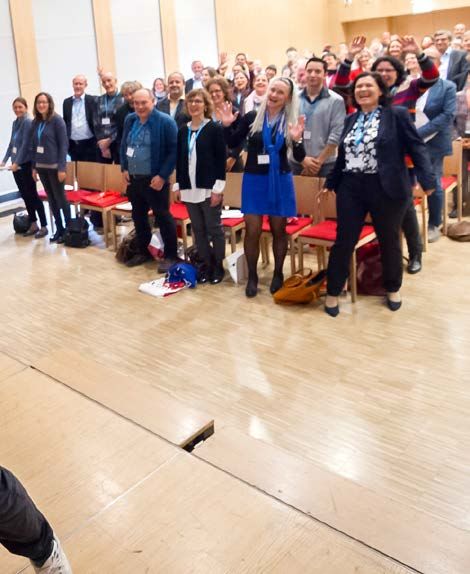
Euroguidance
The autumn meeting in Tallinn, Estonia formed a working together across the member countries.
part of an entire European Guidance Week, which
served to draw attention to different aspects of
The related potential and challenges were ad-
dressed and debated from several perspectives. 1. 2
guidance. There, the main themes were a follow- Colleagues also received hands-on training in
working groups
up on the Estonian EU Presidency conference on publishing and editing material on the new
Lifelong Guidance Policy and Practice and the Euroguidance website and there was a session
preparation for the next 3-year operational period on peer learning where colleagues shared good
(2018-2020). This more long-term perspective practices from their countries.
calls for novel methods and innovative ways of
There have been for many years four thematic and promotional activities, international mobility
working groups that work on topics and issues and staff development. In the following sections
that are of relevance and strategic importance to below there are short summaries of the main
the whole Euroguidance network. These groups outcomes of these working groups in 2017.
deal with strategy and quality, communications
1.2.1 Strategy and quality working group
The main function of the Strategy and quality Competences Framework. At the network plena-
working group (SQWG) is to follow up and in- ry meeting in Malta in May, the SQWG organised
fluence EU-level developments that (may) have a discussion on the paper before submitting it to
an impact on the Euroguidance network and its the Commission.
role in the context of lifelong learning, sustainable
An impact assessment within the Euroguidance
employment, guidance for career and learning
network was another important subject for the
paths, and international mobility. Therefore, one
SQWG during 2017. The SQWG prepared a frame-
of the main tasks of the SQWG in 2017 was to work for such an assessment for the network and
ensure well-functioning relationships with rele- pointed out possible steps forward. A workshop
vant stakeholders across Europe. The working on this theme was organised at the Euroguidance
Members of several European Networks and projects group made efforts to promote the Euroguidance meeting in Tallinn in September. In addition, input
(Euroguidance, CareersNet, EmployID) gather for the Network in strategically targeted ways towards from network members was collected, concerning
family picture of the European Lifelong Guidance the European Commission, the European Parlia- a possible joint Euroguidance stakeholder survey
Week. © Foundation Innove, Euroguidance Estonia ment, European agencies (specifically Cedefop across the member countries of the network.
and European Training Foundation), international
associations (e.g. the IAEVG and the EAIE) and Furthermore, the issue of the internal Eurogui-
European networks (such as Europass, Eurodesk, dance Handbook was taken forward and it was
EQF and Eures). decided that a joint archive for Euroguidance
files and decisions should be established in the
The SQWG actively disseminated the European members’ area of the network’s website. The aim
Parliament briefing note, which discussed the is to be able to build on previous work as well
possible implications of the New Skills Agenda for as to support newcomers in the network and
future European cooperation in lifelong guidance contribute to the network identity. An additional
policies and how this influences the Euroguidance task for the SQWG in 2017 was to offer support
network. The SQWG was also active in relation to the Euroguidance Centres that have been or-
to the Commission’s informal discussion forum on ganising network meetings, by contributing to the
the future of Europass and in relation to the es- preparation of the meeting agendas. The group
tablishment of Cedefop’s CareersNet. The group has also represented the network through pre-
drafted a joint network position paper concerning sentations at joint network meetings in Brussels,
the Commission’s review of the European Key arranged by the European Commission.
10 1. EUROGUIDANCE AS AN EU-FUNDED NETWORK FOR GUIDANCE AND MOBILITY 1. EUROGUIDANCE AS AN EU-FUNDED NETWORK FOR GUIDANCE AND MOBILITY 11
1.2.2 Communications and 1.2.3 Mobility working group
promotion working group The Euroguidance working group on mobility
(MOWG) aims to equip guidance professionals
cooperation with the Staff development working
group, the group facilitated a Be mobile workshop
The Communications and promotion working management system allows each Euroguidance with various tools for learning mobility in their to get an initial list of such needs. Distant and
group (CPWG) coordinates the network-level ac- lifelong guidance practice. Its two main tasks are face-to-face training courses on mobility for na-
Centre to edit and modify country-specific sec-
to disseminate tools on mobility and to provide tional guidance counsellors were held throughout
tions to increase the visibility of the Euroguidance tions on the website. This facilitates the mainte-
training on mobility to guidance professionals. the year. A presentation on the use of webinars in
Network, its products and services towards its nance of the site and information can be better offering online training sessions was given to the
primary target group (the European community kept up-to-date as centralized maintenance is The main output of the MOWG’s work in 2017 was Euroguidance colleagues at the network meeting
of guidance practice, research and policy) and less required. the publication of the brochure on the mobility held in Tallinn. The promotional leaflet with in-
beyond. This is done by applying a communi- advice interview which has been translated into formation about mobility tools was disseminated
cation mix and a multi-channelling approach to The CPWG also edited and published an issue of several languages. The MOWG also discussed the on different occasions, e.g. at the conference
support the optimal online and real-life presence the Euroguidance Network’s Insight Newsletter needs of guidance professionals when providing of the International Association Educational and
of the network. with contributions from across Europe and the guidance for mobility and how the carrying out of Vocational Guidance (IAEVG) in Mexico City in
In 2017, the CPWG’s main task was to design, 2016 edition of Highlights publication. The above a survey can be helpful with identifying them. In December.
conceptualise and create a new website for the mentioned Facebook page of the Euroguidance
1.2.4 Staff development working group
Euroguidance Network. The Lithuanian Eurogui- network, operated by the Czech Republic Eurogui-
dance Centre was in charge of coordinating the dance Centre as a member of the CPWG working
website development supported by the Finnish group, is an important element in the network’s
Euroguidance team. The user-friendly content communication strategy. The Staff development working group (SDWG) The SDWG organised four online webinars for the
supports knowledge sharing, peer learning and Euroguidance network. These were designed to
skills development within the Euroguidance net- be interactive, with a 30-45-minute long presen-
work. In 2017, the SDWG facilitated the exchange tation followed by a Q&A session and discussion.
of information within the network on various Euroguidance Serbia provided a webinar platform,
topics: past and upcoming events, seminars, con- shared their knowhow on webinar preparation
ferences, information on national guidance sys- and facilitated the sessions. The first webinar was
tems and policy developments, good guidance a pilot for the members of SDWG with the aim
practices, the National Career Guidance Awards in to plan using webinars and to better understand
the Czech and Slovak Republics and the Republic the tool for further webinars. This was followed
of Serbia. with one on the concept of National Career Gui-
As a part of the Euroguidance network meeting dance Awards which presented the experiences
in Tallinn, members of the SDWG in cooperation in the Czech and Slovak Republics. The second
with the Mobility Working Group animated a peer introduced the Romanian experiences in intro-
learning session for Euroguidance staff members ducing career guidance and career education into
on network’s developments in different areas: Be secondary school curricula. Finally, Euroguidance
strategic – long-term strategy for Euroguidance; Malta hosted a webinar on Personal, Social and
Be accountable - impact assessment; Be digital – Career Development and on the Provision of
video and webinars; Be inspirational – collecting Career Guidance for Students, and shared their
good guidance practices; and Be mobile (in coo- insights on the national career education and
peration with the MOWG) – supporting European career guidance policy framework and the rela-
mobility. The sessions were led by experienced ted developments. The concept of webinars has
members of the SDWG in the specific areas of the proven successful as the number of participants
network’s functioning. was steadily growing.
Advertising the latest Euroguidance Insight.
Photo taken at the European conference on
Lifelong Guidance Policy and Practice.
© Foundation Innove
12 1. EUROGUIDANCE AS AN EU-FUNDED NETWORK FOR GUIDANCE AND MOBILITY 1. EUROGUIDANCE AS AN EU-FUNDED NETWORK FOR GUIDANCE AND MOBILITY 13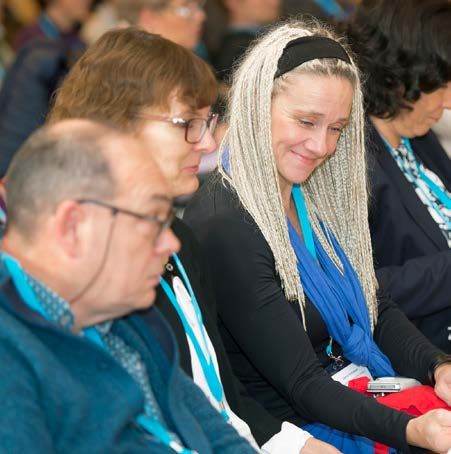
Euroguidance
rewarding to all centres involved; the division of Every year the Swedish Association for Educa-
1. 3 tasks was balanced, the cooperation fluent and
the objective of offering workshops that enabled
tional and Vocational Guidance organizes a lar-
ge-scale national conference for guidance prac-
participants’ active involvement, discussion and titioners in schools and adult education. In
network’s regional
sharing of experiences, was reached. 2017, the Association broadened the scope of the
event to cover professional topics in the neigh-
For the conference Transitions, Career Learning
bouring countries. This was reflected in the con-
and Career Management Skills. Multi-disciplinary
ference title Guidance so in fashion in the Nordic
and Critical Perspectives in Stockholm in October
countries. Following this, the Euroguidance Cen-
cross-border
a joint Nordic-Baltic leaflet was produced on Eu-
tres in Denmark, Finland, Norway and Sweden
ropean and Nordic funding opportunities: Oppor-
offered a joint conference workshop about gui-
tunities for Lifelong Guidance Experts and Re-
dance in the Nordic countries. There an insight
searchers with EU and Nordic Grants. Here, re-
into the latest initiatives and developments in the
cooperation
searchers in the area of lifelong guidance were
field of lifelong guidance was given from each
offered collected information on funding possi-
of the countries. The primarily Swedish audience
bilities within the Erasmus+, Horizon 2020, Max
was invited to discuss similarities, differences
Weber and Nordplus programmes. The leaflet
and lessons learned from what they had heard.
was disseminated at the conference and it was
The workshop turned out to be so popular that
promoted through a plenary presentation given by
it had to be offered twice. In addition, a Euro-
Euroguidance Estonia and Euroguidance Sweden.
guidance stand was set up in the exhibition area
In this way, the Nordic and Baltic Euroguidance
to disseminate information material about lifelong
Centres facilitated further transnational networ-
guidance in the Nordic countries and joint efforts
king and cooperation among the researchers at
were made to promote Euroguidance services
the conference and created additional awareness
to the Swedish guidance community. About 200
Geographically based collaboration has been de- • organisation of guidance services in Europe of the role and function of the Euroguidance net-
Swedish guidance practitioners were equipped
veloping and growing over the years. The focus • sharing of tools and methods for guidance work among academic and scientific researchers.
with Euroguidance promotional materials, as
for cooperation has changed slightly from one counselling well as brochures and publications about lifelong
Euroguidance staff members from the French–
year to the next as different needs arise. Euro- guidance and mobility. This Nordic Euroguidance
The Academia programme offers the participants speaking part of Belgium, France and Luxem-
guidance colleagues have found it very useful to activity clearly showed the added value of joint
the opportunity to understand learning in a mul- burg participated in the first meeting of the
cooperate in smaller groups, where it is easy to efforts.
ticultural environment, gives them an overview French-speaking Euroguidance Centres in Brus-
learn from each other, plan events or publications sels. The objective of this group is to share
of both education and working life as well as of
and generally to support each other. guidance practices and information on education
lifelong guidance systems in various countries. A
The following regional activities took place in promotional video has been published by Euro- and training system developments. This meeting
2017: guidance Estonia with the aim to share the ex- led to a joint cross-border meeting on the recent
perience Estonian guidance practitioners have developments in guidance in a French-speaking
The Academia study visit programme aimed at gained in other countries. context. The first day of the meeting allowed the
guidance professionals reaches across Europe. It staff members of each of the Euroguidance cen-
is coordinated by the French Euroguidance Cen- The Nordic-Baltic Euroguidance Centres (Den- tres to meet and share guidance practices and
tre. The partner countries in the Academia ex- mark, Estonia, Finland, Iceland, Latvia, Lithuania, updated information on education and training
changes are: Belgium, Denmark, Estonia, France, Norway and Sweden) organised a workshop in systems. The second day brought together the
Germany, Ireland, Luxembourg, Romania, Slove- Tallinn entitled E-ways for international guidance Euroguidance members with their invited experts
nia, Spain, Sweden, the United Kingdom. The na- by Euroguidance. The aim of the workshop was from each country to approach the recent de-
tional Euroguidance Centres are involved in host- to promote ICT tools developed by Euroguidance velopments in terms of the legal framework of
ing guidance counsellors from other countries to support guidance for mobility. The workshop guidance, the training of guidance professionals
on one-week long thematic study visits as well was run twice with a changing content focus. The and the exchange of good practices in terms of
as sending their own guidance professionals on first session focused on competence building of cross-border mobility projects.
such study visits in other countries. All of them guidance practitioners where colleagues from
offered a hosting experience, which allowed the Sweden and Estonia presented courses offered
candidates to choose from programmes on the to guidance practitioners. The second session
following themes: introduced ICT tools developed for guidance
practitioners by the centres of Lithuania and Ire-
• prevention of dropout and management of land. The organisation of the workshop was
dropouts policies collectively divided between the Nordic-Baltic
• lifelong guidance Centres and facilitated in a way that it supported
• guidance support for persons with special the mutual exchange of ideas and experience
needs of the participants. This common project was
14 1. EUROGUIDANCE AS AN EU-FUNDED NETWORK FOR GUIDANCE AND MOBILITY 1. EUROGUIDANCE AS AN EU-FUNDED NETWORK FOR GUIDANCE AND MOBILITY 15
Cooperation
                                                                                                                                  and share information at local level. Attendees       idarity Corps). More than one hundred guidance
                          1. 4                                                                                                    included Youth Information workers, post-primary
                                                                                                                                  guidance counsellors, Adult Education Guidance
                                                                                                                                                                                        counsellors from education, the labour market
                                                                                                                                                                                        and the private sector attended the event. The
                                                                                                                                  Counsellors and Information Officers, and other       conference offered short practical storytelling

                       and exchange across
                                                                                                                                  organisations working with unemployed young           sessions with real stories on how EU networks
                                                                                                                                  people and early school leavers amongst others.       and tools helped to solve a challenge of a person
                                                                                                                                  Euroguidance Lithuania organized a joint confer-      in relation to international mobility experience
                                                                                                                                  ence in cooperation with nine different networks      as well as interactive group sessions, where

                       European networks
                                                                                                                                  (Europass, EQF, ECVET, Enic-Naric, Eurodesk,          the groups solved some real-life situations that
                                                                                                                                  Youthpass, EURES, SOLVIT and the European Sol-        people may encounter while abroad.

                       The Euroguidance network has a well-established       synergies between the Austrian Euroguidance
                       tradition of cooperation with networks such as        and Europass Centres were also used in a jointly
                       Europass, the EQF-NCP, Eures, Eurodesk, NARIC,        organized peer review exercise. Two represen-
                       Europe Direct and Eurydice that all promote tools     tatives from Euroguidance Slovakia and Sweden
                       that support common policy goals on European          and Europass Finland and Hungary were invited to
                       level. Here, the most important ones are the          Vienna to interview important stakeholders and
                       Europe 2020 Strategy aimed at promoting smart,        partners of the two Austrian centres as well as
                       sustainable and inclusive growth, the Education       representatives of the two centres themselves.
                       and Training 2020 Strategic Framework for Euro-       The evaluation of external relations and networ-
                       pean Cooperation and the recently adopted the         king activities as well as activities directed to-
                       New Skills Agenda for Europe. Using joint efforts     wards end-users and stakeholders provided the
                       and synergies across the networks was key to          Centres with valuable feedback and contributed
                       the successful outreach to European citizens,         to the continuous improvement of the services
                       to mutual learning and cooperation, as will be        offered.
                       highlighted here in a few examples.
                                                                             Euroguidance Ireland had the opportunity to
                       Euroguidance Hungary held a national conferen-        support the Eurodesk Ireland Time to Move cam-       The Lithuanian conference displayed some nice drawings about
                       ce in cooperation with its European mobility part-    paign 2017. This Europe-wide campaign aims to        the life in a foreign country. ©Euroguidance Lithuania
                       ner networks (Europass, Eurodesk, Eures and the       inform young people (aged 18- 30 years) and
                       EQF-NCP). It was the third time that these net-       those who work with them about opportunities
                       works joined efforts in organising this large-scale   to work, study, train and volunteer in Europe,
                                                                                                                                  The newly established Italian Euroguidance Cen-       In November, the national Euroguidance and Eu-
                       national event for stakeholders in the field of       as well as providing useful local contacts in the
                                                                                                                                  tre contributed to a range of information events      ropass Centres Cyprus continued their annual
                       education, labour and counselling. In addition,       area of Youth and European Information. This
                                                                                                                                  addressed to practitioners and the wider public       joint actions by organizing two seminars in Nico-
                       the Centre also reached out to the experts of         was aimed at young people struggling to find
                                                                                                                                  across the country including the co-organisation      sia and Limassol. These events were attended
                       the Hungarian Vocational Centres by organising        their place in society and for whom partaking in
                                                                                                                                  of Joint Informative Seminars in Turin and Bari in
                       a VET seminar for this new target group, as one       learning mobility would be beneficial. Successful
                                                                                                                                  December with Eurodesk and Eures and a na-
                       of the accredited programmes of the European          regional events were organised by youth organ-
                                                                                                                                  tional-level job and career fair in Verona. Besides
                       Vocational Skills Week 2017. On both occasions        isations, supported by NCGE/Euroguidance Ire-
                                                                                                                                  these information events the Italian Euroguidance
                       the results the Euroguidance Centre has reached       land and Léargas/Eurodesk. Each event provided
                                                                                                                                  Centre kept its users and guidance community
                       in the past 25 years were presented to the au-        a unique opportunity for guidance counsellors
                                                                                                                                  updated by releasing bimonthly newsletters and
                       dience.                                               and those working in the youth sector to network
                                                                                                                                  the national Euroguidance magazine, providing
                       Euroguidance Austria continued its tradition to                                                            readers and subscribers with timely information
                       contribute to the training of guidance counsellors                                                         on significant developments ranging from the
                       with workshops, where prospective counsellors                                                              Estonian EU presidency conference conclusions
                       receive information about the benefits of Eu-                                                              on lifelong guidance and the OECD Report on the
                       ropean mobility and the opportunities offered                                                              National Skills Strategy, to the new EQF Recom-
                       by the Erasmus+ programme. Three workshops                                                                 mendation and a summary of the key results of         Seminar hosts satisfied with the successful
                       were held in 2017 with Europass colleagues. The                                                            the first 30 years of Erasmus.                        event © Euroguidance Cyprus

16   1. EUROGUIDANCE AS AN EU-FUNDED NETWORK FOR GUIDANCE AND MOBILITY                                                                                                              1. EUROGUIDANCE AS AN EU-FUNDED NETWORK FOR GUIDANCE AND MOBILITY   17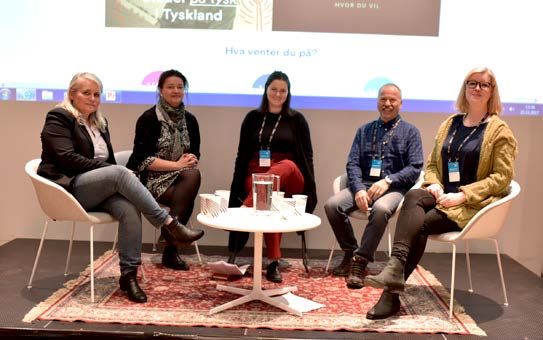
by 60 guidance practitioners. The topic was Sup-        of the Employment Service of Slovenia, publishing

                                                                                                                                         2
                       porting people with disabilities for their optimal      a joint newsletter as well as organizing a joint
                       integration into the labour market. The seminars        study visit to Iceland for exchange of guidance
                       aimed at informing the guidance community               practices.
                       working with people with disabilities on how to
                       support both the job seekers and the employ-
                       ers for a successfullabour market integration.
                       Awareness about proper career interventions
                       was raised through theoretical and experimental
                       training. Ms Luminita Danes, an expert on social
                       and occupational integration of people with
                       disabilities, provided theory, tools and guidelines

                                                                                                                                   Digitalisation of
                       for the development of the appropriate skills and
                       knowledge of professionals to support people
                       with disabilities in their efforts to join the labour
                       market.

                                                                                                                                   lifelong guidance
                       Euroguidance Slovenia also continued its good
                       cooperation with the national Europass and EQF
                       counterparts, for example by having joint presen-
                       tations on the Europass cluster meeting in Ljublja-     Participants from Slovenia in Iceland
                       na, holding joint workshops for career counsellors      © Euroguidance Slovenia

                                                                                                                                   provision -
                                                                                                                                   Guidance 4.0
                                                                                                                                   European countries are having intensive discussions on digital guidance services
                                                                                                                                   and how they can be best applied to providing information, advice and guidance
                                                                                                                                   in a cost-efficient, but customer-friendly manner. Therefore, it is important
                                                                                                                                   to involve both the potential users and the service providers in the design,
                                                                                                                                   development, delivery and evaluation of these technologically advanced services.
                                                                                                                                   The Euroguidance Centres are mainly interested in how digital guidance provision
                                                                                                                                   can support learning mobility and how the digital skills and competences of
                                                                                                                                   guidance professional can be enhanced in this regard. What are the new online
                                                                                                                                   tools in guidance? How is the increased use of online guidance influencing the
                                                                                                                                   accessibility of guidance services? To what extent is the use of new technologies
                                                                                                                                   changing the demands being placed on guidance practitioners? These questions
                                                                                                                                   were raised at events such as the Cross-Border Seminar in October, organized by
                                                                                                                                   Euroguidance Serbia, the European Guidance Week in September in Tallinn and
                                                                                                                                   national events such as the Austrian Euroguidance Conference in November.

18   1. EUROGUIDANCE AS AN EU-FUNDED NETWORK FOR GUIDANCE AND MOBILITY
Focusing on
2 .1
Guidance 4.0 in
conferences and peer
learning seminars
During the Estonian EU Presidency, their national
Ministry of Education and Research, Cedefop and
the Euroguidance Centre (Foundation Innove)
welcomed over 200 guidance experts and policy
makers from 35 countries, who participated at
the European Guidance Week 2017 organized in
Tallinn. The overall theme of the EU presidency
conference on Lifelong Guidance Policy and Prac-
tice was innovative information and communi- Participants at Cross Border Seminar © Sofija Petrović, Euroguidance Serbia
cation technologies and European cooperation
in the field of guidance. The aims were to share
innovative ICT practices, to disseminate tools and “The past decades have seen an incredible ex-
initiatives to support the development of ICT ca- pansion in access to ICT. Most notably, we have
pacity in lifelong guidance, and to facilitate future seen a significant increase in the use of mobile
cooperation at European level. Active listening and note-taking at the Tallinn technologies and social media. Technological ad-
conference. © Foundation Innove vances change the way individuals explore and
To identify current trends and points of interest acquire information about education, training and
prior to the conference, a mapping survey on the work opportunities. The ‘read-only web’ has chan-
use of ICT and the recent progress of co-opera- The topic of the Cross-Border Seminar held in
ged towards a more social, collaborative, interac-
tion mechanisms in lifelong guidance was carried Belgrade was Guidance 4.0: Innovative Practices
tive and responsive web,”
out and members from each country were asked for New Skills. The seminar, organized by Euro-
to provide the relevant information (results from guidance Serbia in cooperation with Euroguidance said Dr Jaana Kettunen of the Finnish Institute for
the study can be found here). The Euroguidance centres in 10 countries (Austria, Croatia, the Czech Educational Research of the University of Jyväsky-
Centres led or participated in the work in their Republic, Germany, Hungary, Poland, Portugal, lä, in her key note speech at the Austrian Eu-
countries making sure to draw attention to the Romania, Slovakia and Slovenia), debated new roguidance conference Guidance 4.0 - New tools
European dimension in guidance. The survey and innovative practices in guidance, with a focus and skills in guidance in November. Other findings
was conducted in collaboration with Cedefop and on practices using ICT to develop career manage- such as the contribution of Kairi Valk, Foundation
Euroguidance Estonia and the outcomes were ment skills (CMS), key competences and other Innove, about E-Governance and E-Guidance in
presented at the abovementioned conference skills needed in the contemporary world of work Estonia as well as the contribution of Dries Van-
and gave participants an insight into policies and and living. The event brought together around dermeersch about CBL centre Brussels, Belgium, Jaana Kettunen lecturing on the developments
practices in other countries in the field of ICT in 80 participants and offered 15 workshops on the can be found in the conference publication. The in the use of ICT in Lifelong Guidance
guidance. topic of innovative practices in lifelong guidance. event was attended by 150 guidance counsellors. © OeAD-GmbH/APA-Fotoservice/Hörmandinger
20 2. DIGITALISATION OF LIFELONG GUIDANCE PROVISION - GUIDANCE 4.0 2. DIGITALISATION OF LIFELONG GUIDANCE PROVISION - GUIDANCE 4.0 21Developing new
The Norwegian Euroguidance Centre co-orga- limited in resources and they need educating in
nized a national conference on internationaliza-
tion in compulsory education in November 2017,
how to carry out high-quality mobility guidance.
The distance course is a flexible six-week course 2.2
where a popular Swedish online distance course for practitioners wanting to learn more about
ICT tools and resources
in mobility guidance was presented by Nina international mobility and possibilities and the
Ahlroos, Euroguidance Sweden. One of the si- different stages of a period abroad. Participants
multaneous seminars was dedicated to the needs take the course in their free time and are encou-
of guidance counsellors in primary education; raged to integrate their own working experience
what counsellors need to do to improve mobili- in the study. The Norwegian stakeholders will
ty guidance. The course is in response to two cooperate to create a nationally adjusted version
main challenges: counsellors at schools are very of the course in Norway by the end of 2018.
The development of the International ePathfin- schools. This will be an optional programme taken
der – the first e-learning platform for guidance by students in the middle, or ‘transition’ year -
counsellors in Estonia, was an important mile- two years before they leave school. The ‘Euro-
stone for Euroguidance Estonia in 2017. The aim Quest’ resource contains ICT classroom-based
of the platform is to inspire professionals to use materials and self-directed research assignments
international opportunities for their own and their which encourage them to explore the possibility
client’s professional development, and to learn of studying/training in another European country
professional terminology in English. The platform either for the entire duration of their undergra-
is built on five modules, which include theory and duate degree/training or as part of an Erasmus+
interactive exercises. exchange. The resource encourages students
In 2017, the National Centre for Guidance in Edu- to consider their own readiness for a period of
cation as Euroguidance Ireland began to develop learning mobility and challenges initial precon-
a new classroom resource for Irish post primary ceptions and expectations.
Panel discussion at the Norwegian national conference on internationalization in compulsory edu-
cation; from left to right: Mona Mathiesen, Nina Ahlroos, Anna Hellesnes; Sturla Johansen, Hilde M.
Hustad © Euroguidance Norway
In the United Kingdom the Euroguidance Centre fore has a strong role in the distribution and
completed its two-year project for Cedefop on ICT accessibility of such information. The project
and Labour Market Information (LMI) in Lifelong studied 25 best practices in the use of ICT and
Guidance. Effective use of LMI can help labour LMI in guidance from across Europe, developing
markets to respond better to changing needs, a range of targeted resources to improve the
by informing individuals about opportunities that quality of career guidance and support digital
fit their interests, skills and abilities. Since LMI is guidance services. The results were presented
usually extracted from online sources (statistics, to a European audience at the Lifelong Guidance
occupational information, vacancies), ICT there- Week in Tallinn.
22 2. DIGITALISATION OF LIFELONG GUIDANCE PROVISION - GUIDANCE 4.0 2. DIGITALISATION OF LIFELONG GUIDANCE PROVISION - GUIDANCE 4.0 23To improve quality and increase availability of serves the online community of the career gui-
3
guidance services, Euroguidance Slovenia signifi- dance and counselling practitioners by providing
cantly upgraded and presented a new version of them with relevant resources for their day-to-day
the Where and How online guidance tool for their work. In 2017, Euroguidance Romania promoted
guidance counsellors, students, job seekers and many resources for professional development
all individuals interested in a career change. The such as books, presentations, conferences, from
tool is free of charge and widely used in almost the field of career counselling and guidance. The
all Slovenian schools and employment offices. Facebook page makes resources more visible and
The Facebook page of Euroguidance Romania increases their popularity.
Professionalisation
of guidance
All the Euroguidance Centres across Europe have taken active measures to
support the professional development of guidance professionals regarding
the international and intercultural dimension of their daily work practice. The
starting point is that every guidance counsellor should have knowledge about
how the processes of providing guidance for learning mobility and adapting
to a new culture look like. In this way internationally aspired clients and/or
customers with a different cultural/ethnic background can be better guided
Screenshot of the Facebook page of Euroguidance Romania
on their learning and career paths.
As well as this, cross-border networking, active engagement in European
project cooperation and participation in international events and study
Euroguidance Austria developed a relationship visits are having an increasing importance for guidance counsellors’ ongoing
with the Austrian online career platform what- professional development. The role and function of the whole Euroguidance
chado, a well-known career platform in the Ger- network is to contribute to enhancing this internationally orientated mix of
man-speaking countries, by inviting the founder
of this platform as a speaker at the Euroguidance
skills and competences among guidance workers.
conference 2017. In the preparation of his key In the following inputs, several concrete examples of different types of activities
note intervention, whatchado filmed 14 inter- to improve the competences of guidance practitioners on mobility and migration
views with careers- and educational guidance
counsellors. Excerpts of the videos were shown related issues will be demonstrated. These training activities take many forms
at the Euroguidance conference. Thanks to this (e.g. training days, online courses, lectures, study visits abroad, internships) and
collaboration, the occupational profile How do I Guidance counsellors being interviewed by address numerous topics and themes, such as multiculturalism, novel guidance
become a guidance counsellor now appears on whatchado © OeAD-GmbH_C Seidelberger tools for mobility, the most recent EU-level developments, ICT in guidance and
the platform.
many more.
24 2. DIGITALISATION OF LIFELONG GUIDANCE PROVISION - GUIDANCE 4.0Focus on
3.1 Innovative guidance
3.2
multicultural aspects tools and methods
The Maltese Euroguidance Centre in collaborati- different dimensions were addressed: knowle- In October, the Bulgarian Euroguidance team or- and tools described and included in a printed com-
on with the University of Malta and the Malta dge, skills, decision making and empathy. The day ganized a three-day training event on Innovative pendium to be published by Euroguidance Bulgaria.
Career Guidance Association organized a two-day started with a presentation about key theories of Career Guidance and Counselling Tools. Overall
Counsellors in Iceland have needed some useful
training on Multicultural Issues in Career Gui- multicultural guidance, models of cultural adap- 50 participants from different cities across the
tools for work life guidance for a long time. This is
dance. This Continuous Professional Development tation, diversity and stereotypes. This was follo- country participated in the training, including re-
a form of guidance that takes place at workplaces
opportunity involved the training of 28 career wed by a presentation on research evidence on presentatives of educational institutions, employ- and unites different methods of guidance focu-
guidance practitioners, including a workshop on how young people with an ethnic background ment offices, career centres, non-governmental sed on employees. Its main goal is to strengthen
understanding and applying the Cultural Prepa- often are guided to choose a study or career path organizations, regional authorities, and more. The employees’ motivation, well-being and commit-
redness approach presented by Professor Gide- in a field that from the outset already is predo- programme consisted of eight thematic sessions ment at work. The form of guidance also aims
on Arulmani from Bangalore, India. This training minantly targeted at migrants. This easily leads to with the aim to provide career counsellors with a at matching employee’s hopes, needs and goals
opportunity equipped career guidance practitio- segregation in certain professional fields, which is variety of modern tools and techniques for career with organization’s meaning of existence, strate-
ners with the necessary knowledge and fur- not necessarily a positive development for soci- information and to develop skills for their daily gical goals and needs. To meet these needs for
ther strengthened their skills and competen- ety in the long run. In the afternoon an armchair guidance practice. The participants highly appre- training, a two-day training seminar for guidance
ces. Due to the relevance of the topic and the for storytelling was brought to the training room. ciated the added value and innovative aspects counsellors and human resource managers was
positive training experience, Euroguidance Malta Four guidance practitioners from educational ins- of the resources presented. The session on the held in October, in cooperation between the
plans to continue organizing further training and titutions and public employment offices sat on storytelling method and the techniques and tools Icelandic Euroguidance Centre and various other
Continuous Professional Development opportuni- developed for working with pupils of different
this chair one after the other and told about their stakeholders. The trainer, Ms Teea Oja, came
ties for all career guidance practitioners working ages was the most popular one. The importance
own guidance work with students and jobseekers from Oulu Adult Education Centre in Finland. She
in schools and colleges over the next few years. of networking among career counsellors was
from other countries. The main conclusion of the has been offering similar training in Finland for
The Finnish Euroguidance Centre organized a trai- day was that guidance practitioners must not shy addressed as a way to receive professional sup- some years, where over a thousand people have
ning day on multicultural guidance and counselling away from the issues of discrimination, racism port from peers (e.g. job shadowing, exchanging participated. The training in Iceland proved to be
in November. Altogether some 70 participants and intolerance in their daily work as migrants good practices), but also to institutionally streng- a great success to combine guidance counsellors
from the sectors of education and employment themselves often avoid bringing these problems then the position, function and role of career and human resource managers for the course, the
as well as from NGOs attended the training. Four into discussion with guidance personnel. counsellors in education. An explicit need was ex- group was very animated and new approaches
pressed by the participants to have good practices were discussed at length.
Group work on a very serious question. Course organisers with Ms Teeja Oja (in the
© Dóra Stefánsdóttir middle). © Dóra Stefánsdóttir
26 3. PROFESSIONALISATION OF GUIDANCE 3. PROFESSIONALISATION OF GUIDANCE 27Linking the
Euroguidance Croatia organised a seminar for Czech Euroguidance Centre. In addition to the
guidance counsellors at higher education institu-
tions to promote cooperation between the aca-
Czech participants there were guidance practi-
tioners from Slovakia, with lecturers from Aus- 3. 3
demic and business sectors. The event was or- tria, Norway and Sweden. The 4-weekend course
world by means
ganised as a networking opportunity for career was a continued learning and networking process
centres, the business sector and policy-makers, among career counsellors. The big finale was a
who also participated in the seminar as invitees. conference with 50 external career counsellors
The seminar connected guidance counsellors and who attended four different workshops devel-
oped by participants of the module and was
of online delivery
representatives of HR departments from suc-
cessful Croatian and international companies to based on the skills they learned throughout the
whole cycle of the course.
debate topics of common interest. The specific
focus of the seminar was the Millennials’ Gene- All the activities undertaken by Euroguidance
ration. In a panel discussion, participants from both Spain seek to further the professional develop-
sectors were invited to share important insights. ment of guidance professionals. Equally important
There the academic sector discussed the mil- is the development of tools and instruments for
lennials’ socio-economic and psychological cha- those individuals who, either directly or indirectly,
racteristics, shared moral values and their work are involved in educational, vocational and pro-
attitudes, while the business sector shared their fessional guidance activities, together with the
own expectations of the young employees, cur- continuous integration of the European model of
rent trends in employment and good practice co-existence and the EU aims in terms of edu- Supporting internationalisation and the use of In 2017, Euroguidance Germany was involved in
examples of cooperation between businesses cation, transition to employment and mobility. In technology in lifelong guidance has been on the testing the technical feasibility of online lectures
2017, the team contributed to providing training agenda of many Euroguidance Centres. For on studying, working and living abroad in the vo-
and education institutions.
to guidance practitioners on numerous themes, example, Euroguidance Estonia provided unique cational information centre (BIZ) of the Frankfurt
A training module on the European dimension in always including the European dimension in training sessions for guidance professionals by Employment Agency. The test run was positive
guidance and counselling was organized by the lifelong guidance and learning mobility. using e-learning and webinar online solutions. and new insights were gained. In particular, the
Additionally, the Estonian and Latvian Eurogui- presentation of the speaker, the screen view and
dance Centres cooperated with Canada to run a the simultaneous use of the chat facility contri-
joint webinar on guidance to learn from practices bute to more attention in the audience. As a re-
across the ocean. In this webinar Dr Norman sult, the participating colleagues expressed their
Amundson, Canada, highlighted some key con- desire to offer these lectures to their customer
cepts and practices from his latest anniversary groups as early as possible and corresponding lec-
edition of Active Engagement. With respect to tures are already planned for 2018. Overall, the in-
career practice, Dr Amundson delved deeper into terest in such online-events is great. Six employ-
some interventions that were being validated ment agencies have already registered to hold
through various research projects. The webinar lectures on studying, working and living abroad.
was translated into Estonian and Latvian, to over- Potential target groups are school classes, grad-
come the language barrier and in this way help uates and jobseekers interested in going abroad;
guidance professionals with less advanced Eng- the offer includes both short presentations and
lish skills to participate in this professionally en- comprehensive presentations of a maximum of
riching webinar. two hours.
© Hana Chalušová Participants, BIZ Frankfurt (Photo: Employment Agency Frankfurt)
28 3. PROFESSIONALISATION OF GUIDANCE 3. PROFESSIONALISATION OF GUIDANCE 29In 2017, Euroguidance Ireland enrolled 60 addi- training. This gives the students an opportunity to internship turned out to be beneficial both for the and better equipped for international guidance
tional participants to its online Mobility Guidance try out their skills in guidance conversation me- student and the Euroguidance Centre. and mobility.
Counselling Module. It aims to provide guidance thods and do some job shadowing with a gui-
In order to enhance the knowledge and skills of Many counsellors at the 150 employment agen-
counsellors with the skills they need to support dance professional. In 2017, Euroguidance Sweden
guidance practitioners and enable them to better cies in Germany feel uncertain about whether
students in their quest to study, work or volun- started offering internships for these students.
facilitate mobility and support positive learning or how they can or should point out possibilities
teer abroad. The module explores the process For five weeks, a career guidance student did her
outcomes, the Danish Euroguidance Centre has abroad to their clients. There, the Euroguidance
of mobility (incl. preparation, induction and practical training at the Swedish Euroguidance given lectures on the international dimension in counsellors from the International and Specialised
re-integration) and contains resources that will Centre. The student commenced her internship by guidance. The lectures are part of the curriculum Services (ZAV) of the Federal Employment Agen-
assist the guidance counsellor in empowering learning about international mobility and the re- of the Danish Career Guidance Programme (the cy offered their help to them and their clients with
students to make informed choices about lear- lated guidance provision. After this she organised diploma programme DUEK, 60 ECTS). The lectures comprehensive advice on studying, working and
ning mobility. The process is based on a model group information and guidance sessions about are offered to the five university colleges respon- living abroad. Several workshops on international
designed by Dr Søren Kristensen, a Danish expert studying abroad for pupils and students at several sible for the diploma programme in educational mobility were held nationwide for guidance coun-
in youth mobility. The module was developed in upper secondary schools and folk high schools, and vocational guidance and are realised upon sellors and advisors in the vocational information
Ireland with the support of Euroguidance Sweden. supervised by Euroguidance Sweden. In order request from the university colleges. The lectures centres. The workshops focused on the following
It includes information on the practical, linguistic, to have this practical training period accepted, a focus on the numerous possibilities within the topics: presenting the Euroguidance network
cultural and mental preparation students should teacher from Stockholm University visited the Eu- Erasmus+ programme, both for mobility and for and Europass; informing about opportunities and
undertake prior to going abroad. It addresses the roguidance Centre and made an evaluation. The transnational cooperation within partnerships requirements for internships and studying abroad
issue of contracts between hosting and sending internship was well received and approved as part projects. They describe the EU policy develop- as well as about Europe-wide trends in career
institutions, support for students while abroad of the Career Guidance Programme. According ments within the area of guidance, the services guidance; explaining the scope of service and the
and underscores the importance of re-integration to the evaluation, it provided an insight into and of the Euroguidance network and the other Euro- customer guidance system; and showcasing gui-
for students on their return home. The module is created interest for the international dimension pean mobility networks. The lectures also allow dance tools and how to get in contact with the Eu-
divided into four parts (each taking approximately in guidance for the career guidance student. At the students to exchange experiences. Through roguidance counsellors. The workshops have been
45 minutes to complete). The module has been the same time, the internship generated quality these lectures, the international dimension of gui- rated very positively by the participants thanks
formerly recognised by the Irish Institute of Gui-
assured information material developed from a dance becomes part of the national career gui- to the content that is based on practical exam-
dance Counsellors.
guidance perspective and tested in real-life situ- dance education. These practices lead to future ples and gives enough time for discussion and
The Swedish 3-year Bachelor of Education in ations that Euroguidance Sweden can continue Danish guidance counsellors being well informed exchange of experience among the participants.
Career Guidance includes periods of practical offering to guidance professionals. All in all, the
On Germany-Tour: Claudia Silvestroni and Klaus Münstermann (Euroguidance-Counsellor, ZAV, left and
right), Ilse-Lore Schneider (Euroguidance-Coordinator, in the middle) © ZAV
30 3. PROFESSIONALISATION OF GUIDANCE 3. PROFESSIONALISATION OF GUIDANCE 31You can also read


