EUROPEAN - EUROPEAN ISLAMOPHOBIA REPORT
←
→
Page content transcription
If your browser does not render page correctly, please read the page content below

EUROPEAN ISLAMOPHOBIA REPORT 2019
                                                                                                                                                    EUROPEAN
B
             y gathering 35 local scholars, experts, and civil society activists specialized in
             racism and human rights, the fifth edition of the European Islamophobia Report
                                                                                                                                                 ISLAMOPHOBIA
             addresses a still timely and politically important issue. All 32 country reports
included in this book follow a unique structure that is convenient, first, for comparing
                                                                                                                                                     REPORT
countries and, second, for selected readings on a particular topic such as politics, em-
ployment, or education with regard to Islamophobia across Europe.
                                                                                                                                                             2019
The present report investigates in detail the underlying dynamics that directly or indirectly
                                                                                                                                                  ENES BAYRAKLI • FARID HAFEZ (Eds)
support the rise of anti-Muslim racism in Europe. This extends from Islamophobic state-
ments spread in national media to laws and policies that restrain the fundamental rights
of European Muslim citizens and threaten the whole of society. As a result, the European
Islamophobia Report 2019 discusses the impact of anti-Muslim racism on human rights,
multiculturalism, and the state of law in Europe.
This fifth edition of our report highlights how European societies are progressively over-
whelmed by the Islamophobic discourse of the “Great Replacement” and other far-right
conspiracy theories. The 32 country reports demonstrate how governments and main-
stream media participate in reproducing such discourses that put the fundamental rights of
millions of European citizens in jeopardy and how one can counteract these developments.
This compendium of useful insights and data aims to provide European policy-makers,
institutions, and NGOs with recommendations on how to tackle anti-Muslim racism in
Europe seriously.

     About SETA

                                                                                                             ENES BAYRAKLI • FARID HAFEZ (Eds)
     Foundation for Political, Economic and Social Research (SETA) is a non-profit research
     institute based in Turkey dedicated to innovative studies on national, regional and in-
     ternational issues. SETA is the leading think tank in Turkey and has offices in Ankara,
     Istanbul, Washington D.C., Berlin and Brussels. The objective of SETA is to produce
     up-to-date and accurate knowledge and analyses in the fields of politics, economy, and
     society, and inform policy makers and the public on changing political, economic, social,
     and cultural conditions. Through research reports, publications, brain storming sessions,
     conferences and policy recommendations, SETA seeks to guide leaders in government,
     civil society, and business, and contributes to informed decision making mechanisms.

                                                                               9   786257   040525
ANKARA • ISTANBUL • WASHINGTON D.C. • BERLIN • BRUSSELS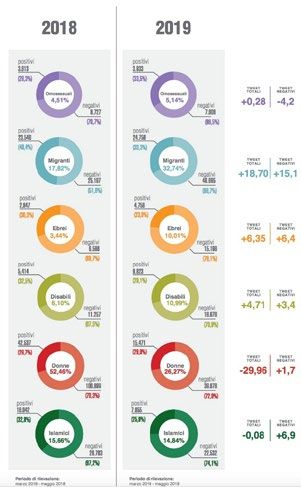
EUROPEAN
ISLAMOPHOBIA
    REPORT
              2019

  ENES BAYRAKLI • FARID HAFEZ (Eds)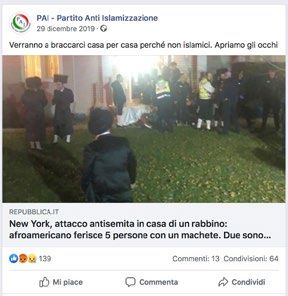
All rights reserved.
No part of this publication may be reprinted or reproduced or
utilized in any form or by any electronic, mechanical or other
means, without permission in writing from the publishers.

ISBN: 978-625-7040-52-5
COPYRIGHT © 2020 by SETA
First Published in 2020

Cover and Layout: Erkan Söğüt
Proofreading: Dr. Eva Stamoulou Oral
Printed in Turkey, İstanbul by Turkuvaz Haberleşme ve Yayıncılık A.Ş.,

SETA | FOUNDATION FOR POLITICAL, ECONOMIC AND
SOCIAL RESEARCH
Nenehatun Caddesi No: 66 GOP Çankaya 06700 Ankara TÜRKİYE
Phone:+90 312.551 21 00 | Fax :+90 312.551 21 90
www.setav.org | info@setav.org | @setavakfi

SETA | İstanbul
Defterdar Mh. Savaklar Cd. Ayvansaray Kavşağı No: 41-43
Eyüpsultan İstanbul TÜRKİYE
Phone: +90 212 315 11 00 | Fax: +90 212 315 11 11
SETA | Washington D.C.
1025 Connecticut Avenue, N.W., Suite 1106
Washington, D.C., 20036 USA
Phone: 202-223-9885 | Fax: 202-223-6099
www.setadc.org | info@setadc.org | @setadc
SETA | Berlin
Französische Straße 12, 10117 Berlin Germany
Phone: +49 30 20188466
SETA | Brussels
Avenue des Arts 27, 1000 Bruxelles, Belgique
Tel: +3226520486
ABOUT EDITORS
Enes Bayraklı
Mr. Bayraklı earned his BA, MA and PhD from the Department of Political Sci-
ence at the University of Vienna, and conducted research for his PhD thesis at the
University of Nottingham in Britain between 2009 and 2010. He took office as a
deputy director at Yunus Emre Turkish Cultural Center in London in 2011-2013.
Mr. Bayraklı also served as the founding director of Yunus Emre Turkish Cultural
Centers in Constanta and Bucharest during the period of August-December 2012.
Mr. Bayraklı has been a faculty member in the Department of Political Science at
the Turkish-German University since 2013. His fields of research include the Trans-
formation of Turkish Foreign Policy, Cultural Diplomacy, Foreign Policy Analysis,
German Politics and Foreign Policy. bayrakli@tau.edu.tr

Farid Hafez
Farid Hafez, PhD (Political Science, University of Vienna), is a political scientist and
non-resident senior researcher at Georgetown University’s “The Bridge Initiative” at
the School of Foreign Service. He defended his habilitation thesis on “Islam Politics
in the Second Republic of Austria” at the University of Salzburg in 2019. In 2017,
he was a Fulbright visiting professor at the University of California, Berkeley and in
2014, he was a visiting scholar at Columbia University, New York. Since 2010, he has
been the editor of the Islamophobia Studies Yearbook, and since 2015 the co-editor of
the European Islamophobia Report. Hafez has received the Bruno Kreisky Award for
the “Political Book of the Year” for his anthology Islamophobia in Austria (co-edited
with John Bunzl). He has more than 100 publications in leading journals such as
Politics and Religion, Patterns of Prejudice, and German Politics and Society. His latest
publications are Islamophobia in Muslim Majority Societies (Routledge, co-edited with
Enes Bayrakli, 2019) and Feindbild Islam. Über die Salonfähigkeit von Rassismus (Islam-
ophobia. On the Acceptance of Racism. Bohlau, 2019). Email: farid.hafez@sbg.ac.att

For more information about the EIR:
www.islamophobiaeurope.com
islamophobia@setav.org
ISLAMOPHOBIA IN ıtaly

                                          ISLAMOPHOBIA IN
                                     ITALY
                             NATIONAL REPORT 2019
                                              ANTONIA ROBERTA SIINO

islamophobiaeurope.com •   @islamophobiaEIR                          431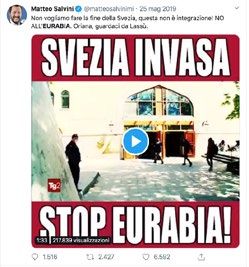
EUROPEAN ISLAMOPHOBIA REPORT 2019

432                                 setav.org
ISLAMOPHOBIA IN ıtaly

The Author
Antonia Roberta Siino has a PhD in Sociology and Social Research from the
University of Bologna and was a visiting student at the Department of Sociology,
University of Oxford. Siino has been working for a long time on the study of or-
ganized crime (specifically mafia-type organizations) and its interactions with civil
society, and conducting empirical research based both on qualitative and quantita-
tive methods. She has published articles, both in Italian and English, in academic
journals such as the Sociological Review and Sicurezza e Scienze Sociali Journal. Email:
antoniasiino8@gmail.com

Disclaimer: Statements of fact and opinion in the national reports of the European
Islamophobia Report are those of the respective authors. They are not the expression
of the editors or the funding institutions. No representation, either expressed or im-
plied, is made of the accuracy of the material in the national reports. The editors of
the European Islamophobia Report cannot accept any legal responsibility or liability
for any errors or omissions that may have been made. The reader must make his or
her own evaluation of the accuracy and appropriateness of the material.
To cite this report: Antonia Roberta Siino: Islamophobia in Italy: National Report 2019, in: Enes Bayraklı
& Farid Hafez, European Islamophobia Report 2019, Istanbul, SETA, 2020.

islamophobiaeurope.com •          @islamophobiaEIR                                                    433
EUROPEAN ISLAMOPHOBIA REPORT 2019

Executive Summary
The political instability that characterises the Italian scenario has as the direct conse-
quence that political parties seem to be in a perpetual election campaign. All political
parties are involved so that the migration issue has become an instrument to use (in
different ways by right-wing or left-wing parties) to obtain additional consensus.
Public actors do not seem to be aware of the social impact that their words or actions
can have on the population expressing anti-Muslim messages. The new element that
can be noticed is the trend to distinguish between Islam as a religion and Muslims as
people. Attacks pretend to concern just Islam, defining it as extremist and a source
of terrorists, and not to target Muslims who peacefully live in Italy and respect the
local traditions. Considering the context, this seems to be a pretext which allows the
perpetrators to avoid the accusation of being Islamophobic. These kind of attitudes
have already expressed their concrete consequences: data shows an increase of verbal
and physical assaults both in real life and online dimension. Tweets and messages
posted on social networks show an augmentation of hate speech based on racial and
religious discrimination. Even if the intervention of people defending Muslims from
such attacks are numerous as well, the risk is that a climate of fear and tension grows
among people. In 2019, the Casa Pound party was turned into a movement, exiting
the election competition. This could be seen as a sign that right-wing extremist ideas
gained less traction in Italy. Unfortunately, however, it can be explained by the fact
that anti-migration and sovereign positions are now better represented by other po-
litical parties, like the Lega Nord and Fratelli d’Italia that continue to increase their
electoral consensus.

434                                                                             setav.org
ISLAMOPHOBIA IN ıtaly

Sintesi
L’instabilità politica che caratterizza lo scenario italiano ha come diretta conseguen-
za che i partiti politici sembrano essere in una continua campagna elettorale. Tutti
i partiti politici risultano coinvolti al punto che il tema della migrazione sembra
essere diventato uno strumento da utilizzare (in modo diverso da partiti di destra
o sinistra) al fine di ottenere maggiore consenso. Gli attori pubblici non sembrano
consapevoli dell’impatto sociale che le loro parole e le loro azioni possono avere
sulla popolazione trasmettendo messaggi anti islamici. Il nuovo elemento che deve
essere sottolineato è la tendenza a distinguere tra l’Islam come religione e il Mu-
sulmano come persona. Gli attacchi vengono presentati come diretti al solo Islam,
definendolo come religione estremista e fonte di terroristi, e non ai Musulmani che
vivono regolarmente in Italia rispettandone le tradizioni. Considerando il contesto,
questo sembra essere più un pretesto grazie al quale evitare le accuse di Islamofobia.
Questo tipo di comportamenti ha già manifestato le sue concrete conseguenze: i dati
mostrano un aumento del numero di attacchi verbali e fisici, sia nella vita reale sia
nella dimensione online. Tweet e messaggi postati sui social networks mostrano un
aumento dei discorsi d’odio basati sulla discriminazione razziale o religiosa. Anche se
si registra l’intervento di molti Italiani in difesa di Musulmani oggetto di questi at-
tacchi, il rischio è che si diffonda un clima di paura e tensione. Nel 2019, il partito di
estrema destra Casa Pound è stato trasformato in un Movimento, uscendo così dalla
competizione elettorale. Questo potrebbe sembrare un segno che partiti di estrema
destra inizino ad avere meno presa in Italia. Purtroppo, questo trova spiegazione nel
fatto che posizioni anti-migranti e sovraniste sono oggi meglio rappresentate da altri
partiti politici, come Lega Nord e Fratelli d’Italia, che vedono infatti aumentare il
loro consenso elettorale.

islamophobiaeurope.com •     @islamophobiaEIR                                         435
EUROPEAN ISLAMOPHOBIA REPORT 2019

                                   Country Profile
                                     EIR 2019
     Country: Italy
     Type of Regime: Democratic Republic
     Form of Government: Parliamentary government
     Ruling Parties: Five Star Movement, Democratic Party, Free and Equal, Movi-
mento Associativo Italiani all’Estero, Italia Viva (2019/09/05 - ongoing)
     Opposition Parties: Northern League, Forza Italia, Brothers of Italy, Südtiroler
Volkspartei (2019/09/05 - actual)
     Last Elections: 2018 Legislative election: Chamber of Deputies: Five Stars, 133
seats; Centre-Right, 151 seats (League North: 17.3% equal to 73 seats); Centre-Left,
88 seats; Left, 14 seats; Far Right, 0 seats; and Senate of the Republic: Five Stars, 68
seats; Centre-Right, 77 seats (League North: 17.6% equal to 37 seats); Centre-Left,
43 seats; Left, 4 seats; Far-Right, 0 seats.
     Total Population: 60.3 million (in 2019)
     Major Languages: Italian
     Official Religion: No official religion (secularism)
     Statistics on Islamophobia: Regarding 2019, official data on Islamophobia is
not available. The last available data was presented in the Hate Crime Reporting
2018 in which the Office for Democratic Institutions and Human Rights reports
13 incidents against Muslims, including attacks against property (6), violent attacks
against people (5), and threats (2).
     Statistics on Racism and Discrimination: Regarding 2019, official data on
racism and discrimination is not yet publicly available. The last data presented by the
OSCE ODIHR - including information from the Italian police database (SDI) and
the Italian Observatory for Security against Acts of Discrimination (OSCAD) - refer
to 2018. According to this data, police authorities recorded 1,111 hate crimes among
which anti-Muslim crimes are not registered as a separate category. Local associations
(such as Lunaria, Association 21 July, Arcigay) reported 301 incidents during 2018
(13 of which were committed on the ground of bias against Muslims).
     Major Religions (% of Population): Christianity (80.8%), No religion (13.4%),
Islam (4.9%), Judaism (1%)
     Muslim Population (% of Population): 2,960,000 (4.9%) (Pew Research
Center 2015)
     Main Muslim Community Organizations: L’unione Delle Comunità Islami-
che D’Italia (UCOII), Comunità Religiosa Islamica Italiana (CoReIs), CoReIs Italian
Muslim Youth
     Main NGOs Combating Islamophobia: Lunaria, Amnesty International Ital-
ia, UCOII, CoReIs, Giovani Musulmani d’Italia, Amsi (Associazione medici di origine
straniera in Italia)

436                                                                            setav.org
ISLAMOPHOBIA IN ıtaly
Far-Right Parties: Forza Nuova
Far-Right Movements: Casa Pound
Far-Right Terrorist Organizations: N/A
Limitations to Islamic Practices:
ű Hijab Ban: None (depends on local decision). In 1975, during the so-called
Years of Lead, Law n.152 introduced in the Italian Criminal Code the ban
to have access to public place with a covered face. Actually, the possibility to
wear a hijab or a burka in public places depends on local government. After
the sentence of the Court of Appeal of October 2019, this ban has been in-
troduced in Lombardia, Veneto, and Friuli.
ű Halal Slaughter Ban: None
ű Minaret Ban: None (depends on local decision)
ű Circumcision Ban: None
ű Burka Ban: None (depends on local decision, see above)
ű Prayer Ban: None (depends on local decision)
islamophobiaeurope.com • @islamophobiaEIR 437EUROPEAN ISLAMOPHOBIA REPORT 2019
Introduction
The main problem in researching the spread of anti-Muslim hate crime is the lack of
official data released by governmental institutions1 and the fact that the circumstanc-
es surrounding a number of such deeds very often remain obscure.
Thus, such an analysis has to integrate the available official data with the unoffi-
cial data by media and non-governmental organisations.
The data that will be presented underlines that there is a spreading feeling of fear
towards migrants and Muslims in particular. In this context, politics play a great role.
As Minister of Interior and responsible for migration policy, Matteo Salvini, had the
opportunity to apply the concrete anti-migrant measures proposed by his party, Lega
Nord. After the crisis of government in August 2019, the Italian government is made
up of parties that share different political visions of migration.2 The political instabil-
ity seems to lead to migration being treated as a political instrument.
According to ISMU (Iniziative e Studi sulla Multietnicità), on 1 January 2019,
53.6% of foreigners living in Italy with a legal residency permit (2,815,000) confess
the Christian religion,3 followed by Muslims who represent 30.1% (1,580,000).4
Even if it is still the main religion practised, data shows a decrease concerning the
presence of Christian migrants regularly living in Italy and an increase concerning the
presence of Muslim migrants.5 Concerning the countries of origin, data shows that
Muslim people living in Italy come from Morocco (440,000), Albania (226,000),
Bangladesh (141,000), Pakistan (106,000), and Egypt (111,000).6
Discussion of Islamophobic Incidents and
Discursive Events
Physical and Verbal Attacks
According to a social research on Islam in Italy conducted by Fabrizio Ciocca on a
sample of 300 Muslims asked to complete a questionnaire through Facebook, 65%
of the people interviewed declared to have suffered violence, prejudices, or discrimi-
1. The official data available concerning hate crimes - recorded by Italian police and released by ODIHR - refer to
2018.
2. Lega Nord represents the opposition party, together with Fratelli d’Italia and Forza Italia.
3. Data include Orthodox Christians (29.7%), Catholic Christians (18.6%), Evangelical Christians (3.5%) and
Coptic Christians (0.3%).
4. “Comunicato stampa: Immigrati e religioni in Italia”, ISMU, 23 July 2019, https://www.ismu.org/comunica-
to-stampa-immigrati-e-religioni-in-italia/, (Access date: 20 January 2020).
5. It can be explained referring to two different aspects: the acquisition of Italian citizenship by 112,523 foreigners
and the different dynamics in the migration flux regarding Italy. ISMU, “Comunicato stampa: Immigrati e religioni
in Italia”.
6. “Comunicato stampa: Immigrati e religioni in Italia”, ISMU.
438 setav.orgISLAMOPHOBIA IN ıtaly
nation because of their religion. The percentage arises to 70% among women.7 Some
examples of attacks based on religion follow.
After his victory at the Sanremo Music Festival, Alessandro Mahmood was
the target of verbal anti-Muslim attacks because of his foreign surname. His Ital-
ian nationality did not make a difference in him being considered a foreigner,
guilty for having proposed “songs with burka that would endanger the Italian
musical tradition.”8
On 21 March, in the northern city of Turin, a discussion about two Muslim
girls’ fear of a dog on a public bus turned into a brawl. The two girls were verbally
and physically attacked by a woman who claimed, “You are scared of a dog but you
are not afraid to blow yourself up.”9
Musli Alievski, founder of “Stay Human” Onlus, was subjected to verbal attacks
such as “Islamic extremist” during his electoral campaign in the 2019 administrative
elections, in Pesaro.10
In Rome, a ticket inspector found a passenger on board a train without a valid
ticket. When he understood that the passenger was Muslim, he started to insult him
saying “[it’s] better to be a pig than an Arab.”11
In Ferrara, two women accidentally bumped into each other. One of them ad-
dressed the other in a vulgar way referring to her Islamic veil.12
It should be noted that all these episodes took place in public spaces and that
someone acted in defence of the victim(s) by publically denouncing the event.
Employment
The healthcare sector employs about 20,000 foreign workers, mainly from African
and Arab countries as well as Eastern Europe.13 In the last three years, this sector has
registered an increase of 35% in discriminatory episodes and racial assaults concern-
7. Beatrice Tauro, “L’Islam italiano. Un’indagine tra religione, identità e islamofobia’ di Fabrizio Ciocca”, Arabpress,
http://arabpress.eu/lislam-italiano-unindagine-tra-religione-identita-e-islamofobia-di-fabrizio-ciocca/81298/, (Ac-
cess date: 7 February 2020).
8. “Canzoni col burka’, sovranisti contro Mahmood”, AdnKronos, 11 February 2019, https://www.adnkronos.com/
fatti/cronaca/2019/02/11/canzoni-col-burka-sovranisti-contro-mahmood_iOU1HbCiJbNCrRwJwIrRrN.html?re-
fresh_ce, (Access date: 7 February 2020).
9. Emanuela Carucci, “Torino, ragazze musulmane aggredite su un autobus”, il Giornale, 21 March 2019, https://
www.ilgiornale.it/news/cronache/torino-ragazze-musulmane-aggredite-su-autobus-1666412.html, (Access date: 7
February 2020).
10. “Il razzismo quotidiano”, Cronache di ordinario razzismo, http://www.cronachediordinariorazzismo.org/
il-razzismo-quotidiano/?fwp_data=2019-01-01%2C2019-12-31&fwp_cerca=musulmano, (Access date: 7 Feb-
ruary 2020).
11. After an Italian woman denounced it on Twitter, the public local service Atac granted that measures would be
taken against the employee. For more information, see: “Il razzismo quotidiano”, Cronache di ordinario razzismo.
12. “Il razzismo quotidiano”, Cronache di ordinario razzismo.
13. “Medici stranieri: è fuga dall’Italia. Ecco i dati Amsi”, 26 November 2019, Quotidianosanità.it, https://www.
quotidianosanita.it/lavoro-e-professioni/articolo.php?articolo_id=79151, (Access date: 7 February 2020).
islamophobiaeurope.com • @islamophobiaEIR 439EUROPEAN ISLAMOPHOBIA REPORT 2019
ing foreign practitioners, both medical doctors and healthcare staff.14 The discrim-
ination concerns the lower-ranking healthcare practitioners of foreign origin rather
than their Italian colleagues. Discrimination is also due to the fear of patients being
seen by a health professional of foreign origin. In the northern region of Veneto,
some medics working in private medical practices have received complaints by pa-
tients because of their veil and being Muslim, and as a result they have been fired.15
According to the Amsi (Associazione medici di origine straniera in Italia), similar epi-
sodes have been registered in other regions like Trentino-Alto Adige, Lombardy, and
Campania.16 In the public healthcare sector, Muslim doctors have to face other kind
of difficulties shared with practitioners of foreign origin in general. Indeed, in order
to enter a public competition a foreign doctor has to hold Italian citizenship and
hold a certificate of knowledge of Italian language at least of level C1.17
A research conducted in 2019 reports the experience of Mohamed who was of-
fered a job as long as he accepted that his name tag write “Max.”18 The same research
reports the experience of a young Muslim student wearing the veil:
“During job interviews it happens that I capture the attention with my lin-
guistic knowledge and my education. They offer me the job just as long as I keep
the veil off. But I cannot and I do not want it. I continue to look for a job but it
is not easy.19
Young people also seem to face problems being accepted for a traineeship. An
employee of the local Traineeship Office says:
“… just 6% of trainees have foreign origin […]. When they call and say their
name is ‘Mohammed, etc.’, they have already lost that job.20
14. In 2019, Amsi (Associazione medici di origine straniera in Italia, Italian foreign medical association) has received
more than 300 denouncements and has stated that the 80% of assaults against foreign practitioners are unreport-
ed (the percentage is 60% in the case of assaults against Italian practitioners). For more information, see: Foad
Aodi, “Quel razzismo strisciante verso i medici stranieri”, Amsimed.org, 9 January 2020, http://www.amsimed.org/
quel-razzismo-strisciante-verso-i-medici-stranieri/, (Access date: 7 February 2020).
15. Viviana Franzellitti, “Veneto, Aodi (Amsi): ‘Dottoresse rifiutate da pazienti e direttori sanitari perché indossano
il velo islamico”, Sanita Informazione, 8 January 2020, https://www.sanitainformazione.it/lavoro/veneto-dottores-
se-velo-rifiutate/, (Access date: 7 February 2020).
16. Luigi Esposito, “Discriminazione dottoresse con il velo. Foad Aodi: ‘Una patologia mediatica”, RCS Salute,
9 January 2020, https://rcssalute.it/articolo/2304/discriminazione-dottoresse-con-il-velo-foad-aodi-una-patolo-
gia-mediatica, (Access date: 7 February 2020).
17. Diana Romersi, “Scuole di Specializzazione, il nuovo bando discriminati i medici stranieri. Scoppia la polemica”,
Sanita Informazione, 3 May 2019, https://www.sanitainformazione.it/formazione/scuole-di-specializzazione-il-nuo-
vo-bando-discriminati-i-medici-stranieri-scoppia-la-polemica/, (Access date: 7 February 2020).
18. Johanna Mitterhofer and Martha Jiménez-Rosano, “Relazione finale: Dalla scuola al mondo del lavoro: per-
corsi di transizione di giovani con background migratorio”, Eurac Research, May 2019, http://www.eurac.edu/
en/research/autonomies/minrig/publications/Documents/Report-Minderheiten-IT-def.pdf, p. 21, (Access date: 7
February 2020).
19. Mitterhofer and Jiménez-Rosano, “Relazione finale: Dalla scuola al mondo del lavoro: percorsi di transizione di
giovani con background migratorio”, p. 21.
20. Ibid., p. 22.
440 setav.orgISLAMOPHOBIA IN ıtaly
Discrimination episodes on the job market are reduced if a relationship already
exists between the aspiring employee and the employer.21 Thus, the increase of social
capital can redefine the discrimination dynamics within a community.
Education
Behind the constitutional frame of the education system, schools reflect society and
its internal dynamics. The fact that schools and universities have been recognised as
the main places in which discrimination occur22 forces all of us to be very careful in
understanding what is happening in our society.
All other things being equal, students of foreign origin choose training journeys
focused on employability more often than others. This seems to be due to an institu-
tional mechanism of subconscious discrimination triggered by teachers themselves.
A teacher stated:
“There is a problem in the orientation of vocational school students. […]
Suggesting to a large part of them [students of foreign origin] to enrol in a profes-
sional establishment, their competences and capabilities are not recognised.23
This mechanism can influence the career perspectives of these young people,
and increase their feeling of being foreign.
Being small communities, problems of discrimination can manifest themselves
not just in the content of curricula but also in daily practices. The schools’ meals can
be a trigger for debate, as happened in Mestre where a group of families asked for a
halal menu for their children.24
Politics
Racist and xenophobic tones, registered in politics by the EIR 2018 report,25 con-
tinue to be present in 2019. One of the main issues can be linked to the instability
of the Italian political scenario that seems to put Italy in a perpetual electoral cam-
paign. The government formed after the 2018 election - made up of Lega Nord and
Movimento 5 Stelle - has always shown its weakness so that all political actors seek ac-
ceptance, looking forward to the next election. During this political experience, the
Lega Nord proposed a decree - that has not been implemented - aiming to prohibit
21. Ibid., p. 23.
22. Maria Scopece, “I ragazzi di fede musulmana più integrati in Italia hanno la doppia cittadinanza. Parla Cioc-
ca”, Formiche Analisi, commenti e scenari, 19 April 2019, https://formiche.net/2019/04/ragazzi-fede-musulma-
na-piu-integrati-italia-la-doppia-cittadinanza/, (Access date: 7 February 2020).
23. “Relazione finale: Dalla scuola al mondo del lavoro: percorsi di transizione di giovani con background migra-
torio”, p. 22.
24. Sergio Rame, “Venezia, gli islamici a scuola: ‘Date carne halal ai nostri figli’”, ilGiornale.it, 29 September 2019,
https://www.ilgiornale.it/news/cronache/venezia-islamici-scuola-date-carne-halal-ai-nostri-figli-1760143.html,
(Access date: 7 February 2020).
25. European Islamophobia Report 2018, ed. Enes Bayrakli and Farid Hafez, (SETA, Istanbul: 2019), http://www.
islamophobiaeurope.com/wp-content/uploads/2019/09/EIR_2018.pdf, (Access date: 7 February 2020).
islamophobiaeurope.com • @islamophobiaEIR 441EUROPEAN ISLAMOPHOBIA REPORT 2019
kosher and halal slaughter, motivated by the desire to defend animal as sentient be-
ings.26 Moreover, in October 2018, it proposed restrictive rules for foreign financing
for the construction of new mosques in Italy, pretending to be blocking financing
from extremists countries. Actually, policies implemented while the Lega has been
in power were not specifically against Muslims but against migrants in general such
as the Law Decree n. 113 approved on 4 October 2018 which intended to limit the
migratory flow.
After the political crisis in August 2019, the new government is now made up
of Movimento 5 Stelle, the Partito Democratico, and Italia Viva while right-wing par-
ties represent the opposition. In this context: (1) the migration issue has been used
by all political parties that report numbers and figures to support their own theses,
and (2) the internet and social networks represent the main instruments in forming
consensus and influencing public opinion. During the European election campaign
of 2019, Amnesty International conducted a monitoring on hate speech online, an-
alysing the messages published on Facebook pages and Twitter accounts by Italian
candidates.27 Among the most active candidates, migration is one of the main issues
considered by Matteo Salvini (Lega Nord), Giorgia Meloni (Fratelli d’Italia), and
Nicola Fratoianni (Sinistra Italiana).28 An interesting element to consider concerns
how much politicians spend to promote their messages. According to the Amnesty
International report, the official Facebook page of Matteo Salvini - to whom belongs
the 51.5% of interactions -29 invested 128,782 euros for a total of 58 posts between
April and June 2019. Most of his problematic posts concern migrants. In this per-
petual election campaign, right-wing parties continue to talk about an “Islamic in-
vasion” and the incompatibility between Islam and Western societies. Here are two
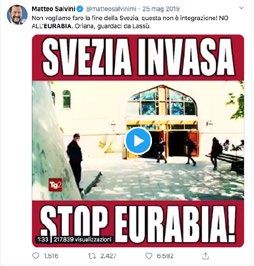
social media posts published by Giorgia Meloni and Matteo Salvini:
“If Muslims think of bringing holy war into our house, it is time to take even
drastic measures: all that remains is to block all forms of Islamic immigration until
they clear up their ideas. We intend to defend our classical and Christian roots
from the process of Islamisation of Europe, do-gooders and sultans of half the
world need to make a reason.”
26. Claudio Cartaldo, “Vietata la macellazione islamica. Arriva la nuova legge della Lega”, ilGiornale.it, 2 Octo-
ber 2018, https://www.ilgiornale.it/news/politica/vitetata-macellazione-islamica-arriva-nuova-legge-lega-1583141.
html, (Access date: 7 February 2020).
27. “Europee 2019: ha già vinto l’odio”, Amnesty International Italia, 24 May 2019, https://www.amnesty.it/europ-
ee-2019-ha-gia-vinto-lodio/, (Access date: 7 February 2020).
28. Meloni and Salvini are among the five politicians who targeted Muslim and refugees with problematic social
media posts - as defined by the research team - while no such messages were found to have posted by Fratoianni.
29. “Report Il barometro dell’odıo – elezıonı europee 2019”, Amnesty International Italia, 26 May 2019, p. 15,
https://d21zrvtkxtd6ae.cloudfront.net/public/uploads/2019/05/29202706/Amnesty-barometro-odio-2019.pdf,
(Access date: 7 February 2020).
442 setav.orgISLAMOPHOBIA IN ıtaly
Figure 1: Post Figure
published by Giorgia Meloni, leader of Fratelli d'Italia, on her Facebook page. 30.
1: Post published by Giorgia Meloni, leader of Fratelli d’Italia, on her Facebook page.30.
Figure 1: Post published by Giorgia Meloni, leader of Fratelli d'Italia, on her Facebook page. 30.
Figure 2: Post published by Matteo Salvini, leader of Lega Nord, on his Facebook page commenting on a television
Figure 2: Postreport
published
of the TG2by Matteo
National Salvini,
broadcast: leader
We do not want toof
endLega Nord,thisonis not
up like Sweden, hisintegration!
Facebook NO topage commenting on a
the EURABIA.
Figure 2: report
television PostOriana,
published
of the at usby
lookTG2 Matteo
National
from Salvini,
heaven. broadcast:
SWEDEN leader doofnot
We STOP
ATTACKED. Lega to endonuphis
want31Nord,
EURABIA!. likeFacebook
Sweden, this pageis commenting on NO
not integration! a
television
to report ofOriana,
the EURABIA. the TG2look National broadcast:
at us from heaven. WeSWEDEN
do not want to end up like
ATTACKED. Sweden,
STOP this is not
EURABIA!. 31 integration! NO
Thinking
to the EURABIA. Oriana, look about the consequences
at us from heaven. SWEDEN of negative
ATTACKED. politicSTOPcomments,
EURABIA!. it is interesting
31
Thinking about the consequences
to notice that if hate speech of negative politic in
is not expressed comments, it is interesting
the politicians’ to notice that if
posts, it is present
Thinking about the consequences of negative 32 politic comments, it is interesting to notice that if
among their followers’ comments. It seems that a single negative comment is able
hate speech is not expressed in the politicians’ posts, it is present among their followers’
hate speech32to
is multiply its effect in
not expressed generating hate speechposts,
the politicians’ indirectly.
it is present among their followers’
comments. It seems that a single
Notwithstanding that negative
migration comment
is a complex is phenomenon
able to multiply its effect
that Italy cannotgenerating
comments. 32 solve
It seems that a33single negative comment is able to multiply its effect generating
on its own, dealing too generally with migrants can be understood by two
hate speech indirectly.
hate speech indirectly.
kinds of explanations. First, looking for someone to blame for all the suffered evil is
Notwithstanding
a human thatmechanism
migration and is amigrants
complexcanphenomenon
represent the that Italyfor
scapegoat cannot solvewho
politicians on its own, 33
Notwithstanding that migration is a complex phenomenon that Italy cannot solve on its own, 33
dealing too generally with migrants can be understood by two kinds of explanations. First,
dealing too generally with migrants
30. Giorgia Meloni, Facebook, 23can Aprilbe2019,
understood by two kinds of explanations. First,
https://www.facebook.com/giorgiameloni.paginaufficiale/
looking for someone to blame for all the suffered evil is a human mechanism and (Ac-
posts/10157082154732645?comment_id=10157082182302645&reply_comment_id=691268687955011, migrants can
looking for someone to blame
cess date: 7 February 2020). for all the suffered evil is a human mechanism and migrants can
represent the31.scapegoat for politicians who want to hide their own political responsibilities.
Matteo Salvini, Twitter, 25 May 2019, https://twitter.com/search?f=live&q=eurabia%20(from%3Amatteosal-
represent thevinimi)&src=typed_query,
scapegoat for politicians who want to hide their own political responsibilities.
(Access date: 7 February 2020).
32. “Report Il barometro dell’odıo – elezıonı europee 2019”, Amnesty International Italia, p. 37.
33. Niccolò Magnani, “Migranti, Lega Musulmana: ‘Ue aiuti l’Italia’ Appello al Meeting ‘l’ora del dialogo”, Il
Sussidiario.net, 21 August 2019, https://www.ilsussidiario.net/news/migranti-lega-musulmana-ue-aiuti-litalia-ap-
pello-al-meeting-lora-del-dialogo/1917692/, (Access date: 7 February 2020).
30
Giorgia Meloni, Facebook, 23 April 2019,
Giorgia Meloni, Facebook, 23 April
https://www.facebook.com/giorgiameloni.paginaufficiale/posts/10157082154732645?comment_id=1015708218
30
2019,
https://www.facebook.com/giorgiameloni.paginaufficiale/posts/10157082154732645?comment_id=1015708218
2302645&reply_comment_id=691268687955011,
islamophobiaeurope.com •
(Access date: 7 February 2020).
@islamophobiaEIR 443
2302645&reply_comment_id=691268687955011,
31
Matteo Salvini, (Access date: 7 February 2020).
Twitter, 25 May 2019,
Matteo Salvini, Twitter, 25 May
https://twitter.com/search?f=live&q=eurabia%20(from%3Amatteosalvinimi)&src=typed_query,
31
(Access 2019,
date: 7
https://twitter.com/search?f=live&q=eurabia%20(from%3Amatteosalvinimi)&src=typed_query,
February 2020). (Access date: 7EUROPEAN ISLAMOPHOBIA REPORT 2019
want to hide their own political responsibilities. Second, a political party can use
popular issues like migration to deflect attention from the party’s internal turmoil.
Political campaigns have also seen the participation of the extreme right-wing
party of Casa Pound. However, 2019 is the year in which its leader decided to turn
the party into a movement.34 This can be explained by the fact that anti-Muslim ar-
gumentation and nationalist position are now successfully claimed by the Lega Nord
and Fratelli d’Italia.
Media
The issue of migration is at the centre of the political debate and consequently it is
one of the main issues considered by media and journalists.
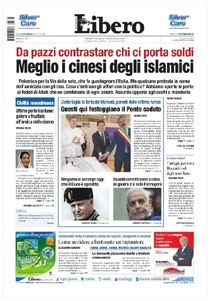
Figure 3: “Better Chinese than Islamic”. Front page of the newspaper Libero.35
Figure 3: “Better Chinese than Islamic”. Front page of the newspaper Libero. 39
Presenting his last book Stop Islam, Magdi Cristiano Allam claims that “in Italy,
Even if in
they cannot
Europe (…),bewith
considered as central
full respect figures
for Muslim of an
people, weIslamophobic
have the right network, there
and the duty to is an
elementbanthatIslam
theseasfigures seem
a religion to share.
because They
of its claim the possibility
incompatibility to distinguish
with our laws, rules, andbetween
values.”36Islam
Maurizio
as a religion Belpietro,aswriting
- considered about the
incompatible donation
with of 10,000
Western society euros
and atosource
CarolaofRackete by - and
terrorists
the Turkish organization Milli Görüs for her activities, wrote about incitement to con-
Muslims as people. They claim that all their insults and verbal attacks are against the religion
quer.37 Vittorio Feltri wrote about the new trade agreement between Italy and China
and extremists and that the Muslims living peacefully in Italy (respecting its culture) should be
34. “Casapound, Iannone: ‘Finita esperienza di partito, torniamo movimento”, La Repubblica, 27 June 2019,
accepted.
https://www.repubblica.it/politica/2019/06/27/news/casapound_torna_movimento_iannone-229739363/, (Access
date: 7 February 2020).
Justice 35.
System
Libero, Facebook, 31 March 2019, https://www.facebook.com/liberonews/photos/buongiorno-ancora-ecco-la-
prima-pagina-di-libero-in-edicola-oggi-qui-il-link-per/2948266671880803/, (Access date: 7 February 2020).
The Italian justice system tries to balance two different kind of constitutional principles: public
36. For more information, see: Magdi Cristiano Allam, Facebook, 16 October 2019, https://www.facebook.com/
safety and everyone’s right to express their (Access
MagdiCristianoAllam/videos/1258958127610100/, religious
date: 7confession.
February 2020).The difficulty in balancing
37. Ferdinando Primo, “I titoli dei giornali di venerdì 5 luglio 2019”, LaVerità, 5 July 2019, https://www.alessiopor-
these two aspects resurfaces periodically. In 2019,
cu.it/articoli/i-titoli-dei-giornali-di-venerdi-5-luglio-2019/, thedate:
(Access Court of Appeal
7 February 2020). of Milan authorised
health facilities to use the following sign to prohibit access to whoever wears a burqa. 40 (Fig.
4) 444 setav.orgISLAMOPHOBIA IN ıtaly
claiming “Better Chinese than Islamic”38 (Fig. 3) and defined the proposal for remov-
ing the crucifixes from public schools as a “humiliating submission to Islam”.39
Even if they cannot be considered as central figures of an Islamophobic network,
there is an element that these figures seem to share. They claim the possibility to
distinguish between Islam as a religion - considered as incompatible with Western
society and a source of terrorists - and Muslims as people. They claim that all their
insults and verbal attacks are against the religion and extremists and that the Muslims
living peacefully in Italy (respecting its culture) should be accepted.
Justice System
The Italian justice system tries to balance two different kind of constitutional prin-
ciples: public safety and everyone’s right to express their religious confession. The
difficulty in balancing these two aspects resurfaces periodically. In 2019, the Court
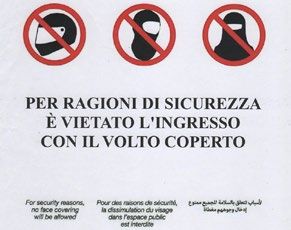
of Appeal of Milan authorised health facilities to use the following sign to prohibit
access to whoever wears a burqa.40 (Fig. 4)
Figure
Figure 4:4: Sign
Sign to to prohibit
prohibit theentrance
the entranceofofmasked
maskedpeople
peoplein
inpublic
publichealth
health facilities.
facilities.4141
The associations that opposed the use of this kind of prohibition signs argued that it does not
require
38. the identification
Enzo Boldi, “Libero apre of the person
le porte alla viawearing the‘Meglio
della Seta: burqa but it simply
i cinesi prohibitsGiornalettismo.com,
degli islamici”, the person from 13
accessing the health facility; in fact, there is no kind of system in place to check identities.
March 2019, https://www.giornalettismo.com/via-della-seta-libero-islam/, (Access date: 7 February 2020). 42
39. Maria
After thePezzi,
court“Vittorio Feltri
sentence, thecontro Fioramonti
sign has e il vescovo
been adopted di Bologna:
by other regions‘Umiliante sottomissione
such as Friuli all’islam”,
and Veneto
liberoquotidiano.it, 6 October 2019, https://www.liberoquotidiano.it/news/politica/13510858/vittorio-feltri-fiora-
43
not only in public health facilities but in public offices as
monti-vescovo-bologna-umiliante-sottomissione-all-islam-.html, well.date:
(Access 7 February 2020).
Just
40. a few Repubblica
“Sentenza”, months later, thein Nome
Italiana Constitutional Court Corte
del Popolo Italiano released a sentence
D’appello that
di Milano, No:rejected another2019,
4330, 28 October
http://images.go.wolterskluwer.com/Web/WoltersKluwer/%7B0ca6102f-8705-4a0f-8766-a90b65820fad%7D_
provision adopted by the region of Lombardy (Access
corte-appello-milano-sentenza-28-ottobre-2019.pdf, aimed at making
date: the construction
7 February 2020). The of newunderlined
Court mosques that
difficult. In this case, the Court referred explicitly to the religious freedom principle established
this sentence is not based on a discriminatory perspective but on the necessity to maintain public safety in so far as
the prohibition concerns people wearing helmets or ski masks as well (according to the Law 44
152/75). The matter
by theinItalian
started Constitution
2015 when andCouncil
the Regional the right
of to have adequate
Lombardy adopted space to practice
a provision in orderit.to strengthen the security
measures in public offices, including public hospitals.
41. “Milano, per il Tar legittimo il divieto per il burqa in ospedale”, La Repubblica, 20 April 2017, https://milano.
repubblica.it/cronaca/2017/04/20/news/legittimo_il_divieto_per_il_burqa_in_ospedale-163491435/, (Access date:
7 February 2020).
41
“Milano, per il Tar legittimo il divieto per il burqa in ospedale”, La Repubblica, 20 April 2017,
https://milano.repubblica.it/cronaca/2017/04/20/news/legittimo_il_divieto_per_il_burqa_in_ospedale-
163491435/, (Access date: 7 February 2020).
42
Laura Biarella, “Ospedale, •legittimo
islamophobiaeurope.com @islamophobiaEIR
divieto di ingresso con il burqa”, Altalex.com, 6 December 2019, 445
https://www.altalex.com/documents/news/2019/12/06/ospedale-legittimo-divieto-ingresso-con-burqa#carattere,
(Access date: 7 February 2020).
43
In March 2019, the Lega party proposed a motion to the Council of Friuli region that adopted it with a majorityEUROPEAN ISLAMOPHOBIA REPORT 2019
The associations that opposed the use of this kind of prohibition signs argued
that it does not require the identification of the person wearing the burqa but it sim-
ply prohibits the person from accessing the health facility; in fact, there is no kind
of system in place to check identities.42 After the court sentence, the sign has been
adopted by other regions such as Friuli and Veneto not only in public health facilities
but in public offices as well.43
Just a few months later, the Constitutional Court released a sentence that re-
jected another provision adopted by the region of Lombardy aimed at making the
construction of new mosques difficult. In this case, the Court referred explicitly to
the religious freedom principle established by the Italian Constitution and the right
to have adequate space to practice it.44
Internet
Social networks, websites, and blogs play an important role in the spread of ideas,
being both accountable and unaccountable sources of news.
A recent study conducted by the Oxford Internet Institute45 underlined that
news reposted by unaccountable websites is more viral than news diffused by online
newspapers.46 Moreover, the most shared news published online - coming from un-
accountable sources - can be targeted as anti-migrant and anti-Islam.47
One of the last posts published on Facebook by the Anti-Islamisation Party in
2019 was a comment on an anti-Semitic attack in New York.48 It read as follows:
“They will come house-to-house to stalk us because we are not Islamic. Let’s open
our eyes.” (Fig. 5)
42. Laura Biarella, “Ospedale, legittimo divieto di ingresso con il burqa”, Altalex.com, 6 December 2019, https://
www.altalex.com/documents/news/2019/12/06/ospedale-legittimo-divieto-ingresso-con-burqa#carattere, (Access
date: 7 February 2020).
43. In March 2019, the Lega party proposed a motion to the Council of Friuli region that adopted it with a ma-
jority including both right and left political parties; for more information, see: Elisabetta Batic, “Friuli: stop a
burqa, niqab e caschi negli uffici pubblici e ospedali”, ilmessaggero.it, 27 March 2019, https://www.ilmessaggero.
it/italia/stop_burqa_caschi_uffici_friuli-4389470.html, (Access date: 7 February 2020). The same year, in Padua,
the obstetrician clinic of the public hospital posted the prohibition sign too; for more information, see: “Vietato
l’ingresso col volto coperto”, Corriere di Verona, 10 March 2019, https://www.pressreader.com/italy/corriere-di-ve-
rona/20190310/281792810341441, (Access date: 7 February 2020).
44. “Islam. Stop della Consulta alla legge lombarda anti-moschee, furia della Lega”, Dire Agenzia di Stampa Nazi-
onale, 5 December 2019, https://www.dire.it/05-12-2019/399443-islam-stop-della-consulta-alla-legge-lombarda-
anti-moschee-furia-della-lega/, (Access date: 7 February 2020).
45. Samantha Bradshaw and Philip N. Howard, The Global Disinformation Order. 2019 Global Inventory of Or-
ganised Social Media Manipulation, (University of Oxford, United Kingdom: 2019), https://comprop.oii.ox.ac.uk/
wp-content/uploads/sites/93/2019/09/CyberTroop-Report19.pdf, (Access date: 7 February 2020).
46. Rosita Rijtano, “Islam e migranti. Gli euroscettici al voto a colpi di fake news”, ilMattino.it, 25 May 2019,
https://www.ilmattino.it/primopiano/politica/islam_migranti_euroscettici_voto_fake_news-4514094.html, (Ac-
cess date: 7 February 2020).
47. Rosita Rijtano, “Islam e migranti euroscettici al voto a colpi di fake news”.
48. PAI - Partito Anti Islamizzazione, Facebook, https://www.facebook.com/PartitoAntiislamizzazione/, (Access
date: 7 February 2020).
446 setav.orgas anti-migrant and anti-Islam. 47
One of the last posts published on Facebook by the Anti-Islamisation Party in 2019 was a
ISLAMOPHOBIA IN ıtaly
comment on an anti-Semitic attack in New York. 48 It read as follows: “They will come house-
to-house to stalk us because we are not Islamic. Let’s open our eyes.” (Fig. 5)
Figure 5: Post published
Figure 5: by
Postthe Anti-Islamisation
published PartyParty
by the Anti-Islamisation commenting onanan
commenting on anti-Semitic
anti-Semitic attack
attack carried out carried
in out in New
th
Concerning Twitter,
New York.
the 4 edition of the Map of Intolerance project released by the Italian
49
York. 49
Vox-Observatory Concerning
has analysed Twitter, the 4published
tweets
th
edition ofbetween
the Map March
of Intolerance
and May project
2019.released
Compared to
by the Italian Vox-Observatory has analysed tweets published between March and
2018, hate speech
May 2019. against migrants
Compared in general
to 2018, registered
hate speech an increase
against migrants of 15.1%
in general reaching
registered an a total
of 32% of negative
increase of tweets.
15.1%(Fig. 6) a total of 32% of negative tweets. (Fig. 6)
reaching
45
Samantha Bradshaw and Philip N. Howard, The Global Disinformation Order. 2019 Global Inventory of
Organised Social Media Manipulation, (University of Oxford, United Kingdom: 2019),
https://comprop.oii.ox.ac.uk/wp-content/uploads/sites/93/2019/09/CyberTroop-Report19.pdf, (Access date: 7
February 2020).
46
Rosita Rijtano, “Islam e migranti. Gli euroscettici al voto a colpi di fake news”, ilMattino.it, 25 May 2019,
https://www.ilmattino.it/primopiano/politica/islam_migranti_euroscettici_voto_fake_news-4514094.html,
(Access date: 7 February 2020).
47
Rosita Rijtano, “Islam e migranti euroscettici al voto a colpi di fake news”.
48
PAI - Partito Anti Islamizzazione, Facebook, https://www.facebook.com/PartitoAntiislamizzazione/, (Access
date: 7 February 2020).
49
PAI 6: Data
Figure - Figure Partito
showing
6: Data showing Anti
the number
the of of
number Islamizzazione,
hate
hatespeech tweets
speech tweets Facebook,
published
published categorized
categorized 29 (in the
according toaccording
content December
to content (in the2019,
https://www.facebook.com/PartitoAntiislamizzazione/posts/1745336668935095?__xts__%5B0%5D=68.ARAPk
coloured rows,
coloured rows, in order: migrants, women, Islamic, disables, Jewish, homosexual) and absolute value and percentage
in columns,
order: inmigrants, women, Islamic, disables, Jewish,ones.
homosexual) and absolute value and
(in the order: the total number of tweets, negative and geotagged 50
VPnbGJYtEcDfu1k08NO6wd3yCuUEx5QBi20oU2B-nI7lA9jtFoAzMmaT3TX9BjJqk6P0uDII-
percentage (in the columns, in order: the total number of tweets, negative and geotagged ones. 50
XfClo1jM6JkHqOWAZuOGYyDaNI_jWcHHNUJcIiks6icdfZCJ-
Considering just tweets targeting Muslims, the increase of the registered negative tweets is of
OueJz4luSgMRg_vL69nLZgOwwOp2MwUTX85-PAYw9PWwPB3nw7nB_yDW7N5Njp2JxxtwL1poHhaz-
49. PAI - Partito Anti Islamizzazione, Facebook, 29 December 2019, https://www.facebook.com/PartitoAntiis-
Ih6o58UQmc1GIFGKN6jJo_rgzj3wsMWQEYukzQfywNsF8kxIk8UJap_KWivE4MKIQeuR9GLx1s2WaIMCj
51
6.9%. lamizzazione/posts/1745336668935095?__xts__%5B0%5D=68.ARAPkVPnbGJYtEcDfu1k08NO6wd3yCu-
2HhMqOA_Lqef5J5QqyPoPvc_LKV8GtXDJ0UUPuxlQbHAcKezUVRhaJm-1b6gtuw&__tn__=-R,
UEx5QBi20oU2B-nI7lA9jtFoAzMmaT3TX9BjJqk6P0uDII-XfClo1jM6JkHqOWAZuOGYyDaNI_jWcHH- (Access
date: 7 February 2020).
NUJcIiks6icdfZCJ-OueJz4luSgMRg_vL69nLZgOwwOp2MwUTX85-PAYw9PWwPB3nw7nB_yDW7N5Njp-
2JxxtwL1poHhaz-Ih6o58UQmc1GIFGKN6jJo_rgzj3wsMWQEYukzQfywNsF8kxIk8UJap_KWivE4MKIQeuR-
9GLx1s2WaIMCj2HhMqOA_Lqef5J5QqyPoPvc_LKV8GtXDJ0UUPuxlQbHAcKezUVRhaJm-1b6gtuw&__
tn__=-R, (Access date: 7 February 2020).
50. “La Mappa Dell’ Intolleranza”, Vox Diritti, p. 6, http://www.voxdiritti.it/wp-content/uploads//2019/06/190610_
VOX-Comunicato-mappa-2019_-completo-compresso.pdf, (Access date: 7 February 2020).
islamophobiaeurope.com • @islamophobiaEIR 447EUROPEAN ISLAMOPHOBIA REPORT 2019
Considering just tweets targeting Muslims, the increase of the registered nega-
tive tweets is of 6.9%.51
igure 7: The table shows
Figure 7: The the
table comparison between
shows the comparison betweentweets published
tweets published in 2018inand
2018 and 2019, between
2019, distinguishing distinguishing between
ositive and negative tweets
positive according
and negative the different
tweets according
disables, women, and Islamic. 52
the differentissue that
issue that areare
(top -(top
down):-homosexual,
down): homosexual,
migrants, Jewish, migrants, Jewish,
sables, women, and Islamic. 52
In this dangerous game, the use of fake Facebook accounts or paid advertisements is
n this dangerous game,
just two possible the ways
use to ofpilot
faketheFacebook
diffusion of aaccounts
message.53 or paid
In this advertisements
sense, social networks is just two
ossible ways tolike Facebook and Twitterof should adopt effective In measures against such networks
mechanisms.like 54
53
pilot the diffusion a message. this sense, social Facebook
nd Twitter should adopt effective measures against such mechanisms. 54
51. Ibid.
52. Ibid. p. 9.
Central Figures inglithe Islamophobia
Verso il Voto a Colpi di Fake Network
53. Thanks to the engagement of the no-profit movement Avaaz, 77 European Facebook pages have been blocked. “Is-
lam e Migranti, Euroscettici News”, Il Mattino.it, 25 May 2019, https://www.ilmattino.
it/primopiano/politica/islam_migranti_euroscettici_voto_fake_news-4514094.html, (Access date: 7 February 2020).
n Italy, there is54.not a defined Islamophobic network but there are different actors who play a
After an investigation among its members, Twitter stated that a system will be put in place so that tweets express-
ing hate against any kind of religious groups will be erased. For more information, see: “Twitter cancella i post di odio
undamental role inle spreading
contro Islamophobic
religioni”, La Repubblica, messages. Among them, right-wing publications
9 July 2019, https://www.repubblica.it/tecnologia/social-network/2019/07/09/
news/twitter_cancella_l_odio_contro_le_religioni-230805295/?ref=drac-2, (Access date: 7 February 2020).
ke Libero and Il Giornale, both on paper and online with Facebook pages and Twitter accounts
and out. Their448main journalists and their directors express negative perspectives
setav.org
on migrants
n general and Islam in particular. Linked to them, there are political parties and movement likeISLAMOPHOBIA IN ıtaly
Central Figures in the Islamophobia Network
In Italy, there is not a defined Islamophobic network but there are different actors
who play a fundamental role in spreading Islamophobic messages. Among them,
right-wing publications like Libero and Il Giornale, both on paper and online with
Facebook pages and Twitter accounts stand out. Their main journalists and their
directors express negative perspectives on migrants in general and Islam in particu-
lar. Linked to them, there are political parties and movement like Casa Pound, Lega
Nord, Fratelli d’Italia, and Forza Nuova. In the last years, Islamophobic ideas have
been spread in a mystifying way and as a result even those who seem to be the worst
enemies of Muslim people are able to reject this accusation.
Other actors are active in trying to nurture a positive and amiable climate.
Among them Pope Francis, who proposes an open and inclusive perspective, local
associations, and civil movements are engaged in diffusing anti-discriminating points
of views and action.
Observed Civil Society and Political Initiatives to
Counter Islamophobia
A variety of initiatives have been taken by civil society and institutions against Is-
lamophobia.
At the beginning of 2019, the Ca’ Foscari University of Venezia completed the
three-year SORAPS project entitled “Study of Religions against Prejudices” addressed
to school teachers.55 In the guidelines released on the website, the team suggest to
teachers to “be equally careful not to adopt Islamist interpretations of Islam and not
to present these minority views as representative of Islam and Muslims in general”.56
In November, the Sapienza University of Rome organised in collaboration with the
NGO “Un ponte per…” a workshop on Islamophobia and the available strategies to
combat this phenomenon.57
Taking a step towards a better integration with the Muslim community, the
Archbishop of Bologna proposed to modify the filling of one of the most famous
local dishes by substituting pork with chicken.58
55.An international team of scholars and experts prepared and offered high school teachers of different European
countries new instruments (teaching materials and free online lessons) aimed to help them talk about religion in
their classrooms. For more information, see: “The Project”, Study of Religions Against Prejudices and Stereotypes,
https://soraps.unive.it/, (Access date: 7 February 2020).
56. “Guidelines on Prejudices and Stereotypes in Religions”, SORAPS, p. 63, https://soraps.unive.it/files/2019/04/
PROFREAD-IO1-Stereotypes-and-prejudices-Guidelines_V4-05_01_19-2.pdf, (Access date: 7 February 2020).
57. For more information, see: “Cıclo Dı Workshop-Tırocınıo Sull’ıslamofobıa E Sulle Possıbılı Strategıe Dı Con-
trasto Al Fenomeno”, Sapienza Universita di Roma, 22 November 2019, https://saras.uniroma1.it/archivionotizie/
ciclo-di-workshop-tirocinio-sull-islamofobia-e-sulle-possibili-strategie-di, (Access date: 7 February 2020).
58. “Bologna, tortellini al pollo per favorire l’integrazione coi musulmani: la politica italiana si divide”, Leggo.it,
2 October 2019, https://www.leggo.it/italia/cronache/tortellini_pollo_musulmani_bologna_ultime_notizie_oggi-
4769715.html, (Access date: 7 February 2020).
islamophobiaeurope.com • @islamophobiaEIR 449You can also read


