Existing cost-effectiveness analyses for diseases caused by Group A Streptococcus: A systematic review to guide future research version 1; peer ...
←
→
Page content transcription
If your browser does not render page correctly, please read the page content below
Wellcome Open Research 2021, 6:211 Last updated: 16 NOV 2021

SYSTEMATIC REVIEW

Existing cost-effectiveness analyses for diseases caused by
Group A Streptococcus: A systematic review to guide future
research [version 1; peer review: awaiting peer review]
Jung-Seok Lee             , Sol Kim, Jean-Louis Excler              , Jerome Kim, Vittal Mogasale
International Vaccine Institute, Seoul, Seoul, 08226, South Korea

v1   First published: 20 Aug 2021, 6:211                                    Open Peer Review
     https://doi.org/10.12688/wellcomeopenres.17116.1
     Latest published: 20 Aug 2021, 6:211
     https://doi.org/10.12688/wellcomeopenres.17116.1                       Reviewer Status AWAITING PEER REVIEW

                                                                            Any reports and responses or comments on the

Abstract                                                                    article can be found at the end of the article.
Background: Group A Streptococcus (Strep A) causes a broad
spectrum of disease manifestations, ranging from benign symptoms
including throat or skin infections, to fatal illness such as rheumatic
heart disease, or chronic renal failure. Currently, there is no vaccine
available against Strep A infections. Despite the high burden of Strep
A-associated infections worldwide, little attention has been paid to the
research of these diseases, including standardized surveillance
programs, resulting in a lack of economic evaluations for prevention
efforts. This study aims at identifying existing cost-effectiveness
analyses (CEA) on any Strep A infections.
Methods: A systematic literature review was conducted by searching
the PubMed electronic database.
Results: Of a total of 321, 44 articles met the criteria for inclusion.
Overall, CEA studies on Strep A remain limited in number. In
particular, a number of available CEA studies on Strep A are
disproportionately lower in low-income countries than in high-income
countries. Decision-analytic models were the most popular choice for
CEA on Strep A. A majority of the models considered pharyngitis and
acute rheumatic fever, but it was rare to observe a model which
covered a wide range of disease manifestations.
Conclusions: Future research is needed to address missing clinical
outcomes, imbalance on study locations by income group, and the
transmission dynamic of selected diseases.

Keywords
cost-effectiveness analysis, Group A Streptococcus, S. Pyogenes,
economic evaluation, decision analytic models, Strep A

                                                                                                                     Page 1 of 15
Wellcome Open Research 2021, 6:211 Last updated: 16 NOV 2021
Corresponding author: Jung-Seok Lee (jungseoklee@gmail.com)
Author roles: Lee JS: Conceptualization, Data Curation, Formal Analysis, Investigation, Methodology, Validation, Writing – Original Draft
Preparation, Writing – Review & Editing; Kim S: Formal Analysis, Validation, Writing – Review & Editing; Excler JL: Writing – Review &
Editing; Kim J: Funding Acquisition, Investigation, Writing – Review & Editing; Mogasale V: Writing – Review & Editing
Competing interests: No competing interests were disclosed.
Grant information: This work was supported by the Wellcome Trust [215490/Z/19/Z; to JK]
The funders had no role in study design, data collection and analysis, decision to publish, or preparation of the manuscript.
Copyright: © 2021 Lee JS et al. This is an open access article distributed under the terms of the Creative Commons Attribution License,
which permits unrestricted use, distribution, and reproduction in any medium, provided the original work is properly cited.
How to cite this article: Lee JS, Kim S, Excler JL et al. Existing cost-effectiveness analyses for diseases caused by Group A
Streptococcus: A systematic review to guide future research [version 1; peer review: awaiting peer review] Wellcome Open
Research 2021, 6:211 https://doi.org/10.12688/wellcomeopenres.17116.1
First published: 20 Aug 2021, 6:211 https://doi.org/10.12688/wellcomeopenres.17116.1
Page 2 of 15Wellcome Open Research 2021, 6:211 Last updated: 16 NOV 2021
Introduction in resource-limited settings4. While the tertiary approach will
Group A Streptococcus (Strep A), also known as Streptococcus enhance local health capacity to treat patients with severe
pyogenes (S. pyogenes) is a Gram-positive bacterium, often illness, this process will require a long-term plan and con-
identified in the throat or on the skin. Strep A is a major sensus among decision makers who need to consider various
public health concern causing significant morbidity and competing health problems in a nation.
mortality worldwide. While the World Health Organization
(WHO) prioritized Group A Strep vaccine development in Few health economic studies have been conducted on the
2014, there are no vaccines available. Strep A infections include entire spectrum of Strep A diseases. This may be due in part to
a broad spectrum of diseases. Relatively minor infections the significant reduction in the rates of autoimmune diseases
can be a precursor for acute and invasive diseases, both of (i.e., acute rheumatic fever) and its sequelae (i.e., RHD) in
which can lead to long-term morbidity. Acute conditions high-income countries (HIC) during the late 20th century. The
include throat and skin diseases, as well as toxin-mediated dis- reduction was mainly attributable to improvements in socioeco-
eases. If relatively benign infections (i.e. Strep throat or skin nomic conditions and to the increase in the use of antibiotics7–9.
infections) are not properly treated, the infection may further However, the diseases are still highly prevalent in lower- and
develop into post infectious autoimmune diseases (i.e. acute middle-income countries10, and the burden of Strep A throat
rheumatic fever (ARF), glomerulonephritis), which can lead or skin infections is not negligible in HIC either11. It is also
to chronic diseases such as rheumatic heart disease (RHD) worth noting that Strep A causes a wide range of disease mani-
and chronic renal failure. festations, and there is a lack of available data points for each
disease category, making it difficult to establish a universal
The absolute numbers of episodes of Strep A throat infec- model that covers all symptoms which progress over time.
tions and skin infections are much higher than those associated
with more severe illness1. This raises the possibility that The primary interest of the current review lies in identify-
although the symptoms of pharyngitis or skin infections may ing existing health economic models (i.e., those used in cost-
not be as severe as the ones of ARF or RHD, their economic effectiveness analyses) for Strep A-associated diseases. This
and social burdens at the population level could be noticeably review aims to summarize the types of model structures and
high considering direct treatment costs and indirect costs2,3. evaluation perspectives which have been frequently emphasized
by others, as well as to identify the gap in existing literature.
While vaccines against Strep A are absent, the use of antibiot-
ics such as oral or intramuscular penicillin has proved effective Methods
and been recommended to treat patients with Strep A infec- A systematic literature review was conducted by searching the
tions. In addition, several prevention strategies were devel- PubMed electronic database. Search terms were divided into
oped. Primary prevention of ARF involves the detection and two groups and developed separately: (1) disease category
timely treatment of streptococcal pharyngitis4,5. In order to and (2) economic evaluation terminology category. Consid-
identify patients with Strep A infections, the following test ering that Strep A causes a broad spectrum of diseases from
options are often considered: clinical diagnosis (with or without seemingly benign throat and skin infections to chronic RHD
the use of clinical scoring algorithms), throat or skin cultures, or CHF, search strategies in the disease category closely
and point of care testing (e.g., rapid Strep A antigen detection followed the terms previously defined in texts on the burden
test and nucleic acid amplification tests). Once confirmed posi- of group A streptococcal diseases1,12,13. For the current search,
tive, antibiotics are prescribed to treat patients. However, this “group A streptococcus” was additionally included as a sepa-
process may result in prescription and consumption of unnec- rate search term to expand the search to papers which did not
essary antibiotics for those tests who are false positives or mention the specific names of Strep A-related diseases. In
in missing true cases (false negative). While this primary pre- addition to the disease category, all search terms related to
vention strategy is effective, this approach is also costly health-economic evaluation were developed in the economic
considering only 10–20% of pharyngitis is caused by Strep A5. evaluation category. Table 1 summarizes the search terms used
A study estimating the rates of inappropriate outpatient anti- for the current review.
biotic use in the United States reported that 56.2% and 72.4%
of ambulatory care visits for pharyngitis were associated with All lines of the search terms in each of the two categories were
antibiotic prescribing in children (0–19 years) and adults combined using “OR”, and the two categories were eventu-
(20–64 years), respectively. However, streptococcal prevalence ally joined by “AND” in order to identify papers associated with
for pharyngitis was 37% for children and 18% for adults, indi- health-economic models for Strep A-related diseases. The search
cating the existence of inappropriate use of antibiotics in terms were not limited to a title or an abstract. Any papers
pharyngitis treatment6. The secondary prevention strategy is to published up to May 2020 were included, and papers writ-
use intramuscular antibiotics as a prophylaxis to prevent recur- ten in non-English languages were excluded. Additional
rent ARF, but it was shown that increasing patients’ compliance search was done by going through bibliographies for eligible
to the recommended schedule of injections occurring every articles. The initial screening was carried out by going through
28 days over a minimum of 10 years is challenging5. The all abstracts and shortlisting the papers that indicated the use of
tertiary prevention scenario involves increasing the coverage a CEA in the economic analyses. For the shortlisted papers,
of valve surgery by building local surgical capacity especially a more comprehensive (full-length) assessment was carried
Page 3 of 15Wellcome Open Research 2021, 6:211 Last updated: 16 NOV 2021
Table 1. Search terms.
Group Search terms
1. Rheumatic fever OR rheumatic heart disease
2. Glomerulonephritis AND (streptococcus OR streptococcal OR post-streptococcal OR
post-streptococcal OR streptococcus)
3. Invasive OR bacteremia OR bacteraemia OR toxic shock syndrome OR necrotizing
fasciitis AND (group A streptococcus OR group A streptococcal OR streptococcus pyogenes)
Disease category 4. Stroke AND (Rheumatic fever OR rheumatic heart disease)
5. Endocarditis AND (Rheumatic fever OR rheumatic heart disease)
6. Impetigo OR pyoderma or scabies
7. (Bacteremia OR bacteraemia) AND developing country
8. Pharyngitis
9. Group A streptococcus OR group A streptococcal OR streptococcus pyogenes
1. Cost-effectiveness
2. Cost-benefit
Economic evaluation 3. Cost-utility
category 4. Incremental cost-effectiveness ratio
5. QALY OR quality adjusted life year
6. DALY OR disability adjusted life year
out by reviewing the full text against a list of inclusion and In addition, there are studies which directly utilize the number
exclusion criteria. The search was performed independently of episodes prevented by converting into saved costs. Hence,
by JSL and cross-checked by JSL and SK. Any discrepan- outcome measure was described for each study. Lastly, while
cies were discussed and resolved between the two independent some studies calculated cost-effectiveness based on primary
reviewers. data sources obtained from a trial, many studies estimated
cost-effectiveness outcomes by constructing a decision analytic
Given that the studies were conducted under varying conditions model. Given that such a model often utilizes multiple health
(i.e. different country-contexts, study designs, disease types), states, more details on health states were further investigated
a standardized set of criteria would be useful to make system- for these studies.
atic assessments among the articles identified at the final stage
of the literature review. First, disease category was defined. Results
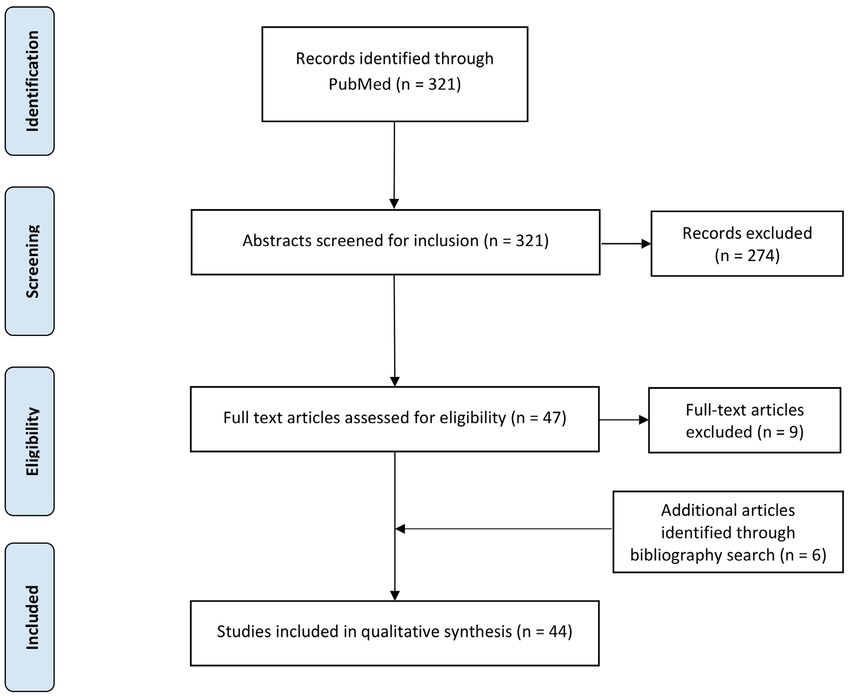
Sanyahumbi et al. (2016) previously categorized Strep A- The initial search using the key words identified 321 articles
related diseases into four groups: superficial and locally invasive from the database, as shown in Figure 1. After going through
disease, immune-mediated disease, disease sequelae, and inva- the abstracts and titles, 274 articles were omitted, resulting
sive- and toxin-mediated disease1. The same categorization in 47 articles for a more comprehensive review. The full-length
was applied for the current study. Second, given that Strep A assessment was carried out for these articles. Of the 47 arti-
causes a wide range of disease presentations, age groups cho- cles, nine studies were further excluded, and six articles were
sen for an intervention may also differ depending on dis- additionally identified through the bibliography search of
ease types and the peak incidence of a disease. Thus, target the eligible articles. A total of 44 articles were selected at the
cohorts were also identified. Third, given that model structure final stage of the current literature review search. These final
is one of the key factors that determine the final outcome of an papers were assessed based upon the six criteria described
intervention (i.e. cost-effectiveness strategy), the types of above.
health economic models were compared. Fourth, cost perspec-
tive was identified. For the current review, any costs related to Table 2 summarizes the final 44 articles identified by the
healthcare costs such as drug, hospitalization, treatment, etc. systematic literature review. The majority of studies (93%)
were termed “health system perspective”. On the other hand, were done in countries classified as high-income or upper-
any studies which considered broader cost items such as health- middle-income by the World Bank15. There were only three
care costs, productivity losses, caregiving, etc. were defined as studies that were carried out in lower-middle-income econo-
“societal perspective”14. Fifth, a CEA model often compares mies or below: two studies from Africa4,5 and one study from
total costs with intervention benefits which can be measured in India16. While most studies conducted a cost-effectiveness
various ways. For example, while some studies use the Quality- analysis for a single country or sub-population of a country,
Adjusted Life Year (or Day) (QALY(D)) as an outcome meas- Watkins et al.4 and Manji et al.5 covered multiple African coun-
ure, others adopt the Disability-Adjusted Life Year (DALY). tries by taking into account evidence reported in existing
Page 4 of 15Wellcome Open Research 2021, 6:211 Last updated: 16 NOV 2021
Figure 1. Preferred reporting items for systematic reviews and meta-analyses (PRISMA).
literature. About 25% of the studies (n = 11) solely consid- example, the health system perspective was chosen for a pri-
ered superficial diseases such as throat or skin infections. mary analysis, but the societal perspective was also considered
Among those 11 studies, six of them were not Strep A-specific as a sensitivity or scenario analysis. A total of 18 studies used
but more general, resulting in only five studies with a spe- health-related quality of life such as QALY(D) or DALY as an
cific focus on Strep A. Another 34% of the studies (n = 15) outcome measure, and others directly utilized the number of epi-
included immune-mediated- (i.e. acute rheumatic fever) or sodes prevented or the number of patients free of recurrence
locally invasive diseases (i.e. peritonsillar abscess) in addition which were in most cases converted into saved costs. While
to superficial diseases. As described above, Strep A causes a some studies conducted cost-effectiveness analyses along-
broad spectrum of diseases from benign superficial infections to side (randomized) clinical trials (n = 7) or simple compari-
severe cardiac failures. Five studies investigated disease seque- sons between costs and benefits (n = 8), the majority of the
lae (i.e. RHD) along with superficial- and immune-mediated- studies (66%) used decision analytic models. Among the stud-
diseases, and two studies further included locally invasive dis- ies with decision analytic models, 72% of them (n = 21) adopted
eases on top of these. There was only one study that covered decision tree models, and eight studies employed Markov
at least a subset of each of the four disease categories: super- models.
ficial and locally invasive, immune-mediated, sequelae, and
invasive- and toxin-mediated diseases. Since decision analytic models take into account multiple
health states and transition probabilities from one health state
Forty-one percent and 43% of the studies applied a health to another, more details on health states were further inves-
system perspective and a societal perspective, respectively. tigated as shown in Table 3. The most common health states
Of the 44 articles, five studies adopted both perspectives. For chosen for the models were Strep A pharyngitis and ARF
Page 5 of 15Table 2. Summary of the final 44 articles identified for the systematic literature review.
No Article Year Region Country Disease category Target cohort Model type Cost perspective Outcome measure Source
A hypothetical cohort of 11
Health system
1 Ubels et al. 2020 Latin America Brazil Sequelae years (socioeconomically Markov cohort DALY 17
perspective
disadvantaged children)
Number of
14–21 years; Waikato RF
successful
New Immune-mediated; registry receiving secondary Decision tree Health system
2 Oetzel et al. 2019 Asia & Pacific secondary 18
Zealand Sequelae prophylaxis, Maori and Pacific (cohort) perspective
prophylaxis
Island populations
injections
Superficial; Local
Behnamfar Decision tree
3 2019 Middle East Iran invasive; Immune- Children, adults Societal perspective QALD 19
et al. (cohort)
mediated
Non-indigenous & indigenous
Australian populations;
Superficial;
Three vaccination scenarios:
Local invasive;
4 Cannon et al. 2018 Asia & Pacific Australia (1) Infants Markov cohort Societal perspective DALY 3
Immune-mediated;
(2) 5 years old
Sequelae; Invasive
(3) 65 years (non-indigenous),
50 years (indigenous)
Primary: Health
system perspective
Adults between 18 and 70
excluding out-of-
years with acute sore throat
5 Burns et al. 2018 Europe UK Superficial RCT pocket expense; QALY (EQ5D-5L) 14
and painful swallowing; 42
societal perspective
primary care clinics
in the scenario
analysis
CADTH
Patients with impetigo aged Decision tree Health system
6 Common drug 2018 North America Canada Superficial QALY 20
two months and older (cohort) perspective
review
Indigenous populations in the
Northern Territory of Australia; Markov Health system
7 Roberts et al. 2017 Asia & Pacific Australia Sequelae DALY 21
(1) 8 and 12 years (Echo A) patient-level perspective
(2) 5 to 12 years (Echo B)
5–24 years; hypothetical African
African Immune-mediated; Health system
8 Watkins et al. 2016 Africa cohort for the application of the Markov cohort DALY 4
nations Sequelae perspective
model
Immune-mediated; Decision tree Health system
9 Watkins et al. 2015 South America Cuba 5–24 years in Pinar del Rio DALY 22
Sequelae (cohort) perspective
10 Zachariah et al. 2015 Asia & Pacific Australia Sequelae 5–49 years; Northern Territory Markov cohort Societal perspective QALY 23
Adults or children aged >= 5
(1) Symptom
years presenting acute sore Health system
11 Little et al. 2014 Europe UK Superficial RCT severity score, (2) 24
throat; Southern and central perspective
QALY (EQ5D)
areas of England
Page 6 of 15
Wellcome Open Research 2021, 6:211 Last updated: 16 NOV 2021No Article Year Region Country Disease category Target cohort Model type Cost perspective Outcome measure Source
Societal perspective
3–15 years (presenting with an
Superficial; Local (base analysis);
South acute sore throat (pharyngitis)
12 Irlam et al. 2013 Africa invasive; Immune- Markov cohort Health system QALY 25
Africa and no history of ARF; Urban
mediated; Sequelae perspective (sub-
primary care clinics
analysis)
Sub-
Superficial;
13 Manji et al. 2013 Africa Saharan 5 years Markov cohort Societal perspective QALY 5
Sequelae
Africa
Superficial; Local
Decision tree Health system
14 Klepser et al. 2012 North America USA invasive; Immune- Adults QALD 26
(cohort) perspective
mediated
4–15 years; five secondary care
Health system
15 Wilson et al. 2012 Europe UK Superficial otolaryngology Depts. in the RCT QoL (PedsQL) 27
perspective
northern UK
2–14 years who consult with a
Giraldez-Garcia Superficial; Decision tree Health system Proportion of
16 2011 Europe Spain primary care physician due to 28
et al. Immune-mediated (cohort) perspective patients cured
acute pharyngitis
RF/RHD episodes
Superficial;
Soudarssanane 5–15 years; Pondicherry Union Cost-benefit prevented
17 2007 Asia & Pacific India Immune-mediated; Societal perspective 16
et al. Territory analysis (expressed as a
Sequelae
cost)
Superficial; Local Societal perspective
Decision tree
18 Howe et al. 2006 North America USA invasive; Immune- Children & adolescents (also, Health system QALD 29
(cohort)
mediated perspective)
Total health care
cost savings (i.e.
2–15 years (39 children), 16–66 Break-even decreases in
19 Fujihara et al. 2006 Asia & Pacific Japan Superficial Societal perspective 30
(129 adults); Wakayama analysis physician visits,
work days missed,
etc.)
Superficial; Local Societal perspective
Decision tree
20 Neuner et al. 2003 North America USA invasive; Immune- Adults but excluding QALD 31
(cohort)
mediated productivity loss
Superficial;
21 King et al. 2002 North America USA Immune-mediated; Hypothetical 2,000 birth cohort Markov cohort Societal perspective QALY 32
Sequelae
Superficial; Decision tree Health system RHD cases
22 Ehrlich et al. 2002 North America USA 5–17 years 33
Immune-mediated (cohort) perspective prevented
Health system
Superficial; Local Children older than 3 years perspective
Decision tree The number of
23 Tsevat et al. 1999 North America USA invasive; Immune- with signs or symptoms of (baseline); societal 34
(cohort) cases prevented
mediated pharyngitis perspective in the
sensitivity analysis
Page 7 of 15
Wellcome Open Research 2021, 6:211 Last updated: 16 NOV 2021No Article Year Region Country Disease category Target cohort Model type Cost perspective Outcome measure Source
Cost-utility
analysis (cost
of a healthy
day) (Cost /
Health system
24 Giraldes 1999 Europe Portugal Superficial Overall Utility changes Own measure 35
perspective
between
treatment
and non-
treatment)
Health system Number of
Superficial; Local Children (hypothetical cohort perspective patients with ARF
Decision tree
25 Webb 1998 North America USA invasive; Immune- of 100,000 children with (baseline); societal and suppurative 36
(cohort)
mediated pharyngitis) perspective in the complications
sensitivity analysis prevented
Drug compliance
RCT (cost- and symptoms
18–65 years with symptoms of
26 Carbon et al. 1996 Europe France Superficial minimization Societal perspective averted based 37
pharyngitis (n = 259 (=262–3))
approach) on 10-cm visual
analogue scale
575 adults (older than
15 years) with recurrent
pharyngotonsillitis (who had
Number of patients
27 Pelc et al. 1996 Europe France Superficial at least 2 episodes of tonsillitis RCT Societal perspective 38
free of recurrence
in the previous 12 months);
204 general practice clinics
throughout France
Number of Strep
A pharyngitis
5–14 years with symptomatic RCT (with
Superficial; episodes not missed
pharyngitis; 12 districts existing Health system
28 Majeed et al. 1993 Middle East Kuwait Immune-mediated; (thus treated) by 39
representing three socio- literature on perspective
Sequelae using the rapid
economic levels ARF and RHD)
test (compared to
clinical diagnosis)
Clinical and
bacteriologic
3 months to 16 years with
29 Rice et al. 1992 North America USA Superficial RCT Societal perspective response (cured, 40
impetigo (n = 83)
improved), time to
resolution (days)
Patient perspective
Superficial; Local
Not Not 14 years hypothetical patients Decision tree (no financial costs
30 Dippel et al. 1992 invasive; Immune- QALD 41
mentioned mentioned with sore throat (cohort) of treatment-related
mediated; Sequelae
components)
All (n = 2,016; 22–28% of less
Decision tree Treatment cost
31 Makela et al. 1991 Europe Finland Superficial than 15 years, 1–2% of greater Societal perspective 42
(cohort) comparison
than 65 years)
Page 8 of 15
Wellcome Open Research 2021, 6:211 Last updated: 16 NOV 2021No Article Year Region Country Disease category Target cohort Model type Cost perspective Outcome measure Source
Number of
Superficial; Local Children (hypothetical cohort patients with ARF
Decision tree Health system
32 Lieu et al. 1990 North America USA invasive; Immune- of 100,000 children with and suppurative 43
(cohort) perspective
mediated; Sequelae pharyngitis) complications
prevented
Decision
Number of episodes
tree (cohort,
Superficial; Hypothetical cohort of 1,000 prevented (utility
33 DeNeef 1987 North America USA written as Societal perspective 44
Immune-mediated adults with pharyngitis expressed as a cost
“probability
in dollars)
trees”)
Superficial; Decision tree Health system Person-days of
34 DeNeef 1987 North America USA 1,000 hospital employees 45
Immune-mediated (cohort) perspective illness saved
Well days (net well
days = 10 well days
Superficial; Local - sickday equivalents
Decision tree
35 Hillner et al. 1987 North America USA invasive; Immune- Adults with pharyngitis NA for adverse 46
(cohort)
mediated; Sequelae outcomes such
as ARF, penicillin
reactions)
Superficial; Hypothetical cohort of 1,000 Decision tree Health system Person-days of
36 DeNeef 1986 North America USA 47
Immune-mediated patients with pharyngitis (cohort) perspective illness saved
Number of
episodes (ARF,
North America USA (not
Superficial; Decision tree allergic reaction,
37 Hedges et al. 1986 (not clearly clearly Not mentioned Societal perspective 48
Immune-mediated (cohort) etc.) prevented
mentioned) mentioned)
(expressed as a cost
in dollars)
Correct decision
(culture-positive
Superficial; patients who were
310 patients with sore throat Decision tree
38 Cebul et al. 1986 North America USA Immune-mediated; Societal perspective treated and culture- 49
during the study period (cohort)
Sequelae negative patients
who were not
treated)
Inuit children of 3–18 years
(during school session,
all children regardless of ARF episodes
Superficial; symptoms, but during the Cost-benefit Health system prevented
39 Brant et al. 1986 North America USA 50
Immune-mediated summer, only children with analysis perspective (expressed as a
pharyngitis); 9 villages in cost)
western Alaska (Norton Sound,
Yukon-Kuskokwim, Bristol Bay)
ARF episodes
Superficial; Navajo patients of 5–16 years Cost-benefit prevented
40 Coulehan et al. 1982 North America USA Societal perspective 51
Immune-mediated hospitalized for ARF or chorea analysis (expressed as a
cost)
Page 9 of 15
Wellcome Open Research 2021, 6:211 Last updated: 16 NOV 2021No Article Year Region Country Disease category Target cohort Model type Cost perspective Outcome measure Source
86 patients with clinical
Cost Health system Treatment cost
41 Smith et al. 1981 North America USA Superficial diagnosis of pharyngitis; 52
comparison perspective comparison
Missouri
Costs of medical
Superficial;
Decision tree evaluation and
42 Tompkins et al. 1977 North America USA Immune-mediated; Children, adults Societal perspective 53
(cohort) treatment (dollar
Sequelae
costs) by strategy
Risk of incorrect
clinical diagnosis
Superficial; Adult (15 and over) and Cost-risk (clinical accuracy
43 Forsyth 1975 North America USA Societal perspective 54
Immune-mediated Pediatric (14 and under) analysis was compared
to throat culture
outcomes)
ARF episodes
Immune-mediated; Cost-benefit prevented
44 Saslaw et al. 1965 North America USA Children of 6 - 15 years Societal perspective 55
Sequelae analysis (expressed as a
cost)
Page 10 of 15
Wellcome Open Research 2021, 6:211 Last updated: 16 NOV 2021Table 3. Health states considered in existing decision analytic models.
Health states
Existing Severe RHD
Year Strep
models Healthy Superficial Strep A Suppurative (or heart Allergic
A skin ARF1 ARF>1b RHD Death Others
(stable) infectionsa Pharyngitis complications failure, reaction
infections
surgery, etc.)
√ (differentiated by
√ diagnosis, severity, √ √
Ubels et al. 2020
treatment, and
confirmation)
Behnamfar √ √ √ √ √
2019 √ (PTAc)
et al. (pharyngitis)
CADTH
common 2018 √ (impetigo)
drug review
√ √ √ √ √ √ √ APSGNd,
Cannon et al. 2018 √ (PTA, tonsillitis) √ (multiple)
iGASe
√ √ (moderate, √
Roberts et al. 2017
severe)
Watkins et al. 2016 √ √ √ √ √ √
Watkins et al. 2015 √ √ √ √ (mild, moderate) √ (severe) √
√ (congestive
Zachariah √ √ √ (sub-clinical, heart failure, √
2015
et al. clinical) post-valve
replacement)
√
√ √ √ √ √ (anaphylaxis,
Irlam et al. 2013 √ (PTA)
(pharyngitis) rash)
Manji et al. 2013 √ √ √ √
√ (ARF,
valve √
√ √ √
Klepser et al. 2012 √ (PTA) damage (anaphylaxis,
(pharyngitis)
due to rash)
ARF)
√
Giraldez- √ (acute √ √ √ √
2011 (anaphylaxis:
Garcia et al. pharyngitis)
severe, mild)
√ √ √ √ (severe,
Howe et al. 2006 √ (PTA)
mild, death)
√ (ARF,
√ valve √
Neuner et al. 2003 √ √ (PTA) damage √ (anaphylaxis,
(pharyngitis)
due to rash)
ARF)
Page 11 of 15
Wellcome Open Research 2021, 6:211 Last updated: 16 NOV 2021Health states
Existing Severe RHD
Year Strep
models Healthy Superficial Strep A Suppurative (or heart Allergic
A skin ARF1 ARF>1b RHD Death Others
(stable) infectionsa Pharyngitis complications failure, reaction
infections
surgery, etc.)
√ (RF √ (moderate,
√ √ √ among √ severe, with √
King et al. 2002
high risk CHF and
subjects) surgery)
√ (sore throat
√ √ √ √ √ (severe,
Ehrlich et al. 2002 suspected
mild, death)
GAS)
√ (PTA or √ Non-fatal
√ √ √ √
Tsevat et al. 1999 retropharyngeal (anaphylaxis, complications
(pharyngitis)
abscess) rash, death) due to ARF
√ √ √ √ (severe,
Webb et al. 1998 √ (PTA)
(pharyngitis) mild)
√ (PTA, √ (chronic
√ (acute √ (infected, √ √ √ (severe,
Dippel et al. 1992 retropharyngeal √ (carditis) RHD, heart
pharyngitis) carrier) mild, death)
abscess, otitis) failure)
√ √
Makela et al. 1991
(pharyngitis)
√ √ √ √ √ (severe,
Lieu et al. 1990
(pharyngitis) mild, death)
√ √ √ √ √ (severe,
DeNeef (a) 1987
(pharyngitis) mild)
√ √ √ √
DeNeef (b) 1987
(pharyngitis)
√ √ √ √ √ √ (serious,
Hillner et al. 1987 √ (PTA)
(pharyngitis) mild, death)
√ √ √ √ (severe,
DeNeef 1986
(pharyngitis) mild)
√ √ (infected, √ (serious,
Cebul et al. 1986 √ √ √ √
(pharyngitis) carrier) mild, death)
√ √ (serious,
Hedges et al. 1986 √ √
(pharyngitis) mild, death)
Tompkins √ √ (infected, √ √ √ √ √ (serious,
1977
et al. (pharyngitis) carrier) mild, death)
Total 7 19 22 13 1 22 6 14 8 21 18 2
a
Superficial infections prior to Strep A confirmation
b
Recurrent ARF
c
Peritonsillar abscess
d
Acute post-streptococcal glomerulonephritis
Page 12 of 15
Wellcome Open Research 2021, 6:211 Last updated: 16 NOV 2021
e
Invasive GASWellcome Open Research 2021, 6:211 Last updated: 16 NOV 2021
followed by death, superficial infections prior to Strep A con- In the context of health economic models on Strep A-associated
firmation, and allergic reactions due to antibiotics. Health diseases, cohort-level models have been widely used by
states such as RHD, and suppurative complications were also incorporating varying health-states and predicting disease
moderately selected. Six models included a health state of recur- progression among patient groups. While there were more
rent ARF. Eight models took account of severe RHD or other decision tree models observed than Markov models in this
manifestations of cardiovascular disease. It should be noted review, a decision tree model may not be appropriate when
that the inclusion of this health state is relatively new, reflect- dealing with the long-term progression of diseases and treat-
ing that six of these models have been developed since 2015. ment effects. On the other hand, a Markov-cohort model is suit-
It was rare to observe models that included Strep A skin able for chronic diseases because the model can incorporate
infection, acute post-streptococcal glomerulonephritis (APSGN), repetitive cycles. With the Markov-cohort model, events are
or invasive and toxin-mediated diseases, showing that there considered stochastic processes over time, allowing to evalu-
was only one model with each of these health states. This rar- ate costs and effects of intervention strategies over a long time
ity reflects the complex nature of Strep A infections and period5. However, Markov-cohort models are limited to the
implies the limited number of surveillance data points for each lack of memory when transitioning from one health state to
health state. another (i.e. Markovian assumption). While this property can
be circumvented by setting up temporary tunnel states, this
Discussion procedure results in a more complex model due to dividing
The current review focuses on the identification of exist- one health state into multiple sub health states. Patient-level
ing CEA studies on Strep A infection. Given a wide range of (or microsimulation) models can improve the drawback of
disease presentations caused by Strep A, a large variation exists the cohort model as patient-level models follow an individual
across the identified models in terms of disease types cov- trajectory across multiple health states. However, this type of
ered in the studies. Overall, CEA studies on Strep A remain microsimulation model often requires a high level of com-
limited in number. In particular, the number of the existing stud- putational power, more input parameters, and detailed data
ies was highly concentrated in upper-middle income coun- sources at the individual-level, which is often challenging in
tries or higher, and there were only four studies focused on resource-constrained settings.
lower-middle income countries or below. This is problematic
because the burden of more severe illnesses caused by Strep While health officials have implemented various intervention
A (i.e. RHD and CHF) has been greatly reduced in advanced strategies (i.e., primary, secondary, and/or tertiary prevention
countries but remains disproportionately high in developing strategies) to reduce the burden of the diseases associated
countries7,8,56. This does not mean that high income econo- with Strep A, the existing control strategies almost always
mies are free of Strep A. Superficial diseases such as pharyngi- involve the use of antibiotics. The use of oral or intramuscular
tis or impetigo are sometimes thought of as small-time players penicillin has proved effective in reducing the disease pro-
compared to the ensuing diseases that cause more severe ill- gression and treating rheumatic fever. However, it should
ness. However, pharyngitis is one of the most common diseases be noted that the use of such drugs may also cause allergic
observed globally, including in more advanced countries. In reactions such as rash, anaphylaxis, or sometimes, death.
addition, there is a growing concern that Strep A skin infections In addition, antibiotics can be unnecessarily prescribed to
may play a significant role in developing ARF3,56. Unlike dur- patients who are false positive or carriers, which may contrib-
ing an episode of immune-mediated diseases or its sequelae, ute to the increasing trend of antimicrobial resistance. Thus,
Strep A can be transmitted from host to host during episodes there is no doubt that preventive measures such as a safe vac-
of acute diseases such as sore throat, which puts emphasis on cine will reduce the concerns raised by excessive antibiotic
the dynamic nature of the disease; that is, preventing or treat- uses57–61. Currently, there is no vaccine available for Strep A
ing an acute Strep A infection in an individual can reduce the infections. The development of safe, efficacious, and afford-
risk of transmission, resulting in indirect benefits for the broader able vaccines may open a new era to control Strep A infections
population. None of the existing studies identified through this in a more effective manner. In other words, with a vaccine that
review took into account the indirect benefits from reducing protects populations from contracting superficial Strep A infec-
Strep A transmission. tions, vaccination will likely limit chances for benign symp-
toms to be developed further into more severe illnesses such
Some areas of uncertainty deserve attention. The current study as autoimmune diseases or its sequelae, and reduce not only
used one database which may have excluded potentially eli- the burden of a broad spectrum of the Strep A diseases but also
gible articles. However, we compared our findings with the antimicrobial resistance.
ongoing systematic review of the broader societal and economic
evaluations of Group A Streptococcus under the Strep A Vac- Data availability
cine Global Consortium (SAVAC), and confirmed that there Underlying data
was no difference in terms of the final set of articles which No data are associated with this article.
reported CEAs on Strep A. It should be also noted that the cur-
rent review only included articles written in English, and this Reporting guidelines
may have omitted eligible articles published in non-English Zenodo: PRISMA checklist for “Existing cost-effectiveness
languages. analyses for diseases caused by Group A Streptococcus: A
Page 13 of 15Wellcome Open Research 2021, 6:211 Last updated: 16 NOV 2021
systematic review to guide future research”, https://doi.org/
10.5281/zenodo.517854362 Acknowledgements
We would like to thank all members in the Strep A Vaccine
Data are available under the terms of the Creative Commons Global Consortium (SAVAC) for their suggestions and
Attribution 4.0 International license (CC-BY 4.0). contributions.
References
1. Sims Sanyahumbi A, Colquhoun S, Wyber R, et al.: Global Disease Burden Disease Echocardiographic Screening in Brazil: Data from the PROVAR+
of Group A Streptococcus. In: Ferretti JJ, Stevens DL, Fischetti VA, eds. Study: Cost-effectiveness of RHD screening in Brazil. Glob Heart. 2020; 15(1):
Streptococcus pyogenes : Basic Biology to Clinical Manifestations. Oklahoma City 18.
(OK), 2016. PubMed Abstract | Publisher Full Text | Free Full Text
PubMed Abstract 18. Oetzel JG, Lao C, Morley M, et al.: Efficacy of an incentive intervention on
2. Cannon JW, Zhung J, Bennett J, et al.: The economic and health burdens of secondary prophylaxis for young people with rheumatic fever: a multiple
diseases caused by group A Streptococcus in New Zealand. Int J Infect Dis. baseline study. BMC Public Health. 2019; 19(1): 385.
2021; 103: 176–81. PubMed Abstract | Publisher Full Text | Free Full Text
PubMed Abstract | Publisher Full Text
19. Behnamfar Z, Shahkarami V, Sohrabi S, et al.: Cost and effectiveness analysis
3. Cannon JW, Jack S, Wu Y, et al.: An economic case for a vaccine to prevent of the diagnostic and therapeutic approaches of group A Streptococcus
group A streptococcus skin infections. Vaccine. 2018; 36(46): 6968–78. pharyngitis management in Iran. J Family Med Prim Care. 2019; 8(9): 2942–9.
PubMed Abstract | Publisher Full Text PubMed Abstract | Publisher Full Text | Free Full Text
4. Watkins D, Lubinga SJ, Mayosi B, et al.: A Cost-Effectiveness Tool to Guide the 20. CADTH Common Drug Reviews: Pharmacoeconomic Review Report:
Prioritization of Interventions for Rheumatic Fever and Rheumatic Heart Ozenoxacin 1% Cream (Ozanex): (Ferrer Internacional, SA): Indication:
Disease Control in African Nations. PLoS Negl Trop Dis. 2016; 10(8): e0004860. The topical treatment of impetigo in patients aged two months and older.
PubMed Abstract | Publisher Full Text | Free Full Text Ottawa (ON): Canadian Agency for Drugs and Technologies in Health. Copyright
5. Manji RA, Witt J, Tappia PS, et al.: Cost-effectiveness analysis of rheumatic (c) 2018 Canadian Agency for Drugs and Technologies in Health, 2018.
heart disease prevention strategies. Expert Rev Pharmacoecon Outcomes Res.
21. Roberts K, Cannon J, Atkinson D, et al.: Echocardiographic Screening for
2013; 13(6): 715–24.
Rheumatic Heart Disease in Indigenous Australian Children: A Cost-Utility
PubMed Abstract | Publisher Full Text
Analysis. J Am Heart Assoc. 2017; 6(3): e004515.
6. Fleming-Dutra KE, Hersh AL, Shapiro DJ, et al.: Prevalence of Inappropriate PubMed Abstract | Publisher Full Text | Free Full Text
Antibiotic Prescriptions Among US Ambulatory Care Visits, 2010-2011. JAMA.
22. Watkins DA, Mvundura M, Nordet P, et al.: A cost-effectiveness analysis of a
2016; 315(17): 1864–73.
program to control rheumatic fever and rheumatic heart disease in Pinar
PubMed Abstract | Publisher Full Text
del Rio, Cuba. PLoS One. 2015; 10(3): e0121363.
7. Watkins DA, Johnson CO, Colquhoun SM, et al.: Global, Regional, and National PubMed Abstract | Publisher Full Text | Free Full Text
Burden of Rheumatic Heart Disease, 1990-2015. N Engl J Med. 2017; 377(8):
713–22. 23. Zachariah JP, Samnaliev M: Echo-based screening of rheumatic heart disease
PubMed Abstract | Publisher Full Text in children: a cost-effectiveness Markov model. J Med Econ. 2015; 18(6):
410–9.
8. Gordis L: The virtual disappearance of rheumatic fever in the United
PubMed Abstract | Publisher Full Text | Free Full Text
States: lessons in the rise and fall of disease. T. Duckett Jones memorial
lecture. Circulation. 1985; 72(6): 1155–62. 24. Little P, Hobbs FD, Moore M, et al.: PRImary care Streptococcal Management
PubMed Abstract | Publisher Full Text (PRISM) study: in vitro study, diagnostic cohorts and a pragmatic adaptive
randomised controlled trial with nested qualitative study and cost-
9. Massell BF, Chute CG, Walker AM, et al.: Penicillin and the Marked Decrease
effectiveness study. Health Technol Assess. 2014; 18(6): vii–xxv, 1–101.
in Morbidity and Mortality from Rheumatic Fever in the United States. N
PubMed Abstract | Publisher Full Text | Free Full Text
Engl J Med. 1988; 318(5): 280–6.
PubMed Abstract | Publisher Full Text 25. Irlam J, Mayosi BM, Engel M, et al.: Primary prevention of acute rheumatic
10. Zühlke L, Karthikeyan G, Engel ME, et al.: Clinical Outcomes in 3343 Children fever and rheumatic heart disease with penicillin in South African
and Adults With Rheumatic Heart Disease From 14 Low- and Middle- children with pharyngitis: a cost-effectiveness analysis. Circ Cardiovasc Qual
Income Countries: Two-Year Follow-Up of the Global Rheumatic Heart Outcomes. 2013; 6(3): 343–51.
Disease Registry (the REMEDY Study). Circulation. 2016; 134(19): 1456–66. PubMed Abstract | Publisher Full Text
PubMed Abstract | Publisher Full Text 26. Klepser DG, Bisanz SE, Klepser ME: Cost-effectiveness of pharmacist-
11. Oliver J, Malliya Wadu E, Pierse N, et al.: Group A Streptococcus pharyngitis provided treatment of adult pharyngitis. Am J Manag Care. 2012; 18(4):
and pharyngeal carriage: A meta-analysis. PLoS Negl Trop Dis. 2018; 12(3): e145–54.
e0006335. PubMed Abstract
PubMed Abstract | Publisher Full Text | Free Full Text 27. Wilson JA, Steen IN, Lock CA, et al.: Tonsillectomy: a cost-effective option for
12. World Health Organization: The current evidence for the burden of group A childhood sore throat? Further analysis of a randomized controlled trial.
streptococcal diseases. World Health Organization, 2005. Otolaryngol Head Neck Surg. 2012; 146(1): 122–8.
Reference Source PubMed Abstract | Publisher Full Text
13. Carapetis JR, Steer AC, Mulholland EK, et al.: The global burden of group A 28. Giraldez-Garcia C, Rubio B, Gallegos-Braun JF, et al.: Diagnosis and
streptococcal diseases. Lancet Infect Dis. 2005; 5(11): 685–94. management of acute pharyngitis in a paediatric population: a cost-
PubMed Abstract | Publisher Full Text effectiveness analysis. Eur J Pediatr. 2011; 170(8): 1059–67.
14. Burns RM, Wolstenholme J, Jawad S, et al.: Economic analysis of oral PubMed Abstract | Publisher Full Text
dexamethasone for symptom relief of sore throat: the UK TOAST study. BMJ 29. Van Howe RS, Kusnier 2nd LP: Diagnosis and management of pharyngitis in
Open. 2018; 8(4): e019184. a pediatric population based on cost-effectiveness and projected health
PubMed Abstract | Publisher Full Text | Free Full Text outcomes. Pediatrics. 2006; 117(3): 609–19.
15. The World Bank: World Bank Country and Lending Groups. The World Bank, PubMed Abstract | Publisher Full Text
2021. 30. Fujihara K, Koltai PJ, Hayashi M, et al.: Cost-effectiveness of tonsillectomy
Reference Source for recurrent acute tonsillitis. Ann Otol Rhinol Laryngol. 2006; 115(5): 365–9.
16. Soudarssanane MB, Karthigeyan M, Mahalakshmy T, et al.: Rheumatic fever PubMed Abstract | Publisher Full Text
and rheumatic heart disease: primary prevention is the cost effective 31. Neuner JM, Hamel MB, Phillips RS, et al.: Diagnosis and management of
option. Indian J Pediatr. 2007; 74(6): 567–70. adults with pharyngitis. A cost-effectiveness analysis. Ann Intern Med. 2003;
PubMed Abstract | Publisher Full Text 139(2): 113–22.
17. Ubels J, Sable C, Beaton AZ, et al.: Cost-Effectiveness of Rheumatic Heart PubMed Abstract | Publisher Full Text
Page 14 of 15Wellcome Open Research 2021, 6:211 Last updated: 16 NOV 2021
32. King CH, Fischler DF, Gerkin RD: Will genetic testing alter the management 1986; 23(6): 551–5.
of disease caused by infectious agents? A cost-effectiveness analysis of PubMed Abstract
gene-testing strategies for prevention of rheumatic Fever. Clin Infect Dis. 48. Hedges JR, Lowe RA: Streptococcal pharyngitis in the emergency
2002; 34(11): 1491–9. department: analysis of therapeutic strategies. Am J Emerg Med. 1986; 4(2):
PubMed Abstract | Publisher Full Text 107–15.
33. Ehrlich JE, Demopoulos BP, Daniel Jr KR, et al.: Cost-effectiveness of PubMed Abstract | Publisher Full Text
treatment options for prevention of rheumatic heart disease from Group 49. Cebul RD, Poses RM: The comparative cost-effectiveness of statistical
A streptococcal pharyngitis in a pediatric population. Prev Med. 2002; 35(3): decision rules and experienced physicians in pharyngitis management.
250–7. JAMA. 1986; 256(24): 3353–7.
PubMed Abstract | Publisher Full Text PubMed Abstract
34. Tsevat J, Kotagal UR: Management of sore throats in children: a cost- 50. Brant LJ, Bender TR, Bross DS: Evaluation of an Alaskan streptococcal
effectiveness analysis. Arch Pediatr Adolesc Med. 1999; 153(7): 681–8. control program: importance of the program’s intensity and duration. Prev
PubMed Abstract | Publisher Full Text Med. 1986; 15(6): 632–42.
35. do Rosário Giraldes M: Allocative efficiency in the use of health resources in PubMed Abstract | Publisher Full Text
Portugal. J Public Health Med. 1999; 21(1): 55–9. 51. Coulehan JL, Baacke G, Welty TK, et al.: Cost-benefit of a streptococcal
PubMed Abstract | Publisher Full Text surveillance program among Navajo Indians. Public Health Rep. (Washington,
36. Webb KH: Does culture confirmation of high-sensitivity rapid streptococcal DC: 1974) 1982; 97(1): 73–7.
tests make sense? A medical decision analysis. Pediatrics. 1998; 101(2): E2. PubMed Abstract | Free Full Text
PubMed Abstract | Publisher Full Text 52. Smith DL, Brauer WA: Comparative costs of diagnosis and treatment in
37. Carbon C, Hotton JM, Pépin LF, et al.: Economic analysis of antibiotic acute pharyngitis. South Med J. 1981; 74(3): 332–4.
regimens used in the treatment pharyngitis: a prospective comparison of PubMed Abstract | Publisher Full Text
azithromycin versus roxithromycin. J Antimicrob Chemother. 1996; 37 Suppl C: 53. Tompkins RK, Burnes DC, Cable WE: An analysis of the cost-effectiveness of
151–61. pharyngitis management and acute rheumatic fever prevention. Ann Intern
PubMed Abstract | Publisher Full Text Med. 1977; 86(4): 481–92.
38. Pelc A, Portier H, Gehanno P, et al.: Cost saving of 5-day therapy with PubMed Abstract | Publisher Full Text
cefpodoxime proxetil versus standard 10-day beta-lactam therapy for 54. Forsyth RA: Selective utilization of clinical diagnosis in treatment of
recurrent pharyngotonsillitis in adults. A prospective general practice pharyngitis. J Fam Pract. 1975; 2(3): 173–7.
study. Pharmacoeconomics. 1996; 10(3): 239–50. PubMed Abstract
PubMed Abstract | Publisher Full Text
55. Saslaw MS, Vieta A, Myerburg RJ: Cost of Rheumatic Fever and of Its
39. Majeed HA, al-Doussary L, Moussa MM, et al.: Office diagnosis and Prevention. Am J Public Health Nations Health. 1965; 55(3): 429–34.
management of group A streptococcal pharyngitis employing the rapid PubMed Abstract | Publisher Full Text | Free Full Text
antigen detecting test. A 1-year prospective study of reliability and cost in
56. Bennett J, Moreland NJ, Oliver J, et al.: Understanding group A streptococcal
primary care centres. Ann Trop Paediatr. 1993; 13(1): 65–72.
pharyngitis and skin infections as causes of rheumatic fever: protocol for a
PubMed Abstract | Publisher Full Text
prospective disease incidence study. BMC Infect Dis. 2019; 19(1): 633.
40. Rice TD, Duggan AK, DeAngelis C: Cost-effectiveness of erythromycin versus PubMed Abstract | Publisher Full Text | Free Full Text
mupirocin for the treatment of impetigo in children. Pediatrics. 1992; 89(2):
57. Jit M, Ng DHL, Luangasanatip N, et al.: Quantifying the economic cost of
210–4.
antibiotic resistance and the impact of related interventions: rapid
PubMed Abstract
methodological review, conceptual framework and recommendations for
41. Dippel DW, Touw-Otten F, Habbema JD: Management of children with acute future studies. BMC Med. 2020; 18(1): 38.
pharyngitis: a decision analysis. J Fam Pract. 1992; 34(2): 149–59. PubMed Abstract | Publisher Full Text | Free Full Text
PubMed Abstract
58. Sevilla JP, Bloom DE, Cadarette D, et al.: Toward economic evaluation of the
42. Mäkelä M, Sintonen H: Rationality and cost-effectiveness of diagnosis value of vaccines and other health technologies in addressing AMR. Proc
and treatment of group A streptococci in primary care patients with Natl Acad Sci U S A. 2018; 115(51): 12911–9.
pharyngitis. Scand J Infect Dis. 1991; 23(1): 47–53. PubMed Abstract | Publisher Full Text | Free Full Text
PubMed Abstract | Publisher Full Text
59. Clift C, Salisbury DM: Enhancing the role of vaccines in combatting
43. Lieu TA, Fleisher GR, Schwartz JS: Cost-effectiveness of rapid latex antimicrobial resistance. Vaccine. 2017; 35(48 Pt B): 6591–3.
agglutination testing and throat culture for streptococcal pharyngitis. PubMed Abstract | Publisher Full Text | Free Full Text
Pediatrics. 1990; 85(3): 246–56.
60. Lewnard JA, King LM, Fleming-Dutra KE, et al.: Incidence of pharyngitis,
PubMed Abstract
sinusitis, acute otitis media, and outpatient antibiotic prescribing
44. DeNeef P: Selective testing for streptococcal pharyngitis in adults. J Fam preventable by vaccination against group A Streptococcus in the United
Pract. 1987; 25(4): 347–53. States. Clin Infect Dis. 2021; 73(1): e47–e58.
PubMed Abstract PubMed Abstract | Publisher Full Text
45. DeNeef P: Role of rapid tests for streptococcal pharyngitis in hospital 61. Lipsitch M, Siber GR: How Can Vaccines Contribute to Solving the
infection control. Am J Infect Control. 1987; 15(1): 20–5. Antimicrobial Resistance Problem? mBio. 2016; 7(3): e00428–16.
PubMed Abstract | Publisher Full Text PubMed Abstract | Publisher Full Text | Free Full Text
46. Hillner B, Centor R, Clancy CJJGIM: What a difference a day makes: the 62. Jung-Seok L, Sol K, Jean-Louis E, et al.: PRISMA checklist for: Existing cost-
importance of turnaround time of diagnostic tests in sore throats. 1987; 2: effectiveness analyses for diseases caused by Group A Streptococcus: A
244–50. systematic review to guide future research. Zenodo. 2021.
47. DeNeef P: Comparison of tests for streptococcal pharyngitis. J Fam Pract. http://www.doi.org/10.5281/zenodo.5178543
Page 15 of 15You can also read


