Expanding Opportunities: 10:00 A.M. Event Catalog March 24, 2021 - Your Guide to High Quality Teaching, Learning & Leadership in Early Childhood ...
←
→
Page content transcription
If your browser does not render page correctly, please read the page content below

Expanding Oppor tunities:
Your Guide to High Quality Teaching, Learning & Leadership in Early Childhood

                      Event Catalog
                     March 24, 2021
                       10:00 A.M.

                         New Jersey Department of Education
Letter from the Commissioner

                                        March 24, 2021

Welcome, and thank you for joining us for the New Jersey Department of Education’s Third
Annual Early Learning Virtual Conference: Charting the Road to High-Quality Early Childhood
Education. I appreciate your commitment to this work and the time you are investing to help
shape outcomes for New Jersey’s youngest learners.

Our conference this year focuses not only on preschool education, but on the early elementary
grades to ensure that critical grade-to-grade transitions are more seamless and accessible to all
students. As with our previous early learning conferences, there will be professional
development sessions designed to equip educational leaders in preschool programs with tools to
keep young minds engaged in learning. This year, we have expanded our conference offerings to
include topics on leadership, fiscal management, supporting English Learners, and other areas of
importance. Continuing the theme of access to high quality programs for all of our students
remains at the forefront of this year’s conference.

Three years ago, when we held our first virtual early learning conference in partnership with the
Long Branch School District, we were excited to facilitate professional engagement for educators.
Fast forward to today and we continue to highlight the Long Branch School District for its
leadership in providing families with high-quality early childhood education.

It is critically important to ensure that our youngest learners continue to receive the top-tier
education that is expected from New Jersey’s public schools. We’ve learned that the best way to
achieve this is to promote conversation and collaboration among and within our school
communities. Your presence today, exemplifies your commitment to this work and to our
common goals. Enjoy the conference.

                                      Sincerely,

                                      Angelica Allen-McMillan, Ed.D.
                                      Acting Commissioner of Education
Schedule of Events
                                                10:00 A.M.
                                           Commissioner Address
                         Acting Commissioner Angelica Allen-McMillan, Ed.D.

                                                10:05 A.M.
                                                Introduction
                                     Assistant Commissioner Cary Booker

                                                10:10 A.M.
                                              Keynote Address
                                             Dr. Steven Barnett

                                         10:40 A.M. - 10:50 A.M.
                                                   Break

                                         10:50 A.M. - 11:30 A.M.
                                            Concurrent Sessions

                                          11:30 A.M. - 12:00 P.M.
                                                   Break

                                          12:00 P.M. - 12:40 P.M.
                                       Repeat of Concurrent Sessions

                                             12:40 - 1:00 P.M.
                                       Closing: Conference Reflection
                                     Assistant Commissioner Cary Booker

                                                     Expanding Opportunities: Your Guide to High Quality Teaching,
New Jersey Department of Education
                                                     Learning & Leadership in Early Childhood
Introduction

                                     Attend Introduction

                                              Expanding Opportunities: Your Guide to High Quality Teaching,
New Jersey Department of Education
                                              Learning & Leadership in Early Childhood
Keynote
 W. Steven Barnett is a Board of Governors Professor of Education and Founding Co-Director
 of the National Institute for Early Education Research (NIEER) at Rutgers University.

 Dr. Barnett is an economist who conducted groundbreaking benefit-cost analyses of the Perry
 Preschool and Abecedarian programs. His research has covered many other aspects of early
 childhood education policy for children from birth to age five including: curriculum, intensity
 and duration, class size, age of start, and dual-language immersion, He has led multiple
 large-scale evaluations of public early childhood education initiatives and their long-term
 effects including a study of New Jersey’s court-mandated program.

                                     Dr. Barnett also developed the State of Preschool survey that
                                          has provided detailed data on every state’s preschool
                                             policies continuously since 2002. Dr. Barnett’s
                                                 research has been published in more than 300
                                                   publications. Most recently he has conducted
                                                     national surveys of parents regarding the
                                                      pandemic’s impacts on the learning and
                                                       development of young children.

                  Attend
                 Keynote

                                                     Expanding Opportunities: Your Guide to High Quality Teaching,
New Jersey Department of Education
                                                     Learning & Leadership in Early Childhood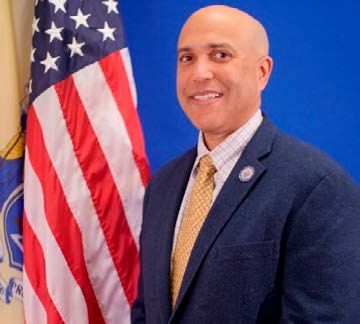
Social-Emotional Learning
                                          Irvington Public Schools
 Participants will identify and examine how to infuse the foundational social-emotional skills to support
 best practices in the early childhood virtual classroom. Participants will explore developmentally
 appropriate strategies to teach social skills in remote instruction, such as virtual classroom rules,
 facilitating peer interactions, parent involvement, and establishing a community of learners in the virtual
 classroom.

                      Attend Session 1                                 Attend Session 2

“Enhancing Social-Emotional Learning During Remote Instruction”
by:

  Aja Smith       Tawanna Singleton       Dan Bender       Joshua Wrinn           Kindlyne West          Maribel Adamo

  Concepts Covered                                            Social Emotional Learning Standards Addressed

  • Feelings
  • Virtual Rules
                                                              • Standard 0.3
  • Peer Interactions
                                                              • Standard 0.4
  • Daily Schedule
                                                              • Standard 0.5
  • Parental Involvement
  • Brain Breaks
  • Building Classroom Community

                                                       Expanding Opportunities: Your Guide to High Quality Teaching,
     New Jersey Department of Education
                                                       Learning & Leadership in Early Childhood
English Language Learning
                                             East Orange Public Schools

    As educators, it is vital to provide a safe, positive, and welcoming school environment for our students
    and families.This workshop is geared towards helping staff understand and address barriers that may
    exist for many of our families. We will also be looking at a variety of strategies and resources to help
    support ELL students and their families.

                         Attend Session 1                                 Attend Session 2

 “Supporting ELL Students and Families in the School Environment
 and Beyond” by:

                                                   Elisa Castillo

Concepts Covered:

• Highlighting the importance of a welcoming school environment for families
• Understanding and addressing needs of families to the best of our ability
• Working with families to support student learning
• Supporting and maintaining home language

                                                          Expanding Opportunities: Your Guide to High Quality Teaching,
        New Jersey Department of Education
                                                          Learning & Leadership in Early Childhood
Parenting Partnerships
                      City of Burlington Public Schools Early Childhood Center
     Today, more than ever, schools have to build partnerships with parents to successfully educate the whole
     child. Building parent-capacity and fostering positive relationships between home and school results
     in greater academic and social success. NAEYC refers to this as the “power of parental involvement”
     (Kirkwood, 2016). Parents are their children’s first teachers and building bridges between educators
     and parents is essential to meeting the needs of preschool children. This session will present evidence-
     based, practical practices for increasing parent engagement and forming lasting relationships.

                         Attend Session 1                                 Attend Session 2

 “Fostering Parent Partnerships in Preschool Programs” by

    Karen Breisacher, PIRT                   Regina Genovesi, CPIS/ SW                     Kristy Sugg, MT

Concepts Covered:

• Working with parents in all settings, including virtually.
• Obtaining the complete picture of a child’s development by including
   parent feedback (ASQ & ESI).
• Facilitating parent workshops and family events garner more participation.
• Using the parent communication component of Teaching Strategies.
• Real takeaways for educators to use or tweak for use.

                                                          Expanding Opportunities: Your Guide to High Quality Teaching,
        New Jersey Department of Education
                                                          Learning & Leadership in Early Childhood
Parenting Partnerships
                      Asbury Park School District Early Childhood Department
     Asbury Park has worked to transform more traditional parent involvement processes to family-driven
     and learner-centered engagement and community support for our youngest learners. In this session,
     members of the district’s Early Childhood Department will share how new initiatives and changes to
     pre-existing programs were implemented, based on utilizing the services that are in and around the
     district and local community to specifically and intentionally target needs and requests from families, for
     families.

                         Attend Session 1                                 Attend Session 2

 “Using Outreach Services and Data-Driven Decisions to Support
 Families and Foster Student Success” by

Dr. Lauren Jackson,         Sonia Irizarr y,      Shannon Antonelli,          Tif fany Sorto,               Tatum Stein,
     Supervisor                   CPIS             Master Teacher             Master Teacher              K to 3 Counselor

Family Engagement across the Early Childhood continuum, including:

• Virtual parent meetings (Spring 2020 to Present)
• Digital Family Needs Assessment Survey
• Team supports for “at-home learning”
• Family services for “in-school needs”
• Preschool Equity Program (P.E.P.)
• Transforming home visits
• Registration supports

                                                          Expanding Opportunities: Your Guide to High Quality Teaching,
        New Jersey Department of Education
                                                          Learning & Leadership in Early Childhood
Mathematics         Long Branch Public Schools
    Guided Math groups, students engage in standards-based, rigorous, learning opportunities where the
    teacher focuses on a particular concept, strategy or skill. Teachers facilitate this learning through hands-
    on, scaffolded conversations and intensive questioning. Guided math provides a structure for teachers
    to differentiate instruction so they can reach and teach every student. Learn more about what guided
    math is and how it can be implemented in your early learning math classroom.

                        Attend Session 1                                 Attend Session 2

 “Guided Mathematics in the Early Childhood Classroom” by

                         Kevin Gilbert                               Melanie Harding
                        1st Grade Teacher                     District Mathematics Supervisor

Concepts Covered:

• What are Guided Math Groups?
• Using a Guided Math Framework
• Using Assessment to Guide Instruction

                                                         Expanding Opportunities: Your Guide to High Quality Teaching,
       New Jersey Department of Education
                                                         Learning & Leadership in Early Childhood
Mathematics Long Branch Public Schools
Math Workshop is about a group of children learning and working together in a structured instructional
format that has multiple spaces for individual, partner, and small group work. In math workstations,
students collaborate and learn about math through invigorating and stimulating projects, games,
and activities. Math workstations are differentiated, standards based, engaging activities that foster
mathematical thinking. The goal of math workstations is to encourage students to make sense of math
by engaging in sustained practice over time that allows them to build conceptual understanding,
procedural fluency, and problem solving skills. Through a variety of experiences that start at the
concrete level and then scaffold through the pictorial level and then the abstract level, children get to
feel the math, see the math and do the math! Math workstations allow children the opportunity to revisit,
review, practice, and be enriched so they can become flexible confident proficient mathematicians.
Children like to laugh and learn by doing something that challenges them just enough but that is still fun
and engaging….Math Workstations do just that!
Attend Session 1 Attend Session 2
“Math Workshop and Math Workstations” by
Joy Daniels Michelle Morey Sean Kelly
Director of Early Childhood 2nd Grade Teacher Kindergarten Teacher
Concepts Covered:
• Math Workshop
• Math Workstations
• Managing the Math Workshop
Expanding Opportunities: Your Guide to High Quality Teaching,
New Jersey Department of Education
Learning & Leadership in Early ChildhoodMathematics Long Branch Public Schools
Early childhood math ambassadors have served as the expert in their building in the guided math
framework and the math workshop approach as well as the Learning Trajectories. These teacher
leaders with expertise in mathematics education provide school-based professional development
needed to support and maintain the teacher change process. They lead their building wide math PLCs
and offer professional learning to the teachers during district wide professional learning sessions. They
model instruction, participate in virtual rounds and have continued their professional learning through
intensive sessions with our consultants and experts, always staying one step ahead of their peers as the
lead learner in math instruction.
Attend Session 1 Attend Session 2
“ Teacher Leadership in Early Childhood Math:
Math Ambassadors” by
Tracey Cummings Beth McCarthy
1st Grade Teacher Principal
Concepts Covered:
• While the goal of mathematics education reform is to improve the mathematics achievement of all
students (NCTM, 2000), at the core of these efforts is the teacher (Garet, Porter, Desimore, Birman, &
Yoon, 2001).
• PLCs and modeling which is needed to support and maintain the teacher change process.
Expanding Opportunities: Your Guide to High Quality Teaching,
New Jersey Department of Education
Learning & Leadership in Early ChildhoodInclusion
Sayreville Public Schools
Together we learn better! The Americans with Disabilities Act of 1990 mandates that people
with disabilities have freedom, equality, and opportunity to participate fully in public life.
This can begin as early as the preschool years. We know that all students learn differently,
and inclusive classrooms give students with disabilities the chance to learn alongside their
peers. Teachers provide support as well as specially designed instruction geared towards
helping these young students succeed. Join us on a virtual tour of an inclusive classroom as we
discuss the importance and necessity of inclusion, the difference between school supports and
services, and provide ideas on how to successfully differentiate instruction.
Attend Session 1 Attend Session 2
“ The Power of Inclusion” by
Audrey Burns Judy Perone Jacqueline McGrade
Director of Master Teacher Master Teacher
Early Childhood
Let’s Discuss Inclusion:
• Differentiation
• Professional Development
• Support for Students and Staff
• Visionary Leadership in the Preschool
• Effective Co-Teaching
• Parent/Community Partnerships
• Highlights (Unified)
Expanding Opportunities: Your Guide to High Quality Teaching,
New Jersey Department of Education
Learning & Leadership in Early ChildhoodEnglish Language Arts
Maple Shade School District
Join us as we highlight best practices in Reading in several Kindergarten classrooms that
engage students, differentiate instruction and support our Kindergartners along their journey
to becoming successful and motivated readers.
Attend Session 1 Attend Session 2
“Engaging Kindergarten Students in Various Types of Reading
Instruction” by
Susan Morrissey Yvonne Reitz
Standards Addressed:
• Reading Literature: Key Details - RL.K.1-3
• Reading Literature: Craft and Structure - RL.K.4-6
• Reading Literature: Range of Reading - RL.K.10
• Fluency - RF.K.4
Expanding Opportunities: Your Guide to High Quality Teaching,
New Jersey Department of Education
Learning & Leadership in Early ChildhoodAdministration
The Leaguers, Inc
More than 320,000 Head Start children in the United States enter kindergarten each year. Research
shows this transition is an important event in the lives of children and families that can make a difference
in their immediate and ongoing school success. One of the key practices that fosters successful
transitions is COLLABORATION! When there are strong relationships among Head Start programs,
families, and receiving elementary schools, all these parts can work together to offer children and
families continuity, security, and resources for smooth transitions.
Attend Session 1 Attend Session 2
“How Head Start Programs and District Partnerships Ef fectively
Work” by
Veronica E. Ray Tracy Crosby
Executive Director/CEO
Throughout this session we will explore the impact of intentional
collaboration between Head Start and the Elizabeth School District.
• Head Start Standards
• 1302.12, 1302.13, 1302.14, 1302.15, 1302.16, 1202.71
• Promoting School Readiness
• Collaboration Strategies between Head Start & Districts
• MOU Requirements
Expanding Opportunities: Your Guide to High Quality Teaching,
New Jersey Department of Education
Learning & Leadership in Early ChildhoodAdministration
New Jersey Department of Education
Given the vital role high-quality early education plays in learning and development, early education
leaders need a broad, cutting-edge knowledge base, relevant strategies, and leadership competencies
to generate sustained quality improvement. This session will provide core leadership competencies,
which will provide leaders with the core knowledge, management skills, and tools necessary to build
and advance high-quality early education across learning environments.
Attend Session
“Leaders of Early Learning”
by:
Car y Booker
Concepts Covered:
• Leadership and management in early education
• Improve and sustain high-quality early education
• Leading effective early education teams
Expanding Opportunities: Your Guide to High Quality Teaching,
New Jersey Department of Education
Learning & Leadership in Early ChildhoodAdministration
New Jersey Department of Education
Fiscal management practices should support the provision of high-quality early childhood learning
environments, opportunities, and experiences that recognize the needs of individual students and work
toward the attainment of high levels of achievement for all students. This session will provide a high-
level overview of core knowledge and skills regarding budget and early childhood school finance.
Attend Session
“Early Childhood Financing”
by:
Selina Foreman
The Process of Highly Qualified Preschool Program Funding:
• Program Financing
• Qualifying
• Per Pupil Amount
• Provide Contracts
Expanding Opportunities: Your Guide to High Quality Teaching,
New Jersey Department of Education
Learning & Leadership in Early ChildhoodReflection
Attend
Conference Reflection
Expanding Opportunities: Your Guide to High Quality Teaching,
New Jersey Department of Education
Learning & Leadership in Early ChildhoodYou can also read


