Fahrenheit Universities: Strategy for consolidation Universities in Gdansk - Elsevier
←
→
Page content transcription
If your browser does not render page correctly, please read the page content below
Fahrenheit Universities: Strategy
for consolidation Universities in
Gdansk
prof. Adriana Zaleska-Medynska, Director of Fahreinheit Universities

27.05.2021
Outline

Short presentation of consolidating universities

Consolidation potential

Legal conditions of Fahrenheit Universities

Where we are and current activities

Fahrenheit Universities
Consolidating universities:
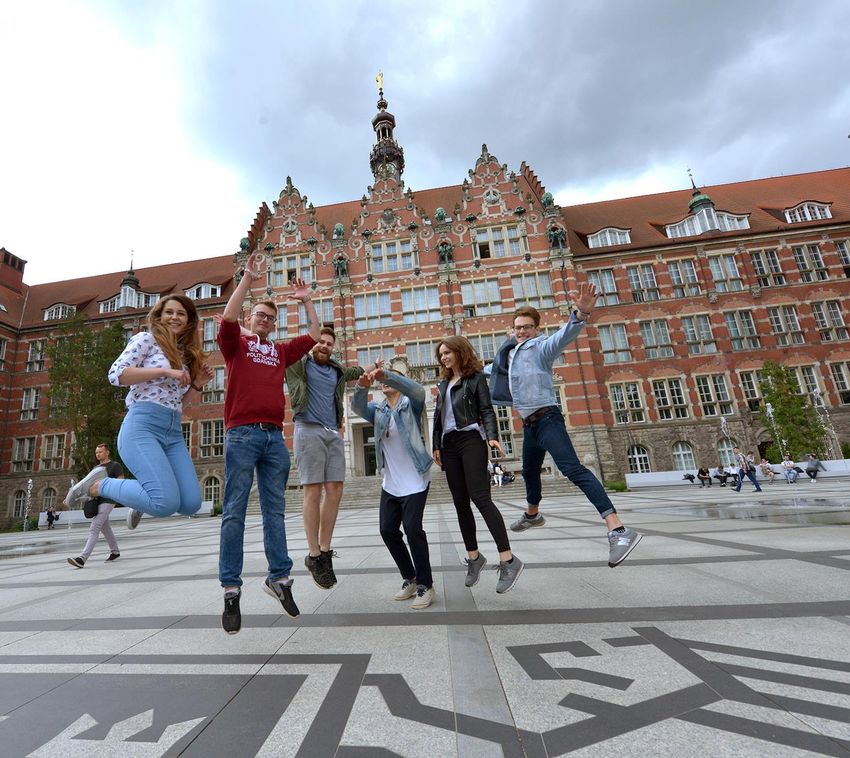
                      Gdansk University of Technology

    > 15 000
Podstawowe informacje licz
Students

      2 900
Employee

  300,6 mln zł
Subvention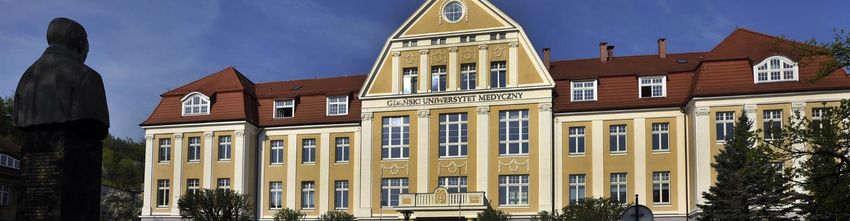
Consolidating universities:
      Gdansk University of Technology

The Shanghai Ranking: in 2020 PG was included for the
fist time in the prestigious Academic Ranking of World
Universities (ARWU)

QS World University Rankings 2021: GUT for the second
time took the place in the 801-1000 range

Seventh in Poland, fourth among Technical Universities in the
Perspektywy University Ranking

MEiN: GUT becomes a research University. It ranks
second among the 10 best academic centers in Poland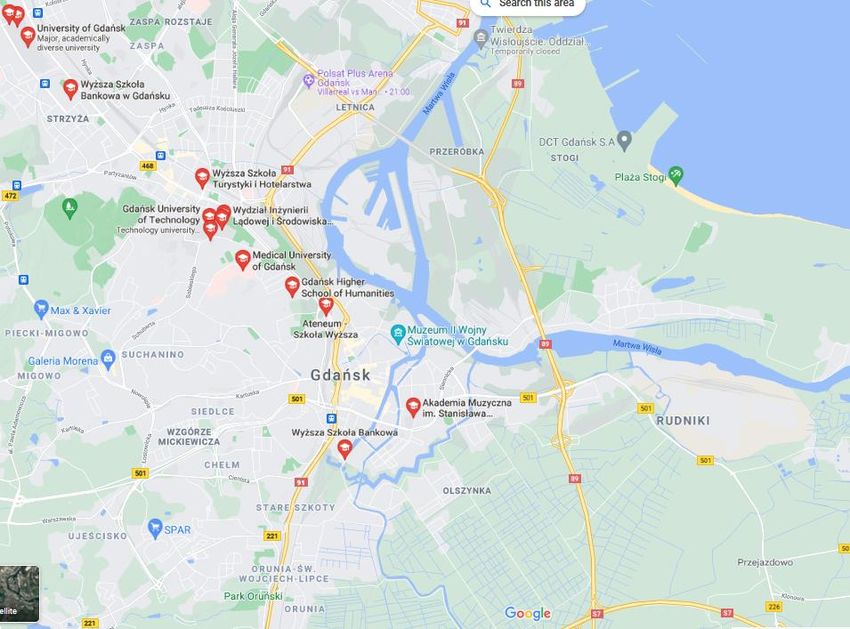
Consolidating universities:
                             Medical University of Gdansk

      6 196 informacje licz
Podstawowe                                    917
Total number of students                Number of English Division students

       1199                                    4
Number of scientific staff             Faculties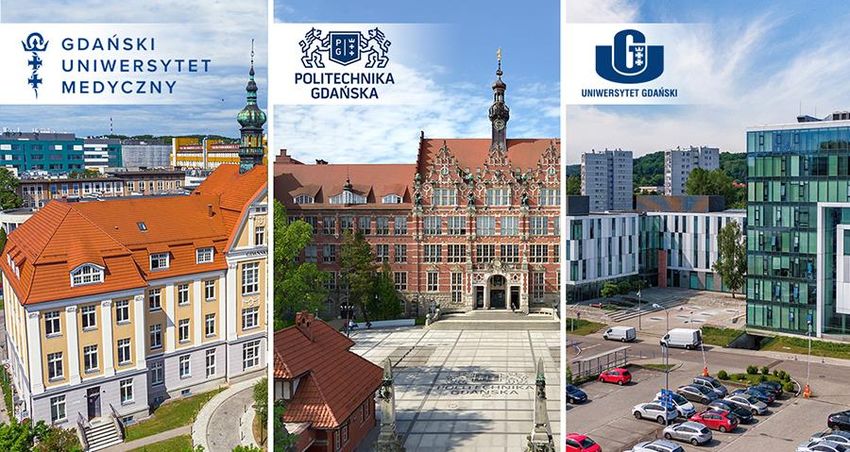
Consolidating universities:
                                 Medical University of Gdansk

                Medical Simulation Centre – new trend in teaching

Over 20 mln zł in funding of the
Ministry of Health

14, 5 mln zł
Costs of simulation equipment (POWER
2014 – 2020)

Over 6 mln zł
Costs of construction work (RPO WP
2014 – 2020)

15 simulations rooms
High fidelity

14 other rooms
didactic
Consolidating universities:
                           University of Gdansk

     22 000 informacje licz
Podstawowe
Students

      3 300
Employee

   316,9 mln zł
Subvention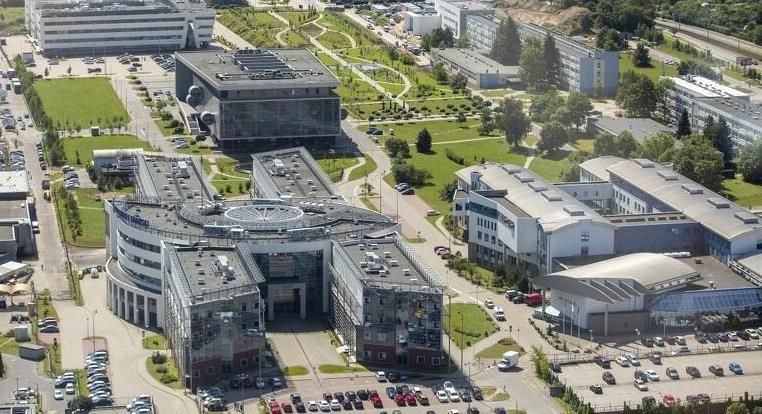
Consolidating universities:
                  University of Gdansk

The Shanghai Ranking: in 2020 UG was included in Global
Ranking of Academic Subjects among the universities in Ecology
discipline

Times Higher Education World University Ranking (THE
WUR): in 2020, the University of Gdańsk took 4th place in the
category of classical universities in Poland and 7th place in the
overall ranking of Polish universities

QS World University Ranking 2020: UG was ranked high 5th
among national classical universities and 11th among all
universities in Poland

Times Higher Education Impact Rankings: UG is one of 5
Polish universities listed in the global ranking taking into account
the 17 Sustainable Development goals set out in the 2030
Agenda

MNiSW: UG ranks in the second ten of the IDUB competition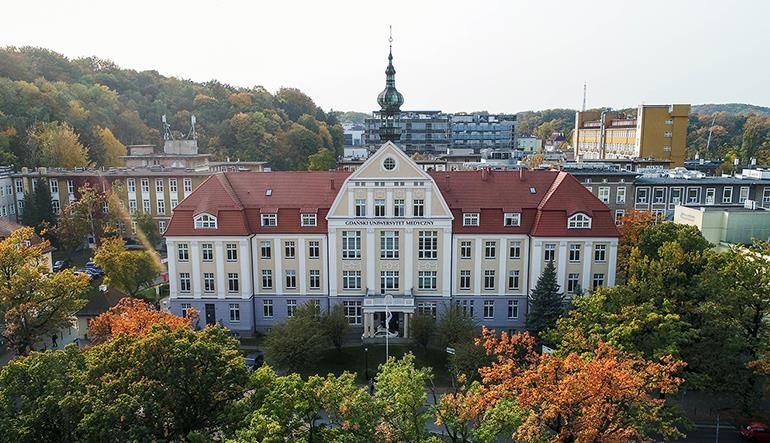
The Daniel Fahrenheit Union of
                                          Universities in Gdansk
                                                  Chairman of the Assembly
                                                  prof. dr hab. inż. Krzysztof Wilde
                                                  Rector of Gdansk University of Technology
The Daniel Fahrenheit Union of
Universities in Gdańsk was appointed at
the joint request of the rectors of the
Medical University of Gdańsk, Gdańsk
University of Technology and the                  Director
                                                  Prof. dr hab. inż. Adriana Zaleska-Medynska
University of Gdańsk.

Fahrenheit Universities was established
on September 15, 2020 based on the Act
on Higher Education (Dz. U. z 2017 r poz.
2183, ze zm.)

❑ Participating Universities are independent
  in the scope of their previous activities and
  remain autonomous in all domains of
  their activity
❑ The union has legal personality
❑ The collegial resolution-making body is the
  Association's Assembly chaired by the
  Association's President.
Position in Poland of the hypothetical
„Fahrenheit University”
Farenheit University – 3rd in Poland
Regarding to the scholarly output we can benchmark position of the FU in an
environment of the Polish universities. Based on FORD (OECD) classification,
source SciVal/Scopus
Engineering
Natural Mediacal Agricultural Social
All publications type 2015–2019 Overall and Humanitles
Sciences Scences Sciences Sciences
Technologies
University of Warsaw&Warsaw
1 Medical University (UW+WUM)*
21581 12770 2918 7824 740 2960 1674
Jagiellonian University (UJ) 17382 10313 2399 7328 919 1873 1136
2
University of Warsaw (UW) 14404 10536 2474 1567 511 2740 1654
3 Fahrenheit University (FU) 13346 9047 4186 4302 829 1161 357
Adam Mickiewicz University (UAM) 8145 5943 1756 970 753 1522 1167
Nicolaus Copernicus University
5824 3767 1184 2129 417 617 373
(UMK)
University of Wroclaw (UWR) 5684 4584 940 781 460 701 479
*Hypothetical, non-existing University, only for benchmark.Fahrenheit University – number of employee and
PhD students
Research and teaching staff PhD students
(January 2021) (January 2021)
Professor – 406 Doctoral studies– 1248
Habilitated doctor – 968 Doctoral schools– 475
doctor – 1796
total – 1723
Masters' degree – 570
Physician – 115
total – 3855
Doktoranci (styczeń 2021)Fahrenheit University – disciplines
Archeology
Physical Sciences (GUT and UG)
Architecture and urban planning
Medical Sciences
Automation, electronics and electrical engineering
Culture and Religion Sciences
Economics and Finance (GUT and UG)
Management and quality sciences
Philosophy Socio-economic geography. and farm space (GUTG and UG)
History Health Sciences
Informatics Earth and Environmental Sciences
Technical Informatics and Telecommunications Legal sciences
Biomedical engineering Sociological Sciences
Chemical engineering Education
Civil Engineering and Transport Psychology
Material Engineering
Mechanical Engineering
Environmental Engineering, Mining, Energy
Linguistics
Literary Studies
Mathematics (GUT and UG)
Biological Sciences
Chemical Sciences (GUT and UG)
Pharmaceutical SciencesFahrenheit University – unique disciplines (16)
Number of scoring articles (2019–2020)
Discipline
200 140 100
Medical Sciences 51 253 327
Health Sciences 23 93 140
Pharmaceutical Sciences 7 109 167
Automation, electronics and electrical engineering 22 112 114
Civil Engineering and Transport 20 75 93
Material Engineering 17 85 69
Mechanical Engineering 14 66 43
Environmental Engineering, Mining, Energy 10 14 21
Chemical Sciences (GUT and UG) 72 248 333
Biological Sciences 23 127 140
Physical Sciences 19 23 43
Earth and Environmental Sciences 13 18 69
Psychology 1 9 24
Economics and Finance 1 5 48
Literary Studies 1 1 31
Linguistics 1 4 22The World’s Top 2% Scientists published by Stanford
University
1. Śp. Jacek Namieśnik 1. Śp. Jan Kapuściński 1. Śp. Roman Kaliszan
2. Jan Kalinowski 2. Grzegorz Węgrzyn 2. Krzysztof Narkiewicz
3. Sławomir Koziel 3. Śp. Alfons Kawski 3. Jacek Jassem
4. Victor A. Eremeyev 4. Śp. Marek Grinberg 4. Piotr Szefer
5. Jacek Tejchman 5. Bogdan Skwarzec 5. Tomasz Bączek
6. Kazimierz Darowicki 6. Michał Horodecki 6. Zdzisław Brzozowski
7. Robert Jankowski 7. Paweł Horodecki
8. Waldemar Wardencki 8. Jerzy Falandysz
9. Ewa Klugmann-Radziemska 9. Ryszard Horodecki
10. Czesław Szmytkowski 10. Piotr Stepnowski
11. Marek Krawczuk 11. Andre Marc Selosse
12. Piotr Jasiński 12. Marek Żukowski
13. Wojciech Pietraszkiewicz 13. Adriana Zaleska Medynska
14. Magdalena Rucka 14. Robert Alicki
15. Maciej Niedźwiecki
16. Michał Mrozowski
17. Rafał Szłapczyński
18. Marek Makowski Fahrenheit University
19. Zbigniew Krzemiński
20. Janusz Smulko
– total: 43 scientists
21. Ryszard Strzelecki
22. Andrzej Stateczny
23. Andrzej SewerynFahrenheit University – grants (2019-2020)
Joint grants (GUMED – PG – UG) – realized in 2019-2020
STRATEGMED III (Gumed – PG – UG)
OPUS 10 (GUMED-PG)
OPUS 13 (PG – UG) Total numer of joint
OPUS 14 (Gumed – PG) projetcs:
OPUS 15 (Gumed – PG) PG–GUMED: 4
OPUS 18 (GUMED-UG) PG–UG–GUMED: 6
PG–UG: 4
OPUS 18 (GUMED-UG)
GUMED–UG: 7
FNP (GUMED-UG) – 3 projekty
FNP (GUMED-PG-UG)
SONATA BIS (PG-UG)
TECHMATSTRATEG 3 (Gumed – PG – UG)
Rozwój Innowacji Drogowych (RID) (PG – UG)
HORYZONT 2020 (Gumed – PG)
HARMONIA 9 (GUMED-UG)
NCBiR (didactic) (PG-UG)
Inkubator Innowacyjności 2.0 (GUMED-PG-UG)
Inkubator Innowacyjności 4.0 (GUMED-UG)
Centrum Projektów Polska Cyfrowa (GUMED-PG-UG)
GRIEG (Polish-Norwegian) (GUMED-UG)
Total: NCN: 257 NCBiR: 53 FNP: 13 MNiSW: 57 NAWA: 19 KE: 44 ABM: 2 OTHERS: 72Fahrenheit University – teaching / courses
Fields of study (total): 143
Number of students: 42 200
Joint field of study:
– Mechanical and medical engineering,
Eng. and MSc (PG/GUMED)
– Space and Satellite TEchnologies
(PG/UG/UMG/AMW)
– Full time PhD studies in Chemistry and Biochemistry at the Faculty of Chemistry (UG/GUMED)
– International Ph.D. Programme „Chemistry for Health and the Environment” (INTERCHEM)
(PG/UG)
– Intercollegiate Doctoral School of Biotechnology of the University of Gdansk and Medical
University of Gdansk (UG/GUMED)Factors for the successful consolidation
„The consolidation of colleges / universities is justified if it results
in synergies that increase the value of a newly created entity.
Essentially, synergy means the the value of a merged universities
exceeds the sum of the value of each individual university” (based
on Fuzje Uczelni, Łukasz Sułkowski, 2020)
VAB – value of merged universities
VAB = VA + VB + SAB VA – value of University A
VB – value of University B
SAB – SYNERGY
The success of the fusion depends on the developed synergy effectsDevelopment of synergistic areas Synergy SAB at three levels: 1. Operational activities: – larger scale of activity, – international recognition, visibility at the Polish marker, – strong brand. 2. Financial, reduction of operating costs through: – rationalization of maintenance costs, – higher effectiveness of research and teaching activities. 3. Market activity: – reduction of local competition in the field of higher education, – organizing of the local market of scientific activity.
Synergy – selected activities

Joint Maintenance Center
– joint energy purchases (realized: 14% price reduction in two years)
– sharing maintenance activities (in progress).

Library Center (in progress)
– access to library resources of all universities,
– access to library digital resources of all universities.
Joint Service Center for dormitories (in preparation)
– flexible access of students of all universities to dormitories,
– sharing of dormitory modernization works,
Joint Public Procurement Service Center (in preparation)
– carrying out of joint procedures (e.g., chemical reagents ordering)
– provision of public procurement services for units or employees of all
universities.

And other activities…. development of Gender Equality Plan for three
universities in cooperation…
Synergy – selected activities

Identification of synergistic areas in science

Joint interdisciplinary research:
– joint local thematic seminars (ongoing),
– networking of research teams,
– promoting joint projects applications, including
European.

Joint Research Infrastructure Center
(ongoing):
– developing a concept for creating research
centers laboratories ,
– unification of the rules for using research
infrastructure,
– rationalization of research infrastructure
maintenance costs.
Difficulties in consolidation universities

Why have some college/ university consolidation failed?
– lack of the acceptance of the consolidation process by the key community
groups of individual universities ;
– unrealistic programs of combining university activities;
– reduction of the number of managerial positions and personal conflicts

Factors for a successful consolidation

– the majority of community of all universities must to see the benefits for
themselves of the introduced changes
– consolidation processes must be carried out considering the main
demands of the academic community

  The road map:
  Association          Federation         Fahrenheit University
Expected effects of consolidation

    The goals of the consolidation of the Pomeranian
    universities are:
-    improving the quality of life and wealth of the
     inhabitants,
-    boosting the economic development of Pomerania
     and the country based on knowledge and
     innovation
-    increasing the academic level of Pomerania by
     increasing the number of students and scientists
     and implementation activities.
    through:
creating a university with an undisputed international
position, attracting talented and creative students who
will stay in the region after their studies, supporting its
dynamic development, as well as young scientists
who will contribute to the dynamic development of
Pomerania and the entire Polish Science.
Project „Supporting the consolidation processes of
Universities” founded by Ministry of Education and
Science
General information about the projet
- Co-financing amount: 2 985 300 zł
- Project Leader: Gdansk University of Technology
- Partner institutions: University of Gdansk and
Medical University of Gdansk
Aim:
Preparation of a comprehensive analysis and a
feasibility study of the consolidation process of three
Gdańsk universities at all important stages of
consolidation. On their basis, federation /
consolidation scenarios will be prepared, defining the
optimal joint action program and correlated action
programs for each university joining the federationSummary and tips Identify synergy areas in your consolidation process Include academic community into merging process (debates, workshops, etc..) Include financial mechanism to increase research level and cooperation activities (small University grants system, awards for high impacted publications, etc…) Don’t do it in rush!!
Dziękuję za uwagę

   FAHRENHEIT
    UNIVERSITY
  Development opportunity

Thank you for your attention
You can also read


