Fiber optic Infrastructure Presentation House Energy and Technology 02/07/2019 - Vermont Legislature
←
→
Page content transcription
If your browser does not render page correctly, please read the page content below
Fiber optic Infrastructure Presentation

         House Energy and Technology
                 02/07/2019
                  Presented by Christine Hallquist

“My answer has been, as it is tonight, to point out these plain principles,
That where a community -- a city or county or a district -- is not satisfied
with the service rendered or the rates charged by the private utility, it has
the undeniable basic right, as one of its functions of government, one of
its functions of home rule, to set up ... its own governmentally owned
and operated service” - Franklin Delano Roosevelt

                   Christine Hallquist christinehallquist@gmail.com
What I am going to Present
The electric grid of the future (next year) and why fiber optic is necessary to
meet our energy goals
Why I am so bullish about fiber optic infrastructure
Technology comparisons (why I am so bullish about fiber optic infrastructure)
Fiber optic and Telecommunications (why I am so bullish about fiber optic
infrastructure)
Advantages of using the regulated electric utility for open access fiber
Legislative considerations
Final thoughts
2
Christine Hallquist christinehallquist@gmail.comWhy fiber optic
cable?
• Fiber optic broadband is the bridge to the future for Vermont to
have a vibrant economy
• Economic development and growth depends on it
• Urban data rates currently average 70 MBS; 200 MBS by 2020;
1000 MBS by 2028
• Netflix HD requires 25 MBS alone.
• The world is moving towards ever faster data rates and rural
America is being left behind
• Fiber to the Premise is the ultimate solution; beyond 30 year
life and “future proof”
• Next generation smart meters are IP based {require reliable
broadband}
• Getting to the goal of 100% renewable energy 100% of the
time will require fiber
3
Christine Hallquist christinehallquist@gmail.comFiber optic cable – the answer for telecommunications
Because fiber-optics uses light instead of electricity to transmit data, the frequencies
that are used are much higher and the data capacity is much greater. The fiber-optic
cable itself is made from glass or plastic which is not susceptible to electromagnetic
interference like metal cables. This allows data to flow over great distances without
degrading. Interference and energy loss is the limiting factor for all types of
communication transmissions and fiber optics handles these factors much better than
other modes of transmission. In the future, more and more of our world will be
connected via fiber optics as we outgrow the old copper based infrastructures.
Light moves very fast (186,000 miles per second, to be specific), enabling
conventional speeds of 10,000 Megabits (Ten Gigabits) per second on single fiber-
optic networks — almost 140 times faster than the US urban broadband average of
70 Megabits per second. A single strand of fiber can be split into 100 wavelengths,
allowing recorded speeds up to 13 terabytes/second. Nokia has a new technology to
bring that to 32 terabytes/second.
Consumers think of fiber as a new technology, but the Internet “backbone” network
connecting cities and countries has been built with fiber-optic cables since the dawn
of the Internet. The first submarine fiber-optic cable connected the US to France and
Britain back in 1988, and hundreds currently criss-cross the ocean floor all around the
world
4
Christine Hallquist christinehallquist@gmail.comRegulated electric utility ownership – the advantages
An electric utility borrows at much lower rates than telecommunication companies
Electric utility life is 30 years, twice that of telecommunication companies, which
cuts the infrastructure costs in ½ in terms of a tariff rate
Placing the fiber in the electric space eliminates expensive make ready costs
Keeping the fiber as part of the regulated utility eliminates the expensive pole
attachment rates – these rates run about $400/year/mile which equates to a $14K
savings over the life of the infrastructure
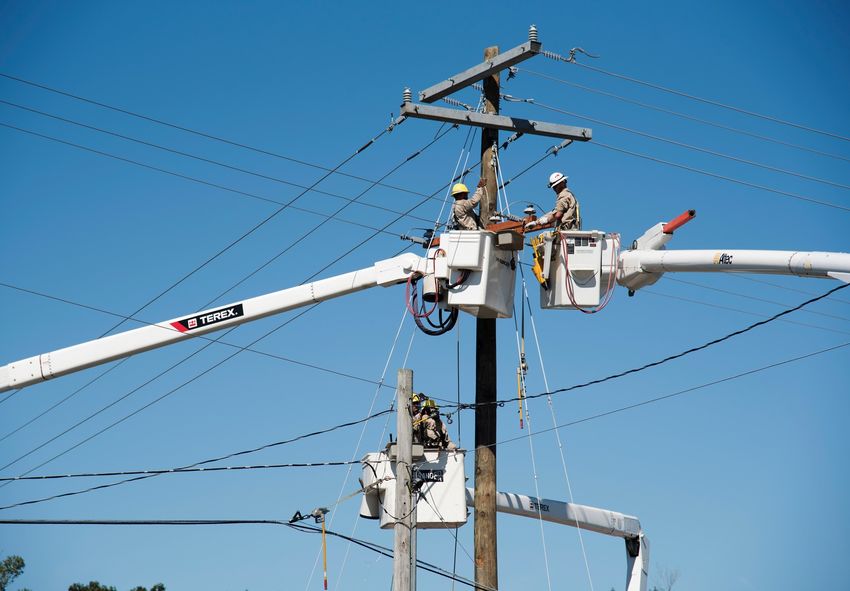
Today we are paying for two
separate companies to maintain
the same infrastructure. When a
storm hits and takes down lines,
the electric utility comes out
repairs its lines, and then the
telecommunication company
comes out. Two bucket rolls that
could be one. Two sets of
labor, two sets of company
overhead
5
Christine Hallquist christinehallquist@gmail.comLegislative considerations
Establish language encouraging electric utility investments in fiber backbone.
Establish the position of Vermont state broadband manager under the Vermont Agency of
Commerce and Community Development.
Give authority to set bulk data tariffs to Public Service Commission. Base it on estimated
adoption rates to be paid for by telecommunications providers (for example cents/minute/mile).
Establish a loop support (redundancy) tariff as well.
Define network access point as the electric meter. Require open-access.
Exempt fiber infrastructure from local property taxes.
Require all existing electric utilities to provide public fiber maps. This fiber was paid for by electric
utility ratepayers. This includes VELCO.
Don’t overbuild existing telecommunications company fiber (allow 10% overlap for practical
reasons).
Establish firm requirements for broadband minimums of 100 Mbs synchronous,
Allow micro-trenching for buried fiber.
Allow open access to existing state-owned fiber.
Require all pole assets to be turned over to electric utilities at net book value.
Exempt electric utility fiber from make-ready requirements and pole attachment fees.
Encourage pilot projects
6
Christine Hallquist christinehallquist@gmail.comFinal Thoughts
Great case study – Midwest Energy and Communications -
https://www.cooperative.com/programs-services/bts/Documents/Advisories/Advisory-Broadb
and-Case-Study-Midwest-Energy-Dec-2018.pdf
Example consumer broadband costs (from Midwest Energy) -
$49.95 per month for 25 Megabits per second (Mbps) upload and download
$59.95 per month for 50/50 Mbps
$79.95 per month for 100/100 Mbps
$119.95 per month for 1 gigabit upload and dowload (1,000 Mbps)
While I do respect and support the activities of Community Utility Districts, continued work
under the existing expensive infrastructure model will not result in the infrastructure that
Vermont needs. CUD’s do need centralized resources. The districts are not able to obtain
the necessary technical resources they need on their own. Without any changes, CUD’s are
the best we have and we need to support them.
There is $350 million in funding for up to 90% of the infrastructure costs for fiber build out in
the 2019 US Farm Bill.
There is money in the Connect America Fund.
Utility banks are willing to lend up to 80% of the infrastructure cost for a well-written plan at
very low borrowing costs.
Put out an RFP for an engineered telecommunications plan to make this happen
7
Christine Hallquist christinehallquist@gmail.comYou can also read


