For BIPOC Travelers, Heritage Trips Can Be Hard to Plan-These Companies Want to Change That
←
→
Page content transcription
If your browser does not render page correctly, please read the page content below
5/14/2021                 For BIPOC Travelers, Ancestry Trips Can Be Hard to Plan—These Companies Want to Change That | Condé Nast Traveler

     Getty

                                                                      THE LATEST

            For BIPOC Travelers, Heritage Trips Can Be Hard to
              Plan—These Companies Want to Change That
      Skewed DNA test results have long left travelers of color with more questions than answers,
               but a few determined operators are finding ways to work through it.

                                                            BY SARAH ENELOW-SNYDER
                                                                      April 21, 2021

     All products featured on Condé Nast Traveler are independently selected by our editors. If you buy something
     through our retail links, we may earn an affiliate commission.

https://www.cntraveler.com/story/for-bipoc-travelers-heritage-trips-can-be-hard-to-plan-these-companies-want-to-change-that                   1/4
5/14/2021                 For BIPOC Travelers, Ancestry Trips Can Be Hard to Plan—These Companies Want to Change That | Condé Nast Traveler

     “My 23andMe test solidified my desire to visit Nigeria,” says Kent Johnson, cofounder of the
     tour company Black & Abroad. When he received his ancestry results in late 2019, his
     strongest place of origin in Africa was Nigeria (22 percent), followed by Ghana, Liberia, and
     Sierra Leone (a combined 17 percent). But one year later, after hearing that friends' results had
     changed, Johnson logged in to his account to discover that his had shifted too: Ghana, Liberia,
     and Sierra Leone had risen to 22 percent while Nigeria had dropped to 17 percent. In the end,
     he visited Ghana first.

     Such cases of hazy identity often share the same principal cause: the Eurocentric data collected
     by companies like Ancestry and 23andMe. Their reference data sets—DNA samples derived
     from customers (and in 23andMe's case, publicly available data), meant to represent specific
     populations—have historically been robust for people of European ancestry but lacking for
     those with roots elsewhere in the world. In recent years, these companies have moved to
     diversify their data sets. “We proactively seek people to test from underrepresented
     populations,” says Crista Cowan, a resident genealogist at Ancestry. The same goes for
     23andMe; its data collection has grown enough that it was able to break down its Broadly
     South Asian category to include seven more specific groups, including Northern Indian &
     Pakistani and Southern Indian & Sri Lankan.

     Even when armed with more specific DNA results, BIPOC travelers can find trip planning to
     be challenging. It took Michelle Jong, president of the Chinese Family History Group of
     Southern California, at least two years to construct her family tree; documents in China are
     tricky to track down, and can be tough to interpret if you do locate them. Jong eventually went
     on a trip in 2018 with Friends of Roots, a nonprofit tour provider that has specialized in
     Chinese American heritage for 30 years. In her ancestral village in Guangdong province, she
     met a newfound cousin who showed her the house her grandfather was born in. “I never
     thought in my wildest dreams I would go there,” she says.

     Like Jong, many BIPOC travelers will find their best heritage or genealogical trip options with
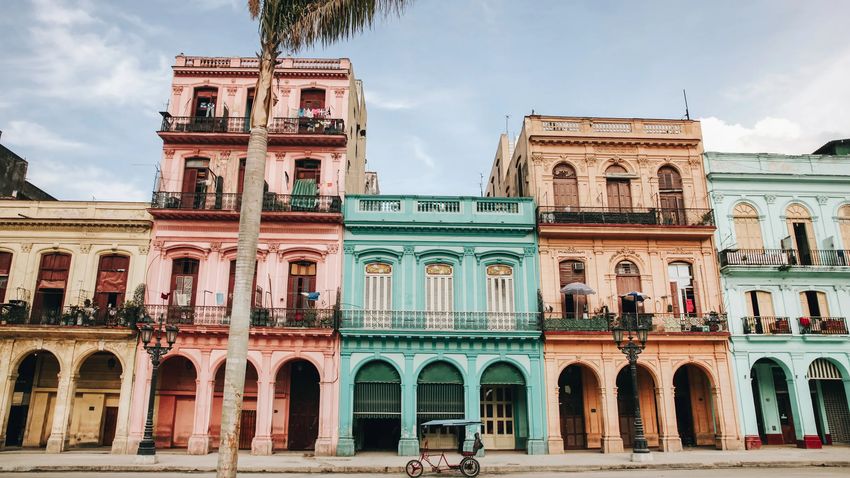
     small specialized tour companies. For the last six years, operator AfroLatino Travel has been
     leading trips primarily to Panama and Cuba, with an emphasis on history and spirituality. In
     Havana this includes an exploration of Santeria and a visit to the home of a lifelong
     practitioner of the Yoruba-based tradition. Many of AfroLatino Travel's clients are several
     generations removed from their countries of origin and want to learn more about them, says
     cofounder Javier Wallace. At the same time, these tours allow non-Black Latino clients to learn
     more about the diversity of these places. “We really like the idea of connecting the diaspora,” he
     says.
https://www.cntraveler.com/story/for-bipoc-travelers-heritage-trips-can-be-hard-to-plan-these-companies-want-to-change-that                   2/4
5/14/2021 For BIPOC Travelers, Ancestry Trips Can Be Hard to Plan—These Companies Want to Change That | Condé Nast Traveler
the
the U.S.
U.S. editor
editor of
of Conde
Conde Nast
Nast Traveler.
Traveler.
Dossé-Via Trenou founded the travel agency Magic & Melanin in 2018 to introduce members
of the African diaspora to their ancestral homelands; the company leads trips to Togo, Benin,
Côte d'Ivoire, and Ghana, with plans to add more African nations. About 20 percent of clients
come to her after having taken a DNA test, says Trenou, who is based in Côte d'Ivoire, but those
who haven't are no less motivated to explore their West African roots. The company also offers
a 14-week residency program for individuals to pursue their passion projects, providing access
to classes in herbalism, dancing, and language—which has already inspired some attendees to
make their bond even more permanent.
“Our residents embark on a decolonizing journey as they remember who they are and discover
more of where they come from,” says Trenou. “Several of our inaugural residents have decided
to stay in West Africa or are already making plans to move here.”
This article appeared in the April 2021 issue of Condé Nast Traveler. Subscribe to the magazine here.
TOPICS MAGAZINE FAMILY TRAVEL SHOPPING
https://www.cntraveler.com/story/for-bipoc-travelers-heritage-trips-can-be-hard-to-plan-these-companies-want-to-change-that 3/45/14/2021 For BIPOC Travelers, Ancestry Trips Can Be Hard to Plan—These Companies Want to Change That | Condé Nast Traveler https://www.cntraveler.com/story/for-bipoc-travelers-heritage-trips-can-be-hard-to-plan-these-companies-want-to-change-that 4/4
You can also read


