FORMATTING AND CITING REQUIREMENTS FOR STUDENT ACADEMIC PAPERS APA STYLE SUMMARY
←
→
Page content transcription
If your browser does not render page correctly, please read the page content below
APPROVED by:
                                                      ISM University of Management and Economics
                                                                   Rector‘s Order of 12 March, 2021
                                                                                       No. 01-07-23

      FORMATTING AND CITING REQUIREMENTS FOR STUDENT ACADEMIC PAPERS

                                      APA STYLE SUMMARY

                            (7TH EDITION, published in October 2019)

ISM University of Management and Economics requires students to use APA (American
Psychological Association) style for formatting academic papers written in English. APA is the most
commonly used style to cite sources within the social sciences.
The summary of the APA 7th edition requirements corresponds to the writing and formatting
guidelines described in full in the Publication Manual of APA Style (7th ed.). It focuses on Paper
Elements and Format (Chapter 2), Works Credited in the Text (Chapter 8) and Reference List
(Chapters 9 and 10).

The summary is based on the official APA Style website at https://apastyle.apa.org/
and Online Writing Lab (OWL) website at
https://owl.purdue.edu/owl/research_and_citation/apa_style/apa_formatting_and_style_guide/apa_c
hanges_7th_edition.html
Sample student papers are available at:
https://apastyle.apa.org/style-grammar-guidelines/paper-format/sample-papers
Sample Annotated student           paper:   https://apastyle.apa.org/style-grammar-guidelines/paper-
format/student-annotated.pdf

If you have questions about specific assignment guidelines or what to include in your APA Style paper,
please check with your assigning instructor or institution. If you have questions about formatting your
thesis or dissertation, check your institution’s guidelines or consult your advisor.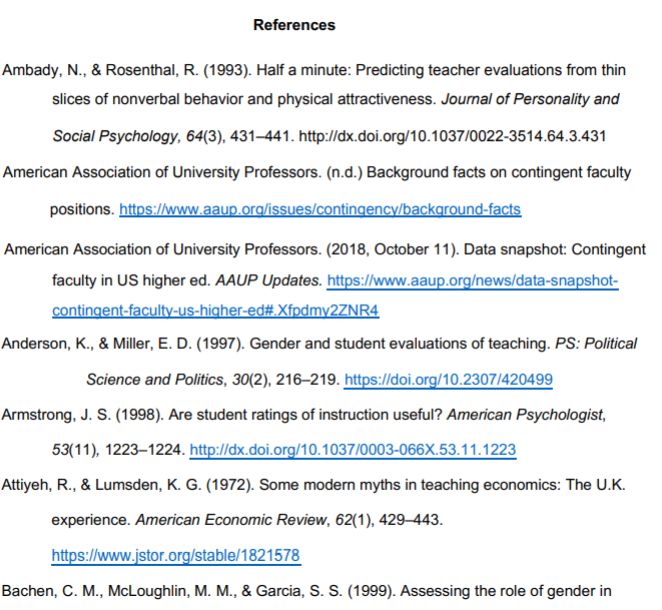
2 General APA Guidelines General format of an APA formatted paper Student essays should be typed, double-spaced*, on standard-sized paper A4 (210 mm x 297mm) with 1” (2.54 cm) margins on all sides. Times New Roman or similar font in 10-12 pt. size should be used. *ISM recommends 1.5 pt. line spacing Paper Format (student paper) Page Header: Page number, appears flush right in the header (upper right corner) of all pages. Student papers do not require running header. Font and Font Size: Use the same font and font size throughout your paper, recommended serif and sans serif fonts: 11-point Calibri 11-point Arial 12-point Times New Roman 10-point Lucida Sans Unicode 11-point Georgia 10-point Computer Modern Line Spacing: Double-space (*ISM recommends 1.5 pt. line spacing) the entire paper. Do not add extra lines before or after headings or between paragraphs. Margins: Margins are 1 inch (2.54 cm) on all sides (top, bottom, left, right) Paragraph Alignment and Indentation: Left-align the text (do not use full justification). Ident the first line of each paragraph 0.5 inch (1.27 cm, one tab key). All section labels (e.g., “Author Note,” “Abstract,” “References”) are now bold and cantered. Major Paper Sections Student essay should include four major sections: Title Page, Abstract (if required), Main Body, and References. Page Order: Start each main paper section on a new page. Arrange pages in the following order: Title page Abstract (if needed) Text References Footnotes (if needed) Tables (if needed) Figures (if needed) Appendices
3

PAPER ELEMENTS
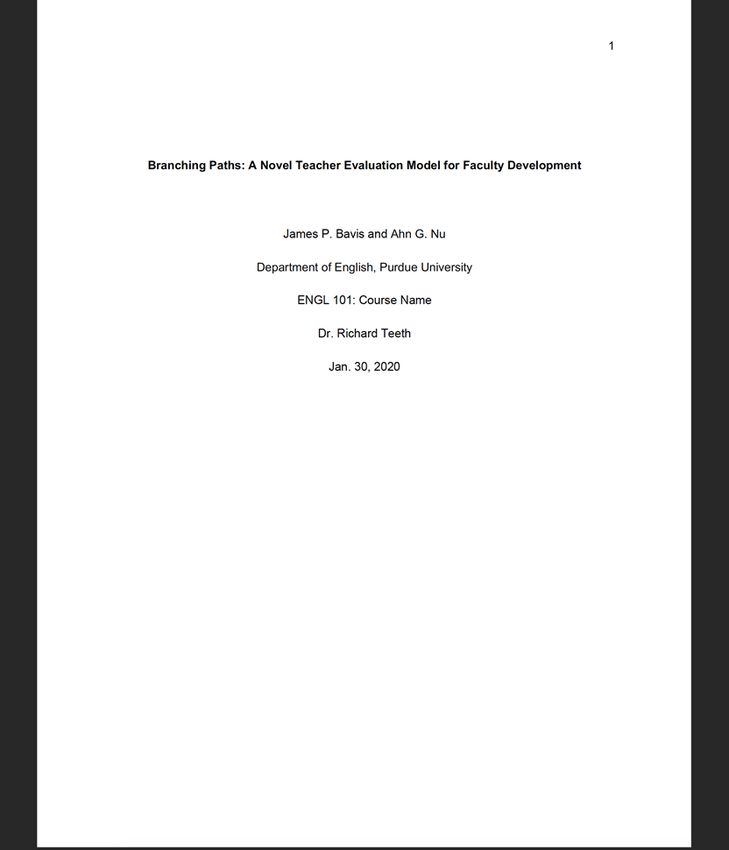
Student Title Page
Format: Double-space the title page. Center each element on its own line. Do not use italics,
underlining, or different font sizes.
Title: Concise, engaging summary of the paper and its main topic and/or variables. Write in title case:
Capitalize the first letter of the title, the subtitle, and any major words of four letters or more (plus
linking words “Is”, “Are” and “Be”). Double-space, center, and bold the title in the upper half of the title
page (three or four lines down from the top margin).
Author Name: Full name of each author of the paper. The preferred format is first name, middle initial
(s), and last name. Center the name two double-spaced lines after the title.
Author Affiliation: Name of the department of the course to which the paper is being submitted and
name of college or university.
Course Number and Name: Number and name of the course to which the paper is being submitted.
Use the format shown on course materials (e.g., syllabus). Write the number and name on the same
line.
Instructor’s Name: Name of the instructor of the course to which the paper is being submitted.
Due Date: Due Date of the assignment. Include the month, day, and year in the format used in your
country. Spell out the month and write the full year.
Page number: Flush right in the header (upper right corner).
4

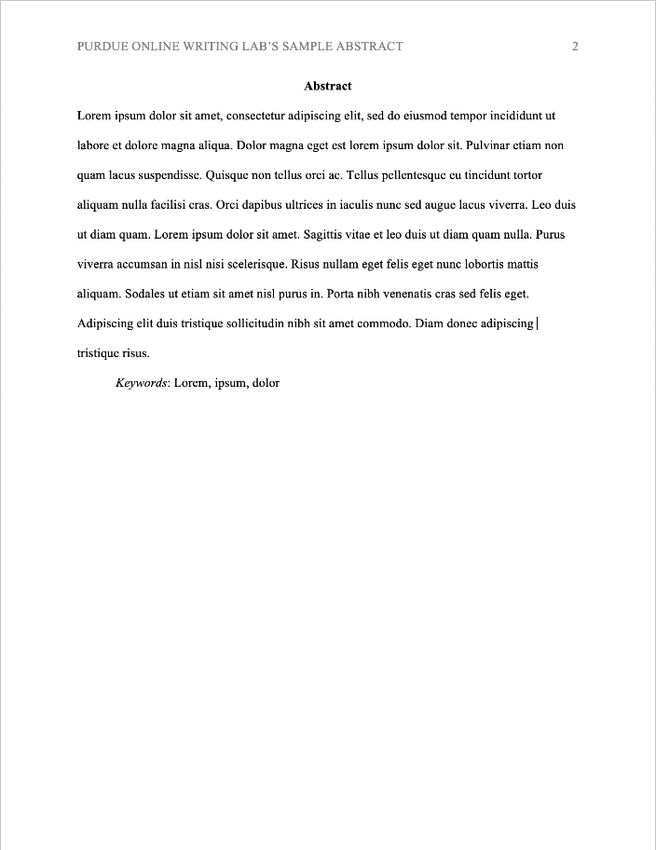
Abstract (if required)
Begin a new page. On the first line of the abstract page, center and bold the word “Abstract” (no
italics, underlining, or quotation marks).
An abstract is a brief, comprehensive summary of the contents of the paper. Your abstract should
contain at least your research topic, research questions, participants, methods, results, data analysis,
and conclusions. You may also include possible implications of your research and future work you
see connected with your findings. Your abstract should be a single paragraph, double-spaced. Your
abstract should typically be no more than 250 words.
You may also want to list keywords (3-5) from your paper in your abstract. Keywords are words,
phrases, or acronyms that describe the most important aspects of your paper. To do this, indent as
you would if you were starting a new paragraph, type Keywords: (italicized), and then list your
keywords. Listing your keywords will help researchers find your work in databases.
5

Headings
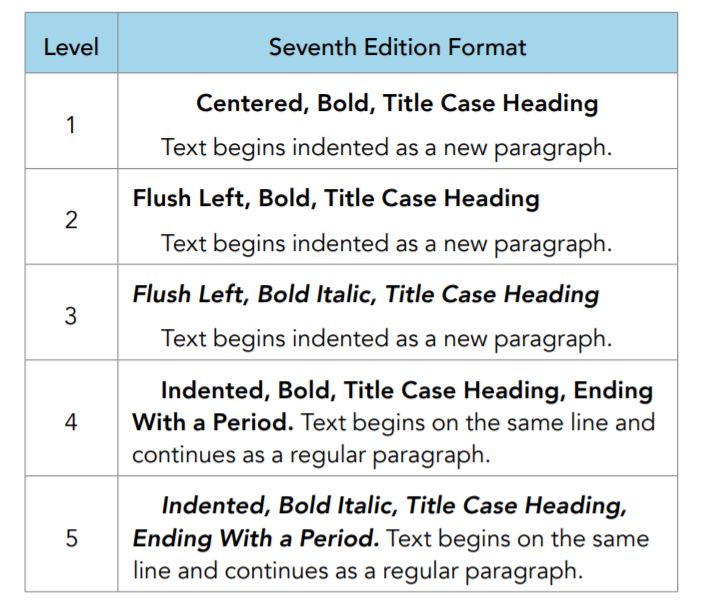
APA style uses a unique headings system to separate and classify paper sections. There are 5
heading levels in APA. Note that all section labels, such as Abstract, Title of Your Paper, References,
etc. are not considered to be headings. (All section labels e.g., “Author Note,” “Abstract,”
“References” are now bold and cantered.)
The following table demonstrates how to format headings in seventh edition APA Style. All headings
are bold; Levels 3 and 5 are also italic.
6

Below is an example of the five-level heading system:

Headings Level template for student papers is available at: https://apastyle.apa.org/instructional-
aids/heading-template-student-paper.pdf
Tables and Figures
Authors may place tables and figures in the paper either after the reference list on separate pages or
embedded in the text near where they are first called out.
Tables and figures are now parallel: the formatting of numbers, titles, and notes is consistent across
both (as outlined below).
Include tables and/or figures if required for your paper or assignment. When possible, use a standard,
or canonical, form for a table or figure. Do not use shading or other decorative flourishes. In the text,
refer to each table or figure by its number. Explain what to look for in that table or figure by calling out
the table or figure in the text (e.g., “Table 1 lists…” “As shown in Figure 1…”). Either embed each
table or figure in the text after it is first mentioned or place it on a separate page after the reference
list. If embedded, place the table or figure at either the top or the bottom of the page with an extra
double-spaced line between the table or the figure and any text.
Tables: Use the tables feature of your word-processing program to create tables. Number tables in
the order they are mentioned in the text. Include borders only at the top and the bottom of the table,
beneath 4 column headings, and above column spanners. Do not use vertical borders or borders
around every cell in the table.
All tables include four basic components: number, title, column headings, and body. Write the table
number above the table title and body and in bold. Write the table title one double-spaced line below
the table number and in italic title case. Label all columns. Center column headings and capitalize
them in sentence case. Include notes beneath the table if needed to describe the contents. Start each
type of note (general, specific, and probability) on its own line, and double-space it. See sample tables
on the APA Style website.
7
• Bold the word “Table” and the number: Table 1
• The table title is in title case and italics.
The label and title appear on separate lines above the table, flush-left and single-spaced.
Cite a source in a note below the table.
Table 1
Top 3 NBA Season Leaders 2019
Team Points Per Game
Milwaukee Bucks 119.8
Houston Rockets 119.1
Dallas Mavericks 116.8
Note: This data was collected on December 31st, 2019. Retrieved from https://stats.nba.com/teams/
Table 2
Results of Curve-Fitting Analysis Examining the Time Course of Fixations to the Target
Logistic parameter 9-year-olds 16-year-olds t(40) p Cohen's d
M SD M SD
Maximum asymptote, proportion .843 .135 .877 .082 0.951 .347 0.302
Crossover, in ms 759 87 694 42 2.877 .006 0.840
Slope, as change in proportion per ms
.001 .0002 .002 .0002 2.635 .012 2.078
Note. For each subject, the logistic function was fit to target fixations separately. The maximum
asymptote is the asymptotic degree of looking at the end of the time course of fixations. The crossover
point is the point in time the function crosses the midway point between peak and baseline. The slope
represents the rate of change in the function measured at the crossover. Mean parameter values for
each of the analyses are shown for the 9-year-olds (n = 24) and 16-year-olds (n = 18), as well as the
results of t tests (assuming unequal variance) comparing the parameter estimates between the two
ages.
Figures: Use a program appropriate for creating figures (e.g., Word, Excel, Photoshop, Inkscape,
SPSS). Number figures in the order they are mentioned in the text. Within figures, check that images
are clear, lines are smooth and sharp, and font is legible and simple. Provide units of measurement.
Clearly label or explain axes and other figure elements. All figures include three basic components:
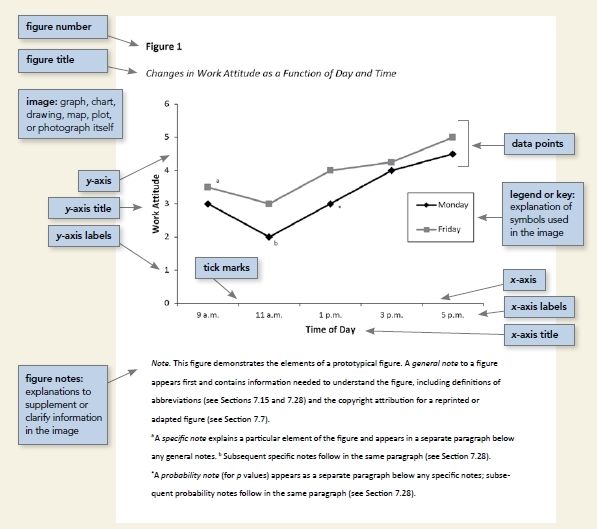
number, title, and image. Write the figure number above the figure title and image and in bold. Write
the figure title one double spaced line below the figure number and in italic title case. Write text in the
figure image in a sans serif font between 8 and 14 points. Include a figure legend if needed to explain
any symbols in the image. Position the legend within the borders of the figure and capitalize it in title
case. Include notes beneath the figure if needed to describe the contents. Start each type of note
(general, specific, and probability) on its own line, and double-space it. See sample figures on the
APA Style website
• Bold the word “Figure” and the number: Figure 1
• Figures now have titles, just like tables.
• The figure title is in title case and italics.8
• Figures now have notes (instead of a caption) that follow the same guidelines as table notes.
Figures can have general, specific, and probability notes.
• Label figures with an Arabic numeral and provide a brief but clear title. The label and title
appear on separate lines above the figure, flush-left and single-spaced.
• You might provide an additional title centered above the figure.
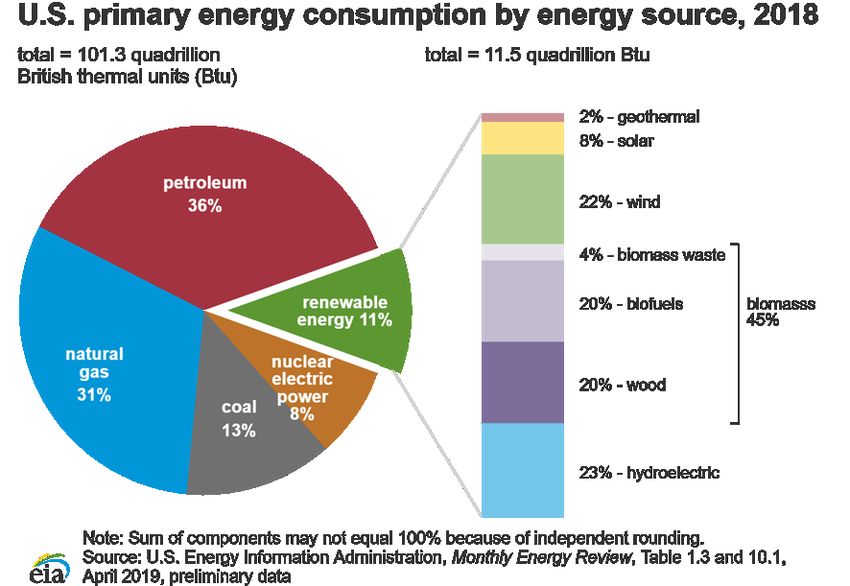
• Cite the source in a note below the figure.
Figure 1.
US Primary Energy Consumption by Energy Source, 2018
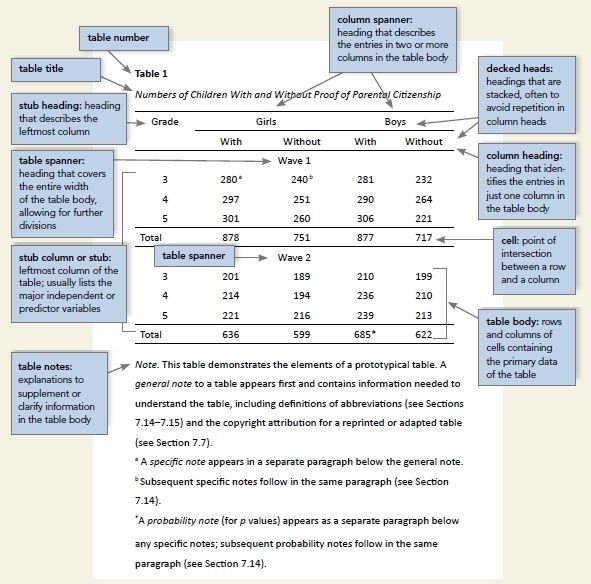
This diagram is an illustration of the basic table components.
https://apastyle.apa.org/style-grammar-guidelines/tables-figures/tables9 This diagram illustrates the basic figure components. https://apastyle.apa.org/style-grammar-guidelines/tables-figures/figures
10

In-text citation
General guidelines
   •   Cite only works you read and ideas you incorporated into your paper. Include all sources cited
       in the text in the reference list (exception: personal communications are cited in the text only).
   •   Make sure the spelling of author names and the publication dates in the in-text citations match
       those of the corresponding reference list entries.
   •   Paraphrase sources in your own words whenever possible.
   •   Cite appropriately to avoid plagiarism, but do not repeat the same citation in every sentence
       when the source and topic do not change.
   •   In-text citations help readers locate the cited source in the References section of the paper.
   •   In-text citations follow either a parenthetical format or a narrative format.
A parenthetical citation includes both the author’s last name and year of publication, separated by a
comma, in parentheses at the end of the sentence.
e.g. Research suggests that the Purdue OWL is a good resource for students (Jones, 2018).
A narrative citation includes the author’s name directly in the sentence, with the year of publication
directly following the author’s last name.

e.g. Jones (2018) suggests that the Purdue OWL is a good resource for students.
11
Write author–date citations: Include the author (or title if no author) and year.
If you are directly quoting or borrowing from another work, you should include the page
number at the end of the parenthetical citation. Use the abbreviation “p.” (for one page) or
“pp.” (for multiple pages) before listing the page number(s). Use an en dash for page ranges.
For example, you might write (Jones, 2018, p. 199) or (Jones, 2018, pp. 199–201).
For paraphrases, it is optional to include a specific page number(s), paragraph number(s), or
other location (e.g., section name) if the source work being paraphrased is long or complex.
When quoting:
Introduce the quotation with a signal phrase
Short quotation (less than 40 words): Use double quotation marks around the quotation.
e.g. As scientific knowledge advances, “the application of CRISPR technology to improve human
health is being explored across public and private sectors” (Hong, 2018, p. 503).
e.g. Hong (2018) stated that “the application of CRISPR technology to improve human health is being
explored across public and private sectors” (p. 503).
Limit the use of direct quotations. Include the author (or title if no author), year, and specific
part of the work (page number(s), paragraph number(s), section name) in the citation.
Place direct quotations that are 40 words or longer in a free-standing block of typewritten
lines and omit quotation marks. Start the quotation on a new line, indented 1/2 inch (1.27 cm)
from the left margin, i.e., in the same place you would begin a new paragraph. Type the entire
quotation on the new margin, and indent the first line of any subsequent paragraph within the
quotation 1/2 inch from the new margin. Maintain double-spacing throughout, but do not add
an extra blank line before or after it. The parenthetical citation should come after the closing
punctuation mark.
e.g. Accord to Siegel and Hartzell (2004)
trauma and loss requires an understanding of the low road and its connection to patterns
of experiences from the past. The passing of unresolved issues from generation to
generation produces and perpetuates unnecessary emotional suffering. If our own issues
remain unresolved, there is a strong possibility that the disorganization within our minds
can create disorganization in our children’s minds. (p. 183)
In-text citation capitalization, quotes, and italics/underlining
Always capitalize proper nouns, including author names and initials: D. Jones.
If you refer to the title of a source within your paper, capitalize all words that are four letters
long or greater within the title of a source: Permanence and Change. Exceptions apply to short
words that are verbs, nouns, pronouns, adjectives, and adverbs: Writing New Media, There Is
Nothing Left to Lose.
(Note: in your References list, only the first word of a title will be capitalized: Writing new media.)
When capitalizing titles, capitalize both words in a hyphenated compound word: Natural-Born
Cyborgs.
Capitalize the first word after a dash or colon: "Defining Film Rhetoric: The Case of
Hitchcock's Vertigo."
If the title of the work is italicized in your reference list, italicize it and use title case
capitalization in the text: The Closing of the American Mind; The Wizard of Oz; Friends.12
If the title of the work is not italicized in your reference list, use double quotation marks and
title case capitalization (even though the reference list uses sentence case): "Multimedia
Narration: Constructing Possible Worlds;" "The One Where Chandler Can't Cry."
Citing Non-Standard Author Categories
When the parenthetical citation includes two or more works:
• Order them in the same way they appear in the reference list—the author’s name, the year of
publication—separated by a semi-colon.
e.g. Lorem ipsum dolor sit amet (Adams, 2018; Collins, 2017).
When citing a work with two authors:
• In the narrative citation, use “and” in between the authors’ names
e.g. According to scientists Depietri and McPhearson (2018), “Understanding the
occurrence and impacts of historical climatic hazards is critical to better interpret current hazard
trends” (p. 96).
• In the parenthetical citation, use “&” between names
e.g. When examining potential climate threats, “Understanding the occurrence and
impacts of historical climatic hazards is critical to better interpret current hazard trends” (Depietri &
McPhearson, 2018, p. 96).
When citing a work with three or more authors:
• list the name of the first author plus “et al.” in every citation.
e.g. Lin et al. (2019) examined how weather conditions affect the popularity of the
bikesharing program in Beijing.
e.g. One study looked at how weather conditions affected the popularity of bikesharing
programs, specifically the Beijing Public Bikesharing Program (Lin et al., 2019).
When citing a work with an unknown author:
• Use the source’s full title in the narrative citation.
• Cite the first word of the title followed by the year of publication in the parenthetical citation.
e.g. According to “Here’s How Gardening Benefits Your Health” (2018)
e.g. (“Here’s,” 2018)
Titles: Articles and Chapters = “ ”
Books and Reports = italicize
Note: In the rare case that "Anonymous" is used for the author, treat it as the author's name
(Anonymous, 2001). In the reference list, use the name Anonymous as the author.
When citing a group author:
• Mention the organization the first time you cite the source in either the narrative citation or the
parenthetical citation.13
• If you first mention the group in a narrative citation, list the abbreviation before the year of
publication in parentheses, separated by a comma.
e.g. “The data collected by the Food and Drug Administration (FDA, 2019) confirmed…”
• If you first mention the group in a parenthetical citation, list the abbreviation in square
brackets, followed by a comma and the year of publication.
EX: (Food and Drug Administration [FDA], 2019).
When citing authors with the same last names:
• Use first initials with the last names.
e.g. (B. Davis, 2018; Y. Davis, 2020)
When citing two or more works by the same author and published in the same year:
• Use lower-case letters (a, b, c) after the year of publication to order the references.
e.g. Chen’s (2018a) study of bird migration…
When citing personal communication (interviews, letters, e-mails, etc.):
• Include the communicator’s name, the fact that it was personal communication, and the date
of the communication.
• Narrative citation:
e.g. B. E. Anderson (personal communication, January 8, 2020) also claimed that many
of her students had difficulties with APA style.
• Parenthetical citation:
e.g. One teacher mentioned that many of her students had difficulties with APA style
(Anderson, personal communication, January 8, 2020).
• Do not include personal communication in the reference list.
When citing a text with no page numbers: parenthetical citation
• Use any of the following four methods
• List the heading or section name
e.g. One scientist noted that “A cup full of kale can help your body out in a number of
ways” (London, 2019, Health benefits of kale section).
• List an abbreviated heading or section name in quotation marks (if the heading is too long)
e.g. One scientist noted that “A cup full of kale can help your body out in a number of
ways” (London, 2019, “Health benefits” section).
• List the paragraph number
e.g. One scientist noted that “A cup full of kale can help your body out in a number of
ways” (London, 2019, para. 2).
• List the heading or section name and the paragraph number
e.g. One scientist noted that “A cup full of kale can help your body out in a number of ways”
(London, 2019, Health benefits of kale section, para. 2).14
When citing traditional knowledge of indigenous peoples
use a variation of the personal communication citation above. Include the person’s full name,
nation or Indigenous group, location, and any other relevant details before the “personal
communication, date” part of the citation.
e.g. (Caroline Jennings, Cherokee Nation, lives in Tulsa, Oklahoma, personal communication,
October 2019)
When citing indirect sources
Generally, writers should endeavor to read primary sources (original sources) and cite those
rather than secondary sources (works that report on original sources).
If you use a source that was cited in another source, name the original source in your signal
phrase. List the secondary source in your reference list and include the secondary source in
the parentheses. If you know the year of the original source, include it in the citation.
e.g. Johnson argued that... (as cited in Smith, 2003, p. 102).
e.g. (Johnson, 1985, as cited in Smith, 2003, p. 102
When citing electronic sources
If possible, cite an electronic document the same as any other document by using the author-
date style.
e.g. Kenneth (2000) explained...
When citing unknown author and unknown date
If no author or date is given, use the title in your signal phrase or the first word or two of the
title in the parentheses and use the abbreviation "n.d." (for "no date").
Another study of students and research decisions discovered that students succeeded with
tutoring ("Tutoring and APA," n.d.).
Other Sources
The APA Publication Manual describes how to cite many different kinds of authors and content
creators. However, you may occasionally encounter a source or author category that the manual does
not describe, making the best way to proceed unclear. In these cases, it's typically acceptable to apply
the general principles of APA citation to the new kind of source in a way that's consistent and sensible.
References
General guidelines
Start the reference list on a new page after the text. Center and bold the section label “References”
at the top of the page. Double-space the entire reference list, both within and between entries. Use a
hanging indent for each reference entry: First line of the reference is flush left, and subsequent lines
are indented by 0.5 in (1.27 cm), Apply the hanging indent using the paragraph formatting function of
your word-processing program. All reference entries should have a corresponding in-text citation. The
beginning of the reference entry (usually the first author’s surname) and year should match the
corresponding in-text citation. List references in alphabetical order according to seventh edition
guidelines.
Reference list entries should be arranged alphabetically by the last name of the first author of
each work.15
Create the appropriate reference entry for the type of work being cited.
Do not create reference entries for personal communications and secondary sources.
Each reference entry includes four elements: author, date, title, and source.
Use punctuation to group information and separate reference elements.
List authors in the same order as the original source. Use initials for authors’ first and middle
names. Put a comma after the surname and a period and a space after each initial (e.g. Lewis,
C. S.). Put a comma after each author (even two authors). Use an ampersand before the last
author.
Capitalize titles in sentence case:
Capitalize only the first word of the title, the subtitle, and any proper nouns. Format titles
according to the type of work.
Works that stand alone: Italicize the title (e.g., authored books, reports, data sets, dissertations
and theses, films, TV series, albums, podcasts, social media, websites).
Works that are part of a greater whole: Do not italicize or use quotation marks around the title
(e.g., periodical articles, edited book chapters, TV and podcast episodes, songs). Write the
title of the greater whole (e.g., journal or edited book) in italics in the source element.
Do not include database information for works retrieved from academic research databases. Do
include database information for works retrieved from databases with original, proprietary content or
works of limited circulation (e.g., UpToDate).
Include a DOI or URL for any work that has one. If there is no DOI, include a URL if the work is
retrieved online (but not from a database). Present DOIs and URLs as hyperlinks (beginning with
“http:” or “https:”). Copy and paste DOIs and URLs directly from your web browser. Do not write
“Retrieved from” or “Accessed from” before a DOI or URL. Do not add a period after a DOI or URL.
Reference List: Author/Authors
Single Author16
Last name first, followed by author initials.
Ahmed, S. (2012). On being included: Racism and diversity in institutional life. Duke University Press.
Two Authors
List by their last names and initials. Separate author names with a comma. Use the ampersand
instead of "and."
Soto, C. J., & John, O. P. (2017). The next big five inventory (BFI-2): Developing and assessing a
hierarchical model with 15 facets to enhance bandwidth, fidelity, and predictive power. Journal of
Personality and Social Psychology, 113(1), 117-143. http://dx.doi.org/10.1037/pspp0000096
Three to Twenty Authors
List by last names and initials; commas separate author names, while the last author name is
preceded again by ampersand. This is a departure from APA 6, which only required listing the first six
authors before an ellipsis and the final author's name.
Nguyen, T., Carnevale, J. J., Scholer, A. A., Miele, D. B., & Fujita, K. (2019). Metamotivational knowledge
of the role of high-level and low-level construal in goal-relevant task performance. Journal of
Personality and Social Psychology, 117(5), 879-899. http://dx.doi.org/10.1037/pspa0000166
More Than Twenty Authors
List by last names and initials; commas separate author names. After the first 19 authors’ names, use
an ellipsis in place of the remaining author names. Then, end with the final author's name (do not
place an ampersand before it). There should be no more than twenty names in the citation in total.
Pegion, K., Kirtman, B. P., Becker, E., Collins, D. C., LaJoie, E., Burgman, R., Bell, R., DelSole, R., Min,
D., Zhu, Y., Li, W., Sinsky, E., Guan, H., Gottschalck, J., Metzger, E. J., Barton, N. P., Achuthavarier,
D., Marshak, J., Koster, R., . . . Kim, H. (2019). The subseasonal experiment (SubX): A multimodel
subseasonal prediction experiment. Bulletin of the American Meteorological Society, 100(10), 2043-
2061. https://doi.org/10.1175/BAMS-D-18-0270.1
Group Author
Group authors can include corporations, government agencies, organizations, etc; and a group may
publish in coordination with individuals. Here, you simply treat the publishing organization the same
way you'd treat the author's name and format the rest of the citation as normal. Be sure to give the
full name of the group author in your reference list, although abbreviations may be used in your text.
Entries in reference works (e.g. dictionaries, thesauruses, and encyclopedias) without credited
authors are also considered works with group authors.
Merriam-Webster. (2008). Braggadocio. In Merriam-Webster’s Advanced Learner’s English Dictionary.
Merriam-Webster.
When a work has multiple layers of group authorship (e.g. The Office of the Historian, which is a part
of the Department of State, publishes something), list the most specific agency as the author and the
parent agency as the publisher.
Bureau of International Organization Affairs. (2018). U.S. contributions to international organizations,
2017 [Annual report]. U.S. Department of State. https://www.state.gov/u-s-contributions-to-
international-organizations/17
Unknown Author
When the work does not have an author move the title of the work to the beginning of the references
and follow with the date of publication. Only use “Anonymous” if the author is the work is signed
“Anonymous.” This is a new addition to APA 7.
Merriam-Webster's collegiate dictionary (11th ed.). (2003). Merriam-Webster.
NOTE: When your essay includes parenthetical citations of sources with no author named, use a
shortened version of the source's title instead of an author's name. Use quotation marks and italics
as appropriate. For example, parenthetical citations of the source above would appear as follows:
(Merriam-Webster's, 2003).
Two or More Works by the Same Author
Use the author's name for all entries and list the entries by the year (earliest comes first). List
references with no dates before references with dates.
Urcuioli, P. J. (n.d.).
Urcuioli, P. J. (2011).
Urcuioli, P. J. (2015).
When an author appears both as a sole author and, in another citation, as the first author of a group,
list the one-author entries first.
Agnew, C. R. (Ed.). (2014). Social influences on romantic relationships: Beyond the dyad. Cambridge
University Press.
Agnew, C. R., & South, S. C. (Eds.). (2014). Interpersonal relationships and health: Social and clinical
psychological mechanisms. Oxford University Press.
References that have the same first author and different second and/or third authors are arranged
alphabetically by the last name of the second author, or the last name of the third if the first and
second authors are the same.
Arriaga, X. B., Capezza, N. M., Reed, J. T., Wesselman, E. D., & Williams, K. D. (2014). With partners
like you, who needs strangers?: Ostracism involving a romantic partner. Personal
Relationships, 21(4), 557-569.
Arriaga, X. B., Kumashiro, M., Finkel, E. J., VanderDrift, L. E., & Luchies, L. B. (2014). Filling the void:
Bolstering attachment security in committed relationships. Social Psychological and Personality
Science, 5(4), 398-405.
Two or More Works by the Same Author in the Same Year
If you are using more than one reference by the same author—or the same group of authors listed in
the same order—published in the same year, first check to see if they have more specific dates (this
recommendation is new to APA 7). Works with only a year should be listed before those with a more
specific date. List specific dates chronologically. If two works have the same publication date,
organize them in the reference list alphabetically by the title of the article or chapter. If references with
the same date are identified as parts of a series (e.g. Part 1 and Part 2), list them in order of their
place in the series. Then assign letter suffixes to the year. Refer to these sources in your essay as
they appear in your reference list, e.g.: "Berndt (2004a) makes similar claims..."18
Berndt, T. J. (2004a). Children’s friendships: Shifts over a half-century in perspectives on their
development and their effects. Merrill Palmer Quarterly, 50(3), 206-223.
Berndt, T. J. (2004b). Friendship and three A’s (aggression, adjustment, and attachment). Journal of
Experimental Child Psychology, 88(1), 1-4.
Introductions, Prefaces, Forewords, and Afterwards
Cite the publishing information about a book as usual, but cite Introduction, Preface, Foreword, or
Afterword (whatever title is applicable) as the chapter of the book.
Lang, J. M. (2018). Introduction. In Dujardin, G., Lang, J. M., & Staunton, J. A. (Eds.), Teaching the
literature survey course (pp. 1-8). West Virginia University Press.
Articles in Periodicals
Basic Form
APA style dictates that authors are named with their last name followed by their initials; publication
year goes between parentheses, followed by a period. The title of the article is in sentence-case,
meaning only the first word and proper nouns in the title are capitalized. The periodical title is run in
title case, and is followed by the volume number which, with the title, is also italicized. If a DOI has
been assigned to the article that you are using, you should include this after the page numbers for the
article. If no DOI has been assigned and you are accessing the periodical online, use the URL of the
website from which you are retrieving the periodical.
Author, A. A., Author, B. B., & Author, C. C. (Year). Title of article. Title of Periodical, volume number
(issue number), pages. https://doi.org/xx.xxx/yyyy
Article in Print Journal
Scruton, R. (1996). The eclipse of listening. The New Criterion, 15(3), 5–13.
Note: APA 7 advises writers to include a DOI (if available), even when using the print source. The
example above assumes no DOI is available.
Article in Electronic Journal
As noted above, when citing an article in an electronic journal, include a DOI if one is associated with
the article.
Baniya, S., & Weech, S. (2019). Data and experience design: Negotiating community-oriented digital
research with service-learning. Purdue Journal of Service-Learning and International
Engagement, 6(1), 11–16. https://doi.org/10.5703/1288284316979
DOIs may not always be available. In these cases, use a URL. Many academic journals provide stable
URLs that function similarly to DOIs. These are preferable to ordinary URLs copied and pasted from
the browser's address bar.
Denny, H., Nordlof, J., & Salem, L. (2018). "Tell me exactly what it was that I was doing that was so bad":
Understanding the needs and expectations of working-class students in writing centers. Writing
Center Journal, 37(1), 67–98. https://www.jstor.org/stable/2653736319
Note that, in the example above, there is a quotation in the title of the article. Ordinary titles lack
quotation marks.
Article in a Magazine
Peterzell, J. (1990, April). Better late than never. Time, 135(17), 20–21.
Article in a Newspaper
Schultz, S. (2005, December). Calls made to strengthen state energy policies. The Country Today, 1A,
2A.
Review
Baumeister, R. F. (1993). Exposing the self-knowledge myth [Review of the book The self-knower: A hero
under control, by R. A. Wicklund & M. Eckert]. Contemporary Psychology, 38(5), 466–467.
Books
Basic Format for Books
Author, A. A. (Year of publication). Title of work: Capital letter also for subtitle. Publisher Name. DOI (if
available)
Stoneman, R. (2008). Alexander the Great: A life in legend. Yale University Press.
Edited Book, No Author
Editor, E. E. (Ed.). (Year of publication). Title of work: Capital letter also for subtitle. Publisher. DOI (if
available)
Leitch, M. G., & Rushton, C. J. (Eds.). (2019). A new companion to Malory. D. S. Brewer.
Edited Book with an Author or Authors
Author, A. A. (Year of publication). Title of work: Capital letter also for subtitle (E. Editor, Ed.).
Publisher. DOI (if available)
Malory, T. (2017). Le morte darthur (P. J. C. Field, Ed.). D. S. Brewer. (Original work published 1469-70)
A Translation
Author, A. A. (Year of publication). Title of work: Capital letter also for subtitle (T. Translator, Trans.).
Publisher. (Original work published YEAR) DOI (if available)
Plato (1989). Symposium (A. Nehamas & P. Woodruff, Trans.). Hackett Publishing Company. (Original
work published ca. 385-378 BCE)
Note: When you cite a republished work, like the one above, in your text, it should appear with both
dates: Plato (385-378/1989)
Edition Other Than the First
Author, A. A. (Year of publication). Title of work: Capital letter also for subtitle (# edition). Publisher. DOI
(if available)
Belcher, W. (2019). Writing your journal article in twelve weeks: A guide to academic publishing
success (2nd ed.). University of Chicago Press.20
Article or Chapter in an Edited Book
Author, A. A., & Author, B. B. (Year of publication). Title of chapter. In E. E. Editor & F. F. Editor
(Eds.), Title of work: Capital letter also for subtitle (pp. pages of chapter). Publisher. DOI (if available)
Note: When you list the pages of the chapter or essay in parentheses after the book title, use "pp."
before the numbers: (pp. 1-21). This abbreviation, however, does not appear before the page
numbers in periodical references. List any edition number in the same set of parentheses as the page
numbers, separated by a comma: (2nd ed., pp. 66-72).
Armstrong, D. (2019). Malory and character. In M. G. Leitch & C. J. Rushton (Eds.), A new companion to
Malory (pp. 144-163). D. S. Brewer.
Multivolume Work
Author, A. A. (Year of publication). Title of work: Capital letter also for subtitle (Vol. #). Publisher. DOI (if
available)
David, A., & Simpson, J. (Eds.). (2006). The Norton anthology of English literature: The Middle
Ages (8th ed.,Vol. A). W. W. Norton and Company.
Other Print Sources
Entry in a Dictionary, Thesaurus, or Encyclopedia with a Group Author
The 7th edition of the APA manual does not provide specific guidance on how to cite physical
reference works such as dictionaries, thesauruses, or encyclopedias. Therefore, this citation,
as well as the one for an individual author of an entry in a reference work, is modeled on that of a
chapter in an edited book or anthology, both which are similar in format to reference works.
Institution or organization name. (Year). Title of entry. In Title of reference work (edition, page numbers).
Publisher name.
Merriam-Webster, Incorporated. (1997). Goat. In Merriam Webster’s collegiate dictionary (10th ed., pp.
499-500). Merriam-Webster, Incorporated.
Entry in a Dictionary, Thesaurus, or Encyclopedia with an Individual Author
Lastname, F. M. (Year). Title of entry. In F. M. Lastname (ed.), Title of reference work (edition, page
numbers). Publisher.
Tatum, S. R. (2009). Spirituality and religion in hip hop literature and culture. In T. L. Stanley
(ed.), Encyclopedia of hip hop literature (pp. 250-252). Greenwood.
Work Discussed in a Secondary Source
Provide the source in which the original work was referenced:
Nail, T. (2017). What is an assemblage? SubStance, 46(1), 21-
37. http://sub.uwpress.org/lookup/doi/10.3368/ss.46.1.21
Note: Provide the secondary source in the references list; in the text, name the original work, and
give a citation for the secondary source. For example, if Deleuze and Guattari’s work is cited in Nail
and you did not read the original work, list the Nail reference in the References. In the text, use the
following citation:
Deleuze & Guattari’s concept of the assemblage (as cited in Nail, 2017)….
Dissertation Abstract21
The 7th edition of the APA manual does not provide specific guidance on how to cite dissertation
abstracts. Therefore, this citation models that of a journal article, which is similar in format.
Lastname, F. M. (Year). Title of dissertation. Dissertation Abstracts International, Vol., Page.
Angeli, E. L. (2012). Networks of communication in emergency medical services. Dissertation Abstracts
International, 74, 03(E).
Dissertation or Master’s Thesis, Published
Lastname, F. M. (Year). Title of dissertation/thesis (Publication No.) [Doctoral dissertation/Master’s
thesis, Name of Institution Awarding the Degree]. Database or Archive Name.
Angeli, E. L. (2012). Networks of communication in emergency medical services (Publication No.
3544643) [Doctoral dissertation, Purdue University]. ProQuest Dissertations Publishing.
Note: If the dissertation or thesis is not published in a database, include the URL of the site where
the document is located.
Dissertation or Master’s Thesis, Unpublished
Lastname, F. M. (Year). Title of dissertation/thesis [Unpublished doctoral dissertation/master’s thesis].
Name of Institution Awarding the Degree.
Samson, J. M. (2016). Human trafficking and globalization [Unpublished doctoral dissertation]. Virginia
Polytechnic Institute and State University.
Federal or State Statute
Name of Act, Public Law No. (Year). URL
The Patient Protection and Affordable Care Act, Publ. L. No. 111-148, 124 Stat. 119
(2010). https://www.govinfo.gov/content/pkg/PLAW-111publ148/pdf/PLAW-111publ148.pdf
Report by a Government Agency or Other Organization
Organization Name. (Year). Title of report. URL
United States Government Accountability Office. (2019). Performance and accountability report: Fiscal
year 2019. https://www.gao.gov/assets/710/702715.pdf
Report by Individual Authors at Government Agency or Other Organization
Lastname, F. M., & Lastname, F. M. (Year). Title of report. Organization Name. URL
Palanker, D., Volk, J., Lucia, K., & Thomas, K. (2018). Mental health parity at risk: Deregulating the
individual market and the impact on mental health coverage. National Alliance on Mental
Illness. https://www.nami.org/About-NAMI/Publications-Reports/Public-Policy-Reports/Parity-
at-Risk/ParityatRisk.pdf
Conference Proceedings
The 7th edition of the APA manual does not provide guidance on citing conference
proceedings. Therefore, this citation models that of an edited collection, which is similar in format.
Lastname, F. M., & Lastname, F. M. (Eds.). (Year). Title of Proceedings. Publisher. URL (if applicable)
Huang, S., Pierce, R., & Stamey, J. (Eds.). (2006). Proceedings of the 24th annual ACM international
conference on the design of communication. ACM Digital
Library. https://dl.acm.org/citation.cfm?id=1166324&picked=prox
Electronic Sources22
Webpage or Piece of Online Content
If the page names an individual author, cite their name first:
Lastname, F. M. (Year, Month Date). Title of page. Site name. URL
Price, D. (2018, March 23). Laziness does not exist.
Medium. https://humanparts.medium.com/laziness-does-not-exist-3af27e312d01
If the resource was written by a group or organization, use the name of the group/organization as the
author. Additionally, if the author and site name are the same, omit the site name from the citation.
Group name. (Year, Month Date). Title of page. Site name. URL
American Society for the Prevention of Cruelty to Animals. (2019, November 21). Justice served: Case
closed for over 40 dogfighting victims. https://www.aspca.org/news/justice-served-case-closed-
over-40-dogfighting-victims
If the page's author is not listed, start with the title instead. Additionally, include a retrieval date when
the page's content is likely to change over time (like, for instance, if you're citing a wiki that is publicly
edited).
Title of page. (Year, Month Date). Site name. Retrieved Month Date, Year, from URL
Tuscan white bean pasta. (2018, February 25). Budgetbytes. Retrieved March 18, 2020,
from https://www.budgetbytes.com/tuscan-white-bean-pasta/
If the date of publication is not listed, use the abbreviation (n.d.).
Author or Group name. (n.d.). Title of page. Site name (if applicable). URL
National Alliance on Mental Illness. (n.d.). Mental health conditions. https://www.nami.org/Learn-
More/Mental-Health-Conditions
Wikipedia Article
APA 7 treats Wikipedia articles as special instances of entries in reference works. Thus, there are a
few differences between reference entries for pages on Wikipedia and those for generic webpages.
Title of article. (Year, Month Date). In Wikipedia. URL of archived version of page
Quantum mechanics. (2019, November 19).
In Wikipedia. https://en.wikipedia.org/w/index.php?title=Quantum_mechanics&oldid=9484768
10
Wikipedia articles often update frequently. For this reason, the date refers to the date that the cited
version of the page was published. Note also that the manual recommends linking to the archived
version of the page, rather than the current version of the page on the site, since the latter can change
over time. Access the archived version by clicking "View History," then clicking the date/timestamp of
the version you'd like to cite.
Online Scholarly Journal Article: Citing DOIs
Please note: Because online materials can potentially change URLs, APA recommends providing a
Digital Object Identifier (DOI), when it is available, as opposed to the URL. DOIs are an attempt to
provide stable, long-lasting links for online articles. They are unique to their documents and consist
of a long alphanumeric code. Many—but not all—publishers will provide an article's DOI on the first
page of the document.
Note also that some online bibliographies provide an article's DOI but may "hide" the code under a
button which may read "Article" or may be an abbreviation of a vendor's name like "CrossRef" or
"PubMed." This button will usually lead the user to the full article which will include the DOI. Find DOIs23
from print publications or ones that go to dead links with doi.org's "Resolve a DOI" function, available
on the site's home page.
APA 7 also advises writers to include a DOI (if available), even when using the print source.
Article from an Online Periodical with DOI Assigned
Lastname, F. M., & Lastname, F. M. (Year). Title of article. Title of Periodical, Vol.(Issue), page numbers.
DOI
Drollinger, T., Comer, L. B., & Warrington, P. T. (2006). Development and validation of the active
empathetic listening scale. Psychology & Marketing, 23(2), 161-
180. https://doi.org/10.1002/mar.20105
Article from an Online Periodical with no DOI Assigned
If an online scholarly journal article has no DOI and is published on a website, include the URL. If an
online scholarly article has no DOI and is published on a database, do not include a URL or any
database information. The only exception is for databases that publish articles that are in limited
circulation (like ERIC) or that are only available on that particular database (like UpToDate). Note that
retrieval dates are required for unarchived sources that are likely, or intended, to change over time.
Perreault, L. (2019). Obesity in adults: Role of physical activity and exercise. UpToDate. Retrieved
January 12, 2020, from https://www.uptodate.com/contents/obesity-in-adults-role-of-physical-
activity-and-exercise
Abstract
APA 7th edition does not provide guidance on how to cite abstracts. However, if you only use
information from the abstract but the full text of the article is also available, we advise you to add
"[Abstract]" after the article or source name. If the full text is not available, you may use an abstract
that is available through an abstracts database as a secondary source.
Online News Article
Note: The format for this type of source depends on whether your source comes from a site with an
associated newspaper.
If the source does come from a site with an associated newspaper, leave the title of the article
unformatted, but italicize the title of the newspaper.
Lastname, F. M. (Year, Month Date). Title of article. Title of Publication. URL
Richards, C. (2019, December 9). Best music of 2019: Lana Del Rey sings lullabies about the end of
America. Washington Post. https://www.washingtonpost.com/entertainment/music/best-music-
of-2019-lana-del-rey-sings-lullabies-about-the-end-of-america/2019/12/06/6e82c5ec-15d8-
11ea-a659-7d69641c6ff7_story.html
On the other hand, if the source doesn't come from a site with an associated newspaper, italicize the
title of the article, but leave the name of the site unformatted.
Lastname, F. M. (Year, Month Date). Title of article. Name of publishing website. URL
Jones, J. (2020, May 10). Why flats dominate Spain's housing market.
BBC. https://www.bbc.com/worklife/article/20200506-why-do-flats-dominate-spains-housing-
market24
Electronic or Kindle Books
It is not necessary to note that you have used an eBook or audiobook when the content is the same
as a physical book. However, you should distinguish between the eBook or audiobook and the print
version if the content is different or abridged, or if you would like to cite the narrator of an audiobook.
Lastname, F. M. (Year). Title of book. Publisher. URL
Lastname, F. M. (Year). Title of book [eBook edition]. Publisher. URL
Lastname, F. M. (Year). Title of book (N. Narrator, Narr.) [Audiobook]. Publisher. URL (if applicable)
Dissertation/Thesis from a Database
Lastname, F. M. (Year). Title of dissertation or thesis (Publication No.) [Doctoral dissertation or master’s
thesis, Name of Institution Awarding Degree]. Database Name.
Duis, J. M. (2008). Acid/base chemistry and related organic chemistry conceptions of undergraduate
organic chemistry students. (Publication No. 3348786) [Doctoral dissertation, University of Northern
Colorado]. ProQuest Dissertations and Theses Global.
Entry in an Online Dictionary, Thesaurus, or Encyclopedia with a Group Author
Note: An online dictionary, thesaurus, or encyclopedia may be continuously updated and therefore
not include a publication date (like in the example below). If that’s the case, use “n.d.” for the date and
include the retrieval date in the citation.
Institution or organization name. (Year). Title of entry. In Title of reference work. URL
Merriam-Webster. (n.d.). Braggadocio. In Merriam-Webster.com dictionary. Retrieved January 13, 2020,
from https://www.merriam-webster.com/dictionary/braggadocio
Entry in an Online Dictionary, Thesaurus, or Encyclopedia with an Individual Author
Lastname, F. M. (Year). Title of entry. In F. M. Lastname (ed.), Title of reference work (edition). Publisher.
URL or DOI
Martin, M. (2018). Animals. In L. A. Schintler & C. L. McNeely (Eds), Encyclopedia of big data.
SpringerLink. https://doi.org/10.1007/978-3-319-32001-4_7-1
Note: If the dictionary, thesaurus, or encyclopedia does not include an edition, simply skip that step.
Data Sets
Lastname, F. M. or Name of Group (Year). Title of dataset (Version No.) [Data set]. Publisher. DOI or
URL
Grantmakers in the Arts. (2019). Arts funding trends, United States, 1994-present (ICPSR 37337) [Data
set]. National Archive of Data on Arts &
Culture. https://www.icpsr.umich.edu/icpsrweb/NADAC/studies/37337
Graphic Data (e.g. Interactive Maps, Infographics, and Other Graphic Representations of Data)
Give the name of the organization or individual followed by the date and the title. If there is no title, in
brackets, you should provide a brief explanation of what type of data is there and in what form it
appears. Include the URL and the retrieval date if there is no publication date.
HatchMed. (2017). 8 ways to improve patient satisfaction [Infographic].
HatchMed.com. https://www.hatchmed.com/blog/2017/1/30/8-ways-to-improve-patient-
satisfaction25
Google. (n.d.). [Google Map of Purdue University]. Retrieved January 12, 2020,
from https://www.google.com/maps/@40.4237095,-86.9233886,17z
Qualitative Data and Online Interviews
If an interview is not retrievable in audio or print form, cite the interview only in the text (not in the
reference list) and provide the month, day, and year in the text. If the interview transcript is published
in an online periodical, like a magazine, cite the interview the same way you would cite the medium
where it is published, as shown below:
Schulman, M. (2019, December 8). Peter Dinklage is still punk rock. The New
Yorker. https://www.newyorker.com/culture/the-new-yorker-interview/peter-dinklage-is-still-
punk-rock
If it is an audio file or transcript published in a database, credit the interviewee as the author and use
the following model:
Paynter, W. (1970, September 17). Interview with Will Paynter [Interview]. Studs Terkel Radio Archive;
The Chicago History Museum. https://studsterkel.wfmt.com/programs/interview-will-paynter
Online Lecture Notes and Presentation Slides
When citing online lecture notes, be sure to provide the file format in brackets after the lecture title
(e.g. PowerPoint slides, Word document).
Lastname, F. M. (Year, Month Date). Title of presentation [Lecture notes, PowerPoint slides, etc].
Publisher. URL
Smith, C. (2017, October 13). AI and machine learning demystified [PowerPoint slides].
SlideShare. https://www.slideshare.net/carologic/ai-and-machine-learning-demystified-by-
carol-smith-at-midwest-ux-2017
Computer Software/Downloaded Software
Do not cite standard office software (e.g. Word, Excel) or programming languages. Provide references
only for specialized software.
Lastname, F. M. or Name of Group. (Year). Title of software (Version No.). Publisher. URL
Maplesoft. (2019). Maple companion (Version 2.1.0). Cybernet Systems
Co. https://www.maplesoft.com/products/MapleCompanion/
Email
E-mails are not included in the list of references, though you should parenthetically cite them in your
main text:
(E. Robbins, personal communication, January 4, 2001).
Online Forum or Discussion Posting
Lastname, F. M. or Name of Group [username]. (Year, Month Date). Title of post [Online forum post].
Publisher. URL
Stine, R. L. [RL__Stine]. (2013, October 23). I’m R.L. Stine and it’s my job to terrify kids. Ask me
anything! [Online forum post]. Reddit. https://www.reddit.com/r/IAmA/comments/1p32dl/
Tweet26
Lastname, F. M. or Name of Group [@username]. (Year, Month Date). Content of the post up to the first
20 words[Tweet]. Site Name. URL
Note: If the tweet includes images, videos, or links to other sources, indicate that information in
brackets after the content description. Also attempt to replicate emojis if possible.
National Geographic [@NatGeo]. (2020, January 12). Scientists knew African grays are clever, but now
they’ve been documented assisting other members of their species—even strangers [Tweet;
thumbnail link to article]. Twitter. https://twitter.com/NatGeo/status/1216346352063537154
Twitter Profile
Lastname, F. M. or Name of Group [@username]. (n.d.). Tweets [Twitter profile]. Retrieved Month Date,
Year, from URL
MLA Style [@mlastyle]. (n.d.). Tweets [Twitter profile]. Retrieved January 12, 2020,
from https://twitter.com/mlastyle
Facebook Post
Lastname, F. M. or Name of Group. (Year, Month Date). Content of the post up to the first 20 words [Type
of post]. Site Name. URL
Note: If the Facebook post includes images, videos, or links to other sources, indicate that information
in brackets after the content description. Also attempt to replicate emojis if possible.
U.S. Department of the Interior. (2020, January 10). Like frosting on a cake, snow coats and clings to the
hoodoos at Bryce Canyon National Park in Utah [Image attached] [Status update].
Facebook. https://www.facebook.com/USInterior/photos/a.155163054537384/25864754514061
20/?type=3&theater
Facebook Page
Lastname, F. M. or Name of Group. (n.d.). Home [Facebook page]. Site name. Retrieved Month Date,
Year, from URL
Little River Canyon National Preserve (n.d.). Home [Facebook page]. Facebook. Retrieved January 12,
2020 from https://www.facebook.com/lirinps/
Instagram Photo or Video
Lastname, F. M. or Name of Group [@username]. (Year, Month Date). Content of the post up to the first
20 words [Type of post]. Site Name. URL
BBC [@bbc]. (2020, January 12). Skywatchers have been treated to the first full moon of 2020-known as
a “wolf moon”-at the same time as a [Photograph].
Instagram. https://www.instagram.com/p/B7OkWqbBwcf/
Blog Post
Lastname, F. M. (Year, Month Date). Title of post. Publisher. URL
Axelrod, A. (2019, August 11). A century later: The Treaty of Versailles and its rejection of racial
equality. Code Switch, NPR. https://www.npr.org/sections/codeswitch/2019/08/11/742293305/a-
century-later-the-treaty-of-versailles-and-its-rejection-of-racial-equality
YouTube or other Streaming Video
Last Name, F. M. [Username]. (Year, Month Date). Title of video [Video]. Streaming Service. URL27
Lushi, K. [Korab Lushi]. (2016, July 3). Albatross culture 1 [Video].
YouTube. https://www.youtube.com/watch?v=_AMrJRQDPjk&t=148s
Note: The person or group who uploaded the video is considered the author. If the author’s name is
the same as the username, you can omit the [Username].
Ted Talk
Author, A. A. (Year, Month Date). Title of talk [Video]. TED. URL
Al-Mutawa, N. (2010, July). Superheroes inspired by Islam [Video].
TED. https://www.ted.com/talks/naif_al_mutawa_superheroes_inspired_by_islam#t-4909
Or (if on YouTube)
Username. (Year, Month Date). Title of talk [Video]. YouTube. URL
Tedx Talks. (2011, Nov. 15). TEDxHampshireCollege - Jay Smooth - How I learned to stop worrying and
love discussing race [Video]. YouTube https://www.youtube.com/watch?v=MbdxeFcQtaU
Podcast Episode
Host, A. A. (Host). (Year, Month Date). Title of episode (No. if provided) [Audio podcast episode]. In Name
of podcast. Publisher. URL
Prime, K. (Host). (2019, March 29). For whom the cowbell tolls [Audio podcast episode]. In Radiolab.
WNYC Studios. https://www.wnycstudios.org/story/whom-cowbell-tolls
Audiovisual Media
Film or Video
Director, D. D. (Director). (Date of publication). Title of motion picture [Film]. Production company.
Loyd, P. (Director). (2008). Mamma mia! [Film]. Universal Pictures.
Film or Video in Another Language
Director, D. D. (Director). (Date of publication). Title of motion picture in original language [Translated
title] [Film]. Production company.
Del Toro, G. (Director). (2006). El laberinto del fauno [Pan’s labyrinth] [Film]. Warner Bros. Pictures.
TV Series
Executive Producer, P. P. (Executive Producer). (Date range of release). Title of series [TV series].
Production company(s).
Sherman-Palladino, A., Palladino, D. (Executive Producers). (2017-present). The marvelous Mrs.
Maisel [TV series]. Dorothy Parker Drank Here Productions; Picrow, Amazon Studios.
TV Series Episode
Writer, W. W. (Writer), & Director, D. D. (Director). (Original air date). Title of episode (Season number,
Episode number) [Tv series episode]. In P. Executive Producer (Executive Producer), Series title.
Production company(s).
Korsh, A. (Writer & Director). (2019, September 25). One last con (Season 9, Episode 10) [TV series
episode]. In D. Liman & D. Bartis (Executive Producers), Suits. Untitled Korsh Company; Universal
Content Productions; Open 4 Business Productions.
YouTube VideoYou can also read


