Formulation and Evaluation of Sustained Release Bilayer Tablets of Losartan Potassium
←
→
Page content transcription
If your browser does not render page correctly, please read the page content below
ORIGINAL ARTICLE        Formulation and Evaluation of Sustained
                          Release Bilayer Tablets of Losartan
                                      Potassium
                           A. Lakshmana Rao1, Tera Sandhya2, Pasumarthy Sree Mahalakshmi2,
                       Kavilikatta Monika Raasi3, Savala Jyosthna Sri Lakshmi Durga3, Nayudu Teja4,
                                        Chinthada Joshi5, Tirumala Setti Jaswitha4
                   Department of Pharmaceutical Analysis, V. V. Institute of Pharmaceutical Sciences, Gudlavalleru,
                   1

                   Andhra Pradesh, India, 2Department of Pharmacology, Institute of Pharmaceutical Technology, Sri Padmavathi
                   Mahila University, Tirupathi, Andhra Pradesh, India, 3Department of Pharmaceutical Analysis, Nirmala
                   College of Pharmacy, Mangalagiri, Andhra Pradesh, India, 4Department of Pharmaceutics, V. V. Institute of
                   Pharmaceutical Sciences, Gudlavalleru, Andhra Pradesh, India, 5Department of Pharmacology and Toxicology,
                   NIPER Mohali, Punjab, India

                   Abstract

                   Introduction: Heart disease is very common cause of deaths in the world. Hypertension is the most prevalent
                   form of heart disease. Losartan has wonderful clinical effectiveness in the treatment of essential hypertension
                   and congestive heart failure. Single dose of losartan can maintain the lowering of blood pressure up to 6–8 h.
                   Hence, repetitive medication is required in a day to maintain the blood pressure. Hence, the aim of this work is
                   to formulation and evaluate of sustained release (SR) bilayer tablet of losartan potassium in which the immediate
                   release layer will release the drug within 10 min and SR layer will maintain uniform drug levels over a sustained
                   period of time. Materials and Methods: This research work is performed for the partial fulfillment of the
                   degree of master of pharmacy. The tablets were evaluated to thickness, hardness, diameter, weight variation,
                   drug content uniformity, friability, and in vitro drug release studies. In vitro drug release studies were performed
                   using USP type II apparatus (paddle method) at 50 rpm in 900 ml of 0.1N HCl as dissolution medium for first 2 h
                   and later replacing it with 900 ml pH 6.8 phosphate buffer solution for the remaining time period at 37±0.5°C.
                   Results: The results of Fourier transform infrared and differential scanning calorimetry analysis showed that there
                   was no physical and chemical interaction between drug and other excipients. The stability studies of optimized
                   formulation ME5 at 400C/75%RH for 3 months did not show any variation in the tasted parameter and release.

                   Key words: Bilayer tablets, Drugs, Losartan potassium

                               INTRODUCTION                             controlled drug delivery systems can decrease the frequency
                                                                        of the dosing and also increases effectiveness of the drug by

                   O
                           ral drug delivery has been known for         localization at the site of action, reducing the dose required
                           decades as the most widely utilized          and providing uniform drug delivery.[2]
                           route of administration among all the
                   routes that have been explored for the systemic      Different approaches have been proposed to formulate
                   delivery of drugs. The goal of any drug delivery     sustained release (SR) tablets for retaining dosage form
                   system is to provide a therapeutic amount of
                   the drug at the site an effective throughout the       Address for correspondence:
                   entire duration of therapy and then maintain           Tera Sandhya, Department of Pharmacology, Institute
                   the desired drug concentration.[1] Conventional        of Pharmaceutical Technology, Sri Padmavathi
                   dosage form produces wide range of fluctuation         Mahila University, Tirupathi, Andhra Pradesh, India.
                   in drug concentration in the blood stream and          E-mail: sandhyatera99@gmail.com
                   tissues which leads to reduction or loss in drug
                   effectiveness or increased incidence of side           Received: 21-04-2021
                                                                          Revised: 22-06-2021
                   effects with subsequent undesirable toxicity
                                                                          Accepted: 30-06-2021
                   and poor efficiency. However, sustained or

                                      Asian Journal of Pharmaceutics • Apr-Jun 2021 • 15 (2) | 268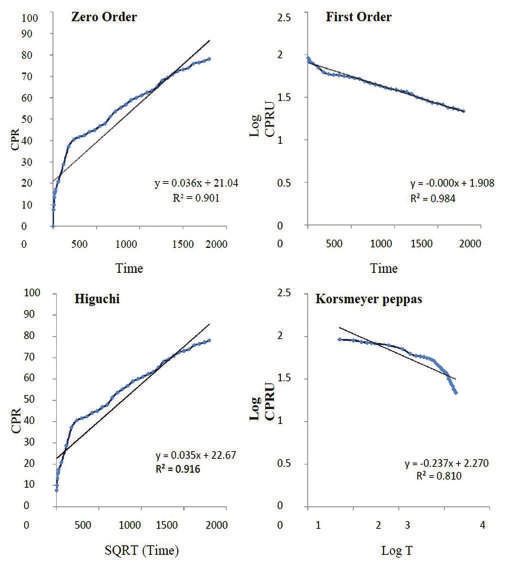
Rao, et al.: Formulation and evaluation of sustained release bilayer tablets

in stomach. These include bioadhesive or mucoadhesive              9.    Bi-layer tablet is suitable for preventing direct contact
systems,[3] swelling and expanding systems,[4,5] floating                of two drugs and thus to maximize the efficacy of
systems,[6,7] and other delayed gastric emptying devices. In             combination of two drugs.
recent years, a growing interest has developed in designing
drug delivery systems that include an immediate release
                                                                   Various techniques for bilayer tablet[19-21]
(IR) component to extended release (ER) dosages.[8-13]
To fulfill the specific therapeutic needs of the different
                                                                   1.    OROS® push pull technology
diseases, new drug delivery devices are required for a
more accurate time-programmed administration of the                2.    L-OROS® tm technology
active ingredients.                                                3.    DUROS® technology.

On the basis of these considerations, a new oral delivery          Bi-layered tablets: Quality and good manufacturing
device was proposed, in the form of a tablet, one portion          practice requirements[22]
is formulated to obtain a prompt release of the double-
component drug with the aim of reaching a high serum               To produce a quality bi-layered tablet, in a validated and
concentration in a short period of time. The second portion        GMP way, it is important to select a bi-layered tablet press
is a prolonged release layer which is designed to maintain         is capable of:
an effective drug release for a prolonged period of time. The      • Preventing capping and separation of the two individual
pharmacokinetic advantage relies on the plasma level for fact           layers that constitute the bi- layer tablet
that drug release from fast releasing component leads to a         • Providing sufficient tablet hardness
sudden rise in the blood concentration. However, the blood         • Preventing cross contamination between the two
level is maintained at steady state as the drug is released from        layers
the sustaining layer.
                                                                   • Producing a clear visual separation between the two
                                                                        layers
Bilayer tablet is suitable for sequential release of two drugs
                                                                   • High yield
in combination, separate two incompatible substances and
                                                                   • Precise and individual weight control of the two layers.
also for SR tablet in which one layer is IR as initial dose
and second layer is maintenance dose. There are various
                                                                   Types of bi-layer tablet presses
applications of the bi-layer tablet consists of monolithic
partially coated or multilayered matrices.                         1.    Single-sided tablet press[23]
                                                                   2.    Double sided tablet press or “compression force”
                                                                         controlled tablet presses.
      SCHEMATIC PRESENTATION FOR
     COMPRESSION OF BI-LAYER TABLET                                     Table 1: Classification of mucoadhesive polymers
                                                                    Criteria     Categories        Examples
Drug release mechanism
                                                                    Source       Semi- natural/    Agarose, Chitosan
                                                                                 natural
Need of developing bi-layer tablets[14-16]
                                                                                 Synthetic         Hyaluronic acid, Guargum,
For the supervision of fixed dose combinations of drugs,                                           Na-alginate, Sodium
prolong the drug product life cycle, manufacture novel drug                                        CMC, HEC, HPMC, Carbopol
delivery systems such as floating or mucoadhesive bilayer
                                                                    Solubility   Water- soluble    CP, HEC, HPC, HPMC,
tablets for gastroretentive drug delivery systems.
                                                                                                   Sodium CMC, etc.
Advantages of bi-layer tablets[17,18]                                            Water-            Chitosan (soluble in dilute
                                                                                 insoluble         aqueous acids)
1.   Bi-layer execution with optional single layer conversion       Charge       Cationic          Aminodextran, Chitosan,
     kit                                                                                           Trimethylated
2.   Low cost compared to other dosage forms
                                                                                 Anionic           Chitosan- EDTA, CP
3.   Greatest chemical and microbial stability compared to
     other oral dosage forms                                                     Non- ionic        Hydroxyethyl starch, HPC,
                                                                                                   PVA, PVP
4.   Objectionable odor and taste can be masked by coating
     technologies                                                   Forces       Covalent          Cyanoacrylate
5.   Flexible concept                                                            Hydrogen          Acrylates, CP, PVA
6.   Offer greatest precision and the least content uniformity                   bond
7.   Easy to swallow with least hang up problems                                 Electrostatic     Chitosan
8.   Fit for large scale production                                              interaction

                                  Asian Journal of Pharmaceutics • Apr-Jun 2021 • 15 (2) | 269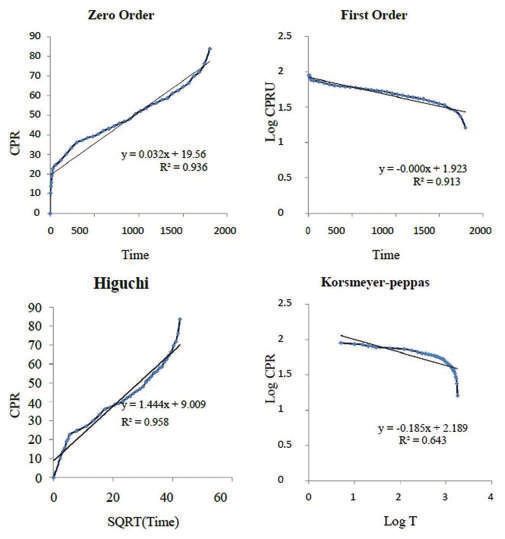
Rao, et al.: Formulation and evaluation of sustained release bilayer tablets

Classification[24,25]                                               (passed through standard sieve # 20) into a measuring cylinder
                                                                    and initial weight was noted. This initial volume was called
In general, adhesive polymers can be classified by various
                                                                    the bulk volume. From this, the bulk density was calculated
ways as synthetic versus natural, water-soluble versus water
                                                                    according to the formula mentioned below. It is expressed in
insoluble and charged versus uncharged polymers. However,
                                                                    g/ml and is given by
examples of the recent polymers classified in these categories
are listed in below Table 1:                                                                 Db = M/Vb

                                                                    Where, M and Vb are mass of powder and bulk volume of the
           MATERIALS AND METHODS                                    powder, respectively.

Materials                                                           Tapped density (Dt)[27]

 Drug                         Manufacturer                          It is the ratio of total mass of the powder to the tapped
                                                                    volume of the powder. Volume was measured by tapping
 Losartan potassium           Dr. Reddy Labs (Gift Sample)
                                                                    the powder for 750 times and the tapped volume was noted
 Polymer                                                            if the difference between these two volumes is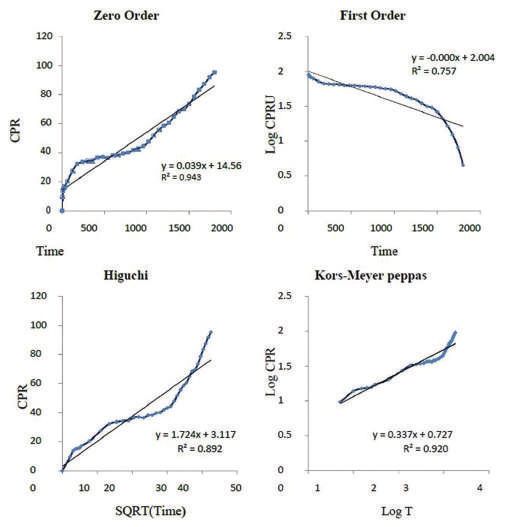
Rao, et al.: Formulation and evaluation of sustained release bilayer tablets

a way that the tip of the funnel just touched the apex of               According to dose calculation, IR dose of drug can be taken
the heap of the powder (2.0 cm above hard surface). The                 in between range of 3.36 mg and 5.37 mg for the preparation
powders were allowed to flow through the funnel freely                  of bi-layer tablets; thus 5 mg of Losartan potassium was
onto the surface.                                                       taken in IR layer, and 45 mg of Losartan potassium was taken
                                                                        in SR layers.
 Angle of repose                                    Type of flow
 40                                                Very poor
                                                                        Determination of λmax of losartan potassium
                                                                        [Figures 1-9]

The diameter of the powder cone was measured and angle of               Figures 10 and 11 exhibits the UV Spectrum of losartan
repose was calculated using the following equation:                     potassium scanned according to the procedure given in
                                                                        the chapter IV. The absorbance spectra are characterized
Angle of Repose θ = tan-1 H/R                                           by maxima at 206 nm in both acidic and phosphate buffer
Where                                                                   (pH 1.2 and pH 6.8 medium) [Figures 12-14].
H = Height of the powder cone R = Radius of the powder cone
                                                                        Preparation of calibration curve for losartan
Preparation of bi-layer tablet[30-34]                                   potassium

The bilayer tablets of losartan potassium were prepared by              Figures 15 and 16 show the calibration curves of losartan
the direct compression method. The drug, polymers and other             potassium, which was obtained when concentration in mcg/ml
excipients used for both immediate (IR) and SR layers were              [Table 2] was plotted against absorbance. It gave straight
passed through sieve # 80 before their use in the formulation.[35-38]   line that passes through the origin in both pH 1.2 and pH 6.8
                                                                        mediums. The correlation coefficient has been determined
                                                                        and found to be 0.994 and 0.997, respectively.
Dose calculation[39]
                                                                        Preparation of losartan potassium bilayer tablets and
For sustained drug release up to 30 h, the immediate dose of            evaluation of different physical parameters [Figures 17-20].
drug was calculated from total dose of losartan potassium ER
tablet, which is 50 mg. According pharmacokinetic data.[40,41]          Bi-layer tablets contain losartan potassium as active
                                                                        ingredient, PVP-K30 as a binding agent, Sodium starch
Dt = Dose (1 + 0.693 × t/t 1/2)                                         glycolate as superdisintigrant, HPMC K4M and Carbopol
                                                                        940-P as sustaining material and to retain the structure of
Where, Dt = Total dose, Dose = IR dose, t = Total time period           tablets, dicalcium phosphate as filler, Mg- stearate, and talc
for which SR is required, t1/2 = Half-life of drug. Half-life of        as lubricant and glidant. The composition of the different
losartan potassium ranges from 1.5 to 2.5 h.                            bilayer tablets. Different batches of tablets were prepared
                                                                        varying the different sustaining components that were
For example,                                                            considered to have significant effect on drug release. These
1. Losartan potassium: 50 = Dose (1+ [0.693 ×30]/1. 5),                 bilayer tablets as well as the powder blends were subjected
    Dose = 3.36 mg Losartan potassium                                   to various in-process quality control tests for evaluation
2. Losartan potassium: 50 = Dose (1+ [0.693 ×30]/2.5),                  of their different physical parameters. These in-process
    Dose = 5.37 mg Losartan potassium.                                  quality control tests are very much important not only

 Table 2: Determination of standard calibration curve
        of losartan potassium in acidic pH 1.2
 Concentration (mcg/ml)                       Absorbance (nm)
 0.1                                                0.0318
 0.2                                                0.0554
 1                                                  0.1221
 2                                                  0.2051
 5                                                  0.4511
                                                                        Figure 1: Diagram showing the definitions of the axial lengths,
 10                                                 0.9218              radial length, and interfacial fracture surfaces

                                     Asian Journal of Pharmaceutics • Apr-Jun 2021 • 15 (2) | 271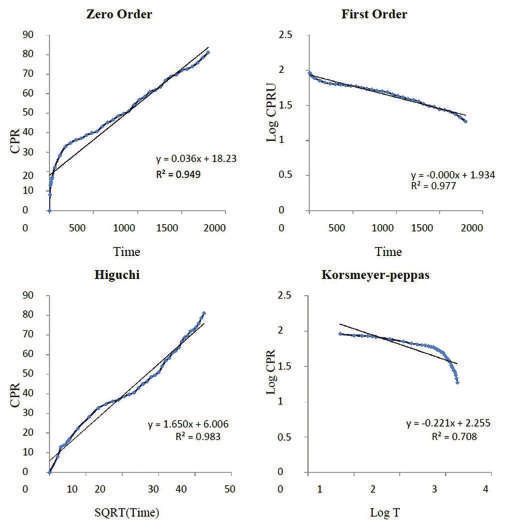
Rao, et al.: Formulation and evaluation of sustained release bilayer tablets

Figure 2: Filling of first layer, compression of first layer, ejection of upper punch. filling of second layer, compression of both layers

Figure 3: Figure showing immediate drug release from
                                                                        Figure 6: λmax of losartan potassium in distilled water
immediate release layer in stomach

Figure 4: λmax of losartan potassium in acidic pH 1.2
                                                                        Figure 7: Standard calibration curve of losartan potassium in
                                                                        distilled water

Figure 5: Standard calibration curve of losartan potassium in
acidic Ph 1:2                                                           Figure 8: λmax of losartan potassium in phosphate buffer pH 6.8

                                    Asian Journal of Pharmaceutics • Apr-Jun 2021 • 15 (2) | 272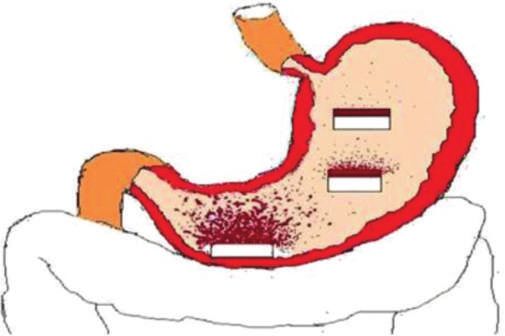
Rao, et al.: Formulation and evaluation of sustained release bilayer tablets

Figure 9: Standard calibration curve of losartan potassium in
phosphate buffer pH 6.8

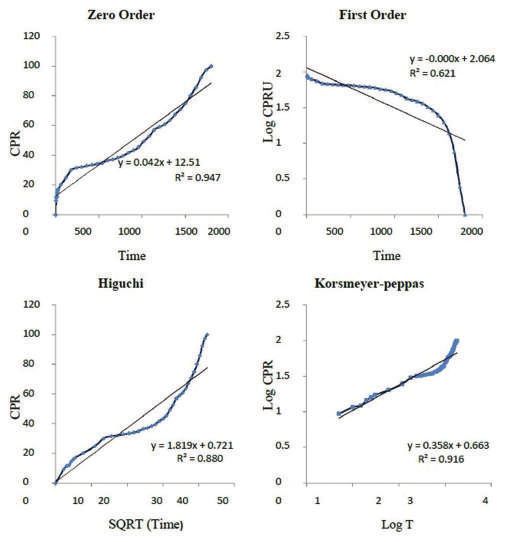
                                                                  Figure 11: Different release kinetics of tables of formulation
                                                                  ME5

Figure 10: Different release kinetics of tables of formulation
ME1

because these parameters determine the uniformity of flow
properties of powders and uniformity of tablets in respect
to weight, size, shape, and content but also they determine       Figure 12: Different release kinetics of tables of formulation
the suitability of tablets for further processing like in vitro   ME3
release studies.
                                                                  from 0.68 to 0.73 g/ml and the tapped densities ranged
                                                                  between 0.81 and 0.93 g/ml.
Bulk density and tapped density

Bulk density and tapped density of the losartan potassium of      Angle of repose
the optimized batches were determined as per the procedure
described in Chapter IV. It was found from the results that       The method angle of repose described previously in Chapter
bulk densities of all batches examined varied in the range        IV is called a dynamic angle and is generally the preferred

                                 Asian Journal of Pharmaceutics • Apr-Jun 2021 • 15 (2) | 273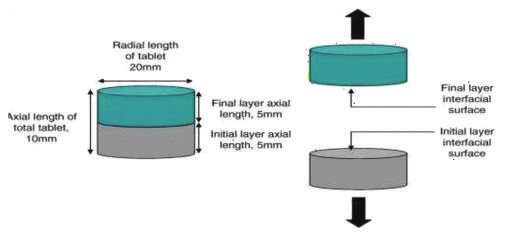
Rao, et al.: Formulation and evaluation of sustained release bilayer tablets

Figure 13: Different release kinetics of tables of formulation    Figure 15: Different release kinetics of tables of formulation
ME4                                                               ME2

Figure 14: Differential scanning colorimetry result of losartan   Figure 16: Differential scanning colorimetry result of losartan
potassium + HPMC K4M                                              potassium

means of measurement because it more closely mimics the
manufacturing situation, in which the powder is in motion.
Value of θ between 25 and 30 indicates good flow property.
The θ values of the optimized batches. The values range in
between 24.88 and 28.24, indicating that the powders have
good flowing properties.

Compressibility index (I) and Hausner’s ratio (R)
                                                                  Figure 17: Differential scanning colorimetry result of losartan
The flow ability of the powders was also indicated by             potassium + Carbopol 940P
compressibility index and Hausner’s Ratio. Values of I
below 15% usually give rise to good flow characteristics,         Weight variation test
the reading above 25% indicate poor flow ability (109). The
I values of the optimized batches were found the range in         The maximum percentage weight variation that can be
between 16.04% and 22.25%.                                        allowed for tablets according to USP is specified in table.
                                                                  Accordingly, if the tablet weight is between 130 and 324 mg,
Hauser Ratio (R) which is obtained as a ratio between tapped      then the maximum % deviation allowed is ±7.5 %. The
density and bulk density was found to fall in the range           weight variation of the optimized batches. The % weight
1.19–1.29, indicating that the powders have free flowing          variation ranged between 1.36 and 1.48% and no tablets
properties.                                                       were found to be outside this range. Hence, the tablets

                                 Asian Journal of Pharmaceutics • Apr-Jun 2021 • 15 (2) | 274
Rao, et al.: Formulation and evaluation of sustained release bilayer tablets
were statistically significant with respect to weight. Weight variation is permissible. The thickness of all bilayer tablets
variation test is a satisfactory method of determining the was tested by the method described in Chapter IV. It was
drug content uniformity if the tablets were all or essentially observed that thickness of all tablets ranged between 3.43
all (90–95%) active ingredients, or if the uniformity of the and 3.47.
drug distribution in the granulation or powder from which the
tablets were made were perfect. Although the first criterion is
Hardness
not met in this study, every effort has been taken to uniformly
mix the drug with other excipients. Hence, it is anticipated
The hardness of all losartan potassium tablets was tested by
that the tablets which are uniform in respect to weight will
the method described in Chapter IV. It was found that hardness
also be uniform in respect to drug content.
of prepared losartan potassium bilayer tablets varied between
6 and 8 kg/cm2 for all the batches.
Content uniformity
Friability test
This is an important test to ascertain the uniformity of
tablets with respect to drug content. The % variation of drug
During the compression of the powders, sufficient force
content should be within ±15%. In all the prepared batches
was applied to get the final hardness of the tablet of around
on which the content uniformity tests were carried out, the
6–8 kg/cm2 hardness as measured in a Monsanto Tablet
content variation was very less, that is, within the compendia
Hardness Tester. However, tablet hardness is not an absolute
limits. Hence, as it was anticipated, the tablets are very much
indicator of tablet strength. Friability test is done to ascertain
uniform in respect to drug content.
whether the tablets are resistant to chipping and cracking
during handling and/or subsequent processing. Weight loss
Thickness should beRao, et al.: Formulation and evaluation of sustained release bilayer tablets
Figure 20: ATR + Fourier transform infrared curve of formulation ME5 (Drug + excipients)
Disintegration time of IR layer and hydrochlorthaizide combination. Int J Pharm Tech
2012;4:3970-83.
The disintegration time of IR layer of all bilayer tablets was 2. Mukhopadhyay S, Goswami L, Satheesh Madhav NV,
tested by the method described in Chapter IV. It was observed Upadhyaya K. Formulation and evaluation of floating
that disintegration time of all tablets ranged between 1 and 2 min. bioadhesive tablets of ciprofloxacin hydrochloride by
direct compression technique. Int J Pharm Pharm Sci
2010;2:113-5.
CONCLUSION 3. Kumar KK, Mahesh M, Sasikanth K. Design,
Development and characterization of sustained release
The success of any research work depends on the results of metformin and gliclazide bi-layered tablets. Int J
obtained there from and conclusion drawn therein, which Biopharm 2010;1:67-71.
could bring out the revealed or unrevealed or unexplored 4. Medicine. Available from: http://www.Net.in. [Last
scientific explanations. The findings from any research work accessed on 2013 Feb 10].
may further lead to better understanding, explanation, and 5. Derle D, Joshi O, Pawar A, Patel J, Jagadale A.
profound knowledge in any specific area. Formulation and evaluation of buccoadhesive bi-layer
tablet of propranolol hydrochloride. Int J Pharm and
The present research was carried out to develop a bilayer tablet Pharm Sci 2009;1:206-12.
of losartan potassium using superdisintegrant sodium starch 6. Walle T, Conradi EC, Walle UK, Fagan TC, Gaffney TE.
glycolate for fast release layer and combination of HPMC The predictable relationship between plasma levels and
K4M and Carbopol 940-P for sustaining release layer. The dose during chronic propranolol therapy. Clin Pharmacol
tablets showed an initial burst release to provide the loading Ther 1978;24:668-77.
dose of drug followed by SR up to 30 h. This modified release 7. Cid E, Mella F, Lucchini L, Carcamo M, Monasterio J.
bilayer tablets also reduced dosing frequency, increase the Plasma concentrations and bioavailability of propranolol
bioavailability and provide better patient compliance. by oral, rectal and intravenous administration in man.
Biopharm Drug Dispos 1986;7:559-66.
Finally, bi-layer tablet is improved beneficial technology to 8. Kemken J, Ziegler A, Muller BW. Pharmacodynamic
overcome the limitation of the single layered tablet. It is suitable effects of transdermal bupranolol and timolol in vivo:
for sequential release of two drugs in combination, separate two Comparison of micro emulsions and matrix patches
incompatible substances and also for SR tablet in which one as vehicle. Methods. Find Exp Clin Pharmacol
layer is IR as initial dose and second layer is maintenance dose. 1991;13:361-5.
The preparation of tablets in the form of multi layers is used 9. Goodman M. The Pharmacology Basis of Therapeutics.
to provide systems for the administration of drugs, which are London: McGraw-Hill Medical Publishing Division;
incompatible and to provide controlled release tablet preparations 1884.
by providing surrounding or multiple swelling layers. 10. Kulkarni A, Bhatia M. Development and evaluation of
regioselective bilayer floating tablets of atenolol and
lovastatin for biphasic release profile. Iran J Pharm Res
REFERENCES 2009;8:15-25.
11. Barhate SD, Rupnar Y, Rahane R, Patel MM. Formulation
1. Dandare MS, Sarage RD, Bhaskaran S. Bilayer tablet: optimization of bilayer floating tablet of famotidine. Int
A novel approach for immediate release of Telmisartan J Pharm Bio Sci 2010;1:613-21.
Asian Journal of Pharmaceutics • Apr-Jun 2021 • 15 (2) | 276Rao, et al.: Formulation and evaluation of sustained release bilayer tablets
12. Banu H, Sahariar MR, Sayeed MS, Dewan I, Islam A. In-vitro evaluation of bilayer tablets of glibenclamide as
Formulation development of bi-layer acetaminophen immediate release and sustained release. Int J Pharm Sci
tablets for extended drug release. J Chem Pharm Res Health Care 2012;2:1-18.
2011;3:348-60. 28. Wagh MP, Yewale CP, Zate SU, Kothawade PI,
13. Carla ML, José M, Sousa L, João FP, Paulo CC. Mahale G. Formulation and evaluation of fast dispersible
Compressed matrix core tablet as a quick/slow dual- tablets of aceclofenac using different superdisintegrant.
component delivery system containing ibuprofen. AAPS Int J Pharm Pharm Sci 2010;2:154-7.
PharmSciTech 2007;8:76. 29. Manikandan M, Kannan K. Design and evaluation of
14. Kulakarni A, Bhatia M. Development and evaluation amlodipine besilate and atorvastatin calcium tablets. Res
of bi-layer floating tablets of atenolol and lovastatin for J Pharm Biol Chem Sci 2012;3:425-34.
biphasic release profile, Iran. J Pharm Res 2009;8:15-25. 30. Park K. A new approach to study mucoadhesion:
15. Singh PK, Kumar S. Bilayer and floating bioadhesive Colloidal gold staining Int J Pharm 1989;53:209-17.
tablets: Innovative approach to gastroretension. J Drug 31. Smart JD. The basics and underlying mechanisms of
Deliv Ther 2011;1:32-5. mucoadhesion. Adv Drug Del Rev 2005;57:1556-68.
16. Nirmal J, Saisivam S, Peddamma C, Muralidharan S, 32. Park H, Amiji M, Park K. Mucoadhesive hydrogels
Nagarajan M. Bilayer tablets of atorvastatin calcium and effective at neutral pH. Proc Int Symp Cont Rel Bioact
nicotinic acid: Formulation and evaluation. Chem Pharm Mater 1989;16:217-8.
Bull 2008;56:1455-8. 33. Nagai T, Konishi R. Buccal/gingival drug delivery
17. Ashok PH, Kumar TA. A novel approach of bi-layer systems. J Cont Rel 1987;6:353-60.
tablet technology-a review. IRJP 2012;3:44-9. 34. Sudhakar Y, Kuotsu K, Bandyopadhyay AK. Buccal
18. Deshpande RD, Gowda DV, Mahammed N, bioadhes ive drug delivery-a promising option for orally
Maramwar DK. Bi-layer tablets-an emerging Trend: less efficient drugs. J Cont Rel 2006;114:15-40.
A review. IJPSR 2011;2:2534-44. 35. USP. Drug information for Losartan potassium from
19. Mehul P, Sockan GN, Mani T. Challenges in the United States Pharmacopoeia. USP29-NF 24:1280.
formulation of bi-layered tablets: A review. IJPRD United States: USP; 2007.
2010;2:30-42. 36. Shruti C, Gayathri VP, Sanjay KM. Release modulating
20. Divya A, Kavitha K, Rupesh Kumar M. Complexity hydrophilic matrix systems of losartan potassium:
of pharmaceutical Science and Evaluation of Dosage. Optimization of formulation using statistical
J Appl Pharm Sci 2011;1:43-7. experimental design, Science direct. Eur J Pharm
21. Shaikh TK, Gadhave MV, Jadhav SL, Gaikwad DD. Biopharm 2006;66:73-82.
Different techniques of bi-layer tablet: A review. Int J 37. Chopra S, Patil GV, Motwani SK. Response surface
Univ Pharm Life Sci 2012;2:450-60. methodology for optimization of Losartan potassium
22. Mehul P, Sockan GN, Kavitha K, Mani T. Challenges in controlled release tablets. Sci Direct 2006;1:15-9.
the formulation of bi-layered tablets: A review. IJPRD 38. Raju DB, Suresh John K, Varma MM. Formulation and
2010;2:30-42. evaluation of losartan potassium matrix tablets for oral
23. Miller SN, Hang MC, Johnston TP. The use of muc controlled release. JOCPR 2010;2:130-5.
oadhesive polymers in buccal drug de livery. Adv Drug 39. Shanmugam S, Chakrahari R, Sundaramoorthy K.
Del Rev 1996;57:1666-91. Formulation and evaluation of sustained release matrix
24. Gu JM, Robinson JR, Leung SH. Binding of acrylic tablets of losartan potassium. Int J Pharm Tech Res
polymers to mucin/epithelial surfaces: Structure- 2011;3:526-34.
property relations hips. Crit Rev Ther Drug Carr Syst 40. Vishnu MP, Bhupendra GP, Harsha VP, Karshanbhi
1998;5:21-67. MP. Mucoadhesive bilayer tablets of propranolol
25. Lee JW, Park JH, Robinson JR. Bioadhesive-based hydrochloride. AAPS PharmSciTech 2007;8:E77.
dosage forms: The next generation. J Pharm Sci 41. Pattanayak DP, Subash CD. Bilayer tablet formulation
2000;89:850-66. of metformin hydrochloride and glimepiride: A novel
26. Mohideen S, Jyothi B, Pavani S, Satyanarayana T, approach to improve therapeutic efficacy. Int J Drug Dis
Suresh Kumar P, Navaneetha Krishn S. Formulation Herbal Res 2011;1:1-14.
and evaluation of bilayered tablets of metformin
hydrochloride and atorvastatin calcium. Int J Pharm Sci
Rev Res 2011;10:130-4.
27. Panchal HA, Tiwari AK. Formulation, development and Source of Support: Nil. Conflicts of Interest: None declared.
Asian Journal of Pharmaceutics • Apr-Jun 2021 • 15 (2) | 277You can also read


