DEVELOPMENT STUDIES ADVANCED MASTER PROGRAMMES IN 2018-2019
←
→
Page content transcription
If your browser does not render page correctly, please read the page content below

Advanced Master programmes in
Development studies
                                Antwerp, Belgium

              2018-2019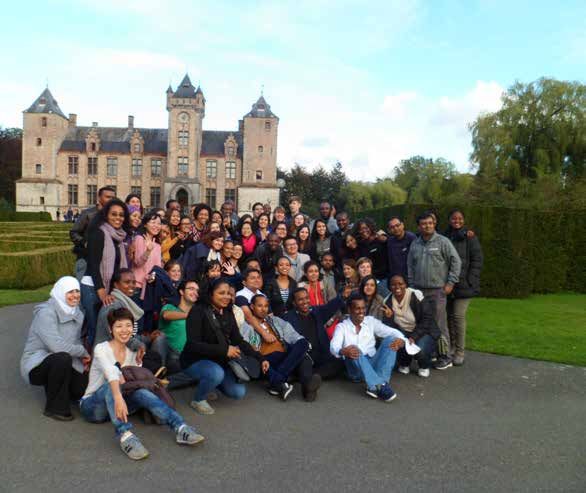
Studying         Admission &     MSc           MSc
                                                         Governance    Globalisation

                                 4
                        @ IOB            programme

                                                     6
                                                         and           and

                                                              10              12
                                         overview
                                                         development   development

                        MSc              Course          Practical     Life
                        Development      structure       information   after IOB

                              14 16 20                                        22
                        Evaluation and
                        Management

2 · master programmes                                                              iob· 3
STudying at IOB
Cooperation, Belgian Technical Cooperation, Why study in Antwerp?
the European Commission, the World Bank, the
United Nations, as well as for countless non- Antwerp is located at the heart of Europe,
government organisations. The insights provided near Brussels where the European institutions
by policy oriented research constitute an reside and major development actors have
important source of inspiration for the teaching representations. Antwerp is also Belgium’s
programmes. historical connection to other continents, being
a world harbour. It is also a pleasant city, full of
old charm and modern convenience. The city
boasts many excellent museums and historical
monuments, as well as a fast-paced nightlife, fine
IOB heralds the shopping districts, and a booming commercial
principles of equality, centre. Getting around in public transport is easy
transparency, open and and cheap. The University’s City Campus offers
a broad range of facilities, including a student
honest communication, restaurant, a sports centre and computer rooms
pluralism, tolerance with internet access. The library of humanities
and mutual respect. and social sciences, which houses the IOB
I OB (Institute of Development Policy) is a Each of the three programmes takes 12 months collection on development studies, is also
multidisciplinary academic institute. We are to complete, starting and ending mid-September. located on the City Campus. Holding about
part of the University of Antwerp and located in Successful completion of the programme leads to 1.3 million volumes and providing access to
the city center. We have a longstanding and solid the awarding of a Master of Science degree. Our numerous databases and electronic resources,
IOB is student-oriented. The institute focuses it is an excellent starting point for any research
experience in organising high quality educational Master programmes are organised in English,
on student-centred learning, and its approach project.
programmes in development studies. but special facilities are offered to students from
involves a broad variety of teaching methods.
other linguistic backgrounds.
Students are expected to learn from each other’s
IOB offers three Master of Science programmes experiences, as well as from their exposure to
IOB is international and multicultural. Each
each with a high degree of specialisation and a living and studying in the North.
year we welcome about 70 Master students of
distinct focus: We also offer the possibility to some students
approximately 30 different nationalities from
1. MSc in Globalisation and Development diverse academic and professional backgrounds. to do a research internship with our partner
Most of our students come from the global south, universities (Nicaragua,Tanzania) and conduct
2. MSc in Governance and Development field work in the South.
have professional experience in development
3. MSc in Development Evaluation and and are seeking exposure to new ideas and
IOB is a development actor in its own right.
Management. methodologies in development policy. Students
IOB participates in various inter-university
from the global north interested in the challenge
partnerships with institutes in the South,
of development and/or aspiring a career in
including the Universidad Centro-Americana
international development organisations are
(Managua, Nicaragua), the University of
equally welcome. Such a mixed classroom
Our vision is one of a just and sustainable provides for a unique learning environment.
Cuenca (Ecuador), the University of Bukavu (DR
world. As an institute of development Congo), the University of Western Cape (South
IOB is development policy-oriented. Our Africa), the Mbarara University of Science and
studies, we strive to help build such research and education combines the latest Technology - MUST (Uganda), the Ugandan
a world through multidisciplinary social scientific insights with relevance to the Cristian University (UCU), the Université du
academic research, education, development challenge. Our staff members Burundi and the Mzumbe University (Tanzania).
partnerships and political engagement. also frequently engage in policy advisory
work with development actors such as the
Belgian Directorate General for Development
4 · master programmes iob· 5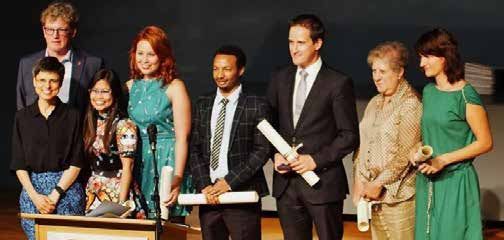
Admission requirements

                                                                                                     Language requirements
                                                                                                     Our programmes are taught in English so applicants need to be proficient in English.
                                                                                                       If English is not your language of instruction at University level: a language test certificate is
                                                                                                     required.
                                                                                                       If English is your language of instruction at University level but you are originating from
                                                                                                     Rwanda, the French-speaking part of Cameroon or from an Asian country except for India and the
                                                                                                     Philippines: a language test certificate is required. In case of unavailability of this test or in case
                                                                                                     of inability to take the test, you can be admitted to the Master programme provided you attend
                                                                                                     the intensive English language course (see below).
                                                                                                       You are exempted from submitting a language test certificate if you are originating from one of
                                                                                                     the following countries: Australia, Botswana, Can-ada, Cameroon (English-speaking region),
Admission requirements                                                                               Eritrea, Ethiopia, Gambia, Gha-na, India, Ireland, Jamaica, Kenya, Liberia, Malawi, Namibia, New
                                                                                                     Zealand, Nigeria, Philippines, South Africa, Tanzania, Uganda, UK, USA, Zambia and Zimbabwe.
You are eligible to apply provided you:
  hold a Master degree or five years bachelor degree in development studies or a related
discipline* and obtained good study results. Applicants with a 4-year Bachelor need to               Intensive language course
demonstrate equivalence to a Master degree by highlighting the research-oriented character of
                                                                                                     The intensive two-week English language course is organised prior to the start of the Master
their bachelor’s curriculum or equivalent competencies acquired later-on. Holders of a University
                                                                                                     programme. In addition to bringing the student’s English competency up to the required level,
degree under the European Bologna system must hold a Master degree;
                                                                                                     this course also offers an introduction to international development literature and practice.
  have a good command of English, certified by an official language test: TOEFL (minimum score
of 550 for the paper-based test or 79 for the internet-based test) or IELTS (minimum overall score   This language course is accessible for students from other language back-grounds who do not
of 6.5 and a minimum score of 6.0 on each component). Certain applicants are exempted from           meet the English language admission criteria for direct admission, i.e. students with paper-based
submitting an official language test – see language requirements;                                    TOEFL scores between 500 and 550 (or internet-based TOEFL scores between 61 and 79) or IELTS
  show a proven interest in development issues (for ex. relevant professional experience,            scores between 5.5 and 6.0. The course can be attended on a voluntarily basis if permission is
internship, field research, volunteering experience);                                                granted by the IOB.
  submit a complete and timely application: see application procedure on the website.
                                                                                                     Although the course is offered free of charge by the Institute, students should note that only
  VLIR-UOS scholarship applicants need to meet additional requirements: see VLIR-UOS                 VLIR-UOS scholars will receive an allowance during this period.
scholarship on the website.
* see website for more detailed information: www.uantwerpen.be/development-studies

6 · master programmes                                                                                                                                                                                   iob· 7
Programme overview
                                                                                                  Focus of our master programmes

                                                                                                      Governance and                            Globalisation and                              Development
                                                                                                       Development                                Development                                 evaluation and
                                                                                                                                                                                               management

                                                                                                                                              Interest in economic and financial         Interest in the role of external
                                                                                                  Interest in governance
                                                                                                                                              globalisation                              actors in development

                                                                                                                                                                                         Analysing the institutional context
                                                                                                                                              Mobility and migration
                                                                                                  Political economy of governance                                                        in which development interventi-
                                                                                                                                                                                         ons take place

                                                                                                  State formation, law and public             Value chains                               Monitoring and Evaluation
                                                                                                  policies

Programme structure                                                                                                                           Climate change & Environmental             Design,implementation and
                                                                                                  Conflict, peace and state building
Each of the three Master programmes has a similar structure, consisting of four modules.                                                      crises                                     evaluation of local/(inter)national
                                                                                                  local or governance challenges
                                                                                                                                                                                         development interventions
The first Module provides an overview of theories of development and gives students up-to-
date knowledge of research methods and techniques, both general and programme-specific.
At IOB we want to cultivate mixed methods approaches to research. This supposes that incoming
students have active knowledge of (the basics of) quantitative and qualitative research methods
or are willing to refresh this knowledge before starting the Master program.

In Modules II and III, research-driven interactive education is offered. In Module IV, each                                   Master of                      Master of             Master of Development
                                                                                                                            Governance &                  Globalisation &              Evaluation &
student conducts an individual development research project under the guidance of a                                         Development                    Development                 Management
supervisor. The topics covered relate to the thematic focus of Modules II and III. A limited
number of students receive IOB travel grants in order to conduct fieldwork for their research
projects. The dissertation is the subject of a public presentation and defence.                             Module I                Theories of Development - Research Methods I and II

                                                                                                                           Governance for                 Globalisation &          Evaluating Development
                                                                                                           Module II
                                                                                                                            Development                    Development                  Effectiveness

                                                                                                                                    TRACK 2

                                                                                                                                                                                                    TRACK 2
                                                                                                                                                                TRACK 1
                                                                                                                                                TRACK 1                        TRACK 1
  Exposure to the field: In module I
  there is a possibility to do a research
  internship with one of IOB’s partners                                                                                      From Violent                                           National Institutions,
  in Tanzania and Nicaragua. During the                                                                   Module III       Conflict to Peace Local Institutions &                    Poverty Reduction
                                                                                                                               and State      Poverty Reduction                       Strategies & Aid
  dissertation students can go abroad for
                                                                                                                            Reconstruction
  field work. For both types of mobilities
  a limited number of IOB travel grants is                                                                Module IV                                             Dissertation
  available.

 8 · master programmes                                                                                                                                                                                                  iob· 9
MSc in
                                                                                                                Track 1: Local institutions                             Track 2: From violent conflict to
Governance and development                                                                                      and poverty reduction                                   peace and state reconstruction

                                                                                                                The track ‘Local institutions and poverty               The track ‘From violent conflict to peace and
                                                                                                                reduction’ focuses on the interaction between           state reconstruction’ focuses on the actors and
                                                                                                                transnational, national and local actors in             factors involved in the governance dimensions
                                                                                                                governance processes.                                   of development within the contexts of conflict-
                                                                                                                                                                        prone environments and states that are facing a
                                                                                                                The partial autonomy of local decision-making           multitude of reconstruction challenges following
                                                                                                                levels is an integral part of countries that are        violent conflict.
                                                                                                                characterised by weak or fragile national-level
                                                                                                                state structures. It therefore requires careful         The track offers theoretical and contextualised
                                                                                                                scrutiny in the conceptualisation and assessment        insight into the political economy of governance
                                                                                                                of development initiatives.                             and development, focusing on the state as a
                                                                                                                                                                        central actor in the development process of a
                                                                                                                Decentralisation has also become an important           nation.
                                                                                                                part of the agenda for governance reform and
                                                                                                                democratisation in many countries. For this             The track also explores critical dimensions, drivers
                                                                                                                reason, it is hardly possible to discuss issues         and dynamics of violent conflict, processes of
Programme Content                                                                                               of public-service provision and property rights         peace and conflict resolution and post-conflict
                                                                                                                without due consideration for local-level               state reconstruction. It adopts a thematic
The future of sustainable development is critically     and practical insights that will improve                institutions and political dynamics.                    perspective, supplemented by in-depth case
related to the promotion of better governance           their capacity to analyse governance challenges at      Special attention is also paid to the local political   studies drawn mainly from Sub-Saharan Africa.
at the local, national, regional and international      different levels, in addition to improving the way in   economy of poverty and development.
levels. Both a cause and a consequence of               which they relate to processes of violent conflict                                                              Students receive analytical and policy-oriented
governance failures, violent conflict is incompatible   and development.                                        The track is intended for participants who are          tools for carrying out knowledge-based
with sustainable development. Processes of state                                                                professionally active or interested in research on      interventions, particularly in environments
formation, state failure and state reconstruction       Graduates will understand and be able to analyse        the interface between the transnational, national       affected by conflict.
play a central role in this nexus between               the governance problems confronting developing          and local level and/or between state and non-
development, governance and conflict.                   countries today, from the local to the global           state development actors.                               This track is intended for participants with a
                                                        level. Theoretical insights, policy strategies, best                                                            variety of disciplinary backgrounds who are
The programme analyses governance problems              practices and failures are explored in order to allow   Students should have work experience,                   professionally active or aspire to careers in
and possible responses, with due consideration          graduates to apply this knowledge in their future       academic interest and/or aspire to a career             conflict-prone environments or post-conflict
of the specific historical pathways of individual       professional environments.                              in the public action domain, whether within             situations or who are interested in policy-oriented
countries, as well as the interaction between                                                                   government institutions (including public               research on these topics.
dynamics at the national/state level and the local/     The Master programme in Governance and                  research institutions), donor agencies (including
society level. It also addresses the impact of global   Development offers two tracks, each with specific       international NGOs, bilateral and multilateral          Participants should have work experience or
developments.                                           objectives, courses and target audiences. The           donors) or civil society (including research            academic interest in the public action domain,
                                                        first track explores issues of governance and           institutes, universities).                              whether within government institutions (including
Most of our students are engaged (or aspire             development against the background of violent                                                                   public research institutions), donor agencies
to become engaged) in development, whether              conflict and the challenge of post-conflict state                                                               (including international non-governmental
professionally or as researchers. The objective of      reconstruction. The second track addresses                                                                      organisations, bilateral and multilateral donors) or
the Master programme is to provide these                governance and development challenges from                                                                      civil society (including advocacy groups, research
students with multidisciplinary theoretical             the perspective of local institutions and poverty                                                               institutes and universities).
                                                        reduction.

10 · master programmes                                                                                                                                                                                                iob· 11
MSc in
globalisation and development
                                                                                                             Additional skills include the identification and       poorer and weaker groups in society in particular,
                                                                                                             evaluation of development interventions aimed at       thereby aiming to strengthen the agency of the
                                                                                                             remedying the adverse effects of global tendencies     latter.
                                                                                                             on sustainable development in general and on the

                                                                                                             Track 1: Local institutions and poverty reduction
                                                                                                             The Master focuses on the analysis of the              Candidates are actively involved in development
                                                                                                             interaction between external and domestic              or poverty-reduction initiatives, in micro-level
                                                                                                             actors at the interface of global, national and        or meso-level projects and programmes and/or
                                                                                                             local arenas and development processes, in order       in macro-level policy makers. Professionally, the
                                                                                                             to identify the changing opportunities for and         candidates hold middle or upper management
                                                                                                             constraints to beneficial institutional change for     or policy (or policy research) positions; ideally,
                                                                                                             inclusive, sustainable development and poverty         these also entail at least some experience at the
Programme Content                                                                                            reduction.                                             interface between different policy levels (e.g.
                                                                                                                                                                    international to local, national to international)
The Master in Globalisation and Development           The objective of the Master programme is to            In this context, special attention is paid to the      or between different arenas (e.g. civil society –
approaches development as the outcome                 provide these students with a solid understanding      way in which these interactions can produce            government, government – international forums
of intensifying global-to-local-to-global             of the current global development context in all       inequality and poverty, as well as how they can        and institutions, INGOs – national NGO).
interactions. It introduces a multi-disciplinary      of its dimensions (worldwide markets for goods         promote wellbeing. Each student can focus on
perspective to analyse opportunities and              and services, capital and labour/migration, the        one or two policy challenges at the local–global
threats to poverty alleviation and environmental      planetary challenge of sustainable development         interface and follow a tailormade study trajectory.
sustainability associated with these interactions     in this era of environmental crisis/climate change).   (e.g. inclusive value chains and/or microfinance;
in low and middle- income countries at both the       It offers insight and tools with which to analyse      the global financial architecture; international
national and local levels.                            and improve the impact of the global context           migration; impact of trade policies; access to
                                                      on local development and poverty alleviation           land; governance of natural resources; the climate
Most of our students are engaged (or aspire           in the global South and vice versa. As such due        change challenge; promotion of gender justice; …)
to become engaged) in interventions, (social)         consideration is given to the complexity of local–
businesse s, policy or advocacy that promote          global interactions in the multifaceted arenas of      The programme is intended for participants
inclusive and sustainable development , whether       globalisation.                                         who have work experience or an interest in
as professionals or as researchers.                                                                          pursuing careers in local, regional and/ or national
                                                      Successful students will be able to identify the       government institutions; at research institutes or
Applicants to this Master must show a keen            opportunities of the evolving global context, in       universities; in (social or green) businesses, local
interest in challenges for poverty reduction and      addition to assessing and remedying the risks          NGOs, advocacy or entrepreneurial associations;
sustainability related to economic and financial      and threats associated with the globalisation of       or in international organisations (e.g. with
globalisation, mobility and migration, value chains   the sustainable development challenge. They            international NGOs, bilateral and multilateral
and/or climate change and environmental crises.       will also be able to identify and assess policy and    institutions) or multinational corporations.
                                                      programme interventions for more effective and
                                                      adequate local, national and global development.

12 · master programmes                                                                                                                                                                                            iob· 13
MSc in
Development Evaluation and Management
                                                                                                               Track 1: Local institutions                              Track 2: National Institutions,
                                                                                                               and poverty reduction                                    Poverty Reduction
                                                                                                                                                                        Strategies and Aid
                                                                                                               The track in ‘Local institutions and poverty             The track in ‘National institutions, poverty
                                                                                                               reduction’ conceptualises socio-political and            reduction strategies and aid’ focuses on the
                                                                                                               economic development as the outcome of                   analysis of the interaction between national
                                                                                                               interactions between a conditioning institutional        institutions, local politics and external actors.
                                                                                                               environment and the agency of local, national and        The basic question addressed concerns why
                                                                                                               international actors, including multilateral and         development interventions are sometimes
                                                                                                               bilateral, governmental and non-governmental aid         successful but more often fail. This leads to more
                                                                                                               actors.                                                  operational questions such as: Which lessons
                                                                                                                                                                        have been learned from the study of past failures
                                                                                                               Special attention is paid to the importance of           and successes, and how convincing are current
                                                                                                               micro-level institutions and processes, as well          prescriptions and paradigms for development
                                                                                                               as to how they condition the effectiveness of            policy?
Programme Content                                      of local and (inter) national development               development efforts in improving livelihoods
                                                       interventions as well as the role of external actors    and neutralising processes of social exclusion.          The programme teaches students to use
The Master in Development Evaluation and               in development.                                         The detailed exploration of how local contexts           appropriate analytical frameworks and to apply
Management focuses on the efforts made,                                                                        transform processes involving the planning,              relevant scientific methods in evaluating results
particularly by external (public and private)          Most of our students are engaged (or aspire to          implementation, monitoring and evaluation                and drawing policy conclusions. It introduces
actors, to promote development. It provides            become engaged) in development (cooperation),           of development interventions is of crucial               students to various kinds of evaluation, based on
a solid understanding of the past and present          as professionals and/or researchers. The Master         importance to recognising opportunities                  quantitative as well as qualitative techniques.
aid policies of multilateral and bilateral donors,     programme will improve the capacity of these            for resolving the poverty conundrum.
also addressing the major aid modalities               students to assess the strengths and weaknesses                                                                  This track is intended for participants who
and instruments deployed. The institutional            of the prevailing development paradigms and             This track is intended for participants who              have work experience or who aspire to a career
characteristics of the actors involved – be they       the envisaged role of aid and external actors in        have work experience or who aspire to a career           in government institutions (including public
governments, community-based organisations,            promoting change. Students learn to appreciate          in civil society in the South (e.g. at research          research institutions), donor agencies (including
international NGOs, bilateral or multilateral          the importance of different institutional arenas,       institutes or universities, or with local NGOs or        international NGOs, bilateral and multilateral
donors – are analysed in order to attain a better      as well as how they work and interact. They will        entrepreneurial associations), donor agencies            donors), civil society (including research institutes,
understanding of development processes and             become familiar with multidisciplinary analytical       (including international NGOs, bilateral and             universities).
outcomes. The main theoretical perspective is          tools that will improve their capacity to analyse       multilateral donors) and government institutions.
that development is best understood as a set           interactions and enhance the conceptualisation,                                                                  Candidates work in the field of development
of interlocking collective action problems. The        implementation, monitoring and evaluation of            Candidates should be involved in development             intervention or poverty reduction initiatives, and
Master programme offers methodological and             development policies and programmes.                    interventions or poverty reduction initiatives           they are oriented towards macro-level policy.
practical insights into development evaluation, its                                                            in micro-level or meso- level projects and               Professionally, they are middle managers with
relevance and challenges.                              The Master programme offers two tracks, each            programmes. Professionally, candidates are               policy responsibilities and/or responsibility for
                                                       with specific objectives and course packages that       middle-managers with policy and/or managerial            managing the interface between different policy
Applicants to this Master should show a keen           are intended for a specific audience. The first track   responsibilities at the interface between different      levels (e.g. national to international, national
interest in studying and analyzing the institutional   is focused primarily on the macro (international        policy levels (e.g. local to national, national to       to local) or between different arenas (e.g.
context in which development interventions             and national) level, while the second focuses           international) or between different arenas (e.g. civil   government-donors, INGO-national NGO).
take place, in Monitoring and Evaluation (M&E)         mainly on the micro (local) level.                      society- government, government-donors, INGO-
and the design, implementation and evaluation                                                                  national NGO).
14 · master programmes                                                                                                                                                                                                   iob· 15
course structure
                                                                                                      Module I
                                                                                                      (for all three Master programmes)
                                                                                                      Course                                                               Credits   Period

                                                                                                      Theories of development                                              8 ECTS    Sep – Jan
                                                                                                       • Unit 1: Economic and institutional development
                                                                                                       • Unit 2: Politics of development
                                                                                                       • Unit 3: Poverty and inequality

                                                                                                      Research methods I                                                   4 ECTS    Sep – Jan
                                                                                                       • Unit 1: Research in a development context
                                                                                                       • Unit 2: Design and methodology in development research

                                                                                                      Research methods II (choose up to 3 units)                           6 ECTS    Sep – Jan
                                                                                                      Quantitative Units
                                                                                                       • Unit 1: Working with data
                                                                                                       • Unit 2: Regression analysis and inference
                                                                                                      Qualitative Units
                                                                                                       • Unit 3: People as informants: collecting qualitative data
                                                                                                       • Unit 4: Participatory research and development methods
                                                                                                       • Unit 5: Multi-actor processes in development: negotiation,
                            Master of                  Master of            Master of Development        collaboration and mediation
                          Governance &              Globalisation &             Evaluation &
                                                                                                       • Unit 6: Analysing text and discourse in development
                          Development                Development                Management
                                                                                                       • Unit 7: Qualitative data analysis
                                                                                                       • Unit 8: Mobility window (research stay) at UCA (Nicaragua) or
       Module I                Theories of Development - Research Methods I and II                       Mzumbe University (Tanzania)

                         Governance for             Globalisation &        Evaluating Development
      Module II
                          Development                Development                Effectiveness
                                                                                                      Module II
                                TRACK 2

                                                                                       TRACK 2
                                                          TRACK 1

                                          TRACK 1                        TRACK 1                      MSc in Globalisation and Development
                                                                                                      Globalisation and development                                        Credits   Period
                           From Violent                                      National Institutions,
     Module III          Conflict to Peace Local Institutions &               Poverty Reduction        Unit 1: Globalisation: the basic issues                             12 ECTS   Jan – Mar
                             and State      Poverty Reduction                  Strategies & Aid        Unit 2: Sub-units on various topics: (choose 3 out of 4 subunits)
                          Reconstruction
                                                                                                            •   Trade policy: poverty impact and policy implications
     Module IV                                            Dissertation                                      •   Financial globalisation and the poor
                                                                                                            •   Global value chain
                                                                                                            •   Global environment-development nexus
                                                                                                       Unit 3: End-of-module paper

16 · master programmes                                                                                                                                                                           iob· 17
Module II

    MSc in Governance and Development
     Governance for development                                               Credits   Period       • Gender and development: a local institutional perspective
                                                                                                     • Local governance
     Unit 1: The political economy of governance and development              12 ECTS   Jan – Mar    • Access to land and security of tenure
     Unit 2: The state, governmentality and development                                              • Assessing the impact of trade policies
     Unit 3: Law and development                                                                     • International migration and development
     Unit 4: End-of-module paper                                                                     • Governing labour ‘freedom’ in the global economy
                                                                                                    Unit 3: End-of-module paper

                                                                                                    Track 2 MSc in Governance and Development
    MSc in Development Evaluation and Management                                                    From violent conflict to peace and state reconstruction        Credits   Period
     Evaluating development effectiveness                                     Credits   Period
                                                                                                    Unit 1: Analysis of violent conflict                           12 ECTS   Mar - May
     Unit 1: Development effectiveness: unpacking the concept                 12 ECTS   Jan – Mar
                                                                                                    Unit 2: Conflict resolution and the peace process
     Unit 2: Development monitoring and evaluation: introducing the
     landscape and approaches                                                                       Unit 3: State building after violent conflict
     Unit 3: Selected approaches to development evaluation (choose 2 out of                         Unit 4: End-of-module paper
     3 subunits):
      • Qualitative development monitoring and evaluation                                           Track 2 MSc in Development Evaluation and Management
      • Quantitative development evaluation
                                                                                                    National institutions, poverty reduction strategies and aid    Credits   Period
      • Political (economy) analysis
                                                                                                    Unit 1: Economics and politics of aid: an introduction         12 ECTS   Mar - May
     Unit 4: End-of-module paper
                                                                                                    Unit 2: Monitoring and evaluation
                                                                                                    Unit 3: Selected topics (choose 1 out of 3)
                                                                                                     • Governing for development
    Module III                                                                                       • Macro-economic and fiscal management of aid
    Choose one out of two tracks. the MSc in Globalisation and Development only offers track 1       • Engendering development
                                                                                                    Unit 4: End-of-module paper
    Track 1 (same for all three Master programmes)
     Local institutions and poverty reduction                                 Credits   Period
                                                                                                    Module IV
     Unit 1: Theory and concepts                                              12 ECTS   Mar - May
                                                                                                    Course                                                         Credits   Period
     Unit 2: Introduction to specific topics (choose 2 sub-units):
                                                                                                    Dissertation                                                   18 ECTS   May - Sep
      • Access to public services
      • Access to natural resources
      • Access to markets and value chains
      • Access to financial services                                                                A list of teaching staff can be found on our webpage
                                                                                                    www.uantwerpen.be/development-studies

18 · master programmes                                                                                                                                                                   iob· 19
practical information
Fee € 1250
Reduced fee OECD DAC students € 650
Scholarships VLIR-UOS, Master Mind, ...
Duration 12 months
Cathy Berx, Governor of the Province of Antwerp, awards IOB students with the
Prize for Development Cooperation of the Province during the graduation ceremony
Prices are indicative. Please check the website for updated information
www.uantwerpen.be/development-studies
1 february
Study results
Application deadline for
students who apply for
academic admission, the Mid May
VLIR-UOS and Master Mind
scholarship Announcement of Professional
selection results Field of study experience
selection criteria
International exposure
1 April 1 september Matching Motivation Mobility window for
research methods
1 November Application deadline for Application deadline for
self-sponsoring applicants self-sponsoring applicants
Start of who need a student visa who are exempted from
applications for Belgium applying for a student visa
for Belgium
(selection results within 2 weeks fieldwork for
after the application has been dissertation
received)
Detailed information about application, procedure
international
and scholarships can be found on classroom
www.uantwerpen.be/development-studies
20 · master programmes iob· 21Life after iob My IOB experience helped
me realize a lot of
things in life. Actually,
My IOB experience helped me work in it changed my life! I
a multidisciplinary environment with came back as a new
people from various backgrounds and person. From all the
profiles. This is particularly crucial for my wonderful experiences
current job where I have to interact daily in the classroom to the
with people from around the world. amazing people I met
along the way. It allowed me to
Adamon Ndungu Mukasa discover more about the world around me, but
GOV 2010-2011| DR Congo more importantly, myself. It also opened up
Consultant in the Development Research an entire range of professional opportunities
Department of the African to me due to the skills and experiences I
Development Bank gained at IOB. It has been eight years since
I was a student at IOB, but not a single day
(Abidjan, Ivory Coast)
goes by where its impact is not felt in my life.
Christine Selda
What do IOB alumni think of the IOB educational Asian/Africa/Inter-American Development GLOB 2007-2008 | The Philippines
programmes? Bank), national NGOs, INGOs (e.g. Results Management Analyst at Asian
Transparency International, Oxfam, World Development Bank
The results are very encouraging: an Vision, Action Aid), higher education/research
overwhelming majority of our alumni (92%) are (universities, consultancies, think tanks) and
satisfied with the education that they received bilateral or multilateral donor agencies (e.g.
at IOB. Four out of five alumni would definitely World Bank, USAID, GTZ). The most significant “impact” of IOB’s “treatment” in my life
encourage others to study here. Hardly any has been the great friendships that developed from it. I am
alumni are dissatisfied or would not recommend privileged in that I met the most talented, kind,
IOB. most interesting people from all over the world
during my stay at IOB and I have been lucky
Of all IOB alumni, 95% feel that their studies enough to become friends and partners
at IOB prepared them adequately for their with some of them. I learned a lot from
subsequent careers. Most (96%) had (partially) different cultures, and that has been
improved themselves jobwise as a result of incredibly helpful in making me a better
studying at IOB. Would you encourage someone to study at the IOB ?
professional and a more open minded person.
0% 0%
Most IOB graduates work (or continue to work) I can say without a doubt that what I
4%
in the governmental sector (24 %), international learned at IOB was key in giving me an edge to
organisations (19%), NGOs (13%) and higher get gigs as evaluator and for my current job. -I had to take
16 % definitely would
education/research institutes (13%). a technical test as part of the selection process and I have
probably would
no doubt that I did well because of what I had learnt.
Some of the most common employers among maybe
IOB graduates are within the governmental 80 % Mateo Porciúncula
probably not
sector (e.g. Ministry of Finance, Ministry DEM 2014-15 | Uruguay
of Planning), parliaments, international/
definitely not
Senior Design Monitoring and Evaluation Officer at the
supranational organisations (e.g. United International Center for Transitional Justice (New York,
Nations, African Union, European Commission, USA)
22 · master programmes iob· 23to contact us:
IOB - University of Antwerp
Student office
Prinsstraat 13
2000 Antwerp
email:
iob@uantwerpen.be
website:
www.uantwerp.be/development-studies
Like us on facebook
iobantwerp
Follow us on twitter
@iobuaYou can also read


