Future-proofing real estate portfolios - PATRIZIA AG
←
→
Page content transcription
If your browser does not render page correctly, please read the page content below
Sponsor Interview
     A supplement to

     Institutional Real Estate Americas

                                                       PATRIZIA AG

        Future-proofing real estate portfolios
                                                                                        the challenge is anticipating how the
                        ‘WE ARE NOW IN LIFT-OFF MODE’                                   working-from-home model is going to
                          FOR ALTERNATIVE PROPERTY                                      play out. How is that going to affect
                               TYPES IN EUROPE                                          the office market in terms of capital
                                                                                        expenditure? And how will it change the
        The global COVID-19 pandemic has caused three major direct                      definition of core and the rental growth
        and indirect impacts on the real estate industry:                               going forward? Pre-pandemic, demand/
                                                                                        supply was in check and even in favor
           1) Triggered an unprecedented recession in the short term and
                                                                                        of rental growth. But that is changing,
              exhibited the strong resilience of some traditional property types,
                                                                                        and some megatrends are favoring a
              such as residential, food-anchored retail and logistics.
                                                                                        whole host of alternative property types,
           2) Accelerated megatrends that will have lasting effects in                  including student housing, senior living,
              the medium term: Ecommerce adoption, de-globalization                     single-family homes, co-living, micro-
              and nearshoring, rising importance of digital infrastructure,             living, apartments, hotels, childcare
              emergence of life sciences and health-tech, and a deeper                  centers, healthcare facilities, self-storage,
              integration of ESG in investment-management practices.                    cold storage, data centers, urban
                                                                                        logistics, communication cell towers,
           3) Disrupted industry beliefs: The post-GFC hyper-urbanization               medical offices, life sciences, flex offices,
              and the dominance of the 24-hour city could be challenged                 parking — generally, and even social
              by smaller and more livable locations and a rethink of office             infrastructure, which fits quite nicely with
              occupation, health systems and supply chains.                             impact investing.
        Retail and office assets, which still account for the bulk of typical           Our thesis is that we are on the cusp
        institutional real estate portfolios in Europe, will become less dominant       of major changes in Europe. Changes
        given the headwinds they are facing: ecommerce and remote working.              in the United States have accelerated
                                                                                        tremendously over the last 10 years,
        Residential and logistics are rapidly gaining in importance in                  particularly after the global financial crisis.
        institutional portfolios, and we are seeing a broadening of the real            In Europe, we are experiencing the same
        estate asset class that should help investors tailor and diversify their        megatrends, and there is no reason the
        real estate exposures with the advent of alternative property types.            same causes would not lead to the same
        Alternative property types have become mainstream in the United                 effects, albeit with nuances. We think
        States over the past 10 years and now represent a cumulative                    that is going to have a massive impact.
        asset value of more than $1 trillion, or 43 percent of the real estate          To back that thesis, we have combined
        invested stock. These properties fall loosely into four categories: living      NCREIF and Nareit data to measure the
        alternatives; healthcare and well-being; supply chain; tech and digital.        growth in assets under management for
                                                                                        the traditional and alternative property
        Chase McWhorter, Institutional Real Estate, Inc.’s managing director,           types in the United States, irrespective
        Americas, recently spoke with Mahdi Mokrane, head of Investment                 of whether they are owned by a REIT, a
        Strategy & Research for PATRIZIA AG, about how these trends toward              separate account, an investor, etc. The
        alternatives are likely to impact the European investment market.               growth at the back end of the period
                                                                                        is really driven by residential, industrial
                                                                                        and logistics, and not by office, let alone
 How would you describe the differences      particularly discretionary spending        by retail. [See Figure 1.] We also see the
 between the alternatives marketplace in     retail formats and shopping centers.       growth of alternative property types, and
 the United States vs. Europe?               The pandemic accelerated something         it is spectacular. Out of $2.6 trillion, $1
                                             that was already in the cards, and it      trillion is alternative now, and $1.6 trillion
 The comparison is fairly straightforward                                               is made up of traditional property types.
                                             is starting to look ugly in the United
 — the U.S. alternatives market is a $1      Kingdom and continental Europe. This       Investors have a choice of more than
 trillion market, whereas in Europe, the     will have investors thinking about their   four property types to choose from, and
 size of the market is one-tenth or less     future allocations. Retail exposure has    that includes assets with infrastructure-
 of the U.S. alternatives market. Retail     been shrinking continuously in Europe      like features, such as cell towers and
 in both regions has been challenged,        in the past decade. In terms of offices,   data centers, to very sophisticated

                                             SPONSOR INTERVIEW | 1 | 2021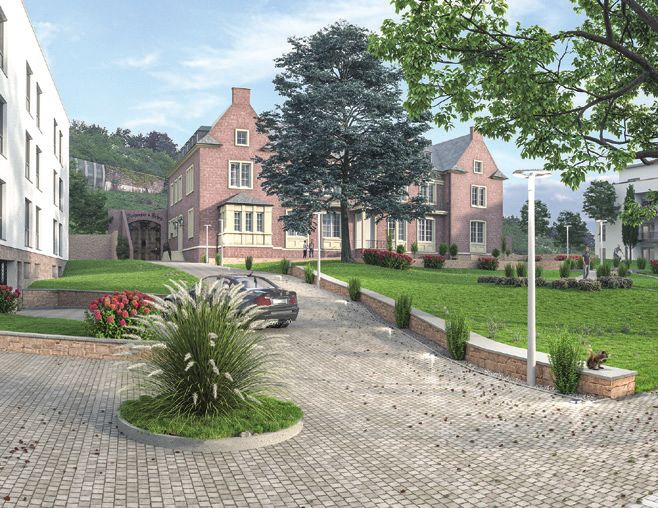
PATRIZIA AG

hotels or alternative ways of living, to
industrial and urban logistics — a whole
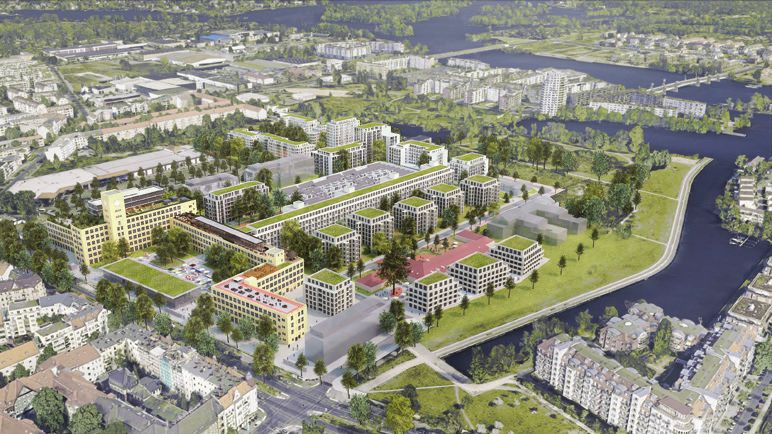
                                                                                  CAROSSA QUARTER: CREATING AN 1,800-UNIT
host of property types, all driven by
different trends and drivers, some of                                               “BETTER LIVING” COMMUNITY IN BERLIN
them correlated, and others not. That’s
interesting from a portfolio construction                                                                                                   In May 2021, on behalf
and diversification perspective.                                                                                                            of its institutional clients,
                                                                                                                                            PATRIZIA AG took a majority
What would you say are the main drivers
                                                                                                                                            90 percent stake in a new
for this increase in alternatives?
                                                                                                                                            transformational residential
The future-proof portfolio in the United                                                                                                    development in the Carossa
States is quite diverse compared with                                                                                                       Quarter, located in Berlin’s
20 years ago, and this is driven by                                                                                                         Spandau district. Spandau is
demographics, urbanization, as well as                                                                                                      a rapidly improving locality in
tech and digital. Cell towers and data                                                                                                      Berlin that will benefit from the
centers were among the key drivers of                                                                                                       redevelopment of the former
the push into alternative property types;                           Tegel airport into a new technology center, the Urban Tech Republic, and further investments
they may plateau now, and the next leg                              from tech companies such as Siemens.
of growth will probably be led by other                                    On completion in 2025, the approximately 10-hectare (25-acre) freehold site, which
property types. We think future growth                              has been rezoned from industrial to residential, will be a waterfront city quarter with views
will be underpinned by ESG, in terms of                             across the Havel river, delivering 1,800 living units comprising traditional housing, as well as a
making sure you cater to the needs of                               significant proportion of micro-living, senior-living, co-living and affordable housing. PATRIZIA has
                                                                    commenced construction with its local development partner, Kauri Cab, and this 125,000-square-
tenants thinking of energy efficiency and
                                                                    meter (1.3 million-square-foot) net development is projected to have a gross development value
well-being, but also by impact investing,
                                                                    (GDV) of approximately €750 million ($891 million) and involves the creation of an entirely new
in terms of delivering social infrastructure
                                                                    neighborhood with beneficial shared community facilities in one of Europe’s most dynamic cities.
that cannot necessarily be provided by                                     The Carossa Quarter will be built to DGNB Gold Standard for sustainability, with all
local authorities or governments. There                             communal energy supplied by onsite rooftop solar panels. However, it is the integration of
is a role for institutional investors to                            approximately 5,000 square meters (53,820 square feet) of commercial shared facilities in the
come in here.                                                       residential development that will set new social and environmental standards for such a major
After the GFC, demand in the United                                 development. The quarter will incorporate a variety of tenant facilities and communal space
States emerged for tech-driven real                                 designed to create a better social and environmental place, including co-working offices, guest
estate, as well as for stable income                                rooms, fitness facilities, bike maintenance and repair rooms, a DIY workshop, package receipt
that could be achieved by investing in                              and sending desk, e-mobility facilities, kindergarten, and even canoe rental.
property types that had strong tailwinds
and a yield premium from which they
could benefit from for a long period.                      huge tailwinds of 4G — 10 years ago,                          to downsize, but don’t want to go into
Meanwhile, the oversupplied office                         we were going from 3G to 4G, and                              a standard nursing home. They are still
and, to some extent, retail sectors                        that really pushed the demand for                             quite active, and they are looking for a
got less attention. Investors saw the                      technology-driven real estate.                                community.
value of using both diversification and                    Aging populations have also been a real                       Looking ahead in Europe, we see the
return-enhancing strategies, which                         estate driver in the United States and                        knowledge economy as a driver —
they probably found in cell towers                         Europe. There is demand in senior living                      for example, with the recognition that
and data centers, because of the                           from couples or individuals that need                         student housing has been left as an aside
                                                                                                                         in most of continental Europe. Student
Figure 1: U.S. alternatives represent more than 43% of the invested stock in 2020                                        housing is rapidly becoming its own asset
Cell towers, data centers, net leases and healthcare have been the main drivers of alternatives.                         class. In all, there is a significant demand-
100%
90%
                                                                                                                         supply imbalance in favor of these more
80%
                                                                                                                         alternative sectors, as opposed to the
70%
                                                                                                                         traditional four.
60%                                                                                                                      Do you believe the path forward for
50%                                                                                                                      Europe is that these alternative assets
40%                                                                                                                      classes will become more attractive to
30%                                                                                                                      investors than traditional real estate?
20%                                                                                                                      As a whole, yes, there will be strong
10%                                                                                                                      growth in new property types. But to the
 0%                                                                                                                      question, will these be the same as those
       2000 2001 2002 2003 2004 2005 2006 2007 2008 2009 2010 2011 2012 2013 2014 2015 2016 2017 2018 2019 2020
           Cell Towers              Data Centers             Net Lease & Gaming         Self-Storage
                                                                                                                         that we saw in the United States? The
           Healthcare               Hotels                   Other                      Industrial / Logistics           answer is no. Are the tailwinds and the
Sources: PATRIZIA AG, Green Street, NCREIF, Nareit. Information as of March 30, 2021.                                    factors the same? Probably, but the mar-

                                                                   AMERICAS | 2 | 2021
PATRIZIA AG

ket structure in Europe is quite different.             What are some of the other challenges         think about which investment structure
Europe is not just one large country where              an investor might face who was looking        to use as an investor. Do you go
you can scale. A lot of these alternative               to invest in alternative property types in    through a separate account? Do you
property types need platform investing.                 Europe?                                       invest in a fund? Or do you do it
They are complex; they need special tal-                The first challenge would be choosing         yourself? We would say, find the right
ent and skillsets to even get access to the             which property type you wanted to             partner that can source, access and
product and then to manage the proper-                  invest in and finding the appropriate         manage these assets.
ties appropriately and de-risk them.                    access route. The fact that that route        What do you think makes PATRIZIA the
In the United States, you can easily scale              doesn’t exist through the listed sector       right partner?
your strategy, whereas in Europe, each                  in Europe today, as it does in the            First, experience. For example, we
market is quite different. It starts with,              United States, means you have to pick         have invested in residential platforms
who owns those assets today, and who                    a partner who can provide access to the       in scale; repositioned, enhanced and
is going to be the tenant and occupier                  product. Often you need to source the         optimized staff management; and
in the future? That may vary, country                   product very early, and many of these         optimized occupancy, and, by that, I
by country or even city by city, so you                 alternative niche property types need to      mean thousands of apartments. We
need people on the ground to help you                   be built or go through an active asset        have also used some of our capital
map out the opportunities and scale your                repositioning.                                pools to dip into emerging property
investments. Regulation can also vary                   For instance, we are thinking of              types to acquire knowledge, and we
from country to country for, say, nursing               converting ailing hotels into senior-         have joint-ventured with experts in each
homes, data centers, or the cell towers                 living assets or converting an old            field. Now we are gaining confidence
that we have seen represent a huge                      factory plant into new urban quarters,        and we are hiring the resources and the
chunk of the alternatives in the United                 as we are doing in Spandau in Berlin.         expertise internally to be able to scale
States. We probably would not have the                  There was an old airport in Berlin to         in alternatives. We are hiring specialists
planning consent in many countries in                   the northwest that is now closed, and         in data centers, flexible offices, hotels,
Europe for huge towers because of the                   a new international airport has now           senior living, medical offices and
urban regimes. We are talking about 500                 been opened to the southeast of the           healthcare.
million inhabitants living in maybe half                city. This means there is land that can       We have had a social healthcare fund
the space of the United States, which has               be reused in that northwestern part of        in Germany for several years. It is
360 million inhabitants, so the density of              Berlin, and we have just bought, on           doing very well, and we think there
occupation of the space in Europe and                   behalf of our clients, a huge site that       is now perhaps a continental Europe
the competition for that space differs                  we completely repositioned to include         or full European play to execute with
from that of the United States.                         alternative living. A third challenge is to   this strategy. We have the scale,
                                                                                                      knowledge and experience — and
                                                                                                      the willingness — to do this at a
                                                                                                      regional level, and we acknowledge
    CONVERTING A HISTORIC LISTED WINERY INTO A STYLISH                                                that the lessons we have learned from
           SENIOR-LIVING SOCIAL CARE FACILITY                                                         our existing plan — from taking over
                                                                                                      platforms, managing them, through
                                                          PATRIZIA, on behalf of PATRIZIA Social      to selling them — give us a strong
                                                          Care Fund III, signed a 20-year-plus        competitive advantage, in addition to
                                                          lease with leading care operator Advita     our 900 people on the ground.
                                                          for a community of 46 assisted-living       In the United States, COVID-19 seemed
                                                          units, 12 shared apartments, 20             to accelerate existing trends. What are
                                                          intensive-care beds, and 40 day-care        you seeing in Europe in terms of the
                                                          beds. Located in the romantic Nahe          pandemic’s impact?
                                                          valley in Bad Kreuznach, 80 kilometers      We see similar patterns in terms of
                                                          (50 miles) southwest of Frankfurt, a        acceleration of trends. One of those
                                                          region known for its health resorts and     is that real estate is becoming more
                                                          vineyards, the impressive refurbished       operational. It requires more hands-on
                                                          listed building of the former Anheuser-     management. When you manage
   Fehrs winery is complemented by four new buildings on the site. With an intensive-care             retail assets that are facing headwinds,
   center, shared apartments, day-care facility and assisted living, the site offers a wide variety   you need to get your hands into the
   of living and care solutions, as well as a restaurant and common areas. PATRIZIA invested          operations more, accept more flexible
   approximately €250 million ($297 million) into 13 properties in Germany in 2020, on behalf         conditions and even leases, and work
   of the fund, and closed on a 5,000-square-meter (53,820-square-foot) assisted-living               closely with your tenants — because if
   property in Amsterdam in June 2021, bringing the total portfolio value to approximately            your tenant thrives, you thrive with your
   €360 million ($427 million) across 19 assets.                                                      tenant. You can’t just go out and find
                                                                                                      another tenant.

                                                        SPONSOR INTERVIEW | 3 | 2021
PATRIZIA AG
Another trend is the resilience of a select It will likely take a little more time to A second way ESG standards intersect
number of happy few property types, get wide acceptance around some with alternatives is that landlords and
one of them being residential and the of the more tech-oriented property managers, such as PATRIZIA, can have
other being industrial and logistics — types. For digital, the execution is a a key role in both mastering the energy
in particular, the urban logistics and bit trickier, and it is very specialized. efficiency of buildings in the common
the emerging logistics property types. There are questions around changes in areas and inducing tenants to pick
Cold storage, self-storage, etc., have technology that could make some of renewable energy for their electricity.
emerged from being very niche or edgy these assets obsolete more quickly than At PATRIZIA, we’ve been doing this
to becoming more mainstream. one may think, and there is also the massively in our residential portfolio
energy footprint that raises questions. over the past few years.
A third trend, which has not yet been
resolved, is a paradigm change about The infrastructure around energy and The third element is that we can do a
urbanization — whether this big technology is one where we see massive lot to enhance the amenities and well-
urbanization trend that we have seen investment opportunities from a risk- being within the buildings we manage.
will continue or pause or reverse. We adjusted return angle, but scalability still In Germany, the United Kingdom
think it has paused, but that it will not needs to be proven in Europe. and other countries where we are
reverse. Throughout the pandemic we developing residential and alternative
How do ESG factors interrelate with
have used our data intelligence tools living, we are now factoring in elements
some of these alternative property types?
to capture every single apartment and such as communal gardens, driverless
If you speak to people around Europe, transportation, bicycles and DIY facilities
house that was on offer around Europe,
one of their key concerns is access to to allow tenants to customize their flats.
for sale or rent, to capture trends and
good-quality, well-amenitized residential The Berlin Spandau redevelopment is a
kinks. And the only city where we have
in the most attractive cities — from great example of this. We are focused
seen the urban population caving is
Dublin all the way to Munich, Berlin, on tenant well-being and making sure
inner-city London. All other cities we
Paris, Madrid and Amsterdam. We are that, whatever we build and whatever
looked at in Europe have exhibited
not building enough residential that is we manage, we can improve the carbon
stable or heightened residential
affordable for the median household footprint, but also the air quality and any
attractiveness.
in many cities, so from an impact- other element that impacts the well-
Which alternative property types offer investment perspective, this is a massive being of whomever occupies or uses the
the right combination of performance opportunity. buildings we manage.
and scale for investors in Europe to move
the needle in the next decade?
In terms of offering the best risk-adjusted
returns, scalability and diversification
potential, we think alternative living is CONTRIBUTOR
here to stay. Investor acceptance is higher Mahdi Mokrane
because these properties are adjacent to Head of Investment Strategy & Research
investments that investors probably have M +44 207 761 3420
exposure to. They readily understand
Mahdi.Mokrane@patrizia.ag
that, while the dynamics may be slightly
different, they are not too difficult to
understand and you don’t need to be an CORPORATE OVERVIEW
absolute specialist to benefit from these With 24 offices globally, PATRIZIA AG has been active as a real estate investment
trends. We see alternative living as very manager since 1984. The firm manages €47.0 billion ($57.0 billion) of assets for
scalable on a European basis. more than 400 institutional clients in the residential, office and retail sectors, as
Senior living, or best-aged living as we well as in the sphere of senior living, hospitality and logistics real estate across the
like to call this niche, is pan-European, risk spectrum.
even though some cities may be more
attractive than others. Student housing,
CORPORATE CONTACT
in terms of scalability, comes in a second.
And then we have co-living, which is Robert Bilse
very attractive, and offers a solution to Head of North America, Capital Markets
housing inaffordability and access to M +1 973 868-0558 | Robert.Bilse@patrizia.ag
residential in the primary, more attractive
cities, but that is a smaller, less scalable
www.patrizia.ag
segment. Healthcare is readily scalable as
an investment opportunity.
Copyright © 2021 by Institutional Real Estate, Inc. Material may not be reproduced in whole or in part without the express written permission of the publisher. This article presents
the author’s opinions reflecting current market conditions. It has been prepared for informational and educational purposes only and should not be considered as investment advice
or as a recommendation of any particular security, strategy, investment product or offer. Past performance is not necessarily indicative of future performance.
AMERICAS | 4 | 2021You can also read


