GENDER EQUALITY IN PUBLIC ADMINISTRATION - United Nations Development Programme
←
→
Page content transcription
If your browser does not render page correctly, please read the page content below
Empowered lives.
                                       Resilient nations.

United Nations Development Programme

GENDER EQUALITY IN
PUBLIC ADMINISTRATION
Copy Editor: Julia Stewart

Design: Phoenix Design Aid

Cover Image: UNDP

UNDP is the United Nations’ global development network advocating for change and connecting countries to
knowledge, experience and resources to help people build a better life. On the ground in 177 countries and
territories, UNDP offers global perspective and local insight to help empower lives and build resilient nations.

United Nations Development Programme
One United Nations Plaza
New York, NY 10017, USA

Website: www.undp.org/gepa
Email: gepa@undp.org
Twitter: @UNDPGEPA @UNDP
UN Teamworks Space: https://undp.unteamworks.org/login?destination=node/17098

Copyright © 2014 UNDP
All rights reserved. The opinions, analyses and recommendations contained in this document do not necessarily
reflect the opinions of the United Nations Development Programme, its Executive Board, or Member States.
CONTENTS
FOREWORD............................................................................................................................................................................ 7
INTRODUCTION.................................................................................................................................................................... 8

PART ONE: MAIN TRENDS, CHALLENGES AND BARRIERS...........................................................................................12
1. Key trends in women’s participation in public administration...........................................................................12
   A. Where are the women in public administration?................................................................................................................................... 12
   B. Women’s participation and decision-making in local governments.......................................................................................... 15
   C.	Lessons learned from women’s participation and decision-making in other areas of
       public life and the private sector...................................................................................................................................................................... 15
2. Main barriers to women’s equal participation in public administration..........................................................17
   A. Gaps in adoption and implementation of enabling legal and policy frameworks........................................................... 18
   B. Discriminatory and unsupportive organizational cultures within public administration............................................. 20
   C. Gaps in data and analysis....................................................................................................................................................................................... 25
   D. Weak gender mainstreaming in public administration reforms................................................................................................... 25
3. Context-specific challenges.......................................................................................................................................25
   A. Post-conflict settings................................................................................................................................................................................................ 25
   B. Economic crisis and shrinking public administration.......................................................................................................................... 27
   C. Subnational levels...................................................................................................................................................................................................... 28

PART TWO: POLICY AND PROGRAMMING APPROACHES...........................................................................................29
1. Legislative and policy frameworks that ensure women’s equal participation................................................29
   A. National constitutions.............................................................................................................................................................................................. 30
   B. National laws and policies..................................................................................................................................................................................... 31
   C. Laws and policies providing for temporary special measures....................................................................................................... 32
   D. Laws and policies to combat sexual harassment................................................................................................................................... 34
2. Enabling environments for institutional and cultural change............................................................................35
   A. Research, data and gender analysis................................................................................................................................................................ 35
   B. Recruitment, retention and promotion........................................................................................................................................................ 36
   C. Capacity building and professional development................................................................................................................................. 38
   D. Work-life policies......................................................................................................................................................................................................... 39
   E. Parental leave................................................................................................................................................................................................................ 40
   F. Incentives for institutional change and accountability mechanisms........................................................................................ 42
   G. Networking and mentoring................................................................................................................................................................................. 42
3. Positive synergies with the broader gender equality agenda............................................................................43
4. Context-specific approaches.....................................................................................................................................45
   A. Post-conflict settings................................................................................................................................................................................................ 45
   B. Economic crisis and shrinking public administration.......................................................................................................................... 47
   C. Subnational levels...................................................................................................................................................................................................... 48

                                                                                                                          UNDP Global Report on Gender Equality in Public Administration 3
PART THREE: KEY RECOMMENDATIONS..........................................................................................................................49
           1. Strengthen constitutional, legislative and policy frameworks...........................................................................51
           2. Promote institutional change within public administration..............................................................................52
               A. Challenge and reform the overall workplace culture in public administration................................................................... 52
               B. Implement supportive human resources policies................................................................................................................................. 54
               C. Reform performance evaluation processes............................................................................................................................................... 54
               D. Promote a work-life balance for women and men................................................................................................................................ 55
               E. Support capacity building, training and professional development for women............................................................... 55
               F. Establish and support women’s civil servants networks and mentoring................................................................................ 55
               G.	Strengthen available data and improve research to inform evidence-based programming,
                   policy and advocacy................................................................................................................................................................................................. 56
           3.	Make better linkages between women’s equal participation and leadership in
               public administration with the broader gender equality agenda......................................................................57
               A.	Support women’s education and preparedness for civil service careers, including a focus on
                   young women.............................................................................................................................................................................................................. 57
               B. Develop national gender equality plans with concrete strategies and implementation mechanisms............... 57
               C. Strengthen national oversight, monitoring, evaluation and accountability......................................................................... 58
               D. Support networks and multi-stakeholder platforms to exchange knowledge and experience.............................. 58
               E. Promote women’s visibility and gender equality in traditional and social media.............................................................. 58
           4. UNDP’s role and added value: key strategic entry points....................................................................................59
               A. Support data collection and analysis to inform policy, programming and advocacy.................................................... 59
               B. Leverage UNDP’s convening power to build strong global, regional and national partnerships............................ 60
               C.	Use UNDP’s expertise and extensive global presence to promote policy and programming
                   at the country level.................................................................................................................................................................................................... 60
               D. Support greater organizational readiness................................................................................................................................................... 61

           CONCLUSION.......................................................................................................................................................................62
           ANNEX 1: WORKING DEFINITIONS...................................................................................................................................64
           ANNEX 2: SOURCES FOR TABLE 1....................................................................................................................................66
           ANNEX 3: BIBLIOGRAPHY AND DOCUMENTS CONSULTED.........................................................................................68

4 UNDP Global Report on Gender Equality in Public Administration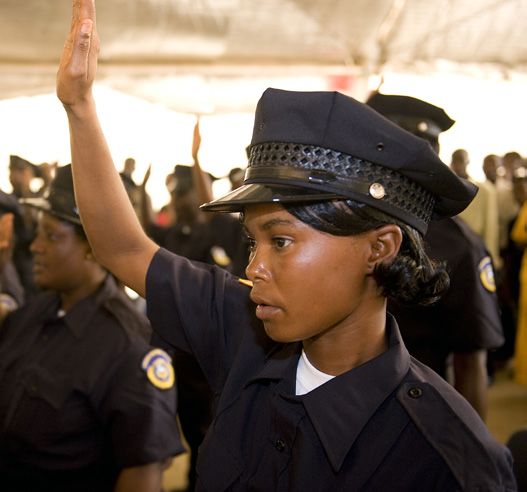
LIST OF ACRONYMS AND ABBREVIATIONS
CEDAW       Convention on the Elimination of All Forms of Discrimination against Women

ECOSOC 	United Nations Economic and Social Council

GDP	Gross Domestic Product

GEPA	Gender Equality in Public Administration (UNDP Initiative)

IMF	International Monetary Fund

ILO	International Labour Organization

IPU	Inter-Parliamentary Union

OECD	Organisation for Economic Co-operation and Development

SADC	Southern African Development Community

SEESAC	South Eastern and Eastern Europe Clearinghouse for the Control of
        Small Arms and Light Weapons

UNDAF	United Nations Development Assistance Framework

UNDP	United Nations Development Programme

UNESCO      United Nations Educational, Scientific and Cultural Organisation

UNFPA	United Nations Population Fund

UNIFEM	United Nations Development Fund for Women

UN WOMEN United Nations Entity for Gender Equality and the Empowerment of Women

                                                         UNDP Global Report on Gender Equality in Public Administration 5
ACKNOWLEDGEMENTS
           This report was prepared as part of the first phase of a new United Nations Development Programme (UNDP)
           global initiative on Gender Equality in Public Administration (GEPA). It is a joint effort of the Gender Team and
           Democratic Governance Group in UNDP. Publication of the report took place under the leadership of Randi
           Davis, Director, a.i., of the Gender Team, and Patrick Keuleers, Director, a.i., of the Democratic Governance
           Group.

           The report was co-authored by Suki Beavers and Noëlla Richard. Research coordination and contributions
           were provided by Soma Chakrabarti Fezzardi (consultant). The report builds on findings from thirteen case
           studies also prepared as part of this initiative, and on consultations, interviews, literature and desk reviews.
           Substantive comments and inputs were received from UNDP colleagues in regional bureaus, country offices
           and regional service centres. In addition, the publication benefited from the valuable insights, advice and
           support provided by representatives of national and subnational governments, academia, members of non-
           governmental organizations and women’s networks and caucuses who have been contacted in relation to the
           GEPA case studies and report.

           We would like to particularly thank the following people who graciously peer reviewed this publication
           or provided comments, inputs or research support: Alia Al Dalli, Diego Antoni, Nurgul Asylbekova, Sylvie
           Babadjide, Julie Ballington, Bojana Balon, Klelija Balta, Lopa Banerjee, Patricia Barandun, Pascaline Barankeba,
           Amber Bath, Fiona Bayat, Ernesto Bautista, Ruth Beeckmans, Christine Bendel, Gerardo Berthin, Neus Bernabeu,
           Nina Bhatt, Shipra Bose, Toni Brodber, Sarah Buchanan, Emmanuel Buendia, Flaminia Bussacchini, Sofie
           Carsten Nielsen, Irene Cocovi Mensah Azagandji, Raphael Crowe, Carmen de la Cruz, Gillian Chalmers, Maria
           d’Agostino, Diana Delamer, Hilde Deman, Danijela Djurovic, Awa Diouf, Vesna Djuteska-Bisheva, Nanditta
           Dutta, Faiza Effendi, Karima El Korri, Amaly Kowlessar, Esther Eghobamien, Noha El Mikawy, Regina Gallego,
           Barbora Galvankova, Alejandra Garcia, Anika Gartner dos Santos Camilo, Christiana George, Kim Henderson,
           Jane Hodge, Won Young Hong, Sabrina Hoque, Lena Hothes, Maia Jaliashvili-Tushuizen, Tabu Jimmy, Brian
           Kagoro, John Mary Kauzya, Jamshed Kazi, Liisamarie Keates, Lea Kanthoul, Aarushi Khanna, Antje Kraft,
           Sudarsana Kundu, Sookhee Kwak, Jamila Ibrahimova, Entela Lako, Eric Lampertz, Irman Lanti, Henrik Fredborg
           Larsen, Ciara Lee, Krenar Loshi, Naisola Likimani, Sarah Lisenbee, Ana Lukatela, Pelle Lutken, David Ma, Marcella
           Macauley, Carole Maisonneuve, Siphosami Malunga, Coumba Mar Gadio, Magdy Martínez-Solimán, Ritu
           Mathur, Phil Matsheza, Paula Mohamed, Amel Mohammed, Myriam Mendez-Montalvo, Evy Messell, Roohi
           Metcalfe, Koh Miyaoi, Gloria Mugambe, Jean Munro, Sheila Ngatia, Anne-Colette Ngo Mbock, Melina Nathan,
           Geraldo Noto, Gerard Ortega, Jasmina Papa, Toril Pedersen, Shelly L. Peffer, Kirsten Peirens, Bory Pen, Rany
           Pen, Minister Ing Kantha Phavi, Vanessa Pichardo, Alvaro Pinto, Auxilia Ponga, Komila Rakhimova, Annemarie
           Reerink, Valentina Resta, Marcela Rios, Swairee Rupasinghe, Hagit Sarid, Patricio Savio, Leakhena Sieng, Jamila
           Seftaoui, Angelica Serna, Pradeep Sharma, Yuliya Shcherbinina, Diane Sheinberg, Emira Shkurti, Emily Siu,
           Louise Sperl, Nina Strandberg, Jelena Tadzic, Naoko Takasu, Jocelyne Talbot, Pauline Tamesis, Adama Thorlie,
           Harald Thorud, Alessandra Tissot, Davaadulam Tsegmed, Silvia Vaca Sotomayor, Isikeli Valemei, Patrick Van
           Weerelt, Elena Volpi, Dirk Wagener, Barbara Watson, Incken Wentorp, Yvonne Wolo, Virginia Varela and Felix Ye.

6 UNDP Global Report on Gender Equality in Public Administration
FOREWORD
Gender equality is both an essential development goal in its own right and a driver of human development.
International law recognizes that everyone has a right to participate in public life, but it remains an ongoing
challenge to achieve women’s equal participation, especially in decision-making. The importance of advancing
women’s leadership in politics has continued to gain traction. Although much remains to be done, advances are
being made slowly but surely. Unfortunately, less attention and support has been given to promoting women’s
leadership in public administration.

In response, UNDP developed a joint research and policy development initiative titled Gender Equality in Public
Administration (GEPA) to help fill this gap. This global report reflects extensive research based on available national
data, and provides analysis of the obstacles in the way of women’s equal participation and decision-making in
public administration. It highlights examples of approaches which can work, and offers recommendations for
further action.

A critical mass of women in public administration, in particular in senior decision-making positions, is important
for equity reasons and because it brings more women’s perspectives to policy and other discussions. Positions in
public administration may also be among the few available or ‘acceptable’ employment opportunities for women,
making it all the more important that women have a fair chance of competing for them.

This report will be an important resource for governments, public administrations, United Nations agencies,
development partners, academic institutions, civil society and women’s organizations. We hope that it be a
catalyst for policy and programming designed to accelerate women’s equal participation and leadership in public
administration and beyond.

Helen Clark
UNDP Administrator

                                                                     UNDP Global Report on Gender Equality in Public Administration 7
INTRODUCTION

           Public administration is the bedrock of government and the central instrument through which national policies
           and programmes are implemented. In an ideal world, public administration is guided by principles of fairness,
           accountability, justice, equality and non-discrimination, and serves as a model of governance for society which
           includes the promotion of gender equality and women’s empowerment in the civil service workforce.

           However, globally, this is not yet the reality. Instead of being a driving force behind the implementation of
           internationally-agreed goals on gender equality and human rights standards and principles, in many developed
           and developing countries, public administration often remains a patriarchal institution, perpetuating gender-
           biased traditions, attitudes and practices. Women do not yet participate equally in public administration,
           especially in leadership and decision-making roles.

           The target of a minimum of 30 percent of women in leadership positions, originally endorsed by the United
           Nations Economic and Social Council (ECOSOC) in 1990 and reaffirmed in the Beijing Platform for Action in 1995,1
           is being approached in many public administrations and even surpassed in some. Nevertheless, while progress
           is being made in terms of total numbers of women in public administration, both glass ceilings and glass walls
           continue to present challenges to women’s equal participation in decision-making positions.

           A fundamental argument for increased representation of women in public service is that when the composition of the
           public sector reflects the composition of the society it serves, government will be more responsive and effective. Thus,
           closing gender gaps in public administration is important to ensuring truly inclusive development and democratic
           governance and helps to restore trust and confidence in public institutions and enhance the sustainability and
           responsiveness of public policies.2 It is a critical policy issue in both developing and developed countries.3

           Women’s equal participation in public administration and decision-making and can also be viewed as a necessary
           condition for women’s interests to be fully taken into account and properly addressed. According to the 2011
           Human Development Report,4 analysis shows how power imbalances and gender inequalities at the national level
           are linked to unequal access to clean water and better sanitation, impacts on land degradation, etc.

                                                                                                     Without a critical mass of women, public
                                                                                                     administration is not tapping into the full potential of
                       (1) Everyone has the right to take part in
                                                                                                     a country’s workforce, capacity and creativity. Women
                       the government of his country, directly or
                                                                                                     generally represent more than half of the population.
                       through freely chosen representatives.
                                                                                                     As public administration is an important employer in
                       (2) Everyone has the right of equal access
                       to public service in his country.                                             many countries (and in certain cases may be the only
                                                                                                     available or ‘acceptable’ employment opportunity for
                       - Article 21, Universal Declaration of                                        women) equal participation in public administration
                       Human Rights                                                                  can have a significant impact on women’s economic
                                                                                                     empowerment.

           1.. ECOSOC Report E/1990/90.
           2. Quick Entry Points to Women’s Empowerment and Gender Equality in Democratic Governance Clusters, Primers in Gender and Democratic Governance, UNDP (2007).
           3. OECD, “Women, Government and Policy Making in OECD countries: Fostering Diversity for Inclusive Growth” (2014).
           4. UNDP, Human Development Report 2011, Sustainability and Equity: A Better Future for All.

8 UNDP Global Report on Gender Equality in Public Administration
Compelling cases have been made that greater
equality and gender parity in managerial and
                                                                                              It is very important…for women’s
leadership positions in politics as well as the private                                       political participation at all levels and
sector leads to superior competitiveness due to                                               representation in public administrations
higher performance and productivity. The World                                                to be strengthened so that they can
Economic Forum’s Global Gender Gap Report 2013                                                have a strong voice in the setting of
explains how crucial it is for the competitiveness of                                         development policy and priorities
countries and companies to develop, attract and
                                                                                              - Helen Clark, UNDP Administrator, opening
retain the best talents, both male and female.5
                                                                                              remarks at the Democracy and Gender
                                                                                              Equality Roundtable, 4 May 20117
To date, governance reform programmes most often
have prioritized other important gender equality issues
- notably women’s participation in the political arena - and have tracked the status of women in political leadership
positions and encouraged policies and practices that promote women’s access to services. As far back as 1995,
the Beijing Platform for Action of the United Nations Fourth World Conference on Women urged the international
community to improve knowledge gathering on women in politics and to make better use of databases and
methodologies to follow women’s involvement in decision-making. The same level of attention has not been paid to
women in public administration; and unlike women’s political participation, no global tracking mechanism exists for
women’s participation and leadership in public administration. The qualitative and quantitative data that does exist
suggests there remains ample room for progress in gender equality in public administration.

Barriers to women’s advancement in public administration undermine the fundamental principles of equal
opportunity and social justice in society as a whole. Multiple strategies must be developed to break these barriers
down, and garner ongoing support and commitment from all stakeholders. Changing institutional and societal
cultures, including attitudes of men and women that hamper progress in gender parity, is a difficult but essential task.

                                                                                      UNDP has extensive knowledge and experience
                                                                                      with mainstreaming gender equality, women’s
             Increasing evidence shows that gender
             inequality is bad economics. It has been                                 empowerment in governance, supporting the design
             shown that businesses benefit from the                                   and delivery of gender-sensitive public services
             promotion of women in leadership, as                                     and advancing women’s equal participation in
             well as a gender balanced staff. Invest-                                 policymaking and politics. Promoting gender equality
             ment in gender equality, women’s em-                                     and women’s empowerment is central to the mandate
             powerment and decent work for women                                      of UNDP, which includes advocating for women’s
             is vital for improving economic, social                                  equal rights, combating discriminatory practices and
             and political conditions.                                                challenging the roles and stereotypes that generate
             - Facts on Investing in Decent Work for
                                                                                      inequality and exclusion. Gender equality issues
             Women, International Labour Organization,                                are intrinsic to UNDP’s development approach, as
             February 2008                                                            illustrated in the organization’s Strategic Plan6 and
                                                                                      the Gender Equality Strategy7 that accompanies it.

5. www.weforum.org/reports/global-gender-gap-report-2013.
6. “Changing with the World,” UNDP Strategic Plan (2014-2017).
7. ”The Future We Want: Rights and Empowerment,” UNDP Gender Equality Strategy (2014-2017).

                                                                                              UNDP Global Report on Gender Equality in Public Administration 9
In particular, UNDP has long recognized
                                                                                                                             the importance of a healthy public
                                                                                                                             administration for national development
                                                                                                                             and continues to implement an
                                                                                                                             impressive number of projects and
                                                                                                                             programmes in this field, including
                                                                                                                             providing technical assistance and
                                                                                                                             strengthening public service capacities,8
                                                                                                                             training for women public servants
                                                                                                                             and managers,9 research in support
                                                                                                                             of reform and innovation,         human
                                                                                                                             resource practices, inter-ministerial
                                                                                                                             coordination, etc. However, gender
                                                                                                                             equality dimensions have not always
                                                                                                                             been systematically integrated into
                                                                                                                             UNDP support for public administration
                                                                                                                             reform and there has not been sufficient
                                                                                                                             analysis of the impact, results and
                                                                                                                             lessons learned of these reforms on
              © UNDP South Sudan/Brian Sokol                                                                                 advancing gender equality within public
                                                                                                                             administration.10

           To respond to these ongoing gaps and challenges, UNDP launched a Global Initiative on Gender Equality in Public
           Administration (GEPA). The GEPA initiative has two key priorities: (i) supporting women’s empowerment and
           expanded participation and leadership in the executive branch of the state; and (ii) contributing to the availability
           of up-to-date information on gender equality in public administration and of evidence and analysis to facilitate
           informed policy and decision-making.

           Methodology and structure of the report
           Thirteen country case studies were conducted to reflect a variety of development contexts in all five regions
           where UNDP is operating and to provide evidence for identifying constraints to and enabling factors of promoting
           gender equality and women’s empowerment in public administration. The methodology for analysing the
           subject was developed and refined through extensive consultations with UNDP practitioners in the field, regional
           practice leaders, global policy advisors and external experts. Further consultations with UNDP country offices
           were carried out during the research on the case studies and follow-up reviews to identify relevant national
           policies, programmes and initiatives.

           In addition to the 13 in-depth country case studies, the global report was informed by a desk-based literature
           review, semi-structured interviews and consultations with United Nations colleagues and external experts.
           Although developing country contexts are highlighted in this publication, some examples are also drawn from

           8. In 2012, the total value of UNDP public administration support was US$ 384 million.
           9. E.g., Somalia’s Civil Service Institute was set up in 2005 with UNDP’s assistance and provided targeted support to women through short courses in women’s empower-
               ment.
           10. This gap was reflected in UNDP’s stocktaking exercise in 2010, which identified a lack of greater analysis of and attention to gender equality and parity issues in public
                administration programming. www.undp.org/content/undp/en/home/librarypage/democratic-governance/local_governance/overview-of-trends-and-develop-
                ments-in-public-administration---local-governance.

10 UNDP Global Report on Gender Equality in Public Administration
INTRODUCTION
UNDP GEPA Initiative Case Study Countries
ROMANIA
KYRGYZSTAN
MOROCCO JORDAN
BANGLADESH
MALI
MEXICO CAMBODIA
UGANDA SOMALIA
COLOMBIA BURUNDI
BOTSWANA
developed countries where similar challenges are faced or where innovative practices have been promoted.
Similarly, while the focus is on public administration, examples and good practices from others sectors are
featured when relevant.
The working definition of women in decision-making positions in public administration adopted by UNDP for
the report includes those women identified as being in non-elected decision-making or leadership positions in:
• recent reports of national governments (including reports to the Committee on the Elimination
of Discrimination against Women (CEDAW) and in responses to questionnaires for the review of
implementation of the Beijing Platform for Action after 15 years);
• public
administration reform strategies;
• gender
equality strategies and similar documents;
• civil
service censuses; and
• human
resource databases in ministries.
Where this information was not available, the report uses the participation of women at the level of Permanent
Secretary, Director General or nearest equivalent level as a proxy indicator.
The report is structured as follows:
- P art One presents an analysis of the trends, barriers and challenges to women’s participation
in decision-making positions.
- Part Two examines frameworks, policies and initiatives that can increase women’s presence in public
administration decision-making in various contexts.
- P art Three provides policy and programming recommendations to achieve gender equality and
gender parity in public administration, with a particular lens on decision-making levels.
UNDP Global Report on Gender Equality in Public Administration 11PART ONE: MAIN TRENDS, CHALLENGES AND BARRIERS
KEY TRENDS IN WOMEN’S PARTICIPATION IN
1 PUBLIC ADMINISTRATION
A. Where are the women in public administration?
As noted in the introduction, no comprehensive global baseline exists on women’s presence in public
administration. However, from the information that is available, it appears that, despite the diversity of countries
studied, women remain underrepresented overall in the top levels of public administration.
The picture created is of a mixed bag, with many hidden complexities. Some encouraging absolute numbers
of women in public service can be found, but not necessarily in the positions of greatest influence or across
all sectors uniformly. Women represent at least 30 percent of public administration in many countries, but as
Table 1 below illustrates, their participation appears to be highly variable, ranging from over 70 percent in
some countries (e.g., Ukraine with 75 percent) and as low as 12 percent in others (e.g., India).11 In addition, the
30 percent minimum target of women in decision-making positions lags sorely behind in most countries (see
column 3 in Table 1 below).
As the table reflects, some developing countries have made great strides in women’s participation in decision-
making positions in public administration. For instance, Costa Rica has reached 46 percent women in decision-
making positions, Botswana 45 percent and Colombia 40 percent. Progress can and is thus being made in many
countries; hence gender equality and gender parity can be a realistic goal for countries currently lagging behind.12
According to the Worldwide Index of Women as Public Sector Leaders recently developed by Ernst & Young,12
across the G20 major economies, women account now for around 48 percent of the overall public sector workforce,
but they still represent less than 20 percent of public sector leadership. Conversely, across the Organisation for
Economic Co-operation and Development (OECD) countries, women hold 65 percent of all administrative and
secretariat positions in central public administrations.1314
It is important to dig further into what the numbers reflect about women’s actual participation in public
administration. In many national contexts where numbers of women equal those of men in public administration
as a whole, women tend to be clustered in junior, less prestigious and lower paying positions and in those
traditionally considered to be ‘soft’ or feminized sectors, such as culture, education, health and tourism. In most
countries, women are underrepresented, if present at all, in sectors such as security, finance and planning, which
remain dominated by men. Such sectoral segregations, known as ‘glass walls,’ were also identified at the decision-
making level across all thirteen of the GEPA case studies.
11. The comparability of the data can pose challenges and disaggregated data is not always readily available.
12. www.ey.com/Publication/vwLUAssets/EY_-_Worldwide_Index_of_Women_as_Public_Sector_Leaders/$FILE/EY-Worldwide-Index-of-Women.pdf.
13. OECD (2014), Women, Government and Policy Making in OECD countries: Fostering Diversity for Inclusive Growth. www.oecd.org/gov/women-government-and-policy-mak-
ing.htm.
14. *All references to Kosovo in this report are made in the context of United Nations Security Council Resolution 1244 (1999).
12 UNDP Global Report on Gender Equality in Public AdministrationMAIN TRENDS, CHALLENGES AND BARRIERS
Table 1: Women’s Participation in Public Administration
Overall (percentage) Decision-making levels (percentage)
AFRICA
Benin 19 (2011) 22 (2012)
Botswana 52 (2012) 45 (2009)
Burundi - 12 (2010)
Cameroon 25 (2010) N/A
The Gambia 25 (2007) 20 (2007)
Mali 28 (2009) 15 (2009)
Nigeria 24 (2006) 22 (2006)
South Africa 56 (2011) 35 (2011)
Uganda 33 (2011) 22 (2011)
ARAB STATES
Jordan 46 (2010) 10 (2010)
Morocco 34 (2009) 15 (2009)
Oman 34 (2007) 8 (2007)
Somalia:
Somaliland 30 (2006) 0 (2012)
Puntland 23 (2011) 6 (2011)
Tunisia 41 (2011) 27 (2011)
ASIA PACIFIC
Afghanistan 20 (2009-10) 10 (2004-10)
Bangladesh 21 (2008-9) 14 (2010)
Cambodia 34 (2011) 18 (2011)
India 12 (2006) 10 (2009)
Indonesia 47 (2011) 8 (2011)
Nepal 15 (undated) 5 (2007)
Timor-Leste 28 (2010) 16 (2010)
Vanuatu 40 (2011) 18 (2003)
LATIN AMERICA AND THE CARIBBEAN
Chile 41 (2007-2009) 29 (2009)
Colombia 49 (2011) 40 (2011)
Costa Rica 42 (2012) 46 (2009)
Mexico 50 (2010) 29 (2011)
EUROPE AND THE COMMONWEALTH OF INDEPENDENT STATES
Albania 46 (2011) 24 (2011)
Azerbaijan 28 (2011) 23 (2011)
Croatia 45 (2011) 30 (2009)
Kazakhstan 58 (2009) 9 (2009)
Kosovo*14 36 (2011) 17 (2011)
Kyrgyzstan 42 (2010) 27 (2010)
Romania 64 (2011) 12 (2011)
Ukraine 75 (2008) 13 (2010)
Notes:
• Percentages have been rounded.
• Countries highlighted in bold are GEPA case study countries.
• See Annex 2 for sources.
UNDP Global Report on Gender Equality in Public Administration 13The UNDP GEPA Jordan case study found that “the number of women seems to decrease at the ministries that
are considered male ministries, such as the Ministry of Interior, where women represent only 13 percent of the
total number of the employees.”15 The situation is the same in Argentina, where ministries with the highest
proportion of female staff are education (65.5 percent) and social development (63.5 percent).16 In Kyrgyzstan,
over 40 percent of public administration posts were occupied by women, but those were concentrated in lower
and administrative positions and in the traditionally feminized sectors of health, education and social services. In
Colombia, the ministries with the highest ratio of women in upper management decision-making positions were
typically perceived as feminine spaces: education, culture, social protection and communications.17
Although exceptions do exist, globally women’s segregation by sector is a persistent pattern.18 Occupational
segregation is not limited to public administration in developing contexts. According to a 2006 paper, in the
United States, the “gender typing of women not only affects the types of occupations they pursue but also the
types of agencies they work for. The stereotype of ‘caring’ women results in women working in agencies that
provide services such as education and social services.” 19 Likewise, in the European Union, women ministers
and top government employees are generally occupying functions in ministries with socio-cultural functions. In
contrast, the economic sector has the lowest participation of women in the top two levels of civil servants.20 An
International Labour Organization (ILO) paper, Time for Equality at Work (2003), states, “while an anti-discrimination
legal model based on prohibiting discriminatory practices has proven successful in eliminating the most blatant
forms of discrimination, such as direct pay discrimination, it has encountered less success with the more subtle
forms, such as occupational segregation.”
Data collected at the national level also exposes gender bias in job and contract types. In terms of job type, women
generally occupy more administrative and support positions than professional positions (e.g., Timor-Leste21). After
women have joined administrative streams it can be hard for them to move into professional streams, further
reducing the likelihood that women will make it to and remain in decision-making positions. In addition, women
are also typically overrepresented among temporary and short-term contractual staff and less represented in
permanent positions.22 As permanent staff generally receives priority over short-term and contract staff, women
are again often detrimentally impacted and further disadvantaged, when it comes to training and development
for higher level positions. Across OECD countries, for instance, less than one percent of women employed part-
time are in top management jobs.23
15. GEPA Jordan Case Study, UNDP (2012).
16. Report on gender and human rights in Argentina (2005 – 2008): Participation of women in public management, Equipo Latinoamericano de Justicia y Genero (2009).
17. GEPA Columbia Case Study, UNDP (2012).
18. Exceptions are: in Europe, Bulgaria has achieved parity or over parity with women’s representation in the economy, infrastructure and social sectors. Poland, Romania,
Slovakia and Sweden also have the minimum recommended level of women’s participation (30 percent) at the top two levels of public administration in all sectors.
Source: More Women in Senior Positions - Key To Economic Stability and Growth 2009, European Commission (2010), p. 30.
19. “Unequal Pay: The Role of Gender,” Alkadry and Towers, Public Administration Review, November/December 2006, referring to Newman (1994) and Stivers (1993), www.
library.eiu.edu/ersvdocs/4371.pdf.
20. More women in senior positions - Key to economic stability and growth, European Commission (2010), pp. 61-62.
21. Women’s Participation in the Timor-Leste Civil Service in 2010, United Nations Integrated Mission in Timor-Leste (2010).
22. For example, in Mali in 2009 female contract employees outnumber men. 38 percent of contract staff are female against 28 percent for men. 70 percent of men in the
civil service are ‘absorbed’ full civil servants compared with just 60 percent for women. Source: National Public Service and Personnel Directorate (August 2010).
23. OECD, Women, Government and Policy Making in OECD countries: Fostering Diversity for Inclusive Growth (2014), Executive Summary, p. 12.
14 UNDP Global Report on Gender Equality in Public AdministrationMAIN TRENDS, CHALLENGES AND BARRIERS
B. Women’s participation and decision-making in local governments
Although this report pays particular attention to gender in decision-making positions at the national level, recent
data and analysis that reflect variations in patterns of women’s participation in local public administration is
worth highlighting. A recent UNDP Asia-Pacific Regional Centre publication shows that “for most people (…) local
governments are far more important arenas for matters having a direct impact on their livelihoods than national
parliaments, especially when local governments are responsible for the delivery of key services.” 24 In some countries
the rate of women’s participation is higher at the subnational level than in the central public administration.
Another UNDP publication on the presence of women in decision-making at the local level in Latin America and
the Caribbean25 shows that while there have been important gains in legislative subnational bodies (councils),
progress has been mixed in the executive subnational branch (mayors and governors). In 1998, five percent
of executive leaders at subnational levels in the region were women; by 2012, the proportion increased to 11
percent. If the same rate of increase is maintained, it would take approximately three decades to achieve a critical
mass (30 percent) of women in these posts. Likewise, the report found that the 30 percent minimum threshold
has not been achieved in decision-making positions in legislative branches of subnational governments.
More research would be required to determine whether or not current trends of decentralization in countries leads
to greater representation of women in subnational public administration (as distinct from elected positions).
C. Lessons learned from women’s participation and decision-making in other areas of public life
and the private sector
Decades of pushing for women’s greater participation in decision-making positions in public life has borne
some fruit. Advances in women’s leadership in
politics have benefitted from global attention,
development assistance, donor support, national
advocacy and other efforts. The Women in Politics
2012 report26 mapped the progress of women’s
political participation around the world and showed
that the number of elected women heads of state and
government had increased from eight in 2005 to 17 in
2012, with the number of women ministers increasing
from 14.2 percent in 2005 to 16.7 percent in 2012.
Scandinavian countries have the highest percentage
of women ministers at 48.4 percent, followed by the
Americas at 21.4 percent and sub-Saharan Africa at
20.4 percent. Nonetheless, according to the Inter-
Parliamentary Union (IPU), even if the improved © UNDP Ukraine/Internews
2013 rate of increase of the global average of women
24. W omen’s Representation in Local Government in Asia-Pacific: Status Report 2010, UNDP, p. 2.
25. www.regionalcentrelac-undp.org/images//stories/DESCENTRALIZACION/herramientas/Estudio%20Participacion%20Politca%20de%20Mujeres%20en%20el%20Ambi-
to%20Subnacional.pdf.
26. Women in Politics 2012, report produced by UN Women in conjunction with the Inter-Parliamentary Union.
UNDP Global Report on Gender Equality in Public Administration 15members of parliament (1.5 percent) continues, it
As a matter of principle, embracing gender will take at least 20 more years before gender parity
equality is the right thing to do. That would be reached. 27
should be reason enough. But there is also
plenty of research that shows that gender Gender gaps also continue to exist at decision-making
balance is critical for the effectiveness of levels in the private sector in both developed and
our work and our economies. developing countries. Despite gains in education and
labour force participation, considerable inequality
No matter what aspect the research
focuses on—women’s economic remains in terms of career progression. Women
engagement, risk taking in business, account for less than a third of senior managers in
management and leadership—the OECD countries, and only one woman for every 10
findings amount to the same thing. By not men gets to the boardroom.
fully engaging half of the population, we
all lose out. Recently, compelling arguments have been put
forward on the importance of promoting the
- Christine Lagarde, International Monetary
Fund (IMF) Managing Director, “Dare the presence of women in corporate boards and
Difference,” Finance & Development, June leadership positions in the private sector. The issue
2013, Vol. 50, No. 2 of women’s leadership in the private sector is gaining
momentum, fueled in large part by the burgeoning
field of research examining the relationship between
gender balance and financial performance. A key argument is that on average, across OECD countries, if female
labour force participation rates converged with those of men by 2030, there would be an overall increase of 12
percent in Gross Domestic Product (GDP).
Research also reflects that gender-balanced boards have better corporate governance.28 The European
Commission has published data showing that companies with the highest share of women on their boards have
had a 41 percent higher return on equity compared to companies with no women on their boards.29 The global
management consulting firm McKinsey & Company found that between 2005 and 2007 companies with the most
gender-diverse management teams had 17 percentage point higher stock price growth compared to the industry
average. Their average operating profit was almost double the industry average between 2003 and 2005.30 In
short, it appears that the participation of women on corporate boards is good for business.
The same type of global positioning, development support and research must be dedicated to advancing
women’s presence and leadership in public administration in order to reduce female underrepresentation.
Many synergies and lessons learned can be shared between public administration and the private sector. In
some countries, private sector initiatives are inspiring public administration to take action to advance women. In
others, public administration is leading the way. In Malaysia, for example, a 2004 government policy31 required at
27. IPU News Release (4 March 2014).
28. European Commission (November 2012). Impact Assessment on Costs and Benefits of Improving the Gender Balance in the Boards of Companies Listed on Stock Exchanges
(Staff Working Document 348 Final), p. 41.
29. European Commission (November 2012). Impact Assessment on Costs and Benefits of Improving the Gender Balance in the Boards of Companies Listed on Stock Exchanges
(Staff Working Document 348 Final), p. 41.
30. European Commission (2013). Women on Boards- Factsheet 1: The Economic Arguments, p. 2.
31. This effort was supported by UNDP, among others.
16 UNDP Global Report on Gender Equality in Public AdministrationMAIN TRENDS, CHALLENGES AND BARRIERS
least 30 percent participation of women at decision-
Regulatory pressure works. The cracks are making levels in the public sector. In 2004, women
starting to show on the glass ceiling. More represented 18.8 percent of decision makers at the
and more companies are competing to attract premier grade level in the civil service. By 2010, this
the best female talent. They know that if they number reached 32.2 percent. In 2011, the focus was
want to remain competitive in a globalised expanded to the private sector, supported by the
economy they cannot afford to ignore the adoption of a cabinet policy that requires at least 30
skills and talent of women. percent of board seats in Malaysian publically listed
- Viviane Reding, European Union Justice companies be held by women by 2016. Evidence is
Commissioner, European Union Press Release, growing that - similar to the benefits women bring
Brussels, 14 October 2013 to the political arena and private sector - increasing
the numbers of women public service providers
not only improves services for women, but improves service delivery for all, including men.32 More research is
required to gather data and experiences on the benefits that women’s equal participation in decision-making, as
well as the frontlines, brings to public administration.
2 MAIN BARRIERS TO WOMEN’S EQUAL PARTICIPATION
IN PUBLIC ADMINISTRATION
It is clear that public administrations around the world have not yet tapped the full talents and potential of women.
If public administration is to be representative of society and inclusive of women, viable pathways must exist for
women to enter and advance to leadership positions at all levels and in all sectors on an equal basis with men.
A growing number of women aspire to leadership on the same terms as men and have made the same choices
as their male counterparts, but they continue to confront obstacles.33 Even in countries where women have
equal access to education, increased representation in public administration, and in particular in decision-making
positions, is not always ensured.
Explanations for why women are under-represented in decision-making positions are often based on assumptions
about women’s career choices or lack of expertise. These common assumptions fail to take into account the
impact of systemic gender-based discrimination. There is no doubt that work-life balance considerations play an
important role in women’s career decisions, and are also increasingly becoming a concern for some men. Similarly,
individual capacities, competencies and choices do play a part in the career paths of both women and men and
their willingness and ability to take on responsibilities in both the private sphere and in professional life, but for
women, these are also influenced by broader, systemic socio-cultural gender-based constraints and constructs.
In Mexico, for example, more women than men complete their Bachelor Degrees, yet women’s participation in
Mexico’s Federal Public Administration leadership scheme has still not reached 30 percent.34 The situation is
similar in other parts of the world. A study on women’s representation in Asia’s private sector notes that a “lack
of education does not explain the scarcity of women in top jobs”.35 In Timor-Leste, an analysis of qualifications
32. Women as the Frontline of Service Delivery, Anuraha Josi, Institute of Development Studies, Sussex, expert paper prepared for UNIFEM (2010).
33. Women and Leadership – The State of Play and Strategies for Change, Barbara Kellerman and Deborah L. Rhode eds, Jossey-Bass (2007).
34 . GEPA Mexico Case Study, UNDP (2012).
35. Women Matter - An Asian Perspective, McKinsey & Company (2012), p. 3.
UNDP Global Report on Gender Equality in Public Administration 17suggests that women may need higher academic qualifications than men to reach the same top management
positions.36
Although findings on women’s and men’s career aspirations and expectations are mixed, gender differences emerge;
a survey of some 1,200 executives in various regions of the world found that substantially more women than men
reported lowering their career aspirations to accommodate personal and family concerns.37 In addition, female
executives were more than twice as likely as their male counterparts to delay marriage or child rearing to establish a
career, and 12 percent of women, compared with only one percent of men, decided not to have children.
Although continued efforts to improve women’s and girls’ access to education are obviously an important
foundational measure to advance women’s equal participation and decision-making, including in public
administration, other factors must also be taken into consideration. Although barriers and challenges vary across
regional, national, socio-cultural and political contexts, some common obstacles to women’s equal presence in
decision-making positions have been identified. Discussed below, these barriers and challenges exist both inside
and outside public administration, and are interlinked.
A. Gaps in adoption and implementation of enabling legal and policy frameworks
Comprehensive legislative and policy foundations are the first step toward gender equality and gender parity.
These need to be in line with international and regional frameworks and contain direct references to gender
equality in public administration, including in decision-making positions.
Legislation and policies must be grounded in
international norms and standards. The Convention
Commit themselves to establishing the on the Elimination of all Forms of Discrimination
goal of gender balance in governmental against Women (CEDAW),38 in particular, which is
bodies and committees, as well as in
binding on all state parties, calls for the systematic
public administrative entities, and in the
removal of any forms of overt discrimination and for
judiciary, including, inter alia, setting
the implementation of special measures to correct
specific targets and implementing
measures to substantially increase historical imbalances.
the number of women with a view to
achieving equal representation of women Article 1 of CEDAW defines discrimination as “any
and men, if necessary through positive distinction, exclusion or restriction made on the basis
action, in all governmental and public of sex which has the effect or purpose of impairing or
administration positions. nullifying the recognition, enjoyment or exercise by
women, irrespective of their marital status, on a basis
- Recommendations for governments,
the Beijing Platform for Action, 1995,
of equality of men and women, of human rights and
paragraph 190, (a) fundamental freedoms in the political, economic,
social, cultural, civil or any other field.” 39
36. Women’s Participation in the Timor-Leste Civil Service in 2010, United Nations Integrated Mission in Timor-Leste (2010).
37. ILO, Breaking Through the Glass Ceiling, p.47.
38. At the time of writing, only seven (7) United Nations Member States have not ratified CEDAW.
39. CEDAW article 2.
18 UNDP Global Report on Gender Equality in Public AdministrationMAIN TRENDS, CHALLENGES AND BARRIERS
The Beijing Platform for Action, agreed on by 189 countries, includes specific commitments by governments to
advance women’s full participation in public life, including in public administration.
Various regional agreements and protocols also incorporate equal participation in public decision-making.
The Southern African Development Community (SADC) Gender and Development Protocol, adopted in 2008,
provides that member states shall “endeavor to ensure that at least 50 percent of decision-making positions in
the public and private sectors are held by women including the use of affirmative action measures.”40 The Brasilia
Consensus41 document, adopted by 33 Latin American and Caribbean countries upon the conclusion of the 11th
Regional Conference on Women in Latin America and the Caribbean in July 2010, urged regional governments to
safeguard women’s rights and called for the broadening of the participation of women in decision-making and
the exercise of power in all spheres of public authority (see the box below).
The Brasilia Consensus commitments (2010) include:
- increase and enhance opportunities for the equal participation of women in making and
implementing policies in all spheres of public authority;
- adopt all necessary measures, including amending legislation and adopting affirmative policies,
to ensure parity, inclusion and alternation of power, in the three branches of government, in
special and autonomous regimes, at the national and local levels and in private institutions, in
order to reinforce the democracies of Latin America and the Caribbean from an ethnic and racial
point of view;
- contribute to the empowerment of indigenous women’s leaderships in order to eliminate existing
gaps and ensure their participation in decision-making, and respect the principle of free, prior and
informed consent in the design and implementation of national and regional public policies;
- encourage measures to ensure women’s access to decision-making and strengthen their
unionization, among others, in both urban and rural areas, in order to make further progress
towards equal opportunities and equal treatment for men and women in the workplace;
- encourage also the creation and strengthening of government machineries for policies on
women at the national and subnational level, endowing them with the necessary resources and
highest hierarchical status within the Government, in keeping with national contexts; and
- promote measures to increase women’s presence on corporate boards.
Despite these frameworks, often national legislation and policy continue to be discriminatory and have differential
impacts on women. In some cases, discrimination against women remains overt and direct. For example, public
administration statutes that use gender-insensitive language exist, with officials and employees referred to in the
masculine only. Numerous studies point out the use of gender-insensitive language in a number of codes.
40. www.sadc.int/files/8713/5292/8364/Protocol_on_Gender_and_Development_2008.pdf (Article 12 (1)).
41. www.cepal.org/mujer/noticias/paginas/6/40236/ConsensoBrasilia_ING.pdf.
UNDP Global Report on Gender Equality in Public Administration 19You can also read


