GENERAL PRACTICE FORWARD VIEW - #GPforwardview - APRIL 2016 - NHS England
←
→
Page content transcription
If your browser does not render page correctly, please read the page content below

GENERAL PRACTICE
   FORWARD VIEW APRIL 2016

           #GPforwardview
General Practice Forward View

Version number:      1

First published:     April 2016:

Classification:      Official

Gateway publication reference: 05116

This information can be made available in alternative formats, such as easy read or large print,
and may be available in alternative languages, upon request. Please contact 0300 311 22 33
or email: england.contactus@nhs.net

General Practice Forward View   3

Contents

Introduction: Simon Stevens                                 4
GP services for the future: Dr Arvind Madan                 6
Chapter 1: Investment                                     10
We will accelerate funding of primary care
Chapter 2: Workforce                                      16
We will expand and support GP and
wider primary care staffing
Chapter 3: Workload                                       26
We will reduce practice burdens and
help release time
Chapter 4: Practice infrastructure                        36
We will develop the primary care estate
and invest in better technology
Chapter 5: Care redesign                                  46
We will provide a major programme of
improvement support to practices
Conclusion                                                56

                                               #GPforwardview
44 General Practice Forward View

   Introduction

   There is arguably no more              “ The strength of British
   important job in modern                 general practice is its
   Britain than that of the family
                                           personal response to a
   doctor.
                                           dedicated patient list; its
   GPs are by far the largest              weakness is its failure to
   branch of British medicine. A           develop consistent systems
   growing and ageing population,          that free up time and
   with complex multiple health            resources to devote to
   conditions, means that personal                                               On workforce: pulling out all
   and population-orientated
                                           improving care for patients.          the stops to try to double the
   primary care is central to any          The current shift towards             growth rate in GPs, through
   country’s health system. As a           groups of practices working           new incentives for training,
   recent British Medical Journal          together offers a major               recruitment, retention and return
   headline put it – “if general           opportunity to tackle the             to practice. Having taken the
   practice fails, the whole NHS                                                 past 10 years to achieve a net
                                           frustrations that so many
   fails”.                                                                       increase of around 5,000 full
                                           people feel in accessing care         time equivalent GPs, aiming to
   So if anyone ten years ago had          in general practice.”                 add a further 5,000 net in just
   said: “Here’s what the NHS                                                    the next five years. Plus 3,000
   should now do - cut the share                                                 new fully funded practice-
   of funding for primary care and         So rather than ignore these real      based mental health therapists,
   grow the number of hospital             pressures, the NHS has at last        an extra 1,500 co-funded
   specialists three times faster than     begun openly acknowledging            practice clinical pharmacists,
   GPs”, they’d have been laughed          them. We need to act. This            and nationally funded support
   out of court. But looking back          document sets out exactly             for practice nurses, physician
   over a decade, that’s exactly           how. It contains specific,            associates, practice managers
   what’s happened. Which is why           practical and funded steps – on       and receptionists.
   it’s no great surprise that a recent    investment, workforce, workload,
   international survey revealed           infrastructure and care redesign.     On workload: a new practice
   British GPs are under far greater                                             resilience programme to support
   pressure than their counterparts,       On investment: by 2020/21             struggling practices, changes
   with rising workload matched by         recurrent funding to increase by      to streamline the Care Quality
   growing patient concerns about          an estimated £2.4 billion a year,     Commission inspection regime,
   convenient access.                      decisively growing the share          support for GPs suffering
                                           of spend on general practice          from burnout and stress, cuts
   A recent report on GP workload          services, and coupled with a          in redtape, legal limits on
   pressures by the Primary Care           ‘turnaround’ package of a further     administrative burdens at the
   Foundation and NHS Alliance said        £500 million. Investments in staff,   hospital/GP interface, and action
   this:                                   technology and premises, and          to cut demand on general
                                           action on indemnity and redtape.      practice.

   #GPforwardview
General Practice Forward View   5

On infrastructure: new rules to          Thanks go to the many GPs,
allow up to 100% reimbursement           other NHS professionals and
of premises developments, direct         patient groups who’ve helped
practice investment tech to              shape this urgent ‘to do’ list
support better online tools and          - including particularly our
appointment, consultation and            partners at the Royal College
workload management systems,             of General Practitioners, the
better record sharing to support         British Medical Association’s
team work across practices.              General Practitioners Committee,
                                         Department of Health, Health
On care redesign: support                Education England, the National
for individual practices                 Association of Primary Care,
and for federations and                  NHS Alliance, the Family Doctors
superpartnerships; direct funding        Association and in local CCGs
for improved in hours and out of         and Local Medical Committees
hours access, including clinical         right across England.
hubs and reformed urgent care;
and a new voluntary contract             Looking back over nearly seventy
supporting integrated primary            years, there have been key
and community health services.           moments in NHS history when
                                         the health service has stepped
One of the great strengths of            up to support and strengthen
general practice in this country         general practice and wider
has been its diversity across            primary care. Think: the New
geographies and its adaptability         Deal for GPs in 1966. Think:
over time. So one size will not fit      new contractual models in the
all when it comes to the future          1990s and 2000s. If properly
shape and work of primary care.          implemented, the wide-ranging
But in the round, this support           measures in this document may
package is likely to herald a            perhaps come to be seen as a
‘triple reinvention’ - of the clinical   similar inflexion point.
model, the career model, and the
business model at the heart of           But be that as it may, the vital
general practice. In his preface         thing is to roll our sleeves up, get
to this document Arvind Madan            practical, and together begin to
describes what this could mean           make a tangible difference, now,
from the practice and the patient        for practices and for our patients.
perspective.

                                         Simon Stevens
                                         Chief Executive, NHS England

                                                                                         #GPforwardview
66 General Practice Forward View

   GP services for the future:
   Dr Arvind Madan
   The public relies on general         Running the practice or having
   practice services for the health     a meaningful conversation
   and wellbeing of themselves          with staff is relegated to the
   and their family. It is one of       edges of the day. Almost every
   the great strengths of the           practice is struggling to balance
   NHS, and is recognised time          rising workload within tighter
   and again in international           financial constraints. Add to
   comparisons.                         this the strain of recruitment
                                        issues and it becomes easy to
   Over my 20 years as a GP             see why morale is so challenged.      to the wider sustainability of
   demand for appointments, and         Clinicians increasingly feel unable   the NHS. Secondly, there is
   particularly their complexity, has   to provide the care they want         acknowledgement of historic
   increased beyond recognition.        to give, and understandable           underfunding in general
                                        resentment of working under this      practice and the need for this
   There has been a steady rise         pressure is growing.                  to be reversed. Thirdly, practices
   in patient expectations, a                                                 themselves seem more open to
   target driven culture and a          Yet patients rightly expect and       new ways of working than at
   growing requirement for GPs to       deserve high quality care from        any time I can recall. As much
   accommodate work previously          a familiar team of healthcare         because we want patient care
   undertaken in hospitals, or in       professionals they know               to improve, as we recognise our
   social care. This has resulted       and trust. We know these              survival depends on it.
   in unprecedented pressure on         relationships rest at the heart
   practices, which impacts on staff    of how every general practice         Most observers now agree that
   and patients. Small changes          functions. They are fundamental       the solution lies in a combination
   in general practice capacity         to what we do, namely person-         of investment and reform.
   have a big impact on demand          centred coordinated care of           It requires action from NHS
   for hospital care, so the need       complex physical, mental and          England, clinical commissioning
   to support general practice in       social issues, within the context     groups (CCGs), health and care
   underpinning the whole NHS has       of the individual, their families     organisations, and practices
   never been greater.                  and the wider community.              themselves. We know there is
                                                                              no single cause for the issues we
   However, a typical morning           I joined NHS England at the end       face, and that no single part of
   in general practice currently        of last year, in part driven by       the system acting in isolation can
   comprises a long arduous             my frustration with how I felt        fix it either. We need a concerted
   struggle through appointments,       high quality primary care for         approach of initiatives, involving
   phone calls, repeat prescriptions,   patients was being undervalued.       all stakeholders, across a number
   results, letters and home visits.    Since starting I have made three      of key areas.
   Before you get time to look          observations. Firstly, there is
   up, much less take a break,          a deep-seated recognition of
   it is the afternoon and you          how a strengthened version
   have to start all over again.        of general practice is essential

   #GPforwardview
General Practice Forward View           7

The General Practice Forward          The GP is an expert medical
View represents a step change         generalist and must be properly
in the level of investment and        valued as the provider of
support for general practice.         holistic, person-centred care
It includes help for struggling       for undifferentiated illness,
practices, plans to reduce            across time within a continuous
workload, expansion of a wider        relationship. These are core
workforce, investment in              strengths of general practice
technology and estates and a          and must be preserved within
national development                  any change. However, patient
programme to accelerate               demand and GP shortages
transformation of services. NHS       mean that we no longer have
England is committing to an           the time to use our expertise on
increase in investment to support     patient issues that can be safely
general practice over the next five   and competently managed by
years. Furthermore this will be       others. Wider members of the
supplemented by GP-led CCGs as        practice-based team will play
they act to transform local care      an increasing role in providing
systems. This transformation will     day-to-day coordination and
be built around patients, around      delivery of care. Greater use of
the wider workforce, around the       skill mix will be key to releasing    initiatives (including the voluntary
redesign of our workload and          capacity, if we are to offer          sector) and pharmacy minor
organisation of care, and creating    patients with complex or multiple     ailment schemes. Pharmacists
a satisfying and rewarding career     long-term conditions longer GP        remain one of the most
for everyone working in general       consultations.                        underutilised professional
practice.                                                                   resources in the system and we
                                      In the way we currently view          must bring their considerable
Some patients want to be              practice nurses as an integral        skills in to play more fully.
partners in their own care. They      part of the practice team, the
want the knowledge, skills            GP Access Fund schemes are            We all accept that we have
and confidence to take more           already showing how a broad           a long way to go to hit the
responsibility for their health       range of healthcare professionals     ambitious recruitment targets set
and feel more in control of their     can contribute to providing           for primary care, but we must use
outcomes. Channelling this            care, for example advanced            every effort to try, as this will be
growing patient appetite for          nurse practitioners, clinical         necessary for much of the reform
services that help patients to help   pharmacists, physician associates,    required. NHS England, alongside
themselves unlocks both a better      physiotherapists and paramedics.      Health Education England and
patient experience and a way to       Staff are navigating patients to      CCGs, will support a series of
alleviate practice workload. No       a wider range of alternative          initiatives to grow and train the
amount of reform of the existing      services such as primary care         workforce in response to this
system will work unless we also       access hubs, social prescribing       challenge.
partner with our patients to
manage demand more efficiently.

                                                                                     #GPforwardview
88 General Practice Forward View

   A common reason for poor
   morale is the daily struggle with
   growing workload. Much of this
   is generated by a fragmented
   system, over which practices feel
   they have little influence. Our
   first and most pressing priority
   must be to alleviate this wasteful
   burden, which takes away from
   direct patient care. We know
   we cannot work any harder, so
   we have to find ways to work
   differently. A key requirement
   for wider system change is the
   urgent need to identify and
   eliminate needless workload.

   But this is a challenge when it      Teams need support and               We will also develop different
   is difficult to find time to look    space if they are to adopt new       ways of managing clinical
   up from the day job. For GPs to      ways of working. This is why         demand. In addition to increasing
   believe in a better future we must   NHS England plans to invest          self-care, use of different
   first start to feel the impact of    in a national development            triage methods and a broader
   changes now. Some of the new         programme at individual, practice    workforce sharing the burden,
   measures within this document        and network or federation            we also need to grow capacity
   are specifically designed to         level. I have been struck by how     through a network of locality
   provide immediate relief to          positively received the recent NHS   primary care access Hubs (as seen
   existing pressures. We need to       England and BMA roadshows            in the GP Access Fund areas) and
   tackle issues such as irrelevant     on releasing capacity have been.     increase clinical personnel behind
   communications, duplicate            However, this should be viewed       services such as 111, for example,
   reporting, unwieldy payment          as the start of a journey in         nurses, pharmacists and dentists.
   systems and streamline oversight     supporting practices to build the
   and regulation.                      capacity and capabilities required
                                        within our teams. We must and
                                        will go much further.

   #GPforwardview
General Practice Forward View         9

It is becoming increasingly            GPs’ core role will be to provide
normal for general practices           first contact care to patients
to work together at scale, and         with undifferentiated problems,
already over half the country          provide continuity of care where
have formed into networks              this is needed, and act as leaders
or federations of practices. In        within larger multi-disciplinary
the future there will be greater       teams with greater links to
opportunities for practices to         hospital, community and social
work collaboratively in larger         care specialists.
groupings for the benefit of
more sizeable populations, yet         Primary care professionals will
maintain their unique identity         increasingly work at different
and relationship with their own        organisational levels, for
patients. Larger organisational        example, their own practice, a
forms will enable greater              neighbourhood of practices and
opportunities for practices to         across the local health economy.          The General Practice Forward
increase their flexibility to shape,   This will open up opportunities           View will not solve all the issues
buy or build additional services,      in pathway design, service                we face immediately, but it
working from a more effective          leadership, education, training           does set a new direction and
platform with other local health       and research, or developing areas         opportunity to demonstrate what
and care providers, including          of clinical interest. Specialists will    a strengthened model of general
community health services, social      develop more community facing             practice can provide to patients,
care and voluntary organisations.      roles, supporting primary care            those who work in the service,
                                       colleagues in developing case             and for the sustainability of the
GPs must feel confident in the         management expertise, both in             wider NHS. General practice has
vision of where general practice       person and remotely. There will           risen to challenges in the past
could go and how it will feel          be greater use of technology to           and, with support from leaders
to be a GP in the future. A            connect primary care with others,         across the system, it will again.
significant proportion of demand       for the sharing of best practice
must be managed through                and sourcing of timely advice.
helping patients to stay well, self-   These changes will develop a
care and navigate to other team        more unified team approach,
members, or alternate services.        in a variety of career structures,
                                       with satisfying and rewarding
                                       opportunities for both clinicians         Dr Arvind Madan
                                       and non-clinicians, and a more            GP, Director of Primary Care,
                                       coordinated experience of care            NHS England
                                       for patients.

                                                                                          #GPforwardview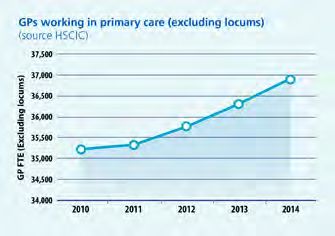
1010 General Practice Forward View

    Chapter 1: Investment
    We will accelerate funding of primary care

           We will increase the levels of
           investment in primary care:
           • By investing a further £2.4 billion a year by
             2020/21 into general practice services. This means
             that investment will rise from £9.6 billion a year
             in 2015/16 to over £12 billion a year by 2020/21.
           • Represents a 14 percent real terms increase,
             almost double the 8 percent real terms increase
             for the rest of the NHS.
           • This is the expected increase nationally.
             Investment is likely to grow even further as CCGs
             build community services and new care models,
             in line with the Five Year Forward View.
           • This includes capital investment amounting to
             £900 million over the next five years.
           • Will be supplemented by a Sustainability and
             Transformation package, totalling over half
             a billion pounds over the next five years, to
             support struggling practices, further develop the
             workforce, tackle workload and stimulate care
             redesign.
           • A new funding formula to better reflect practice
             workload, including deprivation and rurality.
           • Consult the profession and others on proposals
             to tackle indemnity costs in general practice by
             July 2016.

    #GPforwardview
General Practice Forward View 11
The Five Year Forward View Since the creation of NHS
recognised that primary care has England in 2013, each year there
been underfunded compared have been real term increases
to secondary care, and that in primary care funding. On the
this must change. The historic back of the Spending Review,
strength of general practice is which committed £10 billion a
being weakened by the relative year more above inflation for the
under-investment in general NHS by 2020 to back the Five
practice that has occurred over Year Forward View, we know we
the past decade. need to sustain and accelerate
growth in investment.
#GPforwardview1212 General Practice Forward View
Package of investment in Plus local investment This package will include:
general practice1 For the first time, the Planning
We are committed to increasing Guidance for the NHS has made • £56 million, to include a new
the proportion of investment securing the sustainability of practice resilience programme
going into general practice general practice, and in particular starting in 2016/17, and the
services. This should reach over addressing workforce and offer of specialist services to
10 percent by 2020/21, and will workload issues, one of nine GPs suffering from burn out
rise further as CCG investment national ‘must dos’. Every part and stress (see chapter 3)
in general practice rises also. of England has been asked to • £206 million for workforce
Overall investment to support produce a Sustainability and measures to grow the medical
general practice services will rise Transformation Plan (STP), which and non-medical workforce (see
by a minimum of £2.4 billion a will include plans to secure chapter 2)
year by 2020/21. This represents and support general practice, • £246 million to support
a 14 percent real terms increase, and enable it to play its part in practices in redesigning services,
significantly more than that more integrated primary and including a requirement on
anticipated for CCG allocations. community services. These plans CCGs to provide around
will be completed by July 2016. £171 million of practice
The additional investment we National actions on their own will transformational support and
are making in introducing new not be enough – local leadership a new national £30 million
care models will benefit general and investment will be vital. development programme for
practice too – and this will ensure general practice (see chapter 5).
investment rises at least in line Plus a five year general
with the plans set out above, and practice Sustainability and We will also continue to support
potentially even more. Transformation package capital investment in general
We have created a national £508 practice through a programme
For 2016/17, NHS England has million five year Sustainability of investment estimated to reach
allocated an additional £322 and Transformation package over £900 million over the next
million in primary medical care for general practice to help five years.
allocations, providing for an further support struggling
immediate increase in funding of practices in the interim, develop Fairer distribution of funding
4.4 percent. the workforce, stimulate care The Carr-Hill formula applies a
redesign and tackle workload. weighting (to General Medical
Services (GMS) contracts only) to
reflect the comparative workload
associated with different patient
groups.
1
As part of agreed devolution arrangements, Greater Manchester has been allocated a
transformation fund which includes an appropriate share of NHS England funding for
primary medical care initiatives. It will be for Greater Manchester to determine how it
is spent in the local area.
#GPforwardviewGeneral Practice Forward View 13
Many believe that the Carr-Hill Tackling rising costs of • working with the medical
formula is now out of date and indemnity defence organisations and
needs to be revised to reflect Indemnity costs have risen in the indemnity insurers to meet
changes in the population NHS in England significantly in the needs of new ways of
and the impact of this on recent years. This is the result of delivering care. For example,
comparative workload. NHS the rising number of claims, and through products that treat
England is working with the the rising level of awards made the delivery of services across
BMA to review the Carr-Hill by the courts, with the cost of practices outside of core hours
formula to specifically examine care packages doubling every (with shared access to patient
the impact of deprivation, age seven years. This is despite the records) as similar to in-hours
and other factors that influence fact that on objective measures, working, rather than charging
practice workload. This work the quality and safety of care the out of hours rate. This is
will be concluded in the summer provided by GPs has never been in recognition of access to the
of 2016, and form the basis of higher. GPs tell us that these patient record.
discussion with the BMA about costs are distorting decisions
changes that might be needed. about whether to remain in work Some GPs have called for
(particularly for those choosing to general practice to have Crown
A minority of practices are yet work part-time), whether to work indemnity. This would mean it is
to undergo their PMS contract in GP out of hours and urgent not possible to sue for damages
reviews. We are committed care services for non NHS trust and that the small minority of
to ensuring this process is providers, and whether to deploy patients who had suffered harm
completed in the interest of the wider clinical workforce as a result of clinical negligence
equity across all practices. (where costs for nurse indemnity would not have recourse to any
However, in the interests of can be the equivalent of medical financial compensation. We do
stability, these changes are being indemnity). not believe that this is the intent
phased over a minimum of four of the profession, and this form
years, ensuring there is a water NHS England has taken initial of immunity does not apply to
tight reinvestment plan for all steps to alleviate these pressures other health services.
savings in local general practices, through:
and engaging in individual Rather, we believe that the
conversations with practices that • the establishment in 2014/15 shared aim of all those working
are particularly challenged. and 2015/16 of a £2.5 million in the NHS is to bring down
‘winter indemnity’ scheme to the overall costs associated
CCG plans for reinvestment help with the costs of those with negligence claims in an
must be published before the working out of hours appropriate fashion, and ensure
full impact of Personal Medical • taking into account increases in that the way that those costs are
Services (PMS) reviews are indemnity costs, amongst other borne does not dis-incentivise
implemented for individual factors, in agreeing funding for excellent clinical staff from
practices. the 2016/17 GP contract. working in the NHS or restrict
access to justice.
#GPforwardview1414 General Practice Forward View
The Department of Health will The Department of Health In principle, GPs should be no
be consulting shortly on the and NHS England will instead more exposed to the rising costs
options for introducing a Fixed bring forward proposals in July of indemnity than our hospital
Recoverable Cost scheme to cap 2016 for discussion with the doctors, and any solution will
the level of recoverable costs profession, medical defence need to address this.
for claimant lawyers on clinical organisations, the commercial
negligence claims. The aim is insurance industry and the NHS Taken together, this represents a
to make the cost of claimant Litigation Authority. This will significant programme of work
lawyers more proportionate to consider potential solutions, to reform indemnity in general
damages and defence costs. including considering: practice, addressing some short-
term pressures whilst looking to
We and the Department of • how personal costs of bring down the overall costs to
Health are also committed to indemnity and clinical insurance the system.
reviewing the way in which can be contained, provided
costs are funded. Any changes certain clinical governance
would have a bearing on standards are met – with the
historical claims and handling objective of reducing the
of past liabilities. This is overall costs to the individual;
complex with the potential to • reducing indemnity costs
create unintended financial for individuals in particular
consequences if mishandled. circumstances, such as GPs
The Clinical Negligence Scheme who wish to remain in the
for Trusts (CNST) is a risk-pooling workforce on a part-time basis
arrangement for trusts, and past a certain age; and
requires every organisation to • enable new models of
contribute funds. The rising costs care such as Multispeciality
of CNST has been an issue for Community Providers (MCPs)
providers in other sectors, and to to take on corporate indemnity,
date, we have not seen evidence freeing up individuals working
that access to CNST would bring in those new models from the
down the costs for practice burden of personal indemnity
partnerships. There would be costs.
significant implications for the
treatment of historical claims, for
the insurance market in general,
and it might increase costs to
practices. So this is not a simple
solution.
#GPforwardviewGeneral Practice Forward View 15
Better Care Fund
The Better Care Fund (BCF) CASE STUDY
requires CCGs and local authorities
to pool budgets and to agree an
integrated spending plan for how Wider integration of health and social
they will use their BCF allocation. care - Sunderland (MCP vanguard)
In 2016/17, the minimum size of
the BCF has been increased to Through the Better Care Fund all of Sunderland’s
£3.9 billion. resources for out-of-hospital care from both the
CCG and local authority are now contained within
From April 2016, CCGs, local a single pooled budget of over £160 million. From
authorities and NHS England will April 2015, a Provider Management Board took on
be able to pool budgets to jointly the leadership for redesigning existing services and
commission expanded services, investing new funds in additional GP and nursing
including: sessions in integrated teams and a 24/7 Recovery at
Home service.
• additional nurses in GP settings
to provide a coordination role Co-located multidisciplinary teams, working
for patients with long term across several practices, provide an enhanced
conditions; level of care to patients with complex needs.
• GPs providing services in care These are often frail older people and/or people
and nursing home settings; with multiple co-morbidities both at home and
• providing a mental health in supported housing, including care homes,
professional in a GP setting; and identified via a risk stratification approach.
• hosting a social worker in a GP
surgery.
#GPforwardview1616 General Practice Forward View
Chapter 2: Workforce
We will expand and support GPs and
wider primary care staffing
The General Practice Forward View cannot be delivered without sufficient
recruitment and workforce expansion. Therefore NHS England and Health Education
England (HEE) have set ambitious targets to expand the workforce, backed with
an extra £206 million as part of the Sustainability and Transformation package. We
will also support the development of capability within the current workforce and
support the health and wellbeing of staff.
Expansion of workforce capacity
Plans to double the rate of growth of the medical workforce to create an extra 5,000
additional doctors working in general practice by 2020. This five year programme
includes:
• Increase in GP training recruitment to 3,250 a year to support overall net growth of
5,000 extra doctors by 2020 (compared with 2014).
• Major recruitment campaign in England to attract doctors to become GPs,
supported by 35 national ambassadors and advocates promoting the GP role.
• Major new international recruitment campaign to attract up to an extra 500
appropriately trained and qualified doctors from overseas.
• Targeted £20,000 bursaries in the areas that have found it hardest to recruit into
GP training.
• 250 new post-certificate of completion of training (CCT) fellowships to provide
further training opportunities in areas of poorest GP recruitment.
• Attract and retain at least an extra 500 GPs back into English general practice,
through:
• simplifying the return to work routes further, with new portfolio
route, and other measures to reduce the length of time.
• launch of targeted financial incentives to return to work in areas of
greatest need.
A minimum of 5,000 other staff working in general practice by 2020/21. This five
year programme will include:
• Investment in an extra 3,000 mental health therapists to work in primary care by
2020, which is an average of a full time therapist for every 2-3 typical sized GP
practices.
• Current investment of £31 million to pilot 470 clinical pharmacists in over 700
practices to be supplemented by new central investment of £112 million to extend
the programme by a pharmacist per 30,000 population for all practices not in the
initial pilot – leading to a further 1,500 pharmacists in general practice by 2020.
• Introduction of a new Pharmacy Integration Fund.
#GPforwardviewGeneral Practice Forward View 17
• A general practice nurse development strategy, with an extra minimum £15 million
national investment including improving training capacity in general practice,
increases in the number of pre-registration nurse placements, measures to improve
retention of the existing nursing workforce and support for return to work schemes
for practice nurses.
• National investment of £45 million benefitting every practice to support the
training of current reception and clerical staff to play a greater role in navigation
of patients and handling clinical paperwork to free up GP time.
• Investment by HEE in the training of 1,000 physician associates to support general
practice.
• Introduction of pilots of new medical assistant roles that help support doctors, as
recommended by the RCGP.
• £6 million investment in practice manager development, alongside access for
practice managers to the new national development programme.
• £3.5 million investment in multi-disciplinary training hubs in every part of England
to support the development of the wider workforce within general practice.
Health and wellbeing
£16 million extra investment in specialist mental health services to support GPs
suffering with burn out and stress, and support retention of GPs, in addition to the
£3.5 million already announced.
Over the past decade, the
number of GPs (full time
equivalents) working in general
practice has risen by over 5,000.
But we know that many practices
now face recruitment issues
and are increasingly reliant on
temporary staff. Moreover, a
higher proportion of older GPs
are signalling that they are
considering leaving the workforce
early.
#GPforwardview1818 General Practice Forward View
We aim to double the rate of
growth in the primary care
medical workforce over the
next five years, to create an
extra 5,000 doctors working in
general practice. This needs
to be supported by growth in
the non-medical workforce
– a minimum of 5,000 extra
staff – nurses, pharmacists,
physician associates, mental
health workers and others.
Work to date Last year, NHS England, HEE, Through the 10 point action plan,
The Primary Care Workforce Royal College of General together we have:
Commission, set up by HEE and Practitioners (RCGP) and the
chaired by Professor Martin General Practitioners Committee • delivered a marketing campaign
Roland, called for a broader (GPC) developed an initial 10 to encourage foundation year
range of staff to be involved in point action plan – Building 2 doctors who are applying
providing care. Their report, The the Workforce a new Deal for for specialty training to choose
future of primary care creating General Practice - to kick start general practice;
teams for tomorrow, set out initiatives to improve recruitment, • launched a scheme to offer up
how we can better deploy the retention and return to practice. to £20,000 bursaries for 109
talents of the wider workforce to Now that there is significant new GP trainees to attract doctors
reduce the workload burden on investment for general practice, to parts of the country where
GPs, meet patients’ needs and we will be working together there have been consistent
to free GPs up to do what they – and with other professional shortages of trainees;
do best. The report also set out bodies, such as the RCN, • established new post-CCT
recommendations to increase Queen’s Nursing Institute, Royal fellowships to provide further
the role of nursing, advanced Pharmaceutical Society, National training opportunities in areas
clinical practitioners, medical Association of Primary Care and of poorest GP recruitment that
assistants, practice pharmacists NHS Clinical Commissioners encourage new CCT holders
and physician associates along to step up actions to grow the to work as GPs in those areas,
with stronger partnerships with workforce and stimulate a more whilst pursuing special interests
the voluntary sector and better diverse range of workforce and meeting local need such
use of technology. models within primary care. as urgent care and learning
disability care;
#GPforwardviewGeneral Practice Forward View 19
• committed to invest £3.5
million in 13 new multi
disciplinary training hubs
(Community Provider Education
Networks) across the country
to support the development
of the wider workforce within
general practice, including
placements in general practices,
development for current staff
and workforce planning;
• created a national induction
and refresher (returner)
scheme, offering a new £2,300
per month bursary to doctors
looking to return to general
practice to help with costs
and improving entry routes –
leading to an increase in the
number of applicants and are developing a strategy for This represents a welcome
improving coverage, given supporting the practice nursing increase of around 7 percent
previous local variation; workforce. on last year’s first round of
• invested an extra £1.75 million recruitment.
nationally to support practice Building the workforce
nurse development; for 2020 HEE will in partnership with
• invested in leadership To double the rate of growth the RCGP, and the profession
development and coaching for of the medical workforce, and continue refining and developing
individual GPs; and accelerate use of the wider GP specialty training to provide
• piloted new ways of working workforce, we set out below greater career flexibility while
including the development the new programmes of work maintaining standards in order to
of Primary Care Physician that will be needed. This will be maximise recruitment.
Associates. backed by an extra £206 million
over the next five years on top of
For the wider workforce, we previously announced initiatives.
agreed a major £31 million
scheme to pilot the deployment Recruiting doctors into
of over 470 clinical pharmacists general practice
in just over 700 practices over HEE has increased GP training
the next three years, helping capacity and increased
practices with the costs of recruitment to 3,250 doctors
employment and training. We per annum recurrently. In the
have published a practice and first round recruitment for 2016,
community nursing education 2,296 posts - 70 percent - have
and career framework, and already been filled.
#GPforwardview2020 General Practice Forward View
We know we need to improve in the community and their Already, the new induction and
the number of medical school patients’ care. HEE has recruited refresher (returner) scheme has
graduates choosing to join and trained 35 campaign seen:
general practice. There is a strong ambassadors and advocates to
correlation between training support and promote national • the end to multiple different
placements in general practice and regional activities including policies, with one single
and eventually working in general attendance at recruitment events national policy, supported by
practice. HEE is currently working and through social media. single website, a consistent
with the Medical Schools Council, set of written guidance to
higher education institutions, the We will supplement this applicants, and a new single
RCGP and the GPC to increase with a major international point of contact;
the profile of general practice recruitment drive, to attract up • a significant increase in NHS
in medical schools and in their to 500 appropriately trained and England bursaries for the
curricula. qualified doctors – and possibly period of time that the doctor
more - from overseas over the is in a supervised placement -
A working group, chaired by next five years. £2,300 per month – up from a
Professor Valerie Wass OBE, will range of £0 to £500 per month
publish recommendations in Working with HEE we will previously depending on which
summer 2016 about recruitment evaluate its £20,000 bursary part of the country you are in;
and selection, finance and scheme to attract trainees into • the end to requiring doctors
curriculum and the promotion of hard to fill areas and identify if working overseas to return to
general practice as a speciality. more needs to be done. England to start the application
process, with the ability to
The recommendations will HEE will roll out a total of 250 hold interviews now via Skype
improve the medical school post CCT fellowships by and sit initial assessments in
experience of general practice summer 2017 to offer wider countries all round the world;
through greater exposure to the and more varied training and
diverse and stimulating reality of opportunities in areas of poorest • a review of the appropriate
general practice professionally GP recruitment. and relevant content of all
and personally. More graduates assessments, leading to a
will be encouraged to make a Retaining the current medical doubling of pass rates in the
positive choice of general practice workforce last nine months.
as a career. One of the strengths of general
practice as a career is its flexibility,
HEE and the RCGP will with the chance to work part-
continue to develop the current time or combine general practice
recruitment campaign to raise with work in other settings. We
the profile of general practice want to make it easier and more
as a career. The campaign attractive for GPs to return to
showcases the variety of different work in English general practice.
opportunities and the flexibility
of the specialty, as well as
the central role that GPs play
#GPforwardviewGeneral Practice Forward View 21
As a direct result, we have seen • create a central contact point
a significant rise in the number for any doctor wishing to
of doctors applying to return to return to work in English
work in general practice, with general practice, so that
an increase of 40 percent in the doctors are supported in
number of doctors booking to navigating any regulatory issues
sit the multiple-choice questions and to support and guide them
(MCQ), one of the routes for through the process;
returning to practice, in 2015/16 • address delays in securing
compared to 2014/15. Disclosure and Barring Service
checks – taking several weeks
We need to accelerate this and sometimes months –
further so that we can attract and sort out information
at least an extra 500 doctors governance issues to enable
over the next five years back into checks to be valid across
general practice. The RCGP has different parts of the system;
sought feedback on some of • increase the financial
the main barriers experienced by compensation available
returning doctors, and this has through the current GP
formed the basis of our action retainer scheme from 1 May
plan for improvement. Our aim 2016; and introduce a new GP In addition, we will invest further
is to start measuring the time retainer scheme more fit for in leadership development,
it takes for a doctor to return purpose from 1 April 2017; and coaching and mentoring skills for
to work, and halve the average • offer targeted financial experienced doctors – enabling
time. incentives to GPs from May them to build on their skills and
2016 for returning to work offer the value of their experience
We will build on the in areas of greatest need. to younger doctors. We will take
improvements to establish a stock of the findings of evidence
straightforward route for doctors We also need to find ways to on retention, and address any
to return to work in England. attract GPs to remain in practice further issues identified.
towards the end of their career.
In addition, we will: The published evidence on
retention suggests that the single
• from April 2016, introduce a biggest enabler would be to
new Portfolio Route (2016) address concerns over workload,
for GPs with previous UK and create a greater sense of
experience, continuing to ‘status’ for general practice
work in equivalent primary within society. The totality of the
care roles outside the UK, General Practice Forward View
removing the need for them to is aimed at addressing these
sit the current exams to return fundamental issues.
to practice;
#GPforwardview2222 General Practice Forward View
• introduce a Pharmacy
Integration Fund, worth £20
million in 2016/17 and rising by
a further £20 million each year,
to help further transform how
pharmacists, their teams and
community pharmacy work
as part of wider NHS services in
their area. Subject to a separate
consultation, our proposals
include better support for GP
practices, for care homes and
for urgent care for the use of
the fund;
Building the wider workforce pre-registration nurse • invest in an extra 3000
The success of general practice placements and other measures mental health therapists to
in the future will also rely on to improve retention; be working in primary care by
the expansion of the wider • extend the clinical pharmacists 2020 to support localities to
non-medical workforce – programme with a new £112 expand the Improving Access to
including investment in nurses, million offer to enable Psychological Therapies (IAPT)
pharmacists, practice managers, every practice to access a programme;
administrative staff and the clinical pharmacist across • provide £45 million extra
introduction of new roles such as a minimum population on funding nationally over five
physician associates and medical average of 30,000 - leading years so that every practice
assistants. to an extra 1,500 pharmacists in the country can help their
in general practice. Appetite reception and clerical staff
Our ambition is to use some of for the original pilot scheme play a greater role in care
the extra investment going into was high. We will need to navigation, signposting
general practice to support the learn more from the evaluation patients and handling clinical
employment of a minimum of but early indications suggest paperwork to free up GP
5,000 extra staff. clinical pharmacists may time. This builds on successful
have a role in streamlining pilots tested through the
To achieve this, at a national practice prescription processes, Prime Minister’s GP Access
level, NHS England and HEE, over medicines optimisation, minor Fund schemes and vanguard
the next five years, will: ailments and long term sites where the majority of
conditions management. We clinical correspondence can be
• invest an extra £15 million will roll this out further across managed through trained staff;
nationally in general the country over the next five • pilot new medical assistant
practice nurse development, years, so that every practice can roles that help support doctors;
including support for return benefit. We will also open up • pilot the role of primary care
to work schemes, improving the clinical pharmacist training physiotherapy services;
training capacity in general programme to practices that
practice for nurses, increases in have directly funded a clinical
the number of pharmacist;
#GPforwardviewGeneral Practice Forward View 23
• invest an extra £6 million The vanguard sites that are First, we will work with the
in practice manager testing new integrated models profession to introduce
development; of care and the GP Access Fund new measures entitling GPs
• roll out the recently published schemes are already developing who want flexible working
HEE Community (District) many different ways of using the but who can commit to
and General Practice Nursing wider workforce, and proving working in a practice or an
Service Education and that this can be better for area for a period of time,
Career Framework and the patients and free up GP time. additional benefits relative to
accompanying HEE Education undertaking a rolling series
and Career Framework; A balanced GP workforce of short term locum roles. In
• implement the Queen’s Nursing The model of independent other words, while continuing
Institute Voluntary Education contractor status and partnership to incentivise partnerships
and Practice Standards for has proved a valuable foundation and salaried commitments to
District and General Practice for general practice. Partners practices on the one hand,
Nursing; and provide leadership and continuity, we also want to create an
• work with general practice to and in recent years this has been alternative to day-by-day or
ensure general practice nurses invaluable as general practice has week-by-week locuming for
have access to mentorship come under pressure. those at a point in their career
training. or family life who need more
We also recognise that a more flexibility.
This also needs to be flexible workforce better enables
supplemented at a local level, practices to secure short-term Second, NHS England will set
and for the first time - through support to cover sick leave, indicative rates for locums and
the Planning Guidance – the NHS parental leave or transition will ask practices to indicate
locally has been asked to produce periods between leavers and in the annual e-declaration
plans to address workforce issues joiners. However many practices information where they are
in general practice. We will now report that a shift to reliance having to pay above those rates.
review these plans in the summer, on locums is undermining service This is to understand the scale
and identify any further actions continuity and stable team of the issues practices are facing
that need to be taken or ideas working. and help plan how we can target
that can be spread nationally to workforce support to areas facing
accelerate the growth, retention It is therefore in the interests of the greatest pressures.
and development of the general GPs and practices to improve the
practice workforce. relative attractiveness of partner Third, we envisage ‘at scale’
and salaried positions versus working in larger practice
a shift to a more unstable and groupings will create
short term workforce. opportunities to embed a more
locally focused team based
approach which incorporates
locums.
#GPforwardview2424 General Practice Forward View
Promoting health and
wellbeing to combat burnout CASE STUDY
A new national service is
being established to improve
GPs’ access to mental health Multidisciplinary workforce - West
support. Support for GPs Wakefield Multispecialty Community
suffering mental health problems
Provider (MCP)
is part of NHS England’s plans
to retain a healthy workforce. West Wakefield Health and Wellbeing Ltd is a GP
NHS England has already Federation in West Yorkshire serving a population
committed to spend up to £3.5 of 65,000 and is a wave one GP Access Fund site.
million in this new service, It is now leading one of the new care models
and will now increase that MCP vanguard sites with two other GP networks
investment by a further £16 covering a total population of 152,000 people.
million. The procurement will
start in June 2016 and the service Among a series of initiatives designed to relieve
is expected to be available across pressure on GPs, they are training care navigators
England from December 2016. to break down the automatic assumption that a
This means all GPs will be able GP appointment is the best first place to go for
to access free, confidential local any problem.
support and treatment for mental
health issues, supporting GPs As well as reduce the number of patients needing
who are at risk of suffering stress to access their GP, care navigators are able to
or burnout. ‘queue bust’ at reception by offering patients who
arrive at the practice advice to signpost them to
Implementation the most appropriate solution for their needs.
We will establish a new
Workforce 2020 oversight Over 70 staff have received training on available
advisory group, with resources, services and innovations within the
representation from national practice and MCP programme, and in the wider
bodies, to steer the delivery of voluntary and third sector.
this ambitious programme, and
review where further actions
need to be taken in light of
progress nationally and locally
over the next five years.
#GPforwardviewGeneral Practice Forward View 25
#GPforwardview2626 General Practice Forward View
Chapter 3: Workload
We will reduce practice burdens
and help release time
Workload was identified by the
2015 BMA survey as the single
biggest issue of concern to GPs
Support for general practice with the and their staff. Latest research,
management of demand, diversion published in the Lancet, suggests
that there has been an average
of unnecessary work, an overall increase in workload in general
reduction in bureaucracy and more practice of around 2.5 percent
integration with the wider health and a year since 2007/8, taking
care system including: account of both volume and
acuity. Whilst some of this rise
• Major £30 million ‘Releasing Time for Patients’ can be addressed by increasing
development programme to help release the workforce, we also want to
capacity within general practice (see also support practices in moderating
Chapter 5). demand and reforming how we
• New standard contract measures for hospitals support and organise services.
to stop work shifting at the hospital/general
practice interface. The Primary Care Foundation
• New four year £40 million practice resilience and NHS Alliance have identified
programme, starting in 2016. the changes that will have the
• Move to maximum interval of five yearly CQC biggest impact in reducing
inspections for good and outstanding practices. bureaucracy and reshaping
• Introduction of a simplified system across NHS demand. Their report, Making
England, CQC and GMC. Time in General Practice,
• Streamlining of payment processes for practices, identified a number of practical,
and automation of common tasks. high-impact ways to remove
unnecessary pressures on general
practice and free up time for
patient care.
The report found that the top
three sources of bureaucracy
experienced in general practice
are: the processes used to make
and claim payments; keeping up
to date with information from
commissioners and national
bodies, and reporting for contract
monitoring or regulation.
#GPforwardviewGeneral Practice Forward View 27
The report also estimated
that around 27 percent Potentially avoidable GP appointments
of appointments could
potentially be avoided if there
was more coordinated working
between GPs and hospitals, wider
use of primary care staff, better
use of technology to streamline
administrative burdens, and
wider system changes.
NHS England is therefore taking
immediate action in the following
areas:
Managing demand more
effectively
NHS England is investing in a
major new £30 million ‘Releasing
Time for Patients’ development
programme to support practices
release time (see Chapter 5).
Practices have identified that
one way of doing this is to assist
patients in managing a greater In addition, by September in general practice. We will
proportion of their minor self- 2016, we will have launched a design this in conjunction with
limiting illnesses for themselves. national programme to help the wider national development
We will therefore use some of practices support people living programme for general practice.
the funding for workforce and with long term conditions
technology, outlined elsewhere to self-care. Practices will be GPs can also influence the
in this document, to support offered tailored support to offer commissioning of local pathways
practices in doing so. high quality care planning to for community pharmacy to help
patients who have low levels of patients with self-care and minor
knowledge, skills and confidence ailments. The developments
to manage their own health and in digital interoperability and
wellbeing. The aim is to equip access to a shared primary care
the workforce with the tools and record provide practices with
skills to do this. This should help an opportunity to harness this
improve patient outcomes, and potential for reducing demand
over time, reduce the demand for urgent appointments.
#GPforwardview2828 General Practice Forward View
Alongside a reformed 111 In addition, a further £40 million • Onward referral: unless a
service, we will also work with will now be committed to CCG requests otherwise, for a
CCGs to ensure they institute develop a practice resilience non-urgent condition related
plans to address patient flows in programme, starting with a £16 to the original referral, onward
their area using tried and tested million boost in 2016/17. We referral to another professional
ideas such as access hubs, social will work with the RCGP and the within the same hospital is
prescribing and evidence based BMA to develop this programme permitted, and there is no
minor ailment schemes. as quickly as possible, and requirement to refer back
consider introducing practice to the GP. Re-referral for GP
Building practice resilience resilience teams. approval is only required for
In 2015, NHS England onward referral of non-urgent,
committed to invest £10 million New standards for outpatient unrelated conditions.
to support vulnerable practices. appointments and interactions • Discharge summaries:
Eligible criteria for accessing this with other providers hospitals will be required to
additional support was developed We have introduced a number send discharge summaries
with NHS Clinical Commissioners of new legal requirements in by direct electronic or email
and other national stakeholders, the NHS Standard Contract transmission for inpatient, day
with around 800 practices for hospitals in relation to the case or A&E care within 24
identified as meeting the criteria. hospital/general practice interface hours, with local standards
from April 2016. These should being set for discharge
This support is designed to relieve some of the administrative summaries from other settings.
build resilience in primary care burden on practices. Furthermore, the hospital
and to support delivery of new should provide summaries in
models of care. RCGP support The changes include: the standardised format agreed
for inadequate rated practices by the Academy of Medical
will continue as part of this • Local access policies: hospitals Royal Colleges, so GPs can find
programme. A multi-supplier will not be able to adopt key information in the summary
(call off) framework will be blanket policies under which more easily.
available to commissioners from patients who do not attend an • Outpatient clinic letters:
September 2016 to support outpatient clinic appointment hospitals to communicate
the programme. This is likely are automatically discharged clearly and promptly with GPs
to include a range of local and back to their GP for re-referral. following outpatient clinic
national providers and may be Also a new requirement on attendance, where there is
expanded over time. In order hospitals to publish local access information that the GP needs
to maximise the impact of this policies and evidence of having quickly in order to manage
support, from April 2016, NHS taken account of GP feedback a patient’s care (certainly no
England will offer support to when considering service later than 14 days after the
eligible practices that are willing development and redesign. appointment). For 2017/18,
to match fund this additional the intention is to strengthen
support, or offer the equivalent this by requiring electronic
resources commitment ‘in kind’. transmission of clinic letters
within 24 hours.
#GPforwardviewYou can also read


