SUSTAINABLE GEOGRAPHY-GEOGRAPHIES OF SUSTAINABILITY The 8th Nordic Geographers Meeting in Trondheim, Norway, June 16-19 2019 - NTNU
←
→
Page content transcription
If your browser does not render page correctly, please read the page content below

S U S TA I N A B L E G E O G R A P H Y
            – GEOGRAPHIES OF SUSTAINABILITY
   The 8th Nordic Geographers Meeting in Trondheim, Norway, June 16–19 2019
PRACTICAL INFORMATION

Welcome to the 8th Nordic Geographers Meeting
                                                                                                                            Table of Contents
Trondheim June 16–19 2019
                                                             For sustainability to (hopefully) be more than merely          Good to know ......................................................................3   Sessions
                                                             rhetoric, in 2015 The UN formulated 17 Sustainable             Conference venue - maps ..............................................4–5                    Monday..............................................................17–26
                                                             Development Goals that are a call for action for all count-    Keynote speakers                                                                             Tuesday.............................................................26–34
                                                             ries to mobilise resources and efforts to end poverty, fight         Lesley Head...............................................................7            Wednesday........................................................34–36
                                                             inequalities and tackle climate change. Within this broad            Håvard Haarstad.......................................................8          Conference participants..............................................37–41
Since the first Nordic Geographers Meeting took place at     and, we acknowledge, rather daunting context, we wanted              Kirsi Pauliina Kallio..................................................9
Lund University, Sweden, in 2005, the Meeting has            this conference to represent an opportunity to engage          Programme at a glance
established itself as an important venue for engaging in     with ideas of sustainability within geographical scholar-            Monday..............................................................10–11
some of the critical challenges of our times, as well as a   ship, the politics of sustainability beyond the academy and          Tuesday.............................................................12–13
venue to meet old friends and to make new friendships.       the shifting discipline of geography itself.                         Wednesday........................................................14–15
At this 8th meeting, we hope to cater for both!
                                                             After calling for sessions, it quickly became clear that our
When we started discussing the overall theme of the          thematic formulation spoke to a large number of people.
8th meeting in Trondheim, we soon settled on the theme       The response to NGM2019 has been overwhelming. More            Good to know
of Sustainable Geography - Geographies of Sustainability.    than 600 people from all over the world are attending.
Even though the notions of sustainable development and       This response has, admittedly, raised questions about          The conference secretariat is open during the conference                               Free WiFi is available to all conference participants. Use
sustainability have received widespread criticism for        what the ‘Nordic’ entails, as well as concerns for the size    hours in the foyer outside auditoriums R1-R3                                           your eduroam account, or follow the log in instructions on
being all-encompassing, apolitical and elitist, they are     of the meeting. The NGM is, however, known as a friendly,      (see map p. 4). Participants in turquoise t-shirts,                                    the back of your name tag.
still very much part of the rhetoric ‘weaponry’ mobilized,   inclusive and generous meeting. Many geographers, and          represent the conference organisers and will do their best
now often in combination with the terms green economy        friends of geography, attend the Meetings regardless of        to answer questions and otherwise be of assistance.                                    Three meeting rooms (R20, R40 and R41) are available
and green growth, to describe and prescribe why and how      the overall theme. This is a wonderful trait of the NGM.                                                                                              for networking during the conference. A booking list is
to deal with contemporary and future global challenges.      For NGM2019, this means that there will also be sessions       Lunches are served in two places: the canteen in                                       found at the conference secretariat.
                                                             and presentations that do not necessarily relate explicitly    Realfagbygget (see map p. 4) and the canteen
                                                             to sustainability, but are still well within what              in Elektrobygget which is signposted.                                                  Smoking is not allowed inside the buildings or close to
                                                             geographers are concerned with, hence reflecting a                                                                                                    the entrance doors.
                                                             multi-faceted and vibrant discipline.                          The conference dinner takes place at Studentersamfundet
                                                                                                                            (see map p. 5). Those registered for the dinner will have                              Buses and taxies:
                                                             The organising committee wishes you a warm welcome             it marked on their name tags. Name tags need to be                                     The bus company is AtB:
                                                             to Trondheim, and we look forward to what we believe will      brought in order to attend the dinner.                                                 https://www.atb.no/en/
                                                             be a lively and inspiring 8th Nordic Geographers Meeting!                                                                                             For taxis: Trøndertaxi, phone: +47 07373
                                                                                                                            Our tap water is clean and drinkable. Water bottles can                                https://trondertaxi.no/
                                                             The organising committee: Gunhild Setten (chair),              be filled/refilled at your own convenience.
                                                             Nina Gunnerud Berg, Levon Epremian, Rita Hokseggen,                                                                                                   Emergency services – call 112.
                                                             Thomas Sætre Jakobsen, Haakon Lein, Per Arne Stavnås           Luggage can be left, at your own risk, in room R91.
                                                             and Teklehaymanot Weldemichel.                                 (See map on p. 4).

2                                                                                                                                                                                                                                                                                                3
CONFERENCE VENUE - MAPS
Realfagbygget CONFERENCE VENUE - MAPS
Campus Gløshaugen, NTNU
subfloor 1 (U1) 7
6
R9
Realfagbygget Legend
Campus Gløshaugen, NTNU
1 access to R20,R21 (down to subfloor 2)
subfloor 1 (U1)
2 access to R40, R41 (up to floor 1) R8
3 access to R50,R51,R54 (up to floor 2)
4 access to R60 (up to floor 3)
R9
Legend 5
5 access to R73 (up to floor 4)
4
1 access to R20,R21 (down to subfloor 2)
2 access to R40, R41 (up to floor 1)
6 access to R10 (up to floor 5) R8 R7
3 access to R50,R51,R54 (up to floor 2) 1
4 access to R60 (up to floor 3)
Elevator 3
3
5 access to R73 (up to floor 4) WC
6 access to R10 (up to floor 5) Coffee/tea R7 1
1
Elevator 3
3
WC 1
Coffee/tea Lunch area upstairs
3
Lunch area upstairs
R5 R6
R93 R92
R5 R6
R93 R92
Focaults
pendulum
Focaults
pendulum
R91
R91
R90 R90
Gårdsrommet 6 Gårdsrommet 6
(U2) 2 (U2) 2
2
R3
R3
6 2
Secretariat 6 2
Secretariat
R1
Main entrance upstairs
R1
Main entrance upstairs
R4
1 Realfagbygget
R4
4 5 4 5
2 Studentersamfundet
3 Comfort Hotell Park Trondheim
R2 4 5 4 5
4 Quality Hotel Augustin
5 Thon Hotel Prinsen
R2 6 Radisson Blu Royal Garden Hotel Trondheim
7 Thon Hotel Nidaros
1
4 5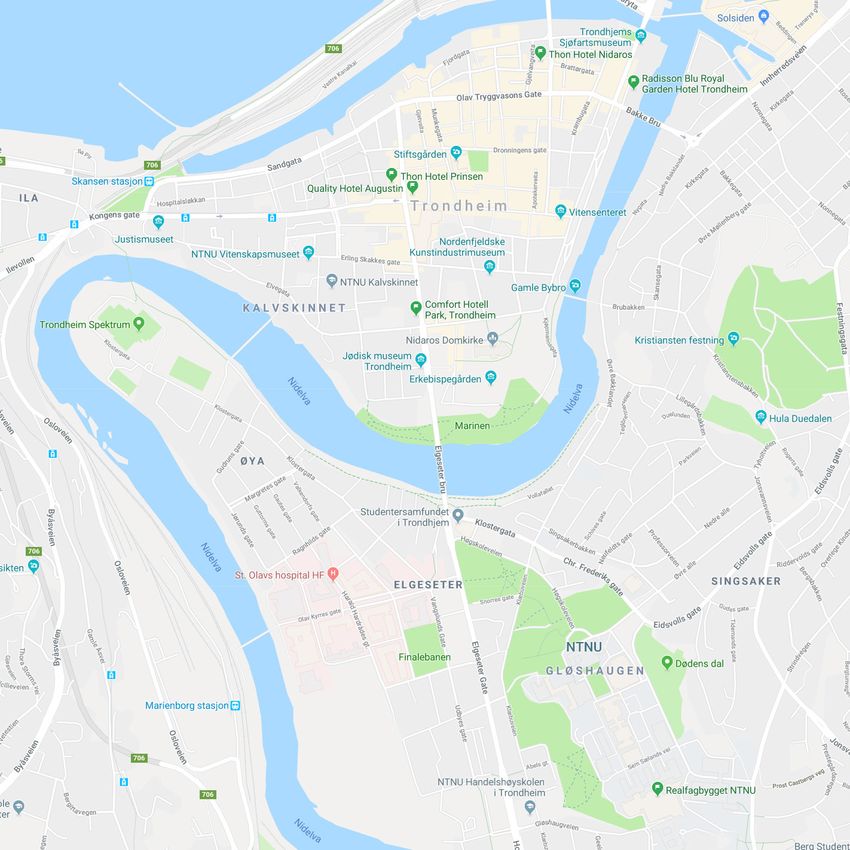
KEYNOTE SPEAKER

    Professor Lesley Head:

    Beyond the whiteness of green

                                                     The state of the world and the sustainability challenges
                                                     ahead of the human species demand paradigm shifts
                                                     in environmental scholarship and practice. Much of our
                                                     green thinking has come out of the colonial experience
                                                     and its limitations are now well exposed. One key thread
                                                     is on Indigenous knowledge and critique of the wilderness
                                                     myth over the last several decades. A second more recent
                                                     thread examines the environmental knowledge and
                                                     behaviour of Majority World migrants to the Minority
                                                     World. This research challenges western environmental
                                                     scholarship and practice in a number of ways,
                                                     including that straightforward assumptions about the ‘pro’
                                                     in pro-environmental behaviour need to be challenged. In
                                                     this presentation I summarise implications from these two
                                                     threads of research to consider what a less-white green
                                                     might look like, and what this means for geographers
                                                     in Scandinavia and Australia. The comparisons between
                                                     Sweden, Norway and Australia have been instructive in
                                                     our previous collaborative research. They are countries
                                                     with both similarities and differences in environmental
                                                     management and biodiversity protection, and the role of
                                                     people in those processes. As geographers on a
                                                     particular kind of edge of the Anglo-American centre,
                                                     I argue we have a particular kind of contribution to make.

                             June 17, 09.30–10.15,   Lesley Head is Redmond Barry Distinguished Professor
                                   Auditorium R1     and Head of the School of Geography at the University of
                                                     Melbourne, Australia.

6                                                                                                               7
KEYNOTE SPEAKER                                                                                                                                                                                                         KEYNOTE SPEAKER

                                                                                                                  Professor Kirsi Pauliina Kallio:

                                                                                                                  Geosocial familiality in enforcing social sustainability

                                                                                                                                                                             While family is something that nearly all people in the
                                                                                                                                                                             world relate with, people’s familial lives differ notably
                                                                                                                                                                             from place to place, throughout the life course, between
Professor Håvard Haarstad:                           What does human geography have to offer for                                                                             life situations, and personally. The familial relations that
                                                     understandings of sustainable transformation? In this                                                                   we maintain, create and repair, or dissolve, challenge and
                                                     talk I argue that we should make more use of our core                                                                   reconstruct, as part of everyday living, involve significant
The interconnected geographies of                    concepts and relational thinking, rather than relying                                                                   geographical diversity. The lecture will consider such inti-
                                                     on imported concepts from socio-technical systems                                                                       mate yet institutionally conditioned relations and agencies
sustainability transformations                       theory and the like. Standard frameworks tend to portray                                                                as ‘geosocial familialities’. Specifically, I will engage with
                                                     transitions and transformations as stable and gradual                                                                   intergenerational relations and agencies of refugees and
                                                     processes, with little role for space, local contexts and                                                               asylum seekers, whose familial lives are often contested,
                                                     active agency. In the SpaceLab group at the University of                                                               not only by their geosocial situations, but also through
                                                     Bergen we are aiming to use core concepts from human                                                                    geopolitical and geo-economic dynamics. Drawing
                                                     geography to foster a more vibrant and spatially attuned                                                                from my recent research, I will portray distinct facets
                                                     understanding of the politics of transformations: high-                                                                 of familiality as experienced and expressed by refugees
                                                     lighting instabilities, inequalities and interconnections.                                                              and asylum seekers, and discuss them in the context of
                                                     I discuss an ongoing project, where we examine multiple                                                                 Finnish welfare and migration policies. Thus, my research
                                                     cases of urban sustainability interventions in Europe                                                                   challenges categorical conceptions of the family, mani-
                                                     and beyond and trace the transurban relations through                                                                   fested prominently by Western ideals, and emphasizes in-
                                                     which these local interventions are created. We find that                                                               stead people’s tactical intergenerational relationships and
                                                     transformations are not primarily results of technological                                                              agencies in and amidst their transnational and translocal
                                                     innovation, but as results of assembly and mobilization                                                                 ties. In the talk I will argue that geosocial familial rela-
                                                     of agencies across space and time. Human geography                                                                      tions and agencies, embedded in specific geopolitical and
                                                     can make a substantial contribution both to the under-                                                                  geo-economic realities, are an important yet underused
                                                     standing and the practice of sustainable transformation                                                                 resource in enforcing social sustainability through institu-
                                                     by making these interconnections visible and giving them                                                                tional and mundane means.
                                                     significance in academic and public debate.
                                                                                                                                                     June 19, 11.00–11.45,   Kirsi Pauliina Kallio is Professor at the University of
                             June 18, 13.15–14.00,   Håvard Haarstad is Professor of Human Geography                                                       Auditorium R1     Tampere, Finland, where she works with the Political
                                   Auditorium R1     and Director for the Centre for Climate and Energy                                                                      Agency Research Group (SPARG) as part of the RELATE
                                                     Transformation (CET), University of Bergen, Norway.                                                                     Centre of Excellence.

8                                                                                                                                                                                                                                        9
PROGRAMME PROGRAMME
Monday
Room R01 R02 R03 R04 R05 R06 R07 R08 R09 R10 R21 R50 R51 R54 R90 R92 R93
07:30-09:00 Registration Registration
Opening ceremony
09:00–09:30
Keynote address:
Lesley Head
Beyond the
whiteness of green
09:30-10:15
10:15-10:30 Coffee break Coffee break
M2.1 Acting local, M40.1 Planning for
M3.1 Citizen
catalyzing global? M7.1 Urban sustainable urban M51. Exploring the M45.1 The political
M8.1 Sustainable engagement and M23.1 (Not) my M13.1 Uneven M90.1 Marxism(s) in M11.1 Revisiting 30 M1. Gender
The role of bottom- M14.1 Challenging M88. Panel : Social innovation and the M18.1 Regional futures: geographies of M57. Environment, ecology of the
island geography – natural resource green city? The role mobilities and the Geographic and years of sustainable Inequality and
up initiatives in the mobilities/ transport sustainability and rise of projects, development paths transgressing the Scandinavian welfare migration and outfields (utmarka):
Geographies of governance in an of green spaces in production of Sustainability tourism in the age of Sustainability under
transition towards regimes creative practice platforms and and critical junctures North-South states: past, present, ethnicity Conflicting views of
island sustainability increasingly local times of urbanization subjectivity Research overtourism Customary Rights
sustainable food testbeds boundaries in theory and future resource use
world
10:30-12:00 systems and practice
12:00-13:15 Lunch Lunch
M2.2 Acting local, M40.2 Planning for M45.2 Sustainability,
M3.2 Citizen
catalyzing global? M07.2 Urban sustainable urban M70. Health and M71. The justice, industrial
M8.2 Sustainable engagement and M23.2 (Not) my M13.2 Uneven M90.2 Marxism(s) in M11.2 Revisiting 30
The role of bottom- M14.2 Challenging M4.1 Considering innovation and the M18.2 Regional futures: Sustainability in the Anthropocene and ‘green’
island geography – natural resource green city? The role mobilities and the Geographic and years of sustainable
up initiatives in the mobilities/ transport creativity in an era of rise of projects, development paths transgressing the Global North: uncanny & the developments in
Geographies of governance in an of green spaces in production of Sustainability tourism in the age of
transition towards regimes ecocide platforms and and critical junctures North-South Working in and with sustainability multifunctional and
island sustainability increasingly local times of urbanization subjectivity Research overtourism
sustainable food testbeds boundaries in theory Publics imperative indigenous rural
world
13:15-14:45 systems and practice landscapes
14:45-15:00 Coffee break Coffee break
M2.3 Acting local, M64. Sustainable
M3.3 Citizen M48. Lived
catalyzing global? M7.3 Urban Foundations: M52. Urban green
M8.3 Sustainable engagement and M13.3 Uneven M90.3 Marxism(s) in M42.1 Extra-regional M11.3 Revisiting 30 sustainabilities:
The role of bottom- M14.3 Challenging M4.2 Considering M38.1 Political innovation and the M18.3 Regional Building new M50. Inclusive commons today and
island geography – natural resource mobilities and the Geographic and dynamics, years of sustainable unpacking the
up initiatives in the mobilities/ transport creativity in an era of Geographies of rise of projects, development paths geographies of geographies of in the future: an
Geographies of governance in an production of Sustainability innovation, and tourism in the age of realities of living
transition towards regimes ecocide Citizenship platforms and and critical junctures housing and sustainability environmental
island sustainability increasingly local subjectivity Research development overtourism sustainably in a
sustainable food testbeds homelessness in the justice perspective
world changing climate
15:00-16:30 systems circumpolar North
16:30-16:45 Coffee break Coffee break
M91. Fennia Annual
M62. Fuzzy, firm or
M79. Panel: Socio- M49. Sustainable M60. Intra-EU Lecture 2019. M59. New M61. Is the
flexible? M87. Panel : M42.2 Extra-regional M72. Facing the
spatial theory in M76. Panel: The regional M4.3 Considering M38.2 Political Mobilities: Education for all? geographies of cemetery dead? The M46. Social
Conceptualizing Exploring balancing dynamics, uncertainty of
Nordic geography: state of Nordic development: creativity in an era of Geographies of Governance, School systems, meatification: continued innovation for
‘sustainability’ in acts and dilemmas in innovation, and climate change and
advancements and tourism geographies transport, mobility ecocide Citizenship Bordering and aspiration and the Patterns, processes, sustainability of sustainable care
local environmental urban experiments development the Anthropocene…
critiques and communication Resistance production of practices cemeteries…
policymaking
16:45-18:15 alienated futures
10 11PROGRAMME PROGRAMME
Tuesday
Room R01 R02 R03 R04 R05 R06 R07 R08 R09 R10 R21 R50 R51 R54 R90 R92 R93
08:00-10:00 Registration Registration
T34.1 Understanding T27.1 Peer-to-peer T67. Designating
T21.1 Agency, T5.1 The Social and T12.1 Researching T36.1 Thinking
T80. Panel: T17.1 Promises and T84. Author Meets climate change and service platforms in T31.1 Cultural seascapes as marine
Institutions, and Economic public space: from T10.1 Education for a through connections: T24.1 Geographical
T9.1 The Rent Gap Opportunities and challenges of T26.1 Property in T6.1 Exploring Urban Critics: Children informing climate T39.1 Industries and tourism: digital representations of protected areas –
Empirics in Geographies of place-based to sustainable concepts for linking research for, by and
Turns 40 challenges in sustainable practice Temporalities Living in Sustainable action in the the green economy capitalism, new the European new challenges for
Environmentality Peripheries process-oriented development spaces in food and with Muslims
academic publishing transportation Built Environments European Northern urban tourism, and refugee crisis sustainable
Studies investigations energy transitions
Periphery governance development goals
08:30-10:00
10:00-10:30 Coffee break
T34.2 Understanding T27.2 Peer-to-peer
T21.2 Agency, T5.2 The Social and T81. Panel: T12.2 Researching T36.2 Thinking
T17.2 Promises and climate change and service platforms in T31.2 Cultural
T15.1 Shaping the Institutions, and Economic Sustainable diets, public space: from T10.2 Education for a through connections: T24.2 Geographical
T9.2 The Rent Gap challenges of T26.2 Property in T6.2 Exploring Urban informing climate T39.2 Industries and tourism: digital representations of T58. Second homes
future through smart Empirics in Geographies of masculinities and place-based to sustainable concepts for linking research for, by and
Turns 40 sustainable practice Temporalities action in the the green economy capitalism, new the European and climate change
urban visions Environmentality Peripheries environmental process-oriented development spaces in food and with Muslims
transportation European Northern urban tourism, and refugee crisis
Studies caring… investigations energy transitions
Periphery governance
10:30-12:00
12:00-13:15 Lunch Lunch
Keynote address:
Håvard Haarstad
The interconnected
geographies of
sustainability
13:15-14:00 transformations
14:00-14:15 Coffee break Coffee break
T5.3 Micro- T65. Inside the T22.1 Tightening the
T30.1 Spatialities of T43.1 Global value T12.3 Researching T54. Sustainable
urbanisation in artificial brain of the T66. City injustices: noose – the impact T47. Mobile wind
T15.2 Shaping the forest based chains, production T35.1 Resilience and public space: from T10.3 Education for a T16.1 The spatialities T63. Geographies of tourism: life
T9.3 The Rent Gap peripheral and T6.3 Exploring Urban city: an exploration moving between of constricted energy policies - the
future through smart resources in (un- networks and voluntary temporary place-based to sustainable of migrant (long-term) land changing
Turns 40 sparsely populated Temporalities of the impact of AI vertical and migration policy on formation of wind
urban visions )sustainable development in the populations process-oriented development entrepreneurship ownership experiences for
areas on urban horizontal sexual and gender energy policies
transitions Global South investigations whom?
development minorities
14:15-15:45
15:45-16:00 Coffee break Coffee break
T22.2 Tightening the T55. Land grabbing
T85. Author meets T30.2 Spatialities of T43.2 Global value W19.1 Innovation T73. Forging
T86.Panel: T77. Launching the T75. Agriculture noose – the impact through stealth:
critics : Inside smart T15.3 Shaping the forest based chains, production T5.4 The making of T35.2 Resilience and T16.2 The spatialities and experimentation sustainable
T6.4 Exploring Urban Integrating gender Geographies of T56. Struggling with geography after the of constricted disinvestment,
cities: place, politics future through smart resources in networks and resource regions in voluntary temporary of migrant for sustainability spatialities: ruptures,
Temporalities into transport Children and Young the planetary turn second world war in migration policy on gentrification and
and urban urban visions (un-)sustainable development in the the North populations entrepreneurship transitions: actors, fragments and
planning People the Nordic countries sexual and gender deskilling as
innovation transitions Global South spaces and scales relations
minorities dispossession
16:00-17:30
19:00 Conference dinner at Studentersamfundet Conference dinner at Studentersamfundet
12 13PROGRAMME PROGRAMME
Wednesday
Room R01 R02 R03 R04 R05 R06 R07 R08 R09 R10 R21 R50 R51 R54 R90 R92 R93
W33.1 EU-beggars W25.1 Complexities W69. Waste
W78. Panel: W19.2 Innovation
and rough sleepers W44.1 Spatial W20.1 Interrogating of Precarisation: management and W32.1 Geography
W82. Panel: The Instability and and experimentation W28.1 Planning and
in a time of populist W29.1 Politics and change in urban rural everyday W37.1 Geographies circular economy in education in times of
liberal subject and transformation in for sustainability planning legitimacy
nationalism: mean places of plants areas and their transformations experiences of of second homes regional competence-based
neoliberal geography global oil and natural transitions: actors, in the coastal zone
streets and the surroundings ‘from above’ negotiating and development and education
gas landscapes spaces and scales
end(s) of Europe resisting precarity planning
09:00-10:30
10:30-11:00 Coffee break Coffee break
Keynote address:
Kirsi Pauliina Kallio
Geosocial familiality
in enforcing social
sustainability
11:00-11:45
12:00-13:00 Lunch Lunch
W33.2 EU-beggars W25.2 Complexities
and rough sleepers W44.2 Spatial W20.2 Interrogating of Precarisation: W32.2 Geography
W28.2 Planning and
in a time of populist W29.2 Politics and change in urban rural everyday W37.2 Geographies education in times of
planning legitimacy
nationalism: mean places of plants areas and their transformations experiences of of second homes competence-based
in the coastal zone
streets and the surroundings ‘from above’ negotiating and education
end(s) of Europe resisting precarity
13:00-14:30
14:45-15:00 Closing
14 15SESSIONS
PROGRAMME
Sessions
Monday
M1: Gender inequality and sustainability under
customary rights: Space, culture, and society
Session organiser: Sahab Deen
Women’s Accessibility and Sustainability to the
Decision-Making Powers in Local Governance:
A Case Study of Rajasthan, India
Om Prakash Koli, Tapasya Mahawar
Sustainable Communities and Feminist
Participatory Research
Ann Oberhauser
Naming of Women in Turkey
Ayça Kurtoğlu
Gender Inequality: A Crisis of Enrolment in
Indian Higher Education
Virendra Nagarale, Prashant P. Magar,
Sudhakar Pardeshi
M2: Acting local, catalyzing global? The role of
bottom-up initiatives in the transition towards
sustainable food systems
Session organisers: Elen-Maarja Trell, Stephen
Leitheiser, Ciska Ulug
M2.1: Repoliticising, reimagining, and reframing:
exploring radical food sovereignty activism in the
UK and its engagement with principles of social
and environmental justice
Emily Westwell
16 17SESSIONS - MONDAY SESSIONS - MONDAY
School food as a site of normative resistance Food imaginaries, policies, and practices mining benefits in Ghana M4: Considering art and creativity in M4.3: Zone to Defend: The liberated territory M7.2: What kind of experimentation for urban
and reproduction in Brussels. Sam A. Kasimba an era of ecocide against the airport and its world – (REMOTE resilience? Insights from Melbourne
Anna MacNair Hawkins Deborah Lambert Session organisers: Anna Pigott, Owain Jones PRESENTATION) Lars Coenen, Sebastian Fastenrath,
Transparency and Accountability in the Benjamin Parry Kathryn Davidson
From Alternative Practices to Radical Politics: Geographies of transition in food systems: Management of the Oil Revenues in Ghana: M4.1: “A Silence that Matters”. Art’s
Sustainability and Social Justice in Berlin’s the role of Metropolitan Areas in the Annual Budget Funding Amount (ABFA) and Transformative Potentiality in the Age of Ecocide Curating art in response to ecocide (Not so) new roles for urban planning in
Grassroots Food Movements Portuguese case Spatial Crowdsourcing Gabriella Calchi Novati Patricia Brien experimental governance? The case of
Ophélie Véron Maria de Fátima Ferreiro, Isabel Salavisa, Michael Ogbe, Päivi Lujala experimenting with autonomous buses
Sofia Bizarro A conversation through listening: A symphony Performing the Anthropocene: vibrant memories in Nordic municipalities
Searching for a politics of empowerment: Understanding citizen engagement tools of everyday urban walks of a Buddha’s head from the collection of the Lina Berglund-Snodgrass,
The potentials and limits of Food Citizenship in M3: Citizen engagement and natural resource in Ecuador, between legal rights for decision- Michelle Duffy, Kaya Barry, Caroline Scarles, Tropenmuseum (Amsterdam, Netherlands) Dalia Mukhtar-Landgren
German Food Policy Councils governance in an increasingly local world making and international policy discourse Peter Varley, Michele Lobo – (REMOTE PRESENTATION)
Stephen Leitheiser Session organisers: Päivi Lujala, Diana Vela Almeida Sara Guagnini Comparing urban mobility experimentation in
Nanang Kurniawan, Ståle Angen Rye The Beckoning Silence: Reconnecting Nature Bristol, Singapore and New York: varieties of
Small Steps towards Sustainable Food Systems Local political agency and environment-livelihood Soundscape and Human on Silent Trail Northern Landscapes in Art: entrepreneurial governance
in Deprived Communities M3.1: The road to Discord: Social Conflict, synergies in forest and landscape interventions Chin-Hui (Laila) Fan Defining and redefining representation of Emilia Smeds
Sebastian Prost Oil and Local Institutions Harry W. Fischer human-environment relations
Tim Wegenast, Mario Krauser Conversation as (environmental) art? Exploring Alec Blair Governing testbeds: the roles of local
M2.2: “Come for the ideology, stay for the food”: Utilizing Participatory-based Research and everyday creativity for living in an era of ecocide governments in local innovation
Exploring social innovation in ecovillage Translating transparency: the emergence Community Engagement in the Industrialized Anna Pigott Reflective imagination via the artistic experience Erica Eneqvist, Andrew Karvonen
foodscapes of EITI in Liberia City of Houston Texas to Empower Local and its possible functions in an era of ecocide
Ciska Ulug Levon Epremian Governance and Build Capacity Walk and wander: for an embodiment of the Alejandra Wah Automation-in-the-making in
Garett Sansom relationship between nature and artistic practice Barkarbystaden, Stockholm
Trouble brewing? Cooperatives and market Depoliticisation and Democratic Governance Andrea Inocêncio M7: Urban innovation and the rise of projects, Kelsey Oldbury
making in the NZ hop industry Reform: Extractive Industries Transparency M3.3: Assembling transparency: platforms, and testbeds
Katharine Legun, Mark Vicol Initiative (EITI) and Oil and Gas Governance the representational and the performative M4.2: The Mouse Exchange: crafting more Session organisers: Andrew Karvonen, Matthew M7.3: Modulating heterogeneous innovation in
in Indonesia standard in practicing transparency at the local than human engagements with laboratory Cook, Håvard Haarstad urban test-beds: Smart Milton Keynes and the
The ”How?”, ”Why?” and ”So what?” of Food Hasrul Hanif Indah Surya Wardhani animals in the Anthropocene taming of Frankenstein urbanism
Waste Reduction in Gothenburg 2015-2020 Sara Peres, Emma Roe, Paul Hurley, M7.1: Toronto as laboratory: Sidewalk Toronto as Alan-Miguel Valdez, Matthew Cook, Nick Bingham
Robin Biddulph Assembling EITI Indonesia: Towards The Geographies of Citizen Engagement Bentley Crudgington a testing ground for new conceptualizations of
Performative Citizen Engagement in the with Oil Extraction in the Ecuadorian and urban citizenship Innovation through everyday practices in
Exploring the potentials for diverse local food Changing Regime of Oil Sector Transparency Peruvian Amazon Re-writing the machinic anthropocene: David Roberts the urban living lab
projects to re-politicise multiscalar food Tadzkia Nurshafira Synneva Geithus Laastad fiction as method – (FILM) Malin Bäckman, Sofie Joosse, Josefin Wangel,
injustices in the north of England Charlie Tweed Living infrastructure labs Martin Westin
Charlie Spring, Beth Perry, Nick Taylor-Buck From Agriculture to Extractive: Australia, Norway and Canada as carbon cutters: Thomas Berker, Ruth Woods
The (un)Importance of Information Disclosure Potential first movers for supply-side Think(ing) Tanks – Bangalore’s Water Crisis: The smart city as an enabler of new
Local Food Systems in/for Transition: within Natural Resource Governance at The climate policy? Creative Methodologies for Eco-activism. Temporary housing projects as experimental ‘imaginables’
Spaces for Identity Work Resource Rich Decentralized Area for Citizen Berit Kristoffersen, Philippe Le Billon – (FILM) niches for sustainable innovation Marikken Wathne
Karoline Pöggel Engagement Laura Denning Gloria Rose, Michael Ornetzeder
Primi Suharmadhi Putri Challenging State Making: Resistance Against Urban innovation through digital technology
M2.3: Transcending the urban-rural divide with Large Scale Palm Oil Expansion in Papua Deep materialism and care-taking: a study of Maker spaces as micro industrial and innovation in Bandung? Collaboration or conflict between
a sustainable food procurement program: Follow the leader: Using videos to make Province of Indonesia material relationships for the twenty first- districts in fab cities new political leadership and diverse local
An Australian case study information on resource revenue Nanang Indra Kurniawan century. A short film describing the outcomes of Rachel Granger communities
Carmel Foley, Deborah Edwards, Bron Harrison, management more relevant a collaborative arts-based research project in an Eje Kim
Anja Hergesell Christa Brunnschweiler, Ishmael Edjekumhene, Rescaling transnational policies on natural era of ecocide – (FILM) Urban innovation from the periphery? The
Päivi Lujala resource governance and citizens involvement: Alison Harper, Sarah Chave relational construction of centre and periphery in M8: Sustainable island geography –
Regenerative Agriculture for Sustainability and illustrations from Indonesia mega-project innovations Geographies of island sustainability
Food Security: Locally-led Place-based Initiatives M3.2: ‘Sometimes it feels like everything has Ståle Angen Rye Practices for moving into the ecocide – (FILM) Johannes Dreher, Gernot Grabher, Joachim Thiel Session organisers: Eric Clark, Huei-Min Tsai,
for Ecological Reconciliation been decided’: some challenges for some Olive Bieringa Gerard Persoon
Robyn Bartel, Nicole Graham participatory governance platforms for sharing
18 19SESSIONS - MONDAY SESSIONS - MONDAY
Portering Labour Relations and the Performance Exploring Time-related Transport Disadvantage: M18.2: Exploring the role of windows of
M8.1: The geographies of island sustainability Measuring recreation carrying capacity M11.3: The public right of access - necessary of Mobile Subjectivities in Shimshal, Pakistan Accessibility to Night-Time Activities by opportunity and inter-path relations in path
from a Complex Adaptive Systems’ perspective of sustainable tourism on Little Liuqiu Island, sacrifice due the overtourism? The crash of the David Butz, Nancy Cook Public Transport development: the case of Fintech industry
Leonardo Nogueira de Moraes Taiwan nature passport in Iceland Chiara Vitrano in China
Su-Hsin Lee, Jing-Shoung Hou Anna Dóra Sæþórsdóttir Everyday embodiments of the ‘FIFO family’: Un- Yijia Chen
Management of island beaches: Between even geographies of mobility and social rhythms Challenging walking in Hong Kong’s urban
opportunistic beach combing and altruistic beach Natural Monuments Management Plan of The Arctic on Instagram: Tourists’ social media Robyn Mayes transport/mobilities regime Trinity of Change Agency
cleaning on the Dutch Wadden Islands Penghu Islands, Taiwan practices at the age of overtourism – Case Lachlan Barber Markus Grillitsch, Markku Sotarauta
Gerard Persoon Shyi-Liang Yu, Ying-Chien Chu Rovaniemi Migrants’ narratives: Identity formation and
Alix Varnajot experience of Ethiopian returnees from M14.3: Vital mobilities: When moving matters Heterogeneous change agency in rural tourism
Sustainability on St Helena M11: Revisiting 30 years of sustainable the Middle East Stephanie Sodero – a micro level approach
Stephen A. Royle tourism in the age of overtourism The contradictory role of tourism in the Martha Berhanu Meshesha Nora Geirsdotter Bækkelund
Session organisers: C. Michael Hall, northern peripheries Transnational temporary mobility between
Cultivating forest, producing food, and Jarkko Saarinen Rannveig Ólafsdóttir, Gestur Hovgaard, M13.3: Stranded in the global city? Mobility, Estonia and Finland based on mobile phone ”We were only managing our legacy. ” Forms of
creating sustainability on Siberut Island, Seija Tuulentie urban encounters and youthful ethno-religious roaming datasets agency in Olofström’s development path from
West Sumatra (Indonesia) M11.1: Conceptualizing and situating over- masculinities in Hong Kong Siiri Silm, Margus Tiru, Jussi Sakari Jauhiainen supply chain to regional cluster
Darmanto Darmanto tourism in urban contexts From sustainable development to sustainable Murat Es Josephine Rekers, Linda Stihl
Jan Henrik Nilsson growth? Neoliberal policies of sustainable Gross polluters & smart travellers?
M8.2: Living with the flow: The Indigenes of development in tourism Market(ing) mobilities through the globally Comparing mobility trends among baby boomers M18.3: Exploring the Nature of Change of
Rukai in the Jhuokou River Growth and Sustainability in European Jarkko Saarinen familiar/familial Filipina & millennials in Europe Regional Development Paths: Towards a Typology
Su-Bing Chang National Tourism Plans John Paul Catungal Elena Colli Robert Hassink
Jo Guiver, Kate Torkington, Davina Stanford M13: Uneven Mobilities and the Production
Island Indigeneity and Indigenous Knowledge- of Subjectivity The politics of encounters between asylum Everyday mobilities in suburbia Diverse development pathways for four
Based Education System Reform in Taiwan: 30-50 or 100 years: Tourism is already old Session organisers: David Butz, Nancy Cook seekers and the migration regime Ragnhild Dahl Wikstrøm second-tier cities in Sweden – the
Case Studies from Tsou, Tayal and Tao Tribes Adriana Galvani Jouni Häkli, Kirsi Pauliina Kallio role of extra-local relations
Tibusung’e Vayayana, Huei-Min Tsai, Su-Min Shen, M13.1: Aspiration as neoliberal governmentality: M18: Regional development paths and Brita Hermelin
Syaman Lamuran Landscape and tourism sustainability: Interrogating the link between (im)mobility and M14: Challenging Mobilities/Transport Regimes critical junctures
the relationship reconsidered the production of the neoliberal subject Session organisers: Lachlan Barber, Nicholas Session organisers: Markus Grillitsch, The evolution of the Karlskoga economic
Keeping rent gaps at bay – Alternatives to Sylwia Kulczyk Sam Strong Scott, Stephanie Sodero Nadir Kinossian ecosystem
externally driven development on Pongso no Tao Rhiannon Pugh, Mats Lundmark
(Orchid Island) M11.2: Revisiting 30 years of sustainable tourism Linking spatial mobility and social mobility: M14.1: Towards a new model of life space M18.1: Rethinking Path Creation: A Geographical
Eric Clark, Huei-Min Tsai, Syaman Lamuran research in the age of climate change Filipino-Canadian youth connecting with mobility - including importance of places and Political Economy Approach M23: (Not) my green city? The role of green
Paul Peeters, Stefan Gössling the ‘homeland’ movement costs Danny Mackinnon, Stuart Dawley, Andy Pike, spaces in times of urbanization
(Re)theorizing livelihoods: Lessons from island Philip Kelly Gerd Weitkamp, Gijs Westra, Louise Meijering Andrew Cumbers Session organisers: Helen Sooväli-Sepping,
geographies/communities in India’s northeast Planes, trains, and airports discourse: Bianka Plüschke-Altof
Mitul Baruah an analysis of sustainable tourism research The legacy of colonialism and the production The formation of children’s cycling cultures Agents of Change in Old Industrial
impacts in the Netherlands of subjectivities of Greenlandic students – Mobility-related perceptions, decisions and Regions of Europe M23.1: Need for private nature? Understand-
Nostalgia, root seeking to the old settlement, and Harald Buijtendijk, Eke Eijgelaar in Denmark practices among parents and other social actors Nadir Kinossian, Franziska Görmar ing the role of private green space (PGS) in the
cultural sustainability of mountain indigenous Marine Duc Trine Agervig Carstensen context of urban densification in Norway
peoples in Taiwan Carrying Capacity Approaches to Tourism and After the trains: Brains, beer and the ‘rebirth’ Mina Di Marino, Lei Gao, Kostas Mouratidis,
Along Y.L. Chen the resilience of local social-ecological systems: Daily home-school mobility of Indigenous Post-suburbanization in Oslo, Norway, and its of a post-industrial Roanoke Katinka H. Evensen, Grete Patil
Bed-Capping on Lord Howe Island versus students in Ecuadorian Amazonia and the re- implications for sustainable mobility Margaret Cowell, Jon Bohland
M8.3: “Boisterous weather”: Climatic variability, Migratory Control on Fernando de Noronha coloniality effects of national educational policies Lars Böcker, Per Gunnar Røe Scandinavian cemeteries towards multifunctional
dynamic vulnerability and children in early 20th Archipelago Paola Minoia, Johanna Hohenthal What happened here? Disruptive events and green public spaces
century Orkney Leonardo Nogueira de Moraes, Calibrating the go-along for sustainable critical junctures leading to changes in Pavel Grabalov, Helena Nordh
Aideen Foley Fabricio Scarpeta Matheus M13.2: I-Kiribati ‘seawomen’: Structural and mobilities/transport regimes development paths in shrinking cities
gendered mobilities Nicholas Scott René Fleschurz, Karina Pallags Implementation, development and survival of
Norway as an island nation Analytical apartheid in sustainable tourism: Maria Borovnik urban gardening in Stockholm, Sweden
Anders Källgård Reconnecting scales to sustainability M14.2: The social blindness of transport Madeleine Bonow
C. Michael Hall planning
Karin Winter
20 21SESSIONS - MONDAY SESSIONS - MONDAY
School Children´s Perspectives from Forest M40.1: Methodological implications of the High-tech manufacturing clusters, knowledge The fight about the outfields (utmarka): M48: Lived sustainabilities: unpacking the Justice in regional public transport planning
Gardens Places ‘southern’ turn in urban theory: introducing specialization and innovation systems Second homes, grazing areas and wilderness realities of living sustainably in a changing programs through the lens of Iris Marion Young
Maria Hammarsten North-South dialogues on participatory planning Markus Steen, Asbjørn Karlsen, Jørund Aasetre climate Chiara Vitrano, Christina Lindkvist Scholten
and urban development Henrik Brynthe Lund Session organisers: Kirstie O’Neill,
M23.2: Social justice and the use of green space Rolee Aranya, Marianne Millstein, Hilde Refstie, M45.2: Sustainability, justice, industrial and Julia Affolderbach M50: Inclusive geographies of sustainability
in the densified urban welfare landscape Hilde Nymoen Rørtveit The role of multi-level and multi-actor processes ‘green’ developments in multifunctional and Session organisers: Margareta Dahlström, Marie
Mia Ågren in regional path creation: Development of Carbon indigenous rural landscapes Understanding experiences and practices in Nordfeldt
Planning with or for diversity? Capture and Storage (CCS) technology and Session organisers: Katrina Rønningen, Pia Otte, green buildings: a research agenda
What is the relationship between office work and Torill Nyseth, Tone Magnussen possible industrial path creation in Western Frode Flemsæter Kirstie O’Neill, Julia Affolderbach Justice in Transformative Innovation Policies –
urban greenspace? Norway Implications for Energy Transitions
Russel Hitchings The City of Fury: Urban social movements and Rune Njøs, Stig-Erik Jakobsen Indigenous self-determination within renewable Living sustainably as socio-technical system, Henner Busch, Teis Hansen
the struggle for the right to the city in Buenos energy developments – the cases of south Sami niche or practice-bundle: using theory to develop
Cross generational use of urban greenspaces Aires, Argentina M42.2: Legitimacy struggles in regional path and Mayan territories strategies for de-growth and post-capitalism Combinatorial knowledge dynamics and inclusive
Claire Freeman, Yolanda van Heezik, Yvette Buttery Marcin Sliwa development: Trajectory of biogas development Eva Maria Fjellheim – (REMOTE PRESENTATION) learning communities in the transitioning
in Skåne Noel Cass towards the circular economy
M38: Political Geographies of Citizenship Countering the hegemonic narrative: Using Suyash Jolly, Teis Hansen Indigenous environmental activism on the front- Jesper Manniche
Session organisers: Kristian Stokke, urban living labs to deal with uncertainty due to lines of the sustainability debate: towards a more Growing Up Green: Tracing embodied legacies
David Jordhus-Lier heavy monsoon floods in Wayand, India From production to innovation networks? just sustainability? of community sustainability Making space for integration, public space for
Mrudhula Koshy New path creation through strategic coupling: Freya Rixen-Cunow Rebecca Collins adaptation. A system understanding of the
M38.1: Affirming what constitutes the citizen the role of technological innovation networks governance, the design process and the
and national identity in response to refugee M40.2: Sustainable food in translation Samson Afewerki, Markus Steen, Wind energy for whom in Fosen – between Hopes and hurdles: exploring relationships to outcomes
settlement Suzanne Hocknell, Luiza Sarayed-Din, Assiya Kenzhegaliyeva climate change, Sámi cultural heritage, land- sustainability through the process of establishing Macarena Gaete Cruz, Aksel Ersoy, Arink Czischke,
Danielle Drozdzewski Kim Coetzee, Shuru Zhong scape conservation, local economic development ecovillage(s) within local communities Ellen Van Bueren
Assessing knowledge spillover in ‘micro – and justice analysis Alana Lennon
Being Australian in the world: Politics of citizen- Localising the Sustainable Development Goals: clusters’: Comparing two Coworking Spaces with Katrina Rønningen, Pia Otte, Espen Moe Building bikes and engaging student
ship among development volunteers North-South dialogues and comparative urban varying degrees of specialization Sustainability means sacrifice communities: Active engagements with
Susanne Schech perspectives Helene Myklebust, Asbjørn Karlsen, Ståle A. Rye More-than-human property relations and Staffan Schmidt applied sustainability in America
Kristina Diprose the map in Indigenous Spaces Stephen J. Axon, Patrick Heidkamp
Geography and citizenship M45.1: The political ecology of the outfields Frode Flemsæter, Katrina M. Brown M49: Sustainable regional development:
Marco Lupatini The role of research in a globalised world of fast (utmarka): Conflicting views of resource use transport, mobility and communication Inclusivity and representation in sustainability
urban policymaking Session organiser: Jørund Aasetre M46: Social innovation for sustainable care Session organisers: Malin Henriksson, initiatives in Sweden and Germany
M38.2: Complexities and conundrums of Hilde Refstie Session organisers: Laura Colebrooke, Shukru Brita Hermelin Nikolina Oreskovic
citizenship, civil codes and campaigns for/against The everyday in a contested landscape: Making Esmene, Catherine Leyshon, Mike Leyshon,
same-sex marriage rights: The case of Taiwan M42: Extra-Regional Dynamics, Innovation, sense of conservation, tourism and local Tim Walker Connecting regional development strategies on M51: Exploring the geographies of
and May 24th 2019 and Development development in the mountains of Jämtland, public transport to local prerequisites Scandinavian welfare states: past, present, and
Yu-Chieh Hsieh, Tracey Skelton Session organisers: Samson Afewerki, Alexander Sweden Austerity and the politics of care: Children’s Charlotta Capitao Patrao future
Dodge, Asbjørn Karlsen, Henrik Brynthe Lund Sandra Wall-Reinius, Solène Prince, Centre closures and new landscapes of social Session organisers: Erik Jönsson, Johan Pries,
Toward a political ecology of citizenship: State Annika C. Dahlberg care in England More ways to ride together? Collaboration Jens Portinson Hylander
and society in the governance of the commons M42.1: Institutional frameworks and firm Eleanor Jupp and shared mobility in sustainable regional
Harry W. Fischer strategies in offshore wind production networks Past, present and sustainable uses of community development The People’s Parks: Prefiguring welfare
across UK, Germany and France owned property. Towards a research agenda Exploring social innovation in children’s social Alexander Paulsson, Claus Hedegaard Sørensen state planning?
Demos in the populist era: responding to Asbjørn Karlsen, Danny Mackinnon, Marlies Meijer care: How do we support our most vulnerable Erik Jönsson
nativist and nationalist challenges to neoliberal Stuart Dawley, Markus Steen, young people? The spatial rationality of public transport
citizenship regimes Samson Afewerki, Assiya Kenzhegaliyeva Crimes without revenge Hannah Bayfield – a historical case study Welfare state withdrawal opening up for citizen
Christopher Lizotte Adriana Galvani, Margarita Zaleshina, Jens Portinson Hylander control of service provision
Creating strategic couplings in global Alexander Zaleshin The tension between Technological Desirée Enlund
M40: Planning for sustainable urban futures: production networks: an analysis of regional Possibilities and Social Needs for delivering care The role of urban and regional planning in
transgressing the North-South boundaries in institutions’ efforts to attract an anchor Wolves and humans in multifunctional land- in the Voluntary Sector: An Innovation Case Study promoting energy innovations A technocratic road to spatial justice?
theory and practice investment to the Humber scapes – a theoretical exploration of space(s) of a Housing Association in the UK Kristina Trygg Examining the welfare landscapes of
Session organisers: Rolee Aranya, Marianne Stuart Dawley, Danny Mackinnon, Robert Pollock and environmental ethics Tim Walker, Shukru Esmene Swedish postwar planning
Millstein, Hilde Refstie, Hilde Nymoen Rørtveit Sofia Billebo Johan Pries
22 23SESSIONS - MONDAY SESSIONS - MONDAY
Public transport as welfare geography – a case Migration and climate change: expanding the Dis/b/ordering: Unfreedom, the Right to Labour “You get to the shelter, and then you’re stuck”: The Performance and submersion of M87: Panel session – Exploring balancing acts
study from Scania adaptive toolbox? and the UK’s Transitional Controls urbanization and homelessness in Nuuk, Boundaries in the Somerset Levels and dilemmas in urban experiments - how can
Jens Portinson Hylander Natascha Klocker, Lesley Head, Kathryn Cassidy Greenland Daniel Keech, Mike Ricketts we engage critically?
Stephanie Toole, Olivia Dun Julia Christensen Panellists: Josefin Wangel, Sofie Joosse,
Visuality and the “beggar” in Sweden: M61: Is the cemetery dead? The continued M72: Facing the uncertainty of climate change Martin Westin, Jonas Egmose, Jakob Grandin,
How the visibility of “EU migrants” reveals the If you can’t walk the walk: encounters and sustainability of cemeteries, gravestones It’s a Tough Game: Navigating Housing and the Anthropocene: A call for dialogue Håvard Haarstad, Dalia Mukhtar-Landgren, Chiara
contra-dictions of the welfare state morality in refugee experiences of and their associated monuments across the Monopolies in Yellowknife, Northwest Territories, among gender, peace and conflict, and Rabbiosi, Malin Bäckman
Erik Hansson, David Jansson Norwegian friluftsliv Nordic realm Canada indigenous studies
Sarah Anderson Session organizer: Alan Nash Lisa Freeman, Julia Christensen Session organiser: Deatra Walsh M88: Social Sustainability and Creative Practice
M52: Urban green commons today and in the Session organisers: Jude Parks, Kathryn Cassidy
future – an environmental justice perspective Race, ethnicity, bodily affects and citizenship: Grounding memories – living out family relations Politics, neoliberalism and community in the Bounding Governance: struggles over authority,
Session organisers: Annika Dahlberg, recreational fishing arrangements and in cemeteries between New Zealand and Norway Canadian northern homelessness redress: belonging and socionatural change in an Mapping community music today
Sara Borgström geographies of belonging in Sydney, Australia Kelly Barclay A reflection uncertain world Ruth Currie
Gordon Waitt, Colette Fontaine, Michelle Voyer Deatra Walsh Andrea J. Nightingale, Siri Eriksen
A troubled landscape planning – making space Cemeteries as multifunctional landscpes? Exploring the potentialities of geographical
for recreation in the densifying city M59: New geographies of meatification: Siiri Külm M70: Health and Sustainability in the Global Climate change and conflict: indigenous approaches to understanding social
Amalia Engström Patterns, processes, practices North: Working in and with Publics responses to El Niño-related weather extremes sustainability through community music
Session organisers: Arve Hansen, The garden of delights: a Bosnian triptych Session organisers: Lander Bosch, Cyrus Nayeri in nineteenth century southern Africa Jude Parks, Kathryn Cassidy
Combating environmental justices with Jostein Jakobsen, Ulrikke Wethal James Riding Jørgen Klein, David Nash, Georgina Endfield,
community gardening? The case of Laagna Aed (Re)claiming the Urban Realm for and by Kathleen Pribyl, Matthew Hannaford ‘Instant choir workshop’
in Tallinn (M)eating the city. Aesthetics, meanings and The cemetery as a sustainable landscape Children: Empowering their Voices through Ruth Currie
Bianka Plüschke-Altof, Anni Müüripeal, processes behind the meatification of the urban Alan Nash Go-Along Interviewing Elephants in the room: locating the
Helen Sooväli-Sepping foodscape in Florence Lander Bosch environment in peace M90: Marxism(s) in Geographic and
Matteo Puttilli, Sara Bonati M62: Fuzzy, firm or flexible? Conceptualizing Marisa Sauret, Deatra Walsh Sustainability Research
Environmental justice in the neoliberal urban ‘sustainability’ in local environmental Latent Publics: Living with the Effects of Session organiser: Ilia Farahani
environment – an outlook on commons Unicorn meat: a critical geography of the policymaking Geophysical Hazards in South Iceland Facing uncertainty by thinking through whales
Nathalie Becker future of food Session organisers: Ida Andersson, Cyrus Nayeri Deatra Walsh M90.1: Ecological Marxism – an immanent
Mark Cooper, Richard Lane Eva Gustavsson critique
Wheelchair accessible greenspaces and Indigenous urban food: coping strategies, M76: Panel session – The state of Nordic Ilia Farahani, Turaj Faran
environmental justice – reflections from a case Demeatification: Investigating the elasticity of Formal guidelines as tools to reduce cultural protocols, and geographies of care tourism geographies
study in Stockholm, Sweden meat consumption for climate mitigation sustain- ability fuzziness in Norwegian Margaret Raven Session organisers: Dimitri Ioannides, Edward H. Building counter-hegemony in the city:
Max Johansson Sophia Efstathiou, Marius Korsnes, planning Huijbens, Dieter Müller, Jarkko Saarinen, Gunnar theory and ideology
Giuseppe Pellegrini-Masini, Fay Giæver, Eivind Junker The (Post)Politics of Carbon Accounting: Thor Jóhannesson David O’Byrne
Accessible and inclusive recreation: practices Charlotte Nakakaawa Jjunju, Govert Valkenburg Auto-Ethnoaccounting, Scholar-Activism and
of universal design in Sweden Social sustainability – a multifaceted goal in Repoliticisation - (REMOTE PRESENTATION) Panellists: Sandra Wall Reinius, Dieter Müller, Making Development Ecological: The Roles
Kristin Godtman Kling, Sandra Wall-Reinius, Geographies of Meatification: An Emerging Asian urban planning projects Joe Blakey Henrik Halkier, Laura James, Salla Jokela, Jarkko of Ecological Sciences in China’s Sustainable
Rosemarie Ankre Meat Complex Eva Gustavsson Saarinen, Edward Huijbens Socialist Vision
Arve Hansen, Jostein Jakobsen M71: The Anthropocene Uncanny & the Jesse Rodenbiker
M57: Environment, migration and ethnicity Local strategies for ‘Wood cities’: promoting Sustainability Imperative M79: Panel session – Socio-spatial theory in
Session organisers: Sarah Anderson, Lesley Head, M60: Intra-EU Mobilities: Governance, sustainability or local industries in Swedish Session organiser: Linnea Saltin Nordic Geography: advancements and critiques Envisioning Real Sustainability – a framework
Natascha Klocker, Gordon Waitt Bordering and Resistance municipalities? Session organisers: Peter Jakobsen, Erik Jönsson that enriches sustainability research with
Session organisers: Kathy Burrell, Kathryn Cassidy Ida Andersson The Recreation of place in and uncanny emancipatory social science
Unpacking a closed concept: understanding here of Virtual Reality Panellists: Gunhild Setten, Henrik Gutzon Larsen, David Harnesk, Ellinor Isgren
sustainability through the everyday practices and Interregional or international? M64: Sustainable Foundations: Building Linnea Saltin Jouni Häkli, Kirsten Simonsen
motivations of Somali immigrants in Manchester Mobility at the edge of Europe new geographies of housing and homelessness M90.2: Some key elements of Marxist geography
Tally Katz-Gerro, Sherilyn MacGregor, Lisbeth Greve Harbo in the circumpolar North Planetary state of emergency and geography Jamie Gough
Catherine Walker Session organisers: Deatra Walsh, Edward H. Huijbens, Martin Gren
Redefining Freedom of Movement in the UK: Julia Christensen The Contradictions of Being a Marxist
Polish Nationals’ Encounters with Brexit, Anthropocene – the latest stage of Nihilism? Geographer in the 21st Century
Bordering and the Hostile Environment Mekonnen Tesfahuney, Richard Ek Hamish Kallin
Kathy Burrell, Mateus Schweyher
24 25SESSIONS - MONDAY & TUESDAY SESSIONS - TUESDAY
Marx, Marxian geography, and rent theory T5.2: Tourism as a resource in peripheral Sparsely Populated Area (NSPA) in the Nordic “I’ve not seen a peasouper since I was a T9.3: Rescaling rent gaps: towards a multiscalar Practice in Ethiopian Primary Education
Ilia Farahani regions: ‘Toe-rism’ in Dawson City, countries and multi-scalar factors affecting it teenager”: Temporalities of Climate and Urban understanding of temporary urban activities Mulugeta Awayehu, Jørund Aasetre
Yukon Territory, Canada Jakob Donner-Amnell Change in Jinja, Nanjing and Sheffield Anders Lund Hansen, Louise Fabian
M90.3: Ecological Struggle at the Point of Elizabeth Cooper, Michelle Spinei, Alix Varnajot Kristina Diprose T10.3: Geography as a developer of
Production: A Corrective to “Ecological Marxism” The institutionalization of forestry as a Actually existing rent-gaps – investigating rent- pro-environmental behaviour
– (REMOTE PRESENTATION) Spatial Variation in School Performance primary land use in Sweden T6.4: Smithfield’s future imaginings: shaping gaps and their dynamics in Gothenburg, Sweden Anssi Huoponen
Matthew Huber in Norway Jan Kunnas, Carina H. Keskitalo, the present future Catharina Thörn
Kristian H. Haugen Maria Pettersson, Olof Stjernström Monica Degen How can universities become more sustainable?
Sustainability Science and the Tragedy of Critique of the middle class as cause and effect Inger Birkeland
the Commodity Who has the right to the rural? Equity issues Emerging Resource Regionalism in Atmosphere and change at the urban waterfront for gentrification: searching for the
Stefano B. Longo, Brett Clark for long-term local residents v recently arrived Northern Europe Siri Schwabe, Jeremy Payne-Frank forgotten class GIS as a tool for education for sustainable
amenity migrants in the visitor economy Juha Kotilainen Ståle Holgersen development
Incomplete Marx: Eco-Marxism’s contribution Michelle Duffy, Judith Mair Troubling the ‘post’-industrial: Considering Luc Zwartjes
to Environmental Social Movements T6: Exploring Urban Temporalities memory and multi-temporality in everyday life in The Revolutionary Imperative of the
Turaj Faran Rural social entrepreneurship as a Session organisers: Tatiana Fogelman, an ex-coal mining town, Wales Rent Gap Theory T12: Researching public space: from
collaborative endeavour Linda Lapina, David Pinder, Bahar Sakizlioglu Amy Walker Tom Slater place-based to process-oriented investigations
M91: Fennia Annual Lecture 2019: Education Sunna Kovanen Session organisers: Rianne van Melik,
for all? School systems, aspiration and the T6.1: Rhythmanalysis of brownfield regeneration Art as interruption: contesting the times T10: Education for a sustainable development Bas Spierings
production of alienated futures Here to leave? Refugee settlement as a strategy process in post-socialist transformation: of urban development Session organisers: Jørund Aasetre, Elin Sæther
Session organisers: Tatek Abebe, Kirsi Pauliina to increase populations in peripheral regions The case of the Czech Republic David Pinder T12.1: Moving marketplaces: Following the
Kallio, Ragnhild Lund Turid Sætermo Robert Osman T10.1: The politics of nature and sustainability everyday production of inclusive public spaces
T9: The Rent Gap Turns 40 in geography education Rianne van Melik
Speaker: Nicola Ansell T5.3: Micro-urbanisation in peripheral and Fragmenting Working Times in the Session organisers: Don Mitchell, Eric Clark Sebastian Djup
sparsely populated areas Nocturnal City Disrupting public space: events and the
Session organizer: Marco Eimermann Robert Shaw T9.1: The Rent Gap Turns 40 – An Introduction Translating sustainability concepts into practice: dynamics of urban parks
Don Mitchell Green Dragons’ Den and green idea pitches in Andrew Smith
Tuesday Spatial justice in a sparsely-populated What makes city life meaningful is the things we the classroom
northern region of Sweden hide: a dialogue on existential urban space From the Centre to the Periphery: The Rent Julia Affolderbach Temporary urban experiments for social
T5.1-2: The Social and Economic Linnea Löfving, Gustaf Norlén, Timothy Heleniak – (REMOTE PRESENTATION) Gap and Intensified Uneven Development inclusion in public space: Methodological
Geographies of Peripheries Gareth Millington, Vladimir Rizov Philip Lawton Sustainable development as an interdisciplinary challenges for assessing dynamic value
Session organisers: Rhiannon Pugh, Life course mobility of rural senior topic in the new Norwegian education curricula creation and meanings
Alexandre Dubois entrepreneurs T6.2: Revisiting the relationship between In Debt to the Rent Gap Irene Tollefsen Anne Margrethe Wagner, Trine Agervig Carstensen
Bettina Widell people and place in refugee studies: Hamish Kallin
T5.1: Mobilities and the Construction of a temporal insurgency How do young people describe what it means to Shopping streets and sensescapes: walking
Peripherality in Coastal Communities Aging in small rural towns that still do matter Cathrine Brun Potential Rents vs. Potential Lives be a citizen in an era of climate change? mobilities and the production of public spaces
Helen Carter, Kristen Ounanian Ilkka Pyy Eric Clark, Annika Pissin Elin Sæther Bas Spierings
Securing the future: Resilient cities in the
The long-term adaptation of a resource periphery Rural newcomers and new socio-economic context of migration T9.2: The Moral Rent Gap T10.2: Systems thinking as a way to develop Exploring children’s place-making processes
as narrated by local policy-makers in Lieksa processes in Spain. A gender approach Randi Gressgård, Anders Rubing Elvin Wyly subject-specific, powerful geographical knowings and designing child-friendly cities through
Maija Halonen Mireia Baylina, Montserrat Villarino, Maria Dolores about complex sustainability issues participatory and relational planning
Garcia Ramon, María Josefa Mosteiro, Ana María The ’living of time’: temporalities of Rent Gap Revised at 40: Rent Cap, Revanchism Lotta Dessen Jankell Benedita Portugal Melo, Eunice Castro Seixas,
From Industrial to Viability Policy in Porto, Maria Rodó-de-Zárate, Isabel Salamaña home and the city and Living in the Gap João Teixeira Lopes, Lígia Ferro,
Peripheral Regions Alison Blunt, Casper Laing Ebbensgaard, Kirsteen Paton, Abi O’Connor Teaching sustainability in the Anthropocene Maria Fernandes-Jesus, Paulo Castro Seixas
Teemu Makkonen, Petri Kahila, Arja Jolkkonen, T5.4: The making of resource regions Olivia Sheringham Ingrid M. Kielland
Virpi Lemponen, Paavo Forsberg in the North Unpacking Price, Value, and Labor in Rent Gap T12.2: From psychogeography to hanging-
Session organizers: Juha Kotilainen, Carina T6.3: Negotiating national and minority tempo- Theory: Insights from Short Term Rentals Critical thinking for sustainable development out-knowing: Probing atmospheric shifts in the
Innovation Policy and Peripheral Regions: Keskitalo ralities in the city: Living Jewishly in Copenhagen Ismael Yrigoy Marco Lupatini city through urban hitchhiking
a Research Framework Encompassing Tatiana Fogelman Noora Pyyry
Economic, Environmental, Cultural, and Geo- Green growth, extractivism or place-sensitive de- The Rent Gap in Tourism Studies: Wilderness, Environmental Literacy for Sustainability: A study
Political Perspectives velopment? Different trajectories of the Northern ‘Masculinist Restoration’ through ‘Everyday Access, and the Commodification of Landscapes of Teacher Education, School Curricula and
Rhiannon Pugh, Alexandre Dubois Displacements’: The Case of Tarlabasi/ Istanbul Edward H. Huijbens
Bahar Siakagozlu
26 27You can also read


