Getting More Out of Your Workplace with Space Optimization Software
←
→
Page content transcription
If your browser does not render page correctly, please read the page content below
WHITEPAPER:

Getting More Out of
Your Workplace with
Space Optimization
Software
Learn how space optimization software can help companies
safely bring employees back to the office and help ensure
they have a data-driven way to make commercial real estate
decisions over time.

© FOUR WINDS INTERACTIVE LLC 2021. All rights reserved. All documentation and any other material supplied herein is proprietary to Four Winds Interactive LLC (“FWI”).
Any use or copying of such materials without specific authorization is strictly prohibited.

Most businesses know that their office spaces aren’t         Space optimization software goes beyond just
being used efficiently. Even before the pandemic, desks      measuring and monitoring the capacity of the office;
and meeting rooms sat empty, large conference rooms          the right solution can identify areas where space is
were only used by groups of two or three, and rooms          being under or overutilized, allowing companies to
enabled with video conferencing technology were being        adapt their commercial real estate (CRE) strategy
used for face-to-face interactions. With social distancing   based on utilization data. The primary function of space
guidelines in place and increased concern around             optimization software is to provide a desk and room
workplace health and safety, many offices are now being      booking solution for employees, allowing them to select
redesigned to support a hybrid workforce and primarily       which spaces they want to use for the day while giving
function as a venue for collaboration. These concerns,       businesses control over which spaces are available and
along with the rising cost of real estate, have pushed       insight into how often each space is being used. Cutting
employers to find strategies to reduce property costs and    down on excess space can lead to huge cost savings,
make better use of their space.                              increased operational efficiency, more collaboration
                                                             in the workplace, and an improved employee
There are serious financial implications of unoptimized      experience. Now that businesses are returning to the
real estate. According to the NAIC, the average cost of      office with a heightened focus on workplace safety,
office space per square foot has more than doubled in        space optimization software can help to cut down on
the United States since 2000.1 For many businesses, real     unnecessary interactions while also collecting valuable
estate is the second largest business expense behind         information about how different office spaces are being
labor and can have a considerable impact a company’s         used. But without the right tools, it can be challenging to
bottom line.                                                 determine how to optimize these spaces.

In addition to the direct financial impact, the office
environment is also one of the biggest influencers
on employee experience, with studies showing that
a positive employee experience helps to build a
stronger work culture and drive performance. In fact,
                                                                                      The cost of
happy, engaged employees are proven to be 20% more
productive.2 By not designing their workspaces with
                                                                                      office space
employee experience in mind, companies are risking                                    is the second largest business
employee happiness and productivity, which can                                        expense and has more than
negatively impact their bottom line. Plus, companies                                  more than doubled in the US
must ensure they’re delivering a workplace experience                                 since 2000.1
that meets employee expectations while also solving
return-to-work challenges like optimizing the office to
meet the needs of a hybrid workforce and addressing
employee health and safety concerns. The key to
overcoming these longer-term challenges, plus the more
immediate return-to-work challenges many companies
face, is space optimization software.

www.fwi.com                                                                                                                2
Optimizing Office Space
for the Post-COVID
Environment
The office plays a critical role in fostering company culture and improving the employee experience, but the way that
employees use the workplace has changed. Some employees will seek out the office to find some separation between
work and home life and others may only come into the office when they desire collaboration with colleagues. As a result,
the office must change to meet the needs of employees. The modern office will transition from a box full of desks and
conference rooms to a venue that fosters collaboration. According to PwC, the primary purposes of the office post-COVID
will become collaboration, accessing company resources, meeting with clients and colleagues, and training and career
development.3 It no longer makes sense to allocate single desks to individual employees and only offer limited conference
rooms when collaboration is set to be the primary function of the workplace.

Enable Flexible Working                                          As employees return to the office, it’s important to have
                                                                 spaces for casual collaboration, rooms for quiet solo
Activity-based working incorporates a variety of spaces,         work, formal face-to-face meeting rooms, and spaces
each optimized to support specific work or employee              equipped with video conferencing technology. A key part
needs. This could mean teams choosing to co-locate in            of enabling a flexible working environment is having the
a shared office space for the duration of their project, or      ability to adapt and transform these spaces over time
individuals choosing a desk closer to physical resources         based on the needs of employees.
needed to complete their work. Companies move toward
a hybrid workforce, with some employees working more             With space management software, companies can
frequently from the office and others working remotely           analyze how different spaces are used, understand which
the majority of the time, many companies realize                 spaces are over or undercrowded, and adjust them as
they need more dynamic, flexible spaces. By allowing             necessary. A desk and room booking platform enables
employees to pick between a variety of spaces—                   employees to easily book any desk, room, or other
ranging from individual desk space for focused work to           space—ad-hoc or in advance—giving facilities leaders
collaboration spaces, labs with dedicated technology,            deeper insight into which spaces are the most requested
and more—companies are using office space to optimize            among employees.
for the work being done, increasing productivity.
                                                                 According to a survey by BCG, 60% of employees
                                                                 want some flexibility in when and where they get their

               87
                                                                 work done.4 A key part of providing this flexibility in

                             %                                   the workplace is implementing technology that allows
                                                                 employees to easily book the desks, meeting rooms, or
                                                                 other office space when they need them. With a hybrid
                                                                 workforce model and many employees still working
        of executives expect to                                  remotely in some capacity, companies are realizing they
         make changes to their                                   won’t need as many desks in their office.
       real estate strategy over
          the next 12 months.3                                   This realization is causing a surge in desk hoteling, a
                                                                 solution that allows employees who come into the office
                                                                 on different days to share workstations. Not only does
                                                                 desk hoteling give companies the ability to reduce desk
                                                                 capacity, it also provides more control over which desks
                                                                 are available, enabling companies to help maintain social
                                                                 distancing and ensure these shared resources are properly
                                                                 sanitized prior to making them available to book again.

www.fwi.com                                                                                                                 3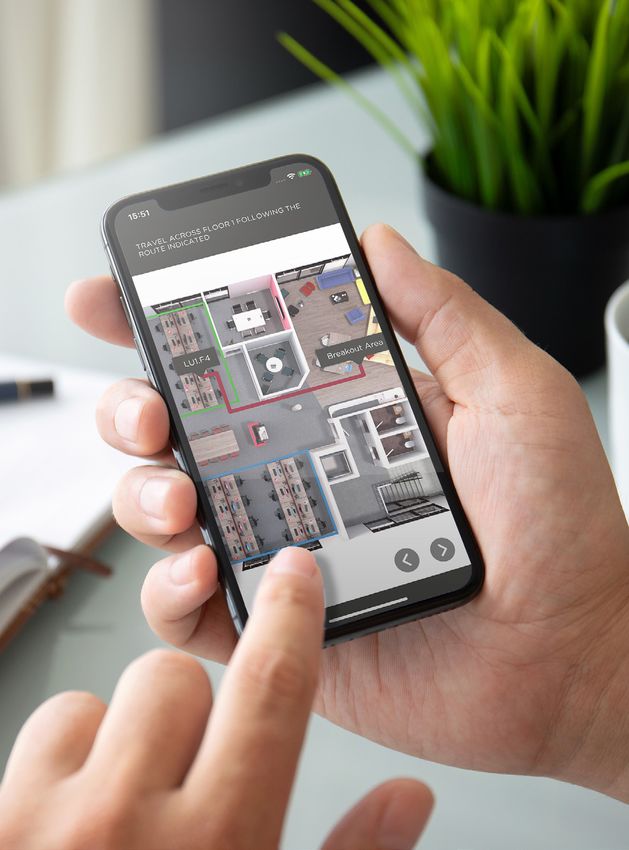
To ensure that a desk hoteling solution is adopted, it
                                                                must be accessible, easy to use, and offer flexibility—
                                                                both in where the work happens, and how that space
                                                                is reserved. For successful implementation of a space
                                                                optimization platform, it’s critical that the desk and room
                                                                booking software has an intuitive interface that allows
                                                                employees easily book office space from the device of
                                                                their choice, whenever and wherever they need it.

                                                                COVID-19 has challenged business leaders to leverage
                                                                advancements in workplace technology in order to
                                                                enable a safe return to the office. By implementing
                                                                space optimization software, they’re not only addressing
                                                                principal health and safety concerns and ensuring that
                                                                they’re compliant with government regulations, but also
                                                                improving the employee experience by facilitating a
                                                                smooth and comfortable transition back to the office. In
                                                                turn, this will help to reduce turnover, drive productivity,
                                                                and add business value that improves the bottom line.

The Value of Ongoing
Space Management
When considering new workplace technology, it’s important that companies think about the long-term benefits to their
business. As companies seek out solutions for COVID-related challenges, it’s easy to focus on short-term needs without
thinking about long-term impact. Space optimization software can not only help businesses as they reopen their office
and transition into a new style of working, but also help with ongoing space management and inform future real estate
decisions. With space optimization software, companies be able to better manage unused spaces, generate efficiencies to
reduce energy waste, and improve day-to-day operations.

Inform Real Estate Decisions                                    workstations required by offering bookable desk choices
                                                                so that they no longer need a dedicated workstation for
According to a pre-COVID study performed by CBRE, an            each employee. These tools will help businesses cut
average of 40% of available office space went empty             costs and give them an ongoing awareness of when they
every day, and that number has grown significantly with         may need to add or remove more workstations.
the shift to remote and hybrid working.5 It’s estimated
that the total current annualized cost to a company             Space optimization begins and ends with being able to
for just one workstation in one calendar year can be            have a reliable, data-driven understanding of how office
as much as $18,000.6 That means that reducing the               space is used. Integrating space management software
total number of workstations by just ten can save the           with IoT sensor technology can help gain direct insight
business $180,000 a year.                                       into working patterns by letting companies track when
                                                                and where space is being used. They’ll be able to see
By implementing space management software,                      which meeting rooms, floors, gathering spaces, hallways,
companies will have access to utilization data that             or other areas are being under or overutilized. Most
allows them to see how many of their desks are actually         offices have spaces that rarely get used at all and can
being used, helping them decide which workstations              be reallocated for other uses to promote productivity.
can be eliminated. A desk hoteling solution will                According to Abintra, large firms in London alone have
help companies cut down further on the number of

www.fwi.com                                                                                                                4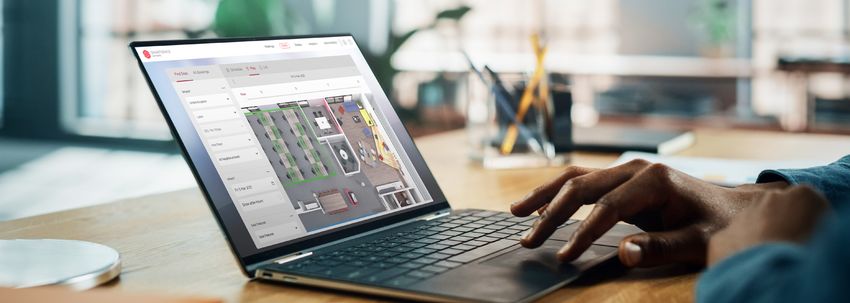
36 million square feet of office space that could be put to   example is being able to better manage the workplace
better use.7 By gathering data on how their office space      sanitation schedule. With a space management system
is actually being used, companies can not only ensure         in place, facilities staff will know which spaces are more
that they have the right spaces to promote productivity       highly trafficked and stay more on top of keeping them
among their workforce, but also use that data to inform       clean. Real-time and projected data insights allow them
their CRE strategy moving forward. Once businesses            to send cleaning staff to crowded locations on demand.
gain a better understanding of how space is used post-        They’ll also be able to see which bookable workstations
pandemic, there will likely be opportunities to reduce real   need to be sanitized between use by different employees,
estate expenditures and save money—but those insights         and plan ahead for that.
won’t be available unless space utilization is tracked.
                                                              With the right space optimization platform, companies
                                                              can also improve productivity by helping their employees
                                                              save time navigating the office. Our visual mapping

      347k
                                                              allows employees to easily see the layout of their office

  $                                                           and helps them find the quickest path to their reserved
                                                              desk, next meeting, coffee bar, or other location in
                                                              the office. Plus, employees can choose to share their
                                                              real-time location with colleagues, enabling in-person
       the amount of savings a                                collaboration.
       company can realize by
    fully utilizing their space.8

Reduce Energy Waste
A study by MIT shows that commercial buildings account
for 20% of US energy consumption and 12% of the
nation’s greenhouse gas emissions—at a cost of over
$100 billion per year.8 But 30% of the energy consumed in
these buildings is wasted due to inefficiencies.9 In most
buildings, HVAC and lighting systems aren’t adjusted
based on the occupancy and usage of the building and
remain on when the building isn’t in use. By implementing
space optimization software that integrates with
sensor technology, companies can automate lighting
and climate systems so that they only turn on when a
presence is detected. This will help them reduce their
carbon footprint, preserve more energy, and significantly
cut operating costs. Plus, making businesses more
sustainable can improve their brand image with
consumers and appeal to prospective employees.

Improve Day-to-Day Operations
With greater control and understanding over how
employees are using the office, there are many ways to
improve efficiencies all throughout any business. One

www.fwi.com                                                                                                            5
This is the future of the office—integrated
technology and workplace design to support
the needs of your employees and help you
achieve business goals.
The way we work—especially the way we work in the office—is completely changing. With these changes come a number
of challenges around safely reopening the workplace, enabling flexible working, supporting health and safety goals, and
continually optimizing CRE utilization. By implementing space optimization software, you’ll be prepared to enable a smooth
transition back into the workplace, support the flexible working needs of employees, gain invaluable space usage data
to help inform real estate decisions and add value to your business for years to come. It’s also important to consider
how you will communicate effectively with your hybrid workforce, once you have a mix of in-office and remote workers.
Many businesses are leveraging omnichannel communications solutions to solve this challenge, enabling targeted
communications across email, mobile, and digital signage.
Interested in learning more about how we can help your company support a safe transition back to the office,
streamline room and desk booking, optimize real estate usage over time, and make it easier to connect with
your workforce wherever they’re working from? We’re here to help.
1.303.313.3000 sales@fwi.com www.smartspaceglobal.com
[1] www.wework.com/ideas/research-insights/expert-insights/space-utilization-in-the-workplace
[2] www.smf.co.uk/wp-content/uploads/2015/10/Social-Market-Foundation-Publication-Briefing-CAGE-4-Are-happy-workers-more-productive-281015.pdf
[3] www.pwc.com/us/en/library/covid-19/us-remote-work-survey.html
[4] www.bcg.com/publications/2020/valuable-productivity-gains-covid-19
[5] www.cbre.com/research-and-reports/apac-space-utilisation-the-next-frontier
[6] www.kcrepsource.com/library/media/pdf/MASTER-WISENET.pdf
[7] www.abintra-consulting.co.uk/wp-content/uploads/2018/11/Abintra-Report-6.pdf
[8] www.cbre.com/grg/reporturl?pubID=836251cd-702c-4197-a938-ce2b71a39346&loginRequired=false
[9] www.energystar.gov/ia/partners/publications/pubdocs/C+I_brochure.pdf
www.fwi.com 6You can also read


