Glacial Erosion and Sedimentation - International Symposium on - International Glaciological Society
←
→
Page content transcription
If your browser does not render page correctly, please read the page content below
INTERNATIONAL GLACIOLOGICAL SOCIETY

           International Symposium on
  Glacial Erosion and Sedimentation

                      Pyle Center
                Madison, Wisconsin, USA
                   12–17 May 2019

                    Co-sponsored by:
Department of Geoscience, University of Wisconsin-Madison
    Wisconsin Geological and Natural History Survey

                  SECOND CIRCULAR
                    November 2018
      http://www.igsoc.org/symposia/ 2019/madison
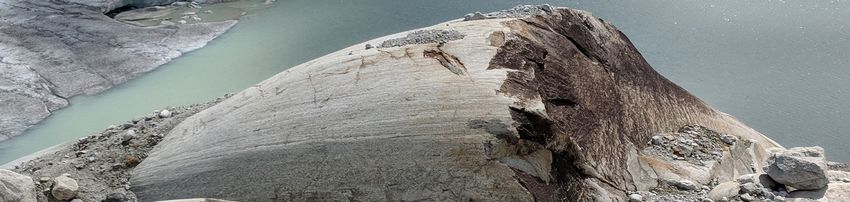
The International Glaciological Society will hold an International Symposium on ‘Glacial Erosion and Sedimentation’ in 2019. The symposium will be held at the Pyle Center in downtown Madison, Wisconsin, USA on 12–17 May 2019. THEME Since the last IGS symposium on glacial erosion and sedimentation in Reykjavik in 1995, techniques for characterizing these processes and their associated landscapes and sediments have improved markedly. Diverse remote-sensing techniques measure subaerial and submarine landforms at extraordinarily high resolution, and geophysical methods reveal evolving subglacial landscapes and processes. New and refined geochronological techniques place improved constraints on rates of erosion and deposition. Increased computer power allows models that address coupled processes of glacier flow, bedrock erosion, sediment transport and tectonic change over long time and length scales. New field and laboratory methods provide insight into the mechanics and kinematics of sediment-transport processes and their manifestations in glacial sediments. Interesting and stubbornly enduring questions accompany these advances. How can glacial sediments and landforms inform us about glacier dynamics and how are glacier dynamics modulated by sediment-transport processes? How can large-scale models of glacial landscape evolution better approxi mate the small-scale processes that drive erosion and sediment transport? How can past climate variability be inferred from glacial sediments and landforms? How have rates of glacial erosion and sedimentation changed through time? How are drumlins and other subglacial bedforms sculpted, and what data can provide definitive hypothesis tests?
SUGGESTED TOPICS
We seek papers and presentations on processes and products of glacial
erosion and sedimentation, and their relationships to glacier dynamics. Key
focus areas will include (but will not be limited to):
1. Processes and patterns of glacial erosion, sediment transport and
   deposition
2. Glacial history and dynamics, as inferred from sediments and landforms
3. Sediment transport feedbacks on glacier dynamics
4. Models of glacial landscape evolution
5. Rates of glacial erosion and sedimentation
6. Origins of glacial landforms
7. Geophysical studies of glacial landforms and subglacial processes
8. Climate signals of glacial sediments
9. Hazards associated with glacial sedimentation and erosion

ABSTRACT AND PAPER PUBLICATION
Participants wishing to present a paper (oral or poster) at the Symposium
will be required to submit an abstract by 12 January 2019. Abstracts need to
be submitted via the IGS website. Accepted abstracts will be posted on the
Symposium website.
The Council of the International Glaciological Society will publish a
thematic issue of the Annals of Glaciology (vol. 60 (2019), issue 80) on topics
consistent with the symposium themes. Submissions to this issue will not be
contingent on presentation at the Symposium, and material presented at the
symposium is not necessarily affirmed as being suitable for consideration
for this issue of the Annals. Participants are encouraged, however, to submit
manuscripts for this Annals volume. Submissions are being accepted now
and the deadline for submitting papers is 7 June 2019. The call for papers is
posted on https://www.igsoc.org/annals/call_4_papers/a80_call_4_papers.pdf.
REGISTRATION FEES
All fees are in US dollars, $
Early registration until 15 March 2019
       – Participant (IGS member):                              $510
       – Participant (not IGS member):                          $610
       – Student or retired (IGS member):                       $400
       – Student or retired (not IGS member):                   $475
       – Accompanying person (21+):                             $175
       – Accompanying person (12–20):                           $125
       – Accompanying person (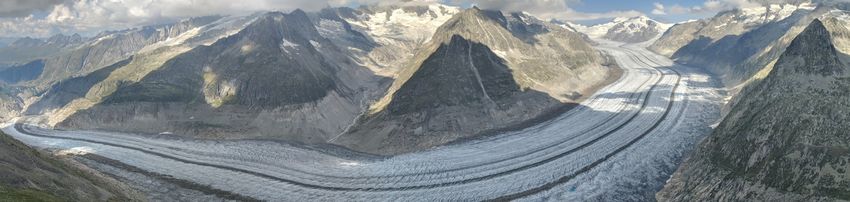
STUDENT AND EARLY-CAREER SUPPORT
We anticipate being able to fund airfare and registration for a limited
number of early-career researchers (graduate students, postdocs, recent
hires in permanent positions). Awards of full or partial scholarships
will be given on a competitive basis. An announcement will be made
when the early-career support budget is confirmed, and travel support
applications will be posted at that time.
PROGRAM
True to tradition, the symposium will include oral and poster sessions
interlaced with ample free time to facilitate the interactions of the
participants. Additional activities include an opening Icebreaker, a Banquet
dinner and a trip to the Kettle Moraine region of southeastern Wisconsin
during the mid-symposium afternoon break.
VENUE
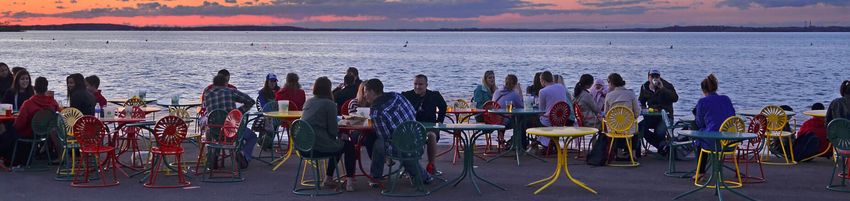
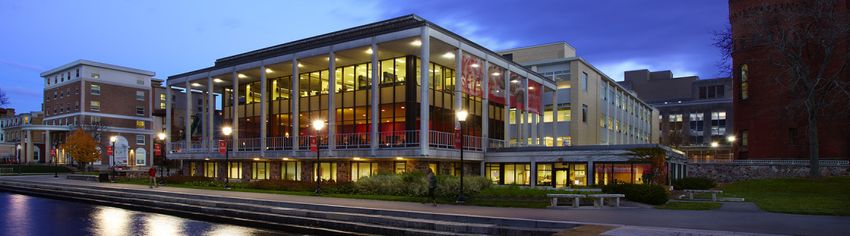
The symposium will be held at the Pyle Center in downtown Madison, on
the shores of Lake Mendota. The Pyle Center is located on campus and is
just blocks from State Street with numerous eating venues and is less than a
5-minute walk from the Memorial Union Terrace with a lakeside sitting area
and beer garden. Numerous hotels are within walking distance of the venue
and lay on multiple bus lines.
LOCATION
Madison is the second largest city in Wisconsin with a population of more
than 208 000 people, and is surrounded by the classic geomorphology of
the Green Bay Lobe of the Laurentide ice sheet. The city is home of the
University of Wisconsin–Madison and the State Capitol and offers a large
array of activities year-round. A large portion of downtown Madison sits
on an isthmus between Lake Mendota and Lake Monona. The University’s
Memorial Union is located on Lake Mendota and serves as a popular
gathering place for people to socialize and listen to live music. State Street,
the heart of downtown Madison, is alive with activity every day. Connecting
the Capitol to the University, State Street features art galleries, cafes and
restaurants, theatres, museums and more than 200 specialty shops. Madison
is commonly considered the bike capital of the Midwest, with over
100 miles (160 km) of bike paths, including paths to the Pyle Center. B-cycle
stations are located throughout the city for hourly or daily bike rental.
ACCOMMODATION
A number of hotels have provided group rates for the IGS for 12 May arrival
through 18 May departure. You must contact these hotels and make the
bookings yourself. To book and guarantee your room, please provide them
with your credit card details by 31 March 2019. Use the codes provided
below (different for each hotel) to secure your room. All hotels listed are
located within walking distance of the conference venue. May is peak tourist
season in the Madison region, so book as early as possible. Please note that
rates may vary depending on property and the specific dates requested.
•   Madison Concourse Hotel, 1 W. Dayton St, Madison, WI 53703
    (1 km walk to Pyle Center): $169.00 per night + tax single/double
    Phone: +1 608-257-6000. Parking available $15. Booking link:
    https://reservations.travelclick.com/6388?groupID=2394747
    Website: https://www.concoursehotel.com/
•   Doubletree Madison, 525 W. Johnson St, Madison, WI 53703 (0.8
    km walk to Pyle Center): $159.00 per night + tax single/double
    Phone: +1 608-251-5511. Parking available. Booking link: https://
    doubletree.hilton.com/en/dt/groups/personalized/M/MSNDTDT-
    GEO-20190512/index.jhtml?WT.mc_id=POG
    Website: https://doubletree3.hilton.com/en/hotels/wisconsin/
    doubletree-by-hilton-hotel-madison-MSNDTDT/index.html
•   Graduate Madison, 601 Langdon St, Madison, WI 53703 (0.2 km
    walk to Pyle Center): $129.00 per night + tax Standard room. Phone:
    +1 608-257-4391. Parking available $25. Booking link: https://
    gc.synxis.com/rez.aspx?Hotel=77206&Chain=21643&arrive=5/12/20
    19&depart=5/18/2019&adult=1&child=0&group=190512UWDE
    Website: https://www.graduatehotels.com/madison
•   Lowell Center, 610 Langdon St, Madison, WI 53703 (0.2 km walk to
    Pyle Center): Current rates, see website. Phone: +1 608-256-2621.
    Parking available. Booking link http://bit.ly/esglac12may
    Website: http://conferencing.uwex.edu/hotel-accommodations/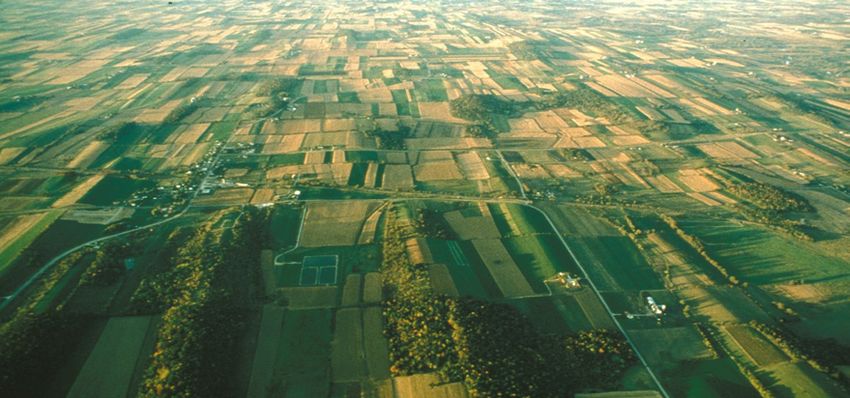
TRAVEL
Madison airport connects to 20 other US cities directly, including flights to
both the east and west coasts of the USA. Chicago O’Hare airport is a 2-hour
drive from Madison but the Van Galder bus company regularly runs buses
directly between Madison and O’Hare. The drop-off location is one block
from the venue. (https://web.coachusa.com/vangalder/ss.ohareairport.asp)
ICEBREAKER
The Icebreaker will be held on Sunday 12 May 5:00–9:00 pm at the rooftop
terrace at the Pyle Center. Refreshments (cash bar) and finger food with a
complimentary drink will be available from 5:00 pm to 7:00 pm. Delegates
can also use this opportunity to complete their registration and collect their
conference bag materials.
BANQUET
The Banquet will be held at the Memorial Union Great Hall on the evening
of Thursday 16 May. The Memorial Union is located on the shore of
Lake Mendota and has a reputation as one of the most beautiful student
centers on a university campus. The banquet will be served buffet-style
with a complimentary drink. A cash bar will be available and will require
valid government-issued ID. Transportation will be provided between the
symposium venue and the Memorial Union.
MID-CONFERENCE EXCURSION
On Wednesday 15 May, there will be a mid-conference field trip to the Kettle
Moraine region of Wisconsin, departing at 11:00 pm from the symposium
venue. Lunch will be provided. The moraine was created where the Green
Bay Lobe of the Laurentide Ice Sheet, on the west, merged with the Lake
Michigan Lobe to the east, depositing sediment between the lobes as an
interlobate moraine. The region contains world-class examples of drumlins,
eskers, kames and glacial lake deposits, all of which will be visited on the trip.
We will end at a local brewery near downtown Madison. Those who wish to
skip the brewery will be transported to the symposium venue at 6 pm.
SYMPOSIUM ORGANIZATION
Magnús Már Magnússon (International Glaciological Society)
SCIENCE STEERING AND EDITORIAL COMMITTEE
Chief Editors: Neal Iverson (Iowa State University) and Lucas Zoet (University
of Wisconsin–Madison). Scientific Editors: David Egholm (Aarhus University),
Gwenn Flowers (Simon Fraser University), Mark Johnson (University of
Gothenburg), Shaun Marcott (University of Wisconsin–Madison),
Chris Stokes (Durham University), and Martin Truffer (University of
Alaska Fairbanks)
LOCAL ORGANIZING COMMITTEE
Lucas Zoet (Chair), Dave Mickelson, Elmo Rawling, Shaun Marcott,
Carrie Jennings, Urs Fischer.
FURTHER INFORMATION
Please register your interest online if you wish to attend the symposium at
http://www.igsoc.org/symposia/2019/madison.

IMPORTANT DATES
Glacial Erosion and Sedimentation
          Opening of online abstract submission:          1 December 2018
          Opening of online registration:                   27 January 2019
          Abstract submission deadline:                     12 January 2019
          Notification of abstract acceptance:              22 January 2019
          Early registration deadline:                        1 March 2019
          Deadline for full refund:                           15 April 2019
          Deadline for refund on a sliding scale:                1 May 2019
          Late registration surcharge starts:                    2 May 2019
          Symposium starts:                                    12 May 2019
Annals of Glaciology volume 60, issue 80
         Paper submission deadline:                             7 June 2019
         Final revised papers deadline:                      30 August 2019
The Call for Papers for the Annals of Glaciology is posted on
https://www.igsoc.org/annals/call_4_papers/a80_call_4_papers.pdf. Accepted
papers will be published as soon as authors have returned their proofs and
all corrections have been made.
Hard copy publication is scheduled for late 2019.

You can also read


