Global Mobility Under Siege - Passport Index
←
→
Page content transcription
If your browser does not render page correctly, please read the page content below

2021

Global Mobility
Under Siege

2021 GLOBAL MOBILITY REPORT   PASSPORTINDEX.ORG
PASSPORT INDEX • GLOBAL MOBILITY REPORT • 2021

                                                           “
                                                           Of all the books in the world,
                                                           the best stories are found between
                                                           the pages of a passport.

                                                                                                                                              ”

                                                    Introduction
                                                    The Passport Index was initially created to offer a deeper look into the world of global
                                                    mobility — passport triumphs and downfalls, global ranking trends, unforeseen surprises,
                                                    and everything in between. But in the past year, what it truly offered, was a deeper look
                                                    into humanity.

                                                    Evidently, COVID-19 caused major disruptions to mobility, hindering international travel,
                                                    revoking existing visas to citizens and visitors, and rendering passport powers to all-time lows.

                                                    With rapidly changing real-time data to reflect COVID-19 lockdown measures, to the World
                                                    Openness Score plummeting 65% in a matter of months, Passport Index translated the
                                                    depths of the pandemic into the future of global mobility and showed in numbers, how,
                                                    what affects one person anywhere, can affect everyone everywhere.

                                                    And today, as countries progressively begin to reopen their borders and renew temporary
                                                    visa bans, the 2021 Passport Index Global Mobility Report reveals what rock-bottom for
                                                    global mobility looks like during a worldwide pandemic, and whether government decisions
                                                    for lockdown measures were a positive mark for successful containment of the COVID-19
                                                    disease, or a cause for bigger concern in closing our world to responsible mobility.
  This report covers the state of Global Mobility
  in 2020 and highlights the biggest shifts in
  passport power during the pandemic.

  © 2021 PASSPORT INDEX

                                                                                                                                                        3
PASSPORT INDEX • GLOBAL MOBILITY REPORT • 2021
Unlocking the future of travel
Since the inception of the World Openness Score (WOS) in 2015; year after year, Passport
Index monitored the ease of travel between countries, as the world steadily opened at an The Global Mobility Barometer
average pace of 6%. during COVID-19 pandemic
As avid optimists, our calculations suggested that if this trend continued, the world would be
completely open for visa-free travel by 2035. That is, of course until 2020 happened. BELGIUM • • • IR AQ • • • • 2020 • • •
•• •• ••
••
•
••
•
••
•
••••••••
112 27
••••••••
65
••••••••
•••
•••
•••
Between December 31st 2019, and May 31st 2020 when COVID-19 was officially declared
••••
••••
••••
a global pandemic; WOS went from all-time high of 21,360, to its all-time low, of 12,994 — HIGHEST LOWEST AVERAGE
MOBILITY SCORE MOBILITY SCORE MOBILITY SCORE
dropping 65%.
-67 -8 -42
What this meant was that as many — if not most — countries closed their borders, 67% of the 202
0 COVID-19
• 202
0 COVID-19
• ••
• 2020 • • •
• •
world itself was closed for travel.
••
•
••
••
••••••••
••••••••
33%
••••••••
7.6B
•••
12,944
••••••
••••••
••••
As we begin a new year however, current real-time data shows more promise. At a 15,597 WORLD WORLD WORLD
OPENNESS OPENNESS SCORE POPULATION
WOS, up by 19.7% since its ultimate low point, we expect to see a continued increase in -21% -65%
openness as global travel progressively resumes, as well as an increase in controlled
protocols prioritizing the health of global travelers.
Source: Passport Index 2020 PASSPORTINDEX.ORG
We have already begun to see a surge of initiatives to unlock the potential of digital identity
for secure and seamless travel and a move towards digital passports. One thing is for
certain, preparing for the worst has pushed global mobility to further innovate for a safer and The Most Powerful Passports
more seamless travel experience as the world continues to open up.
during COVID-19 pandemic
COVID-19 COMPOSITION OF
MOBILITY SCORE TOTAL MOBILITY SCORE
1 BELGIUM 112 80 32 86
2 FINLAND 112 79 33 86
The World Openness Score 3 AUSTRIA 112 79 33 86
during COVID-19 pandemic 4 LUXEMBURG 112 79 33 86
WORLD
OPENNESS SCORE
PER CENT
OF THE WORLD OPEN 5 SPAIN 112 78 34 86
6 IRELAND 112 77 35 86
2020 15,400 39% +19.7%
7 UNITED KINGDOM 112 77 35 86
COVID-19 12,944 33% -65%
8 SWITZERLAND 112 76 36 86
2019 21,360 54% +5.7%
9 SWEDEN 111 79 32 87
2018 20,216 51% +8.2%
10 NETHERLANDS 111 79 32 87
2017 18,680 47% +4.2%
2016 17,927 45% +0.1%
Source: Passport Index 2020 PASSPORTINDEX.ORG
2015 17,904 45%
5
Source: Passport Index 2020 PASSPORTINDEX.ORG
PASSPORT INDEX • GLOBAL MOBILITY REPORT • 2021

                                                                                                         The Biggest Losers
                                                                                                         during COVID-19 pandemic
                                                                                                                                                        COVID-19   MOBILITY SCORE
                                                                                                                                                 MOBILITY SCORE    DECREASE DUE TO COVID-19

                                                                                                  1                              SOUTH KOREA               78                                             -93

                                                                                                 2                               CANADA                    77                                            -92

                                                                                                                                                           79                                            -92
Winners and Losers: How COVID-19
                                                                                                 3                               JAPAN

impacted global mobility                                                                         4                               SINGAPORE                 78                                            -91

                                                                                                 5                               U.S.A.                    80                                            -91

                                                                                                 6                               UNITED ARAB EMIRATES      90                                           -89
Borders closed. Passports collected dust. Visa agreements evaporated. Global mobility fell
off a cliff at the height of the pandemic, yet some countries withstood much better than         7                               AUSTRALIA                 79                                           -89
others. What’s driving these changes?                                                            8                               CHILE                     72                                           -89

With the emergence of COVID-19 came an unprecedented onslaught of travel bans, border            9                               NEW ZEALAND               80                                           -89
closures, temporary visa restrictions and quarantine measures. As a result, the World            10                              ARGENTINA                 73                                          -87
Openness Score, (WOS), which assesses how open the world is based on visa-free travel
agreements, hit an all-time low since it was introduced by Arton Capital in 2015.
                                                                                                         Source: Passport Index 2020                                                          PASSPORTINDEX.ORG

At the height of the pandemic, the WOS dropped from a record 21,360 (54%) in 2019 to
12,944 (33%) out of a total possible 39,601. To put it another way: world openness plunged
65% due to the novel coronavirus – a staggering statistic with countless economic, social
and humanitarian implications.                                                                        When a country bans all or most foreign travelers – as did South Korea, Canada, Hong
                                                                                                      Kong, Macao, mainland China, Japan, Taiwan, Bhutan and others – it is likely their citizens
“Before the pandemic, the WOS was increasing at a rate of 6% per year and our world was               will also see a reduction in visa-free travel in response. In addition, those countries that
more open and mobile than ever,” says Armand Arton, President and Founder of Arton                    have exceptionally high daily rates of infection or deaths – or that have not managed the
Capital. “This has been a shock for the whole planet – we are feeling the impact on the               pandemic well in general – have been hit particularly hard by travel restrictions.
movement of people and ideas, innovation and trade.”
                                                                                                      The biggest loser of 2020? South Korea. The country took a nosedive from third place with an
The pandemic also caused major shake-ups when it comes to individual passport power.                  MS of 171 last year to just 78 during COVID-19, driven in part to an early outbreak as well as the
The Passport Index, which ranks the passports of 199 countries and territories based on visa-         government’s decision in April to suspend visa exemptions for at least 90 nationalities.
free access and an overall mobility score (MS), has been tracking the changes in real-time.
                                                                                                      Meanwhile, historically strong passports have also tanked following travel bans and visa
In first place as the most powerful passport throughout COVID-19 was Belgium with an MS               restrictions. Canada’s MS, for instance, plunged from 169 to 78, and Japan’s fell from 171 to
of 112 – up from No. 4 last year with a score of 170. In 2019, the UAE topped the ranking with        77. The US, which boasted a solid score of 171 in 2019, saw its MS shrivel to 80.
an MS of 179. Yet during the pandemic, the country didn’t even make the top 10, dropping to
13th place with a score of 90.                                                                        “When it comes to the US, we are not surprised that the country saw significantly less
                                                                                                      mobility in 2020,” adds Arton. “With the rest of the world largely disagreeing with how
European Union countries — with the exception of the UK, which officially left the EU                 they’ve handled this medical crisis internally, US citizens represent a high risk for travel.”
in 2020 — dominate the top 10 rankings – the likes of Finland, Luxembourg and Spain
have retained their coveted positions. Even amid virus restrictions, these passports still            While the UK has so far held steady in the top 10 most powerful passports with an MS of 112,
enjoyed access to most of the EU’s 27 member nations which buoyed their passport power                it will likely sink to the level of the US soon for two reasons: First, it officially left the EU in on
throughout the crisis.                                                                                1 January 2021; and second, it’s batting a new and highly infectious virus strain.

 “EU countries still have relatively high mobility scores because they have retained visa-            “Unfortunately, no matter where you are from, I think the next few years will be very hard
free access to so many countries in the region,” says Arton. “But for most other countries,           on personal mobility. Yet, when the world finally overcomes this crisis, we will have an
mobility really depends on how efficiently the country has managed the crisis and its                 opportunity for a fresh start – a chance to travel more responsibly as global citizens and
reciprocal visa agreements.”                                                                          really appreciate our freedom of movement,” shares Arton.

                                                                                                                                                                                                                  7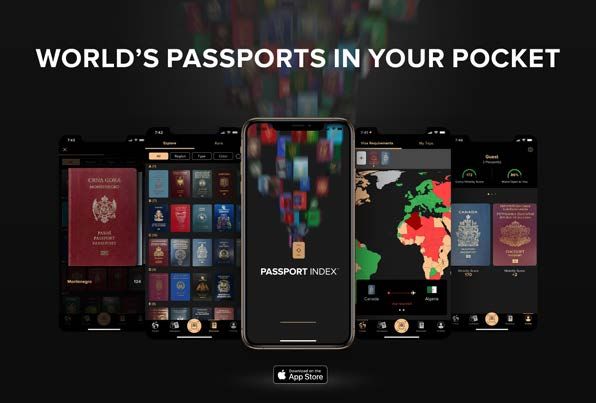
PASSPORT INDEX • GLOBAL MOBILITY REPORT • 2021

                                                                                                 3. Goodbye, physical passports

                                                                                                 As biometric technology, such as facial recognition and fingerprints, becomes more
                                                                                                 integrated into immigration procedures worldwide, it is only a matter of time before we retire
                                                                                                 our physical passports. We’ve seen glimpses of the future in Australia and the UAE where
                                                                                                 contactless facial biometric gateways and “smart tunnels” enable pre-screened travelers
10 predictions for the next 10 years                                                             to pass through immigration without pulling out their physical passports. But in the next 10
                                                                                                 years, we expect to see the end of paper-based documentation.
The COVID-19 pandemic has grounded travelers and crippled economies, but it hasn’t
stopped innovation. As the world maps out a road to recovery, here are 10 predictions for        What will we use instead? Enter digital “unique passenger identification” records, such
what travel might look like in the next decade.                                                  as IATA’s One ID, a document-free process based on identity management and biometric
                                                                                                 recognition. These passports of the future will most likely take the form of a digital identity
                                                                                                 that’s cryptographically sealed on the blockchain, a secure decentralized ledger, and
                                                                                                 accessed via a unique digital ‘fingerprint’. This means fast and more convenient immigration,
                                                                                                 plus no chance of theft or forgery.
1. AI soars into aviation

With the Fourth Industrial Revolution upon us, we do not doubt that AI pilots, customer
service chatbots, VR entertainment, real-time baggage tracking, and highly personalized in-
flight experiences will become the norm by 2030. These changes are already in motion.            4. One passport won’t suffice

Many airlines, including Cathay Pacific and Iberia, offer sophisticated chatbots, while          Citizenship and residence by investment programs have only grown more popular during the
Singapore Airlines provides KrisPay, a digital blockchain wallet. Though AI pilots are less      pandemic, as high-net-worth individuals seek greater flexibility, mobility and freedom. And in
common – the US Air Force’s U2 Dragon Lady spy plane just made history in December,              the future, one passport simply won’t cut it.
when an artificial intelligence co-pilot flew a military plane for the first time – the
autonomous aircraft market should hit US$23.7 billion by 2030.                                   A desire to hedge against future health, economic, political, environmental and social crises
                                                                                                 isn’t going anywhere. With failing economies and fears of recessions, even the citizens of
We’d be surprised if AI pilots and co-pilots weren’t in the cockpits of commercial jets in the   historically wealthy, stable countries like the US have seen citizens snapping up a backup
next 30 years.                                                                                   Plan B or two.

                                                                                                 During the pandemic, destinations like the Caribbean – where well-insulated islands seem
                                                                                                 like safe havens – and Europe have been popular. Looking ahead, we expect to see an
                                                                                                 uptick in interest in places like Montenegro, which is on the waiting list to join the EU, and
2. Immunity or bust                                                                              Bulgaria, which is currently in the process of joining the Schengen area.

As vaccination programs kick off worldwide, our eligibility to travel may come down to a
digital health or “immunity” passport to prove one has been vaccinated. In December, Aruba
became the first country to adopt a digital health passport platform – and we expect many
more to follow.                                                                                  5. CIPs take off

IATA is in the final stages of developing a digital vaccine passport for travelers, the IATA     The number of countries offering a second residency or citizenship by investment programs
Travel Pass, which would let travelers share their COVID-19 testing or vaccine information       will boom in the next 10 years. Such programs tend to emerge after catastrophes since they
with airlines and border authorities, via a contactless passport app. And CommonPass,            are seen as an easy, efficient and safe way for countries to recover from financial crises,
backed by the World Economic Forum, provides a similar service. Domestically, China and          develop ambitious real estate projects and create new jobs. Additionally, many programs
Macao have already introduced digital health check systems, which assign a color (green,         – particularly those in the EU – will most likely see changes in terms of due diligence
yellow or red) based on your presumed risk level.                                                and residential requirements. In the EU, for instance, we predict that future programs will
                                                                                                 emphasize greater transparency and connection with the community, be that through
While nations have yet to reach a global standard, it is only a matter of time before health     language skills, minimum time spent on the ground, or job creation.
records become a requisite for travel in the coming years. What’s more, since the virus may
mutate year after year – or more pandemic may emerge – such certificates could be here to
stay for the foreseeable future.

                                                                                                                                                                                                  9
PASSPORT INDEX • GLOBAL MOBILITY REPORT • 2021
6. The rise of e-Residencies and virtual immigrants
While only elite travelers will have the means to invest in CIP, we expect other global citizens
of all income levels to take advantage of residency programs. With remote work now the
norm thanks to COVID-19 shifts, e-Residencies – like Estonia’s pioneering program – will
likely see higher demand from entrepreneurs, digital nomads, freelancers, and startups this
decade. Such programs will be pivotal in attracting a new generation of remote workers who
can work from anywhere.
What’s more, measures like digital work permits could be assigned remotely to allow “virtual
immigrants’’ to start working remotely while awaiting visa clearance and entry permits. This
9. All eyes on Africa
would give all parties – government, employers, workers and their families – the flexibility
Within the next decade, we foresee countries in Africa dramatically increasing their passport
to deal with unexpected disruptions and delays, while simultaneously supporting local
power and mobility as the 55 member-state African Union inches closer to its Agenda 2063
economies.
goals. Similar to the European Union, the African Union aims to envision ‘an integrated
continent, politically united and based on the ideals of Pan-Africanism and the vision of
Africa’s Renaissance’.
For those who hold the African Union passport – which has been in use since 2016 – this
7. Open sesame: World openness to double
vision includes visa-free travel across the member states, the freedom to move and work
without restrictions, and a wellspring of new personal and business opportunities. It is not a
Before the pandemic, the World Openness Score reached an all-time high of 54% (21,360).
fully mobile continent, yet, but we expect to see much progress on this front by 2030.
In 2020, we witnessed a drop to 39% (15,400) due to COVID-19 restrictions, but we predict
a V-shaped rebound coming around the corner around 2023. And in the next 10 years, we
expect the World Openness Score to nearly double to around 75% of the world.
Bilateral visa-free agreements around the world – a trend that already emerged pre-Covid
– will fuel the renewed mobility. In the past five years, more countries signed visa-free 10. Traveller experience redefined
agreements than ever in history. And as we eventually return to normality and diplomatic
relations are restored, we expect this trend to pick up right where it left off. During the downturn in 2020, many airlines are reimagining what flights of the future could
be like. To get travelers back in the air, they’ll need to improve the passenger experience,
prioritizing automatic technology that reduces physical touchpoints at every step in the
journey.
8. Apply for eVisas on your phone We will also see automatic ultraviolet cabin cleaning systems; flexible seating and sleeping
configurations; beautiful open-air, green spaces in airports; unlimited Wi-Fi; greater booking
As visa-free agreements soar in the future, so too will eVisa and ETAs. We predict that flexibility; live TV and gaming inflight; and more personalized inflight meals. Mobile apps
countries will drop physical printed visas and visas on arrivals and opt for digital visas will be another key ingredient, offering the ability to shop inflight and track your bags, order
instead, creating a faster, more convenient, more secure and overall, more accessible travel meals, stream your favorite shows, access real-time translation services, and take advantage
experience. of wellness practices.
The need for health requirements in the coming months and years will likely accelerate this A few airlines are already dabbling in these spaces, from Etihad Airways’ new Jet Lag
trend. Essentially, since health certificates will be stored in a mobile wallet or app, it’s likely Adviser app to Qatar Airways’ UV cleaning system, and Southwest Airlines’s touchless inflight
that visas can be bundled together in one place. Digitizing visas also opens the door for entertainment system.
more opportunities – think fully digital visa application services and approval processes on
your mobile phone.
11PASSPORT INDEX • GLOBAL MOBILITY REPORT • 2021
Real-time data in a post pandemic world
The pandemic revealed a disconnect when it comes to reliable, timely visa intelligence. But
the Passport Index fills the void as a centralized source of updated visa requirements.
During the pandemic, borders opened and closed by the hour. Visa restrictions fluctuated
by the minute. And in the wake of ever-shifting policies, tens of thousands of travelers found
themselves stranded all over the world, from the Maldives to India to Denmark.
The app is particularly powerful for those who own multiple passports, from business leaders
Suddenly, up-to-date travel intelligence became more crucial than ever as countries to multinational families. Essentially, users can choose a preferred passport to travel with,
deployed hyper-localized crisis management strategies. But without one centralized data based on their destination and the associated visa requirements. In this way, the Passport
source, many did not know where to turn for reliable, up-to-date information. The answers Index enables smarter, safer and more personalized travel – enhancing one’s freedom of
vary widely, depending on the source – quick Google scan, government websites, airlines, movement through data.
consulates or third-party operators – leaving passengers even more confused
and frustrated. “Within a month of launching The Passport Index, the website crashed because we had
over a million visitors,” recalls Arton. “Back then, it was originally built as an internal tool
This ongoing disarray and disruption have only underscored a serious need – and desire – for our team and our clients, but the enthusiasm showed us how much people wanted this
for one single, definitive source of real-time visa and mobility intelligence. personalized, informative tool. Today, and in the years ahead, this is exactly what people
want: a frictionless approach to travel.”
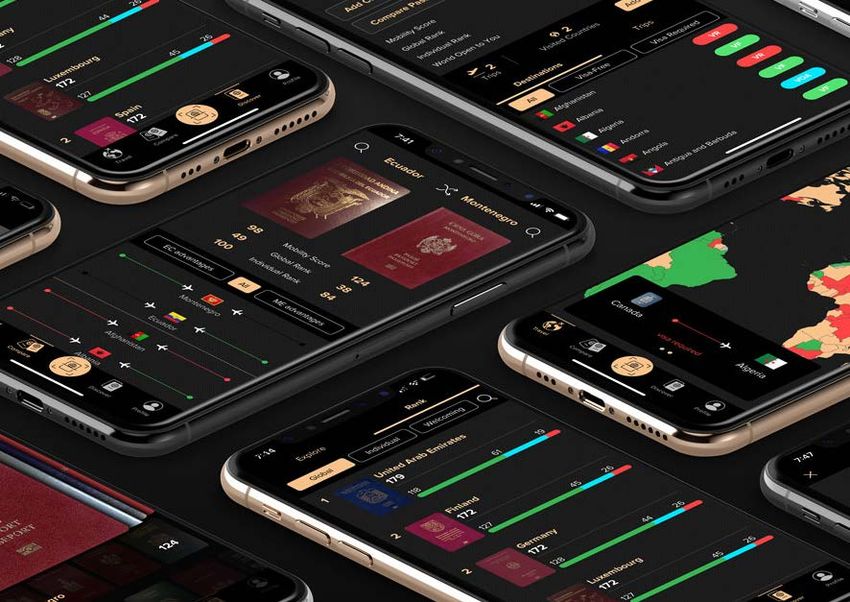
That’s why Passport Index and its innovative Passport Index Mobile App have become travel
essentials for anyone taking to the skies again during or after the pandemic. Offering a Having access to such services and data at your fingertips not only makes travel more
unique and secure place to hold your passport data, the app calculates your Global Mobility convenient, but it also enhances personal safety, saves money, alleviates pain points and
Score, based on the passports you hold; recommends the best travel document for each instills confidence.
destination; provides real-time visa requirement updates; tracks your trips; and much more.
“When the world begins to recover, we will see a greater focus on improving travel – how
“Real-time data is going to be key when it comes to getting the world back to normal,” says hotels, airlines, governments can offer a smoother, faster and more reliable experience
Armand Arton, the founder and president of Arton Capital. “Even in the past few weeks, after so much disruption and uncertainty” says Arton. “Real-time data will not only be a key
many governments have stopped letting UK nationals in and the websites of many travel ingredient to streamlining this experience, but it will also be essential to a frictionless
authorities still don’t reflect that ... Timing is everything. And without real-time updates and global recovery.”
accurate resources, travelers will not feel confident.”
13PASSPORT INDEX • GLOBAL MOBILITY REPORT • 2021
15PASSPORT INDEX • GLOBAL MOBILITY REPORT • 2021
Country to watch: Montenegro
Among the most significant developments is the US$338 million Blue Horizon project, a vast
With Montenegro on track to enter the EU in the coming years, we expect the country’s 200-room luxury resort village on the northern coast, close to Porto Montenegro, a luxurious
passport power to see a significant boost. marina village and superyacht port. There’s also Sveti Marko Island, a six-star spa resort
in the Bay of Kotor; Portonovi, which will include the One&Only Portonovi hotel, a beach
When it comes to increasing passport power and mobility, Montenegro and the greater club, and a superyacht marina; and Lustica Bay, an expansive luxury hotel, golf and marina
Balkan region have incredible potential. Looking at a map of the European Union, there complex on the Adriatic.
is a gap between EU member states and Greece. Within this void, you have most former
Yugoslavian countries – Bosnia and Herzegovina, Montenegro, Albania, North Macedonia In Kolašin, an internationally renowned ski resort town in the mountains of northern
and Serbia – which will likely all join the EU in the future. Montenegro, there is also significant activity. Setting course to completion in 2022 is Bjelasica
1450 – a four-star ski resort exclusive to Montenegro’s Citizenship by Investment Program via
Montenegro is leading the pack. The country of roughly 642,000 boasts one of the fastest- Arton Capital – as well as several five-star developments to decorate the pristine mountainous
growing tourism economies globally, welcoming over 2 million travellers per year pre-COVID. region; Hotel Breza, the Kolašin Westin Ski Resort, and Four Points by Sheraton.
Tourism accounts for over 20% of Montenegro’s GDP, with a revenue of US$1,224 million in
December 2018, which was a growth of 10.3% year-on-year. Much of this has been driven by In addition, Montenegro is expected to see better connectivity, thanks to the launch of
investments into tourism infrastructure and by the end of 2019, investors had already poured new flights into the country from major European cities like Paris, Zurich, Berlin, Brussels,
US$1.65 billion into 10 of the country’s most important tourism projects. Rome, Milan, Barcelona, Oslo, and Stockholm. There are also a growing number of housing
development projects in popular areas of Montenegro. These include Porto Montenegro in the
Looking at the bigger picture, Montenegro is making moves to strengthen its economy Bay of Kotor; Dukley Gardens on the Zavala Peninsula; and DOM XXI near the Budva Old Town.
post-Covid. The World Bank has approved a US$3.7 million financing loan to strengthen rural
development and agriculture projects in Montenegro that will enhance the country’s EU Given Montenegro’s growth potential, the country has one of the most popular CIPs in
candidacy. And, in June 2020, the International Monetary Fund provided an emergency loan Europe. Before the pandemic, Passport Index gave Montenegro a mobility score of 124 in
of US$83.7 million to help the country weather the effects of the decline in tourism due to 2019, a significant increase from 102 in 2015. Although that number plummeted to 71 during
the pandemic. the pandemic, we expect it to recover quickly once travel resumes. And the passport will
only become more powerful once Montenegro becomes an EU member state, as early as
In addition, the country is transitioning towards a market economy that should see more 2025, and enjoy visa-free access to over 160 countries around the world.
favorable conditions for investments in private sector development. As a result of all of this,
Montenegro’s GDP is forecast to grow 6% in 2021, and 4.6% in 2022. At that point, it will be only a matter of time before other Balkan countries follow suit. These
countries have long developed strong trade and diplomatic links with Europe. What’s more,
With arrivals expected to rebound after the pandemic, the country continues to invest in the EU has already expressed a commitment to gradually integrate the Balkan states –
ambitious real estate and tourism projects that cater to an elite market. Many investors have Serbia, North Macedonia, and Albania are already EU membership candidates.
their sights set on the northern region, where there is excellent potential for coastal holidays
in the summer and skiing in the winter. We are watching Montenegro, and the rest of the Balkans closely, as it offers excellent
business opportunities, a beautiful outdoor holiday destination and soon, access to the EU’s
world of visa-free travel.economies.
17PASSPORT INDEX • GLOBAL MOBILITY REPORT • 2021
The Most Powerful Passports The Most Powerful CBI Passports
during COVID-19 pandemic during COVID-19 pandemic
COVID-19 COMPOSITION OF COVID-19 COMPOSITION OF
MOBILITY SCORE TOTAL MOBILITY SCORE MOBILITY SCORE TOTAL MOBILITY SCORE
1 BELGIUM 112 80 32 86 1 MALTA 128 95 33 70
2 FINLAND 112 79 33 86 2 CYPRUS 127 95 32 71
3 AUSTRIA 112 79 33 86 3 BULGARIA 125 87 38 73
4 LUXEMBURG 112 79 33 86 4 ST KITTS & NEVIS 90 59 31 108
5 SPAIN 112 78 34 86 5 ANTIGUA & BARBUDA 89 58 31 109
6 IRELAND 112 77 35 86 6 SAINT LUCIA 83 51 32 115
7 UNITED KINGDOM 112 77 35 86 7 GRENADA 80 50 30 118
8 SWITZERLAND 112 76 36 86 8 DOMINICA 80 48 32 118
9 SWEDEN 111 79 32 87 9 MONTENEGRO 71 36 35 127
10 NETHERLANDS 111 79 32 87
Source: Passport Index 2020 PASSPORTINDEX.ORG
Source: Passport Index 2020 PASSPORTINDEX.ORG
A global “reset” for a new beginning
The world is more mobile than ever, and times like these are yet another testament to that.
Movement of people, ideas, and services have defined the 21st century, driving innovations About
and uniting populations.
Empowered by Arton Capital, the Passport Index is the world’s most popular global mobility intelligence platform providing
Despite increasing visa restrictions, the current pandemic does not define the end of interactive travel requirements and the ability to compare, rank and improve passports based on their mobility scores.
globalization, but rather the start of responsible mobility.
The fact is our world will become increasingly open and this outbreak has proven that the Methodology
time has come to address adequate and responsible ways to optimize our mobility. With
every global problem, comes a global solution. The Passport Index methodology is based on the following:
Travelling responsibly with the notion that our world is becoming a global village will • Passports of 193 United Nations member countries and 6 territories (ROC Taiwan, Macao (SAR China), Hong Kong (SAR China),
ensure that every citizen adopts a sense of responsibility for the rest of the world. And most Kosovo, Palestinian Territory and the Vatican) for a total of 199 are considered.
importantly, it is imperative to remember that in the face of adversity, humanity continuously • Territories annexed to other countries such as Norfolk Island (Australia), French Polynesia (France), British Virgin Islands
becomes more resilient. (Britain), etc. who do not issue their own passports are excluded and not considered as destinations.
• Countries which issue passports, regardless if they enforce independent visa policies or not are considered as destinations.
Given the clear volatility of passports, holding one powerful passport no longer poses an • Data is based on official information provided by governments, updated in real-time with intelligence obtained through
advantage. It is critical to secure two or more passports for an improved combined global crowdsourcing and enhanced with proprietary research from highly credible sources.
access, ensure proper shelter and healthcare, and additional protection from more than • To determine the individual rank of each passport, a three-tier method is applied:
one state. 1. Mobility Score (MS) – includes visa-free (VF), visa on arrival (VOA), eTA and eVisa (if issued within 3 days)
2. VF portion of their score vs VOA
If this experience has taught us one thing, it is to be prepared. And passports play a crucial 3. United Nations Development Programme Human Development Index 2018 (UNDP HDI) is used as a tie breaker.
role in ensuring that alternatives are within reach in case of another global crisis. The UNDP HDI is a significant measure on the country’s perception abroad.
19PASSPORTINDEX.ORG
You can also read


