Glovebox Guide for Managing Wild Dogs - National Wild Dog ...
←
→
Page content transcription
If your browser does not render page correctly, please read the page content below
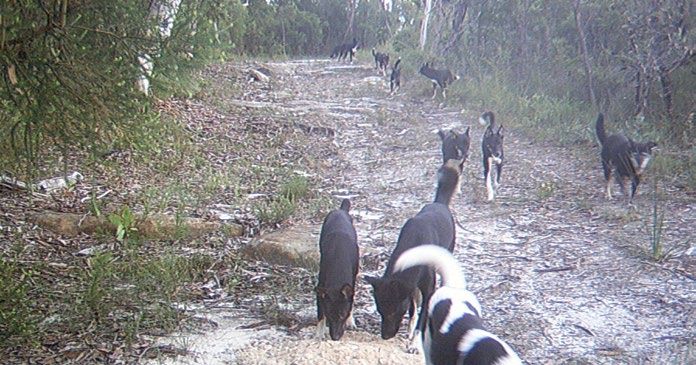
Glovebox Guide for
Managing Wild Dogs
        Benjamin Lee Allen
Website: www.pestsmart.org.au
     This publication is licensed under a Creative          Disclaimer: The information contained in this
     Commons Attribution 3.0 Australia licence, except      publication has been prepared with care and is
     for photographic and graphical images contained        based on knowledge and understanding at the time
     within it. Photographs and other graphical material    of writing (June 2016). Some of the information in
     must not be acquired, stored, copied, displayed        this document is provided by third parties, and all
     and printed or otherwise reproduced — including        information is provided “as is”, without warranty
     by electronic means — for any purpose unless prior     of any kind, to the extent permitted by law. After
     written permission has been obtained from the          publication, circumstances may change and before
     copyright owner. Copyright of photographs and other    elying on this information the user needs to take
     graphical material is variously owned by Invasive      care to update as necessary.
     Animals Ltd, individuals and corporate entities. For
                                                            NO PRODUCT PREFERENCES: The product trade
     further details, please contact the Communications
                                                            names in this publication are supplied on the
     Manager, Invasive Animals Ltd.
                                                            understanding that no preference between
     The Creative Commons Attribution 3.0 Australia         equivalent products is intended and that the
     licence allows you to copy, distribute, transmit       inclusion of a product name does not imply
     and adapt material in this publication, subject to     endorsement over any equivalent product from
     the exception for photographic and other graphic       another manufacturer.
     material set out above, and provided you attribute
                                                            ALWAYS READ THE LABEL: Users of agricultural or
     the work as shown below. The licence does not
                                                            veterinary chemical products must always read the
     transfer ownership of the copyright.
                                                            label and any permit, before using a product, and
     A summary of the licence terms is at:                  must strictly comply with the directions on the label
     creativecommons.org/licenses/by/3.0/au/deed.en         and the conditions of any permit. Users are not
                                                            absolved from compliance with the directions on the
     © Invasive Animals Ltd                                 label or the conditions of the permit by reason of
     Citation: Allen BL (2016). Glovebox Guide for          any statement made or not made in this publication.
     Managing Wild Dogs. 3rd edition 2018. PestSmart        The Centre for Invasive Species Solutions
     Toolkit publication. The Centre for Invasive Species   gratefully acknowledges the Australian
     Solutions, Canberra, ACT                               Government for funding support for the
     Print ISBN: 978-1-921777-39-4                          publication of this document through The National
     Web ISBN: 978-1-921777-40-0                            Wild Dog Action Plan (NWDAP).

     Published by: The Centre for Invasive Species          Cover image: Lee Allen.
     Solutions

ii                                Glovebox Guide for Managing Wild Dogs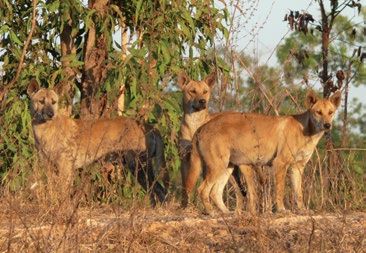
Glovebox Guide for
                          Managing Wild Dogs
                                        Benjamin Lee Allen

Glovebox Guide for Managing Wild Dogs                        1
Image: Lee Allen

    Contents
    1. About this guide........................... 3       5. Working dog safety.......................17
                                                              Risks to working dogs....................... 17
    2. Wild dog ecology........................... 4
                                                              First aid for your working dog............. 18
       Impacts.........................................7
                                                                1080 poisoning............................ 18
    3. Identifying wild dogs and                                PAPP poisoning............................ 19
        their impacts.............................. 8           Trap / foot injuries....................... 21
       Detecting the presence of wild dogs and
                                                           6. Policy and legislation....................22
       their impacts...................................8
                                                              Legal status and management............. 22
       Distinguishing between wild dog, fox, cat
                                                              More information............................ 25
       and quoll tracks...............................9
       More information..............................9     7. Notes.................... inside back cover
    4. Management tools and strategies.....10
       Tools to control wild dogs.................. 10
       Strategies to control wild dogs............ 13
       Choosing the right control tool............ 14
       More information............................ 17

2                              Glovebox Guide for Managing Wild Dogs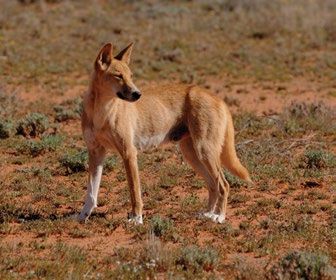
1. About this guide
This Glovebox Guide for Managing Wild      applicable information on:
Dogs is a general guide to managing         • wild dog ecology
populations of wild dogs in Australia.      • identifying wild dogs and their
This guide uses the term ‘wild dogs’ to       impacts
describe any wild-living members of the     • Improved wild dog control in
genus Canis, including pure dingoes,          presence of foxes, pigs and feral cats
feral domestic dogs and crossbreds
                                            • management tools and strategies
between the two. Wild dogs present
significant economic, environmental and     • working dog safety
social impacts in many places, but are      • policy and legislation.
also viewed as an important part of most   This glovebox guide does not cover all
mainland environments.                     the details of wild dog management,
The need to manage wild dogs for their     so you should consider participation
impacts has not diminished in the last     in developing community wild dog
200 years. There might be new laws or      management plans or enrolment in
different control tools and strategies,    recognised vertebrate pest management
but the principles remain the same. This   courses. For more information on wild
guide seeks to enable best-practice wild   dog management visit
dog management by providing broadly        www.pestsmart.org.au.

 Image: Richard Ali

                      Glovebox Guide for Managing Wild Dogs                            3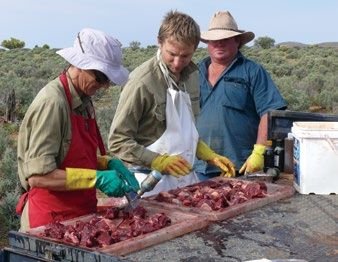
2. Wild dog ecology
     Taxonomic names:

     Canis familiaris (Jackson et al. 2017)

     Common names:
     Wild dog, dingo, feral dog

                                                                        Image: Peter Fleming

    Description                                 Pathways of spread
    Wild dogs have a variety of coat colours.   The colonisation of the dingo began
    In order of occurrence, the most common     in northern Australia where it was
    colours are tan/ginger (red to sandy),      introduced via south-east Asia about
    black and tan (often with a white chest     3500 years ago. Dingoes spread across
    patch), white, or black. Other coat         the mainland within about 500 years
    colours found are sable (tan with long      after introduction, possibly assisted
    black guards like a German shepherd),       by Aboriginal people. The dingo, Canis
    brindle (faintly striped), patchy white     familiaris (Jackson et al 2017) interbred
    and ginger, or patchy white and black.      with domestic dogs breeds that were
    Many wild dogs also have five ‘white        brought to Australia with European
    points’ (white toes/feet, socks and a       settlers and hybrids or wild dogs soon
    white tail tip), but you can’t tell how     spread from southeastern Australia.
    pure an animal is by its coat colour.
                                                The greatest densities of pure dingoes
    Dew claws might be present or absent.
                                                live in northwestern and central
    Wild dogs vary in size, but most are        Australia where they have had limited
    similar in size and shape to kelpies.       opportunity to cross breed with
    Adults are usually slender and weigh        domestic dogs. The greatest densities of
    15–16 kg on average, although some          hybrids live in southeastern Australia. A
    individuals and populations might be        decline in the use of netting fences and
    considerably larger, weighing over          inefficient or relaxed lethal control can
    20 kg. Feral domestic dogs weighing up      lead an increase in populations where
    to 70 kg have been captured in the wild.    they presently in low numbers (ie areas
                                                inside the national dog fence).

4                         Glovebox Guide for Managing Wild Dogs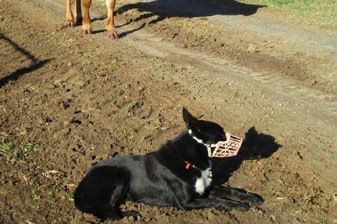
Distribution and abundance                                              Image: Lee Allen
Derived from wolves in eastern Asia
about 10-15,000 years ago, dingoes
are also found across southeast Asia.
Similar subspecies of the wolf are found
in other parts of the world. Wild dogs
(including dingoes) are present across
all of mainland Australia, although their
abundance varies between regions.
Wild dogs were once locally eradicated
from many parts of southeastern and
southwestern Australia (ie inside wild
dog barrier fences), where they had
been intensely controlled after European    species of all sizes. They prefer small-to-
settlement. Wild dogs are now present       medium sized (less than 15 kg) mammals
in these areas in low numbers and are       (such as rodents, rabbits and bandicoots)
becoming more common. They are              although larger species (such as
naturally sparse in central Australian      kangaroos) can be staple prey when
areas where water is unavailable. Only      available. Invertebrates and vegetation
feral domestic dogs are present in some     are also commonly found in wild dog
parts of Tasmania. Wild dogs are present    diets. Wild dogs are also scavengers,
on several offshore islands.                eating carrion, rubbish and a range of
                                            fruits, vegetables and eggs according to
Habitat description
                                            opportunity and need.
Wild dogs occur in all habitat types on
                                            Wild dogs eat prey equal to about one
mainland Australia, including alpine,
                                            fifth (20%) of their body weight each
desert, temperate forests, rainforests,
                                            day. They need up to 12% of their body
meadows, grasslands, and agricultural
                                            weight in water per day in summer,
and urban environments. They reach
                                            although a lot of this can be supplied
their highest densities around human-
                                            from the blood and other fluids found
dominated habitats and regions with
                                            in prey they eat. They might not drink
high-density prey populations, such as
                                            freely available water for several days
areas with many rabbits.
                                            at a time.
Nutrition
                                            Reproduction
Wild dogs are predominantly carnivores,
                                            Wild dogs are annual breeders, with
and are an opportunistic predator of
                                            female estrus periods generally lasting
a variety of mammal, bird and reptile
                                            between 10-12 days and they come into

                       Glovebox Guide for Managing Wild Dogs                               5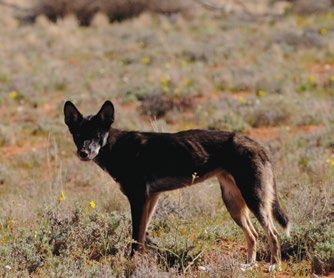
in the wild (up to 20 years in captivity),
              Image: Lee Allen
                                                     although it is unusual for animals to live
                                                     longer than five to six years. Most don’t
                                                     survive beyond four years. Dispersal of
                                                     young wild dogs begins in late summer
                                                     and continues through to the onset of
                                                     breeding in autumn. Wild dogs have
                                                     been recorded dispersing over 550 km
                                                     in less than one month, however this is
                                                     not normal with most moving shorter
    season during April and May with pups            distances to occupy nearby vacant
    being born two months later. Breeding            territory. Larger-than average males
    may occur later in the year, depending           typically disperse further and more
    on seasonal conditions, although this            often.
    is uncommon. More than one bitch in a
    pack have been know to have a litter in          Wild dog activity and sign increases
    the same breeding season when seasonal           leading into the breeding season in late
    conditions are favorable and food is prey        autumn early winter. There is usually an
    is abundant.                                     increase in observed tracks, scratches,
                                                     scats and howling occur, around this
    Females produce an average of five               time when they are defending their
    pups in each litter (range 1–11). The            territories. Their activity reduces in
    onset and extent of breeding varies              late winter and spring, when they are
    significantly between regions, and               busy raising pups. It is common for signs
    is influenced by a range of factors              of wild dogs to disappear for several
    including age, social status, latitude,          months when they are actually still
    seasonal conditions and genetic purity.          there, but not seen.
    Feral domestic dogs might be capable
    of producing pups more than once                 Biological and behavioural
    each year, although environmental and            weaknesses
    energetic constraints probably prevent           As the largest mammalian predator in
    this in wild-living dogs.                        Australia, wild dogs have few natural
    Lifecycle stages                                 predators besides humans. Pups can be
                                                     vulnerable to birds of prey and other
    Pups are born after a gestation period           predators, such as foxes, cats, snakes or
    of 61–69 days. Milk production lasts less        goannas. Although wild dogs do not need
    than two months and pups are weaned              to drink free water on a daily basis, the
    gradually. Females usually breed from            distribution of arid-zone populations
    two years of age, and males reach                is usually linked to the availability of
    sexual maturity from one year of age.            water.
    Wild dogs can live up to about 13 years

6                                Glovebox Guide for Managing Wild Dogs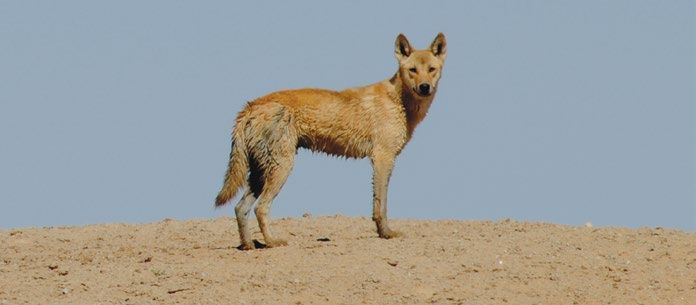
Impacts                                     Environmental
Economic                                    Wild dogs have been implicated in the
                                            declines of several small and medium-
Wild dog impacts on livestock can cause     sized native animals in Australia through
significant economic loss and animal        direct predation. They are currently
welfare implications as they wound and      recognized as a known or potential risk
maim far more animals than they eat.        to at least 14 nationally threatened
Wild dogs prey heavily on sheep and         mammals, reptiles and birds.
goats as well as calves and young cattle.
Wild dogs and their impacts have been       Wild dogs also transmit diseases and
a major casue cause of the decline in       pathogens to native animals. Hydatids
the sheep, wool and goat industries in      cause large cysts in the lungs of
Australia.                                  wallabies, drastically affecting lung
                                            function and further increasing their risk
Wild dogs also transmit the parasites       of predation. The impacts of wild dogs
Echinococcus granulosus (Hydatid            on native animals is exacerbated in the
tapeworms) and Neospora caninum to          presence of other threatening processes
livestock which impact significantly on     such as vegetation clearing and habitat
animal health and cause economic loss.      alteration.
Hydatid worms can also be transmitted
from dogs to people. In urban areas,        Ongoing breeding between dingos
wild dogs pose a health risk to humans      and wild dogs is a major threat to the
and pets as they often use public parks     existence of pure dingoes in Australia.
and gardens which further increases the     Social
risk transmission of Hydatid worms and
many other parasites.                       Wild dogs can also have direct social
                                            impacts on individuals, families and
The economic impact of wild dogs            rural communities through economic
through predation, control costs and        losses and psychological impacts.
disease are estimated to cost in excess     Studies have shown that landholders
of $89 million dollars per year (National   dealing with ongoing wild dog attacks
Wild Dog Action Plan 2017).                 on their livestock exhibit emotional and
                                            psychological trauma similar to that of a
                                            returned Vietnam veteran (Ecker et al.
                                            2016). Wild dogs also cause fear amongst
                                            residents as a result of attacks on
                                            domestic pets and concerns for personal
                                            well being when they occur on public
                                            lands in peri urban and urban areas.
Image: Guy Ballard

                       Glovebox Guide for Managing Wild Dogs                             7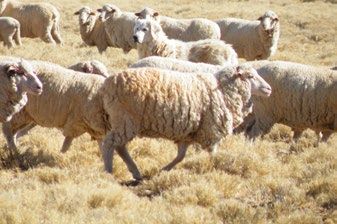
Potential indicator of
                                                             Category                                  Score
                                                                        wild dog presence
                                                                        free-roaming dogs seen or
                                                                1                                       10
                                                                        heard
                                                                        wild dog footprints found
                                                                        in places where working

    3. Identifying wild dogs
                                                                        dogs have not been used
                                                                        (eg around water points,
                                                                1                                       10
                                                                        road junctions, along

    and their impacts                                                   animal pads, under holes
                                                                        in fences, newly graded
                                                                        tracks)
    Detecting the presence of                                           wild dog scats/faeces and
    wild dogs and their impacts                                 1
                                                                        scratch marks found in
                                                                        similar places (scats should    10
                                                                        contain hair, bones, scales,
    It is common for wild dogs to be present                            feathers, or insects)
    but go unnoticed or unrecognised. No                                livestock kills and damage,
                                                                1       including bite marks or         10
    matter what colour a free-roaming                                   torn ears
    dog is, if it is not your dog it should                             unexplained livestock
    be considered a wild dog. There are                         2
                                                                        losses or low marking/
                                                                                                         8
                                                                        branding/mustering
    several indicators that suggest that                                percentages
    wild dogs might be present in an area.                              unusually high percentages
                                                                2                                        8
    Read through the indicators listed in the                           of cows not producing milk
    table, and follow the exercise outlined                     2
                                                                        the absence of young
                                                                                                         7
                                                                        kangaroos and feral goats
    below.
                                                                        kangaroos caught in fences
    Are wild dogs present in my area?                           2
                                                                        when there has been no
                                                                        one present to disturb the
                                                                                                         7
                                                                        mobs
    Using the indicators in the table,
                                                                        sheep coming into water
    complete the following exercise:                                    at a gallop and leaving in
     1. Circle each of the indicators you                       3       the same way (lead animal        5
                                                                        taking last animal back out
        have observed for your area.                                    before it has drunk)
     2. Add up your scores separately for                               changes in livestock or
                                                                        goat behaviour (eg stock
        each category.                                          3       no longer camping on the         5
     3. Locate your chances of wild dogs                                dam or grazing where they
                                                                        always have in the past)
        being present in the following table.
                                                                        sheep that won’t work
                                                                        into the wind or visit good
                                                                3                                        5
                                                                        feed down one end of the
    A score of 10 or more in                                            paddock
                             You definitely have wild dogs
    Category 1
                                                                        kangaroos/livestock
    A score of 15 or more in                                    4                                        4
                             You probably have wild dogs                drowned in full dams
    Category 2
                                                                        feral goat numbers lower
    A score of 10 or more in                                    4                                        4
                             You might have wild dogs                   than expected
    Category 3
                                                                        crows following your
                                                                4                                        3
    A score of 10 or more in                                            working dogs
                             You might have wild dogs
    Category 4
                                                                        increased localised crow
                                                                4                                        2
    One score/indicator                                                 numbers
    each from Category 2,    You probably have wild dogs                birds of prey consistently
    3, and 4                                                            flying over rough, barren
                                                                4       areas where you would not        2
                                                                        otherwise expect to find
                                                                        much food

8                                Glovebox Guide for Managing Wild Dogs
Ask your neighbours to complete the
exercise as well. If you think you have
wild dogs, talk to your local pest animal
authority.
Distinguishing between wild
dog, fox, cat and quoll tracks
The presence of wild dogs is often
discovered by seeing their tracks in the Figure 1 – The relative size and shape of wild dog, fox,
soil, but sometimes the tracks of other quoll and cat tracks (top row shows front foot and
bottom row shows back foot).
species look similar to those of wild
dogs (see Figure 1). Wind, rain, organic
matter in the soil and other factors can
In good track-reading conditions in sand,
make it difficult to accurately identify
silt, or mud:
some tracks or determine how fresh they
are. • dog prints are usually larger and
rounder, fox prints are smaller and
The average size of wild dog footprints
also changes throughout the year as pups
become active and begin wandering
around. For example, in late spring and
early summer, some wild dog footprints
(of pups) can be as small as foxes and
it can be hard to tell them apart. By
autumn and winter, all wild dog prints
are usually much larger than foxes prints Figure 2 – Usual foot print placement for wild dogs,
foxes and cats
(see Figure 1).
The front foot length of adult wild dogs
more elongated, and cats are small
(excluding nails) is usually greater than and very round
6 cm. When wild dogs, foxes and cats
• dog toe nails usually point out
walk, their front foot hits the ground
first and their back foot print usually
lands nearby (see Figure 2). The rear
foot is smaller in size than the front foot
and often leads people to think there
are two dogs of different sizes.
Image: Ben Allen
Glovebox Guide for Managing Wild Dogs 9straight, fox nails point inwards, and More information
cats have no toe nail marks
• the back foot usually partly overlaps Barbara Triggs (2004). Tracks, Scats
the front foot for dogs, mostly and Other Traces: A Field Guide to
overlaps for foxes, and almost Australian Mammals. If you suspect that
completely overlaps for cats. you have wild dogs in your area, talk
• the front foot of quolls shows all five to your neighbours and your local pest
toes (wild dogs, foxes and cats only animal control authority.\
show four).
Image: NSW DPI
4. Management tools and strategies
Tools to control wild dogs
There is a variety of different lethal regulations. Wild dog control officers
and non-lethal tools available to control are familiar with these and are able
wild dogs. These include poison baits, to advise people on what is and is not
traps, shooting, fencing, guard animals permitted in your local area.
and aversion techniques (such as lights,
alarms, and flagging). Not all tools are
useful for a given area; each tool varies
in its effectiveness, depending on a
range of factors specific to the local
situation. The use of many control tools
is also subject to various laws and
10 Glovebox Guide for Managing Wild DogsImage: NSW DPI Image: Rob Hunt NSW NPWS
Poison baiting Ejectors
Sodium fluoroacetate (or ‘1080’) An ejector is a small cylindrical
is currently the main toxin used in device consisting of a spring-loaded
baits to control wild dogs, however piston housed inside a stake and then
a new toxin called ‘PAPP’ (para- hammered into the soil leaving only a
aminopropiophenone) is now available ‘bait head’ exposed on the surface.
in some states depending on their
The bait head contains a replaceable
progress towards including PAPP-use in
capsule of poison and when an animal
regulations. 1080 poison baits can be
puts its mouth over the bait head and
made from pieces of animal meat (such
pulls it, the poison is ejected into the
as kangaroo, cattle or horse meat) cut
mouth in a quick spurt. Ejectors are like
to about the size of a tennis ball or
a permanent one-shot bait station but
larger. Average and minimum weights
they bait can’t be shifted making it safer
vary between States so check the size
to use around working dogs.
you require. Stable and accurately dosed
manufactured baits (such as DOGGONE® View our video on ejectors here
(1080) and DOGABAIT® (PAPP) or De-K9® https://www.pestsmart.org.au/canid-
(1080))can also be bought from approved pest-ejector-cpe-fox-wild-dog-control/
suppliers. PAPP is only available in
manufactured baits. Strychnine is no
longer permitted for use in poison baits
in any jurisdiction.
Glovebox Guide for Managing Wild Dogs 11Trapping Fencing
Leghold traps may be used to capture Fencing is perhaps the best method of
live animals for later euthanasia, usually excluding wild dogs from an area, but
by shooting. A range of different trap
types are available, but not all trap
types are permitted for use in each
jurisdiction. The most humane and
efficient traps are called ‘soft-catch’
traps, including Jakes, Victors, or
Bridgers. Each has slightly different
design features for use in various
situations. Professional wild dog trappers Image: Victorian government Dept Environment,
are also available to contract in many land water and Parks
areas.
a high level of maintenance is needed
View our videos on trapping here
to keep fences dog proof. Netting or
https://www.pestsmart.org.au/wild-
electric fencing can both be effective
dog-trapping-in-the-woodlands-of-
barriers, but it is necessary to eradicate
pastoral-queensland/
dogs from inside fenced areas. Well-
https://www.pestsmart.org.au/wild- maintained fences can stop wild dogs
dog-trapping-in-the-northern-tablelands- from crossing over, but they can’t stop
of-nsw/ dogs from going around them, and might
also prevent wild dogs from leaving once
https://www.pestsmart.org.au/wild-
they have got in.
dog-trapping-rangelands/
Guard animals
Shooting A variety of guard animals are used all
Firearms may be used by landholders,
professional wild dog controllers, or
hunting groups to shoot wild dogs in a
safe and humane manner, in accordance
with the relevant laws and guidelines.
Image: Greg Mifsud
12 Glovebox Guide for Managing Wild Dogsaround the world to protect livestock programs run over the summer try and
from predators. In Australia, guardian target migrating dogs. The best time to
dogs (such as maremmas), llamas and control wild dogs will depend on your
alpacas, or donkeys are sometimes used local situation.
with varying degrees of success. Using
Working with people
guard animals is designed to prevent
livestock attacks, but they might not Wild dog management strategies are
exclude wild dogs from a given area. most successful when people work
together. Because wild dogs do not
Aversion techniques
respect tenure boundaries such as
A range of different aversion techniques fences, borders or land uses, land
and devices have been suggested. holders managing wild dogs in one area
Aversion methods include flashing lights, are likely to be affected by the actions
sounding alarms or objects flapping or inaction of people in surrounding
in the wind, such as coloured flags. areas. Working together ensures that
Limited information is available on the all stakeholders have input into a
effectiveness of these tools. management approach that covers
the views of each interest group. This
typically requires a little bit of work
Strategies to control wild
from a lot of people, rather than a lot
dogs of work from a few people.
Working with nature Adaptive management
The ecology and behaviour of wild dogs An adaptive approach to managing
follows a seasonal and cyclical wild dogs broadly involves: defining
pattern each year as dogs transition the issue, developing a plan of action
from breeding season, to whelping, to with achievable and measurable goals,
dispersal and back to breeding season putting the plan into action, monitoring
again. Wild dog management strategies progress, evaluating the plan, and
can be optimised if the biology and making adjustments and improvements
nature of wild dog populations are before trying it again. Defining the
carefully considered for your area. For issue is usually the most difficult and
example, regionally coordinated control time-consuming part, but is critical for
are run in autumn to try and target success. It must take into account all
mature dogs before they have a chance the socio-ecological components and
to breed and also in spring to target current knowledge of livestock losses and
juvenile dogs as they disperse. Control wild dog activity before a plan of action
can proceed successfully. Compromise
Glovebox Guide for Managing Wild Dogs 13might be needed to progress, and new
information might mean that changes to
working plans need to be made along the
way.
Choosing the right control tool
The destruction of wild dogs might Choosing the right control tool is an
not always be needed to resolve the important step towards succeeding
problems you face. However, when the with a wild dog control program. No
control of wild dogs is required, both one tool is best overall and a variety of
lethal and non-lethal control tools can control tools are often used together in
be used inside an adaptive management a community control program. Reducing
framework that incorporates the views wild dog numbers is best achieved when
of each stakeholder. There are limited control is applied across broad areas
control tools available, but each has at the same time, and repeated on a
advantages and disadvantages — not all regular basis, leaving no gaps in space
tools will be useful in every situation. or time.
The most effective approach usually It is most important to remember that
involves using a range of tools (an reducing wild dog numbers might not
‘integrated’ approach), and not relying actually reduce wild dog impacts,
on just one tool. The table below shows so control programs should only be
some of the basic pros and cons of considered successful when wild dog
common control tools. The advantages problems have ceased or been reduced
and disadvantages described might be to an acceptable level.
different for each situation, and local
knowledge and consultation can help
determine the best tools to use for a
given situation. Note that some control
tools might not be allowed in certain
areas.
14 Glovebox Guide for Managing Wild DogsControl
Advantages Disadvantages Common uses
tool
1080 baiting • can be applied on a broad • has restricted use in • most commonly used to
scale by vehicle, plane or peri-urban areas protect livestock across
helicopter • is dangerous to pet dogs broad areas in less-
• can be flexible with bait and some other non- populated regions
type, using manufactured target animals • small-scale campaigns
products or meat from • results in a relatively can sometimes be run
various animals slow death to poisoned in peri-urban areas, but
• is relatively cheap animals they usually need a high
level of preparation
• requires relatively little time
PAPP baiting • an antidote is available to • no concentrate is • approved for Fox
and administered by vets available control (FOXECUTE
which offers a chance of • can only be applied by baits) and for wild dog
treating dogs that have ground placement as it is control (DOGABAIT)
accidentally been poisoned not approved for aerial
by PAPP baiting at this time
• potential use around • presents risks to some
peri-urban areas (or in non-target species
areas where the risk of
unintentional poisoning of • the antidote can only be
working and companion dogs administered by a vet
is increased) because of the • because PAPP works
availability of an antidote quickly, the antidote is
• provides a relatively quick not guaranteed to be
and humane death effective
• manufactured bait types • PAPP baits are subject
containing PAPP are less to same access, use
attractive to many non- restrictions as 1080
target species baits.
• feral cats may also take
PAPP baits
trapping • can be selective and target • has limited broadscale • commonly used in
specific application areas with high risks to
• can be done in peri-urban • requires a high level of people, working dogs
and other areas where technical ability and and other non-target
poison baiting is not suitable local knowledge species
• can confirm the control of • captured animals may be • is used to capture
specific individual animals distressed for some time specific individuals
• enables a relatively quick • requires relatively high
and humane death time inputs
• is relatively cheap
ejectors • is highly target specific • limited to on-ground • used to provide
• can be used with either application 24/7/365 control
cyanide, 1080, or PAPP • requires a moderate • used for point-specific
• is relatively cheap level of technical ability application of poison
and local knowledge
• requires relatively little time
Glovebox Guide for Managing Wild Dogs 15Control
Advantages Disadvantages Common uses
tool
shooting • is selective and target • has limited broadscale • commonly used
specific application together with trapping
• can be done in areas where • requires a high level of programs
poison baiting is not suitable technical ability and • is used to target
• can confirm the control of local knowledge specific individuals
specific individual animals • requires relatively high
• enables a relatively quick time inputs
and humane death
• is relatively cheap
fencing • is capable of completely • is relatively expensive to • most frequently used in
excluding wild dogs from construct and maintain local areas to protect
an area in a dog-proof condition high-value assets, such
• removes the need for • limits movements of as livestock studs and
additional livestock fencing other wildlife threatened wildlife
reserves
• probably involves relatively • does not remove wild
little ongoing time inputs dogs already present in
once constructed in some the exclusion zone
places
guard • can provide ongoing control • often requires significant • most frequently used
animals of wild dog impacts investment in time and in restricted areas to
• does not require the killing training protect high-value
of wild dogs • is relatively expensive livestock
• has limited non-target • has limited broadscale
impact use
aversion • does not require the killing • typically provides only • most frequently used in
techniques of wild dogs very short-term control association with fencing
• has limited non-target • has limited broadscale
impacts use
• is relatively cheap
• requires relatively little time
16 Glovebox Guide for Managing Wild DogsMore information
For more information on control tools
visit www.pestsmart.org.au. Detailed
instructions on how to develop a wild
dog management plan can be found at
this website, where you can download
the Working Plan to Manage Wild Dogs
(Green Book) and the Guidelines for Image: Heather Miller
Preparing a Working Plan to Manage Wild
Dogs (Brown Book). Further information
can also be found in Managing the
Impacts of Dingoes and Other Wild Dogs
(2001) and Guardian Dogs – Best Practice
Manual for the Use of Livestock Guardian
Dogs (2011), by Linda van Bommel.
Image: Ben Allen
Glovebox Guide for Managing Wild Dogs 175. Working dog safety Image: Phil Sutherland
Risks to working dogs Steps to reduce the risk to your
working dog
Wild dogs and working dogs are usually • Know where baits have been laid Use
very similar in size and behaviour, and flagging tape or some other way of
many of the control tools available indicating where baits have been laid
cannot discriminate between different and don’t take your dogs to those
types of dog. Poisons and traps present locations.
the highest risks to working dogs, and • Where possible pick up baits and
non-lethal control techniques do not dispose of them according to label
pose a risk to working dogs. requirements.
• Muzzle your dogs (muzzling is cheap,
Both PAPP and 1080 wild dog baits (and takes little time and does not usually
ejectors) are toxic to working dogs. reduce a dog’s work performance,
For these reasons, working dogs (and but it can prevent your dog from
other domestic dogs) are the non- taking a bait, pulling an ejector or
target animals most at risk during wild chewing a lethal trap device).
dog baiting campaigns. The best way • Keep your dogs kenneled in pens or
to prevent working dogs from being tethered on runs while they are not
poisoned is to keep them away from any being used for work or play.
source of poison. This is partly managed • Do not take your dogs into a baited
by following the label instructions and area for at least two years (unless
the usage guidelines for the product, muzzled).
including informing your neighbours of • Keep your dogs away from dead or
where and when you plan to use baits, dying poisoned animals and any toxic
and storing and transporting baits in vomit.
appropriate containers. • Supervise your dog when off the lead,
and make sure suitable emetics,
Working dogs may also get caught in
vets’ telephone numbers and first aid
traps set for wild dogs. Dogs captured materials are available to help your
accidentally are unlikely to get any dog’s chances of survival if poisoning
major injuries, but they can be ‘foot does occur.
sore’ for a short time and might not be • Never assume a bait is safe – ever.
able to work until they’ve recovered.
Working dogs are also susceptible to
poisoning from lethal trap devices if
poison has been used.
18 Glovebox Guide for Managing Wild DogsFirst aid for your working dog PAPP poisoning
1080 poisoning Once eaten, PAPP is rapidly absorbed
from the gut into the into the liver
Once digested, 1080 is rapidly absorbed
from the gut into the bloodstream. Once where it is converted by dogs and
it is in an animal’s circulation, it blocks foxes to form an agent that enters red
the chemical reactions that produce blood cells and rapidly converts normal
energy in cells. Over a period of time, haemoglobin to methaemoglobin.
this lack of cell energy prevents organs
from functioning properly. Each organ Methaemoglobin does not carry oxygen
then begins to shut down, causing a to brain, muscle or other tissues,
variety of visible signs. so PAPP ultimately reduces oxygen
supply to the heart muscles and brain.
Signs to look for:
Poisoned animals first become lethargic
• anxiety and sleepy before eventually falling
• frenzied behaviour unconscious and dying. Even once signs
• hypersensitivity of PAPP poisoning are apparent, the
• loud vocalising, yelping and howling outlook can be good if the antidote is
• failure to respond to owner administered in time (likely window
• vomiting of an hour or less to get the affected
• uncontrolled urinating and defecating animal to a vet). However, the antidote
• convulsions, cannot be guaranteed to be effective
• seizures and fits and some clinical follow-up may be
• breathing difficulties needed in severe cases.
• coma or unconsciousness. Signs to look for:
1080 first aid • colour changes to tongue, lips, and
gums (from pink to blue/grey –
You need to act immediately to save your indicating reduced oxygen)
poisoned dog. Once signs of 1080 poisoning
• salivating (dribbling).
are apparent, the outlook (even with
treatment) is poor and dogs rarely survive. • appearing dazed and wobbly,
diminished coordination eg. dragging
However, if you suspect your dog has
feet or inability to move limbs.
ingested a 1080 bait but has not yet begun
to show clinical signs: • lethargy eg. sitting down and unable
to lift head.
• induce vomiting (to get the bait out
– do not do this if clinical signs are • non-responsive and unconsciousness.
already shown). • highly increased heart rate might be
• keep your dog as cool and as quiet as noted but may not be a reliable sign
possible if the dog has just been running for
example.
• immediately take your dog to a vet
Glovebox Guide for Managing Wild Dogs 19PAPP first aid and if you have washing soda
crystals (sodium carbonate) give
If you suspect your dog has been 2-3 crystals like you would tablets
poisoned by PAPP you will need to to induce vomiting.
act immediately — the sooner you
get your dog to a vet the better, If you can’t make your dog vomit,
because PAPP works rapidly. An do not waste time trying again, and
antidote to reverse PAPP poisoning is take your dog to a vet immediately.
available through Vet administration The vet will need to know:
only but you will need to contact • what the suspected poison is
your Vet prior to arrival to ensure • how long ago your dog was
they have the antidote on hand. exposed
While the antidote reverses the • what your dog was exposed to (a
poison, it may not always save a bait, carcass or unknown)
dog. This could be due to delays in • how the dog is acting now
receiving the antidote treatment or (clinical signs)
a toxic sensitivity to the antidote • how long the signs have been
itself — Vets should be aware of noticeable.
these complications and will follow 4. Keep the dog calm and at a
the correct protocol to enhance the comfortable ambient temperature
survival rate. Vomiting may reduce (20-25°C) during the journey to
the severity of poisoning; however it the vet.
is vital that the dog is still taken to
a Vet.
Important note: If a PAPP bait
has been eaten the vomit should
contain yellow/orange plastic
marker beads to assist with a Vet
diagnosis and correct treatment.
If you suspect PAPP poisoning, follow
these first aid steps:
1. Ring your local vet to ensure they
have the antidote to PAPP.
2. Take the poisoned dog to the vet
immediately.
3. If you have a long trip to the vet
Image: Heather Miller Image: Peter Fleming
20 Glovebox Guide for Managing Wild DogsWhat can I use to make my dog vomit? If you can’t make your dog vomit, do not
waste time trying again, and take your
Care must be taken when inducing
dog to a vet immediately. The vet will
vomiting as your dog may react
need to know:
violently and bite you. Giving too
much of some emetics (ie substances • what the suspected poison is
that induce vomiting) might also make • how long ago your dog was exposed
the dog critically ill. If the dog has • what your dog was exposed to (a
vomited, be aware that the vomit bait, carcass or unknown)
is toxic and should be cleaned up • how the dog is acting now (clinical
immediately. Emetics should be kept in signs)
an accessible place (ie the glove box of • how long the signs have been
the ute) in case of poisoning. Suitable noticeable.
emetics include:
• table salt in water : 2 teaspoons of
Laws relating to the use of specific
salt in 1 cup of water; less for small control techniques
dogs, more for larger breeds
• washing soda crystals (sodium Various control techniques are also
carbonate): 3-5 crystals orally, often governed by laws independent of
DO NOT use laundry detergents their use on wild dogs. For example,
or powders there is specific legislation dealing
• copper sulphate crystals: 2 pea- with the use of firearms, which are
sized crystals. often used to euthanise wild dogs in
trapping or shooting programs. Variou
laws also govern the use of poisons and
other veterinary drugs used to kill or
safely handle wild dogs. Many of these
chemicals have label instructions and
directions for use that are legally binding.
Wild dog managers are not freed from
obligations under these laws even when
other obligations (such as animal welfare
and land tenure considerations) have
been met.
Image: Lee Allen
Glovebox Guide for Managing Wild Dogs 21Trap/foot injuries 6. Policy and legislation
Trapping will rarely leave your dog
with any permanent injuries, although
they might end up with some hair loss Legal status and management
or scarring on their foot. More severe
injuries might develop later, depending On 7 June 2017 the National Biosecurity
on how the dog was captured and how Committee endorsed the Australian Pest
long it stayed in the trap. These injuries Animal Strategy 2017–2027. As highlighted
might include the loss of toe nails, toe/ in this nationally agreed strategy, wild
foot pads wearing off, or disfigurement. dogs cause significant national economic
Housing your dog in a ‘soft’ environment impacts and substantial damage to
(ie not on concrete or wire) during livestock producers, particularly sheep
recovery can help to prevent these later and goat producers, through predation
injuries from happening. and disease transfer. Wild dogs are
Domestic and working dogs will usually conservatively estimated to now cost
yelp and howl to let you know they are Australia’s agricultural sector up to $89
caught in a trap. Be aware that dogs may million per year, not to mention the
react violently and bite as you get them considerable negative environmental
out of a trap. and social impacts. As a result of these
To help your dog recover from being significant impacts, wild dogs are
trapped considered a priority pest animal.
• Get your dog out of the trap as quick A five year National Wild Dog Action
as possible. Plan was developed through the former
• If the paw is swollen, gently massage Vertebrate Pests Committee (now the
it to increase blood flow. Environment and Invasives Committee)
• If the paw has minor cuts or bites, with all jurisdictions and industry
gently clean the paw with water or endorsing the plan in May 2014. The
allow your dog to lick it clean. National Wild Dog Action Plan, currently
• If the dog has been caught for a long being implemented throughout Australia,
time, take your dog to a vet. provides all levels of government,
• House the dog on soft surfaces while industry and landholders with direction
it recovers. for the national management of wild dogs
to minimise their impacts on agricultural
biodiversity, the environment and social
assets.
Wild dog management is regulated and
administered at the state and territory
22 Glovebox Guide for Managing Wild Dogsgovernment level and is constrained Laws relating to land tenure
by certain Commonwealth, state and
The legal status of wild dogs varies with
territory legislation and policy, with
different land tenures. In many cases,
various guidelines, codes of practice, and
wild dogs are a ‘protected species’ in
standard operating procedures applying.
national parks and conservation reserves,
Legislation and policy often vary between
while they are considered ‘declared
jurisdictions at local and state levels,
pests’ in many livestock production areas.
with overriding federal laws also affecting
Listing wild dogs as protected or declared
wild dog management. There are also
places certain restrictions and obligations
other more generic Acts that function
on those intending to manage wild dogs
across jurisdictions. Violation of laws
in a given area. Certain management
related to wild dog management can
activities are not legally permissible on
attract serious penalties (eg fines and jail
all tenures. Permission to access various
time) for individuals and agencies.
land tenures should also be considered.
In general, the following types of
regulations should be considered before
Laws relating to the conservation
beginning any wild dog management
status of specific wild dog
activity.
populations
Laws can sometimes vary between
Laws relating to animal welfare
specific populations or types of wild dog.
There are laws in every state and
territory that address the need to treat Laws relating to the use of animals
all animals humanely, whether they are for research and teaching
considered pests or not. People managing
Not all wild dog management activities
wild dogs are obligated to use control
require the destruction of animals, and
methods that minimise any potential
alternative legislation governs the use
pain, fear or distress. These obligations
of animals for researching and teaching
encompass a wide range of activities
purposes. Some wild dog management
from the capture and relocation of
activities might be considered ‘research
animals, through to poisoning, shooting
and teaching activities’ in some
or trapping. Codes of practice, standard
jurisdictions, such as the systematic use
operating procedures, and best-practice
of camera traps or attaching tracking
guidelines for the management of wild
collars to wild dogs. If this is the case,
dogs have been developed, are publicy
various additional permits and approvals
available on www.pestsmart.org.au,
may be required before management
and should be followed in order to
activities can begin.
prevent cruelty to animals during control
operations.
Glovebox Guide for Managing Wild Dogs 23Wild dog predation is known or expected to be a risk to the threatened species:
Species
Common name Scientific name Adult weight (kg)
type
mammal marsupial moles Notorycetes typhlops, N. caurinus 0.07
mammal smoky mouse Pseudomys fumeus 0.09
bird black-breasted button-quail Turnix melanogaster 0.1
mammal golden bandicoot Isoodon auratus 0.7
mammal northern quoll Dasyurus hallucatus 1.2
mammal greater bilby Macrotis lagotis 2.5
mammal long-footed potoroo Potorous longipes 2.5
bird malleefowl Leipoa ocellata 2.5
mammal bridled nailtail wallaby Onychogalea fraenata 8.0
mammal Proserpine rock-wallaby Petrogale persephone 8.8
mammal koala Phascolarctos cinereus 12
mammal northern hairy-nosed wombat Lasiorhinus krefftii 31
bird southern cassowary Casuarius casuarius johnsonii 60
reptile marine turtles various -
The EPBC Act also lists the key threatening processes (KTP) known to affect
threatened species. Predation by wild dogs has not been recognised as a KTP in
national legislation but is recognised as such in New South Wales.
Important to the management of wild dogs, new wild dog control programs might
need to be reviewed under the EPBC Act before they are put in place, to assess the
program’s risk to threatened species in the area. For example, if wild dog control is to
begin in a national park where control has not previously been done, the proposal must
be assessed before it can start. Checking with the relevant authorities should first be
done to avoid doing the wrong thing.
24 Glovebox Guide for Managing Wild DogsLaws relating to the keeping, sale, responsibility to ensure that wild dogs
and movement of wild dogs are not leaving those lands or causing
problems in adjacent areas. These
Because wild dogs may be considered
obligations apply to private, leased
protected or declared, native or
and crown lands. There are likely to be
introduced, or a risk to livestock or
penalties for people and agencies that
not, laws differ between jurisdictions
do not abide by the rules.
with respect to the keeping, sale and
movement of wild dogs. Different states
EPBC Act considerations
and territories might or might not allow
the keeping of wild dogs as pets. A permit The Environment Protection and
might be required to do so, and although Biodiversity Conservation (EPBC) Act
permitted in one area, wild dogs might 1999 oversees the management of
not be transportable to another state vulnerable and endangered native
or tenure. Wild dogs may be seized and species, populations and ecological
euthanised if they are being kept illegally. communities. The EPBC Act lists all the
native species currently at risk from a
Legal obligations on owners of land variety of factors. Wild dog predation
where wild dogs occur is known or expected to be a risk to the
The responsibility to manage wild threatened species listed in the table on
dogs rests largely with the owners or the next page.
managers of the land where wild dogs
occur. This presents challenges in places More information
where wild dogs roam between multiple
properties, and these are usually • EPBC Act requirements, see:
sorted out through community wild dog http://www.environment.gov.au/
management plans. In places where wild epbc/do-you-need-approval
dogs are considered pests, landowners • New South Wales KTP, see ‘Predation
have a responsibility to control wild dogs and Hybridisation by Feral Dogs
on their land and prevent them from
causing problems on neighbouring lands.
On lands where wild dog conservation
measures are applied, managers have a
Glovebox Guide for Managing Wild Dogs 25(Canis lupus familiaris) – key • ACT – Draft ACT Pest Animal
threatening process listing’ (2009), Management Strategy (2011–2021).
New South Wales Department of Department of Environment and
Environment, Climate Change and Sustainable Development: Canberra.
Water (www.environment.nsw.gov.
au/determinations/feraldogsFD. • Vic – Invasive Plants and Animals
htm). Policy Framework (2011).
• More detail can also be found in state Department of Primary Industries:
and local wild dog management plans Melbourne
(see www.pestsmart.org.au for links • SA – Policy on Management of
to the following state and territory Dingo Populations in South
wild dog management plans). Australia (2011). Primary Industries
Sample state and territory wild dog and Resources South Australia,
management plans Biosecurity SA: Adelaide.
• NT – A Management Program for • WA – Western Australian Wild Dog
the Dingo (Canis lupus dingo) in Management Strategy (2005).
the Northern Territory of Australia Department of Agriculture: Perth
(2006-2011). Parks and Wildlife
Service, Department of Natural
Resources, Environment and the Arts:
Alice Springs.
• Qld – Wild Dog Management Strategy
(2011-2016). Department of
Employment, Economic Development
and Innovation, Biosecurity
Queensland: Brisbane.
• NSW – Wild Dog Management
Strategy (2011-2015). Department of
Primary Industries: Orange.
26 Glovebox Guide for Managing Wild Dogs7. Notes
_________________________________________________________________________
_________________________________________________________________________
_________________________________________________________________________
_________________________________________________________________________
_________________________________________________________________________
_________________________________________________________________________
_________________________________________________________________________
_________________________________________________________________________
_________________________________________________________________________
_________________________________________________________________________
_________________________________________________________________________
_________________________________________________________________________
_________________________________________________________________________
_________________________________________________________________________
_________________________________________________________________________
_________________________________________________________________________
_________________________________________________________________________
_________________________________________________________________________
_________________________________________________________________________
_________________________________________________________________________
_________________________________________________________________________
_________________________________________________________________________
_________________________________________________________________________
Glovebox Guide for Managing Wild Dogs 277. Notes
_________________________________________________________________________
_________________________________________________________________________
_________________________________________________________________________
_________________________________________________________________________
_________________________________________________________________________
_________________________________________________________________________
_________________________________________________________________________
_________________________________________________________________________
_________________________________________________________________________
_________________________________________________________________________
_________________________________________________________________________
_________________________________________________________________________
_________________________________________________________________________
_________________________________________________________________________
_________________________________________________________________________
_________________________________________________________________________
_________________________________________________________________________
_________________________________________________________________________
_________________________________________________________________________
_________________________________________________________________________
_________________________________________________________________________
_________________________________________________________________________
_________________________________________________________________________
28 Glovebox Guide for Managing Wild DogsGlovebox Guide for Managing Wild Dogs 29
You can also read


