BUDGET OVERVIEW - UNITED STATES AIR FORCE - AF.mil
←
→
Page content transcription
If your browser does not render page correctly, please read the page content below
UNITED STATES AIR FORCE

       BUDGET OVERVIEW
              SAF/FMB | MARCH 2019
This page is intentionally left blank

UNITED STATES AIR FORCE
  FISCAL YEAR 2020 BUDGET OVERVIEW

 The information contained in the Budget Overview Book is supported
   by the Air Force J-Books. Preparation of the J-Book report/study
 cost the Department of Defense a total of approximately $4,708,000.
   This includes $38,000 in expenses and $4,670,000 in DoD labor.

                     Generated on Feb 14; RefID: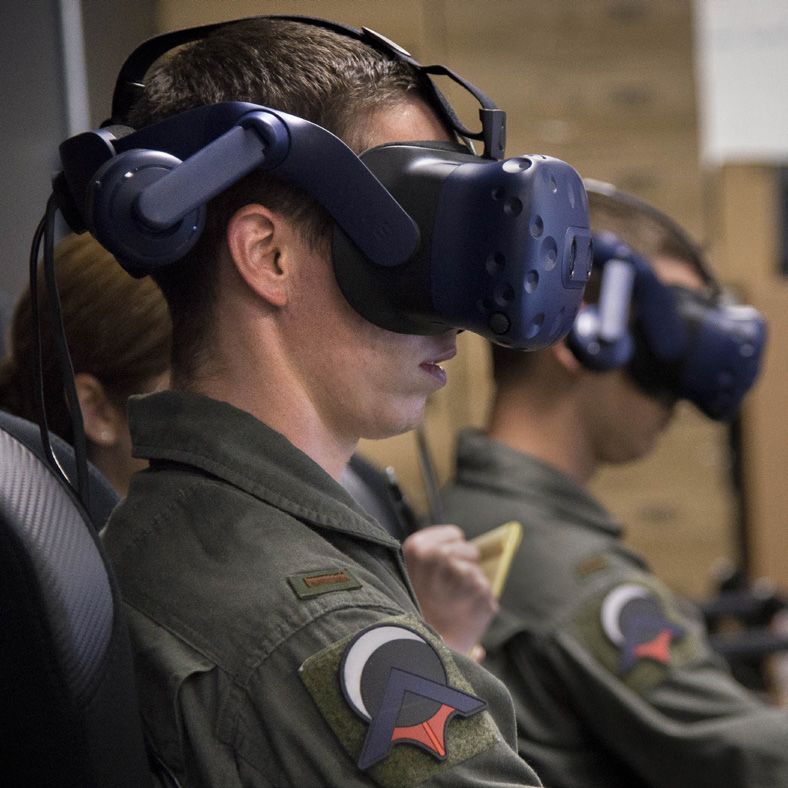
FY 2020 BUDGET OVERVIEW               TABLE OF CONTENTS

SECTION 1 - TOTAL FORCE COMPONENTS                   1

SECTION 2 - OVERVIEW                                2

PEOPLE AND TRAINING                                 2
COST EFFECTIVE MAINTENANCE AND LOGISTICS            2
NUCLEAR DETERRENCE                                  3
MODERNIZATION                                       3
CYBER DOMINANCE                                     3
ACCELERATING DEFENDABLE SPACE                       3

SECTION 3 - FY 2020 BUDGET HIGHLIGHT (OVERVIEW)     4

OPERATION AND MAINTENANCE (O&M)                      6
     Active Air Force                                9
     Air National Guard                             10
     Air Force Reserve                              11
     Space Force                                    12
MILITARY PERSONNEL (MILPERS)                        13
     Active Air Force                               14
     Air National Guard                             15
     Air Force Reserve                              16
RESEARCH DEVELOPMENT TEST AND EVALUATION (RDT&E)    17
PROCUREMENT                                         20
     Aircraft                                       21
     Space                                          23
     Missile                                        24
     Ammunition                                     25
     Other                                          26
MILITARY CONSTRUCTION (MILCON)                      27
     Active Air Force                               28
     Air National Guard                             30
     Air Force Reserve                              30
MILITARY FAMILY HOUSING (MFH)                       32
BASE REALIGNMENT AND CLOSURE (BRAC)                 32
OVERSEAS CONTINGENCY OPERATIONS (OCO)               33
WORKING CAPITAL FUND (WCF)                          35

SECTION 4 - SUMMARY                                 37

SECTION 5 - APPENDIX                                38

AIR FORCE TOTAL AIRCRAFT INVENTORY                  38
AIR FORCE PROCUREMENT NEW STARTS                    39

SECTION 6 - ACRONYMS                                41
FY 2020 BUDGET OVERVIEW                         TABLE OF FIGURES

FIGURE 1.   O&M - Total Force FY 2020 Baseline Budget Request            6
FIGURE 2. O&M - Active Air Force FY 2020 Baseline Budget Request         9
FIGURE 3. O&M - Air National Guard FY 2020 Baseline Budget Request      10
FIGURE 4. O&M - Air Force Reserve FY 2020 Baseline Budget Request        11
FIGURE 5. MILPERS - Total Force FY 2020 Baseline Budget Request          13
FIGURE 6. MILPERS - Active Air Force FY 2020 Baseline Budget Request     14
FIGURE 7.   MILPERS - Air National Guard FY 2020 Baseline Budget Request 15
FIGURE 8. MILPERS - Air Force Reserve FY 2020 Baseline Budget Request    16
FIGURE 9. RDT&E - FY 2020 Baseline Budget Request                        17
FIGURE 10. Procurement - FY 2020 Baseline Budget Request                20
FIGURE 11. Procurement - Aircraft FY 2020 Baseline Budget Request        21
FIGURE 12. Procurement - Space FY 2020 Baseline Budget Request          23
FIGURE 13. Procurement - Missile FY 2020 Baseline Budget Request        24
FIGURE 14. Procurement - Ammunition FY 2020 Baseline Budget Request     25
FIGURE 15. Procurement - Other FY 2020 Baseline Budget Request          26
FIGURE 16. MILCON - FY 2020 Baseline Budget Request                     27
FIGURE 17. OCO - FY 2020 Baseline Budget Request                        33
FY 2020 BUDGET OVERVIEW                         TABLE OF TABLES

TABLE 1.    Air Force Budget Highlights Summary                      5
TABLE 2.    O&M - Air Force Total Force TOA by Component             6
TABLE 3.    O&M - Air Force Total Force Baseline TOA                 8
TABLE 4.    O&M - Active Air Force TOA                               9
TABLE 5.    O&M - Air National Guard TOA                             10
TABLE 6.    O&M - Air Force Reserve TOA                              11
TABLE 7.    O&M - Space Force TOA                                    12
TABLE 8.    MILPERS - Air Force Total Force TOA                      13
TABLE 9.    MILPERS - Active Air Force TOA                           14
TABLE 10. MILPERS - Air National Guard TOA                           15
TABLE 11.   MILPERS - Air Force Reserve TOA                          16
TABLE 12.   RDT&E TOA                                                18
TABLE 13.   RDT&E Significant Programs                               19
TABLE 14. Procurement TOA                                        20
TABLE 15.   Procurement - Aircraft TOA                           22
TABLE 16. Procurement - Space TOA                                23
TABLE 17.   Procurement - Missile TOA                            24
TABLE 18.   Procurement - Ammunition TOA                         25
TABLE 19.   Procurement - Other TOA                              26
TABLE 20. MILCON TOA                                             27
TABLE 21.   MILCON - Active Air Force TOA                        29
TABLE 22. MILCON - Air National Guard TOA                        30
TABLE 23. MILCON - Air Force Reserve TOA                         30
TABLE 24. Worldwide Base MILCON Project List                         31
TABLE 25. MFH TOA                                                32
TABLE 26. BRAC TOA                                               32
TABLE 27. OCO TOA                                                34
TABLE 28. OCO Worldwide MILCON Project List                      34
TABLE 29. AFWCF Financial & Personnel Summary                    35
TABLE 30. AFWCF Fund Cash Management                             36
TABLE 31.   TWCF Cash Management                                 36
FY 2020 TOTAL FORCE COMPONENTS                                       SECTION 1

TOTAL FORCE (COMPONENTS)
The nation’s demand for airpower requires an agile and lethal force able to adapt rapidly
to accomplish a wide variety of missions. To achieve this, the Air Force must leverage the
combined strengths of the Active, Guard, Reserve, and civilian operate as one Air Force. This
seamless integration of our Total Force Airmen enables the Air Force to continue to meet the
needs for airpower today and tomorrow.

ACTIVE DUTY AIR FORCE
                 The Active component military end-strength comprises approximately 65%
                 of the Air Force’s Total Force. The Active Air Force maintains aircraft and
                 bases across the United States and overseas, while supporting all five core
                 missions: Air, Space and Cyber Superiority; Global Intelligence, Surveillance
                 and Reconnaissance; Rapid Global Mobility; Global Strike; and Command
                 and Control. The Active Air Force is the only full time component—the
                 other components are full time when “activated” to support operational
                 requirements.

AIR NATIONAL GUARD
                 The Air National Guard comprises approximately 21% of the Total Force
                 and provides almost half of the Air Force’s tactical airlift support, combat
                 communications functions, aeromedical evacuations and aerial refueling.
                 The Air National Guard’s federal mission is to maintain well-trained, well-
                 equipped units available for prompt mobilization during war and provide
                 assistance during national emergencies. During peacetime, the combat-ready
                 and support units, assigned to most Air Force major commands, carry out
                 missions compatible with training, mobilization readiness, humanitarian and
                 contingency operations.

AIR FORCE RESERVE
                 The Air Force Reserve is an agile, combat-ready force, which comprises
                 approximately 14% of the Total Force. Reservists support nuclear deterrence
                 operations, air, space and cyberspace superiority, command and control,
                 global integrated intelligence surveillance reconnaissance, global precision
                 attack, special operations, rapid global mobility and personnel recovery. They
                 also perform space operations, aircraft flight testing, aerial port operations,
                 civil engineer, security forces, military training, communications, mobility
                 support, transportation and services missions. The Reserve components stand
                 shoulder to shoulder with their active duty counterparts to meet mission
                 requirements and are critical for providing the military defense of our nation.

CIVILIANS
More than 140,000 civilian Airmen work side by side each day with their military counterparts.
These civilian Airmen are critical to the Air Force operations. Civilian employees provide a
unique perspective, invaluable experience, continuity, and leadership across all Air Force
mission sets. Their expertise enhances our capability to solve problems, adapt to challenges
and achieve mission success.

                                              1
OVERVIEW                                         SECTION 2

OVERVIEW
Our National Defense Strategy directs a more lethal and ready force, prepared to defeat
great power competitors. These great power competitors are challenging U.S. dominance
in all warfighting domains: air, land, sea, space, and cyberspace. In Fiscal Year 2020, we will
continue to build a more lethal and ready Air Force, while fielding tomorrow’s Air Force
faster and smarter. Highlights:

PEOPLE AND TRAINING:                      Readiness recovery is first and foremost about
people. Our Fiscal Year 2020 budget continues end-strength growth, by adding 4,400
Total Force military Airmen. To address our aircrew shortage, we are implementing
initiatives to increase pilot production, training and retention. This budget builds on
our progress to produce 1,480 pilots in 2020. In addition, this budget submission funds
important support to Airmen and families with a military pay raise, increased housing and
subsistence allowances, and family support programs.

This budget proposal includes funds to modernize our live and virtual ranges and
infrastructure to provide relevant and realistic training capabilities against our most
advanced threats. This includes targeted funding for the Nevada Test and Training Range,
Joint Pacific Alaska Range Complex, Utah Test and Training Range, and several smaller
range complexes to replicate the capabilities of our peer adversaries. We are expanding
contract adversary air from one to three locations, which frees our Airmen to practice
their own skills rather than spend time simulating the skills of our adversaries. This budget
dedicates 1.1 million peacetime flying hours to train our Airmen to fight alongside allies
and partners as vital members of our joint force.

COST-EFFECTIVE MAINTENANCE AND LOGISTICS:                                          The
budget funds Air Force flying hours to maximum executable levels and prioritize our
204 pacing units to ensure our lead force packages are ready to fight tonight, while
also advancing the overall readiness of the force to achieve our readiness goals. This
budget includes $16.4 billion in weapon system sustainment to support our current fleet

                                              2
OVERVIEW SECTION 2
and target our priority needs. We will continue focusing on supply inventory, increasing
our maintenance capacity, enhancing our training and proficiency, and moderating the
operational tempo to help our maintainers meet this goal.
NUCLEAR DETERRENCE: The FY 2020 budget reflects the Defense
Department commitment to maintain a safe, secure, and effective nuclear deterrent. The
Air Force provides two-thirds of our nuclear Triad and 75% of our nuclear command,
control, and communications capability. We continue efforts to modernize the nuclear
triad, including our nuclear command, control, and communication systems, Long Range
Stand Off weapon and Ground-Based Strategic Deterrent. The FY 2020 President’s Budget
(PB) request continues to fund research and development of our next-generation bomber,
the B-21 Raider, which is part of the most visible and flexible leg of the Triad.
MODERNIZATION: We are investing $1.5 billion to test and prototype game-
changing technologies to cement our warfighting advantage, including hypersonic
weapons, directed energy, and adaptive jet propulsion. The FY 2020 budget continues
development of Multi-Domain Operations capabilities and continues the transition to the
Advanced Battle Management System, a family of systems that will fuse data from multiple
platforms across all warfighting domains.
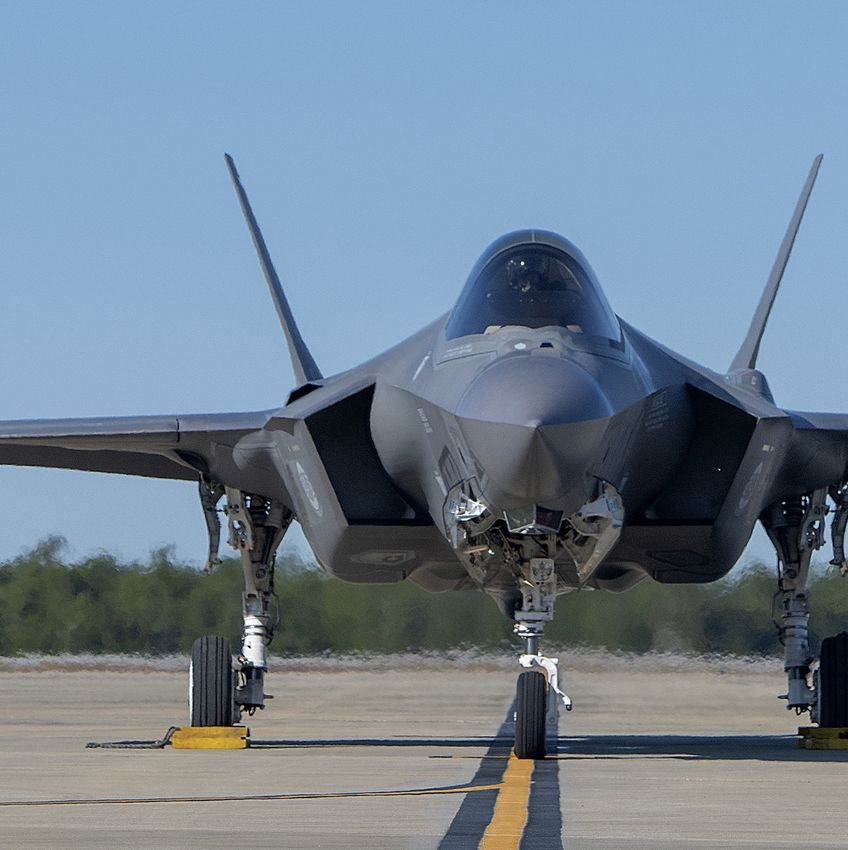
The Air Force remains committed to the F-35 and its game-changing capabilities, and
will continue purchasing 48 aircraft each year. Additionally, to maintain our readiness to
counter our adversaries, this budget proposes to replace aging F-15C’s with a modernized
successor by purchasing the F-15EX to complement fifth generation capabilities across a
full range of operational challenges. Finally, the FY 2020 budget continues procurement
of 12 KC-46 Pegasus tankers, to increase joint and coalition aircraft refueling capability
and enable the rapid deployment of aircraft.
CYBER DOMINANCE: Our FY 20 budget submission advances how we train
and equip cyber forces for Multi-Domain Operations. We are investing in new capabilities
to identify network threats and vulnerabilities, and are designing countermeasures to
mitigate risks to our weapon systems. This budget continues funding the joint effort to
supply Airmen with a Unified Platform, and the Joint Cyber Command and Control system
to provide Combatant Commanders cyber situational awareness and battle management
of these forces.
ACCELERATING DEFENDABLE SPACE: This budget builds upon the
advances made in 2019 and further accelerates current efforts to protect and defend our
ability to operate in space. This budget proposes a $14.0 billion investment in our space
portfolio in FY 2020, a 17% increase over our FY 2019 budget. Finally, we are devoting
greater time and resources to train and develop our space operators because they will be
the cornerstone of U.S. Space Command, our newest Combatant Command.
3FY 2020 BUDGET HIGHLIGHTS SECTION 3
BUDGET HIGHLIGHTS OVERVIEW
The Air Force 2020 budget request is approximately $165.6 billion dollars, a 6% increase from
the FY 2019 request. Highlights:
Our FY 2020 Operation and Maintenance (O&M) budget includes an over $4 billion dollar
increase from the FY 2019 request. The baseline budget funds flying hours to the maximum
executable level. To free Air Force pilots to perform other missions, we continue to
expand our Adversary Air contract and prioritize Pacing Platforms in our Weapons System
Sustainment portfolio, while maintaining overall high levels of WSS funding to achieve
desired readiness gains.
The FY 2020 Military Personnel (MILPERS) funding continues our end-strength growth,
further reducing critical gaps in our force. While Air National Guard and Air Force Reserve
maintainers still face manning challenges, our FY20 budget continues end-strength growth
by adding 4,400 Airmen growing the Total Force military end-strength to just over 510K
military members. This request also provides funding to recruit, train and develop Airmen
focused on leading in Multi-Domain Operations as part of the Joint and Combined Force. In
particular, this budget targets shortfalls in nuclear defenders, intelligence specialists, special
warfare Airmen and cyber warriors. This budget also builds on the progress to produce 1,480
pilots in 2020.
The FY 2020 Research, Development, Test and Evaluation (RDT&E) budget invests heavily in
game-changing technologies, increases funds for modernization of our nuclear triad, continues
the development of future space assets and re-profiles funding to advance the most promising
capabilities. Funding continues the development and operational fielding of hypersonics,
unmanned autonomous vehicles, artificial intelligence and machine learning systems, and
algorithmic warfare. Additionally, the FY 2020 budget continues the development of Next-
Generation Overhead Persistent Infrared (OPIR) sensor, and funds GPS-III follow-on satellite,
furthering our efforts to move to a defendable space posture.
Our FY 2020 Procurement account continues procurement of F-35As and KC-46As, and
initiates the refresh of the F-15 fleet with a new variant. This budget continues to fund
the modernization of rotary assets with the HH-60W Combat Rescue Helicopter and the
modification of 4th and 5th generation aircraft.
In the FY 2020 budget, the Military Construction (MILCON) request continues to prioritize
critical infrastructure requirements to meet mission needs and operational timelines. The
Air Force’s FY 2020 MILCON budget request contains $2.3B for Military Construction,
approximately $400M more than FY 2019 enacted funding. These resources will fund
Combatant Commander priorities, new weapon system beddowns, and modernization of our
research, development and test infrastructure. Additionally, this budget funds the replacement
of facilities destroyed by Hurricane Maria on Muniz Air National Guard Base, Puerto Rico.
Our FY 2020 Overseas Contingency Operations (OCO) budget prioritizes on-going operations
in Iraq, Afghanistan and Syria, expands efforts to deter Russian aggression through the
European Deterrence Initiative, continues global counterterrorism operations and builds
military readiness.
4FY 2020 BUDGET HIGHLIGHTS SECTION 3
TABLE 1. Air Force Budget Highlights Summary
FY20 Air Force Budget Request Facts
FY19 FY20 PB
Total Air Force ($M) 1 155,811 165,571
Total Base Budget Request
Operation and Maintenance (O&M)2 49,894 54,577
Military Personnel (MILPERS) 31,879 34,185
Research Development Test & Evaluation (RDT&E) 30,933 35,393
Procurement3 26,013 25,922
Military Construction (MILCON) 1,843 2,284
Military Family Housing 396 399
Base Realignment and Closure (BRAC) 67 54
Overseas Contingency Operations (OCO)* 14,788 12,757
General Facts
FY19 FY20 PB
Total Aircraft Inventory 4 5,426 5,500
Flying Hours 5 1,454,383 1,325,156
Personnel Facts
FY19 FY20 PB
Authorized Manpower 648,786 653,725
653,845
Military 506,200 510,600
Active 329,100 332,800
Guard 107,100 107,700
Reserve 70,000 70,100
Civilian 6 142,586 143,245
143,125
Major Procurement Quantities7
FY19 FY20 PB FY19 FY20 PB
Aircraft Weapons
F-35A 56 48 JDAM 36,000 37,000
KC-46A 15 12 Small Diameter Bomb I 5,744 7,078
HH-60W CRH 10 12 AGM-114 Hellfire 3,734 3,859
MQ-9A 24 12 Small Diameter Bomb II 510 1,175
HC/MC-130J8 8 8 AGM-158 JASSM-ER 360 430
F-15EX 0 8 AIM-9X Sidewinder 256 355
EC-37B 2 1 AIM-120D AMRAAM 187 220
Space
National Security Space Launch 5 4
GPS-III Follow-On 0 1
Numbers may not add due to rounding
11
Does not include Pass Through
2
2 FY20 PB includes $27.9B in OCO for Base requirements
3 FY20 PB includes $1.7B in OCO for Base Requirements
3
4 Includes Total Force Total Aircraft Inventory (TAI) Only - Excl. ALCM, ICBM, LRE, Aerial Target &
4
Ground Control Stations; comprehensive aircraft list in Appendix
5 Air Force Total Force O&M funded flying hours only, including OCO
5
6 Air Force civilian budget end-strength shown excludes AFWCF and pass-through
6
(Total civilian end-strength FY19:184,257 FY20:189,400)
7 Quantities include both Base and OCO
7
8 FY19: 2 HC-130J and 6 MC-130J, FY20: 0 HC-130J and 8 MC-130J
8
5FY 2020 BUDGET HIGHLIGHTS SECTION 3
OPERATION AND MAINTENANCE (O&M)
Figure 1 depicts the FY 2020 Baseline TOA shown in Table 2 below and displays the relative
size of each subsection of this appropriation
Air Force Reserve
6%
Active Air Force
81%
Air National Guard
12%
FIGURE 1. O&M – Total Force FY 2020 Baseline Budget Request
The FY 2020 Operation and Maintenance (O&M) budget funds the day-to-day expenses
in support of operational requirements for all Air Force core functions. O&M resources
directly support essential combat enablers such as flying operations, space and cyberspace
operations, intelligence, logistics, nuclear deterrence, search and rescue, and special
operations activities. O&M funds are used to operate, sustain, and maintain aircraft,
weapon systems, command and control systems, and airfield and base facilities, to achieve
readiness goals and to improve the working and living conditions for Air Force personnel.
Additionally, this funding purchases critical supplies, equipment and fuel, funds training and
development of Airmen, and is the source of pay and benefits for most civilian personnel.
Table 2 displays O&M across the Total Force by component.
TABLE 2. O&M – Air Force Total Force TOA by Component
Operation and Maintenance, Air Force Total Force TOA ($M) FY19 FY20 PB
Active Air Force * 40,199 44,381
Air Force Reserve 3,226 3,397
Air National Guard 6,469 6,727
Space Force 0 72
Total 49,894 54,577
Numbers may not add due to rounding
* Active includes Environmental & WCF
6FY 2020 BUDGET HIGHLIGHTS SECTION 3
The FY 2020 O&M budget request of $54.6B builds on the progress made in FY 2019 to
accelerate the readiness of the force, increase lethality, and cost-effectively modernize.
The Air Force is focusing on innovative ways to maintain our aging fleet through modernization
of our logistics system to sustain current operational readiness while posturing for future
fleet growth. This budget includes $14.8 billion in weapon system sustainment to support
our fleet. This budget continues to prioritize supply inventory, increasing our maintenance
capacity, enhancing our training and proficiency, and moderating our operational tempo to
help our maintainers to meet readiness goals. Additionally, the FY 2020 budget continues
efforts to modernize the Air Force’s Information Technology (IT) enterprise to incorporate
rapidly changing technologies and transform Air Force IT data delivery management to
better support our warfighter
In 2020, the Air Force is implementing an Infrastructure Investment Strategy, which
maximizes our return on investment. This strategy shifts emphasis from fixing the worst
facilities first, to prioritization based on mission needs and where the biggest benefits exist.
Utilizing three primary lines of effort: restoring readiness to power projection platforms, cost
effective modernization of infrastructure, and driving innovation to installation management
we can accelerate infrastructure readiness, resilience, and modernization. The strategy will
reduce cost, and allow us to maximize our $1.3B, facility sustainment budget increase from
FY 2019, enabling the optimization of our bases as power projection platforms.
Our Airmen are shifting their focus to great power competition, and we must train and
equip them for the high-end fight. This budget funds recruiting and training efforts aimed
at addressing critical skill shortfalls, in areas including, Special Warfare Airmen (formerly
Battlefield Airmen), Intelligence, Surveillance and Reconnaissance (ISR), Remotely Piloted
Aircraft (RPA), and cyber career fields. This budget also funds improvements to training
ranges, simulators, and key infrastructure required to improve the quality of training to
prepare for near peer competition. This budget funds an increase to the Adversary Air
contract allowing pilots to focus on high-end training.
7FY 2020 BUDGET HIGHLIGHTS SECTION 3
Key highlights:
» Increases Facility, Sustainment, Restoration and Modernization $1.3B
» Funds peacetime flying hours to maximum executable levels; 1.1M hours / $6.1B
» Funds Weapon System Sustainment combat coded platforms to increase readiness
» Continue Enterprise IT transformation to commercial services and standards
» Invests in Special Warfare Airmen training in support of Full Spectrum Readiness
$143.0M
TABLE 3. O&M – Air Force Total Force Baseline TOA
Operation and Maintenance, Air Force Total Force TOA ($M) FY19 FY20 PB
Weapon System Sustainment 13,161 14,847
Mission Support 13,333 13,711
Civilian Pay 10,734 10,727
Flying Hour 5,813 6,063
Installation Support 4,083 5,048
Facility Sustainment, Restoration and Modernization 2,769 4,109
Space Force 0 72
Air Force O&M TOA Total 49,893 54,577
Numbers may not add due to rounding
The tables that follow display the funding request in different categories relevant to Active,
Air National Guard and Air Force Reserve components.
8FY 2020 BUDGET HIGHLIGHTS SECTION 3
O&M – ACTIVE AIR FORCE
Figure 2 depicts the FY 2020 Baseline TOA shown in Table 4 and displays the relative size
of each subsection of this appropriation.
Space/Other Combat Forces
19%
Civilian Pay
18%
Installation Support
and FSRM
14%
Logistics Ops and Air Force
Wide Support
Flying Operations 7%
35% Training & Recruiting
4%
Mobility Forces
3%
FIGURE 2. O&M – Active Air Force FY 2020 Baseline Budget Request
The FY 2020 Active Air Force Operation and Maintenance (O&M) budget funds essential
combat enablers such as: intelligence, logistics, weather, air traffic control, search and
rescue, airfield, runway and base facility maintenance, civilian pay, and improvements
to working and living environments for Air Force personnel. This budget funds 872,552
peacetime flying hours and sustainment of a 4,132 aircraft fleet. The O&M appropriation
also funds land-based nuclear and space forces, electronic warfare, irregular warfare and
Intelligence, Surveillance and Reconnaissance (ISR) missions.
TABLE 4. O&M – Active Air Force TOA
Operation and Maintenance, Active Air Force TOA ($M) FY19 FY20 PB
Weapons System Sustainment 10,715 11,893
Mission Support 12,578 12,916
Civilian Pay 7,266 7,487
Flying Hours 3,840 4,049
Installation Support 3,448 4,442
FSRM 2,352 3,594
Space Force 0 72
Total 40,199 44,453
Numbers may not add due to rounding
9FY 2020 BUDGET HIGHLIGHTS SECTION 3
O&M – AIR NATIONAL GUARD
Figure 3 depicts the FY 2020 Baseline TOA shown in Table 5 and displays the relative size
of each subsection of this appropriation.
Flying Hours
20%
Civilian Pay
29%
Cyber
0%
Mission Support
6%
Weapons System Sustainment Installation Support
32% 7%6
FSRM
3%
FIGURE 3. O&M – Air National Guard FY 2020 Baseline Budget Request
The Air National Guard O&M appropriation funds the flying and maintenance of ANG aircraft,
and the operation of 90 wings. Our FY 2020 budget request funds 165,938 peacetime flying
hours, maintains 1,050 aircraft and supports mission training of 107,700 ANG personnel.
TABLE 5. O&M – Air National Guard TOA
O&M, Air National Guard TOA ($M) FY19 FY20 PB
Weapons System Sustainment 1,868 2,203
2,179
Mission Support 416 404
428
Civilian Pay 2,183 1,928
Flying Hours 1,245 1,334
Installation Support 448 457
FSRM 309 401
Total 6,469 6,727
Numbers may not add due to rounding
10FY 2020 BUDGET HIGHLIGHTS SECTION 3
O&M – AIR FORCE RESERVE
Figure 4 depicts the FY 2020 Baseline TOA shown in Table 6 and displays the relative size
of each subsection of this appropriation.
Flying Hours
20%
Weapons System Sustainment
22% Cyber
0%
Mission Support
11%
Civilian Pay Installation Support
39% 4%
FSRM
3%
FIGURE 4. O&M – Air Force Reserve FY 2020 Baseline Budget Request
The Air Force Reserve (AFR) O&M appropriation provides funding to train units and assigned
personnel for immediate mobilization. The budget request provides for the operation and
training of 37 wings, 86,166 peacetime flying hours, and the maintenance of 318 aircraft.
Additionally, AFR O&M funding covers Air Reserve Technician (ART) and civil service salaries
and provides mission training for 70,100 Reserve personnel.
TABLE 6. O&M – Air Force Reserve TOA
O&M, Air Force Reserve TOA ($M) FY19 FY20 PB
Weapons System Sustainment 578 751
Mission Support 338 392
Civilian Pay 1,286 1,312
Flying Hours 729 679
Installation Support 188 148
FSRM 107 115
Total 3,226 3,397
Numbers may not add due to rounding
11FY 2020 BUDGET HIGHLIGHTS SECTION 3
O&M – AIR FORCE SPACE FORCE
On June 18, 2018, President Trump directed the Department of Defense (DoD) to immediately
begin the process of establishing the Space Force as the new sixth branch of the Armed
Forces. The long-term vision of the DoD is to create a new Military Department for space.
DoD first proposes establishing a new Military Service – a new branch of the Armed Forces –
within the Department of the Air Force. Allowing the Space Force to mature before proposing
a new Department of the Space Force would set the conditions for a smooth transition in
the future.
Establishing a Space Force is a strategic priority to facilitate the Department’s preparation
for the character of warfare in the twenty-first century. A sixth branch of the Armed Forces
dedicated to space would catalyze a fundamental transformation of our approach to space
from that of a combat support function to a warfighting domain. Establishing a Military
Service with dedicated military leadership would further build space warfighting culture; unify
and focus development of space doctrine, capabilities, and expertise; and institutionalize
advocacy of space priorities to provide for the common defense of all domains.
The FY20 PB resources $72.4M for the initial stand-up of the new Space Force Headquarters as
the first step toward implementing the DoD’s long-term vision. Funding for the headquarters
will include 160 personnel billets to establish the initial elements and proposed structure of
the U.S. Space Force.
TABLE 7. O&M – Space Force TOA
O&M, Space Force TOA ($M) FY19 FY20 PB
Mission Support 0 54
Civilian Pay 0 19
Total 0 72
Numbers may not add due to rounding
12FY 2020 BUDGET HIGHLIGHTS SECTION 3
MILITARY PERSONNEL (MILPERS)
Figure 6 depicts the FY 2020 Baseline Total Obligation Authority (TOA) request shown in
Table 8 below subdivided by component.
Air Force Reserve
6%
Air Force
Active Duty
78%
Air National Guard
11%
Medicare Eligible Retiree
Health Care
5%
FIGURE 5. MILPERS - Total Force FY 2020 Baseline Budget Request
The FY 2020 Military Personnel (MILPERS) budget request furthers our progress in restoring
readiness and increasing lethality while continuing to deliver unmatched capabilities, by
growing end-strength with an additional 4,400 Total Force Military Airmen. It leverages the
Active, Guard and Reserve Components to create the Total Force necessary to engage in
enduring and emergent operations around the world. The Air Force takes a balanced approach
to maintain core capabilities and is committed to retaining the right amount of highly skilled
Airmen required to meet current and future needs of the Nation. The FY 2020 appropriation
overview and end-strength growth are as follows:
»» Total Force military end-strength of 510,600; increased by 4,400 from FY 2019
»» Active component end-strength of 332,800; increased by 3,700 from FY 2019
»» ANG end-strength of 107,700; increased by 600 from FY 2019
»» AFR component end-strength of 70,100; increased by 100 from FY 2019
»» Provides 2020 calendar year increases of 3.1% for military pay, 3.4% in Basic
Allowance for Housing, and 2.4% for Basic Allowance for Subsistence
TABLE 8. MILPERS – Air Force Total Force TOA
MILPERS, Air Force Total Force TOA ($M) FY19 FY20 PB
Air Force Active Duty 24,783 26,445
Air Force Reserve 1,839 2,016
Air National Guard 3,687 4,051
Medicare Eligible Retiree Health Care 1,570 1,674
Total 31,879 34,185
Numbers may not add due to rounding
13FY 2020 BUDGET HIGHLIGHTS SECTION 3
MILITARY PERSONNEL – ACTIVE AIR FORCE
Figure 6 depicts the FY 2020 Baseline TOA shown in Table 9 below subdivided into major
activities.
Cadet Pay and
Allowances
0%
Subsistence of
Enlisted Personnel
Enlisted Personnel Pay 4%
and Allowances
Permanent Change of Station
61%
4%
Other
Personnel Costs
0%
Officer Personnel Pay
and Allowances
29%
FIGURE 6. MILPERS – Active Air Force FY 2020 Baseline Budget Request
The FY 2020 Active Air Force MILPERS budgets funds an increase of 3,700 Airmen to the
all-volunteer force, increasing the total from 329,100 authorized in the FY 2019 National
Defense Authorization Act to 332,800 requested in FY 2020. Continued end-strength growth
improves readiness and lethality by providing a more effective and affordable workforce
mix. In 2020, the end-strength growth continues to close the gap in pilot production, with
an additional 169 pilots increasing the annual production total to 1,480, keeping on track
with future production goals. Recently authorized increases in end-strength also helped
eliminate a shortage of 4,000 Active Duty maintainers, however the Air National Guard and
Air Force Reserves still face maintainer-manning challenges. Additionally, to maximize the
effectiveness and readiness of current forces, the Air Force is realigning military positions
from support functions to critical military functions with complementary support provided
by our civilian workforce in non-military essential missions.
TABLE 9. MILPERS – Active Air Force TOA
MILPERS, Air Force TOA ($M) FY19 FY20 PB
Officer Personnel Pay and Allowances 7,130 7,755
Enlisted Personnel Pay and Allowances 15,375 16,204
Cadet Pay and Allowances 79 81
Subsistence of Enlisted Personnel 1,006 1,170
Permanent Change of Station 1,096 1,125
Other Personnel Costs 97 110
Subtotal 24,783 26,445
Medicare-Retiree Contribution 1,204 1,282
Total 25,987 27,727
Numbers may not add due to rounding
14FY 2020 BUDGET HIGHLIGHTS SECTION 3
MILITARY PERSONNEL – AIR NATIONAL GUARD
Figure 7 depicts the FY 2020 Baseline TOA shown in Table 10 below subdivided into major
activities.
Unit and Individual
Training
Medicare-Retiree
94%
Contribution
6%
FIGURE 7. MILPERS – Air National Guard FY 2020 Baseline Budget Request
The Air National Guard MILPERS budget funds direct military compensation, including
regular pay and benefits, retired pay accruals, basic allowances for subsistence and
housing, recruiting and retention incentives and clothing allowances, for trained units and
individual Guardsmen participating in overseas contingency operations and homeland
defense. Funding also supports 15-day annual tours, 48 drill periods and active duty tours
for training of selected ANG personnel in FY 2020. The budget request includes an end-
strength increase of 600 personnel, including more maintenance personnel to support pilot
absorption, intelligence personnel directly supporting Distributed Common Ground System
units, cyber personnel for protection across Mission Defense Teams, and recruiters. These
gains address critical Air Force Specialty Code shortfalls and improve overall readiness.
TABLE 10. MILPERS – Air National Guard TOA
MILPERS, Air National Guard TOA ($M) FY19 FY20 PB
Unit and Individual Training 3,687 4,051
Subtotal 3,687 4,051
Medicare-Retiree Contribution 235 253
Total 3,922 4,304
Numbers may not add due to rounding
15FY 2020 BUDGET HIGHLIGHTS SECTION 3
MILITARY PERSONNEL – AIR FORCE RESERVE
Figure 8 depicts the FY 2020 Baseline TOA shown in Table 11 below subdivided into major
activities.
Unit and Individual
Training
Medicare-Retiree
94%
Contribution
6%
FIGURE 8. MILPERS – Air Force Reserve FY 2020 Baseline Budget Request
The Air Force Reserve (AFR) MILPERS budget funds direct military compensation, including
regular pay, allowances, and benefits for trained units and individual Reservist who augment
the Active component to fulfill military mission requirements. The Reserve component end-
strength increases in overall size by 100 in the FY 2020 budget request, increasing positions
in special operations intelligence, squadron support and space specialties. This increase
continues our efforts to right size the force, strengthening our squadrons and continues
readiness recovery.
TABLE 11. MILPERS – Air Force Reserve TOA
MILPERS, Air Force Reserve TOA ($M) FY19 FY20 PB
Unit and Individual Training 1,839 2,016
Subtotal 1,839 2,016
Medicare-Retiree Contribution 131 138
Total 1,970 2,154
Numbers may not add due to rounding
16FY 2020 BUDGET HIGHLIGHTS SECTION 3
RESEARCH DEVELOPMENT
TEST AND EVALUATION (RDT&E)
Figure 9 depicts the FY 2020 Baseline TOA shown in Table 12 below subdivided into major
categories.
Demonstration
and Validation
Engineering & Manufacturing
24%
Development
20%
Operational Systems
Development Management Support
40% 8%
Applied Research
4%
Advanced Technology
Development
Basic Research
2%
1%
FIGURE 9. RDT&E FY 2020 Baseline Budget Request
The Research, Development, Test and Evaluation appropriation funds the following seven
budget activities: basic and applied scientific research, advanced technology development,
demonstration and validation, engineering and manufacturing development, operational
system development, and management support. Basic research activities are scientific
studies and experimentation related to long-term national security, while Applied research
is the systematic study to understand how to meet specific national security requirements.
The Advanced Technology and Development activities include the integration of subsystems
and components into prototypes for field experiments and tests in a simulated environment.
The Advanced Technology Development and Prototype Analysis activities involve efforts
that expedite subsystem maturity prior to integration into major systems, and may include
risk reduction initiatives. The Demonstration and Validation activities conduct engineering
and manufacturing of developing tasks to meet validated requirements prior to full-rate
production. The Management and Support activities fund administration of RDT&E activities
to sustain, and modernize installations or operations. Finally, the Operational Systems
Development activities include efforts to upgrade fielded systems, or systems approved for
full rate production, with funding anticipated within two fiscal years.
17FY 2020 BUDGET HIGHLIGHTS SECTION 3
TABLE 12. RDT&E TOA
RDT&E TOA ($M) FY19 FY20 PB
Operational Systems Development 12,920 14,306
Demonstration and Validation 6,626 8,436
Engineering & Manufacturing Development 5,454 6,929
Management Support 2,963 2,917
Applied Research 1,481 1,436
Advanced Technology Development 929 839
Basic Research 561 530
Total 30,933 35,393
Numbers may not add due to rounding
Faced with an eroding technological advantage in an international environment of great
power competition, the FY 2020 budget invests heavily in innovation by funding game-
changing technologies, the modernization of our nuclear force, and the transformation
of major space capabilities to better perform in a contested environment. The FY 2020
request continues development of the B-21 Raider Long Range Strike Bomber and Global
Positioning System III Follow On, and increases funding for the VC-25B Presidential Aircraft
Recapitalization (PAR) to replace the aging VC-25A, commonly known as Air Force One.
Additionally, funding continues the Next Generation Air Dominance Study, an operational
system study to advance air superiority through capability improvements to maintain our
lethal edge against global threats. Finally, the FY 2020 budget request funds the Advanced
Pilot Trainer, new training aircraft, and ground based training systems aimed to restore
readiness by replacing aging training aircraft, simulators, academics, and computer based
training systems.
The FY 2020 budget request increases developmental prototyping efforts, essential to
understand requirements, inform critical utility decisions, evaluate technical feasibility, and
to expedite fielding of capabilities to the warfighter. The Air Force has prototyping efforts
in adaptive engines, hypersonics, space capabilities, cyber/electronic warfare, and low-
cost aircraft technologies. The Air Force also continues to explore Light Attack Aircraft
options as a cost-effective replacement for sustaining counterterrorism and irregular
warfare missions. Additionally, funding continues development and engineering for the
Long Range Stand Off Missile system capable of delivering a nuclear effect on strategic
targets and invests in the Ground Based Strategic Deterrent to continue Inter-continental
Ballistic Missile modernization and mitigate ground-based deterrent degradation.
The FY 2020 budget accelerates our efforts to move to a defendable space posture, which
is critical as our adversaries continue to develop capabilities to counter our advantages in
space. This budget invests in the survivable and resilient Next Generation Overhead Persistent
Infrared system and continues modernization of our GPS satellites communications systems
and space warfighting enterprise.
18FY 2020 BUDGET HIGHLIGHTS SECTION 3
The table below summarizes the major developments funded in this request.
TABLE 13. Significant RDT&E Programs
Program Highlights
$ Millions
FY19 FY20 PB
Aircraft
B-21 2,279 3,004
PAR 658 758
F-35A Capability Develop & Deliv 504 794
Advanced Pilot Trainer (T-X) 246 348
Space
Next-Gen OPIR 643 1,395
Nuclear
Long Range Stand Off Missile 665 713
Ground Based Strategic Deterrent 414 570
Other
Next Generation Air Dominance 430 1,000
Hypersonics Prototyping 509 576
Numbers may not add due to rounding
19FY 2020 BUDGET HIGHLIGHTS SECTION 3
PROCUREMENT
Figure 10 depicts the FY 2020 Baseline TOA shown in Table 14 below subdivided into major
activities.
Missiles
8%
Ammunition
6%
Aircraft
65% Space
9%
Other
Procurement
12%
FIGURE 10. Procurement FY 2020 Baseline Budget Request
The Procurement portfolio delivers both immediate and future capabilities through
investment across four specific appropriations: Aircraft, Space, Missile, and Other
Procurement. The Air Force seeks to satisfy national security requirements by investing in
more lethal and cost-effective capabilities, as well as modernization and recapitalization
efforts. To meet those needs, the FY 2020 budget request funds 5th generation aircraft
such as the F-35A, and invests in modernizing the refueling fleet with the KC-46A. The
following pages discuss the procurement appropriations in more detail.
TABLE 14. Procurement TOA
Procurement TOA ($M) FY19 FY20 PB
Aircraft 17,084 16,750
Space 2,329 2,414
Missile 1,718 2,040
Ammunition 1,486 1,668
Other Procurement 3,396 3,050
Total 26,013 25,922
Numbers may not add due to rounding
20FY 2020 BUDGET HIGHLIGHTS SECTION 3
PROCUREMENT - AIRCRAFT
Figure 11 depicts the FY 2020 Baseline TOA shown in Table 15 subdivided into major
categories.
Airlift Aircraft
19%
Modification
of In-service Aircraft Support
Aircraft Equipment and Facilities
23% 9%
Aircraft Spares
and Repair Parts
Combat 4%
Aircraft Other Aircraft
36% 9%
FIGURE 11. Aircraft Procurement FY 2020 Baseline Budget Request
Aircraft Procurement funds acquisition and modification of aircraft, ground support
equipment, training devices, and spare parts. The Air Force remains committed to the F-35
with its game-changing technology and this FY 2020 budget continues the procurement of
48 F-35A Joint Strike Fighters each year. However, to remain ready to perform in all domains,
across the spectrum of conflict, this budget proposes procurement of 8 F-15EX aircraft to
replace aging F-15Cs and continues modernization of F-22A, F-15, and F-16 aircraft.
Our aerial refueling capability underwrites the global nature of Air Force power and enables
the rapid deployment of aircraft and resources. The FY 2020 budget request funds the
procurement of an additional 12 KC-46A tankers. Our budget request supports personnel
recovery and special operations through procurement of 8 MC-130J aircraft and 12 HH-60W
Combat Rescue Helicopters to replace and augment aging fleets of combat HC-130P/N,
special operations MC-130E/H/P/W, and HH-60G helicopters.
21FY 2020 BUDGET HIGHLIGHTS SECTION 3
The Air Force must retain a technological edge by equipping our Airmen with highly advanced
and lethal tools to prevail in the high-end fight. This budget continues investment in command
and control (C2) modernization, by improving engine, cockpit and communication systems
of the E-3 Airborne Warning Command and Control aircraft (AWACS) fleet. The budget also
funds procurement of an EC-37B Compass Call rehost, as well as, modifications to digital
narrow band, counter radar subsystems, and the next generation special purpose emitter
array (SPEAR) sub-system.
As the Air Force prepares for near-peer conflict, our capabilities remain in high demand.
The Air Force continues to invest in Intelligence, Surveillance and Reconnaissance (ISR),
procuring 12 medium-altitude MQ-9A Reapers in 2020. To maintain intelligence collection
parity across a range of military operations the budget funds upgrades to the RQ-4 Global
Hawk and RC-135 Rivet Joint.
The table below summarizes funding for Aircraft Procurement by budget activity.
TABLE 15. Procurement, Aircraft TOA
Procurement, Aircraft TOA ($M) FY19 FY20 PB
Combat Aircraft 5,392 5,980
Modification of In-service Aircraft 3,931 3,854
Airlift Aircraft 4,008 3,158
Aircraft Support Equipment and Facilities 1,709 1,568
Aircraft Spares and Repair Parts 821 708
Other Aircraft 1,224 1,482
Total 17,084 16,750
Numbers may not add due to rounding
22FY 2020 BUDGET HIGHLIGHTS SECTION 3
PROCUREMENT - SPACE
Figure 12 depicts the FY 2020 Baseline TOA shown in Table 16 below subdivided into major
categories.
SparesFY 2020 BUDGET HIGHLIGHTS SECTION 3
PROCUREMENT - MISSILE
Figure 13 depicts the FY 2020 Baseline TOA shown in Table 17 below subdivided into major
categories.
Modification of
In-service Missiles
Other 7%
Missiles Spares and Repair Parts
79% 4%
Missile Support Equipment
3%
Other Support
7%
FIGURE 13. Missile Procurement FY 2020 Baseline Budget Request
The Missile Procurement appropriation funds acquisition and modification of missiles,
spare parts, and support equipment. The FY 2020 budget funds preferred munitions to
industrial production capacity, emphasizing those munitions most relevant to the high-end
fight. In FY 2020, to supply current operations and replenish stockpiles the Air Force will
increase procurement of Small Diameter Bombs (SDB), SDB-I to 7,078, SDB-II to 1,175, and
Joint Air-to-Surface Standoff Missile-Extended Range (JASSM-ER) to 430. The Air Force
continues to procure Predator Hellfire air-to-ground missiles designed to launch from
aircraft at targets on land or sea. The Air Force will also procure 355 AIM-9X Sidewinder
and 220 AIM-120D Advanced Medium-Range Air-to-Air Missiles (AMRAAM) to sustain the
Air Force’s air dominance and global precision attack capabilities.
TABLE 17. Procurement, Missile TOA
Procurement, Missile TOA ($M) FY19 FY20 PB
Other Missiles 1,226 1,607
Modification of In-service Missiles 192 148
Spares and Repair Parts 97 84
Missile Support Equipment 14 56
Other Support 189 145
Total 1,718 2,040
Numbers may not add due to rounding
24FY 2020 BUDGET HIGHLIGHTS SECTION 3
PROCUREMENT - AMMUNITION
Figure 14 depicts the FY 2020 Baseline TOA shown in Table 18 below subdivided into major
categories.
Ammunition
98%
Small Arms
2%
FIGURE 14. Ammunition Procurement FY 2020 Baseline Budget Request
The Ammunition Procurement appropriation funds procurement, production, and modification
of ammunition. The portfolio primarily supports the Global Strike core function and includes
ammunition, rockets, bombs, flares, fuses, cartridges, and related training devices. This budget
maximizes munitions acquisitions critical to the high-end fight, which includes procurement
of 37,000 Joint Direct Attack Munition (JDAM) and 5,400 Advanced Precision Kill Weapon
System (APKWS). These weapons improve lethality through greater precision, reduced
collateral damage, and increased standoff range to enhance crew survivability.
TABLE 18. Procurement, Ammunition TOA
Procurement, Ammunition TOA ($M) FY19 FY20 PB
Ammunition 1,421 1,630
Small Arms 65 37
Total 1,486 1,668
Numbers may not add due to rounding
25FY 2020 BUDGET HIGHLIGHTS SECTION 3
PROCUREMENT - OTHER
Figure 15 depicts the FY 2020 Baseline TOA shown in Table 19 below subdivided into major
categories.
Other Base Maintenance
and Support Equipment
39%
Electronics and
Vehicular Equipment
Telecom Equipment
8%
50%
Spares and Repair Parts
3%
FIGURE 15. Other Procurement FY 2020 Baseline Budget Request
The Other Procurement appropriation funds the purchase and modification of ground
electronic systems, information systems and physical security systems, in addition to
communication and base support equipment, and vehicles. FY 2020 focuses on modernizing
and replacing equipment to support improved communications in Multi-Domain Operations
to build a more lethal and ready force.
FY 2020 improves our cyberspace capabilities by strengthening our network operations by
providing increased cyber mission assurance with proactive defense activities and increased
network situational awareness. To address emerging cyber threats the Air Force is upgrading
the mainstay of the cyberspace network, the Base Information Transport Infrastructure (BITI),
on 33 Active, Guard, and Reserve sites. We are also increasing protection of personnel,
nuclear assets, and facilities through the Base Physical Security Systems (BPSS) program.
To address evolving adversarial threats to Air Force assets in FY 2020 this budget funds
procurement of Counter-Small Unmanned Aircraft System (C-sUAS) capabilities and
Integrated Base Defense Security Systems (IBDSS).
The Air Force continues to field the upgrade of the Minimum Essential Emergency
Communications Network (MEECN), which provides effective, protected communications
between the President and the strategic deterrence forces in stressed environments. This
budget continues the procurement of the Battlefield Airborne Communications Node (BACN)
which enables interoperability of systems and real-time information flow, strengthening our
alliances and critical to operations in the joint environment.
TABLE 19. Procurement, Other TOA
Procurement, Other TOA ($M) FY19 FY20 PB
Electronics and Telecom Equipment 1,386 1,538
Other Base Maintenance and Support Equipment 1,586 1,199
Vehicular Equipment 337 231
Spares and Repair Parts 86 81
Total 3,396 3,050
Numbers may not add due to rounding
26FY 2020 BUDGET HIGHLIGHTS SECTION 3
MILITARY CONSTRUCTION (MILCON)
Figure 16 depicts the FY 2020 Baseline TOA shown below in Table 20 below subdivided by
component.
Active Air Force Air Force Reserve
90% 3%
Air National Guard
7%
FIGURE 16. MILCON FY 2020 Baseline Budget Request
Resilient installations are a critical component of Air Force operations because infrastructure
is the backbone of the Air Force’s power projection and readiness-building platform
because we fight from out bases. The Air Force continues to prioritize Military Construction
(MILCON) investments to ensure critical infrastructure requirements meet mission needs
and operational timelines. The Air Force’s FY 2020 MILCON budget request contains $2.3B
for Military Construction, approximately $400M more than the FY 2019 enacted funding.
These resources will fund infrastructure for existing missions, Combatant Commander
priorities, and new weapon system beddowns.
TABLE 20. MILCON TOA
MILCON TOA ($M) FY19 FY20 PB
Active Air Force 1,537 2,058
Air Force Reserve 123 60
Air National Guard 183 166
Total 1,843 2,284
Numbers may not add due to rounding
27FY 2020 BUDGET HIGHLIGHTS SECTION 3
MILCON – ACTIVE AIR FORCE
The FY 2020 Active Air Force MILCON budget request addresses infrastructure needs for
existing missions, Combatant Commanders’ highest construction priorities, and supports
new mission beddowns. In total, the Air Force’s FY 2020 budget request represents a
balanced approach to ensure critical infrastructure requirements meet mission needs and
operational timelines.
In FY 2020 the Air Force will recapitalize and consolidate several existing facilities ($5.5M)
on Minot AFB, North Dakota to improve nuclear deterrence through quicker crew response
and security support for the ICBM missile alert and launch sites. Additionally, the FY 2020
budget request provides funding for the construction of a UH1-N Replacement Facility
($22.4M) at Kirtland AFB, New Mexico, a Weapons Generation Facility ($235.0M) at
Malmstrom AFB, Montana.
This budget proposal includes funds to modernize our existing live and virtual ranges
and infrastructure to provide relevant and realistic training capabilities against our most
advanced threats. This request funds the C-130H/J Fuselage Trainer Facility ($47.0M) at
Little Rock AFB, Arkansas, the Special Warfare Aquatic Training Center ($69.0M) and a
Basic Military Training Dormitory ($110.0M) at Joint Base San Antonio, Texas.
The FY 2020 budget request supports Combatant Command MILCON requirements,
particularly in the Indo-Pacific Region, and funds the limited beddown of new missions. In
support of weather diverts and to comply with DoD’s standards in the Indo-Pacific region,
the FY 2020 budget funds construction of a Parking Apron ($98.0M), fuel tanks with a
pipeline/hydrant system ($109.0M) and Phase 1 of airfield development ($109.0M) on the
island of Tinian, part of the Mariana Islands. Additionally, the budget funds construction
of jet fuel storage tanks ($59.0M) in Australia, fuel receipt and distribution tanks ($12.4M)
on Yokota AFB, Japan and the third of three planned Munitions Storage Igloos ($65.0M)
at Andersen AFB, Guam. These efforts support the munitions beddown and transition of
requirements in the Indo-Pacific Area of Operations.
The budget supports the beddown of the Ground Based Strategic Deterrent (GBSD) Mission
Integration Facility ($108.0M) at Hill AFB, Utah a new mission within the nuclear enterprise.
The budget also funds new construction of a covered F-35A Munitions Assembly Storage
Facility ($8.6M) at Nellis AFB, Nevada to facilitate live-fire combat employment training.
Additionally, this budget provides funds ($86.0M) for construction of the Presidential
Aircraft Recapitalization Complex (total project cost: $254.0M) at Joint Base Andrews,
Maryland, which includes a large aircraft hangar, aircraft access taxiway and parking apron.
The Air Force continues to closely partner with industry and allies to further technologies
and to determine the best strategy going forward. The Air Force’s FY 2020 budget request
funds for construction of the Massachusetts Institute of Technology - Lincoln Laboratory
(MIT-LL) research infrastructure, consolidating the distributed compound semiconductor
and advanced packaging laboratories into a single purpose-built facility ($135.0M). This
project will enhance our ability to design, fabricate and field advanced electronic prototypes
to enable a wide range of missions imperative to national security.
28FY 2020 BUDGET HIGHLIGHTS SECTION 3
The Active Air Force FY 2020 budget request is summarized in Table 21, while a comprehensive
MILCON project list is included in Table 24.
TABLE 21. MILCON, Active Air Force TOA
MILCON, Air Force Active TOA ($M) FY19 FY20 PB
Major Construction 1,301 1,837
Minor Construction 39 80
Planning and Design 198 142
Total 1,537 2,058
Numbers may not add due to rounding
29FY 2020 BUDGET HIGHLIGHTS SECTION 3
MILCON – AIR NATIONAL GUARD
The FY 2020 Air National Guard (ANG) MILCON budget request includes projects for vital
recapitalization requirements, combatant command support and supports force structure
and mission realignments. Air National Guard recapitalization efforts include a new hangar
and maintenance shops to support the Consolidated Joint Air Dominance Center ($24.M)
at Savannah International Airport, Georgia and recovery projects ($50.0M) at Luis Munoz
International Airport, Puerto Rico to replace hangar and communications facilities destroyed
in 2017 by Hurricane Maria. A new alert shelter ($20.0M) at Truax Field, Wisconsin will
allow the Guard to provide necessary combatant command support to NORTHCOM and a
new F-35 flight simulator facility ($14.0M) at the same location furthers progress to operate
F-35s at that location. Finally, to support a mission realignment at Rosecrans Memorial
Airport, Missouri, this budget funds construction of a C 130 flight simulator facility.
TABLE 22. MILCON, Air National Guard TOA
MILCON, Air National Guard TOA ($M) FY19 FY20 PB
Major Construction 141 118
Minor Construction 24 31
Planning and Design 19 17
Total 183 166
Numbers may not add due to rounding
MILCON – AIR FORCE RESERVE
The FY 2020 Air Force Reserve (AFR) MILCON budget funds our priority requirement,
the Consolidated Mission Complex Phase 3 ($43.0M), which supports current mission
beddowns at Robins AFB, Georgia.
TABLE 23. MILCON, Air Force Reserve TOA
MILCON, Air Force Reserve TOA ($M) FY19 FY20 PB
Major Construction 115 43
Minor Construction 3 12
Planning and Design 4 5
Total 123 60
Numbers may not add due to rounding
30FY 2020 BUDGET HIGHLIGHTS SECTION 3
TABLE 24. Worldwide Base MILCON Project List
State/Country Installation Project FY20 Request ($K)
Alaska Eielson F-35A Storage Facility 8,600
Arkansas Little Rock C-130H/J Fuselage Trainer Facility 47,000
Australia RAAF Tindal Jet Fuel Storage Tanks 59,000
Australia RAAF Tindal Earth Covered Magazine 11,600
California Travis KC-46A Alter B181/B185/B187 Squadron Operations 6,600
California Travis KC-46A Regional Maintenance Training Facility 19,500
Colorado Schriever Consolidated Space Operations Facility 148,000
Cyprus RAF Akrotiri Dormitory 27,000
Guam Andersen Munitions Storage Igloos Phase 3 65,000
Illinois Scott Joint Operations and Mission Planning Center 100,000
Japan Yokota Fuel Receipt and Distribution Upgrade 12,400
Jordan Muwaffaq-Salti AB Air Traffic Control Center 24,000
Jordan Muwaffaq-Salti AB Munitions Storage Area 42,000
Mariana Islands Tinian Parking Apron 98,000
Mariana Islands Tinian Air Traffic Control Tower 109,000
Mariana Islands Tinian Fuel Tanks with Receipt Pipeline and Hydrant 109,000
Maryland Andrews Presidential Aircraft Recap Complex 86,000
Massachusetts Hanscom MIT-Lincoln Laboratory (West Lab CSL/MIF) 135,000
Montana Malmstrom Weapons Storage and Maintenance Facility 235,000
Nevada Nellis F-35A Munitions Assembly Conveyor Facility 8,200
Nevada Nellis 365th Inteligence Survey Recon Facility 57,000
New Mexico Kirtland Combat Rescue Helicopter Simulator 15,500
New Mexico Kirtland UH-1 Replacement Facility 22,400
North Dakota Minot Consolidated Helo/TRF Alert Facility 5,500
Texas JB San Antonio T-X Ground Based Training System Simulator 9,300
Texas JB San Antonio T-X Training System Centralized Training Facility 19,000
Texas JB San Antonio Basic Military Training Recruit Dormitory 110,000
Texas JB San Antonio Battlefield Airmen Aquatic Training Facility 69,000
Utah Hill Joint Advanced Tactical Missile Facility 6,500
Utah Hill GBSD Mission Integration Facility 108,000
United Kingdom RAF Lakenheath F-35 PGM Facility 14,300
Washington Fairchild Consolidated Total Force Integrated Base Operations 31,000
Wyoming F.E. Warren Consolidated Squadron Operations /TRF Alert Facility 18,100
Worldwide Unspecified Various Worldwide Locations Unspecified Minor Military Construction 79,682
Worldwide Unspecified Various Worldwide Locations Planning & Design 142,148
Active Total 2,058,330
Georgia Savannah International Airport Consolidated Joint Air Dominance Hangar/Shops 24,000
Missouri Rosecrans Memorial Airport C-130 Flight Simulator Facility 9,500
Puerto Rico Luis Munoz Marin International Airport Rebuild after Hurricane Maria Communications Facility 12,500
Puerto Rico Luis Munoz Marin International Airport Rebuild after Hurricane Maria Maintenance Hangar 37,500
Wisconsin Truax Field Fighter Alert Shelters 20,000
Wisconsin Traux Field F-35 Simulator Facility 14,000
Worldwide Unspecified Unspecified Worldwide Locations Unspecified Minor Construction 31,471
Worldwide Unspecified Various Worldwide Locations Planning & Design 17,000
Guard Total 165,971
Georgia Robins Consolidated Mission Complex Phase 3 43,000
Worldwide Unspecified Unspecified Worldwide Locations Unspecified Minor Construction 12,146
Worldwide Unspecified Unspecified Worldwide Locations Planning & Design 4,604
Reserve Total 59,750
31You can also read


