GTA Housing Action Lab - Evergreen
←
→
Page content transcription
If your browser does not render page correctly, please read the page content below
GTA Housing Action Lab
The GTA Housing Action Lab (HAL) is a multi-sectoral
collaborative working group that has come together to:
Core GTA Housing
1. build
programs and policies that support the Action Lab Members
affordability of housing, • BILD
2. increase public support for intensification and
• City of Toronto Office
of Affordable Housing
3. develop a policy and regulatory framework that • Canadian Urban Institute
• Co-operative Housing Federation
encourages diversity in form and tenure and creates of Canada
• CivicAction
incentives aligned with the needs of local residents. • City of Hamilton
• ERA Architects
• Greater Toronto Apartment
Association
HAL was formed in 2014 in response to a fragmented In response, Evergreen and its partners developed the GTA • Habitat for Humanity
housing system, where people working for change found Housing Action Lab to establish a shared narrative, identify
• Neptis
themselves isolated and without a strong common voice solutions and catalyze action to pilot new ways forward
• Ontario Home Builders’ Association
or plan of action. Trends in land use and built form have in building, planning and public policy. Over the last three
(OHBA)
encouraged inefficient sprawling development, lengthy years, HAL has worked to increase trust and cohesion,
• Options for Homes
commutes and energy inefficient construction that is catalyze action, and build a more complete and sustainable
ecologically damaging, unsustainable and costly for regional housing system. • Ontario Ministry of Municipal Affairs
municipalities, landlords and households. At the same • Ontario Ministry of Housing
time, rising income inequality, soaring housing costs and The lab consists of 20 core members and engages • Ontario Trillium Foundation
the shortage of new affordable housing have all resulted a network of over 150 housing stakeholders from • Pembina Institute
in an affordability crisis for many low- and middle-income government, private, not-for-profit and academic sectors.
• Ryerson City Building Institute (CBI)
households. The housing sector is fragmented, with a
• Region of Peel
range of governments, public agencies, private enterprises At the beginning of the GTA Housing Action Lab, Evergreen
and other organizations undertaking activities with little developed partnerships with key stakeholders and • Region of York
shared understanding of mutual interests or opportunities. brought in researchers, process designers, ethnographers, • United Way Toronto & York Region
2
communications experts and the public to gather and          Thought Leadership in Housing                                    HAL Working Groups
organize background research and key data and develop        The network created through the GTA HAL has been
a systems map as a starting point for lab members to         reported as the single most important benefit of this            Portable Housing Benefit
generate ideas for an action agenda. The action agenda       initiative to participants.
                                                                                                                              Leveraging Assets Locked
was then co-developed by lab members through a series
                                                                                                                              in Social Housing
of interviews, strategic planning meetings and retreats.     Participants feel they are “part of a collective voice that is
Through this approach, HAL collectively identified seven     being heard by the right people” and that “this is the table     New Partnerships for Affordable
focus areas and established corresponding working            where you want people to know about your new idea.” This         Housing
groups. Within each, the lab and its partners have co-       network has been fostered through a series of convening
                                                                                                                              Affordable Home Ownership
created a series of solutions-based research that explores   moments as well as the facilitation of seven working
each topic.                                                  groups clustered around each of our focus areas.                 Purpose Built Rental

                                                             Throughout the lifetime of the lab we have hosted a variety      Tower Renewal
 National Housing Week,                                      of gatherings such as meetings with senior policy officials,
 November 2015                                                                                                                Creative Infill Housing
                                                             out-of-town retreats, ideation charrettes, day-long forums,
                                                             and information sessions. Responding to the need and
                                                             appetite for certain issues, Evergreen created moments for
                                                             lab members to come together as needed.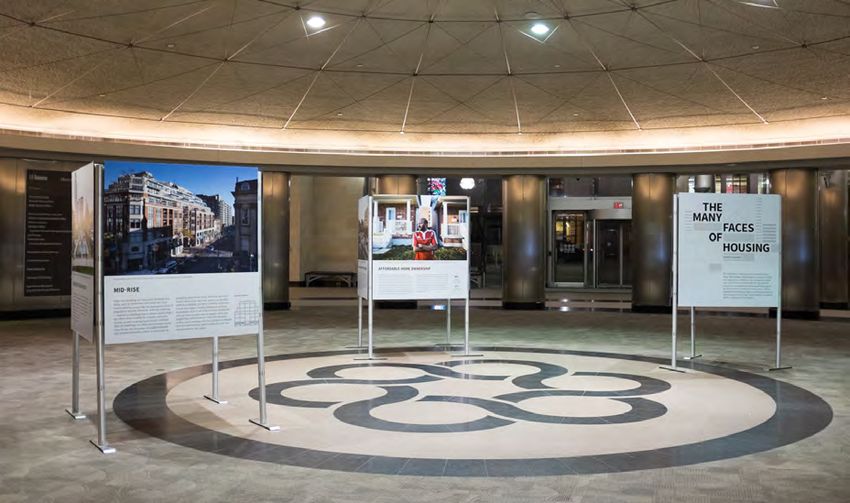
Collaborative Research In May of 2015, Make Way for Mid-Rise was released, the first in a series
Our collaborative work in our change labs has led us to of 13 major research reports analyzing challenges and opportunities for
identify new ideas and/or gaps in knowledge that pose affordable housing and intensification in the region:
barriers to innovation. These ideas have guided our
research agenda. All of our research has been co-created April 2015: Toronto Regional Housing Data Bank March 2016 - December 2016: Financial
and shaped by members of the housing lab, with small by the Greater Toronto CivicAction Alliance Pro Formas and Municipal Incentives to Build
New Affordable Housing in York Region,
working groups forming around each focus area, and one
May 2015: Make Way for Mid-Rise City of Toronto and City of Hamilton by DKGI
primary researcher responsible for holding the pen. This by Pembina and OHBA
collaborative approach has allowed us not only to produce April 2016: Leveraging Assets Locked in
a body of work that explores interesting and innovative October 2015: Make Way for Laneway Social Housing by Tim Welch Consulting
public policy, but also provide an outlet for members of the by Pembina and OHBA
housing lab to fine-tune their own ideas and approaches. October 2016: Community Benefits and
December 2015: Encouraging Construction Tower Renewal by Dina Graser in partnership
and Retention of Purpose-Built Rental Housing in with the Atkinson Foundation
Capacity Building Canada: Analysis of Federal Tax Policy Options
by Canadian Home Builders’ Association February 2017: Toward a Brighter Future:
PRO FORMA POLICY DEVELOPMENT AND TRAINING Opportunities to Reduce Affordable Need
The GTA HAL worked with three municipalities to create March 2016: Designing a housing allowance and Homelessness in the GTHA
program by Michael Mendelson of the by Steve Pomeroy
real estate development pro formas and financial analysis
Caledon Institute
to support creation of new programs for the government March 2017: GTHA Government-Owned Public
and private sector to work together to build affordable 2016: Promoting Rental Housing in the Greater Lands Inventory Map by Professor David
housing. Hamilton, York Region and the City of Toronto Toronto Area by Ryerson University School of Amborski at the Ryerson School of Urban and
are all at different points in developing and implementing Urban and Regional Planning Regional Planning
housing incentive packages designed to build new
March 2016: New Deal for Rental Housing June 2017: Scaling Up Affordable Ownership
affordable housing and meet their local targets for housing
[internal reports for York and Hamilton regions] Housing in the GTA by Jeff Evenson of Canadian
units. HAL supported each municipality in a variety of by Derek Ballantyne and Mark Conway Urban Institute
ways including through data generation and analysis,
development of materials and focus groups with builders
to test new ideas and strategies. This work led to the
creation of the Toronto Open Doors program and the Make
Rental Happen in York region program. “HAL has put all the people working in
The GTA HAL hosted a real estate pro forma 101 course the housing space together – the groups
for 20 housing lab participants in May 2015 and a tour
of complete mixed-use communities in the suburbs represent the crucial ones in Toronto.”
in late June 2015. These sessions helped participants
from a variety of backgrounds better understand the – GTA Housing Action Lab member
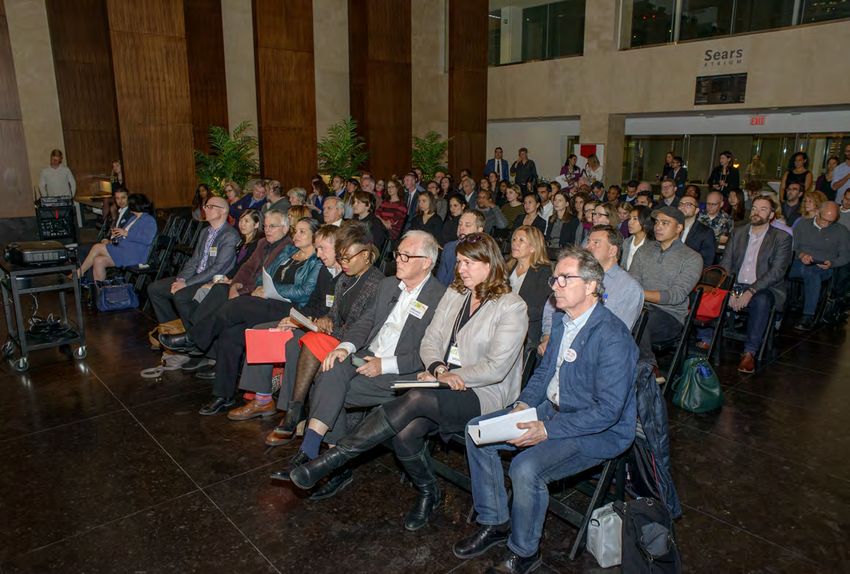
4economics and inputs that go into building housing In 2015, we held a series of events including a “build day”
projects. Participants reported that these sessions helped with Habitat for Humanity attended by MMAH Minister Ted
demystify the pro forma process and simplify their work in McMeekin and MP Adam Vaughan, a photo exhibit entitled
these areas. The Many Faces of Housing on the work of the GTA HAL and
a breakfast panel moderated by Helen Burstyn on the role of
the private sector in building affordable housing and hous-
PUBLIC LANDS INVENTORY WEB MAP ing affordability. The panel featured Toronto City Councillor
The GTA HAL supported the Ryerson University Centre for Ana Bailão, BILD chair Steve Deveaux and Hamilton
Urban Research and Land Development to create a GTHA Community Foundation President and CEO Terry Cooke.
Government-Owned Public Lands Inventory Web Map.
For the first time, this map centralizes and visualizes data In November 2016, during National Housing Week, we
of all government-owned lands from every municipality held the Maximizing the Moment forum on affordable
in the Greater Golden Horseshoe. This was created to housing featuring keynote speaker Councillor Ana Bailão
highlight the opportunities for governments to leverage and three roundtable sessions: i) Maximizing Investment
any underutilized lands to build new affordable housing. in Affordable Housing, ii) Maximizing Assets and iii)
The Ontario government announced in May 2017 that it will Maximizing Land. 2016 was a pivotal year for the discus-
offer up to $125 million worth of land for this purpose. The sion surrounding housing affordability, and the forum pre-
first site has already been identified in the City of Toronto. sented a unique opportunity for 80 participants to discuss
how the current opportunities in housing can be maximized
to produce a healthy, prosperous, and inclusive region.
Public Engagement
AIR MILES SURVEY ON HOUSING
AFFORDABILITY AND INTENSIFICATION
In June 2015, an Air Miles survey was sent to 500,000
people in the GTHA. The survey engaged 26,056 residents
of the GTHA on issues relating to housing affordability in
the region. The results provided new insights into what
people think about changes to their communities related
to affordable housing, their understanding of housing
initiatives, and their level of concern regarding affordability
in their communities.
NATIONAL HOUSING WEEK
In 2015 and 2016, HAL hosted National Housing Week
events to increase alignment and commitment to collec- The Many Faces of Housing,
November 2015
tively build a more equitable housing system in the region.
5We also hosted Coming Home, a National Housing Day
PechaKucha in partnership with the City of Toronto
Affordable Housing Office and Options for Homes.
This public event was held as a follow-up to the federal
announcement on the National Housing Strategy to urge
government to take immediate action and implement the
strategy. 100 community members attended the event,
which also received coverage in Toronto’s Metro News.
TORONTO LANEWAY SUITES
COMMUNITY CONSULTATIONS
Our work with Lanescape and Councillors Ana Bailão
and Mary-Margaret McMahon exploring the potential for
laneway suites in the City of Toronto garnered significant
public interest and media attention. We co-hosted three
community consultations in November and December
Spin-off projects
2016 and developed a community survey to understand NATIONAL HOUSING COLLABORATIVE Laneway suites consultation,
November 2016
the perspectives of residents that gathered feedback Members of the GTA Housing Action Lab came together
from 4,000 Torontonians. We compiled this information to develop a similar initiative called the National Housing
in a recommendations report shared with City of Toronto Collaborative (NHC) designed to bring together housing
Planning Department in March 2017. In June, a motion stakeholders from across the country to inform the “The attraction was
to study a laneway suite implementation strategy passed development of the Government of Canada’s National the feeling that this
unanimously at Toronto East York Community Council. City Housing Strategy. This cross-sectoral initiative started in
was a way for me as a
Council will vote on the motion later this summer. January 2016 and convened every province across the
country, informing four action areas: housing affordability, leader in the housing
Secondary suites, including laneway suites, are an social housing, homelessness and housing supply. The sector to be involved in
important part of rental housing supply in the city of NHC produced research in these areas and submitted a bigger system change
Toronto. They incrementally, responsibly, and “invisibly” formal proposal to the government of Canada in October
and to engage in a
increase density, while preserving neighbourhood 2016. The NHC and continues its work to advance public
character and scale. We are close to changing the city’s policy development in all of these areas. meaningful way.”
municipal zoning bylaws that forbid a “house-behind- – GTA Housing Action Lab member
a-house” scenario. Currently, laneway development is This collaborative has been coordinated by Dina Graser,
handled on a case-by-case basis, with wildly inconsistent with backbone support from the United Way Centraide
results. A cohesive framework will ensure everyone and United Way Toronto & York Region. The collaborative
is entitled to the same rights and limitations to building includes Canadian Alliance to End Homelessness, Canadian
on a laneway. Federation of Apartment Associations, Canadian Home
6Builders’ Association, Co-Operative Housing Federation
of Canada, Housing Partnership Canada, and Habitat for
Humanity Canada, with strategic support from Evergreen,
Maytree, Metcalf Foundation, VanCity, J.W. McConnell “There was a power in the lab that
Family Foundation and Ed and Fran Clark, as well as
support and input from many others across the country. spurred me personally on, and also
AFFORDABLE HOUSING CALCULATOR
the City [of Toronto] for initiating
Building on our pro form development work with City of
Hamilton, York Region and the City of Toronto, Evergreen is
a new way of doing business with
developing a web-based tool to further demystify real estate
pro formas for housing stakeholders across Ontario. This
our Open Door initiative.”
“affordable housing calculator” is in its initial design stages – Sean Gadon, City of Toronto
and is expected to be ready for testing in November 2017.
“With HAL we found some energy again
[for the Portable Housing Benefit].
We fine-tuned our ideas, found a greater
playing field, built on momentum with
the Province. It was a good use of time
because it led to something concrete.”
– Pedro Barata, United Way Toronto & York Region
7Milestones
Held Maximizing the
Moment Forum on
Affordable Housing with
keynote speaker Councillor
Ana Bailão
Release of Make Way Government of Ontario updates Hosted Coming Home,
for Mid-Rise report the Long Term Housing a National Housing Day
Strategy that included key PechaKucha in partnership
recommendations from the with the City of Toronto
City of Toronto announces Affordable Housing Office
GTA Housing Action Lab
the Open Doors Program
including a pilot program for
a portable housing benefit
Toronto East York
Community Council
adopted a motion to
study a laneway suite
GTA Housing Action Lab Release of Designing implementation
Retreat to Wasan Island a Housing Allowance strategy for the city
Program report
2015 2016 2017
Release of Make Way Release of Building New Release of Toward a Brighter
for Laneway report Affordable Housing Future: Opportunities to
through Leveraging in the Reduce Affordable Need and
Greater Toronto-Hamilton Homelessness in the GTHA
Area: Challenges and
Opportunities
8Key Impacts & Outcomes
• Increased collaboration in the housing sector
RESEARCH
THE NETWORK AND KNOWLEDGE • Elevated and improved the quality of the housing
SHARING conversation in the GTHA, keeping affordable housing
on the agenda
26 organizational
partners in 6 sectors 13
research papers
2
tools
• Influenced the Government of Ontario’s updated Long
Term Affordable Housing Strategy (January 2016) and
Fair Housing Plan (May 2017)
released created • Catalyzed action on the City of Toronto’s Open Doors
incentive program to promote the building of new
PUBLIC
ENGAGEMENT AND affordable housing in Toronto
CAPACITY BUILDING • Guided development of Ontario’s pilot Portable Housing
Benefit program to help survivors of domestic violence
12
public workshops, panels,
145 60 200+
stakeholders
• Created the environment necessary to move the needle
on housing policy
and community events engaged
to engage the public on face-to-face conference
housing initiatives meetings calls
for housing leaders to share best practices
31,206
and identify opportunities for action
residents
engaged
“I’ve found common ground under one
tent with so many who come at it from
different angles ... a collective voice.”
– GTA Housing Action Lab member
9You can also read


