HEARTS AND LIVES BROKEN: THE NIGHTMARE OF UYGHUR FAMILIES SEPARATED BY REPRESSION - Amnesty International Schweiz
←
→
Page content transcription
If your browser does not render page correctly, please read the page content below
HEARTS AND LIVES BROKEN: THE NIGHTMARE OF UYGHUR FAMILIES SEPARATED BY REPRESSION
Amnesty International is a movement of 10 million people
  which mobilizes the humanity in everyone and campaigns
  for change so we can all enjoy our human rights. Our vision
  is of a world where those in power keep their promises,
  respect international law and are held to account. We are
  independent of any government, political ideology, economic
  interest or religion and are funded mainly by our membership
  and individual donations. We believe that acting in solidarity
  and compassion with people everywhere can change our
  societies for the better.

© Amnesty International 2020
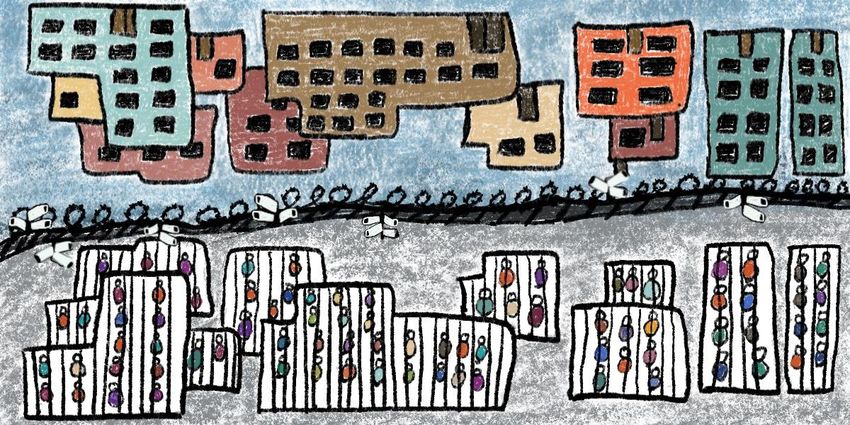
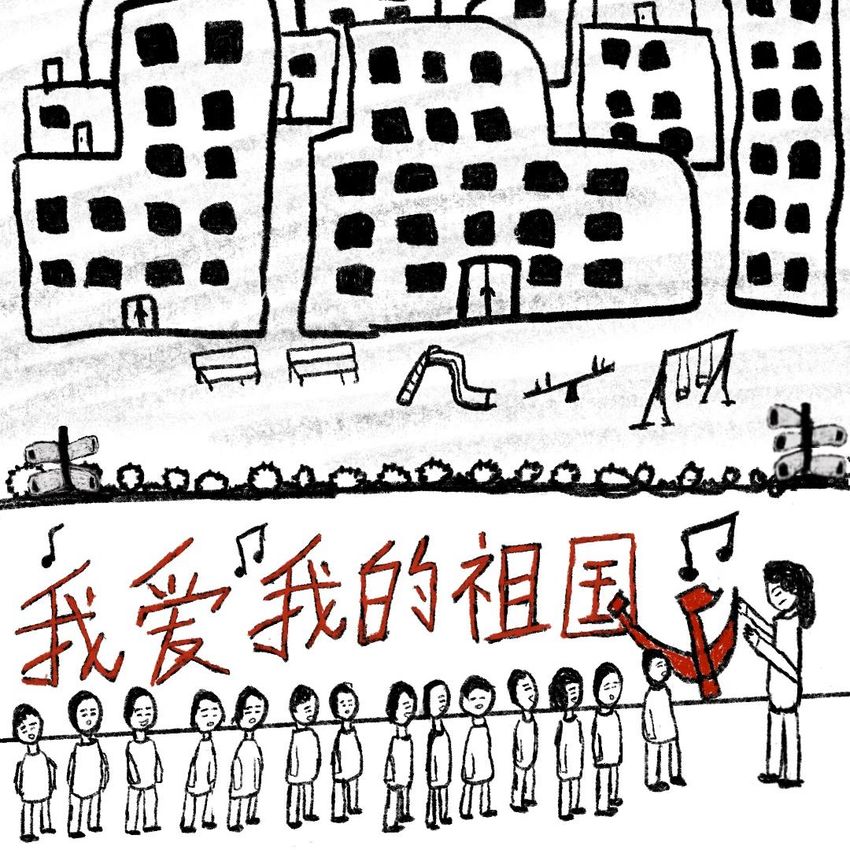
Except where otherwise noted, content in this document is licensed under a Creative Commons   Cover photo: Cover illustration, Children were taken to state-run orphanage and boarding school in
(attribution, non-commercial, no derivatives, international 4.0) licence.                     Xinjiang where they were subjected to heavy surveillance and were taught songs about “loving your
https://creativecommons.org/licenses/by-nc-nd/4.0/legalcode                                   motherland”.
For more information please visit the permissions page on our website: www.amnesty.org        © Amnesty International
Where material is attributed to a copyright owner other than Amnesty International this
material is not subject to the Creative Commons licence.
First published in 2021
by Amnesty International Ltd
Peter Benenson House, 1 Easton Street
London WC1X 0DW, UK

Index: ASA 17/3798/2021
Original language: English

amnesty.org
HEARTS AND LIVES BROKEN:
THE NIGHTMARE OF UYGHUR FAMILIES SEPARATED BY REPRESSION

© Amnesty International

Nearly four years ago, Uyghur parents studying or making a living abroad began living a recurring nightmare.
Many had left one or more children in the care of family members in their hometowns back in northwestern
China’s Xinjiang Uyghur Autonomous Region (Xinjiang). They could not know at the time that China was
about to launch an unprecedented crackdown on ethnic populations in Xinjiang that would have a horrific
impact on the lives of what is estimated to be thousands of parents just like them.
For decades, many Uyghurs have experienced systematic ethnic and religious discrimination in Xinjiang.
Since 2014, the region has witnessed a greatly expanded police presence and fallen under a heavy blanket
of surveillance as part of China’s publicly declared “People’s War on Terror” and its associated efforts to
combat “religious extremism”. In 2016, surveillance and social control measures began spreading rapidly. In
2017, things began taking an even more terrible turn for Uyghurs, Kazakhs and other predominantly Muslim
peoples in the region. Since that time, an estimated one million or more people have been arbitrarily
detained in “transformation-through-education” or “vocational training” centres in Xinjiang, where they have
been subjected to various forms of torture and ill-treatment, including political indoctrination and forced
cultural assimilation. This mass detention campaign combined with systematic repression have prevented
Uyghur parents from returning to China to take care of their children themselves and made it nearly
impossible for their children to leave China to reunite with them abroad.
Many parents thought early on that the crackdown would be temporary and they would soon be able to
return home to their children. However, friends and relatives warned they would almost certainly be locked
up in internment camps upon returning to China. The existence of the camps and the arbitrary detention of
potentially any member of a Muslim ethnic group in them is by now irrefutable. While some contact with
their children was possible at first, it ended when the relatives who had been looking after the children were
taken to internment camps or jailed themselves. The parents’ sojourns overseas were slowly and inexorably
turning into exile.
Amnesty International has recently spoken extensively to six parents residing in Australia, Canada, Italy, the
Netherlands and Turkey who have been separated from their children. Their testimonies only begin to
scratch the surface of the experiences of Uyghur families yearning for reunification with children trapped in
China.

HEARTS AND LIVES BROKEN:
THE NIGHTMARE OF UYGHUR FAMILIES SEPARATED BY REPRESSION
Amnesty International                                                                                            3

WHERE ARE THE CHILDREN?
   Although it is often extremely difficult, if not impossible, for Uyghurs overseas to receive information about
   the whereabouts of their family members, some parents have received bits and pieces of information in
   the form of coded words, or photos and videos, from relatives and friends that make them believe their
   children were taken to state-run “orphan camps” or boarding schools.

     “Now my children are in the hands of the Chinese
     government and I am not sure I will be able to meet them
     again in my lifetime.”
     Mihriban Kader

     ALMOST REUNITED: FOUR TEENAGERS ON A PERILOUS JOURNEY

                                                                  Mihriban Kader and Ablikim Memtinin’s four children made a 5,000-km-
                                                                  journey from Kashgar to Shanghai.
                                                                  © Amnesty International

     Mihriban Kader and her husband Ablikim Memtinin, originally from Kashgar, fled to exile in Italy in 2016
     after being repeatedly harassed by police and told to hand over their passports to the local police station.

                                                            Soon after they left, the police also started to harass
                                                            Mihriban’s parents, who were taking care of their
                                                            four children. Eventually, the grandmother was
                                                            taken to a camp and the grandfather was
                                                            interrogated for several days and later spent months
                                                            in hospital.

                                                            This left the children without any caretaker. “Our
                                                            other relatives didn’t dare to look after my children
                                                            after what had happened to my parents,” Mihriban
                                                            told Amnesty International. “They were afraid that
                                                            they would be sent to camps, too.”
              © Mihriban Kader

     Fresh hopes for a family reunion came in November 2019, when Mihriban and Ablikim received a permit
     from the Italian government to bring their children to join them. Before that could happen, however, their
     four children – aged 12, 14, 15 and 16 – needed to set off by themselves on the gruelling and precarious
     5,000-km (3,100-mile) journey from Kashgar, near China’s border with Pakistan, to the eastern coastal
     city of Shanghai to apply for Italian visas in June 2020.

     On the road, they faced many great dangers and challenges. Regulations prohibit children from buying
     train or flight tickets and from travelling on their own in China. Due to discriminatory policies and local
     government edicts, hotels often refuse to accommodate Uyghur people, claiming there are no rooms
     available. Despite the adversity, the children persevered and managed to reach Shanghai.

HEARTS AND LIVES BROKEN:
THE NIGHTMARE OF UYGHUR FAMILIES SEPARATED BY REPRESSION
Amnesty International                                                                                                               4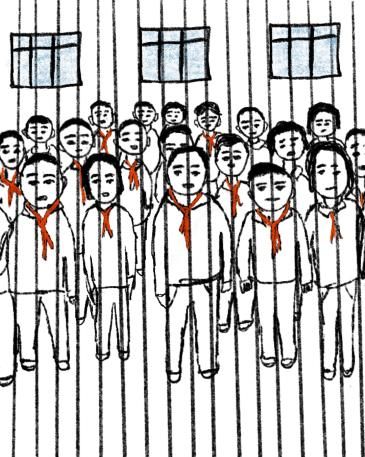
When the children finally reached the gates of the Italian consulate, valid passports in their hands, they
     could almost feel as if their parents were on the other side waiting to hug them.

     Their excitement quickly turned to despair
     when they were denied entry into the
     consulate. They were later told family
     reunification visas could only be issued in
     the Italian embassy in Beijing, but at that
     time people could not travel due to the
     strict lockdown in Beijing in June 2020.
     With hearts shattered, the children waited
     outside the consulate, hoping that
     somebody would come out and help them.
     Instead, a Chinese guard came over and
     threatened to call the police if they did not
     leave.                                                                             © Amnesty International

     Refusing to give in to dejection, the children sought assistance from several travel agencies to apply for
     Italian visas. On 24 June, all four were seized by the police at their hotel in Shanghai and taken back to
     an orphanage and boarding school in Kashgar, according to their parents. Had they been permitted to
     enter the consulate, they might now be reminiscing together with their parents about the daring journey
     they had just undertaken instead of languishing in the Chinese orphanage system. As it stands, Mihriban
     and Ablikim fear they might have lost their children forever.

HEARTS AND LIVES BROKEN:
THE NIGHTMARE OF UYGHUR FAMILIES SEPARATED BY REPRESSION
Amnesty International                                                                                             5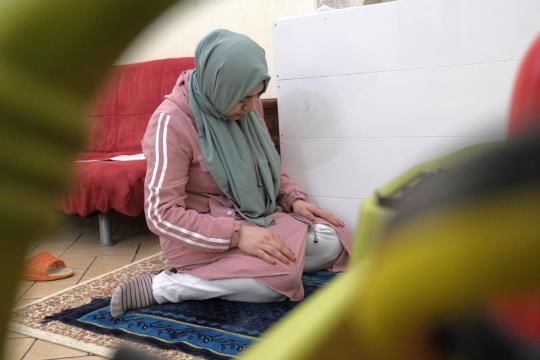
In late 2016, Chinese authorities began systematically confiscating passports from people in Xinjiang.
   Ordered to surrender their passports to local police stations, many families decided to leave the country
   while they still could and come back later for children who did not yet have a passport.
   Once abroad, parents who made inquiries at Chinese embassies or consulates were provided no
   information but told only to go back to Xinjiang, where it is highly likely they would be subjected to arbitrary
   detention and other forms of extralegal punishment.

     “I am one of the thousands of Uyghur people whose family
     has been torn apart … We haven’t heard the voices of our
     daughters for the last 1,594 days.”
     Omer Faruh

     SEPARATED FROM MY DAUGHTERS: 1,594 DAYS AND COUNTING
     Omer Faruh owns a bookstore in Istanbul. He was in Saudi Arabia in November 2016 when his wife
     Meryem Faruh called him one night and told him that local police had ordered them to hand over their
     passports. Worried, Omer asked Meryem not to surrender their passports to the police and immediately
     bought flight tickets for her and their two elder daughters who already had passports. Two other
     daughters, aged five and six, had not yet obtained travel documents. Taking into account the large-scale
     confiscation of passports then taking place in Xinjiang, Meryem and Omer decided that they had no
     choice but to leave the two younger children in the care of Meryem’s parents at home in Korla in central
     Xinjiang.

     Omer soon lost contact with his own parents. In October
     2017, he found out from a friend that his parents-in-law had
     been taken to internment camps.

     “I am one of the thousands of Uyghur people whose family
     has been torn apart … We haven’t heard the voices of our
     daughters for the last 1,594 days,” Omer told Amnesty
     International, his voice breaking. “My wife and I cry only at
     night, trying to hide our sorrow from our other kids here with
     us.

     “I am ready to sacrifice anything for our daughters. I am
     ready to sacrifice my life if only I knew my daughters would
     be set free for it.”                                             Illustration, a Uyghur mother missing her children in her dream.
                                                                      © Amnesty International

     Omer and his family, including all the children, obtained Turkish citizenship in June 2020. He has been
     trying ever since to enlist the help of the Turkish authorities to bring his two youngest daughters out of
     China. Although the Turkish embassy in Beijing informed Omer it had initiated the relevant procedures in
     August 2020 and sent a diplomatic note to the Chinese government in October 2020, to date they have
     not been able to bring the two girls to Turkey.

     “I have something to say to humankind. Please try to put yourself into our shoes, imagine all what we
     have been going through, and speak out for us,” Omer said.

HEARTS AND LIVES BROKEN:
THE NIGHTMARE OF UYGHUR FAMILIES SEPARATED BY REPRESSION
Amnesty International                                                                                                                    6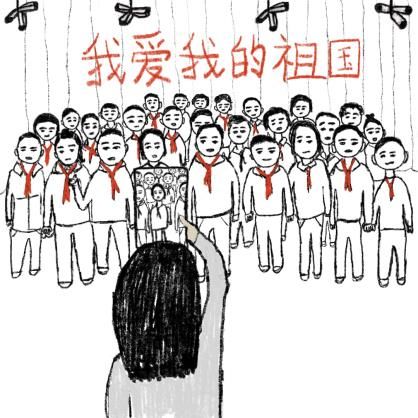
Some parents wanted their children to spend some time with their grandparents while they were young.
   Others who were expecting children chose to temporarily relocate outside China to avoid harsh
   punishments under a restrictive birth-control policy that strips people, particularly women, of their
   fundamental right to make their own reproductive choices.

     “Forgive me, I brought you into the world, but I couldn’t take
     care of you; I couldn’t be a mum for you”
     Rizwangul

     TELL ME MY SON IS ALIVE, SAFE AND WELL
     Rizwangul was working as a salesperson in Dubai in 2014 when her son, then three years old,
     accompanied by her cousin Muhammed, visited her for almost half a year. Rizwangul had been planning
     to bring her son over to live with her permanently, but her parents suggested that he stay in China until he
     reached school age so that Rizwangul could concentrate on her career. She agreed, thinking that by then
     she would be comfortably settled in Dubai and could make preparations for his school enrollment.

     “Every time I went back to my hometown in Xinjiang for vacation, I used to spend one month with my son.
     I was incredibly happy then,” Rizwangul told Amnesty International. “When he came to Dubai to visit me,
     that was the most wonderful time in my life.”

     Rizwangul’s cousin, Muhammed, stayed on in Dubai for a job. He returned to Xinjiang in March 2017
     when his mother fell sick. Just two months later, as Rizwangul was preparing to return home for a
     scheduled visit, her sister and friends told her that it was not safe for her to come back to China.

     She had no idea the situation was about to turn far bleaker.

     When Rizwangul asked her sister about Muhammed, she learned
     that he had gone to “school” to “study” a week after he arrived
     back in Xinjiang. Rizwangul understood this to mean that
     Muhammed had been taken to a “re-education” camp.

     Then in September, Rizwangul’s world went dark when her sister –
     who had been taking care of her son – told her not to call them
     ever again due to security concerns. Since then, Rizwangul has
     been unable to contact her son, her sister or friends in Xinjiang.

     “It’s really hard for others to understand what I am feeling,” she
     told Amnesty International, with tears trailing down her cheeks.
     “The only thing that keeps me moving forward in life is that I
     want to know that he is alive, safe and well.                        Illustration, children were taken to state-run orphanage
                                                                                                               and boarding school.
     “If I could speak to him now, I would say to him, ‘Forgive me,                                       © Amnesty International
     I brought you into the world, but I couldn’t take care of you; I
     couldn’t be a mum for you’.

     “Just imagine that you cannot call your family, you don’t know whether your children, your parents or
     your relatives are alive or not for years. Imagine it is not only you, but millions of [Uyghur] people
     separated from their family members. We never thought this would happen to us, but it has happened.
     Please help us.”

HEARTS AND LIVES BROKEN:
THE NIGHTMARE OF UYGHUR FAMILIES SEPARATED BY REPRESSION
Amnesty International                                                                                                                 7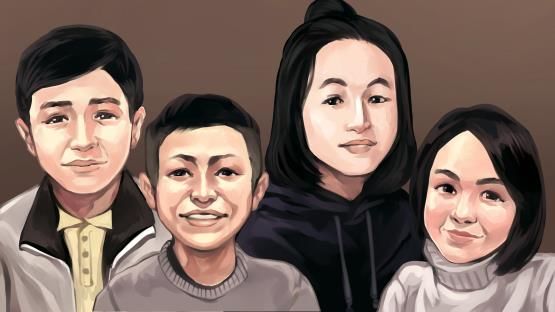
It is extremely difficult to estimate the number of children separated from parents who reside outside
   China, or who remain detained in internment camps or prisons. Documenting the full scope of the
   violations of human rights in Xinjiang remains extremely difficult, due to a lack of publicly available data
   and restrictions on access to the region.

     “I have no idea what is happening to my children and family.
     How could this happen? Please, do your best to help us
     survive this.”
     Dilnur

     TO RETURN OR NOT TO RETURN?

     © Amnesty International

     Dilnur, who is originally from Kashgar, currently lives with her 11-year-old daughter and studies English in
     Canada. She left China for Turkey with her daughter in 2016 as they were often severely harassed by the
     local police, who repeatedly searched her house and ordered her to take off her hijab.

     It had taken about a year for authorities to issue passports to her two daughters (her 11-year-old and
     another daughter aged nine) while the police denied her passport application for her seven-year-old son.
     When Dilnur asked why, the local police told her it was because they believed she would not come back
     to China if they issued a passport to him. Because her younger daughter’s allergies prevented her from
     travelling abroad, Dilnur had to leave her and her son behind in the care of her parents. A few months
     after Dilnur left China, she learned from her family that her younger daughter’s passport had been
     confiscated by the police.

     In early 2017, Dilnur faced one of the biggest dilemmas of her life. “You have to come back,” her sister
     told her over the phone. Their father, who had been taking care of the two children, was being
     interrogated for long stretches every week. When Dilnur asked why, her sister replied: “Because the
     government wants you to come back. The safety of our family depends on you. If you do not come back
     right away, all of our family and even our extended relatives will be punished and taken to camps.”

     In the few minutes it took to hear these words, Dilnur’s world was torn apart. The thought that the safety
     of her loved ones hung entirely on her decision whether to return to China or not left her feeling utterly

HEARTS AND LIVES BROKEN:
THE NIGHTMARE OF UYGHUR FAMILIES SEPARATED BY REPRESSION
Amnesty International                                                                                             8
helpless, since she knew she would be separated from her children and taken to a camp if she ever went
     back to China.

     Dilnur could not sleep for over a week as she struggled over what to do. Then she received a message
     from her father through a mutual relative, saying that Dilnur should focus on finishing her education.
     Soon after, another message followed from her father: “Dilnur must never come back again.”

     Dilnur believes that her father knew what would happen to her if she went back, so he decided to protect
     her from potential harm. Moreover, she believed her family and relatives were harassed just because they
     were Uyghurs and the authorities would not set them free even if she went back.

     Since April 2017, Dilnur has been unable to reach any family members. She has no idea what has
     happened to her two children in Xinjiang. She has tried every possible means but with no luck. “I tried so
     hard to save my children, but I failed. Once I had this nightmare every night for a week that they were
     crying out for me. Their teacher then said: ‘Your mother left you.’” Horrified by these thoughts, Dilnur
     grew afraid of sleep.

     Dilnur plans to ask for help from the Canadian government to bring her children over once she is granted
     permanent residence. While living in Turkey, she had written several letters to seek help from the Turkish
     Foreign Ministry, the Ministry of the Interior and the Presidency. She has not received any response.
     Talking to Amnesty International, she also called on the world to act, saying, “I have no idea what is
     happening to my children and family. How could this happen? Please, do your best to help us survive
     this. I want to ask everyone to hold on to their humanity, speak for us, stand with us and do not to allow
     this tragedy to keep happening to our children.”

HEARTS AND LIVES BROKEN:
THE NIGHTMARE OF UYGHUR FAMILIES SEPARATED BY REPRESSION
Amnesty International                                                                                         9
Uyghurs overseas often hesitate to publicly talk about human rights abuses against them and their
   relatives due to fear of repercussions for their relatives back in China. In spite of such challenges, these six
   parents have decided to publicly share their stories in the hope that it will help them reunite with their
   children soon.

     “We did not deserve any of this immense suffering. It’s like
     you lose four or five years of your life just for being Uyghur
     or being different from the majority of Chinese”
     Mamutjan

     “THERE ARE CADRES AT HOME”

     Mamutjan, born and raised in Kashgar, currently lives in Australia. He was pursuing a doctoral degree in
     social science in Malaysia when his wife Muherrem and baby daughter joined him in 2012, after waiting
     more than two years for Muherrem’s passport to be issued.

     Mamutjan still cherishes the time they were all together: “When Muherrem and our daughter first came to
     Kuala Lumpur, it was so exciting … Those were the happiest and most memorable times of my life.”

     Those happy times lasted almost three years, ending when the Chinese embassy in Kuala Lumpur
     refused to reissue Muherrem’s passport in late 2015, after it had been lost. She was then forced to travel
     back to China to renew her passport with their then five-year-old daughter and six-month-old son. At the
     time, they thought this would be a routine procedure. They had no inkling that China was about to launch
     a large-scale crackdown on Uyghurs and that an agonizing, years-long separation was about to begin.

     Muherrem and the two children ended up stranded in Kashgar. Mamutjan was able to maintain regular
     contact up until the day before Muherrem was taken to an internment camp in April 2017. When
     Muherrem was taken away, the children were left with their grandparents. Not long after, Mamutjan’s
     parents asked him not to contact them again. Many of his friends and relatives have “unfriended” him on
     messaging apps.

     For two years, Mamutjan knew little about his wife’s whereabouts and was unable to contact his parents
     or in-laws. In May 2019, Mamutjan saw a video of his son on a relative’s social media account, excitedly
     shouting: “My mum has graduated!” He then finally found some peace of mind, as he believed this
     clearly meant she had been released from the camps.

     Mamutjan decided to take a chance and called his parents in August 2019. He thought the video might
     be a sign that his family’s dire situation had improved somewhat.

                                                             He was so excited when his mother picked up the
                                                             phone. “I just wanted to say Eid Mubarak, it’s been
                                                             so long since the last time I spoke to you,”
                                                             Mamutjan said.

                                                             His mother replied with a quavering voice before
                                                             she hung up: “There are cadres at home.”

                                                             Afterwards, Mamutjan kept calling but the line was
                                                             always busy. He believes his parents deliberately
                                                             disconnected the line so that he could not call
     again, avoiding contact with him for fear that being in touch with people overseas could lead to
     internment or other punishment.

HEARTS AND LIVES BROKEN:
THE NIGHTMARE OF UYGHUR FAMILIES SEPARATED BY REPRESSION
Amnesty International                                                                                            10
Over the last year, Mamutjan has continued to receive bits of information in coded words from his friends
that suggest Muherrem continues to be detained. A friend told him that his wife was “five years old”,
which Mamutjan believes might mean that she was sentenced to five years’ imprisonment. Another friend
said Muherrem has been taken to a “hospital”, which could refer to an internment camp or a prison in
the coded language Uyghurs use.
While Mamutjan has not been able to contact his family and relatives, he believes his son might be living
with his mother-in-law and his daughter with his own parents, based on two videos he received from close
friends who visited his hometown to find out more information about his family. “We did not deserve any
of this immense suffering. It’s like you lose four or five years of your life just for being Uyghur or being
different from the majority of Chinese,” he said.
Mamutjan called on the Chinese government to end its repressive policies in Xinjiang: “If there is any
humanity left in them, the Chinese authorities should stop treating people like this and let people reunite
with their families. It is not like we have committed any crimes. I want them to realize the extent of this
mass cruelty … This is agonizing and painful injustice, there are no other words to accurately describe
this.”
He has reached out to the Department of Home Affairs in Australia, where he is currently living, but they
said they could not help him because he is not a permanent resident.
HEARTS AND LIVES BROKEN:
THE NIGHTMARE OF UYGHUR FAMILIES SEPARATED BY REPRESSION
Amnesty International 11“There is an old saying, ‘Children are heart, children are
life.’ It feels like I lost my heart and I lost my life.”
Meripet Metniyaz
A STREAM OF HORRIBLE NEWS
Meripet Metniyaz and her husband Turghun Memet traveled from Xinjiang to Turkey in March 2017 to
take care of Meripet’s sick father in Istanbul. Meripet had worked as an ultrasound doctor back in the
southwestern Xinjiang city of Hotan, and Turghun had been a businessman investing in real estate and
precious stones in Xinjiang. They travelled on one-month visas, thinking they were going to return to
China soon. While they were away, Turghun’s mother in Urumqi would look after their four children, aged
six, eight, nine and 11.
While nursing Meripet’s father back to health, they started to receive worrying messages from their
families that Uyghurs who had previously travelled to Turkey were being detained and taken to internment
camps. They decided to postpone their return.
Meripet explained: “We thought we had to be patient and wait for a few months until the situation became
better in Urumqi so we could go back. We waited, but the situation only got worse. Not only people who
had traveled abroad, but also those who pray and have a beard were getting arrested. We heard many
stories about prisons in our homeland and were terrified of going back.”
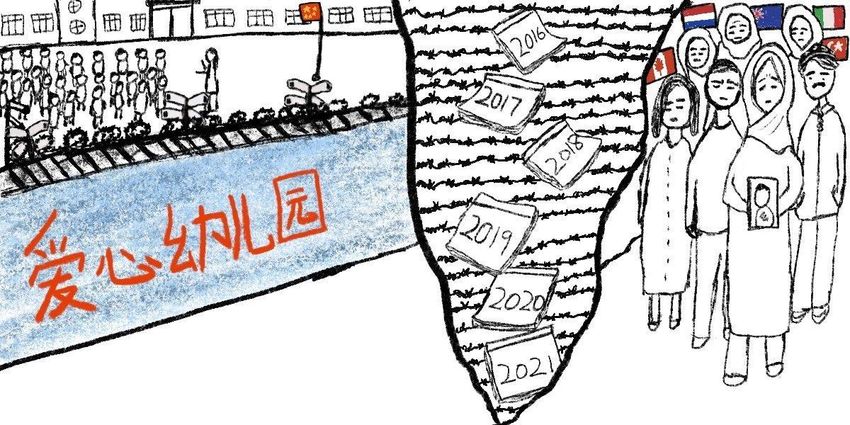
In late 2017, Turghun found out that his mother and the
children had been forced to move from Urumqi around 1,500
km (930 miles) away to Hotan, where she was officially
registered as a resident. The tragedy began to unfold further
when Turghun learned from his sister Amina that their mother
had been taken to a camp shortly after returning to Hotan.
Within five days of their return to Hotan, their children were
taken to Aixin Kindergarten, a de-facto orphanage.
Meripet took the news extremely hard. “After I lost [contact
with] my children, it has hit my mental health.” She often woke
up in the middle of the night to nightmares, crying.
“There is an old saying, ‘Children are heart, children are life.’
It feels like I lost my heart and I lost my life.” Bursting into Illustration, children were taken to Aixin Kindergarten, a
tears, she continued: “The meaning of my life was my de-facto orphanage.
children. I always think about their well-being, health and how © Amnesty International
they are treated.”
Over the following months, Turghun continued to receive pieces of information about the children from
his sister in coded text messages. At first, Amina was able to visit the children once a week; a few weeks
later, she was no longer allowed access to the children. In June 2018, Turghun suddenly could not even
contact Amina anymore.
A few months later, his sister-in-law told him that Amina had been killed during an interrogation while in
police custody. Turghun and Meripet were shocked and devastated. Soon after, they found out the same
sister-in-law had been taken to an internment camp in late 2018. There was no one left from whom they
could seek information about their children.
Meripet and Turghun wrote many letters to the Turkish Foreign Ministry, advisors to the Turkish president
and the Chinese embassy in Istanbul. They have yet to receive a response. “My only wish is that every
innocent person who has lost their children, parents, relatives and loved ones can live together with
them,” Meripet said.
HEARTS AND LIVES BROKEN:
THE NIGHTMARE OF UYGHUR FAMILIES SEPARATED BY REPRESSION
Amnesty International 12It is time for China to put an end to its ongoing gross human rights violations and repressive policies in Xinjiang and respect its human rights obligations, including in regard to rights of children under international law. China ratified the Convention on the Rights of the Child (CRC) in 1992. In accordance with Articles 9 and 10 of the CRC, China must ensure that children are not separated from their parents against their will and that the children’s best interests are always the primary consideration (Article 3). The UN Committee on the Rights of the Child has confirmed that if family reunification is not possible in the country of origin, for whatever reason, both the host country and the country of origin should make their best efforts to facilitate reunification elsewhere, with due regard to the human rights of the children and their parents, including the right to leave their own country. Children who are separated from their parents generally have the right to maintain personal relations and direct contact with them on a regular basis. If the state has taken the child into custody, for example in an orphanage or boarding school, it must provide the parents or other family members with information about the child’s whereabouts. Under the rights to freedom of expression and privacy and family life, all people, including children, must be afforded the opportunity to regularly contact their family members abroad and to seek, receive and impart information, regardless of frontiers. In October 2016, there were numerous reports that authorities in Xinjiang had confiscated Uyghur passports in an attempt to further curtail their freedom of movement. The right to freedom of movement, including the right to leave one’s own country and to obtain the necessary travel documents, may not be limited arbitrarily. The only exception being that it is based on clear legal grounds, necessary and proportionate to achieve a legitimate aim, and consistent with other human rights including the right to non-discrimination. The parents Amnesty International interviewed reported that Chinese consulates had rejected applications to renew their passports and told them they would need to go back to China in order to do so. A state’s refusal to issue a passport or extend its validity based on unnecessary legal rules or administrative measures may amount to a violation of that person’s right to freedom of movement. The Chinese government must uphold its obligations to deal with applications by children or their parents to enter or leave China freely in a positive, humane and expeditious manner, particularly for the purpose of family reunification. Furthermore, the Chinese government must guarantee that there will be no adverse consequences for either parents or children when they request to be reunited with their families. A policy of forcible family separation and especially enforced placement of Uyghur children in orphanages violates the children’s rights, including the right to be protected against discrimination and punishment on the basis of their parents’ beliefs and deeds. Pending family reunification, China must respect the rights of members of Uyghur families to maintain direct and regular contact with each other. Amnesty International has documented cases in which contact with relatives overseas is deemed a major reason for arbitrary detention in Xinjiang’s internment camps. In addition, the Chinese government must promptly reveal the whereabouts of the children and other family members of parents abroad, including those who remain detained in internment camps, prisons or other state institutions. Withholding such information could also be an arbitrary interference with the children’s right to family life (Article 16 of the CRC). HEARTS AND LIVES BROKEN: THE NIGHTMARE OF UYGHUR FAMILIES SEPARATED BY REPRESSION Amnesty International 13
RECOMMENDATIONS
To the Chinese government:
     •    Ensure that children are allowed to leave China to be reunited as promptly as possible with their
          parents, if that is preferred by them, as well as with siblings already living abroad.
     •    End all measures that impermissibly restrict the rights of Uyghurs and other predominantly Muslim
          ethnic groups to freely leave and return to China.
     •    Provide full and unrestricted access to UN human rights experts, independent researchers and
          journalists to Xinjiang to conduct independent investigations about what is happening in the region.
     •    Close the political “re-education camps” and release detainees immediately, unconditionally and
          without prejudice.
     •    Ensure Chinese diplomatic or consular organs and other public officials and authorities protect the
          legitimate rights and interests of all Chinese citizens, particularly in providing appropriate assistance
          with locating their family members in China.
     •    Ensure that everybody from Xinjiang is able to regularly communicate with family members and
          others without interference, including with those living in other countries, unless specifically justified
          in line with international human rights law.
     •    Cease the practice of forced separation of Uyghur children from their parents or guardians, in line
          with its obligations under the UN Convention on the Rights of the Child and other human rights,
          unless competent authorities subject to effective judicial review determine that such separation is
          necessary as a last resort for the best interests of the child;
     •    Release, as a matter of urgency, all children held in state-run institutions without consent of the
          child’s parents or guardians.

To second governments:
     •    Ensure that all Uyghurs, Kazakhs and others have prompt access to a fair and effective asylum
          process, legal counsel, a thorough assessment of the possible human rights violations or abuses they
          might face upon return and the ability to challenge any removal orders;
     •    Make best efforts to ensure that all Uyghurs, Kazakhs and other members of Chinese ethnic groups
          resident in their countries, regardless of their immigration status, are provided with consular and
          other appropriate assistance to establish the whereabouts of and contact with their children, keeping
          in mind the special circumstances in which members of these ethnic groups find themselves
          presently;
     •    Make decisions about family reunification with due regard to applicable human rights obligations, in
          particular under the Convention on the Rights of the Child, by dealing with applications by a child or
          his or her parents to enter their country for the purpose of family reunification in a positive, humane
          and expeditious manner.

HEARTS AND LIVES BROKEN:
THE NIGHTMARE OF UYGHUR FAMILIES SEPARATED BY REPRESSION
Amnesty International                                                                                                 14
AMNESTY INTERNATIONAL
IS A GLOBAL MOVEMENT
FOR HUMAN RIGHTS.
WHEN INJUSTICE HAPPENS
TO ONE PERSON, IT
MATTERS TO US ALL.
CONTACT US JOIN THE CONVERSATION
info@amnesty.org www.facebook.com/AmnestyGlobal
+44 (0)20 7413 5500 @AmnestyHEARTS AND LIVES BROKEN: THE NIGHTMARE OF UYGHUR FAMILIES SEPARATED BY REPRESSION Nearly four years ago, Uyghur parents studying or making a living abroad began living a recurring nightmare. Many had left one or more children in the care of family members in their hometowns back in northwestern China’s Xinjiang Uyghur Autonomous Region (Xinjiang). They could not know at the time that China was about to launch an unprecedented crackdown on ethnic populations in Xinjiang that would have a horrific impact on the lives of what is estimated to be thousands of parents just like them. Amnesty International has recently spoken extensively to six parents residing in Australia, Canada, Italy, the Netherlands and Turkey who have been separated from their children. Their testimonies only begin to scratch the surface of the experiences of Uyghur families yearning for reunification with children trapped in China. INDEX: ASA 17/3798/2021 MARCH 2021 LANGUAGE: ENGLISH amnesty.org
You can also read


