Hearts of Our People: Native Women Artists - Teachers Guide - Philbrook Museum of Art - imgix
←
→
Page content transcription
If your browser does not render page correctly, please read the page content below
Philbrook Museum of Art

Hearts of Our People:
Native Women Artists
Teachers Guide
These essays highlight six artworks from the
Minneapolis Institute of Art (Mia) collection featured
in Hearts of Our People: Native Women Artists, on
                                                                  Contents
view at Philbrook Museum of Art October 7, 2020–
January 3, 2021. Researched and written by Marlena                 3        Hohokom artist, Bowl
Myles (Spirit Lake Dakota, Mohegan, Muscogee).                     6        Ancestral Pueblo artist, Pot
Please note that of the artworks featured in this                  9	Anishinaabe (Ojibwe) or Dakhóta artist,
Teachers Guide, three will be on view at Philbrook                    Dance Blanket
during the exhibition. Those artworks are Maȟpíya                  12	Maȟpíya Boğá wiŋ (Nellie Two Bear Gates),
Boğá wiŋ (Nellie Two Bear Gates), Suitcase; Jamie                      Suitcase
Okuma, Adaptation II; and Dyani White Hawk,
                                                                   16       Jamie Okuma, Adaptation II
Untitled (Quiet Strength I).
                                                                   19       Dyani White Hawk, Untitled (Quiet Strength I)
In these essays, Myles invites students to learn
about artworks from the ancient past to the
present by looking closely, exploring techniques,
and understanding context. Discussion questions
designed by Mia educators accompany each essay.
They encourage close looking, critical thinking, and
making connections to the lives of individual artists.
                                                                                                               FC TULSA 2020–2021
For more resources and videos relating to the                                                                  EXHIBITION SERIES
exhibition, please visit philbrook.org.                                                                        SPONSORS

                                                                                  HEARTS OF                    TITLE SPONSOR
                                                                                 OUR PEOPLE
                                                          Organized by the Minneapolis Institute of Art

                                                     with contributions from Philbrook Museum of Art

                                                                                                       .       PRESENTING SPONSOR
                                                                                                               Mary K. Chapman Foundation
                                                                 This exhibition is supported in part by
                                                                                                               CONTRIBUTING SPONSOR
                                                                                                               The Mervin Bovaird Foundation

                                                                                                               SUPPORTING SPONSORS
                                                                                                               Billie and Howard Barnett
                                                      Philbrook’s presentation of Hearts of Our People:        Estate of Doug Campbell
                                                 Native Women Artists is funded in part by a grant from        Gayle and Frank Eby
                                                   the National Endowment for the Arts and donors to           Barbara and Steve Heyman
                                                                          Philbrook’s Exhibition Series.       Susan and Bill Thomas

                                                                                                               SPONSORS
                                                                                                               Barbara and Hal Allen
                                                                                                               Bank of Oklahoma
                                                                                                               The George and Wanda Brown Foundation
                                                                                                               Margo and Kent Dunbar
                                                     Exhibition educational and outreach programming           Hardesty Family Foundation
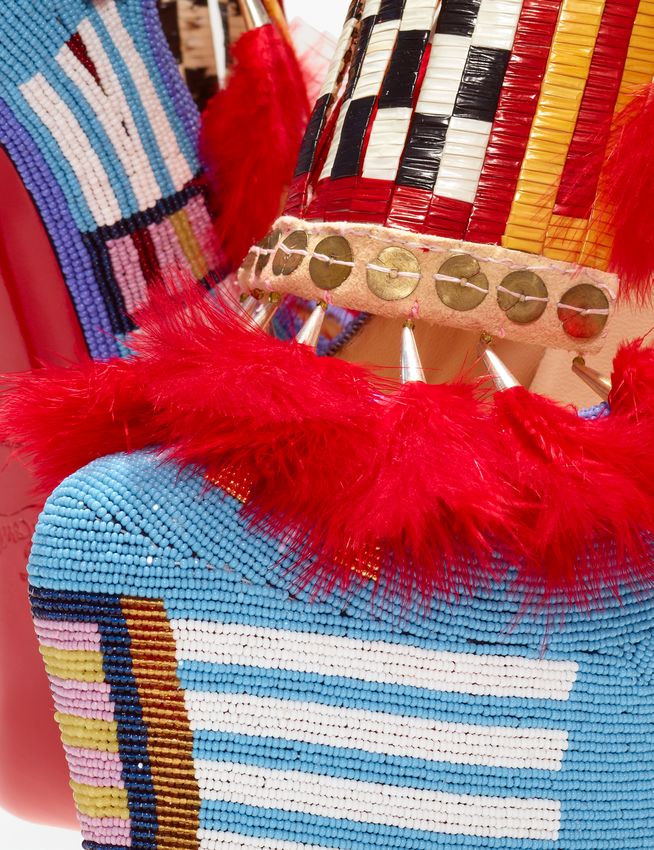
Cover:                                              is supported in part by the Flint Family Foundation.       Luxa Enterprises
Jamie Okuma (Shoshone-Bannock,                                                                                 Matrix Service Company
                                                      Additional funding for this project is provided by       Oklahoma Arts Council
Luiseno, Okinawan and Hawaiian),
                                                                                                               Philbrook Board of Trustees
b. 1977; Shoes designed by Christian                                                                           Philbrook Contemporary Consortium
Louboutin; Adaptation II (detail), 2012;                                                                       Senior Star
Leather, glass beads,                                                                                          Tanninger Philanthropies
porcupine quills, sterling silver cones,                                                                       Jill and Robert Thomas
brass sequins, chicken feathers, cloth,                    OKL AHOMA                                           Suzanne Warren
                                                           HUM AN ITIE S                                       Kathleen Patton Westby Foundation
deer rawhide, buckskin
Bequest of Virginia Doneghy,                                                                                   ADDITIONAL SUPPORT
by exchange 2012.68.1a,b                                                                                       Susannah and Jim Adelson Family Foundation

© 2019                                                              Philbrook Museum of Art                Hearts of Our People: Native Women Artists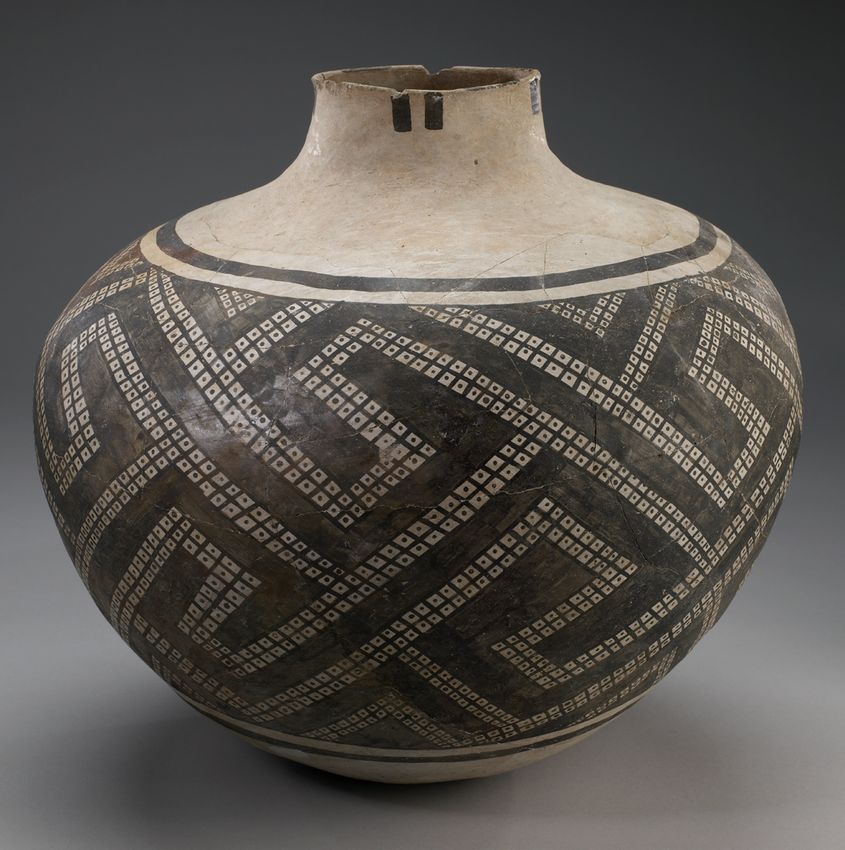
Hohokam artist
                 Bowl, c. 900–1200
                 Clay and pigments
                 63/8 × 183/4 × 183/4 in. (16.19 × 47.63 × 47.63 cm)
                 The Director’s Discretionary Fund 2004.71

Back to Contents page                                                  Philbrook Museum of Art   Hearts of Our People: Native Women Artists   3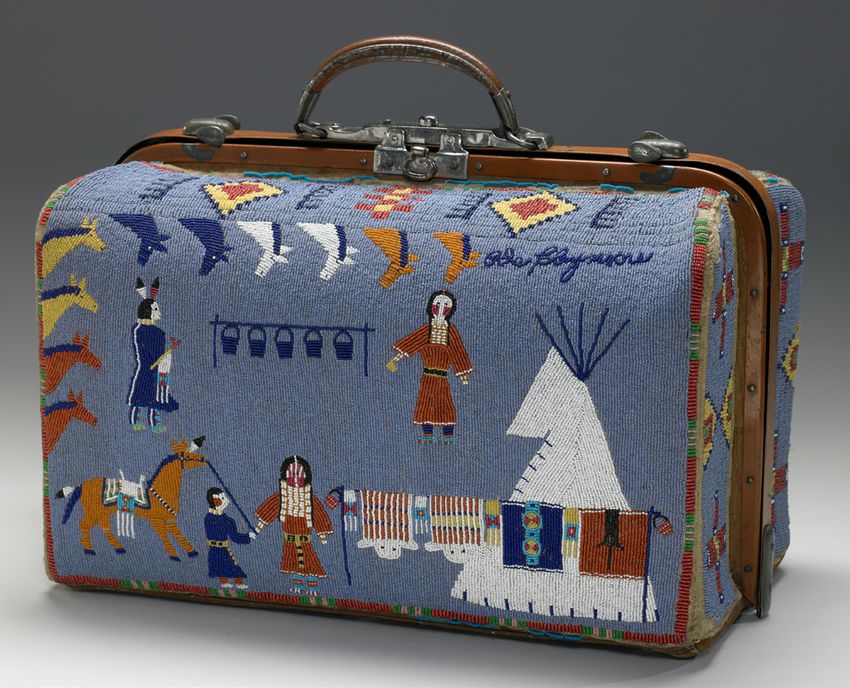
Bowl, c. 900–1200
Hohokam, which means “Ancient Ones,” refers to              Coloring Ceramics
an ancient Southwest Native culture that existed
from about 1 to 1450 ce. The term comes from their          Diverse groups of ancient people from the south-
descendants, the O’odham (Oh Oh DOM) people, who            western United States created pottery using particular
live in the lands once inhabited by the Hohokam in          colors of paint and clay, with characteristics unique to
the center of present-day Arizona. The Hohokam were         the community that made them. To create the paints,
sophisticated people known for their massive complex        they used various native plants, minerals such as
irrigation system, which watered up to 110,000 acres        pounded hematite, and manganese and limonite stones.
by 1300 ce. This system made possible large-scale           The earth gave color to the clay, much of it tinted with
agriculture in an otherwise arid environment.               iron oxide, yielding yellows to oranges to deep reds.
                                                            Rare white and gray clays originated deep underground;
To escape the heat of the sun, the Hohokam lived            today, they are sourced from the same secret locations.
primarily in naturally cooled pit houses, built partially
underground from clay, stone, wood, and straw.              This bowl is a form of pottery unique to the Hohokam
When they were not farming, the Hohokam held                known as Red-on-Buff. The clay gets its tan coloring
large community gatherings at ball courts and temple        from iron oxide. The artists applied the paint, made
mounds. Because the ball courts drew crowds from            from ground hematite, freehand with brushes sourced
great distances to watch the competitions, the courts       from yucca plants.
were often surrounded by markets where the Hohokam          Shapes created by the Hohokam artists are also
would sell their goods, including produce and ceramics      unique to their communities. Their main method for
of all shapes and sizes.                                    making pottery was paddle and anvil, rather than the
Believed to be the work mostly, if not exclusively, of      coiling method used by most of the Ancient Pueblo
women, Hohokam ceramics are primarily made from             people in surrounding regions. Starting with a mass of
clay mixed with ground-up stone called temper, which        properly mixed and tempered clay, the potter pressed
is added to make the clay durable and resistant to          and shaped it by hand to form the vessel. Then she
cracking while firing. The temper allows present-day        used a stone or other smooth object on the inside of
archaeologists to source pottery back to specific           the vessel as an anvil, and applied pressure with a
sites based upon the makeup of its mineral contents.        wooden paddle to the outside to shape the clay.
Because pottery from certain regions has been found
far from the temper sources, archaeologists now are
able to research the complex economy of the Hohokam
people and trace their extensive trade routes. The study
of Hohokam pottery has helped present-day people
better understand this ancient civilization.

Back to Contents page                                       Philbrook Museum of Art   Hearts of Our People: Native Women Artists   4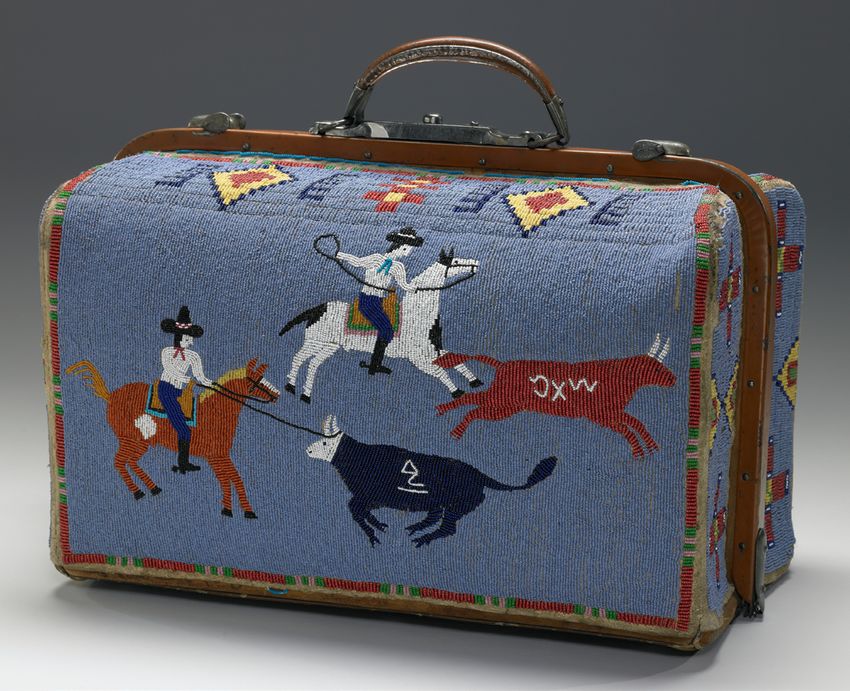
Ceramic Designs & Technique                                Questions
Ceramic painters created complex designs with              Look closely at the picture of the whole bowl. Where
patterns placed harmoniously to complement the             do you see decoration? What parts of the bowl are
form of each vessel. Hohokam artists were also very        undecorated? Why do you suppose the artist made
practical when deciding where to place designs. They       these design decisions? Think about how it might feel
seldom painted the parts of a vessel less likely to be     to hold the bowl (it is about a foot-and-a-half wide at
seen or the base that would be worn off through use.       the top). Think about how it would look placed on the
                                                           ground. What parts would you see?
For this bowl, an exterior decoration would have
been difficult to see, so the Hohokam artist applied       Look closely at the designs (pictures) painted on the
pigment to the inside instead. To create symmetrical       inside a long, long time ago (about 1,000 years ago).
designs that balanced the shape of the finished bowl,      What do they remind you of? What might you compare
Hohokam artists would have divided the circular layout     them to in nature?
of the bowls into thirds, quarters, or halves using
boundary and dividing lines. For example, an artist        How has the artist visually divided the design into
might divide the bowl into even quarters using a cross     four parts? In what ways are the designs in each part
as a border or, as in this bowl, an offset quartering      alike? In what ways do they differ? Think about the
banding. These bold perpendicular borders organized        artist painting these designs with a brush made from
the design components painted on afterwards. Using         a yucca plant. What “tools” could you make from your
simple mathematical devices like mirroring, rotation       natural environment and use to make art?
around a point, and repetition along a line, the artist    Compare the designs on the Hohokam bowl with the
created a balanced, symmetrical pattern incorporating      Pima basket designs. What do they have in common?
freehand brushstrokes of smaller motifs. These             How are they different?
include hatched borders and echoing waves using
counterclockwise interlocked scrolls.

Basketry
Designs on the earliest Hohokam pottery were
inspired by their basket weaving. Today the O’odham,
descendants of the Hohokam, create baskets
with the same design techniques in mind. With an
almost mathematical precision, they weave similarly
exuberant works of art that demonstrate a sensitivity
for layout, balance, symmetry, and use of negative
space. Using locally sourced materials in their art, the
O’odham carry on their ancestors’ tradition of honoring
gifts of the earth.

                                                           Akimel O’odham (Pima) artist
                                                           Basket, 19th–20th century
                                                           Natural plant fibers
                                                           31/4 × 161/2 in. (8.26 × 41.91 cm)
                                                           The Ethel Morrison Van Derlip Fund
                                                           90.69.4

Back to Contents page                                      Philbrook Museum of Art     Hearts of Our People: Native Women Artists   5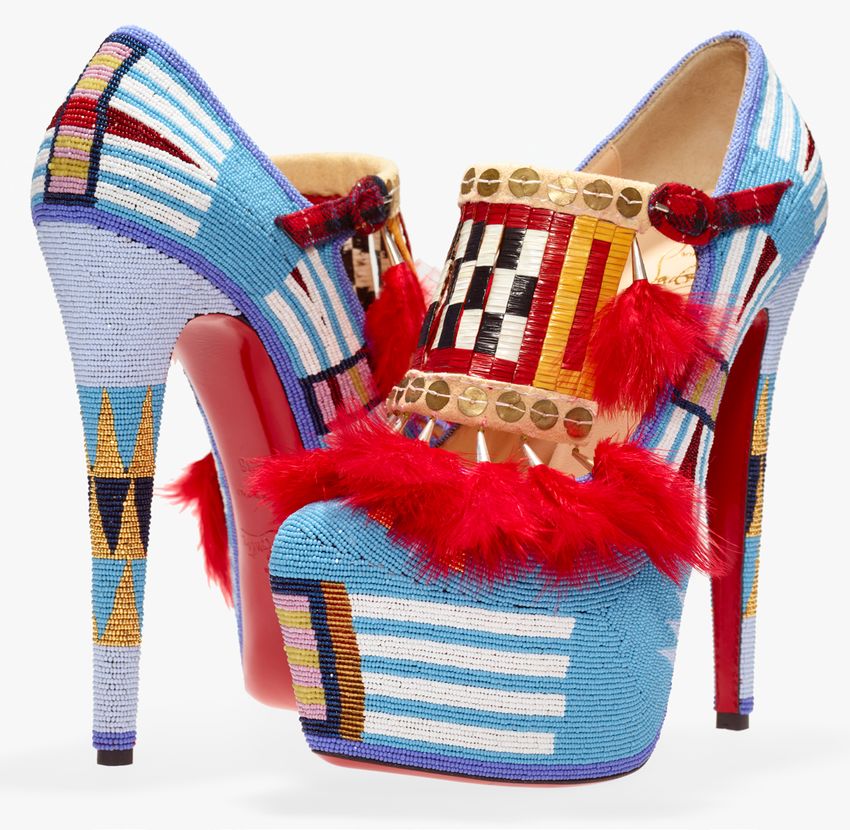
Ancestral Pueblo artist
Pot (Olla), c. 1000–1300
Clay, pigments
141/2 × 18 in. (36.83 × 45.72 cm)
The Putnam Dana McMillan Fund 90.106

Back to Contents page                  Philbrook Museum of Art   Hearts of Our People: Native Women Artists   6
Pot, c. 1000–1300
Pottery has been one of the most important traditions          Because it is from the earth, the clay is a sacred gift,
in Native American societies throughout many gener-            and potters make an offering and ask permission
ations, especially in the Pueblo region. The ancestral         before gathering it. It is considered so precious, any
Pueblo people lived over a region that spanned the             scraps of clay that remain from making a pot are saved
present-day Four Corners region of the United States,          and reused in the next pot.
including Utah, Arizona, New Mexico, and Colorado.
Many current-day Pueblo, such as the Acoma, Zuni,              Process: From Clay to Pottery
and Hopi, are their descendants. The traditions and
methods used to create this ancient Puebloan pot,              Potters often begin their pots with a flat slab of clay. If
called an olla (oy-yah), are still in use today.               it is a large pot, a mold might be used to help support
                                                               it. Using a hand-built coiling method, the potter stacks
The ancient Pueblo considered the surrounding                  coils of moist clay around the rim of the base, making
landscape of mountains, lakes, and mesas sacred.               sure to knead out any air bubbles that could ruin the
Every Pueblo depended on the rain to nourish their             pot once it is fired. As the pot grows, the potter uses
fields, and the people had ceremonies and dances to            a scraping tool made from a potsherd or gourd rind
ensure adequate rainfall.                                      to shape its form and thin the walls. The process can
The term olla refers to a vessel for water, and the            take several days or even weeks depending on the size
design of olla pottery offers an innovative way of             and complexity of the shape. When the form of the pot
protecting this valuable resource. In the arid deserts         is finished, the potter lets it dry before sanding it using
of the Southwest, potters often shaped these water             corn cobs, lava rocks, or sandstone. Pueblo families
vessels with narrow necks to prevent evaporation in            often pass down such objects used in making pottery.
the dry heat. In an unglazed olla, water seeps through         Traditionally, Pueblo potters have desired a smooth
the walls slowly; this process irrigates the roots of a        exterior on which to paint their designs. The final
plant without wasteful runoff or evaporation.                  shape of a pot heavily influences the design added
                                                               later. Present-day potters maintain that it is impossible
Characteristics of Natural Clay                                to force the clay to behave in ways it does not want to;
                                                               the same goes for the freehand design painted on the
Traditionally, women have created pottery, though gath-        surface. Pigments for pot designs vary; they include
ering the clay is often a family affair. Because families      plant materials, rocks containing metallic-oxide, and
might have to travel long distances to find their specific     other colors of clay that is ground to a fine powder,
sources of clay, which can be heavy, men will frequently       then mixed with water.
join the mothers and daughters to collect clay.
                                                               Firing techniques vary with every group, but precision
Natural clays vary in color and texture and can be             is required in temperature and the choice of kindling
associated with specific sites. The clay generally fires       used, as different combinations will affect the pottery
as gray, buff, red, and shades of brown. If clay is found      in the kiln. Potters use wood from various types of
on the earth’s surface, it might need to be passed             trees or dried animal dung. Sometimes a potter will
through a sieve to remove debris like sticks and rocks.        travel many miles to collect kindling. Compared to
This olla is created from a rare white clay that is more       most European firing of earthenware, Pueblo pottery
difficult to work with than other types. It is said that the   fires for a very short time, ranging from 45 minutes to
secret source of this white clay, in the Acoma region in
                                                               a few hours.
New Mexico, is mined as a hard rock from deep in the
earth, then ground into a fine powder for use.

Back to Contents page                                          Philbrook Museum of Art   Hearts of Our People: Native Women Artists   7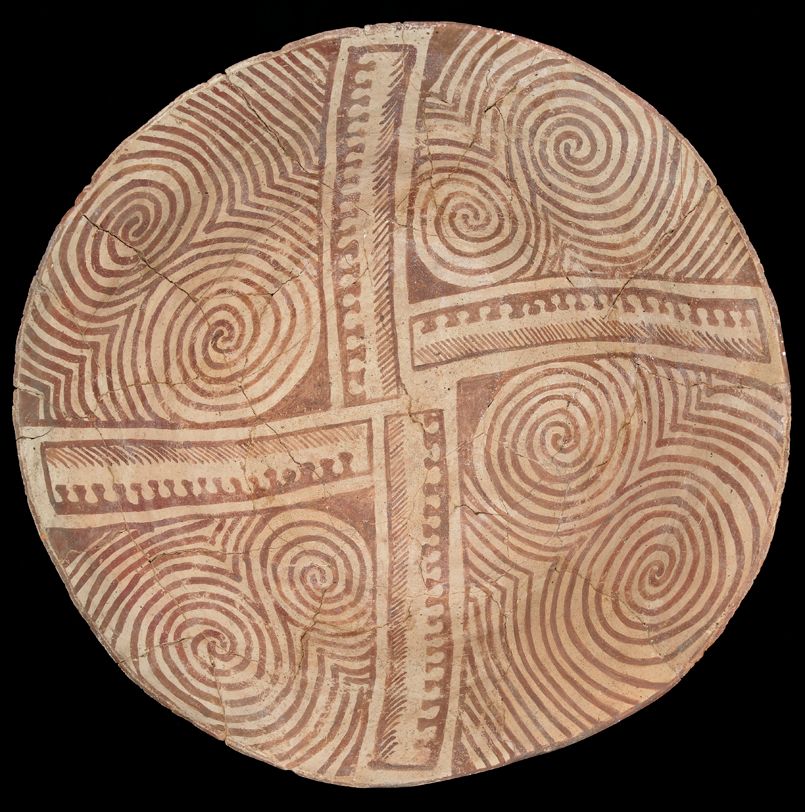
Pueblo Design & Meaning                                       Summary
The geometric design on this pot reveals a refined            For thousands of years, women have made pottery
sense of order and balance. Rain and agriculture were         using three basic elements: earth, water, and fire.
important facets of ancient Puebloan life. Upon this          Working in harmony with the earth is a tradition that
pot created from earth and fire, the potter painted a         continues today, with women carrying on the traditions
freehand design that shows the interconnectedness of          of their ancestors—choosing to excavate the clay in the
water and life: the square and dot design evokes rows         same ceremonial manner, making the pots, and firing
of maize (like corn) kernels; and the interlocked lines of    them using age-old practices in preference to modern
small white squares with a dot in the middle represent        methods.
a traditional three-step cloud motif and also refer to
lightning, which heralds the summer rainstorms.               Questions
Clay is the only material on earth that, when properly        Look closely at this pot, called an olla. Describe the pot.
fired, lasts forever. This longevity has allowed clay to be
repurposed by the descendants of the ancient Pueblo.          How has the potter made this pot appear balanced?
One Acoma artist, Lucy Lewis, was often inspired by           How is the shape balanced? How has the artist also
the black-on-white line drawings she saw on the shards        made the pot seem dynamic? What words would you
of pottery created by her ancestors. She did not speak        use to describe the designs on the surface?
English, though records show that ancient Pueblo pots
were among her earlier influences. Acoma potters will         Look for designs that show how life is connected to
sometimes add ground shards from ancient pots to              water. The small white squares with dots in the middle
their clay, believing they are adding something of their      recall rows of maize (like corn) kernels. The lines
ancestors to the new pots.                                    they form represent a three-step design that refers
                                                              to clouds and lightning. Why might artists want to
                                                              include designs about water on vessels like this one?
                                                              What designs would you use today as symbols of the
                                                              importance of water to life?

                                                              Pueblo artists today frequently look to vessels like this
                                                              one from 1,000 years ago for inspiration. Why do you
                                                              think they might do this? What from the past inspires
                                                              you today? Some artists still include parts of ancient
                                                              vessels in their contemporary pots. Why do you
                                                              suppose they might do this?

                                                              Compare Lucy Martin Lewis’s pot with this olla. What
                                                              do they have in common? How do they differ?

                                                              Working in clay keeps artists connected to and in
                                                              harmony with the earth. What creative processes do you
                                                              use today to stay connected to the earth? Many vessels
                                                              were made to store water for families and communities.
                                                              What do you do today to help conserve water?
Lucy Martin Lewis (Acoma, 1898–1992)
Jar, 1968
Ceramic, pigment
The Patricia and Peter Frechette Endowment
for Art Acquisition and Gift of Funds from
Constance Kunin 2018.5

Back to Contents page                                         Philbrook Museum of Art   Hearts of Our People: Native Women Artists   8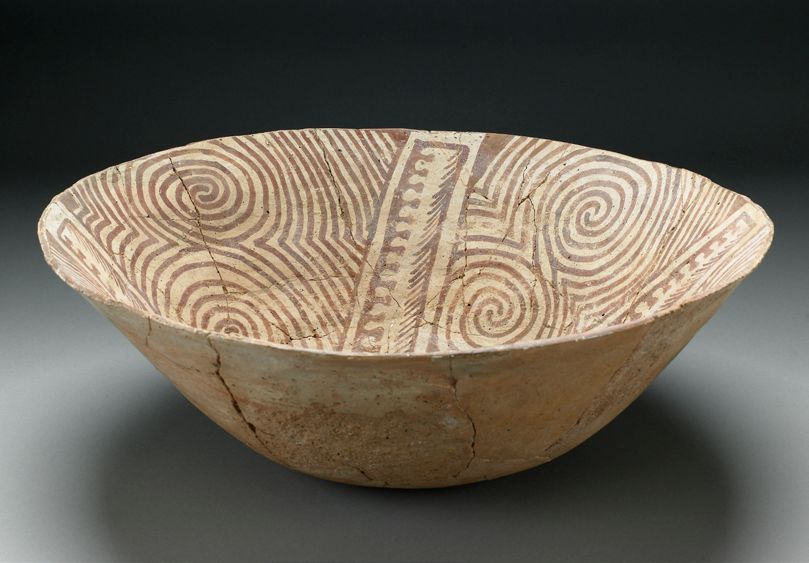
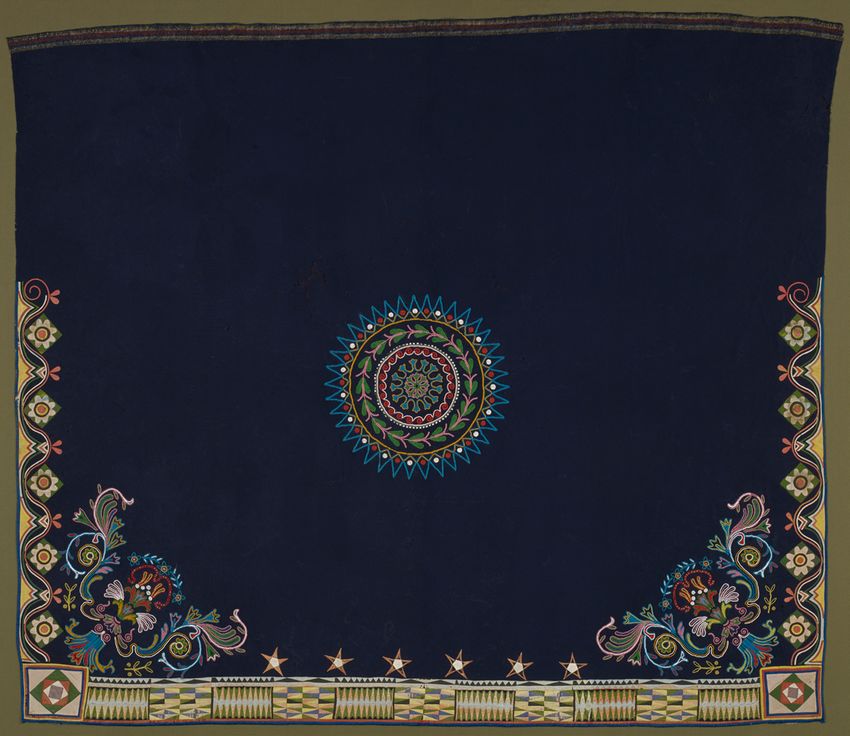
Anishinaabe (Ojibwe) or Dakhóta artists
                        Dance Blanket, c. 1840–50
                        Anishinaabe (Ojibwe) or Dakhóta artists
                        Wool, silk, beads; needlework
                        53 × 62 × 7/8 inch (134.622 × 157.48 × 2.22 cm)
                        The Robert J. Ulrich Works of Art Purchase Fund 2007.1

Back to Contents page    Philbrook Museum of Art     Hearts of Our People: Native Women Artists   9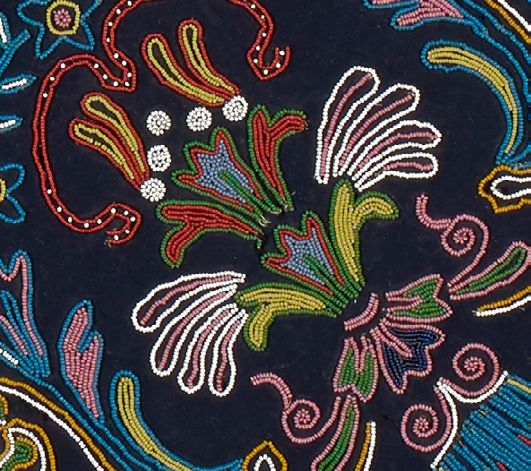
Dance Blanket, c. 1840–50
This dance blanket was created by and passed                 contributed to many economies and created new ethnic
down through the descendants of Iháŋkthuŋwaŋna               groups consisting of mixed-heritage people.
(Yanktonai) Dakhóta leader Wakíŋyaŋdúta (Red
Thunder) and the prominent Dickson and LaFramboise           Dakhóta Beadwork
fur trader families of early Minnesota history. All mate-
rials used in its creation came through the fur trade        Created at the end of the fur trade era, this rare
industry. Family lore states that this blanket was made      blanket combines ribbonwork with beadwork, two very
in 1845 in celebration of the first owners’ marriage.        important and innovative decorative forms to Native
Both Jane Dickson (b. 1820) and fur trader Joseph            Americans. Dakhóta designs frequently featured
LaFramboise (b. 1805) were of mixed European and             floral motifs, and it is possible that the designs in this
Native American heritages, which was commonplace             blanket represent stylized Native plant species used
for families involved in the fur trade.                      for cooking or as medicine. It is not known if Jane
                                                             Dickson created the beadwork herself, but based on
Historical Context                                           the style, it was likely made by a Dakhóta woman.
                                                             The ribbon appliqué work is unattributed to a tribe,
A steady source of income, the fur trade provided            as many in the region were capable of doing such fine
much political power to many Native American                 work. It is possible more than one woman worked on
tribes involved in it. Jane Dickson’s mother was of          the blanket.
Anishinaabe-European descent, and her Dakhóta-
European father was William Dickson, the grandson of         Indeed, much of the fur trade was women’s work.
Wakíŋyaŋdúta. Her grandfather Robert Dickson was a           While Dakhóta men would hunt for the furs, it was the
fur trader who fought in the War of 1812 in an attempt       women who cleaned and prepared the hides for trade.
to establish Minnesota as a British colony. She lived        Only properly tanned hides had value, and that value
among her Dakhóta family in South Dakota, where              was enhanced by the quillwork or beadwork added by
she met her husband, Joseph LaFramboise, who                 women.
also came from generations of fur traders. He was a          By the time this blanket was made, beads had become
descendant of Kewinoquot, leader of the Ottawa tribe,        an integral part of Plains art. Prior to the acquisition of
and his mother was one of the most successful traders        beads, brought by European traders, women embroi-
in history, Madeline LaFramboise.                            dered plant-dyed porcupine quills on bison hides
Prior to the arrival of Europeans, Dakhóta villages          using bone awls. Quillwork was thought to add special
consisted of many large extended families (thiyóšpaye).      powers linked to the symbols or colors incorporated
Rules of kinship bonds regulated the economy,                in the design. Beadwork was an innovative method
production, and trade of goods. The thiyóšpaye refused       for Native artists who adapted the European-made
to trade only for economic reasons, illuminating how         materials to their traditions. When the fur trade
personal relationships were pivotal for the success of       expanded to the Plains, the introduction of cloth,
the fur trade. For European-Americans to trade with          thread, and glass beads hastened the decline in use of
the Dakhóta, they had to create social bonds. The most       earlier bone tools, replaced by metal awls and needles
successful traders married into the Dakhóta kinship          more suitable to beadwork.
society, which also raised the status of the family of the
Dakhóta woman through access to European goods.              Dakhóta Ribbonwork
Similar kinship-marriage relationships were established
between various tribes and European traders in the           After the French Revolution in 1789, ribbons became
Great Lakes and Plains regions; women served as              unfashionable in Europe and were exported to North
cultural liaisons between European and Indigenous            America for use in the fur trade. Woodlands and Plains
traders. For many decades, the fur trade peacefully          artists quickly adapted the silk and satin ribbons to

Back to Contents page                                        Philbrook Museum of Art   Hearts of Our People: Native Women Artists   10
create a form of appliqué decoration using traditional Questions
designs not seen before in Europe. With the ribbons,
women created geometric patterns in a reverse-ap- What part of this dance blanket did you notice first?
pliqué technique of sewing cut-out ribbon patterns What about that part drew your attention?
onto a background of a contrasting color ribbon. The
Describe the blanket. Describe the designs. Which
more complex the design, the more desirable and
designs are organic? Which are geometric? What
valued the object was to own and wear.
images do you recognize? What images do you wonder
about? Why might these types of designs appeal to
Summary the Dakhóta? What kinds of things do you use plants
for today? What kinds of things in your environment
This blanket embodies the history of generations of
(outside and inside) inspire you?
both Indigenous and European fur traders. Many tribes
today continue to use similar beadwork and ribbon Look at details of the designs. What materials do the
appliqué to create dancing regalia for powwows. artists use to make them? What do you see that makes
This dance blanket represents the powerful roles of you say that? Artists valued the materials for their
women in the economy of their tribe as both artists unique qualities. Today, what might you value most
and providers for their people. A representation of the about the glass beads? The silk ribbons?
blending of Minnesota history, cultures, and ways of
life, it is a symbol of the beauty that can come from Think about stitching all of these beads and sewing all
the meeting of people. of these ribbons to the wool blanket, which measures
about 4½ by 5 feet. What activities are important to
you even though they are time-consuming and require
a lot of patience?
Back to Contents page Philbrook Museum of Art Hearts of Our People: Native Women Artists 11Maȟpíya Boğá wiŋ (Nellie Two Bear Gates)
(Yanktonia Lakȟóta, Standing Rock Reservation, born 1854)
Suitcase, 1880–1910
Beads, hide, metal, oilcloth, thread
121/2 × 1711/16 × 101/4 in. (31.75 × 44.93 × 26.04 cm) (closed)
The Robert J. Ulrich Works of Art Purchase Fund 2010.19
Back to Contents page Philbrook Museum of Art Hearts of Our People: Native Women Artists 12Back to Contents page Philbrook Museum of Art Hearts of Our People: Native Women Artists 13
Suitcase, 1880–1910
Artist’s Background                                         Maȟpíya Boğá wiŋ used the same style of figures and
                                                            incorporated the women’s traditional art form of abstract
Maȟpíya Boğá wiŋ (Gathering of Stormclouds                  geometric designs along the borders of this suitcase.
Woman), later known as Nellie Two Bear Gates, was
an Iháŋktȟuŋwaŋna (Yanktonai) Dakhóta artist from           Prior to the acquisition of beads, ribbons, and other
the Standing Rock Reservation in South Dakota. Born         materials from Europe, women used organic pigments
in 1854, she was the daughter of Iháŋktȟuŋwaŋna             to paint geometric abstract artwork on animal hide
parents Huŋká Káğe Wiŋ (Makes Relatives Woman)              bags, known as wókpȟaŋ (commonly referred to as
and tribal leader Matȟó Núŋpa (Two Bears).                  parfleche bags in English). For nomadic people, these
                                                            bags held all their possessions as they followed the
At age 7, Maȟpíya Boğá wiŋ (Mah PEE ya Bo HAH ween)         movement of the bison, the most important animal to
was sent to a boarding school in Missouri, where her        Plains tribes’ ways of life. The early geometric forms
Native language and culture were supplanted by English      on wókpȟaŋ inspired later forms of artwork, including
and Christian teachings. While at boarding school, she      quillwork and beadwork.
excelled at many topics and learned French and English.
When she was 17, her father passed away, and she            Maȟpíya Boğá wiŋ began beading at an early age; she
returned home. At first, she was reluctant to return, but   had such talent, her nickname as a child was Little
soon she became accustomed to her traditional ways          Thimble. On this suitcase, she applied beads to deer or
of life. Upon her return home, she never spoke English      bison hide using a style called lane stitch, which then
or French again, even to her descendants, for whom          was applied to a commercially produced suitcase. She
English was a first language.                               created her scenes using a traditional Plains art style,
                                                            in which humans and animals are drawn with flat color
Despite the negative aspects of boarding schools,           and without shading, shadows, or background.
many students stubbornly held onto their tribal
identities. Studies have shown that many students
went back to their reservations and became leaders
                                                            Description of Scenes
in tribal politics. That includes Maȟpíya Boğá wiŋ’s        Maȟpíya Boğá wiŋ used her beadwork to illustrate
daughter, Josephine Gates, who was the first Native         the changing times and adaptation of her people
woman from Standing Rock to graduate from the               while maintaining ties to their traditional ways of life.
Carlisle Indian School in Pennsylvania and later, in        This beaded suitcase was created between 1880
1946, to become the first female elected leader of          and 1909, a time of dramatic change as her people
a modern tribal nation. Continuing the generations          were confined to the Standing Rock Reservation. The
of strong leadership abilities, Susan Kelly Power,          Dakhóta could no longer hunt bison, which historically
daughter of Josephine and granddaughter of Maȟpíya          provided almost everything the people needed to
Boğá wiŋ, established the first urban Native American       thrive: food, clothing, housing, tools.
center (in Chicago).
                                                            Side One: Marriage Scene
Historical Context
                                                            One side features a traditional marriage scene in two
In the absence of a written language, art held an           parts. Because of the inscription of Ida Claymore’s
important place in the tribe’s oral traditions. Maȟpíya     name on the suitcase, it is believed Maȟpíya Boğá wiŋ
Boğá wiŋ was perhaps the first woman of her tribe           created this suitcase for her friend, a prominent
to break the gender barrier and create artwork using        member of Standing Rock society, in honor of
figurative images. Historically, men created figurative     her marriage. Both women owned cattle ranches;
drawings on tipi covers and clothing that illustrated the   Claymore’s descendants still own a large ranch on the
war accomplishments of both individuals and the tribe.      Standing Rock Reservation.

Back to Contents page                                       Philbrook Museum of Art   Hearts of Our People: Native Women Artists   14
The scene shows the bride and her parents amid the suitcases remain, and this suitcase is considered to be
feast celebration, displaying all the gifts they received. one of the finest. A perfect illustration of resiliency and
Along the top-left corner, 11 horses surround two creativity, this suitcase beautifully blends tradition and
figures, possibly Claymore’s parents, who flank a row innovation.
of kettles; as a common marriage proposal, a suitor
would offer horses to the woman’s parents to show his Questions
value and worth as a potential husband and provider.
At the bottom is the bride next to her tipi surrounded Each side of the suitcase features a different theme.
by her new gifts: (left to right) beaded pipe bags; two One side shows scenes of cattle ranching on Standing
full, beaded bison robes; a trade cloth with beaded Rock Reservation. What do you see? What appears
bison strip; and a robe with an animal figure. to be going on? What do you see that makes you say
that? What do you wonder about when you look at this
Side Two: Roping Cattle ranching scene?
The scene with the cowboys roping cattle illustrates The other side shows two scenes from a traditional
how her family adapted and continued their traditions marriage, one of the bride with gifts, and the other of
of bison hunting after the populations of bison dwin- her parents. Describe the two different scenes. What
dled to a few hundred. Maȟpíya Boğá wiŋ’s husband, do you see? What do you wonder about these scenes?
Frank Gates, participated in the last bison hunt on The artist created artworks that include elements of
the Standing Rock Reservation, which took place in traditional and contemporary life. Think about some
September, 1883. Because people of her tribe were things in your life that rely on both traditional and
familiar with raising horses and hunting, they adapted newer ideas. Where in your surroundings do you see
to cattle ranching relatively easily compared to farming. traditional designs used on contemporary objects?
The U.S. government supplied cattle and encouraged
ranching on the Standing Rock Reservation. The tradi- Compare and contrast this suitcase with the tipi cover.
tional communal bison hunt was called Wanáuŋsapi What do they have in common? How do they differ?
in Dakhóta, the same word for the rations of beef Consider images, materials, and artistic purpose.
promised by the government. The Dakhóta applied the
If you were to decorate a suitcase or backpack with
methods of hunting bison to cattle, demanding it be
images that told stories about your life and identity,
issued to them “on the hoof” so that they could hunt
what would you include?
and make use of the entire animal just as they had
with bison.
Importance of the Artwork
The artist captures the history of her people prior to
European arrival in the wedding scene, as well as the
changing times in which she lived in the ranching
scene. Though to outsiders cattle may seem to
intrude upon Dakhóta traditions, ranching allowed
their methods and techniques of harvesting bison to
survive. The Standing Rock Reservation currently has
four community-owned bison herds and hosts small
hunts during which children are able to reclaim the
traditional methods.
Little thorough documentation of Maȟpíya Boğá wiŋ’s
work exists, and only a handful of her artworks are
explicitly catalogued. She made most of them as gifts
for her family and friends. Indeed, only a few beaded
Back to Contents page Philbrook Museum of Art Hearts of Our People: Native Women Artists 15Jamie Okuma (Shoshone-Bannock, Luiseno, Okinawan and Hawaiian),
b. 1977
Shoes designed by Christian Louboutin
Adaptation II, 2012
Leather, glass beads, porcupine quills, sterling silver cones, brass
sequins, chicken feathers, cloth, deer rawhide, buckskin
85/8 × 93/16 × 31/4 in. (21.91 × 23.34 × 8.26 cm) (each)
Bequest of Virginia Doneghy, by exchange 2012.68.1a,b
Back to Contents page Philbrook Museum of Art Hearts of Our People: Native Women Artists 16Adaptation II, 2012
Artist’s Background critical roles in the tribe’s survival. When a girl reached
puberty, she received a set of bone tools for preparing
Jamie Okuma’s heritage is Shoshone-Bannock, hides. These tools, especially her awl, were symbols of
Luiseno, Okinawan, and Hawaiian. She was born in her accomplishments. They helped her create clothing
Southern California, raised on the Shoshone-Bannock and housing for her family, representing the woman’s
Reservation in Fort Hall, Idaho, and lives on the creative power and industriousness.
La Jolla reservation in Pauma Valley, California. In
2000, at age 22, she became the youngest “Best in Today, this symbolism of women’s tools persists in the
Show” winner of the Santa Fe Indian Art Market. She regalia of women at powwows. For example, many
went on to win “Best of Show” twice more for her women wear an awl case to show their industrious-
mixed-media miniature beaded and quilled dolls. ness, a strike-a-light bag to show their hospitality, and
a knife case to show their generosity.
Okuma began working with beads as a child, creating
her own powwow regalia under the tutelage of her
mother and grandmother. She continued learning
Creative Process
beadwork and, in high school, created her first of In 2012, Okuma began beading a pair of $900
many beaded miniature dolls. Okuma considers her Christian Louboutin shoes, starting with its signature
miniature dolls “soft-sculptures.” Each doll meticu- red-soled heel. She looked at the shape of each shoe
lously captures authentic, accurate traditional Native to decide the designs that would flow with the curves,
fashion using the finest materials. just like Southwestern Native potters look at the
shapes of their clay vessels to decide what designs
After 15 years of creating miniature dolls, Okuma
will harmonize with those forms.
opened her own fashion label and began making
high-end articles of clothing using beadwork and Shoes became her art medium. Okuma invented her
quillwork. She considers her fashion a self-portrait, own techniques for beading shoes. Like Native women
reflective of her exquisite taste. Since her youth, she in the past who adapted their techniques to new mate-
has been attracted to the finest quality materials, from rials, she created her own curved needles to bead onto
the pre-World War II antique beads she chooses to the curved surfaces. Another innovation was to coat her
brain-tanned buckskin and Italian leather. Responding sewing fingers with liquid latex and setting powder to
to the fact that many Native Americans live in the better grip her needles.
modern world while honoring the past, she combines
her Native heritage with contemporary fashion tastes. She begins each design as patterns on paper and
then traces them onto brain-tanned buckskin, the
gold standard in Native materials, which comes from
Historical Background her grandmother’s reservation, Fort Hall. Then she
In historical Native American societies, women typically sews on antique Venetian beads, some as small as a
created the clothing for the tribe. Important and grain of salt. For Adaptation II, Okuma used size 15
influential tribal members sought to commission those and 13 beads, sewn three or four beads at a time
women who were exceptional in a specialized skill, such onto the buckskin. She lined the ankle tongue with
as quillwork. Elegant clothes help define a distinguished antique brass sequins, dyed porcupine quills, and
person; even today, ceremonial clothes are made by dyed chicken feathers within sterling silver cones. The
women with specialized skills. Native fashion designers abstract designs are reminiscent of those she learned
continue the tradition of fine craftsmanship to express as a child creating her powwow regalia.
their personal, social, and cultural experiences.
Sometimes, Okuma will spend up to a year beading a
Historically among Plains tribes, tools were an pair of designer shoes. Though they are meant to be
important symbol of a person’s ability to carry out worn, because of their rarity, exemplary workmanship,
Back to Contents page Philbrook Museum of Art Hearts of Our People: Native Women Artists 17and unique beauty, many are instead collected. Questions
Designers like Okuma represent an authentic Native
American voice—not someone else’s idea of what What do you notice first about these shoes? What
Native art and fashion should be. International fashion drew your attention to that part first? As a class,
houses tend to have many people involved to create explore the different parts of the shoes. What words
handmade items to a designer’s specifications; describe the heels? What designs or patterns do you
however, with Native American fashion designers like see there? What words describe the designs on the
Okuma, the work can only be done by the artist, who platforms? The tongue flaps? The sides?
is guided by sacred symbols and visions unique to
To make these special shoes, Jamie Okuma uses
their Indigenous heritage.
traditional Native techniques she learned as a young
girl when she first made her own powwow regalia.
Summary What materials do you see? (Dyed porcupine quills,
dyed feathers, silver cones, sequins, beads.) What, if
It is a widely held belief that Native fashion is static
anything, in your own life do these materials remind
and unchanging; yet, Native women have always
you of?
embraced new ideas, techniques, and materials,
incorporating them into existing Indigenous aesthetic In the process of transforming the shoes, Okuma had
forms. Okuma, like Native women artists of the past, to invent new tools and strategies (i.e,. curved needle,
continues this tradition of innovation by displaying coating her fingers with liquid latex and setting powder).
creativity in her meticulously beaded dolls and Think of a time when you had to innovate to do
high-end fashion, while also honoring and respecting something that was important to you? What was your
traditional cultural values in response to changing innovation? How did it help you accomplish your goals?
times and conditions of Native people.
Okuma intentionally purchased these designer shoes
to remake or adapt them using Native techniques and
materials. What kinds of projects have you done that
required you to transform something into something
totally new?
Back to Contents page Philbrook Museum of Art Hearts of Our People: Native Women Artists 18Dyani White Hawk (Sičháŋğu Lakȟóta [Brulé]), b. 1976
Untitled (Quiet Strength I), 2016
Acrylic on canvas
42 × 42 × 21/4 in. (106.68 × 106.68 × 5.72 cm)
Gift of funds from Nivin MacMillan 2016.74
Back to Contents page Philbrook Museum of Art Hearts of Our People: Native Women Artists 19Untitled (Quiet Strength I), 2016
Artist’s Background Quillwork
Dyani White Hawk is of Sičháŋğu Lakȟóta, German, Porcupine quillwork is one of the oldest forms of
and Welsh ancestry. She is a contemporary Native American art. Prior to the introduction of glass
award-winning artist who lives in Minnesota. During beads, quillwork was a popular art form among North
the 2011 Santa Fe Indian Art Market, White Hawk won American tribes of the Plains and Woodlands regions.
“Best of Classification”; in 2012 and 2013, she won Compared to beadwork of later years, quillwork is
“Best of Division” and first-place prizes. She graduated considered more sacred because quills come from the
from Haskell Indian Nations University in 2003. In porcupine, a living being. To collect the loose quills,
2008, she earned a BFA in two-dimensional studio women throw a blanket over the porcupine. They then
arts from the Institute of American Indian Arts (IAIA). boil the quills to soften them. Traditionally, women
In 2011, she graduated from University of Wisconsin- dyed the quills with plant pigments; today, synthetic
Madison with an MFA in Studio Arts. pigments may be used instead. Later, the women dry
and rub the quills with animal oils to prevent them
White Hawk’s mother, who is from the Rosebud Indian from becoming brittle.
Reservation, was adopted by non-Native parents.
Growing up in Madison, Wisconsin, White Hawk said Quilling has sacred significance for the Lakȟóta people.
she did not connect with her Lakȟóta ancestry until Dreaming is a noble way to gain sacred knowledge,
her teenage years: and the art of quillwork came to the Lakȟóta through
dreams. In a religious sense, quillwork represents the
As a woman of Lakota and European
virtues for which all Lakȟóta women should aspire,
ancestry, my life experiences have been a
combination of both Western and indigenous including generosity, persistence, and industriousness.
educations, causing a continual negotiation In almost all Plains and Woodlands tribes, a woman’s
of value systems and worldviews. Through creativity was highly valued; for many tribes of the
the amalgamation of abstract symbols and region, women had their own societies where they
motifs derivative of both Lakota and Western taught certain skills. In quillwork societies, the number
abstraction, my artwork examines, dissects, of hides dressed and decorated contributed to a
and patches back together pieces of each in a woman’s social status, and a record was kept for each
means to provide an honest representation of
woman’s achievements. Sometimes a special belt
self and culture. (Cowboy and Indians magazine,
January 2016 issue) was given to show how industrious a woman was; it
was an honor to wear one, as it could not be obtained
Her work combines her two loves: modern abstract otherwise. A woman’s creative accomplishments were
painting and traditional Lakȟóta arts. As she studied celebrated just as man’s war accomplishments were
her favorite non-Native modern artists, she discovered celebrated.
an underlying familiarity and connection within
their work. Art movements such as Modernism Lakȟóta women worked together to pass along
and its associated artists, including Mark Rothko knowledge to the younger generations. For White
and Marsden Hartley, drew influences from Native Hawk, passing along knowledge is also very important.
American arts. In 2017, she was awarded the NACF Mentor Artist
Fellowship, reflecting her commitment to share her
White Hawk reconciles her life experiences to create knowledge of both her traditional and contemporary
her modern abstract artwork. Her Lakȟóta heritage is artistic techniques and art practice with an apprentice.
organically and visually reflected in her work through By teaching beadwork and quillwork to her apprentice,
her use of Indigenous materials and techniques, such White Hawk continues this tradition of Native women.
as quillwork and beadwork. In other artworks, as in
Untitled (Quiet Strength I), she paints abstractions that
reference these techniques.
Back to Contents page Philbrook Museum of Art Hearts of Our People: Native Women Artists 20The Painting, Untitled (Quiet Questions
Strength I)
Look closely at this painting. Describe what you see.
Dyani White Hawk strongly desires to expose new What, if anything, does it remind you of? What about it
audiences to Native history through her art. In Untitled reminds you of that?
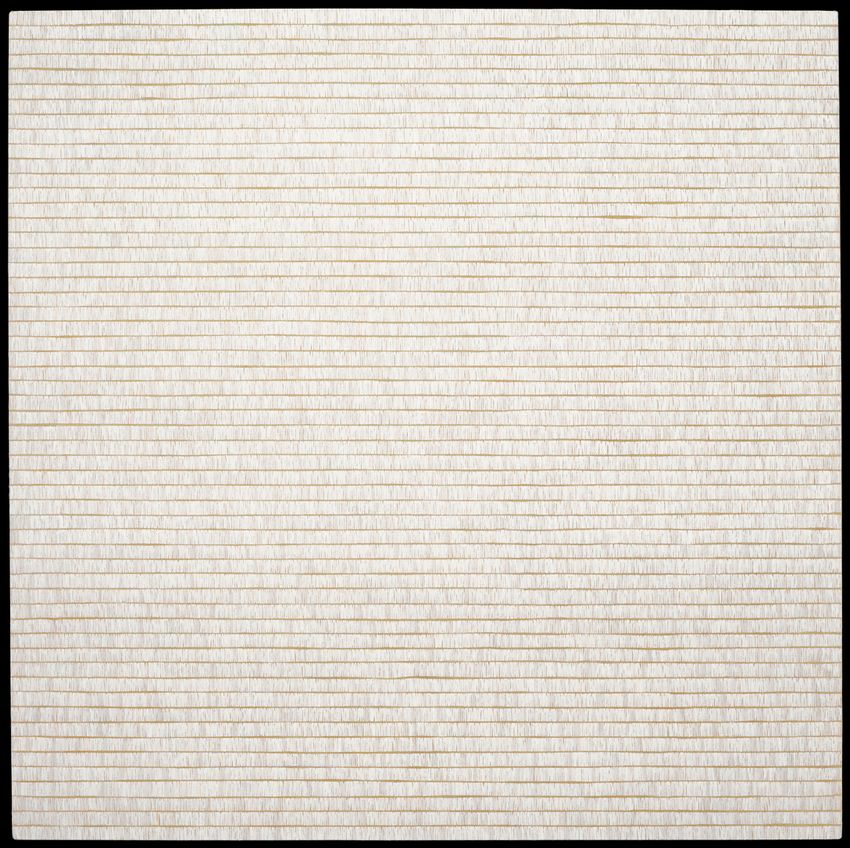
(Quiet Strength I), White Hawk uses thousands of
At first glance, what about this painting seems
vertical lines to refer subtly to traditional quillwork.
abstract? What about it appears naturalistic? What did
This required weeks of meticulous, repetitive brush-
White Hawk do to make the image appear realistic?
work. Traditionally, Lakȟóta women told complex
Sometimes artists paint to create the illusion of real
stories through their abstract geometric art, and
texture. What do you think the texture here would
White Hawk continues this tradition by transforming
feel like? How might the actual surface of the painted
complex ideas into visual statements made as graceful
canvas feel?
and poignant as possible.
Compare this painting to the quillwork designs on
Summary Jamie Okuma’s shoes. What do they have in common?
How do they differ?
Dyani White Hawk hopes Native viewers will see their
own personal stories reflected in her painting, Untitled
(Quiet Strength I). As a platform for conversation, she
draws the viewer into seeing the intersectionality of
Native and non-Native cultures: each line represents
the respect and value she sees in the traditional skills
of her ancestors. Yet, as a contemporary artwork, it
also highlights the need to reflect on how Native
history is taught. She believes that at the heart of
contemporary art is the practice of engaging in difficult
conversations, and that the greatest growth and gains
come from understanding one another’s stories.
Back to Contents page Philbrook Museum of Art Hearts of Our People: Native Women Artists 21You can also read


