HISTORICAL GUIDE FORT VERMILION - MACKENZIE FRONTIER - Liberty Multimedia
←
→
Page content transcription
If your browser does not render page correctly, please read the page content below
THE NORTH
                         STAY
                          EAT
                     EXPLORE

   MACKENZIE FRONTIER

  FORT VERMILION
HISTORICAL GUIDE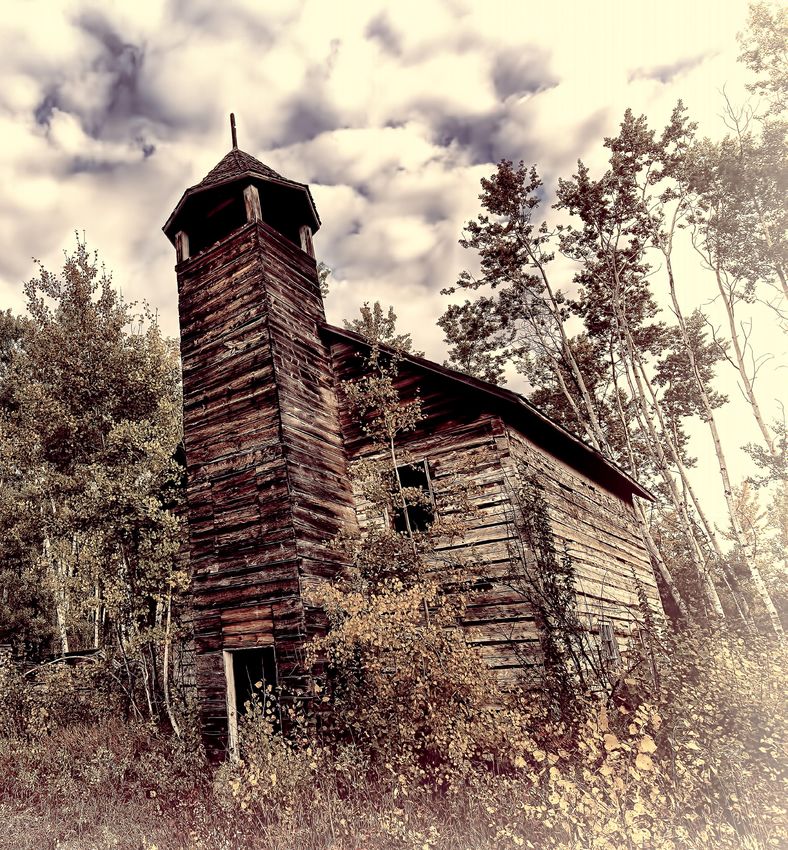
EXPLORE
The hamlet of Fort
Vermilion is a must see.
Fort Vermilion is one of the oldest settlements in Alberta.
In 1788, Charles Boyer of the North West Company travelled
up the Peace River and entered the lands of the Beaver and
Cree. In 1792, Alexander Mackenzie stopped at Boyer’s
Post enroute to the Pacific Ocean. Here, post residents
traded for furs from the native trappers, and sent the furs
by river during the summer to exchange points in the east
and ultimately to Montreal. The Hudson’s Bay Company
competed fiercely with the North West Company for furs
and foodstuffs that the native people supplied. In 1821, the
two rivals united as the Hudson’s Bay Company.
The Mighty Peace River was the original highway, first to
and from Fort Chipewyan to the east and later, between
Fort Vermilion and Peace River to the south. Explorers,
Indians, traders, surveyors, and settlers, travelled the river
in canoes, York Boats, rafts, and stately river boats such as
the S.S. Peace River, and the D.A. Thomas.
The thriving trade and settlement at Fort Vermilion
influenced the political decision to strike the northern
boundary of Alberta at 60 degrees north latitude. In 1905
the province of Alberta was formed and it included Fort
Vermilion - Where Alberta Began.
In 1974 the bridge across the Peace River was opened
and the region changed forever. Fort Vermilion no longer
needed the ferry in summer and ice bridge in winter to link
people and services across the river.
Continue reading to discover more about the rich
historical sites in and around Fort Vermilion.

                                    Provincial Archives of Alberta A2245
TABLE OF CONTENTS
  EXPERIMENTAL FARM
                              2
  ST. HENRY’S MISSION         4
  THE OLD BAY HOUSE           6
  BOURASSA/ ST. GERMAIN HOUSE 8

  MAP                        10
  FV BRIDGE                  12
  BUTTERTOWN                 14
  ST. LOUIS CHURCH           16
  WALKING AND DRIVING TOUR   20

       Download the History Check
       App for more information!

                                    1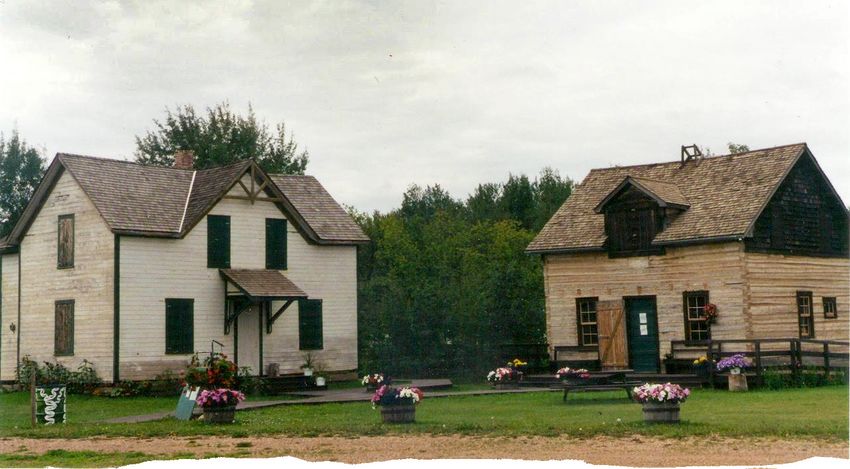
EXPLORE
    HISTORICAL FORT VERMILION

    THE                                                         Marcone, Matt

    EXPERIMENTAL FARM
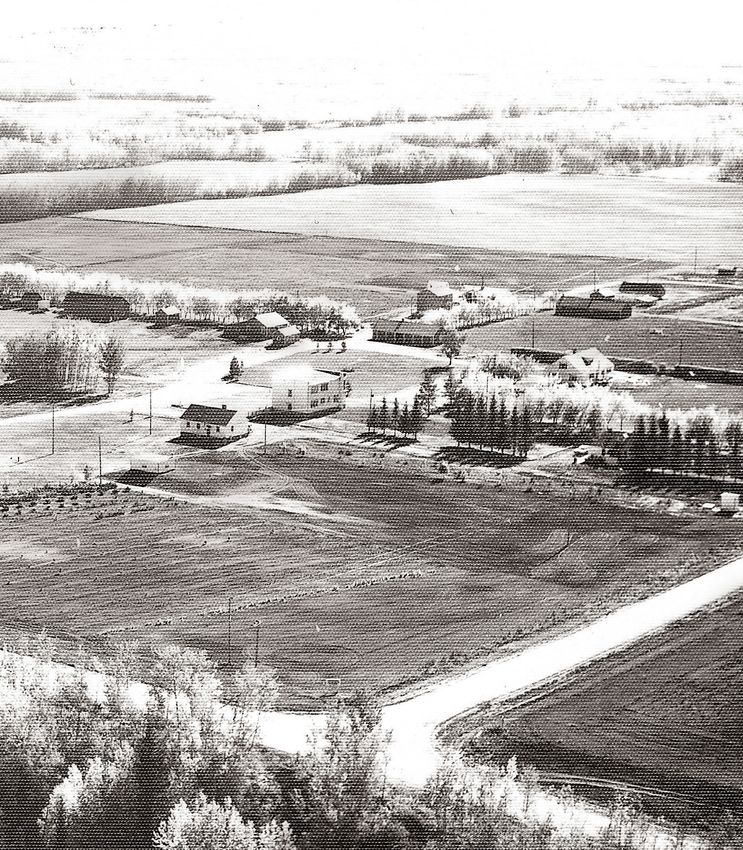
    B  oyer’s Post, a precursor to Fort Vermilion I and II, was estab-
       lished in 1788 to aid trappers in supplying furs to the European
    market. Alexander Mackenzie documented growing turnips, car-
    rots, parsnips, and potatoes at the Boyer’s Post Garden. Over
    one hundred years later,a Fort Vermilion Experimental Farm was
    established by F. S Lawrence using seeds and plants from the
    Experimental Farm in Ottawa.
    The Experimental Farm operated on Robert Jones’ farm, once lo-
    cated at Stoney Point, just southwest of today’s Fort Vermilion
    Bridge. The 1934 flood forced its relocation to this more repre-
    sentative upland site in 1936.
    When the Mackenzie Highway became an all weather road and
    the Northern Alberta Railway reached High Level in 1963, farming
    in the region shifted from subsistence to large scale production.

                                           1934 flooding on the north
                                         side of the Peace River at the
                                                      Lawrence Ranch

                                          Provincial Archive of Alberta A2620

2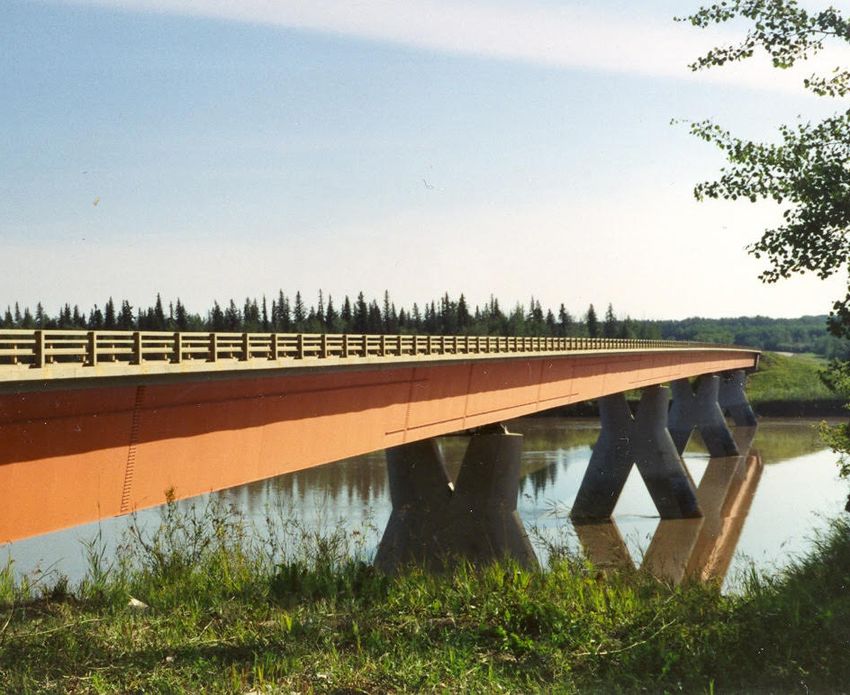
“W      e climbed the bank to see what could
                  be grown so far north. The display was
          astonishing. We saw current bushes laden with
          ripe fruit and nearly every kind of vegetable
          including asparagus, corn and tomatoes as
          well as the hardier kinds […] The cereal and the
          leguminous plants are the finest I ever saw; in
          fact anything that can be made to grow at all in
          the north reaches a greater perfection here than
          elsewhere. This is true as well of the flowers. The
          flower garden at the station was a wonderful
          blaze of colour. The star attraction was a rose
          bush in full bloom – and this – north of latitude
          58!”
          Hulbert Footner (1911 Journey)
          Outing Publishing Company, 1912 [first edition]

     F  ort Vermilion Experimental Farm has been important for
        crop variety testing from its start. In particular, Noralta Flax
      and Peace Alfalfa were created at the farm.
      Today, the Mackenzie Applied Research Association (MARA)
      oversees experiments with various grain, cover and forage
      crops, while working to improve and maintain soil health,
      study weather patterns, host special events, and help farmers
      access and complete Environmental Farm Plans.

Fort Vermilion Experimental Farm
Agriculture Canada Collection 2010.80.440                                  3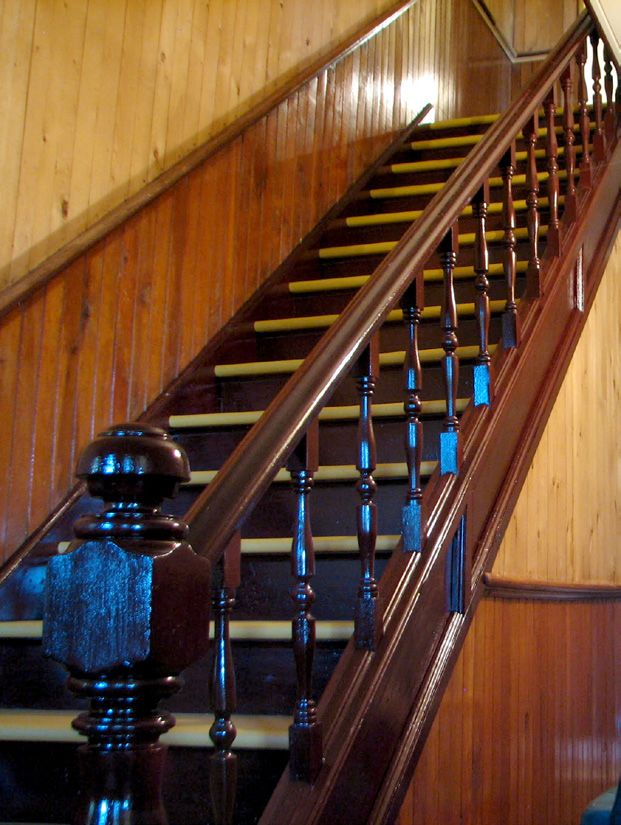
EXPLORE
    HISTORICAL FORT VERMILION

                                      St. Theresa Hospital 1949-1983
                                                FVHC Acc no 990.04.74.37

    ST. HENRY’S MISSION
    S  t. Henry’s Roman Catholic
       Church is much more than
    a religious landmark. It tells
                                     conversion to Christianity,
                                     the need for education and
                                     medical services broadened
    stories of human ingenuity,      the ministry. The Sisters of
    hardship, and determina-           Providence arrived in the
    tion of Fort Vermilion                 community July 3, 1900
    settlers,      OMI’s,                    and offered valuable
    and the Sisters                           service in the fields
    of      Providence                         of education and
    as well as Fort                             medicine.
    Vermilion’s early                           Numerous trag-
    church, medical,                            edies, struggles
    and educational                             and     triumphs
    history.                                   took place over
    The Priests of                            the next 70 years.
    Oblates of Mary                         From the first steam-
    Immaculate       (OMI)               er    providing    round
    were responsible for start-      trip service between Fort
    ing the St. Henry’s Mission.     Vermilion and the Peace
    While early intentions were      River Crossing, multiple fires
    spreading the gospel and         burning down the convent
4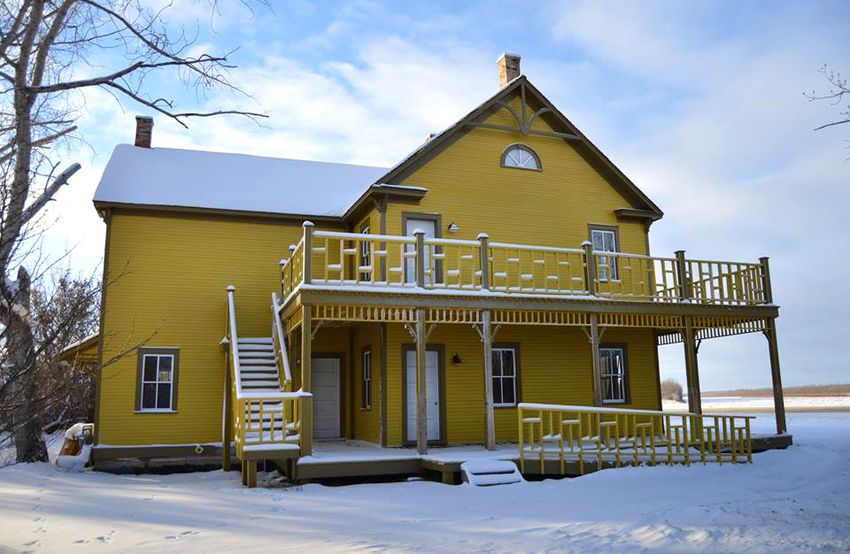
and hospital, the impressive                                                          ho
                                                                                        ma
                                                                                           sP
                                                                                             ark

                                                                                 A. T
community efforts in rebuild-                                Riv
                                                                er          D.

                                                          ce
ing them, outbreaks of fever                          Pea
and other diseases with lim-
ited medical resources, and

                                                               45 St
floods that forced temporary                     rR
                                                   d
                                              ve
shutdowns and relocations,                  Ri

this is a location with no
shortage of powerful history.

RESIDENTIAL SCHOOLS
                  Rive
                      r Rd

Indigenous people were
promised educational and
medical        services         under
Treaty 8, signed in 1899/1900.
Because they were a no-                      Present day Catholic Church
                                             Marcone, Matt
madic people, living in bush
                                    50 St

camps, the chosen method
of fulfilingBice
              this   treaty
                 ntenial       was to
                         Highway.
                                                                       88
institutionalize them. This
responsibility was passed to
the Roman Catholic Church.
Although not all residential
schools created horrible con-
ditions, the act of taking chil-
dren from their families and
culture has had a profound
effect on generations to this
day.

Glenbow Archives NA-60-4

                                                                                                   5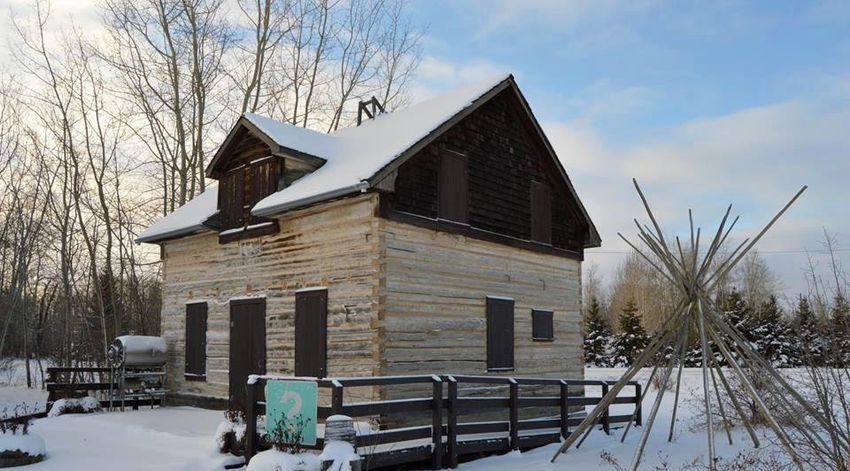
EXPLORE
    HISTORICAL FORT VERMILION

                                                              Kozij, Jesse

    THE OLD BAY HOUSE
    F ort Vermilion was booming
      during the first decade of
    the 20th century with a dom-
                                      Also known as the “Big House”
                                      and “Factor’s House,” the Old
                                      Bay House is the only Hud-
    inant fur trading industry and    son’s Bay Company factor’s
    notable agricultural gowth.       house remaining on its origi-
                                      nal site in Alberta.
        By this time, Fort Vermilion
     was home to North America’s One guest in 1910 described
          northernmost flour mill, a the interior of the house as,
       sawmill, fur trade post, brick “a glimpse of civilization,” with
        factory, Experi-                           carpets, rugs,
        mental Farm,        “A glimpse of            furs, a parlour
     steamship, and          civilization.”          with a piano,
      the highest yields                          library, screen
       of vegetable and grain crops doors and three brick chim-
    north of Peace River Crossing. neys surrounded by stunning
                                      architecture.
    The Old Bay House, complet-
    ed in 1908, was a representa- The two and a half story
    tion of this new modern era. It building was built on a stone
    was built by the Hudson’s Bay foundation and cellar, with
    Company to be the factor’s the spruce siding originally
    house, originally occupied by painted a dark mustard gold
    Francis Wilson and his family.    colour, described as “Indian

6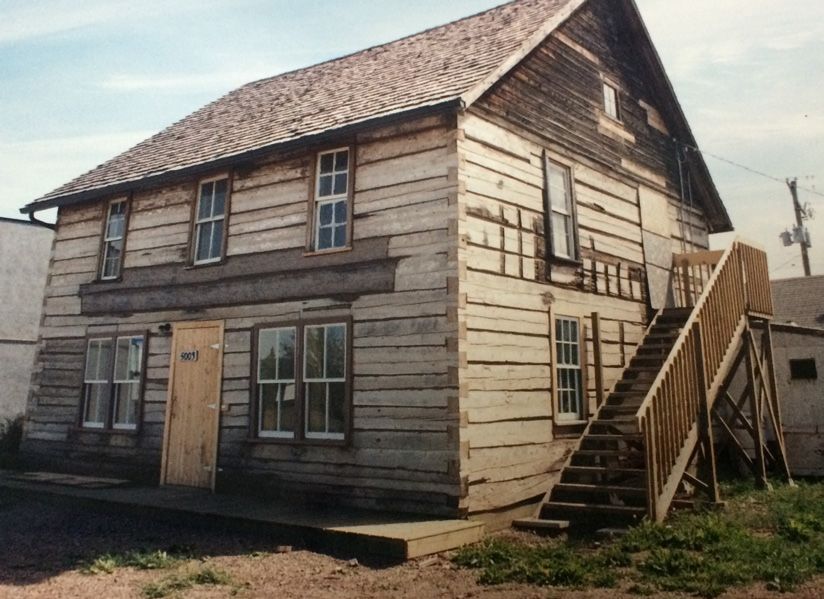
yellow”. The inside walls were
finished with tamarack and
spruce wood, complete with
eaves troughs, electric lights
powered by the HBC mill, and
a water closet.
Some well-known visiters to
the area were entertained and
lodged in the Old Bay House
over the years, including James
Cornwall, Governor General
Lord Byng, Agnes Deans Cam-                                                                  Quist, Wendy
eron, Katherine Hughes, Pre-
mier Brownlee and famous
bush pilots, ‘Wop’ May and
‘Punch’ Dickens.                                                  F    ollowing the decline of the
                                                                       fur trade posts, The Old
                                                                   Bay House became a private
The Old Bay House is a Provincial Historic
Resource and is on the National Register                           residence owned by various
of Historic Places in Canada
                                                                   people and at one point
                                                                   was abandoned and gutted.
                                                                   However, in 1988 The Friends
                                                                   of the Old Bay House Society
                                                                   began a project to restore
                                                                   the grand property. Pictured
                                                                   above is the beautiful newly
                                                                   refinished banister.

    The Francis Wilson family,
    first residents of the Old Bay
    House 1908 - 1913
                                                                    rk
    Clarke, Warren & Rachel Acc no 2005.29.23                     Pa
                                                             as
                                                          om
                                          r
                                      ive            A. Th
                                    eR
                                                D.
                                 a c
                              Pe

                                  d
                               rR
                          Rive
                                      45 St

                                                                         North and West Facades, 1910
                                                                                 Glenbow Archives NA-3471-29

                                                                                                          7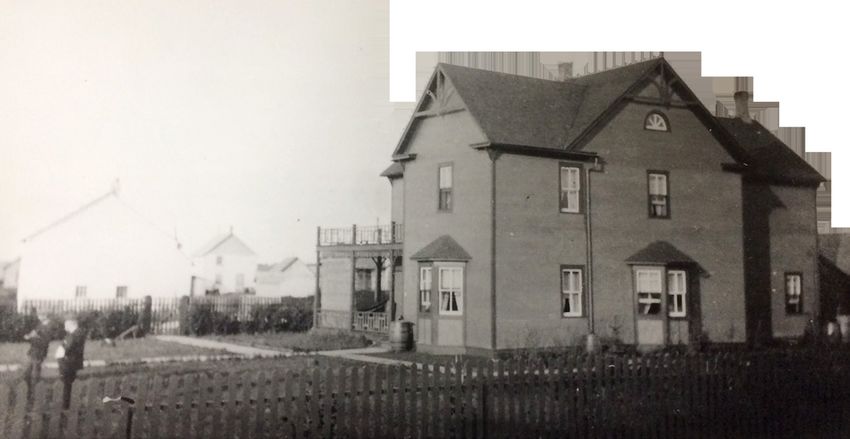
EXPLORE
    HISTORICAL FORT VERMILION

    The Clarke House                   The Bourassa/St. Germain House
                                                           Toews, Marilee

    BOURASSA
    ST. GERMAIN HOUSE
    J ohnny Bourassa was
      born in c. 1851 at Fort
    Dunvegan, AB to Louis
                                   Johnny
                                          During his lifetime,
                                                 built
                                   dovetailed log houses. In
                                                             three

    Bourassa and Marguerite        1903, Pierre Lizotte helped
    Otaikijik Lafleur. In his      him build the first, which
    twenties, Johnny moved         was used as a residence by
    to Fort Vermilion and was      Johnny’s son Thomas and
    hired by the Hudson’s Bay      his wife Eliza (Lizotte).
    Company as an interpreter.            Johnny then built
           He    made       Fort   the Bourassa/St. Germain
    Vermilion his home for the     House, also known as the
    remainder of his life, dying   Visitor Log House , which he
    there at age 90 in 1941.       gave to his daughter Marie
    He married Lucia St. Cyr       Anne and her husband
    in 1876 and together the       John St. Germain. He then
    couple raised 11 children.     completed his final dovetail
    The Bourassa’s cattle and      house, known today as the
    wheat farm was once            Trapper’s Shack.
    considered the heart of Fort
    Vermilion.
8
THE
TRAPPER’S SHACK
Located on its original
River Lot, and relatively
unaltered in presentation,
the Trapper’s Shack is
one of the region’s earlier
and more prominent
hand hewn log houses. It
The Riverside Cafe in the c. 1960s
is the largest and oldest
Sutherland, Florence Letts
(c. 1908) two-story log
dwelling on its original
site in Fort Vermilion.
The Trapper’s Shack today.
d
erR
Riv
Peace River
r Rd 46 Ave
Rive
50 St
52 St
The Bourassa/St. Germain (Visitor Log House)
9
50 St
Kozij, JesseKM
13.4
KM
88 TO HIGH LEVEL 15.9
KM
12
KM KM
23.1 21.1
GULL LAKE
WETLANDS
KM
KM 9.9
iver
24
26 BUTTERTOWN
e a ce R LOOP
P
KM
7.2
STA
12
111
0
9 8
7 27
RT 13
HER 14 1
E 2
3
4
5
25
iver
eR
P eac
.
r Rd
Rive
88
BICENTENNIAL HIGHWAY FORT VERMILION
TO LA CRETE 697
8
7
47
er
St
6
iv
c eR 5
Pea 4 9
49 St
3
53
St
rR d. 12
Rive
21
47 St
11 10
Fort Vermilion 2 23
1 24
WALKING & DRIVING TOUR
52 St
50 St
22
Bicentennial Highway
10iv er
c eR
Pea 18
ark
a sP
17 Th
om
.
.A
16 D
1. Clarke House I
15 2. Bourassa House | p. 8
14 3. Old RCMP Detachment
4.Batt’s General Store
5. Trapper’s Shack | p. 9
13 6. Board of Trade
52 Ave.
7. Hudson’s Bay Store
19 8. Kratzs’ Clinic
St.
9. Captain Gullion House
43
50 Ave 10. Ferguson/Bell House
11. Experimental Farm | p.2
12. Hallet-Hansley Legion Hall
45 St
13. St. Henry’s Church | p.4
14. Old Bay House | p.6
20
46 Ave 15. HBC Cookhouse
16. S.S. Peace River Heritage Site
17. National Historic Site Cairn
18. St. Luke’s Church Cemetery
19. Mission Granary/Root Cellar
20. Fort Public Schoolhouse
21. St. Theresa Hospital Plaques
22. Hilltop Mission
23. Community & Cultural Complex
24. Everlasting Campfire
25. Fort Vermilion Bridge | p. 12
26. Buttertown | p. 14
88 27. St. Louis Church | p.16
11EXPLORE
HISTORICAL FORT VERMILION
Toews, Marilee
THE
FORT VERMILION BRIDGE
O pening of the Fort Ver-
milion Bridge on Sep-
tember 19, 1974 began a
shipment via riverboats to
eastern exchange points on
route to Montreal and the
new era for Fort Vermilion. It Hudson Bay Company.
was no longer isolated from Steamboats helped to less-
the south. en the burden for summer
Boyer’s Post, a precursor to transportation beginning
Fort Vermilion, was estab- with the St. Charles in 1903.
lished in 1788. For nearly A round trip with passenger
200 years, the Peace River accommodation between
was the only “highway” con- Fort Vermilion to Peace River
necting residents on both Crossing cost $30. It was an
sides of the Peace River. astounding 847 km trek and
Each year, Indigenous an incredibly challenging
and other trappers would journey.
trade furs with buyers for
12The first ferry was provided
in 1916 and served travellers
for years, but not always sat-
isfactorily. One story involved FVHC Acc no 990.04 97.146
the motor breaking down
and a little “kicker” motor
being used as a stopgap.
It was too small and broke
FVHC Acc no 990.04.74.76
apart when the ferry was in
midstream, and the passen-
gers needed to be rescued
by a priest using the parish’s
motorboat.
Over the years, several other
boats would be used to haul
materials in the summer FVHC Acc no 990.04.74.68
months, until the Fort Vermil-
ion Bridge opened in 1974.
Uncertainty due to ice bridge
safety, plus high water and
T he Fort Vermilion Bridge
is engineered to resist
1,600,000 pounds of extreme
flooding, posed many chal- ice forces per pier, and cost
lenges, particularly during approximately $6 million. It is
the spring breakup. 524 metres long, 10.5 metres
wide and crosses a river that
stretches 370 metres in a
normal year.
88
ST
AR
TO
FB
UT
TE
RT
OW
NL
OO
P
Pe
ace
Riv
er
88
BICENTENNIAL HIGHWAY
FORT VERMILION 13EXPLORE
HISTORICAL NORTH VERMILION
BUTTERTOWN
W hile it may read “North
Vermilion” on maps and
signs, this settlement is known
Vermilion, Buttertown res-
idents needed to cross the
Peace River, which was some-
as “Buttertown” to locals. times difficult due to poor
river conditions.
Buttertown gets it’s name
from the dairy production of This struggle continued until
it’s early residents, who trad- 1974 when the Fort Vermil-
ed butter in great quantities ion Bridge was constructed,
with with independent traders providing easier access to
and the Hudson’s Bay Compa- residents on both sides of the
ny, who had come to make up river. Various vessels, includ-
the early fur trade. The butter ing steamers and ferries, were
was then delivered to commu- also used to transport goods
nities farther north or resold and services beginning in
locally. 1903 with the S.S. St. Charles.
Participating in this trade was Ahough the ferry no longer
not as easy as it sounds. operates and butter mak-
In order to reach the ing is no longer a livelihood
fur trade cen- for the residents, Butter-
tre in Fort town is still an active
Jim Cornwall store, sold to Revillon Fréres in 1906 (River Lot 7).
14 FVHC Acc no 995.57.82community and is recognized
as an important part of Fort
PEOPLE
Vermilion’s past. AND PLACES
Buttertown has historically
been a self-contained com-
munity with it’s own stores,
T he River Lot system of
Buttertown – where
landowners held one or more
church, pool halls, school, saw
lots with river frontage and
and flour mills.
land for dwelling, pasture
and gardens – remains
in place to this day and is
connected to several key
figures in Canadian history.
River Lot 7 is the former
site of Jim Cornwall’s store
River Lot 6 and after 1906, part of the
FVHC Acc no 995.57.10
holdings of Revillon Frères
(pictured bottom left). This
French fur and luxury goods
company directly competed
with the monopolistic
Hudson’s Bay Company.
Buttertown’s first pool hall,
River Lot 8
FVHC Acc no 995.57.33
built by Augustus Lizotte on
River Lot 7, was moved to
KM
lots 9, 13, and then the La
Fleur’s family lot, number 14.
13.4
88
KM
TO HIGH LEVEL 15.9
KM
12
KM KM
23.1 21.1
GULL LAKE
WETLANDS
KM
24 KM
9.9
BUTTERTOWN LOOP JIM CORNWALL STORE
(JOHN DALK HOUSE)
KM
7.2
10 7
STA 11 8 ST. LOUIS
12 9
RT 13 CHURCH 1
HE 14 2
RE 3
4
5
PEACE RIVER
88
15
BICENTENNIAL HIGHWAY
FORT
TO LA CRETE 697 VERMILIONEXPLORE
HISTORICAL NORTH VERMILION
ST. LOUIS CHURCH
F ather Jérémy Lavoie (OMI) began
construction of the St. Louis Roman
Catholic Church with help from the com-
munity in 1906. Like many other build-
ings in Buttertown, the St. Louis Church
was built using hand-hewn logs and of-
ficially blessed on March 20, 1909. It
was an outreach of St. Henry’s Mission in
Fort Vermilion, founded July 6, 1866 by
Bishop Faraud (OMI).
The small building next
to the church served as
the priest’s residence.
Father Jean-Louis
Quémeneur (Grouard-
McLennan Roman
Catholic Diocese 1924-
1965) celebrated mass at
the chapel for decades
and later tried organiz-
ing an Indian residential
school in Buttertown.
The church is a must see
for travellers looking to
experience Buttertown’s
heritage, which also
encompasses early fur
trading and agricultural
history.
Kozij, Jesse
160 7
11
12
1 98 ST. LOUIS
13 CHURCH 1
14 2
3
4
5
iver
eR
ac
Pe
88
FORT VERMILION
BICENTENNIAL HIGHWAY
Father Quémeneur OMI next to the priest’s house at
St. Louis Church, North Vermilion, October 3, 1941
La Société Historique et Généalogique de Smoky River, Donnelly Alberta
17EXPLORE
HISTORICAL FORT VERMILION
Walking and
Driving Tour
1. Clarke House I |1905| Built of locally sawn timber, this was
the middle of three identical houses used as Hudson’s Bay clerk
quarters. It was moved west of St. Luke’s Church in 1943 to be
the dwelling of William and Agnes Clarke. In 1944 it was moved to
the Fort Vermilion Heritage Center.
2. The Bourassa/St. Germain House |c.1905| The St. Germain
House, built by Johnny Bourassa, was moved to the Complex
in 1983 for use as the Visitor Information Center. Building bees
were often held to construct these hand-hewn, dove-tailed log
houses. See page 8 for more information.
3. Old RCMP Detachment |1959| Distinctive in its brick con-
truction, this detachment is No. 31 of several built across Canada
according to this plan. It included offices, married and single
member’s quarters and a jail cell.
4. Batts’ General Store |Massive logs from the 1897 Hudson’s
Bay Company store were moved c. 1941 to build this store. Until
1990 it was the oldest business building still in use in the Fort. In
recent years, it was remodelled and has seen use as a workshop,
gift shop, cafe and bakery.
5. Trappers’ Shack |c. 1908| Johnny Bourassa and others
built this prominent 2.5 storey, dove-tailed log house. It is re-
membered as a house, cafe, outpatients’ lodge and for its room
and board cabins. This log buidling, the largest and oldest on its
original site in the Fort, is Mackenzie County’s first designated
Municipal Historic Resource. See page 9 for more information.
6. Board of Trade |This building symbolizes the Fort Vermilion
Board of Trade founded in 1914. It was a store manager’s house,
BOT office and library. It was moved and renovated in the 1950s
for use as a residence.
7. Hudson’s Bay Store |1940| Since 1972, this store has been
used as a pool hall, laundromat, confectionary, liquor store,
apartments, and in recent years a hardware/building supplies
18 business.8. Kratzs’ Clinic |1936|Etna Rivard and Antoine Beaulieu built
this dove-tailed log house for Mr. Edgecombe. Doctors Hannah
and Julius Kratz and other physicians used it as a medical clinic
and residence. Covered with modern siding in recent years, it has
been used for various retail and lodging purposes.
9. Captain Gullion (Clarke II) House |1907| Built for the
Guillion family, this was the westenmost of three identical
Hudson’s Bay clerk quarters and the home of the Chief ‘Chilouis’
Courtoreille. It was moved here in the early 1940s and Fred and
Iola Clarke lived in it.
10. Ferguson/Bell House |1960| Built by the Fergusons and
DeVeers, this was the home of Lorna Bell and family until her re-
tirement. Literacy and cultural projects are hallmarks of this clan.
The house is currently a private residence.
11. Experimental Farm | Active settlement and the potential
for agriculture north of 58° were acknowledged in 1907 when the
Dominion Experimental Farm was established by F. S. Lawrence.
Robert Jones led the research at Stoney Point until his retirement
in 1933. The farm was relocated to the Diamond P Hill in 1936.
For more information see page 2.
12. Hallet-Hansley Legion Hall |1950| Named in Memory of
town local servicemen, ‘Buddy’ Hallet and Ted Hansley, the origi-
nal wood-frame hall was built by Billy Batt and a crew. Within are
military artifacts and paintings by Lily Bell.
13. St. Henry’s Church | St. Henry’s parish was founded in July
6, 1866; the first registered burial was March 20, 1868 and a per-
manent mission has operated since 1876. For more information
see page 4.
14. Old Bay House | In 1908, the Wilson family moved into
the New Hudson’s Bay Company (HBC) factor’s house. It was
built from locally sawn timber. Designated an Alberta Registered
Historic Resource in 1978 and Provincial Historic Resource status
in 2005, it is on the National Register of Historic Places in Canada.
The OBH symbolizes the HBC ‘s fur trade empire, which operated
at this site 1830-1940. As the only evidence of the once extensive
Bay holdings, the OBH restoration is a tribute to the competitive
fur trade interests operating in the area since 1788. For more
information see page 6.
1915. HBC Cookhouse |c. 1909|This hand-hewn, dove-tailed log
mess house used to be located west and south of here. It is now
a private residence with a new exterior.
16. S.S. Peace River Heritage Site |1905| The grand and beau-
tiful sternwheeler, the S.S. Peace River was built and launched
near here and plied the Peace between the Fort and Peace River
Crossing from 1905 to 1915. Lumber for construction was sawn
from trees logged at Oliver’s Island and floated to this site. John
Gullion and Burley Manzer headed the shipbuilding.
Glenbow Archives NA-2974-25
17. National Historic Site Cairn | Gaze downstream toward
the site of Boyer’s Post (1788-1792) and beyond to the Caribou
Mountains, where a vast wilderness supplied furs and provisions
for trade. The Bay post, staff quarters, sawmill, flour mill and boat
landing were once situated nearby.
18. St. Luke’s Church Cemetary | Site of St. Luke’s Anglican
Church (1885), the monument and fieldstone fence were dedicat-
ed in 1988 in memory of those buried there to June 1988.
19. Mission Granary/Root Cellar| This sturdy log building is
what remains of the once extensice RC Mission Farm. It is now
part of the Fantasy North Golf Course. The remnants of the large
root cellar are visible to the southwest.
20. Fort Public Schoolhouse|1946| An earlier log schoolhousewas built here c. 1924 by W. Letts. This one was moved here from the current Fort Public School site. The School Division uses it for storage. 21. St. Theresa Hospital |1983|From 1900 to 1972 the Sisters of Providence operated a medical mission. Fire in 1914 and 1925, a diphtheria scare in 1928, and the 1934 floor, were hard- ships they faced. When this new hospital opened, the restored statue and plaque were moved from the 1949 site. A commem- orative story board was added later to further portray the roles played by other locals in the mercy mission of 1928/29. 22. Hilltop Mission |1958| The Mission of the Church of God in Christ was founded by Mennonite missionaries at Little Red River Post and was later established here. 23. Community & Cultural Complex |1983| The grounds have been used for recreation since 1963. The Complex was officially opened in 1984 to serve community, cultural heritage, recre- ational, and social interests. In 1994 the Hall was expanded and Museum & Archives added. 24. Everlasting Campfire |1988| Despite the -47°C tempera- ture, runners relayed the 1988 Winter Olympic Torch from the airport to Community & Cultural Complex were hundreds gath- ered to witness the lighting of this campfire. Local artisan, Kevin Randle welded the campfire sculpture as a tribute to the warmth and unity of the region’s people.
Fort Vermilion Heritage Center (FVHC)
            (780) 927-4603
   www.FortVermilionHeritage.ca
          fvhc@hotmail.ca

  Mackenzie Frontier Tourist Association
                PO Box 26
   High Level, Alberta, Canada T0H1Z0

       www.mackenziefrontier.com
       info@mackenziefrontier.com
   like us and follow us on facebook at:
  www.facebook.com/mackenziefrontier
You can also read


