HISTORY Pere ea Letsatsi - DECEMBER 2017
←
→
Page content transcription
If your browser does not render page correctly, please read the page content below
S e c o nDdE CE d
                             EMi t iBoEnR 22001187

Pere ea Letsatsi
     makes

HISTORY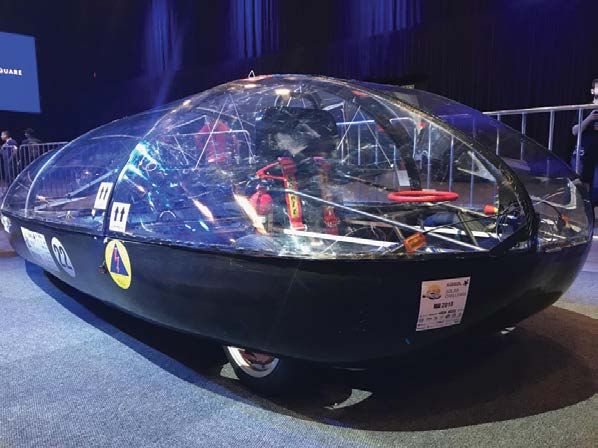
About this Issue
Communications & Marketing
     Editorial Team
    Dan Maritz - Editor-in-Chief
     Mpho Makanyane - Editor
  Lesego Modisenyane - Journalist

         Publisher
The Central University of Technology,
         Free State (CUT)

        Private Bag X20539
            Bloemfontein
     Tel: +27(0)51 507 3053
     Tel: +27(0)51 507 3820
   Email: mmakanyane@cut.ac.za
    or lmodisenyane@cut.ac.za
Article on page 10
6
     Message from the VC
8    Feature story
     2018 Sasol Solar Car Challenge

     Research Excellence
10   Team effort to create new ‘ears’ for six-year-old Elijah
12   CUT solar project: The sun is the limit

13
     Academic Programmes
     CUT alumnus delivers keynote address at 21st annual research seminar
14   Language gurus translate science terminologies into Sesotho
15   Health and Environmental Sciences prestige research seminar
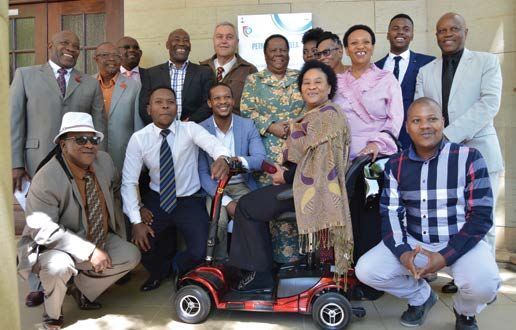
16   Faculty of Humanities hosts research seminar
17   Debates on decolonisation of curriculum continue at the 2018 4th CUT annual SoTL
     conference

     University Life
18   2018 Spring Graduations celebrated
19   CUT Chancellor celebrates the newly graduated doctors
20   Dr Maleho Seane receives Chancellor’s Excellence Award
21   PhD Graduates
27   CUT and Accenture formalise their partnership
28   Researchers and policy makers collaborate to bridge the gap
29   BOU AND CUT strengthen relations
30   Student leadership share best practices at NASDEV summit
31   CUT CRPM and two Botswana institutions secures Finnish funding to develop Additive Manufacturing Ecosystem for Southern Africa
32   NUIST and CUT declare to form strong cooperation
33   CUT and FS Legislature join forces to make a difference in the province
35   Dr Brand Pretorius delivers lecture on effective leadership
37   Dr Adriana Marais explores beyond earth
38   Central University of Technology, Free State (CUT) honours former leaders
43   National Training and Olympic Preparatory Centre becomes a reality
44   CUT makes strides towards private sector partnership

     Highlights
45   Centre for rapid prototyping and manufacturing (CRPM) scoops the most innovative local business award
46   CRPM celebrates 21 years of innovation and excellence
47   CRPM duo acknowledged at Inaugural African Advanced Manufacturing Innovation Awards
48   Faculty Dean appointed
49   Excellence is not an act, but a habit at CUT
52   Faculty of Humanities Awards Top Achievers
54   Kevin Henry inspires dental assisting students
55   Erasmus YEBO training held at CUT
55   CUT tees off to raise funds
56   Emergency Management Professional Programme (EMPP) awards
58   Letter from the President of CUT Alumni Association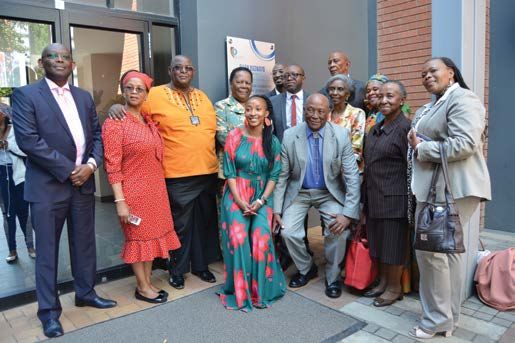
Page 6 | Gratia

  Message from the Vice-Chancellor
The Central University of Technology, Free State (CUT) community has         2018 March and September graduation ceremonies. Furthermore,
strengthened its foundation and the building blocks of a university of       some remarkable achievements were recorded for 2018. The
technology (UoT) in 2018, through courageous efforts in unity, creating      following are a few examples:
new paradigms, anticipating the future, and challenging the status
quo. Although we should be proud of our history and our origin as an         ◙ The Transformation Office has organised the CUT Transformation
institution, we are in the process of finally closing the chapter of being     Summit in May 2018, and the CUT Women in Conversation
referred to as a “technikon”, and to enhance CUT as a true, fully fledged      Summit in November 2018.
UoT, focusing on innovative problem-solving and career-directed              ◙ The 2018 World Intellectual Property Organisation (WIPO)
academic programmes, in addition to the basic responsibilities of a            Summer School was hosted at CUT, in partnership with WIPO
university, and leading the way in ensuring that our applied research,         and the National Intellectual Property Management Office
and social and technological innovations, operate to the benefit of            (NIPMO).
the region and the country as a whole.                                       ◙ Related to the African Advanced Manufacturing (AM)
                                                                               Innovation Awards, where several organisations leading South
A total of 4 193 first-time entering undergraduate students were               Africa into the Fourth Industrial Revolution were recognised, Mr
registered at CUT for 2018. The overall headcount is 19 436 students,          Gerrie Booysen received the Gold Award for Scholarly Impact
whilst the Science, Technology, Engineering and Mathematics (STEM)             in AM for the work done by the Centre for Rapid Prototyping
headcount enrolment figure is 9 713 students, or 50% of our student            and Manufacturing (CRPM) around patient-specific titanium-
complement. Furthermore, a total of 4 265 students, including 48 master’s      printed facial implants; and Prof. Willie du Preez received a
degree students and 25 doctoral degree students, graduated at the              special recognition for Scholarly Impact in AM for his lifelong
Page 7 | Second Edition’ 18

    contribution to AM. Furthermore, a Silver Award for Industry               them to access professional support in dealing with the
    Advancement was earned by Lonmin Plc/Western Platinum Refinery             emotional, psychological and spiritual impacts of a traumatic
    for the development of 3D-printable pure platinum powder. South            series of events during the #Fees-Must-Fall Campaign.
    Africa is the first country to produce 99,9% pure platinum, and
    CUT was instrumental in developing the 3D-printing parameters to      Furthermore, Ms Norah Clarke, Head of the Entrepreneurship
    process this pure platinum powder.                                    Development in Higher Education (EDHE) Programme, mentioned
                                                                          that: “CUT is already considered a leader in the space of
◙ CUT successfully participated in the Sasol Solar Car Challenge          entrepreneurship development”. Evidence that CUT remains a
  2018 from 22 to 30 September 2018. The competition entailed a           special university relates to the words of Ms Heloïse van Niekerk, Senior
  2 000 km long route over eight-day stages.                              Human Resources Officer, Pelonomi Private Hospital, Netcare Limited,
                                                                          who had the following to say about our students on 14 September
◙ The CUT-SAB-InBev Intervarsity Craft Beer Competition was               2018: “I would like to congratulate CUT, first of all for looking after
  successfully held, with the CUT craft beer team receiving the award     their own students, even after finishing their studies. Second of all, for
  for the people’s choice product.                                        producing good quality students. The commitment I saw from all the
                                                                          candidates, from being perfectly on time, well groomed, extremely
◙ A CUT Taskforce on the Fourth Industrial Revolution and Circular        good mannered, good communication skills, and their commitment
  Economy (4IR+CE) was launched on 17 September 2018, to                  to their studies, was astounding”.
  ensure our readiness in this regard.
                                                                          The university has strengthened our collaboration with external
◙ CUT signed a Declaration of Intent with the Ministry of Sport           parties, and several agreements and funding opportunities were
  and Recreation South Africa, Free State Provincial Government;          realised. Our transformation project is on track, and good progress
  the National Department of Public Works; and the Free State             has been made in this regard. We will continue to deal with deeper
  Department of Public Works and Infrastructure, to make the National     transformation matters.
  Training Centre and Olympic Preparatory Centre a reality, and to
  finalise the land exchange that will benefit CUT.                       On behalf of the CUT Council and Management, I would like to
                                                                          acknowledge all our external partners – including businesses, industry,
◙ Three of our Design and Studio Art students were victorious in          government and society at large – for your support. In addition, the
  the 2018 Phatshoane Henney Attorneys (PHA) New Breed Art                university cannot be successful without the continuous support of,
  Competition. CUT students scooped four of the five awards at            amongst others, the DHET, the Council on Higher Education (CHE),
  and the winners are Mr Nkululeko Nkebe (third-year student) –           Universities South Africa (USAf), professional bodies, science councils,
  overall winner; Ms Katlego Mogoera (first-year student) – runner-up     and the National Research Foundation (NRF). Please be assured
  and Public Choice Award winner; and Mr Xola Sello (fourth-year          that we value and nurture these partnerships! Furthermore, I am
  student) – Merit Award.                                                 grateful for the support and guidance of the Chairperson of Council
                                                                          and the entire CUT Council. CUT is blessed with committed and
◙ The unveiling of the Department of Higher Education and Training        knowledgeable Councillors who only want the best for the institution.
  (DHET)-sponsored infrastructure, totalling R700 million, took place     Finally, thank you also to our Chancellor and the Management Team,
  on at both the Welkom and Bloemfontein campuses. The Minister           for your hard work and dedication, and to all staff and students,
  of Higher Education and Training, Ms Naledi Pandor, attended the        including Senate, the unions, student leaders, alumni and parents, for
  event at the Bloemfontein campus.                                       your commitment and support.
◙ The CUT Debate Society participated in the Women’s Open                 The university is certainly on a rise, and more and more time and effort
  Tournament at the North-West University (NWU) in Potchefstroom.         are spent at strategic level, including on building strategic partnerships,
  Two members reached the finals, and were both ranked in the top         and enhancing the financial sustainability of the university. The theme
  three adjudicators of the entire tournament.                            for 2018, “Reimagining CUT: Embracing Servant Leadership”, allowed
                                                                          the CUT community to embrace servant leadership, which enriches
◙ The university continues to support the alumni programmes, for          the lives of individuals, builds better organisations, and ultimately
  purposes of deepening a lifelong relationship between CUT and           creates a more just and caring world. Furthermore, we are steadfast
  its alumni, through opportunities that promote interaction and          in our focus to “reimagining CUT as a transformational, transformative
  engagement with CUT.                                                    and entrepreneurial university and ‘model’ UoT in Africa, impacting
                                                                          on the socio-economic development of the Central region of South
◙ A CUT alumnus, Ms Nneile Nkholise, a Mechanical Engineer, is a          Africa and beyond”. This project is founded on our transformation
  finalist in the All Africa Business Leaders Awards, in the category     drive and new institutionalism (change).
  Industrialist of the Year Award, that was held on 29 November
  2018. Her company manufactures durable breast prosthetic                Looking back at 2018, there is no doubt that it was a successful
  devices.                                                                year for CUT. I am convinced that our implementation of the renewed
                                                                          vision for CUT will result in 2019 being an excellent year!
◙ Management implemented a special Programme for Interventions
  for Staff & Students on Social Challenges/Difficulties. The rationale   Warm regards
  for extending this support to our employees and students, and           Prof. Henk de Jager
  encouraging them to make use of this opportunity, is to enable          Vice-Chancellor and Principal
Page 8 | Gratia

Feature Story

 CUT engineering students made history when they entered the 2018 Sasol Solar Car Challenge. The team not only represented
 the institution but the province at large. Pere ea Letsatsi was displayed at the Bloemfontein control point. CUT staff and
 management came to show support to the Seilatsatsi team.

 2018 Sasol Solar Car Challenge                                                    The team
 History of solar cars                                                             To qualify for this innovative challenge, teams had to comprise
 Solar cars were first developed in the 1800s by Ányos Jedlik and                  imaginative Electrical and Mechanical Engineers and
 improved as technology advanced. South Africa held its first solar car            Aerodynamicists who possessed of strong backgrounds in
 demonstration drag race in 1985, followed by the world’s first solar              computer science and STEM, and general project management
 car challenge in 1987. The solar car challenge was later introduced               skills. The challenge provided students with a platform to showcase
 in South Africa, with Sasol becoming the first official sponsor of the            their skills, as well as with exposure to networking opportunities with
 event. Ever since then, Sasol has been sponsoring the event as part               local and international counterparts. They were also afforded a
 of its commitment to furthering Science, Technology, Engineering and              change to design a real engineering project, which is envisaged
 Mathematics (STEM) education and inspiring learners to pursue                     to encourage green innovations.
 technical careers.
                                                                                   With support from the university, the Technology Innovation Agency
 The journey                                                                       (TIA), the Advanced Energy Foundation and Sasol, Engineering
 The Central University of Technology, Free State (CUT) ventured into              students’ long-standing dream to build a solar challenger car was
 this new territory for the first time in the history of the solar car challenge   fulfilled.
 when they entered the 2018 Sasol Solar Car Challenge. The CUT
 solar racing team, Seilatsatsi, showcased their innovative skills when            The engineering/making of the solar car
 they competed against renowned champions from both local and                      The design was done entirely by CUT students under the
 international universities. Seilatsatsi was the only university team from         leadership of Dr Nicolaas Luwes, whilst the motors and carbon
 the Central region to participate in this international race.                     fibre were commissioned from suppliers. The solar array was built
                                                                                   by Gochermann Solar Technology that provided several teams
 The newly built CUT solar car, Pere ea Letsatsi, meaning “magic of                with panels in the past.
 horsepower from the sun,” was designed by means of Computer-
 aided Design (CAD), engineered and built at the university’s own                  Extensive testing of the car’s aerodynamics was done by means of
 laboratories by CUT’s Engineers.                                                  a 3D-printed model before the actual manufacturing started. The
                                                                                   carbon-fibre vehicle was fitted with state-of-the-art technology
 For the challenge, the teams had to design the solar car, build it, test          for tracking power, and even a cruise-control feature.
 it, pass the scrutineering test, and drive as far as they could, using
 only the solar energy. Seilatsatsi managed to build their car in a short
 space of time.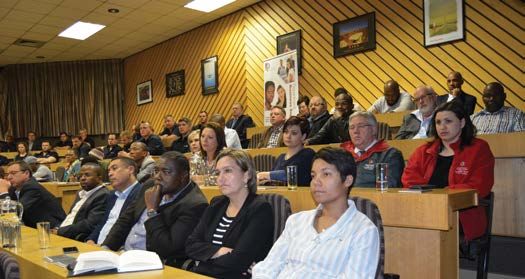
Page 9 | Second Edition’ 18

This type of design and construction normally takes two years to        stops in 13 towns, where they had the opportunity to exhibit their cars,
complete, but the CUT team started this mammoth task in February        and do light work on the cars to get them race-ready for the following
2018 and completed the car in time for race scrutineering on 17         town. Despite being newcomers in the competition, the Seilatsatsi team
September. Mechanical CAD was used to design the car, whilst            was not intimidated by the champions, and raced alongside them. The
simulations were utilised to analyse the aerodynamics and the           main aim of the competition was to test the durability and endurance
custom-made suspension thereof. The simulations included analyses       of the cars.
of the slope and other aspects of the actual South African roads,       Teams were set to cover the most distance on the set route each day,
as well as sun power prediction models for that time of the year, to    and were allowed to add loops if they had more power left in their
ensure that the power is fully utilised.                                solar cars. The team that managed to cover the largest distance per
The final car was constructed using carbon fiber. Its suspension was    day won. The race relied entirely on good engineering, great drivers
built from solid blocks of aluminum. The tracing mechanisms were        and team managers who could manage energy and work according
programmed to optimally follow the sun. The car also consisted          to the weather conditions. The record to break was 4 500 km. Pere ea
of fly-by-wire systems, with custom programming, including battery      Letsatsi managed to clock in a total of 110,3 km of the set 4 500 km.
management systems, a unique maximum power point tracking system,       The racing teams were faced with diverse conditions, experiencing four
and cruise control.                                                     seasons in one day – from scorching sun, to destructive storms and
The launch                                                              strong winds – but that did not stop them from continuing with the race.
The race car was launched on 14 September 2018, eight days              Other participants
before the race kicked off. At the launch, Prof. Alfred Ngowi, Deputy   Some of the world’s top teams included the current world champions,
Vice-Chancellor (DVC): Research, Innovation and Engagement,             Nuon from Delft University in the Netherlands, and the former world
introduced the 21 members of the team of Engineers, under the           champions, Tokai University in Japan. The international new kids on the
tutelage of Dr Nicolaas Luwes, a Senior Lecturer in Engineering, and    block included teams from City University in Hong Kong, China; Manipal
leader of the Seilatsatsi team.                                         University in India; and the Solar Energy Racers from Switzerland.
Prof. Ngowi applauded the team for their perseverance, motivation       In addition to Seilatsatsi, local teams included Tshwane University of
and inspiration to put CUT on the map. CUT partners, media houses,      Technology (TUT); North-West University (NWU); Sonke, a combined
donors, sponsors and students were amongst the attendees.               team from St Alban’s College and St Augustine’s Langa Education
                                                                        Assistance Programme (LEAP) School. It is worthy to note that South
“Pere ea Letsatsi’ is the catalyst to propel us up to where we want     Africa is amongst a few countries in the world where high school teams
to be, and Dr Nicolaas Luwes, our Senior Lecture in Engineering, has    are permitted to compete in the race alongside university students.
been instrumental in making this project a success. His perseverance
and inspiration have always motivated this team and all of us here      The awards
at CUT. This is indeed a reason to celebrate our technological          After finishing the race in Stellenbosch on 29 September 2018, all
advances in this special way”, said Prof. Ngowi.                        participating teams headed to the Grand West Casino in Cape Town,
                                                                        where the 2018 Sasol Solar Challenge Awards Function were held on
The race                                                                30 September 2018, and the cars were displayed for public viewing.
On Sunday, 16 September 2018, the team took to the road for             Although Seilatsatsi did not win the race, they managed to receive the
their first car test on the racing track, in preparation for the main   Student and Community Interaction and Engagement Award.
race, which commenced in Pretoria on 22 September 2018. The             Sponsors
actual eight-day race across South Africa, from Pretoria to Cape        CUT wishes to extend the university’s sincere appreciation to the TIA,
Town, took place from 22 to 30 September 2018. Along the way,           Sasol, the Product Development Technology Station (PDTS), Hyundai
participants stopped at eight control points, and had overnight         Bloemfontein, Fenwicks Butchery, Advanced, FibreForm, CodePure, Best,
                                                                        Panaroti’s, and Wimpy Vikings for their generous support.
Page 10 | Gratia

Research Excellence

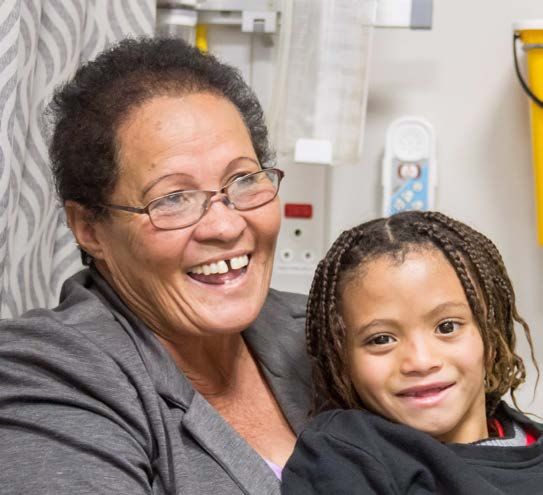
Staff members of the Medicross Kalahari Cataract, Eye and Day Hospital came to wish Elijah Cloete and his family well shortly
before the surgery. Back, left to right: Elijah’s mother, Shirene Cloete; ward cleaner, Liezle Jood; Elijah’s grandmother, Maralise
Cloete; theatre cleaner, Anna Thomas; theatre scrub nurse, Sr Mari van Niekerk; operations manager, Rina de Vries; administrator,
Anika Venter; ward nurse, Sr Soekie Pienaar. Front, left to right: Enrolled nurse, Denise Chiefer; patient, Elijah Cloete; recovery ward
nurse, Sr Marlaine Swartz; and central sterile services department staff member, Thembeka Bizo.

Team effort to create new ‘ears’ for six-year-old Elijah
A team of experts from various medical disciplines and organisations came   her in touch with the team, and this set the wheels in motion for Elijah
together on 24 July 2018, to assist a child born with underdeveloped        to receive the gift of realistic-looking prosthetic ears, as well as a
ears and sealed ear canals, an unusual congenital medical condition         bone-anchored hearing aid.
known as microtia with bilateral congenital aural atresia. Six-year-old
Elijah Cloete has undergone surgical preparation for a pair of custom-        Soon preparations were underway to assist Elijah, thanks to funding
made prosthetic pinna, or external ears, and received a hearing aid as        provided through the Carl & Emily Fuchs Foundation and Wohlers
part of the efforts to enhance his quality of life.                           Associates, a rapid product development consulting firm. The CRPM
                                                                              CUT team and medical professionals provided their expertise and
“Elijah was born with his ear canals sealed, while the visible, external part services pro bono, while the Medicross Kalahari Cataract, Eye
of the ears were tiny and malformed,” explained Elijah’s mother, Shirene and Day Hospital, operated by Medicross and ophthalmologist Dr
Cloete, shortly after the procedure undertaken at Medicross Kalahari Erhardt Kidson, donated theatre time.
Cataract, Eye and Day Hospital in Upington.
                                                                              “I am so grateful for everything that these organisations and
Last year, Shirene read in the media about another young man with individuals are doing to help my son. I thank God for bringing them
microtia who had been assisted through an intervention involving all together to make this possible. To the family who helped me
maxillofacial prosthodontist Professor Cules van den Heever, the connect with the experts, the organisations that provided funding,
Centre for Rapid Prototyping and Manufacturing (CRPM) at the Gerrie Booysen of the CRPM, Professor Van den Heever, maxillofacial
Central University of Technology (CUT) in the Free State and the Carl surgeon Dr Charles van Niekerk, the friendly, caring staff of Medicross,
& Emily Fuchs Foundation, a private grant-making organisation. Shirene and audiologists Julia Jensen and Andra Bester – as a mother, I want
contacted the boy’s parents, Nehemia and Deidre Doolabh, who put to thank you all for helping Elijah to live a normal life,” Shirene said.
Page 11 | Second Edition’ 18
Prosthodontist, Professor Cules Van
den Heever; maxillofacial and oral
surgeon, Dr Charles Van Niekerk;
dentist, Dr Johan van der Merwe who
assisted in theatre; and Medicross
Kalahari Cataract, Eye and Day
Hospital operations manager, Rina
de Vries were amongst those who
reached out to assist Elijah Cloete.
Professor Van den Heever, the CUT team and Dr Van Niekerk had to “The presence of ‘normal’-looking prosthetic ears is more than merely
work closely together to meticulously plan how the implants, which will aesthetic, however, it positively contributes to social aspects of a child’s
hold the prosthetic ears, would be placed. development. We are able to match the skin tone and texture almost
exactly and do everything possible to make the prosthetic ears look as
Dr Van Niekerk explains, “To hold the prosthetic ears, the implants realistic as possible.
need to be attached with small screws into the skull at just the right
position. The bone to which we anchor the implants is only between “As Elijah is only six years old, his features are still growing and in the future,
3mm and 4mm thick, therefore it is essential to plan precisely where we will need to replace the prostheses to remain in proportion with the rest
the bone surface is adequate to hold the screws and to make sure of his face,” Professor Van Den Heever adds.
that they are exactly the right length.”
While the surgeries and prosthetic ears will address the cosmetic aspects of
Working with Professor Van den Heever, the CRPM produced a Elijah’s microtia and aid in some developmental respects, he also required
3D-printed positioning device, known as a patient-specific surgical assistance for his impaired sense of hearing. The head of the speech
stent, after taking a CT scan of Elijah’s head. This stent is placed over therapy and audiology department at Pelonomi Hospital, Julia Jensen,
the patient’s face in theatre and is essential in guiding the surgeon to came to learn of Elijah’s situation through the CUT team and arranged
accurately position the screws for the implants, to which the prosthetic for him to have a hearing test with private audiologist, Andra Bester who
ears will attach. practices in Upington, which is nearer to the Cloete family’s home.
In mid-June, Dr Van Niekerk performed the procedure at the state-of- “The hearing tests indicated that Elijah had partial hearing in one ear.
the-art Medicross Kalahari Cataract, Eye and Day Hospital. Elijah’s Due to his condition, his ear canals are sealed, and we believe that this
malformed external ears were surgically removed, and the implants contributes significantly to his hearing impairment. We performed a bone
were carefully positioned using the patient-specific surgical stent. conduction hearing test and found that Elijah’s cochleas, the part of the
inner ear integral to hearing, are functional on both sides,” Bester says.
“After the initial surgery, we must wait three to four months for the bone
to grow around and attach to the titanium implants. Once we are Elijah was fitted with a special hearing aid. “The bone-anchored hearing
satisfied that the implants are securely integrated with the bone, we aid converts sound into vibrations through the skull and temporal bone,
will undertake the second phase of the surgery, where we will place which stimulates the hair cells in the cochlea. Sound is then transferred
small metal structures that will form the pillars to which the prosthetic normally through the acoustic nerve to the brain,” Jensen explains.
ears will attach with magnets,” Dr Van Niekerk elaborates.
Bester added that Elijah would need to have a follow-up consultation with
The CRPM CUT team will then use 3D printing to create the moulds her in a few months, after he has had time to get used to the hearing aid
that Professor Van den Heever and a Master’s engineering student and has learned how to process the new stimuli. She will then be able to
will use to make the medical grade silicone prosthetic ears for determine the extent to which his hearing has been improved.
Elijah as part of the Changing Faces, Changing Lives programme Dr Billy van der Merwe, managing director of Netcare’s Primary Care
sponsored by the Carl & Emily Fuchs Foundation, which aims to Division, says he was most pleased that the Medicross Kalahari Cataract,
enhance quality of life and reaffirm the sense of dignity of those with Eye and Day Hospital and its staff were able to play a role in the
facial disfigurement. interventions to assist Elijah.
“Ears are fairly noticeable structures, and even though Elijah’s braids “This young boy has shown great courage at such a tender age, and we
have helped to disguise the malformation of his external ears, the are pleased and privileged to be doing our part in improving his quality
prosthetic ears will assist to enhance the aesthetics of his face,” of life. In the coming months we look forward to the successful culmination
Professor Van den Heever notes. of the efforts of all the expert healthcare professionals involved and
seeing the meaningful difference these interventions make for Elijah,” he
concluded.Page 12 | Gratia
From left: Prof. Herman Vermaak, Dean: Faculty of Engineering and Information Technology; Prof. Henk de Jager, Vice-Chancellor and
Principal; Dr Gary Paul, Deputy Vice-Chancellor: Resources and Operations; Prof. Hesta Friedrich-Nel, Assistant Dean of Teaching
and Learning: Faculty of Health and Environmental Sciences; Prof. Alfred Ngowi, Deputy Vice-Chancellor: Research, Innovation
and Engagement; Mr Martin Walzer, Project Manager Technical at Karah Assets; and Mr Cobus Vermeulen, Managing Director at
Karah Assets.
CUT solar project: the sun is the limit
In 2013, CUT embarked on its first project called the Solar-Flower, to harness
“It is important that as technology educators we remain at the
the power of the sun. The Solar-Flower was designed and developed by forefront of technology, particularly in the field of renewable
CUT engineering team, while the steel construction of the device was done energy. This project is a perfect example of doing just that. Besides
in the mechanical workshop at the university’s Bloemfontein campus. The providing a practical solution to a growing problem on campus,
solar stations are placed in strategic positions around both campuses and it also gives us an opportunity to introduce all students and staff
allows students to charge their devices anytime while on campus. members to the use of sustainable energy. The project forms part
of a cost-saving measure by the university as the energy bill of the
The next step for the team was to experiment with solar panels when used institution is high. By generating our electricity, we are also looking
as the electricity source for a building. In 2014, the then newly erected to reduce our carbon footprint.” said Prof. Herman Vermaak, Dean
engineering building was the first construction on campus to have solar of Faculty.
panels placed on the roof and over time, the third and second floor of the
building was taken off the power grid.
This year, CUT in partnership with Karah Assets decided to upscale the “CUT is very optimistic about the opportunities that the project will
project with the installation of a Solar Plant that will produce 153,59kWp afford for learning more about solar, generating energy, and even
through ground-mounted 8m high panels secured on masts. The power outperforming a similar plant that stands erected at South Africa’s
generated will be fed into the local grid of the University and closely Premier Scientific Research and Development Organisation
monitored. The monitoring also extends to temperature and irradiation for located in Pretoria,” these were the comments from the Council for
the purpose of training staff and students involved in the project. Scientific and Industrial Research (CSIR).Page 13 | Second Edition’ 18
Academic Programmes
CUT alumnus delivers keynote address at 21st
annual research seminar
Dr Terry Wohlers, founder and President of
Wohlers Associates, Inc., a CUT alumni and
keynote speaker at the 21st annual research
seminar. He is seen here sharing his knowledge,
experience and views with his audience about
the future of Additive Manufacturing (AM) and
3D printing.
The Faculty of Engineering and Information Technology (FEIT) hosted Fox Business, MSNBC, NPR, and Australia’s Sky News. He is a principal
the 21st annual research seminar on 18 October 2018. The seminar author of the Wohlers Report, the undisputed industry-leading report
aimed at bringing together researchers, postgraduate students, on AM and 3D printing world-wide for 23 consecutive years. In 2016,
Engineers and Scientists from both academia and industry to share he was appointed as an Adjunct Professor at the Royal Melbourne
their views on the latest trends in engineering and IT. Institute of Technology (RMIT) University in Melbourne, Australia.
In his opening address, Prof. Alfred Ngowi, Deputy Vice-Chancellor
(DVC): Research, Innovation and Engagement, said that good Dr Wohlers was also elected to the Society of Manufacturing Engineers
research should have a high impact on society, and bring solutions (SME)’s College of Fellows in 2005 and has received an Honorary
to local problems through global collaborations. “For us to have a Doctoral degree in Mechanical Engineering from CUT in 2004.
research impact, we need to concentrate on applied research, and When delivering his keynote address, he shared his knowledge,
have appropriate balance with fundamental research. We need to experience and views about the future of AM and 3D printing with
address real problems from the industry and close the gaps between the audience. He said that AM and 3D printing entails a process
research and innovation. Steps have been put in place to ensure of digitalising a three-dimensional object, slicing it up into thin
the seriousness of this gesture, and we believe that research cannot holes across sections, and then printing it layer by layer. He further
be done without innovation and the commercialisation thereof. We stated that the AM industry is growing at a rapid pace, and that
need to embrace the 4th Industrial Revolution’s technologies and the most companies are starting to invest in this technology. “Investment is
circular economy”. propelling the AM industry, and we are seeing many new approaches
CUT alumnus, Dr Terry Wohlers, delivered the keynote address at the and applications of the technology. We have seen investment like
seminar. he is the President of Wohlers Associates Inc., an independent never before in AM and 3D printing. We have system development,
consulting firm that has been in existence for 31 years. The company materials development, applications development and other software
provides technical and strategic consulting on new developments development that just cut across so many areas and disciplines, and
and trends in rapid product development, Additive Manufacturing it is exciting to see this happen.”
(AM) and 3D printing. According to him, technology is penetrating many areas, such as
sensors and electronics. Many companies have invested millions of
Through this company, Dr Wohlers has provided consulting assistance dollars in inventory and spare parts, and are working towards digitising
to more than 260 organisations in 26 countries. He has also provided them, rather than having them in physical form. “This technology is also
advice to 180 companies in the investment community, most of embraced in lighting design, standard and custom-designed I-ware
which are institutional investors that represent mutual funds, hedge frames, footwear, fashion, food printing, and printing of buildings and
funds, and private equity valued at billions of dollars. An analyst, other structures,” he added.
author and a public speaker, Dr Wohlers has authored more than
400 books, articles, and technical papers on product development Additionally, Dr Wohlers stated that much is yet to be learned from
and manufacturing, and has given 150 keynote presentations in five nature, and things are only getting started. “We have only scratched
continents. Furthermore, he was a featured speaker at manufacturing- the surface as to what we can do because we have built these very
related events at the White House in 2012 and 2014, and has complex shapes and objects. I believe that we have a lot to learn
appeared on many television and radio news programmes, including from nature in biomimicry. In nature, we can learn from bone structures,
Al Jazeera, CBS Radio News, Bloomberg TV, CNBC, CNN, humming birds, and even shark skin. We can mimic it and build parts
that were impossible to produce before.”Page 14 | Gratia
He was very impressed with the achievements and good work done by the
Centre for Rapid Prototyping and Manufacturing (CRPM) in the area of AM.
“This centre is a crown jewel, and is doing exceptionally well in AM. Last year
alone, approximately 580 projects were accomplished by this centre through
AM and 3D printing. The centre has also managed to acquire an International
Organisation for Standardisation (ISO) certificate, which allows them to do
medical-related products, changing and saving the lives of ordinary citizens.
This is impressive,” he concluded.
Apart from the seminar, Dr Wohlers’ visit included a three-day course on
Design for Additive Manufacturing (DfAM), which presents best practices, and
includes a DfAM guideline document that has been created over the years.
It also includes design rules and guiding principles for most AM processes
and materials, with an emphasis on building high-quality, functional parts. The
topics addressed included consolidating many parts into one; topology
optimisation; and lattice or mesh structures, which cover considerations for
Some of the attendees at the 21st annual research seminar
metal, polymer, and composite materials; the creation of custom parts; and
held at the Central University of Technology, Free State.
reducing expensive support material.
The seminar was hosted by the Faculty of Engineering and
Information Technology (FEIT) and aims to bring together Other presenters on the day were researchers from various departments within
researchers, postgraduate students, engineers from wide the faculty, who delivered presentations on various engineering topics.
and far and scientists from academia and industry to share
views on the latest trends in the engineering and Information
Technology. Examining the mandibles are Mr Deon Adendorff
(left) and Mr Gerrit Viljoen both from Eskom Bloemfontein.
Language gurus translate science terminologies into Sesotho
The Centre for Innovation in Learning and Teaching (CILT), in collaboration
with the Faculty of Health and Environmental Sciences, held a two-day
workshop from 30 to 31 July 2018 to develop Sesotho lexicons for 1 242
Biomedical Technology terms.
The project aimed at developing indigenous languages, and
intellectualising them in all disciplines, especially in the areas of Science,
Engineering and Technology (SET). Last year, the project focused on Civil
Engineering, and 548 terms were translated into Sesotho.
In his address, Prof. Samson Mashele, Dean: Faculty of Health and
Environmental Sciences, stated that the project involves rethinking the way
in which things are don, in a quest for relevance. “We are not only doing
this because of the laws of the country, but we also need to be proud
Mr Kgosi Motlhawana, Chief language practitioner- of our languages. We are in Africa, so Europe cannot be in the centre
terminology: Department of Arts & Culture Language of the universe in an African university. It is very important that we start
practitioners giving his expert advice and lessons on to rethink the way we do things and embrace our heritage. If you look
terminology transfer. at other institutions, like Harvard, you will see that they portray their own
heritage, unlike African countries, where we tend to portray the heritage of
the Europeans instead of ours. This initiative is a step towards addressing
transformation issues in our country, and also encourages us to be proud
of our own heritage,” he said.
Mr Kgosi Motlhawana, Chief Language Practitioner: Terminology in the
Department of Arts and Culture, touched on a few strategies to define
and develop Sesotho equivalents for terminology in different fields and
disciplines. He shared some of the basic strategies to use when translating,
including semantic transfer, compounding, adaptation, and borrowing
from English. “Terminology is a very serious discipline. The most important
CUT staff, lectures, students and language practitioners strategy is to take it easy and have fun, and then you will enjoy terminology
from different subject fields, terminology development, development,” he concluded.
lexicographers and linguists from PanSALB and Department
of Arts and Culture.Page 15 | Second Edition’ 18
Prof. Simon Nemutandani, Dean and CEO at the University of Witwatersrand who delivered a keynote address on the “National
Health Insurance: Implications on medical aids and healthcare in South Africa.”
Health and Environmental Sciences prestige research
seminar.
On 30 October 2018, the Faculty of Health and Environmental of it. Once we have generated that knowledge, it must be distributed
Sciences held their prestige research seminar to encourage and translated. It is important that we distribute and translate the
students in their research work and assist them to grow in their knowledge we generate. Does the knowledge that we produce play
research journey. The faculty hosted Prof. Simon Nemutandani, any role or does it remain in the head of researchers? As universities, we
Dean and CEO at the University of Witwatersrand who delivered are faced with challenges of becoming consumers of knowledge from
a keynote address on the “National Health Insurance: Implications the west. Our students are not being exposed to the work that we as
on medical aids and healthcare in South Africa”. He also touched local scholars produce. We hardly see any of our local researcher’s
on the role universities and research can play in this regard. work on our library shelves and that is a huge challenge especially
when we do not translate the knowledge we are generating to solve
The National Health Insurance (NHI) is a financing system that our own problems.”
will make sure that all citizens of South Africa are provided with
essential healthcare, regardless of their employment status and He further highlighted that students have a nature of wanting answers
ability to make a direct monetary contribution to the NHI Fund. rather than solving problems. He said that they should be empowered
NHI believes that healthcare is a human right which should not and equipped with skills that will allow them to think beyond what is
depend on financial status. happening. “If we continue to give our students memorandum, they
continue to lack the inquisitive mind. We should not give them answers.
In his address, Prof. Simon Namutandani spoke about how Instead, we should give them problems so that they know how to deal
healthcare has become expensive and the money paid towards with the 4th Industrial Revolution needs. Some of the contributing factors
medical aids increasing drastically while the cover is becoming to the poverty of the mind is the repackaging and reproducing of
smaller. “We are currently faced with challenges where the health scholars from the west. We hardly have scholars that are prepared to
system is not accessible, and if accessible, there is a problem ask questions that are beyond what is happening.”
of availability of professionals. In the rural areas, there is no
medication; if there is medication, there is a shortage of staff In conclusion, he said that researchers are explorers; they are testing
members.” the theories and going to areas that no one has gone to. “If you have
a path you are following then you are not an explorer. The concept of
He also said that colleges and universities play a critical role asking the methodologies being used means you are taking research
in addressing some of the challenges faced. “The nature of methodology that has been used by others. Pathfinders come up with
universities all over the world is to generate knowledge. Any research methodologies that have not worked before.”
university that does not aspire to do so will become the consumerPage 16 | Gratia
Prof. Bongani Bantwini, Professor at North-West University, Potchefstroom Campus presenting on diversity in research at the research
seminar hosted by the Faculty of Humanities.
Faculty of Humanities hosts research seminar
On 22 October 2018, the Faculty of Humanities held a prestigious “As a higher education institution, it is imperative that you always remember
research seminar, themed “Towards Diversity in Research”. The that the higher education sector is the biggest contributor to the increase of
purpose of the event was to harness and encourage research research and development of any country. Research and innovation have
activities in the faculty by giving both academic staff and become our hope and driver to our better tomorrow. When we talk about
students from different programmes the expertise, experience, research, we also look at the growth of the country, technology advances,
and opportunities to present their research projects, and actively and changes. Our democracy is still young and needs research to grow it
engage in research-related discussions. beyond. We believe that solutions to our shared challenges will only come
from ground-breaking research and innovation,” he said.
Prof. Bongani Bantwini, guest speaker from North-West University
Potchefstroom Campus believes that research and innovation are He mentioned diversity in research as a better way to solve complex
the hope and drivers of the future. He also stated that the Central problems and also encouraged upcoming researchers to continue digging
University of Technology, Free State (CUT)’s vision is aligned with deeper, get more involved, and come up with great topics. Finally, he
the idea that research, innovation and development are key to advised the faculty to look into having a research identity and philosophy,
unlocking the innumerable challenges faced by the society. and to promote multidisciplinary and interdisciplinary research.Page 17 | Second Edition’ 18
Attendees from universities and colleges around the country formed part of the 4th annual Scholarship of Teaching and
Learning (SoTL) conference under the theme: “Transforming teaching and learning through a culture of research in higher
education”.
Debates on decolonisation of curriculum continue at the
4th annual SoTL conference held at CUT
The Centre for Innovation in Learning and Teaching (CILT) held The SoTL acts as a key site where contested postcolonial histories,
its 4th Annual Scholarship of Teaching and Learning (SoTL) geographies and epistemologies play out. Prof. Manathunga
conference under the theme: “Transforming teaching and learning argued that the first step towards decolonising the curriculum, as
through a culture of research in higher education”. SoTL promotes well as teaching and learning in Africa is to foreground the history
critical reflection of academic staff to tackle issues on how teachers of the ancient African institutions of higher learning dating back to
can improve their pedagogical practices in the decolonial and ancient Egyptian times.
post-apartheid contexts.
Seven key strategies for decolonising the curriculum were advanced,
In his welcome address, Prof. Samson Mashele, the acting Deputy namely; the need for deep listening and acknowledging pain and
Vice Chancellor: Teaching and Learning, at the time highlighted anger; the need to engage in a cultural interphase of history;
changes in the higher education system and the implications for systematic deconstruction of northern knowledge; critical whiteness
teaching and learning in South Africa. He pointed out that ways studies; the need for a systematic reconstruction of southern
in which students think and do things have compelled academics knowledge; development of the south-south dialogue; and the
to rethink curriculum and related pedagogical practices to ensure need for conviviality.
success in students.
Professor Monnapula-Mapesela, Senior Director: Centre
He argued that decolonisation of curriculum has become a for Innovation in Learning and Teaching (CILT), focussed
contested terrain. He expressed hope that the conference on perspectives, opportunities and challenges for quality
would unpack issues of decolonisation of curriculum and relevant enhancement of teaching and learning as an equally contested
pedagogies to provide a framework for challenging the seeming area in higher education. In her presentation she used social
Eurocentric curriculum; and recognise and respect curriculum and realism, and Margaret Archer’s framework of structure, culture and
pedagogies that embrace African ontologies and epistemologies. agency to locate discussions on quality enhancement in the
context of SoTL.
Professor Catherine Manathunga, Professor of Education Research
from the University of the Sunshine Coast in Australia, and keynote A total of 135 people attended the conference. Amongst these
speaker on the day presented on “decolonising the curriculum: were presenters from Durban University of Technology, University of
reflections on transforming teaching and learning through Southern the Free State, University of Cape Town, Motheo TVET College and
higher education”. She argued that Northern knowledge continues CUT. Professor Isaac Ntshoe, Head of SoTL and Prof. Mabokang
to claim universality across time and space in many academic Monnapula-Mapesela, Senior Director for CILT, initiated and
disciplines and continues to ignore geopolitical power struggles nurtured SoTL at CUT since 2015 to present.
over knowledge.
Prof. Manathunga presented her research on a range of theories
from non-dominant perspectives to post-colonial indigenous
feminist, social and cultural, geographic theories. She argued that
this is despite decades of postcolonial, indigenous and feminist
research.Page 18 | Gratia
University Life
Three of the twelve proud doctoral candidates from left: Dr Jane Nkhebenyane, Doctor of Philosophy in Environmental Health;
Dr Sephiri Hlohlolo, Doctor of Communication in Language Practice; and Dr Emeka Amaechi, Doctor of Education.
2018 Spring Graduations celebrated
Graduates at the Central University of Technology, Free State (CUT) “You are of our own, and you have made the institution immeasurably
celebrated their achievements at the Spring Graduation Ceremony proud for having completed your studies successfully and graduating
held on 07 September 2018. today. By graduating, you are indeed living examples of determination
and hard work, and we send you off as CUT graduates, but most
For the Spring ceremony, 571 graduates walked tall on the stage importantly, as our ambassadors and proud alumni. Go out there and
of the famous Boet Troskie Hall, with their families and friends singing, make us proud,” he said.
praising and ululating as their names were called. In total, 4 265
students, including 48 master’s degree students and 25 doctoral Prof. De Jager also acknowledged all parents, guardians, relatives
degree students, graduated this year at both March and September and friends of the graduates for their love and continued support.
graduation ceremonies. “Without your love, encouragement, praise, financial assistance and
patience, none of these graduates would be here today. Thank
When congratulating the graduates, Prof. Henk de Jager, Vice- you for all your many sacrifices, and for providing them with the
Chancellor and Principal, said that CUT is determined to play a best education and the opportunity to study here at CUT. Always
crucial role in the socio-economic development of the region, remember that their achievements are also yours.”
province and country, and thanked the graduates for choosing CUT
as their academic home.Page 19 | Second Edition’ 18
From left: Prof. Henk de Jager, Vice-Chancellor and Principal; Prof. Alfred Ngowi, Deputy Vice-Chancellor: Research Innovation
and Engagement; Dr Loganathan Munsamy, Dr Esther Palmer, Dr Jimmy Makoni, Madam Justice Mahube Molemela, Chancellor; Dr
Pitso Kheza, Dr Sephiri Hlohlolo, Dr Dalene Crowther, Dr Jane Nkhebenyane, Dr Mohammad Parvez and Dr Jacques Combrinck.
CUT Chancellor celebrates the newly graduated doctors
The Chancellor’s Doctorandi Dinner is one of the happiest ceremonies teaching and learning, research, and community engagement. Our
on the university calendar, intended to recognise the personal teaching here is designed to constantly develop our capacity to
achievements of doctoral graduates who have attained the pinnacle teach our students how to learn, and how to take charge of their
of scholarship. thoughts. What many of our students know is not as important as
what they do with what they know.”
Hosted by the CUT Chancellor, Madam Justice Mahube Molemela,
the soirée is also aimed at acknowledging the graduates’ families for She further expressed her appreciation to the academic staff who
their commitment and continued support, as well as to celebrate and played a tremendous role in the development of students. “Much
welcome the new doctors to the intellectual community. of your achievements could not be attained without the support
of the intellectual community within the university. On that note, I wish
In her address, Madam Justice Molemela congratulated the newly to express my appreciation to management and our academics
crowned doctors for their hard work, perseverance and commitment. for their close involvement in the work of our students, and for their
“I dedicate this event to all of you. What you have achieved today commitment towards strengthening the research and innovation
is an outcome of consistent application of the mind to complex issues capacity within their respective academic and research portfolios,
confronting humanity and communities. As CUT, we want to celebrate so that this university continues to increase the development of
with you, and show respect to you for having earned that precious world-class postgraduate programmes and high-quality outputs in
prize from us. Your achievement is a good reflection on the institution’s research,” she said.
intention to promote hallmarks as an academic institution, namelyPage 20 | Gratia
Dr Sylvan Maleho Seane (right) receiving his Chancellor’s Excellence Award at the 2018 Spring Graduation ceremony. He is
congratulated by Deputy Registrar, Dr Paks Tondi. Former CUT Chairperson of Council, Dr Seane, received the Chancellor’s
Excellence Award in the category of Leadership and Community Involvement.
Dr Maleho Seane receives Chancellor’s Excellence Award
Dr Sylvan Maleho Seane is regarded as an exceptional leader, who call. We come here and celebrate an institution that stands out to
consistently demonstrated the capacity to guide and motivate others make sure that individuals within it come out as different people, with
to excellence with proven commitment to serving the community and different attributes, and determination to make life different for all
improving the lives of others. A family physician by profession, Dr Seane people outside,” Dr Seane said.
served on the university Council from 2003 to 2018, during which
as Chairperson of Council from 2010 to 2016. He made important “I will forever be indebted to my family, more so to my lovely wife, who
contributions in his capacity as Chairperson of Council, and as a allowed me time to avail myself for CUT’s calling and to the CUT
member and Chairperson of various standing committees of Council. community. My spirit is indeed lifted, and there is joy and satisfaction
Furthermore, he availed his skills and expertise to a host of other of accomplishment. To the students, you may have struggled and
organisations throughout his career. met with repeated challenges and failures, but you persevered, and
“I am honoured and excited about this award. My gratitude extends finally you succeeded. What is critical is not how you entered, but
to the CUT Council for its guidance in policy making and ethics in how you exit, and I think it is honourable for all of us to make sure that
governance that creates the ambiance to procure essential support our exits are honourable.”
and office stewardship over, above and beyond the duty of their Dr Seane was born in Bloemfontein and matriculated from Moroka
High School in Thaba ‘Nchu in 1971. He holds a BSc Degree from
the University of Fort Hare; an MBChB degree from the University of
KwaZulu-Natal; and an MFamMed degree from the University of the
Free State.
Dr Seane has owned a medical practice in Bloemfontein since
1983 and is currently employed as a Senior Lecturer and Clinical
Supervisor of final-year medical students at the University of the Free
State.
He is married to Refiloe, and the couple has three children, Letshego,
Kabelo and Boitumelo.
Dr Sylvan Maleho Seane (right) is seen here with Prof. Henk
de Jager, Vice-Chancellor and Principal (left) and CUT
Chancellor, Madam Justice Mahube Molemela (centre).Page 21 | Second Edition’ 18
PhD Graduates
FACULTY OF ENGINEERING & INFORMATION TECHNOLOGY
Doctor of Engineering in Civil Engineering
Topic:“Sustainable design of built infrastructure and engineering
services for South African Universities”.
Promoter: Prof. DK Das, PhD (IIT)
Co-promoter: Prof. FA Emuze, PhD (NMU)
Dr Stephen Oimen Eromobor is currently a Scholar of Business Management
at St Mary’s University in Minneapolis, USA. He holds an MArch degree from
Ahmadu Bello University in Nigeria.
In this research, 16 buildings at three South African universities were evaluated
to determine their level of performance in terms of energy efficiency, indoor
environmental quality and water efficiency. As a result, theoretical models
were developed to improve these aspects of university buildings.
The novelty of the research lies in the use of Applied Systems Analysis
modeling to theoretically model the building performance of university
buildings. The practical implications of the study will assist in improving the
Dr Stephen Oimen Eromobor. building design guidelines for sustainable built infrastructure at South African
universities.
The presentation of papers at five international conferences and one book
chapter emanated from the research.
Doctor of Engineering in Mechanical Engineering
Topic: “Alumide® tooling for limited production plastic injection
moulding”.
Promoter: Dr JG van der Walt, DTech (CUT)
Co-promoter: Prof. DJ de Beer, DTech (CUT)
Co-promoter: Mr GJ Booysen, MTech (CUT)
In his doctoral research, Dr Jacques Combrinck examined the possibility of
using additive-manufactured Alumide®, an aluminium-filled nylon material,
as a novel alternative process for producing rapid tooling inserts for the
injection moulding (IM) process.
The mechanical properties of laser-sintered Alumide® required for the
design optimisation of the Alumide® inserts using SIGMASOFT® virtual
moulding simulation software, were investigated. A geometrical product
with conformal cooling channels was developed, which was used during
actual IM trials with Alumide® inserts to investigate the durability of the
moulds produced, and the effectiveness of conformal cooling.
Dr Jacques Combrinck with his promoter Dr J.G. van IM trials were also conducted to determine the suitability of using Alumide®
der Walt. inserts with different polymer materials. Process and product development
guidelines for the design of additive-manufactured Alumide® inserts, which
will aid designers during the design of Alumide® inserts, were formulated.
Findings of the study were published in an accredited journal, and will be
presented at an international conference later.You can also read


