Hotgen COVID-19 Antigen Home Test - FDA
←
→
Page content transcription
If your browser does not render page correctly, please read the page content below
Hotgen™ COVID-19 Antigen Home Test

    Healthcare Provider Instructions for Use (IFU)

                For over-the-counter use

             For in vitro diagnostic use only

For use under an Emergency Use Authorization (EUA) only

    For use with anterior nasal (nares) swab samples

                     V. 2022-11.04[ Eng. ]

                        Page 1 of 16
Intended Use
The Hotgen™ COVID-19 Antigen Home Test is a lateral flow immunoassay device intended for
the qualitative detection of nucleocapsid protein antigen from the SARS-CoV-2 virus.

This test is authorized for non-prescription home use with self-collected anterior nasal (nares)
swab samples from individuals aged 14 years or older or adult collected anterior nasal (nares)
swab samples from individuals aged two years or older. This test is authorized for individuals
with symptoms of COVID-19 within the first 7 days of symptom onset when tested at least twice
over three days with at least 48 hours between tests, and for individuals without symptoms or
other epidemiological reasons to suspect COVID-19, when tested at least three times over five
days with at least 48 hours between tests.

The Hotgen™ COVID-19 Antigen Home Test does not differentiate between SARS-CoV and
SARS-CoV-2.

Results are for the identification of SARS-CoV-2 nucleocapsid protein antigen, which is
generally detectable in anterior nasal (nares) swab specimens during the acute phase of infection.
Positive results indicate the presence of viral antigens, but clinical correlation with past medical
history and other diagnostic information is necessary to determine infection status. Positive
results do not rule out bacterial infection or co-infection with other viruses. The agent detected
may not be the definite cause of disease. Individuals who test positive with the Hotgen™
COVID-19 Antigen Home Test should self-isolate and seek follow-up care with their physician
or healthcare provider as additional testing may be necessary.

All negative results are presumptive and confirmation with a molecular assay, if necessary for
patient management, may be performed. Negative results do not rule out SARS-CoV-2 infection
and should not be used as the sole basis for treatment or patient management decisions, including
infection control measures such as isolating from others and wearing masks. Negative results
should be considered in the context of an individual’s recent exposures, history, and the presence
of clinical signs and symptoms consistent with COVID-19.

Individuals who test negative and continue to experience COVID-19 like symptoms of fever,
cough and/or shortness of breath may still have SARS-CoV-2 infection and should seek follow
up care with their physician or healthcare provider.

Individuals should provide all results obtained with this product to their healthcare provider for
public health reporting and to receive appropriate medical care. All healthcare providers will
report all test results they receive from individuals who use the authorized product to relevant
public health authorities in accordance with local, state, and federal requirements using
appropriate LOINC and SNOMED codes, as defined by the Laboratory In Vitro Diagnostics
(LIVD) Test Code Mapping for SARS-CoV-2 Tests provided by CDC.

The Hotgen™ COVID-19 Antigen Home Test is intended for non-prescription self-use and/or as
applicable an adult lay user testing another person 2 years of age or older in a non-laboratory
setting.

                                            Page 2 of 16
The Hotgen™ COVID-19 Antigen Home Test is only for in vitro diagnostic use under the Food
and Drug Administration’s Emergency Use Authorization. The product has not been FDA cleared
or approved.
Explanation of the Test
COVID-19 (short for ‘Coronavirus Disease 2019’) is a disease first recognized in 2019 that is
caused by a type of novel coronavirus called SARS-CoV-2. Due to its rapid spread, the World
Health Organization (WHO) recognized the disease as a global pandemic on March 11, 2020.
Individuals infected with SARS-CoV-2 may have a range of symptoms from asymptomatic
infection to severe respiratory illness and even death. The virus is spread primarily from person
to person through respiratory particles, even by individuals without symptoms.
The Hotgen™ COVID-19 Antigen Home Test is a rapid, qualitative immunochromatographic
assay for the determination of the presence of SARS-CoV-2 antigens in anterior nasal swab
specimens. The total time required to perform one test is approximately 15 minutes from clinical
specimen collection to result.
This kit is based on the colloidal gold immunochromatographic technology and uses double
antibody sandwich method to detect the novel coronavirus antigen in anterior nasal swab
samples. The detection line (T line) of the novel coronavirus antigen test cassette was coated
with novel coronavirus antibody, and the quality control line (C line) was coated with goat
anti-mouse antibody.
During the test, the sample is dropped into the sample well of the test cassette. The novel
coronavirus antigen in the sample is first combined with the novel coronavirus antibody labelled
with colloidal gold to form a novel coronavirus antigen - labelled novel coronavirus antibody -
colloidal gold complex. This complex migrates on the membrane via capillary action, to form a
solid phase novel coronavirus antibody - novel coronavirus antigen - labelled novel coronavirus
antibody - colloidal gold complex at the T line position. As the chromatography continues, a
solid phase goat anti-mouse antibody - labelled novel coronavirus antibody - colloidal gold
complex is formed at the position of line C. After the test is completed, observe the colloidal
gold color reaction of T line and C line to determine results of novel coronavirus antigen in
anterior nasal swab samples.
Page 3 of 16Material Provided
The Hotgen™ COVID-19 Antigen Home Test is offered in a 1, 2, 5, 10, 20, or 40 Tests size, as
detailed in Table 1.
Table 1. Kit configurations for the Hotgen™ COVID-19 Antigen Home Test.
Components 1 Test 2 Tests 5 Tests 10 Tests 20 Tests 40 Tests
SARS-CoV-2 Antigen Test
1 2 5 10 20 40
Cassette
Sample Tube containing
1 2 5 10 20 40
extraction buffer
Disposable Sterile Swab 1 2 5 10 20 40
Instructions For Use 1 1 1 1 1 1
Materials Required but Not provided
Timer.
Quality Control
Each SARS-CoV-2 Antigen Test Cassette has a built-in internal procedural control. The pink/red
line appearing at the “C” position is an internal procedural control. This procedural control line
indicates that sufficient flow has occurred, and the functional integrity of the test device has been
maintained. A distinct reddish-pink Control line should always appear if the test has been
performed correctly – independent of whether a Test line appears or does not appear on the test.
If the Control line does not appear, the test result is invalid, and a new test should be performed.
External run controls are not required to use the SARS-CoV-2 Antigen Test Cassette in a home
setting.
Storage and shelf life
The Hotgen™ COVID-19 Antigen Home Test should be stored at 2-30°C (35.6~86°F). Do not
freeze. Avoid direct sunlight.
Kit components in the Hotgen™ COVID-19 Antigen Home Test are stable until the expiration
date printed on the label.
The test cassette must remain in the sealed foil pouch until use. Once the pouch has been
opened, it should be used within 2 hours.
Date of manufacture and expiration date see label.
Warnings, Precautions, and Safety Information
• Read all instructions carefully before performing the test. Failure to follow the instructions
may result in inaccurate test results.
• In the USA, this product has not been FDA cleared or approved, but has been authorized by
Page 4 of 16FDA under an Emergency Use Authorization. This product has been authorized only for the
detection of proteins from SARS-CoV-2, not for any other viruses or pathogens. The
emergency use of this product is only authorized for the duration of the declaration that
circumstances exist justifying the authorization of emergency use of in vitro diagnostics for
detection and/or diagnosis of COVID-19 under Section 564(b)(1) of the Federal Food, Drug,
and Cosmetic Act, 21 U.S.C. § 360bbb-3(b)(1), unless the declaration is terminated or
authorization is revoked sooner.
• Serial testing should be performed in individuals with negative results at least twice
over three days (with 48 hours between tests) for symptomatic individuals and three
times over five days (with at least 48 hours between tests) for asymptomatic individuals.
You may need to purchase additional tests to perform this serial (repeat) testing.
• If you have had symptoms longer than 7 days you should consider testing at least three times
over five days with at least 48 hours between tests.
• An anterior nasal swab sample can be self-collected by an individual age 14 years and older.
Children 2 to 13 years of age should be tested by an adult.
• Do not use on anyone under 2 years of age.
• Wear a safety mask or other face-covering when collecting a specimen from a child or
another individual.
• Do not use if any of the test kit contents or packaging is damaged.
• Test components are single use. Do not re-use.
• Do not use kit past its expiration date. For the most current expiration dates of this test,
please refer to: http://www.fda.gov/covid-tests
• Do not touch the swab tip.
• Once opened, the test cassette should be used within 2 hours.
• Do not read test results before 15 minutes or after 30 minutes. Results read before 15
minutes or after 30 minutes may lead to a false positive, false negative, or invalid result.
• Keep testing kit and kit components away from children and pets before and after use.
Avoid contact with your skin or eyes. Do not ingest any kit components. The reagent
solution contains harmful chemicals (see Table 2). If the solution contacts your skin or
eyes, flush with large amounts of water. If irritation persists, seek medical advice:
https://www.poisonhelp.org or 1-800-222-1222.
Table 2. Harmful chemicals in the Sample Tube solution.
Chemical GHS Code for
Subcomponent Concentrations
Name each Ingredient
H316, Skin
5-Chloro-2-methyl-4-isothiazolin-3-one 0.00255%
Sensitization
KV-300
H316, Skin
2-Methyl-4-isothiazolin-3-one 0.00081%
Sensitization
• For more information on EUAs please visit:
https://www.fda.gov/emergency-preparedness-and-response/mcm-legal-regulatory-and-polic
y-framework/emergency-use-authorization
Page 5 of 16• For the most up to date information on COVID-19, please visit: www.cdc.gov/COVID19
Test Procedure
1. Please wash and dry your hands thoroughly before the test.
2. Read the Instructions for use carefully.
Note: Check kit components and confirm test is not expired prior
to use. Use within 2 hours after opening the foil pouch (step 11).
For the most current expiration dates of this test, please refer to:
http://www.fda.gov/covid-tests
3. Confirm the liquid level is at or above Line 1 in the sample
tube. Then proceed with collecting the nasal swab sample.
Note: If the liquid level is below Line 1 in the sample tube, DO
NOT proceed with the test. The test result will not be accurate. If
the sample tube liquid level is below Line 1, use a new kit.
4. Take the swab out of the package and do not touch the sampling
end.
Note: Do not touch the swab tip with your fingers.
5. Carefully insert the swab 1/2 to 3/4 of an inch into the nostril.
Under moderate pressure, swab the nostril at least 5 times for at
least 15 seconds total.
Note: For young children, the swab may not need to be inserted so
far. Stop pushing the swab in if you feel any kind of resistance.
6. Repeat sampling with the same swab in the other nostril.
Note: Failure to swab properly may cause false negative results.
Page 6 of 167. Tap the sample tube vertically several times on the table. Open
the larger cap on the sample tube.
8. Insert the swab and soak in the liquid for at least 15 seconds, stir
the swab several times, and squeeze the tube walls onto the swab
tip 3 times.
9. Pinch tube walls while removing swab to squeeze excess liquid
from tip.
10. Close the sample tube with the larger tube cap.
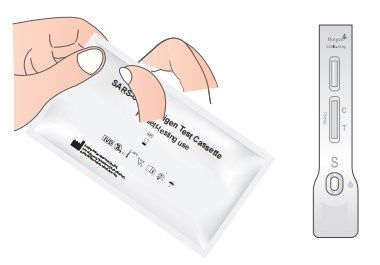
11. Open the foil pouch and place the test cassette on a flat
surface.
Note: Locate sample well on the test cassette. It is marked with the
letter S and an image of a drop.
12. Open the small cap at the front end of the sample tube, and
place exactly 4 drops into the sample well (S) of the test cassette.
Note: False negative or invalid results may occur if too little
sample is added. Do not touch or move the test cassette during this
time.
Page 7 of 1613. Start a timer and read the result at 15 minutes. Do not read test
before 15 minutes, even if the Control (C) line appears sooner. Do
not read after 30 minutes.
Note: A false negative or false positive result may occur if the test
result is read before 15 minutes or after 30 minutes.
14. Throw away all used test components in the trash.
Test Interpretation
Repeat testing is needed to improve test accuracy. Please follow Table 3 when interpreting test
results.
Table 3. Test interpretation table for serial (repeat) testing.
Status on first First Result Second Result Third Result Interpretation
day of Testing Day 1 Day 3 Day 5
Positive for
Positive N/A N/A
COVID-19
With Positive for
Negative Positive N/A
Symptoms COVID-19
Negative for
Negative Negative N/A
COVID-19
Positive for
Positive N/A N/A
COVID-19
Positive for
Negative Positive N/A
Without COVID-19
Symptoms Positive for
Negative Negative Positive
COVID-19
Negative for
Negative Negative Negative
COVID-19
Results should be considered in the context of an individual’s recent exposures, history, and the
presence of clinical signs and symptoms consistent with COVID-19.
Page 8 of 16COVID-19 Positive (+): if both the Control (C) line and the Test (T) line
are visible, the test is positive. Any faint visible red/purple test (T) line
with the control line (C) should be read as positive.
Note: Repeat testing does not need to be performed if patients have a
positive result at any time.
A positive test result means that the virus that causes COVID-19 was
detected in the sample, and it is very likely the individual has COVID-19
and is contagious. Please contact the patient’s doctor/primary care
physician (if applicable) and the local health authority immediately and
instruct your patient to adhere to the local guidelines regarding
self-isolation. There is a very small chance that this test can give a
positive result that is incorrect (a false positive).
Positive results do not rule out bacterial infection or co-infection with
other viruses. The agent detected may not be the definite cause of disease.
Individuals who test positive with the Hotgen™ COVID-19 Antigen Home
Test should self-isolate and seek follow up care with their physician or
healthcare provider as additional confirmatory testing with a molecular
test for positive results may also be necessary, if there is a low likelihood
of COVID-19, such as in individuals without known exposures to
COVID-19 or residing in communities with low prevalence of infection.
COVID-19 Negative (-): if the Control (C) line is visible, but the Test (T)
line is not visible, the test is negative.
Note: To increase the chance that the negative result for COVID-19 is
accurate, you should:
Test again in 48 hours if the individual has symptoms on the first
day of testing.
Test 2 more times at least 48 hours apart if the individual does not
have symptoms on the first day of testing.
A negative test result indicates that the virus that causes COVID-19 was
not detected in the sample. A negative result does not rule out COVID-19.
There is a higher chance of false negative results with antigen tests
compared to laboratory-based tests such as PCR tests. If the test is
negative but COVID-19-like symptoms, e.g., fever, cough, and/or
shortness of breath continue, follow up testing for SARS-CoV-2 with a
molecular test or testing for other respiratory disease should be
considered. If applicable, seek follow up care with the primary health care
provider.
All negative results should be treated as presumptive and confirmation
with a molecular assay may be necessary if there is a high likelihood of
SARS-CoV-2 infection, such as in an individual with a close contact with
Page 9 of 16COVID-19 or with suspected exposure to COVID-19 or in communities
with high prevalence of infection. Negative results do not rule out
SARS-CoV-2 infection and should not be used as the sole basis for
treatment or patient management decisions, including infection control
decisions.
Invalid: if the Control (C) line is not visible, the test is invalid. Re-test
with a new swab and new test device.
Limitations
• The performance of this test was established based on the evaluation of a limited number of
clinical specimens collected between February 2022 and June 2022. The clinical performance
has not been established in all circulating variants but is anticipated to be reflective of the
prevalent variants in circulation at the time and location of the clinical evaluation.
Performance at the time of testing may vary depending on the variants circulating, including
newly emerging strains of SARS-CoV-2 and their prevalence, which change over time.
• There is a higher chance of false negative results with antigen tests than with
laboratory-based molecular tests due to the sensitivity of the test technology. This means that
there is a higher chance this test will give a false negative result in an individual with
COVID-19 as compared to a molecular test, especially in samples with low viral load.
• All COVID-19 antigen test negative results are presumptive and confirmation with a
molecular assay may be necessary.
• If the patient continues to have symptoms of COVID-19, and both the patient’s first and
second tests are negative, the patient may not have COVID-19, however additional follow-up
may be needed.
• If the test is positive, then proteins from the virus that causes COVID-19 have been found in
the sample and the individual likely has COVID-19.
• This test is read visually and has not been validated for use by those with impaired vision or
color-impaired vision.
• Incorrect test results may occur if a specimen is incorrectly collected or handled.
• This test detects both viable (live) and nonviable SARS-CoV-2. Test performance depends on
the amount of virus (antigens) in the sample and may or may not correlate with viral culture
results performed on the same sample.
Page 10 of 16Performance characteristics
Analytical Sensitivity: Limit of Detection (LoD)
The LoD of the Hotgen™ COVID-19 Antigen Home Test was determined by serial dilutions of
the UV-inactivated SARS-CoV-2 virus (USA-WA1/2020). Contrived samples were prepared by
spiking the strain into pooled negative clinical matrix (NCM) collected from multiple healthy
volunteers confirmed COVID-19 negative by RT-PCR. The preliminary LoD initially determined
by testing six concentrations ranging from 1.15 x 10⁶ TCID50/mL to 2.88 x 10³ TCID50/mL was
tested in 20 replicates. For each replicate, 50 µL of sample was spiked onto the swab. When only
90% of those replicates were positive, the 2-fold higher concentration was tested in 20 replicates.
The confirmed LoD for the Hotgen™ COVID-19 Antigen Home Test was 1.15 x 10⁴ TCID50/mL.
Based upon the testing procedure for this study, the LoD of 1.15 x 10⁴ TCID50/mL equates to 575
TCID50/swab.
High-Dose Hook Effect
The Hotgen™ COVID-19 Antigen Home Test was tested with up to 1.15 x 10⁷ TCID50/mL of
UV-inactivated SARS-CoV-2 virus (USA-WA1/2020) and no hook effect was observed.
Exogenous/Endogenous Interference Substances
The Hotgen™ COVID-19 Antigen Home Test was evaluated for performance in the presence of
potentially interfering substances that may be found in a respiratory specimen. The positive (3x
LoD SARS-CoV-2) and negative specimens prepared in NCM were tested with the addition of
potentially interfering substances. The performance of Hotgen™ COVID-19 Antigen Home Test
was not affected by any of the potentially interfering substances listed in Table 4 at the
concentrations tested.
Table 4. List of potentially interfering substances tested.
Concentration Potentially Interfering Concentration
Potentially Interfering Substance
Tested Substance Tested
Human Whole Blood (EDTA tube) 4% v/v Tobramycin 4 μg/mL
Mucin (porcine stomach, type II) 0.5% w/v Mupirocin 10 mg/mL
Tamiflu (Oseltamivir
Chloraseptic (Menthol/Benzocaine) 1.5 mg/mL 5 mg/mL
Phosphate)
Naso GEL (NeilMed) 5% v/v Fluticasone Propionate 5% v/v
Body & Hand Lotion with
CVS Nasal Drops (Phenylephrine) 15% v/v 0.5% v/v
1.2% dimethicone
Daily Moisture Lotion
Afrin (Oxymetazoline) 15% v/v 5% v/v
(Walgreens)
CVS Nasal Spray (Cromolyn) 15% v/v Purell Hand Sanitizer 5% v/v
Hand sanitizer, 75%
Zicam 5% v/v 15% v/v
isopropanol, fast-drying
Homeopathic (Alkalol) 10% v/v Hand soap liquid gel 10% v/v
Sore Throat Phenol Spray 15% v/v Dial Complete 10% v/v
Page 11 of 16Analytical Specificity: Cross-Reactivity and Microbial Interference
Cross-reactivity and interference studies were performed for related pathogens, high prevalence
disease agents, and normal or pathogenic flora that are reasonably likely to be encountered in the
clinical specimen of the nasal cavity. Each organism or virus (11 bacteria, 16 viruses) was tested
in both the presence and absence of UV-inactivated SARS-CoV-2 (isolate USA-WA1/2020) at
3x LoD. All testing samples were prepared in the pooled negative clinical matrix (NCM). No
cross reactivity or interference was observed for any of the organisms in Table 5 at the
concentrations tested.
Table 5. List of potentially cross-reactive or interfering microorganisms tested.
Microorganism Concentration Microorganism Concentration
Adenovirus 1 3.09 x 10⁵ Parainfluenza virus 3 8.51 x 10⁵
TCID50/mL TCID50/mL
Enterovirus Type 68 Major Group 1.00 x 10⁵ Parainfluenza virus 4A 1.15 x 10⁵
TCID50/mL TCID50/mL
HCoV-229E 1.40 x 10⁵ Respiratory syncytial virus A 1.00 x 10⁵
TCID50/mL TCID50/mL
HCoV-OC43 1.00 x 10⁵ Rhinovirus Type 1A 1.00 x 10⁵
TCID50/mL TCID50/mL
HCoV-NL63 1.00 x 10⁵ Bordetella pertussis 1.96 x 10⁷
TCID50/mL CFU/mL
MERS-coronavirus 1.05 x 10⁵ Candida albicans 4.76 x 10⁶
TCID50/mL CFU/mL
SARS-coronavirus 1.00 x 10⁵ Chlamydia pneumoniae 1.70 x 10⁶
PFU/mL IFU/mL
Human metapneumovirus 16 1.26 x 10⁵ Haemophilus influenzae 6.97 x 10⁶
(hMPV-16) Type A1 TCID50/mL CFU/mL
Influenza A (H1N1) 1.00 x 10⁵ Legionella pneumophila 1.91 x 10⁷
TCID50/mL CFU/mL
Influenza A (H1N1pdm) 5.20 x 10⁵ Mycoplasma pneumoniae 2.70 x 10⁶
A/California/07/2009 CEID50/mL CCU/mL
Influenza A (H3N2) Texas/50/12 1.00 x 10⁵ Staphylococcus aureus 2.51 x 10⁶
TCID50/mL CFU/mL
Influenza B Colorado/6/17 1.00 x 10⁵ Staphylococcus epidermidis 6.07 x 10⁶
TCID50/mL CFU/mL
Influenza B Utah/9/14 3.80 x 10⁵ Streptococcus pneumoniae 1.34 x 10⁶
TCID50/mL CFU/mL
Influenza B Washington/02/19 1.00 x 10⁵ Streptococcus pyogenes 2.39 x 10⁶
TCID50/mL CFU/mL
Parainfluenza virus 1 1.26 x 10⁵ Pooled negative clinical matrix N/A
TCID50/mL (NCM)
Parainfluenza virus 2 1.00 x 10⁵
TCID50/mL
To estimate the likelihood of cross-reactivity of organisms that were not readily available for wet
testing with SARS-CoV-2, in silico analysis using the Protein-Protein Basic Local Alignment
Search Tool (Blastp) managed by the National Center for Biotechnology Information (NCBI)
was used.
Page 12 of 16• Human coronavirus HKU1: 45.99% homology was found between the amino acid
sequences of SARS-CoV-2 nucleocapsid protein and that of human coronavirus HKU1
nucleocapsid protein. Therefore, the cross-reactivity with human coronavirus HKU1
cannot be completely ruled out.
• Pneumocystis jirovecii: No significant similarity was found between P. jirovecii and amino
acid sequences of SARS-CoV-2 nucleocapsid protein.
• Mycobacterium tuberculosis: No significant similarity was found between M. tuberculosis
and amino acid sequences of SARS-CoV-2 nucleocapsid protein.
Clinical Evaluation
Based on the result of a clinical study conducted during February 2022 through June 2022 to
determine the performance of the Hotgen™ COVID-19 Antigen Home Test compared to a highly
sensitive RT-PCR assay authorized for emergency use by the FDA, the Hotgen™ COVID-19
Antigen Home Test correctly identified 81.7% positive specimens and 99.8% negative specimens.
A total of 500 individuals with signs and symptoms of COVID-19 within the first seven (7) days
of symptom onset who had a valid result on the Hotgen™ COVID-19 Antigen Home Test were
enrolled across 9 distinct locations in the US. The breakdown of enrollment, positivity rate as
determined by the RT-PCR, and the positive percent agreement (PPA) of the Hotgen™
COVID-19 Antigen Home Test by Days Post Symptom Onset (DPSO) is shown in Table 6.
Table 6. Hotgen™ COVID-19 Antigen Home Test performance by DPSO.
RT-PCR Positivity Hotgen
DPSO Subjects PPA
Positive Rate Positive
0 20 2 10.0% 1 50.0%
1 107 27 25.2% 20 74.1%
2 141 28 19.9% 25 89.3%
3 105 15 14.3% 13 86.7%
4 51 9 17.6% 7 77.8%
5 37 6 16.2% 4 66.7%
6 19 1 5.3% 1 100.0%
7 20 5 25.0% 5 100.0%
Total 500 93 18.6% 76 81.7%
Usability
The usability of the Hotgen™ COVID-19 Antigen Home Test and the ability of the labeling to
direct untrained users to perform self-testing was evaluated by observation in a dedicated
usability study. A total of 35 subjects were enrolled in the study; 20 subjects self-collected a
sample from themselves while 15 subjects collected a sample from a child. All subjects
completed the required procedural steps and interpreted the test unassisted in a simulated home
Page 13 of 16environment. The overall success of every task completed by all subjects enrolled was
determined by professional observation.
Subjects performed 94.6% (364/385) steps/tasks correctly. The 5% of tasks for which failures
were observed were all non-critical tasks. After the completion of the test, the subject (or
Parent/Legal Guardian) completed a questionnaire to assess usability of the test. The subjects
scored the test positively on 98.4% (482/490) possible measures on the subject questionnaire.
Importance of Serial (Repeat) Testing
A prospective clinical study was conducted between January 2021 and May 2022 as a component
of the Rapid Acceleration of Diagnostics (RADx) initiative from the National Institutes of Health
(NIH). A total of 7,361 individuals were enrolled via a decentralized clinical study design, with a
broad geographical representation of the United States. Per inclusion criteria, all individuals were
asymptomatic upon enrollment in the study and at least 14 days prior to it and did not have a
SARS-CoV-2 infection in the three months prior to enrollment. Participants were assigned to one
of three EUA authorized SARS-CoV-2 OTC rapid antigen tests to conduct serial testing (every
48 hours) for 15 days. If an antigen test was positive, the serial-antigen testing result is
considered positive.
At each rapid antigen testing time point, study subjects also collected a nasal swab for
comparator testing using a home collection kit (using a 15-minute normalization window
between swabs). SARS-CoV-2 infection status was determined by a composite comparator
method on the day of the first antigen test, using at least two highly sensitive EUA RT-PCRs. If
results of the first two molecular test were discordant a third highly sensitive EUA RT-PCR test
was performed, and the final test result was based upon the majority rule.
Study participants reported symptom status throughout the study using the MyDataHelps app.
Two-day serial antigen testing is defined as performing two antigen tests 36 - 48 hours apart.
Three-day serial antigen testing is defined as performing three antigen tests over five days with
at least 48 hours between each test.
Out of the 7,361 participants enrolled in the study, 5,609 were eligible for analysis. Among
eligible participants, 154 tested positive for SARS-CoV-2 infection based on RT-PCR, of which
97 (62%) were asymptomatic on the first day of their infection, whereas 57 (39%) reported
symptoms on the first day of infection. Pre-symptomatic subjects were included in the positive
percent agreement (PPA) of asymptomatic individuals, if they were asymptomatic on the first
day of antigen testing, regardless of whether they developed symptoms at any time after the first
day of testing.
Performance of all antigen tests with serial testing in individuals is described in Table 7.
Page 14 of 16Table 7. Data establishing PPA of COVID-19 antigen serial testing compared to the molecular
comparator single day testing throughout the course of infection with serial testing. Data is from
all antigen tests in study combined.
ASYMPTOMATIC SYMPTOMATIC
DAYS AFTER
ON FIRST DAY OF TESTING ON FIRST DAY OF TESTING
FIRST PCR
Ag Positive / PCR Positive
POSITIVE TEST
(Antigen Test Performance % PPA)
RESULT
1 Test 2 Tests 3 Tests 1 Test 2 Tests 3 Tests
9/97 35/89 44/78 34/57 47/51 44/47
0
(9.3%) (39.3%) (56.4%) (59.6%) (92.2%) (93.6%)
17/34 23/34 25/32 58/62 59/60 43/43
2
(50.0%) (67.6%) (78.1%) (93.5%) (98.3%) (100%)
16/21 15/20 13/15 55/58 53/54 39/40
4
(76.2%) (75.0%) (86.7%) (94.8%) (98.1%) (97.5%)
20/28 21/27 16/18 27/34 26/33 22/27
6
(71.4%) (77.8%) (88.9%) (79.4%) (78.8%) (81.5%)
13/23 13/22 4/11 12/17 12/17 7/11
8
(56.5%) (59.1%) (36.4%) (70.6%) (70.6%) (63.6%)
5/9 5/8 4/9 3/7
10 - -
(55.6%) (62.5%) (44.4%) (42.9%)
1 Test = one (1) test performed on the noted days after first PCR positive test result. Day 0 is
the first day of documented infection with SARS-CoV-2.
2 Tests = two (2) tests performed an average of 48 hours apart. The first test performed on the
indicated day and the second test performed 48 hours later.
3 Tests = three (3) tests performance an average of 48 hours apart. The first test performed on
the indicated day, the second test performed 48 hours later, and a final test performed 48 hours
after the second test.
Page 15 of 16Technical Support
For questions, or to report a problem, please call Technical Support at 1-800-966-2919
(Available Hours: Mon. to Fri., 9 a.m. – 5 p.m. PST) or cs@hotgen.info.
Test system problems may also be reported to the FDA using the MedWatch reporting system:
(phone: 1-800-FDA-1088; fax: 1-800-FDA-1078) or http://www.fda.gov/medwatch.
Ordering and Contact Information
Beijing Hotgen Biotech Co., Ltd.
9th Building, No. 9 Tianfu Street, Biomedical Base,
Daxing District, Beijing, 102600, P.R. China.
Phone: 1-800-966-2919
Email: cs@hotgen.info
www.hotgen.info
Description of Symbols
Consult instructions
Use-by date Batch code
for use
Contents sufficient
Temperature limit Catalogue number
for tests
Date of
Warnings Do not re-use
manufacture
Keep away from
Manufacturer Keep dry
sunlight
Do not use if the
In vitro diagnostic
packaging is Over the counter
medical device
damaged
Page 16 of 16You can also read


