House, LEVIN (List No. 4079, Category 2)
←
→
Page content transcription
If your browser does not render page correctly, please read the page content below
New Zealand Heritage List/Rārangi Kōrero - Review Report for a Historic Place
House, LEVIN (List No. 4079, Category 2)

        House (List No. 4079)
        (Kerryn Pollock, HNZPT, 14 February 2019)

        Kerryn Pollock
        DRAFT: Last amended 9 April 2019
        Heritage New Zealand Pouhere Taonga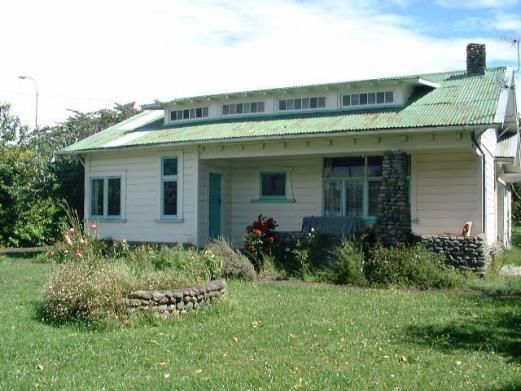
TABLE OF CONTENTS

PURPOSE OF REVIEW                                                                                                 3

EXECUTIVE SUMMARY                                                                                                 4

1.       IDENTIFICATION                                                                                           4
1.1.     Name of Place                                                                                             4
1.2.     Location Information                                                                                      4
1.3.     Legal Description                                                                                         5
1.4.     Eligibility                                                                                               5
1.5.     Existing Heritage Recognition                                                                             5

2.       SUPPORTING INFORMATION                                                                                   5
2.1.     Historical Information                                                                                    5
2.2.     Physical Information                                                                                     10
2.3.     Chattels                                                                                                 12
2.4.     Sources                                                                                                  12

3.       SIGNIFICANCE ASSESSMENT                                                                                  13
3.1.     Section 66 (1) Assessment                                                                                13

4.       APPENDICES                                                                                               15
4.1.     Appendix 1: Visual Identification Aids                                                                   15
4.2.     Appendix 2: Visual Aids to Historical Information                                                        21
4.3.     Appendix 3: Visual Aids to Physical Information                                                          23
4.4.     Appendix 4: Significance Assessment Information                                                          26

Disclaimer

Please note that entry on the New Zealand Heritage List/Rārangi Kōrero identifies only the heritage values of
the property concerned, and should not be construed as advice on the state of the property, or as a comment
of its soundness or safety, including in regard to earthquake risk, safety in the event of fire, or insanitary
conditions.
Archaeological sites are protected by the Heritage New Zealand Pouhere Taonga Act 2014, regardless of
whether they are entered on the New Zealand Heritage List/Rārangi Kōrero or not. Archaeological sites include
‘places associated with pre-1900 human activity, where there may be evidence relating to the history of New
Zealand’. This List entry report should not be read as a statement on whether or not the archaeological
provisions of the Act apply to the property (s) concerned. Please contact your local Heritage New Zealand office
for archaeological advice.

             Heritage New Zealand Pouhere Taonga – List Entry Review Report for a Historic Place, List No. 4079        2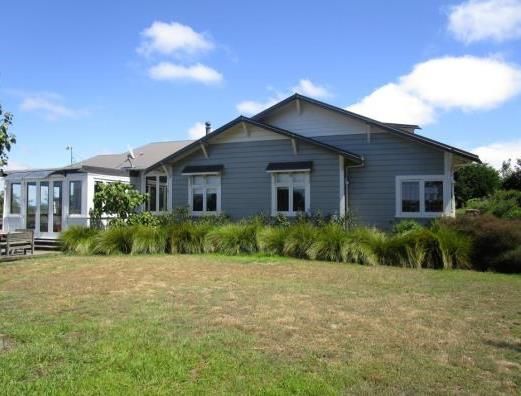
PURPOSE OF REVIEW

The purpose of the review is to assess whether House (List No. 4079) has sufficient heritage
significance to support its retention on the New Zealand Heritage List/Rārangi Korero (the
‘List’) at its relocated site.

The review has concluded that this place no longer has sufficient heritage significance and
should be removed from the List.

 Heritage New Zealand Pouhere Taonga – List Entry Review Report for a Historic Place, List No. 4079   3
EXECUTIVE SUMMARY

            House (List No. 4079) was built on Bath Street, one of Levin’s early suburban streets, in 1922
            by prominent local builder and one-time borough councillor George Kenmer Douglas. The
            Douglas family lived in the house until the early 1930s. It was subsequently occupied by
            William and Agnes Davie, who had moved to Levin after purchasing a main street drapery
            shop. This ushered in over sixty years of Davie family ownership, which came to an end in
            2005, when the Bath Street land was subdivided for redevelopment. The house was soon
            after relocated to Koputāroa, a rural area north of Levin. As a common form of house from
            this period, its heritage significance relied strong on the house being situated in its original
            town location and context. Though the house has some local heritage interest as an example
            of a prolific early builder’s work, it is considered that it no longer has sufficient heritage
            significance to remain on the New Zealand Heritage List/Rārangi Kōrero and should therefore
            be removed.

1.         IDENTIFICATION1
1.1.       Name of Place

            Name:
            House

            Other Names:
            n/a

1.2.       Location Information

            Address
            969 Koputaroa Road
            LEVIN

            Additional Location Information
            The house was formerly located at 41 Bath Street, Levin.

            Local Authority
            Horowhenua District Council

1
    This section is supplemented by visual aids in Appendix 1 of the report.

              Heritage New Zealand Pouhere Taonga – List Entry Review Report for a Historic Place, List No. 4079   4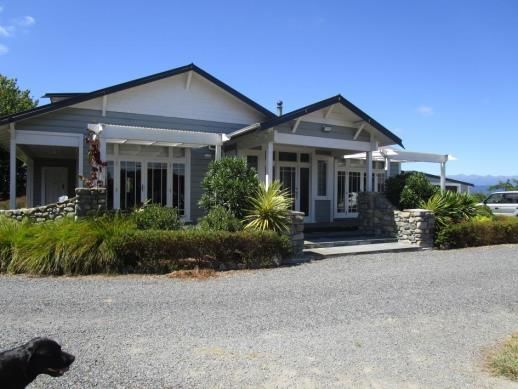
1.3.        Legal Description

             Lot 4 DP 350389 (RT 206088), Wellington Land District

1.4.        Eligibility

             There is sufficient information included in this report to identify this place. This place is
             physically eligible for consideration as a historic place. It consists of a building fixed to land
             which lies within the territorial limits of New Zealand.

1.5.        Existing Heritage Recognition

             Local Authority and Regional Authority Plan Scheduling
             Horowhenua District Plan, Operative (last updated 1 November 2018) Schedule 2 Historic
             Heritage - Buildings, Structures & Sites, Ref. H56.

2.          SUPPORTING INFORMATION
2.1.        Historical Information

             Tangata whenua
             The town of Levin in the Horowhenua district lies between the Manawatū River to the north
             and the Ōhau River to the south. The principal iwi of the area is Muaūpoko, a tribe
             descended from the tipuna Tara, who is commemorated in many place names around
             Wellington, including Te Whanganui-a-Tara (Wellington Harbour).2 The iwi’s traditional rohe
             extended from the Rangitīkei River in the north, Te Rimurapa (Sinclair Head) in the south, the
             Tararua Ranges in the east and the Tasman Sea to the west, but was concentrated on the
             Horowhenua area following the migration of Ngāti Toa and Ngāti Raukawa from the Waikato
             region in the 1820s.3

2
    Darren Reid, 'Muaūpoko - Early history', Te Ara - the Encyclopedia of New Zealand,
     http://www.TeAra.govt.nz/en/muaupoko/page-1 (accessed 3 January 2019).
3
    Ibid; Malcolm McKinnon, 'Manawatū and Horowhenua region - Māori and European newcomers, 1820–1870', Te Ara - the
      Encyclopedia of New Zealand, http://www.TeAra.govt.nz/en/manawatu-and-horowhenua-region/page-5 (accessed 3
      January 2019).

              Heritage New Zealand Pouhere Taonga – List Entry Review Report for a Historic Place, List No. 4079       5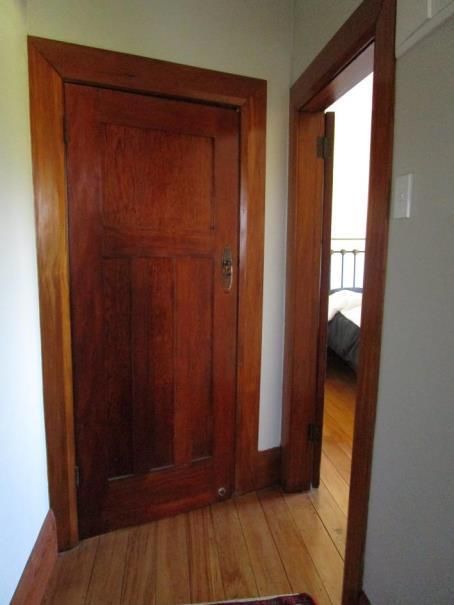
Foundation of Levin
              Horowhenua was one of the last places in the wider region opened to Pākehā settlement and
              Levin originated as a stop on the Wellington–Manawatū Railway, which opened in 1886.4 Two
              years earlier the Muaūpoko rangatira Te Keepa Te Rangihiwinui had gifted the privately-
              owned Wellington and Manawatu Railway Company a 76-acre belt of land between what
              would become Oxford (State Highway One) and Cambridge streets.5 In 1887 he sold 4,000
              acres around the railway to the government to meet legal debts but also to facilitate the
              foundation of a new town.6 Te Keepa wanted a bicultural town called Taitoko, with a central
              marketplace where Māori and Pākehā could not only sell produce but gather as a community,
              as on marae, and with every tenth section reserved for Māori whānau.7 His wishes were
              ignored and a grid pattern town called Levin (after railway company director William Hort
              Levin) was instead established, with its town, suburban and rural sections sold at auction.

              The quarter-acre town sections proved to be slow sellers, requiring the transformation of a
              heavily-forested hinterland into farms to become desirable purchases.8 Supported by timber
              and flax milling and dairy farming, Levin gradually grew to urban borough status in 1906.9 Its
              population had increased from 637 in 1901 to 1265 in 1906, a near doubling of residents in
              five years. By then Oxford Street was lined with shops and businesses and ‘peppered with
              heaps of horse dung – proud evidence of how busy traffic was’.10 Trains passed through the
              town eight times a day, four each way, directly connecting Levin with larger centres like
              Palmerston North and Wellington.

              41 Bath Street11
              Bath Street, which intersects with Oxford Street and the railway at the south end of the
              shopping strip, was laid out in 1907.12 It forms the southern boundary of early Levin’s ‘central
              core’ and is predominately residential on the east side and mostly commercial on the west,

4
    Malcolm McKinnon, 'Manawatū and Horowhenua places - Horowhenua', Te Ara - the Encyclopedia of New Zealand,
     http://www.TeAra.govt.nz/en/manawatu-and-horowhenua-places/page-9 (accessed 6 December 2018).
5
    Anthony Dreaver, Levin: The making of a town. Levin: Horowhenua District Council, 2006, pp.20-21. The railway land was
     subdivided and sold in 1899 and 1903 (Dreaver, p.46).
6                                                                 st
    ‘Return of native land purchases in the North Island since 1 April 1884’, Appendix to the journals of the House of
      Representatives 1888 G-2 p.2; Dreaver, p.21.
7
    Dreaver, 2006, p.22. Te Keepa was also known as Taitoko.
8
    Ibid., p.28.
9
    Ibid., p.59.
10
     Ibid., p.83.
11
     Note that 41 Bath Street is the contemporary street number.
12
     Dreaver, 2006, p.98-99.

                   Heritage New Zealand Pouhere Taonga – List Entry Review Report for a Historic Place, List No. 4079        6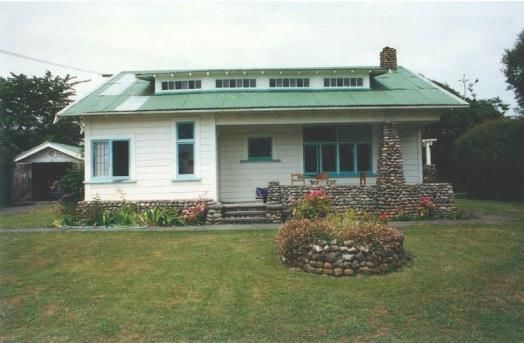
with houses occupying the western-most block opposite Levin Domain. Prolific local builder
             and one-term borough councillor George Kenmer Douglas (1869-1941) constructed most of
             the houses in Bath Street’s west end, including House (List No. 4079) at number 41 and the
             villa at number 51 (List No. 4080).13 Locally-sourced timber was processed at Douglas’ factory
             on Oxford Street and he prepared the building plans.14 Douglas built over 300 houses in
             Horowhenua and surrounding districts and was also responsible for constructing local
             infrastructure, including the first road bridge over the Ōtaki River.15 Almost all of Douglas’
             Bath Street houses have been demolished or removed to make way for new houses or
             commercial buildings.16

             Built in 1922, 41 Bath Street was the home of Douglas and his wife Hellen.17 By then, Levin
             had developed into a ‘mature rural market town… and empty sections were filling up’.18 The
             west end of Bath Street was a combination of villas and bungalows, thus representing two
             major New Zealand housing styles.19 The Douglas’ had previously lived in a spacious villa in
             Weraroa Road (List No. 4087), built by George in 1908 as a wedding present for Hellen.20
             There they raised four children. The Weraroa Road house was sold in 1919; a year previously

13
     A proud family tradition’, Horowhenua Weekly News, 2 July 2003, p.3
      http://horowhenua.kete.net.nz/documents/0000/0000/2637/Scrapbook_5_020.pdf (accessed 12 October 2018);
      Dreaver, 2006, p.369.
14
     Cyclopedia of New Zealand (Taranaki, Hawke’s Bay and Wellington Provincial Districts). Christchurch: The Cyclopedia
      Company Limited, 1908, p.708; ‘G.K.Douglas, Ltd., builder and contractor’, Evening Post, 13 January 1911, p.10.
15
     ‘A proud family tradition’; Dreaver, 2006, p.97.
16
     This conclusion has been arrived at by comparing the current housing stock (available for viewing on Google Maps and
      viewed by Kerryn Pollock and Laura Kellaway on 14 February 2019) with historic aerial photographs of Bath Street, such
      as ‘Courtesy Domain, Levin, Manawatu-Whanganui, includes housing’, 1956, Alexander Turnbull Library, WA-41072-F
      https://natlib.govt.nz/records/30114772 and ‘View south to the town of Levin surrounded by farmland and Weraroa
      Road in the foreground with Courtesy Domain and Horowhenua College, Manawatu-Whanganui Region’, 1947, Alexander
      Turnbull Library, WA-07207-F https://natlib.govt.nz/records/30661284. List No.4080 remains on-site.
17
     Evening Post, ‘Obituary: Mr G.K. Douglas’, 4 September 1941, p.11; ‘A proud family tradition’; RT 292/194, Wellington
      Land District; Val Burr, ‘A Historical Survey of the Houses, Buildings and Sites in the Horowhenua District Which Are
      Presently Registered with New Zealand Historic Places Trust,’ October 1995-February 1996, 41 Bath St Levin extract, p.14
      (copy on Heritage New Zealand Pouhere Taonga Central Region file 12013-757). Burr speculates that it was the Douglas
      family home due to the couple owning only the building firm’s factory at Oxford Street and two empty residential lots on
      Chamberlain Street in addition to the Bath Street property in this period. This is bolstered by electoral records, which she
      does not appear to have consulted. Both Hellen and George Douglas are listed as living in Bath Street in the 1922, 1925,
      1928, and 1931 electoral rolls (Manawatu general roll). In the 1935 electoral roll they are listed at The Avenue, Levin.
18
     Dreaver, 2006, p.167.
19
     The housing styles are clearly visible in the photograph ‘View south with Oxford Road in left foreground through the town
      of Levin and Courtesy Domain on Bath Street, Manawatu-Whanganui Region’, 1947, Alexander Turnbull Library, WA-
      07207-F https://natlib.govt.nz/records/22377573.
20
     Val Burr, ‘A Historical Survey of the Houses, Buildings and Sites in the Horowhenua District Which Are Presently Registered
      with New Zealand Historic Places Trust,’ October 1995-February 1996, 66-68 Weraroa Road extract, p.48. (copy on
      Heritage new Zealand Pouhere Taonga Central Region file 12013-579); http://www.heritage.org.nz/the-list/details/4087
      (accessed 4 January 2019). This house was relocated to 69 Taylors Road in Ōtaki in 2005.

               Heritage New Zealand Pouhere Taonga – List Entry Review Report for a Historic Place, List No. 4079                    7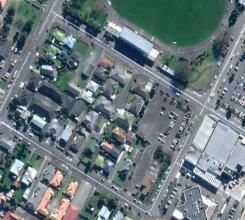
Douglas’ building firm had been placed in liquidation and the firm’s Oxford Street factory was
             advertised for sale in 1920.21 Despite these changes Douglas continued to work as a builder,
             constructing for instance Lodge Horowhenua’s masonic temple in 1923.22

             The Bath Street house was a Californian bungalow more modest in scale and appearance
             than the Weraroa Road villa, yet it had some distinctive features on the front elevation, such
             as a clerestory window with stained glass panes under a flat dormer roof, and leadlight
             stained glass windows with rural scenes in the front porch.23 Most strikingly, the porch,
             chimney, front elevation foundation wall and side entrance porch posts were clad with river
             stones, a material also used on a pergola at the driveway entrance and in garden decoration.
             This may have been a favoured decoration method as the Douglas’ subsequent house at 26
             The Avenue in Levin had similar river stone cladding.24

             41 Bath Street was sold to local salesman Henry Harvey in 1927 but the Douglas’ appear to
             have lived there until the early 1930s.25 The house was then rented to William and Agnes
             Davie, who had moved to Levin from Pahiatua in 1924 to take over an Oxford Street drapery
             shop.26 William Davie specialised in womenswear and accessories and opened his business in
             November 1924 with a clearance sale of the menswear that came with the shop.27

             The couple bought the house from Henry Harvey’s estate in 1943, ushering in over 60 years
             of Davie family ownership.28 They were closely involved with St Andrew’s Presbyterian
             Church in Levin and William Davie was a church elder. 29 He was a foundation member of the
             Levin Rotary Club and served on the committees of the Levin and District Beautifying Society,
             the Horowhenua A & P Association and the local branch of the Crippled Children’s Society.

21
     RT 174/58, Wellington Land District; Horowhenua Chronicle, 26 October 1918, p.3; G.K. Douglas to Registrar of Companies,
      23 October 2018, CO-WW3445 131 1909/9, Archives New Zealand; Horowhenua Chronicle, 18 May 1920, p.4.
22
     ‘Opening of new masonic temple’, Horowhenua Chronicle, 29 June 1923, p.2. The site of the lodge, which is no longer
      extant, is now occupied by The Warehouse (Dreaver, 2006, between pp.182-83).
23
     Burr, 1995-96, p.6.
24
     Burr, 1995-96, 66-68 Weraroa Road extract, p.48. Note that Burr gives the subsequent house as 25 The Avenue; however
      it is the house next door at number 26 (Pt Lot 1 DP 9495, Wellington Land District) that has a river stone wall and
      cladding. A title for this property (RT WN409/21) was issued to Helen (sic) Brodie Douglas in 1929.
25
     RT 292/194, Wellington Land District. They are listed at Bath Street in the 1931 electoral roll (Manawatu general role) and
      The Avenue in the 1935 electoral roll.
26
     Burr, 1995-1996, p.13; ‘New draper opens in Levin’, Horowhenua Chronicle, 15 November 1924, p.2.
27
     ‘New draper opens in Levin’.
28
     RT 292/194, Wellington Land District.
29
     Burr, 1995-96, p.12.

               Heritage New Zealand Pouhere Taonga – List Entry Review Report for a Historic Place, List No. 4079                  8
On his death in 1947 aged 56, he was lauded for his active role in community affairs. He also
left an estate worth a considerable £19,700 pounds ($1.6 million in 2018 terms).30
Agnes Davie remained in the house until her death in 1964.31 She left it to her son Campbell
Davie, who had kept up the family drapery business after his father’s death.32 Campbell Davie
was an accomplished pianist, serving as the St Andrew’s church organist from age 12.33 He
was the Levin Operatic Society pianist and played in dance bands, gaining a reputation as a
fine jazz musician. Campbell Davie did not live in the house and converted it into two flats in
ca.1966 to 1967.34
Relocation
The place remained a two-flat rental property for the duration of the Davie family’s
ownership, which came to an end in 2005 when the section was sub-divided by a family
member for intensive residential development and the house soon after relocated to rural
Koputāroa, eight kilometres north of Levin.35 Now occupied by three contemporary houses,
there is no remnant of the original house or garden structures built by Douglas left at 41 Bath
Street.
Associated List Entries
House, Ōtaki (List No. 4087)
House, Levin (List No. 4080)
30
Probate of William Davie, AAOM w3265 6031 Box 14 1317/47, Archives New Zealand. The Reserve Bank Inflation
Calculator was used to arrive at the contemporary value of the estate. 2019 was not an available comparison at the time
of writing.
31
Burr, 1995-96, p.14; Probate of Agnes Edith Davie, AAOY w3298 21078 Box 529 0328a/64, Archives New Zealand.
32
Probate of Agnes Edith Davie; ‘Levin jazzman played best by ear’, Horowhenua Chronicle, 3 March 2010, p.2. Daughter
Jean Davie predeceased Agnes Davie in 1959.
33
‘Levin jazzman played best by ear’.
34
Burr,1995-96, pp.13-14.
35
RT 292/194, Wellington Land District; Grant Irving, Horowhenua District Council, to Adam Jamieson, 17 November 2005
(resource consent). It is not clear whether the house was relocated in 2005 or 2006. The first and only Horowhenua
Regional Council inspection, of the site and foundations, occurred on 7 December 2005. Candy Black, Horowhenua
District Council, to Kerryn Pollock, Heritage New Zealand Pouhere Taonga, 8 January 2019. Copies on Heritage New
Zealand Pouhere Taonga Central Region file 12013-757.
Heritage New Zealand Pouhere Taonga – List Entry Review Report for a Historic Place, List No. 4079 92.2. Physical Information
Current Description
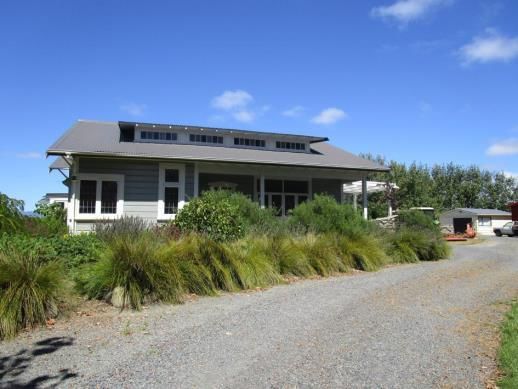
House (List No. 4079) is located at Koputāroa, a rural area eight kilometres north of Levin.36 It
is at the end of a long driveway off the main road (Koputāroa Road) and has no immediate
neighbours. The building is concealed by trees at the north side of the section and has an
extensive view east over flat farmland to the Tararua Ranges. There are sheds on the western
boundary.
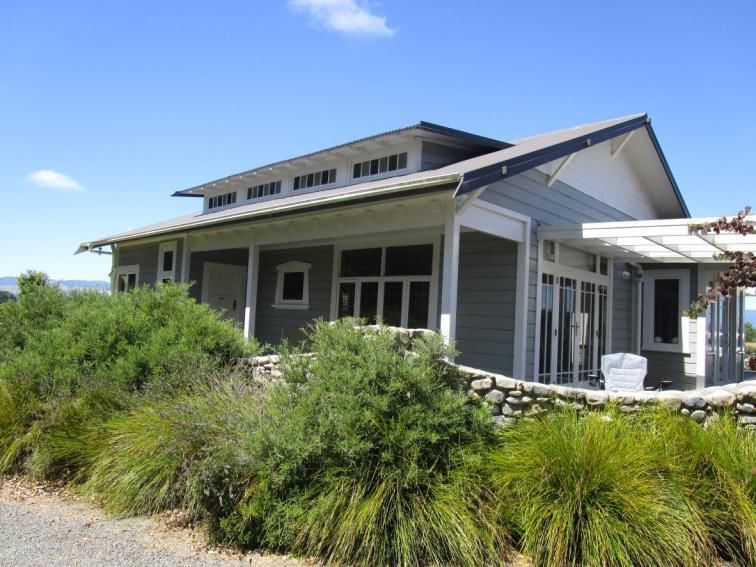
The house was returned post-relocation to a single dwelling. It is comprised of two
bedrooms, a separate living room (currently used as a bedroom), an office, a large open-plan
lounge and kitchen and a separate bathroom and separate laundry. A kitchen extension has
been added to the east elevation and a portico with a new front door and two sets of French
doors added to the west elevation. The original river stone cladding on the main elevation
has not been reinstated and neither has the stone-clad chimney. This constitutes a major
aesthetic change to the House, though the current owner has nodded to this feature by
creating a low river stone wall on the north-west and south-west corners.
The clerestory and front porch on the north elevation are largely unaltered, though the
stained glass upper leadlight windows originally in the porch were removed when the house
was relocated. Windows on the north and east elevations (aside from the kitchen extension)
are original, as is the door on the north elevation.
Internally, the original redwood doors, timber floors, architraves and skirting have been
retained and new joinery is sympathetic in style and materials. The original cast iron bath has
been preserved. The house has been carefully restored with largely harmonious additions.
Comparisons
As of 2019, there were nine houses in Levin entered on the New Zealand Heritage
List/Rārangi Kōrero.37 These houses all possess representative architectural significance for
their design styles and historic significance as examples of country town development in
36
This description is based on a site visit made on 14 February 2019. See Heritage New Zealand Pouhere Taonga Central
Region file 12013-757 for the site visit notes.
37
They are 4080, 4081, 4082, 4083, 4084, 4086, 4088, 4089 and 4090. This list has been sourced from Pātaka. House (List
No. 4087) was moved from 66-68 Weraroa Road Levin to 69 Taylors Road Ōtaki in ca.2005. This appears to be the only
relocated Levin place on the List in addition to House (List No. 4079).
Heritage New Zealand Pouhere Taonga – List Entry Review Report for a Historic Place, List No. 4079 10different periods. House (List No. 4079) forms part of the range of house designs and had
similar heritage values when located on its original Levin site.
Research has not uncovered any evidence that elevates this place beyond representative
significance. The Davie family are likely to have been the subject of general community
recognition through the main street drapery shop, but there is no indication that they were a
family of particular prominence.38 It is noteworthy that while the Davies owned the place for
over 60 years, it was a family member who subdivided the Bath Street section and sold the
house for removal.39 Furthermore, House (List No. 4088), built for another Levin draper,
remains on its original site and retains a good level of architectural integrity, making it a
potentially stronger example of a middle class dwelling in the town, though it is a villa rather
than a bungalow and grander in scale and execution.40
The association of the place with George Kenmer Douglas, one of early twentieth century
Levin’s most prolific builders, affords it local historic significance as a surviving example of his
work, which is further bolstered by its early history as the second Douglas family home.
However, Douglas’ work in Levin is also represented by House (List No. 4080) which remains
on its original site. House (List No. 4087) was the first Douglas family home and has been
publically recognised as such. However, it too has suffered a loss of context through its
relocation to Kāpiti.
Any representative historic significance House (List No. 4079) had as an example of country
town development in the 1920s relies heavily upon the context of its original site, one of
Levin’s early suburban streets. Its current location in rural Koputāroa, eight kilometres north-
east of Levin, down a long driveway off the main road and with no immediate neighbours, is
not a setting compatible with these heritage values.41
38
The family is not mentioned in Dreaver (2006) or on Kete Horowhenua.
39
Robert McLean, New Zealand Historic Places Trust, to Malcolm Davie, 25 November 2004, copy on Heritage New Zealand
Pouhere Taonga Central Region file 12013-757; RT WN292/194, Wellington Land District.
40
This house was visited by Kerryn Pollock and Laura Kellaway on 14 February 2019. See Heritage New Zealand Pouhere
Taonga Central Region file 12013-1023 for the site visit report.
41
See ICOMOS New Zealand Charter for the Conservation of Places of Cultural Heritage Value, 2010, p.4.
Heritage New Zealand Pouhere Taonga – List Entry Review Report for a Historic Place, List No. 4079 1141 Bath Road Levin site 969 Koputāroa Road site
(Sources: Google Earth)
Construction Professionals
George Kenmer Douglas (builder)
Construction Materials
Timber
Key Physical Dates
1922 Original construction
ca.2005-06 Relocation
ca.2008- Returned to a single dwelling, kitchen extension and French doors added,
stone wall constructed
Uses
Accommodation [House]
2.3. Chattels
There are no chattels included in this List entry.
2.4. Sources
Sources Available and Accessed
The main secondary sources used in this report are Anthony Dreaver’s 2006 history of Levin
and Val Burr’s 1995-96 survey of Horowhenua buildings listed by the then-Historic Places
Trust. Dreaver’s history, in conjunction with information on Horowhenua and Levin in Te Ara,
the Encyclopedia of New Zealand, provided sufficient background information to place the
Heritage New Zealand Pouhere Taonga – List Entry Review Report for a Historic Place, List No. 4079 12house within a regional development context. Burr’s research on the place, based on local
government archives and newspaper research and an interview with a Davie family member,
was a very useful source of information pertaining directly to the house, its owners and
occupants. Newspaper stories on George Kenmer Douglas transcribed and digitised on the
local history website Kete Horowhenua were invaluable. Historic newspaper articles available
from PapersPast, electoral rolls, probates and records of title formed vital primary sources.
Further Reading
Dreaver, Anthony, Levin: The making of a town. Levin: Horowhenua District Council, 2006.
3. SIGNIFICANCE ASSESSMENT42
3.1. Section 66 (1) Assessment
This place has been assessed for, and found to possess architectural and historical
significance or value. It is considered that this place does not qualify as part of New Zealand’s
historic and cultural heritage.
Architectural Significance or Value
This place had modest architectural significance in its original location as a characteristic
example of a Californian bungalow built in a country town. Its clerestory window, stained
glass upper leadlight windows, external river stone cladding and chimney and internal
redwood doors were noteworthy architectural features. While the clerestory window and
internal doors have been retained and restored, the stained glass upper leadlight windows
and original river stone cladding and chimney are absent, which constitutes a reduction in
architectural value. The most recent additions are sympathetic in design but do not add
heritage value.
Historical Significance or Value
Associated with prolific early twentieth century Levin builder George Kenmer Douglas and
local main street business owners the Davie family for over 60 years, and formerly located on
one of the town’s early suburban streets, this place had historical significance as a
representative of country town development in the 1920s and the role played by builders in
the physical expression of their growth. Research into its history has not uncovered any
42
For the relevant sections of the Heritage New Zealand Pouhere Taonga Act 2014, see Appendix 4: Significance Assessment
Information.
Heritage New Zealand Pouhere Taonga – List Entry Review Report for a Historic Place, List No. 4079 13distinctive associations that elevate the house beyond representative value. Its relocation to a rural area with no immediate neighbours constitutes the loss of historic and townscape context that is not compensated for by values that exceed the illustrative. It is not considered that this place in its relocated position has historical significance that contributes towards an understanding of Levin or New Zealand history. Conclusion of Review House (List No. 4079) has been returned to a single dwelling through sympathetic restoration and retains some local historic interest as an example of a prolific Levin builder’s work. However, this assessment concludes that, in light of its relocation, the house’s representative architectural value as a characteristic Californian bungalow, and its similarly illustrative historic values are not sufficient to warrant retention on the New Zealand Heritage List/Rārangi Kōrero. Its heritage values rested heavily upon it being an example of George Kenmer Douglas’ early twentieth century Levin houses in situ, and were therefore inextricably linked to its original site on one of the town’s early suburban streets. Its current rural location constitutes a clear disassociation from this place. For these reasons it is recommended that the entry for House (List No. 4079) be removed from the New Zealand Heritage List/Rārangi Kōrero. Heritage New Zealand Pouhere Taonga – List Entry Review Report for a Historic Place, List No. 4079 14
4.     APPENDICES
4.1.   Appendix 1: Visual Identification Aids

       Location Maps

                       Levin

        Heritage New Zealand Pouhere Taonga – List Entry Review Report for a Historic Place, List No. 4079   15
Map showing Levin and Koputāroa
(source: Google Maps)
Heritage New Zealand Pouhere Taonga – List Entry Review Report for a Historic Place, List No. 4079 16Map showing the previous site of House, List No. 4079 in Bath Street, Levin
(source: QuickMap)
Heritage New Zealand Pouhere Taonga – List Entry Review Report for a Historic Place, List No. 4079 17Map showing the land parcel and current location of House, List No. 4079
(Source: QuickMap and Google Earth)
Heritage New Zealand Pouhere Taonga – List Entry Review Report for a Historic Place, List No. 4079 18Current Identifier
Heritage New Zealand Pouhere Taonga – List Entry Review Report for a Historic Place, List No. 4079 19Heritage New Zealand Pouhere Taonga – List Entry Review Report for a Historic Place, List No. 4079 20
4.2.   Appendix 2: Visual Aids to Historical Information

       Historical Photographs

       Figure 1: House (List No. 4079) in 1947.
       (Alexander Turnbull Library, WA-07208-F (cropped) https://natlib.govt.nz/records/22377573)

       Figure 2: House (List No. 4079) in 1996
       (Val Burr, HNZPT, 1996)

        Heritage New Zealand Pouhere Taonga – List Entry Review Report for a Historic Place, List No. 4079   21
Figure 3: House (List No. 4079) in 2004 (Robert McLean, HNZPT, 2004) Heritage New Zealand Pouhere Taonga – List Entry Review Report for a Historic Place, List No. 4079 22
4.3.   Appendix 3: Visual Aids to Physical Information
       Current Photographs of Place

       Figure 4: House (List No. 4079), north elevation, 2019
       (Kerryn Pollock, HNZPT, 2019)

       Figure 5: House (List No. 4079), east elevation, 2019. The kitchen extension is at left.
       (Kerryn Pollock, HNZPT, 2019)

        Heritage New Zealand Pouhere Taonga – List Entry Review Report for a Historic Place, List No. 4079   23
Figure 6: House (List No. 4079), west elevation, 2019. The new entrance door and portico are in the centre and two sets of French doors are either side of the entrance. (Kerryn Pollock, HNZPT, 2019) Heritage New Zealand Pouhere Taonga – List Entry Review Report for a Historic Place, List No. 4079 24
Figure 7: House (List No. 4079) interior showing original doors and floorboards.
(Kerryn Pollock, HNZPT, 2019)

 Heritage New Zealand Pouhere Taonga – List Entry Review Report for a Historic Place, List No. 4079   25
4.4.   Appendix 4: Significance Assessment Information

       Part 4 of the Heritage New Zealand Pouhere Taonga Act 2014

       Chattels or object or class of chattels or objects (Section 65(6))
       Under Section 65(6) of the Heritage New Zealand Pouhere Taonga Act 2014, an entry on the
       New Zealand Heritage List/Rārangi Kōrero relating to a historic place may include any chattel
       or object or class of chattels or objects –
           a) Situated in or on that place; and
           b) Considered by Heritage New Zealand Pouhere Taonga to contribute to the
                significance of that place; and
           c) Proposed by Heritage New Zealand Pouhere Taonga for inclusion on the New Zealand
                Heritage List/Rārangi Kōrero.

       Significance or value (Section 66(1))
       Under Section 66(1) of the Heritage New Zealand Pouhere Taonga Act 2014, Heritage New
       Zealand Pouhere Taonga may enter any historic place or historic area on the New Zealand
       Heritage List/Rārangi Kōrero if the place possesses aesthetic, archaeological, architectural,
       cultural, historical, scientific, social, spiritual, technological, or traditional significance or
       value.

       Category of historic place (Section 66(3))
       Under Section 66(3) of the Heritage New Zealand Pouhere Taonga Act 2014, Heritage New
       Zealand Pouhere Taonga may assign Category 1 status or Category 2 status to any historic
       place, having regard to any of the following criteria:
           a) The extent to which the place reflects important or representative aspects of New
                Zealand history
           b) The association of the place with events, persons, or ideas of importance in New
                Zealand history
           c) The potential of the place to provide knowledge of New Zealand history
           d) The importance of the place to tangata whenua
           e) The community association with, or public esteem for, the place
           f)   The potential of the place for public education
           g) The technical accomplishment, value, or design of the place
           h) The symbolic or commemorative value of the place

        Heritage New Zealand Pouhere Taonga – List Entry Review Report for a Historic Place, List No. 4079   26
i) The importance of identifying historic places known to date from an early period of
New Zealand settlement
j) The importance of identifying rare types of historic places
k) The extent to which the place forms part of a wider historical and cultural area
Additional criteria may be prescribed in regulations made under this Act for the purpose of
assigning Category 1 or Category 2 status to a historic place, provided they are not
inconsistent with the criteria set out in subsection (3).
Additional criteria may be prescribed in regulations made under this Act for entering historic
places or historic areas of interest to Māori, wāhi tūpuna, wāhi tapu, or wāhi tapu areas on
the New Zealand Heritage List/Rārangi Kōrero, provided they are not inconsistent with the
criteria set out in subsection (3) or (5) or in regulations made under subsection (4).
NOTE: Category 1 historic places are ‘places of special or outstanding historical or cultural
heritage significance or value.’ Category 2 historic places are ‘places of historical or cultural
heritage significance or value.’
Heritage New Zealand Pouhere Taonga – List Entry Review Report for a Historic Place, List No. 4079 27You can also read


