"How else could the script of America be written?" - The magazine of Humanities Washington.
←
→
Page content transcription
If your browser does not render page correctly, please read the page content below
2021 Issue 1 | Free

  The magazine of Humanities Washington.

“How else could the script
 of America be written?”

ALSO INSIDE:

» A philosopher on climate change
» Fifteen books for uncertain times
I NSI DE

Spark is a publication of nonprofit Humanities     15 BOOKS FOR UNCERTAIN TIMES
   Washington, our state’s affiliate of the        by Dustyn Addington ....................................................................4–7
  National Endowment for the Humanities.
                                                   HOW HUMANS SEE OURSELVES IS
  At community venues across Washington,
                                                   LITERALLY KILLING THE PLANET
  we hold hundreds of free events each year        by Jeffrey Howard ........................................................................8–10
 where scholars, authors, artists, and activists
    discuss everything from Washington             THE NIGHT WALK
     State history to current social issues.       by Beth Piatote............................................................................ 11–15
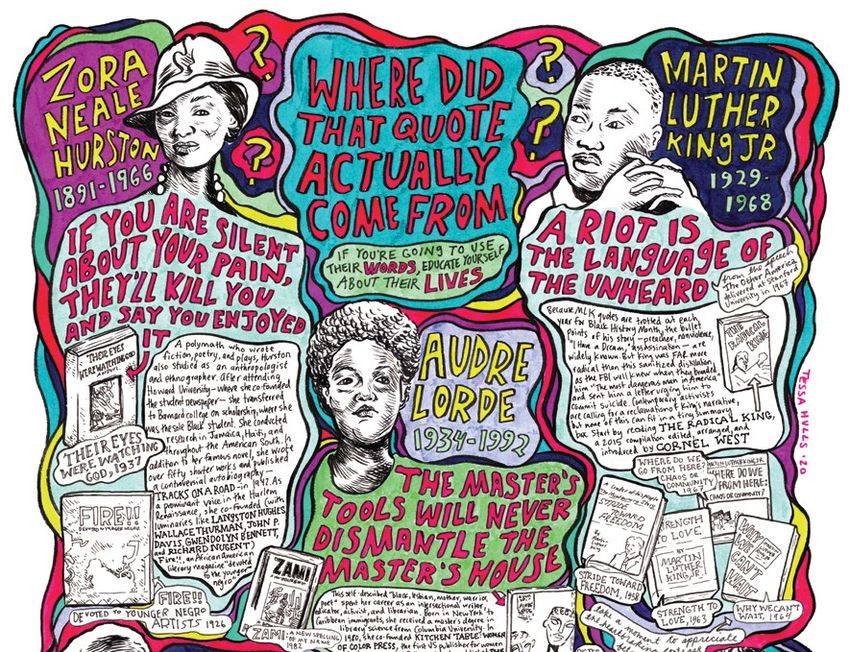
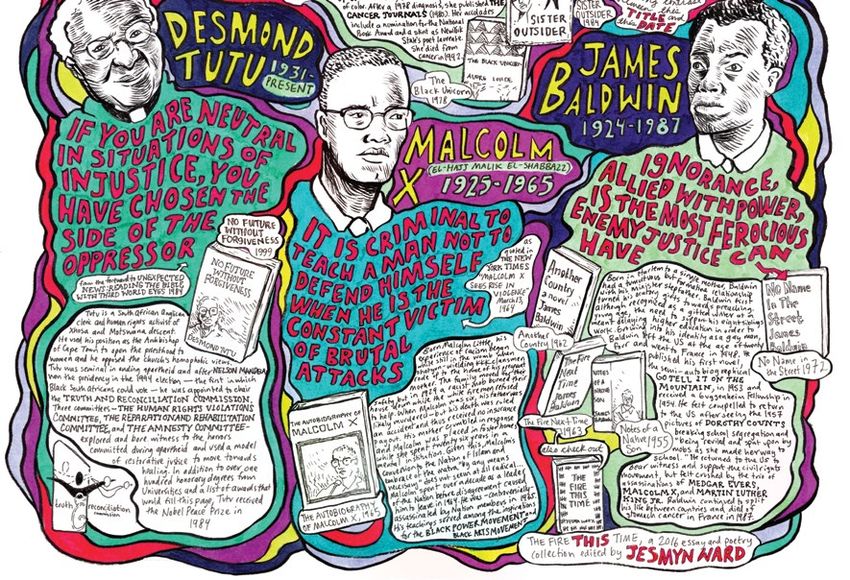
     Published twice per year, Spark is a free     WHERE DID THIS QUOTE
     magazine based on those conversations.        ACTUALLY COME FROM?
      It’s available at cultural organizations     by Tessa Hulls..............................................................................16–17
      throughout the state, or you can have
       Spark delivered for free to your door       I AM PART OF THE AMERICAN STORY
          by signing up at humanities.org.         by Michelle Liu........................................................................... 18–19

                                                   COVID GARDENS
                                                   by Claudia Castro Luna ................................................................. 20

                                                   WHAT A CENTURY-OLD IMMIGRATION
                                                   STORY CAN STILL TEACH US
                   EDITOR:                         by Carlos Gil................................................................................ 21–24
                 David Haldeman
                                                   NEWS
             LAYOUT & DESIGN:
                                                   from Humanities Washington ...................................................... 25
               Tarsha Rockowitz
                                                   HUMANITIES WASHINGTON
                                                   Staff & Programs......................................................................26–27
    More stories online at humanities.org/blog
       Find a free event at humanities.org

    FOLLOW US ON SOCIAL MEDIA:

        Cover photo by Joshua Earle/Unsplash.
2                                                                                                                                                  2021
Welcome

          What a difference a year makes. The last ten months have been unlike anything Humanities
          Washington, or indeed any of us, have ever experienced. One thing that has remained the same,
          however, is our need to connect with others—in whatever way possible.

          That’s what we’ve been focused on at Humanities Washington: providing avenues for people to
          keep connecting with ideas and each other, despite the challenges of a pandemic.

          Community is built through shared experiences, earnest discourse, deep listening, and
          storytelling—the building blocks of human connection. It’s thrilling to be in spaces filled with
          passionate learning, sometimes awkward and funny engagement, and inevitably profound insight.
          Yet, this was in jeopardy when people were asked to shelter in place beginning in March.

          Instead of shutting down, Humanities Washington stepped up.
             • Cabin Fever Questions fueled conversations in a time of isolation, providing insight
               and escape.
             • Cabin Fever Kids engaged children when schools across the state went online.
             • Prime Time Family Reading went virtual, ensuring struggling readers still received support.
             • Online events on the pandemic, the election, and more, served hundreds of
               Washingtonians as they grappled with the many hurdles of 2020.

          And to all those who have helped Humanities Washington in this difficult year, thank you for
          helping us deliver much-needed programing these last several months.

          Times are tough. But the humanities provide important opportunities for connection and growth
          that will help us heal and provide hope.

                                 Warmest regards,

                                 Julie Ziegler
                                  Chief Executive Officer
                                 Humanities Washington

Issue 1                                                         SPARK | The Magazine of Humanities Washington   3
L I T E R AT U R E

    Photo by Clem Onojeghuo/Unsplash.

                 STRANGE PAGES: 15 BOOKS
                  FOR UNCERTAIN TIMES

                   Looking for solace, context, strength, or hope in the face
                       of a global pandemic? These authors can help.
                                               By Dustyn Addington

4     SPARK | The Magazine of Humanities Washington                             2021
W
            hat aspect of our lives has been untouched by                 members? These questions are hard to ask and harder to answer,
            COVID-19? There are over 60 million recorded                  but the humanities can help illuminate the road before us. by
            cases at the time of writing. We grieve for more than         providing wisdom, practical guidance, comfort, and even
a million of our neighbors, colleagues, friends, family, students,        catharsis. Here are fifteen readings from the humanities that
and community members. We think of the alternate path this                speak to our uncertain times.
year might have taken. What would we have done? Who would
we have met? What life-long memories would we have made?
The year has been one filled with mourning, precarity, and regret.        IF YOU’RE SEARCHING FOR HOPE:

It is difficult to live in uncertain times, but we are not the first to
do so. In fact living in uncertain times puts us in good company                          How to Survive a Plague: The Story
with writers and thinkers who, because of their unsettling                                of How Activists and Scientists
circumstances, learned profoundly meaningful lessons. The                                 Tamed AIDS by David France
philosopher Boethius wrote “The Consolation of Philosophy”                                 The success story of activists (who go on to
while he was imprisoned in Italy in the 6th century. In his                                become scientists, journalists, and
misery, Boethius imagined himself conversing with philosophy                               community leaders) combating the AIDS
in human form, who advised him:                                                            epidemic is inspiring, heart-wrenching, and
Nothing is miserable unless you think it so; and on the other hand,                        deeply personal. You can also watch the
nothing brings happiness unless you are content with it.                                   documentary of the same name.

Imprisonment also led Martin Luther King Jr. to create a
masterpiece of moral and political philosophy, “Letter from                               Man’s Search for Meaning
Birmingham Jail.” He wrote:                                                               by Victor Frankl

Never before have I written a letter this long—or should I say a book?                     The ur-text of getting through hard times.
I’m afraid that it is much too long to take your precious time. I can                      Frankl describes his experience of surviving
assure you that it would have been much shorter if I had been writing                      the Holocaust. His ultimate message has
from a comfortable desk, but what else is there to do when you are                         resonated ever since: “Those who have a ‘why’
alone for days in the dull monotony of a narrow jail cell other than                       to live, can bear with almost any ‘how’.”
write long letters, think strange thoughts, and pray long prayers?

Near the beginning of the pandemic, Xiaomi, the Chinese tech                              Sapiens: A Brief History of
company, quoted the Roman philosopher Seneca when the                                     Humankind by Yuval Noah Harari
corporation donated tens of thousands of masks to Italy:                                   Harari provides an illuminating glimpse into
We are waves of the same sea                                                               the deep history of humankind. It’s lovely
                                                                                           to see how far we’ve come and the means
leaves of the same tree                                                                    by which we’ve done it. If the future seems
                                                                                           murky to you, you are not alone. Yahari writes,
flowers of the same garden.                                                               “For the average Roman in Constantine’s
As we gain insight from those who have come before, who have                               time, the future was a fog. It is an iron rule of
suffered as we have, we can grieve together. We can also ask                               history that what looks inevitable in hindsight
new questions. Who needs help? What kindness can I perform?                                was far from obvious at the time. Today is
Whose voice goes unheard? What strength may I offer my                                     no different.”
neighbors, colleagues, friends, family, students, and community

Issue 1                                                                      SPARK | The Magazine of Humanities Washington                5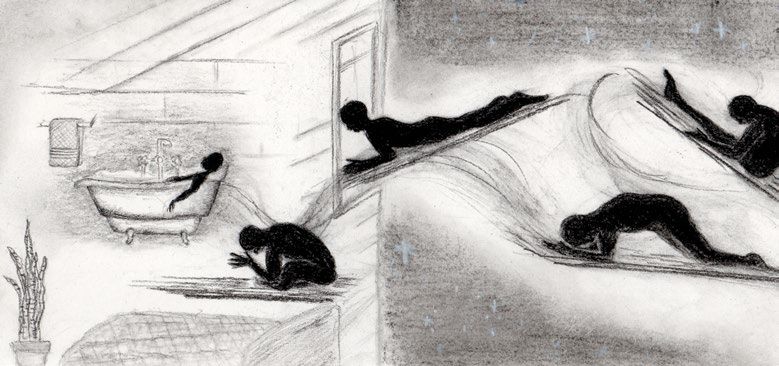
IF YOU’RE SEEKING HISTORICAL CONTEXT:                                      The Decameron by Giovanni Boccaccio

                                                                           The Decameron is about a group of Florentines
              The Pandemic Century: One                                    living through the plague of 1348 and their
              Hundred Years of Panic, Hysteria, and                        self-quarantine for ten days and ten nights,
              Hubris by Mark Honigsbaum                                    telling each other stories to keep their spirits
                                                                           up. The stories range from the funny, to the
              A history of pathogens in the 20th century,
                                                                           romantic, to the dramatic, but always
              this book covers everything from the Spanish
                                                                           beautiful and full of wit. Reach across time
              flu to SARS. Honigsbaum is an excellent
                                                                           and toward the people nearby, as we are all
              guide to pandemics in the modern age.
                                                                           together in this, even if we find ourselves
                                                                           distanced socially.
              Pandemic 1918: Eyewitness Accounts
              from the Greatest Medical Holocaust in
              Modern History by Catharine Arnold                           Station Eleven
                                                                           by Emily St. John Mandel
              For a more personal route through medical
              history, Arnold’s Pandemic 1918 gives voice                  The New York Times review of this book is
              to the people who experienced the 1918                       appropriately titled, “Shakespeare for
              Spanish flu. Harrowing, fascinating, and                     Survivors.” Centering on a member of a
              global in perspective.                                       Shakespearean troupe traveling and
                                                                           performing in a post-plague world with
                                                                           flashbacks to the present day, this book is a
              The Worst Hard Time: The Untold
                                                                           lyrical and engrossing look at the humanities
              Story of Those Who Survived the Great
                                                                           after the world goes to hell.
              American Dust Bowl by Timothy Egan

              Egan’s account is unbelievably vivid in its
              portrayal of a time usually depicted in black      IF YOU WISH TO LOOK INTO THE VOID:
              and white. A perfect fit if you’re looking
              to see how humans dealt with a widespread
              natural and economic disaster.                               The Sacrificial Egg by Chinua Achebe

                                                                           Achebe’s short story about the impact of
                                                                           smallpox, in the contexts of colonialism and
IF YOU’RE LOOKING FOR SOLIDARITY:                                          the protagonist’s relationships, provides a
                                                                           glimpse into the gap between what one
              Broken Earth Trilogy by N. K. Jemisin                        imagines one’s life to be and the external
                                                                           forces that conspire to make it what it is.
              Set in another world, The Broken Earth Trilogy               The best version of this story can be found
              is a resolute but hopeful post-apocalyptic story             in Achebe’s Girls at War and Other Stories,
              about people surviving disaster together.                    but an earlier, free version is available from
              They share resources, overcome hardships,                    The Atlantic.
              and discover hidden talents. It’s a story about
              finding solidarity among your tribe, even if
              you didn’t know you had one.

6   SPARK | The Magazine of Humanities Washington                                                                     2021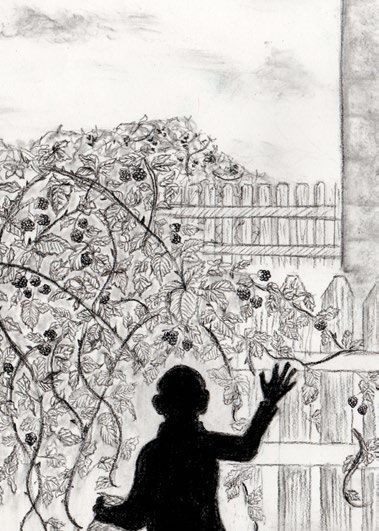
Pale Horse, Pale Rider                                           The Parable of the Sower
          by Katherine Anne Porter                                         by Octavia E. Butler

          This novella looks at disease right in the eyes,                 Butler’s world is a miserable one: fraught
          unflinchingly. Set during the Spanish flu of                     with physical danger, malevolent political
          1918, Pale Horse, Pale Rider focuses on a                        systems, and personal tragedy. Her protagonist,
          journalist in Denver who suffers from the                        Lauren, perseveres through it all, envisioning
          flu and her relationship to a soldier. Porter                    and leading in the pursuit of a better world.
          herself caught the Spanish flu, and the                          In comparing the book to 1984 and The
          historian Alfred W. Crosby’s history of the                      Handmaid’s Tale, reviewer Abby Aguirre
          Spanish flu is dedicated to her due to the                       claims that “for sheer peculiar prescience,
          story’s unparalleled depiction of the disease.                   Butler’s novel and its sequel may be unmatched.”

          Rosewater by Tade Thompson                                       Hard Times Require Furious
                                                                           Dancing by Alice Walker
          Author Adam Roberts aptly describes
          Rosewater as a “cyberpunk-biopunk-Afropunk                       Walker’s poems confront the hard stuff
          thriller.” As you might guess, there is a lot                    directly: grief, climate change, poverty.
          going on in this book. Even stating the                          But Walker rises above those challenges and
          premise (an alien biodome in Nigeria which                       brings the reader along with her. Walker
          heals the afflictions of those nearby once per                   writes in the preface, “Sometimes it all feels
          year) does not give you a glimpse at its breadth                 a bit too much to bear. Once a person of
          and depth. At the intersection of disease and                    periodic deep depressions, a sign of mental
          health, community and solitude, fear and                         suffering in my family that affected each
          hope, Rosewater is a beautiful case study of                     sibling differently, I have matured into
          uncertain times.                                                 someone I never dreamed I would become: an
                                                                           unbridled optimist who sees the glass as
                                                                           always full of something. It may be half full
IF YOU NEED TO BORROW STRENGTH:                                            of water, precious in itself, but in the other
                                                                           half there’s a rainbow that could exist only in
                                                                           the vacant space. I have learned to dance.”
          How to be a Stoic: Using Ancient
          Philosophy to Live the Good
          Life by Massimo Pigliucci
                                                              What would you add to the list? Share your
          Pigliucci provides an accessible, modern guide
          to Stoic philosophy, which originated in
                                                              recommendations with us on Twitter and Facebook.
          Athens in the 3rd century BCE. Stoicism
                                                                                   Dustyn Addington is the
          teaches that happiness depends on recognizing
                                                                                   director of programs at
          what is under our control and what is not. (And
                                                                                   Humanities Washington. He
          it turns out that not much is under our control.)
                                                                                   wishes to thank Lane Eagles,
          Check out this “Short Pitch” for the book from
                                                                                   Sam Sumpter, and Elizabeth
          the Institute of Arts and Ideas, which includes
                                                                                   Scarbrough for their excellent
          an interview with Pigliucci.
                                                                                   suggestions for this list.

Issue 1                                                         SPARK | The Magazine of Humanities Washington            7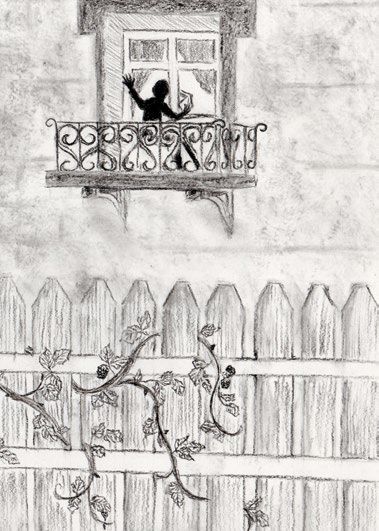
PH ILOSOPH Y

                                              PHILOSOPHER:
                      HOW HUMANS SEE
                    OURSELVES IS LITERALLY
                     KILLING THE PLANET

    Photo by Matt Howard/Unsplash.

     Technology alone won’t save us
                                                      W
                                                                  hile many of us focus our attention on developing the
                                                                  technologies and policies necessary to solve climate
     from climate change. We have                                 change, perhaps we don’t concentrate enough on
                                                      the deeper problem—our relationship with nature. Each of us
      to fundamentally shift how                      feels the sting of our possible global ecological collapse, but
                                                      not enough of us allow that to transform how we relate to the
     we view our role on earth, says                  environment. We ignore the signs or become fatalists.

       professor Brian Henning.                       Brian G. Henning, professor of philosophy and environmental
                                                      studies at Gonzaga University, argues that the issue at hand is
                          By Jeffrey Howard           not whether we have technology sufficient to solve our greatest
                                                      existential threat—it’s how we view our place. It’s how we view
                                                      our place in the world that’s the fundamental issue. We’ve
                                                      internalized the wrong story about who we are. He believes
                                                      that if we can become responsible members of the wider biotic
                                                      community, and jettison the notion that we are its rulers, there’s
                                                      a good chance we’ll have a thriving earth for many generations
                                                      to come.

                                                      Admittedly, there are plenty of reasons to be grim, but Henning
                                                      finds great hope in the way young people are shifting their

8     SPARK | The Magazine of Humanities Washington                                                               2021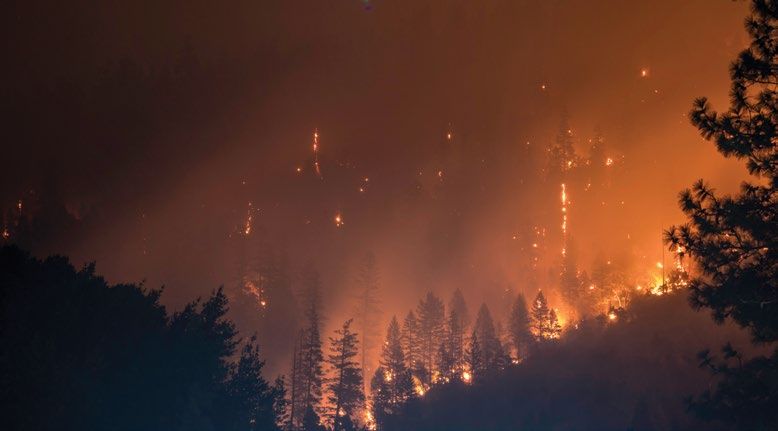
relationship with nature. Compared to other generations, they        sole thinking being in an otherwise clockwork universe. Nature,
have done less to contribute to climate change, and yet they are     on such a view, is merely a vast machine and we are its masters
likely to be the ones who will experience its worsening effects.     and engineers who can bend it to our will without limit. What
Many are taking hold of the plethora of opportunities available      both of these accounts have in common is that, rather than seeing
to act—on both the local and larger systemic levels. To really       humans as an integral part of an interdependent and evolving
galvanize our neighbors and communities, he believes we need         planet, much of Western thought has depicted humans as
to recalibrate our philosophical foundations.                        fundamentally separate from nature and even contemptuous of it.

Whether we realize it or not, these first principles animate the     What are some philosophical or cultural traditions that you
degree to which each of us acknowledges the precariousness of        think exemplify the type of relationship with nature that
our situation.                                                       more of us ought to strive for?

In an effort to challenge the narratives we’ve been telling          The cultural historian Thomas Berry contends that the old
ourselves for millennia, Henning travels Washington presenting       stories depicting what humans are and how they are related to
a talk titled, “Heating Up: The Ethics of Climate Change,”           nature are breaking down. Most people no longer see nature as
which is based on his 2015 book Riders in the Storm: Ethics in an    a vacuous, valueless machine or believe that humans are the sole
Age of Climate Change. He believes we have the ability to reverse    thinking, feeling being in the world. What is still lacking, Berry
course, but the key to actually achieving that will require a lot    notes, is a robust alternative story or narrative depicting what
more humility and deeper reflection on the moral beliefs that        humans are and how we ought to see our relationship to nature.
anchor our worldviews.
                                                                     If we are not the lords, masters, or engineers of nature, then
This interview has been edited for brevity and style.                what are we?

Jeffrey Howard: You focus on how shifting our relationship            The great American conservationist Aldo Leopold contends
with nature is central to reversing climate change. The               that the next stage in human ethical evolution is developing the
United States—as with many developed, Western,                        ability to see that we are members of what he calls the “biotic
democratic countries—has a protracted history of people               community.” We should, Leopold suggests, stop seeing ourselves
trying to control or tame the earth. For a long time, many            as conquerors and instead seek to become citizens of the wider
of us have seen ourselves as masters of nature, or least have         biotic community. This next stage of human ethical evolution is
aspired toward having dominion over it. What are some of             “an evolutionary possibility and an ecological necessity.” This task
the historical and philosophical roots of this mentality?             is what Berry calls the “great work” of the current generation and
                                                                      the next: to transition the human-nature relationship from one of
Brian Henning: The historical and philosophical roots of              arrogance and blind devastation to one of mutual benefit. That
the ecological crisis run deep. The historian Lynn White Jr.          is, the great work before us is to conceive and realize a form of
famously argued in 1967 that the destructive attitude of humans       genuine human flourishing within a flourishing world.
toward nature can be traced back thousands of years to the book
of Genesis in the Bible. He contends that Western Christianity       How would you describe your relationship with the natural
misinterpreted “dominion” to entail domination instead of            world? Do you align more with a transcendentalist view, akin
stewardship, and that this created the intellectual conditions for   to that of Ralph Waldo Emerson—the outdoors as a “natural
the arrogant misuse of nature.                                       cathedral?” Or, do you more closely resonate with that of a
                                                                     concerned scientist well aware that humanity— alongside many
Others trace the philosophical roots of the ecological crisis        other species—will no longer exist if we fail to change course?
back some four hundred years to the start of the modern era in
Europe (circa 1600). According to early modern thinkers such         I tend to identify with both Leopold and Berry. The task is to
as René Descartes and Francis Bacon, we humans are not a part        become a responsible member of the wider biotic community
or product of nature. Rather, they believed that humans are the      of which we are a part and on which we depend. This is not a

Issue 1                                                                  SPARK | The Magazine of Humanities Washington                 9
It can be quite powerful to shrink a global problem like
                                                                           climate change down to a size that connects to local concerns.
                                                                           These concerns might include how changes in snowpack
                                                                           might affect winter recreation and the health of our rivers,
  Rather than seeing humans as an integral part                            to how extreme heat might affect large annual events important
                                                                           to our community, such as the Bloomsday marathon or
    of an interdependent and evolving planet,
                                                                           Hoopfest competition.
     much of Western thought has depicted
                                                                           What are some technologies, community organizations, or
    humans as fundamentally separate from                                  projects currently underway that give you a lot of reasons to
       nature and even contemptuous of it.                                 be optimistic regarding humanity’s ability to address the
                                                                           ecological crisis?

                                                                           Although we need rapidly to decarbonize our energy and
                                                                           transportation systems, the challenge of global climate change
                                                                           is not ultimately a technological problem, nor is it the sort of
“back to nature” project that romanticizes or fetishizes nature.           problem that can be solved solely through individual changes
 The question is: How do we live well in our place as an integral          in habits. Ultimately, global climate change is not the problem;
 part of a larger whole?                                                   it is a symptom of a deeper one that concerns how humans see
                                                                           themselves and their relationship to the wider natural world.
Are there any other writers and thinkers that have
significantly helped shape your view of nature?                            Climate change is also what sociologists call a “collective action”
                                                                           problem. It has to be addressed at the systemic level. It is partly
My work is heavily influenced by that of the British mathematician-
                                                                           because of this realization that three years ago I helped to found
philosopher Alfred North Whitehead. Whitehead developed what
                                                                           a local branch of the international climate justice organization
he called the “philosophy of organism.” One of its central insights is
                                                                           350.org. Through 350 Spokane I work with my neighbors to
that, at its most basic level, reality is defined by interdependence. To
                                                                           bring about a just transition to a more sustainable future that
exist is to be in interdependent relation. Nothing is truly unrelated
                                                                           works for all, both human and non-human alike. I find this
or valueless. This organic view of reality heavily influences my
                                                                           community organizing work to be a great source of meaning
work and thought.
                                                                           and optimism in an otherwise dark time.
Which type of messaging or storytelling about the global
                                                                           It is also a great source of inspiration to work with young people
ecological crisis do you find to be the least effective at inspiring
                                                                           at Gonzaga University where I teach. Although young people
action? Which types of arguments do you think are counter-
                                                                           today have had little hand in creating the global ecological crisis,
productive when it comes to convincing others of the urgency
                                                                           they face it with admirable courage and dedication.
surrounding climate change?

Over the last two years, I’ve become involved with the Spokane
Community Adaptation Project and Spokane City Council’s
Sustainability Action Subcommittee. One of the primary
                                                                                                       Jeffrey Howard is the founder
goals of these two groups is to help citizens in our region
                                                                                                       and editor of Erraticus, an
better imagine some of the consequences of climate change in
                                                                                                       online publication focused
this century. We have enjoyed going out into the community
                                                                                                       on human flourishing. He is
to speak with our neighbors about the importance of making                                             also the host of the Damn the
clear plans to mitigate our contributions to climate change and                                        Absolute! podcast.
prepare our community to adapt to the increasingly hostile
climate we are creating.

10 SPARK | The Magazine of Humanities Washington                                                                                         2021
F IC T ION
TheNight Walk
A short story by Beth Piatote
A
fter his disappointingly chaste dream
about Brad Pitt, Rowan realized that he
had to up his sleep game.
During the pandemic, his friends had been
extravagantly gifted with dreams, describing
nocturnal hours filled with adventure, romance,
and fabulous sex. In his dream, Rowan had been on
a movie set with Brad Pitt, and when Brad embraced
him off camera, Rowan had rebuffed his advances,
saying: “No, Brad. I respect you as a person.” In the
dream, Rowan had earnestly desired Brad Pitt to
feel loved for who he was—a whole person with
insecurities and disappointments—and not just a
gorgeous movie star ready to hook up.
But the next day, Rowan cursed his subconscious.
“Idiot!” he muttered, as the words “No, Brad,” jolted
around his head like bumper cars. What were you
thinking?! Who curves Brad Pitt?
Rowan worried not only that his sexual appetite had
malfunctioned, but that he was in the middle of an
entire systemic breakdown.
Issue 1 SPARK | The Magazine of Humanities Washington 11Illustration by Maria Abando.
Rowan turned to his friend, Ted, for advice. Ted said Rowan needed to make friends with his subconscious, and
that meant no more dream-shaming. With proper appreciation,
“It was a one-off,” Ted said. “I’m sure you have it in you to mack perhaps Rowan could persuade his mind to re-assemble the pixels
with Brad Pitt. And besides: Brad Pitt isn’t for everyone.” of the Brad Pitt dream and give him another go.
In truth, Rowan wasn’t sure that he had it in him. He was two This seemed a bit high-level to start, so Rowan began with the
years past the divorce, with only minor flirtations and occasional mundane: sleeping on the other side of the bed. He moved the
hueys to patch him through. And he wasn’t as young as he used nightstand to the unused side, and placed a blooming orchid
to be; the Brad Pitt dream was nearly age-appropriate. This was next to the lamp.
yet another disappointment.
That night, he took a warm bath and slipped into his favorite
During the pandemic, Rowan’s primary companions had boxers, then glided through some gentle stretches. His body
been houseplants and despair. He lived alone, and without the felt alive and open, and ready for a fabulous date with his
usual fodder of the gym, parties, and the office to support his own imagination.
social metabolism, he felt bereft. Now the weekly staff meeting
appeared as a delightful mirage of human connection. He He lay down in a kingly pose, palms faced upward. “Come at
longed to make photocopies, or to stand in line for coffee. He me, Universe!” he said, and soon entered a deep, golden slumber.
was lonely. Some days he went to bed and woke up with the
exact same thought: I will sleep alone for eternity. Two hours later, he jolted upright. Too hot. Where was he?
He kicked off the blanket. He turned to his side. He went to
Rowan had accepted the fact that there was little he could the bathroom. He paced. He ate a bowl of corn flakes. He did
control in daily life. But he was not ready to admit that he could a crossword puzzle. He watched a rerun of The Andy Griffith
not control—or at least influence—his dreams. He needed to Show. Would he dream of young Andy Griffith? Maybe. If
live the life he was missing, if not by day then by night. He’d he could sleep. He looked at the clock. It was 1:32. He folded
grown up hearing stories of old-time Indian men, his great- himself into fetal position. He begged for sleep. All night he
uncle among them, who could change the weather. Dreams battled to reclaim the left side of the bed. The side that had
seemed a modest reach compared to a lightning storm. been left.
12 SPARK | The Magazine of Humanities Washington 2021The next morning, he swore at the mirror. Was there a sleep- park seemed to see her. The couples continued to gaze at their
deprivation equivalent of hangry? Slangry? Slurious? phones and each other, the families ate their sandwiches, and
the shuttlecock floated over the net.
“You can’t fight your animal nature,” Ted said, and urged Rowan
to double-down. “Get outside. Pee on something. Go foraging.” “Did you see that?” he called out to a couple near the path. “That
deer?”
Rowan struck out by foot that afternoon, heading northeast,
away from his regular routes. Not exactly the wild, but the best The pair looked up at him, then around the park. They shook
he could do. As he walked, the street and yards became novel— their heads.
each one a possible source of treasure. He stopped at a blue house
with blackberry bushes sprawling over the fence. Rowan tested Rowan followed the doe, crossing the park and turning down
one, then plucked a handful. a side street. There he came upon a plum tree, with branches
laden with fruit. The purple orbs released easily into his palm,
“You making a pie?” and he picked five to carry home.
Rowan stepped back and looked for the voice. It came from the That night, Rowan dreamed of the blue house, and the tall fence
balcony. A handsome man, middle-aged, sat at a café table, with around it. He was walking along the fence, and the man in the
a book and a can of No-Li IPA beside him. balcony was on the other side. He could feel the man’s presence,
a delicious tension between them. But the fence! The briar of
“Uh, no,” Rowan said. “Just … snacking.”
thorns! He was certain that if he followed the fence he would
“Ah, curse the bad luck!” the man said. come to a gate. A pink sky saturated the scene with a rosy glow,
and Rowan’s heart bloomed. Finally he came to an opening and
“You’ve got a lot then?” crawled under the thorns, but when he arrived at the other side,
The man smiled. “You’re familiar w ith the iceberg theory?” the house was gone and so was the man. The pink sky remained,
and a land of tawny hillsides opened before him. The land felt
Rowan smiled too, imagining a vast tangle of berry vines on the both magical and familiar, just as the man had felt known to
other side of the fence. him, while yet a stranger.
“The ones on the alley side are riper,” the man said. “Help “Obviously something inside of you has died,” Ted said the
yourself.” next day.
“Thanks,” Rowan replied. “Wait, what?”
“And come back when you want to make a pie,” he said. “You’re dreaming about a fence, a briar, and a desert,” he said.
“Try to be more open.”
Rowan smiled and nodded, then made his way down the alley.
Foraging had become unexpectedly pleasant. Soon he had filled Rowan objected, but Ted’s interpretation stuck.
the bag, and glanced back at the balcony. The man was reading
the book. “Thanks!” Rowan called out, and the man looked up Later that day, Rowan walked to the park and sat on a bench,
and waved. hoping that the deer would re-appear. Instead a man approached
him. The man’s clothes were clean but rumpled, and he carried
Rowan cut across the park on his way home. The lawn was a dingy rucksack. His shoes curled upward. The man was in his
dotted with families and couples lounging on blankets, and fifties, with a trim beard under his mask, curly hair, and blue
college students playing badminton. How normal everything eyes. The man walked directly to Rowan, who had never felt so
seemed, Rowan thought, and just then a doe darted out from trapped in the wide open.
a thicket and ran. Rowan froze. More alarming than the
sudden eruption of movement was the fact that no one in the “Can you help me?” he asked.
Issue 1 SPARK | The Magazine of Humanities Washington 13Rowan reached for his wallet.
“No, no,” the man said. “Can you help me write a letter?”
“Maybe,” Rowan said. Ted’s words flitted across his brain.
“It’s for my girlfriend,” he said. The man sat down and unzipped
his bag, extracting a notebook and a card with metallic stars and
planets on it. “Can you write on this?”
Rowan looked at the card.
“I can’t write,” the man said.
“But you have a notebook there,” Rowan said. “And I’m sure
your girlfriend would rather see your writing than mine.”
The man began to repack. “No, I always do it this way,” he said.
“She knows it’s my words.”
The words BE MORE OPEN floated across the sky.
“Wait,” he said. “I’ll do it.”
Rowan took the card. The man opened his notebook, which was
filled with letters and symbols.
“Dear Maura,” he said. “I have traveled through time and
galaxies to be with you. I came to Earth to become a dinosaur,
and then a human. I didn’t want you to leave but once you
decided I couldn’t stop you. I ran after you but you were
gone. I had to come to Earth to find you, and remind you of its way. Rowan felt, in every way, his boy-self, with skinny legs
your power.” and cut-off shorts and excitement to play with the other boys.
Then he noticed that rather than running, the boys were flying,
Rowan penned each word as elegantly as he could. The man
like little flying saucers. Rowan discovered that he too had this
smiled, satisfied.
ability. He sat cross-legged and using his arms as levers, lifted
“It’s true, you know,” the man said. “She was right beside me, off the ground and cruised smoothly around. He delighted in
then I turned and she was gone. The dinosaur time was rough. the discovery of his new power. And he felt pure happiness as
Thanks for your help.” he flew about with the other boys, chasing each other through
groves of palm trees, dodging houses and dogs, and knowing
Rowan was certain that the man was homeless. And he was certain they were free to play until they were called for dinner.
that what the man said was true, though he didn’t know how.
The dream seemed to restore something in him, perhaps some
That night Rowan dreamed that he was on a tropical island.
optimism that had been stripped away by the divorce, the
He was visiting friends who lived in a cluster of houses beside
pandemic, or belly flab.
the ocean, and each house had a canoe. Around him, children
were playing and women were cooking and gossiping. The air He channeled this energy into a massive purge of housewares. By
was thick and held a charge of anticipation; a rainstorm was on nature Rowan was tidy. But after having experienced the smooth
14 SPARK | The Magazine of Humanities Washington 2021On his final return, feeling sweaty and satisfied, he stopped
half-way up the walk. A package was waiting on the porch.
Cruel joke! Here was the Hydra’s head.
But it wasn’t. Turning the package over, Rowan recognized the
handwriting. He opened it and read the card: Hey Neph, Went to
the mountains with Rosie and your cousin Eugene. Got nine buckets
of hucks. Gathered some pisqu medicine for you. Love, “Unc” PS Rosie
wants to know what’s good on Netflix.
Rowan unwrapped the package: two bags, one filled with
dried Indian tea and the other with dried huckleberries, plus
a vacuum-sealed package of smoked salmon. For a long
moment, he held the open package in both hands, thinking
about his family.
That night, Rowan brewed a cup of Indian tea. He held the cup
to his chin, inhaling the forest smell. That night he dreamed
of walking along the Columbia, the water shimmering in late
afternoon sun. His skin warmed in the light, and he became
aware of an older man walking beside him. On the other side
of the river, bluffs rose up from water’s edge. He could smell
the bright scent of fish in the water, and hear the grasses shuffle
and shoo in the wind. Before him, he saw the shadow of a great
bird in flight, and looked up to see an eagle the size of a plane
crossing over him. The path before him changed, and he found
Illustration by Maria Abando. himself walking through sage-covered hills, pungent and alive
after rain. The sky turned a fantastic color of pink. He felt a doe
pleasure of self-propelled flight, he longed to be unburdened walking beside him. He turned to look, and she leapt into the
by things, especially things that reminded him of his previous sky and flew away. The sky faded to a deep blue, and as stars
life: the casserole dish, the wine glasses, the birthday watch, the began to appear, he found himself walking among them. Not
half-set of bath towels. All day he went room to room, plucking flying, but walking through the sky with Grizzly Bear and the
items off shelves and emptying drawers. He made four trips to wolves and the North Star, and here he felt most serene, as he
Goodwill and one to the dump. walked along, greeting each one as an old friend.
Beth Piatote is a scholar of Native American/Indigenous literature and law; a writer of
fiction, poetry, plays, and essays; and an Indigenous language revitalization activist/
healer, specializing in Nez Perce language and literature. She is the author of two books:
Domestic Subjects: Gender, Citizenship, and Law in Native American Literature; and
The Beadworkers: Stories. The story above was written and read by her for Humanities
Washington’s Bedtime Stories fundraiser event in 2020.
Issue 1 SPARK | The Magazine of Humanities Washington 15WHERE DID THIS QUOTE ACTUALLY COME FROM?
by Tessa Hulls
16 SPARK | The Magazine of Humanities Washington
2021Issue 1
Tessa Hulls is a multidisciplinary artist, writer, and outdoorswoman who focuses on women’s stories, and
her writing has appeared in the Washington Post and Atlas Obscura’s Kickass Women series. She current
presents her Humanities Washington talk, “She Traveled Solo: Strong Women in the Early 20th Century.”
SPARK | The Magazine of Humanities Washington
17C U LT U R E
I AM PART OF THE
AMERICAN STORY
“I felt as if I was asked to meld myself into America without being
able to ask why America was shaped that way in the first place.”
By Michelle Liu
T
he group who came to the library that particular rainy In the bit it took me to think of a reply, a compressed version
afternoon had much to say. In response to my talk on of the journey that had brought me to apply to be part of the
the ways fiction has shaped morals around our nation’s Humanities Washington Speakers Bureau surged through
imagining of slavery and its aftermath, they shared personal my head. I thought of visiting the graduate program I would
and impassioned stories of the place of race in their own lives. eventually choose to attend some twenty-five years ago as a
After our discussion, a smiling woman approached me: “I really prospective student. The sole Asian American professor on
enjoyed your talk,” she said. I thanked her, and waited for her the faculty at the time advised me not to come because of the
to finish wording what was on her mind. “If you don’t mind me lack of support for Asian American studies. I committed to
asking, I’m wondering how your ethnicity relates to this topic.” the program anyway. Some part of me knew, even if I could
not articulate it then, that the path I needed to take involved
She said “ethnicity,” but I knew she meant race. It felt right for the kind of learning I could do precisely because I would not
her to ask—they had just shared so much with me. Her curious be surrounded by like-minded people. I knew I would have
questioning vocalized what I’m sure other people have privately to work hard to discover, and then communicate, why it was
wondered, and is something I ask myself too: why is this person important to pursue the research directions I wanted to take,
with an Asian face talking about the place of Blackness in the which was a challenge that I needed. I could hardly articulate
American imagination? to myself why my interests were of significance to anybody but
18 SPARK | The Magazine of Humanities Washington 2021I saw how easily a society envisioning the equality of
“we the people” can blind itself with stories that perpetuate the idea
that heterogeneity is to be feared rather than nurtured.
myself. Historically, Asians have been a statistical minority in order to induce a fevered mirage of sameness and order. In my
the United States. How was what I wanted to do different from years of conversations with students, I’ve realized that others
mirror gazing? too, because of how the past has weighed on their present lives,
have also felt variously burdened by this cliché, and are looking
My years of study showed me that what I first thought was to do something about it.
a mirror was in fact a window looking out to the past. Asian
Americans make up a small number of the U.S. population by What I’ve learned is this: all our private mirrors can become
legislative design, historically labeled as unassimilable aliens windows, which gives us a ledge from which to see the multiple
and a docile model minority, often (perplexingly) at the same ways we have not yet recognized in everyone the human capacity
time. Gatekeepers to America cast us as bit players, lucky to feel, act, and change—and then to push for stories that can
to be invited, without apparent editing access to the entire help us do better. I stand in awe of the many who, from the very
complicated script that holds these American states united. beginning of this country, used their restlessness with being
handed bit parts as a creative flint: how else could the script of
How does the weight of the past get felt by a single person? America be written to make space for the majesty and potential
For me, I felt it in my formative years as a hard-to-articulate of human differences? “All men are created equal” were the
estrangement from the stories held up to me as ethical fables best words the Founding Fathers had at the time to describe
of how to be a good person and a good citizen. I felt as if I was protagonists for America’s origin story as a nation built on
asked to meld myself into America without being able to ask possibility, rather than rank and ancestry. Since then, there have
why America was shaped that way in the first place. been multitudes of people, who through words, labor, action,
As I studied early American literature to prepare for graduate and art, have thought about, cared about, and argued over what
exams at one of the nation’s oldest universities (seeded by riches this nation can be so that it may strive to fulfill its promise.
from the slave, tea, indigo, spices, and opium trades), I felt in a The result of this cacophony is our continually coming up with
new way how precarious the democratic mission that inspired more generous and true words to imagine how we interconnect
this country’s existence is. I saw how easily a society envisioning and see each other. And we will continue—we must—to
the equality of “we the people” can blind itself with stories that imagine more.
perpetuate the idea that heterogeneity is to be feared rather than “The Country that Fiction Built” is my small way of inviting
nurtured. That the nation did continue to hold together was people to do this imagining together. So this was my reply to the
marvelous testament to the people who used the indomitable woman: my experiences as an Asian American have everything
power of the imagination to narrate into existence new to do with this talk. I’m glad you asked.
possibilities for connecting through our differences, when all
signs otherwise pointed to it being easier and safer for everyone
to bunker down in their own spaces and beliefs.
Michelle Liu is a professor in
But as valuable as these fictions were for producing fresh the English department at the
ways of unifying, they invariably encased omissions and University of Washington. She
inconsistencies; I saw that the casting of Asian Americans as is currently presenting a free
both aliens and models was no fluke. The contradiction itself Speakers Bureau talk, “The
was symptomatic of an American script as yet too reliant on the Country That Fiction Built.”
cliché of naming others as different and less-than-human in
Issue 1 SPARK | The Magazine of Humanities Washington 19COVID
GARDENS On our dining room table
a pitcher holding magenta peonies
and orange Gerber daisies
By Claudia Castro Luna
spills its June color and splendid scent
over coffee cups and Sunday paper
The flowers are a gift
cut for me yesterday evening
by neighbors grateful
for the strawberry jam
I walked over to their house
The strawberries plucked
earlier in the day from my garden
were no more and no less crimson,
no more and no less sweet,
than they needed to be
In my kitchen, the blood
of the earth mingled
with the snow of the sugar
until their heating alchemy
reached perfection, was jarred
Garden gifts making for rich
tables in slim times —
mine, plentiful with print and flowers
Claudia Castro Luna is the current Washington State theirs, with jam, bread and butter,
Poet Laureate. The poet laureate program is presented
by Humanities Washington and the Washington State or perhaps just with a good lick
Arts Commission/ArtsWA to the back of a spoon
20 SPARK | The Magazine of Humanities Washington 2021H I S T O RY
WHAT MY UNCLE’S
CENTURY-OLD IMMIGRATION
STORY CAN STILL TEACH US
Miguel employed at an ice plant in Bakersfield (courtesy of Carlos Gil).
Carlos Gil’s uncle risked everything to cross the US-Mexico
border without documents in 1922. Why? And what does his
story reveal about the struggles of future immigrants?
By Carlos Gil
Issue 1 SPARK | The Magazine of Humanities Washington 21M
y uncle had finally arrived at the Mexican border
town of Nogales, intent on crossing over to the
United States. Like countless others, Miguel
located the central plaza and “met a young man very much like
me,” he told me one afternoon when I interviewed him many
years later. They discovered mutual interests in stepping over
the line and agreed to do it together the next day. “They allowed
people to cross,” he explained to me with a touch of sheepiness,
recognizing that he really knew he was not supposed to. “I don’t
know whether that was good or bad to cross illegally,” he offered.
He talked it over with his mother (Carlota, my grandmother)
who had also traveled with him to the border from central
Miguel Naranjo at 45 (courtesy of Carlos Gil).
Mexico but was not crossing at that time. “Once on the other
side I’m going to get a job and I’ll send you money,” he assured
enormous hurdles to pull her fourteen–year-old daughter
her. It was 1922, and he was twenty years old and her favorite
away and, along with Miguel, join Pascual in the new land
son. They had shared a lot already, just in traveling to the border,
called California and thus keep the family together. This was
so she agreed to let him go, reluctantly. She knew she could
the biggest pulling factor.
count on him and she also knew that she wouldn’t be left alone;
her daughter, my mother, Guadalupe, stood by her side, only The Mexican Revolution of 1910 also played a part in the
seventeen years-old. decision to emigrate, though less directly in young Miguel’s
willingness to journey on foot to a strange new land. The great
How can we fully appreciate why a young man like Miguel
would want to cross a desert on foot with little or no food or tumult arose when he was eight years old and it did not simmer
water, not knowing where he would wind up? He never fully down until he landed in California. His brother, however, was
explained it to his children, and I did not ask him exactly. swept up in the uproar that induced armed horsemen to destroy
anything in sight from government buildings to churches and
I interviewed my tío (uncle) Miguel as part of an oral history farms, though in the end the great rebellion brought major
assignment at UCLA in the late 1970s, and I also questioned changes to the country. In any case, Pascual was the kind who
other members of my family, recording their answers and finally would join the fight and thus found himself on the Arizona
writing a book about our family immigration experience. It’s
border chasing after revolutionaries. One day he threw away his
entitled, We Became Mexican American: How Our Immigrant
rifle and abandoned his horse and walked to Tucson. He too
Family Survived to Pursue the American Dream, and in it we share
was conscripted to work on American railroad tracks.
fragments of our collective lives beginning in the 1920s, when
we were a small family, all the way to the 1970s when we, the Miguel and his friend crossed the border at night, staying away
children, had grown up. from the main road going north toward Tucson. There were few
if any fences marking the boundary in those days, and the U.S.
As with other migrants over time, I believe the answer to why my
uncle took such risks to cross the border lies in the larger context border guards tended to stay posted inside their office cubicles at
of their lives, as it does in my uncle’s larger migration story. the main official crossings. As I spoke with Miguel, he searched
his memory and added,
First, the family had to stay together. His older brother, Pascual,
had forged the route five years earlier. In a grammarless letter, We guided ourselves by watching for automobile traffic part of the
he bid the rest of the family to follow him. He implored them time and watching for the trains too. We walked half the night and
to leave the hacienda (plantation) because the landowner will slept under a bridge. The next day we arose and continued following
want to rape Guadalupe, sooner or later. Carlota knew fully the railroad track. The ground was full of brush and trees in some
well about such things and so she agreed, and cast aside areas, and bare in others.
22 SPARK | The Magazine of Humanities Washington 2021Indeed, walking north on the desert floor, flanking the railroad work on the railroad! I need to take them to the State of Oregon, so
track that partly parallels the old Nogales-Tucson road, and anyone wanting to go only has to give me their name.” I talked with
now the new Interstate 19, they stepped past groves of gnarly my friend and we decided to get on the list. The man didn’t ask for
mesquite. They also walked around clumps of ocotillo and documents, just our names. He told us to go to a certain hotel while
cylindrical cholla cactus, as many scaly and luminous reptiles he finished gathering the rest of the men he needed and from there we
slithered away from them in their trudge north. Unknowingly, would leave that night.
they ambled past the crumbling Tumacacori missions built
in the 1690’s by the Pimas, under the direction of Father Kino, Like his older brother, Pascual, who crossed the border five
and paced not too far away from the ruins of the old Spanish years earlier, Miguel and his fellow traveler joined the legions
fort known as the Presidio de Tubac, erected 170 years earlier, of men contracted on the spot at the border. These were the
now decaying. enganchados [the hooked ones], a word the men themselves
must have made up because they would have felt hooked up,
In the coolness of the morning, about thirty-five miles south literally. To be sure, they stood for America’s great thirst for
of Tucson, near present day Green Valley, they landed a ride. workers in these years, especially in the West. The fact is that
A Mexican man in a truck stopped and said to them, “You’re my uncle and his buddy helped fill that day’s need for thirty-five
lucky. You’ve gone past the most dangerous part of the road, so more railroad workers—part of the thousands enlisted at the
I’ll take you into Tucson.” Miguel and his buddy thanked the border this way.
man from the bottom of their hearts when he dropped them off
right in the middle of Tucson. He would be the first of many
Good Samaritans driving a vehicle along the immigrant trail
and willing to help my pioneering ancestors.
Not having eaten a proper meal since Nogales, they were able They knew little about where they
to put a few Mexican and American coins together and bravely
entered a small café. Like many eating establishments in Tucson
were going and even less about what they
today, the waitresses spoke Spanish—lucky for our young would find. But America needed them.
explorers—but the fare was American. This is how my uncle
and his fellow adventurer gulped down their first meal in the
United States, a plateful of pancakes, a new type of breakfast for
them. “That’s what we ate!” he said with giddy delight, subtly
drawing a contrast with more substantial fare. “It was our first
American meal! It was good too!” he noted cheerfully. Miguel and his friend gathered at the appointed Tucson hotel
at 6:00 p.m. where they met the contractor who had jotted
Like so much of northern Mexico, Tucson also looked and felt
down their names at the plaza. He directed them to the train
different to Miguel. Its dry, sunny climate and its diverse blend
where chow was waiting, and it wasn’t very long before Miguel
of desert-hardened people stimulated him in a way he didn’t
and his companion, and others, made a beeline for the food
forget. He tried putting it into words when we spoke: “We
tables loaded with canned tuna, bread, and a variety of other
noted a different atmosphere,” he told me, “different even from
rations. “They fed us,” my tío observed in a satisfied way, and
Nogales. There were a lot of people on the street—Mexicans
the enganchados were soon on their way, into the interior of
and Americans—the town just looked different in my eyes.”
the United States. They knew little about where they were
The opportunity to work did not wait long, however. This is going and even less about what they would find. But America
what he said: needed them.
Afterward, we went to the placita [the Tucson town square] and a Miguel finally met up with his brother in Fresno, a happy
Mexican man came to us and said, “I need about thirty-five men to occasion, without a doubt. He held many jobs afterwards; he
Issue 1 SPARK | The Magazine of Humanities Washington 23worked as a miner in the sierras above each month because they too are
Fresno, at an ice plant in Bakersfield, responding to the pulling effects of
in the orange groves of the San U.S. jobs. They come because they
Fernando Valley, alongside my father, are available to them, on farms, in
and in his later years landscaping non-union construction jobs, in
green areas alongside California’s meat packing plants, and so on.
busy highways. He settled in the The Mexican economy has grown
City of San Fernando, my hometown, enormously since the days of my
where he married. Together, with uncle, but the folks who cannot yet
his wife, they had twelve children find a niche opt to travel to the U.S.
whom he steadfastly supported with to find employment. In the 1920’s
singular self-respect and by the
and 1930’s job agents awaited them
skin of his teeth. He never faltered.
at the border, like Miguel informed
He was a steady and dignified uncle.
me, as did the rest of my immigrant
He died there at the age of 92.
forefathers. My grandma and my
Miguel’s story counts as part of Miguel, age 90 (courtesy Carlos Gil). mom also signed up with their own
the larger saga of my family’s job agents who intercepted them
immigration from Mexico to the United States in the 1920’s. after stepping on U.S. soil no more than a hundred yards and so
It’s the story of my ancestors, peasants all, pulling up stakes did thousands of other Mexican job seekers at the time.
from their rustic adobe shack and literally trudging over jungle
America’s economy still functions as a titanic magnet attracting
slopes, sleeping on beaches, crossing the arid U.S.-Mexican
border, working at odd jobs and finally arriving in southern the loose filaments south of the border; it has been a decisive
California years later, where my siblings and I would come to factor in Mexican immigration, and it will not stop tomorrow.
this world. Our story fits perfectly into America’s mosaic of A Trumpian wall will not deactivate the magnet.
workers arriving, eager to lean hard into a job and add their
Why did I write We Became Mexican American? I owed it to them,
energy on behalf of a thriving society. Our chronicle is part of
my viejos, my old folks, because they self-consciously shared
the little known south-to-north version of immigrants coming
their memories with me about coming to America. Not only
to America, complementing the better known east–to–west,
did they want to help me complete my university training, since
Europe–to–America.
the interviews constituted a part of a class assignment, they also
Is Miguel’s story unique to its time, with little or no application wanted me to know what they experienced, and they wanted
today? People crossing the U.S.–Mexican border without others to learn through me. They wanted to leave a legacy of
documents is still a reality today. They do it by the thousands their struggle to become part of America.
Carlos Gil is an emeritus professor of history at the University of Washington, where
he has taught the history of Latin America for over thirty years, and is the author
of We Became Mexican American: How Our Immigrant Family Survived to Pursue
the American Dream. He is delivering a talk, “From Mexican to Mexican-American:
A Family Immigration Story,” as part of Humanities Washington’s Speakers Bureau.
24 SPARK | The Magazine of Humanities Washington 2021NEWS
from Humanities Washington
Join us in (Re)Building Democracy Give children the chance to explore deeper
In the aftermath of one of the most tense elections in American questions with Cabin Fever Kids
history, explore the state of American democracy and civic life, As a response to the pandemic and resulting school closures,
and begin to explore “what’s next.” (Re)Building Democracy will Humanities Washington created Cabin Fever Kids, a digital
feature online discussions focused on the history of voting and project inspired by our Prime Time Family Reading program.
elections, election security, voter disengagement, voter suppression, One to two times per week, people across the state would receive a
trust, and polarization. The events will take place between March link to a reading of a beloved children’s book in their inbox, along
and May. Further, we’re joining with KUOW Public Radio, with open-ended questions about the story for children, parents,
Spokane Public Radio, and Northwest Public Broadcasting to and teachers to discuss—questions rooted in philosophy, critical
produce radio content focused on these topics. More details to thinking, sociology, psychology, and other disciplines. With a
come—subscribe to our email list by signing up at humanities.org future that remains uncertain, we decided to compile our Cabin
to get updates. Fever Kids project into a single digital book. Download the book
free at humanities.org
Humanities Washington wins national
humanities award for its Cabin Fever The Center for Washington Cultural
Questions project Traditions launches its new publication,
To help people process what was happening when COVID first Rites of Green
struck, Humanities Washington created Cabin Fever Questions. In January, the Center for Washington Cultural Traditions will
Distributed several times per week on social media and email, Cabin launch Rites of Green, a digital publication that presents essays,
Fever Questions provided humanities-based discussion topics and photography, video and audio documentaries and other content
resources for our lives in quarantine. We asked such questions as related to our state’s folklife. The magazine aims to be an equitable
“How do you define happiness?” and “How do we remain informed space for tradition bearers, documentarians, writers, and other
without feeling overwhelmed?”, and paired each question with culture workers to share the stories of their communities. Rites of
readings to expand the discussion. For parents struggling to keep Green will use an inclusive definition of folklife and tradition, a
kids engaged and occupied we created the aforementioned Cabin place where everything from tribal weaving traditions, Washington
Fever Kids. In November, the project was awarded a Schwartz Prize state’s punk rock heritage and traditional Filipino foodways can be
from the Federation of State Humanities Councils. The award was explored. At launch, Rites of Green will feature short documentaries
given this year as part of a special category recognizing innovative and podcasts related to the Center’s Cultural Traditions Survey
and outstanding public humanities programming conducted by a work in Yakima and Twin Harbors.
council in response to the coronavirus pandemic.
Stay up to date at humanities.org
Issue 1 SPARK | The Magazine of Humanities Washington 25You can also read


