"I Would Like Four Kids -If We Stay Alive" - Women's Access to Health Care in Afghanistan
←
→
Page content transcription
If your browser does not render page correctly, please read the page content below

H U M A N     “I Would Like Four Kids
R I G H T S
W A T C H
               —If We Stay Alive”
               Women’s Access to Health Care in Afghanistan
In the years after the US-led military invasion and the experiences seeking and receiving health care, 18
SUMMARY defeat of the Taliban government in late 2001, the people working in healthcare delivery, 4 donor
Afghan government and international donors gave entities, and additional experts including international
priority to developing an effective health system, and nongovernmental organizations (NGOs).
including extending access to basic health care to all
What emerged is a picture of a system that is
parts of the country. The effort led to important
increasingly unaffordable to the estimated 61 to 72
achievements, including significant declines in
percent of Afghan women who live in poverty, and one
maternal mortality, and increases in provision of
in which women often have more children than they
prenatal care, use of modern contraception, and
want because of lack of access to modern contra-
attended births.
ception; face risky pregnancies because of lack of
But even with two decades of effort and the care; and undergo procedures that could be done
expenditure of hundreds of millions of dollars, delivery more safely with access to and capacity to use more
of health services for women remains far below modern techniques.
international standards, and the progress that has
This is a critical moment in Afghanistan. In addition to
been achieved is being eroded in important ways.
the announced US withdrawal, other member
Currently, women and girls struggle to access even the countries of NATO also plan to withdraw their forces in
most basic information about health and family a manner coordinated with the US. While the US
planning. There is an unmet need for modern forms of withdrawal does not require any conditions to be met,
contraception; prenatal and postnatal care is often some international donors have increasingly sought to
unavailable; specialty care, such as modern cancer make provision of development assistance conditional
and fertility treatment, is largely nonexistent; routine based on factors that include respect for human rights
“I Would Like Four Kids preventative care such as pap smears and
mammograms are almost unheard of; and a large
proportion of births are still unattended by a profes-
and women’s rights specifically. People interviewed by
Human Rights Watch expressed fears that the Taliban
would obtain increasing control over the lives of
—If We Stay Alive” sional.
Health facilities often lack sufficient staffing and
essential supplies and equipment. Afghanistan has
Afghans or that the already-high level of violence in
the country would escalate.
Both scenarios—growing Taliban control and rising
Women’s Access to Health Care in Afghanistan 4.6 medical doctors, nurses, and midwives per 10,000
people, far below the threshold for critical shortage of
levels of violence—have implications for donor
support to Afghanistan, including for women’s health.
23 healthcare professionals per 10,000 people as Donors and organizations delivering services
defined by the World Health Organization. Women described being locked in a waiting game, with donors
often struggle to access care due to costs, including unwilling to make firm commitments, and hedging on
Over the past two decades, Afghanistan has depended on for transportation to a health facility, and for whether they will be able to fulfill existing
medications and supplies for which patients are commitments until there is greater clarity on the
international donor support to fund essential services like health obliged to pay. political and security situation. This uncertainty
care. But this donor support has been falling for years and will likely When they can obtain care, it is often of poor quality.
reflects the major challenges that already exist in
delivering services in Afghanistan.
to continue do so—perhaps precipitously—following the Distance remains a problem for a significant
proportion of the population; almost 10 percent of It is crucial that donors prioritize meeting the urgent
announcement by United States President Joe Biden that the US will people cannot reach a health facility within 2 hours needs of Afghans—including those of women and girls
and 43 percent must travel more than half an hour. for health care. Donors and NGOs have learned many
withdraw all US forces from Afghanistan by September 11, 2021. This Lack of access to adequate care drives Afghans to hard but valuable lessons about delivering services
decline in funding has already had a harmful—and life-threatening— spend US$285 million a year on medical tourism, amidst deep insecurity and in areas under Taliban
mostly to Pakistan and India, draining funds from the control. The US and other troop-deploying countries in
impact on the lives of many Afghan women and girls, as it affects health sector. Progress on some key indicators, such Afghanistan should assess the need for aid and their
as accessing prenatal care and skilled birth commitment to providing it separately from the
access to, and quality of, health care. attendance, is now stagnating, or even reversing. decision to withdraw their forces. They should fully
Corruption at all levels threatens the delivery of health appreciate the depth and urgency of the needs in
services and demands for bribes drive people away Afghanistan, and not use political and security
from seeking care. developments to justify disengaging when the need
for international assistance is greater than ever.
Human Rights Watch visited health facilities in Kabul,
the capital, and interviewed 34 women about their
2 “I WOULD LIKE FOUR KIDS—IF WE STAY ALIVE” HUMAN RIGHTS WATCH | MAY 2021 3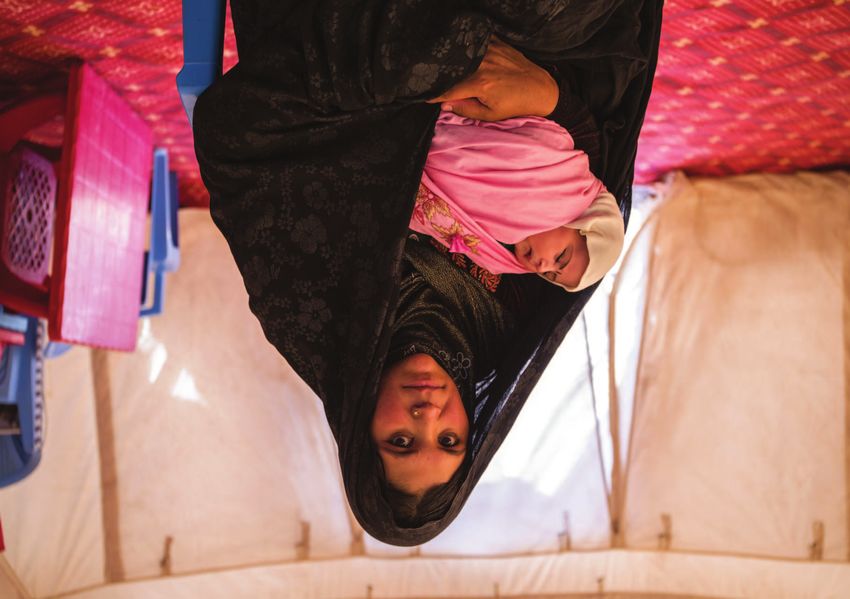
All photographs
                                                                                © 2020 Lynzy Billing
                                                                                Midwives care for a mother who has just given
                                                                                birth at Dasht-e-Barchi hospital in Kabul,
                                                                                Afghanistan in October 2020.

4   “I WOULD LIKE FOUR KIDS—IF WE STAY ALIVE”   HUMAN RIGHTS WATCH | MAY 2021                                                   5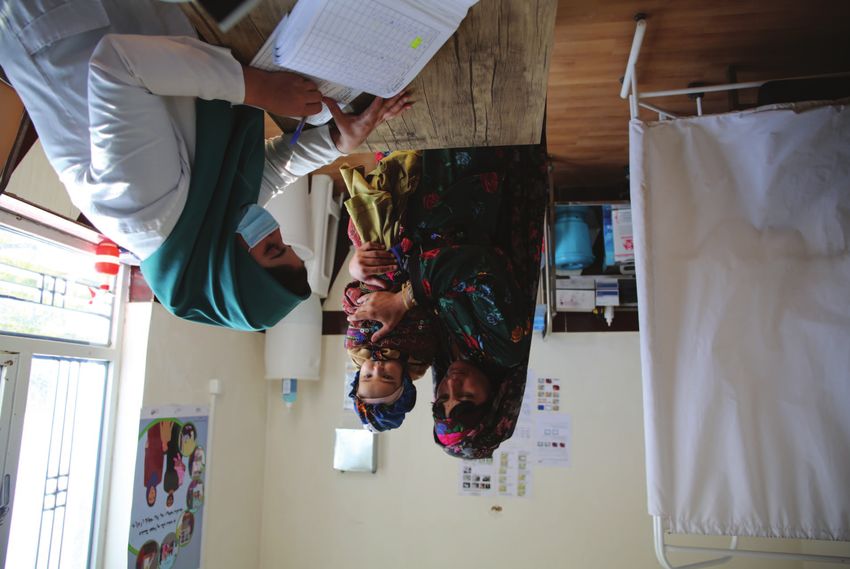
A midwife talks with a patient about family
                                                                                planning options at Kahdistan clinic.

                                                                                A midwife discusses family planning with a patient at
                                                                                Kahdistan clinic in Herat province, Afghanistan in October
                                                                                2020. The health workers at Kahdistan clinic teach reproductive
                                                                                health and family planning methods using picture books as
                                                                                most of their patients cannot read. Each patient receives a book
                                                                                that is marked with their contraception instructions.

                                                                                A midwife sees her first patient of the day at Kahdistan
                                                                                clinic in Herat province, Afghanistan in October 2020. The
                                                                                clinic previously offered pregnant women ready-to-use
                                                                                therapeutic food, but a limited supply this year caused by
                                                                                funding gaps means that now only the most severely
                                                                                malnourished pregnant women receive this assistance.

6   “I WOULD LIKE FOUR KIDS—IF WE STAY ALIVE”   HUMAN RIGHTS WATCH | MAY 2021                                                                7
Women wait at the Shahrak-e-Sabz internally displaced
person camp in Herat for transportation to Kahdistan health
clinic run by MSF, October 2020. Kahdistan health clinic
was established in 2018 as a maternal clinic but now
welcomes all patients, providing basic health care,
including vaccinations.

A board tracking provision of services at a maternity
                                                                                                 ward at Mirwais Hospital, in Kandahar, Afghanistan,
                                                                                                 in February 2020.

                                                                                                 A patient waiting to receive chemotherapy on the
                                                                                                 women’s cancer ward at the Jamhuriat Hospital in Kabul,
                                                                                                 Afghanistan in May 2019.

                                                 A psychiatrist meets with a female patient on
                                                 the mental health ward in Herat Regional
                                                 Hospital in Herat, Afghanistan in April 2021.

10   “I WOULD LIKE FOUR KIDS—IF WE STAY ALIVE”   HUMAN RIGHTS WATCH | MAY 2021                                                                             11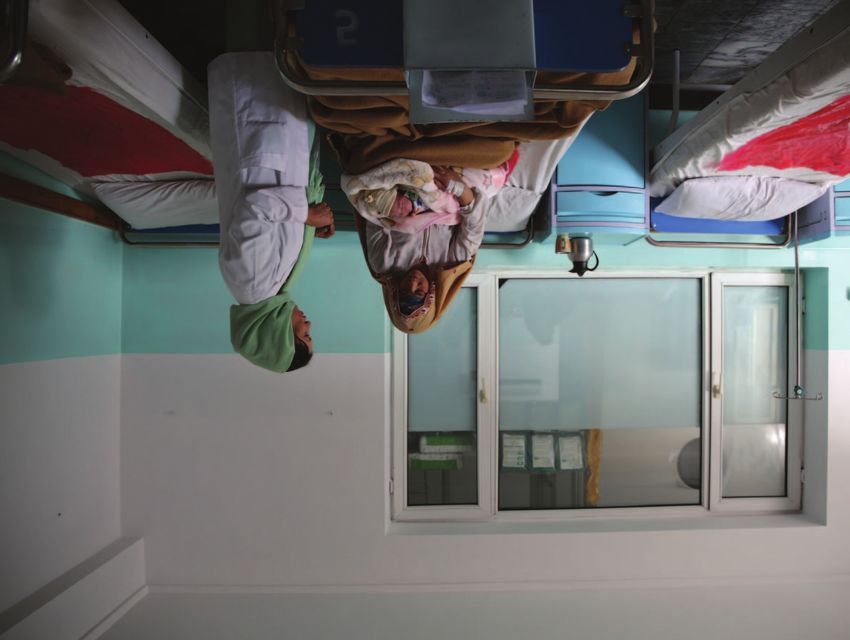
RECOMMENDATIONS
TO THE AFGHAN GOVERNMENT                                                                                               TO INTERNATIONAL DONORS, INCLUDING THE US, EU, UK, AND CANADA
•    Continue prioritizing support and reform of the health system and include a strong focus on                       •   Sustain or increase support to the Afghan health system, particularly women’s health care, and
     women’s health.                                                                                                       continue this support regardless of political or security developments.

•    Increase monitoring and strengthen accountability measures, such as complaint mechanisms to                       •   Commit to using innovative approaches to deliver health services in insecure areas, using
     reduce and end corruption in the health sector.                                                                       lessons learned from Afghanistan and elsewhere.

•    Develop and implement a plan to provide comprehensive sexuality education to all Afghans,                         •   Monitor provision of health care closely, using third-party monitors, to guard against corruption
     including women and girls, and people who do not attend formal education.                                             and other barriers, and ensure quality of services and that the services are reaching patients.

•    Expand access to psychosocial support and mental health services, including a focus on                            •   Consider supporting preventive and specialist health services, including those most needed by
     providing these services, in a gender-sensitive manner, to women and girls.                                           women and girls, and make decisions about funding priorities and program design in full consul-
                                                                                                                           tation with Afghan healthcare experts.
•    End the requirement that a husband must consent to his wife accessing contraception.

•    Track the provision of health services in provinces and districts, including: the number of health
     facilities closed, the reasons for closure, the number of health facilities operating, the number                 TO THE UNITED NATIONS ASSISTANCE MISSION TO AFGHANISTAN
     and gender of staff in different roles present in those facilities, the number and gender of
     patients seen in those facilities, and services provided, and regularly publish this data.                        •   Track and report on the availability of essential services such as health care including indicators
                                                                                                                           such as the proportion of female staff and patients, and number of maternal and infant deaths,
                                                                                                                           in at least a sample of the country.
TO THE TALIBAN
•    Support provision of health services and reform of the health system and respect the right of
     everyone, including all women and girls, to have full access to all health services.

•    Permit and facilitate education for girls and women to ensure literacy about family planning and
     health, and support training future female health workers.

•    Do not threaten, attack, or extort resources from health workers or facilities.

•    Permit comprehensive sexuality education and full access to modern contraception.

12                                                                         “I WOULD LIKE FOUR KIDS—IF WE STAY ALIVE”   HUMAN RIGHTS WATCH | MAY 2021                                                                             13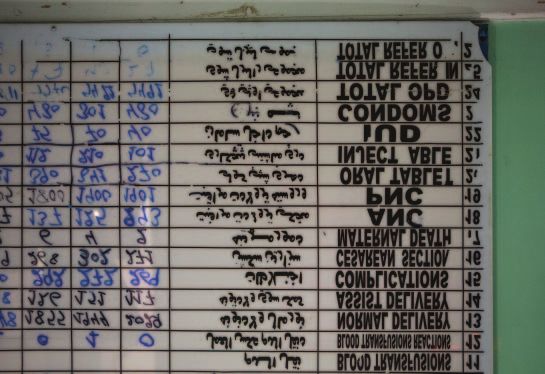
Zarmina, 25, holds her 15-day-old daughter,
Bushra, in October 2020. She has lived in
Shahrak-e-Sabz camp for two years after her family
was driven out of Ghor province by fighting
between government forces and the Taliban.

14                                                   “I WOULD LIKE FOUR KIDS—IF WE STAY ALIVE”   HUMAN RIGHTS WATCH | MAY 2021   15

For the past two decades, Afghanistan has depended on international donor support to           (above) Women waiting at Kahdistan clinic in
fund essential services like health care. But this support has been falling for years and      Herat province, Afghanistan in October 2020.
                                                                                               The small women's health clinic, run by MSF,
will likely continue to do so—perhaps precipitously—as the United States and NATO
                                                                                               serves Shahrak-e-Sabz camp, the largest
withdraw all forces from Afghanistan by September 11, 2021. In 2013, member countries          settlement of displaced people in western
of the Organisation for Economic Co-operation and Development's Development                    Afghanistan. About 80,000 people, most of
Assistance Committee contributed US$141 million to health and population assistance in         whom fled fighting and drought in 2018, live in
Afghanistan. By 2019, that figure had dropped 26 percent to $105 million.                      the camp. The clinic is the sole option for
                                                                                               women and girls from the camp seeking
The funding decline is having a life-threatening impact on Afghan women and girls. Health      reproductive health care.
services that were once free no longer are, as hospitals cannot afford basic supplies. Costs   (front cover) A new mother holds her hour-old
are passed to patients, many of whom cannot pay them, or cannot even afford                    baby on the maternity ward at Dasht-e-Barchi
transportation to a health facility—problems the Covid-19 pandemic has exacerbated.            hospital in Kabul, Afghanistan, October 2020.
                                                                                               She had travelled from neighboring Laghman
Women often have more children than they want because of lack of access to modern
                                                                                               province to give birth at the hospital.
contraception; face risky pregnancies because of a dearth of care; and undergo procedures
                                                                                               On May 12, 2020, unidentified gunmen attacked
that could be safer with access to more modern techniques. Maternal and infant mortality       the hospital’s maternity ward, killing 24 people,
remain very high. Progress on some key indicators, such as accessing prenatal care and         including 16 mothers, 2 children, and a
skilled birth attendance, is stagnating, or even reversing.                                    midwife. Three new mothers were killed in the
                                                                                               delivery room. Another 20 people, including
Donors should prioritize meeting the urgent needs of Afghans—including health care for         babies, were injured in the four-hour attack.
women and girls. The US and other troop-deploying countries in Afghanistan should              Ongoing security concerns have left women
assess the need for aid and their commitment to providing it separately from the decision      dependent on the hospital with reduced access
to withdraw their forces. They should fully appreciate the depth and urgency of the needs      to health care.
in Afghanistan, and not use their departure to justify cuts in assistance that is needed       All photographs © 2020 Lynzy Billing
more than ever.

hrw.org
You can also read


