IB MYP-DP EDITION August-2020 - The Gaudium School
←
→
Page content transcription
If your browser does not render page correctly, please read the page content below
IB MYP-DP EDITION August-2020
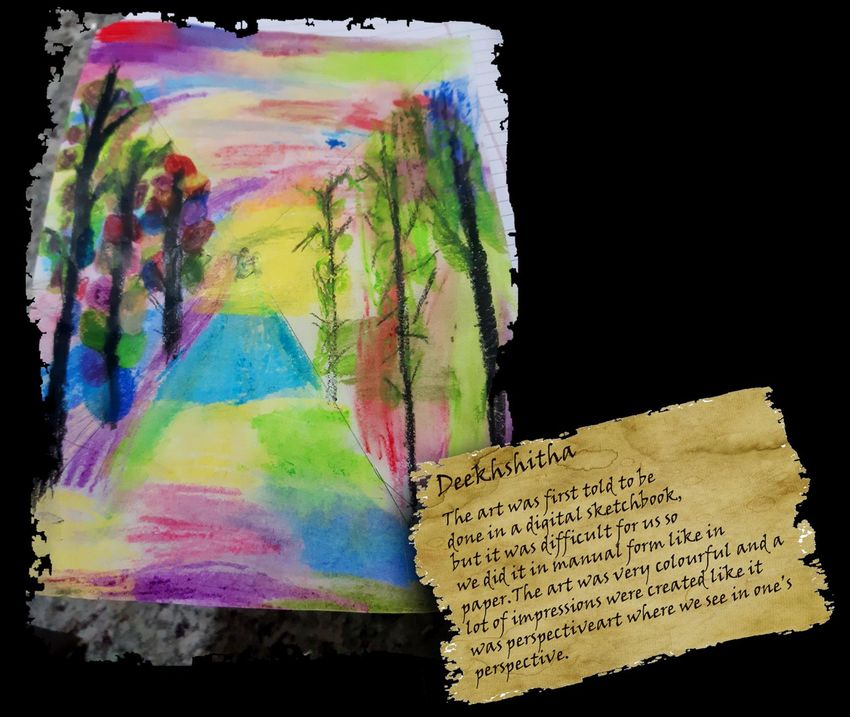
Table of Contents

            1.          Letter from the Principal

           2.           Message from the Editorial Board

            3.         Coordinator’s
                       Experiential   take on the
                                    Learning
            3.
                       Curriculum
                        Perspectives on Teaching and
           4.
                        Learning

           5.           Critical Reflection

            6.          Creative Side of Learning

            7.           Beyond the Classroom

            8.           Parents Connect

             9.          Upcoming Events

            10.          Event Links

             11.         Editorial Board

2   © Copyright The Gaudium School, 2018. All rights reserved.
Principal IB
                                                                      Shanmugam Paramasivan

    Dear Parents,
    It is with great pleasure and pride that I look forward to witnessing our
    learning community at The Gaudium expressing freely in their critical and
    creative writing spaces provided in the monthly newsletter. In today’s
    contemporary world of knowledge with information flowing every moment
    and communications happening at varied platforms, it requires creativity
    more than ever in processing the knowledge. But then, creativity is not
    something that can simply be taught, we must provide an environment or
    rather create the conditions for its development. The main condition is
    freedom – freedom for our learners to exercise their choice of teaching and
    learning, freedom to express their voice to raise original untraditional ideas,
    and, indeed, freedom to fail and persevere. Freedom is also important for
    developing responsibility and taking ownership.
    The IB education does not limit the student's freedom of action constrained
    to a predetermined axis of two dimensions - knowledge content and skills.
    It is the third dimension of conceptual understanding that gives a context
    and creative space for students to explore for a new idea and initiate a
    project and, thus, achieve excellence in creativity. The units of learning are
    designed in such a way that students delve deeply into concepts through
    critical inquiry at the first stage and in the process they develop the creative
    capacity to confront a given problem in an original way and are encouraged
    to look at a situation or problem from a different perspective or even from
    variety of perspectives that are not explicitly stated in the problem
    statement. At the final stage they transfer the knowledge and skills by
    taking action in the form of projects.
    The holistic excellence approach at The Gaudium is a demand made upon
    the self by every individual learner. The one’s demand of oneself what we
    mean is not of higher level but of a different level emphasized on originality,
    uniqueness and creativity.
    Wishing everyone continued good health and safe stay at home while on
    remote learning.
    Warmest regards.

3    © Copyright The Gaudium School, 2018. All rights reserved.   Global Leadership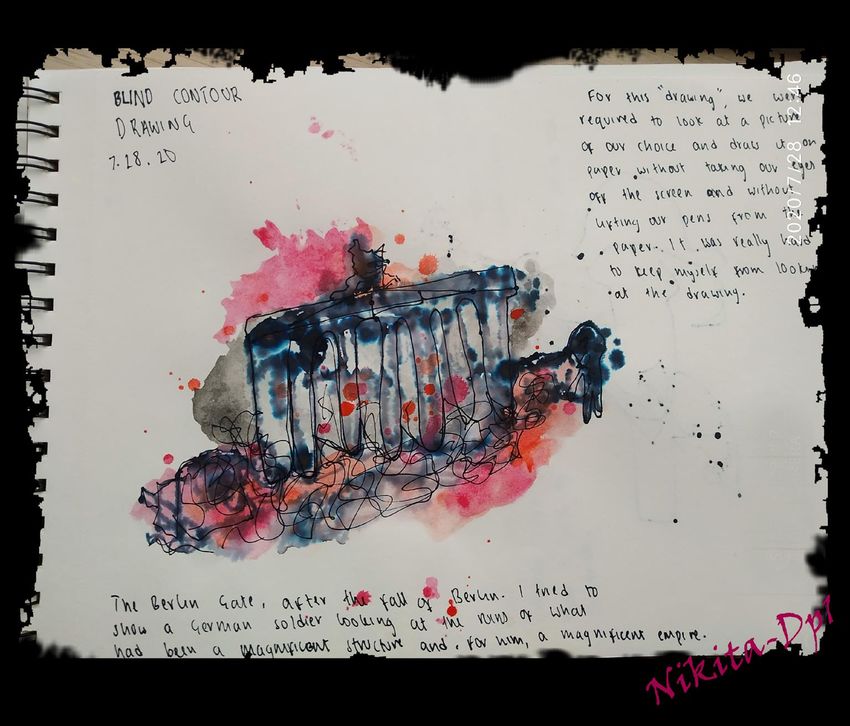
Message from the Editorial Board

                                                                                 Prithvi Sinha
                                                                     Member of Editorial Board
    Wake up, September is here!

    September has come - Autumn in the north after the scorching Summer and
    Spring in the south after the tremendous Winter. Just like nature does every
    year it is time to refocus our energies, at this juncture. And there are some
    amazing incidents happening across the globe that will inspire us to do so.

    Only yesterday, Greta Thunberg returned to school after her school gap year .
    Her protest at the COP25 UN climate conference got prolonged because she
    chose to cross the Atlantic while travelling to Chile to highlight the carbon
    emissions due to flying. Although her message reverberated globally, the
    reason for her crossing the Atlantic, the Climate Conference, got cancelled (not
    due to Covid-19, there are other more excruciating things that the world is
    suffering from, for example - income inequality). Greta again took the long road
    back home and ensured her appeal reverberated more. And then she decided
    to go along with the idea of a gap year because by then it was too late to start
    the academic year.
    But why am I talking about her? Because in her I see a teenager who has
    shaken the world and the same tenacity is what I see in the teenagers around
    me. We as parents and teachers and guardians are not always able to read
    deep into their psyche because we do not speak their language and we end up
    not identifying the spark in them. The spark that is necessary for the ailing
    world, the spark that is indispensable. Maybe we need to spend some more
    time and I know I am saying this when most of us are spending time at home
    with our children. I am saying this because we still need to walk a few more
    miles to try and understand their language.

    So, now that we have woken up as September has come, and also the world
    has woken up to realize the gap year that we all need to take, maybe just
    mentally, let us do what we believe is necessary for the future, for the larger
    picture, for the most positive conjecture of the world.

4      © Copyright The Gaudium School, 2018. All rights reserved.   Stakeholder Engagement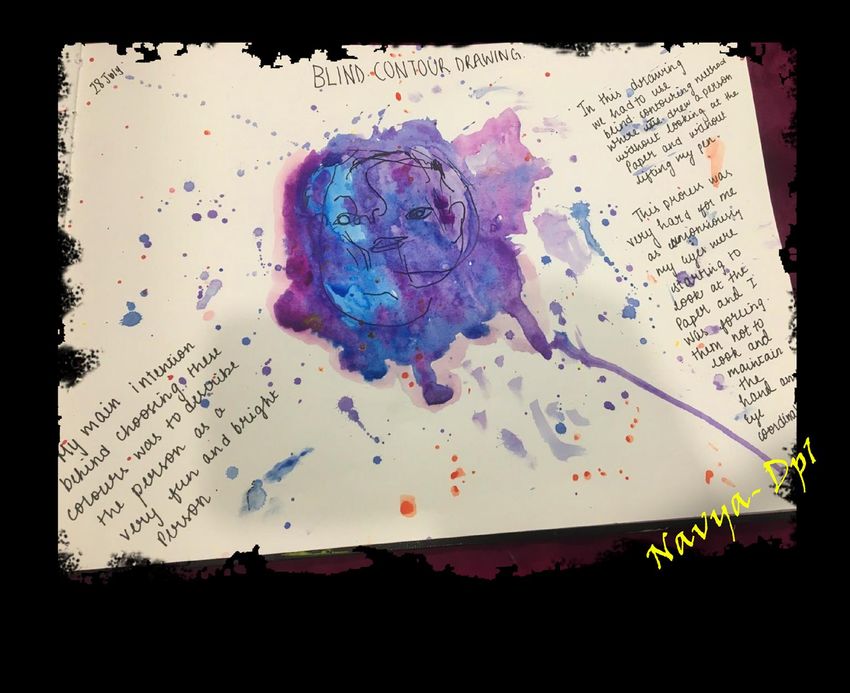
Coordinator’s take on the Curriculum

                               Teaching, Learning &
                            Assessment @The Gaudium

    The teaching, learning, and assessment have been greatly impacted due to
    restrictions and limitations imposed due to COVID-19 . IB has always adopted a
    student-centric approach. To mitigate the loss of instructional time and logistical
    challenges and provide flexibility and fairness in preparation for the May 2021
    session IB has published guidance on:
    ❑   How to complete the internal assessment components and coursework
        assessment components
    ❑   Adaptations for a few external assessment components
    The information and guidelines have been shared with students.
    At Gaudium, we believe our strength is open and continuous communication
    between all stakeholders. One-on-one meetings with DP year 2 Parents were
    held by the Principal and Coordinator to discuss our plan of action in helping
    students prepare for May 2021. Ongoing webinar on career counseling is held to
    keep the students and parents informed about the various opportunities and
    knowing the requirements that will help them to decide the career options and
    the college admission process. DP year 1 student one-on-one meeting with the
    principal and coordinator is being scheduled to discuss the goal setting for the
    academic year.
    This semester our focus is on helping students build their portfolio. Through
    student reflection, it can be analyzed that how students are appreciating the DP
    assessment component "Summative assignment" - the nature of the task and the
    quality of the task students are finding it interesting and have shown great zeal
    in completing and taking feedback from the teachers. The very purpose of the
    assessment is served if the students take interest, make an effort to demonstrate
    their application of learning in the assignment and assessments. They are able to
    identify the gaps in their learning through ongoing reflection and are working on
    self-management skills to improve upon them.
    Vijeta Sinha
    IBDP Coordinator

5       © Copyright The Gaudium School, 2018. All rights reserved.   Global Leadership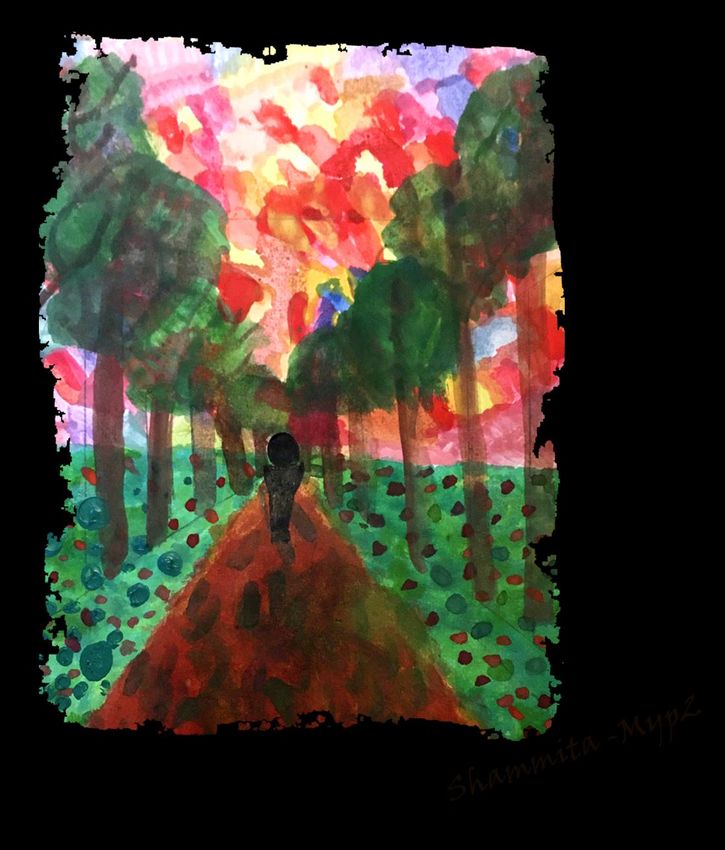
Coordinator’s take on the Curriculum

                             Developing a Leadership
                                    Mindset

    Leadership isn’t a gift or a trait that only a selected few of us possess,
    however it is an important quality present in every successful individual, but
    is it everything? In every aspect of life, we can see the demand for leadership,
    be it a school project, within a community or even in a workplace. The world
    looks towards leaders as a source of inspiration and empowerment. Leaders
    are looked up as mentors and guides who can guide their team towards a set
    vision and are expected to help individuals in the team to achieve their set
    goals.
    School is a place for where the student’s intellectual well-being is
    strengthened. At TGS, we see a wide range of personalities and diverse
    qualities in our students and staff and challenge them to move beyond their
    current scope which is one of the important qualities of being a leader. I have
    interacted with many students at different occasions, they might not have
    every single leadership quality, however they are confident and successful in
    their own unique domains where they are passionate about. They are a bunch
    of athletes, artists, creative individuals who come up with some of the most
    brilliant ideas I have ever heard. Then there are another group of students
    who are compassionate and always there for others, doing whatever they can
    to help. They are always open to learning more and have a sense of boldness
    in recognizing that they don’t have all answers, nor do we expect to. They
    open their door to acquire new understanding, try new things, accept failures
    and treat them as a stepping stone by enjoying the learning experience.
    Through our core values and Global Leadership of Happy minds model, we
    believe in creating leaders who are looked upon for whatever strength they
    possess. Every single student in our school has their own set of unique
    qualities and honing these qualities will be our prime responsibility which will
    enable them to be successful future leaders. It is not necessary to adapt to
    what others dictate, so if our students are creative, caring, artists or athletic
    they will stay the way they want to be. We will not let them feel pressured by
    society to adapt to something else just because others say so.

6     © Copyright The Gaudium School, 2018. All rights reserved.   Global Leadership
Coordinator’s take on the Curriculum

    People recognize us as a school that provides students with a holistic
    development in the field of Academic, Sports, and Arts. We will encourage
    our students to be self, own every inch which will lead them towards creating
    their own success. We will motivate our students to bring their thoughts to
    the forefront of their mind though our mindfulness and well-being program.
    They will accept their thoughts as reality and practice the phenomena of
    training their mind at adapting such thoughts.
    As mentioned by Bill Gates, leaders will be the ones who empower others.
    We will provide our students with a platform where they will empower
    themselves instilling a sense of utmost pride, responsibility and
    accountability. They will also get a myriad of avenues to empower others
    with the acquired eminence of distinctive oneness and will create a bonding
    with others through an invisible thread. This will certainly play a significant
    role in molding effective leadership skills and creating successful leaders of
    tomorrow.
    Bindiya Jena
    MYPC
    Image Referencing:
    https://in.pinterest.com/pin/410953534718857760/

7       © Copyright The Gaudium School, 2018. All rights reserved.   Global Leadership
Perspectives on Teaching and
Learning

                          “When you learn, teach.
                           When you get, give.”
                             - Maya Angelou

8   © Copyright The Gaudium School, 2018. All rights reserved.
Perspectives on Teaching and
Learning

                                           Scientist within us

    Curiosity is the first sign of being a scientist. As kids grow and learn they
    begin to ask abstract questions about what they see and hear without
    following any process. While growing up, at times, scientific processes
    also become crucial at certain times. Scientific process is not just useful
    in science, but in any situation that requires critical thinking. Scientific
    process skills include observing qualities, measuring quantities,
    sorting/classifying,      inferring,   predicting,     experimenting,     and
    communicating.
    These scientific skills can be taught by using the scientific method.
    The four steps of the scientific method are to make observations, make a
    hypothesis, test your hypothesis, and make a conclusion. Each step of the
    scientific method may also include other science skills like interpreting
    data while forming a conclusion, or controlling variables while testing a
    hypothesis.
    These skills are best taught through hands-on activity especially,
    experiments, and projects. The skills at the top of the list are the easiest
    to master and can be introduced to young children through nature
    studies. These skills can be enhanced by exposing students gradually to a
    challenging skill set by using successively progressing towards difficult
    experiments over time.
    While not all skills may be taught at once, a good science lesson will
    incorporate several of these skills. As science facilitators ,we always
    strive to design tasks that involve concrete or familiar materials
    compared to material that is more complex or abstract. We start with the
    process of observation and move towards predicting a result, interpreting
    what happened, and then forming a conclusion. These skills can be
    reinforced on a regular basis by making a scientist out of any learner.
    In MYP2 , students were required to design an investigation on the
    bouncing balls. In this unprecedented situation of Covid 19 irrespective of
    limited resources available, the students went ahead in designing their
    activity, followed by collection of data and drawing conclusions ,as
    expected in the physical classroom which was heart touching.

9   © Copyright The Gaudium School, 2018. All rights reserved.
                                                                 Holistic Excellence
Cont..
     Below mentioned are some of the student reflections:
     We learned how to find data in an organized way and we learned to design a given
     activity. It was so fun to do it, It feels like being in a physical class. -Shammita
     (MYP2)This experiment was fun, and it was also fun seeing how the bounces
     increased the higher I held the ball. I understood that the higher something is, the
     more the ball bounces. I liked this experiment because we used time by having fun
     and also gaining information-Nayonika(MYP 2)
     It is truly said the sky has no limits, if there is a passion to learn, no condition can stop
     our Geckos from moving ahead in life.

     Sutapa Paul
     Integrated Science Facilitator
     Head of Science Department

10         © Copyright The Gaudium School, 2018. All rights reserved.
                                                                        Holistic Excellence
Perspectives on Teaching and
Learning
Health and Wellbeing
What is Wellbeing?
Wellbeing can be defined as a complex combination of a person's physical,
mental, emotional and social health. Community is at the heart of student
wellbeing at the Gaudium School. It is aligned towards the five pillars of the
school philosophy, and it is built on the firm belief that every stakeholder
belongs and that everyone has something valuable to contribute.
Through the health and wellbeing unit students are made to understand and
practice the well being components at home in this critical juncture. Students
do the following positive physical and health education practices:
⮚ Positive emotion
⮚ Engagement
⮚ Relationships
⮚ Meaning
⮚ Accomplishment
⮚ Total health.
Through the Physical education curriculum students are able to understand and
demonstrate the following which are also aligned with the core IB elements
such as ATL Development, Service as Action and Learner profile development.
Focusing on SMART goals:
Specific, Measurable, Attainable, Relevant and Timely
We teach students how to maintain self-compassion while reaching their goal
of well being and if they don’t reach the goal, they pause and understand and
develop themselves to modify and reset the goal again.
11 © Copyright The Gaudium School, 2018. All rights reserved.
Mindfulness & Well-beingCont..
Students were also told to practice a balance between their mental and social
health to show kindness and develop their wellbeing effectively using the
following ideas:
⮚ Write positive messages or comments on social media or send to your
friends and family
⮚ Water the plants inside and out of the house in the garden
⮚ Call someone who may be lonely
⮚ Entertain your siblings/Parents by playing a self made or a board game
⮚ Prepare a cup of tea to any of your family members
⮚ Walk with your pet
⮚ Smile at all at
⮚ Clean your room, make your bed
⮚ Do some gardening
In the course of the past month students were involved in different types of
activities such as
⮚ General warming up
⮚ Static and dynamic stretching
⮚ Mobility exercises
⮚ Lighter activities
Students were taught to involve themselves in a simple exercise routine called
Tabata which involves HIIT(high intensity interval training) that develops their
cardiovascular fitness. And all this staying within the safe vicinity of their
homes.
They were given a task to compile a Tabata routine and take a video and upload
it to for further guidance. The task is shared on the Managebac and the link to
the task This or that TABATA
Senthil Balaji
IBDP Physical Education Facilitator
Health and Wellness Coach
12 © Copyright The Gaudium School, 2018. All rights reserved.
Mindfulness & Well-beingCont..
13 © Copyright The Gaudium School, 2018. All rights reserved.
Mindfulness & Well-beingPerspectives on Teaching and
Learning
Computers skills for solving the
problems
Computer Science is the study of problems, and problem solving is the
process that arrives while finding a solution. A Computer Scientist always
aims at problem solving by using computers. The most important aspect of
computer science is solving problems. This skill is an essential skill for life.
Computers have become part of everyday life. It helps us solve problems,
find possible solutions. It enables us to make a positive difference in the
world by engaging ourselves in the iterative process that engineers,
computer scientists, artists etc. go through everyday. We utilize technology
and think algorithmically.
A CLASS ACTIVITY :
Students continue to brainstorm about computers as a machine that
processes information. They learned that this information can be any data
that is provided by the user through IPO Models.
14 © Copyright The Gaudium School, 2018. All rights reserved.
Holistic ExcellenceCont..
Students researched the basic functionality of input devices and debated
about the wireless input devices. During the class discussion, they showed
keen interest and explored ways in which a device could connect to another
country.
Students were able to further visualize the path that information takes
through the computer, and understand that the computer always processes
or calculates answers to then output those answers in a format that the user
can use. They discovered that information may also be output to other
computers.
In addition to exploring the IPO devices, students will focus on
understanding the meaning of programming a computer. Programming a
computer basically means “designing sets of instructions for a computer”.
To practice this skill, students will think and act like a computer by following
the instructions that their classmates create as well as creating the
instructions and testing them on their classmates modelling them as
computers to test how they function. ATL skills like communication skills and
thinking-transfer skills are also enhanced while doing these activities.
Through the unique activities in this unit, students are not only aware of the
role of computer programmers or the set of instructions given to a computer
but also become aware that effective communication or giving specific sets
of instructions is a key element in our day to day lives.
Josna Vaz
MYP Design Facilitator
15 © Copyright The Gaudium School, 2018. All rights reserved.
Holistic ExcellencePerspectives on Teaching and
Learning
Expressing human creativity through Technology & Innovation,
“The Computer”
16 © Copyright The Gaudium School, 2018. All rights reserved.
Holistic ExcellencePerspectives on Teaching and
Learning
Virtual सफर बच्चो संग....
ऊपर दिये गए शीर्षक को पढ़ कर आपको लग रहा होगा की इस ब्लॉग
में मै क्या दलख रही हूँ ,जब मेंने अपने MYPमें अपना सफर शुरू दकया
तो मेरे दलए हर दिन एक नई बात सीखने और दसखाने का रहता हैं ।
दहन्दी दिर्य को ऑनलाइन बच्चो तक पहूँ चाना आसान नहीीं हैं ।
MYP दशक्षण प्रणाली में परीक्षा मानिीं ड [criteria] और
कौशल[skill] का अपना महत्व होता हैं । इसके महत्व को समझते हये
गे ककोस में बोलने की क्षमता [speaking skill] के साथ अपनी
अनुसींधान कौशल[Research skill] का दिकास करने के दलए एक
गदतदिदध तैयार की गई।
इस गदतदिदध[activity] के अींतगष त दिद्यादथष यो को अपने मनपसींि
शहर के प्रदसद्ध स्थान ,खान-पान , त्योहार और भार्ा के बारे में एक
ppt तैयार करनी थी और कक्षा में उसे प्रस्तुत करना था । इस गदतदिदध
में सभी दिद्यादथष योीं ने बड़े जोश के साथ भाग दलया ।
गदतदिदध का उद्दे शय [aim] था- “दिद्यादथष योीं में बोलने की क्षमता का
दिकास” ,अतः बच्चोीं को दहन्दी भार्ा में ही अपना प्रस्तुदतकरण करना
था ।
मेरे दलए एक चुनौती [challenge] थी दक मै दिद्यादथष योीं को दहन्दी
भार्ा में बात करने दलए प्रोत्सादहत कर सकूँ । मौखखक प्रस्तुदत एक
महत्वपणष मानिीं ड हैं MYP भार्ा अदधग्रहण [language
acquisition]का ।
अध्ययन पररणाम [learning outcome]- सभी छात्ोीं ने अपने द्वारा
तैयार की गई ppt दक प्रस्तुदत की और नए शहर के प्रदसद्ध स्थान ,भार्ा
,खाना –पीना , त्योहार के बारे जानकारी हादसल की तथा नई शब्दािली
से भी पररदचत हये ।
प्रीति दीतिि Holistic Excellence
17 © Copyright The Gaudium School, 2018. All rights reserved.Cont..
18 © Copyright The Gaudium School, 2018. All rights reserved.
Holistic ExcellencePerspectives on Teaching and
Learning
Creativity at it’s best!
The students of MYP 1 and 2 have been enthusiastically involved in bringing out
their creativity and expressing their views in different forms. This is one activity
that they religiously indulge in and never fail to meet the deadline whenever a
task has been assigned to them.
Being students of English literature, it is important that students are open to a
wide variety of imagination being incorporated into their writing. I always begin
my class with a prompt for a short story or narrative and ask students to
continue it where each one takes turns to pitch in their ideas and make the
story as interesting as possible. This has really worked wonders over the weeks
and has left the students wanting more of such activities in class.
Along with narratives, they were also introduced to stylistic devices such as
simile, metaphor, personification, hyperbole to name a few. Keeping these in
mind, they also attempted their hand at poetry and shared their poems with
their peers. It was really fascinating to see our students have such vibrant
imaginations put in paper.
Priyanka
MYP English Facilitator
19 © Copyright The Gaudium School, 2018. All rights reserved.
Holistic ExcellencePerspectives on Teaching and
Learning
Importance of developing problem-
solving skills
Someone has rightly said, “ The best way to escape from your problems is to
solve them.” All of us face multiple problems in our day to day lives. Problem-
solving skills help us to solve the hitches we face in our life. We may come
across these problems at home, at school or our workplaces, problems that are
related to the society and the environment. The most tricky thing about solving
problems is that no one can give us a sure-shot solution, we can just use our
skills to identify the problems and reach out to the best possible solution for it.
The three-step mantra to develop problem-solving is to keep your mind calm,
identify the root cause of problems and practice design thinking.
Let us take these steps individually to understand the efficacy of this mantra.
Calm mind automatically decreases the magnitude of the problem and we can
see the actual problem without being emotionally biased. Remember the
character Ranchhoddas from the well-known Bollywood movie 3 idiots who
used to calm his mind by saying the famous dialogue “All izz well” in difficult
situations. That is one of the examples of the power of a calm mind. Coming to
the next step identifying the root cause of the problem is the most crucial step
in solving the problem. If we ask ourselves all the Ws (What, Why, When, Where,
Whom, Which, Who and HoW) related to our problems, then we get a clarity on
what exactly we need to do to solve it.
Last but not the least, practicing the design thinking process to find out
multiple options we have will help us to identify the final solution. Design
thinking involves connecting, predicting, questioning, researching, visualizing,
inferring, monitoring and evaluating all the aspects related to the problem and
possible solutions. An important point to consider is that we can not find
solutions to our problems or problems around us by being aloof from the
people, society or environment that surrounds us. We must take responsibility
for our actions and must predict the consequences of our actions and possible
solutions. Let us relate this idea of developing problem thinking skills in the
present scenario where the education industry is facing drastic transformation.
All the stakeholders- students, teachers, leaders, parents, school management
every member is facing change and various problems at multiple levels due to
this COVID 2020 pandemic.
How can we effectively overcome these problems?, We can think of multiple
solutions if we practice the three-mantras mentioned above. Here are some of
them.
Akanksha Sahu
Science Facilitator
20 © Copyright The Gaudium School, 2018. All rights reserved.
Holistic ExcellenceCont..
For students:
Problem - How can we learn skills and enhance subject knowledge in virtual classes?
Possible solutions-
• Follow a time table at home and stick to the schedule sent by the school.
• Be self-motivated and get involved in the class discussions. (The only thing your
teacher can instantly identify in the virtual classroom is your verbal response).
• Take out some time for recreation and refrain from playing online games for
long periods.
For Parents:
Problem- How can parents help in the child’s learning and development during
virtual classes?
Possible solutions -
• Help your child to follow a time table at home and make arrangements for their
eating, sleeping and recreational activities time accordingly.
• Talk to your child and ask what they have learnt. Be completely involved while
conversing with them.
• Try to understand their emotional state and give exclusive time to them on
weekends (play board games, play chess, involve them gardening, cooking or
physical activity with them).
For Teachers:
Problem- How can we create and deliver engaging virtual lessons?
Possible solutions-
• Be polite, considerate and calm.
• Use the easily available materials at home to create creative teaching aids.
• Learn new skills and make use of online resources and tools for educating.
Connect and collaborate with various groups of educators and trainers.
Listen to the problem students and parents are facing and work on the feedback.
Lastly sharing our viewpoints, understanding others’ problems and being empathetic
towards each other will help us all to bounce back from any setback. Let us use our
creativity, knowledge, critical thinking, emotional intelligence, teamwork, positive
attitude and determination to solve the problems of this world.
Akanksha Sahu
Science Facilitator
21 © Copyright The Gaudium School, 2018. All rights reserved.
Holistic ExcellencePerspectives on Teaching and
Learning
Active learning in Integrated
Science
“For the things we have to learn before we can do them, we learn by
doing them.” - Aristotle
The above-mentioned thought is applicable largely in learning
science. It is easy to implement learning by doing in the classroom,
when science labs and teaching tools are handy for the teachers.
Now when the physical classrooms are replaced by virtual lessons,
things are different. Active learning plays an important role in
engaging the students in the virtual lessons. Demonstrations,
experiments, simulations and solving puzzles are ways to initiate
active learning in the classroom.
I still remember my formative lab experiences. Specifically, one
incidence is clear in my memory when my science teacher showed
me an amoeba and a paramoecium under the microscope in grade
six. The microscopic image I visualized at that minute had a
macroscopic WOW experience and acted as the motivation factor
for loving science as a subject. Having the personal experience of
learning science by observing and doing, encourages me to apply
the same in my classroom. In the recent unit of integrated sciences, I
have used props, demonstrations and simulations to make my
students learn the concept of energy transfer and conservation. I
believe students learn more about the subject on their own when
they make observations, notice patterns, and visualize the situations.
Teacher demonstrations provide students with experiences of real
events, phenomena and processes. To explain the idea of variables
and constants in an investigation, I designed and demonstrated a
simple experiment by using readily available things at home.
Experiments are useful in introducing new ideas or to clarify puzzling
aspects of topics with which students typically struggle.
22 © Copyright The Gaudium School, 2018. All rights reserved.
Mindfulness & Well-beingCont..
Some methods to initiate active learning in virtual classrooms are:
Using a timer, students focus better under the clock. Using colors and
animations in PowerPoint presentations. Giving quiz and challenge tasks to the
students. Using props and visualization. For example: To explain the factors
affecting the potential and kinetic energy, I used Soccer ball, douche ball and a
ping-pong ball and visualization of multiple situations. Creating and using
mnemonic devices. For example: Remembering MRS. NERG to remember the
seven life characteristics.
I believe, if we can learn to teach science online, by overcoming or accepting
necessary compromises, then we may bring the magic of science to all the
students.
Akanksha Sahu
Science Facilitator
23 © Copyright The Gaudium School, 2018. All rights reserved.
Mindfulness & Well-beingPerspectives on Teaching and
Learning
A dive in the waves of ‘Listening’ ...
Communication is a skill that we focus on in a language class. This skill is
often defined as conveying a message orally or in written format. However, a
factor which also carries weight in communication is ‘listening’.
MYP1 French Language acquisition class was introduced to listening in the
first week of this academic year. Students learnt a special exercise to
improve their pronunciations. In this class, LISTENING was introduced as an
assessment where students had to apply the sounds they learnt in a context.
They had to watch a video in French and later answer the questions set by
the teacher. The objective of this activity was to familiarise students to make
meaning of the sounds they learnt to answer factual questions about the
video, set by the teacher. Students had to identify the concept of identity in
a video related to family and friends.
The first activity was to re-watch the video sent and write the important
vocabulary they could identify by listening. Then, there was a brainstorming
activity on the interrogative pronouns, learnt before with an application of
those pronouns in the questions. It was a challenge for the students to make
meaning out of the questions set but when they were taught how to read
the questions and find the meaning of the words one by one, they found it
easier. They could understand the questions but were not in a position to
find the answers within the video. So they were taught to focus on key
words in the questions which would help them identify the answers in the
video. At the end of the session, students were eager to try out answering
the other factual questions as homework.
Mme. Nandita Maunthrooa
Enseignante de la langue française,
Chef du département des langues étrangères
24 © Copyright The Gaudium School, 2018. All rights reserved.
Holistic ExcellenceCont..
25 © Copyright The Gaudium School, 2018. All rights reserved.
Holistic ExcellencePerspectives on Teaching and
Learning
Beyond Google Meets: An expressive way of performance
practice.
The MYP Program in The Gaudium
school has come up with a dynamic
performance practice in the classroom.
This performance practice allows
geckos to experience skills of three
performance subjects: Dance, Music
and Theatre. Without forgetting the
aims and objectives of MYP arts, the
course is designed to offer life skills
through the performance practice. Two
units are designed for an academic
year; at the end of each unit, the geckos
will perform a musical play, and write
their responses on the performance.
To reach the final performance, geckos are
going through theory and sequence of
activities. The theory focuses on elements
of music, dance and theatre. The activities
are designed to acquire the performance
skills. Thus, the course is designed to give
opportunity to both theory and activity. As
part of the theory, geckos explored
performance elements, importance of
stamina for performers, and musical notes.
After exploring theoretical aspects, students
explored various activities connected to the
theory. For instance, geckos demonstrated
various expressions, imitated various musical
notes, and practiced various warm-up
games. With the help of teachers, geckos
always connect the activities for final
musical theatre performance. Examples for
this connection can be described through an
activity: singing a dialogue. Here, geckos
select two sentences to introduce
themselves, and they deliver the two
sentences in song format. This is the stage
for musical theatre practice. In later stages,
they improvise scenes using song and
dialogues. At the final stage, they approach a
musical script and make a performance.
26 © Copyright The Gaudium School, 2018. All rights reserved.
Holistic ExcellenceCont..
When they were asked to reflect on the musical theatre performance, few
of the geckos connected to clip arts. These clip arts establish a strong
connection between learning experience and the subject skills. For
example, clip art 1 was identified with Gecko's virtual classes; clip art 2 was
recognized how a person transforms himself as a character with theatrical
costumes and makeup; and clip art 3 was branded for the audience in
theatre.
Thus, the Geckos are expressing their ideas, and engaging with subject
skills in virtual classrooms.
Department of Performing Arts
27 © Copyright The Gaudium School, 2018. All rights reserved.
Holistic ExcellencePerspectives on Teaching and
Learning
Storytelling
Storytelling is an art that demands interpretation and relies on both creative
and critical thought processes. Sharing our stories connects us with other,
gives more meaning to our relationships, and provides more context in our
work. Listening to each other's stories helps us to show empathy, better
connect to one another, and better understand complex thought. Storytelling
is universal and multi-cultural, involving a process of give and take. Stories can
reveal personal power as well as personal identity.
Storytelling is a powerful pedagogical tool. Therefore, this time I chose
storytelling to foster curiosity among my students to engage actively because
stories seek to communicate their message in the most compelling and
provocative way possible. As author Gail Goodwin says, "Good teaching is one-
fourth preparation and three-fourths theatre!"
Story telling engaged my students in a unique way. The magic of storytelling
changed the atmosphere in my classroom and in so doing enhanced the
learning environment. They were so excited to hear the story. They
participated very enthusiastically. They learnt the targeted vocabulary
effortlessly. Moreover, they easily understood the key concept for the new unit
which we shall start. Then, they sketched their understanding of the story on a
piece of paper. The objective of the activity was achieved when I saw their
learnings through drawings.
Stories serve to open the mind so that the student is ready to take things in.
Stories improve verbal skills, develop a love for the language and encourage
active participation. Moreover, it improves imaginative skills which is true. In
short, stories appeal to the heart, and, once the heart is won, the mind is open
to learn!
Merci,
Sunita Goyal
French Facilitator
28 © Copyright The Gaudium School, 2018. All rights reserved.
Core ValuesPerspectives on Teaching and
Learning
An approach to understand
Psychometric Testing
“Psychological testing”, also known as psychometrics, the field of study
concerned with the theory and technique of psychological measurement,
which include the measurement of knowledge abilities, attitudes, traits and
educational measurements.
Psychological testing has a purpose; it has a hypothesis to understand the
behavior of an individual. So while conducting a test or assessment the
experimenter needs to be very careful. Norms are very important to look into
else the test scores get affected and we may not get the desired outcome.
The students in DP Psychology had performed their very first psychometric test
on the memory learning process, the conceptual knowledge was drawn from
Atkinson and Shiffrin’s memory processing model. The students conducted the
test on each other where they prepared a few items before the test like a list of
15 meaningful words and 15 non-meaningful words. The participant was
required to recall the list of meaningful words which was shown before the
non-meaningful words to rule the hypothesis “forgetting occurs in long term
memory when interference takes place” also to understand “different types of
learning process through memory model” . The students were given a
demonstration of the test and explained its aim, instructions and objective.
Each one of them prepared their individual list of words and instructions and
performed their test.
Students actively participated keeping in mind the ethical consideration of the
process and conducted the test one on one with great enthusiasm. After the
testing the students were given space to discuss and understand the limitations
and critical analysis of their performance. Positive feedback was shared among
each other. Students who observed the tester and participant also provided
feedback and possible limitations of the performance , areas on which they
need to work were also discussed.
Lastly I would like to say that the students' effort to understand their learning
by performing and executing their concepts really gave them a better insight
and knowledge about the approach to psychological testing.
Sukanya Das
DP Psychology Facilitator & School counsellor
29 © Copyright The Gaudium School, 2018. All rights reserved.
Holistic ExcellenceCont..
30 © Copyright The Gaudium School, 2018. All rights reserved.
Holistic ExcellencePerspectives on Teaching and
Learning
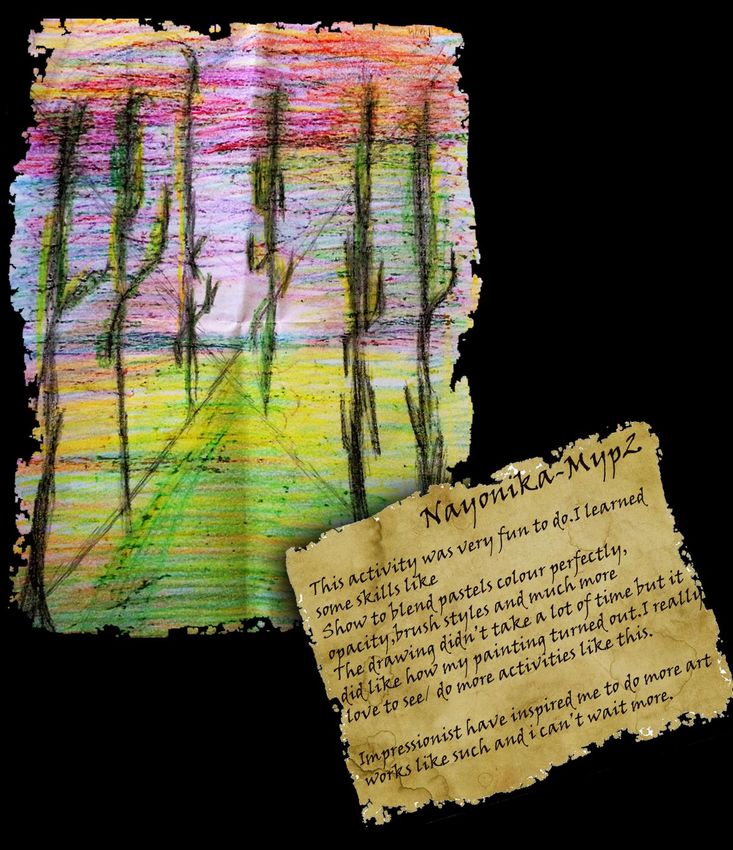
It’s all about the process
It's what a learner does naturally. It’s what Da-Vinci and Michelangelo, van
Gogh and Picasso, almost all of them did. It’s exploring and
experimenting with materials and techniques.
It is following intuition, making mistakes and letting go of the set outcome
in support of discovering what emerges in the moment. Process-oriented
art with students is by nature learner-centered. It is directed by the
learner(the artist) and not by the teacher.
The outcome, the finished piece of work, the beautiful painting or
sculpture is not the goal of art for young learners. The goals of art for
learners is to express their thinking, knowledge and ideas, explore, try, and
create with new and different kinds of media, experiment with colors,
lines, forms, shapes, textures, and designs; express feelings and emotions,
and be creative. Something as simple as painting on a piece of medium
can create wonders for a learner, even if the learner is mixing all the
colours to form a large, dark amber spot covering the space. Even if the
art does not attract one’s eye, this is the learners exploring,
experimenting, and learning from what they are creating. That kind of
artwork is always pleasing to the learner's eyes.
Students who engage more in process art will say phrases, such as, “Look
what I made!”, “I’m going to make another one!”, “Can I have more time?”
Process-oriented art gives students free expression with art and allows
them to bring out their unique personality in each of their creations. As a
visual arts teacher, it is my responsibility to ensure that the students in my
classroom have the opportunity to get the most out of their journey,
without pressuring them to achieve particular end results. Focusing on the
process instead of the product can give them this experience.
Debendra Kumar Sahoo
IBDP & MYP Visual Arts Facilitator
31 © Copyright The Gaudium School, 2018. All rights reserved. Mindfulness & Well-beingPerspectives on Teaching and
Learning
तिन्दी किा का ऑनलाइनकरण
विषय [Theme ]– पहचान उप विषय- जीिन शैली
“पहचान” नाम से ही मेरी इस गति विधि का पिा चलिा हैं ।
आज ऑनलाइन रहना विश्ि की पहचान बन गई हैं। इस
ऑनलाइन के रं ग में रं गने से हम अध्यापक भी पीछे नहीं रहे
और इस महामारी के दौर में हहन्दी अध्यापकों ने भी ऑनलाइन
टूल्स से अपना नािा जोड़ ललया । इस महासागर में जजिना डूबिे
जाओगे उिना ही अपनी कक्षा को रोचक बनाने के नए –नए
रास्िों से आपकी पहचान होिी जाएगी।इसी रास्िे में मेरी पहचान
Padlet tool से हुई । जजसका प्रयोग मैंने अपनी DP िषष 1की
कक्षा में ककया । मेरे ललए बोडष और माकषर को छोड़ कर लैपटॉप
पर virtual क्लास में पढ़ाने िक का सफर असर आसान नहीं
था DP िषष 1 की कक्षा प्रारं भ होने िाली थी बच्चों को उनकी
पसंद के अनस ु ार विषय से जोड़ने के ललए नए –नए ऑनलाइन
गेम और ऑनलाइन टीधचंग टूल्स को अपना रही थी । DP-1 के
पांचों विषय को PPT के जररये समझाया और पहले विषय –
पहचान में जीिन शैली को शरू ु करने के ललए एक गति विधि की
गई - “दे खो,समझो और ललखो”। इस गति विधि का उद्दे श्य है –
“ विद्याथी में अपने भाि और विचारों को स्पष्ट लेखन के
माध्यम से अलभव्यक्ि करने की कला को विकलसि करना । गति
विधि को ठीक से करने के ललए Padlet.com tool का प्रयोग
ककया।इस गति विधि में गेक्कोस ने बड़े चाि से भाग ललया
अपनी बौद्धिक कौशल का विकास ककया ।
Preethi Dixit
DP Hindi facilitator
32 © Copyright The Gaudium School, 2018. All rights reserved.
Holistic ExcellencePerspectives on Teaching and
Learning
Computer Science- Programming skills
The objective of the Computer Science classroom discussion was to introduce
students to programming skills. Students have shown great interest in
learning programming languages. Also programming requires them to build
Computational, Thinking, Procedural and Logical skills. These are crucial
components of Paper 1 in IBDP CS at Standard Level. The task given to them
was to develop a basic game in the app “Thunkable”. While developing any
game or software product, various stages like Analysis, Designing,
Implementation, Testing and Evaluation need to be executed successfully. In
planning there was a brainstorming session conducted where the complete
steps to build the game was fixed. Also various ideas came up with unique
titles to the games. They also discussed the learning benefits of playing the
game and the intended audience for whom the game will be developed. The
designing phase helped to develop the game on mobile. In Implementation
the platform Thunkable was used.
This activity helped students to learn about the system development phase as
well, where various challenges occurred. Based on the challenges unique
solutions were discussed and implemented so that the product may be
executed successfully. Also a survey was conducted among them to analyze
each other's work and come up with suggestions or feedback.
Ultimately the students developed a few programming skills while using
“Thunkable” applications in mobile and also understood various phases of
system development and life cycle.
Susmitha Mukherjee
IBDP Computer Science Facilitator
33 © Copyright The Gaudium School, 2018. All rights reserved.
Holistic ExcellencePerspectives on Teaching and
Learning
Learning by doing
Kenneth Arrow, the economics Nobel prize winner in 1972 was bestowed with
this prestigious prize for his model on learning by doing. The concept entails that
through practice and self-perfection one’s productivity is enhanced. The
students aligning with the same concept, practiced learning by doing.
The IB curriculum leans on the nine conceptual pillars. The contents merely
succor its(concepts) establishment. The students as a part of class activity thus
took up self-learning of concepts through exploring contents. They inspected
the demand-supply model, how it affects the day to day lives and above all how
the concepts situate themselves in it. The peer-reviewed group presentation
held up the student’s communicative skills: to project their ideas through and
across various platforms and audience respectively. The presentation also
backed the students with effective presentation skills, taking up questions after
sessions and coming up with a prompt solution to those. The students also
assimilated the concept-content model with the real-world issues through this
activity.
Upama Chatterjee
Economics Facilitator
34 © Copyright The Gaudium School, 2018. All rights reserved.
Core ValuesPerspectives on Teaching and
Learning
The show must go on..
Exploring Director’s notebook through the process of performance making
Due to the pandemic, students lose performance practice in the classroom.
However the DP theatre classes have redesigned the theatre games for online
classes, and have created virtual rehearsal space. For DP Year 1 Theatre Arts, the
academic year is planned to start a unit with a title, "Working with play texts -
DIRECTOR'S NOTEBOOK".
As a major part of the taught curriculum in IB Theatre demands theatre
activities and research work, the first unit is designed to initiate with the actor's
training, rehearsal process, and the director’s approach. Usually, the process of
actor’s training requires a group of participants together in a physical space
where they can interact with each other, and share the emotions and space
equally. To achieve this challenge, the concept of virtual rehearsal space is
adopted. In this concept, acting exercises and theatre games are redesigned to
update the performance skills of the students. These theatre games focus on
observation, creativity, thinking, collaboration, and listening skills. One may
think how collaboration can happen in virtual theatre class. To answer that,
students can show a script, Nighthawks, which was developed collaboratively
from a visual stimuli, a painting. In this exercise, they shared their creative
ideas, prepared a short story, divided into scenes and wrote the script. Later,
the script was utilized to incorporate few games for actors such as subtext and
characterization. As part of creating a character, students demonstrated voice
modulation and facial expressions of selected characters.
Along with these exercises, students explored the theory of Stanislavski
method acting. In this exploration, they understood the key words derived by
Stanislavski, father of modern acting training. These keywords are
concentration, subtext, and 5 Ws.
Though there are a lot of limitations in a virtual class, it does not stop us from
teaching and learning. Virtual rehearsal space was a fruitful activity. This activity
justified the famous phrase, “ The show must go on”.
Dr Nagaraju Pejjai
IBDP Theatre Facilitator
35 © Copyright The Gaudium School, 2018. All rights reserved.
Holistic ExcellencePerspectives on Teaching and
Learning
An activity on Mindfulness –
‘Une activité de prise de conscience’
‘Style de vie’ était un chapitre qu’on a couvert dans la première unité qu’on a
étudié. Durant les multiples sessions qu’on a eu, dans une, on a parlé des
styles de vie des différentes cultures dans le monde. Une activité que les
élèves ont participé avait débuté avec une discussion sur certains styles de
vie plus particulièrement sur le style de vie yogique, le style minimaliste et un
style de vie simple et zen.
Les élèves ont tout d’abord fait une petite recherche de 10 minute sur un
style qu’ils ont choisi et ensuite ils devaient parler de ce style de vie en
associant avec un objet de leur choix, comme un représentatif de ce style. Ce
n’est qu’après leurs recherches qu’ils ont été sollicité de chercher un objet à
cet effet. Ce qui les a rendu confus mais amusés. Alors, les élèves se sont
levés et ont marché. En même temps qu’ils ont eu la possibilité de faire une
mini- activité physique, ils ont aussi eu la chance de réfléchir rapidement
d’un objet de leurs environnement sociales qui pourrait être utile.
L’objectif de cette activité était de rendre les étudiants attentifs aux objets
qu’ils voient par le petit bout de la lorgnette dans leurs maisons. C’était un
moyen de travailler leur aptitude de réflexion et de les pousser à prendre des
risque.
À mon avis, les élèves avaient réussi à sélectionner des objets bien adopté
pour le style de vie qu’ils devaient parler. Entre autre, on a eu comme outil,
une pomme et un tapis de yoga pour représenter le style de vie zen, une
chaise en miniature, un téléphone portable et une balle de Pingpong, pour
représenter un style de vie minimaliste et comme la cerise sur le gâteau, un
bol chantant Tibétain pour représenter une vie simple. J’étais époustouflée
de voir comment ces élèves avaient des explications étonnantes de ces
objets de leurs maisons. Pour moi, c’était une activité de pleine conscience.
Mme. Nandita Maunthrooa
Enseignante de la langue française,
Chef du département des langues étrangères
36 © Copyright The Gaudium School, 2018. All rights reserved.
Mindfulness & Well-beingCont..
IBDP 11-French B SL
37 © Copyright The Gaudium School, 2018. All rights reserved.
Mindfulness & Well-beingPerspectives on Teaching and
Learning
“Tell me, I will forget; Show me, I may
remember; But involve me, I will
understand.”
Bonjour!
How true it is!
This proverb tells us that we learn best when there is involvement of the
students and an interactive relationship between the students and the teacher.
As facilitators, teachers must discover what the students know and what they
need to know. This discovery happens only if teachers are willing to engage
students beyond a surface level. Being as a teacher, I've always paid close
attention to the student engagement and involvement in the class because I've
discovered that it's difficult to keep students focused when the lesson is
delivered in a traditional way. Therefore, I always apply various strategies and try
to find the activities that allow maximum participation of my students.
Recently, they have done various tasks like listening & reading which enhanced
their LSRW skills. One of the tasks which students enjoyed the most was the
group task in which one student acted and his peer had to guess. Enthusiasm
was full on during this activity. In addition to learning specific-content, it
enhanced their leadership skills, social skills and bonding among them. They
exhibited their confidence. In short, it was a learning with Fun.
Merci,
Sunita Goyal
French Facilitator
38 © Copyright The Gaudium School, 2018. All rights reserved.
Mindfulness & Well-beingPerspectives on Teaching and
Learning
Building arts skills through Integrated Performing Arts
Integrated Performing Arts (IPA) is designed for MYP Year 1 and 2 to
enhance their experiences with musical & theatrical performances. This
curriculum will also provide students with an opportunity to expand on
their experience in enhancing their performing techniques by
connecting to other subject disciplines as well. The intent is to give
students opportunities in theatrical practices and to use these
opportunities to connect people and communities, while at the same
time identifying and addressing social concerns. At times, students will
create their original work and otherwise, they will reinterpret existing
work to experience the intent of the artists. This subject will also help
students to understand why and how humans express themselves
through performance.
Dr Nagaraju Pejjai
IB Drama & Integrated Performing Arts Facilitator
39 © Copyright The Gaudium School, 2018. All rights reserved. Holistic ExcellenceCritical Reflection
“We do not learn from
experience, we learn from
reflecting on experience.”
- John Dewey
40 © Copyright The Gaudium School, 2018. All rights reserved.Critical Reflection
Creativity at its best!
Corona has come our way
Everybody needs a laugh a day,
Strange things are happening
Maybe I was imagining
But when I woke up in the morning
Moons and clouds were playing Hide and Seek,
This was a memory to keep,
Plants were messing while,
Tomato waited for its dressing,
I saw my friend and said Hi,
But leaves were waving goodbye,
While babies were crying,
Time was flying,
Toys were playing in the street,
Cars were not saying beep-beep-beep,
Still it's time to wake up from my sleep,
All this was fake,
But that was before I was awake,
Sadly there is no time for glory,
For Coronavirus seems like a never ending story.
I first started writing poems in grade 4. Poetry was one of our topics. At first, I
struggled a lot to write and everyone else found it easy. I tried writing a poem
on my experience as a class prefect and then a poem on teachers’ day. Though
they were not the level I wanted them to be, it was a start. Soon I was finally
able to write poems. We learned many types of poems. I wrote about different
topics. My topics usually were my friends, parents, teachers, my books, Harry
potter, my subjects in class and nature.
I wrote acrostic poems, Haiku, limericks, rhyming poems, and poems which
included personification. I enjoyed writing poems and soon I created my own
blog in which I write poems. I get many ideas of rhyming words. I try writing
poems about my imagination, my thoughts about things.
Jia Kapoor
MYP1A Student
41 © Copyright The Gaudium School, 2018. All rights reserved.
Holistic ExcellenceCritical Reflection
Expressing human creativity through Technology & Innovation,
“The Computer”
Student’s KWL
Reflection: Computer Fun
Facts!
Did you know that you blink up to
20 times a minute? Well, you only
blink 7 times a minute when
you’re using a computer! Must be
1.
2.
all that concentration.
3.
4.
By Aditi
The first computer mouse
ever made was made of
wood.
Do you enjoy playing video
games? Well, there are two
games that were the first
ever made in the US called
Asteroids and Lunar Lander
in 1980.
By Arnav
Have you heard of them?
42 © Copyright The Gaudium School, 2018. All rights reserved.
Holistic ExcellenceCritical Reflection
Movement
The unit called “where are we now and where might we go” started with the
key concept “Relationships” and a related concept “Movement". The journey of
this unit took around six weeks, during which students developed graphical,
mathematical, and organizational skills. They learned to plan tours, plot
graphs, and calculate speed, distance and time using formulae from diverse
contexts. Throughout this unit students displayed themselves as open-minded
and balanced individuals while they were engaged in peer analysis and
accepted the ideas and suggestions shared by their peers without hesitation.
This unit also provided students with opportunity to collect data which is one
of the important requirements in any scientific method. They also learnt how
to use a one-line route planner and use them to plan tours to the given
destinations. They also learned to plot the same in the form of line graphs in
Excel sheets. To showcase their understanding, students made a journey
planner to 5 destinations with the time required to reach each of these
destinations. The data used in the journey planner was then collected in the
data collection table. Finally, the collected data was used to plot graph
manually as well in excel. From the graph, they learned to calculate speed,
which is the gradient of the graph. Usage of simulation software further
enhanced students learning and provided them with a medium to visualize
their learning in a real time scenario.
I will end by quoting “Only those who have the patience to do simple things
perfectly will acquire the skill to do difficult things easily”. ~ Johann Friedrich
Von Schiller
Source: https://proverbicals.com/skills
Reflection by Shamita-MYP 2
WHAT ARE THE CHALLENGES I FACED? Initially, I was not able to find some
locations in the route planner and it was very difficult to understand. Spending
some more time on Researching about it helped me to get a better
understanding about it.
ATL SKILLS: Research skill: I had a good time researching various destinations
and calculating distances from one to another.
WHAT I LEARNT: I learnt that the route planner helps to plan your route.I learnt
that distance and displacement apply when we are travelling from one place
to another.
WHAT WAS FUN: Calculating distance activity was fun to do. I liked everything
that I did in this unit and learnt a lot of new concepts.
43 © Copyright The Gaudium School, 2018. All rights reserved.
Holistic ExcellenceYou can also read


