Immunization Awareness - City of Mission
←
→
Page content transcription
If your browser does not render page correctly, please read the page content below

City of Mission                                                          Live Well, Work Well August 2021

            Immunization Awareness
 WELCOME TO THIS MONTH’S EDITION OF LIVE WELL, WORK WELL. IN THIS
  ISSUE WE WILL BE FOCUSING ON THE IMPORTANCE OF IMMUNIZATION
                          AWARENESS.

                                        STICK TO THE SCHEDULE!
Next to safe drinking water, immunizations have been called the most important public health intervention in
history. Immunizations have saved millions of lives form diseases that used to be a serious threat to
children.

Following a regular vaccination schedule to immunize your child can protect them and others from diseases
including: Diphtheria, Hepatitis A, Hepatitis B, Hib disease, Influenza (Flu), Measles, Mumps, Pertussis
(Whooping Cough), Pneumococcal Disease, Polio, Rubella (German Measles), Tetanus (Lockjaw) and
Varicella (Chickenpox).

                                   Source: Centers for Disease Control and Prevention

                                                                     HUMAN RESOURCES DEPARTMENT
                                                                                   1201 E. 8th Street
                                                                                   Mission, TX 78572
                                                                                     956-580-8631
                                                                                  www.missiontexas.us
City of Mission                                                                               Live Well, Work Well August 2021

                  Vaccines: The Basics
 Vaccines contain the same germs that cause disease. (For
 example, measles vaccine contains measles virus, and Hib
 vaccine contains Hib bacteria.) But they have been either killed
 or weakened to the point that they don’t make you sick. Some
 vaccines contain only a part of the disease germ.

 A vaccine stimulates your immune system to produce
 antibodies, exactly like it would if you were exposed to the
 disease. After getting vaccinated, you develop immunity to that
 disease, without having to get the disease first.

 This is what makes vaccines such powerful medicine. Unlike
 most medicines, which treat or cure diseases,
 vaccines prevent them.

 Source: https://www.cdc.gov/vaccines/vpd/vpd-vac-basics.html

          More Facts About Vaccines
     •     Newborn babies are immune to many diseases because
           they have antibodies they got from their mothers.
           However, this immunity goes away during the first year of
           life.
     •     If an unvaccinated child is exposed to a disease germ, the
           child’s body many not be strong enough to fight the
           disease. Before vaccines, many children died from
           diseases that vaccines now prevent, such as whooping
           cough, measles, and polio. Those same germs exist today,
           but because babies are protected by vaccines, we don’t
           see these diseases nearly as often.
     •     Immunizing individual children also helps to protect the
           health of our community, especially those people who
           cannot be immunized (children who are too young to be
           vaccinated, or those who can’t receive certain vaccines for
           medical reasons), and the small proportion of people who
           don’t respond to a particular vaccine.
     •     Vaccine-preventable diseases have a costly impact,
           resulting in doctor’s visits, hospitalizations, and premature
           deaths. Sick children can also cause parents to lose time
           from work.

Source: Mayo Foundation for Medical Education and Research; Centers for Disease Control and
Prevention

                                                                                                                                 2
City of Mission                                                                   Live Well, Work Well August 2021

  DON’T GET CAUGHT WITHOUT
          A FLU SHOT
No one wants to face coming down with the flu. That’s why
it’s important to get a flu shot to help avoid the illness
altogether.

Flu shots can be helpful for most people. The Centers for
Disease Control and Prevention suggest a yearly dose for
those who:
    •    Are age 6 months through 18 years
    •    Are pregnant
    •    Are age 50 and older
    •    Have a chronic health condition, such as asthma,
         diabetes, or heart, kidney or lung disease
    •    Have a weakened immune system
    •    Live at a nursing home or other long-term care
         facility
    •    Are child-care or health care workers
    •    Live with or care for someone at high risk of flu
         complications, like a child with asthma

Source: Mayo Foundation for Medical Education and Research; Centers for Disease
                            Control and Prevention

   COVID-19 VACCINE: WHAT WE KNOW
Studies show that COVID-19 vaccines are effective at
keeping you from getting COVID-19. Getting a COVID-19
vaccine will also help keep you from getting seriously ill
even if you do get COVID-19.
COVID-19 vaccines teach our immune systems how to
recognize and fight the virus that causes COVID-19. It
typically takes 2 weeks after vaccination for the body to
build protection (immunity) against the virus that causes
COVID-19. That means it is possible a person could still
get COVID-19 before or just after vaccination and then get
sick because the vaccine did not have enough time to build
protection. People are considered fully vaccinated 2
weeks after their second dose of the Pfizer-BioNTech or
Moderna COVID-19 vaccines, or 2 weeks after the single-
dose Johnson & Johnson’s Janssen COVID-19 vaccine.

Source: https://www.cdc.gov/coronavirus/2019-ncov/vaccines/keythingstoknow.html

                                                                                                                     3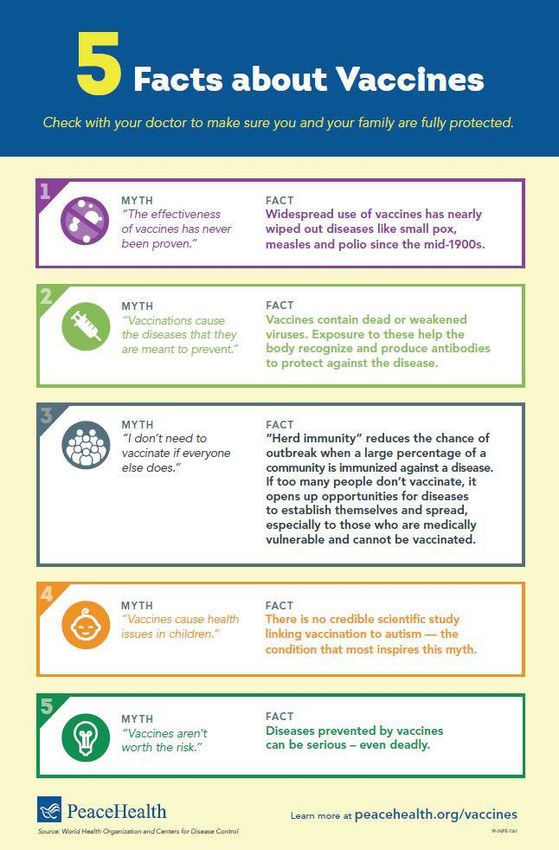
City of Mission                                                 Live Well, Work Well August 2021

                   VACCINATE WITH CONFIDENCE
Vaccinate with Confidence is CDC’s strategic framework to strengthen vaccine
confidence and prevent outbreaks of vaccine-preventable diseases in the United
States

Vaccinate with confidence will strengthen public trust in vaccines by advancing three
key priorities:

  • Protect Communicates: Vaccination rates remain strong, but pockets of under-
    vaccination persist in some locations.
  • Empower Families: Trust in vaccines is built through conversations between
    parents, doctors, nurses, pharmacists, and community members.
  • Stop Myths: To stop misinformation from eroding public trust in vaccine.

                   Source: https://www.cdc.gov/vaccines/partners/vaccinate-with-confidence.html

                                                                                                    4
City of Mission   Live Well, Work Well August 2021

Did You Know?

                                                     5
City of Mission                                                     Live Well, Work Well August 2021

                   Lifecycle of an Immunization Program
Like a good story, a good immunization program has a beginning, a middle, and ideally an end.
The following graphic describes the lifecycle of a typical immunization program. It illustrates,
among other things, why a disease that has been nearly eliminated through vaccination might
suddenly being to reappear.

   •   When there is no vaccine for a disease, the number of people getting the disease is usually
       high. People worry about the disease and its complications.
   •   After an immunization program for a disease begins, the number of people being vaccinated
       usually rises quickly.
   •   At the same time, there will be some adverse reactions associated with the vaccine – almost
       always very few and very mild compared with illness and complications associated with the
       disease. (Note that this number remains fairly constant because it is a percentage of the
       number of people being vaccinated.)
   •   As the number of people being vaccinated rises, the number of cases of disease drops.
       Eventually, the number of people getting the disease may approach, or even fall below, the
       small number of people having reactions from the vaccine.
   •   At this point, most people may never have experienced the disease. They might start to
       worry less about the disease and more about possible side-effects from the vaccine. They
       might start to question whether the vaccine is necessary or safe, and some of them will stop
       getting immunized.
   •   If enough people stop getting immunized, disease numbers will start to rise again, and there
       will be disease outbreaks.
   •   People are reminded of how bad the disease can be, and turn back to immunization to avoid
       it. Vaccination numbers rise once more and disease numbers fall.
   •   Ultimately, if enough people get immunized the disease will disappear altogether. So far this
       has happened once, with smallpox.
   •   When there is no more disease, the immunization program can be stopped. The numbers of
       vaccinations and adverse reactions drop to zero.

                           Source: https://www.cdc.gov/vaccines/vac-gen/life-cycle.htm

                                                                                                        6
City of Mission                              Live Well, Work Well August 2021

                                            Upcoming Events:
   Last Month’s Events:
              July 29, 2021                 Health & Wellness Seminar
               SOFA Seminar                   “Immunization Awareness”
         “Social Security Explained”          Thursday, August 12, 2021

                                                 Open Enrollment
                                               August 16th – August 20th
   “Monthly Moving Contest Winner”
   Melba D. Garza - $25.00 Gift Card

                               Let’s Get Moving!

                                                                                7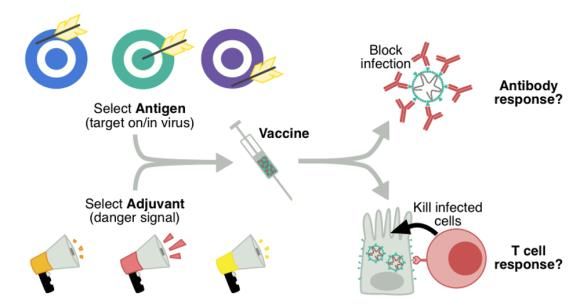


You can also read


