Implats is committed to maintaining the highest standards of good governance in order to promote quality decision-making and the execution of ...
←
→
Page content transcription
If your browser does not render page correctly, please read the page content below
Implats is committed to maintaining the highest standards of good governance in order to
promote quality decision-making and the execution of these decisions within a disciplined
framework of policies, procedures and authorities.

Our governance
and management
approach
OUR GOVERNANCE AND
         MANAGEMENT APPROACH            Implats Sustainable Development Report 2016 \ PAGE 32

Our sustainable development management approach

At board level, sustainable development issues are addressed
through the social, transformation and remuneration (STR)
committee.
Our management approach                          provider for non-financial performance              Indigenisation and Economic
We have a structured and systematic              each year. The results are presented                Empowerment Plan; and
approach to managing our most material           to the committee with the necessary            ●●   Ensure the organisation maintains
societal issues and to address the               recommendations and action.                         its social licence to operate in host
material sustainability issues of interest                                                           countries by advancing social
to our priority stakeholders.                 A more detailed review of the                          transformation and upliftment in
                                              composition and activities of these board              affected communities.
At board level, sustainability issues are     committees is provided in our Integrated
addressed through the social,                 Annual Report.                                    Sustainability objectives form part of the
transformation and remuneration (STR)                                                           key performance indicators (KPIs)
committee and the health, safety,             At an executive level, sustainable                against which Implats’ management
environment and risk (HSER) committee.        development falls under the responsibility        and executives are measured and
●● The STR committee, chaired by              of the executive committee (Exco), which          remunerated. Details on these KPIs and
   Ms Mpho Nkeli, an independent              is responsible for reviewing performance          their implications for the executive are
   non-executive director, is responsible     in terms of the Group’s non-financial             provided in our Integrated Annual
   for the Group’s activities relating to:    indicators. The Group Sustainable                 Report.
   social and economic development;           Development Forum assists the Exco on
   transformation; the environment,           sustainability-related issues. The forum          People management
   health and public safety; consumer         comprises a multi-disciplinary team that          Management of our employees is
   relationships; labour and employment       meets quarterly with the following                headed up by a dedicated Group
   issues; and remuneration.                  principal objectives:                             executive reporting to the CEO. The
●● The HSER committee, chaired by             ●● Identify material sustainability issues        scope of work includes remuneration,
   Alastair Macfarlane, an independent            that have an impact on the business           human resource development, talent
   non-executive director, guides                 and devise appropriate strategic              management and employment equity.
   strategy, assesses the adequacy and            responses to these issues;                    Group policies and procedures on
   appropriateness of HSER policies,          ●● Align strategic interventions to the           people management issues are
   standards and procedures and                   global, national and industry agenda          established at corporate level and apply
   reviews Group-wide performance and             concerning sustainable development            at our operations. Our policies and
   risk management practices quarterly.           such as the NDP and the Framework             procedures are aimed at contributing to
   The committee also investigates and            Agreement for a Sustainable Mining            sound employee relations, attracting and
   reviews all major incidences and               Industry;                                     retaining talent and ensuring the
   fatalities.                                ●● Ensure compliance with relevant                continuous development of our
●● The audit committee, chaired by                regulatory statutes in countries of           employees, while offering opportunities
   Hugh Cameron, an independent                   operation such as South Africa’s              for career progression with a particular
   non-executive director, oversees the           Mining Charter and Broad-Based                emphasis within our South African
   appointment of the assurance                   Black Economic Empowerment Act,               operations on historically disadvantaged
                                                  and Zimbabwe’s National                       South Africans (HDSAs).
OUR GOVERNANCE AND
                                                   MANAGEMENT APPROACH            Implats Sustainable Development Report 2016 \ PAGE 33

Each operation has a transformation         commitment to maintaining ISO 14001            development project steering committee
committee comprising representatives        certification for our environmental            reviews the proposed projects after due
from management, unions and women,          management systems. Regular                    diligence. Once approved by the project
as well as various other stakeholder        compliance audits are conducted by             steering committee, the projects are
groups who contribute to overseeing         the Group’s internal auditors and the          recommended to the Group’s executive
and advancing transformation at each        external auditor. All of the Group’s           committee, a multi-disciplinary
operation. The operational committees       operations are now ISO 14001 certified,        executive-level management team that
report to the Group STR committee. Our      aside from Marula, which is undergoing         evaluates the merits of investing in each
operations also have community forums,      the certification process after being          project. In Zimbabwe, sustainable
at which issues of concern to local         declined recertification due to a repeat       development initiatives are implemented
communities – such as employment            major non-conformance. Implementation          and managed by the stakeholder
opportunities, procurement and health,      of the revised version of ISO 14001            engagement executive supported by
safety and environmental performance        published in September 2015 is in              technical personnel from the operations.
– are discussed. Issues arising from        progress, with recertification at our
these community forums are relayed to       operations to be undertaken before             Each year an independent audit is
the operational committee and,              September 2018.                                conducted on selected social projects,
ultimately, to the Exco. These are                                                         based on the financial, legal and
elevated to the STR committee quarterly     In addition to the ISO 14001 certification,    reputational risk as well as to determine
and to the board as required.               the refineries are signatories to              impact, progress and potential remedial
                                            Responsible Care® and retained their           action where a project faces possible
Managing health, safety and                 certification. Responsible Care® is the        failure. A summary of this can be found
environmental (HSE) issues                  chemical industry’s global voluntary           on page 68.
Group and site-specific HSE policies,       initiative under which companies,
procedures and standards are in place       through national associations such as          Managing contractors and
to ensure compliance with legislative       the Chemical and Allied Industries             suppliers
requirements and support our vision of      Association (CAIA) in South Africa, work       We strive as far as possible to source all
zero harm. Responsibility for               together to improve and communicate            goods and services within the country of
implementing HSE policies and               HSE performances.                              operation, with a particular emphasis on
procedures rests with line management.                                                     local suppliers defined as tier 1, 2 and 3
All operations submit quarterly             Managing our investments in                    based on their proximity to the
performance reports to the board-           socio-economic development                     operations in South Africa. Tier 1
appointed HSER committee. Group and         The sustainable development                    suppliers are those from directly and
operational level HSE specialists support   department at Impala Rustenburg                indirectly affected communities
line management to implement the            manages the socio-economic                     (Bafokeng Villages, Freedom Park,
strategy and to monitor and manage          development initiatives in our South           Seraleng and Meriting, in Rustenburg,
performance.                                African operations. A technical team is        and the Four-farms area in Burgersfort).
                                            responsible for implementing the               Tier 2 suppliers are within the local
The Group’s environmental team has          projects, working with the stakeholder         municipality around the operations
close links with operational and project    engagement department. We identify             while tier 3 suppliers are those within the
management and is involved in due           community projects based on a needs            areas surrounding the local municipality.
diligence exercises in connection with      analysis, undertaken in consultation with      In Zimbabwe, local suppliers are those
acquisitions and the development of         stakeholder representatives from               within the country of operation. Local
strategic initiatives. Policy               communities, local government and              procurement is advanced through
implementation is enhanced by our           employees. The sustainable                     enterprise development initiatives as
                                                                                           described on pages 74 to 76 and
                                                                                           page 79.
OUR GOVERNANCE AND
         MANAGEMENT APPROACH         Implats Sustainable Development Report 2016 \ PAGE 34

Our sustainable development management approach

Our contractor strategy defines the        structured into two phases. The first             development mining, ventilation
principles that guide the engagement of    phase uses our training and recruitment           construction and sweeping and vamping
reputable contractor companies with the    resources to ensure all contracting               services.
right skills and value systems to          employees are vetted and assessed
undertake specific tasks we are unable     according to our own internal standards.          We will continue to focus our attention
to do ourselves. All contractors and       The second phase interrogates each                on suppliers’ B-BBEE certificates and
suppliers are appraised of our policies    contracting company and the work they             prompting suppliers well in advance of
and business practices and are             do for us. We have completed detailed             their expiry dates. Penalties on annual
expected, as a minimum, to abide by        assessments with the assistance of an             increases will continue to be levied on
these principles in their business         external specialist and will, over time,          untransformed suppliers. During the
conduct and practices at all our           effect the required change. In the short          year, no services of suppliers were
operations. The strategy has been          term we are planning to in-source all             terminated.
OUR GOVERNANCE AND
                                                    MANAGEMENT APPROACH              Implats Sustainable Development Report 2016 \ PAGE 35

Promoting ethics and good governance

Our fraud, corruption and whistleblowing policy applies to all
employees, suppliers and contractors in a business relationship
with Implats.
The Implats board assumes overall            disciplinary action – including dismissal         were reported across the Group, 48% of
responsibility for the effectiveness of      or prosecution – that is taken in the             which were from the South African
internal controls, risk management and       event of any contravention of the code.           operation, 48% from the Zimplats
governance and for ensuring our              A communication plan for the revised              operation and the remaining 4% from
business objectives are met. We are          code, including training material, is being       the Mimosa operation. This reflects a
committed to promoting the highest           rolled out to operations.                         40% reduction from last year’s figure.
standard of corporate governance and                                                           The founded cases increased from 34%
to ensuring our practices are aligned        Our fraud, corruption and whistleblowing          of total cases last year to 39% of total
with the expectations of the King Code       policy applies to all employees, suppliers        cases this year. Of the 61 cases reported
of Governance for South Africa 2009          and contractors in a business                     and investigated this year, six were
(King III).                                  relationship with Implats. The policy             conflict of interest and corruption;
                                             highlights our commitment to creating an          22 were fraud and theft and 23 related
We maintain a zero tolerance stance on       environment that encourages an                    to misconduct and other irregularities.
fraud, corruption, misconduct or             anti-fraud and anti-corruption culture,           There were no BEE fronting cases this
dishonesty. We expect all our                informed by our organisational core               year. The status on the 61 cases referred
employees, business partners,                values and our respect for open and               to above is as follows:
contractors and associates to conduct        honest communication.                             ●● 16 are still pending;

themselves according to the recently                                                           ●● 21 were unfounded; and

revised and board-approved Implats           The executives and line management are            ●● 24 were founded.

code of ethics and our fraud, corruption     responsible and accountable for the
and whistleblowing policy.                   implementation of the code, the policy            In keeping with our zero tolerance
                                             and the associated procedures. The                stance on fraud and corruption, 16 of
The code of ethics addresses issues          board has delegated oversight of the              the 24 founded cases led to appropriate
relating to conflict of interest, the        code, policy and procedures to the STR            disciplinary action being taken against
prevention of dissemination of Company       committee.                                        the parties involved; as a result 14 of
information, the acceptance of donations                                                       these cases receiving a guilty outcome,
and gifts and the protection of the          We have established a toll-free helpline          eight cases did not warrant disciplinary
Company’s intellectual property and          to facilitate the confidential reporting of       action and the remaining two are still
patent rights. It also describes the         alleged incidents. This year, 61 cases            in process.

The table below provides the classification of the allegations and outcomes in each category:

Number of fraud/ethics-related cases reported Group-wide in the 2016 financial year
                                                  Investigation             Allegations             Allegations
 Nature of allegation                                  pending              unfounded                  founded                    Total
 BEE fronting                                                   0                          0                   0                      0
 Conflict of interest and corruption                            5                          7                   4                     16
 Fraud and theft                                                5                          6                  11                     22
 Misconduct and other                                           6                          8                   9                     23
 Total                                                         16                      21                     24                     61
Our employee value proposition aligns employees’ personal goals and aspirations with the
objectives and deliverables of our business.
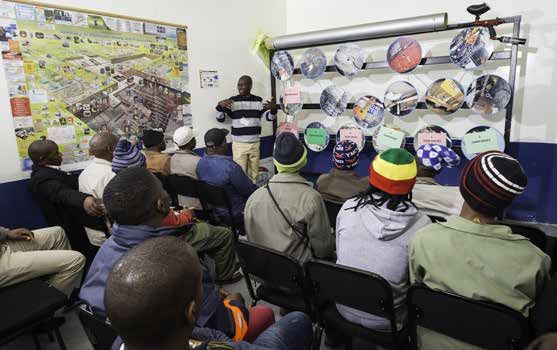
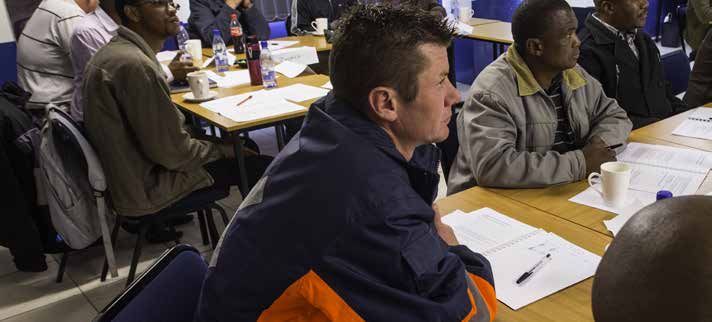
Safe and effective
people who respect
and care
SAFE AND EFFECTIVE PEOPLE
         WHO RESPECT AND CARE              Implats Sustainable Development Report 2016 \ PAGE 38

Employee and contractor safety

Ensuring the safety and health of our employees, contractors
and suppliers is essential if we are to respect their most
fundamental rights.
The Group’s sustained efforts to ensure          The benefits of these investments are             Our strategic approach
a safe working environment were                  evident in the notable safety milestones          to safety
overshadowed this year by seven tragic           achieved this year in most of the                 Ensuring the safety and health of our
incidents at our operations that resulted        operations. However, our analysis of fatal        employees, contractors and suppliers is
in 11 fatalities. Fatal incidents remain         and lost-time injuries has shown that             essential if we are to respect their most
unacceptable and we continue to                  human failure remains a factor. We are            fundamental rights. Our safety strategy
strengthen our zero harm resolve. The            therefore placing renewed focus on                strives to foster a culture of safety and
fatalities are particularly disappointing in     improving the safety culture of our               achieve our vision of zero harm. The
view of the expenditure and effort we            employees, especially at our Impala               strategy is informed by external and
have put into safety initiatives, technical      Rustenburg and Marula operations.                 internal reviews of our safety systems
solutions and training across the Group.                                                           and culture and by a continual analysis
                                                                                                   of the root causes of all fatal, reportable
                                                                                                   and lost-time incidents.

Our safety strategy has three main pillars, each of which is underpinned by an accompanying set of action plans.

                                                                                      • Culture
                                                                                      • Leadership
                                                                                      • Supervision
                                                                                      • Skills
                                                                  Person              • Attitudes
                                                                                      • Motivation
                                                                                      • Teamwork
                                                                                      • Team mobilisation
                                                                                      • Zero harm incentives

                                                              Safety strategy
    • Respect and care                                                                                         • Adopting leading practices
    • Technical initiatives                                                                                    • Accident investigation
       – Equipment                                                                                            • Risk Management System
                                        Physical
       – Design                                                                          Practices               (ISO 31000)
                                      environment
    • Housekeeping                                                                                            • Standards
    • Zero harm incentives                                                                                    • Policies and procedures
                                                                                                               • Safety training (ZIP)
SAFE AND EFFECTIVE PEOPLE
                                                    WHO RESPECT AND CARE           Implats Sustainable Development Report 2016 \ PAGE 39

Person                                        human behavioural aspects of safety and       management has been increased to
This pillar is about ensuring that we have    how to influence this to achieve              35%, with a component of lead
the right skills, teamwork, intelligence,     improved safety awareness and                 indicators. In addition, all employees
knowledge, motivation, attitudes and          performance in their subordinates.            receive an equal bonus payment when
abilities to achieve zero harm.                                                             their teams work for 90 consecutive
                                              All E and D level managers complete a         days without a lost-time injury.
Safety culture                                ZIP safety leadership self-assessment
Our safety leadership self-assessments        survey every six months, aimed at             Supervisors’ technical training
have shown that we continue to have a         measuring the perceived safety culture        A five-day ex-leave training programme
“dependent” safety culture in which           among this group of managers. All             for mine managers, mine overseers, shift
effective supervision is needed to ensure     E level production managers from our          supervisors and miners, that covers
compliance with safety rules and              South African operations undertook a          managing a half-level production section
procedures at all levels, including           360° health and safety leadership             safely and effectively, with emphasis
management. A core goal of our safety         assessment (using the assessment tool         on the planning processes with the
strategy is to create an “interdependent”     proposed by the Mining Charter                participation of the multi-disciplined
safety culture where every employee is        guideline), which entails assessment by       technical teams. The training includes
committed to safe working practices,          subordinates and colleagues.                  information on revised standards
taking clear responsibility for their own                                                   and new technology. This year,
actions and helping others to adopt           Visible felt leadership has been              3 641 employees participated.
good safety practices. This is essential if   increased, with D and E level leaders
we are to achieve and maintain our            now required to make four (previously         Safety representative training
desired safety performance and zero           two) observations per month. In-house         Every team has an elected part-time
harm. The CEO, with the support of the        training is provided.                         safety representative. Over the last three
executive team, continues to drive our                                                      financial years all these safety
overarching objective of developing the       A four-day leadership training course         representatives have been trained
right safety culture through effective        aimed at mine overseers and shift             through an accredited MQA training
leadership and by demonstrating visible       supervisor level leaders incorporates ZIP     course. All newly elected safety
personal commitment. The principal            safety principles and is designed to          representatives will be trained. By June
leadership initiatives being implemented      empower supervisors to lead their teams       2016, 5 245 employees across the
to develop the right safety culture are       in safe production. This year, 178 leaders    Group (11.12%) had undergone training,
reviewed below.                               participated in the programme. ZIP for        exceeding our target of 8% by 3%.
                                              Leaders principles will be adopted in all
We have continued to implement the            safety plans at shaft level.                  Team mobilisation
five-pillar cultural transformation                                                         Team-mobilisation training is a five-day
framework developed by the Chamber of         Safety reward system                          course on site, aimed at building trust
Mines’ Mine Health and Safety Council         We implement a zero-harm incentive            and enhancing team functionality,
(MHSC) and to embed the Mining                scheme, which divides the incentive           committing production teams to action
Charter’s health and safety                   equally between safety and production.        plans and collective accountability for
commitments.                                  The safety component comprises the            safe production. We plan to adjust the
                                              leading requirement that nets and bolts       training to more strongly establish
Effective leadership                          be installed on all panels and                the miner’s role as leader. To date,
Implats’ executives and all senior            development ends, as well as the              316 active teams (12 people in a team)
management (E level) and professional         lagging measure of workforce lost-time        have completed the training and we will
qualified (D level) production managers       injuries. The long-term incentive scheme      continue to train a further 245 active
have attended the best-practice Zero          for D and E levels also includes the          teams (five teams each week). Once all
Incident Process (ZIP) for Leaders            lagging FIFR three-year performance           stoping teams have been trained all
training programme. The programme             compared with industry peers. The             redevelopment, on and off-reef teams
provides managers with insight into the       short-term incentive scheme for E level       will be trained.
SAFE AND EFFECTIVE PEOPLE
WHO RESPECT AND CARE Implats Sustainable Development Report 2016 \ PAGE 40
Employee and contractor safety
Disciplinary process We have identified 14 major hazards at Fatigue management
To ensure disciplinary action is taken Impala Rustenburg and identified control A code of practice for employee fatigue
when there are breaches in safety standards for each. All Impala standards management has been developed and
conditions or behaviours, our disciplinary and procedures associated with these communicated to employees.
process has been automated where major hazards have been linked to each
possible, removing a manager’s hazard and are available electronically on Critical controls
discretion on whether to take discipline the intranet. We have identified our material
or not. Disciplinary action is monitored unwanted events (MUEs) and are
and reported regularly and managers are Every lost-time injury is analysed to following ICMM practice guidelines to
held accountable. determine behavioural and control develop a critical control management
failures and whether breaches of safe system to ensure line management
Managing high-risk employees production rules were wilful or not. All focuses on the controls aimed at
An analysis of various data sets accident investigations include the preventing these events.
(including medical, human resources/ human error assessment in the formal
financial, disciplinary, production) has accident investigation process. We will Critical safe behaviours
highlighted a number of employees who be monitoring and enforcing the deemed We identified a set of “critical safe
could be at a significantly higher risk of action required by the “human failure” behaviours” for the five most critical
having or causing a safety incident. guide. occupations – rock drill operators,
Steps are taken to mitigate the level of scraper winch operators, locomotive
risk, for example through formal Triggered Action Response Plan operators, panel operators and trackless
counselling. The data analysis and formal (TARP) machine operators – and rolled out a
monitoring of identified high-risk TARP is a system that requires the training and awareness programme and
individuals is ongoing. formal examination for known hazards in measurement system aimed at
the workplace and then the formal encouraging the right behaviours needed
Practices implementation of appropriate and to ensure safety. We will entrench these
This pillar of our strategy is about predetermined action and response behaviours through supervisory and
providing best practice policies and measures. TARP focuses on recognition compliance measures. We are
procedures, risk assessments, standards and response to hazards associated with developing support documents for the
training and safety interactions. ground conditions and ventilation. critical safe behaviours for the next five
Regular refresher training is given to critical occupations.
Information management ensure TARP is applied as intended and
The OHSAS 18001 Occupational Health management is required to check and Section 23 actions
and Safety Management Standard will monitor understanding and compliance Section 23 of the Mine Health and Safety
be replaced with an ISO 45001 system by every team. The system is fully rolled Act (MHSA) empowers employees to
by the end of 2016. Zimplats and out at Impala Rustenburg and Marula is withdraw from their workplace if there is
Mimosa are OHSAS 18001 certified. finalising its roll out. a perceived danger to their health and
Impala Rustenburg, Marula and Impala safety. We need to formalise and
Springs are aiming for ISO 45001 Women in mining safety forum systemise the process of Section 23
certification by 2018. Independent Our “women in mining” safety forum at withdrawals to ensure employees report
consultants have completed a detailed Impala Rustenburg meets monthly to any danger and that work is stopped
gap analysis of the OHS systems at identify and address safety and health until the risk has been mitigated. Safety
these operations to identify potential issues specific to women. This year we representatives have been trained and
compliance gaps, which will be have improved the availability and quality issued with Section 23 withdrawal
addressed. of specialised personal protective booklets.
equipment (PPE) for women and have
Systems are in place to capture and completed a PPE code of practice for Safety inspection system
report on leading safety indicators the safety of women. We continue to A pilot IsoMetrix safety inspection
and measure the following indicators introduce initiatives aimed at improving system is being tested at Impala
for trends: the safety and security of women Rustenburg 16 Shaft and safety officers
●● stop observations performed; working underground. are using the system to capture all
●● pre-work alcohol testing;
●● road behaviour monitoring; and
●● work stoppages on safety audits/
inspections.SAFE AND EFFECTIVE PEOPLE
WHO RESPECT AND CARE Implats Sustainable Development Report 2016 \ PAGE 41
inspections. Reporting templates will be Actions are being taken to meet the completed in all centre gullies.
developed. Following the trial at DMR requirement that PDS systems be Application standards for the WPD
16 Shaft, we will decide on future roll rolled out to surface machinery. signalling device in stope advanced
out to other shafts. strike gullies was completed and the roll
PDS on track-bound machinery: A key out is in progress.
Safety structure focus is to improve our locomotive safety
Due to financial constraints and the initiatives. We aim to have front driven Enhanced central electronic blasting
Company restructuring during 2016, our train technology and proximity detection system: The SafeBlast® system, or
safety department reduced the central on all track-bound machinery. Following similar modern safe blasting system, is
independent team of safety officers that the installation and evaluation of a pilot now installed and functional across
performs a follow-up audit function. At project at Impala Rustenburg 16 Shaft, Marula, Mimosa, Zimplats, E&F, 1, 4, 6,
the Impala Rustenburg and Marula the PDS is being rolled out to all 7A, 14, 16 and 20 Shafts at Impala
operations, line managers will locomotives at the shaft and the roll out Rustenburg operations. Implementation
consequently be responsible for at 11 Shaft is planned. at Shaft 11 has been delayed owing to
following up and closing out issues financial constraints. The SafeBlast®
identified by the safety audits and stop Vertical shaft bank and station safety system allows stricter control and
notes. The central safety department will, devices: Over the last two years we supervision of blasting operations and
however, maintain a supportive safety have equipped all vertical shaft surface is used in conjunction with the
role for all operating areas in the Group. bank areas and underground stations SafeStart® IED.
with a fail-safe and winder interlocked
New explosives regulations safety device, which will arrest any rail Emergency preparedness and
New regulations on the handling of bound moving stock before it gets to response: Power supply constraints and
explosives promulgated in terms of the the shaft. uncertainty present risks to employee
MHSA are more prescriptive and safety. As an energy-intensive user with
introduce various additions to the Conveyor belts and underground fire South Africa’s electricity provider Eskom,
previous regulations. We are engaging risk: Following the major conveyor fire Implats has specific agreements in place
with the authorities to clarify incident at Impala Rustenburg 14 Shaft, to mitigate risks of interrupted power.
expectations and work towards ensuring several actions were identified to This year we undertook a bowtie risk
compliance. enhance fire prevention controls. We are assessment of a major power failure
replacing all conveyor belts with fire across Implats, updated all the related
Physical environment retardant belts. At year end, 62% of the standards and compiled a major power
This pillar of our strategy is about operational belts at Impala Rustenburg failure manual, which has been
ensuring a safe physical environment, and Marula and 70% of all standard implemented since March 2016.
reducing risks through appropriate belts across the Group had been
equipment, housekeeping, engineering, replaced. We are on track to have all Flammable gas management: We
planning and design. belts replaced by 2017. The code of completed the replacement of GDI
practice to manage conveyor belts was Enviro with GDI Sentinels at 11, 11C, 14,
Roof bolts and nets: All stope panels reviewed and redrafted with new 16 and 20 Shaft, and the roll-out of the
and all “on reef” and “off reef” guidelines promulgated by the DMR. GDI Enviro dual gas measuring devices
development ends at Impala Rustenburg Rehabilitation and reconstruction of the to all shift supervisors, the shaft HOD
and Marula operations have had roof No 14 Shaft decline conveyor and team and full-time health and safety
bolts and netting fitted as protection services will continue through to representatives. The monitoring of the
against falls of ground. This initiative is March 2017. underground flammable gas emissions
used as a formal lead indicator at both 11 and 16 Shafts indicate low
component of the production bonus Winch-signalling devices: We have emissions with no significant change in
and accounts for 25% of the team’s standardised an electronic winch- flammable gas emissions.
bonus value. signalling device that gives a 15-second
audible and visual warning before it Underground ventilation doors: The
Proximity Detection Systems (PDS) on powers the motor. The system also installation of ventilation door monitoring
trackless machinery: All underground includes a facility to trip the winch from at shafts continues. At year end, 56% of
trackless mobile machinery (TMM) has any remote area along the length of the all shafts had been fitted with cable
been equipped with a vehicle-to-vehicle gully. Reliability problems have been installations and 5% with sensor
and vehicle-to-person detection system. resolved and roll out has been installations.SAFE AND EFFECTIVE PEOPLE
WHO RESPECT AND CARE Implats Sustainable Development Report 2016 \ PAGE 42
Employee and contractor safety
Over the year we invested R174 million (2015: R221 million) in various technical solutions aimed at protecting all those who work in
our mines. These investments are reflected in the table and graph below:
Safety technical initiatives
Expenditure Expenditure Estimated
to date for FY16 completion
Initiative R’000 R’000 date
Roof bolt and netting 345 586 86 570 Ongoing
Fire retardant conveyor belting 93 701 45 395 Ongoing
SafeBlast® system 46 769 5 956 Ongoing
Fire detection system 12 944 5 232 Complete
WPD signalling devices for scraper winches 148 862 29 268 Ongoing
Proximity detection systems on track-bound machinery 1 786 1 786 Complete
Technical safety interventions
120%
100%
80%
60%
40%
20%
0%
FY12 FY13 FY14 FY15 FY16
■
New winch return rigs ■
New winch signalling devices ■
Shaft safety devices ■
Locomotive speedometers
■
Nets and bolts on Merensky ■
Nets and bolts on UG2 ■
Self-contained self-rescuers■
PDS
Our 2016 safety performance ground, one involved a major fire, one Although the deterioration in our safety
The nine fatalities in South Africa and involved underground moving equipment performance as measured by lagging
two in Zimbabwe this year are deeply and another was scraper related. In each and leading indicators is disappointing,
upsetting for all of us. These fatalities incident, the root cause was non- we have made good progress in safety
were as a result of seven tragic incidents compliance to standards and safe improvements to the physical safety
at three operations: Impala Rustenburg production rules, in some cases at environment at many business units via
14 Shaft (six fatalities) and 1 Shaft (three supervisory level. Disciplinary action has implementing new technology and
fatalities), and Mimosa (two fatalities). been taken and remedial actions engineering solutions and significant
Four incidents were caused by falls of implemented to prevent repeat incidents. improvements to our practices.
Fatal injury frequency rate (FIFR)
Per million hours worked 2016 2015 2014 2013 2012
Impala Rustenburg 0.107 0.070 0.052 0.092 0.115
Impala Springs 0.000 0.000 0.000 0.000 0.000
Marula 0.000 0.111 0.000 0.000 0.130
Mimosa 0.246 0.000 0.000 0.000 0.000
Zimplats 0.000 0.000 0.068 0.000 0.000
Group 0.091 0.058 0.043 0.0065 0.0087SAFE AND EFFECTIVE PEOPLE
WHO RESPECT AND CARE Implats Sustainable Development Report 2016 \ PAGE 43
Key lagging indicators
IN MEMORIAM The 11 fatalities impacted the lagging
We extend our sincere condolences to the families, friends and colleagues of the performance indicators at the respective
11 permanent employees who died at Impala during the 2016 financial year. operations and the Group injury rates.
●● The fatal incident frequency rate was
● Mr Erick Mukazi died in a fall of ground incident on 24 August 2015 at Mimosa 0.091 per million man-hours worked,
● Mr Oraile John Sethibang was fatally injured in a fall of ground on up from 0.058 in 2015.
●● The reported injury frequency rate
24 November 2015 at Impala Rustenburg No 14 Shaft
(RIFR) was 3.83 per million man-
● Mr Jerome Nkosiphendule Zweni was fatally injured in a fall of ground on
hours, up from 2.63 in 2015.
12 December 2015 at Impala Rustenburg No 14 Shaft
●● The lost-time injury frequency rate per
● Mr Charles Teketai was fatally injured in an incident involving mobile equipment million man-hours (LTIFR) increased
underground on 4 January 2016 at Mimosa to 6.49 from 5.27 in 2015.
● Mr Vuyani Jackson Kajani was fatally injured in an incident involving a scraper ●● The total injury frequency rate (TIFR)
on 7 January 2016 at Impala Rustenburg No 1 Shaft – a measure of all recorded injuries,
including fatalities, lost-time injuries,
● Mr Mosala George Moloele, Mr Mosielele Johannes Sesimane, Mr Stephen
and medical treatment cases –
Johnny Kgari and Mr Tshotlego Rantisiripana Moyo died from smoke inhalation
increased to 12.31, from 9.78 in
in a fire incident on 22 January 2016 at Impala Rustenburg No 14 Shaft
2015. For comparability with industry
● Mr Ohemile Moses Maamogwa and Mr Tanki Samuel Lepitikoe were fatally peers refer to safety data below
injured in a fall of ground on 17 May 2016 at Impala Rustenburg No 1 Shaft (fatality rates across the South African
platinum industry).
Comparison of fatality rates (calendar years) across the South African platinum industry
(per million man hours)
0.40
0.35
0.30
0.25
0.20
0.15
0.10
0.05
0
Anglo Plats Lonplats Northam Implats Aquarius Eastplats Royal Bafokeng Platinum industry
■ 2010 ■ 2011 ■ 2012 ■ 2013 ■ 2014 ■ 2015 ■ 2016 Platinum
RIFR LTIFR
(per million hours worked) (per million hours worked)
FY16: 3.83 (45% deterioration)
FY16: 6.49 (23% deterioration)
2012 3.13 2012 5.91
2013 3.06 2013 5.80
2014 2.68 2014 6.10
2015 2.63 2015 5.27
2016 3.83 2016 6.49
TIFR FIFR
(per million hours worked) (per million hours worked)
FY16: 12.39 (27% deterioration)
FY16: 0.091 (57% deterioration)
2012 11.19 2012 0.087
2013 10.91 2013 0.065
2014 11.90 2014 0.043
2015 9.78 2015 0.058
2016 12.31 2016 0.091SAFE AND EFFECTIVE PEOPLE
WHO RESPECT AND CARE Implats Sustainable Development Report 2016 \ PAGE 44
Employee and contractor safety
Key leading indicators Rustenburg this year have been more compared with 94.4% compliance
●● A total of 80 Section 54 stoppage focused than in previous years. last year; our target is 100%.
instructions (excluding Section 55s) ●● Our internal safety stoppage system ●● We conducted 1 639 517
were issued in 2016 (2015: 55), recorded a total of 4 856 proactive breathalyser tests (2015: 1 191 278)
resulting in the relevant shaft being stoppages made in workings during throughout our operations in line with
closed for a period. As a result, we 2016, compared to 4 016 in 2015. Company policy of zero alcohol in the
collectively lost approximately ●● The number of visible-felt-leadership workplace. As a result, 429 tested
398 shaft-days of production across (VFL) Stop observations performed positive, representing a 9% decrease
the Company, with the resulting totalled 48 888 in 2016, compared to on the 472 individuals who tested
66 000 platinum ounces lost 49 181 in 2015. Prolonged recovery positive in 2015. Disciplinary action
amounting to R1 394 million in lost actions and DMR instructions was taken against all employees
revenue. We support all safety work following Impala 1 Shaft and Impala testing positive.
stoppages where there is a direct 14 Shaft fatal incidences led to the
danger to safety. We continue to 0.6% decrease in VFL observations. During the year, several potentially
engage actively with the authorities on Planned task observations totalled serious safety incidents occurred, during
these stoppage instructions. We 81 332, compared to 84 428 in 2015. which no injuries were sustained. In each
welcome that the stoppage ●● We achieved 96% compliance in our case, an investigation into the root cause
instructions issued at Impala road behaviour testing (120 157 and other contributing factors was
checks and 4 608 transgressors), as conducted and disciplinary and remedial
actions undertaken.
Notable safety achievements
It is important to recognise the significant safety achievements and milestones we achieved across many of our operations.
Operation Date Achievement
Impala Processing 19 July 2015 One million fatality-free shifts (1 year and 6 months)
Impala 1 Shaft 31 July 2015 One million fatality-free shifts (11 months)
Impala 11 Shaft 3 August 2015 One million fatality-free shifts (10 months)
Marula 13 August 2015 One million fatality-free shifts (11 months)
Impala 7 Shaft 4 September 2015 One million fatality-free shifts (3 years and 9 months)
Impala 6 Shaft 9 November 2015 One million fatality-free shifts (2 years and 11 months)
Zimplats 19 November 2015 Four million fatality-free shifts (2 years and 4 months)
Impala 10 Shaft 14 January 2016 One million fatality-free shifts (1 year and 6 months)
Two Rivers 1 March 2016 Three million fatality-free shifts (4 years and 1 month)
Impala 20 Shaft 21 April 2016 Two million fatality-free shifts (3 years)
Impala 16 Shaft 27 April 2016 One million fatality-free shifts (1 year and 7 months)
Impala 11 Shaft 7 May 2016 Two million fatality-free shifts (2 years)
Impala Services 8 May 2016 Eleven million fatality-free shifts (14 years and 11 months)
Impala 4 Shaft 3 June 2016 Two million fatality-free shifts (4 years and 1 month)
Marula 13 June 2016 Two million fatality-free shifts (1 year and 9 months)
Zimplats 17 June 2016 Five million fatality-free shifts (2 years and 10 months)
Implats “We Care” programme
Implats is committed to safeguarding the health and safety are 125 children receiving educational benefits: 66 are in
of all of its employees and strives to achieve zero harm. If an primary school, 33 are in high school, six are in tertiary
employee loses their life as a result of a work-related education and there are also 20 pre-school children
incident, we recognise the severe impact that this has on receiving We Care grants.
their family.
We have a We Care programme that provides support and
opportunities for the children of the deceased to complete
their education. The benefits are in addition to the Rand
Mutual and the Pension and Provident fund death benefits
received by the spouse and children and have been applied
to all fatalities since 1 July 2009. A total of 238 children
have been enrolled under the programme. Currently thereSAFE AND EFFECTIVE PEOPLE
WHO RESPECT AND CARE Implats Sustainable Development Report 2016 \ PAGE 45
Fatal fire at Impala Rustenburg 14 Shaft
Four of our employees tragically died following a fire that Following the fire, various actions to enhance current fire
occurred in the main underground decline at Impala prevention control and prevent similar occurrences were
Rustenburg 14 Shaft during the night shift on 22 January identified and a committee was established to implement
2016. A search and rescue operation for the four men was the actions and monitor progress. The committee meets
initiated after all other employees were safely evacuated. bi-weekly and progress on the actions are recorded and
The four employees were overcome by fumes while trying to monitored in the CURA risk management system. Actions
find their way to safety. Implats has and will continue to include the installation of fire retardant belts, which is being
provide support and assistance to the families of the done on a replacement basis. During 2017, a formal
employees. warning system will be developed to warn employees to
evacuate in the event of an emergency.
Operations at Shaft 14 were suspended while
comprehensive investigations were undertaken into the Operations resumed at 14 Shaft on 15 February, when
sequence of events, the cause of the conveyor belt fire and crews re-entered the upper conventional section of the
resulting fatalities and the extent of the damage. Forensic mine. Development activities in the upper sections
and third-party investigations are still under way. It was recommenced in February, while the lower trackless and
found that the detection and suppression systems worked conventional mining sections remained closed and mining
according to design since the required warnings were raised crews were redeployed to assist in the clean-up and
and water was sprayed at the heads and the tails of the rehabilitation operation. Extensive damage was caused to
conveyor belt. The failure was the human element in the the conveyor, monorail, power and air reticulation systems.
chain of events, as employees were lowered into the shaft Underground fire rehabilitation work at 14 Shaft will be
after the system warnings were activated. Seven people completed by March 2017. We will continue to share the
have been suspended pending an investigation and lessons from this incident and implement appropriate
disciplinary action will be taken where necessary. actions across the Group as we strive for zero harm.
Our safety focus for 2017 and assessments among D and E level representative and supervisory
beyond leaders every six months monitoring interventions
Our priority is to ensure improvements to ●● Enhance the Section 22/23 ●● Develop critical controls to prevent
the person and behavioural pillar of our withdrawals process with formalised any of the following unwanted events:
safety strategy to create the right safety and systematic recording and conveyor fires; major fall-of-ground
culture and achieve and maintain zero reporting collapses; a tailings dam run out;
harm. We will drive the shift from the ●● Include in all injury investigations an methane explosion; and rolling stock
prevailing dependent culture towards an analysis to determine whether any falling down a shaft
interdependent culture through effective human failure factors were ●● Continue to implement best practice
safety leadership and engagement with unintentional or intentional; where technical initiatives and assess new
employees. This includes a focus on applicable, enforce disciplinary action technological advances to determine
visible felt leadership through Stop as required by the human failure guide their appropriateness at our
observations, safety leadership self- ●● Continue to analyse data sets to operations
assessments, leadership training that identify employees at high risk of ●● Continue to pursue interactions with
includes the Zero Incident Process (ZIP) having a safety incident, monitor and senior union leadership to gain
principles, safety reward schemes based seek to mitigate the level of risk commitment for safety initiatives
on leading indicators and systematically ●● Enhance the knowledge and
enforcing disciplinary action where safe competence of our employees, Our target is zero fatalities across all
production rules have been breached. including: providing special training for operations. Each operation is expected
users of new equipment and to achieve at least a 20% year-on-year
To promote a culture shift and mitigate communicating and providing training improvement in their LTIFR performance
safety risks in the workplace, the on a revised set of safe production in support of the MHSC safety
following key interventions are planned rules milestones. We aim to certify all
for 2017: ●● Entrench the critical safe behaviours operations to the OHSAS 18001
●● Conduct a further 360 degree safety that have been rolled out to the five (ISO 45 001) standard by 2018.
survey of all E level managers and critical occupations, through safety
further ZIP safety leadership self-SAFE AND EFFECTIVE PEOPLE
WHO RESPECT AND CARE Implats Sustainable Development Report 2016 \ PAGE 46
Health and well-being
The occupational health strategy ensures that all occupational
health risks are identified, mitigation controls are in place and that
any ill health is detected and treated early and efficiently.
Effective management of occupational Our strategic approach on ensuring that all employees have
health risks, as well as promoting health to employee health and access to affordable healthcare so
and well-being in the workplace, well‑being all health stressors can be identified,
protects our employees, enhances Our health strategy addresses both managed and treated. Implats has
productivity and helps maintain our occupational and non-occupational extended its shared responsibility to
licence to operate. Investing in health and is focused on preventing include the non-occupational health of
community healthcare around our harm to our employees. It is structured dependants of employees. The delivery
operations provides a significant around three main pillars: wellness, and funding arrangements depend on
societal benefit and is important for education and treatment. local facilities and conditions and differ
achieving our longer-term business between our operations in South Africa
goals. Our community healthcare The occupational health strategy ensures and Zimbabwe.
activities are noted on page 109. that all occupational health risks are
identified, mitigation controls are in place Our strategy guides our approach to
and that any ill health is detected and achieving the occupational health
treated early and efficiently. Any resulting milestones set for the South African
disability is referred to independent third mining industry. The milestones include
parties for assessment and possible targets for HIV, TB, silicosis and noise
compensation. Our strategy on induced hearing loss (NIHL), which are
non‑occupational health focuses deemed strategic risks for Implats.
Our strategic approach to health
• Early detection of illness
• Annual medical screening
• Employee Assistance Programme
Wellness
• HIV wellness programmes
• Financial support and counselling
• Nutritional supplement underground
• Access to affordable
healthcare Health strategy
• Clinics, hospitals and
third-party service
• Chronic illness education
providers
• HIV/Aids
• ARV treatment
programme Treatment Education • Tuberculosis
• Alignment with • Smoking and alcohol
Department • Noise-induced hearing loss
of Health chronic illness
treatment
• Housekeeping
• Zero harm incentivesSAFE AND EFFECTIVE PEOPLE
WHO RESPECT AND CARE Implats Sustainable Development Report 2016 \ PAGE 47
The Impala Medical Plan (IMP) is a practitioners especially around the clinical and occupational health
longstanding registered medical scheme operations have been providing full information.
formed to provide private care to our services to members. The cost of any ●● Medical incapacity: Across the
South African employees and their services provided within company Group, 377 employees were declared
dependants through Company-owned managed facilities is recovered from to be permanently or temporarily
and operated facilities at Impala the scheme. disabled due to HIV-related medical
Rustenburg, Marula and Impala Springs. conditions (2015: 505). The main
We also provide access to external Our 2016 health performance disability diagnosis remains HIV/Aids.
medical schemes. Company funding of The principal health risks facing our The DMR published a guideline on the
these is based on the cost of the IMP. employees are pulmonary tuberculosis medical incapacitation process for the
We assist employees with receiving (TB) and the associated human South African mining industry, which
treatment through their medical aids and immunodeficiency virus (HIV) co- required a revision of Impala and
managing transfers between schemes. infection, both of which are of epidemic Marula procedures. Following
proportions in southern Africa. The major discussions with AMCU HSE
The South African government’s occupational health risk associated with structures, a revised code of practice
commitment to developing National our mining activities is noise-induced has been submitted to the DMR.
Health Insurance (NHI) has been hearing loss (NIHL). The main changes include the
considered in our non-occupational establishment of an incapacitation
health strategy and we continue to A review of health-related trends and our committee consisting of medical,
support the NHI through partnerships, performance during 2016 is summarised human resource and employee
working closely with the Department of below. A more detailed breakdown of representative disciplines.
Health (DoH) directly and through the our health performance at an operational ●● Employee indebtedness: The high
Bojanala Health Forum. level is provided in the table on level of employee indebtedness is a
page 121. growing concern, affecting employee
At our Zimbabwean operations, Mimosa well-being and raising stress-related
institutes a national health and safety ●● General health indicators: This health and safety risks. We implement
environmental campaign dubbed “Let’s year, 48 641 occupational medical various initiatives aimed at assisting
go Zero”. The initiative aims at mobilising screening examinations were employees with financial literacy,
stakeholder support on the basis of conducted, of which 44 159 were planning and mitigating indebtedness
shared national goals. Drawn from periodic (as compared to 56 605 last (reviewed on page 54).
Mimosa’s existing company motto, “Zero year, of which 52 405 were periodic). ●● Noise-induced hearing loss
harm is possible”, the private-public No previously unknown occupational (NIHL): We provide all employees
partnership campaign seeks to illnesses were detected. Analysis of exposed to noise with custom-made
encourage better living by practicing various data has been conducted to hearing-protection devices (HPD) and
good driving habits to achieve zero determine the health of employees to associated training. Ensuring
carnage on the roads, zero pollution and better manage employee health, adherence wearing the HPDs
deforestation, zero new HIV infections productivity and sick leave. remains a challenge. We conduct
and zero accidents at the workplace, on ●● Chronic illness: We have been annual audiometric screening
the roads and at home. To ensure the focusing on identifying and managing examinations to detect deterioration
campaign is highly impactful, Mimosa patients with chronic conditions and of hearing before permanent NIHL
works with sustainable development assessing whether they are still fit to develops. Employees with a hearing
partners such as the National AIDS perform their duties safely and loss shift of between 2.5% and 4.9%
Council (NAC), Traffic Safety Council of productively. Over 30% of the South undergo counselling. Cases of
Zimbabwe (TSCZ), the Environmental African employee base is receiving hearing loss shift of between 5% and
Management Agency of Zimbabwe treatment for chronic medical 9.9% are investigated and patients
(EMA), the Zimbabwe National Roads conditions, the main conditions being counselled and monitored. In 2016
Association (ZINARA) and the Zimbabwe hypertension, HIV/Aids and diabetes. there were 2 035 such cases,
Republic Police (ZRP). Impala Rustenburg and Marula compared to 1 988 in 2015. This year,
medical clinics use the Trimed 120 cases (employees and
Zimplats employees have access to information technology system to contractors) of NIHL shift of more
medical insurance, the delivery of which manage patient information. The than 10% were diagnosed and
is outsourced to external service system has been enhanced to focus submitted for assessment of disability
providers. Although there have been on chronic disease management and and compensation; compensation
issues of funding shortfalls when facilitate the cross-referencing of was provided in 59 cases (2015:
accessing specialist services, generalSAFE AND EFFECTIVE PEOPLE
WHO RESPECT AND CARE Implats Sustainable Development Report 2016 \ PAGE 48
Health and well-being
49 submissions and 36 cases ●● HIV/Aids: Our HIV/Aids policy, volumes and this will assist in
compensated). The industry health which covers activities across all selecting appropriate engineering
milestones require a revised formula our operations, ensures patient controls where necessary. The
for calculating NIHL and that no confidentiality, non-discrimination average dust concentration trends
person develops a hearing loss of and highlights our commitment to recorded remain below 10% of the
greater than 10% using this formula. ARV-treatment programmes. All OEL. This year, 11 employees and
The rebasing of performance data employees and contractors are four contractors were diagnosed with
using the new formula is under way counselled and offered HIV testing at silicosis; all of these cases have
in the South African operations. annual medical examinations. Our HIV proven historical gold mine exposure.
Good progress has been made in prevalence rate is estimated at 23% All cases have been submitted for
investigating and improving the sound based on available data for Impala assessment and compensation to the
suppression of all equipment that Rustenburg, level with last year. Department of Health’s Medical
exceeds the industry milestone target During the year, we undertook Bureau of Occupational Diseases.
of a sound pressure level of 107dB 10 867 voluntary counselling and All new employees are screened for
and in providing noise clippers to all testing (VCT) interventions of pneumoconiosis at a pre-employment
employees at risk. employees and contractors (2015: examination. Pre-employment
●● Pulmonary tuberculosis (TB): TB is 11 875). A total of 6 891 employees individuals who have x-ray changes
being driven by the HIV epidemic in participated in Company-funded and suggestive of silicosis are classified
southern Africa. Over 60% of our TB managed HIV-wellness programmes as unfit and referred back to their
patients are HIV-positive and the two (2015: 6 140). At year end, Group- previous employer for assessment
infections are considered and wide there were 4 843 patients and submission to the Bureau of
managed together. Most of our TB (2015: 4 429) on ART treatment Occupational Diseases.
and HIV/Aids performance indicators of which 87% (4 234) were at ●● Diesel particulate matter (DPM):
continue to show a steady Impala Rustenburg. The number of We continue to monitor exposure to
improvement. During the year, employees receiving ART through DPM. The risk of exposure to DPM is
171 new cases of pulmonary TB were external medical aids or government mitigated by adequate ventilation, low
detected (2015: 304). Our incidence health facilities is not known and so sulphur diesel replacement and DPM
of 447 per 100 000 employees is well these figures may be underestimated. exhaust filters in underground diesel
below the South African average of Fitness monitoring of patients on ART combustion engines. We are
840 per 100 000. Multiple drug- is ongoing and the adherence rate developing a prototype fuel cell-
resistant TB continues to be a was 94.5% this year. Patients on powered load haul dumper which will
concern; we have eight new cases external medical aids can only be eliminate DPM underground. All
diagnosed, with six on treatment, all monitored through the Occupational underground locomotives are electric
at Impala Rustenburg, down from Health Centre (OHC). Controls have and therefore do not emit DPM.
16 in 2015. All cases of pulmonary been put in place to conduct OHC ●● Malaria: This year, 17 cases of
TB are submitted to the Department testing to determine these patients’ malaria were diagnosed at Impala
of Health’s Medical Bureau of fitness. Regrettably, 57 employees Rustenburg and five at Zimplats. All of
Occupational Diseases (MBOD). passed away due to HIV-related these patients had recently travelled
At Impala Rustenburg, where the illnesses during the year (compared to malaria areas and were
majority of cases are diagnosed, all with 73 in 2015), while 377 patients successfully treated.
cases are submitted to the MBOD via applied for permanent medical ●● Medical aid and non-occupational
the Rand Mutual Assurance Company incapacity as a result of HIV-related medical care: During 2016 the
for independent third-party evaluation. disorders and left the Group. Impala Medical Plan (IMP) received
This improves the reporting and ●● Pneumoconiosis: The risk of 1 459 new applications (2015: 3 023)
compensation process for contracting silicosis at our operations and membership of medical aids
employees. An analysis of unpaid is extremely low due to the very low increased by more than our targeted
claims at the Compensation levels of alpha quartz in the rock 5% annual increase. At year end, the
Commissioner for Occupational mined. Measured dust concentrations IMP had 23 227 members (2015:
Diseases (CCOD) is being undertaken are well below 50% of the 22 231), of whom 12 014
across the industry. Impala Medical occupational exposure limit (OEL) and are dependants (spouses, children
Services has been informed by the meet the industry milestone level of and pensioners). The cost of
CCOD of the unpaid claims of former 1.5 mg/m3 set for 2024. Real time external medical schemes is
employees and is resubmitting the dust monitors have been installed at becoming prohibitive for many
information and banking details for high-risk locations underground to employees and we strive to ensure
payment. detect potential excessive dust that the IMP maintains affordable
contribution levels.You can also read


