In progress with positive energy - Hyundai Motor Company Carbon Neutrality Roadmap
←
→
Page content transcription
If your browser does not render page correctly, please read the page content below
In progress with
positive energy
Hyundai Motor Company
Carbon Neutrality Roadmap
We are in a collision course with nature,
draining the Earth of precious resources,
and without our attention, it will be too late.

Change starts with an action, not opinions.
Hence we stand upon such hope for the
sustainable future.

Laying the foundations to improve lives,
offering solutions that would build this planet
more sustainable.
Hyundai will be the change the world needs,
taking the necessary steps to power progress.

This is not a reluctant obligation,
but an invitation to the better world,
driving positive change for a cleaner future.

In progress with positive energy.
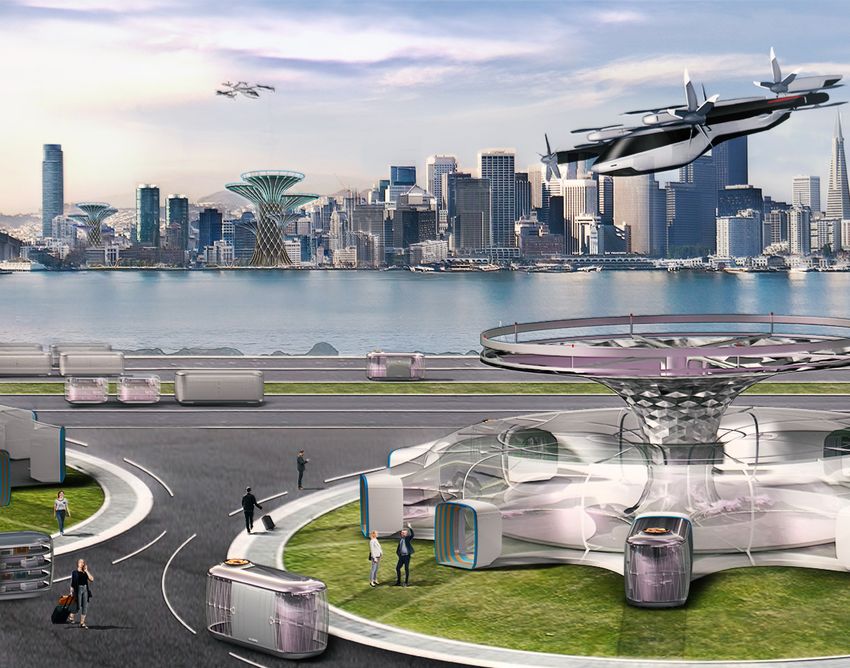
Table of
contents

           1. Hyundai Motor Company                                4. Achieving carbon neutrality in our factories
           carbon neutrality vision and goals                      	4_1. Hyundai Motor Company’s direction for
             1_1. In progress with positive energy                   attaining carbon neutral factories
           	1_2. Hyundai Motor Company carbon neutral goals         4_2. RE100 initiative and detailed execution plan
                                                                     4_3. Eco-friendly smart factory
           2. Strategies for vehicle electrification
           	2_1. Hyundai Motor Company goals for                  5. Encouraging and supporting our auto-part supply
             vehicle electrification                               chains (partners) in achieving carbon neutrality
           	2_2. Enhancing our technological competitiveness      	5_1. Hyundai Motor Company’s supply chain (partner)
             and infrastructure                                      management direction
             (E-GMP, E-pit, & IONITY investment)                   	5_2. Encouraging partners to go carbon neutral
           	2_3. Utilizing electrical energy conversion             through LCA management
             technologies (V2G & SLBESS)
                                                                   6. Social activities to reduce carbon emissions:
           3. Hydrogen business synergy                            carbon reduction & recycling
             3_1. Hyundai Motor Group’s 2040 Hydrogen Vision         6_1. Carbon capture utilization and storage (CCUS)
             3_2. Expanding our hydrogen fuel cell business          6_2. Designs that consider recycling possibilities
           	3_3. Increasing the competitiveness of our hydrogen     6_3. Re:Style, creating shared value through upcycling
             fuel cell system
           	3_4. Utilizing green hydrogen and becoming more
             eco-friendly
             3_5. Hydrogen campaigns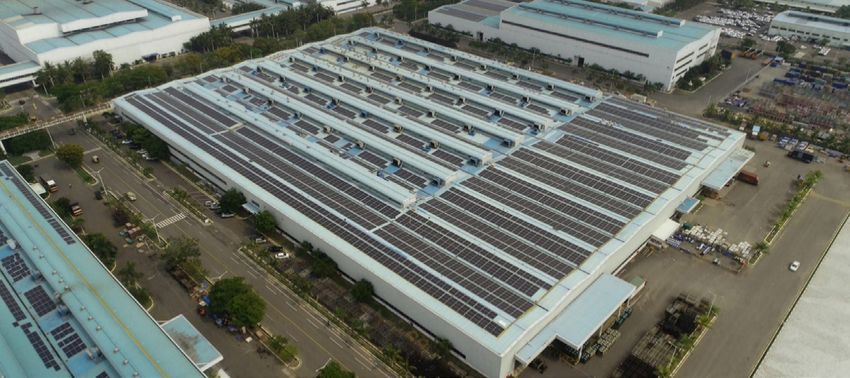
01.   Hyundai Motor       Our vision for achieving what we view as “progress for humanity” is based around our
      Company             determination to ensure universal mobility without causing harm to our planet. With this vision

      carbon neutrality   in mind, Hyundai Motor Company thinks about what is best for humanity, society, and a better
                          future. From transitioning to an electric vehicle (EV) paradigm with the launch of the IONIQ
      vision and goals
                          brand to our efforts to build a hydrogen society based on over twenty years of research,
                          we have consistently led the way for change toward greater sustainability. We firmly believe that
                          the automobile industry has the greatest responsibility to take proactive actions against climate
      1_1.                change. We promise to continue our journey for humanity and future generations.
      In progress with
      positive energy
                          The automobile industry has inherent responsibilities with regards to climate change and
                          is undertaking several eco-friendly measures in response. In July of 2021, Hyundai Motor
                          Company announced to become a member of RE100, showing the commitment to attain
                          carbon neutrality in its global operations. At the IAA Mobility held in Munich in September 2021,
                          we presented our strategies to become carbon neutral by 2045, focusing on electrification and
                          hydrogen society.

                          Hyundai Motor Company has prepared an integrated solution to create a sustainable future not
                          only in terms of mobility but also in terms of energy and entire cities. Our goal is to make our
                          value chains completely carbon neutral. In terms of our electrification project, we are looking
                          for ways to reduce greenhouse gas emissions beyond the stage of manufacturing. One of these
                          methods is recycling waste batteries. For our hydrogen project, we are building a lineup of
                          fuel cell electric vehicles. We also plan to store, transport, charge, and even produce hydrogen
                          energy in the future. In addition, we are developing new mobilities based on environmental
                          energy such as the Urban Air Mobility (UAM) and Purpose-Built Vehicle (PBV) to support clean
                          and urban lifestyles. Based on our advanced technologies, Hyundai Motor Company will
                          implement electrification, build hydrogen society, and help create smart cities. Through this
                          circular economy, we will help our society move closer to carbon neutrality.

04
01.   Hyundai Motor
      Company
      carbon neutrality
      vision and goals

      1_1.
      In progress with
      positive energy

                          We have a responsibility to pass down breathable air, the beauty of nature, and a sustainable
                          planet to future generations. Progress for humanity will continue to be our greatest interest.
                          Hyundai Motor Company is ready to continuously strive towards carbon neutrality to ensure a
                          brighter future for the next generation.

05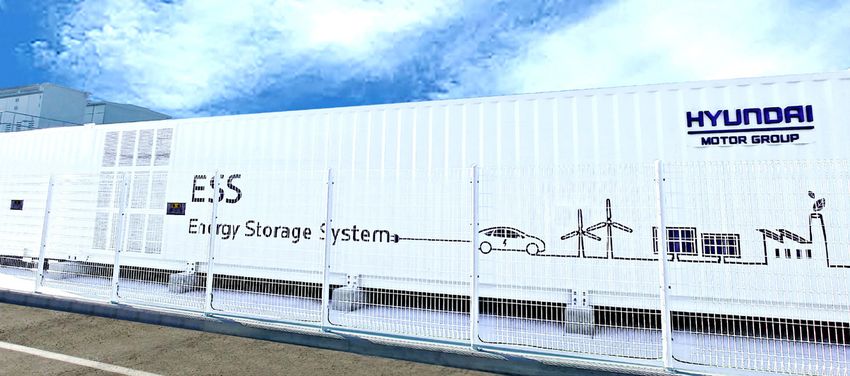
01.   Hyundai Motor           The international society is currently building a roadmap to limit the global temperature rise to

      Company                 1.5℃ and achieve carbon neutrality by 2050. We are determined to build a sustainable future
                              and protect the earth’s environment for future generations. Thus, we have made it our goal to
      carbon neutrality
                              become carbon neutral across all stages including parts procurement, production, and vehicle
      vision and goals
                              operation by 2045. To achieve these goals, Hyundai Motor Company will be implementing carbon
                              neutral strategies based on our advanced environmental technologies for EVs, fuel cell electric
                              vehicles, and hydrogen energy.
      1_2.
      Hyundai Motor Company   Hyundai Motor Company will establish an RE100 roadmap to transition 100% to renewable
      carbon neutral goals
                              energy in our overseas factories by 2045. We will also increase the use of green hydrogen in
                              major manufacturing procedures. Furthermore, we will provide carbon neutral guidelines for
                              major partners and demand socially responsible practices from them to reduce greenhouse gas
                              emissions across all stages of manufacturing.

                                                             100% Electrification of
                                                               Genesis / Usage of
                                                               renewable energy

                                                                                       100% Electrification in
                                                                                       Europe /all commercial
                                    Carbon                                             vehicle models (Korea)                                   Carbon
                                   emissions1)                                                                                                 Neutrality
                                                         Carbon
                                                        emissions                                                100% Electrification in
                                                                                                                      main markets /
                                                                                                                (all commercial vehicle
                                                                                                             electrification goal in korea)

                                Supply chains/                                                                                           Hyundai Motor Company
                                  Partners2)                                                                                                Carbon Neutrality

                                  Factories /
                                   buildings                                                                                                                Reduction (removal/ offset)
                                                 2019                 2030                      2035                     2040                   2045

                              1) Carbon emission in the procedure of Tank of Wheel
                              2) Suppliers’ carbon emission; Aiming to reduce carbon emission through collaboration with partners
06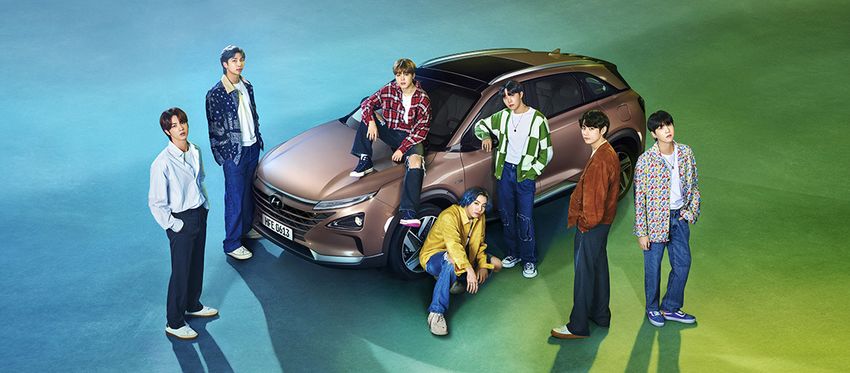
02.   Strategies for            According to the International Energy Agency (IEA), carbon emissions produced by

      vehicle                   transportation account for approx. 20% of the global total, more than 70% of which comes
                                from road traffic that includes automobiles. To limit the global temperature increase to 1.5℃ in
      electrification
                                accordance with the Paris Agreement, we need to aim beyond carbon reduction toward zero
                                carbon emissions. For this goal, our priority is to shift the focus of our products and business
                                structure from internal combustion engine vehicles to electric vehicles. We plan to achieve
                                100% electrification (through battery electric vehicles and fuel cell electric vehicles) in the
      2_1. Hyundai Motor        European market by 2035 and to achieve 100% electrification of product vehicles in major
      Company goals for         markets by 2040. We also plan to accelerate electrification by considering customer needs,
      vehicle electrification
                                market conditions, and infrastructure status in emerging global markets. For our luxury brand
                                Genesis, we will implement electrification across all newly launched models starting in 2025 and
                                achieve 100% electrification by 2030. In terms of commercial vehicles (CV) including buses and
                                large trucks, which produce more carbon emissions compared to passenger vehicles,
                                we plan to build a full lineup of fuel cell electric CVs by 2028 and attain 100% electrification
                                in the Korean market by 2035. In the global market, we will gradually expand our business by
                                building hydrogen ecosystems and entering new markets through strategic partnerships.
                                For each region, brand, or model, we are dedicating our best efforts to achieve total
                                electrification as soon as possible.

                                Furthermore, we plan to replace all company cars used in our domestic/overseas factories with
                                electric vehicles. We will also encourage our partners to switch to electric vehicles and electric
                                transport vessels by 2040-50 to achieve zero carbon emissions across all our factories.

07
02.   Strategies for            In 2013, Hyundai Motor Company launched TUCSON ix, the world’s first fuel cell electric vehicle.

      vehicle                   In 2018, Hyundai Motor Company launched NEXO, a fuel cell electric vehicle equipped with
                                a next generation fuel cell system comparable to internal combustion engines in terms of
      electrification
                                performance and durability. As of 2020, NEXO sales reached 6,600 units in the global market,
                                in which it marked #1 in FCEV market. NEXO is currently leading the fuel cell electric vehicle
                                market, accounting for 69% of the market share. Hyundai Motor Company sold 140 units of the
                                XCIENT fuel cell electric truck to Switzerland in 2021 with further plans to increase our exports
      2_1. Hyundai Motor        of fuel cell electric trucks. The number of our fuel cell electric buses operating in Korea will also
      Company goals for         increase from the current number, 100, to 200 by the end of 2021. Beginning in 2023,
      vehicle electrification
                                we plan to further expand our lineup of fuel cell electric vehicles from one to three. Following
                                the redesigned NEXO scheduled for the second half of 2023, MPV-size FCEV model will be
                                unveiled at the end of 2023, followed by the Large SUV FCEV model after 2025.

                                                                                                                     Hyundai NEXO
                                                                                                                     Fuel cell electric truck XCIENT

08
02.   Strategies for            The new EV-exclusive brand IONIQ effectively demonstrates the level of our EV technology.

      vehicle                   IONIQ 5, launched in April 2021, was designed based on our dedicated BEV platform,
                                the Electric-Global Modular Platform (E-GMP). E-GMP’s multi-charger system is compatible
      electrification
                                with a variety of chargers, allowing users easy access to the nearest charging station.
                                Compared to the existing internal combustion engine renovation platform, E-GMP is equipped
                                with several distinguishing features including flexible product development, EV-optimized
                                designs and structures, a standardized high-capacity battery system (bi-directional power
      2_2.                      conversion function), longer provision of range (over 500km on a WLTP full charge), futuristic
      Enhancing our             designs, and innovative space. The E-GMP system is a leading technology for future mobilities
      technological
                                such as self-driving cars and connected cars which require more energy consumption and
      competitiveness and
                                precise high-performance control compared to conventional vehicles.
      infrastructure
      (E-GMP, E-pit, & IONITY
      investment)               In addition to developing advanced EV technology, Hyundai Motor Company will also help
                                increase EV charging infrastructures and provide customers with easy access to charging.
                                E-pits are ultra-fast EV charging stations built by Hyundai Motor Group to provide convenience
                                to long-distance drivers and expand the distribution of EVs in Korea. They are equipped with
                                350kW chargers, the most powerful chargers in Korea in terms of output. They can charge
                                an 800V EV from 10% up to 80% in just 18 minutes, which is approx. three times faster than
                                a high-speed charger. Starting in 2021, we plan to expand our charging network by installing
                                120 chargers at 20 ultra-fast charging infrastructures including 12 major highway rest stops
                                and other areas near 8 urban landmarks in Korea. Moreover, Hyundai Motor Group has signed
                                a strategic investment contract (2019) for IONITY of 75 million euros in Europe. IONITY was
                                co-founded in 2017 by four automakers: BMW, Daimler, Volkswagen, and Ford. This equity
                                investment will help us build partnerships that will accelerate our transition to ‘clean mobilities’
                                for our EV customers in Europe.

09
02.   Strategies for
      vehicle
      electrification

      2_2.
      Enhancing our
      technological
      competitiveness and
      infrastructure
      (E-GMP, E-pit, & IONITY
      investment)

                                (From the top)
                                E-GMP Battery Charging System
                                Hyundai Motor Group’s EV charging brand E-pit
                                IONITY

10
02. Strategies for Hyundai Motor Company will enhance the efficiency of the national power grid and contribute
vehicle to carbon neutrality in our nation/society through vehicle-to-grid (V2G) technology.
We aim to commercialize this next generation charging technology, which allows users to
electrification
return the power stored in the high-voltage batteries of their EVs to the national grid. With V2G,
users can charge their EVs during late hours of the night when power supplies are high and
discharge energy during peak hours when they are low, contributing to a stabilized power grid.
Applying V2G technology requires the development of DC to AC inverters, bilateral chargers
2_3. (communication), and management programs (monitors/controllers). Hyundai Motor Group
Utilizing electrical energy is currently conducting empirical studies for the commercialization of V2G technology at our
conversion technologies
Seoul headquarters parking tower. In addition to the distribution of new and exceptional EV
(V2G & SLBESS)
models, the utilization of V2G technology will further contribute towards building carbon neutral
societies by preventing additional constructions of power plants that produce environmentally
hazardous materials.
The elements for operating
V2G technology Amount
Monitors/ High unit cost
controllers of
electric EV discharging
power
Low unit cost Low unit cost
Power grid
EV charging EV charging
Inverter Bilateral chargers Building
Time
0 3 6 9 12 15 18 21 24
The utilization of V2G technology V2G technology concept image
1102. Strategies for Waste batteries are expected to increase proportionally to the increase of EV sales in the future,
vehicle demanding the need for recovery and recycling systems. With the increase of EV distributions,
we have arranged to expand our waste battery recovery/recycling network globally across
electrification
South Korea, Europe, and the United States, and etc. After thorough inspection, recovered
batteries will be reused through our currently developing Second Life Battery Energy Storage
System (SLBESS). SLBESS has been designed based on EV waste batteries. Hyundai Motor
Company is currently conducting an SLBESS/renewable energy demonstration project in
2_3. collaboration with external companies including Hyundai Steel, Korea Hydro & Nuclear Power,
Utilizing electrical energy Q-Cells, and OCI. The SLBESS-based resource recycling project will contribute to the reduction
conversion technologies
of our society’s carbon emissions. For waste batteries that are unsuitable for ESS, our company
(V2G & SLBESS)
is conducting empirical research with recycling businesses that decompose waste batteries for
valuable metals such as lithium, cobalt, and nickel. Hyundai Motor Company will continue to
enhance our capacity for reusing these valuable recycled metals.
② Testing/Grading
① SLB Collection Battery Performance
③ SLB1) based ESS
pass pass
fail fail
⑥ Recycle ⑤Commercialization ④ ESS Pilot Projects with Partners
Extracting the valuable metals Diversifying our business Korea
model & product (ESS, forklifts,
UPS, etc.)
Korea
EU
ESS
EU
Waste battery business/circulation system
1) SLB : the Second Life Battery
1203. Hydrogen “2040,
The Completion of Hydrogen
business synergy
Energy Shift”
Hyundai Motor Group unveiled our visions for our hydrogen business and the world’s most
advanced hydrogen fuel cell technology with Hydrogen Wave1) (September 7, 2021).
Hydrogen Wave represents the group’s powerful initiative for shifting the energy paradigm and
3_1. welcoming in a hydrogen-based society. Our company motto is “2040, The Completion of The
Hyundai Motor Group’s Hydrogen Energy Shift.” The three pillars of our hydrogen business are scalability, economic
2040 Hydrogen Vision
efficiency, and eco-friendliness. Our goal is to popularize hydrogen as a familiar and widely-
used energy, not only in transportation but in all aspects of our lives and industry by 2040.
As a global first-mover in hydrogen fuel cells, we are continuously striving to gain
competitiveness through technological innovations. To accomplish our visions for the
popularization of hydrogen energy by 2040, we will continue to expand our businesses and
technologies related to hydrogen energy systems. We will also distribute these systems
for competitive prices to help our society transition to hydrogen energy, to achieve carbon
neutrality and contribute for the sustainable environment.
1) Hyundai Motor Group 2040 Future Vision for Hydrogen Society Forum (KINTEX, Ilsan)
1303. Hydrogen Hyundai Motor Company launched HTWO, our fuel cell system brand equipped with one of
business synergy the world’s highest level of technology to expand our global business and help build hydrogen
ecosystems. HTWO stands for the chemical formula of hydrogen, while also embodying the two
pillars of our hydrogen fuel cell project: hydrogen and humanity. The brand name expresses our
determination to provide humanity with significant value beyond energy. Based on its merits
in terms of energy conversion, storage, and transportation, hydrogen energy has recently been
recognized as an optimal solution to combat the limitations of renewable energy that can
3_2. enhance the quality of life for humanity. Our hydrogen technology is exceptional in terms of its
Expanding our hydrogen efficiency, durability, and reasonable price. Hyundai Motor Company will leverage these merits
fuel cell business
to evolve transportation by applying hydrogen energy to all mobilities including passenger/
commercial vehicles, public transportation, trams, vessels, and UAMs. We also plan to develop
fuel cell systems that can be applied widely across our everyday life and various industries
from power generation to heating/cooling and energy storage, thus contributing to building
hydrogen society.
Fuel cell electric
truck XCIENT
Fuel cell ship
1403. Hydrogen At Hyundai Motor Company, we’re striving to stay competitive through technological
business synergy innovations that significantly enhance the output and durability of our fuel cell system.
In terms of our 3rd generation fuel cell system (revealed at Hydrogen Wave), we are working
on improving space utilization by reducing the volume of our 100kW fuel cell system by 30%
compared to the prior NEXO system. The 200kW fuel cell system will remain the same in terms
of volume but will double in output. Currently they are still prototypes, but we can anticipate
the launch of highly sophisticated fuel cell systems by the time they are mass produced. We are
3_3. also releasing a series of next-generation fuel cell systems that are as economically efficient as
Increasing the EV batteries and internal combustion engines. As evidenced by the many collaborations we have
competitiveness of our
going with hydrogen-related companies and government agencies around the world, our fuel
hydrogen fuel cell system
cell system is gaining positive results and recognition for its competitiveness.
Hyundai Motor Company exports its first hydrogen fuel cell systems
On September 2020, Hyundai Motor Company exported four hydrogen fuel
cell systems to a European energy solution startup and GRZ Technologies,
a hydrogen storage technology company in Switzerland. The exports were
performed after the Ministry of Commerce, Industry, and Energy granted
approval for the exportation of national core technologies. This was the first
time hydrogen fuel cell systems were exported to non-automobile sectors.
Hyundai Motor Company strengthens cooperation with the United States
Department of Energy pertaining to hydrogen and hydrogen fuel cell
technologies
Hyundai Motor Company signed a memorandum of understanding (MoU)
with the United States Department of Energy to collaborate on innovating
and expanding global foundations for hydrogen and hydrogen fuel cell
technologies. The main purpose of the MoU is to share empirical/analytical
data obtained through operating fuel cell electric vehicles and hydrogen
charging stations with academia, government agencies, and companies.
1503. Hydrogen It is also aimed at introducing hydrogen energy to a variety of industries and
business synergy the general public to innovate hydrogen and hydrogen fuel cell technologies
and increase their usage worldwide. Strengthening our cooperation with
the US Department of Energy means that the distribution of fuel cell
electric vehicles, currently focused mainly in the State of California, may
be expanded across the US. It can also lead to increased investments and
more jobs across the entire value chain including hydrogen production,
3_3. storage, and utilization. This in turn can accelerate the dawn of the hydrogen
Increasing the economy and shift energy paradigms.
competitiveness of our
hydrogen fuel cell system
Hyundai Motor Group constructs first hydrogen fuel cell system plant
overseas
To intensify our hydrogen business and expand the ecosystem for hydrogen
industries, Hyundai Motor Group signed an MoU with Guangzhou.
We also began constructing HTWO Guangzhou, our first hydrogen fuel cell
system plant overseas. The construction is scheduled to be completed in 2022.
Through HTWO Guangzhou, we will continue to apply our advanced hydrogen
fuel cell system as a power source for more mobilities and industries.
HTWO Guangzhou bird’s-eye view
1603. Hydrogen To achieve carbon neutrality, we must inevitably transition from fossil fuels to renewable
business synergy energy. Hydrogen is gaining increasing importance as a future energy source that can make up
for the unstable supply and demand of other renewable energies such as solar and wind.
In recent years, major countries including the United States, Germany, and Japan have launched
long-term projects to build hydrogen ecosystems. As of today, most hydrogen energy consists
of gray hydrogen produced from fossil fuels. However, to achieve true carbon neutrality in the
future, it is important to transition to green hydrogen based on renewable energy.
3_4. Hyundai Motor Company plans to procure renewable energy such as solar and wind power
Utilizing green hydrogen through collaborations with RE100 global businesses. We will further expand our collaborations
and becoming more
to produce and transition to green hydrogen using renewable energy. Green hydrogen will be
eco-friendly
used as the main energy source for our fuel cell electric vehicles in the future. It will also be
used to generate power in our factories as an alternative to liquefied natural gas (LNG).
This will maximize the synergy effect between our hydrogen project and carbon neutrality goals.
1703. Hydrogen
business synergy For a smooth and effective transition to hydrogen society, Hyundai Motor Company is
conducting various campaigns and social activities to communicate the eco-friendliness of
hydrogen to our customers. Our plan is to consistently expand our current hydrogen campaign
and promotional activities.
H2U (hydrogen to you):
3_5. a global campaign that promotes the benefits of hydrogen
Hydrogen campaigns With the popularization of fuel cell electric vehicles and the construction of
hydrogen infrastructures, Hyundai Motor Company believes we have entered
a new stage in building hydrogen societies. Alongside various influencers,
we launched the campaign helped creating a community of people who
believe in the importance of hydrogen societies. We invited professionals
in the automobile, eco-friendly mobility, and IT sectors along with lifestyle
influencers in the music, fashion, and photography fields to experience our
leadership in fuel cell vehicle technology by fuel cell electric vehicle NEXO.
We also created content highlighting our hydrogen fuel cell technology,
future sustainable mobilities, and the concept of hydrogen societies.
Through this content, we were able to engage with millennials who are
highly conscious of the environment and society. To enable more customers
to experience the hydrogen energy technologies of NEXO, we’re planning
to expand the H2U campaign to other major cities across Asia and North
America starting in 2022.
H2 Economy: a campaign targeted at global opinion leaders
Partnered with Bloomberg, Hyundai Motor Company is conducting H2
Economy, a campaign aimed at global opinion leaders to consolidate our
image as a leading company in building hydrogen economies. The campaign
promotes our hydrogen technology and products through educational
1803. Hydrogen videos while also communicating the importance of clean hydrogen energy
business synergy in developing hydrogen technologies/businesses and building a sustainable
future. The ultimate goal of the campaign is to influence how opinion leaders
perceive hydrogen. We also rank 15 countries around the world based on
their hydrogen adoption, policies, and investment levels to encourage
countries to cultivate hydrogen businesses.
3_5. “Hyundai Motor Company and BTS promote hydrogen energy”
Hydrogen campaigns To highlight hydrogen as tomorrow’s eco-friendly and sustainable energy,
Hyundai Motor Company has teamed up with BTS for the Global Hydrogen
Campaign under the slogan “Because of You.” In celebration of Earth
Day and Environment Day in 2021, we created a manifesto video and
documentary surrounding the theme “For Tomorrow We Won’t Wait.”
The videos convey the importance of taking sustainable actions to provide a
better future for the next generation. At Hyundai Motor Company, we wish to
share our efforts to create a hydrogen society with members of generation Z
and millennials, and we hope that, together with BTS, we can make a positive
influence on their many fans around the world.
1904. Achieving Hyundai Motor Company supports the direction and goals of the Paris Agreement and is
carbon neutrality in fully aware of the roles and responsibilities of companies in reducing greenhouse gas emissions
on a global level. We intend to increase the development/distribution of eco-friendly vehicles,
our factories
help create hydrogen society, and implement a variety of activities to reduce greenhouse
gas emissions.
At Hyundai Motor Company, we’re striving to make our factories carbon neutral by 2045
4_1. through the use of hydrogen energy, and etc. We will also be enhancing energy efficiency in
Hyundai Motor Company’s our production process by transitioning to renewable energy and adopting high-efficiency
direction for attaining
motors and inverters. In the short term, we’ll be prioritizing transitioning the electricity used
carbon neutral factories
in manufacturing to renewable energy by consulting the RE100 roadmap. We’re also going
to adopt high-efficiency machinery, recycle waste heat, and improve procedures to increase
efficiency in our painting process, which currently runs mainly on LNG fuels.
Our long-term goal starting in 2035 is to introduce green hydrogen (in connection with our
plans to build hydrogen society) and increase the use of renewable energy to achieve carbon
neutrality by 2045. To achieve this goal, we plan to introduce hydrogen combustion machinery
such as hydrogen boilers/burners and adopt green LNG that utilizes carbon reduction or carbon
capture, utilization, and storage (CCUS) technology.
2004. Achieving
carbon neutrality in Together with our major affiliates—Kia, Hyundai Mobis, Hyundai Wia, and Hyundai Transys—
we will reduce carbon emissions by transitioning 100% to renewable energy globally.
our factories
Our goal is set on 2045, five years earlier than the schedule set by the RE100 initiative.
To transition our overseas factories 100% to renewable energy, we will first start with our
Czech Republic plant where renewable energy is easily accessible. We’ll then be moving
on to factories in other countries such as India and the US by taking into consideration the
4_2. environment surrounding the supply/demand of renewable energy and government policies/
RE100 initiative and regulations of each country. The gradual transition will be 60% complete (compared to the
detailed execution plan
RE100 recommendation) by 2030 and 90% complete by 2040. We will carefully consider the
circumstances of each plant to come up with the best solutions including installing solar panels
on the roofs of our factories, purchasing renewable energy certificates, and signing power
purchase agreements (PPA) with external renewable energy companies.
Starting with our plant in the Czech Republic, Hyundai Motor Company plans to transition 100%
to renewable energies by obtaining guarantee of origin (GO) certificates in 2022. Starting in
2035, we’re also planning to install solar panels on the roofs of our factories and parking lots.
Our India plant is already purchasing approx. 85% of its power (wind power 20%, solar power
8%, waste incineration cogeneration 56%1) from external power companies through PPA.
We are also installing 10MW solar panels on our roofs, which will be ready by 2021. In addition,
we have already constructed 3.2MW solar panels at our plant in Indonesia (built in 2021).
These panels have been in operation since April 2021.
In Korea, we have made joint investments with large power companies and leased the roofs
of our factories for solar panels. These panels supply electricity to external grids. The 10MW
solar panels installed in 2013 at our Asan plant are producing 13,000Mwh electricity per year.
In 2021, we constructed a 9MW solar energy facility at the parking lot of our Ulsan plant.
We are also conducting a demonstration project that combines solar power with energy storage
systems (ESS) made from reused waste batteries.
1) Waste incineration cogeneration will gradually be replaced by renewable energy in the future.
2104. Achieving In addition to transitioning to renewable energy, we are continually adopting new high-
carbon neutrality in efficiency machinery such as high efficiency motors, inverters, and LED lights. We are also using
energy usage monitoring systems to minimize energy waste and reduce carbon emissions.
our factories
In the future, we plan to upgrade digital technologies based on AI and big data to optimize
energy usage in our production process and reduce carbon emissions in our factories.
4_2.
RE100 initiative and
detailed execution plan
(From the top)
Photovoltaic power generation in Hyundai’s
plant in India
2MWh ESS at Ulsan plant
A solar energy facility in the Ulsan factory
parking lot
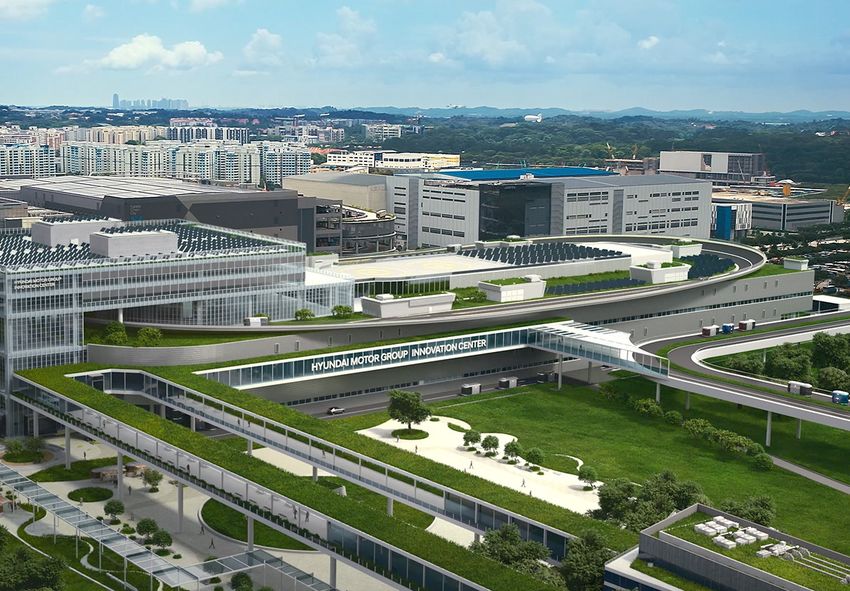
2204. Achieving Together with our affiliates, we are currently constructing the Hyundai Motor Group
carbon neutrality in Innovation Center in Singapore (HMGICS, scheduled for completion in November 2022) at the
Jurong Innovation District. This is based on our attempts to create an entire ecosystem for
our factories
green mobilities that goes beyond eco-friendly factories through advanced manufacturing
technologies and platform innovations. The HMGICS is an open research base for building
innovative mobility ecosystems. It will conduct research and empirical studies on mobility-
related value chains, which includes receiving new orders, manufacturing, delivering,
4_3. test-driving, and servicing. In the future, we’ll also be utilizing solar power and hydrogen power
Eco-friendly smart factory to create carbon neutral manufacturing hubs and help local communities achieve sustainable
growth. In addition, the center will conduct empirical studies on emerging businesses such as
Battery-as-a-Service (BaaS) and implement our visions for future mobilities such as smart cities,
UAMs, and robotics to shift our society to environmental mobilities. Moreover, we are also
building an intelligent manufacturing platform named M-CHoRD, a flexible production system
for multiple car models that can easily adapt to market changes and demand.
Moving away from traditional methods of manufacturing based on conveyor belts (optimized
for mass producing single models), M-CHoRD is designed to produce a variety of models in cell
unit assemblies with greater efficiency and adjustability. In addition to developing innovative
manufacturing platforms that incorporate the technologies of the fourth industrial revolution,
the center will also serve as a testbed for these platforms. Furthermore, we plan to create
human-friendly environments through cooperation systems between humans and robots,
technologies for preventing musculoskeletal disorders, and tutoring systems for work guidance.
2304. Achieving Value Chain Innovation Platform
carbon neutrality in
our factories
C H R D
Customer Focused Human Centric Resource Circulation Data Governed
Flexible Manufacturing Human-friendly work Eco-friendly mobility and Continuous sharing of
System (FMS) allowing environment prioritizing production will encourage real and virtual information
4_3. for timely responses to worker safety and health the development of to maximize operational
the manifold needs and _ an eco-friendly society efficiencies
Eco-friendly smart factory wants of customers for the future _
Worker health-care system
_ _
Uses digital twins
Smart Tutoring system
Cell-based, flexible production Develops battery circulation Optimizes operations through
system ecosystem virtual verification
Real-time, customized logistics Renewable Energy (Solar/ Optimized, data-based
system Hydrogen)/Building Energy operations utilizing AI and
Management System (BEMS) Big Data
M-CHoRD, the Vision of HMGICS
Bird’s-eye view of HMGICS
2405. Encouraging and The excellence of our finished vehicles is dependent on the auto parts of our partners.
supporting Their quality and technology in turn are directly related to consumer trust. Under this belief,
Hyundai Motor Company supports our partners by providing customized education and quality
our auto-part supply
management/technology courses that are designed to help boost their competitiveness and
chains (partners)
productivity. In addition, we help our partners improve the quality of their auto parts,
in achieving
develop technologies, and cultivate management skills through a variety of activities including
carbon neutrality
our five-star partner system, free patents, and technological guidance.
5_1.
Hyundai Motor Company’s In the future, we will also encourage our partners to practice carbon neutrality and implement
supply chain (partner)
environmental, social, and governance (ESG) management. We’re then going to investigate the
management direction
carbon emission levels of approx. 400 of our major partners. Following that, we’ll be selecting
core partners for managing carbon neutrality goals, providing guidelines, and encouraging them
to adopt environmental and socially responsible practices. By next year, we will identify the
characteristics of each partner, categorize them into groups, and develop cooperation programs
for our supply chain. The programs will include activities for reducing carbon emissions based
on each group, education on carbon neutrality, and awareness raising activities. Furthermore,
since raw material companies tend to produce the most carbon emissions, we plan to devise
joint solutions in connection with automobile design technologies, which will increase the use
of recycled or advanced materials.
2505. Encouraging and To achieve carbon neutrality, we believe it is important to analyze the environmental impact of
supporting a vehicle throughout its entire life-cycle from the acquisition of raw materials to its operation,
disposal, and recycling. Thus, we plan to conduct life-cycle assessments (LCA1)) on our vehicles
our auto-part supply
to try to minimize their effect on nature across all procedures. We have already conducted
chains (partners)
complete LCAs on Kona EVs according to the 2020 criteria and will gradually expand our
in achieving
analysis to include other EVs that will be launched in the future.
carbon neutrality
5_2. Impacts on carbon emissions by life-cycle stages
Encouraging partners to Pre-manufacturing Transportation Manufacturing Distribution Use (including
electricity production)
End-of-life treatment
and recycling
go carbon neutral through 34.4% 0.1% 1.2% 0.1% 63.9% 0.3%
LCA management
Power generation
According to the LCA, Kona EVs have the largest effect on global warming in the operation stage
(approx. 64%) followed by pre-manufacturing (approx. 34%) and manufacturing/distribution/
disposal (approx. 2%). These results suggest that in addition to reducing carbon emissions in
the operation stage, we must help our partners manage their carbon emissions to decrease
environmental impacts produced at the pre-manufacturing, part-procurement stage. Thus,
we plan to develop ways for our partners to utilize recycled materials and provide technological
support for low carbon practices. We will also use digital technologies (for example, our
carbon neutral support computer system for partners) to enhance the credibility of our pre-
manufacturing carbon emissions data and LCA analysis. These activities and technologies will
help us further enhance the carbon reduction of our new vehicle models.
1) LCA: Life Cycle Assessments
2606. Social activities To achieve carbon neutrality, we must stop using fossil fuels to manufacture vehicles.
to reduce However, there are many obstacles to reaching our decarbonization goals, and the process
requires an extended period of time. Thus, CCUS technology may serve as useful and practical
carbon emissions:
carbon neutral measures during the transitional period. Hyundai Motor Company started
carbon reduction
developing CCUS technology since 2012 for our manufacturing process. The technology is
and recycling
currently being used in our factories in Korea. CCUS technology can also be used in other
industries beyond automotive manufacturing. To prepare for its commercialization, we are
6_1. conducting empirical studies at our lab in Korea and will be performing consistent market
Carbon capture utilization monitoring and technology development.
and storage (CCUS)
2706. Social activities In addition to energy storage systems (ESS), which allow us to reuse waste batteries from
to reduce electric vehicles, Hyundai Motor Company will also use post-industrial recycled (PIR) materials
in our main auto parts and create designs that consider recycling possibilities for disposed
carbon emissions:
vehicles. We are using recycled plastic in our auto parts by utilizing waste resources recovered
carbon reduction
from disposed cars. In 2020, we increased the scope even further by inventing recycled
and recycling
materials for cowl top covers. In our newly launched Genesis G80 and IONIQ 5, we used
additional recycled materials and biomaterials for the interiors. The paints used in the IONIQ
6_2. 5 are made from plant-based bio-oil ingredients, and the leather seats were pretreated using
Designs that consider plant oils.
recycling possibilities
In Europe, we are increasing the use of recycled plastic in the models produced at our Czech
Republic plant to comply with European Green Deal policies and environmental regulations.
For this, we are seeking local recycling companies in Europe and developing ways to
manufacture parts from locally recycled materials.
We are also creating economic value by procuring resources from various wastes produced
during consumption, thus reducing environmental pollution. We are currently working on
developing ways to recycle discarded fishing nets to reduce marine pollution. These fishing nets
will be reused for exterior auto parts such cowl top covers, engine covers, and wheel covers.
We are also conducting pilot studies in preparation of tomorrow’s hydrogen economy on
recycling carbon fibers obtained from the hydrogen tanks of discarded hydrogen vehicles.
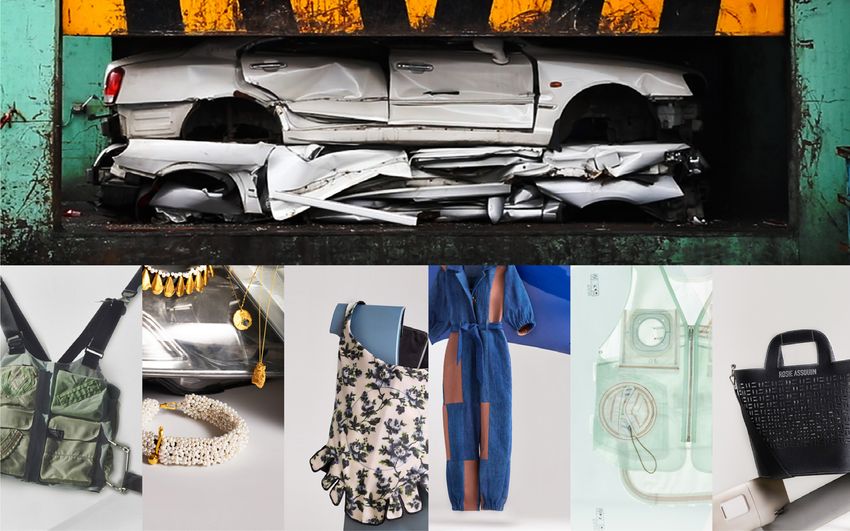
2806. Social activities Re:Style, Hyundai Motor Company upcycling project
to reduce Sustainability is becoming increasingly important in today’s society.
To promote upcycling trends worldwide by combining mobility with
carbon emissions:
fashion, Hyundai Motor Company launched Re:Style, our new sustainability
carbon reduction
project. Automobile materials such as leather, glass, and air bag material
and recycling
have low recycling rates and are mostly discarded. We reused these
materials to create accessories, effectively redefining automobile waste as
6_3. valuable materials for fashion items. The project will continue to promote
Re:Style, creating shared sustainability across the automobile and fashion industries.
value through upcycling
Re:Style, Hyundai Motor Company upcycling project
2906. Social activities IONIQ Forest
to reduce From 2016 to 2020, Hyundai Motor Company conducted the IONIQ Forest
project in partnership with Sudokwon(capital area) Landfill Site Management
carbon emissions:
Corporation and Tree Planet to plant fine-dust-reducing trees at landfills in
carbon reduction
Incheon’s metropolitan area. Together with forest experts, customers who
and recycling
purchased IONIQ, and participants in the IONIQ Longest Run, we planted
23,000 trees by 2020 and created a fine dust prevention forest.
6_3. In 2021, we will be planting native camellia trees, azaleas, hydrangeas, etc.
Re:Style, creating shared at the National Sinsido Natural Recreation Forest to create forest paths.
value through upcycling
We will also be providing eco-friendly mobility experiences with IONIQ 5 and
participating in community volunteer work.
Hyundai Green Zone
The Hyundai Green Zone is a global ecological restoration project that has
been conducted by Hyundai Motor Company since 2008. The first Hyundai
Green Zone project was carried out from 2008 to 2013 across 50 million
square meters in Chakanor, Apakachi, Inner Mongolia-one of the main
sources of yellow dust in China. The project has successfully transformed
an alkaline salt desert into grassland. From 2014 to 2020, we conducted a
second project aimed at restoring the Baoshaodainao Nur, Zhenglan Qi and
3006. Social activities Haginor regions into grasslands. In 2021, we will be transferring the seeding
to reduce perennial plant techniques we have gathered from these regions to the
Inner Mongolian government and we will also be launching our third project
carbon emissions:
in Chayojungqi, Ulanqab, Inner Mongolia. The Hyundai Green Zone project
carbon reduction
brings together volunteers from various backgrounds including Hyundai
and recycling
Motor Company employees and college students from Beijing and Tianjin to
prevent the spread of desertification. In recognition of these contributions,
6_3. Hyundai Motor Company was ranked No.1 among automakers operating
Re:Style, creating shared in China for five consecutive years in a corporate social responsibility
value through upcycling
development index published by the CSR Research Center at the Chinese
Academy of Social Sciences. In the overall ranking including all companies in
China, Hyundai Motor Company was ranked No.4.
Hyundai Green Zone project
Restoring marine ecosystems & upcycling
Partnered with Healthy Seas, Hyundai Motor Company is restoring marine
ecosystems through cleanup activities. The objective of the activities is
to remove discarded fishing nets and rubbish from our sea and beaches.
The fishing nets are made into econyls, biodegradable nylon made from
up-cycled fishing nets or cloth. These materials are then used to create
new products such as bracelets or possibly even automobile parts for our
3106. Social activities vehicles. In addition, we will be using IONIQ 5 for transportation in six
to reduce major European countries to reduce our carbon footprint and continue to
implement creating shared value (CSV) activities to protect the environment.
carbon emissions:
carbon reduction
and recycling
6_3.
Re:Style, creating shared
value through upcycling
Marine Ecosystem Restoration and
Upcycling Project (Europe)
32You can also read


