Information Technology - 1No - University of Technology ...
←
→
Page content transcription
If your browser does not render page correctly, please read the page content below

Information
Technology
Undergraduate Courses 2020

                                       1
                               No.
                              UTS ranked
                                Australia’s
                             #1 young◆ uni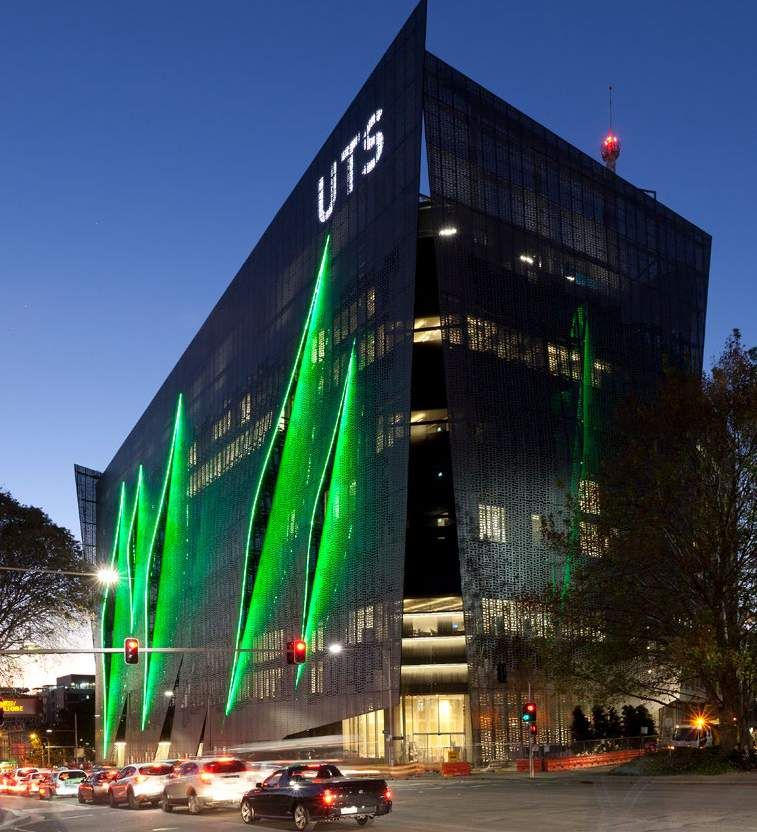

Welcome to UTS
  Information Technology
Contents                                                               Faculty snapshot
02    Why information technology at UTS?                               7195         undergraduate
04    World-class facilities                                           2757         postgraduate
06    Internships                                                      902          higher degree research
                                                                       10,854       total
07    Internship FAQs
08    Careers
                                                                       UTS at a glance (2018)
                                                                       45,930       students
09    Prepare for the future
                                                                       15,134       international students
10 Information Technology courses                                      33,070       undergraduate students
10	Bachelor of Science in Information Technology,                     10,720       postgraduate coursework
    Diploma in Information Technology Professional Practice            2140         higher degree research students
12    Majors                                                           3896         staff

14    Bachelor of Information Technology Co-operative Scholarship      UTS student diversity
16	Bachelor of Computing Science (Honours)                            49%          female students
                                                                       51%          male students
18	Bachelor of Science in Games Development
                                                                       31%          are 25 or older
20 Combined degrees                                                    49%          also speak a language
                                                                                    other than English
20	Bachelor of Business,
    Bachelor of Science in Information Technology
                                                                    Please note the above numbers are approximate
22	Bachelor of Science in Information Technology,
                                                                    as of January 2019.
    Bachelor of Arts in International Studies
24	Bachelor of Science in Information Technology,
    Bachelor of Laws
26	Bachelor of Science in Information Technology,
                                                                    Connect with us
    Bachelor of Creative Intelligence and Innovation
                                                                          UTSFEIT
28    Degree add-ons
                                                                          utsengineeringandit
29 Additional courses for                                                 UTSFEIT
   international students
30 What you need to know
30    Women in Engineering and IT (WiEIT)
                                                                    Acknowledgement of Country
32    University life                                               UTS acknowledges the Gadigal People of the Eora
33    Discover entrepreneurship                                     Nation and the Boorooberongal People of the Dharug
                                                                    Nation upon whose ancestral lands our campuses
34    Global opportunities                                          stand. We would also like to pay respect to the Elders
                                                                    both past and present, acknowledging them as the
36    Applying to UTS
                                                                    traditional custodians of knowledge for these Lands.
38    Admission schemes
39    Admission pathways
40    Scholarships
43    Fees and financial assistance
                                                                                                                             1
Why information
technology at UTS?
Experience the UTS difference.

INDUSTRY FOCUSED LEARNING                        SEE YOUR IDEAS FLOURISH                       DO SOMETHING THAT MATTERS
Nothing prepares you better than real            TIME Magazine, Snapchat, Reddit,              Choose the Honours program and you’ll
industry experience. Climb the ladder faster     Facebook, Google, Dropbox, WordPress          work on research that could change the
by combining theory and practice in an           and Yahoo were all founded in universities.   world for millions of people. Visit
internship connected to your degree.             Be where opportunities happen. 40%            uts.edu.au/it-honours to find out more
                                                 of Sydney’s tech start-ups are in our         and learn about the real-world projects
FUTURE READY                                     neighbourhood and we offer dedicated          you could be involved in.
You’re at uni to become one of the creators      services and programs to mentor students
of the future. Do that in the most forward-      with ideas and ambitions.                     PROFESSIONAL FROM DAY ONE
thinking spaces and hi-tech, future-first                                                      Step one listen, step two do. IT subjects
laboratories available. Ours!                    EXPAND YOUR HORIZONS                          are delivered by industry professors who
                                                 Every door in the world is open to you        understand the importance of practice.
A FOOT IN THE DOOR                               right now. Keep it that way. Use our Global   Be a true professional from the start,
Get an internship that will help fuel your       Exchange, International Studies course        by applying your skills to real industry
future with one of our 1,000 partner             or Beyond UTS International Leadership        challenges, hackathons and showcases.
companies. Our team will help you secure it.     Development (BUILD) program with its
The UTS internship team is here to help you      overseas volunteering placements, to lay
turn access into valuable work experience.       down the foundations for a global career.
It’s this type of know-how that sets you apart
from your peers when you graduate.

2
Top 100
256
exchange
                                                                                            Globally for graduate
                                                                                            employability
                                                                                            QS Graduate employability Rankings 2019

agreements in
43 countries

                                              5           star
                                                          rated
                                             for excellence

                                                                                                                1
                                          UTS was awarded 5 stars in all 8 categories
                                          by QS World University Rankings

                                                                                                       NO.

NO.        1
for Computer
                                                                                                       UTS ranked Australia’s
                                                                                                       #1 young* uni
                                                                                                       *Times Higher Education 150 Under 50 rankings,
                                                                                                       2015 - 2018. QS World University Rankings Top 50
                                                                                                       Under 50, 2016-2019

Science in NSW
Times Higher Education World University

                                                             Top 200
Rankings by Subject 2019

                                                              universities
                                                              globally
                                                              QS World University Rankings 2019
                                                              and Times Higher Education World
                                                              University Rankings 2019

                                                                                                                                                          3
World-class
       facilities
ENGINEERING AND IT BUILDING
Every space in the building is designed
                                                 The building is a living, breathing laboratory,
to turn traditional learning on its head to
embed technology and enhance creativity,
                                                 embedded with revolutionary technology
entrepreneurship and collaboration.
Digitally equipped classrooms, collaborative
                                                 and purposely-built to spark creativity and
theatres and study spaces adapt to support
group work, technology-enabled activities
                                                 collaboration. Everything you need to take on
and practice-based learning.
                                                 tomorrow is right here, all under one roof.

UTS DATA ARENA
Data comes to life in the building’s
interactive 3D UTS Data Arena. It is a 3D data
visualisation arena showcasing the latest in
immersive technology. It enables a unique
method for the exploration and visualisation
of data. The facility allows researchers to
observe interrelationships, patterns and
anomalies not normally seen in 2D format.

PROTOSPACE
A 900m² additive and advanced
manufacturing facility that actively supports
education, exploration and innovation. This
unique lab is unlocking the next generation
of manufacturing opportunities, giving
UTS students access to cutting-edge
3D technologies, software and
technical expertise.

LABORATORIES
Whatever engineering field you’ve got
your eye on, we’ve got fully specced-up
lab spaces to hone your skills. The building
contains civil, electrical, information and
mechanical. information and communication
technology laboratories, where you can gain
hands-on practical experience.

TECH LAB                                         LEARNING PRECINCT
A brand new research facility that brings        In between classes, you can study or
together transdisciplinary research on a         conduct group work in the FEIT Learning
large scale, with a focus on developing and      Precinct, where you can also access
applying new techniques around digital           teachers for support, get your hands on
transformation and IoT.                          reference materials and other resources.

4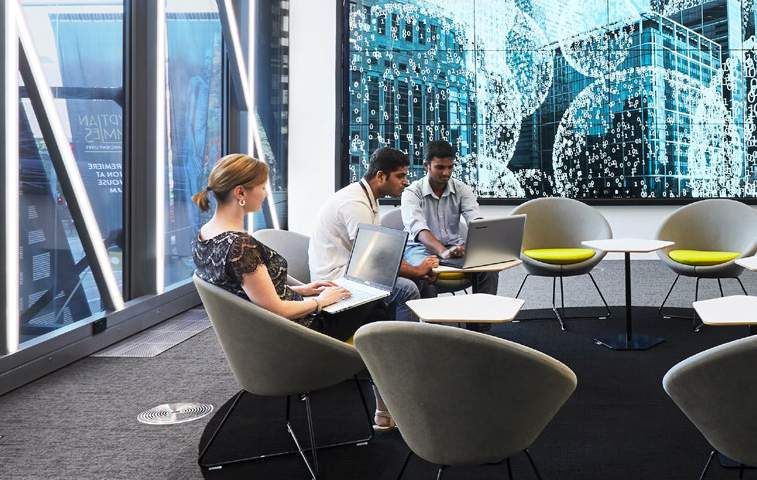
SOFTWARE                                      UTS LIBRARY                                       UTS STARTUPS
DEVELOPMENT STUDIO                            The library has expanded to include an            UTS Startups includes an entrepreneurship
A rich environment to become professionally   underground storage system that uses              program designed to give you start-up skills
competent via a collaborative industry        robots to retrieve books, freeing library space   and provide you with access to resources
software development experience.              for student collaboration and quiet study.        that help launch the entrepreneurs of the
                                              This upgrade is part of the UTS City Campus       future. Learn more at startups.uts.edu.au
                                              Master Plan, a $1 billion investment to
                                              re-develop UTS.

                                                                                                                                               5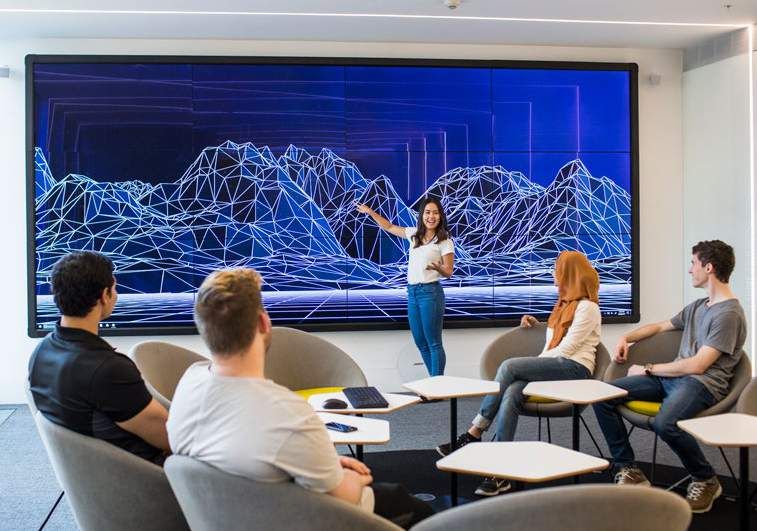
Undergraduate Courses 2020

Internships
The Diploma in Information Technology
Professional Practice gives you practical,
hands-on work experience.
Let a degree at UTS Faculty of Engineering      GAIN REAL-WORLD EXPERIENCE                          BUILD VALUABLE NETWORKS
and IT give you the edge.                       Internships are structured programs that            An internship as part of your IT degree is a
                                                give you valuable hands-on work experience.         chance to make valuable connections and
When you choose to study at the UTS Faculty
                                                You get to see how the technical knowledge          start building your industry network. Your
of Engineering and IT, you get to experience
                                                you learn at uni is applied in practice. It’s the   internship work colleagues may become
the best of both worlds - a great degree
                                                perfect way to explore the world of work to         lasting contacts who would let you know
and the chance to complete internships
                                                learn more about the type of job options and        about potential job opportunities and act as
alongside your course.
                                                career paths available to you.                      your mentors and referees in the future.
Students who enrol in the Bachelor of
Science in IT complete the Diploma in           DEVELOP EFFECTIVE SOFT SKILLS                       CREATE A JOB-WINNING RESUME
                                                Working in a professional environment               Completing internship programs as part
Information Technology Professional Practice
                                                is much more than applying what you’re              of your UTS degree means you’re able to
as part of their program. The internship is a
                                                learning at uni, it’s also a chance to develop      offer something different on your resume
structured program, consisting of one nine-
                                                your soft skills in the workplace. Skills           by including your industry-relevant work
month internship alongside your IT course.
                                                such as teamwork, communication, time               experience. It’s a sure-fire way to get you
Bachelor of IT Co-operative Scholarship         management, adaptability and problem                noticed by potential employers when looking
students complete two six-month internships     solving are all traits that potential employers     for that all important first job out of uni.
as part of their scholarship.                   look for and can help you land a job.

6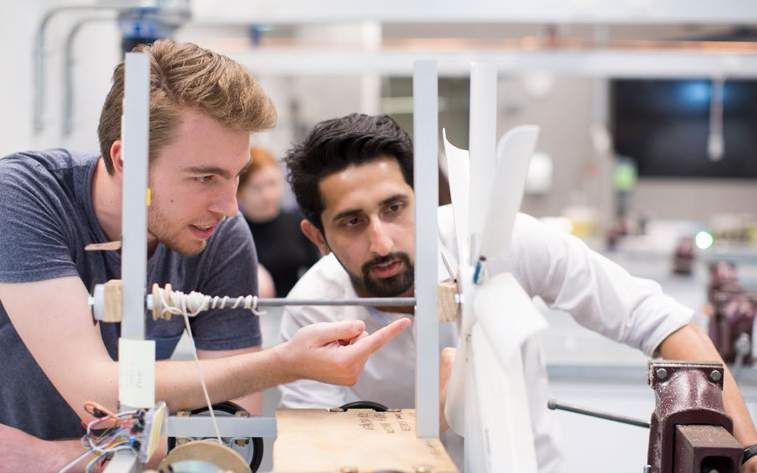
Information Technology

Internship FAQs

Q. WHAT IS THE DIPLOMA IN                        Q. WHAT ARE THE                               Q. HOW MANY HOURS SHOULD
INFORMATION TECHNOLOGY                           BENEFITS OF AN INTERNSHIP?                    I COMMIT TO MY INTERNSHIP?
PROFESSIONAL PRACTICE?                           An internship provides you with a             An internship is similar to a full-time job.
With the Diploma in Information Technology       unique opportunity to put uni learnings       You’ll be expected to commit to the
Professional Practice, you can undertake a       into practice. This means you get to test     contracted hours of employment during this
minimum of nine months IT work experience        and refine your practical skills as well      time. Don’t worry, there are no other no other
in addition to your course.                      as build business acumen around your          compulsory classes during this time so you
                                                 communication, teamwork and                   can solely focus on your work placement.
The Diploma is available to students enrolled    creative skills.
in the following courses:
–– Bachelor of Science in Information
   Technology
–– Bachelor of Science in Games
   Development
–– Bachelor of Computing Science (Honours)
–– Bachelor of Science in Information
   Technology combined degrees

Q.WHAT SUPPORT DO I HAVE
SECURING AN INTERNSHIP?
The careers team are available to assist
you with your job search. We maintain links
with more than 1000 organisations offering
both scholarships and internships, the latter
being advertised on our in-house jobs portal,
CareerHub. We also offer opportunities to find
mentors, meet contacts, and build networks                                                                 Our staff are
that will prove invaluable in your career.                                                                 here to help
                                                                                                           You’re not on your own when
                                                                                                           looking for internships. Dedicated
                                                                                                           staff are available to assist you
                                                                                                           with resume writing, interview
                                                                                                           skills and job finding strategies.

                                                 Clarissa Lim
                                                 Bachelor of Information Technology
                                                 Co-operative Scholar

                                                                                     “The experience you gain during your
                                                                                      internship helps you develop a clearer
                                                                                      understanding of what businesses are
                                                                                      looking for. Hopefully, this gives you
                                                                                      an edge when you enter the job market
                                                                                      as you’ll have a better idea of how to
                                                                                      answer interview questions and how
                                                                                      your skills match the needs
                                                                                      of a business.”
                                                                                                                                                7
Undergraduate Courses 2020

Careers
Information Technology is your passport to
success. Start your career journey at UTS.

                                                                                                    151,200
PREPARE FOR THE FUTURE                            WHAT DO YOU NEED TO
Today’s IT professionals are programming,         WORK IN IT?
networking, analysing and building. They          IT is not just about computers, especially
are pioneering business and technical             if you’re interested in one day creating
solutions for computer hardware, software,        your own start-up.                                 new IT related jobs
electronics, telecommunications,                                                                     are predicted to be
e-commerce and computer services.                 You’ve got to know how the business works.
                                                  Here are a few tips on what you need to            created between now
THE FUTURE HAS NEVER LOOKED                       work in IT:
                                                                                                     and 2020
BRIGHTER FOR THE IT INDUSTRY                      –– good communication skills and to
Technology continues to infiltrate every             enjoy dealing with people                       Department of Employment, 2016
aspect of our lives, and there’s no signs of it                                                      Industry Employment Projections
                                                  –– creative thinking and problem
slowing down. Your IT degree will prepare you
                                                     solving skills
for a fast-paced digital future, giving you the
knowledge and developing the skills you           –– to be motivated and results-driven
need for any industry or your own start-up.       –– to be a team player
If you’re interested in working in technology,    –– to be willing to learn new things and
the opportunities are endless. In fact, the IT       adapt to an ever-changing environment
sector is one of the biggest contributors to
                                                  –– a mix of business and technical skills
Australia’s national economy with predicted
growth until 2020.                                –– an understanding of how a business
                                                     works - IT is not just about computers

                                                  Brendon Ward
                                                  Bachelor of Information Technology Co-operative Scholarship

                                                                                      “I completed my first internship with
                                                                                       WiseTech Global, a global software
                                                                                       development company where I worked on
                                                                                       their flagship product CargoWise One.
                                                                                       It’s used by over half of the world’s top 50
                                                                                       third-party logistics providers.
                                                                                       I rotated through three teams and
                                                                                       developed my coding skills. It was a
                                                                                       great experience.”

8
Information Technology
Prepare for
the future
Robotics, artificial intelligence and automation are all
around us, revolutionising the way we live and work.
The demand for skilled IT professionals Cyber security experts are tasked with ARTIFICIAL INTELLIGENCE
is growing exponentially to meet these simulating, tracking and targetting hackers. AI is enhancing human decision-making,
emerging tech trends. Check out the top by powering computer systems with human
Prepare with the Bachelor of Science in
skills needed to meet this demand. Information Technology and major in Networking intelligence. This includes machine learning,
and Cybersecurity. where humans teach computer programs to
SOFTWARE DEVELOPER learn by finding patterns in data. The more
Software developers are the creative minds DATA ANALYST data available, the better the performance!
behind computer programs and algorithms. The Internet of Things is predicted to have
50 billion ‘things’ connected to the net by For instance, Google Assistant recognises
The programs must be secure and your speech, provides search results and
2020. These ‘things’ include mobile phones,
continuously tested to ensure code is gives you recommendations on music and
home appliances, healthcare devices, lights,
released consistently, at a high quality movies according to your search history.
wearable devices, engines and machinery.
and fast, ensuring clients and customers
have a seamless and safe experience As the demand for data grows, so will the Clinicians are also benefiting from AI by using
across applications. demand for data analysts. An analyst has complex pattern recognition to determine
deep analytical skills with an ability to tailored treatments for patients, using billions
Smart solutions, robots, machine learning, of dimensions of DNA.
identify patterns and draw conclusions and
artificial intelligence, autonomous vehicles
insights to inform business decisions.
and advanced enterprise solutions are As technology advances and AI
increasing the demand for custom Prepare with the Bachelor of Science in breakthroughs occur, we can expect
software solutions. Information Technology and major in Data further integration into our daily lives.
Analytics. Think automated transport, social robots,
Prepare with a Bachelor of IT Co-operative
Scholarship or Bachelor of Science in IT, Diploma VIRTUAL REALITY DESIGNER virtual personal assistants and advanced
in IT Professional Practice or Bachelor of The world of virtual and augmented reality health detection.
Computing Science (Honours) is changing fast and becoming more Prepare with the Bachelor of Computing Science
CYBERSECURITY EXPERT accessible and wide-spread. Aside from the (Honours).
Advances in inter-connectivity, smart gaming industry, VR is also being used in
technology and online services are the engineering, architecture, construction,
increasing the chances of cyber threats. education, medical and military industry for
In fact, according to the 2016 PwC Global 3D design, simulations and training.
Economic Crime Survey, cybercrime is Prepare with a Bachelor of Science in
ranked second most reported economic Games Development.
crime in the world.
9Undergraduate Courses 2020
Bachelor of Science in
Information Technology,
Diploma in Information
Technology Professional Practice
Take charge of your future in a world
2019 Selection rank*: 80.10 of disruptive technologies.
Duration: 4 years full-time With the Bachelor of Science in Information Technology,
6 years part-time^ Diploma in Information Technology Professional Practice you’ll learn
how to innovate today so that you can help shape tomorrow.
UAC code: 603200
This program sees you combine theoretical knowledge and
UTS course code: C10345 practical skills in both computing and business analysis to
CRICOS Code: 084259M bridge the gap between business needs and innovation. Develop a
strong grounding in the fundamentals of IT, while also allowing you
^Part-time study option is not available to international students
to specialise with an IT major and pursue your interests with your
Assumed knowledge: HSC (or international equivalent) remaining elective subjects. You can even choose electives from
Mathematics and any 2 units of English other faculties and/or undertake a study exchange
session overseas.
Recommended Year 12 subjects: Mathematics Extension 1 and
English Advanced
Professional recognition: Graduates are eligible to apply for
professional-level membership of the Australian Computer Society
Kory Porter
Bachelor of Science in Information Technology,
Diploma in IT Professional Practice
“I completed a diploma at TAFE before studying at
UTS, but a university qualification makes a bigger
statement, and UTS is known for technology.
I received credit points from my TAFE course and did
a UTS Foundation Maths course to provide me with
the skills I needed to get up to HSC standards.
There is a lot of flexibility and options around study
plans, ways of learning and how and when you study
if you are part-time or full-time.
I really like the ‘studios’ where you work on a real
project, with a real client and with real teams, which
is like a real work environment.”
*Selection ranks: published ranks indicate the lowest selection rank (ATAR plus any adjustment points applied through eligible admissions schemes)
to which an offer was made to a domestic Current School Leaver (Year 12) in the Autumn 2019 intake (for December Round 2 and January Round 1).
10Information Technology
MAJORS CAREERS
–– Business Information Systems Management –– Business analyst
–– Data Analytics –– Computer game designer/animator
–– Enterprise Systems Development –– Cloud specialist
–– Interaction Design –– Data analyst
–– Networking and Cybersecurity –– Database designer/manager
–– IT architect
WHY CHOOSE THIS COURSE?
As well as learning theory, you’ll get the chance to practice it. –– IT project manager
You will gain: –– Network administrator/manager
–– strong technical skills in IT –– Software developer
–– skills in business analysis, problem solving, teamwork and –– Systems analyst
communication
–– Web developer
–– exposure to real IT problems - employers look for graduates with
–– Interaction designer
industry experience
–– the opportunity to undertake a minimum of nine months’ Combine your degree with:
work experience with the Diploma in Information Technology Bachelor of Business, see page 20
Professional Practice Bachelor of Arts in International Studies, see page 22
Bachelor of Laws, see page 24
Bachelor of Creative Intelligence and Innovation, see page 26
Course structure
Diploma in Information
Core (8 subjects) Major (8 subjects) Electives (8 subjects)
Technology Professional Practice
–– Communication for IT Choose one major from Choose: A 9-12 month work placement and
Professionals the following: –– a second IT major supporting subjects at UTS.
–– Introduction to Information –– Business Information Systems OR
Systems Management
–– 2 sub-majors (IT or from another
–– Programming Fundamentals –– Data Analytics faculty)
–– Web Systems –– Enterprise Systems Development OR
–– Business Requirements Modelling –– Interaction Design –– 1 sub-major and 4 electives
–– Database Fundamentals –– Networking and Cybersecurity OR
–– Project Management and the –– 8 electives
Professional
Students may also undertake a global
–– Network Fundamentals exchange overseas.
11Undergraduate Courses 2020
Majors
The major you choose will typically influence
the career path you take after university.
A major consists of eight subjects and allows
you to specialise in your chosen area of IT.
Enterprise Systems
Development
Business Information This major introduces the practice of designing, creating and
maintaining software. You’ll get to apply technologies and practices
Systems Management from computer science, design, project management, and other
fields to produce effective, reliable and engaging applications in an
enterprise context.
These days, the private sector is increasingly looking for graduates
who can use IT to provide solutions that add value to their business YOU WILL LEARN:
and improve competitiveness. –– how to design, analyse, implement, test and deploy
You’ll focus on the business side of IT. You’ll learn how to software systems
use appropriate design approaches to develop Information –– how to build software systems in an enterprise context
Communication Technologies for all types of business –– teamwork, project management and quality assurance
activities. Specialise in managing the integration of Information
Communication Technologies into business and society, and take
leadership roles in their implementation.
YOU WILL LEARN:
–– how to run an IT business and systems
–– how to design IT for all types of enterprises and
business activities
Networking and Cybersecurity
–– how to manage the integration of IT into a business As the cyber landscape advances, so does the need for greater
security measures that provide the framework protecting the very
SUBJECTS INCLUDE: fabric of our new smart society.
Design systems, project management, contract/vendor
This major equips computer network and systems engineers of
management, organisational theory, accounting and finance.
the future with technical knowledge and a deep understanding of
the principles of security concerned with technology services. You
will develop key skills in secure network administration to protect
personal and commercial data and protect organisations against
imminent cyber threats.
Data Analytics YOU WILL LEARN:
–– security fundamentals and cybersecurity, including subject
options in digital forensics and mobile platform security
This major is all about technology services and integrates the
mathematical and IT foundations for developing and applying –– the essentials of routing and switching in both wired and wireless
business analytics systems. Data analytics is an emerging and networks
rapidly expanding area, where mathematics and statistical –– server administration and cloud computing infrastructure
methods interact with powerful information technologies to –– building and securing the Internet of Things (IoT)
improve the flow of massive amounts of data for business.
–– options to learn advanced topics like software defined networks,
YOU WILL LEARN: advanced routing and multilayer switching
–– how to use data and mathematics to solve business problems –– hands-on networking skills using equipment from leading vendors
–– about data mining; business intelligence systems; image
processing; and applications of artificial intelligence
12Information Technology
Interaction Design Computer Graphics
Focus on user experience and the design of interactive systems.
You’ll develop the practical skills to translate design concepts
and Animation
into working systems, as well as the necessary creative and This sub-major provides you with the theoretical and practical
social skills to ensure that what they create has a positive impact knowledge required to understand and build modern computer
on the world. graphics applications. You can choose to learn about 3D animations,
rendering techniques and computer game design and programming,
YOU WILL LEARN: and you’ll also have the option to complete a computer
–– human-centred approaches to interaction design graphics project.
–– how to create interactive systems that support rich
UTS graduates who’ve completed this sub-major have worked on
user experiences
Academy Award-winning films for special effects, such as The Matrix,
–– how to examine user experiences and evaluate King Kong, Avatar and Happy Feet (which also won the Academy
interface effectiveness Award for Best Animated Feature Film in 2007).
Sub-Majors
You can also take one of the five majors listed as a
sub-major (which consists of four rather than the eight
subjects required for a major). Please note that Computer
Graphics and Animation is only offered as a sub-major.
13Undergraduate Courses 2020
Bachelor of Information
Technology Co-operative
Scholarship
The Bachelor of IT is your first step towards
Selection rank: This is a co-operative scholarship. IT leadership.
Selection is based on a combination of ATAR and interview*
The BIT is a three-year fast-tracked Co-operative Scholarship
Additional selection criteria apply. See ‘how to apply’ on page 15. aimed at high achieving students who are pursuing a career in
*Your ATAR is just one component of your application, but an important one. technology leadership.
We balance our selection criteria against one another, so if you excel in the
application and industry interview it can compensate for a lower academic Students are paid $49,500 (2018) over the three-year program and
score. Historically, students with an ATAR of 85-99.95 have been offered a complete two internships with leading technology employers in first
BIT Co-operative Scholarship. and third year.
Duration: 3 years (full-time) Graduates from this course are highly sought after and report
UAC code: 603210 excellent starting salaries and exciting career prospects. In fact,
many students even find work before they graduate.
UTS course code: C10143
Designed with help from our sponsors, this scholarship offers a
This program is not open to international students strategic business focus, allowing you to develop strong technical
skills combined with an in-depth understanding of business practice
Recommended Year 12 subjects: Mathematics Extension 1
and technical skills.
and English Advanced
Professional recognition: Graduates are eligible to apply for CAREERS
professional-level membership of the Australian Computer Society –– Associate Developer
–– Business Analyst
–– Information Systems Manager
–– Project Manager
–– Commercial Manager
Kasvi Luthra
Graduate, Bachelor of IT Co-operative Scholarship
“I completed my first internship with Vivant Digital, a
small innovation agency, which I continued working
part-time during my studies. My second internship
will be with Westpac. The best application tip I can
give is to let your personality come through in your
responses. The academic and industry staff want to
get to know who you are.”
14Information Technology
WHO SHOULD APPLY FOR THE BIT
CO-OPERATIVE SCHOLARSHIP? INDUSTRY SPONSORS
Students who are:
–– excellent communicators with good interpersonal skills –– Aleron –– KPMG
–– motivated, with the capacity to progress to a senior –– Allianz –– Macquarie Group
level of management –– American Express –– Nielsen
–– all-round achievers who can demonstrate initiative by their –– AMP –– Nine Digital
involvement in activities like peer support, school council, –– ASIC –– Nine Network Australia
debating, mooting, music, scouts, community work or sports
–– ASX –– Origin Energy
–– interested in IT - you don’t need to have completed an IT
–– Campaign Monitor –– PWC
subject in the HSC
–– Coca-Cola Amatil –– Publicis Sapient
Successful students are selected based on a combination of direct
–– Commonwealth Bank –– Reserve Bank of Australia
application, industry interview performance, and selection rank*.
–– CSR –– Servcorp
HOW TO APPLY –– CUSCAL –– TAL
There are two steps you must take to complete your application.
–– Fujitsu –– Venntifact
1. Complete the BIT Application form at bit.uts.edu.au –– IBM –– Westpac
2. List the BIT as a preference on your UAC application –– IBM iX –– Winning Group
Successful applicants will be selected to attend an industry interview. –– InLoop –– WiseTech Global
–– Integrity Life Australia –– Woolworths Group
If you are successful at interview you will receive a conditional offer.
–– King & Wood Mallesons
Official offers will be released to students with the highest combined
results from interview and Selection rank.
Course structure^
Core (8 subjects) BIT Core (8 subjects) Electives (4 subjects) Industry placements
–– Communication for –– Information System Development Electives can be IT subjects or Year 1 - Session 2
IT Professionals Methodologies chosen from other faculties. Students –– Industry Study 1
–– Introduction to –– Collaborative Business Processes can also undertake an exchange
overseas. –– Industry Experience 1
Information Systems –– Business Process and IT Strategy
–– Programming Fundamentals Year 3 - Session 1
–– Applications Programming
–– Web Systems –– Industry Study 2
–– Introduction to Software
–– Business Requirements Modelling Development –– Industry Experience 2
–– Network Fundamentals –– Advanced Software Development
–– Database Fundamentals –– Software Architecture
–– Project Management Plus 2 technical choice subjects
and the Professional
^Revised structure due for implementation in 2019.
*Selection ranks: published ranks indicate the lowest selection rank (ATAR plus any adjustment points applied through eligible admissions schemes) to
which an offer was made to a domestic Current School Leaver (Year 12) in the Autumn 2019 intake (for December Round 2 and January Round 1).
15Undergraduate Courses 2020
Bachelor of Computing
Science (Honours)
Drive innovation with real-world experience.
2019 Selection rank*: 80.00 This premier degree has been developed in collaboration with
the software industry to ensure students graduate with the skills
Duration: 4 years (full-time)
required to pursue highly technical careers in artificial intelligence,
UAC code: 603230 cybersecurity, data science or quantum computing.
UTS course code: CO9119 With an emphasis on next generation technologies, computer
scientists solve deep problems in computing. They theorise, design,
CRICOS code: 092896D develop and apply computing and software for advanced programs.
Assumed knowledge: HSC (or international equivalent) You’ll work in a studio environment, applying theoretical knowledge to
Mathematics Extension 1 and any 2 units of English real-world problems. In years three and four of the course, you’ll also
develop research skills through computing science studio subjects
Recommended Year 12 subjects: English Advanced
and specialist subjects, culminating in an honours project in your final
Professional recognition: Graduates are eligible to apply for year of study.
professional-level membership of the Australian Computer Society
The Honours component is a one-year, research-based program
devoted to a research project. It is the first step towards a career in
research, and a unique opportunity for students to explore research
opportunities at UTS.
CHOOSE A MAJOR:
–– Artificial Intelligence and Data Analytics
–– Business Information Systems Management
Prof Michael Blumenstein –– Cybersecurity and Privacy
Associate Dean (Research Strategy & Management) –– Enterprise Systems Development
Faculty of Engineering & Information Technology –– Interaction Design
–– Mathematical Analysis
–– Networking and Cybersecurity
–– Operations Research
–– Statistics
“The type of student that would enjoy undertaking
a course like the Bachelor of Computing Science
would be those that already have a strong
background in maths and a love for mathematics
and computing in general, such as in the areas of
coding and programming.”
*Selection ranks: published ranks indicate the lowest selection rank (ATAR plus any adjustment points applied through eligible admissions schemes)
to which an offer was made to a domestic Current School Leaver (Year 12) in the Autumn 2019 intake (for December Round 2 and January Round 1).
16Information Technology
WHY CHOOSE THIS COURSE? CAREERS
As a Bachelor of Computing Science (Honours) student, You will have diverse career opportunities locally and internationally
you’ll develop: across a range of industries, including science, health, engineering,
–– the ability to theorise, design, develop and apply computing and finance, transport and telecommunications.
software for advanced programs –– Data scientist
–– advanced cognitive, technical and communication skills required –– Artificial Intelligence expert
for a highly rewarding career –– Machine learning specialist
–– opportunities to work in research. The combination of core –– Software designer
computing science subjects, IT majors, electives and research
–– Web development
subjects will prepare you to embark on a PhD.
–– Interface designer
–– Information systems management
–– Network management
PREPARE FOR THE FUTURE
–– Systems engineer
–– Intelligent robots
–– Security operations
–– Deep learning
–– Professional computing science researcher
–– Artificial Intelligence
–– Quantum computing
–– IoT Security
–– Digital Forensics
Mustafa Barodawala
Bachelor of Computing Science (Honours)
“I wanted to study in an area that focuses on
technology, but also mathematics. In computing
science, maths is the foundation of how we analyse
different programs, algorithms, and even different
computational systems.
Having this unique way of approaching problems
allows computer scientists to thoroughly investigate
a problem, such as find some hidden-in-plain sight
sort of pattern in a data analytics problem, or rule out
potential algorithms immediately by predicting their
run-time and space requirements.”
Course structure
Year 1 Year 2 Year 3 Year 4
Session 1 Session 2 Session 3 Session 4 Session 5 Session 6 Session 7 Session 8
Mathematics (Core) IT (Core) IT (Major) Honours Project Honours Project
Preparation
IT (Major) Honours Project IT (Major)
IT (Core) IT (Major) IT (Core) Elective IT (Core) IT (Major)
Comp. Sci. Studio IT (Major) Comp. Sci. Studio Elective
17Undergraduate Courses 2020
Bachelor of Science in
Games Development
Facial recognition, virtual reality,
augmented reality and open-source
gaming are just the beginning.
Evolving technology is changing the face of the interactive
entertainment industry, giving unprecedented opportunities.
2019 Selection rank*: 85.05
Today’s games are sophisticated computer programs that
Duration: 3 years (full-time) often connect thousands of players through virtual worlds and
6 years part-time^ consist of detailed 3D graphics, realistic physics and complex
artificial intelligence.
UAC code: 603225
In this program, you’ll develop a sound education in all aspects of
UTS course code: C10229
information technology as well as the diverse skills necessary for a
CRICOS code: 057197M career in games development. This includes subjects in web systems,
programming, networking, interactive media, database management,
^Part-time study option is not available to international students
design and special effects.
Assumed knowledge: HSC (or international equivalent)
Mathematics and any 2 units of English WHY CHOOSE THIS COURSE?
At UTS you won’t just learn the theory, but will also practice it.
Recommended Year 12 subjects: Mathematics Extension 1 and You will gain:
English Advanced –– enhanced work-ready expertise in games development
Professional recognition: Graduates are eligible to apply for and other IT fields
professional-level membership of the Australian Computer Society –– creative freedom and practical problem-solving skills based
on leading-edge IT theory
–– communication skills in a variety of forms including written,
verbal, online and technical literacies
–– an awareness of the principles of ethics and corporate
governance in a variety of settings
–– an understanding of industry through showcase events and
industry interaction
CAREERS
–– Computer animation/graphics specialist
–– Cyber security specialise
–– Data analyst
–– Games developer
–– Interaction designer
–– IT project manager
–– Software developer
–– Software engineer
–– Systems analyst
–– Web developer
Opportunities vary depending on major/sub-major chosen.
*Selection ranks: published ranks indicate the lowest selection rank (ATAR plus any adjustment points applied through eligible admissions schemes)
to which an offer was made to a domestic Current School Leaver (Year 12) in the Autumn 2019 intake (for December Round 2 and January Round 1).
18Information Technology
Course structure
Core (8 subjects) Games Development (10 subjects) Electives (8 subjects)
–– Communication for IT Professionals –– Introduction to Computer Game Design Choose:
–– Introduction to Information Systems –– Introduction to Computer Graphics –– 2 sub-majors (IT or from another faculty)
–– Programming Fundamentals –– Game Design Studio 1 OR
–– Web Systems –– Game Design Studio 2 –– 1 sub-major and 4 electives
–– Business Requirements Modelling –– Applications Programming OR
–– Database Fundamentals –– Data Structures and Algorithms –– 8 electives
–– Project Management and the Professional –– Introduction to Computer Game Development
–– Network Fundamentals –– Advanced Interaction Design
–– Fundamentals of Interaction Design
–– Advanced Games Programming
Natassja Sundara
Bachelor of Science in Games Development
“I chose this degree because it allowed me to be
creative in technology. It also combines IT subjects
with games development, so you can branch into
various fields when you graduate—not just games.
Right now I’m a part-time research assistant and
games developer on a UTS project for the elderly.
I also worked with UTS advanced technology
development unit, Rapido. They were doing a VR
project for a national tech conference in Sydney and
asked me to gamify it.
There have been plenty of opportunities to engage
with industry, including showcases where you can
demonstrate your project and capabilities. It’s been
very enjoyable—challenging but very rewarding.”
19Undergraduate Courses 2020
Combined
degrees
Design the perfect double degree
to suit your career goals.
Technology transcends every company department.
Bachelor of Business Technology is one of the fastest growing industries, and essential to
every successful business. This course provides a sound education in
Bachelor of Science in all aspects of computing and IT for students pursuing a career in
the profession.
Information Technology It adopts a practice-based approach, with the course content
designed as a mix of theory and practice. The business component will
2019 Selection rank*: 83.10 provide you with the knowledge, competencies and values necessary
Duration: 4 years (full-time) for fulfilling an effective career in business.
UAC code: 603220 WHY CHOOSE THIS COURSE?
Graduates with solid IT skills who also understand business
UTS course code: C10219 operations are in strong demand in industry. Business knowledge is
CRICOS code: 047835B an increasingly important tool for IT professionals, enabling them to
understand how IT fits into a successful business strategy.
Assumed knowledge: HSC (or international equivalent)
Mathematics and any 2 units of English CAREERS
–– Electronic business operations management
Recommended Year 12 subjects: Mathematics Extension 1 and
–– Information systems development/management
English Advanced
–– Software development in the banking and finance sector
Professional recognition: Graduates are eligible to apply for
–– Systems analyst
professional-level membership of the Australian Computer Society
–– Web developer
Graduates are also prepared for traditional business careers such as:
–– accountant
–– advertising consultant
–– business analyst
–– financial planner
–– human resource manager
–– management consultant
–– marketing manager
*Selection ranks: published ranks indicate the lowest selection rank (ATAR plus any adjustment points applied through eligible admissions schemes)
to which an offer was made to a domestic Current School Leaver (Year 12) in the Autumn 2019 intake (for December Round 2 and January Round 1).
20Information Technology
Kevin Vilaythong
Bachelor of Business
Bachelor of Science in Information Technology
“In high school, I did a number of IT subjects like
Information Process Technology and Software
Design. I didn’t have any background in business
or accounting, but I felt the degree would offer
opportunities in both fields.
I have a graduate accountant position at Waterway
Constructions, found through the UTS Careers Hub.
It’s been a big learning curve on accounting as well as
an IT project to automate processes in the company.
It’s important to be transparent and constantly
communicating with your supervisor or colleague. I
focussed on my interpersonal and collaboration skills
with the team to successfully deliver projects. ”
Jessica Ong
Bachelor of Business
Bachelor of Science in Information Technology
“I’m pursuing a data analytics major and we’re
building a data model that can classify different types
of buildings. I’m learning a lot from the course. I never
did any IT subjects in high school, so when I came to
uni I was worried, but the support network at UTS is
very good from academics and peers.
My first internship was at Westpac. It was an eye
opening experience—I never had any exposure to
corporate life before. I learnt how to communicate in a
team environment and develop my confidence.
I really had to push myself out of my comfort zone.”
Course structure
IT core (8 subjects) Business core (8 subjects) IT major (8 subjects) Business major (8 subjects)
–– Communication for IT –– Accounting for Business Choose one IT major from Choose one Business major from
Professionals Decisions A the following: the following:
–– Introduction to Information –– Managing People and –– Business Information Systems –– Accounting
Systems Organisations Management –– Advertising and Marketing
–– Programming Fundamentals –– Marketing Foundations –– Data Analytics Communications
–– Web Systems –– Economics for Business –– Enterprise Systems Development –– Economics
–– Business Requirements Modelling –– Fundamentals of Business –– Interaction Design –– Finance
–– Database Fundamentals Finance –– Networking and Cybersecurity –– Human Resource Management
–– Project Management and the –– Business Statistics –– International Business
Professional –– Integrating Business Perspectives –– Management
–– Network Fundamentals –– Accounting for Business –– Marketing
Decisions B
21Undergraduate Courses 2020
Combined degrees
Why settle for one specialisation? Create your
niche by combining your global areas of interest.
Bachelor of Science in This program provides a sound education in all aspects of computing
Information Technology, and IT. The international studies component offers the study of a
language and culture other than English and the opportunity for
Bachelor of Arts in students to study overseas for an academic year, pursuing a major
research project in a field of their choice.
International Studies Take subjects in language and culture as well as a year studying
overseas in one of the countries available as a major, allowing you to
2019 Selection rank*: 80.40 immerse yourself in another language and culture. The overseas year
Duration: 5 years full-time is normally undertaken as part of your fourth year (full-time). UTS pays
for your travel between Sydney and your country of study, tuition fees
UAC code: 609230 at the overseas institution, visa fees and the cost of the UTS Overseas
UTS course code: C10239 Insurance Policy.
CRICOS code: 0597266 WHY CHOOSE THIS COURSE?
Why limit your horizons to Australia and other
Assumed knowledge: HSC (or international equivalent) English-speaking countries?
Mathematics and any 4 units of English
You will gain:
Recommended Year 12 subjects: Mathematics Extension 1 and
–– a thorough knowledge of IT and computing as well as skills in
English Advanced
business analysis, problem solving, teamwork and communication
Professional recognition: Graduates are eligible to apply for –– exposure to foreign culture and language skills, opening up
professional-level membership of the Australian Computer Society opportunities for you to work in a global workforce
–– an understanding and appreciation of, and sensitivity towards,
diverse cultural perspectives, practices, needs and values, in
international and local contexts.
For career options available to Bachelor of Science in Information
Technology graduates, see page 11.
Course structure
Country major
IT core (8 subjects) IT major (8 subjects) Electives (8 subjects)
(6 subjects + in-country study)
–– Communication for IT Choose one IT major from Choose: –– Argentina
Professionals the following: –– A second IT major –– Canada
–– Introduction to Information –– Business Information Systems OR –– Chile
Systems Management
–– 2 sub-majors (IT or from another –– China
–– Programming Fundamentals –– Data Analytics faculty) –– Colombia
–– Web Systems –– Enterprise Systems Development OR –– Costa Rica
–– Business Requirements Modelling –– Interaction Design –– 1 sub-major and 1: electives –– France
–– Database Fundamentals –– Networking and Cybersecurity OR –– Germany
–– Project Management and the –– 8 electives
Professional –– Italy
–– Network Fundamentals –– Japan
–– Latino USA
–– Mexico
–– Spain
–– Switzerland
*Selection ranks: published ranks indicate the lowest selection rank (ATAR plus any adjustment points applied through eligible admissions schemes)
to which an offer was made to a domestic Current School Leaver (Year 12) in the Autumn 2019 intake (for December Round 2 and January Round 1).
2223
Undergraduate Courses 2020

                                                                                      Use your unique experience to apply legal
                                                                                      practice to existing and emerging technology.
 Bachelor of Science in                                                               Lawyers are important business partners in today’s fast-paced digital
 Information Technology,                                                              world. In this combined information technology and law degree, you’ll
                                                                                      gain a blend of technical knowledge and legal skills.
 Bachelor of Laws                                                                     This program also provides you with a thorough grounding in Australian
                                                                                      legal practice, including an understanding of the legal system,
 2019 Selection rank*: 97.50
                                                                                      technology legislation, technology-specific criminal law, contract law
 Duration: 	5 years full-time                                                        and environmental law.

 UAC code:                 609020                                                     The IT component adopts a practice-based approach to IT education
                                                                                      and its content is a mix of theory and real-world experience. You’ll gain
 UTS course code:          C10245                                                     a sound education in all aspects of computing and IT and allows you to
 CRICOS code:              0643826                                                    gain a specialisation with an IT major.

 Assumed knowledge: HSC (or international equivalent)                                 WHY CHOOSE THIS COURSE?
 Mathematics and any 2 units of English                                               The primary goal of this combined degree is to prepare you to become
                                                                                      a future lawyer with expert knowledge in IT, qualifying you to work
 Recommended Year 12 subjects: Mathematics Extension 1 and                            as an IT professional in a legal environment. Because of the rapidly
 English Advanced                                                                     changing nature of IT, lawyers with IT skills are in demand.
 Professional recognition: Graduates are eligible to apply for                        You will gain:
 professional-level membership of the Australian Computer
 Society. The course satisfies the academic requirements for                          –– strong technical skills in IT
 admission to the Supreme Court of NSW as a lawyer. Students                          –– skills in business analysis, problem solving, teamwork and
 wishing to obtain full recognition for admission as a lawyer have                       communication
 the option of undertaking the UTS Practical Legal Training (PLT)                     –– a thorough grounding in Australian legal practice
 program upon completion of their course.
                                                                                      CAREERS
                                                                                      Communication, teamwork, problem solving, analytical and creativity
                                                                                      will be key skills, adding to your expertise in IT and Law. Roles are
                                                                                      available throughout industry and include:
                                                                                      –– intellectual property expert
                                                                                      –– internet regulation specialist
                                                                                      –– legal technology specialist
                                                                                      –– online privacy manager
                                                                                      –– solicitor – IP and technology

 *Selection ranks: published ranks indicate the lowest selection rank (ATAR plus any adjustment points applied through eligible admissions schemes)
   to which an offer was made to a domestic Current School Leaver (Year 12) in the Autumn 2019 intake (for December Round 2 and January Round 1).

24
Information Technology
Combined degrees
Course structure
IT core (8 subjects) Law core (15 subjects) IT major (8 subjects) Law electives (6 subjects)
–– Communication for IT –– Foundations of Law Choose one IT major from the Students may choose from a wide
Professionals –– Torts following: range of Law electives and may also
–– Introduction to Information –– Business Information Systems undertake an exchange session
–– Contracts overseas. See the handbook for more
Systems Management
–– Ethics Law and Justice detail. handbook.uts.edu.au/it
–– Programming Fundamentals –– Data Analytics
–– Civil Practice
–– Web Systems –– Enterprise Systems Development
–– Commercial Law
–– Business Requirements Modelling –– Interaction Design
–– Real Property
–– Database Fundamentals –– Networking and Cybersecurity
–– Remedies
–– Project Management and
the Professional –– Public International Law
–– Network Fundamentals –– Evidence
–– Equity and Trusts
–– Administrative Law
–– Corporate Law
–– Australian Constitutional Law
–– Criminal Law and Procedure
25Undergraduate Courses 2020
Combined degrees
Build a brighter future with creative
intelligence and innovation skills.
Bachelor of Science in With a combined information technology and creative intelligence
Information Technology, and innovation degree, you’ll gain a blend of technical knowledge
underpinned by a philosophy of innovation and creativity that will help
Bachelor of Creative you turn ideas into reality. The creative intelligence competencies
you’ll pick up should enable you to navigate a rapidly accelerating
Intelligence and Innovation world of change.
Using multiple perspectives from diverse fields, it integrates a range of
2019 Selection rank*: 80.75
industry experiences, real-world projects and self-initiated proposals
Duration: 5 years full-time to provide you with the creative and entrepreneurial skills to address
the problems, complex challenges and untapped opportunities
UAC code: 609565 tomorrow will bring.
UTS course code: C10327
WHY CHOOSE THIS COURSE?
CRICOS code: 0797578 This course focuses on high-level conceptual thinking and problem-
solving practices that lead to the development of innovative, creative
Assumed knowledge: HSC (or international equivalent) and entrepreneurial outcomes.
Mathematics and any 2 units of English
You will gain:
Recommended Year 12 subjects: Mathematics Extension 1 and
–– strong technical skills in IT
English Advanced
–– leading-edge capabilities that are highly valued in the globalised
Professional recognition: Graduates are eligible to apply for world, such as dealing with critical and creative thinking,
professional-level membership of the Australian Computer Society invention, complexity, innovation, future-scenario building and
entrepreneurship
–– the ability to work on your own, across and between other
disciplines
CAREERS
You will maximise your potential in your chosen profession
by being a:
–– creative thinker
–– entrepreneur
–– initiator of new ideas
–– scenario planner
–– global strategist
–– open network designer
–– sustainable futures innovator
This combined degree will help you develop the ability to identify
and find solutions to some of the most complex issues that face
many disciplines and society; these are highly sought after
attributes in graduates.
*Selection ranks: published ranks indicate the lowest selection rank (ATAR plus any adjustment points applied through eligible admissions schemes)
to which an offer was made to a domestic Current School Leaver (Year 12) in the Autumn 2019 intake (for December Round 2 and January Round 1).
26You can also read


