Open University REF 2021 Code of Practice - Research, Enterprise and Scholarship Unit September 2019 Updated October 2020
←
→
Page content transcription
If your browser does not render page correctly, please read the page content below
Open University REF 2021 Code of Practice

Research, Enterprise and Scholarship Unit
September 2019
Updated October 2020
For further information, please contact:
REF Coordination Team
Email: Research-Ref@open.ac.uk

                                            Page 1 of 57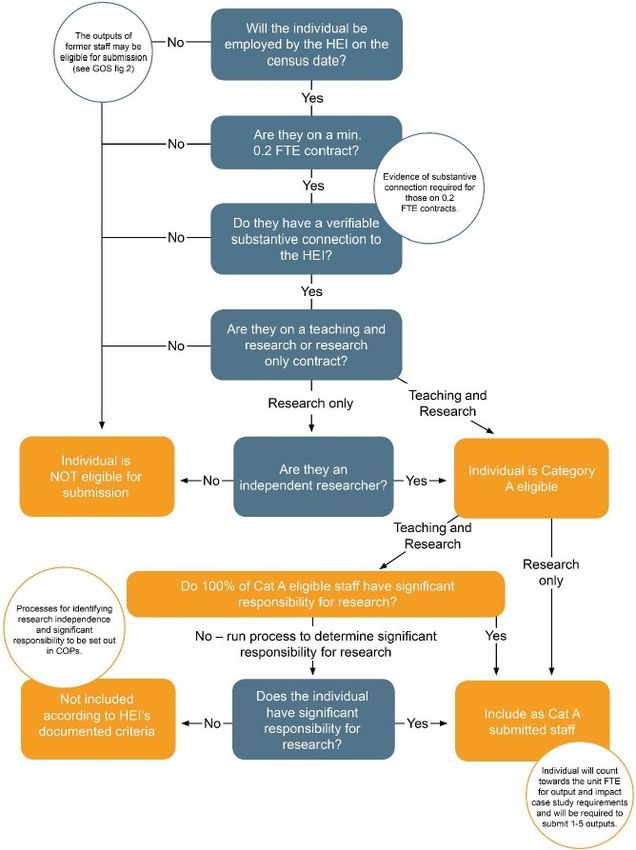
Contents
Part 1: Introduction ......................................................................................................................................... 3
   Open University Equality Scheme and actions since REF 2014......................................................... 3
   Open University REF 2021 Code of Practice ......................................................................................... 4
   Governance & management Structures .................................................................................................. 5
   Training......................................................................................................................................................... 8
   Communication and consultation ............................................................................................................. 9
Part 2: Identifying staff with significant responsibility for research ........................................................ 10
   Policies and procedures .......................................................................................................................... 10
   Decision making ........................................................................................................................................ 12
   Development of process(es) ................................................................................................................... 14
   Staff, committees and training ................................................................................................................ 15
   Appeals....................................................................................................................................................... 15
   Equality impact assessment.................................................................................................................... 16
Part 3: Determining research independence. ........................................................................................... 18
   Policies and procedures .......................................................................................................................... 18
   Application of criteria, decision making and communicating outcomes ........................................... 18
   Appeals....................................................................................................................................................... 20
   Equality impact assessment.................................................................................................................... 20
Part 4: Selection of outputs ......................................................................................................................... 21
   Policies and procedures .......................................................................................................................... 21
   Staff, committees and training ................................................................................................................ 24
   Disclosure of circumstances ................................................................................................................... 24
   Decision making and communication .................................................................................................... 29
   Equality impact assessment. .................................................................................................................. 30
Part 5: Appendices ....................................................................................................................................... 31

                                                                                                                                                Page 2 of 57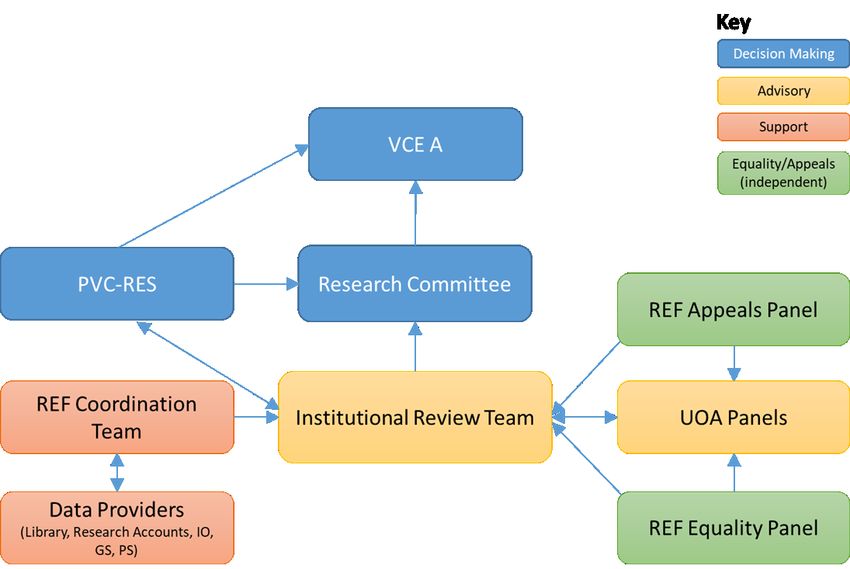
Part 1: Introduction
1.1   The Research Excellence Framework (REF) is an assessment of research in UK higher
      education institutions carried out by the national funding bodies. The outcome of the REF
      informs the allocation of quality research related funding (“QR”). It contributes to the
      accountability for public funding and demonstrates the benefits of public investment in
      research and impact.

1.2   It is a requirement of REF 2021 that each submitting institution develops, documents and
      implements an internal Code of Practice (CoP) that covers its processes for REF 2021,
      including (i) the fair and transparent identification of staff with significant responsibility for
      research; (ii) determination of who is an independent researcher; and (iii) the fair selection
      of research outputs from each Unit of Assessment (UOA) output pool. This Code of
      Practice is based on the advice and recommendations within the Guidance on Submissions
      and Guidance for Code of Practices developed and published by Research England on
      behalf of the UK’s higher education funding bodies.

1.3   This CoP outlines the policies and procedures that will apply to the REF selection,
      submission and review process. It aims to make the procedures during the REF process
      clear, transparent, inclusive and consistent across the University and will aid the University
      in promoting equality and diversity (E&D), complying with legislation and avoiding
      discrimination (including unconscious bias), when preparing its submission.

1.4   In line with the University’s (OU) Equality Scheme 2016-2020 objectives (see below) and
      the UK Equality Act 2010 (see Appendix 1 for a summary of relevant, UK current Equality
      legislation), the University seeks to include in its REF submissions the in-scope work of all
      staff with significant responsibility for research (see Part 2), including those whose
      individual circumstances have significantly constrained their ability to meet the minimum
      number of outputs required by Research England (RE) during the REF publication period.
      These circumstances include issues covered by equality and employment legislation.

Open University Equality Scheme and actions since REF 2014

1.5   The University has an institutional Equality Scheme that aims to prevent unlawful
      discrimination, advance equality of opportunity for all, and promote good relations between
      people with different characteristics. Policies, projects and papers submitted to formal
      committees are required to be assessed for equality implications with the outcomes used to
      inform decision-making. Staff receive mandatory training with further training scheduled for
      specific groups according to need. For example, the OU Vice-Chancellors Executive (VCE)
      received training on unconscious bias in 2017.

1.6   The Equality, Diversity & Inclusion Steering Group is chaired by a member of the VCE and
      is supported by a specialist Equality, Diversity and Inclusion Team. The University
      publishes data annually on the participation and outcomes for staff and students for the
      characteristics of age, disability, gender, ethnicity, religion and sexual orientation as well as
      data on participation in governance and data on the gender pay gap.

1.7   The University is committed to reducing specific inequalities through its institutional equality
      objectives which were reviewed in 2018 to focus effort and resource on the following
      challenges:
      •   Black and minority ethnic student retention
      •   The gap between black and minority ethnic and white students in the award of good
          degrees (first or upper-class second degree)

                                                                                          Page 3 of 57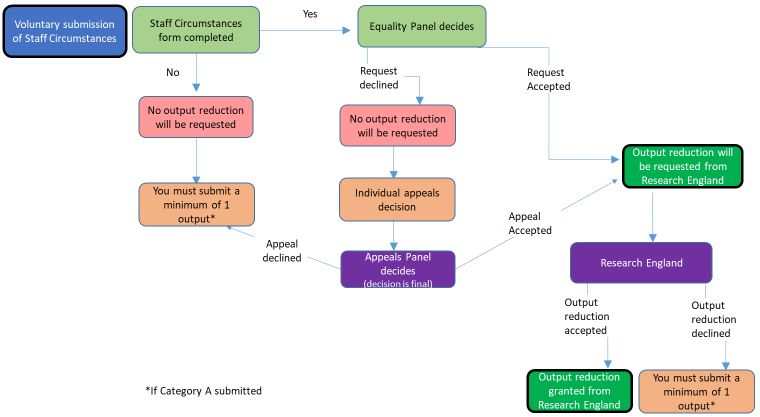
•   Under representation of black and minority ethnic, disabled and female employees in
           senior roles
       •   Line manager capability in recruiting and developing individuals and teams from diverse
           backgrounds

1.8    All units are required to report against the Equality Scheme providing evidence according to
       key performance indicators in this area, which are well-developed. The Council Diversity
       Policy also includes specific targets for achieving and maintaining diverse leadership of the
       institution.

1.9    In addition to specific objectives and policies, the University actively participates in a
       number of external equality charters and benchmarks. These include:
       •   the Disability Standard operated by the Business Disability Forum
       •   the Carer’s Kitemark operated by Carer Positive Scotland
       •   the Workplace Equality Index operated by Stonewall (sexual orientation and gender
           identity equality)
       •   the Athena Swan Charter (gender equality)
       •   the Race Equality Charter

1.10   Since REF 2014, The University has attained Disability Standard Bronze Status in 2016, in
       recognition of efforts and success in ensuring that students and staff are fully supported
       whatever their individual needs and circumstances. The OU is one of only two UK
       universities that currently hold Disability Standard Bronze, Silver or Gold status and plans
       for attaining Silver Status are under development and the University has also previously
       been recognised at the UK Excellence in Diversity Awards for its efforts in advancing
       equality in higher education.

1.11   Also, since REF 2014, we have retained our institutional bronze award through the Athena
       Swan Charter, obtained 4 School-level bronze awards and one silver School-level award.
       We are currently working on submission of our application for an institutional silver award
       and further school level awards. Institutional actions to support women’s research careers
       since REF 2014 have included projects on improving mentoring and updating maternity
       leave policies to represent best practice within the sector (including a new parental portal).
       The OU also have a Women’s network (Women@OU) and participates in the Leadership
       Foundation for Higher Education Aurora programme.

1.12   The University is also currently preparing a submission for bronze status to the UK Race
       Equality Charter and to this end has recently held a number of events to engage with OU
       communities to gain their input. Post REF 2014, a number of actions were implemented to
       further support our black academics (a survey and workshops to understand issues and
       identify possible solutions) with their research careers, with specific objectives around black
       and ethnic minority staff subsequently incorporated into the University’s Equality Scheme
       2016-20.

Open University REF 2021 Code of Practice

1.13   The guidance in this CoP is for all staff involved in the OU’s REF preparations, including
       individual researchers. Those with REF management responsibilities must read it and act
       upon it.

1.14   Once finalised and approved, this CoP will be widely disseminated and publicised within the
       University and published on the University intranet and external research website. Heads of
       Units (or their delegates) are responsible for ensuring that academic and research staff who

                                                                                           Page 4 of 57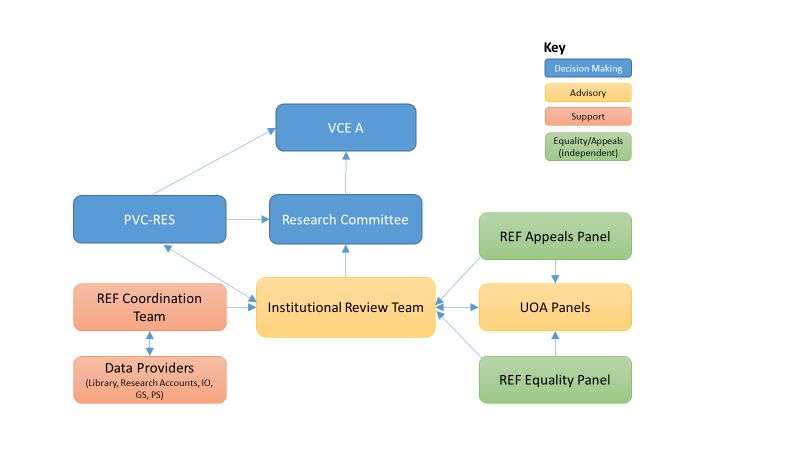
are away from the University on long-term absence for any reason, receive a copy of the
       Code.

1.15   Prior to submitting the CoP to the national REF team in June 2019 for consideration by the
       Equality and Diversity Advisory Panel (EDAP) and use for the REF 2021 submission, its
       refinement has been informed by:
       •   Testing through its application in the OU’s Mock REF exercise.
       •   Feedback from across OU communities through engagement in the internal
           consultation on the draft Cop
       •   Further clarification from Research England through the publication of final version of
           REF 2021 guidance.

Governance & management Structures

1.16   The governance and management for the development and sign-off of the institutional REF
       submission is described below and in Figure 1 overleaf.

1.17   The Pro Vice-Chancellor (Research, Enterprise and Scholarship) (PVC-RES) is the
       Sponsor for the REF submission and is the senior officer of the University accountable for
       the University’s REF submissions process, with input from Executive Deans, Associate
       Deans (Research) (ADR) or their equivalent, the Institutional Review Team (IRT) and UOA
       Panel Chairs.

1.18   The project management and quality assurance of the REF will be overseen by the
       Director of Research and Enterprise (DoR&E), as Senior Accountable Executive for the
       University’s REF submission. This includes ensuring that adequate resource is made
       available for the development of the submission, monitoring progress against key
       milestones, managing any risks and issues identified. The DoR&E will be responsible for
       escalating significant risks and issues to the PVC-RES. At a day-to-day level, responsibility
       will be delegated to the Head of Research Strategy and Governance (HoRSG).

Figure 1. Summary chart of committees and groups involved in OU REF preparations.

                                                                                        Page 5 of 57
1.19 A central REF Coordination Team provides administrative support, including:
• Answering queries from individuals.
• Providing data and reports for University Unit of Assessment (UOA) Panels.
• Administrative support for the Institutional Review Team (IRT) in their review
process.
• Organisation of equality training for IRT, UOA Panels and others (see Appendix 1).
• Equality impact assessments (EIA); including collation of equality monitoring data,
analysis of that data and publication of the findings and actions.
• Providing guidance to ensure clear records of UOA Panel processes and decisions
are kept.
1.20 The Team is supervised by the institutional REF Manager, who is also the designated REF
technical contact. The REF Manager will report to the HoRSG. The HoRSG is responsible
for the work of the REF Coordinating Team overall and the designated institutional REF
contact.
1.21 Members of the REF Coordination Team are listed on the OU’s REF intranet site. The
Team will work closely with ‘Data Providers’, including People Services (PS), Information
Office (IO), Library Services, Research Accounts Office (RAO), Graduate School (GS) and
the Communications Unit.
Formal Committees and Advisory Bodies
1.22 The Vice-Chancellor’s Executive Academic (VCE-A) has overall institutional
management responsibility for the OU’s REF submission and will make recommendations
to Research Committee.
1.23 The University’s Research Committee approved both the draft CoP for use in the Mock
REF exercise (Nov 2018) and the final version for submission to Research England (May
2019) for use in the actual REF submission. It will approve the OU’s REF 2021 submission
intentions (Nov 2019) and the final OU REF submission (Mar 2021). The mode of
operation, terms of reference and membership of Research Committee can be found in
Appendix 4.
Institutional Review Team (IRT)
1.24 Detailed review of the REF 2021 submission will be undertaken by the Institutional Review
Team (IRT), chaired by the PVC-RES. The IRT reports to Research Committee. Its mode of
operation, terms of reference and membership were approved by Research Committee in
November 2018 and are provided in Appendix 5. The Team’s role is to review the quality of
the University’s REF submission, make recommendations on its development and content
and provide feedback to the University UOA Panels to inform their preparations for the REF
submission. The IRT has a reasonable balance in terms of experience of research
management, peer review or strategic activities linked to the assessment of research
quality, and discipline expertise; careful consideration has been given to its membership
and operation to promote equality and diversity and minimise any unconscious bias in
decision making.
1.25 The IRT can call upon external experts where necessary, subject to approval by the PVC-
RES. These will be selected on the basis of relevant research expertise and seniority in the
field, which must include:
• A research CV of world-leading or internationally excellent quality
• High-level peer review experience
Page 6 of 57• A high level of familiarity with REF 2014/2021 procedures
External experts involved in the review phase of the OU’s REF 2021 submission will receive
an equality briefing and be required to abide by this CoP. They will sign a contract
stipulating the need for confidentiality and submit a written report of their findings.
University UOA Panels
1.26 The UOA Panels are responsible for developing the UOA’s draft REF 2021 submission.
They will be required to:
• Comply with the approved institutional Code of Practice for REF 2021, including its use
in identifying the cohort of Category A submitted staff, and selecting outputs for
submission.
• Keep clear records of agreed processes and decisions.
• Undertake Equality and Diversity training.
The UOA Panels’ mode of operation, terms of reference and membership were approved
by Research Committee in November 2018 and are available as Appendix 6.
1.27 The configuration confirmation of UOA Panels for the University REF 2021 submission will
be discussed by the IRT and confirmed by Research Committee in autumn 2019.
Notwithstanding the usual staff turnover, it is envisaged that these will be led by the current
UOA Panel Chairs. Relevant Executive Deans will be consulted on Panel Chair and
membership nominations as required. Full details of final University UOA Panel
memberships will be made available on the University REF intranet site. As well as
ensuring appropriate discipline expertise, careful consideration has been given to its
membership to promote equality and diversity and minimise any unconscious bias in
decision making.
1.28 The UOA Panel Chair is the main contact point between the UOA Panel and the REF
Coordination Team, and IRT and will manage activities associated with the preparation of
the UOA’s REF submission, including consultation with staff, normally via relevant Heads of
School (HoS) and/or Executive Deans and Directors. The Panel Chair will also be
responsible for ensuring all relevant eligible staff are considered, in liaison with the REF
Coordination Team1.
REF Equality Panel
1.29 The REF Equality Panel (see Appendix 7) will receive and consider individual cases for
individual circumstances that may have impacted on an individual’s productivity during the
REF period. With the aim of ensuring maximum confidentiality and consistency, the Panel
will include representatives from People Services, the Equality & Diversity Management
Group and Faculties. Two senior research leaders, neither of whom are involved in the IRT
or a UOA Panel, will represent the Faculties.
REF Appeals Panel
1.30 The REF Appeals Panel (see Appendix 8), chaired by a member of VCE-A, will consider
individuals’ appeals against the recommendation and decisions of UOA Panels, the IRT
and REF Equality Panel. The basis for an appeal is (i) on the grounds of procedural
irregularities (including non-compliance with this CoP), (ii) to override the placement or
1 Accountability for the operation of the UOA Panel (including ensuring appropriate record keeping) resides with the
relevant Executive Dean, with day-to-day responsibility delegated to the relevant Associate Dean Research.
Page 7 of 57exclusion of an individual in the Category A submitted cohort (either due to the judgement
on researcher independence or significant responsibility for research) when sufficient and
auditable evidence to the contrary is presented, or (iii) to override the REF Equality Panel’s
assessment of individual circumstances. Individuals may not raise an appeal on the
grounds of academic judgement regarding, for example, staff allocation to a UOA, or
decisions regarding selection of outputs.
1.31 Following internal appeal, where individuals consider that the CoP has not been
appropriately followed, there is the opportunity to complain, in confidence, directly to the
funding bodies. The process for making a complaint to the funding bodies will be published
in Autumn 2019. The process will be communicated to all staff and published on the OU’s
intranet.
Training
1.32 All staff involved in decision making for REF 2021, including applying the threshold for
significant responsibility for research, determination of research independence, selection of
outputs, consideration of individual circumstances and appeals will have had appropriate
REF-specific equality training before the formal REF process commences. This is in
addition to generic staff training provided and/or mandated by the University on E&D and
unconscious bias. See Appendix 2 for further details.
Record keeping and Data Protection
1.33 Throughout the REF process any discussions and decisions concerning the determination
of an individual’s status as a Category A eligible staff member (including research
independence) (Section 3); the determination of whether a Category A eligible staff has
significant responsibilities for research (Section 2), or the selection of outputs for
submission to the REF from the output pool2 (Section 4) must be documented formally by
UOA panel and the IRT. Detailed guidance on record keeping will be provided by the REF
Coordinating Team3.
Data Protection and Freedom of Information issues
1.34 The University has an obligation to provide to Research England (i) some personal
information on staff, (ii) some information on the research, its outputs and resultant impact
that is commercially confidential or restricted under contract (e.g. externally funded
research) for the purposes of the REF. It will only share information which it is under an
obligation to provide. The University REF 2021 Privacy Notice and a statement on data
collection of OU staff and non-OU staff data (e.g. impact evidence testimonials) are
attached as Appendix 9 and are also available on the REF intranet page and external
website.
1.35 Further details on the General Data Protection Regulations (EU GDPR) and the Data
Protection Act 2018, including who to contact if you have a query, can be found on the
OU’s intranet.
1.36 Individuals have the right to access data held which relates to them personally and due
care will therefore be taken in record-keeping during REF preparations to ensure that
accurate records of decisions are kept and that these are defensible, particularly as regards
2 Output pool is the potential pool of research outputs eligible for the REF, from which a subset will be submitted to the
REF to fulfil the required volume of outputs.
3 Accountability for IRT record keeping resides with the DoR&E, with day-to-day responsibility delegated to the HoSRG.
Accountability for UOA Panel record keeping resides with the relevant Executive Dean, with day-to-day responsibility
delegated to the relevant Associate Dean Research.
Page 8 of 57to any matters of opinion rather than fact.
Communication and consultation
1.37 There has been extensive internal communication and consultation with staff in preparing
the OU’s REF CoP. Its development has also taken account of input from a number of
groups including the Equality and Diversity Management Team, and staff representative
groups to ensure that the processes described are fair, transparent, inclusive and
consistent.
1.38 The summary consultation plan is included as Appendix 3. Methods of consultation with
staff have included: five focus groups at our Walton Hall main campus (targeted at different
categories of staff), roadshows at the OU’s Scotland and Belfast Nation offices (all other
Nations and Regional offices were also offered a roadshow), an online consultation survey
and two informal drop-in sessions. Additionally, all Faculty Assemblies were visited through
February and March and monthly meetings have been held with the OU branch of the
University and College Union (OUBUCU) (since November 2018).
1.39 OUBUCU, the OU’s academic staff representative group, accepted the CoP in principle
(and confirmed their membership to be in agreement), in May 2019. However, it withheld
final formal approval to leverage assurances from the wider University management that
long-standing issues relating to academic workload planning would be reviewed. The
University has now agreed a project with OUBUCU to review academic workload planning
and OUBUCU has now provided its formal agreement to the CoP and the approach
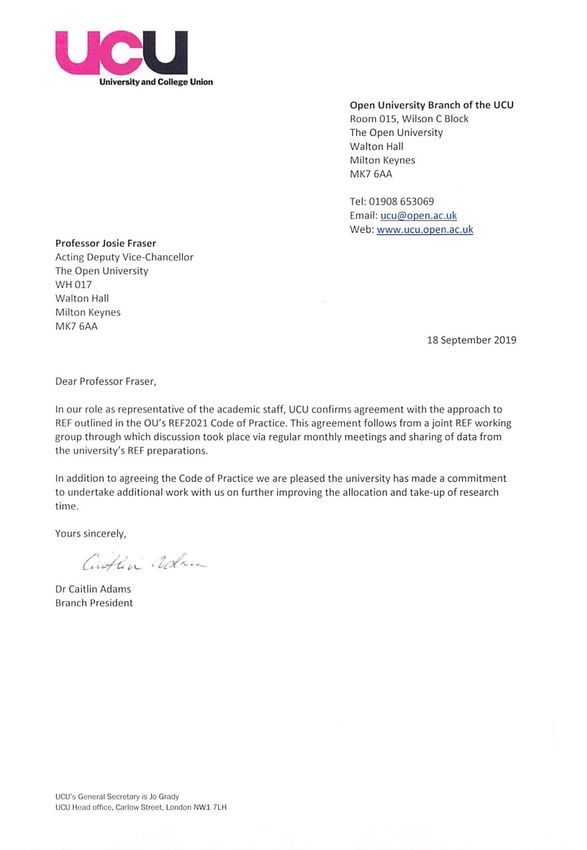
outlined within it. A formal letter of agreement is appended as Appendix 10 to the CoP.
1.40 The draft CoP has been used for the Mock REF and knowledge gained has informed this
final draft. Once approved by RE, the CoP will be published on the OU intranet with
communication on its availability circulated to all staff, including those away from the
University for an extended period, e.g. long-term sick leave, parental leave, sabbatical or
secondment.
Page 9 of 57Part 2: Identifying staff with significant responsibility for
research
Policies and procedures
2 Significant Responsibility for Research
2.1 In adopting the recommendations from Lord Stern’s review of REF2014, the design of
REF2021 is purposefully more inclusive. This is in part, driven by the desire by the funding
bodies to better understand the scope and scale of research in the sector and provide a
fuller evidence base when justifying levels of government funding to academic research.
Consequently, all staff defined as Category A eligible staff who have significant
responsibility for research4 are to be submitted (Category A submitted staff) to REF 2021.
For universities, including where the approach set by the funding bodies to determine
Category A eligible status (Figure 2) results in a cohort of staff for whom NOT ALL have
significant responsibility for research, they can apply a process to identify and discount
those individuals from submissions where significant responsibility for research is not a
given expectation.
The Open University Approach
2.2 The funding bodies have accepted that although staff maybe have contracts of employment
that include research, employment practices differ across the sector in terms of what this
means in practice. It is therefore recognised that not all academic staff may be significantly
research active. Across the Open University, we have three contracts where research is
included:
• The Central Academic contract
• The Regions and Nations Academic contract
• Research staff contract
2.3 Whilst all these roles theoretically all include provision for research activity, the extent to
which staff are expected to actively engage in research, and therefore have significant
responsibility for research, varies. For example, some staff may have a primary focus of
teaching and teaching-related scholarship, professional practice or knowledge exchange.
2.4 In keeping with the inclusive spirit of REF2021 but recognising the diversity of roles across
our academic and research staff, all OU staff identified as Category A eligible will be
included in the OU’s REF submission unless, for specific individuals, there is not the
expectation for significant responsibility for research.
2.5 The University’s approach to identifying staff where there is an expectation for significant
responsibility for research is two-fold:(i) the automatic inclusion of Cat-A eligible staff
exceeding a threshold allocation of research time, (ii) a judgement for those below the
threshold (but above a minimum) using agreed indicators of significant responsibility. It is
the interpretation of the University that those Cat-A eligible staff significantly below the
threshold do not have significant responsibilities for research.
2.6 The University’s primary approach to determine ‘significant responsibility’ for research is
using a research time allocation threshold. Using Academic Workload Management (AWM)
4 Staff with significant responsibility for research are those for whom explicit time and resources are made available to
engage actively in independent research, and that is an expectation of their job role. It is not related to the generation of
research outputs.
Page 10 of 57data, a threshold tariff of 0.15 research-FTE5 will be applied to all Cat-A eligible staff. Those
meeting or exceeding this threshold will be automatically included in the Cat-A submitted
staff cohort.
2.7 The OU will use a 3-year averaged value of academic workload allocations when applying
the ‘significance’ tariff to Cat-A eligible staff 6. The rationale for this approach is the context
of the University’s unique (in the sector) workload allocation model whereby the academic
teaching time for the bulk of its academic staff is predominantly through course/module
production for delivery to taught students off site. The production cycle of modules is multi-
year with significant spikes/troughs year-on-year, in contrast to the more steady-state
teaching load in other universities to students taught face-to-face (e.g. lectures). This will
negate the consequence of a single-year approach whereby individuals with the
expectation for significant responsibility for research are excluded because their workload
allocation on the census date (31 July 2020) happens to be teaching heavy. It will also
negate the inclusion of staff who would NOT normally be expected to have significant
research responsibility over the period but are temporarily exceeding the tariff on the
census date.
2.8 The 3-year period will include academic years 2017/18, 2018/19, and 2019/20. Prior to this
point, the notion of significant responsibility was not socialised within the sector. Extending
the average beyond 3 years is not viewed to make a material impact on the outcome, with
most module production cycles within this 3-year range. Workload allocations for staff
joining the University mid-year, will be pro-rated.
2.9 This approach also mitigates opportunity for gaming through moderation of workload
allocations on 31 July 2020 to predetermine the ‘submit’ status of staff.
2.10 In recognition that a single pan-university threshold could result in perverse outcomes in
specific circumstances, the University will overlay an additional approach whereby Cat-A
eligible staff below but close to the 0.15FTE threshold will be considered for inclusion where
there is evidence of expectation that they significantly engage in independent research.
2.11 For Cat-A eligible staff in the range 0.1-0.15 research-FTE, the following are the
institutionally agreed indicators of significant responsibility for research. Two or more
examples from this list are required to indicate significant responsibility for research:
(i) Leading/acting as PI (or equivalent) on an externally funded research project or bid
for external funding7.
(ii) Holding an independently won, competitively awarded, externally recognised
fellowship where research independence is a requirement.
(iii) Leading a (recognised) research group or substantial research work-package.
(iv) Formal lead or co-lead PGR supervisor(s), excluding delegated responsibility.
For Panels C and D only (additional indicators):
(v) Being named as a Co-I on an externally funded research grant/award or bid for
external funding8.
5 Research-FTE: Contract hours expressed in FTE (as provided by the Faculties in AWM actuals) multiplied by fraction of
contract allocation to research. Averaged over 3 years. Expectation to be based on 217 days per year accounting for
local differences where necessary, to be confirmed prior to application.
6 Or less where the individual has been at the OU less than 3 years.
7 This excludes minor, non-project bids and awards such as small travel or conference grants, however it is noted in
some disciplines, notably the arts and humanities, some small grants may indicate significant responsibility for research
and/or research independence.
Page 11 of 57(vi) Having significant input into the design, conduct and interpretation of research.
2.12 Cat-A eligible staff below 0.1 research-FTE are interpreted as having research
responsibilities below which significant responsibility is expected and consequently, will not
be submitted (unless through a process of appeal, see paras 2.26 onwards).
Figure 2. Staff eligibility in REF 20219
Decision making
2.13 UOA Panels will be provided with academic workload data of Category A eligible staff on
Teaching & Research contracts in October/November 2019 (initial review) and October
2020 (final review). Staff meeting or exceeding the 0.15 research-FTE average threshold
will be identified as having significant responsibility for research and included in the OU’s
Category A’ submitted cohort’.
8 This excludes minor, non-project bids and awards such as small travel or conference grants, however it is
noted in some disciplines, notably the arts and humanities, some small grants may indicate significant
responsibility for research and/or research independence.
9 Guidance on Submissions, Figure 1, p.45 (Research England, REF 2018/01, January 2019).
Page 12 of 572.14 For staff between 0.1-0.15 research-FTE the UOA Panel will apply the criteria outlined in
2.11. This may require UOA Panels to consult with individuals. Where individuals meet 2 or
more of the criteria these staff will be identified as having significant responsibility for
research and included in the OU’s Category A’ submitted cohort’.
2.15 The UOA Panel will provide the IRT with a list of staff identified as having significant
responsibility for research as well as a list of those staff identified as not having significant
responsibility for research. The REF Appeals Panel will consider and decide on any
individual appeals (see 2.26 onwards).
Communications
2.16 All Category A eligible staff meeting the significance test (either through the automatic
inclusion or application of additional criteria for those just below the threshold) will be
informed of their REF submitted status in writing from their UOA Panel Chair (initial status)
or PVC RES (final status) within 20 working days of the relevant UOA submission being
considered (copied to the HoS, ADR) (Figure 3 and Table 1).
Figure 3: Decision and Communication flowchart - significant responsibility for research
2.17 Category A eligible staff not meeting the significance test (either through the automatic
inclusion or application of additional criteria for those just below the threshold) will be
informed of their REF non-submitted status in writing from their UOA Panel Chair (initial
status) or PVC RES (final status) within 20 working days of the relevant UOA submission
being considered (copied to the HoS, ADR) (Figure 3 and Table 1).
2.18 Included in the communications to all staff will be information on the institutional appeals
process.
2.19 Communication on the decisions of the REF status of individuals will be limited to the
minimum requirements of preparing the REF submission, and will include the individual,
Page 13 of 57their UOA Panel, the IRT, the REF Coordination Team, the Appeals Panel (where relevant),
the HoS, ADR (or equivalent), Director RES, PVC-RES.
2.20 It is important to emphasise that the University values all research, teaching and teaching-
related scholarship activities supporting the OU and its mission, whether or not the staff
undertaking these activities are included in the REF submission. Non-inclusion in the OU’s
REF2021 submission will not adversely affect an individuals’ career progression at the
Open University.
Table 1: Timeline for determining Significant Responsibility for Research and associated
appeals
Initial review period:
Nov 2019 - Jan 2020 UOA Panels determine the initial eligible/submitted staff pool
By end of Feb 2020 Staff informed of initial decisions on REF status
By end of March Any appeals to be submitted
By end of April 2020 Appeals process completed
By end of May 2020 Staff informed of appeals outcome
By end of May 2020 UOA Panels informed of any changes to individuals’ REF status
To July 31st 2020 Ongoing process to 31 July 2020 for any new staff
Final Review period
By early November 2020 UOAs determine the final eligible/submitted staff pool
By 13th November 2020 Staff informed of any change to initial status
By 11th December 2020 Any appeals to be submitted
By mid-January 2021 Appeals process completed
By end of January 2021 Staff informed of appeals outcome
By end of January 2021 UOA Panels informed of any changes to individuals’ REF status
Development of process(es)
2.21 Scoping and progressive development of the approach and criteria has involved extensive
consultation with the university community. Appendix 2 provides a summary of the
multifaceted and multi-modal engagement, which included proactive engagement with
Faculty management and academic communities through face-to-face meetings,
centralised and devolved communications, as well as more passive communications such
as questionnaires, intranet site, FAQs, and an open-door approach.
2.22 Due to the multi-site location of OU academics, the approach included visits to the Nations
offices. This was particularly important for the engagement of OU Staff Tutors
(regional/nations academics), the bulk of whom would be considered to have expectations
of research responsibilities below that of ‘significant’.
Page 14 of 572.23 Initial consultation was held with Faculty ADRs and UOA Panel Chairs to reach a high level
of consensus of approach sufficient for testing through the Mock REF exercise (December
2018 – June 2019). Alongside this, the formal and wider consultation ran from start-
December 2018 to end-March 2019.
2.24 Monthly meetings have been held with the OU branch of the University and College Union
(OUBUCU) (since November 2018), to discuss both the process and criteria for identifying
staff with significant responsibility for research and the CoP more broadly. A final meeting
will be held with OUBUCU to obtain its agreement on the final draft of the CoP.
Staff, committees and training
2.25 See Section 1 and Appendices.
Appeals
Grounds for appeal
2.26 Appeals will only be considered on the grounds of:
(i) procedural irregularities (including non-compliance with the published OU REF CoP), or
(ii) incorrect placement or exclusion of an individual in the Category A submitted cohort due
to an incorrect judgement on significant responsibility for research or research
independence.
(iii) incorrect judgement by the Equality Panel of whether the person was able to work
productively during the REF period (individual and exceptional circumstances).
2.27 Appeals will not be considered on the grounds that an individual considers that they should
have been (historically and currently) provided with more time for research within their
workload allocations. This is a staff management matter and outside of the remit of this
CoP.
Process
2.28 If considering an appeal, individuals are recommended to discuss their concerns with the
relevant UOA Panel Chair in the first instance to ensure that any simple administrative
errors can be corrected before a formal appeal is pursued.
2.29 Following the informal approach outlined above, where staff consider that the criteria for
identifying staff with significant responsibility for research (or research independence) have
been incorrectly applied to them, the AWM data used has been an inaccurate record of
their actual responsibilities for research over the period (i.e. time allocated for research has
been incorrectly recorded) resulting in them inappropriately meeting or not meeting a
threshold for significant responsibility for research, or that the processes outlined in the CoP
have not been appropriately followed, they should write to the Secretary of the independent
REF Appeals Panel within 20 working days of the notification of their REF status.
2.30 The independent REF Appeals Panel will be made up of:
• A member of VCE-A, but not PVC-RES.
• A senior research-active professor from a cognate discipline not previously
associated with the UOA Panel concerned.
• Head of People Services (or delegate).
• A member of the Equality & Diversity Management Group
Page 15 of 57• A member (on academic terms and conditions) elected by and from the OU Senate
(not associated with any other REF decision making group).
• A member external to the University.
2.31 This Panel will review the case by considering:
• The appellants AWM record (for significant responsibility for research appeals).
• The appellant’s research activity profile (drawn from relevant IT systems, e.g.
Awards Management System for info on bidding and awards).
• The minutes of the relevant UOA Panel and IRT meetings.
• The communication to the individual informing them of their REF 2021 status.
• If appropriate, the appellant’s disclosure form for individual circumstances.
• A statement from the appellant (maximum 500 words).
• A summary from the UOA Panel on its recommendation concerning the appellant
(maximum 500 words).
2.32 The documents made available to the REF Appeals Panel will also be sent to the individual
concerned. There will be the option for an appeal to be held via a face-to-face meeting,
upon request and subject to Appeals Panel availability.
2.33 Where an appeal is upheld by the REF Appeals Panel, the individual will be included or
removed from the OU REF submission, as appropriate.
Communication of outcomes
2.34 The Appeals Panel secretary will send the decision in writing to the individual within 10
working days after the appeal has been considered by the Appeals Panel (copied to the
UOA Panel Chair, ADR, HoS, PVC-RES). It will outline the reasons for the decision.
2.35 The Appeals Panel’s decision will be final as far as the OU’s procedures are concerned,
however where an individual considers that the CoP has not been appropriately followed,
there will be the opportunity to complain, in confidence, directly to the funding bodies. The
process for making a complaint to the funding bodies will be published in Autumn 2019 and
included in the communication of the appeal outcome.
Equality impact assessment
Analysis
2.36 In preparing policies and procedures for the identification of staff on whom there is an
expectation of significant responsibility for research, the OU has, from the outset,
considered whether their application is likely to result in any differential impact on particular
groups of academics or researchers.
2.37 An Equality Impact Analysis (EIA) will be carried out at key stages in the University’s REF
2021 preparations, including as part of the Mock REF exercise. Whilst the purpose of the
EIA is not to direct the identification of staff with significant responsibility for research,
independent researchers or the selection of outputs, its purpose is to illuminate any material
bias in the representation of:
• Staff in the submitted cohort as compared to the Category A eligible pool overall.
• Staff in the submitted cohort as compared to the wider community of T/R and R-only
staff.
• Selection of outputs associated with the submitted staff.
Page 16 of 572.38 As well as identifying any significant differential impacts on staff, the EIA will also include
appropriate mitigating actions. This analysis will be considered by the IRT and VCE-A and
approved by Research Committee. It will inform the approach to equality issues in the REF
2021 and incorporation of arising actions within existing E&D action plans.
2.39 Where significant skews in the analysis are identified, the UOA Panel and Faculty ADR will
be asked to respond on measures implemented to mitigate imbalances in the
representation of staff. These will be considered by the Research Committee and REF
Equality Panel, and cross referenced in the UOA Environment sub-profile. Coherence and
sustained endeavour with actions identified through the REF2014 EIA will be considered.
2.40 As part of the Mock REF we have undertaken an EIA comparing the overall profile of all
current central academics, regional/nations academics and research staff against those
provisionally identified as Category A submitted staff. An analysis against protected
characteristics has also been undertaken. These analyses are being undertaken at
institutional level in the first instance and used to inform the suitability of the approach to
identify staff with significant responsibility for research.
2.41 On the whole, the Mock-REF EIA shows that variances between the cohort identified as
Category A submitted and the overall eligible staff population are low, indicating that the
diversity of the OU’s staff base will be well-represented in its REF 2021 submission and that
the criteria outlined within the CoP have not had a detrimental, disproportionate impact on
the representation of individuals with characteristics protected by law. The only area of
concern is regarding contract-type. The OU has three academic contract types (paragraph
2.2). The regions/nations academic staff cohort, who are provided with less time
contractually for research, and the expectation to undertake research is generally
significantly lower than other academic staff types, is predominantly women (70%) thus
creating a gender-based disparity/impact. Whilst the allocation of research time to
individuals is a staff management issue that is outside of the scope of the REF exercise, the
Mock REF EIA recommends some possible actions to mitigate against this differential
impact, including using additional criteria to determine significant responsibility for research
for those meeting a threshold of between 0.10 and 0.15 research FTE (see para 2.11),
carefully reviewing the allocation of future workloads, considering in particular the
workloads of regional/nations staff who have career aspirations to be research active but
are not currently expected to be significantly research active and hence are not allocated
the time to have significant responsibility for research.
2.42 The final OU REF EIA, along with the outcomes of any actions taken to prevent
discrimination and advance equality, will be published on the OU website, after the
submission has been made.
Page 17 of 57Part 3: Determining research independence.
Policies and procedures
3 Indicators of independence
3.1 Staff on Teaching and Research academic contracts are considered to be independent
researchers. REF 2021 guidance stipulates that staff on research-only contracts must be
independent researchers to meet the definition of Category A eligible (see Figure 2).
Consistent with the REF 2021 Guidance on Submissions, an independent researcher is one
undertaking self-directed research, rather than carrying out another individual’s research
programme.
3.2 The following indicators would be expected to indicate independence (applied to research-
only staff). Two or more examples from this list are required.
(i) Leading/acting as PI (or equivalent) on an externally funded research project or
bid for external funding10.
(ii) Holding an independently won, competitively awarded, externally recognised
fellowship where research independence is a requirement.
(iii) Leading a (recognised) research group or substantial research work-package.
(iv) Formal lead or co-lead PGR supervisor(s), excluding delegated responsibility.
For Panels C and D only (additional indicators):
(v) Being named as a Co-I on an externally funded research grant/award or bid for
external funding11.
(vi) Having significant input into the design, conduct and interpretation of research.
Application of criteria, decision making and communicating outcomes
3.3 Linked to 2.13 UOA Chairs (copied to ADRs) will be provided with a list of staff meeting the
other requirements of Category A status to which they, using local knowledge of Research-
only colleagues, will assess for independence.
3.4 For some staff where the availability of information is not readily available to the UOA Panel
or ADR to make an informed decision at the outset, the UOA Panel will consult with the
individual to ascertain independence from the available evidence.
3.5 The UOA Panel will provide the IRT with a list of research staff identified as being
independent researchers as well as a list of those research staff identified as not being
independent. The REF Appeals Panel will consider and decide on any individual appeals
(see 2.26 onwards).
3.6 Those Research-only staff deemed research independent will receive communication as
described in para 2.16. Staff deemed non-independent will be notified as described in para
2.17. See also Figure 4 and Table 2 below.
10 This excludes minor, non-project bids and awards such as travel or conference grants, however it is noted in
some disciplines, notably the arts and humanities, some small grants may indicate significant responsibility for research
and/or research independence.
11 This excludes minor, non-project bids and awards such as travel or conference grants, however it is noted in
some disciplines, notably the arts and humanities, some small grants may indicate significant responsibility for research
and/or research independence.
Page 18 of 57Figure 4: Decision and Communication flowchart – independent research
Table 2: Timeline for determining Research Independence and associated appeals
Initial review period:
Nov 2019 - Jan 2020 UOA Panelsdetermine the initial eligible/submitted staff pool
By end of Feb 2020 Staff informed of initial decisions on REF status
By end of March Any appeals to be submitted
By end of April 2020 Appeals process completed
By end of May 2020 Staff informed of appeals outcome
By end of May 2020 UOA Panels informed of any changes to individuals’ REF status
To July 31st 2020 Ongoing process to 31 July 2020 for any new staff
Final Review period
By early November 2020 UOAsdetermine the final eligible/submitted staff pool
By 13th November 2020 Staff informed of any change to initial status
By 11th December 2020 Any appeals to be submitted
By mid-January 2021 Appeals process completed
By end of January 2021 Staff informed of appeals outcome
By end of January 2021 UOA Panels informed of any changes to individuals’ REF status
Page 19 of 57Staff, committees and training
3.7 See Section 1 and Appendices.
Appeals
3.8 See section starting para 2.26 (Appeals), and Figure 4.
Equality impact assessment
3.9 See section starting para 2.36.
Page 20 of 57Part 4: Selection of outputs
Policies and procedures
4 Outline of process for identification of Outputs
4.1 Our rationale for adopting the following processes is to optimise our REF submission;
show-casing the highest quality outputs whilst also ensuring that our submission is
representative of the diversity within our academic staff base. In overview, the process will
entail:
Identification of the potential output pool
4.2 Most, but not all authors self-deposit outputs in the University OA repository, Open Access
Online (ORO), in line with the current University OA Policy. Further capture of the potential
output pool by ORO is achieved through an integrated auto-harvesting tool. Beyond ORO,
remaining outputs are held in other institutional repositories, subject-specific repositories, or
are readily available through gold-open access.
4.3 To identify the eligible output pool, UOA Panels will be provided with ORO output data by
author. Authors, through their associated UOA (or Faculty in instances where a UOA
assignment is pending) will be tasked to verify the totality of REF-eligible outputs
associated with them, add missing REF-eligible outputs, and then identify and rank the
strongest 6 REF-eligible outputs.
4.4 In the first instance, this will be completed for all existing Category A eligible staff. Specific
staff cohorts for extra due diligence are summarised below:
i. For seconded staff and staff on extended leave, the UOA Panel will be responsible
for contacting individuals and securing author verification of the output pool where
possible.
ii. For eligible individuals that were Category A staff when the output was published
but are no longer at the University (on the census date), the UOA Panel will be
responsible for identifying the output pool and assessing quality without author
verification12.
iii. The outputs of former members of staff who have been made compulsorily
redundant by the University (other than those staff reaching the end of a fixed-term
appointment) will not be included in the Open University submission.
4.5 Through a process of verification by authors this process will seek to ensure the potential
pool of outputs eligible for the REF is as complete as practically possible.
4.6 For the (up to) 6 strongest REF-eligible outputs, the UOA Panels/authors will be asked to
identify:
• Outputs co-authored with OU collaborators (so that the UOA Panel is aware of
outputs potentially impacted by the attribution limits set by REF 2021, i.e.
submission of co-authored, double weighted publication that reflects large scale or
intensive collaborative research, or exceptionally, single weight co-authored outputs
in Main Panel D submissions, only.
12 Where the outputs of former members of OU staff are included in the OU submission, reasonable
endeavours will be made to inform individuals of this subject to availability of up-to-date contact details. A
Data Collection Statement (for non-OU staff) is included in this CoP as an appendix and will be published on
the OU’s external website.
Page 21 of 57• Outputs in-scope for Open Access (OA) compliance and denote those which are (i)
compliant, (ii) those for which an exception to either the deposit, discovery or
access requirements is sought, (iii) confirmed non-compliant. Where an exemption
is sought, the Panel/author will need to provide auditable evidence to Library
Services to verify whether an exemption can be applied.
• Confidential outputs, prior permission from the sponsoring organisation will be
required. Panels/authors should flag outputs where this is a feature.
• Outputs where double weighting is sought and provide an optional reserve output.
4.7 Panels/authors should also add and label outputs pending publication that are due to be
published between the submission date and the end of the publication period (27/11/20 –
31/12/20).
New outputs post-Mock
4.8 New outputs from existing staff too late for inclusion in the Mock REF will continue to be
published. New staff will bring with them eligible outputs. Based on assessment of quality
outlined above, they will displace outputs of lowest quality from the provisional list of
outputs identified in the Mock. The same applies to the strengthening of Impact Case
Studies (ICS) and the emergence of new ICS ready for REF 2021.
Verification of minimum 1 output and selection of remaining outputs required
4.9 The UOA Panel will review the outputs preselected and ranked by the authors and verify
the strongest output (that meets the minimum 1 requirement).
4.10 The UOA Panel will take note of the additional information sought in 4.6. UOA Panels,
supplemented with external disciplinary experts where appropriate, will be responsible for
reviewing and ascertaining indicative quality of individual outputs in order to select those
strongest from the remaining output pool necessary to meet the required volume.
Use of citation data and external peer review
4.11 Citation data will only be used in REF 2021 as indicated in the REF 2021 guidance. It will
only be used as an indication of academic ‘significance’ to inform the assessment of output
quality. The absence of citation data for an output will not be taken to mean an absence of
academic significance.
4.12 Consistent with the approach above, The OU will only use citation data for UOAs indicated
by the guidance and where it is practical to obtain, against the output pool to supplement
assessment of ‘significance’ by the UOA Panel. Noting the reliability of citation data as an
indicator of significance is sometimes questionable, citation data will be used only where
there appears to be an inconsistency between the assessment of significance as assessed
by peer review and that suggested by the citation data. The consequence will be for the
UOA Panel to double check their assessment of significance by peer review for those
selected outputs.
4.13 It will be for each UOA Panel to agree what ‘significant irregularities’ looks like between the
peer review rating of 0*-4* and citation count, accommodating disciplinary norms for citation
counts, and the volume of instances to reassess within finite resource. The outcome should
however, ensure a level of confidence in the internal assessment of quality for the range of
outputs.
4.14 External experts in the field will contribute to the assessment of output quality in order to
calibrate the internal assessors in the UOA Panels. External experts involved in the
assessment of outputs will receive an equality briefing and be required to abide by this
Page 22 of 57You can also read


