Inquiry-Based Primary Mathematics Curriculum Development - Friday 17 October 2014 Session 1: 10:15-11:15
←
→
Page content transcription
If your browser does not render page correctly, please read the page content below
Inquiry-Based
 Primary Mathematics
Curriculum Development
                Friday 17 October 2014
                Session 1: 10:15-11:15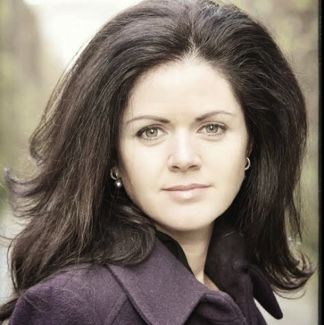
Vienna International School
                Vienna, Austria

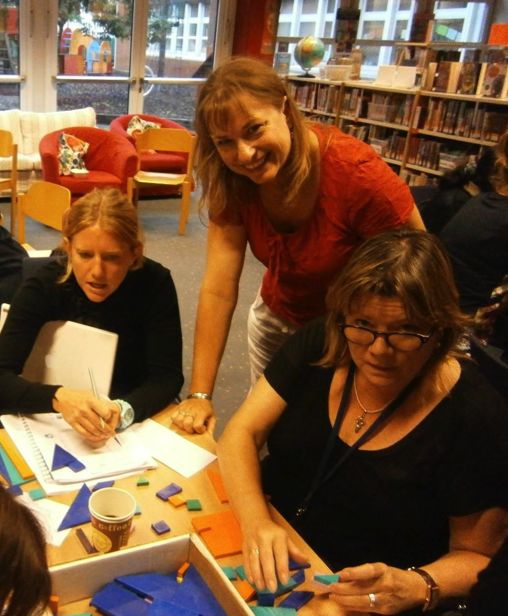
                                   Dr. Christine Orkisz Lang
                                  Primary School Maths Coach
                                      Grade Two Teacher
  Anika Sommer
Grade Level Leader
Grade Five Teacher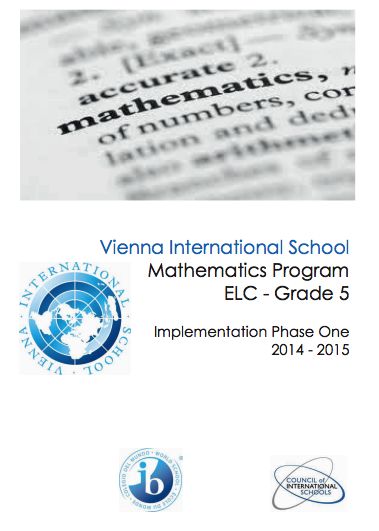
School Goal: Whole School Curriculum Ages 3-18
Timeline:
2011-12:    Parent community survey, teacher survey
2012-13:    Cross School committee + Steering Groups to identify needs
2012-2013: Review of other Maths curricula
2013-14:    New curriculum documentation creation
2014-15     Implementation Phase 1 (End of year review)
2015-2020: Implementation Phase 2
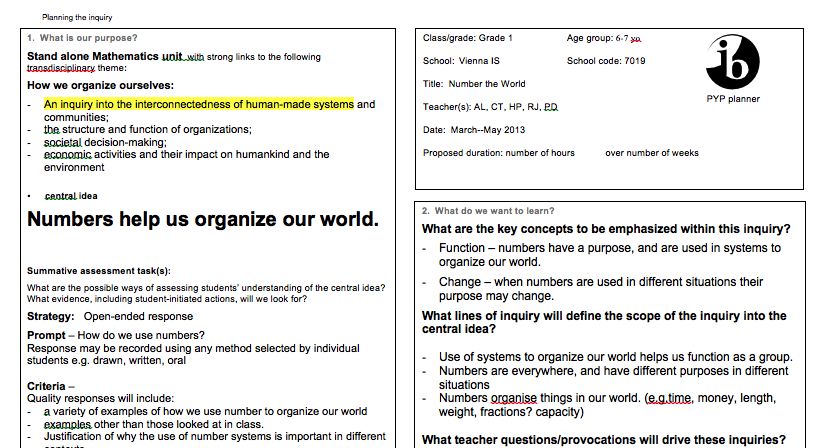
Reasons for a New Programme
• New powerful technologies to support learning available

• Extensive advances made in the field of pedagogy,
  particularly research into the brain and how it works

• Acknowledgement that genuine learning takes place in
  situations which are authentic and this was not reflected in
  previous curriculum

• A need for increased detail and training for teachers who are
  not Maths specialists was identified
Discussion Questions #1
1) Where is your school with regard to curriculum
   review and implementation in mathematics?

2) Which of the 5 reasons provided here for
   designing a new programme seems most
   important to you?
      (technology, brain-based research, authentic experiences,
      detail/training for teachers, whole school articulation)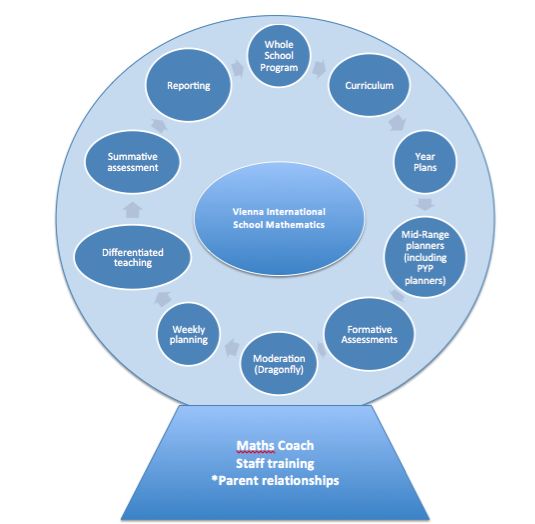
Goals of the New Programme

 1. Rigorous, developmentally appropriate learning

 1. Emphasis on communication in Mathematics

 2. Emphasis on Mathematical processes: ways of working

 3. Focus areas to allow for depth of study
Resources Used
1. VIS previous Scope & Sequence
2. First Steps (Government of Western Australia)
3. Ontario Province Curriculum
4. National Council of Teachers of Mathematics (NCTM)
5. New Zealand National Curriculum
6. John Van der Walle
Other Input
•   Christine Lyons, M.Ed., PhD
•   CEO, Dragonfly Educational Consulting Services, Inc.
     •Expertise
     •Training
     •Validation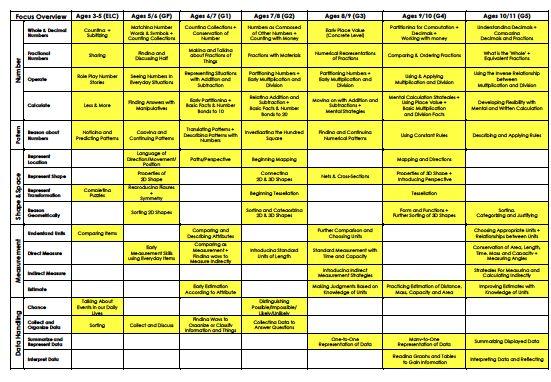
Two Documents
● ELC-Grade 5 Mathematics
  Programme

● Calculation Policy and
  Practices Document
Maths Content Strands (PYP)
Number - all grade levels + all substrands

Pattern and Function - all grade levels

Data Handling - all grade levels, SOME substrands

Shape and Spaces - focus grades

Measurement - focus grades
Number

  Understand Whole
                                                           Understand Operations
 and Decimal Numbers

                 Understand Fractional
                                            Calculate
                      Numbers

    8 key                                                               10 key
understandings                                                       understandings
                        7 key                10 key
                    understandings        understandings
Pattern and Function
Reason About Number
Patterns
6 key
understandingsMeasurement
Understand Units Estimation
Direct Measure Indirect Measure
8 key 3 key
understandings understandings
6 key 4 key
understandings understandingsShape and Space
Represent Location Reason Geometrically
Represent
Represent Shape
Transformation
3 key 4 key
understandings understandings
3 key 4 key
understandings understandingsData Handling
Understand Chance Interpret Data
Collect and Process Data Collect and Process Data
(Part A) (Part B)
7 key 3 key
understandings understandings
5 key 6 key
understandings understandingsFocus Overview
Strands broken into sub strands
        Focus or big idea for that grade and that substrand

 KUs from
First Steps
Resources

                                                               Coded bullet to     Indicating
                                                                 point you to    behaviours, not
                                                              other documents      outcomes
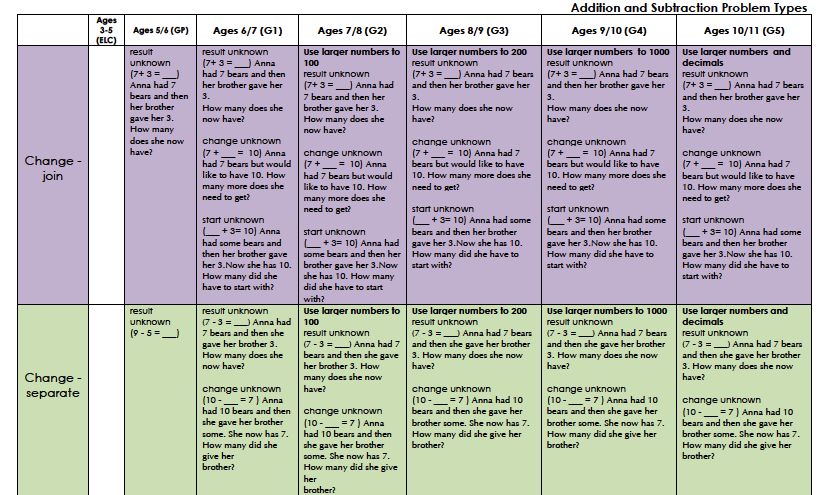
Problem Type Overview
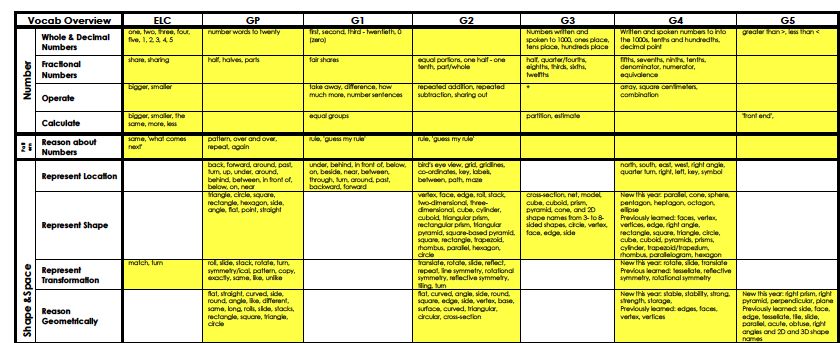
Vocabulary Overview
Calculator Use Overview
Calculation Policy and Practices

● Divided into the four operations

● Each operation split into two sections:
                  - mental calculation
                  - written calculation
Calculation Policy and Practices: Overview
big
The for
s n
idea lation i
c u
cal grad
e
c h
eaCalculation Policy and Practices: cont’d
g ra d e
End of
tions
expectaCalculation Policy and Practices: cont’d
d
’ a gree n
VIS l writte
a
form thod of r
me tion fo
ula on
calc operati
h
eacCalculation Policy and Practices: cont’d
Asp
know ects of
l
expe edge to
revis c ta
e fro nd
prev m
ious the
yearGlossary
atical
Mathem that
ry
vocabula S and
U
will help
students
ESL
teachers, we
need your
help!Discussion Questions #2 1) What are your first impressions of the components and structure of the curriculum? 2) What questions do you have about the components and structure of the curriculum?
How can we make this work?

What are our Ways of Knowing
that it is working?

  New Curriculum ≠
  Improved
  Learning
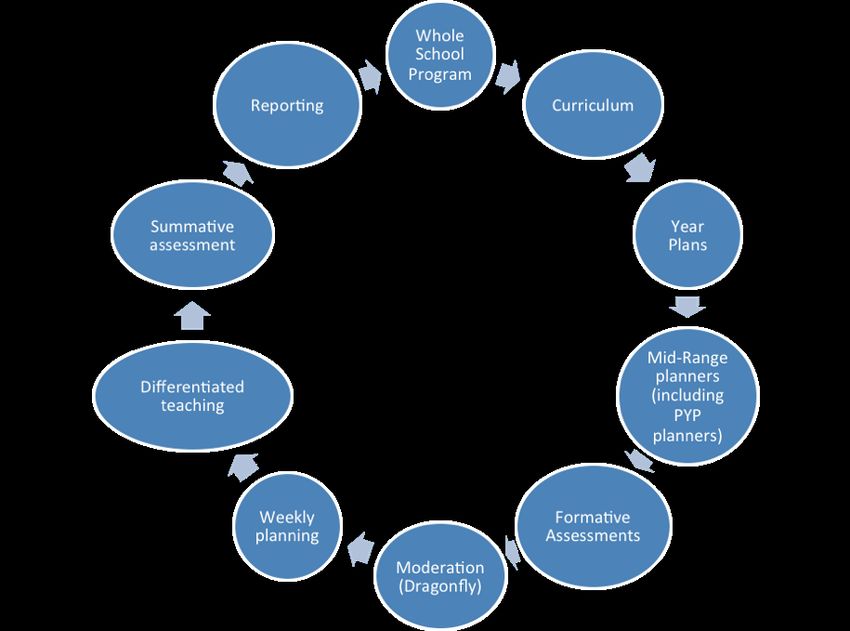
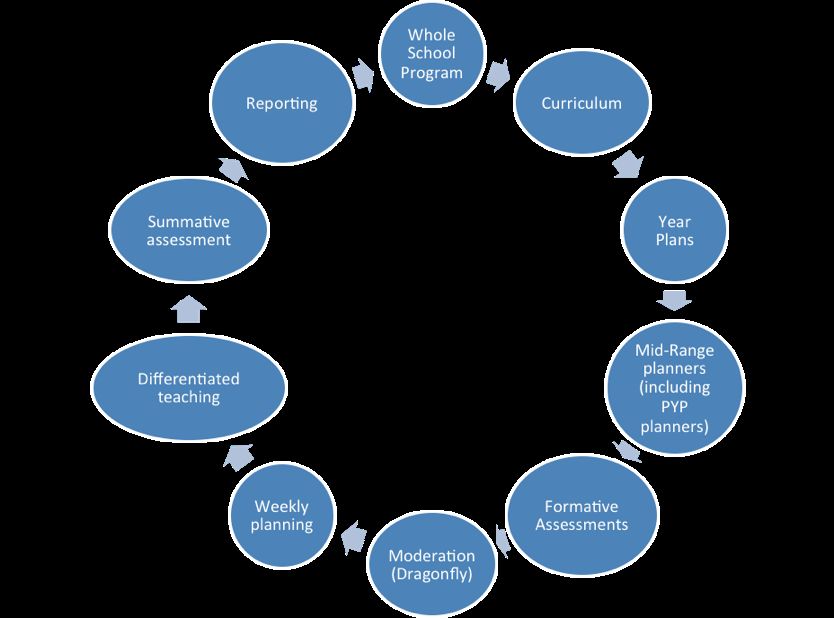
‘Closed Circle’

The program is
supported by:

 ● Maths Coach
 ● Parent Partnerships
 ● Ongoing teacher
   training
Year Planning
Mid-Range Planning + Inquiry Cycles
From Formative Assessment
 to Differentiated Teaching
Summative Assessment
• InCas standardised testing (new)
• ISA standardised testing
• Repeat of Diagnostic Tasks
• Trial of VIS Numeracy Assessment
  (emphasising practices  MYP)
• Teacher-created assessments
Reporting
Discussion Questions #3

1) Do you feel that your mathematics programme
   has a ‘closed circle’ to support teachers?

2) If not, what might be a next step for you? If it
   does, what might you add to ours?
Comments and Questions
Dr. Christine Orkisz Lang
clang@vis.ac.at

Anika Sommer
asommer@vis.ac.at
You can also read


