Integrated Implementation Plan 2013-2018 - National Transport ...
←
→
Page content transcription
If your browser does not render page correctly, please read the page content below
Integrated
Implementation
Plan
2013-2018

National Transport Authority
Dún Scéine,
Harcourt Lane,
Dublin 2.
National Transport Authority
Integrated Implementation Plan                                                   1

Contents
1        Introduction and Background                                         4
         1.1 Introduction                                                    4
         1.2 Content of an Implementation Plan                               5
         1.3 Plan Process                                                    5

2        Travel in the Greater Dublin Area                                   6
         2.1 Greater Dublin Area                                             6
         2.2 Population                                                      6
         2.3 Employment                                                      7
         2.4 Means of Travel                                                 8
         2.5 Journey time                                                   10
         2.6 Departure time                                                 12
         2.7 Car ownership                                                  12
         2.8 Summary and Main Conclusions                                   14

3        Transport Challenges and Objectives                                16
         3.1 Transport and the Economy                                      16
         3.2 Public Transport and Society                                   16
         3.3 Transport and the Environment                                  17
         3.4 General Objectives                                             17

4        Scope of the Implementation Plan                                   20
         4.1 Approach                                                       20
         4.2 Structure                                                      20

5        Integration of Land Use and Transport                              22
         5.1 Background                                                     22
         5.2 Need for Land Use and Transport Integration                    22
         5.3 Key Principles for the Integration of Land Use and Transport   23
         5.4 Summary                                                        24
2   National Transport Authority

    6       Overall Infrastructure Investment Programme      26
            6.1 Introduction                                 26
            6.2 Overall Programme Approach                   27
            6.3 Environmental considerations                 28

    7       Bus Investment                                   30
            7.1 Background                                   30
            7.2 Objectives of Bus Investment                 30
            7.3 Proposed Investment Areas                    30
            7.4 Bus Fleet                                    31
            7.5 Bus Stops and Shelters                       31
            7.6 General Bus Network Improvements             32
            7.7 Bus Rapid Transit                            33

    8       Light Rail Investment                            36
            8.1 Background                                   36
            8.2 Objectives                                   36
            8.3 Proposed Investment Areas                    37
            8.4 Luas Cross City                              37
            8.5 Fleet and Network Enhancement                37

    9       Heavy Rail Investment                            38
            9.1 Background                                   38
            9.2 Objectives                                   39
            9.3 Proposed Investment Areas                    39
            9.4 City Centre Re-signalling Project            39
            9.5 Phoenix Park Tunnel Link                     39
            9.6 Level Crossing Programme                     40
            9.7 Ticketing and Revenue Systems                40
            9.8 Central Traffic Control (CTC)                41
            9.9 Station Improvement and Other Enhancements   41
            9.10 Network Development                         42
Integrated Implementation Plan                                            3

10       Integration Measures and Sustainable Transport Investment   44
         10.1 Background                                             44
         10.2 Objectives                                             44
         10.3 Proposed Investment Areas                              45
         10.4 Cycling / Walking                                      45
         10.5 Traffic Management                                     46
         10.6 Safety                                                 47
         10.7 Integration Measures                                   47

11       An Integrated Service Plan                                  48
         11.1 Introduction                                           48
         11.2 Bus Service Network                                    48
         11.3 Rail Services                                          52
         11.4 Taxis and Hackneys                                     54

12       Integration and Accessibility                               56
         12.1 Leap card                                              56
         12.2 Real Time Passenger Information                        57
         12.3 Journey Planning                                       57
         12.4 Fares                                                  57
         12.5 Optimising Interchange                                 58
         12.6 Public Transport Brand                                 58
         12.7 Accessibility                                          59
4   National Transport Authority

    1. Introduction and Background
    1.1 Introduction                                         Within the Greater Dublin Area (GDA) the Authority
                                                             carries additional responsibilities including:
    The National Transport Authority (the “Authority”)
    is a statutory body established by the Minister for      cc   strategic planning of transport;
    Transport on 1 December 2009.                            cc   development of an integrated, accessible public
                                                                  transport network;
    The Authority was set up under the Dublin
    Transport Authority Act 2008. Its roles and functions    cc   promoting cycling and walking;
    are set out in that Act, the Public Transport            cc   provision of public transport infrastructure
    Regulation Act 2009 and, also, the Taxi Regulation            generally including light rail, metro and heavy
    Act 2003.                                                     rail; and
    At national level, the Authority has responsibility      cc   effective management of traffic and transport
    for securing the provision of public passenger land           demand.
    transport services. This includes the provision of
                                                             The GDA includes the local authority areas of Dublin
    subsidised bus and rail services through contracts
                                                             City, Fingal, Dún Laoghaire-Rathdown, South Dublin,
    with Bus Éireann, Dublin Bus and Irish Rail, and with
                                                             Kildare, Meath and Wicklow.
    private bus operators; and the provision of light rail
    services directly itself or through assignment to the    On behalf of the Department of Transport, Tourism
    Railway Procurement Agency (RPA). The Authority          and Sport, the Authority also manages the following
    has national responsibility for the State’s rural        programmes:
    transport programme and also licenses public bus
    passenger services delivered by private operators.       cc   Regional Cities Public Transport Programme;
    Regulation of the national taxi industry falls also to   cc   Accessibility Programme;
    the Authority. Other areas of national responsibility
                                                             cc   Smarter Workplaces and Smarter Travel Campus
    include integrated information systems for public
                                                                  travel programme;
    transport customers and management of the
    Integrated Ticketing Scheme for Ireland (the             cc   Green Schools travel programme; and
    Leap Card system). Allied with these national            cc   Initiatives to integrate rural, health and school
    functions, the Authority is the enforcement body              transport services.
    for passenger rights in relation to rail, buses and
    coaches, and ferries.
Integrated Implementation Plan - Introduction                                                                   5

1.2 Content of an Implementation Plan                   1.3 Plan Process
The Authority is required to prepare an integrated      The following process is outlined in the Act for the
implementation plan (the “Plan”) in accordance          preparation of a Plan:
with Section 13 of the Dublin Transport Authority
                                                        cc   Taking direction from the Minister, the Plan
Act 2008 (the “Act”). This Plan is required to
                                                             should have regard to any proposals received
comprise the following:
                                                             from public transport authorities and operators
cc   an infrastructure investment programme,                 and the need to ensure the most beneficial,
     identifying the key objectives and outputs to be        effective and efficient use of Exchequer
     pursued by the Authority over the period of the         resources;
     Plan;
                                                        cc   The Authority is required to have regard to
cc   the actions to be taken by the Authority to             written guidance on multi-annual funding from
     ensure the effective integration of public              the Minister;
     transport infrastructure over the period of the
                                                        cc   During the preparation of the integrated
     Plan;
                                                             implementation plan, the Authority is required
cc   an integrated service plan, identifying the key         to consult with and consider the views of
     objectives and outputs to be pursued by the             stakeholders and invite public submissions on
     Authority in relation to the procurement of             the Plan; and
     public passenger transport services over the
                                                        cc   The Authority is required to submit a draft Plan
     period of the Plan;
                                                             to the Minister for approval. The Minister may
cc   the actions to be taken by the Authority to             approve the draft, approve with modifications,
     ensure the effective integration of public              require resubmission in a modified form or
     passenger transport services over the period of         refuse to approve it.
     the Plan; and
cc   such other matters as the Authority considers
     appropriate or as may be prescribed by the
     Minister for Transport, Tourism and Sport (the
     “Minister”).
6   National Transport Authority

    2 Travel in the Greater Dublin Area
    2.1      Greater Dublin Area                               Table 1 - Changes in population by GDA
                                                               County and nationally since 2006
    The Greater Dublin Area (GDA) comprises the
    counties of Meath, Wicklow, Kildare, South Dublin,         County                 2006          2011    % Change

    Dún Laoghaire Rathdown, Fingal and Dublin City.            Dublin City          506,211       527,612        4%

    National strategic policy on land use, settlement,         South Dublin         246,941       265,205        7%
    economic development and sustainability over               Fingal               239,995       273,991       14%
    the past decade or more, has consistently
                                                               DLR                  194,039       206,261        6%
    identified the GDA as a driver of national economic
    development. This is even more relevant in the             Kildare              186,336       210,312       13%
    context of the current challenging financial and           Meath                162,831       184,135       13%
    economic circumstances and the capacity of the
                                                               Wicklow              126,194       136,640        8%
    GDA’s economy to adapt and develop will be crucial
    to restoring Ireland’s economic wellbeing in the           GDA               1,662,547    1,804,156          9%
    coming years.                                              State             4,239,848    4,588,252          8%

    2.2 Population                                             Table 1 shows that the growth in population was
                                                               far from uniform within the GDA, with the largest
    Between 2006 and 2011, the population of the               growth shown in Fingal (14%), and Kildare and
    Greater Dublin Area grew by 9% from 1.66 million to        Meath (13%). In contrast, the population of Dublin
    1.8 million, as compared to a slightly lower growth rate   City grew by a more modest 4% between the 2006
    of 8% for the State as a whole. The GDA can be broken      and 2011 census. This represents a continuation
    down by constituent county, as set down in Table 1.        of a longer term trend, where the highest rates
                                                               of population growth have been progressively
                                                               cascading outwards from Dublin, reflecting the
                                                               dispersal of City Region population growth across an
                                                               extending commuter belt.

                                                               The distribution of population is a critical
                                                               determinant of travel behaviour. In particular, the
                                                               location of population relative to key services such
                                                               as work, education, retail and leisure determines
                                                               the demand for travel and distances travelled. In
Integrated Implementation Plan - Greater Dublin Area                                                                 7

turn this has a critical impact on people’s choice            people travel to work. Census 2006 was undertaken
of mode - i.e. the more remote people live from               as Ireland was coming to the end of a long period of
public transport and destinations served by public            sustained economic growth, while the 2011 census
transport the more likely they are to drive.                  is the first census in over 15 years to have been
                                                              undertaken in the midst of an economic downturn.
Even within the more localised area of Dublin City
and suburbs, substantial changes in the distribution          The changes in the number of jobs and the
of population occurred between 2006 and 2011.                 distribution of employment between the two
Whilst the highest rates of population growth                 census years is an important indicator of both the
in Dublin has occurred in the northern fringe of              impacts of the economic downturn and of land
the Metropolitan Area and in the Docklands and                use planning policies relating to the location of
Heuston areas, population declines were recorded              employment. One important feature of this has
across many of the more mature suburban areas                 been the substantial increase in employment in
and parts of the Inner City. This pattern broadly             certain suburban located industrial estates and
reflects the ‘empty nest’ scenario and associated             office parks in the Dublin Metropolitan Area. In
declining household size, characteristic of many              particular, these relate to lands beyond the M50
older residential areas.                                      to the north west of the city including Ballycoolin,
                                                              the Maynooth and Swords areas, Sandyford and
2.3 Employment                                                Cherrywood, and lands to the north of the N7
                                                              including Grange Castle and Greenogue. Within the
The numbers of people in employment has a                     inner city, substantial employment growth occurred
strong bearing on the number of trips generated,              in the Docklands and Heuston areas. The largest
particularly during the peak demand periods in the            declines occurred in the Leixlip and Park West areas
morning and evening. Between 2006 and 2011, the               and a number of locations in the south eastern
number of persons in employment in the Greater                quadrant of the inner city.
Dublin Area declined by 6% from 800,000 to
754,000. A comparable level of decline occurred in            These patterns are described on the basis of trips
the State as a whole (6%). The GDA can be broken              to work data from POWCAR 2006 and POWSCAR
down by constituent county, as set down in Table 2:           2011, derived from Census 2006 and Census
                                                              2011. (POWCAR means “Place of Work – Census
Table 2 - Changes in number of persons in                     of Anonymised Records” and POWSCAR means
employment by GDA County and nationally                       “Place of Work, School or College – Census of
since 2006                                                    Anonymised Records”). POWCAR and POWSCAR
                                                              illustrate the changes in employment destinations
 County                   2006            2011    % Change    within each Electoral Division (ED) in Dublin City
 Dublin City            245,007        227,429         -7%    / environs between 2006 and 2011. It should be
 South Dublin           119,280        106,534         -11%
                                                              noted however, that this data excludes mobile
                                                              employment where work destinations are variable
 Fingal                 120,794        119,276         -1%    and hence not included in either dataset.
 DLR                      87,815         87,490         0%
                                                              In summary, an examination of the changes in
 Kildare                  91,581         85,587        -7%    employment destination in this area illustrates the
 Meath                    78,437         74,342        -5%    increasing trend of suburbanisation of employment
                                                              in the main urban centres. While employment
 Wicklow                  57,326         52,907        -8%
                                                              has dropped in many areas of the city, Sandyford,
 GDA                   800,240        753,565          -6%    Cherrywood and Blanchardstown all emerge as
 State               1,930,042      1,807,360          -6%    significant employment growth areas for Dublin in
                                                              the period 2006-2011. Some central areas such as
The distribution of people’s places of employment             Docklands, Heuston and some locations in the South
is also an important determinant of travel patterns -         East Inner City have also shown job growth.
particularly in the morning peak period when most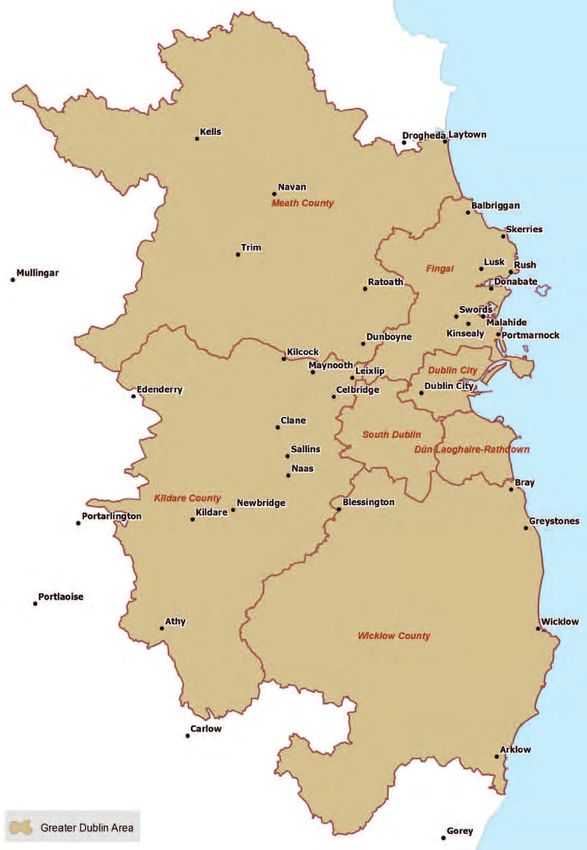
8   National Transport Authority

    2.4 Means of Travel                                          Car as the dominant mode
    While the distribution of population and                     Analysis of means of travel to work from Census
    employment are critical determinants of overall              data going back to 1996 shows a growing reliance
    travel demand, the means of travel people choose is          on the private car. However, this overall trend masks
    an important measure of travel behaviour. Means of           significant spatial variations in this trend that are
    travel is affected by a number of factors, including         revealed in analysing the mode share for car at an
    the location of development, general economic                Electoral Division level.
    conditions, availability of public transport, changes        In regards to the percentage of people driving to
    in fuel costs and public transport fares and other           work by origin, data from the 2011 Census shows
    transport policy interventions. An analysis of the           shows that in the GDA, the highest levels of car
    means of travel to work and education in the 2011            dependency apply around the outer edge of the
    Census and comparison with equivalent data from              Metropolitan area and in peri-urban fringes where
    earlier census years gives a good indication of the          more than 7 in 10 people drive to work. This is in
    impacts of the recent economic downturn and other            contrast to the situation in the commercial core of
    factors on people’s travel behaviour.                        the city where less than one in 4 people drive to
                                                                 work. Car dependency levels are also lower in areas
    Means of travel to Work                                      where agriculture plays a greater role in the local
    Tables 3 and 4 below, shows the change in trips by           economy.
    mode and mode share percentages between 2006
    and 2011 for people travelling to work, nationally
    and in the GDA.

    Tables 3 and 4 show an increase in mode share for
    car and bicycle and reductions in walking and travel
    by bus. Against a background of a general decrease
    in trips to work of 6% in the GDA and 7% nationally,
    the only mode to increase in absolute terms was
    cycling. There was an increase of 23% in cycling
    trips to work in the GDA and an increase of 10%
    nationally. Further analysis of cycling reveals that
    there was a 40% increase in cycling trips within the
    city centre of Dublin (within the canals) between
    2006 and 2011. This increase in cycling has been
    influenced by a number of factors in recent years,
    including the increases in fuel costs and in public
    transport fares and investment in cycle networks
    in urban centres. The success of the Dublin bikes
    scheme also appears to have had a major impact on
    attitudes to cycling - particularly in Dublin city centre.

    Of note are the trends in mode share for car drivers
    and car passengers. While the mode share for car as
    driver has increased nationally and in the GDA, the
    mode share for car as passenger has declined. This
    reflects a general decline in car occupancy levels for
    trips to work, with the occupancy level in 2011 close
    to 1. There was a decline in the mode shares of both
    walking and bus nationally and in the GDA.
Integrated Implementation Plan - Greater Dublin Area 9 Table 3 - % Mode Share comparison for trips to work, nationally, 2006 and 2011 Persons travelling to 2006 2011 Change in % Change work by mode nationally Trips % Mode Share Trips % Mode Share Mode Share in Trips On foot 205,688 11.7% 170,510 10.5% -1.2% -17% Bicycle 36,306 2.1% 39,803 2.4% 0.4% 10% Bus, minibus or coach 114,956 6.5% 91,676 5.6% -0.9% -20% Train, DART or LUAS 54,942 3.1% 52,749 3.2% 0.1% -4% Motorcycle or scooter 13,049 0.7% 8,443 0.5% -0.2% -35% Motor car: Driver 1,080,446 61.5% 1,067,451 65.5% 4.0% -1% Motor car: Passenger 104,861 6.0% 69,164 4.2% -1.7% -34% Other, incl. lorry 147,035 8.4% 131,018 8.0% -0.3% -11% Total 1,757,283 100% 1,630,814 100% 0% -7% Table 4 - % Mode Share comparison for trips to work in the GDA, 2006 and 2011 Persons travelling to work 2006 2011 Change in % Change by mode in the GDA Trips % Mode Share Trips % Mode Share Mode Share in Trips On foot 90,423 12.2% 81,886 11.8% -0.5% -9% Bicycle 23,282 3.2% 28,544 4.1% 0.9% 23% Bus, minibus or coach 88,573 12.0% 73,956 10.6% -1.4% -17% Train, DART or LUAS 49,471 6.7% 47,922 6.9% 0.2% -3% Motorcycle or scooter 8,386 1.1% 5,831 0.8% -0.3% -30% Motor car: Driver 406,327 55.0% 399,381 57.3% 2.3% -2% Motor car: Passenger 32,929 4.5% 24,107 3.5% -1.0% -27% Other, incl. lorry 39,463 5.3% 34,843 5.0% -0.3% -12% Total 738,854 100% 696,470 100% 0% -6%
10 National Transport Authority

     Means of travel to Education                               journeys taking between 45 minutes and 1 hour.
                                                                These trends may reflect the on-going effects of
     Tables 5 and 6 show the mode share comparison
                                                                dispersed residential development on journey to
     for trips to education in the GDA and nationally.
                                                                work distances (as reflected in journey times), but
     These show a reduction in mode share for walking
                                                                with the counter-balancing effects of reductions in
     and bus, in contrast to increases in mode share for
                                                                congestion levels.
     car, both as driver and as passenger. The increase in
     cycling trips that was evident for work trips is also
                                                                Figure 1 – Comparison of journey times,
     evident for trips to education.
                                                                National vs. GDA, 2011
     It should be noted that in contrast to the overall
     reduction in trips to work, the opposite trend is          40%
                                                                                            National          GDA
     evident with regard to trips to education between          35%
     2006 and 2011 - with a 14% increase in the GDA and         30%
     13%, nationally. The increased numbers of people
                                                                25%
     in full time education is most evident in the Primary
     and Tertiary sectors - with a 29% increase in third        20%
     level students nationally, between 2006 and 2011.          15%
     Hence, the increases in overall population and in          10%
     the pupil / student population in particular, have
                                                                 5%
     served to largely counter balance (nationally) and
     more than counter balance (in the GDA) the impact           0%
                                                                      < 15 min 15-30min 30-45min 45-60min > 60min
     of reduced employment on overall levels of travel
     demand in the past 5 years.

     2.5 Journey time                                           Figure 2 - Comparison of journey times in
     The economic boom between the mid-1990’s and               the GDA - 2006 and 2011
     2006 had the characteristic impact of increasing
     overall travel demand and traffic congestion levels – in   40%
                                                                                            2006              2011
     particular in urban areas. This in turn had an impact      35%
     on journey times to work in particular. An analysis        30%
     of journey to work times from Census 2011 is useful
                                                                25%
     to reveal if the trend up to 2006 has been halted or
     reversed in response to the economic downturn.             20%
                                                                15%
     Figure 1 gives the profile of journey times for people
     travelling to work in the GDA and nationally for           10%

     2011. 51% of all trips to work in the GDA take 30           5%
     minutes or less as against over 70%, nationally.            0%
     11% of trips to work in the GDA take longer than                 < 15 min 15-30min 30-45min 45-60min > 60min
     an hour. The biggest differences between the GDA
     and national level occur between the trips under 15
     minutes (19% vs. 33%) and trips between 30 and 45
     minutes (9% vs. 27%).

     Figure 2 compares journey times to work between
     2006 and 2011, which shows an increase in the
     percentage of trip taking between 15 and 30
     minutes and between 30 and 45 minutes. The
     greatest reduction relates to trips in excess of 1 hour
     and with a reduction also, in the percentage of
Integrated Implementation Plan - Greater Dublin Area 11
Table 5 - % Mode Share comparison for trips to education, nationally 2006 and 2011
Persons travelling to 2006 2011 Change in % Change
education by mode Mode Share in Trips
nationally Trips % Mode Share Trips % Mode Share
On foot 227,422 26.1% 244,428 24.8% -1.3% 7%
Bicycle 17,654 2.0% 21,374 2.2% 0.1% 21%
Bus, minibus or coach 211,993 24.4% 196,886 20.0% -4.3% -7%
Train, DART or LUAS 16,716 1.9% 18,227 1.9% -0.1% 9%
Motorcycle or scooter 1,289 0.1% 869 0.1% -0.1% -33%
Motor car: Driver 37,866 4.4% 59,945 6.1% 1.7% 58%
Motor car: Passenger 354,636 40.7% 439,174 44.6% 3.9% 24%
Other , incl. lorry 2,893 0.3% 3,097 0.3% 0.0% 7%
Total 870,469 100% 984,000 100% 0% 13%
Table 6 - % Mode Share comparison for trips to education in the GDA 2006 and 2011
Persons travelling to 2006 2011 Change in % Change
education by mode in Mode Share in Trips
Trips % Mode Share Trips % Mode Share
the GDA
On foot 113,591 34.4% 123,943 32.9% -1.5% 9%
Bicycle 11,196 3.4% 14,198 3.8% 0.4% 27%
Bus, minibus or coach 70,326 21.3% 70,272 18.7% -2.6% 0%
Train, DART or LUAS 14,332 4.3% 15,293 4.1% -0.3% 7%
Motorcycle or scooter 636 0.2% 435 0.1% -0.1% -32%
Motor car: Driver 12,104 3.7% 18,423 4.9% 1.2% 52%
Motor car: Passenger 106,934 32.4% 133,048 35.4% 2.9% 24%
Other , incl. lorry 763 0.2% 684 0.2% 0.0% -10%
Total 329,882 100% 376,296 100% 0% 14%12 National Transport Authority
2.6 Departure time Figure 4 - Profile of departure times for
trips to work in the GDA - 2006 and 2011
Increased traffic congestion during the economic
boom years made for longer journey times and
2006 2011
caused commuters in the GDA and nationally to 20%
depart earlier, to be more certain of arriving on 18%
time for work. The phenomenon of peak spreading 16%
was particularly evident in the GDA as revealed by 14%
comparison of travel to work departure times in the 12%
2002 and 2006 census years. Analysis of departure 10%
times for travel to work form Census 2011 is useful 8%
to reveal if the trends in peak spreading have 6%
altered or reversed in the past five years. 4%
2%
Figure 3 gives the profile of departure times for
journeys to work and compares the national profile 0%
Before 6:30 to 7:00 to 7:30 to 8:00 to 8:30 to 9:00 to After
6:30 7:00 7:30 8:00 8:30 9:00 9:30 9:30
with the equivalent profile in the GDA. The profiles
are very similar, with a greater percentage of GDA
commuters leaving for work before 7:30am than is 2.7 Car ownership
the case nationally. One third of GDA commuters
leave for work before 7:30 in the morning, whereas Levels of car ownership have a critical impact on
nationally this percentage is 28%. people’s travel behaviour - in particular on the
number of trips they will make and the means of
Figure 4 compares the departure time profile of travel they will choose. The economic boom in
trips to work in the GDA for 2011 and 2006. This Ireland led to huge increases in car ownership to
comparison shows that the reduction in congestion levels that are now on a par with many of our EU
levels means that fewer commuters are now partners, a trend that was also reflected in the GDA.
departing for work before 7:30am (32% in 2011 as There are, however, significant spatial variations
against 36% in 2006), while more are departing for in this trend, with relatively low levels of car
work after 8:00am (50% in 2011 as against 45% in ownership in central Dublin in particular. This is in
2006). In summary, the AM peak within the GDA has contrast to car ownership levels of over 500 cars per
contracted over the last 5 years. 1,000 population in many counties, and particularly
high levels of ownership in counties within the
Figure 3 - Profile of departure times for commuting catchment of the GDA.
trips to work, Nationally vs. GDA, 2011
Of particular interest in analysis of the 2011 Census
National GDA is to determine whether or not the economic
20% downturn has impacted on the general trend of
18% growth in car ownership up to 2006. Rather than
16% comparing the 2011 data with 2006, it is more
14% instructive to examine trends in car ownership since
12% 1991. Figure 5 shows the trends in car ownership in
10% the GDA counties since 1991 and compares the GDA
8% trend with the trend nationally. The car ownership
6% figures are presented as total cars and vans (owned
4% for private use) per 1,000 of population.
2%
0%
Before 6:30 to 7:00 to 7:30 to 8:00 to 8:30 to 9:00 to After
6:30 7:00 7:30 8:00 8:30 9:00 9:30 9:30Integrated Implementation Plan - Greater Dublin Area 13
Figure 5 - Car ownership trends in GDA counties compared with the national trend
550
450
Cars per 1,000 persons
350
Dublin City
South Dublin
Fingal
250
DLR
Kildare
Meath
Wicklow
GDA
State
150
1991 1996 2001 2006 2011
Year
Figure 5 shows the characteristic historic trend in between the mid-1990’s and 2006 is clearly evident
car ownership (i.e. S-Curve) for all GDA counties in the car ownership trends. It is also clear that
and nationally. Within the GDA, Meath has the despite the economic downturn since 2006, car
highest levels of car ownership with rates that are ownership levels have continued to rise and are
well ahead of the national average. However it is only levelling off where they are reaching saturation
clear from the graph that levels of car ownership in levels. The increases in car ownership despite
Meath are now approaching saturation levels (i.e. recent economic conditions may also be indicative
where every person legally entitled to drive owns of the reduced cost of owning a car in Ireland – in
a car), and the period 2006 to 2011 showed only particular the cost of second hand cars that has
a small increase in ownership levels in this county. fallen significantly over the past 5 years.
Though levels of car ownership in Dublin City are
much lower than in any other part of the country,
there was a significant jump in ownership between
2006 and 2011. The impact of the economic boom14 National Transport Authority Dublin Public
2.8 Summary and Main Conclusions
Some of the main findings from Census 2011 travel A
datasets pertaining to the GDA are as follows:
cc The economic downturn and the corresponding
reduction in employment has resulted in
a reduction (6%) in the numbers of people
in employment in the GDA, between 2006
and 2011; 1 4
cc In contrast to the drop in trips to work, there
have been significant increases in trips to
education in the GDA (14%);
COMMUTER Hartstown
M3 Parkway
cc In the case of both trips to work and education, 39a
Ongar Castaheany
Charnwood
Dunboyne
there have been reductions in mode share for COMMUTER
continues to Allendale
Hansfield
walking and travel by bus and increases in the the North West
Leixlip (Louisa Bridge) Clonsilla
Maynooth Leixlip (Confey)
mode share for car and cycling. For travel to
work, cycling has been the only mode to show
an increase in absolute terms. This increase has
been particularly significant (40% increase) in
Dublin city centre;
2
cc The economic downturn and corresponding Ballyowen
Lucan
reduction in employment and journey to work (Liffey V
has had the effect of reducing congestion 25a Esker Ballydowd Qu
Lucan (Esker Church) Meadow Manor (Liffe
levels in the GDA, and this has led in turn to a 25a 25a
reduction in travel times and a contraction of the Finnstown Finnstown Griffeen Foxborough Fonthill Roa
Abbey Avenue 151
morning peak; and Hazelhatch
and Celbridge 25b
Adamstown Station
cc Between 2006 and 2011, car ownership COMMUTER
continues to Sallins,
(Commuter X)
Kishoge
Clondalkin
Fonthill
rates showed another increase despite the Newbridge, Kildare
and the South West Lock View
economic downturn, but some counties are now Grange
Castle
Grange Castle (West) New Nangor Ro
approaching saturation levels and these counties 13
Castlegrange
have shown only a small increase in ownership St John’s
Clon
levels since 2006. 3 Corkagh
Vil
Demesne
Bel
Fettercairn
Cheeverstown
Citywest Campus
77a
Jobst
Fortunestown (Nort
Saggart 27
Blessington
Road
4
ATransport Frequent Services
B C D E
Seatown
SWORDS COMMUTER continues to the North
Swords Manor
41 S Main Street
DART Malahide
Swords (Pavilions)
Ward River
Valley Park
Fosterstown (Boroimhe) Portmarnock
4 13 83
Balseskin X Harristown (83 X) Dublin 15
Airport Clongriffin
Airport Roundabout 27
Ballymun Cross 747 Clare Hall Abbey 29a
XMeakstown 16 Park Baldoyle
Charlestown Popintree Dardistown
Tyrrelstown A Kilmore
40d Balbutcher Bayside
Finglas (Northside)
IKEA Darndale Grange
Ballycoolin Plunkett Sutton
9 140 Santry Bonnybrook Road
Finglas East Ballymun (Newgrove
Rosemount Ellenfield
Business Park Finglas West Centre Beaumont Cross) 17a
Park
Hospital Howth Junction
14 Donaghmede & Donaghmede
Cappagh Finglas
Huntstown Corduff Village Wadelai Park Beaumont
Finglas South Ballymun (DCU) Whitehall Edenmore
Finglas 40d 40 11 Coolock
Blakestown Kilbarrack
17a Tolka Estate Glasnevin (Mobhi) Collins Avenue
BLANCHARDSTOWN CENTRE 40 Raheny
Botanic Gardens Donnycarney
Royal St Patrick’s Harmonstown
Canal Park Finglas Glasnevin Cemetery Fairview 123
Navan Road Road Drumcondra (North) Marino
Ashtown All Saint’s
Castleknock Parkway Station 120 Broombridge (Commuter X) Road St Anne’s Park
Ballybough and Gardens
Coolmine Killester
Station Fassaugh Fairview
122
Ashtown Ashington Cabra Road 7 North
(Fassaugh Strand Clontarf Dollymount
Mountjoy Road 130
Avenue) Square
Phibsboro Mater Castle Avenue
Navan Road Mater
Old Cabra Road Clontarf
4 9
83 46a 120 123
Phoenix Park Prussia Street 140
4 9 140 7 Dubli
Stoneybatter 123
14 15 27
Harbo
29a 130
39a 4 7 9 11 13 16 40 40d 41 747
41 46a 120 122 140 151
46a Parnell St Connolly COMMUTER
18 Parnell Square
Phoenix Park 40d 120 Docklands X
Palmerstown (Infirmary Road 83
4 7 9 11 13 16 40 151
40d 46a 120 122 140
Road and Zoo) 29a 130
O’Connell Street
Valley) Blackhall 4 7 9 11 13 16 40 41 29a 41 130
Cherry Orchard Place Four 46a 122 123 140 747 A Lwr Abbey St George’s Mayor Spencer The Point
41 Busáras
Hospital Ballyfermot Museum Courts Jervis Dock Square Dock
uarryvale Smithfield 25a 25b 39a 79 83 Abbey St 15a 15b 151 747
ey Valley) Kilmainham
Coldcut 25a 25b 39a 145 151 747 14 15 27 79 151 S 15a 15b Dublin Port
40 Le Fanu 79 145 747 151 151 14 15 North Wall
83 25a 25b 39a 27 79
Park 79 83 145 747 14 15 27 79 151 151
ad Ronanstown 15a 15b
Cherry 145 747
25a 25b 39a
D’Olier/Westmoreland 150 15a Tara Street 15a Grand Canal Dock
79 145 747 15b 15b
Orchard 4 7 9 11 13 14 15
Heuston 15a 15b 16 25a 25b 4 7 15a 15b 77a 4 7 15a 15b 77a 77a
79a 27 39a 40 46a 77a 83
Ringsend Road
James’s 151 122 123 140 145 150 4 7 11 14 15 Pearse 4 7
Parkwest 151 A Trinity 77a
13 40 123 Christchurch 15a 15b 25a 25b
& Cherry 39a 46a 140 145
Orchard Inchicore Thomas 13 40 123 13 27 40 77a Grand Canal
Street 123 150 151 Dock Station 18
11 14 15 15a 25a
25a Sandymount
15b 25a 25b 39a 25b Merrion Square Lansdowne
Kylemore Bluebell Suir Fatima 46a 140 145
25b 39a
Road
Drimnagh Road St Stephen’s 4 7 Dublin
27 77a 9 16
Green
39a Bay
oad Nangor Road Blackhorse Rialto 150 151 83 122 11 46a 145
Goldenbridge Tram Sandymount Station
Longmile Stop Ballsbridge
Woodford Red Cow Sydney Parade
Crumlin Baggot
ndalkin 122 Hospital Dolphin’s Street
llage Drimnagh Castle Barn Leeson Street Merrion
The Coombe Booterstown
Kingswood Camden Harcourt
123 Street Vincent’s
Walkinstown Coombe Herbert Hospital Blackrock
lgard Hospital South Park
Walkinstown Cross Donore Circular
Donnybrook Seapoint
Greenhills
Crumlin Clogher Road Harold’s Cross Portobello Stradbrook
Cookstown Broomhill Ashleaf Appian Way Salthill & Monkst
Industrial Estate 39a Monkstown Avenue 4
Armagh Road Rathmines Charlemont
Tallaght Monkstown DÚN LAOG
Crumlin Sundrive
Hospital Village Tymon Belfield (UCD) 46a
(South)
North Limekiln 9 Kenilworth
Whitehall Kimmage Ranelagh
Avenue 15a Mounttown
Road West 83
TALLAGHT Kill Of The San
Beechwood Grange & Gl
Sandford Road
Kimmage Stillorgan
town Tymon Palmerston Cowper (Shopping Centre)
th) Wellington Lane
Park Park Clonskeagh Deansgrange Glen
140
Killinarden Sallynoggin
Rathgar Miltown
Jobstown Terenure Roebuck
15a Comelscourt
(South) Dalk
Rossmore Windy Rochestown
Orwell Road Arbour Avenue
150 Goatstown
14
DUNDRUM
Templeogue 15b Leopardstown Killin
Churchtown Kilmacud East Racecourse Loughlinstown
Knocklyon Bushy Balally Stillorgan XCherrywood
Park Ballyogan
Rathfarnham (Luas) Central Park The Gallops Wood Laughanstown
15 Kilmacud 7
Sha
Ballycullen Sandyford Glencairn Leopardstown Carrickmines
Valley Cherrywood
Stillorgan Industrial Park
Butterfield Marley Grange Tram Stop
Ballycullen Road Sandyford Bride’s Glen
16 BRA
15 Oldorchard 15b Industrial Estate 11
15b
Brehonfield
Stocking Avenue Marlay Road
Boden Park Kilmacanogue DAR
Park 145 Grey
COMMUTER
continues to
the South East
B C D E16 National Transport Authority
3 Transport Challenges and Objectives
3.1 Transport and the Economy maximise the use of public transport services and
facilitate a greater uptake of walking and cycling;
The economic wellbeing of the GDA is of vital
cc how to encourage some of those using the network
importance to the wider Irish economy. A significant
at busy times to use more appropriate means of
proportion of population, employment and retail
travel or to travel at less congested times;
growth in the GDA in the last decade has taken place
away from high capacity, public transport network. cc how to free up road space for economically
As a result, a large share of the associated growth essential traffic by further increasing the share of
in travel has been by car. This, in combination travel by means other than the car, particularly
with increased car ownership and use, has led to a to the city centre and other employment
substantial increase in road congestion in much of centres; and
the GDA when compared with prior years. cc how to target public transport improvements to
Recent public transport improvements, major areas where access is currently poor, increasing
road construction and investment in cycle and the amount of people that can access jobs in
pedestrian facilities, in combination with the Dublin city centre and other employment centres.
economic downturn, has temporarily alleviated
congestion in the Greater Dublin Area. However, as 3.2 Public Transport and Society
economic activity and employment increase, it is Public transport brings a range of economic, social
inevitable that, in the absence of targeted transport and environmental benefits. A number of these are
infrastructural investment, traffic conditions can be outlined below at broad level:
expected to deteriorate throughout much of the
Dublin region. This would have serious implications First it brings economic benefits by reducing
for businesses and the wider GDA economy. congestion, offering affordable mobility and freeing
resources for use in other productive activities. The
General transport challenges include: benefits associated with reduced congestion can
cc how to appropriately allocate financial resources be substantial. Evidence from the UK suggests that
to achieve economically efficient solutions in the buses carry more than a quarter of all motorised trips
transport area; into city centres in most large cities (Abrantes, P.,
Fuller, R. and Bray, J. (2013) The Case for Urban Bus).
cc how to lock in the economic benefits of new
If all, or even half, those bus trips were instead made
transport infrastructure;
by car, congestion in city centres would be increased
cc the identification and delivery of network significantly with subsequent impacts on productivity
improvements to minimise road congestion, and competitiveness. In turn this would also give riseIntegrated Implementation Plan - Transport Challenges and Objectives 17
to an increased cost of doing business. A systemic cc how to make the public transport network easier
delay in getting goods to market would result in to use;
increased costs for business, which would likely have
cc how to improve safety, and perceptions of safety,
an impact on final prices paid by consumers.
for those who walk and cycle; and
Second, it brings social benefits by facilitating cc how to encourage walking and cycling, including
mobility, offering affordable alternatives to lower for leisure and recreational purposes, which can
income groups and other vulnerable cohorts. contribute to the health and wellbeing of GDA
Vulnerable and socially disadvantaged groups are residents.
most reliant on bus networks. In this sense public
transport plays an important role in tackling social 3.3 Transport and the Environment
isolation and promoting independent living.
The environmental challenges associated with
Third, public transport plays a vital role in enabling transport are significant. Overall, Ireland’s
economic activity. Public transport aids in the greenhouse gas (GHG) emissions in 2010 were 9.3%
functioning of the economy by contributing to above 1990 levels (Ireland’s Environment 2012, EPA).
more flexible labour markets and enabling other
economic activities such as retail and leisure. Public Environmental challenges include:
transport allows individuals to travel across a wide cc how to identify the means to stabilise or reduce
geographical area. In doing so it increases the transport related GHG emissions and the use of
number and range of jobs accessible to workers. fossil fuels to power transport in the GDA;
This can be especially important for low income
or less skilled workers who are less likely to have cc how to minimise the impact on natural
access to a car and may also qualify for a narrower amenities; and
range of jobs which are more likely to be scattered cc how to facilitate improvements to air quality,
across a larger area. For employers, public transport reduce noise pollution and minimise the visual
extends the available labour supply, which can be an impact of transport.
important element in a firm’s location decision.
Finally, it brings environmental benefits by reducing
3.4 General Objectives
traffic volumes and thereby cutting associated The general objectives of the integrated
emissions levels. In Ireland alone, emissions implementation plan can be categorised under
from the transport sector constitute nearly 20% economic, social and environmental headings.
of all greenhouse gas emissions (Environmental
Protection Agency (2013) Ireland’s Greenhouse Gas 3.4.1 Economic Objectives
Inventory 1990 – 2011).
cc Improve travel time and reliability for the
The challenges for public transport in serving movement of people and goods;
society effectively include: cc Facilitate businesses by the efficient movement
cc how to improve connectivity for those living of people in the region seeking employment
in disadvantaged areas to employment and opportunities;
essential services; cc Support businesses through the facilitation of
cc how to ensure that transport facilities are the efficient distribution of goods and materials
designed to address the needs of people with and servicing of premises;
mobility impairments and people with disabilities; cc Appropriately allocate financial resources to
cc how ensure that public transport is easy achieve economically efficient sustainable
to understand, encouraging new users and transport solutions; and
improving the experience of existing customers, cc Improve access to key regional destinations,
through simplifying fares and ticketing and such as the ports, Dublin Airport, hospitals and
improving access to travel information; colleges.18 National Transport Authority
3.4.2 Social Objectives
cc Enhance accessibility to jobs, schools, shops,
local services, leisure facilities and other
destinations;
cc Enable access across the region to large
educational institutions, in particular third level
colleges;
cc Improve access for all people, including physical
access for people with mobility impairments;
cc Improve internal connections between
communities and external links to/from areas
outside the GDA;
cc Provide for an improved quality of public realm
for the movement of people;
cc Improve the quality of travel information and
access to this information;
cc Advance the user-friendliness of the public
transport system including easy transfer across
the various modes and operators; and
cc Improve personal security and provide a more
comfortable travel experience.
3.4.3 Environmental Objectives
cc Reduce the impact of transport on air and
water quality;
cc Reduce transport related greenhouse gas
emissions;
cc Reduce the impact of noise and vibration;
cc Promote energy efficiency and focus on reducing
dependence on non-renewable resources; and
cc Reduce impact on biodiversity and natural
amenities.20 National Transport Authority
4 Scope of the Implementation Plan
4.1 Approach investment proposals under each of these respective
areas, including identifying key objectives and
The earlier sections of this document set out the outputs, as well as certain measures for the effective
background and context to this Plan. The remaining integration of public transport infrastructure.
sections set out the key elements relating to land
use and transport integration, infrastructure, service, 4.2.3 Integrated Service Plan
and integration/accessibility aspects of the Plan. The
Chapter 11 details the integrated service plan
structure of the subsequent sections is set out below.
provisions including the key objectives and outputs
to be pursued by the Authority in relation to the
4.2 Structure procurement of public passenger transport services
over the period of the Plan. It addresses bus and rail
4.2.1 Integration of Land Use and Transport services as well as small public service vehicles.
The first chapter of this Plan addresses the
relationship between land use and transport 4.2.4 Integration and Accessibility
provision and the essential need for an integrated
Chapter 12 identifies various measures proposed
approach between both. It sets out a number of
in relation to the integration of public passenger
principles that support that alignment and which
transport services and the ease and convenience
reflect a coordinated approach between the planning
of use of those services. It deals with integrated
and delivery of development and the planning and
ticketing, real time passenger information,
delivery of supporting transport provision.
journey planning, fares, branding and optimising
interchange. In addition, it sets out proposals in the
4.2.2 Infrastructure Investment Programme area of accessibility and passenger rights.
Chapter 6 sets out the central Infrastructure
Investment Programme. This provides the overall
funding provision over the six year period of the
Plan. It identifies the four key investment areas,
being:
1. Bus;
2. Light Rail;
3. Heavy Rail; and
4. Integration Measures and Sustainable Transport.
The subsequent chapters 7 to 10 detail the22 National Transport Authority
5 Integration of Land Use and Transport
5.1 Background employment and the services that support them,
including education, retail and leisure opportunities.
Section 13 of the Dublin Transport Authority Act The location of schools, jobs, shops, local services
2008 states that an integrated implementation and other land uses relative to the location of
plan shall comprise the actions to be taken by residential development, is a critical determinant of
the Authority to ensure the effective integration the need to travel, the distances to be travelled and
of public transport infrastructure, the effective the modes of transport chosen.
integration of public passenger transport services
and shall have regard to the need to ensure the most Additionally, provision of high capacity public
beneficial, effective and efficient use of Exchequer transport and walking and cycling infrastructure can
resources. In order to meet these requirements, only be effective if matched with complementary
and considering the Authority’s statutory role as set development patterns which support and facilitate
out in the Planning and Development Act of 2010 in their use. It is vital, therefore, that land use planning
providing for the effective integration of transport and transport planning are fully aligned, both
and land use planning, the Authority considers it spatially and temporally. Land use policy, as such, is
appropriate and necessary to address the inter- a key determinant in transport investment decisions
related roles of land use planning and transport at both the strategic and local level.
provision as part of this Plan. This position is consistent with, and reflected in,
national planning and transport policy objectives
5.2 Need for Land Use and Transport and guidelines and, through their application, the
Integration Authority seeks, in combination with other agencies
and authorities, to ensure that the greatest possible
The purpose of transport provision and transport benefit is derived from transport investment over the
investment is to serve and support land uses. lifetime of this Plan. These national policies include,
Accordingly, the decisions made in relation to land inter alia, those set out in the following documents:
use ultimately determine the associated transport
patterns that subsequently develop. cc Sustainable Residential Development in Urban
Areas (DoECLG);
Transport planning can only be successful,
therefore, if it is integrated with land use planning. cc Spatial Planning and National Roads Guidelines
Transport policies aimed at reducing both the (DoECLG);
need to travel and distances travelled can only cc Design Manual for Urban Roads and Streets
be delivered if there are complementary spatial (DoECLG); and
policies locating future populations closer to their
cc National Cycle Manual (NTA).Integrated Implementation Plan - Integration of Land Use and Transport 23
The particular planning principles that will give siting and operation of a particular land use, trip
expression to these policies on the ground, and intensive developments or significant levels of
which the Authority will promote and seek to development should not occur in locations not
implement, are set out below. well served by existing or committed high quality
public transport;
5.3 Key Principles for the Integration cc The strategic transport function of national
of Land Use and Transport roads, including motorways, should be
maintained by limiting the extent of development
In order to give clarity to those principles
that would give rise to the generation of local
underpinning the integration of land use and
car-based traffic on the national road network.
transport, they have been split into:
This principle also applies to trip origins such as
i. those which apply at trip destinations, e.g. residential development;
workplaces, schools, retail; and cc All non-residential development proposals in
ii. those which apply at trip origins, i.e. residential the GDA should be subject to maximum parking
areas. standards. These should be set by the local
authorities in the GDA in consultation with the
These principles may be regarded as strategic in
Authority and should vary spatially on the basis
nature in that they relate primarily to the principal
of centrality and the level of public transport
determinant of travel demand - the location of
provision;
development. In addition to this distinction, a
further set of principles which apply primarily at the cc In locations where the highest intensity of
local level are also set out. While the principles in development occurs, an approach that caps car
the first two sections predominantly govern where parking on an area-wide basis should be applied;
development occurs, this latter category relates and
to site layouts and urban form considerations and cc For all major employment developments and all
outline how public transport, walking and cycling schools, travel plans should be conditioned as
can be served at these development locations. part of planning permissions and be carried out
in a manner consistent with existing guidance.
5.3.1 Trip Destination Principles
The key trip destination-focussed principles related 5.3.2 Trip Origin Principles
to optimising the integration of land use and The key origin focussed principles related to
transport provision include the following: optimising the integration of land use and transport
provision include the following:
cc High volume, trip intensive developments, such
as offices and retail, should primarily be focussed cc Residential development located proximate
into Dublin City Centre and the larger Regional to high capacity public transport should be
Planning Guidelines (RPG) higher order centres prioritised over development in less accessible
within the GDA; locations in the GDA; and
cc The role and function of district centres and cc To the extent practicable, residential
neighbourhood centres should be supported development should be carried out sequentially,
and promoted in order to exploit the levels whereby lands which are, or will be, most
of accessibility offered by public transport, accessible by walking, cycling and public
walking and cycling at these locations. This transport - including infill and brownfield sites -
relates to providing for an appropriate scale of are prioritised.
development in these centres which would not
undermine development potential in Dublin City
Centre or the larger RPG higher order centres;
cc Except in limited circumstances such as where
specific physical requirements exist for the24 National Transport Authority
5.3.3 Local Development Principles 5.4 Summary
In relation to development of identified locations, The application of the principles set out in these
key principles to be considered from the perspective sections will assist significantly in ensuring an
of integrated land use and transport provision appropriate level of alignment between land use
include: and transport provision. Over time, the operation
cc Planning at the local level should promote of those principles will contribute to an increase in
walking, cycling and public transport by mode choice for all trip purposes and, as a result,
maximising the number of people living help engender a shift towards walking, cycling and
within walking and cycling distance of their public transport over the period of this Plan.
neighbourhood or district centres, public
transport services and other services at the
local level such as schools;
cc New development areas should be fully
permeable for walking and cycling and the
retrospective implementation of walking and
cycling facilities should be undertaken where
practicable in existing neighbourhoods, in order
to a give competitive advantage to these modes;
cc Development proposals should exploit
opportunities to enhance the effectiveness of
transport investment;
cc The density and location of employment
development should maximise the potential for
the use of walking, cycling and public transport;
cc Where possible, developments should provide
for filtered permeability. This would provide for
walking, cycling, public transport and private
vehicle access but at the same time would restrict
or discourage private car through trips; and
cc To the extent practicable, proposals for right of
way extinguishments should only be considered
where these do not result in more circuitous
trips for local residents accessing public
transport, or local destinations.26 National Transport Authority
6 Overall Infrastructure Investment Programme
6.1 Introduction While the Government’s “Infrastructure and Capital
Investment 2012 – 16” sets out investment for the
The Government published its capital programme years to the end of 2016, it is required that this Plan
in November 2011 titled “Infrastructure and will extend to a six year period, to the end of 2018.
Capital Investment 2012 – 16: Medium Term In line with the provisions of Section 11 of the Dublin
Exchequer Framework”. That programme set out Transport Authority Act 2018, guidance has been
the Government’s capital investment priorities over obtained from the Department of Transport, Tourism
the five years of the programme. The total public and Sport indicating that projected figures may be
transport investment set out in the programme is used for proposed capital expenditure for 2017
€1,428 million over the period 2012 to 2016. and 2018. While no commitment has been given in
relation to funding in those later years, the Plan has
Under that capital investment framework, the amount
assumed a similar level of funding for those years to
allocated to public transport infrastructure in the
that proposed for 2016.
GDA is €715 million to the end of 2016. Within this
plan there may be yearly adjustments to reflect
Government decisions, particular expenditure
timings and other factors. Arising from such
changes the Authority’s allocation for 2012 was
increased to €130.85 million and its allocation for
2013 is adjusted to €140.6 million.
Table 7 – Infrastructure and Capital Investment 2012-16
Public Transport Investment 2012-16 (€ million)
2012 2013 2014 2015 2016 Total
Public Transport Infrastructure - GDA 111 158 150 145 150 715
Public Transport Safety and Development 111 114 120 115 111 571
Public Transport Projects / Accessibility 16 16 15 15 15 77
Smarter Travel 17 15 11 11 11 65
Total 256 304 296 289 287 1,428Integrated Implementation Plan - Overall Infrastructure Investment Programme 27
Accordingly, the Authority has prepared this Plan on the basis of the following funding profile:
Table 8 – Funding Profile for the Integrated Implementation Plan
2013 2014 2015 2016 2017 2018 Total
Funding (€ m) 140.6 149.2 145 150 150 150 884.8
6.2 Overall Programme Approach
The Infrastructure Investment Programme forms
an integral and central part of the Plan. Over the
six year period of the Plan, close to €900 million
will be invested in public transport infrastructure
and related cycling/walking infrastructure under
this Plan. A well planned investment framework is
essential to ensure that the optimal outcomes will
be achieved for this investment.
The overall Infrastructure Investment Programme is
divided into four sub-programmes. These are:
1. Bus;
2. Light Rail;
3. Heavy Rail; and
4. Integration Measures and Sustainable Transport.
The table below indicates the total Infrastructure
Investment Programme sub-divided into its
constituent sub-programmes.
Table 9 – Funding Profile for the Integrated
Implementation Plan by Sub-Programme
Sub-Programme 2013 2014 2015 2016 2017 2018
(€m) (€m) (€m) (€m) (€m) (€m)
Bus 33.9 41.0 35.0 35.8 35.0 35.0
Light Rail 25.5 29.5 36 64.5 65.0 65.0
Heavy Rail 33.4 30.4 32.5 10.5 15.0 15.0
Integration Measures & Sustainable 47.80 48.3 41.5 39.2 35.0 35.0
Transport
Yearly Totals 140.6 149.2 145 150 150 150
Each of these sub-programmes is addressed in turn
in the following sections, with details provided on
the objectives of the particular sub-programme
and projects intended for delivery under that sub-
programme.
The sub-programme amounts in the table above are
subject to adjustments during the period of the Plan
in line with prioritisation and progress of projects.28 National Transport Authority
6.3 Environmental considerations these schemes. Projects which are taken forward
to development consent stage will be supported
The development of the Plan has been accompanied by environmental appraisal, Habitats Directive
by consideration of environmental issues through, in Assessment and Environmental Impact Assessment
particular, the Strategic Environmental Assessment (EIA) where appropriate. All transport projects
process and the Habitats Directive Assessment will be constructed in accordance with applicable
process. These processes have fed back into the design standards and environmental regulations
making of the Plan, in particular in relation to those and mitigation measures in accordance with good
locations where impacts have been identified as a practice will be incorporated into the design and
result of the proposed development of transport construction of these schemes.
infrastructure. Details of the environmental analysis
and mitigation measures identified are presented
in the accompanying Environmental Report and
Natura Impact Statement.
The assessments identified a number of schemes
which may have potential negative impacts on
the environment. These mainly relate to the BRT
and Cycle networks and the electrification of the
Northern Rail line. Potential impacts identified
include land-take, habitat loss and disturbance. The
risk of flooding as a result of new infrastructure
is also a key consideration and ongoing studies in
this regard will be taken into account as the Plan
is implemented. Mitigation measures such as
choosing alignments of least impact, minimising
land-take, best practice construction methods and
timing, replacement of lost habitats etc. will all be
examined as projects progress. In the case of the
Northern Rail line, this is dealt with in section 9.10
and in the Natura Impact Statement.
Notwithstanding the above, it must also be borne
in mind that the Plan is likely to have significant
positive impacts on the environment as a result of
the anticipated mode shift away from the private
car to public transport, walking and cycling. Positive
impacts identified include reduction in greenhouse
gas emissions, improved air quality and health, and
enhancements to the public realm. As such, a view
of the Plan which takes both positive and negative
impacts of the proposed schemes and policies into
account in a balanced manner is appropriate.
In general, the process of environmental
assessment will continue through the project
development stage for individual schemes forming
part of the Plan. In delivering the Plan, the
Authority will, in collaboration with the relevant
agencies, actively address the protection and
enhancement, where practicable, of the natural,
built and historic environment associated withYou can also read


