Interactive Guidance Intervention to Address Sustained Social Withdrawal in Preterm Infants in Chile: Protocol for a Randomized Controlled Trial
←
→
Page content transcription
If your browser does not render page correctly, please read the page content below

JMIR RESEARCH PROTOCOLS                                                                                            Bustamante Loyola et al

     Protocol

     Interactive Guidance Intervention to Address Sustained Social
     Withdrawal in Preterm Infants in Chile: Protocol for a Randomized
     Controlled Trial

     Jorge Bustamante Loyola1,2,3,4, MSc; Marcela Perez Retamal1, MD; Monica Isabel Morgues Nudman4, MD; Andres
     Maturana1,5, MD, MSc; Ricardo Salinas Gonzalez1, MD; Horacio Cox1, MD; José Miguel González Mas1, MD; Lucia
     Muñoz4, MD; Lilian Lopez4, MD; Andrés Mendiburo-Seguel6, PhD; Sandra Simó7, PhD; Pascual Palau Subiela3,
     PhD; Antoine Guedeney8,9, MD, PhD
     1
      Neonatology Unit, Clinica Alemana de Santiago, Santiago, Chile
     2
      Doctoral Programme in Clinical and Health Psychology, Universitat de Valencia, Valencia, Spain
     3
      Spain Association for Infant Mental Health Since Gestation, Valencia, Spain
     4
      Neonatology Unit, Hospital San Jose, Santiago, Chile
     5
      Faculty Development Office, Universidad del Desarrollo, Santiago, Chile
     6
      Faculty of Education and Social Sciences, Universidad Andrés Bello, Santiago, Chile
     7
      Faculty of Psychology, Universitat de Valencia, Valencia, Spain
     8
      Hospital Bichat Claude Bernard, Assistance Publique–Hôpitaux de Paris, Paris, France
     9
      Université Paris Diderot, Paris 7, Paris, France

     Corresponding Author:
     Jorge Bustamante Loyola, MSc
     Neonatology Unit
     Clinica Alemana de Santiago
     Av Manquehue Norte 1499, 5th Fl
     Santiago
     Chile
     Phone: 56 999691389
     Email: jorbuslo@alumni.uv.es

     Abstract
     Background: Preterm newborns can be exposed early to significant perinatal stress, and this stress can increase the risk of
     altered socioemotional development. Sustained social withdrawal in infants is an early indicator of emotional distress which is
     expressed by low reactivity to the environment, and if persistent, is frequently associated with altered psychological development.
     Infants born prematurely have a higher probability of developing sustained social withdrawal (adjusted odds ratio 1.84, 95% CI
     1.04-3.26) than infants born full term, and there is a correlation between weight at birth and sustained social withdrawal at 12
     months of age.
     Objective: The aims of this study are to compare the effect of the interactive guidance intervention to that of routine pediatric
     care on sustained social withdrawal in infants born moderately or late preterm and to explore the relationship between sustained
     social withdrawal in these infants and factors such as neonatal intensive care unit hospitalization variables, parental depression,
     and posttraumatic stress symptoms.
     Methods: This study is designed as a multicenter randomized controlled trial. Moderate and late preterm newborns and their
     parents were recruited and randomized (1:1 allocation ratio) to control and experimental groups. During neonatal intensive care
     unit hospitalization, daily duration of skin-to-skin contact, breastfeeding, and parental visits were recorded. Also, a daily score
     for neonatal pain and painful invasive procedures were recorded. After discharge from neonatal intensive care, for the duration
     of the study, both groups will attend follow-up consultations with neonatologists at 2, 6, and 12 months of age (corrected for
     gestational age) and will receive routine pediatric care. Every consultation will be recorded and assessed with the Alarm Distress
     Baby Scale to detect sustained social withdrawal (indicated by a score of 5 or higher). The neonatologists will perform an interactive
     guidance intervention if an infant in the intervention group exhibits sustained social withdrawal. In each follow-up consultation,

     http://www.researchprotocols.org/2020/6/e17943/                                                   JMIR Res Protoc 2020 | vol. 9 | iss. 6 | e17943 | p. 1
                                                                                                                 (page number not for citation purposes)
XSL• FO
RenderX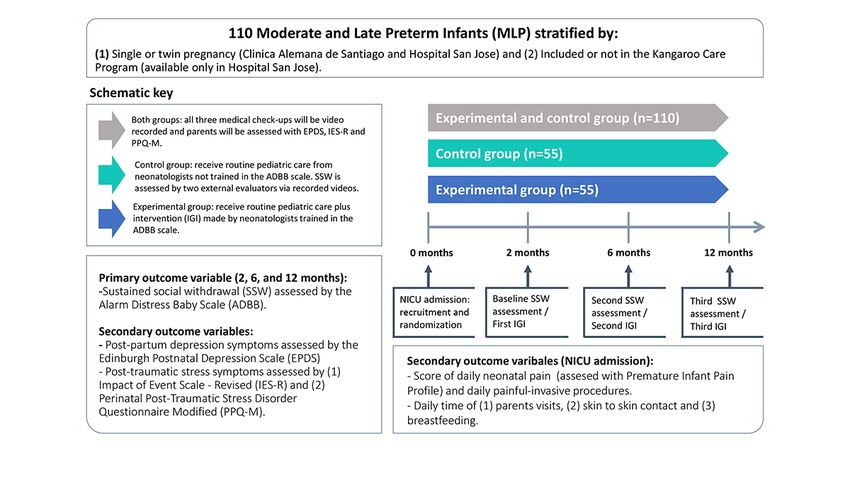
JMIR RESEARCH PROTOCOLS                                                                                            Bustamante Loyola et al

     parents will fill out the Edinburgh Postnatal Depression Scale, the modified Perinatal Posttraumatic Stress Disorder Questionnaire,
     and the Impact of Event Scale–revised.
     Results: Recruitment for this trial started in September 2017. As of May 2020, we have completed enrollment (N=110 infants
     born moderately or late preterm). We aim to publish the results by mid-2021.
     Conclusions: This is the first randomized controlled trial with a sample of infants born moderately or late preterm infants who
     will attend pediatric follow-up consultations during their first year (corrected for gestational age at birth) with neonatologists
     trained in the Alarm Distress Baby Scale and who will receive this interactive guidance intervention. If successful, this early
     intervention will show significant potential to be implemented in both public and private health care, given its low cost of training
     staff and that the intervention takes place during routine pediatric follow-up.
     Trial Registration: ClinicalTrials.gov NCT03212547; https://clinicaltrials.gov/ct2/show/NCT03212547.
     International Registered Report Identifier (IRRID): DERR1-10.2196/17943

     (JMIR Res Protoc 2020;9(6):e17943) doi: 10.2196/17943

     KEYWORDS
     social withdrawal; preterm; early detection; interactive guidance; emotional stress; social development; postnatal depression;
     posttraumatic stress

                                                                           The Alarm Distress Baby Scale is a well-validated screening
     Introduction                                                          tool designed to assess sustained social withdrawal in infants
     Background                                                            between 2 and 24 months of age in primary care settings such
                                                                           as routine medical checkups or testing [21]. The infant can be
     In infants in the normal range of development, skills to engage       assessed during the interaction with the medical professional
     with caregivers such as initiating and maintaining eye contact,       which avoids putting pressure on the parents (because of their
     vocalizing, using facial expressions, and using body movements,       perception that it reflects their caregiving competence) [22].
     emerge during the first two months after birth [1,2]. The level
     of synchronization between infants and their caregivers and the       Preterm Infants and Mental Health Developmental
     capacity of caregivers to detect interactive errors and attune        Risk
     with the infant’s emotional state and interactive behaviors           Infants born preterm often spend their first days, weeks, or even
     appears to be critical for optimal psychological development in       months in a neonatal intensive care unit where they undergo
     the first 18 months of life [3].                                      numerous painful and invasive procedures [23] and can be
     Infants can display social withdrawal behaviors as a reaction to      submitted to various perinatal stresses. During this period, in
     minor transient perturbations when interacting with caregivers        which both the development and the life of the neonatal infant
     or when agitated or tired; however, infants are usually able to       can be at risk, the infants and their families must adapt to health
     reengage as soon as they regain the full attention of the             care unit protocols with respect to visits and care. In addition,
     caregivers [4-6]. In contrast with this adaptive social withdrawal    the mental health of the parents may be affected increasing the
     behavior, sustained social withdrawal is significantly less           risk of posttraumatic stress and postpartum depression [24].
     common and reflects a sustained decrease in engagement during         Several studies have shown that the prevalence of
     interactions and a sustained decrease in reactivity to the            psychopathologies appeared to be significantly higher in infants
     environment [7,8]. Sustained social withdrawal can be assessed        born preterm than in infants born full term. So far, most studies
     by the Alarm Distress Baby Scale [9] and is defined by a score        have focused on infants born very prematurely and have shown
     of 5 or higher. Persistent (both repetitive and accumulated)          high prevalence of autistic spectrum disorders [25],
     sustained social withdrawal has been shown to be a risk factor        attention-deficit and hyperactivity disorders [26], attachment
     for altered emotional development in infants [10].                    disorders [13], emotional problems [27], and social withdrawal
     Sustained social withdrawal has typically been associated with        behavior [28] and growing recognition of behavioral problems
     severe pathological conditions in infancy such as posttraumatic       [29], lower socioemotional competence [30], and developmental
     stress disorder [4], autism spectrum disorders [11], and child        delay [31] relative to prevalence of these in infants born
     depression [12]. Infants demonstrating sustained social               moderately and late preterm. Furthermore, associations between
     withdrawal have a higher risk of developing attachment                late preterm birth and poor socioeconomic outcomes in
     disorders [13], emotional or behavioral disorders [14], motor         adulthood [32] and late preterm birth and poor neurocognitive
     and language delays [15], and altered interactive skills [10,16].     functioning in late adulthood [33] have been described.
     Sustained social withdrawal has also been linked with medical         In their first year (corrected for gestational age), infants born
     conditions such as intrauterine growth retardation, preterm birth     preterm have a higher probability of developing sustained social
     [17], early cardiac surgery [18], Prader-Willi syndrome [19],         withdrawal (adjusted odds ratio 1.84, 95% CI 1.04-3.26) when
     and cleft lip and palate [20], as well as factors in family medical   compared to that of infants born full term [17] (prevalence was
     history such as both parents having mental health problems [2].       22.1% and 13.9% for infants born preterm and born full term,
     Sustained social withdrawal has proven to be an important             respectively). Other studies have found prevalences of sustained
     indicator of infant distress regardless of the cause [10].
     http://www.researchprotocols.org/2020/6/e17943/                                                   JMIR Res Protoc 2020 | vol. 9 | iss. 6 | e17943 | p. 2
                                                                                                                 (page number not for citation purposes)
XSL• FO
RenderX
JMIR RESEARCH PROTOCOLS Bustamante Loyola et al
social withdrawal that vary from 11.3% to 22.1% for infants the time of birth and full term (40 weeks of gestation) is
born preterm [6,13,17,34]. subtracted from the infant’s chronological age. In addition, the
intervention group will receive the interactive guidance
Chilean Preterm Infants: Early Detection and intervention, performed by Alarm Distress Baby Scale–trained
Intervention neonatologists, if the neonatologists detect sustained social
In Chile, preterm birth rates have been increasing over the last withdrawal (a score of 5 or higher in the Alarm Distress Baby
decade. In 2016, 8.3% of live births were preterm (gestational Scale) during the routine medical checkups. The interactive
age less than 37 weeks) [35]. Neonatal medical care is provided guidance intervention will follow a standardized protocol
for these infants (if needed) by a national network of 29 neonatal designed by the research team before the start of the recruitment.
intensive care units, and follow-up care is provided by The control group will not receive the interactive guidance
interdisciplinary teams in 35 preterm polyclinics. Within the intervention during the first 12 months; however, if any infant
public health system in Chile, all preterm infants are assessed in the study receives a score of 5 or higher on the Alarm Distress
with the Psychomotor Development Assessment Scale [36] Baby Scale at the 12-month checkup, they will be offered further
between the ages of 0 and 2 years. assessment and intervention.
Since intervention becomes more challenging as problems in Inclusion Criteria
infancy grow more complex or more severe [37], assessing the Only preterm infants born from single or twin pregnancy
effectiveness of early sustained social withdrawal detection in (monochorionic or dichorionic), born between 32 weeks 0 days
preterm infants (using the Alarm Distress Baby Scale) as a and 36 weeks 6 days gestation (as determined by neonatologist),
precursor to early intervention appears to be an interesting goal. hospitalized within the first 48 hours after birth, and remaining
The Alarm Distress Baby Scale [9] can be used as early as two at least 48 hours in the neonatal intensive care unit were eligible
months of age (corrected age in the case of infants born preterm) to participate in this study. Parents of the infants were required
and has demonstrated acceptable levels of specificity and to be Spanish speaking and have stable living arrangements to
sensitivity in several studies (reported in a review study) [10]. ensure the effectiveness of the interactive guidance intervention
In a study with full-term infants, Bonifacino et al [38,39] (carried out by Spanish-speaking neonatologists). Parents of
described a significant difference in sustained social withdrawal infants born preterm were recruited from two neonatal intensive
in the infants who were followed by Alarm Distress Baby care units—Clinica Alemana de Santiago and Hospital San
Scale–trained pediatricians compared to sustained social Jose—by a principal investigator or co-investigator of the study
withdrawal in infants who attended routine pediatric follow-up or by the neonatal study coordinator. Clinica Alemana de
care. Facchini et al [40] investigated the feasibility of a feedback Santiago is a private health center located in a district of
guidance intervention performed by Alarm Distress Baby Santiago, Chile with a poverty rate of 0.1% whereas Hospital
Scale–trained pediatricians on infants born full term at public San Jose is a public health center located in a district of
well-baby clinics in Italy, and they concluded that these Santiago, Chile with a poverty rate of 8.2% [42,43]. At
interventions are easily implemented and accepted by patients enrollment, socioeconomic variables were recorded using a
and their families; however, to the best of our knowledge, there socioeconomic survey, and pregnancy and postpartum variables
are no reports regarding the effect of an interactive guidance were recorded using a perinatal background questionnaire.
intervention performed by Alarm Distress Baby Scale–trained
Exclusion Criteria
neonatologists on infants born moderately or late preterm during
their first twelve months (corrected age). Infants were not eligible for participation in this study if their
mother had history of or confirmed exposure to cocaine,
The main objective of this study is to compare the effect of an marijuana, or other illicit mind-altering substances during
interactive guidance intervention on sustained social withdrawal pregnancy; if the infant had a neurological disease that impairs
scores in infants born moderately or late preterm compared to development that was confirmed at birth; if the infant had major
those of infants born moderately or late preterm in routine congenital malformations, suspected or confirmed genetic
pediatric care. disorders; and if perinatal asphyxia occurred at birth (defined
as an Apgar score less than 3 at 1 minute or an Apgar score less
Methods than 5 at 5 minutes, or cord pH less than 7.0 at birth).
Study Design Protocol
The study is designed as a randomized controlled trial For this study, in 2017, Bonifacino et al [38] conducted Alarm
(NCT03212547), in order to remove bias in treatment allocation Distress Baby Scale training in Chile over 4 days which
and the effect of possible confounding variables [41]. Chilean consisted of 30 hours and 12 training modules. The program
infants who were born moderately preterm or late preterm (up featured 2 central theoretical modules which covered early
to N=110) and their parents will be included and randomized interactions and emotional development, emotional deprivation
in a 1:1 allocation ratio to an intervention group (up to n=55) and its consequences, social withdrawal behaviors as an early
and a control group (up to n=55). Both groups will receive alarm sign, and the Alarm Distress Baby Scale fundamentals.
routine pediatric care at medical checkups at 2, 6, and 12 months Subsequently, 10 modules of video training were presented
of age. All ages used in this study refer to corrected age. To featuring material with infants between 2 and 24 months of age.
calculate corrected age, the difference in weeks of gestation at These infants had attended medical checkups with Alarm
http://www.researchprotocols.org/2020/6/e17943/ JMIR Res Protoc 2020 | vol. 9 | iss. 6 | e17943 | p. 3
(page number not for citation purposes)
XSL• FO
RenderXJMIR RESEARCH PROTOCOLS Bustamante Loyola et al
Distress Baby Scale–trained and untrained pediatricians. 25.0; IBM Corp), stratified by hospital center (Clinica Alemana
Following the videos, there was an exam to certify the de Santiago or Hospital San Jose) in blocks of four. Also, infants
professionals in the use of the Alarm Distress Baby Scale. Fleiss will be stratified into two groups, single or twin pregnancy, in
kappa was used to determine if there was agreement between order to isolate the intervention effect from that of other
the 11 evaluators regarding diagnosis (normal behavior or covariables (such as mother of twins learning). The Hospital
sustained social withdrawal). There was a substantial agreement San Jose sample will also be stratified into two groups, whether
[44] between evaluators (κ=0.794, 95% CI 0.676-0.913; P .001). the infant is included or is not included in the Kangaroo Care
Individual kappa values for normal and sustained social program, since only Hospital San Jose currently offers this
withdrawal categories were κ=0.795 and κ=0.794, respectively. program that aims to promote mother infant bonding, and which
could potentially act as a confounding variable.
One fundamental element of the training was that the
professionals learned not only to detect the sustained social As shown in Figure 1, all infants will receive routine pediatric
withdrawal behaviors (and to score these behaviors using the care during the medical checkups at 2, 6, and 12 months of age,
Alarm Distress Baby Scale), but also to meaningfully show the but in addition, infants in the intervention group will also receive
parents how—in terms of communication or contact—their the interactive guidance intervention if the Alarm Distress Baby
infants seek interaction, with the objective of reducing sustained Scale–trained neonatologists detect sustained social withdrawal
social withdrawal behaviors. during these medical checkups. All medical checkups will be
video-recorded, and the videos will be assessed by external
Participants of the study will be recruited during their admission
Alarm Distress Baby Scale–trained evaluators, and at every
to the neonatal intensive care units by members of the researcher
medical checkup, parents will fill out the Edinburgh Postnatal
team and enrolled and randomized by a study coordinator to
Depression Scale, the modified Perinatal Posttraumatic Stress
either the intervention or the control group. The infant will be
Disorder Questionnaire, and the Impact of Event Scale–revised.
randomized in a 1:1 allocation using SPSS Statistics (version
Figure 1. Interactive Guidance Intervention plan for infants born moderately or late preterm with primary and secondary outcome variables recorded
during NICU admission and during medical checkups at 2, 6, and 12 months of corrected age. ADBB: Alarm Distress Baby scale; EPDS: Edinburgh
Postnatal Depression scale; IES-R: Impact of Event scale–revised; IGI: Interactive Guidance Intervention; NICU: neonatal intensive care; PPQ-M:
modified Perinatal Posttraumatic Stress Disorder Questionnaire; SSW: sustained social withdrawal.
Care Providers
Blinding
Neonatologists who care for participants during the trial will
Participants be aware of whether the infant is in the intervention or control
The families of the infants born moderately or late preterm, group. The Alarm Distress Baby Scale–trained neonatologists
randomly assigned to intervention or control group, will remain will only perform follow-up for the intervention group, and
blind to which group they belong. Families will receive feedback neonatologists who provide routine pediatric care will only
on their infant’s Alarm Distress Baby Scale score by telephone perform follow-up for the control group.
after the final assessment at the 12-month medical checkup and
will be offered further assessment and intervention, if needed.
http://www.researchprotocols.org/2020/6/e17943/ JMIR Res Protoc 2020 | vol. 9 | iss. 6 | e17943 | p. 4
(page number not for citation purposes)
XSL• FO
RenderXJMIR RESEARCH PROTOCOLS Bustamante Loyola et al
Investigator 5 or more indicates sustained social withdrawal behavior. The
The principal investigator (JBL) will also be an external assessment can be done during routine pediatric checkup by a
evaluator. Though, an Alarm Distress Baby Scale–trained trained professional, or by assessment of an 8 to 12-minute
psychologist, JBL will not participate in the follow-up of any video of recorded infant behavior during a pediatric checkup.
of the infants and will be blind to the Alarm Distress Baby Scale Edinburgh Postnatal Depression Scale [45] reliably (Cronbach
scores of the Alarm Distress Baby Scale–trained neonatologists. α=.77) assesses the probability of postnatal depression in
Scores will be entered into the database by an independent agent women. It consists of 10 questions with 4 possible answers for
who is blind to the group category. each. Each answer is given a score of 0, 1, 2, or 3 according to
the severity of the symptom. The maximum score is 30. A total
Outcome Assessment
score of 12 or higher suggests the presence of a postnatal
The Alarm Distress Baby Scale–trained neonatologists will be depression disorder. The Edinburgh Postnatal Depression Scale
blind to the Alarm Distress Baby Scale scores of the external can be administered from 2 months onward, after delivery.
evaluators and to those of the other Alarm Distress Baby
Scale–trained neonatologists. Once they record an Alarm Impact of Event Scale–revised [46] reliably (Cronbach α=.98)
Distress Baby Scale score, this data will be collected by a study assesses symptoms associated with posttraumatic stress disorder.
coordinator, who is blind to the group category. It is composed of 22 items and three subscales: intrusion,
avoidance, and hyperactivation. It employs a 5-point Likert
Data Collection Assessors scale from 0 (not at all) to 4 (extremely), to assess the intensity
Data collection assessors will collect all study data (all variables) of the symptoms. The Impact of Event Scale–revised can be
and upload the data into the database. They were not trained in applied from six weeks onward, after the occurrence of a
the Alarm Distress Baby Scale, are blind to the group category, stressful or traumatic event. Scores higher than 24 indicate
and do not have contact with the infants or their families. significant clinical relevance.
Sample Size Modified Perinatal Posttraumatic Stress Disorder Questionnaire
We used the G*Power 3 software (Psychonomic Society Inc) [47] reliably (Cronbach α=.90) assesses posttraumatic stress
to determine the minimum sample size required for obtaining symptoms in parents including intrusiveness or reexperiencing,
a significant medium effect size (an effect size of 0.25), given avoidance behaviors and hyperarousal, or numbing of
α=.05 and a statistical power of 0.80 (β=.20), using the results responsiveness. It consists of 14 items, which are measured
presented in Bonifacino et al [37]. In Bonifacino et al’s study using a 5-point Likert scale from 0 to 4. Parents are instructed
[37], the dependent variable was assessed in 4 different stages, to provide responses that reflect their experience during the 4th
with 3 of them involving the total sample. Also, between the and 18th month after delivery. The total score can range from
second and third assessments, the control group received the 0 to 56. The clinical range for a high-risk parent is set at 19 or
intervention. Because of this, we considered the observed higher.
differences between the first and second assessments in order Premature Infant Pain Profile [48] is a reliable (Cohen κ≥0.85,
to compute our sample size (postintervention difference in consistently) 7-indicator composite measure developed to assess
prevalence of 57% for the control group and 13% for the acute pain in preterm and term neonates . The 7 indicators are
intervention group). The resulting sample size estimate was 23 gestational age, behavioral state, heart rate, oxygen saturation,
per group; however, in order to ensure a sufficient effect size brow bulge, eye squeeze, and nasolabial furrow. Each indicator
and taking attrition into consideration, a sample size of 55 is numerically scored using a 4-point Likert scale from 0 to 4,
infants per group will be used. and total scores can range from 0 to 21. Higher total scores
indicate greater pain. Premature Infant Pain Profile scores below
Assessment Instruments
6 means no pain, 6 or higher indicates pain, and 12 or higher
Alarm Distress Baby Scale [9] reliably (Cronbach α=.83) indicates moderate to severe pain.
assesses sustained social withdrawal behavior in infants from
2 to 24 months of corrected age during routine physical Intervention
examination. It consists of 8 items (lack of facial expression, As shown in Figure 2, this interactive guidance intervention
eye contact, general movement, self-stimulation gestures, consists of a brief, nonintrusive, behaviorally focused
vocalization, liveliness in response to any stimulation, ability intervention performed during medical checkup and which
to establish and maintain a relationship, and ability to attract follows a simple protocol that is based on the intervention
and catch the attention of others) each scored from 0 (normal proposed by Bonifacino et al [38].
behavior) to 4 (massively abnormal behavior). A total score of
http://www.researchprotocols.org/2020/6/e17943/ JMIR Res Protoc 2020 | vol. 9 | iss. 6 | e17943 | p. 5
(page number not for citation purposes)
XSL• FO
RenderXJMIR RESEARCH PROTOCOLS Bustamante Loyola et al
Figure 2. Summary of the steps of the interactive guidance intervention during medical checkup.
The main objective of this intervention is to reduce sustained Outcomes
social withdrawal behaviors in moderately and late preterm
infants by (1) detecting sustained social withdrawal behaviors Primary Outcome Measure
during medical checkup, (2) becoming attuned with the The primary outcome is sustained social withdrawal assessed
interaction rhythm of the infant, (3) meaningfully showing using the Alarm Distress Baby Scale. The Alarm Distress Baby
parents how their infant seeks to interact by pointing out specific Scale categorizes the level of sustained social withdrawal
interactive behaviors (every interaction skill displayed by the according to the sum of the score—scores from 0 to 4 indicate
infant), and ( 4) inviting parents to engage in the interaction. no sustained social withdrawal, scores from 5 to 9 indicate
moderate sustained social withdrawal, and scores equal to or
Infants born preterm have a higher probability of developing
higher than 10 indicate severe sustained social withdrawal.
sustained social withdrawal, and withdrawn infants show poor
Infants born moderately or late preterm will be assessed with
performance during interaction [17,49]; therefore, by facilitating
the Alarm Distress Baby Scale during medical checkups at 2,
parental understanding of the development of their infant, by
6, and 12 months of age.
involving them in the observation of and interaction with their
infant [50], and by reinforcing every seeking interactive behavior Secondary Outcome Measures
displayed by the infant during medical checkups, we can reduce The secondary outcomes measured during neonatal intensive
sustained social withdrawal in these infants. care unit admission are neonatal pain and daily duration of
In the intervention group, this interactive guidance intervention parental visits, skin-to-skin contact, and breastfeeding; and the
will be performed if the trained neonatologist detects sustained secondary outcomes measured after medical discharge are
social withdrawal during the 2, 6, and 12-month medical postpartum depression symptoms and posttraumatic stress
checkups. The interactive guidance intervention will be symptoms which will be assessed at the 2, 6, and 12-month
performed during the 20 to 30-minute medical checkup and will medical checkups. A socioeconomic survey, a substance-use
not require any extra time. The interactive guidance intervention survey, and a perinatal background questionnaire will be used
will be supplemented with a written guide for parents called to obtain additional information from the parents of the infants.
Early Interaction Guidelines. The objective of this written Statistical Analysis
guideline is to enhance the effect of interactive guidance
intervention. Two-tailed paired t tests will be used to compare covariates and
dependent variables from the infant groups. A one-way analysis
In the control group, infants will receive routine pediatric care. of covariance will be used to determine the effects of covariates
At the 2, 6, and 12-month medical checkups (also lasting 20 to (sociodemographic and neonatal intensive care unit
30 minutes), parents will be given a Development Stimulation hospitalization variables, postpartum depression, and
Guide which has been adapted from Ministry of Health of Chile posttraumatic stress) on the comparisons between groups
Guidelines for the Stimulation of Development [51,52]. (control and intervention) and between times (2, 6, and 12
If any infant in the study (in either the intervention or the control months of corrected age medical checkups) regarding the
group) shows sustained social withdrawal (a score or 5 or higher dependent variable (sustained social withdrawal). Other
on the Alarm Distress Baby Scale) at the 12-month medical statistical techniques such as matching, odds ratios, and logistic
checkup, they will be offered additional interventions by the regression will also be used.
researcher team. Ethics
The study was approved by the Comité Ético Científico de la
Facultad de Medicina (Scientific and Ethics Committee of the
http://www.researchprotocols.org/2020/6/e17943/ JMIR Res Protoc 2020 | vol. 9 | iss. 6 | e17943 | p. 6
(page number not for citation purposes)
XSL• FO
RenderXJMIR RESEARCH PROTOCOLS Bustamante Loyola et al
Faculty of Medicine), Universidad del Desarrollo (approval Baby Scale–trained professionals who use this interactive
record 2017-05) on April 25, 2017. The clinical trial was guidance intervention as a model to intervene for infants at risk.
registered at the United States National Institutes of Health
(clinicaltrials.gov; NCT03212547) and approved on July 7,
Study Limitations
2017. Informed oral and written consent were obtained from One of the limitations of this study is the possibility that the
the accompanying parent of each infant included in the study. parents of infants included in the intervention group will share
information with parents of infants included in the control group.
Results For this reason, twins are randomized together (both either in
the control or in the intervention group). Additionally, all parents
The clinical trial is ongoing. It was funded in December 2016, included in the study will be asked to refrain from sharing the
approved by institutional review board on April 25, 2017. Data written guides used in the study with others until the study is
collection started on September 19, 2017. As of May of 2020, finished.
enrollment has been completed (N=110 infants born moderately
Another limitation is the pain protocol established at each
or late preterm). We aim to publish the results by mid-2021.
institution. Clinica Alemana de Santiago has had a standardized
The data sets from this study will be available by request from
pain protocol since 2012 that includes administering the
the corresponding author, once results have been published.
Premature Infant Pain Profile every 3 hours while, in Hospital
San Jose, the standardized pain protocol does not include the
Discussion Premature Infant Pain Profile. Before the start of study
Summary recruitment, training was performed by nurses of Clinica
Alemana de Santiago in order to teach the midwives in Hospital
This project is a logical continuation of the work in Bonifacino San Jose how to administer the Premature Infant Pain Profile.
et al [38] and aims to contribute to the early detection of alarm At Hospital San Jose, this is only done for the infants included
signs in emotional development and early intervention to help in the study.
infants born moderately or late preterm. Neonatologists have a
central role to play in this regard, and based on the findings of Ethical Considerations
both Bonifacino et al [38] and Facchini et al [40], we The interactive guidance intervention does not involve any risk
hypothesize that implementing interactive guidance intervention to the participating infants and parents. The neonatologists will
will reduce sustained social withdrawal in infants born follow routine medical care protocols at medical checkups and
moderately or late preterm compared to those who receive will only perform the interactive guidance intervention (verbally)
routine care. Also, we hypothesize that this interactive guidance if they detect sustained social withdrawal. Currently, the
intervention will be easily implemented and accepted by patients neonatologists on the investigation team are the only follow-up
and their families. neonatologists trained in the Alarm Distress Baby Scale in Chile,
This is the first randomized controlled trial that will be so these infants will receive an evaluation and an intervention
performed with infants born moderately or late preterm at that is otherwise not currently available in either the public or
follow-up pediatric checkups. The implementation of an in the private health system. Finally, if any infant scores 5 or
interactive guidance intervention will allow Alarm Distress higher on the Alarm Distress Baby Scale at the 12-month
medical checkup (final assessment), they will be offered further
assessment and intervention.
Acknowledgments
This investigation is funded by the Grant Fund 2016 of Clinica Alemana de Santiago granted by their Academic and Scientific
Department. The Investigation and Clinical Trials Unit of Clinica Alemana de Santiago, which is a division of the Academic and
Scientific Department, supervises all clinical trials realized in Clinica Alemana de Santiago assuring compliance with the Good
Clinical Practices and the requirements of the Health Public Institute of Chile in accordance with their current Guide of Inspection
of Clinical and Pharmacological Studies. The funding body has not participated in the study design, data collection, data analysis,
interpretation of data, or in writing the manuscript.
The authors gratefully acknowledge the heads of the Investigation and Clinical Trials Unit of Clinica Alemana de Santiago, Pablo
Lavados and Maria Alicia Mordojovich, for supervising this PhD investigation. Also, Jorge Roque, Deputy Director of the Medical
Area of Clinica Alemana de Santiago, the former head of the neonatal intensive care unit of Clinica Alemana de Santiago, Marcial
Osorio and the head of the neonatal intensive care unit of Hospital San Jose, Agustina Gonzalez, and Paola Henriquez, the study
coordinator, for supporting the investigation. We want to acknowledge the Spain Association for Infant Mental Health Since
Gestation and the Doctoral Programme in Clinical and Health Psychology of University of Valencia for their supervision and
support. Thank you to the nurse and midwife staff at Clinica Alemana de Santiago and Hospital San Jose neonatal intensive care
units. We also like to thank our collaborative partners doing the data collection: Katherine Rossel, Emilia Rey, Juan Carlos Muñoz,
Patricia Vernal, Ximena Solivelles, Andrea Hoces, Francisca Cortes, Maria Paz Aguilera, and Daniela Galleguillos. Without their
efforts, the study would not have been possible.
http://www.researchprotocols.org/2020/6/e17943/ JMIR Res Protoc 2020 | vol. 9 | iss. 6 | e17943 | p. 7
(page number not for citation purposes)
XSL• FO
RenderXJMIR RESEARCH PROTOCOLS Bustamante Loyola et al
Authors' Contributions
JBL conceived and designed the study, drafted the manuscript, and coordinated the Clinica Alemana de Santiago and Hospital
San Jose research teams. MPR participated in the study design, provided critical review, and coordinated the Clinica Alemana
de Santiago research team. AG, PPS, and SS participated in the study design and provided critical review. MMN coordinated
Hospital San Jose research team and provided critical review. HC, JGM, LM, and LL provided critical review. AM and RSG
participated in the manuscript and provided critical review. AMS planned the statistical analysis and provided critical review.
All authors read and approved the final manuscript.
Conflicts of Interest
This study is funded by the Academic and Scientific Department of Clinica Alemana de Santiago, and the study protocol has
undergone peer review by the funding body. Clinica Alemana de Santiago is part of a nonprofit Chilean-German charity corporation
and adheres to the Good Clinical Practices and the requirements of the Instituto de Salud Pública de Chile (Public Health Institute
of Chile) in accordance with their current Guide of Inspection of Clinical and Pharmacological Studies.
References
1. Trevarthen C, Aitken KJ. Infant intersubjectivity: research, theory, and clinical applications. J Child Psychol Psychiatry
2001 Jan;42(1):3-48. [Medline: 11205623]
2. Mäntymaa M, Puura K, Luoma I, Kaukonen P, Salmelin RK, Tamminen T. Infants' social withdrawal and parents' mental
health. Infant Behav Dev 2008 Dec;31(4):606-613. [doi: 10.1016/j.infbeh.2008.07.005] [Medline: 18774609]
3. Feldman R. Parent-infant synchrony and the construction of shared timing; physiological precursors, developmental
outcomes, and risk conditions. J Child Psychol Psychiatry 2007;48(3-4):329-354. [doi: 10.1111/j.1469-7610.2006.01701.x]
[Medline: 17355401]
4. Guedeney A. From early withdrawal reaction to infant depression: a baby alone does exist. Infant Ment Health J 1997 Dec
6;18(4):339-349. [doi: 10.1002/(sici)1097-0355(199724)18:43.0.co;2-g]
5. Tronick E. The Neurobehavioral and Social-Emotional Development of Infants and Children. 1st ed. New York: W. W.
Norton & Co; 2007:978.
6. Braarud HC, Slinning K, Moe V, Smith L, Vannebo UT, Guedeney A, et al. Relation between social withdrawal symptoms
in full-term and premature infants and depressive symptoms in mothers: a longitudinal study. Infant Ment. Health J 2013
Oct 17;34(6):532-541. [doi: 10.1002/imhj.21414]
7. Dollberg D, Feldman R, Keren M, Guedeney A. Sustained withdrawal behavior in clinic-referred and nonreferred infants.
Infant Ment Health J 2006 May;27(3):292-309. [doi: 10.1002/imhj.20093] [Medline: 28640475]
8. Matthey S, Črnčec R, Hales A, Guedeney A. A description of the modified alarm distress baby scale (m-adbb): an instrument
to assess for infant social withdrawal. Infant Ment Health J 2013 Oct 07;34(6):602-609. [doi: 10.1002/imhj.21407]
9. Guedeney A, Fermanian J. A validity and reliability study of assessment and screening for sustained withdrawal reaction
in infancy: The Alarm Distress Baby scale. Infant Ment. Health J 2001 Sep;22(5):559-575. [doi: 10.1002/imhj.1018]
10. Guedeney A, Matthey S, Puura K. Social withdrawal behavior in infancy: a history of the concept and a review of published
studies using the alarm distress baby scale. Infant Ment Health J 2013 Oct 11;34(6):516-531. [doi: 10.1002/imhj.21412]
11. Wendland J, Gautier AC, Wolff M, Brisson J. Devenir. Retrait relationnel et signes précoces d'autisme: étude préliminaire
à partir de films familiaux 2010 Jan 01;22(1):72. [doi: 10.3917/dev.101.0051]
12. Guedeney A. Withdrawal behavior and depression in infancy. Infant Ment Health J 2007 Jul;28(4):393-408. [doi:
10.1002/imhj.20143]
13. Cambonie G, Muller J, Ehlinger V, Roy J, Guédeney A, Lebeaux C, OLIMPE study writing group. Mother-infant interaction
assessment at discharge and at 6 months in a French cohort of infants born very preterm: The OLIMPE study. PLoS One
2017;12(12):e0188942 [FREE Full text] [doi: 10.1371/journal.pone.0188942] [Medline: 29216238]
14. Guedeney A, Pingault J, Thorr A, Larroque B, EDEN Mother-Child Cohort Study Group. Social withdrawal at 1 year is
associated with emotional and behavioural problems at 3 and 5 years: the Eden mother-child cohort study. Eur Child Adolesc
Psychiatry 2014 Dec;23(12):1181-1188. [doi: 10.1007/s00787-013-0513-8] [Medline: 24464247]
15. Guedeney A, Forhan A, Larroque B, de Agostini M, Pingault J, Heude B, EDEN mother-child cohort study group. Social
withdrawal behaviour at one year of age is associated with delays in reaching language milestones in the EDEN mother-child
cohort study. PLoS One 2016;11(7):e0158426 [FREE Full text] [doi: 10.1371/journal.pone.0158426] [Medline: 27391482]
16. Puura K, Guedeney A, Mäntymaa M, Tamminen T. Detecting infants in need: are complicated measures really necessary?
Infant Ment Health J 2007 Jul;28(4):409-421. [doi: 10.1002/imhj.20144] [Medline: 28640405]
17. Guedeney A, Marchand-Martin L, Cote SJ, Larroque B, EDEN Mother-Child Cohort Study Group. Perinatal risk factors
and social withdrawal behaviour. Eur Child Adolesc Psychiatry 2012 Apr;21(4):185-191. [doi: 10.1007/s00787-012-0250-4]
[Medline: 22350103]
18. Re JM, Dean S, Mullaert J, Guedeney A, Menahem S. Maternal distress and infant social withdrawal (ADBB) following
infant cardiac surgery for congenital heart disease. World J Pediatr Congenit Heart Surg 2018 Nov;9(6):624-637. [doi:
10.1177/2150135118788788] [Medline: 30322360]
http://www.researchprotocols.org/2020/6/e17943/ JMIR Res Protoc 2020 | vol. 9 | iss. 6 | e17943 | p. 8
(page number not for citation purposes)
XSL• FO
RenderXJMIR RESEARCH PROTOCOLS Bustamante Loyola et al
19. Tauber M, Boulanouar K, Diene G, Çabal-Berthoumieu S, Ehlinger V, Fichaux-Bourin P, et al. The use of oxytocin to
improve feeding and social skills in infants with Prader-Willi syndrome. Pediatrics 2017 Feb;139(2) [FREE Full text] [doi:
10.1542/peds.2016-2976] [Medline: 28100688]
20. Martínez CP, Béal E, Grollemund B. Le retrait relationnel chez les enfants porteurs d'une fente labio-palatine et l'impact
sur les parents.Une revue de la littérature et un protocole de recherche clinique. Devenir 2015 Dec 01;27(4):269. [doi:
10.3917/dev.154.0269]
21. Smith-Nielsen J, Lønfeldt N, Guedeney A, Væver MS. Implementation of the Alarm Distress Baby Scale as a universal
screening instrument in primary care: feasibility, acceptability, and predictors of professionals' adherence to guidelines. Int
J Nurs Stud 2018 Mar;79:104-113. [doi: 10.1016/j.ijnurstu.2017.11.005] [Medline: 29223624]
22. Matthey S, Guedeney A, Starakis N, Barnett B. Assessing the social behavior of infants: use of the ADBB Scale and
relationship to mother's mood. Infant Ment Health J 2005 Sep;26(5):442-458. [doi: 10.1002/imhj.20061] [Medline: 28682495]
23. Guo W, Liu X, Zhou X, Wu T, Sun J. Efficacy and safety of combined nonpharmacological interventions for repeated
procedural pain in preterm neonates: A systematic review of randomized controlled trials. Int J Nurs Stud 2020
Feb;102:103471. [doi: 10.1016/j.ijnurstu.2019.103471] [Medline: 31783193]
24. Winter L, Colditz PB, Sanders MR, Boyd RN, Pritchard M, Gray PH, et al. Depression, posttraumatic stress and relationship
distress in parents of very preterm infants. Arch Womens Ment Health 2018 Aug;21(4):445-451. [doi:
10.1007/s00737-018-0821-6] [Medline: 29502280]
25. Agrawal S, Rao SC, Bulsara MK, Patole SK. Prevalence of autism spectrum disorder in preterm infants: a meta-analysis.
Pediatrics 2018 Sep;142(3) [FREE Full text] [doi: 10.1542/peds.2018-0134] [Medline: 30076190]
26. Franz AP, Bolat GU, Bolat H, Matijasevich A, Santos IS, Silveira RC, et al. Attention-deficit/hyperactivity disorder and
very preterm/very low birth weight: a meta-analysis. Pediatrics 2018 Jan;141(1) [FREE Full text] [doi:
10.1542/peds.2017-1645] [Medline: 29255083]
27. Leon Hernandez A. The impact of prematurity on social and emotional development. Clin Perinatol 2018 Sep;45(3):547-555.
[doi: 10.1016/j.clp.2018.05.010] [Medline: 30144854]
28. Ritchie K, Bora S, Woodward LJ. Social development of children born very preterm: a systematic review. Dev Med Child
Neurol 2015 Oct;57(10):899-918 [FREE Full text] [doi: 10.1111/dmcn.12783] [Medline: 25914112]
29. Potijk MR, de Winter AF, Bos AF, Kerstjens JM, Reijneveld SA. Co-occurrence of developmental and behavioural problems
in moderate to late preterm-born children. Arch Dis Child 2016 Mar;101(3):217-222. [doi: 10.1136/archdischild-2015-308958]
[Medline: 26471109]
30. Cheong JL, Doyle LW, Burnett AC, Lee KJ, Walsh JM, Potter CR, et al. Association between moderate and late preterm
birth and neurodevelopment and social-emotional development at age 2 years. JAMA Pediatr 2017 Apr 03;171(4):e164805.
[doi: 10.1001/jamapediatrics.2016.4805] [Medline: 28152144]
31. Schonhaut L, Armijo I, Pérez M. Gestational age and developmental risk in moderately and late preterm and early term
infants. Pediatrics 2015 Apr;135(4):e835-e841 [FREE Full text] [doi: 10.1542/peds.2014-1957] [Medline: 25733752]
32. Bilsteen JF, Taylor-Robinson D, Børch K, Strandberg-Larsen K, Nybo Andersen A. Gestational age and socioeconomic
achievements in young adulthood: a Danish population-based study. JAMA Netw Open 2018 Dec 07;1(8):e186085 [FREE
Full text] [doi: 10.1001/jamanetworkopen.2018.6085] [Medline: 30646301]
33. Heinonen K, Eriksson JG, Lahti J, Kajantie E, Pesonen A, Tuovinen S, et al. Late preterm birth and neurocognitive
performance in late adulthood: a birth cohort study. Pediatrics 2015 Apr;135(4):e818-e825. [doi: 10.1542/peds.2014-3556]
[Medline: 25733746]
34. Moe V, Braarud HC, Wentzel-Larsen T, Slinning K, Vannebo UT, Guedeney A, et al. Precursors of social emotional
functioning among full-term and preterm infants at 12 months: early infant withdrawal behavior and symptoms of maternal
depression. Infant Behav Dev 2016 Aug;44:159-168. [doi: 10.1016/j.infbeh.2016.06.012] [Medline: 27429050]
35. Departamento de Estadísticas e Información de Salud, Ministerio de Salud. https://deis.cl/. 2016 Oct 24. Anuario de
estadísticas vitales 2014 URL: http://www.deis.cl/estadisticas-de-natalidad-y-mortalidad/ [accessed 2018-11-19]
36. Rodríguez S, Arancibia V, Undurraga C. Escala de evaluación del desarrollo psicomotor de 0-24 meses. Santiago: Galdoc;
1996:978-956.
37. Schonkoff J, Phillips D. From Neurons to Neighborhoods: The Science of Early Childhood Development. Washington
(DC): National Academies Press (US); Nov 01, 2000:978.
38. Bonifacino N, Plevak A, Musetti D, Silveira A. Retraimiento sostenido: Un indicador de riesgo en el desarrollo temprano.
Arch Pediatría Urug 2014 Apr 29;85(1):42 [FREE Full text]
39. Nahir B, Sandra S, Antoine G, Marina A. Programa de formación a profesionales de la salud en detección de retraimiento
infantil y promoción de la interacción temprana durante la visita pediátrica para la reducción de riesgo en el desarrollo
Internet Doctoral. In: roderic.uv.es. Valencia: Universitat de Valencia; Dec 01, 2019.
40. Facchini S, Martin V, Downing G. Pediatricians, well-baby visits, and video intervention therapy: feasibility of a
video-feedback infant mental health support intervention in a pediatric primary health care setting. Front Psychol 2016;7:179
[FREE Full text] [doi: 10.3389/fpsyg.2016.00179] [Medline: 26909063]
http://www.researchprotocols.org/2020/6/e17943/ JMIR Res Protoc 2020 | vol. 9 | iss. 6 | e17943 | p. 9
(page number not for citation purposes)
XSL• FO
RenderXJMIR RESEARCH PROTOCOLS Bustamante Loyola et al
41. Facchini S, Martin V, Downing G. Pediatricians, well-baby visits, and video intervention therapy: feasibility of a
video-feedback infant mental health support intervention in a pediatric primary health care setting. Front Psychol 2016;7:179
[FREE Full text] [doi: 10.3389/fpsyg.2016.00179] [Medline: 26909063]
42. Observatorio Social, Ministerio de Desarrollo Social y Familia. http://observatorio.ministeriodesarrollosocial.gob.cl/. 2014
Feb 07. Reporte Comunal: Vitacura, Región Metropolitana URL: http://observatorio.ministeriodesarrollosocial.gob.cl/
indicadores/pdf/comunal_general/metropolitana/Vitacura_2013.pdf [accessed 2018-11-19]
43. Observatorio Social, Ministerio de Desarrollo Social y Familia. http://observatorio.ministeriodesarrollosocial.gob.cl/. 2014
Feb 07. Reporte Comunal: Independencia, Región Metropolitana URL: http://observatorio.ministeriodesarrollosocial.gob.cl/
indicadores/pdf/comunal_general/metropolitana/Independencia_2013.pdf [accessed 2018-11-19]
44. Landis JR, Koch GG. An application of hierarchical kappa-type statistics in the assessment of majority agreement among
multiple observers. Biometrics 1977 Jun;33(2):363-374. [Medline: 884196]
45. Jadresic E, Araya R, Jara C. Validation of the Edinburgh Postnatal Depression Scale (EPDS) in Chilean postpartum women.
J Psychosom Obstet Gynaecol 1995 Dec;16(4):187-191. [doi: 10.3109/01674829509024468] [Medline: 8748993]
46. Caamaño WL, Fuentes MD, González BL, Melipillán AR, Sepúlveda CM, Valenzuela GE. [Assessment of the impact of
event scale revised for post traumatic stress disorder in Chilean subjects]. Rev Med Chil 2011 Sep;139(9):1163-1168 [FREE
Full text] [Medline: 22215395]
47. Callahan JL, Borja SE, Hynan MT. Modification of the Perinatal PTSD Questionnaire to enhance clinical utility. J Perinatol
2006 Sep;26(9):533-539. [doi: 10.1038/sj.jp.7211562] [Medline: 16826190]
48. Stevens B, Johnston C, Petryshen P, Taddio A. Premature Infant Pain Profile: development and initial validation. Clin J
Pain 1996 Mar;12(1):13-22. [doi: 10.1097/00002508-199603000-00004] [Medline: 8722730]
49. Costa R, Figueiredo B. Infants' behavioral and physiological profile and mother–infant interaction. Int J Behav Dev 2012
Feb 29;36(3):205-214. [doi: 10.1177/0165025411428248]
50. Sameroff A, McDonough S, Rosenblum K, editors. Treating parent-infant relationship problem strategies for intervention.
New York: Guilford Press; Jan 01, 2004:978-971.
51. Ministerio de Salud, Gobierno de Chile. https://diprece.minsal.cl/. 2004. Normas técnicas estimulación y evaluación del
desarrollo psicomotor del niño y la niña menor de 6 años URL: https://diprece.minsal.cl/wrdprss_minsal/wp-content/uploads/
2015/10/2004_Normas_tecnicas_estimulacion_y_evaluacion_desarrollo.pdf [accessed 2018-11-19]
52. Chile Crece Contigo. http://www.crececontigo.gob.cl/. 2015. Pauta breve de desarrollo psicomotor URL: http://www.
crececontigo.gob.cl/wp-content/uploads/2015/11/Pauta-Breve-de-Desarrollo-Psicomotor.pdf [accessed 2018-11-19]
Edited by G Eysenbach; submitted 03.02.20; peer-reviewed by S Savelon, I D’Apremontt; comments to author 25.02.20; revised
version received 21.05.20; accepted 27.05.20; published 26.06.20
Please cite as:
Bustamante Loyola J, Perez Retamal M, Morgues Nudman MI, Maturana A, Salinas Gonzalez R, Cox H, González Mas JM, Muñoz
L, Lopez L, Mendiburo-Seguel A, Simó S, Palau Subiela P, Guedeney A
Interactive Guidance Intervention to Address Sustained Social Withdrawal in Preterm Infants in Chile: Protocol for a Randomized
Controlled Trial
JMIR Res Protoc 2020;9(6):e17943
URL: http://www.researchprotocols.org/2020/6/e17943/
doi: 10.2196/17943
PMID: 32589156
©Jorge Bustamante Loyola, Marcela Perez Retamal, Monica Isabel Morgues Nudman, Andres Maturana, Ricardo Salinas
Gonzalez, Horacio Cox, José Miguel González Mas, Lucia Muñoz, Lilian Lopez, Andrés Mendiburo-Seguel, Sandra Simó,
Pascual Palau Subiela, Antoine Guedeney. Originally published in JMIR Research Protocols (http://www.researchprotocols.org),
26.06.2020. This is an open-access article distributed under the terms of the Creative Commons Attribution License
(https://creativecommons.org/licenses/by/4.0/), which permits unrestricted use, distribution, and reproduction in any medium,
provided the original work, first published in JMIR Research Protocols, is properly cited. The complete bibliographic information,
a link to the original publication on http://www.researchprotocols.org, as well as this copyright and license information must be
included.
http://www.researchprotocols.org/2020/6/e17943/ JMIR Res Protoc 2020 | vol. 9 | iss. 6 | e17943 | p. 10
(page number not for citation purposes)
XSL• FO
RenderXYou can also read


