Investigation into Milingimbi School - The Principal's Initiative - Public statement - ICAC NT
←
→
Page content transcription
If your browser does not render page correctly, please read the page content below

Investigation into
Milingimbi School –
The Principal’s
Initiative

Public statement
July 2021

Investigation Report into Milingimbi School |1
This publication is available at icac.nt.gov.au. It is available in other formats for the vision-impaired
upon request. Please advise of the format needed, for example large print or as an ASCII file.

© July 2021 – Copyright in this work is held by the Independent Commissioner Against Corruption.

Division 3 of the Copyright Act 1968 (Cth) recognises that limited further use of this material can
occur for the purposes of “fair dealing”, for example study, research or criticism, etc. However if
you wish to make use of this material other than as permitted by the Copyright Act, please write to
the Independent Commissioner Against Corruption:
Office of the Independent Commissioner Against Corruption (NT)
GPO Box 3750
DARWIN NT 0801

For general enquiries, email icac.nt@icac.nt.gov.au
For formal complaints or reports, call 1800 250 918 or email report.submission@icac.nt.gov.au.

Investigation Report into Milingimbi School |2
Contents
Glossary ......................................................................................................................................... 4
   Acronyms and abbreviations ....................................................................................................... 4
   Definitions ................................................................................................................................... 4
   Persons mentioned in this report ................................................................................................. 5
   Legislation ................................................................................................................................... 6
   ICAC jurisdiction and investigation methodology ......................................................................... 7
   Temporal jurisdiction ................................................................................................................... 8
   Summary of the notices and directions ........................................................................................ 9
   Procedural obligations ................................................................................................................. 9
      Privilege ................................................................................................................................... 9
      Rules of evidence and natural justice ....................................................................................... 9
      Standard of proof ................................................................................................................... 10
      Assessment of evidence ........................................................................................................ 10
Summary of the report .................................................................................................................. 11
Timeline of events ......................................................................................................................... 15
Factual findings ............................................................................................................................. 16
   Background ............................................................................................................................... 16
   Student Administration Management System (SAMS) ............................................................... 16
   Effective enrolment .................................................................................................................... 17
   The principal.............................................................................................................................. 18
   MapApp ..................................................................................................................................... 21
   Enrolment and attendance manipulation ................................................................................... 22
   Milingimbi school council ........................................................................................................... 24
      School governance ................................................................................................................ 27
   Travel ........................................................................................................................................ 28
   Recruitment, employment and conflict of interest ...................................................................... 30
   Principal’s Initiative (PI) cost code ............................................................................................. 32
   School budgets.......................................................................................................................... 36
Response on behalf of Ms Sherrington to adverse material in draft report .................................... 38
Matters for DOE’s consideration ................................................................................................... 42
Findings of improper conduct ........................................................................................................ 44
Corruption prevention ................................................................................................................... 45
Recommendations ........................................................................................................................ 47
Appendix 1: Response by and on behalf on Jennifer Sherrington ................................................. 50

Investigation Report into Milingimbi School |3
Glossary Acronyms and abbreviations ALPA – Arnhem Land Progress Association COGSO – Council of Government Schools Organisation DLGHCD – Department of Local Government, Housing and Community Development DOE – Department of Education FTE – Full-time equivalent ICAC – Independent Commissioner Against Corruption ICAC Act – Independent Commissioner Against Corruption Act 2017 (NT) NT – Northern Territory NTG – Northern Territory Government OICAC – Office of the Independent Commissioner Against Corruption PI – Principal’s Initiative PID Act – Public Interest Disclosure Act 2008 RSAS – Remote School Attendance Strategy SAMS – Student Administration Management System SBM – School Business Manager TRIPS – Travel Request Information Processing System. Definitions Authorised officer – the Independent Commissioner Against Corruption or a person appointed as an authorised officer under section 131 of the ICAC Act Breach of public trust – pursuant to sections 10(3) and 13(1) of the ICAC Act Corrupt conduct – pursuant to section 10 of the ICAC Act Improper conduct – pursuant to section 9 of the ICAC Act Investigation report – a report issued under section 50 of the ICAC Act Independent Commissioner Against Corruption or ICAC – established by the ICAC Act Non-disclosure direction – a direction under section 147 of the ICAC Act Public officer – pursuant to section 16(2) of the ICAC Act Public resources – pursuant to section 14 of the ICAC Act Investigation Report into Milingimbi School |4
Persons mentioned in this report
Person A – passenger on charter flight
Person B – passenger on charter flight
Person C – member of Milingimbi School Council
Person D – passenger on charter flight
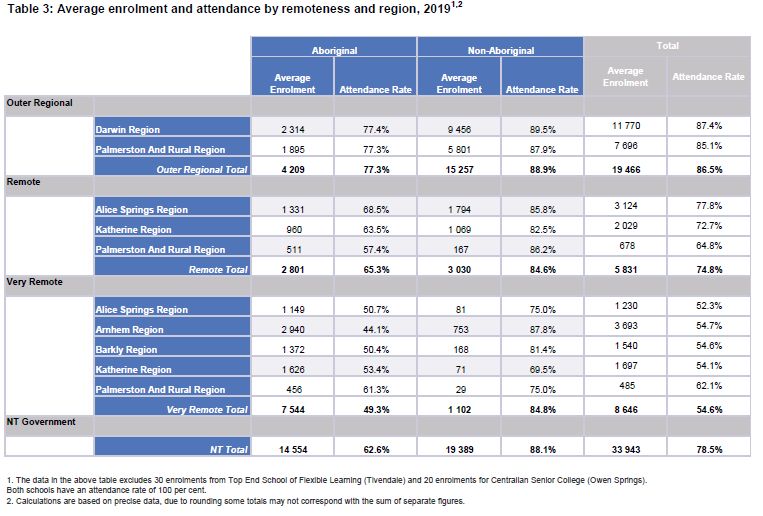
Person E – passenger on charter flight
Person F – Chair, Milingimbi School Council
Person G – passenger on charter flight
Person H – passenger on charger flight
Person I – member of Milingimbi School Council
Person J – passenger on charter flight
Assistant Principal, Milingimbi School
The Honourable Eva LAWLER MLA – former Education Minister
Mr Bryn MCCULLOCH – son of Ms Sherrington and Mr Ian McCulloch and IT Support Officer,
Milingimbi School
Mr Ian MCCULLOCH – partner of Ms Sherrington
Ms Madeleine MCCULLOCH – daughter of Ms Sherrington and Mr Ian McCulloch, Administration
Officer, Milingimbi School
Milingimbi school teacher
Mr Bill PIPER – Partner, Piper Ellis Lawyers, legal representative for Ms Jennifer Sherrington
Remote School Attendance Strategy Coordinator, Arnhem Land Progress Association,
Milingimbi
School business manager/bookkeeper
Ms Jennifer Lea SHERRINGTON – former Principal, Milingimbi School
Mr Liam SHERRINGTON – nephew of Ms Sherrington
Director, School Financial Improvement and Support, Department of Education

Investigation Report into Milingimbi School |5
Legislation
Independent Commissioner Against Corruption Act 2017 (NT)
Education Act 2015
Education Regulations 2015
Fair Work Act 2009
Financial Management Act 1995
Fiscal Transparency and Integrity Act 2001
Public Interest Disclosure Act 2008
Public Sector Employment and Management Act 1993 (PSEMA)
Procurement Act 1995
Procurement Regulations 1995
Treasurer’s Directions

Investigation Report into Milingimbi School |6
ICAC jurisdiction and investigation methodology
1. On 26 September 2019 a mandatory report was submitted to the Office of the Independent
Commissioner Against Corruption (OICAC).
2. The report alleged Ms Jennifer Sherrington, in her capacity as principal of Milingimbi School,
allowed Mr Liam Sherrington, her nephew, to occupy Northern Territory Government (NTG)
employee housing while he was not employed by the NTG.
3. Between 11 October 2019 and 9 November 2019, three anonymous reports were made to
OICAC in relation to alleged improper conduct by the principal of Milingimbi School. The
subject of these reports was similar in nature to the report received on 26 September 2019.
4. On 9 December 2019 OICAC received another report about Ms Sherrington. Allegations
included:
nepotism in respect of recruitment, pay levels, use of vehicles and housing
inaccurate student attendance rolls
improper use of charter flights
unrecorded leave by numerous staff members.
5. On 12 December 2019 a further report was received by OICAC. Allegations included:
frequency with which the Principal attributed absence to illness
nepotism of the families of executive team members
the school’s poor reputation in the community
frivolous expenditure of tax-payer money.
6. On 13 December 2019 a further report was received by OICAC. Allegations included:
nepotism
misuse of Department of Education (DOE) motor vehicles
misuse of the Milingimbi School canteen and stock held in the canteen
manipulation of student attendance data
incorrect recording in staff time sheets.
The ICAC determined to undertake a joint investigation with Department of Education (DOE),
based on the above allegations.
Investigation Report into Milingimbi School |7Temporal jurisdiction
7. The ICAC Act commenced on 30 November 2018. Prior to that the Public Interest Disclosure
Act 2008 (PID Act) was in force. The PID Act was repealed by the ICAC Act on 30 November
2018.
8. The events of which this report speaks spread across a period of time from 2015 to 30
December 2019.
9. The matters recorded in the period since 30 November 2018 are unarguably within the
jurisdiction of the Independent Commissioner Against Corruption (ICAC).
10. The matters recorded relating to the period before the commencement of the ICAC Act are
considered here separately.
11. It is a fundamental principle that legislation will not be retrospective unless Parliament uses
the clearest words to express that. Such an intention is expressed in section 8(1) of the ICAC
Act as follows:
“8 Meaning of conduct
(1) Without limiting the conduct to which this Act applies, this Act extends to the following:
(a) conduct occurring before the commencement of this Act;
(b) conduct occurring outside the Territory;
(c) conduct engaged in:
(i) by a person who was a public officer at the time it was engaged in but
who has since ceased to be a public officer; or
(ii) by an entity that was a public body at the time it was engaged in but
that has since ceased to be a public body or has ceased to exist.”
12. The intention of the Act is that it extends to, and applies to, conduct occurring before the
commencement of the Act.
13. Further, that is made abundantly clear by section 8(1)(c). If that was read on 30 November
2018 it must necessarily apply to conduct before the commencement of the Act.
14. All matters the subject of this report are dealt with pursuant to the ICAC Act.
Investigation Report into Milingimbi School |8Summary of the notices and directions
15. To date the following notices and directions have been served:
Section 147 non-disclosure directions – 34
Section 32 notices to produce items or provide information – 3
Section 34 notices to attend for examination – 5.
Procedural obligations
Privilege
16. In the course of this investigation I have respected matters of confidentiality and privilege
pursuant to Part 5 of the ICAC Act, including:
client legal privilege.
privilege against self-incrimination.
Rules of evidence and natural justice
17. By section 60 of the ICAC Act I am not bound by the rules of evidence in the conduct of an
investigation.
18. I am therefore concomitantly aware of the particular need to give natural justice to any person
the subject of an investigation and Report.
19. If I, in a report, intend to make adverse findings about a person then, by section 50(2) of the
ICAC Act, I “must give the person…a reasonable opportunity to respond to the adverse
material and include a fair representation of the response in the report.”
20. That process commenced on 6 May 2021 when Ms Sherrington and her legal representative,
Mr Bill Piper, Partner, Piper Ellis Lawyers, were supplied a draft of the adverse material and
findings containing the relevant facts, and references to the relevant exhibits. A response was
received from Ms Sherrington on 9 June 2021. This consisted of a five-page covering letter
from Mr Piper, described as a preamble to response to ICAC Investigation and the response
itself. The latter was contained in a 116 page document to which were attached 13 appendices
that were voluminous in length. The relevant parts of that response are referred to from
paragraph 126 – 150.
21. On 11 June 2021 the Chief Executive Officer of DOE, Ms Karen Weston, was provided with a
draft of the findings and the material contained in the proposed report. Subsequently, informal
Investigation Report into Milingimbi School |9responses were received from her and her officers to the proposed findings. Those responses
have been considered and, where appropriate, incorporated into the report.
Standard of proof
22. In all of my considerations of the available evidence in this investigation I have used the
balance of probabilities as the standard of proof required to establish any relevant fact.
23. I have taken into account, in the use of that standard of proof, the gravity of the allegations
against the respective people and bodies and the consequences for those people and bodies
that may arise from this investigation.
Assessment of evidence
24. I have followed carefully all of the evidence in this investigation, and any response from each
and every person and body against whom adverse findings have been made in this report,
including unsworn responses.
25. In assessing the weight of any evidence, I have taken into account:
my observation of the various witnesses examined in the course of the matter
any inculpatory evidence
any exculpatory evidence
contemporary records such as emails and phone messages
documentary evidence.
26. Where I have doubted the veracity of evidence I have sought assistance from contemporary
records to resolve doubts.
Investigation Report into Milingimbi School |10Summary of the report
27. Milingimbi School is located 440 kilometres east of Darwin. It is one of 891 very remote schools
in the Northern Territory (NT). Attendance rates at the school are poor, as is the case in many
remote communities. In addition to being rated as very remote, the school is in the bottom
quarter of Australian schools according to socio-economic disadvantage.
28. As a result, the needs for students at the school are extremely high and so too are the demands
on the staff, no less the principal. This can be said for many schools located in remote parts of
the NT. Principals are public officers. Pursuant to the job description, they are responsible for
leading the school’s physical, financial and human resources. It is the expectation that they
perform their duties with skill, impartiality, professionalism, and integrity; and comply with all
relevant acts, guidelines and policies relevant to their role, including the Public Sector
Employment and Management Act 1993 (PSEMA).
29. What this also means is that significant reliance and trust is placed upon those persons in
power, including principals, to do the right thing by the communities in which they have been
chosen to serve.
30. Unfortunately, sometimes advantage is taken of that trust. Having heard and considered
carefully all of the evidence in this matter, I find this is what has occurred here following the
placement of significant trust upon Ms Sherrington in her role of principal.
31. This investigation arose from a combination of mandatory reports (2) and anonymous public
reports (3) about the former principal of Milingimbi School, Ms Sherrington. The reports
occurred between 26 September 2019 and 13 December 2019 and included allegations of:
improper use and/or allocation of NT government employee housing
fraudulent use of government and school council funds
improper use of staff travel
failure to adhere to DOE recruitment policy and procedures
improper use of public assets
falsification of school enrolment and attendance figures
failure to adhere to DOE leave policy and procedures.
1
Cth Department of Education: https://www.dese.gov.au/help-and-other-information/resources/very-remote-schools-list
Investigation Report into Milingimbi School |1132. Noting that the principal is both a member of the school council and a public officer2, on the
balance of probabilities there is evidence of corrupt conduct as defined by section 10(2) of the
ICAC Act as outlined below:
Financial
Ms Sherrington benefited from her position as principal of Milingimbi School by
misapplying DOE and Milingimbi school council funds. She achieved this
misapplication by failing to observe DOE policies and procedures for expenditure from
the Principal’s Initiative (PI) cost code and debit card use. Benefits derived by Ms
Sherrington included extended travel to and accommodation in Darwin, motor vehicle
hire for personal shopping, quality dining and fast food purchases for herself, family
members and friends.
DOE’s School Resourcing System was subject to misuse by Ms Sherrington and
lacked adequate departmental scrutiny. Ms Sherrington used her autonomy to create
a PI cost code which she used for the majority of funding for her personal benefit.
Ms Sherrington failed to maintain proper records of all transactions. A clear example
being Ms Sherrington incurring $130,917.94 on travel expenses which she allocated
to the PI expense code without adequate justification.
Ms Sherrington failed to comply with good fiscal policy as she allowed expenditure to
exceed the budget allocation in circumstances other than exceptional circumstances.
No asset or portable and attractive items registers were maintained for items
purchased in Darwin ostensibly for Milingimbi School.
Ms Sherrington’s actions with respect to finances and school funds were contrary to
the Education Act 2015 and the Education Regulations 2015, the Financial
Management Act, PSEMA, and DOE policy.
Student attendance figures
Ms Sherrington manipulated attendance figures at Milingimbi School to inflate future
potential funding allocation for financial gain to the school and therefore seeking to
increase funds available under her direct control to manage.
2We note that there are difficulties with section 115 of the Education Act regarding school councils and their
exemption from compliance with certain acts, rules and regulations.
Investigation Report into Milingimbi School |12 The DOE Student Attendance Management System (SAMS) can be manipulated to
falsify attendance numbers, resulting in additional funding from both the NT and
Commonwealth Governments. Ms Sherrington altered and falsified Milingimbi School
enrolment and attendance figures for the year 2019 in an attempt to secure significant
additional funding of $1.4 million (for the 2020 calendar year), contrary to 4.1 of the
DOE Attendance Recording and Reporting guideline.
Ms Sherrington’s actions with respect to student attendance figures were contrary to
the Education Act 2015 and the Education Regulations 2015, PSEMA, and DOE
policy.
Travel
Ms Sherrington failed to comply with Clause 5.1.3 of the NTG Travel Policy as she
did not complete movement requisitions on 18 occasions during 2018 and 2019,
incurring $193,079 in travel expenses with little justification for or authorisation of
travel. Further, Ms Sherrington failed to comply with Clause 37 of the NTG Travel
Policy as she did not acquit official travel undertaken on 13 and 14 March 2019 within
10 working days of her return to the workplace.
Ms Sherrington failed to comply with Clause 5.1.3 of the NTG Travel Policy as she
made excessive use of charter flights in lieu of commercially available flights.
Specifically, Ms Sherrington incurred $73,841.54 on charter flights between Darwin
and Milingimbi during 2018 and 2019. During the same period, Ms Sherrington
authorised commercial flights to the value of $10,723.76.
Ms Sherrington failed to maintain contemporaneous records for travel claimed as
‘school business’ to Darwin by herself and her family members, contrary to DOE
policy.
School governance
DOE has policies and guidelines in relation to the operation of school representative
bodies. Council of School Government Organisation (COGSO) Guidelines are based
on the department guidelines and were used as a reference for this investigation.
Ms Sherrington failed to comply with guideline 4 of the Council of School Government
Organisation (COGSO) Guidelines as Milingimbi school council failed to have the
eight required meetings for the school years 2018 and 2019. In so doing, Ms
Sherrington failed to provide leadership and exhibited controlling behaviour.
Ms Sherrington failed to comply with guideline 3 of the COGSO Guidelines as
Milingimbi school council failed to maintain proper and accurate minutes of Milingimbi
Investigation Report into Milingimbi School |13school council minutes. In so doing, Ms Sherrington failed to provide leadership and
exhibited controlling behaviour.
Conflict of interest in employment and government employee housing allocation
At different times, Ms Sherrington employed four immediate family members at
Milingimbi School without declaring a conflict of interest on each occasion, and
provided them with government employee housing, contrary to the DOE’s Conflict of
Interest, HR delegation and Government Employee Housing policies, the conditions
of Executive Contract Officer contracts, and PSEMA. While it is difficult to quantify the
full extent of the cost of this corrupt conduct as the behaviour appears to have been
systemic and undetected for a significant period, it is in the order of $270,000.3
33. The OICAC has received similar allegations of fraudulent student numbers and behaviour
relating to schools and is concerned that this may be systemic. This investigation also finds
that there is a real risk that this conduct may not be a singular incident related to Ms Sherrington
and the Milingimbi School alone and that such conduct by principals and/or DOE staff may be
systemic due to the current devolved schooling model, the autonomy of the principal and the
ease with which records can be altered with little or no oversight.
34. Given the disadvantage of the NT’s remote population, and the requirement for budget repair
across NTG agencies, it is critical that the DOE determine whether this is a singular incident
or systemic.
3Family salaries: Ian McCulloch $101,165.52 (2018), $101,562.07 (2019); Liam Sherrington $24,281.97 and $11,724.64; Madeline
McCulloch $7821.98; Bryn McCulloch $23,487.43. Although family members are regularly employed in remote communities, it remains
necessary to declare conflicts of interest and seek approval from the school council or the Department as necessary.
Investigation Report into Milingimbi School |14Timeline of events
Date Event
January 1999 Ms Sherrington employed as a teacher by DOE.
August 2009 Ms Sherrington appointed Principal, Timber Creek School.
July 2011 Ms Sherrington appointed Executive Contract Principal, Gapuwiyak School.
25 July 2015 Ms Sherrington appointed Acting Principal, Milingimbi School.
October 2015 Mr Ian McCulloch (partner) employed as Data Manager at Milingimbi School on
casual contract.
2015 school year Travel – Other school business – $62,122.
2016 school year Travel – Other school business – $71,091.
24 April 2017 Ms Sherrington signs Executive Contract (ECO2).
2017 school year Travel – Other school business – $127,499.
2018 school year Travel – Other school business – $129,366.
4 March 2019 Mr Bryn McCulloch (son) employed as IT Support Officer at Milingimbi School.
September 2019 Mr Liam Sherrington (nephew) employed as School Attendance Officer at
Milingimbi School on contract rate of $500/day.
Sept-Dec 2019 Matters relating to Milingimbi School reported to the ICAC.
Nov-Dec 2019 Mr Liam Sherrington (nephew) re-employed as School Attendance Officer at
Milingimbi School on contract rate of $500/day.
Nov-Dec 2019 Ms Madeleine McCulloch (daughter) employed as Admin Officer at Milingimbi
School.
2019 school year Travel – Other school business – $188,809 of which $130,917 was allocated to
Principal’s Initiative expenditure.
2019 school year Ms Sherrington and Mr McCulloch manipulated and falsified student attendance
figures (from 50.2% to 89.2%) to attempt to secure an extra $1.4 million in
school funding.
Investigation Report into Milingimbi School |15Factual findings
35. The following narrative consists of facts found by me from sources properly available to me
and OICAC investigations.
Background
36. This section deals with the relevant statutory law, policy and reports of the role and authority
of the public officers and public bodies named in this report.
37. Milingimbi School, located on Yurri Island in Arnhem Land’s Crocodile Islands, was established
in 1951 and provides bilingual education in Yolngu Matha and English from preschool to Year
12. It services two Homeland Learning Centres, Langarra and Murrunga.
38. Students are overwhelmingly (98%) Aboriginal and from low socio-economic backgrounds.
There is some movement of Milingimbi students to and from other schools in the region,
principally Ramingining, Maningrida, Galiwin’ku and Gapuwiyak.
39. Milingimbi has a population of about 1500. The school’s enrolment has been steady at 300-
365 students over the past three years. Milingimbi School presently has a full time equivalent
(FTE) teaching staff of 20 and an FTE non-teaching staff of 13.
40. The school’s income is derived principally from the NT (62%) and Australian (35%)
governments. The school’s average annual income is $7.5 million, which, depending on
student numbers, is between $17,000 and $21,000 per student per annum.
Student Administration Management System (SAMS)
41. SAMS is a web-based database used by the DOE to manage student attendance. Milingimbi
School uses the SAMS G2 version. SAMS captures student attendance in addition to students’
addresses, parents/guardians and records some behavioural management details such as
student suspension.
42. The DOE data warehouse extracts all data from SAMS at 6.00 pm every night. SAMS creates
attendance statistics at midnight on Sundays based on the students and their current
attendance pattern, and produces an attendance template for the week ahead. Each Monday,
teachers log onto the SAMS template. Some teachers may use a hard copy attendance roll
and later load details into SAMS.
43. Attendance is recorded in the morning and the afternoon and should be recorded within 30
minutes of the start of class, but there are exceptions for remote schools. In the case of
Investigation Report into Milingimbi School |16Milingimbi School, local procedures include a variation in times that data is collected. Schools
are required to maintain timely and accurate attendance records:
“(4.1) student attendance must be recorded and entered into SAMS daily and for
Primary school the attendance must be recorded twice a day, within 30 minutes of the
start of each session (AM and PM).
…
In a homeland school or school with a teaching principal, the week’s attendance must
be entered into SAMS by no later than close of business on the Friday of that week.”
Department of Education Attendance Recording and Reporting guideline
44. SAMS attendance records can be changed, but they must be accompanied by a note of the
reason why a record has been changed and by whom. All changes can be tracked and audits
will determine the date and time a record was altered and by whom.
45. I note that the NT Auditor-General has on two occasions4 audited SAMS and that the DOE has
responded swiftly on each occasion.
Effective enrolment
46. The number of students actually attending a school, rather than the number of students
enrolled, determines a school’s funding. A school’s funded student number is based on the
previous year’s effective enrolment and any movement between the week 4, term 1 enrolment
of the current and previous years. Effective enrolment combines both enrolment and
attendance data to determine effective attendance, which is the number of students at a school
in front of teachers.
47. Effective enrolment is calculated using the two non-consecutive highest weeks of attendance
each term for the year and averaging that attendance to for the calendar year. The 2020
calculation would be determined by this formula:
2019 calendar year effective enrolment x (2020 week 4, term 1 enrolment ÷ 2019 week 4, term 1 enrolment)
4 March 2017, pp 26-29; and August 2019, pp 54-60.
Investigation Report into Milingimbi School |1748. Effective enrolment is determined using data from SAMS. If the effective enrolment for the two
non-consecutive highest weeks are artificially inflated, and is undetected, a school will receive
more funding than its entitlement.
The principal
49. Ms Sherrington has been employed by the DOE since January 1999 when she commenced
as a teacher. On 25 July 2015 she was appointed Acting Principal of Milingimbi School. On 24
April 2017 she signed an executive contract of employment at the Principal 2 level with
remuneration of $183,128 per annum plus accommodation. That contract had an expiry date
of 24 July 2021.
50. The terms and conditions of Ms Sherrington’s contract, recorded in the instrument itself, are
short. However, by Clause 5, Terms and Conditions are imported from Determination 13 of
2011 (the Determination) of the Commissioner for Public Employment as amended from time
to time. That Determination is made pursuant to section 34(4) of the PSEMA.
51. The Determination has the following relevant Clauses:
a) Clause 4 –
All employment instructions issued by the Commissioner under section 16 of the
Act apply to an executive contract officer other than (numbers 5, 6 and 7).
b) Clause 5 –
The relevant provisions of PSEMA, Regulations and Employment Instructions are
express terms and conditions of the contract of employment.
c) Clause 111 –
The Employer may at any time terminate a Contract by giving notice in writing to
an Executive Contract Officer.
d) Clause 113 –
The Contract of an Executive Contract Officer may be terminated for one or more
of the following reasons:
113.1 For committing any serious or persistent breach of the express or implied
terms or conditions contained in a Contract;
113.2 For having seriously misbehaved, committed serious misconduct or
serious neglect in the discharge of his or her duties.
Investigation Report into Milingimbi School |18e) Clause 135 –
Subject to paragraphs 3 and 4, an executive contract officer will familiarise himself
or herself with and abide by any rules, regulations and or policies of the employer
of the Northern Territory Public Sector as may be current from time to time.
52. By manipulating and falsifying student attendance records at the school, potential over-funding
in the order of $1.4 million might have been obtained for the 2020 school year. The DOE did
not, however, accept or commit to this unjustified funding.
53. Ms Sherrington employed her partner, Mr Ian McCulloch, as a casual Data Manager at
Milingimbi School where he restricted access to student enrolments to himself and Ms
Sherrington.
54. Analysis of SAMS attendance data from Milingimbi School revealed that Ms Sherrington
effected 2997 changes to student attendance in 2019. A further 1380 changes in the same
year were carried out. These changes were from absent to present status, which contributed
to an apparent increase in the attendance rate at Milingimbi School from an average 50.2% to
89.2% during a week in which school funding was calculated based on enrolments.
Investigation Report into Milingimbi School |1955. Below is an example, which is not exhaustive, of how Ms Sherrington manipulated the
Milingimbi School budget to facilitate travel and expenditure to Darwin for herself and family
members.
Year Item Budgeted Actual expenditure
amount
2015 Total Expenditure $1,469,551.00 $1,542,303.91
Travel Other School Business $36,000.00 $62,122.09
Bookpack / Bookroom supplies $0.00 $0.00
Total Curriculum $176,480.00 $81,468.86
2016 Total Expenditure $1,788,793.00 $2,384,289.05
Travel Other School Business $63,012.00 $71,091.05
Bookpack / Bookroom supplies $0.00 $5,299.45
Total Curriculum $130,572.00 $159,164.02
2017 Total Expenditure $1,890,847.00 $1,908,505.46
Travel Other School Business $4,578.00 $127,499.28
Bookpack / Bookroom supplies $36,216.00 $5,944.50
Total Curriculum $82,449.81 $149,133.00
2018 Total Expenditure $1,962,241.00 $1,743,408.94
Travel Other School Business $59,295.00 $129,366.14
Bookpack / Bookroom supplies $34,276.00 $893.72
Total Curriculum $81,297.20 $261,968.00
2019 Total Expenditure $1,690,609.00 $1,651,373,91
Travel Other School Business $34,404.00 $188,809.47
Bookpack / Bookroom supplies $24,732.00 $0.00
Total Curriculum $162,488.00 $68,556.61
Table 2: Sample travel and expenditure items
Investigation Report into Milingimbi School |20Table 3: Increasing expenditure in travel – other school expenses budget
56. This indicates that funds were diverted from educational resources intended for the poorest
cohort of students in the country to funds for personal enrichment under the PI cost code. Ms
Sherrington was not in the business of education; she was in the business of manipulating
data and herding children to be at school on ‘census’ days5 to maximise funding from both the
NT and Australian governments. Indeed, she employed her nephew, Mr Sherrington, as an
attendance officer on two occasions in 2019 notwithstanding the fact that the school had a
Remote School Attendance Strategy (RSAS) Coordinator. His job was to drive around the
community in the school bus, collecting as many children as he could and deliver them to
school.
MapApp
57. MapApp is an attendance recording application that was developed by Mr McCulloch while he
was employed by the Milingimbi School Council. DOE paid the school $50,716.80 plus GST
for the 2018 development costs for MapApp. The funds went to Milingimbi school council.
58. This system takes student demographic information from SAMS for mobile use by school
officers and RSAS officers. Information recorded on MapApp can then be used to manually
change attendance codes in SAMS.
5
Week 4 of Term 1 each year.
Investigation Report into Milingimbi School |2159. MapApp was only ever trialled at Milingimbi School and does not appear to have been used
any more extensively.
Enrolment and attendance manipulation
60. In 2019 DOE reviewed Milingimbi School’s effective enrolment data and noticed there were
large peaks in attendance followed by decreases. Twice a term, Milingimbi School had spikes
of 80 to 100 students, which inflated the effective enrolment and resulted in an increase in
funding.
61. Milingimbi School’s 2019 effective enrolment was 266, calculated by adding the eight highest
non-consecutive weeks and dividing by eight. When the figure was recalculated excluding the
eight highest weeks and using the third and fourth highest weeks, the effective enrolment was
180. In dollar terms, this amounted to a potential difference of $1,409,084 in the 2020 budget.
In February 2020 DOE provided the information to ICAC for consideration in the joint
investigation.
62. In November 2019, Ms Sherrington employed her nephew to boost attendance numbers for
census weeks.
63. The Arnhem Land Progress Association (ALPA) employed an RSAS Coordinator, whose
fortnightly reports to her line manager required attendance statistics. An effective working
relationship between the RSAS Coordinator and the school was required, and it appeared
there was a failure to cooperate on behalf of Ms Sherrington.
64. As referred to in paragraph 54 above; DOE audit of SAMS for Milingimbi School revealed that
in 2019 Ms Sherrington altered 2997 records from ‘absent’ to ‘present’ and a further 1380
records were altered in the same manner. In all, there were 8000 attendance code change
combinations in 2019. This had the effect of increasing the attendance rate from 50.2% to
89.2% during census weeks.
65. Partly as a result of the discrepancies in attendance, Ms Sherrington was asked to implement
the Power of Three strategy. This was regarded by the DOE as one of the more appropriate
methods of stabilising attendance and as having a permanent, positive effect. There was no
evidence before me that Ms Sherrington attempted to implement this request.
66. Evidence was received that there are endemic problems with attendance at remote Aboriginal
schools compared with urban schools.
Investigation Report into Milingimbi School |2267. Milingimbi School, therefore, was an exception to the average attendance rate for the Arnhem
region of 44.1%, with a yearly average of close to 60% attendance in the records maintained
by Ms Sherrington and Mr McCulloch.
68. It is also the case that Ms Sherrington went to extraordinary lengths to maximise student
attendance during census weeks, but not for the rest of the school year. Inducements for
students to attend during census weeks included but were not limited to:
prizes and gifts for students for ‘attendance’
employing her nephew, at a rate of $500 per day to drive around the community,
collect students and deliver them to school
personally driving around the community to encourage students to attend school
special sporting and disco activities outside general curricular learning.
69. These strategies were not sustainable and did little to improve attendance rates generally or
education delivery to a cohort of students that represents Australia’s most disadvantaged. Ms
Sherrington’s efforts were designed to maximise funding to the school rather than educational
outcomes for its students.
Investigation Report into Milingimbi School |23Milingimbi school council
70. Section 103(1) of the Education Act 2015 requires a school principal to establish a school
representative body, in this case known as the Milingimbi school council, which is a body
corporate pursuant to section 106(1)(a) of the Act. As principal, Ms Sherrington automatically
holds a place on the school council, although Education Regulation 24(1) precludes her from
chairing the council.
71. The primary roles of a school council are:
to ensure that the school has good governance; and
that administration of the school is achieved by adherence to correct processes; and
for the right purposes.
72. The DOE provides operating funds for councils. Operational tasks of the council include
working with the principal and registrar to develop a school budget, and approval of that
budget.
73. DOE and COGSO provide advice on how to manage school councils, and direction about the
role councils play in the school community. COGSO guidelines are based on DOE school
council guidelines. A school council is required to meet monthly during the school year or on
at least eight occasions. The school council must keep minutes of meetings.
74. In the case of Milingimbi School, no school council minutes from 2018 record approval of the
school budget. In 2019, no school council minutes record the discussion or any decisions in
relation to financial matters. This is notwithstanding the following COGSO Guidelines:
“Sighting and accepting monthly financial statements
Councils must also receive and approve financial statements at every meeting. The
Treasurer and/or the School Business Manager tell the School Council in these
statements:
How much money has been received from all sources in the budget
How much money has been spent in each area, in comparison to the budget.”
COGSO A how to guide for NT Government school councils (2011), 9-10
Investigation Report into Milingimbi School |2475. This document also outlines a school council’s legal obligations. Given that it is an incorporated
body it is required to have a constitution. Moreover, a school council must work within the terms
of that constitution to meet its responsibilities as defined in the Act, including:
ensuring its accounts are audited annually
keeping a record of school council business
correctly archiving those records.
76. Milingimbi school council minutes for the period in question are ambiguous in respect of their
format and content. Multiple versions of minutes purporting to record the same school council
meeting exist. For example, minutes of an annual general meeting of 19 February 2019 record
that Person F was nominated as Chair of the council by Person I and that the meeting opened
at 3.30 pm and closed at 5.00 pm. Those minutes recorded that the next general school council
meeting was scheduled for 1 March 2019.
77. Another set of minutes records that an annual general meeting was held on 20 February 2019
at which Person F was nominated as Chair of the council by Person C and that the meeting
commenced at 2.00 pm in the school staff room. Those minutes recorded that the next general
school council meeting was scheduled for 27 February 2019.
78. A school email record, however, records that the general school council meeting scheduled
for 27 February 2019 was postponed to 1 March 2019. Taken together, this indicates that Ms
Sherrington wrote minutes retrospectively to comply with DOE requirements for copies of
school council minutes; and requests by the auditor.
79. Purchase orders from Milingimbi School to the ALPA store for food for school council meetings
indicate the following school council meeting dates:
Date Order no Meeting type
19 Feb 2019 2019128 AGM
20 Feb 2019 2019133 AGM
8 Mar 2019 2019204 General
3 May 2019 2019339 General
28 Aug 2019 2019555 General
2 Sep 2019 2019562 General
17 Oct 2019 2019646 General
Table 4: Food purchases for Milingimbi school council meetings
Investigation Report into Milingimbi School |2580. There are minutes for a meeting on 1 March 2019 that indicate a further meeting was
scheduled for 8 March 2019; however, there are no minutes for a meeting on that date
notwithstanding a purchase order for food. There is no record of a meeting on 3 May 2019,
although it may have been that there was a meeting on 15 May 2019.
81. On the basis of the purchase orders, and assuming that only one annual general meeting was
held, the school council met on six occasions during 2019, which fails to meet the departmental
and COGSO requirement of a minimum of eight meetings per annum.
82. It is difficult, however, to determine whether and how often the Milingimbi school council met
in 2019 or 2020 because minutes were produced to satisfy compliance requirements rather
than to contemporaneously note the election, discussions and decisions of the school council.
83. The Education Act 2015 requires that school councils adopt a model constitution published by
the DOE6. That constitution makes clear that school councils must ensure the efficient,
effective and appropriate use of school funds and resources in accordance with the governing
principles of the:
Financial Management Act 1995
Treasurer’s Directions
Audit Act 1995
Procurement Act 1995
NTG Procurement Principles.
84. While a complying constitution was adopted, there was a failure to comply with it.
85. As noted above, it is difficult to determine whether the school council met at all in the period
under question and any minutes that do exist fail to mention financial matters in any context,
much less preparation and approval of an annual school budget.
6This policy appears to be inconsistent with the exemptions in section 115 of the Education Act (see paragraph 32). Recommendations
have been made to clarify these inconsistencies.
Investigation Report into Milingimbi School |26School governance
86. On 14 March 2017, the then Education Minister, the Honourable Eva Lawler MLA, delivered a
Ministerial Statement to the Legislative Assembly outlining the government’s approach to
education. Among other things, the Minister said:
“For too long our remote Indigenous communities have had government telling them
what to do. We are introducing a 10-year road map that will see Indigenous communities
take control over housing, local government, health, looking after children, law and
justice and education and training. We will introduce community-led schools so that
Indigenous people have more control over decisions on education and training for their
children.
…
Approaches to community-led schools will be based on local consultation and on
guidelines developed by a local decision oversight board regarding how government will
work and engage with communities. Implementation will be staged and based on a long-
term plan that guides communities through a capacity-building framework.”
87. This model was led by the Department of the Chief Minister and Cabinet. It is unclear what
capacity building work has been done in Milingimbi. However, it is clear that in theory, the
school council and principal are responsible for managing a school’s day-to-day budget and
administration. COGSO receives NTG funding with which to provide training:
“…so people understand information around the budget and how they can be active in
determining priorities within their school communities so they can deploy resources.
They [COGSO] run two types of governance training: good governance decision making,
running a council and board; and the second is around financial literacy.”
Department of Education former Chief Executive Vicki Baylis,
Estimates Committee, 21 June 2017
Investigation Report into Milingimbi School |2788. Over the past five years, COGSO has delivered governance training on the following basis7:
2019-20 2018-19 2017-18 2016-17 2015-16
74 schools 90 schools 81 schools 73 schools 42 schools
Table 5: COGSO Governance Training 2015-2020
89. It is apparent that the Milingimbi school council was not able to carry out its functions properly.
This may be because of the council’s relationship with the principal, or because council
members lack the training and literacy to competently deal with governance arrangements and
financial documentation. It is clear that the council did not approve some staff employed on the
council’s behalf. It is clear that there was manipulation or misrepresentation of council meetings
by Ms Sherrington in respect of minutes, budget approvals and any discussion of draft budgets.
90. Failure to involve an effective school council in the affairs and governance of the school gives
rise to a principal having autocratic control of the school.
Travel
91. In 2018 and 2019, the bulk of travel expenses were allocated to the PI cost code (see
paragraphs 105 and following). In 2019, travel expenditure allocated to the PI cost code was
$130,917.94. The DOE practice is that travel must be made through the NTG online Travel
Request Information Processing System (TRIPS), which requires the reason and justification
for travel. A request logged into TRIPS is automatically directed to the appropriate delegate
for authorisation and approval. In Ms Sherrington’s case, the delegate was the Senior Director
School Improvement and Leadership, DOE.
7
COGSO annual reports.
Investigation Report into Milingimbi School |2892. TRIPS enables the DOE to scrutinise and approve employee travel when it is paid for by either
the department or a school council and can be interrogated for compliance or financial audit
purposes.
Officer travelling Funding Within DOE travel
source scope
NTPS employee DOE Yes
NTPS employee School Council Yes
School Council employee DOE Yes
School Council employee School Council No
Table 6: Department of Education travel policy inclusions
93. Ms Sherrington considered herself exempt from compliance with the DOE policy on the basis
that there was no obvious NTG cost code and the travel could not be booked by the NTG’s
preferred travel provider, QBT. Ms Sherrington was erroneously of the view that TRIPS entries
had to be made six weeks prior to the travel being undertaken.
94. For example, Ms Sherrington travelled to Darwin on a regular commercial flight with Fly Tiwi
on 12 February 2019 at a cost of $582.54. Her return flight, however, was a charter with
Territory Air Services at a cost of $1900. The travel justification in TRIPS declared that the
return flight would be with commercial carrier Fly Tiwi. Ms Sherrington was accompanied on
the return flight by an employee of the Milingimbi School Council between 23 January and 19
February 2019. This travel was not acquitted in TRIPS until July 2019 notwithstanding DOE
policy that travel must be acquitted before any further travel can be undertaken.
95. Of the 28 identified official travel trips made by Ms Sherrington during 2018 and 2019, 18 failed
to comply with the DOE travel policy. This travel amounted to $193,079, by-passed TRIPS,
was not authorised at all or was not properly authorised, was allocated to the PI cost code and
was charged to the Milingimbi school council.
96. DOE policy requires that commercial flights be used for official travel and that charter flights
are not to be used unless commercial flights are unavailable and the school principal has to
travel for urgent official reasons. Notwithstanding DOE policy, Ms Sherrington used charter
travel on a regular basis—without justification or authorisation—for herself and other staff
members and/or residents of Milingimbi for whom there was no authorisation. In most
instances, the names of accompanying passengers did not appear on purchase orders but did
appear on invoices from the charter operator. In cases where non-DOE or private passengers
share a charter flight, DOE policy requires that their percentage of the cost of the charter be
recovered. There is no evidence of compliance with this part of the policy.
Investigation Report into Milingimbi School |29Recruitment, employment and conflict of interest
97. The DOE Conflict of Interest Policy FAQ at page 1 states:
“Purchasing goods for your school, recruiting or having a family member on staff,
engaging a contractor who is a friend or relative, being offered gifts, and undertaking
outside work are all common scenarios where a conflict of interest may arise.”
98. While I understand that remote schools often employ multiple members of the same family,
this warrants strict adherence to conflict of interest policies and procedures.
99. The DOE Disclosure of Interest Declaration states that staff should complete a new declaration
on an annual basis or immediately upon any change in circumstances that may give rise to a
new potential, apparent or real conflict between personal interests and official duties, within
two business days of the matter arising.
100. Further, the COGSO guidelines refers to a conflict of interest and state:
“If you have declared your 'conflict of interest' you cannot be part of any discussion or
vote on the contract/s or arrangement/s.”
101. Ms Sherrington employed the following family members in various positions with the Milingimbi
school council:
Ian McCulloch, her partner, employed as data manager at the Administrative Officer 6
level. Mr McCulloch was employed on a casual contract at the rate of $51.53 per hour,
commencing in October 2015.
Mr McCulloch submitted time sheets variously for 10 hours per day and, later, seven
hours per day. His actual hours of work appear to be not more than a few hours per day.
MapApp was later sold to the DOE8 by Mr McCulloch for $50,716.80 plus GST. The funds
went to Milingimbi school council.
Bryn McCulloch, her son, employed as the Information Technology Support Officer at
96 per cent of the salary rate for an Administrative Officer 2 level. This was a contract
position commencing on 4 March 2019.
8
Department of Education’s purchase was made using federal funds.
Investigation Report into Milingimbi School |30Mr McCulloch was employed by both the Milingimbi school council and the DOE at
various times. Ms Sherrington did not seek the approval of the school council about his
employment by that council. Moreover, his information technology skills were limited.
Liam Sherrington, her nephew, employed as an Attendance Officer between 15-21
September 2019 and 10 November and 13 December 2019. He was engaged in contract
work at rates determined by Ms Sherrington.
Mr Sherrington was employed at a contractor rate of $500 per day. His time sheets
indicate that he regularly worked 8.5 hours per day, although this is disputed. A locally
recruited Attendance Officer performing the same duties was paid $150 per day for five
hours’ work. The rationale behind his employment is difficult to discern given that the role
assigned to him is precisely the role of the RSAS team.
Milingimbi school council minutes for 17 October 2019, prepared by Ms Sherrington for
the school auditor, indicate that Ms Sherrington moved a motion for the council to
contract Mr Sherrington as an Attendance Officer in Term 4 of 2019. The minutes do not
indicate either a vote or the motion being carried, nor do they indicate Ms Sherrington’s
declaration of a conflict of interest or an indication that she would abstain from voting on
the basis of that conflict of interest.
To facilitate Mr Sherrington’s employment, the school council paid for flights between
Brisbane and Milingimbi, and for his accommodation. Both flights and accommodation
were allocated to the PI cost code. The terms of his employment did not entitle Mr
Sherrington to DOE housing, yet he resided at a DOE property known as 225/1. There
is no evidence of the school council approving this expenditure.
Madeleine McCulloch, her daughter, employed as an Administration Officer between
November and 23 December 2019.
There is no record that Ms McCulloch’s employment was ever discussed by the
Milingimbi school council, nor are there any records of the council being consulted or
having approved her employment.
102. There is no evidence of a conflict of interest declaration about any period of employment of
any family member. Ms Sherrington ignored her obligations in relation to the school council,
and in relation to the employment of relatives.
103. There is no evidence that any of the abovementioned positions were advertised or that
recruitment was open to anyone in the Milingimbi community.
Investigation Report into Milingimbi School |31You can also read


